









All News - Page 121 of 1690 - Good News Network
Home Blog Page 121

Couple Uses Wedding Fund to Pay for Surgery on Injured Dog Found on Side of Road: ‘She Deserved a Chance’

Acklin the Goldendoodle - credit Emily Roberts, Facebook.
Acklin the Goldendoodle – credit Emily Roberts, Facebook.

A couple in Arkansas have emptied their savings and wedding fund to save a 10-month old dog found stricken by the side of the road.

Weeks have passed, and their their love has inspired $39,000 in donations to help save the pooch and replace the money they so self-sacrificingly forked over for emergency surgery.

It was Halloween day when Dylan MacCay was leaving work that he saw on Facebook a notice that a Goldendoodle had been seen on the side of the road, apparently injured, near his home.

“She had been struck by a vehicle in a hit and run,” he wrote in a Facebook post about the ordeal. “It had been raining all day and she was wet. I gathered towels and blankets and sped to the location.”

The dog was still there with her back legs bloodied and broken, unable to move. Some strangers helped lift the dog into McCay’s car when he made the fateful choice to speed towards the nearest emergency hospital.

“Despite her life threatening injuries, she did not whine, she did not growl. She tried to crawl towards me and laid her head on my lap,” he wrote.

Joined later by his fiance Emily Roberts, McCay stood at Greenbriar Animal Hospital and was told that no microchip was present, and that any and all expenses would fall on the young man just beginning to make his way in life.

“I decided in that moment that I would do whatever was necessary to help this puppy. She deserved a chance at life,” he wrote in a GoFundMe set up with Roberts to take care of the dog, which they named Acklin.

USING GOFUNDME FO GOOD: 700 Cats Rescued After TikTok User Finds a Texas Tabby–and Rescues a Sanctuary in Trouble

Broken legs, possible infection, and fleas were the diagnosis. The following day, the doctor said the leg would have to be amputated, and for the other one, which would have “to be perfect” a 10-hour drive to Mississippi Sate University was required. The cost by then had reached $7,000.

“We have pulled the money from our wedding fund and our overall life savings to fund these medical expenses,” the pair wrote. “That being said, we are joyous and excited at the possibility of saving this wonderful girl and giving her the best life she could imagine.”

OTHER TEAR-JERKING ANIMAL RECOVERIES: Kind Stranger Rescues Kitty Frozen to the Ground in a Storm–and He Now Looks Amazing

Acklin’s surgery was successful to save both of her injured legs—no amputation necessary. In an update posted on November 11th, by which time the GoFundMe had shattered the total request for $11,000, McCay and Roberts wrote that she is now beginning to bear her own weight and is starting physical rehabilitation today.

“Our sweet girl is able to get this much-deserved help because of all of you,” they wrote. “Her rehabilitation and therapy will be expensive, but we are working as hard as we can.”

SHARE This Inspired Young Couple And The Sweet Dog They Helped Save… 

How a Cash-Strapped County Found Success with a 32-Hour Workweek: It’s ‘Life Changing’

Toa Heftiba For Unsplash+

In the Washington county of San Juan, the transition to a 32-hour, or 4-day workweek, has generated a year’s worth of data that has county workers excited.

The cash-strapped San Juan had projected that the union-negotiated salary rises would climb above the payroll budget for the year, and the reduction in working hours has helped avoid that red ink.

But on a human level, 87% of county workers report the impact of the 32-hour workweek (32HWW) improved their well-being and work-life balance.

“The data from the one-year report paints a picture of both successes and areas for continued improvement,” said County Manager Jessica Hudson. “The initial results are encouraging, but we know there is still much more to learn as we continue to gather and assess data over the coming year.”

Additionally, since the implementation of the 32HWW, interest in county employment among San Juan islanders has dramatically increased. The total number of applicants has spiked by 85.5% and the time it takes to fill positions has dropped by 23.75% when comparing pre and post 32HWW data.

Voluntary separations (quitting, retiring) have decreased by 48% between Q1-Q3 of 2023 vs 2024, allowing the county to retain the skilled workforce necessary to incorporate the increased load of responsibilities and tasks.

Not that it was such a change, the large majority (55%) of county workers said that losing an entire day of potential productivity didn’t impact their workflow in a way that mattered to them. 31% said it affected it negatively.

Several methods have been used to better organize the 32 hours available, the report on the first year’s findings found. These include holding fewer, or more streamlined meetings, finding new software to organize workflow, or utilizing existing software more, and a general increased focus on organization and efficiency throughout county staff.

Even though in theory everyone in the San Juan workforce is working a day less, working hours only fell 13% thanks to fewer vacancies prompting less overtime, and the continuous support of part-time staff whose hours were unchanged.

SUCCESS STORIES: Microsoft Japan Recently Gave Their Employees a 4-Day Work Week—and Productivity Skyrocketed by 40%

“The 32 HWW made it possible for me to work with less ‘mom guilt’ knowing I have Fridays off to spend one-on-one time with my youngest child and take them to Friday morning library storytime and dance classes,” said one employee.

85% of surveyed workers said last year they avoided using vacation time to plan medical procedures or do errands, a major improvement no doubt.

It should be noted there was a small minority who reported the 32HWW negatively affecting workflow and that rather than improving their work-life balance, the increased demand during working hours has bled stress into their 3-day weekend.

MORE STORIES LIKE THIS: 4-Day Work Week is a Huge Success in Iceland

“We are committed to transparency and collaboration in continuing forward with the 32-hour work week, knowing that many eyes are looking to San Juan County to see what might be feasible elsewhere across the state and the nation,” said Hudson.

Share This Great News For These Workers With Your Friends On Social Media…

Hope for Patients with Aggressive Breast Cancer: Vaccine Trial Results in 88% Survival Rate After 3 Years

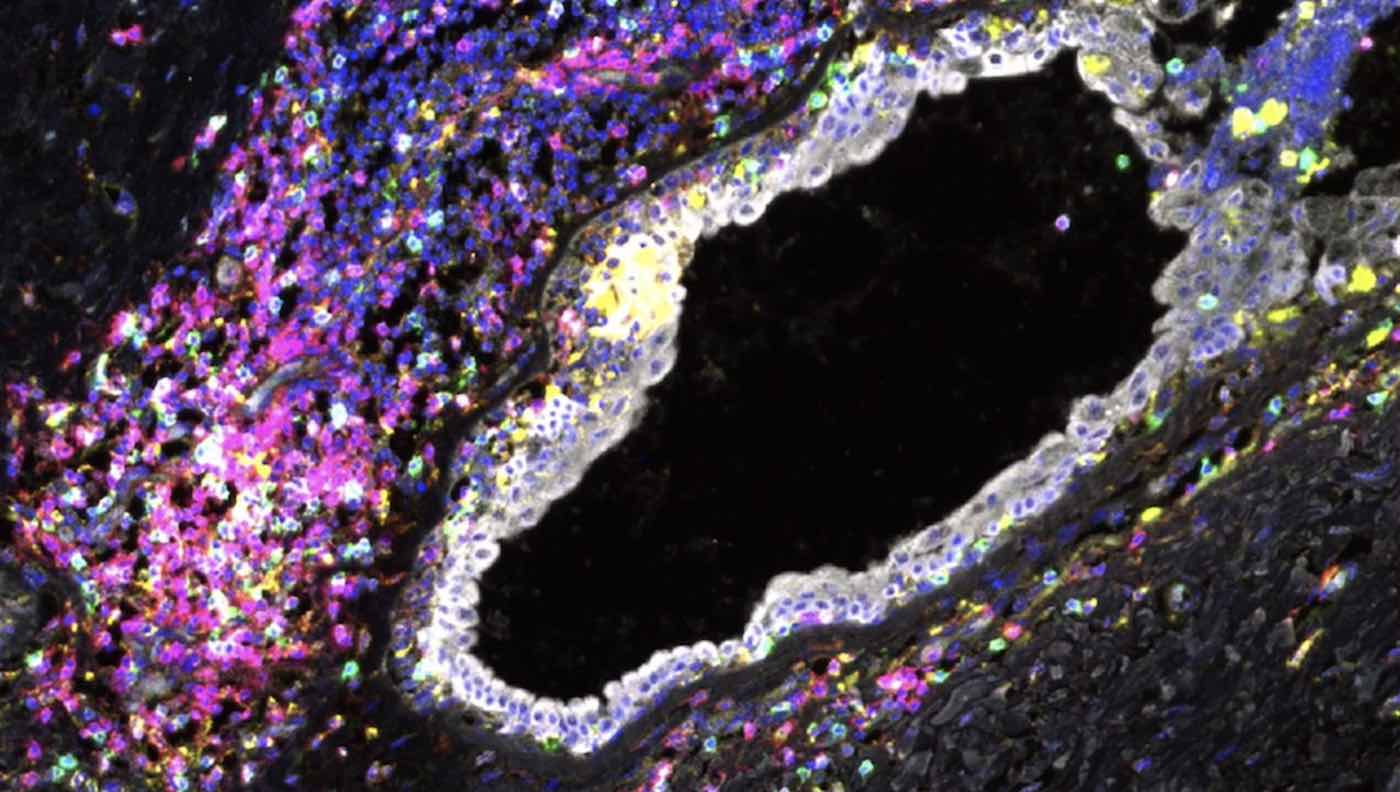
credit - SWNS
Study author William Gillanders – credit, SWNS

Breast cancer patients have been given fresh hope after a new vaccine showed “promise” in treating an aggressive form of the disease.

The results came in a clinical trial involving American patients with triple-negative breast cancer who received an experimental drug designed to prevent the recurrence of tumors.

The trial, using a therapy designed by researchers at Washington University School of Medicine in St. Louis, is the first to report results for a “neoantigen DNA vaccine” for breast cancer patients.

The findings, published in the journal Genome Medicine, showed the vaccine to be “well-tolerated” and to properly stimulate the immune system.

The trial involved 18 patients diagnosed with a yet-to-metastasize triple-negative breast cancer. Each patient received the standard of care and three doses of a personalized vaccine tailored to target key mutations in their specific tumor and train immune cells to recognize and attack any cells bearing the mutations.

Following treatment, 14 of the 18 patients showed immune responses to the vaccine and, after three years, 16 patients remained cancer-free.

While the early-stage trial was designed to evaluate the safety of the vaccine and did not include a control group to determine efficacy, the research team analyzed historical data from patients with triple-negative breast cancer treated with the standard of care only.

In that group, on average, only about half of patients remained cancer-free three years after treatment.

Study senior author Professor William Gillanders, of Washington University School of Medicine, admits it’s not a perfect comparison, and says there are key limitations of this type of analysis.

“But we are continuing to pursue this vaccine strategy and have ongoing randomized controlled trials that do make a direct comparison between the standard of care plus a vaccine, versus standard of care alone,” he said.

“We are encouraged by what we’re seeing with these patients so far.”

Triple-negative breast cancer is an aggressive tumor type that grows even in the absence of the hormonal fuel that drives the growth of other types of breast cancer. It currently has no targeted therapies and is usually treated with traditional approaches including surgery, chemotherapy, and radiation therapy.

For the trial, patients with triple-negative breast cancer who still had evidence of a tumor remaining after a first round of chemotherapy were eligible to participate.

Researchers say such patients are at “high risk” of cancer recurrence even after the remaining tumor is surgically removed.

After surgery, the team analyzed and compared the tumor tissue with the healthy tissue of the same patient to find unique genetic mutations in the cancer cells.

These may alter the proteins only in the tumor, making it possible to train the immune system to go after the altered proteins and leave healthy tissues alone.

Using software they designed, the researchers selected altered proteins called neoantigens that were made by the patient’s tumors and that were identified as most likely to trigger a strong immune response.

GOOD MEDICINE NEWS: AI Detected Her Early Breast Cancer After Annual Test Came Back as Normal: ‘I feel so lucky’

On average, each patient’s vaccine contained 11 neoantigens—ranging from a minimum of 4 to a maximum of 20—all of which were specific to their tumor.

“These are complex algorithms, but in general, the software takes in a list of mutations and interprets them in the context of their potential to be good neoantigen candidates,” said Professor Malachi Griffith, who co-led the software development.

“The tools rank the possible neoantigens based on our current knowledge of what matters in stimulating the immune system to attack cancer cells.”

MORE ON CANCER VACCINES: Cancer Vaccine Triggers Fierce Immune Response to Fight Malignant Brain Tumors in Human Patients

Trial Skin Cancer Vaccine Dramatically Reduced Melanoma Relapse in Patients Receiving Immunotherapy

Several studies of cancer vaccines developed at Washington University School of Medicine are currently ongoing.

In some of the trials for breast cancer patients, personalized vaccines are being investigated in combination with immunotherapies called checkpoint inhibitors that boost the action of T cells.

SHARE This Great Development On Social Media With The Women In Your Life… 

“To imagine is everything, to know is nothing at all.” – Anatole France

Quote of the Day: “To imagine is everything, to know is nothing at all.” – Anatole France

Photo by: Sébastien Goldberg

With a new inspirational quote every day, atop the perfect photo—collected and archived on our Quote of the Day page—why not bookmark GNN.org for a daily uplift?

Author Samantha Harvey Wins 2024 Booker Award (with Help From 6 Astronauts) –A First for Space Fiction

Orbital and Samantha Harvey - credit, CC BY-SA 4.0. Luminsh
Orbital and Samantha Harvey – credit, CC BY-SA 4.0. Luminsh

British novelist Samantha Harvey has been awarded the 2024 Booker Prize for her novel Orbital. Described as a “space pastoral,” it was written through the perspectives of real-life  astronauts.

It was the best-selling book on the Booker Prize shortlist, outselling all three of the previous winners combined when measured on the eve of their awards.

It’s also the first novel set in space to win the award, and Harvey dedicated her victory to “all the people who speak for and not against the Earth and work for and not against peace.”

The 136-page work covers a single day of life on the International Space Station and is written through the voices and thoughts of six astronauts, a concept she admitted to the BBC gave her a sort of imposter syndrome.

“Why would anybody want to hear from a woman at her desk in Wiltshire writing about space when people have actually been there?” she said. “I lost my nerve with it and I thought I didn’t have the authority to write it.”

Harvey said she wrote it throughout lockdowns.

During the book’s 24 hours, the astronauts observe 16 sunrises and 16 sunsets, while seeing continents pass by with all their mountains, glaciers, and deserts dusted over and battered with weather, as well as all the ocean swells in between them.

Chair of the Booker judges, Edmund de Waal, described Orbital as a “book about a wounded world.”

“He said the judges all recognized its ‘beauty and ambition’ and praised her ‘language of lyricism,'” the BBC said.

When asked what she’ll do with the prize, she admitted she will use some of the £50,000 to buy a beautiful new bicycle.

SHARE This Moving Story Richly Honored With The Bookworms In Your Life… 

Farmers Use Bees to Deter Elephants from Romping Over Crops–a Win-Win for All

Beekeepers in Kenya - credit, CGIAR K. Trautmann, CC 2.0. Flickr https://flickr.com/photos/cgiarclimate/8786631506
Beekeepers in Kenya – credit, CGIAR K. Trautmann, CC 2.0. Flickr 

In Kenya, on the edge of the legendary Tsavo National Park, African honey bees contentedly buzz about near rows of well-tended crops.

It’s a scene that’s becoming more common in these rural areas and is driven by an extreme need: to deter elephants from encroaching on farmlands, eating crops, and destroying homes.

“The beehive fences came to our rescue,” said Kenyan farmer Charity Mwangome “We used to hate elephants a lot.”

Mwangome told AFP that she and many farmers like her live in perpetual fear that these 8-ton animals would at any moment during the growing season come storming in to eat and trample away her livelihood.

Elephant conservation has been dramatically successful in Tsavo, where their numbers have risen almost 300% since the 1990s—to 15,000 individuals. However the increase in their population has also led to increases in conflict events with rural villagers.

To combat this, the charity Save the Elephants is working to turn villagers into beekeepers. It costs almost $1,000 to get started, which is a major flaw in the project that nevertheless has recruited 49 beekeepers so far, but the honey is a valuable commodity that can bring in enough to pay for school and school supplies with just a couple of jars.

USING NATURE RATHER THAN EXPLOITING IT: African Forest Farming Initiative Making A Difference to Thousands with Tree-Planting and Microlending

The elephants, meanwhile, are scared away by the hum of 70,000 bees. The hives installed by Save the Elephants are hung from greased wire to protect them from badgers, but also serve to form a convenient trip wire if an elephant is brave enough to investigate the noise and smell. The shaking of the wire disturbs the bees into a frenzy.

Successful beekeeping operations have also been established in Zambia in Malawi—around protected areas and national parks filled with wildlife.

MORE STORIES LIKE THIS: This Fencing Club Is Giving at-risk Youth in Kenya an Elegant Alternative to Street Violence

Last year, the International Fund for Animal Welfare delivered nearly 300 beehives to cooperatives in four chiefdoms around Kasungu, one of the two regions that make up the Malawi–Zambia Transfrontier Conservation Area (TFCA), a gargantuan 32,000 square kilometer area of national parks, wildlife reserves, forest reserves, game management areas, and communal lands, where beekeeping is used to enrich communities, dissuade community members from poaching, and deter elephants.

TRUMPET This Great News About Detering Elephants And Saving Bees…

Father-Daughter Duo Won the Race to Decode an Extraterrestrial Message–Sent from Mars to Test Humanity

- credit A Sign in Space.
– credit A Sign in Space.

These white dots arranged in five clusters against a black background simulate an extraterrestrial signal transmitted from Mars and deciphered by a father-daughter team on Earth after a year-long decoding effort.

The project was organized by some of the world’s top astronomers to run the scenario of a citizen science response in the event of a real interstellar communication.

There’s no telling what form such a communication would take, but Ken and Keli Chaffin, demonstrated that there are enough brilliant and interpretive minds out there to tackle it.

In truth, the whole exercise was an art project called A Sign in Space, organized by the science research nonprofit Search for Extraterrestrial Intelligence (SETI) in partnership with the European Space Agency.

Last year, the agency sent a radio signal back to Earth from the ExoMars Trace Gas Orbiter, a research craft currently orbiting the Red Planet in search for evidence of methane and other trace atmospheric gases that could be signatures of active biological or geological processes.

After three radio astronomy observatories on Earth intercepted the communication, the challenge was first to extract the message from the raw data of the radio signal, and secondly to decode it.

It took 10 days for a community of 5,000 citizen scientists on Discord to extract the signal from the raw data that was released to the public by the observatories, which included the signals from many other spacecraft as an additional challenge. The second task took longer and required some visionary minds.

Like the plotline from an episode of Lost in Space, American father and daughter Ken and Keli Chaffin cracked the code by following their intuition.

They ran simulations for hours and days on end, trying to assemble the message into all kinds of different forms before the family discovered that the message contained movement—it stayed in motion and only displayed in any configuration for about one-tenth of a second.

To them, its characteristics suggested some sort of cellular formation. What appeared on their screens to be clusters of white pixels were believed by the Chaffins to be amino acids and proteins—the building blocks of life.

Designed by media artist Daniela de Paulis with help from astronomers and computer scientists, amino acids were the correct guess—the Chaffins’ intuition was right.

The citizen scientists received and communicated about the project via the online chat and community platform Discord, and referred to the message as the “Starmap.” When Ken Chaffin first saw the Starmap, he guessed that a cellular automata algorithm produced it. Cellular automata is a sequence of units programmed to follow certain movements and patterns, and Chaffin had amateur experience working with them, he told CNN.

“I had no idea what the message would show or say. I suspected that it might have something to do with life,” he added, saying he immediately recognized them to be amino acids from school chemistry classes.

Keli Chaffin, his adult daughter, initially had no plans to join her dad in the immersive effort, but she said she quickly became mesmerized by the vastness of the project.

SIMILAR FATHER DAUGHTER DUOS: 8-Year-old Girl Gets to Chat with Orbiting Astronaut Using Dad’s Ham Radio

“The original image that looks like a Starmap has always given me the appearance of biological lifeforms,” she said in an email. “(A) lot of members have seen a mouse, a starfish, or an elephant.

De Paulis said that if we ever received a radio message from an alien civilization, there’d be no one to tell humanity whether we had interpreted it correctly. Animo acids were what de Paulis was getting at, but as Keli divined, meanings abounded within the data.

It’s not the first time a major space organization has used billion-dollar space equipment to test humanity’s brightest citizens. When the parachute deployed to slow the Perseverance Mars rover’s descent to the Red Planet, NASA teased it contained a message. 

MORE SCIENCE STORIES TO INSPIRE: NASA to Send ‘Message in a Bottle’ Into Space Designed to Communicate With Extraterrestrials

To non-mathematicians, it just seemed like a weirdly designed parachute pattern, but citizen scientists and maybe some real scientists also, took just six hours to decode the message hidden in the parachute.

Matching the variations in color to binary code, before translating that into English letters and numbers, they found it read “Dare Mighty Things.”

SHARE This Inspiring Art-Science Project With Your Friends…

Thousands of Circular Homes Are Surviving Hurricanes Across the US Thanks to North Carolina Company

Deltec home survives when others did not during Hurricane Michael - Instagram video @DeltecHomes
Deltec home survives when others did not during Hurricane Michael – Instagram video @DeltecHomes

When Hurricane Milton recently smashed into Florida’s Crystal River, a peculiar house stood firm even while a neighbor’s was heavily damaged by the powerful winds.

Owned by Gene Tener, it is one of 3,000 along the Gulf and Atlantic coasts of the US built by Deltec Homes, which use prefabricated parts to build hurricane-resistant homes.

Utilizing basic principles of aerodynamics, Deltec’s homes are cylindrical and sit on stilts that reach deep into the bedrock below. Coupled with a conical roof, it means there is no surface where the wind can gain enough purchase to push the structure down.

Inside, roof and floor trusses span the building like spokes on a bicycle wheel, radiating energy out across the whole skeleton rather than letting it build up on a fixed point. Deltec’s homes are designed to survive winds of 190 mph, higher than category 5, and just 30 mph below the strongest storm ever recorded in the Northern Hemisphere.

Mr. Tener’s home has survived Hurricanes like Idalia, Milton, and Debby, and while it cost him more than twice as much as a normal home in his area, it meant he saved the necessity to pay $12,000 in flood insurance this year—and who knows how much in future years.

Deltec’s homes can go from a low of $600,000 to over $2 million depending on the geography of the site, the size of the desired home, and potential additions like porches and decks.

Credit: Deltec Homes

“We started to ask ourselves the question: What would we have to do to design the home of the future?” Deltec President Steve Linton told CNN. “Because whatever we’re building today, we obviously want it to be around for hundreds of years.”

If climate change is in fact making storms more powerful more often, then overtime, millions of homes will be exposed to the dangers of wind and flooding having been built to withstand a class of hurricane that isn’t the norm any longer.

To wit, a data analytics firm Core Logic found that “over 32.7 million residential properties, with a total reconstruction cost value of $10.8 trillion, are at moderate or greater risk of hurricane wind damage,” and that “approximately 7.7 million properties, with a reconstruction cost value of $2.3 trillion, are at risk of storm surge flooding.”

OTHER HURRICANE RESISTANT HOMES: This Hurricane-Proof Florida Development Easily Endured Helene, Ian, and Idalia–Proving Climate Designs Work

Deltec’s homes boast a 99.9% survival rate against hurricanes, and while it’s not unheard of for a Deltec home to lose shingles or have a failure in their deeply set hurricane-grade windows, major structural damage is almost unheard of.

A Deltec home in Tampa Bay – Credit: Deltec

Deltec will work with a homeowner to come up with a design that suits them, and the process of building the house will take around a year for prefabrication and assembly, plus another 8 months for the initial design and prefabrication.

A Deltec home (left) stands undamaged beside a less fortunate neighbor in Rockport, Texas following Hurricane Harvey in 2017 – credit, Deltec, supplied

Linton told CNN that Deltec homes manufactured before the 1980s weren’t specialized for storm protection,  but were circular merely as a way of offering a panoramic view of ocean scenery.

BRIGHTNESS AFTER THE STORM: Luke Combs, James Taylor Headline Star-Studded Concert for Carolina–Raises $24 Million for Hurricane Relief

“Before (then), there wasn’t a particular emphasis on it until we started to see the results of Hurricane Hugo and Andrew (in 1989 and 1992, respectively), which were kind of the epoch moments, where it was like, ‘Huh, look at how much better a Deltec is doing than a neighboring home,’” Linton said.

SHARE This Interesting Design And Impressive Results On Social Media… 

“Love is an act of endless forgiveness, a tender look which becomes a habit.” – Peter Ustinov

Getty Images / Unsplash+

Quote of the Day: “Love is an act of endless forgiveness, a tender look which becomes a habit.” – Peter Ustinov

Photo by: Getty Images / Unsplash+

With a new inspirational quote every day, atop the perfect photo—collected and archived on our Quote of the Day page—why not bookmark GNN.org for a daily uplift?

Hundreds of Brits Flock to Quiet Backyard After Bird from America Is Blown Off Course by Hurricane

Birdwatchers in Shelf, West Yorkshire – with the scarlet tanager blown off course (SWNS)
Birdwatchers in Shelfield – with the scarlet tanager blown off course (SWNS)

This diminutive yellow bird had a whole country tweeting with interest, and craning their necks up to see it perched in the tree of a local’s front yard.

Around 300 bird watchers crowded a road in the northern city of Sheffield, where a scarlet tanager was first spotted perched on a clothesline.

It is thought the small yellow and black bird arrived in Britain after being blown off course by strong winds from a hurricane in North America. The last time this species was seen in Britain was back in 2014.

The migratory pattern of the scarlet tanager typically involves a straight north-south line from as far north as Maine to as far south as Ecuador. According to the Ohio Ornithological Society, by October the tanager is making its way back south from the mid-Atlantic—the same month when the southeastern United States was battered by successive hurricanes.

75-year-old Dave Stone said he had traveled 280 miles from his home in Exeter to the road in a community called Bridle Dene in the early hours of Tuesday with three of his pals all just to see it.

“We left Exeter in Devon at 2 am. We got up here at first light. It’s near enough the furthest I’ve traveled [to see a rare species],” he told British media outlet SWNS. “I’ll wait until the light goes to see it and then we’ll go back again.”

“I’ve been doing this since 1985. If I get this bird, it will be my 500th. There have been quite a few rare ones,” he added. “It’s been seen this morning, and it would be a new bird for me.”

Near the other side of the age spectrum, birdwatcher Joe Eckersley traveled around 40 minutes from his home in Leeds to see the rare bird on Monday morning.

“I never thought I’d see a scarlet tanager in the UK, let alone in Yorkshire,” he said. “It’s probably been here since October. I think the most likely thing that’s happened is it will have been blown off course by a hurricane.”

“When you’re flying and you only weigh a couple of grams, it is easy to be blown off course by hurricane-force winds.”

MORE BIRDWATCHING STORIES: Birdwatchers in 201 Countries Break World Record Documenting 7,800 Species in a Single Big Day

Joe said the last sighting of a scarlet tanager was on the island of Barra in the Outer Hebrides in 2014, but this is the first time the bird has been seen in mainland UK since a brief appearance in Cornwall in the 1980s.

Hundreds of birdwatchers flock to a quiet cul-de-sac, hoping to get a glimpse of the rare scarlet tanager – SWNS

He said scores of people had made their way to the quiet road in West Yorkshire to try and catch a glimpse of the rare visitor.

“When I was there, there were about 60 or 70 people waiting around,” Joe remembered.

OTHER RARE SIGHTING FRENZIES: Out-of-Place ‘Devil Bird’ Wows Spectators in Maine, the First Anhinga Ever Seen in the State

“We left because we weren’t going to get a better view of it, but a friend who is there has sent me a picture and it looks like the number of people has doubled. There’s at least 100 people there.”

SHARE This Wild Bird (And Human) Behavior With Your Friends… 

World’s First Wooden Satellite Aims to Tackle Space Debris Problem with Sustainable Solution

- an artist’s impression of the LignoSat, credit Kyoto University.
– an artist’s impression of the LignoSat, credit Kyoto University.

One might imagine the hostile environment of space as bad news for any organic molecules.

However, Japanese engineers just created a wooden satellite called LignoSat, with preparations for a summertime 2025 launch.

The mission is meant as a demonstration of the capacities of this humble material to live long and prosper in the vacuum of space.

In space, there is no oxygen to set wood alight, no moisture to cause it to rot, and no microbes to eat it away. The biggest risk to the structural integrity of the lignan cells is burning up in the atmosphere—which is exactly what LignoSat was designed to do.

“All the satellites which re-enter the Earth’s atmosphere burn and create tiny alumina particles, which will float in the upper atmosphere for many years,” Takao Doi, a Japanese astronaut and aerospace engineer with Kyoto University, warned recently. “Eventually, it will affect the environment of the Earth.”

LignoSat was built from magnolia wood, a selection that was made based on a year of rigorous testing in various environments and conditions including the ISS. The tests were performed by Kyoto University in partnership with one of Japan’s oldest incorporated companies, Sumitomo Forestry.

“Wood’s ability to withstand these conditions astounded us,” Koji Murata, head of the project, told the Guardian.

One of the missions of the satellite is to measure the deformation of the wooden structure in space, Murata told the Observer.

“Wood is durable and stable in one direction but may be prone to dimensional changes and cracking in the other direction,” he said.

ALSO CHECK OUT: US Scientists Are Preparing to Launch a Gas Station Into Space to Provide Refueling

Before anyone gets the idea for wooden space stations, the LignoSat is the size of a large coffee mug, and will have an orbital period of 6 months before being allowed to fall into the atmopshere.

If the LignoSat performs well, space-grade lumber could become a standardized forestry product in the upcoming years. Many more nations are now launching satellites into space, and it’s estimated that 2,000 launches will be taking place annually during the next half-decade.

OUTERSPACE INNOVATION: First Spacewalk Performed by Private Citizen Proves Smaller Flexible Spacesuit Is Winning Design for Polaris Dawn

All that aluminum breaking apart in the atmosphere may undo some of the progress humanity has made in repairing the hole in the ozone layer.

SHARE This Ingenous Invention With Your Friends Who Love Woodworking…

Remarkable Sea Slug Found Among Monterrey Bay’s Lightless Depths is Nicknamed ‘Mystery Mollusk’

Newly described nudibranch, nicknamed ‘Mystery Mollusk’ – Credit: Monterey Bay Aquarium Research Institute

A remarkable new sea slug nicknamed the “mystery mollusk” has been discovered swimming deep in the ocean’s lightless zone.

The species has adaptations for life in the pitch-black depths including a large gelatinous hood to trap prey, a paddle-like tail, and the ability to light up, say American scientists.

The 5.6-inch (14.5-centimeter) hermaphrodite species, given the scientific name Bathydevius caudactylus, was discovered by marine biologists from Monterey Bay Aquarium Research Institute (MBARI) in California.

“Thanks to MBARI’s advanced underwater technology, we were able to prepare the most comprehensive description of a deep-sea animal ever made,” MBARI senior scientist Dr. Bruce Robison said. “We’ve invested more than 20 years in understanding the natural history of this fascinating species of nudibranch.”

MBARI researchers first observed the mystery mollusk in the year 2000 during a dive with the institute’s remotely operated vehicle (ROV) Tiburon offshore of Monterey Bay at 8,576 feet (2,614 meters) deep.

After reviewing more than 150 sightings from ROVs over the past 20 years, they have published a detailed description of the creature in the journal Deep-Sea Research.

With a voluminous hooded structure at one end, a flat tail fringed with numerous finger-like projections at the other, and colorful internal organs in between, the team initially struggled to place the animal in a group.

Because it also had a foot like a snail, they nicknamed it the “mystery mollusck.” After gently collecting a specimen, MBARI researchers were able to take a closer look at the animal in the lab and confirm that it is, in fact, a sea slug, or nudibranch.

MORE DEEP-SEA LIFE TO THRILL: Rare Deep Sea Squid with ‘Headlights’ Captured on Video–Mistaking the Camera for Food–WATCH

They are commonly found in coastal environments—such as tide pools, kelp forests, and coral reefs—and a few species are known to live on the abyssal seafloor. Some live in open waters near the surface, belying their colloquial name.

But Bathydevius caudactylus is the first nudibranch known to live in the midnight zone, an expansive environment of open water 3,300 to 13,100 feet below the surface, also known as the bathypelagic zone.

The B. caudactylus is currently known to live in the waters offshore of the Pacific coast of North America, with sightings on MBARI expeditions as far north as Oregon and as far south as Southern California.

MORE DEEP-SEA LIFE TO CHILL: Rare ‘Doomsday’ Fish Surfaces in California–Just the 20th Discovered in the State Since 1901

While most sea slugs use a rough tongue to feed on prey attached to the seafloor, B. caudactylus uses a cavernous hood to trap crustaceans like a Venus fly trap plant. A number of other unrelated deep-sea species use such a feeding strategy, including some jellies, anemones, and tunicates.

To avoid being eaten, it hides in plain sight with a transparent body. If discovered, it can light up with bioluminescence to deter and distract hungry predators. On one occasion, researchers saw it illuminate and then detach a steadily glowing finger-like projection from the tail, likely serving as a decoy to distract a potential predator.

“When we first filmed it glowing with the ROV, everyone in the control room let out a loud ‘Oooooh!’ at the same time,” said MBARI senior scientist Dr. Steven Haddock. “We were all enchanted by the sight.”

“Only recently have cameras become capable of filming bioluminescence in high-resolution and in full color. MBARI is one of the only places in the world where we have taken this new technology into the deep ocean, allowing us to study the luminous behavior of deep-sea animals in their natural habitat,” the appropriately named Haddock, added.

To date, MBARI technology has been used to document more than 250 deep-sea species previously unknown to science, but Haddock says B. caudactylus represents a “unique” find among them.

MONTERREY BAY WORK: Amazing Video of Giant Phantom Jellyfish from Deep in the Dark Fathoms at 3,200 Feet – WATCH

“For there to be a relatively large, unique, and glowing animal that is in a previously unknown family really underscores the importance of using new technology to catalogue this vast environment,” he said. “The more we learn about deep-sea communities, the better we will be at ocean decision-making and stewardship.”

SHARE This Great Deep Sea Discovery With Your Friends… 

Voters Agree in a Landslide to Invest in the Environment–Backing Green Bond by 3:1 Margin in Rhode Island

Providence - Photo by Mohammed Shonar on Unsplash
Providence – Photo by Mohammed Shonar on Unsplash

Attached to the presidential ballots in this year’s elections, Rhode Island had posed question 4: would the voter like to see the state borrow money for environmental preservation?

Question 4 passed by a three-to-one margin, authorizing the state to issue $53 million in so-called “Green Bonds” and use the money for farmland and forest preservation.

Rhode Island is the smallest state in the union, and land is therefore at a premium and always has been. Before World War II, nearly the whole state was farmland, but after years of suburban sprawl and immigration from nearby major cities, farmland and forests have shrunk drastically.

“The Green Bond received the highest level of approval of all the bond questions on the ballot, winning in all 39 cities and towns in the state,” said Jed Thorp, director of advocacy for the nonprofit Save The Bay. “The bond will lead to meaningful investments in climate resilience, and the protection of farms, forests, and open space—all of it will benefit the bay and watershed.”

Specific projects haven’t been stipulated yet, apart from $15 million being earmarked for industrial upgrades in the Port of Davisville in North Kingstown, and $5 million for farmland preservation.

GOOD AMERICAN EARTH: Coveted Ranch Near San Francisco to Become Sprawling New Nature Preserve with Hiking Trails

EcoRI reporting on the news, spoke with members of the ALPC, or the Agricultural Lands Preservation Committee, who explained how this public body has bought thousands of acres of farmland in a trust to prevent it from being turned into commercial real esate or housing.

NBC 10 WJAR, reports that money will also go to protecting waterways and outdoor recreation areas.

INVESTING IN A CONSERVED FUTURE: ‘Sponge’ Cities Combat Urban Flooding by Letting Nature Do the Work

“At the heart of the $53 million bond is our commitment to protecting our environment, and growing our green economy, and enhancing quality of life for us Rhode Islanders,” Gov. Dan McKee said. “These three pillars will help revolutionize our state’s fight against climate change and bolster our efforts to become a healthier community for all.”

SHARE This Investment In Rhode Island’s Green Economy With Your Friends… 

“When you say you are in love with humanity, you are well satisfied with yourself.” – Luigi Pirandello

Quote of the Day: “When you say you are in love with humanity, you are well satisfied with yourself.” – Luigi Pirandello

Photo by: Ishan Gupta

With a new inspirational quote every day, atop the perfect photo—collected and archived on our Quote of the Day page—why not bookmark GNN.org for a daily uplift?

Notre Dame Bells Ring Out for the First Time in 4 Years, Heralding its Upcoming Completion December 8th

Photo by Guillaume Didelet on Unsplash

From the Île de la Cité in Paris, out from the northern Belfry of the Notre Dame, the tolling of bells was heard by thousands.

It was the first tolling since 2020, a year after a fire destroyed much of the 850-year-old building in 2019, and their restoration represents an important milestone in the lead-up to the cathedral’s opening in less than a month.

Eight of the bells rang as part of a technical test on Friday. Neither the bells nor the belfry had been destroyed in the fire, but they were damaged and it took over a year to restore that part of the building.

“Hearing the bells ring this morning was very moving,” Mr. Alexandre Gougeon, who managed their installation, told CNN, adding it was “the culmination of a big project.”

Three new bells were added to the tower, including a large one donated by the Parisian olympic planning committee. It was rung with a mallet above the Stade de France, the country’s national stadium, whenever an athlete won gold or broke a record.

Though the structure wasn’t ready for the Paris Olympics, as President Emmanuel Macron had originally planned, all the notable milestones have been met, including the restoration of the roof, spire, bells, and golden cockerel.

READ MORE ABOUT THE CATHEDRAL’S RESTORATION: Rebuilding Notre Dame Cathedral Takes Leap Forward as the Majestic Spire Is Pieced Together

Philippe Jost, president of the public body responsible for conserving and restoring the UNESCO World Heritage Site, credited 2,000 people working to restore the building by December 8th.

“Everything is almost ready, which means we’re on schedule. We’re confident,” Jost told radio network RTL. “Every day the cathedral is more beautiful,”

WATCH and LISTEN below… 

SHARE This Perfect Excuse To Visit Paris Christmas With Your Friends… 

Two Lost Cities Discovered Along the Silk Road–the Iconic Ancient Trade Route

Tugunbulak site –Courtesy of Michael Frachetti
PICTURED: The mound of Tugunbulak looking westward. PC: Michael Frachetti.

Reprinted with permission from World at Large

A pair of lost cities in the highlands of Uzbekistan recently found by archaeologists using lidar demonstrate that the bounty of the Silk Road trade was so lucrative, it allowed urban populations to flourish without agriculture to support them.

Tugunbulak and Tashbulak were two mountain settlements that flourished between the 8th and 11th centuries CE nominally under the control of a Turkic state known as the Qarakhanids that held influence over a slice of Central Asia spanning from the Aral Sea to the Taklamakan Desert.

Along with his colleagues, Michael Frachetti, lead author of the paper on the discovery and lead excavator on the sites since 2011, carried out the first lidar survey in the history of Central Asian archaeology to make the discovery. Lidar stands for Light Detection And Ranging and uses laser-based technology to map landscapes from the air.

It’s one of the most consequential technological innovations in the history of archaeology and has been used all throughout the world to find evidence of past habitation where today only nature remains.

Typically, lidar is used when trees block the view of any eyes looking down upon a landscape, but archaeologists speaking with Science remarked with astonishment how nuanced the lidar survey’s topographical readings were, and how much more they revealed compared to looking down from above on what is essentially an open field.

Tugunbulak occupies approximately 120 hectares (1.2 sq. kilometers) and shows evidence of over 300 unique structures, which vary in size from 30 to 4,300 sq. meters. More specifically, the researchers identified watchtowers connected with walls along a ridge line, evidence of terracing, and a central fortress surrounded by walls made of stone and mudbrick.

Tashbulak, meanwhile, occupies 12–15 hectares (0.12–0.15 km2). Frachetti and colleagues note that even the smaller city follows urban planning similar to concurrent cities in medieval Central Asia, namely it includes a central citadel made of an elevated mound surrounded by dense architecture and walled fortifications. They suggest that there are at least 98 visible habitations, which share a similar shape and size to those in Tugunbulak, and hypothesize that both cities were built to exploit the surrounding mountain terrain for defense as well as the abundant ores and pastures the highland region provides.

Both sites sit at or above 6,000 feet (2,000 meters) above sea level. Even today with all of humanity’s power to move and shape the landscape, only 3% of the global population dwells at that elevation or higher.

“High-altitude urban sites are extraordinarily rare in the archaeological record because of a unique set of landscape challenges and technological demands that must be overcome for people to form large communities in mountainous areas,” writes Zachary W. Silvia, a professor at Brown University’s the Joukowsky Institute for Archaeology and the Ancient World, who wasn’t involved in the study.

PICTURED: A semi-automated method of image analysis helped the authors identify potential archaeological features of interest (dark lines) and evidence of dense urban development during medieval times. PC: Michael Frachetti et al, released.

A Tale of Two Cities and the Wealth of Nations

Discovered in 2011 and 2015, Tashbulak and Tugunbulak sit along the famous collection of overland trade connections that linked East and West popularized in the 20th century by the name of the Silk Road(s). Rather than being a single highway, the Silk Road was instead an intricate, human-powered commercial network that allowed Rome to trade glass and cotton for China’s silk without one civilization ever needing to visit the other.

A variety of ethnic groups, kingdoms, and oasis cities linked these disparate superpowers of their day, the fortunes of whom rose and fell with the trade along the dozens of individual routes that made up the Silk Road. Famous Central Asian cities like Bukhara, Samarkand, Merv, Kashgar, and Khiva flourished off this trade, but were located on planes or lowlands with abundant water supplies.

Nestled in a valley in the Mal’guzar highland range of southeastern Uzbekistan, a northern offshoot of the formidable Pamir Mountains, Tashbulak and Tugunbulak are far from being as conveniently located, and despite being far from any suitable land to practice agriculture, Tugunbulak, which is over half the size of Samarkand from the same period, could have housed as many as 5,000 residents with the only source of food being pastured animals or what could be imported.

Tugunbulak site –Courtesy of Michael Frachetti

READ MORE CENTRAL ASIAN ARCHEOLOGY: 2,000-year-old Gold Jewelry from Mysterious Central Asian Culture Discovered in Kazakhstan

The evidence that pastoralists inhabited the city is convincing. Coupled with the impressive fortifications, artifacts recovered during digs in the city suggest that Mal’guzar was beyond the cultures of any then-ruling states, and existed as a somewhat separate entity—which in Central Asia almost always means nomadic. No sub-urbanism seems to have developed beyond the scope of Tugunbulak’s walls, reinforcing that the inhabitants dwelt in yurts or felt tents if no room could be found in the city.

Excavations in the city revealed the presence of iron ore foundries with domed furnaces that likely produced steel from the wealth of iron veins in the surrounding hills. The city seems to have been a fortified center of metallurgy, producing weapons, farming implements, and equestrian tackle for nearby societies and spending their revenues on imports to sustain their mountain living.

As was the case with many cities along the Silk Road, a shift in commonly used routes because of danger or environmental change, the fall in demand for a product thousands of miles away, or the onset of war, might dry up the life-sustaining trade in remarkably short time, and the course of the Silk Roads are littered with results of these changes in fortune, something that Tashbulak and Tugunbulak must have fallen victim to.

READ MORE CENTRAL ASIAN ARCHEOLOGY: Stunning Tang Dynasty Mural Unearthed in China Portrays a ‘Westerner’ with Blonde Hair

“Frachetti and colleagues’ work provides an immense contribution to the study of medieval urbanism in Central Asia, as well as to the poorly understood phenomenon of dense settlements at high altitudes,” Silva adds. “Future work will certainly reveal the economic and social effect that these sites wielded over contemporary cities across these medieval Silk Roads”. WaL

Baby Emu Orphan is Adopted by a Chicken–An Unexpected Mother Hen Turned Teacher

Birdworld / SWNS
Birdworld / SWNS

An abandoned emu is thriving in a British aviary after being raised by an unlikely foster mom one-tenth her size.

The emu, named Shrub, was rejected by parents Forest and Mathilda who also had a difficult start in life.

Keepers at Birdworld discovered Mathilda had successfully hatched an egg but neither parent was willing to take on the role of caregiver. The lifeless one-pound body of an emu chick covered in mud, flies, and being pulled from the nest by crows, turned out to be Shrub.

In the wild that would certainly be the end of the story, but as they were in captivity, the job of raising her was given to Nugget, a small Bantam Hen who lived at Birdworld in Surrey, England. Nugget taught shrub skills such as eating and walking.

“Unlike most birds, emu males incubate eggs, and they are typically winter breeders,” said Polly Bramham, Living Collections Manager at Birdworld. “However, Shrub’s mother, Mathilda, laid eggs in the summer, and Forest didn’t seem to be incubating them.”

“We didn’t expect the eggs to hatch and were surprised when they found Shrub cold, muddy, and neglected in the nest. She was rushed to an ICU, warmed up, and fortunately turned out to be a resilient survivor, much like her father.”

credit – Birdworld / SWNS

Following her rescue and recovery, Shrub needed some expert training on how to become an emu, a job one might suppose Nugget was unprepared to teach. But Nugget took to emu-ing like a duck to water.

“Shrub quickly learned how to pick up food, drink, and coordinate her gangly legs. The keepers loved watching the two of them together,” said Polly, adding that it wasn’t long before the difference in size meant that the moment had come to reconnect Shrub with her parents.

“However, emus can be very reactive and defensive, and to let Shrub in with Forest and Mathilda may have been fatal.”

To combat this obstacle, Birdworld’s keepers would walk Shrub outside Forest and Mathilda’s enclosure, letting Shrub interact with her birth parents from outside the safety of the fence.

ALSO CHECK OUT: Amazing Kid Wows the Internet with His Incredibly Accurate Bird Calls (Watch)

“It was particularly important to do this while Shrub was still a juvenile, so that Forest and Mathilda would not see her as a threat,” said Polly. “We found Shrub to be a very happy-go-lucky emu, frequently misjudging social etiquette and getting disciplined as a result.”

Emus are extremely large and potentially dangerous birds with strong kicking legs, meaning that Shrub would continue to be separated from the adults at night for the next couple of months as she learned the rules of emu life that Nugget had been unable to impart.

STORIES FOR THOSE AVID FOR AVIDS: After Building Causes 1,000 Bird Deaths, $1.2M Window Makeover Shows Chicago How to Beak Kind

Today, Shrub now lives full-time with her parents, having started her life facing adversity but finding hope under the wing of her caring foster mother, Nugget.

“Seeing Shrub with her parents as they race around their paddock, you would never guess their difficult beginnings. Shrub is an amazing lady, and the keepers are so proud that she has no confusion about who she is. She is 100% emu,” Polly said.

STRUT This Stroy Of A Bizarre Upbringing For This Bird To Your Friends… 

Gophers Brought Mount St. Helens Back to Life in a Single Day–Following Devastating Eruption

Photo by Georg Eiermann on Unsplash

When Mount St. Helens erupted in 1980, lava incinerated anything living for miles around. As an experiment, scientists dropped gophers onto parts of the scorched mountain for only 24 hours. The benefits from that single day were undeniable—and still visible 40 years later.

Once the blistering blast of ash and debris cooled, scientists theorized that gophers might be able to help regenerate lost plant and animal life on the mountain by digging up beneficial bacteria and fungi. Two years after the eruption, they tested this theory, and were proved right.

“They’re often considered pests, but we thought they would take old soil, move it to the surface, and that would be where recovery would occur,” said UC Riverside microbiologist Michael Allen.

But the scientists did not expect the benefits of this experiment would still be visible in the soil today, in 2024. A paper out this week in the journal Frontiers in Microbiomes details an enduring change in the communities of fungi and bacteria where gophers had been, versus nearby land where they were never introduced.

“In the 1980s, we were just testing the short-term reaction,” said Allen. “Who would have predicted you could toss a gopher in for a day and see a residual effect 40 years later?”

In 1983, Allen and Utah State University’s James McMahon helicoptered to an area where the lava had turned the land into collapsing slabs of porous pumice. At that time, there were only about a dozen plants that had learned to live on these slabs. A few seeds had been dropped by birds, but the resulting seedlings struggled.

After scientists dropped a few local gophers on two pumice plots for a day, the land exploded again with new life. Six years post-experiment, there were 40,000 plants thriving on the gopher plots. The untouched land remained mostly barren.

An unhappy gopher and plant near the gopher enclosure fence, 1982 – credit, Mike Allen/UCR, released.

All this was possible because of what isn’t always visible to the naked eye. Mycorrhizal fungi penetrate into plant root cells to exchange nutrients and resources. They can help protect plants from pathogens in the soil, and critically, by providing nutrients in barren places, they help plants establish themselves and survive.

“With the exception of a few weeds, there is no way most plant roots are efficient enough to get all the nutrients and water they need by themselves. The fungi transport these things to the plant and get carbon they need for their own growth in exchange,” Allen said.

A second aspect of this study further underscores how critical these microbes are to the regrowth of plant life after a natural disaster. On one side of the mountain was an old-growth forest. Ash from the volcano blanketed the trees, trapping solar radiation and causing needles on the pine, spruce, and Douglas firs to overheat and fall off. Scientists feared the loss of the needles would cause the forest to collapse.

INSPIRING TRANSFORMATIONS: Inspired by Avatar and His Asthma, Indian Man Creates ‘Biosphere’ to Connect Adjacent Land to National Park

“These trees have their own mycorrhizal fungi that picked up nutrients from the dropped needles and helped fuel rapid tree regrowth,” said UCR environmental microbiologist and paper co-author Emma Aronson. “The trees came back almost immediately in some places. It didn’t all die like everyone thought.”

On the other side of the mountain, the scientists visited a forest that had been clearcut prior to the eruption. Logging had removed all the trees for acres, so naturally there were no dropped needles to feed soil fungi.

“There still isn’t much of anything growing in the clearcut area,” Aronson said. “It was shocking looking at the old-growth forest soil and comparing it to the dead area.”

MORE MIRACULOUS FUNGI: Mushrooms Help Turn Toxic Brownfields into Blooming Meadows

These results underscore how much there is to learn about rescuing distressed ecosystems, said lead study author and University of Connecticut mycologist Mia Maltz, who was a postdoctoral scholar in Aronson’s lab at UCR when the study began.

“We cannot ignore the interdependence of all things in nature, especially the things we cannot see like microbes and fungi,” Maltz said.

SHARE This Unlikely Hero Of Mount St. Helens’ Ecosystem On Social Media… 

“The ties that bind us are stronger than the stresses that separate us.” — Colin Powell

Quote of the Day: “The ties that bind us are stronger than the stresses that separate us.” — Colin Powell

Photo by: Juri Gianfrancesco (cropped)

With a new inspirational quote every day, atop the perfect photo—collected and archived on our Quote of the Day page—why not bookmark GNN.org for a daily uplift?

Indian Soldiers Swap Candy with Chinese After Diplomacy Deescalates Troops at Diwali

- released by Indian Army sources.
– released by Indian Army sources.

In an ad-hoc ceremony reminiscent of the famous Christmas Truce of the First World War, Chinese and Indian troops along a disputed border region exchanged sweets on Diwali.

The two nations have contested a region called Ladakh for decades, but following a recent agreement to draw back from strategic chokepoints, relations are on the up and up such that the soldiers, who now have mutually exclusive patrolling schedules to prevent accidental conflict, met to exchange presents of sweets on Diwali, the Hindu festival of lights.

A traditional practice on the holiday, the gifts were exchanged at five designated Border Personnel Meeting Points in much the same way that the Germans and Allies emerged from their trenches and exchanged gifts in no man’s land along the Western Front in the Winter of 1914.

An Indian army official who was not authorized to speak to journalists confirmed that “sweets were exchanged between troops of India and China at several border points on the occasion of Diwali,” according to the Straits Times.

Ladakh itself is part of the Jammu-Kashmir union territory of India, but since the 1962 Sino-Indian War, a portion of land along the border has been claimed by both nations. The two are not divided by recognized borders but by a notional demarcation line called the Line of Actual Control (LAC), a term presented by CCP leader Zhou Enlai as a compromise—that each nation could claim land up the point at which they actually can control it.

While it’s one of the most hotly contested border areas on Earth, each nation prides itself on restraint. It’s said that not since 1975 have shots been fired at men along the LAC.

INTERNATIONAL DIPLOMACY: Historic Prisoner Swap Frees Americans Held in Russia After Years-Long, Multi-Nation Diplomacy

Such is the reluctance by both forces to ever be the first to fire a shot in anger, the most recent flare-up in tensions escalated into a massive street brawl, lasting 6 hours, involving hundreds of border patrolmen from both sides wielding makeshift hand-to-hand weapons, and causing the deaths of 20 Indians and between 4 and 43 Chinese, all without either group ever opening fire on the other.

On October 21st, Indian Prime Minister Narendra Modi and Chinese President Xi Jinping negotiated a disengagement of several key friction areas along the LAC which was completed, as confirmed by the Indian military scouring the area with drones.

YOU MAY ALSO LIKE: For First Time in 72 Years, Sikhs Can Visit One of Their Holiest Sites Thanks to New Peace Corridor

The completion of the disengagement led the Chinese Ambassador to India, Xu Feihong, to declare “China-India relations are standing at a new starting point,” adding later to reporters that “The most important thing is how to handle the differences.”

SHARE This Good Old Fashioned Diplomatic Resolution With Your Friends…