A Good Samaritan said he thanked the Good Lord that he was close at hand when a mother, driving with her kids, suffered a seizure and hurtled off the road into a canal.
What started as a calm Sunday drive turned into anything but when a glance into his review mirror left Casey Curtis shocked: a car that had been following him quickly accelerated, veered to the right, and flew off the road into the bushes.
Halting near the scene of the accident, Curtis jumped out of his car and followed the tire marks whilst calling 911.
Beyond several meters of roadside brush, he came across a Jeep flipped upside down half-submerged in water.
“I got to the car, opened up the door, and there were three kids sitting there, staring at me, helpless,” Curtis told local news at the time.
Aged 8, 2, and 4 months, they had been crying for help, and for their mother, whose head was submerged below the water.
He quickly got the kids out and onto the bank before immersing himself up to his chest in the canal water to and save the driver.
“I lifted the mom’s head up out of the water, and she wasn’t breathing,” Curtis said. “I gave her a breath, and… she started breathing again.”
First responders arrived at the site of the accident on Allapattah Road in Martin County, and rushed the family of four to the hospital. An extended family member said that the 3 children were mercifully unharmed, but that their mother, Shyenique Wilkins, remained hospitalized on a ventilator.
Wilkins’ niece set up a GoFundMe to help with the family’s medical bills. It has raised $4,100 towards a $10,000 goal.
Curtis said he thanked God he was in the right place at the right time, as there was no one else on the road that day, and anyone who’d have come after could not have seen the car beyond the tree line.
WATCH The story below from ABC’s local affiliate…
SHARE This Man’s Timely Heroism With Your Friends On Social Media…
A mixed-species section of the Green Great Wall - Credit: 中国新闻网 CC 3.0. BY
A mixed-species section of the Green Great Wall – Credit: 中国新闻网 CC 3.0. BY
China’s multi-decade long, successful effort to plant a ring of trees around one of the world’s most hostile deserts has sprouted an unexpected benefit to humanity.
Along with protecting the nation’s grasslands and agriculture from the spreading sands of the dismal Taklamakan Desert, the giant ring of trees has turned previous unproductive land into a carbon sink that draws CO2 out of the atmosphere.
It’s thought, and some isolated research has indeed demonstrated, that humans can prevent the worst effects of a rise in average global temperatures by planting trees to absorb more CO2 from the atmosphere.
This strategy has limits, however, when viewed on a global scale. Atmospheric CO2 levels continue to rise, while there is a limit in the amount of land that can be turned over to forests.
One-third of our planet is covered in deserts, where vegetation is sparse or absent, and rainfall is scarce, yet despite their vast acreage they collectively hold less than one-tenth of the world’s carbon stock, or the amount of carbon that is held underground.
A study conducted by NASA and California Technical Institute (Caltech) has used satellite data to demonstrate that the “sea of death” as the Taklamakan Desert was called in antiquity, could be utilized to store carbon and reduce the greenhouse effect.
The Taklamakan Desert. Credit: NASA World Wind 1.4.
Starting in 1978, China’s Three-North Shelter Belt program aimed to plant trees along the borders of the great Taklamakan to stop sandstorms from ruining adjacent pasture and agriculture land. As the world’s single farthest point from any ocean, the Taklamakan is one of the driest and most hostile landscapes on our planet.
The massive Himalayas rise to the south and east, the Pamirs to the southwest, and a pair of mountains known as the Tian Shan and the Altai to the west, leaving landscape completely isolated from moisture.
66 billion trees have been planted by estimates since the start of the Shelter Belt program, which finished in 2024. Monikered the “Green Great Wall,” this incredible increase in greenery has raised average rainfall by several millimeters, resulting in a natural growth of foliage during the wet season that boosts photosynthesis along the tree line, leading to greater degrees of sequestration.
“We found, for the first time, that human-led intervention can effectively enhance carbon sequestration in even the most extreme arid landscapes, demonstrating the potential to transform a desert into a carbon sink and halt desertification,” study co-author Yuk Yung, a professor of planetary science at Caltech and a senior research scientist in NASA’s Jet Propulsion Laboratory, told Live Science in an email.
By precise numbers, it has reduced the average carbon content in the desert air from 416 parts per million to 413 ppm. Parts per million is used as a measurement for the greenhouse effect. Worldwide, the number is 429.3. It was 350 in before the advent of industrialization.
If more shelter belt-style tree planting efforts could be used to reclaim desert landscapes, it could open vast areas to absorbing carbon. With little to no vegetation, deserts in their natural state have precious little ability to do so.
SHARE This Global Impact Of This Beyond Ambitious Attempt To Contain A Desert…
On February 9th, SeaWorld in Orlando received a call that there was an exhausted manatee stuck in a storm drain that needed immediate help.
Arriving on scene, rescuers quickly confirmed that the juvenile male had entered a storm drain and didn’t know how to escape.
Crews had to break through concrete and dig through several feet of soil to reach a “baffle box,” the structure where he had become trapped. Authorities believe he swam into the storm drain seeking warmth during a recent cold snap.
The rescue lasted several hours before the 410-pound marine mammal was transported to SeaWorld’s rescue and rehab center for manatees. This facility rescued 56 manatees in 2025, and this young male is already the 7th this year.
After an examination, it was determined he was significantly underweight, and showed signs of skin lesions that told of a struggle against the concrete baffle box.
3 days later, SeaWorld sent word out that the unfortunate was showing signs of improvement, breathing on his own, moving independently, and showing interest in food.
The manatee when it arrived at SeaWorld’s rescue facility – credit SeaWorld Orlando, released
“Our animal care team is awaiting lab results, which will guide the care plan for this manatee and next steps,” SeaWorld Orlando told GNN in a statement. “[Our] goal is always to stabilize and rehabilitate rescued manatees so they can ultimately be returned to the wild once deemed healthy and stable by the Zoo teams.”
There are two recognized sub-species of the West Indian manatee, one is the Florida manatee, and the other the Antillean manatee.
SHARE This Great Story Of Land Mammals Helping Their Aquatic Relatives…
(left) Mingo Hagen, and (right) in 2006 by McSmit, CC licenses
20 years ago today, American speed skater Shani Davis became the first Black athlete to win a gold medal in Winter Olympic history for an individual event, winning the men’s 1,000-meter in Italy. He also won a silver medal in the 1500-meter race. Four years later at the Olympics in Vancouver, Canada, he repeated the feat, and became the first man to win back-to-back gold medals in the 1000 meters, and repeating as the 1500-meter silver medalist, too. WATCH him win the gold… (2006)
Louisville Metro Police Department - credit, released
Louisville Metro Police Department – credit, released
A police officer and self-described “dog guy,” hooked his own instincts up to those of a local dog to find a missing 3-year-old in Kentucky.
There was a drone and helicopter in the air and a half-dozen officers from the Louisville Metropolitan Police Department scouring the immediate location of a missing persons call on January 7th.
Reasoning that a boy that young can’t run very fast, Officer Josh Thompson and another officer who rides a beat in that area, named Story, began to canvas the street near the boy’s house.
“As I’m walking to the front [door] the craziest thing happens: there’s a dog, and he starts walking with me,” said Thompson. “And at first you don’t know about dogs, you don’t know where the dog’s from, he’s barkin,’ jerkin’ at me a little bit.”
“So I begin to knock on the house again and then I make a gesture on body cam, kinda’ funny—I guess I’m a dog guy right?—but I just said, ‘let’s go find this kid.'”
The dog immediately spun around and started trotting back in the direction Officer Thompson came from, barking periodically. He described it all in a video posted on social media by the department, and at one point said unflappably that the dog was telling him to “hurry up,” maybe showing just how much Thompson’s heart and mind had merged in the moment.
Sure enough they returned to the back of the house, and the Thompson knew that the child was there somewhere. The dog ran over to a parked car and sat down next to the back wheel, and Officer Story called out that he’d found the child in the seat of the car.
He was locked inside with the child locks on, and they had to coach him on how to open the door. When he finally did, “he jumped out of the car, bear hugged my neck and wouldn’t let go.”
“I don’t think I’ve ever seen a happier kid in my life.” Thompson said. “I don’t know where the dog came from, but it was a blessing from God that day.”
Indeed, neither the department nor CBS, reporting on the event, figured out whose dog it was.
SHARE This Mysterious Hero Dog And The Story Of How He Rescued This Lost Boy…
Decades of underinvestment in mining and refining across Europe and North America has landed the manufacturing sector in a problem, which a group of scientists believe can be helped by mushrooms rather than excavators.
One must have been living under a rock not to have recently read the terms “critical minerals” or “rare earth elements.” These components—nickel, to use an example of the former, and gallium from the latter—are needed in increasing amounts to build next generation technologies of all kinds, from longer-lasting batteries in electric vehicles to AI data centers and spacecraft.
Traditionally, these materials have been recovered through mining operations, but each gram that enters the supply chain will eventually become a waste product, and it is out of that waste that scientist from Austria believe mushrooms can recover enough minerals to make a sizable impact in the world economy.
For the mercifully uninitiated, rare earth elements (or rare earths for short) are actually not that rare: they’re found practically anywhere, just at very low levels. For that reason, mining them isn’t very efficient, and they’re very often collected as a byproduct from mining other minerals.
“Mycomining,” as Alexander Bismarck and Michael Jones from the University of Vienna have called it, could take advantage of fungi’s exceptional capacity to grow in contaminated areas to recover rare earths from industrial waste like mine tailings and slime dams, or even from coal ash.
“We really could do this over large areas and quite easily collect [the mushrooms] using existing agricultural machinery,” Jones told the BBC.
Below the innocent mushroom cap we see on the forest floor is a sprawling network of filaments called mycelia that actually makes up more than 95% of the fungi’s total biomass. These mycelia worm their way into every nook and cranny and remain extremely small compared to a tree’s roots which gradually widen.
That mycelia soaks up nutrients the fungi and surrounding plants need, but that’s not all they soak up. Fungi have been studied for the mycelium’s ability to absorb nuclear radiation, toxic heavy metals like lead and mercury, and rare earth elements that go into making our smartphones and other devices.
Compared to other non-mining forms of recovering rare earths, Jones and Bismarck admit that concentrations in fungi would be low, perhaps as little as one tenth that of dissolved e-waste, for example. On the other hand, the fungi don’t need the power of a flash joule heater, which you’d use to dissolve the e-waste, nor would they be grown atop e-waste, but in contaminated areas that might even be hazardous for humans to work in.
BBC spoke with Jones and Bismarck about their project, which is also being investigated separately at the University of Arizona, where Professor Oona Snoeyenbos-West plans to launch a startup to source fungi already growing in contaminated areas for the purpose of bioremediation and bio-recovery of critical minerals, especially rare earths and copper.
Major mining already spends a lot of time and money on bioremediation. DRD Gold, a subsidiary of South African mining major Sibanye-Stillwater, produced around 160,000 ounces of gold during the last fiscal year entirely from retreating mine tailings through a simultaneous rehabilitation program to render both water and materials nontoxic, much of which is powered by solar panels.
Mine tailings refers to the gravel-like material left behind after ore has been stripped of the majority of gold, silver, copper or other metals through the milling, flotation and/or leaching process.
Tailings storage facilities are expensive to build on-site, as they must contain the polluted material from contaminating the nearby environment. Companies can bring their tailings straight from the mill to DRD Gold’s locations for reclamation, saving money and ensuring they are treated soundly. DRD is just one company engaged in this practice, which is becoming more common as operators target big tailings mounds both as an environmental hazard to remove and a bounty of leftover gold, silver, and other metals from eras when metallurgical technologies were less efficient.
The future can only be positive for these strategies of mineral recovery. All the gold in the world both above and blow ground would only form a cube small than the Great Pyramid of Kufu, and eventually there will be more circulating in waste streams than is left below the Earth.
A similar destiny may be in store for rare earths, one in which the preponderance of e-waste—predicted only to grow larger and larger over the next 25 years—becomes so unignorable that the materials already mined and used simply outnumber the quantity recoverable through traditional mining.
Will mushrooms be present in that future? No one can say for certain, but it seems likely that few if any methods will be as cheap.
SHARE This Compelling Idea Of Mushroom Mining On Social Media…
One of 51 dogs rescued by ARC's operation in Arkansas - credit ARC, supplied
One of 51 dogs rescued by ARC’s operation in Arkansas – credit ARC, supplied
From Arkansas comes the story of a huge animal rescue operation of 51 dogs trapped in a derelict shelter.
Headquartered in nearby Nashville, Tennessee, the Animal Rescue Corps (ARC) received information about a nonprofit dog rescue in Ashdown, Arkansas, where an acrimonious divorce between the shelter’s owners left the dogs caught in the crossfire.
Much like children, the animals had unwittingly become victims of a marital conflict they had no involvement in.
Many had already been stuck in the shelter waiting for adoption for years by the time the owners’ union unraveled, including one named Yoshi who had been there a decade.
After confirming the surrender of the dogs via court order, ARC’s Field Team flew into action, conducting one of the organization’s largest rescue operations to date.
“Many of these dogs have lived here for years,” ARC Executive Director Tim Woodward, a finalist for CNN’s 2025 Hero of the Year Award, said in a statement. “Our focus now is giving them the space, care and stability they haven’t had.”
The dogs are primarily large-breed, reportedly friendly, and all have been spayed or neutered. At one time, the dogs were confined to small cages with limited daily release. ARC responders found that the dogs had been moved to outdoor kennels prior to the team’s arrival.
The condition of the kennels were described as “austere.”
“The goal was to prevent the situation from getting worse and becoming more detrimental for the dogs,” Woodward said. “Once it became clear that no one was stepping in for them, intervention was necessary.”
All 51 dogs were safely transported without issue to ARC’s Rescue Center outside Nashville, where they will receive veterinary evaluations, enrichment and long-term care planning.
ARC does not handle adoption proceedings for the dogs they rescue, but rather facilitate the animals’ transfer, when appropriate, to a series of trusted adoption partners.
“Readers considering adopting a dog can contact ARC for more information on when and perhaps where these rescued dogs will be available for adoption,” a publicist for the organization told GNN.
SHARE This Tremendous Organization Sticking Up For Innocent Animals…
In the city of The Hague, a Dutch agri-tech firm has had the bright idea of combining a greenhouse grow operation with a grocery and delivery business.
Called LocalDutch, their idea is that the greenhouse grocers will integrate on-site food production with direct-to-consumer retail and local delivery in a single location, hoping the result will reduce transportation costs and food waste.
LocalDutch is calling its idea Urban Farm Shops, and believe the concept is straightforward and scalable—produce fresh vegetables year-round, sell them locally, and build a social meeting point around food that is grown in the community.
That local focus matters in parts of the United States, the Caribbean and Africa where fresh produce can still be hard to access and supply chains often rely on long-distance transport.
Urban Farm Shops would generate revenue through direct retail sales, Community Supported Agriculture (SCA) memberships, and last-mile delivery partnerships, allowing flexibility for every local market while maintaining a consistent operational backbone.
“What we are bringing to the United States is truly Dutch technology, applied in a way that is both effective and easy to scale,” said Arne Spliet, co-founder of LocalDutch, in a press release. “In a sector where skilled greenhouse climate specialists are scarce, our system automates much of that work. That helps ensure consistently successful local production—and that is exactly what many communities around the world urgently need.”
If anyone is wondering why this hasn’t been done before, LocalDutch claims that at least one major barrier for high-performing greenhouses is expertise: keeping a stable, optimal climate requires specialist knowledge, and those professionals are scarce.
LocalDutch says its answer is automation. Its system uses an indoor climate “autopilot,” managed centrally through AI and cloud services, so individual locations can run consistently without relying on rare in-depth climate specialists on site.
So far the idea—ambitious in that it doesn’t target LocalDutch’s home market—has received substantial interest from investors, with over $68 million in funding proposals received so far, the company says.
In February 2025, LocalDutch received a $40,000 grant from Pennsylvania’s Agricultural Innovation Program to support its automated greenhouse model.
Would You Shop Here?… SHARE This Dutch Idea For American Shores…
Quote of the Day: “Each friend represents a world in us, a world possibly not born until they arrive.” – Anaïs Nin
Photo by: Joseph Pearson
With a new inspirational quote every day, atop the perfect photo—collected and archived on our Quote of the Day page—why not bookmark GNN.org for a daily uplift?
Happy 69th Birthday to a titan of folk music: the multi-instrumentalist Loreena McKennitt. Born in Manitoba to Irish-Scottish ancestry, she fell in love with Celtic music traditions after a trip to Ireland. She learned how to play the Celtic harp and used it on the busk to make money to record her first album. She has sold more than 14 million records worldwide, with each album featuring a mix of different folk music traditions. During her production in the 90s, The Visitand Book of Secretswere certified quadruple platinum in Canada, while The Mask and Mirror reached triple. She has collected many honors for her music from both industry awards, and the country of Canada. LISTEN to her fill the Alhambra with her beautiful voice… (1967)
A blooming cactus in the National Park of the Llanos in Chile's Atacama Desert - credit Kelly Mella via Unsplash
A blooming cactus in the National Park of the Llanos in Chile’s Atacama Desert – credit Kelly Mella via Unsplash
Amid the scorching/freezing desert of Atacama in Chile, one of South America’s largest botanical storehouses aims to protect both the wild and cultivated heritage of the country’s plant life.
Called the Initihuasi Seed Bank, this genetic mothership is the central node in a nationwide network of institutions that are safeguarding the country’s plant diversity, come what may.
Built into the sides of a rocky outcrop, the facility stays cool under the ground of the driest desert on Earth. Inside, a walk-in freezer keeps aluminum foil seed packets at -4°F. The countless packets contain seeds from all families of plants that grow in the country.
Initihuasi’s seed vault sits beyond thick, earthquake-proof concrete walls. Among its shelves are rare and almost extinct species of flower cactus, and varieties of the country’s wine grapes and other agricultural exports.
“We have a very important mission, because we are contributing to the conservation of our biodiversity,” Ana Sandoval, a researcher who has worked at the center for more than a decade, told John Bartlett at NPR.
Inithuasi works in tandem with several other seed banks and scientific institutions around the country to ensure there are stores of all 4,655 of Chile’s plant species, 46% of which are endemic to the country. Field expeditions continually scour the landscape to expand the seed bank’s reserves, while several on-site greenhouses and grow facilities allow researchers to document the best-practices for propagating and growing some of the rarer species.
It additionally supports a continental network of South American seed banks to ensure that the most biodiverse part of the world can remain so even if the climate changes dramatically, or the majestic landscapes between the Atacama, the Andes, and the Amazon fragment away.
Seed vaults are now a common discovery the world over, with major facilities located at the Royal Botanic Gardens Kew location in Wakehurst, the UK, and the famous Global Seed Vault on the Norwegian island of Svalbard above the Arctic Circle.
SHARE This Important Work Below The Wastes Of The Atacama…
One of England’s poorest coastal towns is filled with “hope and relief” after their last youth center was saved from closure.
The nonprofit Pie Factory Music has been based in Ramsgate, on the coast of Kent, for 13 years. It offers counseling, employment advice, life-skills, creative projects, or just a safe supportive space to make friends, for 8 to 25-year-olds.
Then the charity which runs the center had to try and respond to the town council’s preparations to auction the land on which the building was located. The center organized a campaign to stop the auction, working with other local community groups to raise awareness about how much good it does for Ramsgate.
The organizers also sought assistance in the form of a grant from the “Pride in Place” strategy, a fund organized by the current Labor government to invest in deprived communities across the country.
With more than $500,000, Pie has been able to buy the freehold title to the land, giving them the literal foundation to continue their lifechanging work.
“The board is making a clear statement: we are committed to providing safe, positive spaces for the next generations to thrive,” said Brian Horton, interim chair of the Ramsgate Neighborhood Board who signed off on the loan.
“Knowing our future in the building is secure fills us with hope and relief,” said Pie’s chief executive, Zoë Carassik. “We are deeply grateful to the Pride in Place program and everyone who has helped us.”
Pie Factory organizes all kinds of activities, from letting refugee families organize cooking classes to soccer yard kickabouts, but the one constant that never changes is music: there’s always music playing at Pie, and every kid gets a turn at putting on what he or she likes.
WATCH a bit of what they do below…
SHARE This Great Community Center Surviving To Help Another Day…
A compositional analysis of cement (overlayed to right) in Pompeii - credit Archaeological Park of Pompeii
A compositional analysis of cement (overlayed to right) in Pompeii – credit Archaeological Park of Pompeii
A scientist who figured out the secret behind ancient Rome’s self-repairing concrete has recently confirmed his theory at a Pompeii building site where such concrete was in use.
This marriage of theoretical and historical knowledge combined with hard evidence has inspired the very same scientist now 3 years later to open a concrete business selling the world’s most popular building material the way the Romans made it: built to last.
Concrete was the foundation of the classical Roman empire. It enabled Rome’s storied architectural revolution to produce large buildings, bridges, and aqueducts, many of which are still used some 2,000 years after their creation.
In 2023, MIT Associate Professor Admir Masic and his collaborators published a paper describing the manufacturing process that gave Roman concrete its longevity: lime fragments were mixed with volcanic ash and other dry ingredients before the addition of water.
Once water is added to this dry mix, heat is produced. As the concrete sets, this “hot-mixing” process traps and preserves the highly reactive lime as small, white, gravel-like features. When cracks form in the concrete, the lime clasts redissolve and fill the cracks, giving the concrete self-healing properties. GNN reported on the discovery at the time.
There was only one problem, MIT press reports, the process Masic’s team described was different from the one described by the famed ancient Roman architect Vitruvius. Vitruvius literally wrote the book on ancient architecture.
His highly influential work, De Architectura, written in the 1st century BCE, is the first known book on architectural theory. In it, Vitruvius says that Romans added water to lime to create a paste-like material before mixing it with other ingredients.
“Having a lot of respect for Vitruvius, it was difficult to suggest that his description may be inaccurate,” Masic said. “The writings of Vitruvius played a critical role in stimulating my interest in ancient Roman architecture, and the results from my research contradicted these important historical texts.”
Now, Masic and his collaborators are assuming Vitruvius was misinterpreted, after confirming that hot-mixing was indeed used by the Romans, a conclusion he reached by studying a newly discovered ancient construction site in Pompeii that was exquisitely preserved by the volcanic eruption of Mount Vesuvius in the year 79 CE.
They also characterized the volcanic ash material the Romans mixed with the lime, finding a surprisingly diverse array of reactive minerals that further added to the concrete’s ability to repair itself many years after these monumental structures were built, and revealing further the genius of Roman engineering.
“There is the historic importance of this material, and then there is the scientific and technological importance of understanding it,” Masic explains. “This material can heal itself over thousands of years, it is reactive, and it is highly dynamic. It has survived earthquakes and volcanoes. It has endured under the sea and survived degradation from the elements.”
In his 2023 paper, Masic used samples from a city wall in Priverno in southwest Italy, which was conquered by the Romans in the 4th century BCE. But there was a question as to whether this wall was representative of other concrete structures built throughout the Roman empire.
The recent discovery by archaeologists of an active ancient construction site in Pompeii (complete with raw material piles and tools) therefore offered an unprecedented opportunity.
For the study, the researchers analyzed samples from these pre-mixed dry material piles, a wall that was in the process of being built, completed buttress and structural walls, and mortar repairs in an existing wall.
“We were blessed to be able to open this time capsule of a construction site and find piles of material ready to be used for the wall.”
The site offered the clearest evidence yet that the Romans used hot-mixing in concrete production. Not only did the concrete samples contain the lime clasts described in Masic’s previous paper, but the team also discovered intact quicklime fragments pre-mixed with other ingredients in a dry raw material pile, a critical first step in the preparation of hot-mixed concrete.
The researchers also analyzed the volcanic ingredients in the cement, including a type of volcanic ash called pumice—much of which pummeled Pompeii. They found that the pumice particles chemically reacted with the surrounding pore solution over time, creating new mineral deposits that further strengthened the concrete.
Masic notes that calcium is a key component in both ancient and modern concretes, so understanding how it reacts over time holds lessons for understanding dynamic processes in modern cement as well. Towards these efforts, Masic has also started a company, DMAT, that uses lessons from ancient Roman concrete to create long-lasting modern concretes.
“This is relevant because Roman cement is durable, it heals itself, and it’s a dynamic system,” Masic says. “The way these pores in volcanic ingredients can be filled through recrystallization is a dream process we want to translate into our modern materials. We want materials that regenerate themselves.”
SHARE This Concrete Confirmation Of Rome’s Genius With Your Friends…
Over the last 25 years, Californian fishing regulations have seen the dramatic recovery of various game fish like sea bass and rockfish to the point where they can be fished sustainably again.
Collectively known as groundfish, these stocks were serially depleted in the 1990s and early 2000s. Fish like ocean perch and bocaccio live close to the sea bed, and fishermen adopted bottom trawling nets that depleted the fish and destroyed their habitat.
By 2000, it was declared a “fisheries disaster.”
“Fishery managers at the time didn’t fully understand how slowly groundfish grow, how long they live, or how vulnerable they are to overfishing,” explained a post on the California Curated substack post. “As a result, catch limits were set too high.”
In response to the collapse, a wide variety of measures were undertaken to try and give the groundfish stocks the time, space, and peace, to rebuild themselves. It started, according to California Curated, with a trawl vessel buyback program, which spent some $46 million compensating fishermen for investing in trawlers to take advantage of the poorly-set catch limits.
Next, for the one-fourth of trawlers that remained after the buyback program, the Trawl Catch Share Program mandated onboard observers to confirm the fishermen were abiding by historical catch quotas.
Various restrictions in the size of trawling gear, and requirements for bycatch-reducing devices followed, in advance of a near-total trawling ban in most California fisheries. Rockfish and cowcod conservation areas were set up in breeding hot beds, and by 2011, most of the more than-90 managed groundfish stocks were recovering or rebuilt, some years ahead of earlier projections.
The only California native gamefish that remains overfished is the yelloweye rockfish, but even this is slated for recovery in 2029.
The Marine Stewardship Council has certified many of these groundfish stocks as being sustainably managed, capable of growing year-over-year while feeding the coastal populations of California.
In spring 2024, the NOAA released its annual State of the Stocks report that showed that 94% of fish stocks in the US oceanic and gulf waters are not being overfished. This was at the time an all-time high of sustainability, and would no doubt have included these California groundfish stocks which the state has done such a good job replenishing.
SHARE The Long Road To Recovery For These California Fish Stocks…
Quote of the Day: “The most exciting, challenging, and significant relationship of all is the one you have with yourself.” – Carrie Bradshaw (TV character)
Photo by: Keegan Houser
With a new inspirational quote every day, atop the perfect photo—collected and archived on our Quote of the Day page—why not bookmark GNN.org for a daily uplift?
Aura V and her father Fyutch winning 2026 Grammy for Best Children’s Music Album – Broadcast screenshot via Recording Academy / GRAMMYs / YouTube
An 8-year-old Maryland girl and her dad have made history with an album that’s the musical equivalent of sunshine.
Aura V. and her father, whose recording name is Fyütch, won a Grammy this month for Best Children’s Music Album for their LPHarmony.
The triumph makes Aura the youngest Grammy winner in the organization’s history, eclipsing Blue Ivy, who won an award at 9.
“It is an honor to be here today,” Aura said in her acceptance speech on national television. “I was not expecting us to go this far.”
Indeed, Aura and Fyütch’s musical journey has traversed a number of generations. Aura’s great-grandfather played trumpet in the Army band. Her grandfather played saxophone and even contributed his talents to the album.
Fyütch joined a band as a teenager, and after college worked as an arts teacher. But one day, he got frustrated with the lack of educational music for his students. That problem became an inspiration for his own musical career—and the duo’s videos eventually went viral.
“I just started making stuff and putting it up on YouTube and showing it in my classes,” Fyütchtold the Washington Post. “I didn’t realize there was such a need. Teachers were searching for content like that.”
Soon afterward, Fyütch became a father and started working as a musician. Aura began attending his shows and became bold enough to appear on stage. They first collaborated on a song when Aura was 4 years old—a track titled “I Am a Cool.”
Then, the duo worked together on the Harmony LP—with song titles like I Am Love, I Am Light and My Daddy—and they won the Grammy Award.
“In 2017, she burst on the scene,” Fyütch raps on My Daddy. “When I held you in my arms, my firstborn, my whole world. I don’t care how old you get, you still daddy’s girl…”
The rest of the songs follow a similar pattern, equal parts uplifting and empowering. The whole album is a perfect blend of dad and daughter, with a hopeful, harmonious message that seems ideally suited for these turbulent times.
“Now more than ever, we need positive vibes in our music, in our culture, in our media,” Fyütchtold WMAR. “I see the purpose in it, and the beautiful part is that we get to do it together.”
Similar sentiments of peace and love can be found all throughout the Harmony album, especially on the title track. After a couple choruses featuring dad and daughter, Aura V. takes over.
The lyrics are an inspiring vision for the future—and she can now sing them with the confidence that comes with being the youngest Grammy winner ever.
“Peace, positivity, love, and empathy This is the recipe for life in harmony… Can you imagine what this place would be When our differences work collectively?”
HELP OTHERS HEAR AURA’S MUSICAL MESSAGE By Sharing This to Your Social Media Feed…
McKinney Fire officials partner with police to boost cardiac survival rates with AEDs
McKinney Fire officials partner with police to boost cardiac survival rates using AEDs
Over the past two years, the city of McKinney, Texas, has significantly improved cardiac arrest survival rates through a coordinated effort between its fire and police departments—and, now, its citizens.
Two years ago, if your heart stopped in McKinney, your chances of surviving were just 10 percent, the same as many U.S. cities. Today, that survival rate has skyrocketed to 47 percent—thanks to an unprecedented partnership between the McKinney Fire Department and McKinney Police Department.
Officials say the program is modeled in part after practices used in Seattle and, so far, McKinney’s success rate has risen way above the national average of 30 percent, and closing in on Seattle’s leading survival rate of 50%.
The city, 30 miles north of Dallas, is now expanding that lifesaving work to residents by placing automated external defibrillators (AEDs) directly into neighborhoods, with the goal of reducing response time citywide.
The initiative will make McKinney one of the nation’s first “4-Minute Cities” where an automated external defibrillator is never more than four minutes away from any cardiac event.
The city’s transformation began when Fire Battalion Chief Ben Jones launched the cardiac program by sending a team to train at the Resuscitation Academy in Seattle in late 2024. They returned with a plan to replicate key components of their “chain of survival”: rapid recognition, immediate CPR, fast AED access, and quick transport.
Every minute a cardiac arrest victim waits for care cuts survival by 10 percent. McKinney installed more than 80 AEDs in every patrol, traffic, and neighborhood police vehicle.
Friendly competition between fire and police teams has fueled a life-saving culture shift. In the past year, nine McKinney residents have been revived in time.
Now, McKinney will expand cardiac response by deploying 200 AEDs in a new Neighborhood Heroes campaign. Residents across the city will be enabled to serve as a first responder in the event of a cardiac emergency in their community.
Some McKinney police officers were initially skeptical but became true believers after saving lives themselves.
“It’s a really interesting shift in mindset for police officers, and they bought into it,” Fire Chief Paul Dow told WFAA-TV.
“We want to have these AEDs everywhere in the community,” explained Jones, whose fire department will train eligible participants.
The American Heart Association has selected the McKinney Fire Department’s “4-Minute City” model to represent its Heart Health Month campaign this month, highlighting the city’s leadership in community-based resuscitation.
TELL YOUR CITY TO DO THE SAME–By Sharing The News on Social Media…
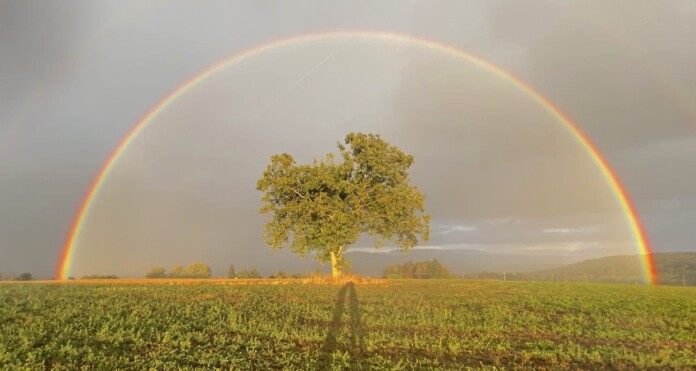
Red deer stag approaches hiker in the Scottish Highlands – Credit: Roaming Thistle / SWNS
A new video from the Scottish Highlands shows a wild stag walking right up to a hiker, getting so close that his breath fogged up the stunned man’s camera lens.
The ‘magical’ moment was captured by Craig who journeys around Scotland in a motorhome and documents his travels as the Roaming Thistle on social media.
A week ago Saturday, Craig was walking in Glencoe with his camera when he saw a male red deer, the iconic symbol of Scotland’s untamed landscapes, and moved in slowly to shoot a video.
“I expected nothing more than a quiet moment observing wildlife,” said Craig, who bought the motorhome to explore Scotland and create memories with his family.
“The stag calmly approached, completely unbothered, and gently brushed up against the camera lens.
“As he breathed on it, the lens briefly steamed up, which somehow made the moment feel even more magical before he quietly moved on again.”
The traveler said he felt a mix of disbelief and privilege after the interaction.
“Encounters like that are incredibly rare, and it felt genuinely special to witness such calm, natural behavior from a wild animal.”
Known as the Highland stag, the male red deer (Cervus elaphus scoticus) is Britain’s largest land mammal, renowned for their massive branching antlers that can span 45 inches (more than a meter).
“It was one of those moments that stays with you, not because it was dramatic, but because it was quiet, intimate, and entirely on the stag’s terms.”
“This is proof that the most majestic residents of the Highlands are also the most curious!”
SHARE THE MAJESTIC MOMENT With Animal Lovers on Social Media…
Two original watercolors for The Jungle Book by Rudyard Kipling – Credit: Roseberys / SWNS
Two original illustrations for Rudyard Kipling’s The Jungle Book that were lost for over a century have been discovered.
The watercolors had been hanging unrecognized on the walls of a London family home for decades.
The rediscovery increases the number of known surviving originals to just six out of an original set of 16.
The four other surviving illustrations are now split between private collections, the Natural History Museum, and the National Trust.
The first watercolor by Edward Detmold depicts Mowgli with Bagheera, the black panther. The second was painted by Edward’s twin, Charles Maurice Detmold, depicting Cold Lairs, the home of the ‘Monkey People’ or Bandar-log.
London auctioneers Roseberys will offer both works for sale on March 10, believing they will fetch $20,000 each.
The revelation has astounded the owners of the two paintings, who are remaining anonymous.
Credit: Roseberys / SWNS
“These drawings were never treated as ‘important’ works in our family – they were simply part of our home,” they explained.
“Finding out that they restore a missing piece of the visual history of Kipling’s The Jungle Book has been completely unexpected.”
The watercolors were created in 1903 for the deluxe portfolio, Sixteen Illustrations of Subjects from Kipling’s ‘The Jungle Book’, which was commissioned by book publisher Macmillan & Co in 1902.
Reportedly limited to 500 copies, the portfolio was published separately from the book itself, which had been published nine years earlier in 1894.
Detail of Mowgli with Bagheera from Jungle Book watercolor – SWNS
The original Jungle Book collected stories that Kipling had previously published in magazines, and it included illustrations from the author’s father, among other artists.
Later, the first standard printed edition of The Jungle Book incorporating the Detmold illustrations was first published by Macmillan in 1908. It contained the 16 plates, as well as a frontispiece illustrated by the Detmold twins.
But, the 1903 portfolios are now extremely rare because their 16 large plates were often removed for framing individually. One complete copy is held by the U.S. Library of Congress.
“To be able to bid for two of the six known surviving original watercolors is a vanishingly rare opportunity,” said Lara L’vov-Basirov, of the Roseberys auction house.”
“Especially, if you consider how rare the printed versions of these illustrations are because they were treated as works of art and framed, breaking up the portfolios in the process.”
“It is difficult to convey just how big their impact was when the portfolio was first published, making headline reviews on both sides of the Atlantic—and the Guardian reviewer singling out both of the individual watercolors we have here for particular praise.”
The Detmold watercolors, appearing on the market for the first time, were published when the twin artistic prodigies were just 20—and it proved to be their final joint venture, as Charles Maurice tragically took his own life at age 25.
SHARE THE AMAZING DISCOVERY With Book Lovers on Social Media…

Quote of the Day: “Heartbreak is unpreventable. It’s the natural outcome of caring for people and things over which we have no control.” – David Whyte, poet
Photo by: Andrew Welch
With a new inspirational quote every day, atop the perfect photo—collected and archived on our Quote of the Day page—why not bookmark GNN.org for a daily uplift?