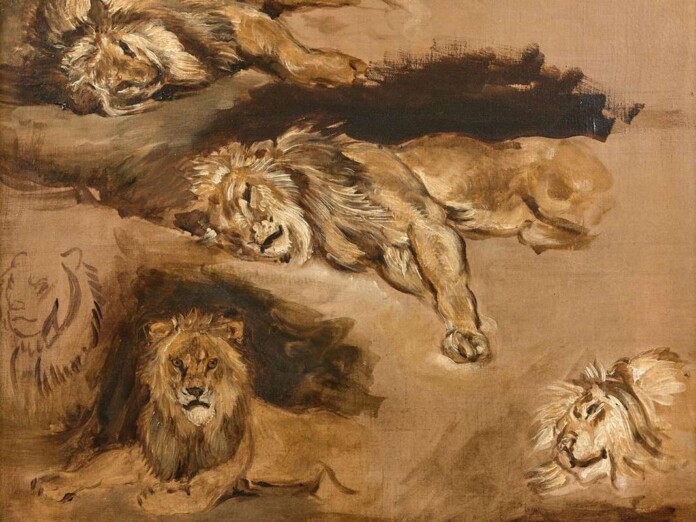
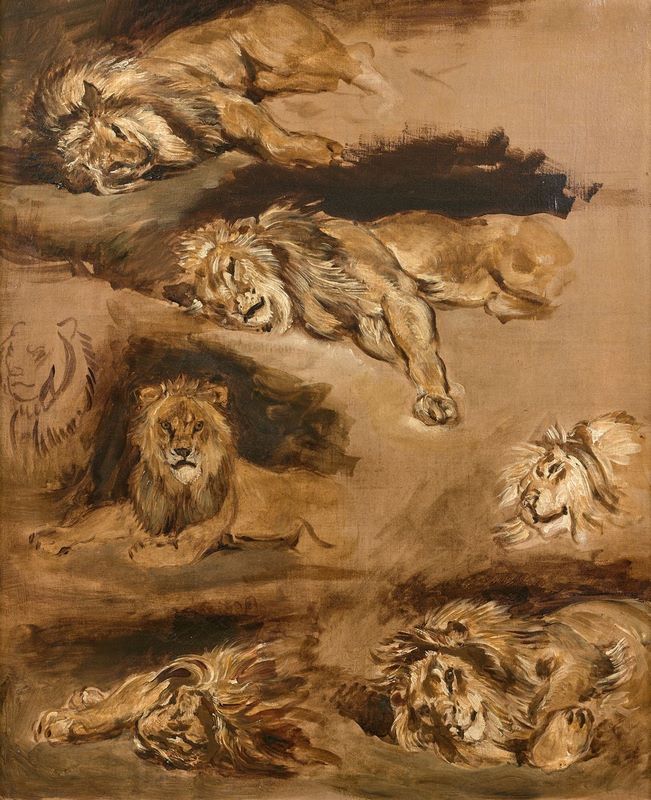
A section of Eugène Delacroix's Study of Reclining Lions - credit Hôtel Drouot
Up for auction today at a swanky Parisian auction house will be a slightly lazy paint sketch of some lions.
But these relaxed beasts are more than they appear. As it turns out, the work entitled Study of Reclining Lions was a lost creation from one of Paris’ greatest ever modern painters: Eugène Delacroix.
The man whose hand wielded the brush that gave the world Liberty Leading the People, Delacroix also painted these 7 lions in a swirl of brown and ochre savannah, but after a 1830 sale following his death, the work disappears from records.
It turned up during an appraisal at a home in France’s central region of Touraine conducted by Malo de Lussac.
“The owners were not sure that it was a Delacroix,” de Lussac tells Agence France-Presse. “When I arrived in the living room, my gaze was attracted by his magnetism. It was very moving. Delacroix’s works are seen very regularly in museums but very little in private hands.”
Sophia Anderson at the Smithsonian Magazine reports that Delacroix loved very much to observe the tigers and lions kept in the menagerie at the Jardin des Plantes in Paris.
“How necessary it is to … stick one’s head out of doors and try to read from creation, which has nothing in common with cities and the works of man,” Delacroix once wrote, and Anderson shared.
“Over the course of his career, Eugène Delacroix produced numerous studies of fauves [wild animals] either for their own sake or for inclusion in a scene with figures,” writes Lee Johnson in The Paintings of Eugène Delacroix: A Critical Catalogue, 1816-1831. “In 1829, he considered a composition on this theme for the Salon, hesitating whether to paint lions or tigers at rest, in contrast to the academic subjects of fighting and hunting. He finally opted for the latter, and exhibited a Young Tiger Playing with its Mother.“
SHARE Yet Another Lost Work Of Art Appearing For The Benefit Of History…
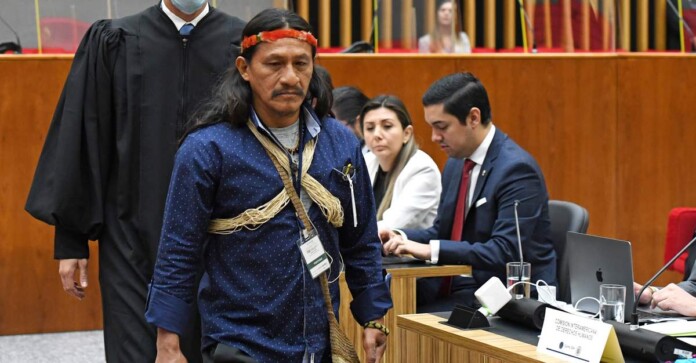
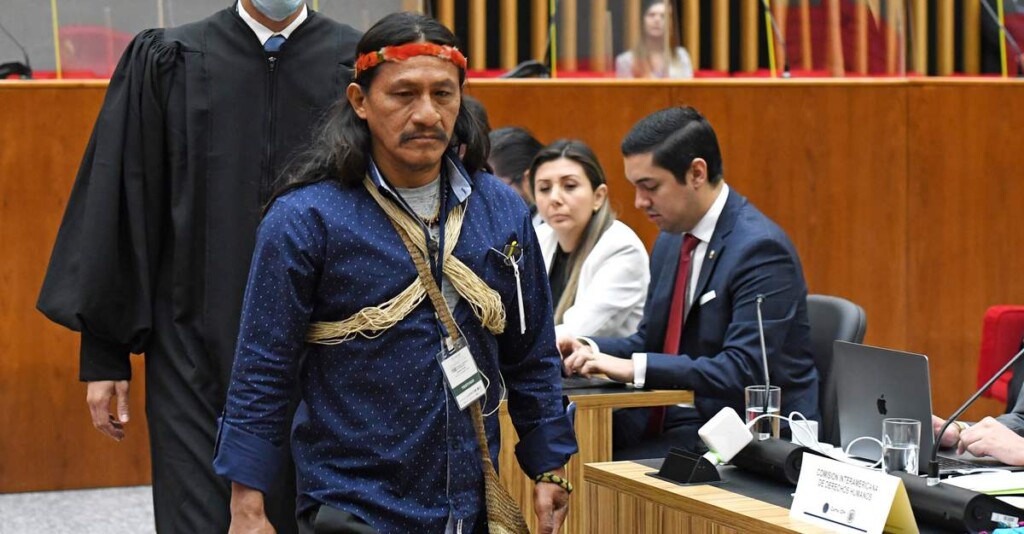
Penti Baihua, a Waorani Indigenous man, appears before the Inter-American Court of Human Rights on August 23, 2022 - credit Inter-American Court of Human Rights
Penti Baihua, a Waorani Indigenous man, appears before the Inter-American Court of Human Rights on August 23, 2022 – credit Inter-American Court of Human Rights
A recent court ruling from the Inter-American Court of Human Rights marks the first time an international judicial body has decided that indigenous peoples living in “voluntary isolation” have a right to do so, and that governments must act to ensure that right.
The ruling comes off the back of 20 years of activism challenging the Ecuadorian government’s encroachment on indigenous lands for oil drilling, and this, as well as other extractive activities like logging, were ruled to be intolerably disruptive to three groups living in voluntary isolation in the Ecuadorian Amazon.
International treaties protecting the rights of indigenous peoples have long been ratified at both the UN and the Organization of American States (OAS), but a case specifically determining whether a group living in voluntary isolation, which used to be called “uncontacted,” were guaranteed protection to allow them to continue doing so has never been ruled on.
While the United Nations Human Rights Council in 2009 and the Inter-American Commission on Human Rights in 2013 introduced guidelines and recommendations that included a right to choose self-isolation, neither were put into writing under international law, nor included in any treaty amendments.
As such, the Costa Rica-based court’s decision that nation-states, in this case Ecuador, must follow a “precautionary principle” when making decisions about future oil operations that may impede a group’s ability to live in self-isolation.
“This principle means that, even in the absence of scientific certainty regarding oil exploration and exploitation projects’ impacts on this territory, effective measures must be adopted to prevent serious or irreversible damage, which in this case would be the contact of these isolated populations,” said the court opinion, written in Spanish, and translated by Inside Climate News.
The three groups in question are the Tagaeri, Taromenane, and Dugakaeri, who are part of the overall Waorani peoples since they share cultural traditions and language.
Testimony was heard from a community leader of the Waorani, Penti Baihua, and two young women who at the ages of 2 and 6 were survivors of violent encroachment by oil workers who killed members of the girls’ group, forcibly introduced them to modernity, and displaced them to different parts of the Amazon.
In the current case, the court ruled that a protected area the size of Delaware that was established in the early 2000s to guarantee indigenous Waorani (and others) rights was created in such a way as to leave oil exploration areas outside protection, despite being the ancestral home of Baihua and his people.
A 6-mile deep buffer zone surrounding the heart of the Tagaeri, Taromenane, and Dugakaeri’s territory called the “Intangible Zone,” has been repeatedly penetrated by extractive industries, which have built roads and other “colonial” infrastructure.
The court used the term “living in voluntary isolation” to reflect that fact that there are no unconctacted tribes on Earth, but perhaps as many as 200 who have seen evidence of modernity, and received minimal contact—perhaps from a related tribe that doesn’t live in isolation—and chose to remain without any interaction with the modern world either out of fear or self-interest.
SHARE This Historic And Hopefully Ultimate Triumph Of These People To Remain In Peace…
Quote of the Day: “Success isn’t always about greatness. It’s about consistency. With consistent hard work greatness will come.” – Dwayne Johnson
Photo by: Joshua Earle
With a new inspirational quote every day, atop the perfect photo—collected and archived on our Quote of the Day page—why not bookmark GNN.org for a daily uplift?
Mary's release into the Busang Ecosystem - credit the Orangutan Project
Mary’s release into the Busang Ecosystem – credit the Orangutan Project
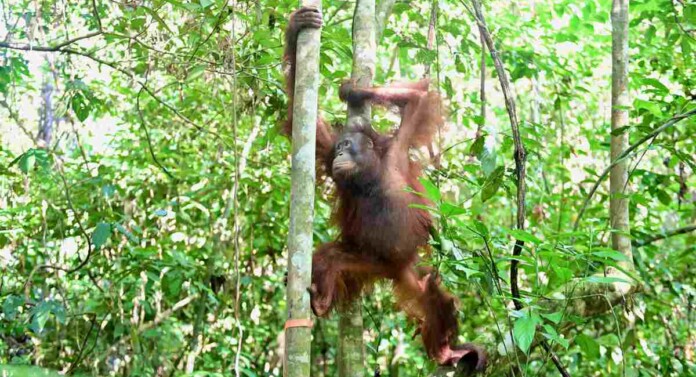
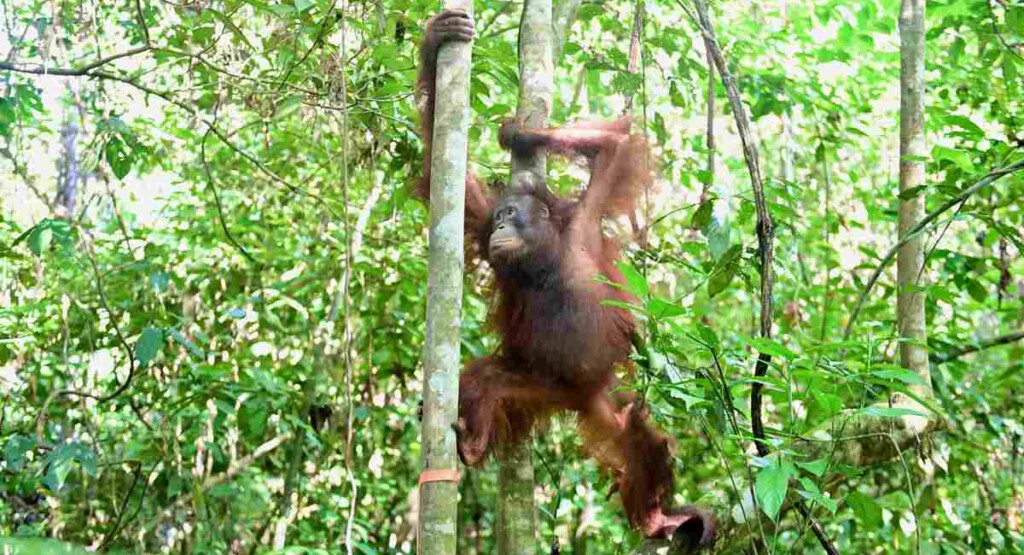
In a heartwarming milestone for great ape conservation, Mary, a rescued orphaned orangutan, has been released into the jungles of Borneo following rehabilitation.
After spending four years at the Bornean Orangutan Rescue Alliance (BORA) Rescue and Rehabilitation Center learning how to survive independently in the jungle, she has been allowed to return to her home in the Busang Ecosystem.
The news was announced by the Orangutan Project, a leading conservation organization dedicated to protecting the Critically Endangered orangutans.
Mary was released alongside her two close companions Jojo and Bonti who now live wild and free in one of Borneo’s last remaining viable habitats.
Mary’s journey began in February 2019 when the BORA team rescued her from the town of Longgie, East Borneo. At just one to two years old, she was found to be illegally kept in captivity by villagers.
Young, orphaned orangutans like Mary must learn how to survive in the jungle. At the BORA rescue center’s Jungle School, Mary spent four years learning vital survival skills from expert caregivers and fellow orangutans.
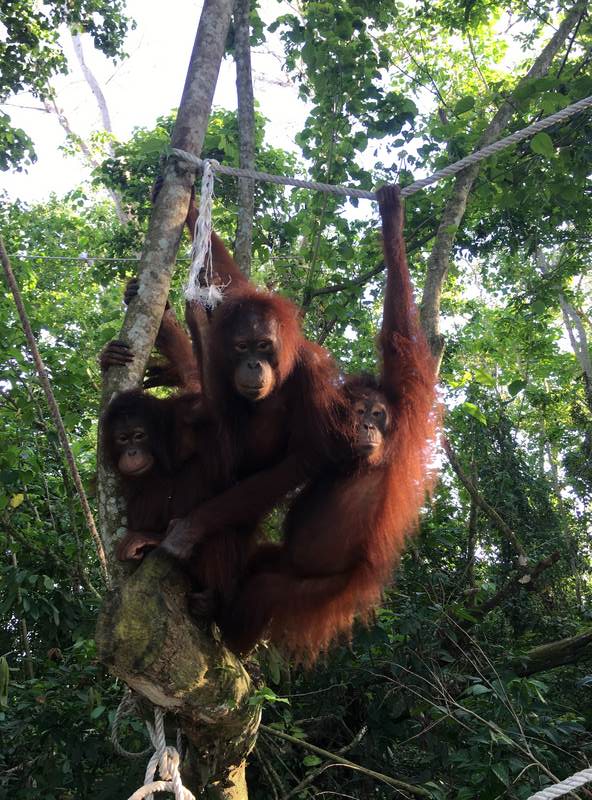
In October 2024, Mary advanced to the next stage of rehabilitation, moving to a pre-release island with Jojo and Bonti. For three months, the trio fine-tuned their forest skills in preparation for their return to the wild.
Mary, JoJo, and Bonti together on the pre-release island – credit the Orangutan Project
“The story of Mary, Jojo, and Bonti is testament to what’s possible when we unite together,” said Leif Cocks, founder of the Orangutan Project.
“These Critically Endangered orangutans deserve our protection, and we’re proud that our BORA rescue center offers long-term support, medical care, nutritious food, and jungle training for orphaned orangutans.”
On January 10th, Mary, Jojo, and Bonti embarked on a 10-hour journey by car and boat to regain their forest freedom. All three orangutans confidently and eagerly ventured out into the forest upon release, heading straight up into the canopy to begin their new life together.
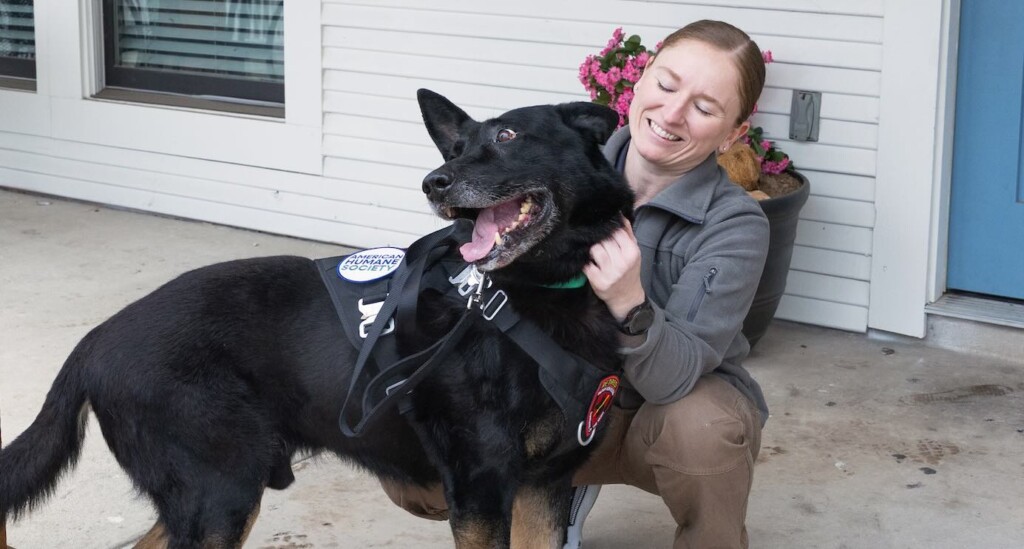
Army Staff Sergeant Kristin Vanderzanden with Frenky – Credit: American Humane Society
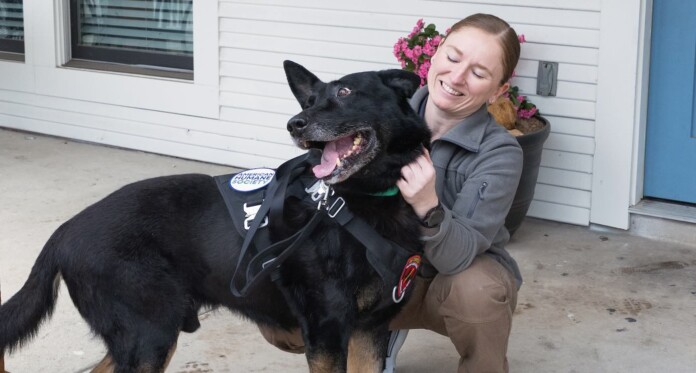
Army Staff Sergeant Kristin Vanderzanden with Frenky – Credit: American Humane Society
Recently, American Humane Society reunited a retired military dog, Frenky, with his former handler, Staff Sergeant Kristin, who were separated in 2021.
She said it was like “leaving a child behind” back then, and two will undoubtedly be looking forward to catching up over rucks, runs, and couch-cuddles.
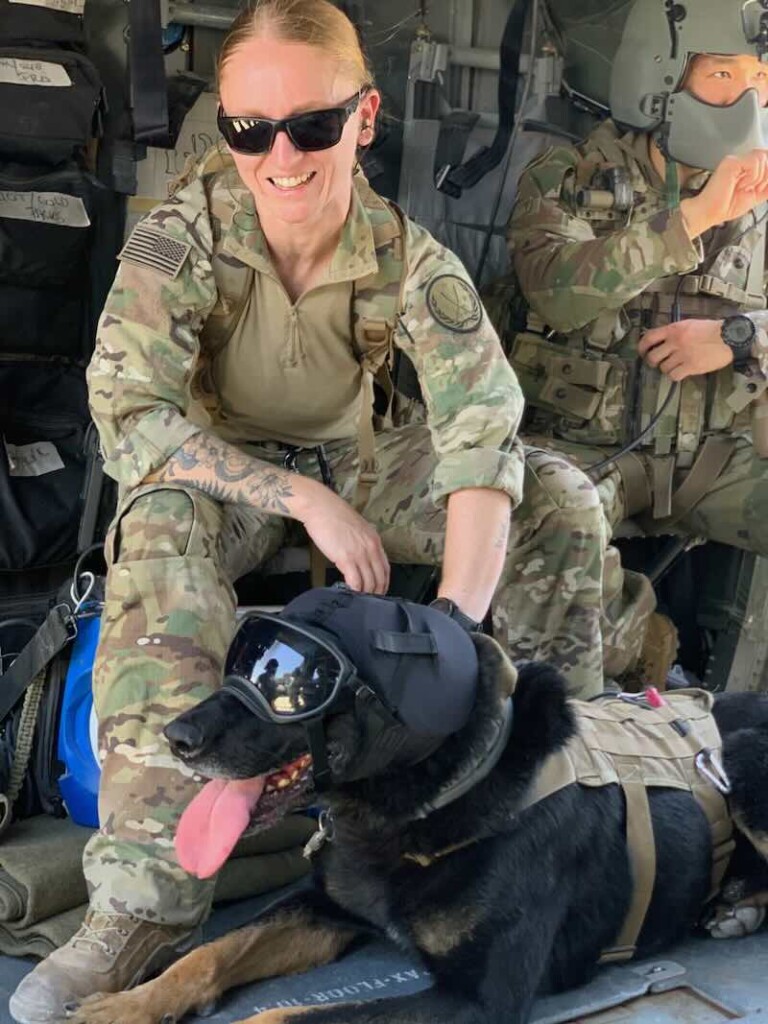
Frenky and Kristin served together for nearly four and a half years, including a 9-month combat tour in Afghanistan and a 10-month combat tour in Iraq. The 10-year-old German Shepherd was trained in explosive detection and bite work.
Army life with Frenky – Courtesy of Kristin Vanderzanden
During his time with Kristin, the pair completed roughly 20 Secret Service missions helping protect high-profile VIPs, including the President, Vice President, First Lady, and several foreign dignitaries.
“We are grateful for the opportunity to reunite military working dog Frenky with his best friend,” said Dr. Robin Ganzert, president and CEO of American Humane Society. “American Humane Society is honored to help give this courageous canine the comfortable retirement he deserves after six years of distinguished service to our country.”
During their first mission with US Special Forces, the team encountered sniper fire and mortar rounds, tragically resulting in several American casualties. Despite the action, Frenky remained calm, and continued his vital work searching for explosives, earning the respect and appreciation of the Special Forces team they were assigned to.
Frenky quickly became an unofficial mascot for the base. His sweet, goofy personality helped boost morale and provided comfort during difficult deployments.
Frenky and Kristin were separated in 2021 when the latter was reassigned to Fort Drum in northern New York. She was heartbroken to have to leave Frenky behind
Since learning that Frenky might retire, Kristin has been “chomping at the bit” to see him again and bring him home. When the news became official, she immediately reached out to American Humane Society for help, having learned about the organization from a close friend at Lackland, who used the program to locate and adopt his own retired military dog.
American Humane Society helped reunite the pair by picking up Frenky from Fort Johnson in Louisiana and personally escorting him to his new home in San Antonio, Texas. Kristin is excited to give Frenky the opportunity to enjoy being a dog, relaxing on the couch, and living in a home, instead of a kennel.
In addition to covering all transportation costs of the reunification, American Humane Society will provide free veterinary care for the rest of Frenky’s life, in honor of the service he provided for his handler, his unit, and his country.
WATCH Good Morning America’s report on the story…
RAISE A Paw In Salute For This American Hero En-Route To A Cozy Retirement…
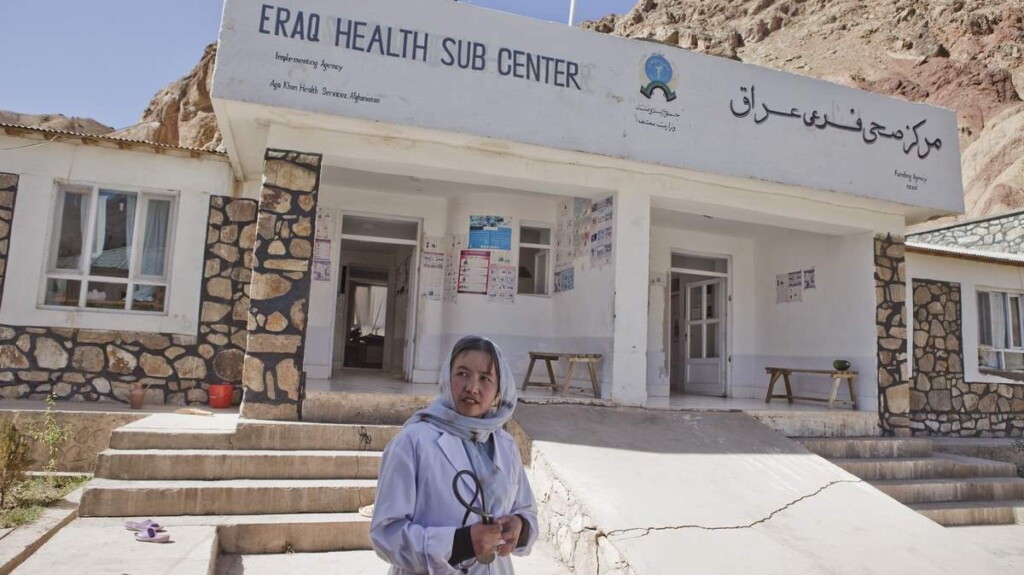
A hospital in Bamyan, Ambar Province - credit Canada in Afghanistan, CC 2.0.
A hospital in Bamyan, Ambar Province – credit Canada in Afghanistan, CC 2.0.
After a few years of Herculean efforts, UNICEF has reached a point where it has prevented two-thirds of Afghanistan’s healthcare sector from collapsing.
Working mostly in rural areas, the operation has been vast, employing 28,000 full-time carers and physicians and 32,000 volunteers staffing 96 fully-equipped hospitals and 2,400 rural healthcare centers, sometimes as small as a single room.
But for vaccination, childbirth, and routine checkups, even a small room can make a huge difference, and the work that UNICEF and partners have been doing is also helping to build better medical habits among rural populations inured to outside influence and change.
Taking over from a failing medical system that collapsed in 2021, UNICEF has propped up huge areas of medical sector work under ridiculous monetary constraints since no money can be transferred into the country’s financial institutions. Since the program began, there have been 2.2 million babies born in UNICEF facilities, a 20% increase since 2019.
The country that has suffered from 40 years of war presents the same challenge to those seeking to end lives and those seeking to save them: an incredibly challenging geography.
Areas like Nuristan and Ghor are covered in valleys where families eke out subsistence living on terraced villages along the valley sides. In these places, it can take hours of hiking to visit and return from a clinic.
But the 32,000 volunteers do as much as they can to connect these isolated places with difference-making medical services, thereby demonstrating the value of modern medicine to skeptical, enmeshed communities.
In a recent release, UNICEF gave examples of these lifesaving changes at work for the benefit of rural Afghans, whether for Safina, whose village now has a health post that helped her welcome three children into the world, or for Roqia, whose grandfather followed the advice of UNICEF’s community healthcare volunteers and hiked three hours over ice and snow to the clinic at the valley bottom after Roqia contracted polio last winter.
These first-hand experiences go a long way towards helping convince others to avail themselves of medical services, especially for male Afghans who, like men all around the world, are reluctant to seek care for minor issues.
But when living off the land as Roqia’s family does, minor issues can easily become major issues, and having a community member who speaks the same language to encourage people makes a real difference. These facilities are, after all, only possible and useful if they are used, UNICEF writes, and using them first requires that people know they’re there and that they can help save a child’s life.
“Community health workers catch the early signs of malnutrition, promote vaccination, and encourage women to breastfeed longer and deliver in institutions,” UNICEF wrote.
Today, more than half the population of Afghanistan receives basic medical services through UNICEF-organized or supported programs and facilities, and three-quarters of the population with hospital-level care, primarily for women and children.
SHARE This Truly Unbelievable Effort With Your Friends On Social Media…
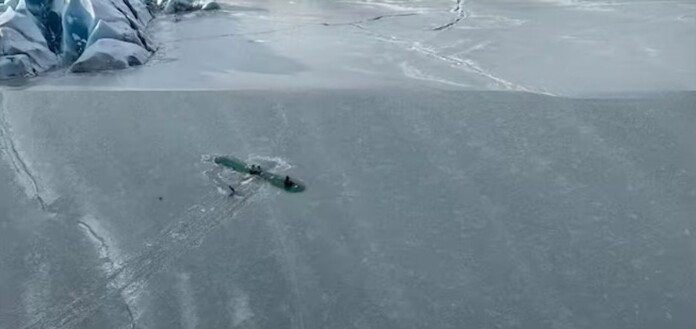
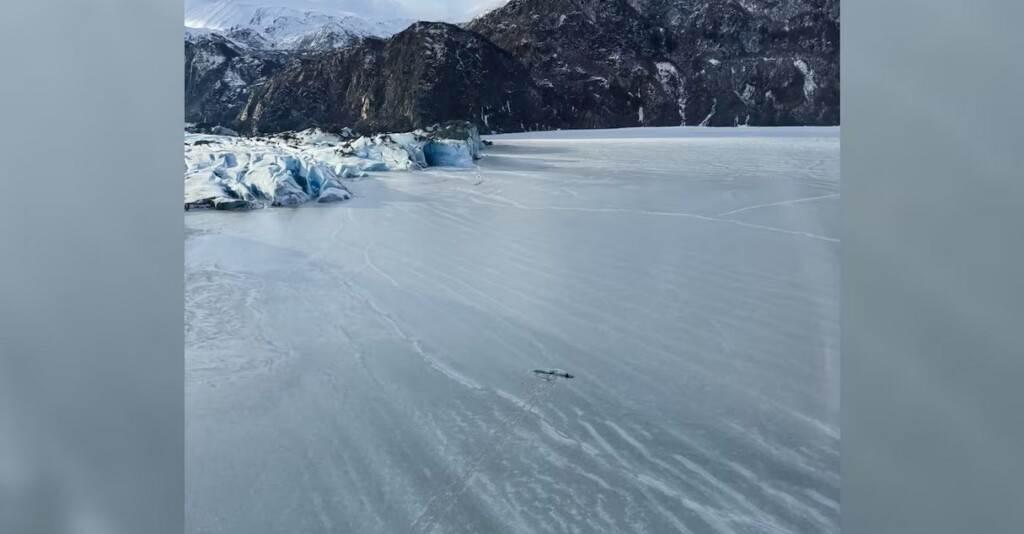
The plane wreckage near the eastern side of Tustemena Lake - Courtesy of Pilot Dale Eicher
The plane wreckage near the eastern side of Tustemena Lake – credit Dale Eicher
Fearing the worst after a prop plane was reported overdue for landing in Alaska last Sunday, search and rescue volunteers were relieved when news rang out that all three passengers survived.
The pilot and two children of elementary and middle school ages survived a crash landing on the frozen surface of Tustumena Lake, and walked until they were seen.
The story first broke Sunday night/Monday morning that a Piper PA-12 Super Cruiser which departed Sunday from Soldotna Airport near Kenai on a sightseeing trip didn’t land when it should have.
John Morris, the father of the missing pilot, told CNN affiliate Alaska’s News Source that his son’s cell phone sent its final ping at about 5:00 p.m. Sunday evening over Tustumena.
Alaska’s News Source reports that a National Guard and state trooper search and rescue operation was augmented by volunteers from the community, with one family friend posting a notice for help on Facebook that was re-shared 420 times.
Eventually, it was a Good Samaritan who saw the plane wreckage and 3 people walking on the frozen lake that helped rescuers find them.
The three survivors were taken to a Kenai Peninsula area hospital and treated for “non-life-threatening injuries.”
Dale Eicher was one of the locals who heard the call for help. With a background in assisting search and rescues, he went up in his own plane to look for survivors, but had barely arrived in the last known position before he heard over the radio that three people had been reported found.
“I called the troopers immediately because I was still in cell service and I knew it was a really good chance that the guy that had found him was not in cell service,” Eicher said. ” I was really shocked. I didn’t expect that we would find them. I didn’t expect that we would find them alive for sure…it doesn’t always turn out this well.”
SHARE In This Small Community’s Relief For The Survival Of Their Three Members…
Quote of the Day: “The most important thing is to enjoy your life — to be happy. It’s all that matters.” – Audrey Hepburn
Photo by: Helena Lopes
With a new inspirational quote every day, atop the perfect photo—collected and archived on our Quote of the Day page—why not bookmark GNN.org for a daily uplift?
A cruelty-free way of making foie gras has been devised by scientists that includes no unnatural additives or additional ingredients.
In fact, it helps reduce the amount of biological waste during the butchering process, keeping it out of landfills where it produces climate-warming greenhouse gases.
Traditionally made foie gras, or fatty duck liver, has been the subject of protests by animal welfare activists as its production involves force-feeding the birds.
Several countries and regions have laws against production. For example, foie gras has been banned in Switzerland since 1978, and, even where it is legal, some retailers have ceased selling it.
“Everything in our process is controlled, which is a positive thing,” said Professor Thomas Vilgis. “We never considered adding anything additional to the foie gras, because we wanted pure duck—nothing else.”
Professor Vilgis, himself a lover of foie gras, wondered if there was a more ethical way to enjoy the dish. The answer is yes—and he patented the recipe which has described in the scientific journal Physics of Fluids.
The authors and Vilgis explain that foie gras is distinct from regular fowl liver thanks to its high fat content, and that they were able to achieve similar fat content, taste, mouthfeel, and texture by altering the liver tissue after a duck was processed by the butcher.
It was important to the research team not to add external ingredients or additives to the foie gras, but it turned out the perfect additive was actually being manufactured by the liver itself: lipases.
These enzymes help digest fat in the body, mimicking the activities that occur naturally in the duck’s daily life. When used to treat duck liver and duck fat, it replicated the delicacy right there in the laboratory.
“At the end of the process, it allows the fat to recrystallise into the large crystals which form aggregates like the ones we see in the original foie gras,” said Vilgis.
He described the recipe as “extremely simple and elegant.” The liver and fat are harvested from the duck or goose, the fat is treated with lipases, both are mixed and sterilised, and it’s good to go.
“We could really see that the influence of these large fat particles,” said Vilgis. “At the beginning of the ‘bite,’ these large clusters have a high resistance, creating a similar mouthfeel of elasticity without being too rubbery as after the collagen or gelatin addition.”
Professor Vilgis has already filed a patent for the recipe, and he hopes to partner with companies interested in helping scale up the production. He also wants to work with sensory scientists who can help refine the taste and smell of the foie gras.
“It was always a dream to make foie gras more accessible and better for animal welfare.”
SHARE This Responsible Carnivorism With Your Friends…
ONLINE EMBARGO 09.00 GMT, 25/03/25
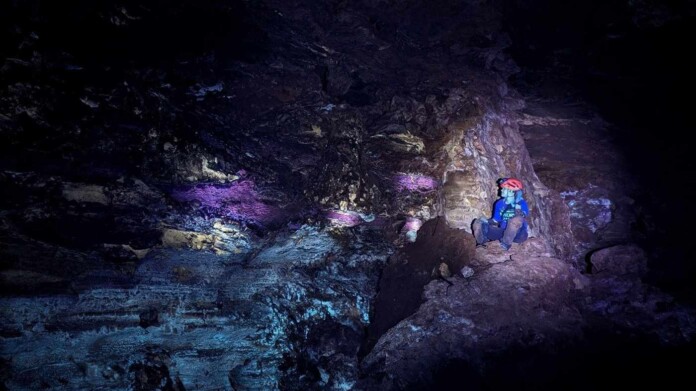
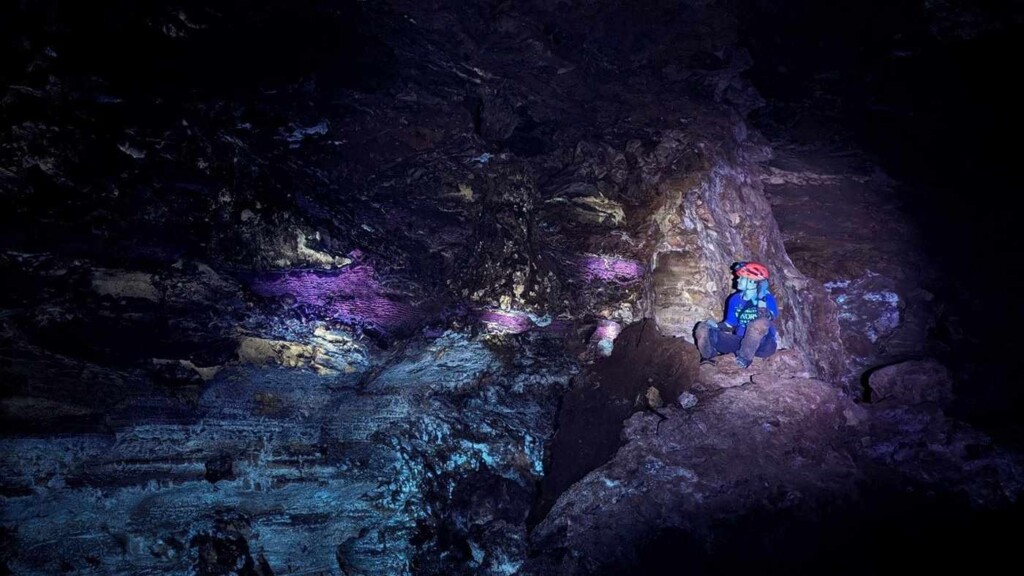
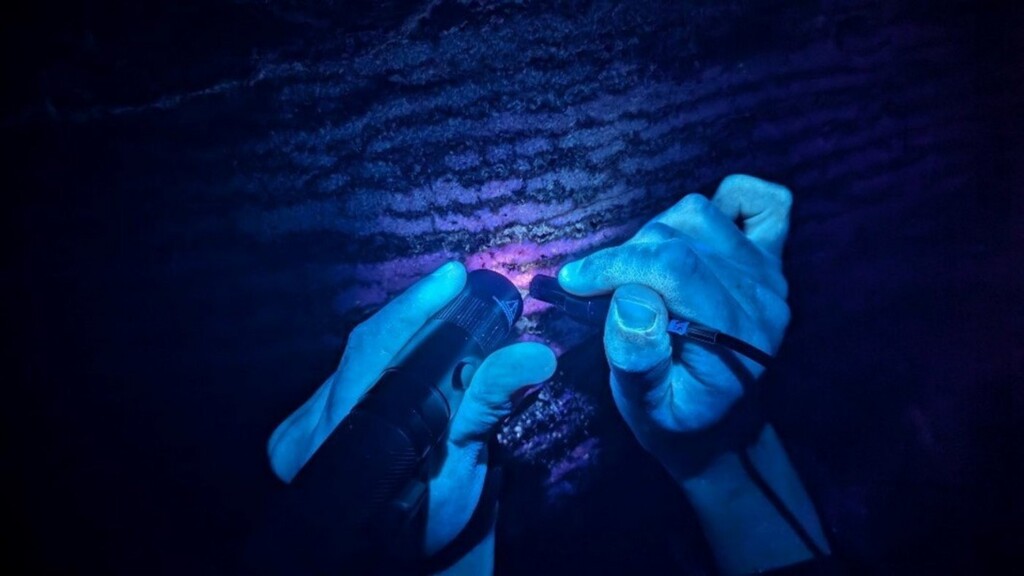
One of SebreeÕs students, Jacqueline Heggen, showing off glowing formations within Wind Cave. Release date March 25 2025. Fluorescent caves deep below America show how alien life could exist on one of Jupiter's moons, say scientists. The chemistry in Wind Cave, South Dakota, mean that, under an ultraviolet (UV) light, chemicals fossilised within shine in brilliant hues of pink, blue and green. Scientists are using the fluorescent features to understand how the caves formed and how life is supported in extreme environments. They say their research, part-funded by NASA, may reveal how life could persist in faraway places, such as on JupiterÕs icy moon Europa. The team explained that the chemistry in the American cave is likely similar to places such as Europa. Astrobiologist Professor Joshua Sebree, of the University of Northern Iowa, went hundreds of feet underground to investigate minerals and lifeforms in the cold, dark conditions.
One of Sebree’s students, Jacqueline Heggen, showing off glowing formations within Wind Cave – credit Joshua Sebree via SWNS
Fluorescent chambers inside South Dakota’s Wind Cave has given scientists a pathway into theorizing how life could exist on one of Jupiter’s moons.
In a cool, NASA-funded experiment, scientists shined an ultraviolet (UV) light around the rocks inside Wind Cave and found that chemicals fossilised within the rocks shine in brilliant hues of pink, blue, and green.
The goal is using the fluorescent features to understand how the caves formed and how life is supported in extreme environments, but the data may also reveal how life could persist underground on worlds such as on Jupiter’s icy moon Europa.
The team explained that the chemistry in the cave is likely similar to places such as Europa.
“The purpose of this project as a whole is to try to better understand the chemistry taking place underground that’s telling us about how life can be supported,” said Astrobiologist Professor Joshua Sebree, of the University of Northern Iowa.
As Sebree and his team began to venture hundreds of feet underground to investigate minerals and lifeforms in the cold, dark conditions, they used black lights to look at the minerals in the rocks within new areas of Wind Cave.
Sebree says that, under the black light, certain areas of the caves seemed to transform into something otherworldly as portions of the surrounding rocks shone in different colors thanks to impurities lodged within the Earth millions of years ago. The hues corresponded with different concentrations and types of organic or inorganic compounds.
“The walls just looked completely blank and devoid of anything interesting,” Sabree told his university press.
“But then, when we turned on the black lights, what used to be just a plain brown wall turned into a bright layer of fluorescent mineral that indicated where a pool of water used to be 10,000 or 20,000 years ago.”
Working on a zebra calcite in Wind Cave – credit Joshua Sebree via SWNS
The team collected the fluorescence spectra, which they say is like a fingerprint of the chemical makeup, from different surfaces using a portable spectrometer. That meant they could take the information with them while leaving the cave intact.
One of the team, Anna Van Der Weide, is using data collected during the fieldwork to build a publicly accessible inventory of spectra to help provide an additional layer of information to the traditional cave map and paint a more complete picture of its history and formation.
Wind Cave was just one of their destinations. In other caves across the United States, they mapped the rock formations, passages, streams and organisms they found. In the chilly Mystery Cave in Minnesota, they had to bury the spectrometer’s batteries in handwarmers to keep them from dying.
In other locations, the team had to squeeze through spaces less than a foot wide for hundreds of feet, sometimes losing a shoe in the process. But their efforts have revealed a wealth of information.
In Wind Cave, the team found that manganese-rich waters had carved out the cave and produced the striped zebra calcites within, which glowed pink under black light. The calcites grew underground, fed by the manganese-rich water.
Sebree believes that when the rocks shattered, since calcite is weaker than the limestone also comprising the cave, the calcite worked to expand the cave too.
Sebree now plans to investigate how similar, mineral-rich water may support life in the far reaches of the solar system. Scientists have previously predicted that the most likely place to look for signs of life on other worlds will be underground, since there, microbes would be sheltered from solar wind and other harmful effects of living with a minimal or negligable atmosphere.
SHARE This Wild Geology Lesson With Your Friends Who’d Appreciate It…
**ONLINE EMBARGO 09.00 GMT, 25/03/25**
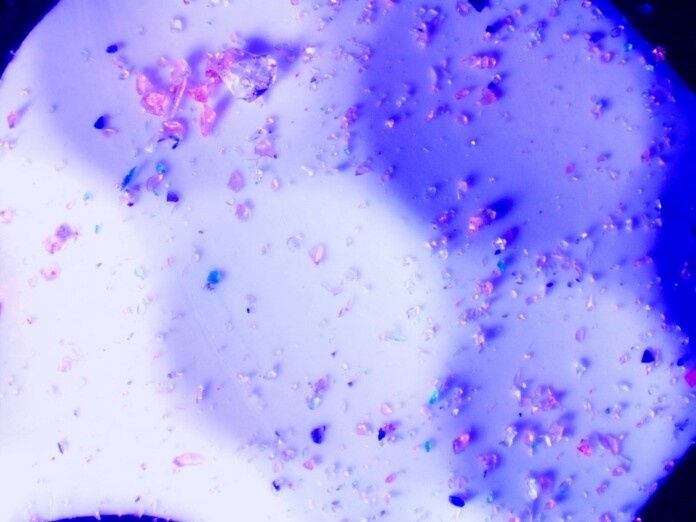
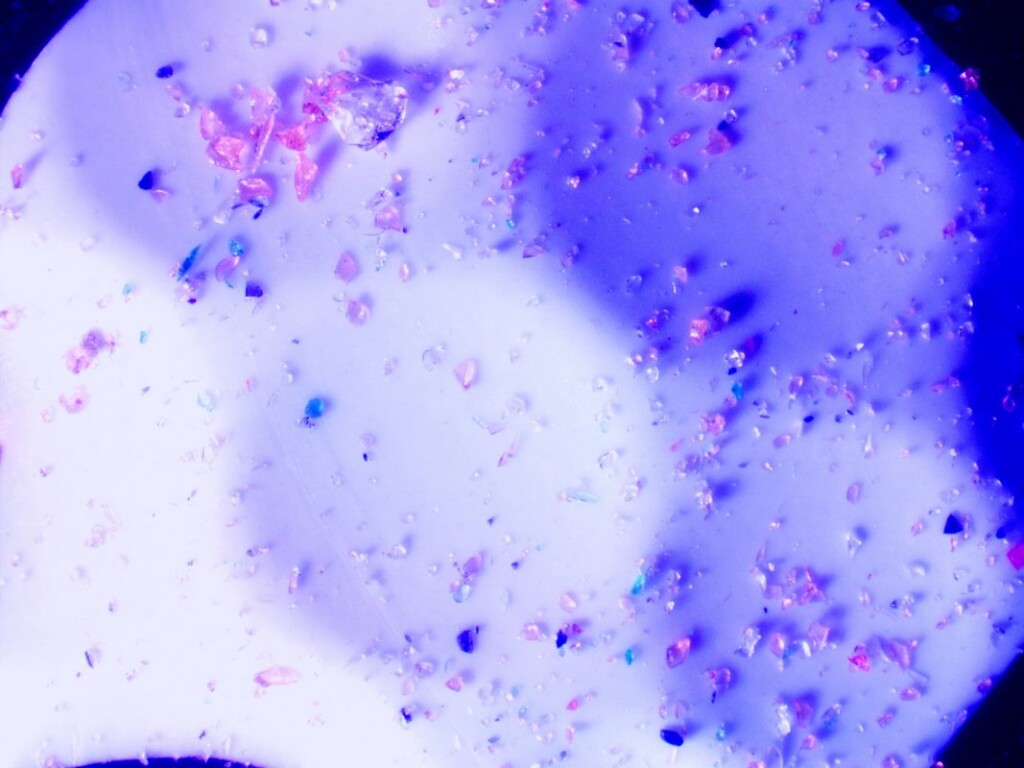
This specialized golf ball looks and feels smooth, but a close examination under a standard light microscope reveals tiny crystals of absorbent silica and polymers dotting the surface. A new type of golf ball with a special "water-loving" coating could answer the prayers of every amateur hack - and even some professionals. The coating can slow the roll of the ball on lightning-fast, dry greens and speed it up on sluggish, wet courses, says the American inventor. He explained that the coating works by soaking up water molecules without interfering with the balls aerodynamics. Thomas J. Kennedy III, a polymer chemist, is due to present his findings at the spring meeting of the American Chemical Society (ACS) in San Diego, California.
An up-close look at the golf ball’s unique coating – credit, SWNS
A new type of golf ball with a special “water-loving” coating could answer the prayers of thousands of golfers.
The coating helps average out the speed of a rolling ball, slowing it on faster dry greens and speeding it up on sluggish, wet courses, says the American inventor.
Thomas J. Kennedy III, a polymer chemist, is due to present his findings at the spring meeting of the American Chemical Society (ACS) in San Diego, California, and explained that the coating works by soaking up water molecules without interfering with the ball’s aerodynamics.
“I was thinking about a way to help golfers and the game of golf overall by improving the putting process so that having a good round was not a matter of chance but a matter of skill,” said Kennedy III.
Mr. Kennedy, owner of Massachusetts-based Chemical Innovative Solutions Inc., has previously developed state-of-the-art golf balls that optimised long-distance performance in the air. But with his new project, he focused on the interaction between the ball and the grass.
“Golf in many ways is a surface interaction game, with the putter imparting spin rates on the ball, as well as the grass affecting how fast or slow the ball rolls toward the hole.”
Wet weather causes the fairways to become rough, and putting greens to become soft and sometimes soggy, slowing the roll of the golf ball. But hot and dry weather causes the fairways and—especially putting greens—to allow for much greater roll of the golf ball, known in the game as “fast” conditions.
Kennedy III explained that the coating increases the surface energy of the ball, the opposite of what hot wax does when applied to a car windscreen. On dry grass, the coating draws up water to slow down the ball. But on wet grass, the coating helps release the green’s grip on the ball.
Kennedy says the new coating wouldn’t be considered cheating—it would simply shift the focus of the golfer from judging conditions to better judging his strokes.
“The United States Golf Association has set standards for golf balls,” Kennedy said. “There’s a size limit, a weight limit, a symmetry constraint, and there’s even a standard for overall distance travelled.”
“But within that box, there’s a lot of latitude to do different things that change the playability of golf balls while staying within the confines of the USGA and the Royal and Ancient Golf Club of St Andrews rules.”
To test the coating’s effect on fast and slow greens, Kennedy used a Stimpmeter—a V-shaped metal rod that applies a known velocity to the ball so that the distance it travels on a dry or wet green can be measured and compared.
His experiments revealed that the coated golf balls had a “more consistent” speed on both dry and wet simulated greens compared to uncoated ones.
In a strange and unrelated parallel, Kennedy says the coating could also be applied to solar panels to improve their performance.
“It may sound counterintuitive, but the hydrophilic nature of the coating keeps solar panels cleaner by allowing water to soak the surface and wash away sun-blocking dust and debris.”
Kennedy has provisional patents for the use of the hydrophilic coating on golf balls and solar panels, and believes the balls could be in regular use within “a few months.”
“The game of golf has been around since the 15th century, however, there’s always a new way to look at something as technology evolves,” he said. “Innovation and invention know no bounds!”
SHARE This Fascinating Alteration To The Game Of Golf With Your Friends…
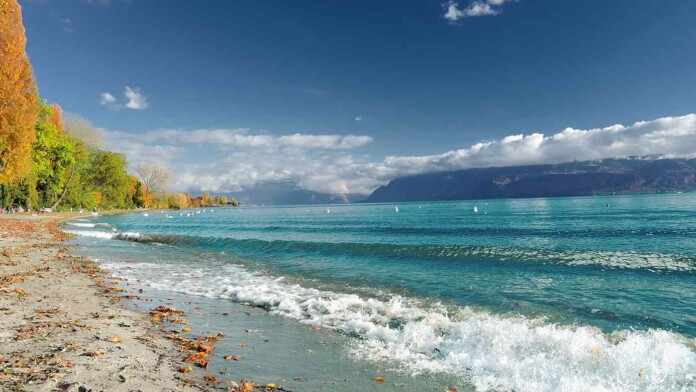
Beach on Lake Geneva, Switzerland - credit Zacharie Grossen, CC 4.0. BY-SA
Beach on Lake Geneva, Switzerland – credit Zacharie Grossen, CC 4.0. BY-SA
From Phoebe Weston at the Guardian comes the story of the Herculean effort to clean up Switzerland’s waterways, an effort that has transformed the unique European country into one that enjoys the cleanest urban swimming spots on the continent.
In the 1960s, water quality in the form of sewage treatment investment received the smallest share of attention, and rivers and lakes like the famous one at Geneva were covered in algal mats, off-colored foam, and dead fish.
A typhoid outbreak at Zermatt in 1963 led to several deaths, and hundreds fell ill. It was found that raw sewage was the cause of the epidemic, and an outcry from the public led to massive investments in sewage treatment and pollution control.
That was then. Now, as Weston’s photography testifies, the “Blue Gold” of Switzerland’s waterways are the envy of their neighbors, and people of all ages and at all hours flood the beaches to enjoy a swim, even in the nippy early spring.
“Very high water quality is important to the population,” says Michael Mattle, head of wastewater technology at the engineering company Holinger. “We take a lot of care not to pollute water on its way through Switzerland.”
According to one source, in 1965, only 14% of the population of Switzerland was connected to a wastewater treatment plant. Today it’s 98%, and the government spends €191 on water purification per citizen, compared to just €98 in the UK, for example.
Since 2016, the Swiss federal government has also been working on a massive pollution control effort for drugs and medications flushed down the toilet when they’re excreted by the body. They include, as Weston details, antidepressants, anti-inflammatories, diabetes medication, and even antibiotics.
Wastewater treatment plants basically work like a human stomach, utilizing bacteria to digest and remove organic matter from water. Alternatively, the treatment for these pollutant drugs requires flushing the water through activated charcoal which can remove 80% of the total pollutant load. What’s left are the famous PFAS compounds referred to as “forever chemicals” by the media.
That 20%, operators at the wastewater plants say, should be the focus of regulatory legislation, not treatment infrastructure.
Weston also reports that the EU, and Switzerland’s near neighbors, are visiting to learn about and hopefully replicate the country’s success, with the EU considering new legislation that would require any sewage treatment plants that serve areas of more than 10,000 people to treat for the pollutant pharmaceuticals mentioned above.
CLEAN-UP Your Friends’ News Feeds With This Inspiring Victory Over Dirty Water…
With a new inspirational quote every day, atop the perfect photo—collected and archived on our Quote of the Day page—why not bookmark GNN.org for a daily uplift?
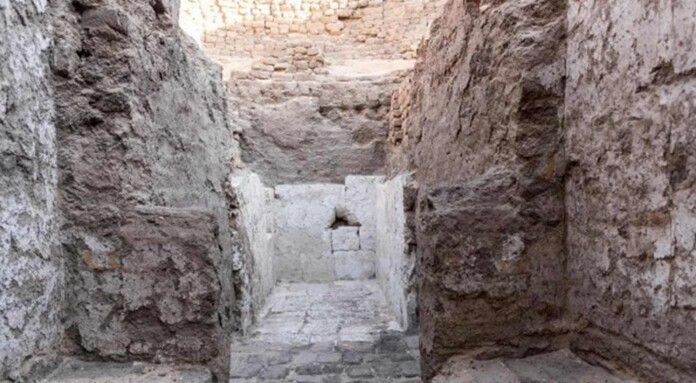
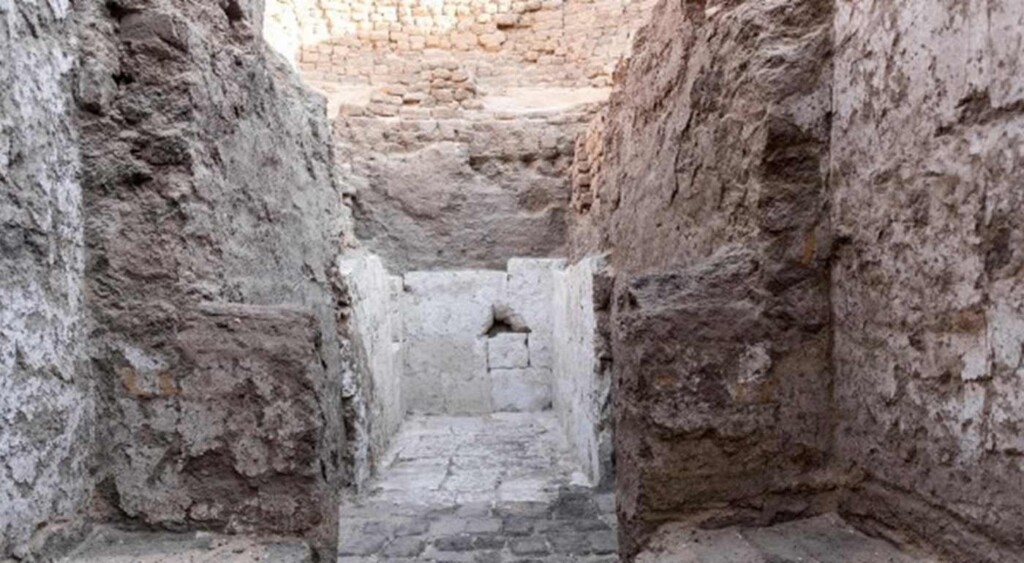
The newly found tomb of an ancient, unknown pharaoh, - credit Egyptian Supreme Council of Antiquities
The newly found tomb of an ancient, unknown pharaoh, – credit Egyptian Supreme Council of Antiquities
Archaeology was recently sent into raptures when, for the first time since Tutankhamon was found, a pharaoh’s tomb was discovered and confirmed as such.
And despite that happening just one month ago, and ‘King Tut’ being found 103 years before that, archaeologists have confirmed that they have found yet another pharaoh’s tomb.
The banner year that started when Thutmose II’s final resting place was identified in February near the Valley of the Kings has continued as another royal sepulcher has been found—this time in the Mount Anubis necropolis in Abydos.
However, this king’s name hasn’t been identified yet. According to the Smithsonian the tomb dates to the Middle Kingdom’s Second Intermediate Period, which spanned roughly 1630 to 1540 BCE.
Professor Mohamed Abdel Badie from the Supreme Council of Antiquities, stated that studies conducted on the newly found tomb in Abydos indicate that it belonged to one of the kings whose reign predated King Senebkay, whose tomb was discovered in Abydos by the mission in 2014.
He noted that it is much larger than other previously known tombs attributed to the Abydos Dynasty, which was located in the southern part of the Middle Kingdom and which was eventually overtaken by invasions from the north conducted by the “Hyskos,” a western Asian people who brought new culture, technology, and on occasion, strife and turmoil to the timeless ancient lands along the Nile.
“The king’s name was originally recorded in painted scenes on plastered brickwork that decorated the underground entrance to the limestone burial chamber,” Josef Wegner, an Egyptologist at the University of Pennsylvania who led the excavation, tells Live Science. “However, the hieroglyphic texts were damaged by ancient tomb robbers, and not enough survives to read the king’s name.”
It’s possible that sophisticated AI programs could decipher enough of what’s left behind, but the challenge remains that not much is known about the Abydos Dynasty, so there is little to base any guesses or assumptions on.
Physically, the tomb was located 20 feet underground in a limestone chamber lined with mud-brick vaults. Very few possessions interred with the numerous dead, most of whom were children, had been left by tomb robbers, but pottery fragments and amphorae indicate that the king was connected to a large local production center of brick and ceramic kilns.
SHARE This Ancient Archeological Mystery In Egypt With Your Friends…
credit - Albertson Drone Service LLC, via Facebook
credit – Albertson Drone Service LLC, via Facebook
A pioneer in utilizing drones for agriculture, a man with the same condition as Steven Hawking has built a flourishing business in just 4 years.
Drones have plenty of use on the farm, and Kyle Albertson has developed services for surveying, crop spraying, and more. Diagnosed with congenital muscular dystrophy (CMD) at just 9 months old, Albertson has never let it get in his way.
Growing up in Indiana with farms as far as the eye could see, riding tractors and combines were activities that he always enjoyed. As a young man he joined both 4H and Future Farmers of America (FFA) and worked hard to develop a goal-oriented mindset to fuel his sense of independence, and the belief that he could do something dramatic with his career.
“It’s a shock to some people that I can do the things I do,” Albertson said. “It’s just old habit to me.”
Graduating from Purdue University in 2021 with a degree in agribusiness, he launched his business Albertson Drone Service LLC. the same year. Drone photography had emerged in his years at university as a hobby, but he found that farmers were really interested in aerial photography, and would pay well for drone-operated pesticide deployment.
His business has doubled its revenue in the most recent fiscal quarter compared to its first year, as well as the number of clients it maintains, and the acreage it covers.
The as-yet short journey has nonetheless gone a long way in fostering that independent streak, and speaking with WRTV, Albertson noted that he has a driver’s license and cruises around country roads in “a modified van with a joystick.”
When asked if he had any inspiration for readers, he decided to offer an entrepreneurial perspective, rather than anything to do with his CMD—as good a piece of evidence as any that he has done what all disabled people strive to do: not let their condition define them.
“If you think you can do it and it’s a good business action, give it a shot,” said Albertson.
WATCH the story below…
SHARE This Unbelievably Driven Man And His Inspiring Story…
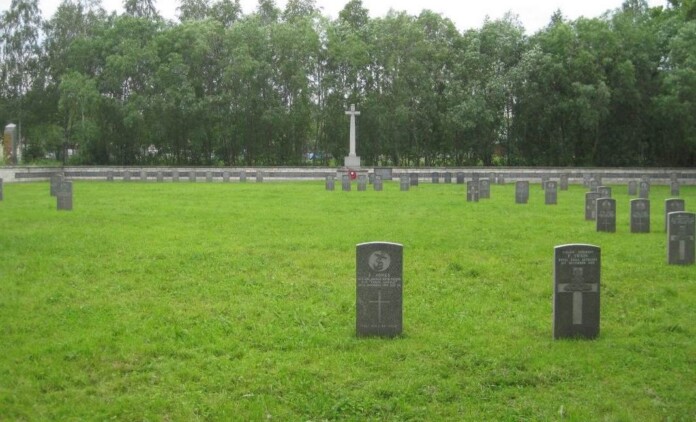
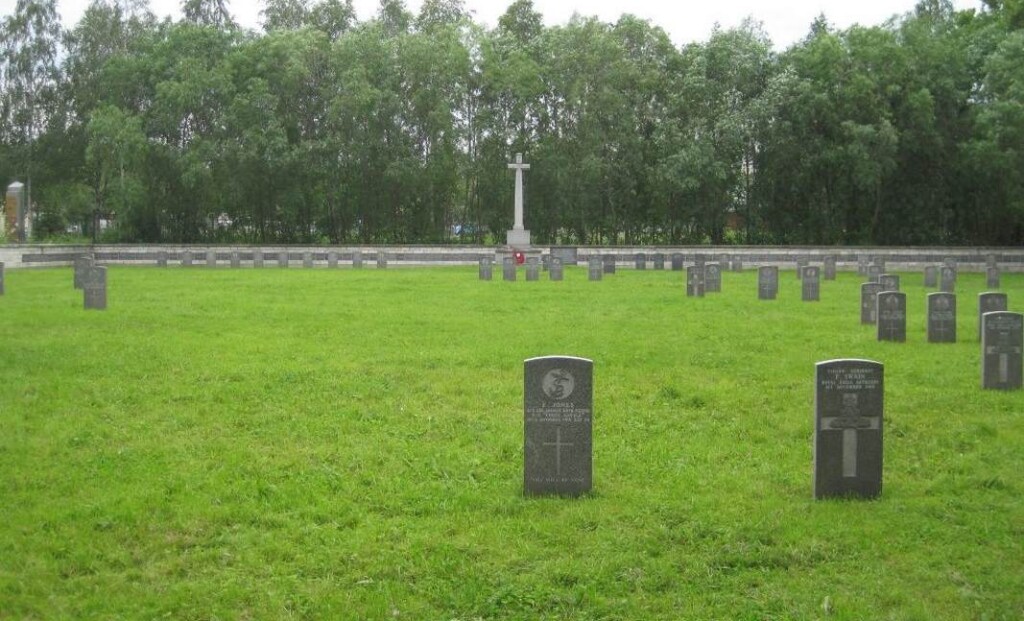
Arkhangelsk Allied cemetery in Russia - credit: Johnny History, via findagrave.com
Arkhangelsk Allied cemetery in Russia – credit: Johnny History, via findagrave.com
Diplomatic channels between the UK and Russia have maintained a centuries-old tradition of grave tending for the fallen of wars long past, proving that there are notions in international relations that transcend even the sternest political policies.
What’s more, news reports say that there is no communication between the nations over maintaining the graves of the other’s fallen soldiers, but various lines of evidence suggest that the Russians have continued to do so even without payment or special request from the British government.
Over the past 200 years, Great Britain and Russia have been allies and enemies, friend and foe, cousins and colleagues.
There are 663 fallen British soldiers behind the borders of the Russian Federation: casualties of operations long forgotten, in Murmansk, Arkhangelsk, and Vladivostok. Typically, the UK’s Commonwealth War Graves Commission relies on a mixture of Russian Federation military and paid contractors to take care of these graves and ensure they are clean and the gardens are maintained.
When Russia launched its invasion of Ukraine in February 2022, efforts by the West to isolate the aggressor nation led to various long-standing agreements being cast into geopolitical limbo.
The Guardian reports, however, that though communication with these contractors and military personnel has ceased, pictures from civilians have shown that even during the last 3 years of the war, British soldiers’ graveyards have been maintained, leading authorities in the UK who tend to 671 Red Army graves in Britain to continue as they have done for so long.
“We haven’t seen the graves but we think they are still being maintained,” said Gareth Hardware, the Commission’s area director for the UK and northern countries. “We are maintaining their graves in our cemeteries.”
“The cemetery looks very well maintained. Someone is taking care of it, even in these difficult times,” an amateur Russian historian, considered by the Commission as a credible source, wrote in a blog post last summer after visiting Arkhangelsk.
The Guardian continued saying that a British diplomat in Moscow visited Murmansk on Remembrance Day last year with a Russian counterpart and reported back that the cemetery there was in good condition.
The same is true for Germany and Russia, who for very obvious reasons have much larger burial enclaves for the other, with graves totaling more than half a million for each.
“We still recover Red Army soldiers in Germany each year and will provide them a proper grave in Germany,” said Dirk Backen, general secretary of the German war graves commission. 600,000 Soviet soldiers lie in German lands, while the 760,000 Germans who fell on Russian soil during the world wars are also having their cemeteries maintained.
credit NASA, screengrab
US-Russia group hug
The honored dead aren’t the only remaining connections either. Space-bound cooperation remains open between the West and Russia. Since the war in Ukraine began, several Russian cosmonauts have ridden to the International Space Station and worked alongside NASA, ESA, and JAXA astronauts in maintaining the international platform.
Last week, GNN reported that two NASA astronauts stranded on the ISS were finally being allowed to return home. The team that was to be their relief included Kirill Peskov, a Tuvan Russian cosmonaut, whose trip would have involved him arriving in the US, receiving a briefing from NASA mission control, and riding a US-made SpaceX Dragon capsule to the ISS—all massive security breaches if done in any other government department.
Last March, NASA’s Crew 8 spacecraft arrived at the ISS, and their arrival was recorded with a video of a pile-on group hug in microgravity. Arriving with them was Roscosmos’ Alexander Grebenkin.
In the video, Crew 8 mission commander Matthew Dominic is mobbed by NASA’s Jasmin Moghbeli, but also Belarussian Soyuz 24 mission flight engineer Marina Vasilevskaya.
Dominic then moves to greet Soyuz 24 mission commander Oleg Kononenko, while the rest of his crew follow behind hugging those wearing the red white and blue and the white blue and red.
Astronauts have a unique way of seeing the world, figuratively and literally. Looking down on our home from low-Earth orbit day after day, they realize (and they all say they do) that space is an incredibly harsh environment, and everything we humans have and need is concentrated on this single planet with no alternative.
As regards US-Russia relations, you can see in the video what they think of the current tensions, and perhaps we should all take a leaf out of their books.
WATCH the micrograv group hug below…
SHARE This Awesome Reminder That Peaceful Coexistence Is Always Possible…
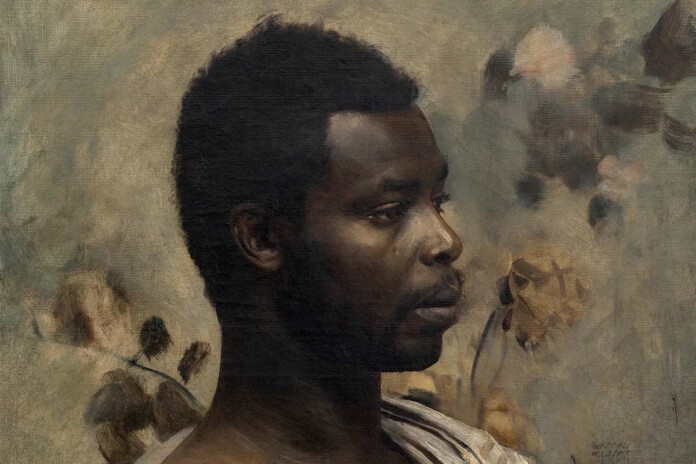
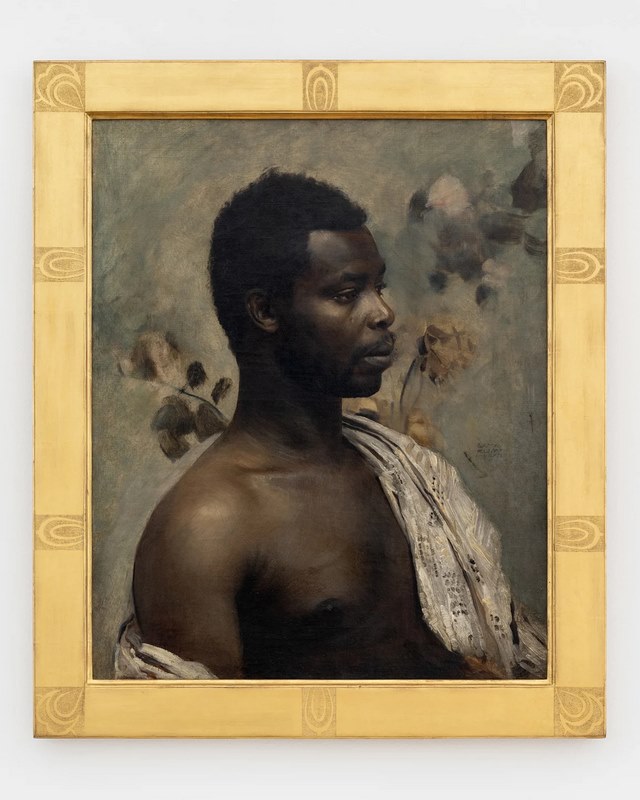
Prince William NII Nortey Dowuona, 1897 - credit: Wienerroither & Kohlbacher Galleries.
Prince William NII Nortey Dowuona, 1897 – credit Wienerroither & Kohlbacher Galleries.
A portrait of a stately West African leader painted by famed Austrian artist Gustav Klimt has reappeared in public after being lost before World War II.
Nearly a hundred years have passed since it was last seen, and is now exhibited at Wienerroither & Kohlbacher Gallery in Vienna, with a price tag of €15 million.
The portrait of Prince William Nii Nortey Dowuona—a representative of the Ga people in West Africa, comprising parts of modern-day Ghana, was painted by Klimt in 1897, sold by the artist’s estate in 1923, and lost by 1938.
An art historian who had been searching for the work for 2 decades verified its authenticity for W&K Galleries with the help of a well-faded stamp on the back of the canvas. A wealthy Austrian Jewish family who had converted Klimt’s studio into a villa acquired the painting in 1928 for an exhibition.
That was the last time and place it was seen, for by 1938, the Klein family had abandoned their property and fled the growing anti-semitism in their homeland to Monaco.
“The composition and painterly execution point to Klimt’s turn towards decorative elements, which were to characterize his later work, and are directly linked to his pioneering portraits of the following years,” said Alfred Weidinger, who authenticated the work, in press materials.
Prince Dowuona traveled to Vienna for a late-colonial sing-and-dance called the Völkerschau which exhibited ethnographic displays from colonized people around the world at an urban zoo. This is where a friend of Klimt’s first found the stately African leader, who was one of 120 Ga people who traveled via steamship to Austria for the Völkerschau, according to Art Net.
It’s believed that both Klimt and his friend Matsch painted Dowuona, but being that this work remained unsigned and in Europe, the client, whoever it was, probably selected the one painted by Matsch.
Klimt’s corpus includes many that have fetched 8-figure sums at auction houses, and one that sold for $108 million of an unknown woman holding a fan. There is currently no plan to auction this work.
SHARE This Latest Masterwork To Reappear From Europe’s Past…
Quote of the Day: “We cannot avoid pain, but we can avoid adding suffering to the pain.” – Pema Chödrön
Photo by: Jesus Fodulla
With a new inspirational quote every day, atop the perfect photo—collected and archived on our Quote of the Day page—why not bookmark GNN.org for a daily uplift?
Shenul Williams and a selection of her products - credit Aliza Welch, family photo
Shenul Williams and a selection of her products – credit Aliza Welch, family photo
Thanks to a little love in a ‘Buy Canadian’ Reddit room, a small condiment business thinks they’ve found the secret ingredient to success: patriotism.
Aki’s Fine Foods has been manufacturing Indo-African sauces and chutneys out of Pickering, Ontario, for 38 years, but owner Shenul Williams says she’s never seen anything like the sales numbers being put up this year.
After the province’s lockdown orders during the Pandemic sent many of Williams’ key grocery store buyers out of business, it seemed like she was going to follow suit, and the company started originally by her parents wouldn’t make it to the third generation.
Realizing that her mother could lose her business if something didn’t happen, Willams’ daughter Aliza Welch posted a call for help in a Reddit room called Buy Canadian.
“My mom owns a Canadian-made Indo-African sauce company that has been in business for 38 years. It is truly amazing and has been struggling since COVID,” Welch wrote.
“With so much interest in buying from small Canadian companies, I figured I would share her products as an alternative. Your support would change her life. All products have a maple leaf!”
That ‘support’ saw sales on Aki’s Fine Foods‘ website increase 4,000%.
Gary Sands, senior vice president of public policy and advocacy for the Canadian Federation of Independent Grocers, said “he’s never seen anything” like the reorganization of Canadian producers and vendors toward buying, sourcing, and selling local in the wake of US President Trump’s newly imposed 25% import tariffs.
Speaking with CBC, Sands said that Williams’ newfound success is just one manifestation of this all-consuming and rapid business trend sweeping the Great White North.
SHARE This Amazing Social Media Save With Your Friends…
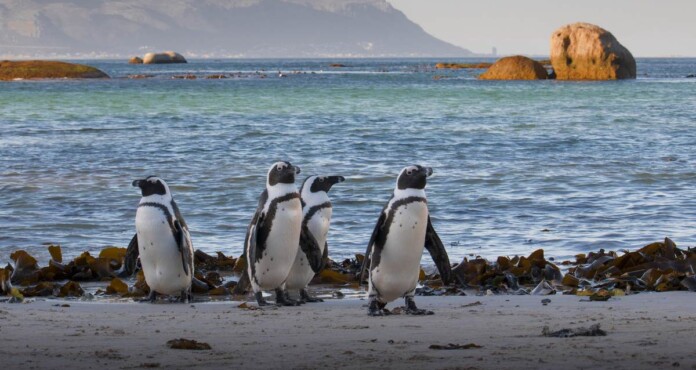
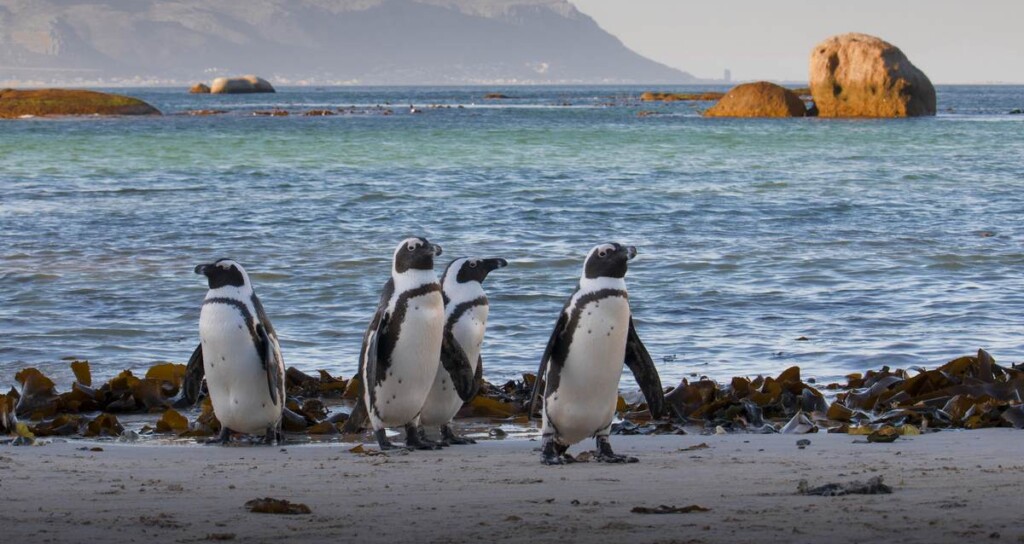
African penguins on a Cape Coast beach - credit S Martin, CC 2.0., via Flickr
African penguins on a Cape Coast beach – credit S Martin, CC 2.0., via Flickr
For a critically endangered species of penguin, a recent decision to remove fishing competition from its hunting and breeding grounds may prove to be the key to saving it.
In the rich waters of South Africa’s cape and Atlantic coastlines, 6 key breeding colonies of the African penguin are now no-go zones for commercial sardine and anchovy harvesting, according to a recent court order.
Less than 10,000 breeding pairs of this penguin survive, and conservation groups hailed the court’s decision that will protect the colony’s feeding areas for at least a decade.
“This order of court is a historic victory in the ongoing battle to save the critically endangered African Penguin from extinction in the wild,” said BirdLife South Africa, one of the groups that had called for the protection.
The protected areas include Robben Island where Nelson Mandela was imprisoned for 18 years. Dassen Island, further up South Africa’s Atlantic coast, and the Stony Point Nature Reserve, make up two of the other 6 areas in total where penguin protections are kicking in.
The court’s decision followed weeks of “exceptionally hard work and negotiations between the conservation NGOs and the commercial sardine and anchovy fishing industry,” according to SANCCOB, one of those very NGOs.
“This case has been first and foremost about improving the chances of conserving Africa’s only penguin species, but the outcome of these closures will also benefit other marine predator species, such as cape gannets, cape cormorants, and other socio-economically important fish that also eat sardine and anchovy, as well as the livelihoods of many who derive benefits from marine ecosystems,” said BirdLife’s Dr. Alistair McInnes.
SHARE This Great Court Ruling For Birds With Your Friends…