


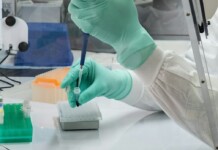









The Oslo energy company this week premiered a network of hot water pipes that feed thousands of radiators and taps around the city powered by the heat from raw sewage beneath the city. This process requires electricity, but two-thirds of the energy comes from the waste from people’s flushed toilets. Read the Reuters story here.
G is for General Announcements
Happy Monday!
We have constantly improved our site since its launch on March 14, thanks especially to PassionSpire for the needed web services and technical expertise:
- The Archive of more than 600 stories published from 1997-2003 is being moved here. It will be broken down for browsing by category and each three year period. You can also use our search engine to find old stories. Only the Earth and Inspiration sections have been moved so far.
- A blog is being set up for me to do announcements (like this) and ramblings (like that). It is called “G is for blog”.
- Coming soon a calendar… Submit your dates and events for publishing
- I finished posting “TWENTY MUSLIM INVENTIONS that Shaped Our World”. If you haven’t read them, you gotta check it out. One of the things GNN-i strives for is to break stereotypes. It doesn’t get anymore compelling than this, especially for us westerners: Islamic science and cultural was WAY ahead of Europe in so many ways in earlier centuries.
I hope you have been enjoying the features like “On this day in history”, and the “Inspiration Point” included for your morning coffee break. I would like some feedback, especially for the daily history item. Do you like it? Or does it take too much space away from news? What are your other comments about the content so far? I try honor your time by publishing only what is most compelling… Until next blog post … geri
Child’s school doesn’t offer the course you want? Enroll Online, attend from home
 Does your child want to take a course in Latin, Marine Science or Contemporary Irish Literature — but your local school doesn’t offer it? The popularity of online coursework is catching on. Florida and Utah are leading the way in the US with tens of thousands of students enrolled in online courses for children in grades K-12.
There are other reasons for schooling online: medical or discipline challenges keeping kids away from school, the desire for a more flexible schedule, more one-on-one time with the teacher (albeit virtually) than you’d get with 40 students in a classroom, and of course, home-schooled kids augmenting their studies. The Christian Science Monitor reports — online, of course.
Pakistan Tackles Child Labor Horrors
The International Labour Organisation and Pakistan’s Ministry of Labour have launched a program they say is aimed at eliminating the dangerous and degrading practice of ‘rag picking’ that occupies thousands of poor children rummaging through landfills. It offers welfare and social programs that offer alternatives like schooling, the arts, and sports.
Among the benefits poposed by the project:
- 1,400 child labourers ages 5-17 would receive education in the Rawalpindi district.
- 1,000 children ages 5-14 would be provided education in more than 30 non-formal educational centres
- 400 children ages 15-17 would be provided basic literacy and health and safety counselling in 16 literacy centres.
- A community-based ‘child monitoring system’ will be developed to prevent rag picking and ensure the availability of a trained adult work force.
Pakistan’s Daily Times covers the details.
Crackdown on Pollution in Scotland
The environment minister in Scotland announced new sewage pollution guidelines for 80 lochs and rivers, a 20-fold increase in the number of protected waterways in Scotland.
(read more from the Scotsman)
Also, read about several green campaigns in Scotland: St. Andrews becoming the first ‘carbon neutral’ university; proposals for a revolution in building standards; and their goal of becoming the greenest nation in the UK. (Registration is required, but free, for these stories at Scotsman.com)
I’ve Been Conned… That’s the Good News!

Roberto De Vincenzo, the great Argentine golfer, once won a tournament with a large sum of money as the purse.
A woman approached him, asking for money, saying her child was seriously ill, near death, and she could not pay the doctor’s bill. Touched by her plight, De Vincenzo gave her the money he’d just won in the tournament.
The next week, an official with the golf association told him: “I have news for you. That woman has no sick baby. She’s not even married. She fleeced you, my friend.”
“You mean, there is no baby who is dying?” said deVincenzo.
“That’s right,” said the official.
“That’s the best news I’ve heard all week,” he replied.
(Reprinted by permission. Copyright c 1994, The Best of Bits and Pieces, Arthur F. Lenehan, editor)
Tide Turning for Sustainable Seafood
With growing worries about dwindling supplies of fish, negative effects on the ocean and coastal environments, and concerns about pesticides, sustainable seafood practices are gaining momentum in the United States. But there are challenges to overcome before the certification of large-scale fisheries becomes common practice for the Marine Stewardship Council. However, like many other businesses, enviro-friendly practices are leading to health businesses as well as profits.
– Sustainable Seafood story
China Pledges $600M to Cambodia for Building Projects
China has promised $600 million in aid and loans to Cambodia. Half the aid is for a hydro-electric project, and some is earmarked for bridges and new government offices.
(full report)
April is National Poetry Month
 The Academy of American Poets established National Poetry Month in 1996. Their website is in celebration mode and lists 30 ways
 to engage yourself in poetry this April.
Submit Your Good News Poem
In celebration of poetry month,
the Good News Network invites you to
submit your short poem to share with our readers.
(Just use the Submit link in the left menu.)
Oil Prices Spark Alternative Energy Renaissance
Going Green, a special report by CNBC features corporations that are finding new ways to save money with alternative energy. Three separate stories indicate the driving motivation behind the companies going green is their bottom line:
The potential savings are huge. Industrial use accounts for about a third of energy consumed in the U.S., according to Energy Dept. estimates. And by cutting back on just 20 percent of that consumption, American businesses could save close to $19 billion a year, according to the National Association of Manufacturers.
And, about 30 percent of those savings can be achieved with no capital investment!
In the Deep Seas Fish are Booming, Study Says
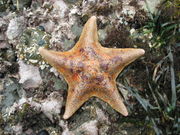
A sweeping view by camera of the ocean floor, and research by David Bailey at the Scripps Institution of Oceanography in La Jolla, California, reveals that sea stars (starfish), sea cucumbers, sand dollars, and sea urchins have been flourishing. Their abundance is increasing the food supply for other fish and triggering an increase in deep-sea populations, said Bailey.
Maryland Adopts Historic Global Warming Law Mandating Pollution Reduction at Power Plants
ANNAPOLIS, Md., March 31 — In a major victory against global warming, the Maryland General Assembly gave final approval Friday to the strongest power-plant cleanup bill ever passed by a legislative body in America.
In addition to dramatically reducing nitrogen, sulfur and mercury pollution, the Maryland Healthy Air Act requires that the state join the Regional Greenhouse Gas Initiative (RGGI), a consortium of eastern states committed to mandatory CO2 reductions from power plants.
No state in America has Passed Legislation that Reduces all four Power Plant Pollutants in such an Aggressive way.
After a two-year campaign led by the Chesapeake Climate Action Network and a coalition of other environmental, faith, and health groups, the so-called 4-pollutant bill passed by veto-proof majorities in both Maryland houses. Aides to Republican governor Robert Ehrlich say the governor does not intend to veto the bill.
New Vaccine Prevents Cervical Cancer
A new vaccine will prevent hundreds of deaths from cervical cancer each year in the UK, the BBC reports today. After receiving the vaccine injection, women are protected for four years.
Two Lost Worlds Give Us Hope – by David Suzuki
February 15, 2006 — Two lost worlds were in the news last week. One was discovered halfway around the world, but the other is right here in Canada.
The first was a never-before examined patch of tropical rain forest deep in the heart of New Guinea. It’s likely one of the most biologically diverse areas on Earth, and it shows how little we really know about life on this planet.
An international team of scientists recently returned from the Foja Mountains of New Guinea having discovered 40 extremely rare mammals, including the golden-mantled tree kangaroo, which was thought to have been hunted to near extinction.
They also discovered four new butterfly species, a new bird species, 20 new frog species and many previously unknown plant species. Having never encountered humans, some of the creatures were so unafraid of people that researchers could simply pick them up off the ground.
“In a tropical rain forest, every second or third insect you pick up is probably unknown to science”
That places such as this still exist is cause for hope. With well over 6 billion people on the planet and an insatiable appetite for resources, pristine places are becoming increasingly rare and species are disappearing at an alarming rate. Yet scientists have only studied a small percentage of life on Earth. Researchers estimate that there are literally millions of species out there that we have never examined and have no clue what they do in an ecosystem. As Oxford entomologist George McGavin points out: in a tropical rain forest, every second or third insect you pick up is probably unknown to science.
The other lost world in the news last week is also a remote and incredibly diverse rainforest — but this one is in Canada. British Columbia’s north and central coast, known as the Great Bear Rainforest, is unique; it is special and it contains creatures found nowhere else in the world. Most people know about the Kermode bears that live on this coast. They’re a white version of the black bear, found only in this area. And their differences extend to more than just fur colour: researchers are finding that they behave differently too.
A new agreement will protect Great Bear for future generations
Wolves of the Great Bear are also different — smaller, more agile and specially adapted to forage for the bounty of sea life found along the shore. Then there are the salmon, which researchers have found are vital to the health of the forests and many land-dwelling creatures. Hundreds of unique runs of salmon find their way back to the Great Bear every year to spawn.
The Great Bear Rainforest made international news last week because the B.C. government, along with First Nations, environmental groups and the forest industry, have drafted a plan to protect a portion of it. That’s good news for science and good news for the people who depend on the health of this ecosystem for their livelihoods.
The story is only partially complete, however, as discussions are still underway as to what kind of logging will take place in the parts of the Great Bear outside the protected areas. This is critical because unprotected areas make up more than 70 percent of the land base and contain the majority of salmon streams and much of the best wildlife habitat.
Scientists have only just begun to understand this magnificent region and all the life within it. The recent agreement, if combined with truly sustainable logging practices outside the protected areas, could keep this ecosystem functioning, allow economic activities such as tourism and logging to co-exist and give scientists a chance to understand more about Canada’s own lost world.
It’s an opportunity we would be foolish to pass up.
Catholics and Pentecostals Unite for the First Time in U.S.

NEW YORK (ENI) — After nearly five years of discussions and planning, a new group for all the major Christian traditions in the United States, including Roman Catholics as well as Evangelical and Pentecostal denominations, has been formally launched.
Christian Churches Together in the USA (CCT), calling itself “the most inclusive fellowship of Christian churches and traditions” in the United States, was inaugurated on March 28. It marks the first time that bodies representing the five major Christian traditions in the United States — Evangelical and Pentecostal, Protestant, predominantly racial/ethnic churches, Orthodox, and Roman Catholic — have come together at a national level.
“We finally found the courage to confront our obvious and longstanding divisions and to build a new expression of unity, rooted in the Spirit, that will strengthen our mission in the world,” the Rev. Wesley Granberg-Michaelson, general secretary of the Reformed Church in America and interim CCT moderator, said in a statement.
The creation of CCT is the first time that the U.S. Conference of Catholic Bishops has joined such a church association.
The launch had been delayed in mid-2005 after concerns were raised by leaders of predominantly black churches as to whether another national ecumenical body was needed in the United States alongside the U.S. National Council of Churches (NCC). They also questioned whether the new grouping would address concerns important to their members, such as racial and economic justice.
The statement announcing the launch of the new grouping noted that overcoming poverty was “central to the mission of the church and essential to our unity in Christ,” and that participants had committed themselves to work together to address the causes of poverty.
Granberg-Michaelson made clear that membership now includes representation from the five major church groupings in the United States, including the historic black churches. Christian Churches Together is not seen, at least for now, as supplanting the NCC. The Catholic Church, the largest denomination in the United States, does not belong to the NCC nor do many evangelical or Pentecostal groups.
CTT, however, includes participation by a variety of groupings. They include several Orthodox churches; Protestant groups as the Evangelical Lutheran Church in America (ELCA) and the Episcopal (Anglican) Church; and bodies such as the Salvation Army, Open Bible Churches, International Pentecostal Holiness Church and the humanitarian organization World Vision.
Spanish Evangelicals Urge Forgiveness to Make ETA Cease-Fire Work
(ENI) The cease-fire by Basque separatist group ETA will need to be accompanied by justice and forgiveness if it is to achieve a lasting peace, a group of Spanish evangelical Christians has said, while the leader of Spain’s Roman Catholics has urged politicians to unite and work for peace.
The Evangelical Council of Madrid said the time had come for Spanish evangelicals to speak out in theological language that may pave the way towards peace, even at the risk of being called “naïve.”
Canadian Grocery Chain to Push Reusable Bags

Canadian grocery retailer Provigo started pushing a 99-cent reusable bag at their 456 stores throughout Quebec. One environmental blogger writes:
"They are going to come out of this smelling like roses; looking like a more responsible corporate citizen than any competitor. Each customer walking around with a Provigo bag will be acting as a walking billboard for them."
Spina Bifida Kids Grow New Bladders with Scientists’ Help
A new procedure pioneered at Wake Forest University in North Carolina has given seven kids new bladders that were grown from the children’s own cells. The procedure is being called a long-term success and there is no risk of rejection, like in a traditional transplant, because the cells are their own. CNN reports on this scientific marvel.
First Brazilian in Space

Brazil’s first astronaut docked at the International Space Station. Marcos Pontes and his American and Russian crewmates arrived in their Soyuz spacecraft, while in Brazil, Pontes’ family and countrymen were overcome with pride. Sky.com reports:
Two days after blasting off from earth, Pontes was pictured smiling and holding his national flag. The 43-year-old Air Force pilot has also taken a Brazilian football shirt into space, hoping it will bring his team luck for the World Cup.
Image above: Expedition 12 and Expedition 13 crewmembers greet each other inside the Destiny Laboratory. From left are Expedition 13 Commander Pavel Vinogradov, Brazilian astronaut Marcos Pontes, Expedition 12 Commander Bill McArthur, Expedition 13 Flight Engineer Jeff Williams and Expedition 12 Flight Engineer Valery Tokarev. Photo Credit: NASA TV
Teach a Village to Farm, and Feed them for Life
Sauri, Kenya is the first village to benefit from the Millennium Village Project begun 18 months ago. Based at Columbia University, the program is teaching Sauri’s 5,100 villagers how to farm and be successful. And it is working. Associated Press reporter Chris Tomlinson says: the village has "doubled farm output and gone from depending on handouts to donating food to the needy."
The poverty experts now based at the village point out that it costs ten times as much money to give the poor a hand-out as to create self-sufficiency across the spectrum. There is no hunger in the village anymore, the people are empowered, they are ready to join the marketplace with their cash crops, and the experts will be leaving soon.
(Kudos, once again, to AP for delivering another enriching story through the media!)