










All News - Page 173 of 1704 - Good News Network
Home Blog Page 173

Your Weekly Horoscope – ‘Free Will Astrology’ From Rob Brezsny

Our partner Rob Brezsny, who has a new book out, Astrology Is Real: Revelations from My Life as an Oracle, provides his weekly wisdom to enlighten our thinking and motivate our mood. Rob’s Free Will Astrology, is a syndicated weekly column appearing in over a hundred publications. He is also the author of Pronoia Is the Antidote for Paranoia: How All of Creation Is Conspiring To Shower You with Blessings. (A free preview of the book is available here.)

Here is your weekly horoscope…

FREE WILL ASTROLOGY – Week of June 15, 2024
Copyright by Rob Brezsny, FreeWillAstrology.com

GEMINI (May 21-June 20):
Though 2024 isn’t even half over, you have already earned the title “Least Boring Zodiac Sign of the Year.” Or maybe a more positive way to frame it would be to award you the title “Most Scintillating, Interesting, and Stimulating Zodiac Sign of the Year.” Please keep doing what you have been doing, Gemini. Entertain us with your unruly escapades and gossip-worthy breakthroughs. Encourage us to question our dull certainties and dare us to be more fun. If we seem nervous to be in your stirring presence, disarm our worries with your humor.

CANCER (June 21-July 22):
Your subconscious mind is full of marvelous capacities and magic potencies. But it also contains old habits of feeling and thinking that influence you to respond to life in ways that are out of sync with what’s actually happening. These habits may sabotage or undermine your conscious intentions. Now here’s the good news: In the next nine months, there’s a lot you can do to dissolve the outmoded imprints. You will have more power than ever before to perform this wizardry. So get started! How? Ask your subconscious mind to send you intuitions about how to proceed.

LEO (July 23-Aug. 22):
The fairy tale “Jack and the Beanstalk” will serve as a prime metaphor for you in the coming weeks. Ruminate on its themes as being applicable to your life. I’ll refresh you with the main points of the story. Young Jack and his mother need money, so she decides to take drastic measures. She bids him to sell the family cow at the marketplace a few miles away. But on the way into town, Jack meets a man who coaxes him to sell the cow in exchange for magic beans—not money. When Jack returns home, his mother is angry at his foolishness. In disgust, she flings the beans out the window into the dirt. Later, though, the beans live up to their promise. They grow into a giant beanstalk that Jack climbs to reach the lair of a giant who lives in the clouds. There Jack retrieves three of his family’s lost treasures, which had been stolen by the giant long ago.

VIRGO (Aug. 23-Sept. 22):
Before the reign of Emperor Qin Shi Huang in the third century BCE, Chinese people had built many local walls designed to keep out invaders. Qin Shi Huang initiated a great public works project to connect all of these fragments into what’s now known as the Great Wall of China. He also erected a vast system of roads and a city-sized mausoleum filled with the Terracotta Army: sculptures of 8,000 soldiers with their chariots and horses. Qin Shi Huang was a big thinker who was also highly organized! In accordance with astrological omens, I invite you to glide into your very own Qin Shi Huang phase. What long-lasting structures do you want to build in the next 11 months?

LIBRA (Sept. 23-Oct. 22):
Psychologist Carl Jung believed we could accomplish profound self-transformation by working hard on our psyches’ unripe and wounded aspects. That might entail honest self-examination, objective observation of how we affect others, and a willingness to recognize and forgive our mistakes. Jung also recommended another way to heal our neuroses: through the power of numinous experiences. By “numinous,” he meant mystical, sublime, or awe-inspiring. Jung said that such visitations could radically diminish our painful habits of mind and feeling. They might arrive through grace, thanks to life’s surprising interventions. They may also be coaxed to appear through meditation, dreamwork, communing with nature or spiritual practices. I foresee a wealth of numinous events in your life during the coming months, Libra. May they bring you a steady stream of healing.

SCORPIO (Oct. 23-Nov. 21):
In a moment, I will list events I foresee as being possible for you during the next 11 months. They are cosmic tendencies but not cosmic mandates. Whether or not they actually occur will depend on how you wield your willpower—which, by the way, could be freer and more muscular than it has been in a long time. Now here are the potential developments. 1. An offer to create one of the most symbiotic unions or robust collaborations ever. 2. Great chances for you to capitalize on the success of others. 3. Alterations in the family configuration. 4. Major shifts in loyalty and affinity. 5. A raise in rank. 6. Revelations of secrets you can use to your advantage.

SAGITTARIUS (Nov. 22-Dec. 21):
Have you been metaphysically itchy and psychologically ticklish? Are you unsure whether those tingling sensations you’re feeling are worrisome symptoms or signs of healing and awakening? I believe they are signs of healing and awakening. They suggest you are doing the metaphorical equivalent of what a snake does when it sheds its skin. Expect imminent redemption, Sagittarius! Reframe the discomfort as a herald of relief and release.

CAPRICORN (Dec. 22-Jan. 19):
It’s time for Super Mom to make an appearance. Some circumstances in your life could benefit from healing tweaks best initiated by her. And when I say “Super Mom,” I’m not necessarily referring to your actual mother. I’m envisioning a wise older woman who sees you as you really are and who can assist you in living your destiny according to your own inner necessity, no one else’s. If you have no Super Mom in your world, see if you can locate one, even hire one. I also recommend creating an inner Super Mom in your imagination. You need and deserve sympathetic input from the archetype of the sage crone.

AQUARIUS (Jan. 20-Feb. 18):
I suspect that later in 2024, I will authorize you to commune with boisterous adventures and tricky risks. But right now, I advise you to flirt with modest adventures and sensible risks. Can you contain your burning, churning yearnings for a while? Are you willing to coax your crazy wild heart into enjoying some mild pleasures? By early autumn, I’m guessing you will have done the necessary preparations to successfully roam through the experimental frontiers. Until then, you are most likely to corral X-factors on your behalf if you pace yourself and bide your time.

PISCES (Feb. 19-March 20):
“Oh God, if there is a God, save my soul, if I have a soul.” That prayer was the handiwork of Piscean philosopher Joseph Ernest Renan. If his ironic minimalism is the only spiritual aspiration you can manage right now, so be it. The coming weeks will be an extra favorable time for you to speak and listen to mysterious powers beyond your rational comprehension. Please take advantage!

ARIES (March 21-April 19):
The term “maze” has various meanings. Most commonly, it signifies a puzzling cluster of choices that lead nowhere and bode frustration. But there are more positive meanings of the word. In ancient myths, a maze was where heroes underwent ritual tests. There they might summon ingenuity to win access to a hidden treasure. In modern psychology labs, the maze is a structure used to stimulate learning in rats. According to my analysis of the astrological omens, the maze you are now in is metaphorically akin to the second two meanings, not the first.

TAURUS (April 20-May 20):
There is an abundance of good news, Taurus. In the coming weeks, your conversations could awaken realizations that will augment your wealth—both the financial and emotional kind. So be eager to commune with vigorous souls who inspire your power to attract resources and goodies. Furthermore, you could generate enriching benefits for yourself by engaging with unfamiliar influences that are outside your web of expectations. Don’t be too sure you already know everything you need. Helpful surprises could arrive if you’re extra open-minded.

WANT MORE? Listen to Rob’s EXPANDED AUDIO HOROSCOPES, 4-5 minute meditations on the current state of your destiny — or subscribe to his unique daily text message service at: RealAstrology.com

(Zodiac images by Numerologysign.com, CC license)

SHARE The Wisdom With Friends Who Are Stars in Your Life on Social Media…

“Life is a long lesson in humility.” – James M. Barrie

Quote of the Day: “Life is a long lesson in humility.” – James M. Barrie

Photo by: Oliver Cole

With a new inspirational quote every day, atop the perfect photo—collected and archived on our Quote of the Day page—why not bookmark GNN.org for a daily uplift?


Fossilized Bones Found in Australia Identified as New Species of Pterosaur

An illustration of Haliska petersoni, the 'demoic pelican' - credit Garbiel Ugueto, supplied
An illustration of Haliskia petersoni, the ‘demonic pelican’ – credit Gabriel Ugueto, supplied

Fossilized bones found in Australia have been identified as a new species of flying reptile—a “fearsome” predator that lived around 100 million years ago and had a 15-foot wingspan.

The bones, unearthed in western Queensland by museum creator Kevin Petersen in 2021, have been found to belong to a newly identified species of pterosaur, dubbed Haliskia peterseni, or “Peterson’s phantom of the sea.”

A research team led by Ph.D. student Adele Pentland, of Curtin University, Australia, identified the specimen as a member of the group Ornithocheiromorpha, based on the shape of its skull, arrangement of teeth, and shape of the shoulder bone.

Ornithocheiromorpha was a group of pterosaurs known to have lived all over the world, including in what is now England, Brazil, Morocco, China, Spain, and the United States.

“Careful preparation by Mr Petersen has provided the remains of the most complete specimen of an [Ornithocheiromorph], and of any pterosaur, discovered in Australia to date,” said Pentland.

“With a wingspan of approximately 4.6 meters, Haliskia would have been a fearsome predator around 100 million years ago when much of central western Queensland was underwater,” she added, calling the pterosaur family a bunch of “demonic pelicans,” owing to their large bucket-like mouths for scooping up fish.

Haliskia peterseni joins several marine fossil specimens on display at the Kronosaurus Korner Museum in Queensland, where Petersen is the curator. Working at a public dig site near the town of Richmond, Peterson saw the bones and knew they were a pterosaur, ABC News AU reports. 

DINOSAURS DISCOVERED EVERY DAY: Three Boys Discover 30% of a Complete ‘Teen-rex’ Skeleton While Hiking

“The specimen includes complete lower jaws, 43 teeth, vertebrae, ribs, bones from both wings, and part of a leg,” said Pentland. “Also present are very thin and delicate throat bones, indicating a muscular tongue, which helped during feeding on fish and cephalopods.”

Queensland was part of the shallow sea mentioned earlier, and Pentland said the area where the pterosaur was found is renowned for fossil deposits.

SCOTTISH PTEROSAUR: New Species of Pterosaur Discovered in Scotland Persisted 25 Million Years More Than Previously Thought

“I’ve never seen anything like it in Australia. In Richmond, really it’s low effort, high reward,” Pentland said.

“I wouldn’t be surprised if someone digging at these public dig pits outside of Richmond found something even more complete. I think it’s only a matter of time.”

SHARE Pentland And Peterson’s Demonic Pelican With Your Friends… 

Editor’s Note: Certain elements of the story have been changed to reflect that pterosaurs are not dinosaurs.

Thar’ Be a Kraken! First Video Footage of a Possible Colossal Squid in its Own Habitat Captured

credit - Matthew Mulrennan, Kolossal
credit – Matthew Mulrennan, Kolossal

Last year, a group of scientists attempting to capture footage of a colossal squid, the largest invertebrate on Earth, in its natural habitat may have hooked their prize when one of their underwater cameras captured a juvenile glass squid swimming by.

Colossal squids are members of the glass squid family, and so appear transparent to the eye—not that any eye has ever been laid on one in its day-to-day life. However, in the high-definition footage captured by the researchers, the vermillion tentacles and faint blue bioluminescence narrow down the list of potential species considerably.

In the epitomization of the phrase anti-climactic, the ‘colossal squid’ was a 12-centimeter-long juvenile, but because the expedition was privately funded, it gave the team immediate impetus to return to the Antarctic waters and search for longer, and at greater depths.

Kolossal Expedition leader Matthew Mulrennan was working on the Antarctic tourist boat Ocean Endeavour where 200 tourists shared quarters with him and his team between December 2022 and April 2023.

Hakai Magazine reports that the curiosity and support of the tourists was needed motivational drive to keep the team from flagging in their endless monitoring of the frigid waters below their vessel.

“We’d put the camera in the water at midnight or 1:00 a.m., be up until 4:00 or 5:00 a.m., and then have to get up at 6:00 or 7:00 a.m.,” Jennifer Herbig, a doctoral candidate at Memorial University in Newfoundland, told the coastal focused magazine.

In total the marine biologists captured 62 hours of footage, broken up by the constant efforts to unsnag the camera lines from sea ice around the South Shetland and South Georgian islands.

Then, paydirt—a tiny candidate for their colossal quarry swam by, although it could have been another large glass squid called Galiteuthis glacialis. The footage was sent to New Zealand’s Auckland University of Technology, a country in whose territorial waters the only live adult colossal squid was ever fished out of the depths—a female in 2007 that was over 12 feet long and closing in on 1,000 pounds.

“The two known Cranchiidae taxa seen in the Antarctic are Galiteuthis glacialis and Mesonychoteuthis hamiltoni,” Dr. Aaron Evans, who studies the Cranchiidae family and has been peer reviewing the footage, told IFL Science.

“The squid seen here could belong to different life stages of either of those taxa—and is an exciting example of wild cranchiid behavior, as I cannot think of existing video footage of either of those squid in their natural environment.”

NEWS FROM THE BENTHIC ZONE: More Than 100 New Species of Stunning Marine Life Found Near Underwater Mountains (LOOK)

Without bones or cartilage to support its massive bulk, the colossal squid relies on the intense oceanic pressures of its bathypelagic home to keep itself together, and simply falls apart at sea level. Almost all of what was known about the animal prior to the 2007 discovery came from bits and pieces recovered from the stomachs of sperm whales, the squid’s natural predator.

For this reason, studying them in their natural habitat is the only chance to unravel the mystery of an animal that is both the largest cephalopod and the largest invertebrate on Earth.

OTHER DEEP-SEA SQUID VIDEOS: Rare Deep Sea Squid with ‘Headlights’ Captured on Video–Mistaking the Camera for Food–WATCH

Little if anything is known about the colossal squid. It’s believed they’re ambush predators, like most hunters in the lightless depths. They have the largest eyes in the animal kingdom—12 to 16 inches in diameter, or about the size of a volleyball, which is believed to give them best-in-class abilities to see through the murk, identify bioluminescent creatures, and detect sperm whales from a distance.

Kolossal and Mulrennan are planning to return in November to keep searching. They’re planning to bring more cameras and longer camera cables, and maybe also equipment for taking DNA samples in the water so they can be sure of their discovery if they make any bigger, potentially colossal ones.

WATCH the squid swim by at 2:23 seconds in the video below… 

SHARE This Fascinating Discovery And Excellent Scientific Work With Your Friends…

All 4 Daughters Named Valedictorian of Their High School–Outsmarting the Odds of 1 in 11 Billion

The Rendina Family at Makaley's graduation (pictured here in cap and gown) - credit Tracey Rendina
The Rendina Family at Makaley’s graduation (pictured here in cap and gown) – credit Tracey Rendina

In Titusville, Florida, the unbelievable occurred as each of a married couple’s four daughters was named valedictorian of the same high school.

Someone with probability calculations told Fox News Digital that the chance of this happening is 1 in 11 billion.

Celebrations were heightened at the Rendina Household and the sense of relief was palpable in the air when 18-year-old Ryleigh Rendina was named valedictorian at Astronaut High School.

Ryleigh followed her older sisters Taylor, 20; Alisa, 22; and Makaley, 24 in being named valedictorian, something which their mother Tracey said was never pushed on any of them, or even suggested as a target.

“We never told them they had to make As. There was no ‘You have to do this or else.’ It was always, ‘You just do your best,’” Rendina told Fox.

Tracey, the math department chair at Astronaut High, and her husband Mike said they always encouraged them to do their best and nothing more, but after their eldest Makaley was named valedictorian, and then two years later Alisa was too, and then two years later Taylor was also accorded the honor, there was an inescapable anxiety about Ryleigh.

The Rendina Family at Alisa’s graduation (pictured here in gown) – Tracey Rendina

Tracey and Mike were worried that with such a storied household sorority, Ryleigh would be too anxious about being named valedictorian and that if she were not, she would feel like she let herself and the family down, or that she wasn’t smart, talented, or good enough.

YOU’LL ALSO LIKE: She’s Happily Married with 6 Kids–All Because of a Text Sent to the Wrong Number

“By the time we [reached] No. 4, and she knew that all of her sisters had been valedictorian, I do think she felt internally some pressure to do that as well,” Rendina said, adding that she and Mike had already established a family doctrine that everyone was supported in failure and success equally.

The Rendina Family at Ryleigh’s graduation (pictured in cap) -credit Tracey Rendina

Then, in early June 2024, graduation called, and the family showed a four-of-a-kind.

“I think they all had that sense of relief that, ‘OK, we all did it. Now we’re all in this together and we all made it right,'” Rendina added. “It’s like a win for one is a win for all.”

OTHER AMAZING FAMIlY STORIES: 12-yo Leap Year Quadruplets Celebrate ‘Third Birthday’–Brothers Are All Unique But 3 Are Triplets

The parents are soon expecting to be “empty nesters” as the young women all go off on their own paths, including careers and university.

SHARE This Delightful Family Tale Of The Four Genius Daughters…

Glowing Dye Clings to Cancer Cells Giving Doctors ‘Second Pair of Eyes’

Professor Freddie Hamdy
Professor Freddie Hamdy lead author of the study

A human trial in Scotland found that a dye that clings to cancer cells can give surgeons an unprecedented view of tumors as they enter to remove them.

Developed for use in the removal of prostate cancer, the dye could be adapted to other cancers but is already successfully helping to extract greater amounts of cancerous tissue.

News of personalized mRNA cancer vaccines and CAR-T cell therapy suggest that cancer treatments are in the middle of a revolution. By contrast, this relatively simple procedure gives surgeons a “second pair of eyes” to help them preserve as much healthy tissue as possible and also track down where any malignancies have spread.

Developed by Cancer Research UK, larger-scale trials are now underway to find out just how effective the marker dye is. At present, a trial of 23 men with prostate cancer underwent surgery and had more of their cancer removed and more healthy tissue unharmed.

“It’s the first time we’ve managed to see such fine details of prostate cancer in real-time during surgery,” said surgery professor, Freddie Hamdy from the University of Oxford and lead author of the study. “With this technique, we can strip all the cancer away, including the cells that have spread from the tumor—which could give it the chance to come back later.”

ALSO CHECK OUT: Kinder than Chemo Cancer Drug Cured This Young Man of Leukemia–Available in the US

Developed as part of a collaboration between Oxford and a private biotech company in Inglewood California called ImaginAb, the marker dye contains a targeting molecule that is engineered to attach itself to a protein called prostate-specific membrane antigen (PSMA) found on the exterior of prostate cancer cells.

The developers believe that future versions of the dye could be developed for other forms of cancers just by changing the target protein.

MORE POSITIVE CANCER TRIALS: Immunotherapy for Hard to Treat Cancer Just Granted FDA Fast Track During Promising Clinical Trial

Further experts speaking to The Scotsman about the dye’s success in the trial explained that it’s nearly impossible for the naked eye to determine what is and isn’t cancerous beyond the site of the tumor. The dye, the expert said, could fundamentally transform prostate cancer treatment.

SHARE This Simple, Effective Procedure For Maximizing Cancer Surgery… 

“Hope is like the sun, which, as we journey toward it, casts the shadow of our burden behind us.” – Samuel Smiles

Quote of the Day: “Hope is like the sun, which, as we journey toward it, casts the shadow of our burden behind us.” – Samuel Smiles

Photo by: Mohamed Nohassi

With a new inspirational quote every day, atop the perfect photo—collected and archived on our Quote of the Day page—why not bookmark GNN.org for a daily uplift?

Group Wants Colorado Kids to Save the Bees This Summer–Giving Out 100,000 Free Packets of Wildflower Seeds

Summer 2024 Save the Bees seeds – Generation Wild

Next Monday is the start of National Pollinator Awareness Week, and one Colorado advocacy group is hosting a flower planting drive to rewild Colorado’s meadows, gardens, and just maybe, its children too.

Created by constitutional amendment in 1992, Great Outdoors Colorado (GOCO) is a state-funded independent board that invests a portion of Colorado Lottery proceeds to help preserve and enhance the state’s parks, trails, wildlife, rivers, and open spaces.

This year, GOCO’s offshoot Generation Wild is distributing over 100,000 free packets of wildflower seeds to collection points at museums, Denver Parks and Rec. offices, and libraries all over the state to encourage kids and families to plant the seeds in their backyards.

The Save the Bees! initiative aims to make the state more beautiful, more ecologically diverse, and more friendly to pollinators.

According to a new report from the Colorado Department of Natural Resources, 20% of Colorado’s bumblebees are now at risk of extinction. Even in a small area like a backyard, planting wildflowers can make a positive impact on the local ecosystem and provide native bees with a healthy place to live.

“The Western Bumblebee population has declined in Colorado by 72%, and we’re calling on kids across Colorado to ‘bee’ the change,” said GOCO Executive Director Jackie Miller.

“Through this effort, kids will be empowered to improve the environment and learn firsthand what helps our local ecosystems thrive. Most importantly, they’ll be outside engaging with nature in a fun and personal way,” she added in a statement.

An example of what the seed packets will look like at your local library – Generation Wild

Named after Generation Wild’s official mascot “Wilder,” the Wilderflower Seed Mix was developed in partnership with Applewood Seed Co. and packets are now available for pickup at designated partner sites including more than 80 Little Free Library boxes.

OTHER FUN ACTIVITIES: Never-Ending Literary Treasure Hunt Has Kids Finding Hidden Books, Reading, Then Re-Hiding Them for Others

By distributing 100,000 Wilderflower packets, Generation Wild is providing more than 56 million seeds for planting in every nook and cranny of the state. All seeds are regionally-native to Colorado, which is important for sustaining the living landscape of bees, birds, and other animals.

Additionally, by using flower species adapted to the Mile High climate, landscapers and gardeners need to use less water than if they were tending non-native plants.

MORE POLLINATOR STORIES: Good News for California Bees: Governor Signs Law to Help Protect Pollinators From Toxic Pesticides

“Applewood Seed Co. was excited to jump in and help Generation Wild identify a seed mix that is native to the Colorado region and the American West, containing a diversity of flower species to attract and support Colorado’s pollinator populations,” stated Norm Poppe, CEO of Applewood Seed Co. “We hope efforts like this continue to educate the public on pollinator conservation and the need to protect our native bees and butterflies.”

Concluding her statement Miller firmly stated that children grow up better outside, and if you or a parent you know agree with her, all the information on how to participate in Save the Bees! can be found here on their website, including a map showing all the local pickup points for the Wilderflower Seed Packets.

SHARE This Delightful Summer Planting Drive With Your Friends From CO… 

Edinburgh Zoo Welcomes Adorable South American Deer Fawn the Size of a Bread Loaf–(LOOK)

A southern pudu fawn born at Edinburgh Zoo - credit, Edinburgh Zoo, via SWNS
A southern pudu fawn born at Edinburgh Zoo – credit, Edinburgh Zoo, via SWNS

The Edinburgh Zoo has shared the first images of an adorable two-week-old Southern pudu fawn, the second smallest deer in the world.

It was born to first-time parents Violetta and Evan. The tiny female youngster is doing well and has been named Gia by keepers at the zoo, managed by the Royal Zoological Society of Scotland.

Native to the forests of Chile and Argentina, pudu are the smallest members of the deer family, with the larger of the two—the southern pudu—standing at just 17.7 inches (55cm) tall when fully grown.

Gia, the southern pudu fawn born at Edinburgh Zoo – credit, Edinburgh Zoo, via SWNS

Appearing somewhat like a hybrid, an adult southern pudu has a stocky build with antlers that grow up and curve back, giving it the appearance of a goat in some respects.

ANOTHER ANIMAL TO FAWN OVER: In This Family, The Dogs Take the Horse for a Walk – WATCH

Edinburgh Zoo’s tiny new arrival weighed around 1.2 pounds, or 630g, at birth—less than a loaf of bread.

MORE MINIATURE ANIMALS: Tiny Pygmy Possums Discovered on Kangaroo Island After Fears Bushfires Had Wiped Them Out

She won’t be able to be viewed by the public for the first few weeks of her life, but probably starting July visitors can expect to see her under the watchful guidance of Violetta.

GIVE Your Friends On Social Media A Change To Fawn Over This Cuty…

Three Valencia Cemeteries to Play Host to Largest Urban Solar Farm in Spain

A rendering of the solar project - credit City of Valencia
A rendering of the solar project – credit City of Valencia

Another European city has taken up the idea of utilizing the space over its cemeteries for generating solar power, a project it calls Requiem in Power, or RIP.

At the heart of Valencia, three cemeteries at Grau, Campanar, and Benimàmet will be outfitted with 7,000 panels to create the largest urban solar farm in Spain.

GNN reported in March that a town on the River Loire in France had initiated a community-led project to raise solar panel canopies to stop excess rainwater from flooding the sea-level town cemetery.

The town, Saint-Joachim, had to raise the money for the project through voluntary taxation as well as seek permission from residents, which wasn’t a problem for former Valencia city climate councilor Alejandro Ramon who explained that the city owns the cemetery land and can do as they like.

But just to make sure they weren’t walking over anyone’s graves, they sought permission from the Catholic Diocese, who supported the idea.

“We suffer droughts and extreme heat. It’s necessary to speed up the transition, but sometimes in cities it’s difficult to find large free spaces to install renewable energy,” Ramon told Adele Peters at Fast Company. “After consulting with technicians they told me that the roofs of the niches were perfectly suitable for installing solar panels.”

MORE UNORTHODOX SOLAR PLACEMENT: Switzerland Set to Roll Out Solar Panels Between Railway Tracks–A World First 

The niches that Ramon refers to are those above the mausoleums.

In an effort to speed up the transition, as Ramon said, Europeans are coming up with more and more inventive ways to install solar panels, including inside the terracotta roof tiles typical of a historic Italian or Greek roof, or on over 100,000 balconies and terraces in Germany.

SPANISH SOLAR MILESTONES: Spain Generates 50% of its Power From Renewables in 2023, With Portugal Set to Hit 100%

One benefit of a solar farm right in the heart of the city, as those above the cemeteries will provide, is that wattage isn’t lost through the transfer of power from the countryside into the city on long power lines.

Far less additional transfer infrastructure needs to be built, and residents can be inspired knowing that their ancestors are still pulling their weight years after their deaths.

SHARE This Creative Use Of Land In A Spanish Metropolis With Your Friends…
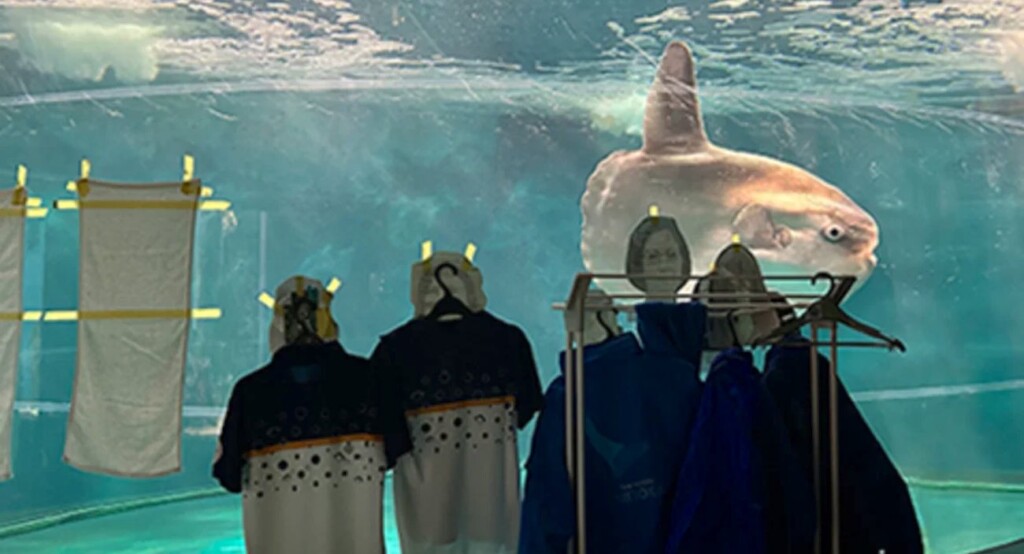
Giant 7-foot Sunfish Found on Oregon Beach Turns Out to Be Rarest Member of the Species

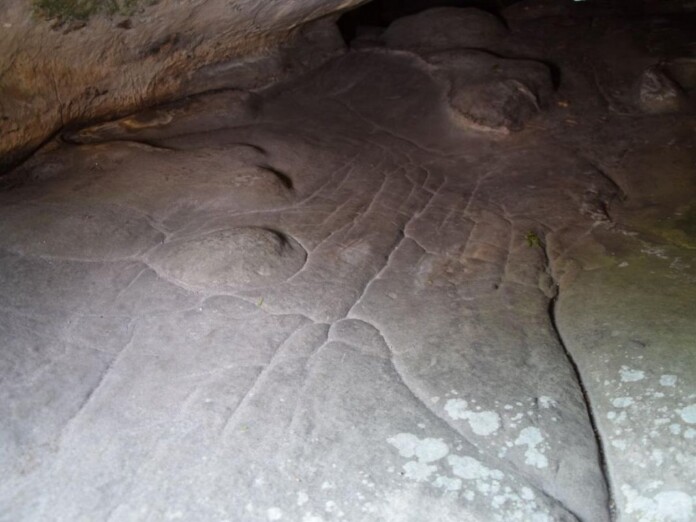
The hoodwinker sunfish - credit Seaside Aquarium, retrieved from Facebook
The hoodwinker sunfish – credit Seaside Aquarium, retrieved from Facebook

When a giant ocean oddity washed up on a beach in northern Oregon, residents were flocking to get a closer look at a rarely-seen fish.

Believing it to be the charismatic Mola mola, or ocean sunfish, pictures eventually made their way across the Pacific to the desk of marine biologist Marianne Nyegaard, who recognized that it was, in fact, a different species—one that’s even more mysterious.

Recognized as distinct from M. mola, the hoodwinker sunfish, or Mola tecta, was only identified in 2017. Since then only a few confirmed sightings of the fish have been made, and Nyegaard would know—she’s the one who first described and named it.

According to Britannica, the hoodwinker sunfish can grow up to 7.9 feet long and is smaller than the other members of the sunfish family, which can exceed 10 feet. The fish have distinctive features, including a bullet-like shape, tough skin, and a small mouth with beaklike teeth.

“Originally thought to only occupy the temperate waters of the southern hemisphere, that theory would be challenged as a few have recently washed ashore in California and one as far north as Alaska,” read a statement from the Seaside Aquarium in Oregon.

MORE SECRET SPECIES FROM THE DEPTHS: Rare Deep Sea Squid with ‘Headlights’ Captured on Video–Mistaking the Camera for Food–WATCH

“This fish, hiding in plain sight, has most likely been seen/washed ashore in the Pacific Northwest before but was mistaken for the more common, Mola mola. Marianne Nyegaard reached out to the Seaside Aquarium to see if they would be willing to take samples for genetics. Staff quickly responded, took more photographs, measurements, and tissue samples.”

The hoodwinker sunfish – credit Seaside Aquarium, retrieved from Facebook

“Through photographs, Marianne confirmed that it was a hoodwinker and that this may be the largest specimen ever sampled. This fish is still on Gearhart Beach and will probably remain for a few more days, maybe weeks as their tough skin makes it hard for scavengers to puncture. It is a remarkable fish and the aquarium encourages people to go see it for themselves,” the aquarium concluded.

SHARE This Incredible Opportunity With Any Coastal Oregonians You Know… 

“Never deprive someone of hope; it might be all they have.” – H. Jackson Brown, Jr.

Ian Britton, CC license

Quote of the Day: “Never deprive someone of hope; it might be all they have.” – H. Jackson Brown, Jr.

Photo by: Ian Britton

With a new inspirational quote every day, atop the perfect photo—collected and archived on our Quote of the Day page—why not bookmark GNN.org for a daily uplift?

Ian Britton, CC license

Wild Horses Return to Kazakhstan Plains After Two Centuries of Absence

Przewalski's Horse at the Highlands Wildlife Park - CC 3.0. Floato
Przewalski’s Horse at the Highlands Wildlife Park – CC 3.0. Floato

In an inspiring return 200 years in the making, the last truly wild horse species has been reintroduced onto the open steppes of Kazakhstan.

The Guardian reports that four mares from a breeding program in Berlin and a stallion and two other mares from Prague, were flown to the Central Asian country to mark the second successful reintroduction of Przewalski’s horse to the lands that above all others are associated with this beloved animal.

At an unspecified place on the Eurasian Steppe around 6,000 years ago, of which Kazakhstan is a major component, human beings domesticated the horse. It changed history forever, for no people more so than the ancient residents of Kazakhstan and related topographies.

From that first day until now, all related species interbred themselves more or less out of existence with the exception of Przewalski’s horse, which is why its return is so exciting for the zoo teams in Berlin and Prague involved in the reintroduction.

“For me, the goal of a modern zoo is not just about protecting and breeding endangered species, it is about returning them to the wild where they belong,” said Filip Mašek, Prague Zoo’s spokesperson, while the Zoo’s director, Miroslav Bobak, called the event “the beginning of a whole new chapter in the story of the last wild horse on the planet”.

The Steppe in Western Kazakhstan – credit Carole a CC 3.0. BY-SA

In 2011, Prague Zoo was also involved in a reintroduction of Przewalski’s horses to Mongolia which continued for 8 years until the population stabilized. There are now 1,500 such horses in the country.

MORE SUCCESSFUL REINTRODUCTIONS: Herd of Bison Reintroduced in Europe Are Climate Heroes–Helping Store CO2 Equal to 43,000 Cars

The Kazakhstan reintroduction comes on the back of several environmental success stories driven by a passionate environmental movement in the country. This has included the reintroduction of Bukhara deer around the shores of Lake Balkhash, and the continued legislative and conservation efforts to restore the majestic saiga antelope, which have resulted in a growth of the population to 1.9 million.

SHARE This Inspiring Story With Your Friends Who Love Central Asia… 

Exquisitely Preserved 1,000-yo Gaming Pieces Found in German Castle Offer Snapshot of Medieval Pastimes

Medieval game collection uncovered -Credit University of Tubingen - Victor Brigola
Medieval game collection – Credit: University of Tübingen / Victor Brigola
Medieval game collection uncovered -Credit University of Tubingen - Victor Brigola
Medieval game collection – Credit: University of Tübingen / Victor Brigola

If a history professor or museum is at their very best when they help people deeply connect with the ghosts of the past, then these 1,000-year-old game pieces found in a German castle are the perfect tool for the job.

Consisting of four, flower-shaped gaming pieces, a six-sided die, and a knight chess piece—all carved of antler, the find is a treasure trove of information on pastimes in the Middle Ages.

Exquisitely preserved, the knight piece, undoubtedly the most striking discovery, carries a well-worn sheen on its upper half from fingers picking it up thousands of times to place it along its L-shaped path.

The flower-shaped piece has residues of red paint, suggesting that one side would have played red and the other, presumably, another color.

The pieces were found under a wall segment in the neglected Stahleck Castle in southern Germany’s Baden-Württemberg state, and date to the 11th century.

Experts from the University of Tübingen, the State Office for the Preservation of Monuments Baden-Württemberg (LAD), and the German Archaeological Institute (DAI) collaborated on the excavation.

SIMILAR ARTIFACTS FROM A SIMILAR TIME: Experts Find a 1,000-Year-old Ice Skate Made of Animal Bone in Czech Republic

“In the Middle Ages, chess was one of the seven skills that a good knight should master. It is therefore not surprising that known finds mostly come from castles,” explained Dr. Jonathan Scheschkewitz (LAD).

Arriving during the early Middle Ages in Europe from what was probably Persia, chess became ubiquitous across the continent, and it’s believed the rules haven’t changed much, if at all, since.

TURNING UP THE MIDDLE AGES: 1,000 year old Viking Sword Fished out of an Oxfordshire River with a Magnet

“The discovery of an entire games collection from the 11th/12th century came as a complete surprise to us, and the horse-shaped knight piece is a real highlight,” said Dr. Lukas Werther (DAI).

A Middle Ages exhibition based on the conclusion of the Stahlek excavations and others is set to be held at the Pfullingen Schloss (castle) from June 15th to August 30th, where visitors can see and learn about the game pieces and gaming habits in the Middle Ages.

SHARE This Amazing Discovery With Your Friends Who Love Chess…

Elephants Are the First Non-Human Animals Now Known to Use Names, AI Research Shows

credit - Glen Carrie, Unsplash
credit – Glen Carrie, Unsplash

In a study as amazing as it is probably unsurprising, a team of biologists and researchers using machine learning tools discovered that elephants call each other by names.

For an animal that is known to perform deeply social acts like grieving, raising children collectively, and communicating across miles of countryside using complex low-frequency vocalizations, the use of names seems to be natural for their societies, but being able to know an elephant’s name in ‘Elephantese’ offers the potential to dramatically reduce human-elephant conflict.

The study was conducted at Colorado State University and was organized around simple observations that the matriarch of an elephant herd the researchers were following in Kenya would use a call that brought all the elephants together around her.

However, sometimes a perfectly similar call would draw only a single elephant out of the group.

To investigate if this had something to do with a naming custom, the scientists from CSU, Save the Elephants, and ElephantVoices used machine learning to analyze and group vocalizations into those they suspected were meant for multiple members of the herd, and those meant for an individual.

When the researchers played recorded calls, CSU press reports, elephants responded affirmatively to calls that were addressed to them by calling back or approaching the speaker. Calls meant for other elephants received less of a reaction.

In animal vocal ethnology, using a name is considered an “arbitrary communication” says study co-author George Wittemyer, a professor at CSU’s Warner College of Natural Resources and chairman of the scientific board of Save the Elephants, which means a sound that represents an idea but doesn’t imitate it.

“If all we could do was make noises that sounded like what we were talking about, it would vastly limit our ability to communicate,” said Wittemyer.

What arbitrary means in this case is that the sound made when a name is called could be absolutely anything—it’s just something to be assigned to a thing or a person, and is believed to indicate thought abstraction, a sign of higher intelligence.

MORE INTELLIGENCE SCIENCES: New Research Shows Why Crows Are So Intelligent and Even Self-Aware—Just Like Us

In the evolutionary past of both humans and elephants, complex social frameworks demanded precision communication.

“It’s probably a case where we have similar pressures, largely from complex social interactions,” Wittemyer said. “That’s one of the exciting things about this study, it gives us some insight into possible drivers of why we evolved these abilities.”

ALSO CHECK OUT: Octopuses Have Remarkably Similar Sleep Patterns to Humans–and May Even Dream

Kurt Fristrup, a research scientist in CSU’s Walter Scott, Jr. College of Engineering, is also excited about the findings because they present the opportunity to understand what kinds of acoustic features are used in elephant communication as “descriptors” of herd members.

“Our finding that elephants are not simply mimicking the sound associated with the individual they are calling was the most intriguing,” Fristrup said. “The capacity to utilize arbitrary sonic labels for other individuals suggests that other kinds of labels or descriptors may exist in elephant calls.”

MORE STORIES ON ELEPHANTS: Adult Elephants React to Birth in the Herd Just Moments After Adorable Baby is Born (WATCH)

Lastly, Wittemyer believes that developing a rudimentary address book of all the elephants in a given region would allow for unprecedented opportunities to manage human-elephant conflicts, as the individual animals in the study consistently responded with great acuity to the sounds of their names.

“It’s tough to live with elephants, when you’re trying to share a landscape and they’re eating crops,” Wittemyer said. “I’d like to be able to warn them, ‘Do not come here. You’re going to be killed if you come here.’”

In April, scientists were confident they had a conversation with a humpback whale, suggesting humanity may be on the cusp of entering an age of conversational capacity with animals who share our world.

WATCH a video explainer below…

SHARE This Outstanding Observational Science Of These Genious Giants… 

Drive-Thru Food Pantry Serves Thousands in a California Food Desert with Nutritious Groceries

The Seva Collective food pantry drive-thru – Credit: CBS Uplift / Simrin Singh via YouTube

In India, those of all faiths occasionally visit the places of worship of the Sikhs to get a delicious taste of ‘Seva,’ the Sikh principle of selfless service when they give out free dinners to anyone who visits.

In California, Sikh organizers are capturing that culture and using it to help residents of Santa Ana—a large food desert where residents struggle to have routine access to nutritious food.

At one of the longest drive-thrus you’ll ever see, volunteers, some with turbans and some without, load up the trunks of cars with 2-weeks worth of produce and groceries—no questions asked.

The organizers, called the Seva Collective, have already handed out 4 million such parcels, but they’re continuing to grow all the time—partnering with farms, businesses, and food banks to distribute as much as possible to those who need it.

“Our goal is to get fresh food, as well as shelf-stable food to every family’s car or cart who comes through the drive,” Bandana Singh, who co-founded Seva Collective alongside Ravin Kohli and Saanand Singh.

“We have cars lined up as early as three or four in the morning—we don’t start the drive till 9:30 a.m. So to us as the volunteer team, it tells us that the need is there and we want to do whatever we can.”

Residents say it’s nutritious, it’s uplifting, it takes away the “dread” and sense of anxiety about having enough real food to feed their families.

But how exactly could anyone live in a ‘food desert’ without Seva’s service?

Food deserts are typified by a wealth of fast-food restaurants and convenience stores that sell ultra-processed foods rich in sugar, salt, and vegetable oils, and a dearth of grocery stores and farmer’s markets.

ALSO CHECK OUT: Sikhs Around the World Are Sending Thousands of Donated Meals to Elderly and People in Self-Isolation

As a result, Seva puts an emphasis on supplying unprocessed and nutritious food whenever possible—which often means they’re covering fast distances to acquire it.

“When we first started, we were driving to LA downtown food market, we were driving to Central California to pick up citrus—we were kind of all over the place,” said Bandana Singh told CBS News.

GENEROSITY WITH A TURBAN: Sikh Gas Station Owner Sells Gas 50 Cents a Gallon Cheaper than What it Costs to Help Customers

Each month, the Seva Collective distributes 60,000 pounds of food to more than 1,200 families and they’re beginning to expand operations to offer books, toys, and clothing as well.

Volunteers come from all backgrounds, but it’s rooted in the teachings of Sikhism: That life is precious, that god has a plan, and that unless you work hard, you won’t come to know what your role in that plan is. Ms. Singh and the squadron of volunteers work hard indeed, and they impart a little bit of this Sikh wisdom into their operations—like on Vaisakhi, the celebration of the formalization of the Sikh religious brotherhood and sisterhood.

WATCH the story below from CBS… For Viewers Outside US, Watch HERE

SHARE This Inspiring, Intercultural Charity With Your Friends… 
“You cannot shake hands with a clenched fist.” – Indira Gandhi

Screenshot

Quote of the Day: “You cannot shake hands with a clenched fist.” – Indira Gandhi

Photo by: engin akyurt

With a new inspirational quote every day, atop the perfect photo—collected and archived on our Quote of the Day page—why not bookmark GNN.org for a daily uplift?

Screenshot

First Human to Spend 1,000 Days in Outer Space Offers Unprecedented Opportunity to Study ‘Rocket’ Man Effects

Oleg Kononenko during a 2012 spacewalk - NASA.
Oleg Kononenko during a 2012 spacewalk – NASA.

Oleg Kononenko has become the first human to accumulate 1,000 hours of spaceflight over a 16-year career visiting and living aboard the ISS.

The milestone comes on his fifth flight to space and during his third stint as the commander of the ISS. In February he passed the previous record of 878 days, held by fellow Ruscosmos pioneer, Gennady Paldaka.

Arriving aboard the Soyuz MS-24 spacecraft last September alongside cosmonaut Nikolai Chub and NASA astronaut Loral O’Hara, he won’t touch down again for another 4 months, at which point he will become one of the most valuable human biology specimens in the world.

Given that both the Artemis Accords and the Chinese/Rest of World alternative—the International Lunar Research Station initiative—aim to send men and women on longer and longer voyages to space, including semi-permanent habitation of the moon and eventually a journey to Mars, astrophysiology needs to understand what long-term exposure to the rigors of outer space will do to the human body.

To that end, Kononenko, who has routinely spent many hundreds of consecutive days, and even years in low-Earth orbit, will be providing data points “days, months and years,” after his return, says Emmanuel Urquieta, the former chief medical officer of the NASA-funded Translational Research Institute for Space Health (TRISH), led by Baylor College of Medicine.

Speaking with Space Flight Now’s Will Robinson-Smith, Urquieta explains that medicine in space is an emerging field and that how the environment of space affects eye health, bone loss, and blood flow, isn’t well known, nor are the effects of prolonged radiation exposure and prolonged space motion sickness.

Expedition 70 NASA astronaut Loral O’Hara, left, Roscosmos cosmonaut and mission commander Oleg Kononenko, and Nikolai Chub, right, at a press conference in advance of their September 2023 mission to the ISS aboard Soyuz 24 – NASA/Bill Ingalls.

“I’m sure that there will be a lot of research coming up in the future when he comes back to Earth and I’m sure that there will be a very long follow-up with him, you know, days, months, and years after, to try really to understand these very unique data points,” Urquieta said.

OTHER GREAT SPACE STORIES: Astronaut Training Pays Off at 90: Ed Dwight Finally Reaches Space, Making History as Oldest to Ever Do it

“When you extrapolate the data that we have from six-month missions to 900 days, there’s still a huge gap of data that we need to fulfill; that we need to get so that we can safely say that, ‘ok, we have enough data that we can confidently say that we’re able to send someone to Mars and make sure that that person is going to come back as healthy as he or she left Earth.’”

Though born in the Soviet Union and is thus Russian today, Kononenko is from Turkmenistan, and is deeply proud and connected to his homeland.

MORE ASTRONAUT STORIES: Priceless Video Shows US-Russian Group Hug in Microgravity When Astronauts Arrive at the ISS

Across his long career, Kononenko has completed over 18 hours of spacewalks, during which he performed experiments, repairs, and fortifications on the exterior of the ISS Zvezda Service Module.

In December of 2015 he completed a rare night-time re-entry, and owing to distinguished collaboration with his colleagues across the Atlantic, he has received both the NASA Distinguished Public Service Medal and the NASA Space Flight Medal.

CELEBRATE This Man’s Incredible Achievement And Counting With Your Friends…
Washington State Bans Single-Use Foam That Breaks up and Pollutes Waterways for Orcas and Salmon

Passed back in 2021, a law in Washington state that bans single-use polystyrene food and drink containers has come into effect.

Made from tiny hollow beads of different plastics that are extremely friable, polystyrene is arguably the most damaging form of plastic in the environment.

Still permitted to be used in packaging and other applications because of its lightweight, durable, and insulative properties, some estimates suggest polystyrene takes over 1,000 years to completely break down, all the while shedding microplastics into the soil and water.

At least 11 states have passed laws to phase out expanded polystyrene foam, according to Oceana. The environmental group is among those calling for nationwide prohibitions on the material. Seattle banned foam food containers about 15 years ago. Oregon Governor Tina Kotek signed a law last year that mirrors Washington’s policy.

Recycling polystyrene is possible, but Washington’s Department of Ecology notes that it is expensive to do and that most residential recycling programs don’t accept the foam. Food residue on the material complicates things further, which is one reason why the ban affects takeaway containers, but doesn’t address other uses.

ALTERNATIVES TO FOAM: Indian Startup Uses Rice Crop Waste to Make Biodegradable Foam Packaging–Instead of Burning it

OTHER DECISIVE ACTION: In Major Victory for the Environment, Germany Bans Single-Use Plastic and Styrofoam

When the foam does end up in recycling facilities it can blow around and contaminate other materials, something that’s also liable to happen in the course of getting it to the facility in the first place.

Violators will be fined but also have access to support and resources that should hopefully help them find ways to replace the foam containers with less harmful ones. This might be replacing foam containers with those of aluminum—which along with being reusable, also insulates food longer.

SHARE This Good News For The Oceans With Your Friends… 

Three Boys Discover 30% of a Complete ‘Teen-rex’ Skeleton While Hiking

3 cousins pose next to the leg bone of the T. rex discovery – by Sam Fisher

What started as a family hike in North Dakota by two young brothers Jessin and Liam Fisher quickly turned into a once-in-a-lifetime discovery that career paleontologists would kill for.

Along with their dad, Sam Fisher, and their cousin Kaiden, they identified the remains of a juvenile T. rex skeleton of about 30% completeness, including almost the entire right leg structure, a few vertebrae, the lower jaw, and the all-important hips and pelvis.

It was back in July of 2022 that the teen trio discovered their Cretaceous counterpart in the Badlands. Dad Fisher actually knew the phone number of the Denver Museum of Nature and Science paleontology curator—Dr. Tyler Lyson, whom he went to high school with.

“I didn’t know it was a T. rex, because all I had were photos, and the knee joint looked like a duckbill,” Dr. Lyson told CNN. “Later, I started looking at the photos a little more closely. And the way in which the bone was breaking up into sheets indicated it might be a meat-eating dinosaur.”

He proposed the idea to some of his paleontology friends, who concurred that it was probably a duckbill, at which point Lyson relegated the idea of a carnivore to “wishful thinking.”

It wasn’t until the following summer that Jessin, Liam, and Kaiden were able to take part in retrieving their discovery from the Earth as permission for excavation had to be obtained from the land managers.

The dinosaur-discovering family returns to the site in July 2023 for the excavation, including (clockwise from upper left) Sam Fisher, Emalynn Fisher, Danielle Fisher, Liam Fisher, Kaiden Madsen and Jessin Fisher. – Courtesy Denver Museum of Nature and Science

It was on the first day of excavations, with the kids front and center, that Lyson and his team found the lower jaw full of teeth—shattering the duckbill hypothesis and sending the whole team onto cloud 9.

“The kids were with us every step of the way, which was great,” Lyson added “We realized it was a T. rex on the first day. We had cameras rolling while it was happening.”

The paleontologists who took part in the excavation believe the ‘Teen Rex’ weighed 3,500 pounds, stood 10 feet tall, and was 25 feet long at the time of its death, according to a  Denver Museum Q&A page.

YOU’VE GOT TO SEE THIS: Portuguese Man Accidentally Finds 82-Foot-Long Dinosaur in His Backyard

A fully-grown adult T. rex could weigh over 9,000 pounds and stretch over 40 feet from nose to tail.

Rooted T. rex tooth found – Credit: Dr. Tyler R. Lyson

“I’m excited for Museum guests to dig into the ‘Teen Rex Discovery’ experience, which I think will inspire the imagination and wonder, not only in our community, but around the world!” said Dr. Lyson in a statement from the museum announcing a new film and exhibit based around the teens’ discovery.

DINOSAUR NEWS IN NORTH AMERICA: How One Man Stumbled Upon Complete Stegosaurus Skeleton Now Set to Earn Millions at Auction

Captured on film in the new 40-minute documentary T. REX, they will be featured alongside their dino on the museum’s Infinity Theater on June 21. With state-of-the-art CGI and cutting-edge paleontological insights, this giant-screen movie offers an unprecedented journey into the world of T. rex and its fellow Cretaceous carnivores.

SHARE These Teens’ Cloud-9 Day In The Badlands Digging Up This Fossil…