










All News - Page 258 of 1726 - Good News Network
Home Blog Page 258

Trapped on Tiny Ledge, Fallen Hiker with Mangled Legs Rescued by Off-Duty Air Force Hero

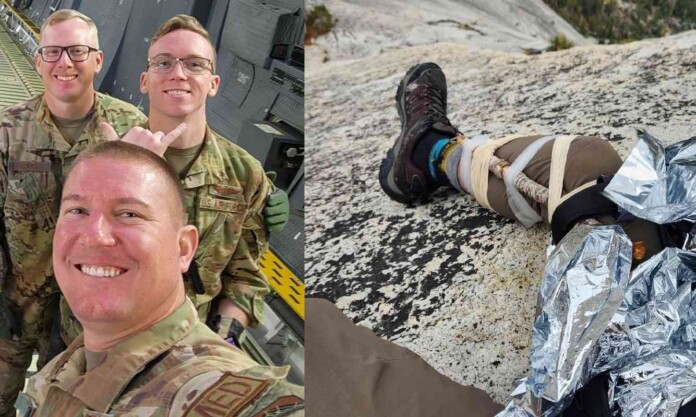
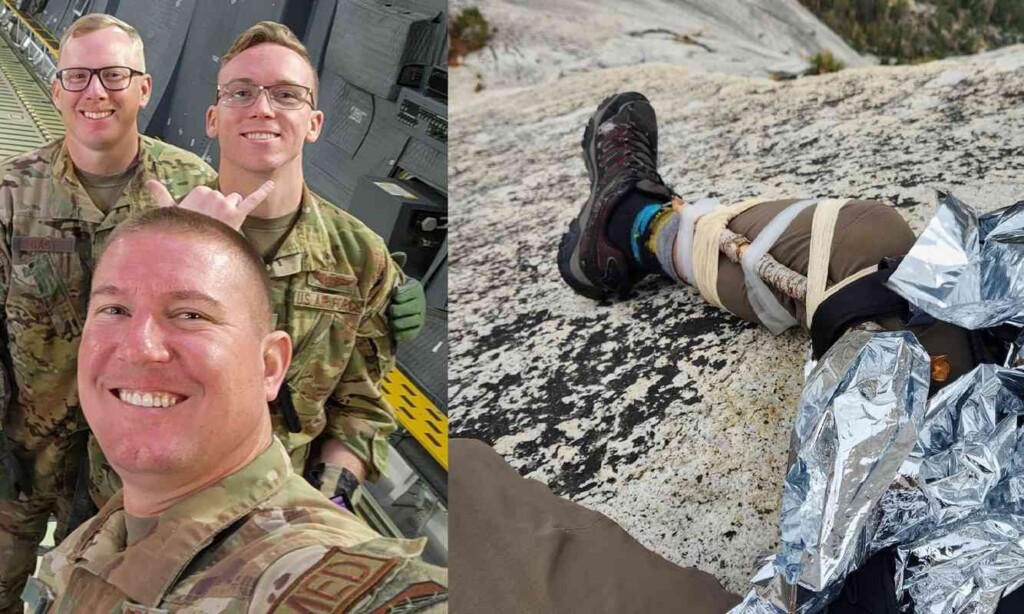
U.S Air Force Capt. Joshua Haveman (left) and the splint he made for the injured climber (right) - courtesy of Travis AFB.
U.S. Air Force Capt. Joshua Haveman (left) and the splint he made for the injured climber (right) – courtesy of Travis AFB.

An off-duty Air Force Captain proved himself worthy of rank and regalia after conducting a daring rescue of a fallen hiker on the shoulder of Yosemite’s Half Dome.

Capt. Joshua Haveman, 60th Air Evacuation Squadron, was hiking the famous peak in September when he saw a climber slip in wet conditions and fall perhaps as many as 80 feet down onto a precarious ledge.

Haveman and the other hiker were at a section of the hike where in order to pass up solid granite, a series of cables embedded into the rock are necessary for safety and leverage. If they don’t have a harness, rope, and carabiners to secure themselves to the cables, hikers are left simply holding on to them or using them as handholds.

Without hesitation, Haveman took action. Faced with harsh winds, slippery rock, and hail, he made a decision to venture outside the permanent cable barriers to reach the fallen climber, Travis Air Force Base wrote in a statement.

His climbing experience and extensive medical training proved invaluable in this life-or-death situation.

MORE STORIES LIKE THIS: Dramatic Moment Skier Rescued a Snowboarder Who Was Buried Head First in Snow and Running Out of Air (Watch)

“You could see that his legs were not naturally oriented at all, so I started collecting sticks from Sub Dome and started climbing,” Haveman recalled. “Other climbers were concerned for my safety, but the guy was just up there screaming in pain, so I left the cable area and climbed on the ledge.”

Half Dome, Yosemite -credit Travis AFB

Using makeshift splints fashioned from sticks, Haveman provided crucial first aid to the injured climber by securing above and below the tibia/fibula fracture and wrapping his injured ankle with an ace bandage he had in a medical kit he had brought.

To shield the climber from the harsh elements and apparent shock, Haveman covered the climber with his jacket while organizing a call to search and rescue.

“After about 45 minutes, the Park Ranger emergency medical technician came up with a full medical bag, so we were able to use a structural aluminum malleable splint to better stabilize him,” Haveman explained.

“The weather was improving, so more climbers were able to come up and offer their assistance. They took up a collection for supplies that we were able to use to make an improvised pulley system to lower him the 30 feet down to sub dome.”

MOUNTAIN RESCUE STORIES: Pakistani Man is True Hero in Dramatic Cable Car Rescue After Youths Were Stranded 15 Hours–WATCH

Ultimately, the climber was medically evacuated via helicopter, receiving the critical medical attention they urgently required. Without Haveman’s swift and selfless actions, the outcome could have been far more tragic.

“I wasn’t sure a helicopter would be able to land with the winds being as strong as they were, so we were preparing to carry him 10 or 12 hours down with a six-man litter,” Haveman said with a pause.

“Apparently, it was this pilot’s first day on the job, and he was amazing! It took him about 15 minutes, but he was able to sit the chopper down and we were able to get the patient loaded and breathe a sigh of relief.”

It’s safe to say on behalf of the injured climber and everyone else in the country, things can only go so wrong when we have people like Capt. Haveman working and walking among us; his bravery and ingenuity are a credit to the Force and the country at large.

SHARE This Heroic Rescue From A Daring Captain On Social Media… 
Cops Jump a Fence to Catch Suicidal Woman’s Arms Just in Time on Indiana Overpass

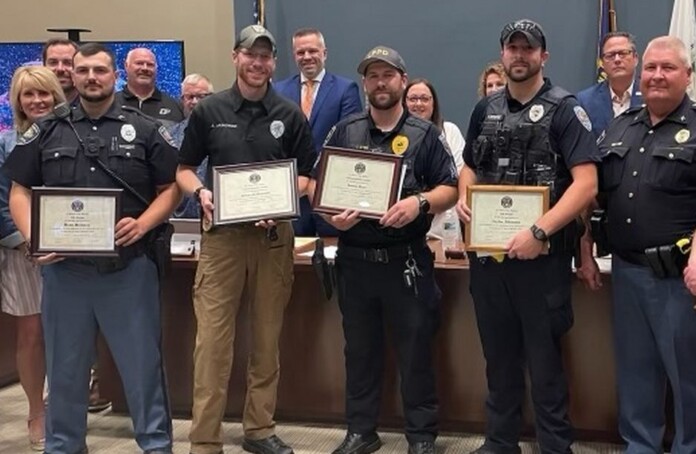
LaPorte police officers Ryan Helmecy (far left) and Taylor Atkinson (far right) - released to the press.
LaPorte police officers Ryan Helmecy (far left) and Taylor Atkinson (far right) – released to the press.

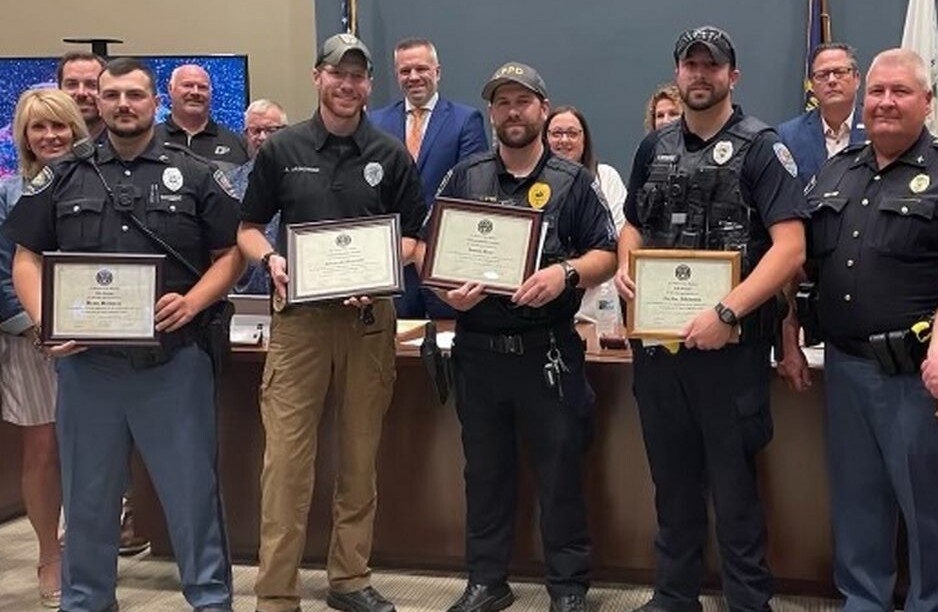
In LaPorte Indiana, a pair of police officers are being recognized as life-saving heroes after they rescued a suicidal woman who was just a hand’s breadth from perishing.

Ryan Helmecy and Taylor Atkinson arrived at the I-35 overpass in northwest Indiana where a woman was threatening to jump. The bridge over a series of railroad tracks was flanked by sidewalks and a chain link fence.

As Atkinson and Helmecy arrived, the woman was already making her way down the other side of the fence, at which point the two men began begging her not to jump.

When it was clear she wasn’t stopping, Helmecy sprinted over to the fence, mounted it, and grabbed the woman’s hand.

Then she let go.

With nothing but air separating her feet from a 30-foot drop onto loose rock and steel tracks, Atkinson arrived seconds later and grabbed her other arm.

CHECK OUT THIS SPIDERMAN: Hero Passerby Scales Building in China to Save Boy Who Fell Out Window Onto a Ledge

They held on like this for several minutes until a firetruck that had arrived under the overpass was able to provide a bucket to lower the woman into.

“They completely put their well-being aside to go over that fence and hang on,” said LaPorte Police Chief Paul Brettin. “She was begging them to let go. They would not do that.”

MORE RESCUE STORIES LIKE THIS: Utah Man Jumps Into Icy River to Save Woman Attempting Suicide at the Same Spot Where he First Dated His Wife

The chain link fence was installed there to protect potentially suicidal people, and since its placement years ago, there haven’t been any calls. Atkinson said he was surprised when he heard one.

The two men were honored by the police department with special commendations, and the occasionally-used moniker of “Spiderman” for their comic-book rescue.

SHARE These “Spidermen” Officers And Their Live-Saving Rescue… 

“Unless a tree has borne blossoms in spring, you will vainly look for fruit on it in autumn.” – Walter Scott

Quote of the Day: “Unless a tree has borne blossoms in spring, you will vainly look for fruit on it in autumn.” – Walter Scott touting preparation

Photo by: Paolo Bendandi

With a new inspirational quote every day, atop the perfect photo—collected and archived on our Quotes page—why not bookmark GNN.org for a daily uplift?

My Dad Sent Me A Card on My Wedding Day–20 Years After His Death

The letter, dad Philip, and bride Freya with her Husband Michael - SWNS
The letter, dad Philip, and bride Freya with her Husband Michael – SWNS

A bride received a letter and card from her dad from beyond the grave on her wedding day.

32-year-old Freya Rosati was just 11 when her dad, Philip Hargreaves, died from oesophageal cancer at the age of 53.

They used to do everything together. He’d take her to dance classes, they would watch films, and play games together; if Freya’s mom ever said ‘no’ her dad would always say ‘yes’.

But understanding his fate Philip wrote nine cards for Freya, eight for birthdays, and a final one for her wedding day in the weeks before he died.

Her mom Theresa read the card to wedding guests in lieu of Philip’s father-of-the-bride speech—leaving everyone in tears.

“Even looking at his handwriting on that card, it really just felt like he was there, and it was so nice,” said the Buckinghamshire bride. “It was such a sad moment but so important to me that the card was read out.”

I wish I could be standing next to you, the proudest dad in the world, to walk you down the aisle to the man you love, and to the next chapter in your life. Today is your day, enjoy everything about it. Laugh and cry. Be happy and confident.

Face everything full-on. You will then succeed in your life together. You gave me some of the proudest moments in my life with your sense of humour, intelligence, understanding, and caring nature. Don’t ever change. Love you forever, dad.

Freya, a self-professed “daddy’s girl” was determined to involve her father as much as possible on her big day, and little bits and pieces of their 11 years together were everywhere from the music to the decor. Having enjoyed a holiday to Antigua, Freya had steel pans play her aisle-walk music. Photographs of Philip and Freya bedecked a ‘memory tree’ which sat at the front of the wedding venue.

SIMILAR TOUCHING MOMENTS: 

While she couldn’t wear something ‘new’ she did involve Philip for something ‘old’—a diamond necklace he had given her as a gift.

She remembers him as a “proper warrior” who never wasted any time or complained about being ill in the “downhill” slope that led to his passing.

SHARE This Beyond Touching Story Of A Girl And Her Dad On Social Media… 

Researchers Invent Way to Turn Harmful Mine Waste into Healthy Soil

By Canadian Light Source, CC license

An Australian-Canadian science and engineering team has discovered a way of turning mine waste into arable soil that is already being used to grow maize and sorghum.

‘Tailings’ is the official industry term for mineral waste leftover after separating away all the useful metals from mined material. Typically toxic from heavy metals and unusable for anything else because of this, tailings are kept in storage facilities to prevent them from polluting groundwater or farmland.

Hoping to save billions of dollars in such storage fees and remove the threat of disasters that occur when such facilities break down or are abandoned, a team from the universities of Queensland and Saskatchewan sought to see whether it was possible to convert this lifeless rock into healthy soil by returning microbial life to it.

“Tailings have no biologically friendly properties for growing plants. Roots and water cannot penetrate them, and soluble salts and metals in tailings can kill plants and soil microbes,” said Longbin Huang a professor at the Univ. of Queensland. “If you wait for nature to slowly weather the tailings and turn them into soil, it could take a couple thousand years.”

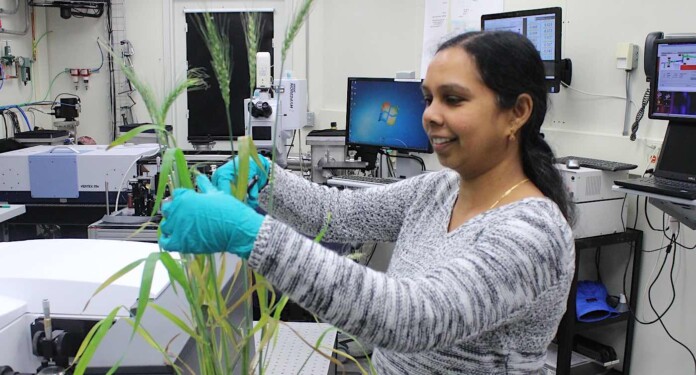
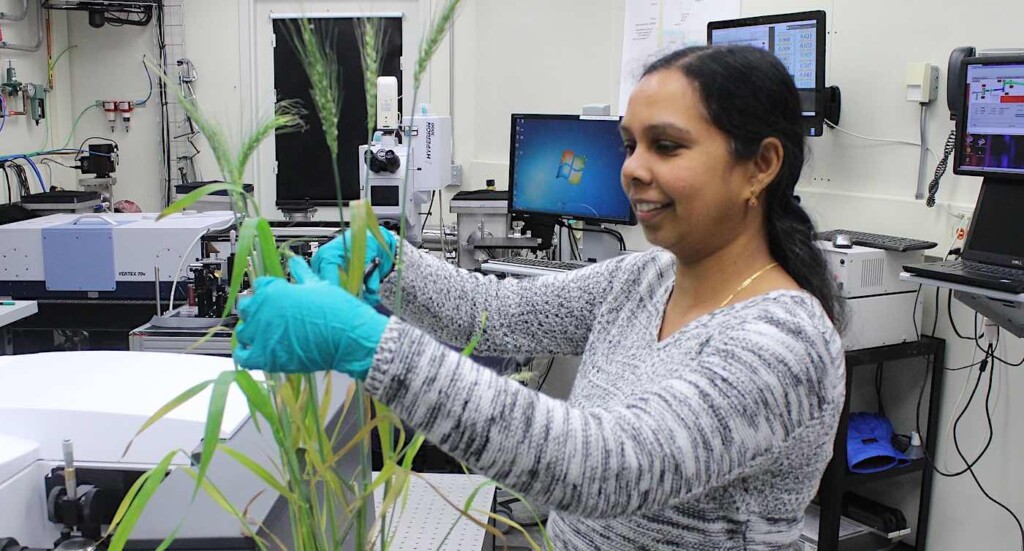
Using the Canadian Light Source (CLS), Huang and his team found a way to accelerate this process of repopulating the tailings with soil microbes.

The CLS is a giant synchrotron, a type of circular particle accelerator. It works by accelerating charged particles (electrons) through sequences of magnets until they reach almost the speed of light.

Using the CLS’s synchrotron light the scientists could visualize the detailed mechanism of how they were able to develop the organic-mineral interfaces and revitalize the tailings.

“We needed to use the SM beamline to unravel at the nanometer scale the immediate interfaces and how the minerals change, and how they interact with organics,” said Huang. “The facility access and the expert inputs of the beamline staff were critical to enable us to collect quality data and therefore to have reliable scientific evidence.”

MORE GREAT NEWS FOR INDUSTRY: Mining Zinc, Nickel, and Cobalt from Plants: “Phytomining” is the Sustainable Future

Their data allowed the scientists to successfully recolonize mine tailings with soil microbes after the tailings had been amended with plant mulch. These soil microbes consume certain residual organics and minerals, aggregating them into what are referred to as soil particles.

“You have microbially active surfaces in soil crumbs that develop a porosity in compacted tailings that allows the gas, water, roots, and microbes to survive, just like in arable soil,” said Huang. “Therefore, the dead mineral matrix of tailings becomes a soil-like media that will enable plants to grow.”

Huang noted that this process—which can occur in as little as 12 months—can also be used to restore soils damaged by over-farming, overuse of fertilizers, and climate change.

Mining is extremely necessary for our developed world. Many of the world’s largest copper and iron mines are decades, even centuries old, and with global copper needs alone estimated to double by 2050, all that mine waste will need a more sustainable home.

MORE MINING NEWS: Lithium Discovery in Crater in Nevada Could Be Biggest Deposit Ever Found

We’ve also been hearing now for many years about the world’s top soil having only a certain number of harvests left before it becomes irrevivably lifeless dust. Although this is heavily disputed.

Nevertheless, Huang and his team seem to have provided means to clear two hurdles in a single bound with little more than soil, mulch, tailings, and microbes.

SHARE This Revolutionary Use For A Once-Useless Product… 

Man Miraculously Survives Falling Under Moving Train by Lying Flat Between the Tracks (Video)

Prateek Kumar after the train passes over him - SWNS
Prateek Kumar after the train passes over him – SWNS

It was a normal commuter day for Prateek Kumar who jumped off the train to New Delhi to buy biscuits and a cold drink when it was stopped at Bagaha railway station, West Champaran, India.

But when the train began to pull away without him, he ran to jump onboard and slipped under the moving carriages.

Clever Prateek survived by lying down between the anterior track and the brick wall of the platform, onlookers said, and a video shows officials watching in horror as they wait for the train to pass.

“He was careful with his movements and stayed still, waiting for the train to pass,” a local said. “After the train had gone, RPF cop Harishchandra Yadav came to the aid of the victim, getting down on the track and picking him up.”

“Prateek Kumar suffered minor injuries and also had parts of his clothes torn in this incident.”

It’s a vital little survival trick to remember, and will likely be a human’s only chance of making it out of such a situation alive.

WATCH the live footage below… 

SHARE The Secret To Surviving A Train Strike With Your Friends…

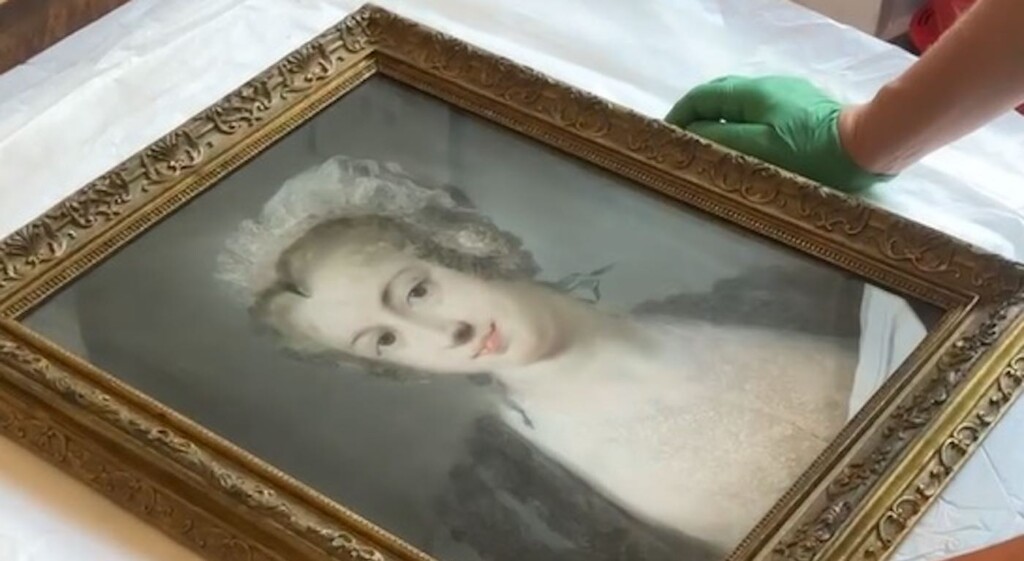
Painting Assumed to Be a Copy is Real–After Note is Found Hidden in Frame Making it Worth Thousands

'Portrait of a Tyrolese Lady' by 18th century artist Rosalba Carriera left in storage for 30 years – SWNS
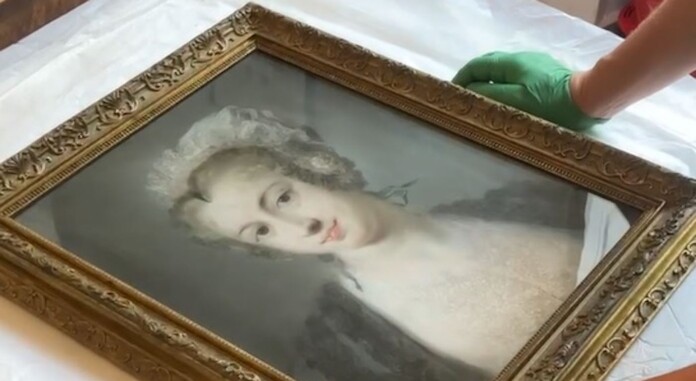
‘Portrait of a Tyrolese Lady’ by 18th-century artist Rosalba Carriera left in storage for 30 years – SWNS

A 200-year-old painting thought to be a copy has been identified as the original Portrait of a Tyrolese Lady by renowned 18th-century artist Rosalba Carriera.

Carriera was known as the “Queen of Pastel Painting” for painting a series of women from across Italy during the early 1700s and was greatly admired by King George III.

The painting was left by Maurice Egerton, the fourth and last Lord Egerton of Tatton, to the National Trust when he died heirless in 1958.

After being placed in storage in the 1980s at Tatton Park in Cheshire it has now been identified as an original piece upon the discovery of a unique slip of paper tucked behind the frame.

Xavier Salomon, deputy director and chief curator of the Frick Collection in New York, says that the slip of paper was a “Santini.”

It features prayers and blessings for a safe passage that the artist hid in works she exported.

“Xavier Solomon is researching Carriera’s works and working on a new catalog,” said Carolyn Latham, the Mansion and Collections Manager for the National Trust. “He approached us about visiting to study the work as he believed it could be an actual Carriera.”

“The picture has been in our picture store since the mid-1980s and was thought to be a copy of a Carriera work rather than by her. Xavier had hoped to find the Santini still tucked into the back and we were all really pleased to find it there,” she said.

OTHER FOUND WORKS: Long-Lost Sketch by Landscape Master John Constable Found in an Old Suitcase

It’s quite extraordinary the rate at which paintings produced by great Renaissance and Enlightenment artists are rediscovered after being mislabeled, lost, or damaged. Those days are long gone, and one would think that pretty soon they would all have been found considering no more are being made. But they keep turning up, like this Van Dyck painting that was covered in bird droppings in a shed.

Santini hidden in the back of the painting – SWNS / National Trust

After extensive restoration, the artwork is now on display at Tatton Park for visitors in the Mansion’s Yellow Room until it is closed for winter conservation at the end of October.

“Over time these fragile bits of paper often became lost or separated from her works,” said a spokesperson for the Tatton Park estate.

MORE STORIES LIKE THIS: Renovation Unearths Paintings Behind Kitchen Walls Nearly 400-Years-old

“Rosalba became one of the most popular and sought-after artists. From her beginnings as a painter of scenes for snuff box lids, she moved on to portrait miniatures and then became integral in popularising the use of pastels.”

“She was an initiator of the Rococo style and is remembered as one of the most successful women artists of any era, but sometimes her work was considered risqué due to the delicate lace coverings, depicted on the subject’s clothing only just saving their modesty.”

SHARE This Great Discovery With Your Art Friends… 

“Care and diligence bring luck.” – Thomas Fuller

Quote of the Day: “Care and diligence bring luck.” – Thomas Fuller 

Photo by: Joshua Earle

With a new inspirational quote every day, atop the perfect photo—collected and archived on our Quotes page—why not bookmark GNN.org for a daily uplift?

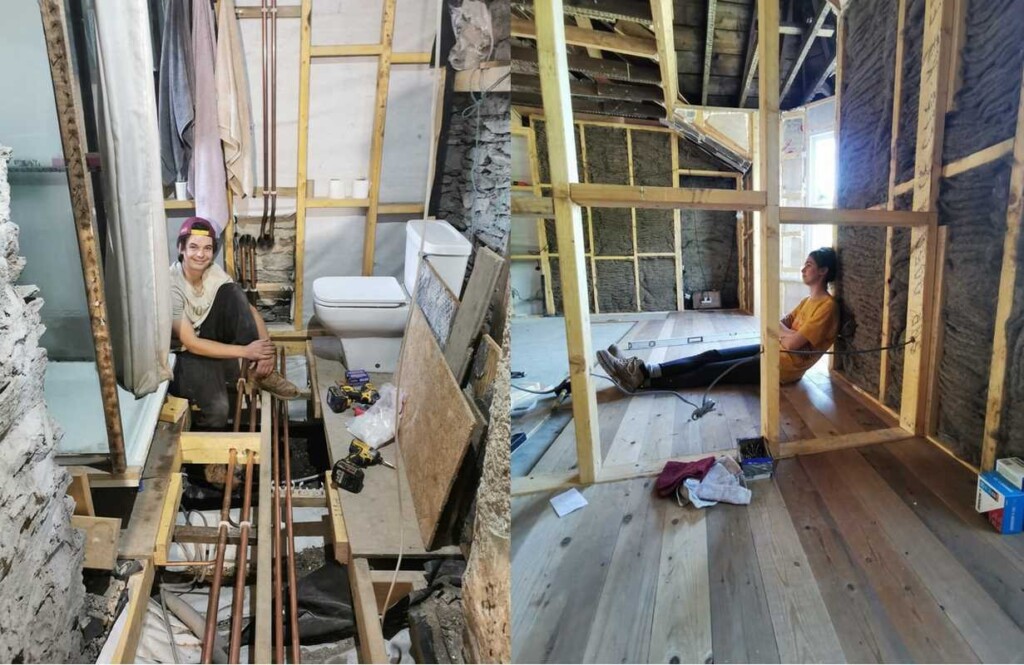
They Accidentally Bought a Run-Down House in Scotland But Restored it With Love After Whoopsie Auction (LOOK)

credit whathavewedunoon

Some people enjoy the thrill of a blind auction, but you probably wouldn’t be comfortable buying anything other than a record collection or some home furnishings.

For a young cross-Atlantic couple in their 20s, they found themselves the proud owners of a dilapidated, crumbling, rural Scottish home after their best-laid plans “gang agley.”

Believing he was bidding on a fixer-upper apartment in Glasgow, Cal Hunter doubled down, increasing a £10,000 bid to a £20,000 one after another fourth of the four flats was offered to him after the auction.

It turns out it wasn’t a flat in Glasgow, but a four-unit stone building called Jameswood Villa made on the shores of Holy Loch, in a small town called Dunoon in 1902.

However Hunter, who was in on the project with his Canadian girlfriend Claire Segeren, was undeterred despite his mistake.

“I was drawn to the idea of being mortgage-free in my 30s and having a beautiful place with a nice garden,” Hunter told the New York Times. “I knew it would be hard work, but we’d really been wanting an opportunity.”

Even though the pair were young enough to still be in university, they threw themselves into something that grew into a 5-year home renovation.

Cal (left) and Claire (right) in the thick of things – credit Whathavewedunoon

Documenting it all on their blog and Instagram, What Have We Dunoon, they did everything. At 26, Hunter was already an experienced carpenter and set to work cutting floorboards and laying new pipes for the plumbing as well.

He and Claire had help from experienced professionals with gas and electricity, but an almost unbelievable amount of the finished building was done by their hands, working five and a half days a week.

MORE STORIES LIKE THIS:

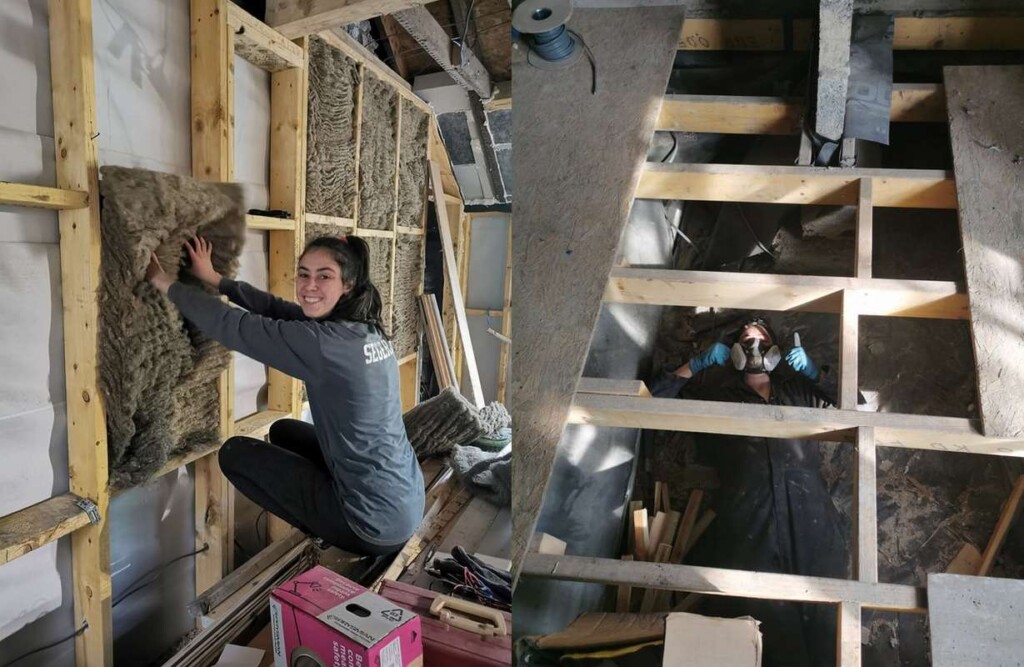
Consulting books, YouTube, tradesmen, and of course other renovators and homesteaders who commented on their Instagram, they learned how to frame doors, put in glazing, flush radiators, insulate, work with stone, wood, and metal, roofing, and obviously so much more.

Claire installing sheep’s wool insulation and Cal working on the flooring – Whathavewedunoon

When they could, they relied on mostly free labor coming in from young people their age on Workaway, trading five hours of work per day in exchange for food and housing—an on-site tent camp and mobile home which the two lived in for over 5 years—Claire splitting time as waitress and Cal as a contractor to earn money for the necessary materials.

At times they bought materials new, such as their marble countertops, but much of the base structural fittings were cannibalized from the house and other abandoned houses like it in the area.

People became very interested in the effort. A 2019 article in the Dunoon Observer went viral, and masses of second-hand materials began coming their way. Their GoFundMe raised £30,000, or about $38,000, while their Instagram account amassed 300k subscribers.

In early July, the two no-longer-young people got a visit from the inspectors who officially cleared the house for habitation, and their five-year story finally came to a warm and cozy end.

SHARE This Helluva Fixer Upper Story With Your Handy Friends… 

Natural Defenses in Plants May Be Successful in Humans Against Neurodegenerative Diseases: New Study

Lee Nicate - Unsplash
Lee Nicate – Unsplash

GNN has reported on dozens of studies that purport to find the culprit compounds or hidden keys to various diseases, but rarely do they ever sound like something out of a Marvel comic book.

Now, a study published in the journal Nature Aging is seeking a treatment for neurodegenerative diseases like Huntington’s in the trunks of trees.

In it, the researchers demonstrate that transporting a protein called SPP found in the plant cells responsible for photosynthesis into cultured human and animal cells brought about a reduction in protein clumping and symptoms of Huntington’s—the primary objective of the study.

Huntington’s is a proteinopathy and one of 9 neurodegenerative disorders that are brought about by toxic aggregations of proteins called polyglutamine that don’t stick together in healthy humans.

In humans and animals, it causes the death or dysfunction of brain cells, but in plants, where such proteinopathies like Huntington’s are also present, it causes no damage at all.

In order to explore how plants deal with toxic protein aggregation, Dr. Ernesto Llamas, the first author of the study from the University of Cologne’s CECAD Cluster of Excellence for Aging Research, introduced the toxic mutant protein ‘huntingtin’ into plants, which causes cell death in human neurons.

In contrast to animal and human models, Dr. Llamas found that thale cress plants actively removed huntingtin protein clumps and avoided harmful effects.

Hoping to see if such an effect could be replicated with animals, the study team investigated what was happening and found that the plants avoided the toxic aggregation of mutant huntingtin due to their chloroplasts—plant-specific organelles that perform photosynthesis.

“Unlike humans,” Dr. Llamas said, “plants have chloroplasts: an extracellular type of organelle that could provide an expanded molecular machinery to get rid of toxic protein aggregates.”

The multidisciplinary team identified the chloroplast plant protein SPP as the reason why plants are unaffected by the problematic human protein.

YOU MAY ALSO LIKE: Vaccine that Could Cure and Even Prevent Brain Cancer Developed by Scientists

They found that producing the plant SPP in models of Huntington’s disease such as human cultured cells and worms like the nematode C. elegans reduced protein clumps and symptoms of the disease.

“We were pleased to observe that expression of the plant SPP protein improved motility of C. elegans worms affected by huntingtin even at later aging stages where the symptoms are even worse,” said Dr. Hyun Ju Lee, a postdoc also involved in the study.

The results of Dr. Llamas’ team’s study could open the door for testing SPP as a potential therapy for Huntington’s disease, and hopes plants could grow to play a bigger role in contributing to the treatment of human diseases.

MORE RESEARCH LIKE THIS: Cures and Prevention For Some of the Worst Diseases Come From a Surprising Ally – Our Sewers

“Many people don’t notice that plants can persist amongst variable and extreme environmental conditions that cause protein aggregation,” Dr. Llamas said. “We usually forget that some plants can live thousands of years and should be studied as models of aging research.”

They aren’t just hoping though. Llamas and his team members believe there is real value in their discovery, and study co-author Dr. Seda Koyuncu says they’re going to found a start-up to produce plant-derived therapeutic proteins and test them as potential therapeutics to treat neurodegenerative diseases in humans.

SHARE This Unorthodox Way Of Finding A Cure With Your Friends… 

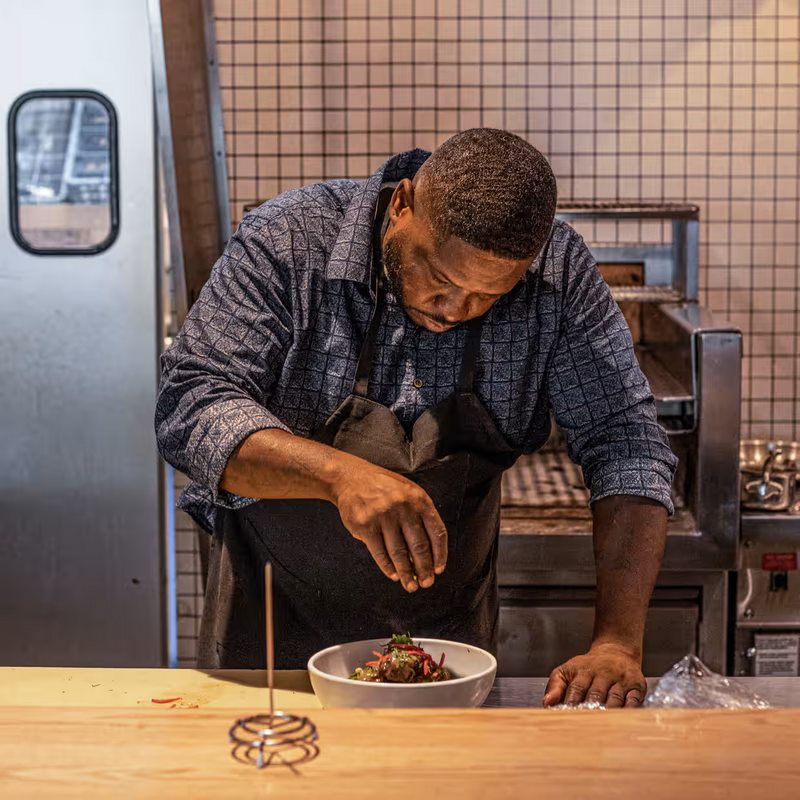
3 Cooks in Prison Honed Creativity with Drab Ingredients–Now Out, Award-Winning Chef And Businessmen

Chef Keith Corbin - released to the press
Chef Keith Corbin – released to the press

“There are geniuses in there,” said 2-time James Beard Award winner, Keith Corbin, referring to incarcerated men and their ability to cook with the most lifeless, flavorless ingredients imaginable.

Corbin spent 10 years in prison himself, and combined with his career as an award-winning chef at his restaurant Alta Adams, he knows what it takes to make good food out of anything.

Corbin was profiled in a feature piece at the Guardian that twisted together the stories of several entrepreneurs who launched careers in the food industry after more than a decade of smoking sausages in a toilet with toilet paper, or making tamal dough with ground-up Fritos.

Another of the featured ex-cons was Chef Michael Carter, executive at Down North Pizza in Philidelphia where he employs only formerly incarcerated men, or returning citizens as he called them, and offers them half-way or low-income housing with the apartment building located above his pizza shop.

His pies, mostly square ones, have made the New York Times best pizza list, and won the Best of Philly 2021 category for square pie.

After Carter was released from a 12-year sentence, he took a class for resume writing for food professionals and was asked what experience he had. He replied he had cooked in prison for 2,000—he got a job the next week.

“The mission is actually what made me accept the job,” Carter said, “to be able to have a voice and tell people about the plight in our community of returning citizens.”

It’s something that both Carter and Corbin reported to Sonya Singh at the Guardian—that prison squeezes men, and that squeeze sometimes creates diamonds.

“You have people in there that literally never went to school for technology, but the phone breaks and they’ll figure out how to fix the motherboard,” Corbin said. “There’s geniuses in there, ingenuity.”

Corbin, on the other hand, went into prison with a deep connection to food. His grandmother grew tomatoes and collard greens in their yard, and would wake up at 5 a.m. to start cooking for the working people in her community.

Chef Keith Corbin – released to the press

In prison, Corbin also fed dozens of people, often with flavorless ingredients. At the commissary, he could requisition packaged food items and try and do his best to squeeze flavor into dishes. He told Singh that he made a Reece’s Peanut Butter Cup by baking syrup-soaked processed peanuts and melting a Hershey’s bar overtop.

The appreciation he got for that particular experiment gave him belief and determination. He would see, Singh wrote in her feature, the Asian inmates fermenting their own kimchi, further expanding his understanding of possibilities in an environment that seems on the surface a largely possibility-less one.

YOU MAY ALSO LIKE: Georgia State University Hails First Class of Inmate Graduates: ‘A degree to utilize when they come home’

Corbin’s Alta Adams restaurant serves a food born of those two worlds—5 a.m. in his grandmother’s kitchen, and 5 p.m. at a California correctional facility. He calls it “California soul.”

At Down North, Carter’s for-profit yet mission-driven restaurant hires returning citizens at $15 per hour, double the state’s minimum wage, and about $3 above the norm for starting restaurant workers.

He and Corbin, along with another food service entrepreneur profiled in the piece, all agreed that re-entry skills are not taught in prison, but that any entrepreneur in hospitality and food service with two brain cells to rub together should set up an interview booth in front of the nearest halfway house, because the desire to work hard and make a decent living if given a chance burns white hot in returning citizens.

MORE GOOD NEWS ABOUT RETURNING CITIZENS: Pentagon Reverses Ruling on the Release of Art Made by Guantanamo Bay Detainees

That last entrepreneur, Chef Sharon Richardson, spent 20 years in prison in New York but now runs Just Soul Catering, which employs only formerly incarcerated women, and Reentry Rocks, a non-profit that helps formerly incarcerated women with histories of domestic violence achieve their goals, become leaders, and rebuild their lives. They offer a food service fellowship program for women.

For Richardson, food service was a healing event in prison, and highlighted one story in particular when the women in her block stayed up late to cook for her after her mother died of a stroke.

You can read the whole Guardian piece here.

SHARE These Enterprising And Inspiring Chefs With Your Friends… 

Holly Tree Presumed Extinct for 200 Years Discovered After Placement on Most Wanted List: ‘Nature surprises us’

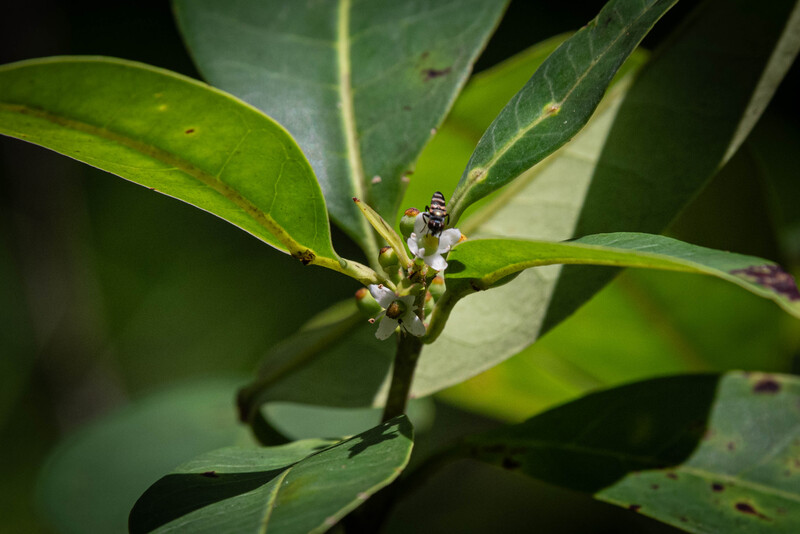
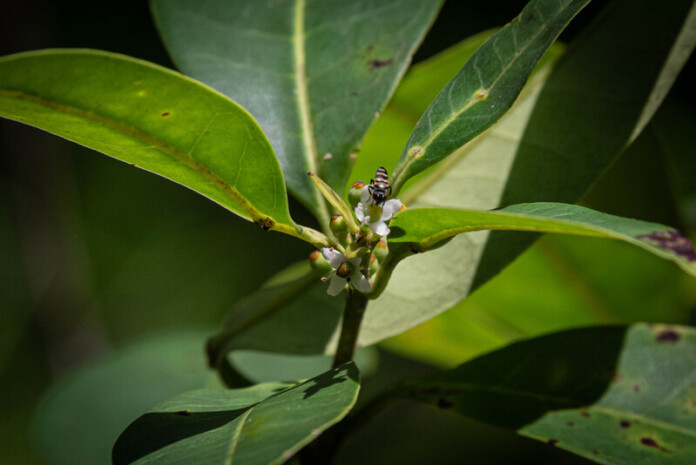
The Pernambuco holly tree, which botanists found by these tiny flowers - credit Rewild, released.
The Pernambuco holly tree, which botanists found by these tiny flowers – credit Re:wild, released.

A small holly tree species native to Brazil has been rediscovered after nearly two centuries of being presumed extinct.

This incredible return to light is part of a worldwide conservation project to identify species that haven’t been seen in tens or hundreds of years. So far, the hunt is going very well, with 9 of the 25 Most Wanted Lost Species actually being found alive.

Ilex sapiiformis also known as the Pernambuco holly, was found in the city of Igarassu, in the Brazilian state that the tree takes its name from. 4 individuals were identified.

The tree, which can reach between 26 and 40 feet in height (8-to-12 meters) was identified by its tiny green flowers after botanists that made up the search team spent hours pouring over museum specimens.

Eventually, having had no luck, they turned their attention to herbaria collections in museums and arboretums that hadn’t been digitized—sketched images and pressings.

“Nature surprises us. Finding a species that hasn’t been heard of in nearly two centuries doesn’t happen every day,” said project team member Juliana Alencar in a statement. “It was an incredible moment.”

“We were all anxious to find the plant,” said another team member—Prof. Milton Groppo. “And it was exciting when we found the first individual of Ilex sapiiformis, thanks to the keen eyes of Mr. Lenilson, who was able to find some white flowers in a tree alongside the dirt road. It’s like finding a long-lost and long-awaited relative that you only know by old portraits.”

The expedition team, was led by Gustavo Martinelli, an ecologist with Navia Biodiversity Ltd. and sponsored by the organization Re:wild. They have so far financed the rediscovery of 8 other species around the world that had been presumed extinct—adding scientific data detailing each species’ conservation situation and what could be done to keep them discovered.

Among these was the Fernandina giant tortoise from the Galapagos, which Re:wild had originally planned on looking for but a search and subsequent lab test by the Galapagos Conservancy beat them to it.

Beyond that, the 25 Most Wanted Lost Species list has successfully added checkmarks next to Jackson’s climbing salamander, the silver-backed chevrotain, the Somali sengi, the velvet pitcher plant, Wallace’s giant bee, Voeltzkow’s chameleon, and the Siera Leone crab.

MORE STORIES LIKE THIS: 100-Year-Old Galápagos Giant Tortoise Found on Fernandina Island is Indeed Member of ‘Extinct’ Species

So many have now been found that Re:wild—which in 2017 when the 25 Most Wanted list was first compiled was called Global Wildlife Conservation—has had to update the quest with new species.

New entries include the Togo blind mouse, the fat catfish, and the big puma fungus. The Holly was also new, but has already been found. Existing entries from the 2017 list include the Ilin Island cloudrunner, which Re:wild already funded an unsuccessful expedition for, and the Wondiwoi tree kangaroo which Re:wild believes had been photographed in 2018, but the quality was too low to confirm or rule out its identity.

As with the original list, the new entries all had watercolor paintings made of them by successful artists in the hope that the paintings will communicate to the world that losing a species is like losing a priceless artwork.

MORE SPECIES REDISCOVERED: Earless Dragon Feared Extinct is Rediscovered After 50 Years in Australia

In Brazil, a team from Jardim Botânico de Recife is monitoring the four Pernambuco holly trees the expedition team found, returning to the site weekly to see if the trees are fruiting. The team hopes to collect seeds from the tree and germinate them.

SHARE This Small Step For Nature With Your Friends… 

“If you are lucky enough to find a way of life you love, you need to find the courage to live it.” – John Irving

Joshua Earle

Quote of the Day: “If you are lucky enough to find a way of life you love, you need to find the courage to live it.” – John Irving

Photo by: Joshua Earle

With a new inspirational quote every day, atop the perfect photo—collected and archived on our Quotes page—why not bookmark GNN.org for a daily uplift?

Robots That Look Like Manta Rays Will Sink Seaweed to Ocean Floor–Will Help Absorb Carbon

Seaweed Generation
Seaweed Generation

A robotics company is making manta ray-shaped robots that drown seaweed and lock away the carbon it absorbed throughout its life for hundreds of years in Davy Jones’ Locker.

Seaweed absorbs way more CO2 than rainforests, and billions of tonnes of the stuff are now routinely washing up on the beaches of Mexico every year as a result of changes in the Gulf.

Rather than letting this happen Seaweed Generation has designed the AlgaRay, described as a “Roomba meets Pac-man” which collects the sargassum seaweed and deposits it at depths where the sun can’t reach, and where pressures crush its buoyancy. Unable to photosynthesize energy, it dies and leaves the carbon trapped on the seafloor.

With scientists on the team that have over 100 published studies on the global carbon cycle and climatology, Seaweed Generation believes it’s correct to say that removing carbon from the ocean has the same effect as removing it from the atmosphere since the two are constantly passing gigatonnes of the simple molecule between each other.

“I’m not necessarily passionate about sinking seaweed. I’m passionate about using seaweed for the best possible use case,” Founder Patricia Estridge told The Hustle. “Sargassum is an opportunity to remove billions of tons of carbon dioxide every year.”

MORE FROM THIS SECTOR: Compostable Plastic Wrap Made from Seaweed Can Withstand Heat–and Biodegrade in Weeks

The final robot will be about 32 feet long, function autonomously, and solar powered. But the short-term plan is to deploy around 10 of these to the Gulf of Mexico to get to work ASAP, while the long-term plan is to manage a fleet of 1,000 full-size AlgaRays for corporate partners or governments, which they believe could take care of all the sargassum in the seas.

MEANWHILE ON LAND: Visionary Gardener Turns Piles of Beached Seaweed Into Bricks for Sustainable Construction

The company is also pioneering seaweed cultivation robots to remove the cost and risk of cultivating at sea with diesel-engine boats.

Like others, Estridge believes that utilizing seaweed in as many supply chains as possible should be a top priority for the global economy because along with having so many myriad uses, it’s a valuable tool in the fight against climate change.

SHARE This Roomba Ray With Your Friends Who Like Climate-Positive News…


Starbucks Workers Raise Over $40K for Beloved Barista After Her Car Was Burglarized

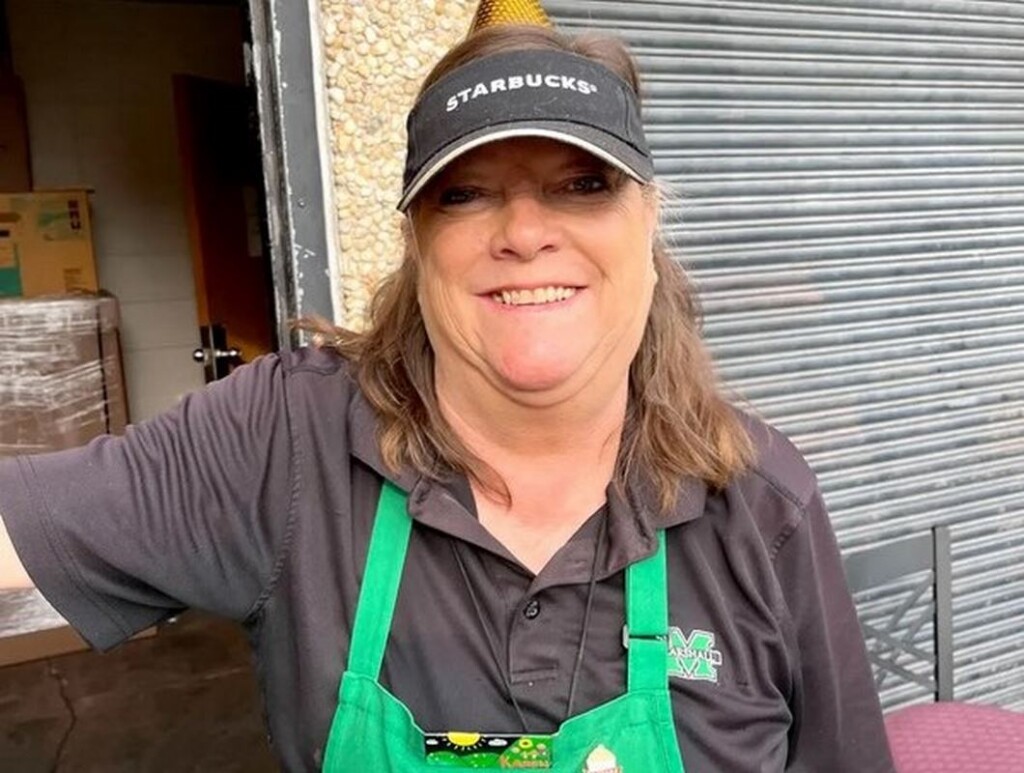
Courtesy of Jaiden Horn

Recently, hordes of West Virginia college kids who “couldn’t afford a cup of coffee” shelled out five dollars to help a motherly Starbucks barista buy a new car.

The Starbucks on the Marshall University Campus in Huntington, West Virginia, was always like a small family with Karen Collinsworth, 65, at the head of the table.

The decades-long supervisor at the famous coffee shop location loved what she did, as well as the teams of aspiring young students who made up her staff.

“I love coming into work knowing that she’s gonna be there. I talk to her about literally everything,” Cassie Gray, a sophomore at Marshall who works at Starbucks with Collinsworth, told TODAY. “She’s like my mom when I’m away from home and can’t talk to my mom.”

TODAY covered the story of an unfortunate double whammy of bad luck that befell Collinsworth when her car—a 2004 Kia that always had some kind of problem—was burglarized; the first thief taking the catalytic converter, and the second going in and stealing interior components.

At this point, Gray and her teammates, who always knew Collinsworth had trouble with her car, decided that there had to be something they could do to help.

MORE CO-WORKERS SUPPORTING EACH OTHER: Co-Workers Donate Their Kidneys to Save Each Other’s Husbands

Discussing what they might be able to accomplish, the team decided that they might be able to fundraise some money for repairs since so many people around campus knew the 65-year-old barista and valued her.

“We all just kind of talked about it and we floated around the idea of starting a fundraiser for her,” Gray said. “After work when I got back to my dorm, I decided to just make it because I figured even if we couldn’t raise that much money, any amount would help her. It was just kind of like a spur of the moment (thing).”

After the co-workers all shared it on Instagram, Facebook, and another social media platform called YikYak, their most dreamed-of outcome came true.

Karen Collinsworth – courtesy Jaiden Horn

MORE GIVING BACK STORIES: Family Farm in Maine Couldn’t Make it After Restaurants Close – Until the Neighbors Showed Up

As of September 15th, the fundraiser had amassed $40,000, headlined by a $5,000 donation from the president of Marshall University. Eventually, the total got so high that Collinsworth’s neighbor spilled the beans before the baristas could surprise her.

TODAY writes that she is looking at new Subarus, all the while feeling the love and goodwill that decades of serving coffee with a smile has accumulated.

SHARE This Sweet Starbucks Story With Your Friends… 

Rats Finally Eradicated from Caribbean Island as Huge Nature Reserve Rises in Their Place

Redonda without any native vegetation CC 2.0. spantil

Redonda, a Caribbean island of small repute, has undergone a dramatic transformation from a barren wasteland of goats and rats, to a pristine, re-wilded nesting spot for many seabirds and endangered plants.

It’s one of many remote islands around the world’s seas that, with a helping hand, have rid themselves of invasive animals and plants and returned to supporting the land, water, and air around them.

In 2020, World at Large reported that whereas many of the Aichi global targets for protecting biodiversity had failed by their deadline, one—the eradication of invasive species on small islands—was a resounding success.

At the time, the project in Redonda had already succeeded, and local NGOs were advocating for its designation as a nature reserve.

Remaining isolated for hundreds of years after being revealed by Columbus, Redonda became a hotspot for the collection of guano, or bird droppings, for use in fertilizing fields and producing gunpowder.

But along with man came domesticated animals—goats and rats in Redonda’s case. The rats ate nesting booby and frigatebird eggs while the goats cleared the small island of vegetation. Without the foliage, nothing held the soil and rock together, and soon the edges of Redonda began to crumble into the sea, choking the life from the bottom of the marine food web.

With the cliff nests destroyed, and the uplands haunted by rats, the birds left. The vegetation couldn’t grow back, and the goats began to starve to death. Redonda was a whistling wasteland.

In 2016, Antigua and Barbuda, the archipelago nation that owns Redonda, launched an eradication campaign that cleared the island of rats. After that, they simply waited.

“That’s all we did. We just removed the species that were not supposed to be there and within months we saw the vegetation growing back – the island rebounding,” said Johnella Bradshaw, Redonda program coordinator for the Environmental Awareness Group (EAG), an Antiguan NGO leading the project.

“Up to this date, we haven’t planted anything, we haven’t reintroduced any species. We just removed the rats and the goats, and the island transformed right in front of our eyes,” she told CNN.

MORE ISLAND CONSERVATION SUCCESSES: Island is Wonderland for Penguins Once Again After Dog Helps Eradicate 300,000 Invasive Rabbits

Happily, the 60 goats that were left on the mile-long island were spared, and instead rounded up by hand (since they were very easy to spot on an island without a single bush or tree) and relocated to the mainland.

After that, a team camped out on the island for two straight months trapping and poisoning rats; 6,000 of which were found on the island, so many that the workers could hear them scurrying around their tents at night.

MORE ISLAND CONSERVATION SUCCESSES: Island Paradise Declared Rat-Free After Massive Volunteer Eradication Campaign

There have been no recorded rats on the island since 2018, allowing 15 species of sea birds to return and for the Redonda green dragon—a beautiful native lizard, to grow in population by 1,300%. Native vegetation too has experienced a 20-fold recovery, including tree species like Ficus.

All this charged the Antiguan government to create the Redonda Ecosystem Reserve which will cover 30,000 hectares of land and sea, including the tiny isle, its surrounding seagrass meadows, and a 180 square-kilometer (69 square-mile) coral reef.

SHARE This Inspiring Island Conservation With Your Friends… 

Get Ready for the Solar Eclipse When Moon and Sun Form Perfect Line With Earth in a ‘Ring of Fire’

The lighted whisps in this image of a solar eclipse are just a tiny portion of the Sun's corona - credit: Drew Rae
Drew Rae

The 2023 solar eclipse is passing over the United States this year, giving millions of Americans in the northwest a chance to glimpse a “ring of fire.”

That’s the phrase for a kind of eclipse known as an annular eclipse, where the moon passes in front of the sun but leaves space for a small ring of light to be seen.

The annular solar eclipse will occur on October 14th, 2023 from 15:03 UTC to 20:55 UTC. The maximum of the eclipse will occur at 17:59 UTC. The so-called “path of totality” where Earthlings will be able to see the eclipse straight on, will pass through South and Central America, before moving westward up through Texas, Nevada, California, and Oregon, though the eclipse can still be seen in the thousands of miles east and west of that line.

In fact, all of the continental United States will have at least some visibility of the eclipse. Unfortunately for Europeans, this eclipse will be beyond them all.

While the sky might dim, and the temperature drop, the only way to actually see the difference in the light of the sun during an eclipse is by wearing 3D glasses from a movie theater, but many companies also sell cheap plastic eclipse glasses that are necessary to protect your eyes from the UV radiation which can still damage them when looking straight into an eclipsed sun.

In other stargazing news, October’s full moon is going to be a Hunter’s Moon this year. If it occurs before the Autumn equinox on the 24th, it’s known as a Harvest Moon—giving light to ancient peoples in order to harvest their crops. If it occurs after the equinox, it’s known as a Hunter’s Moon—giving light to the hunter during his pursuit, since the crops are all harvested.

As Valerie from Space Tourism Guide explains, the October calendar is also crammed with opportunities to spot shooting stars.

This is because several meteor showers will reach their peak during the month, starting with the Cameleopardalids on October 5th featuring roughly 5 meteors per hour, and proceeding to the Draconids on October 9th, a shower which can produce anywhere from 2 to 600 per hour, the Southern Taurids on October 10th, the ε-Geminids on October 18th with about 3 per hour, the Orionids on October 21st with about 21 per hour, and ending with the Leonus Minorids on October 24th.

Check out Valerie’s guide to learn all the deets about when and where to look for these celestial phenomena.

SHARE October’s Night Sky With Your Friends Who Like To Gaze Up… 

“Some people are always grumbling because roses have thorns. I’m thankful that thorns have roses.” – Alphonse Karr

Quote of the Day: “Some people are always grumbling because roses have thorns. I’m thankful that thorns have roses.” – Alphonse Karr

Photo by: Grant Sams

With a new inspirational quote every day, atop the perfect photo—collected and archived on our Quotes page—why not bookmark GNN.org for a daily uplift?

Increasing Steps by 3,000 Per Day Can Lower Blood Pressure in Older Adults

Richard Sagredo
Richard Sagredo

Researchers were excited to find that a simple lifestyle intervention can be just as effective as structured exercise and some medications.

An estimated 80% of older Americans have high blood pressure. The good news is that maintaining healthy blood pressure can protect against serious conditions like heart failure, heart attacks, and strokes—and a new study shows how.

Adding a relatively minimal amount of movement, about 3,000 steps per day, can significantly reduce high blood pressure in older adults.

Linda Pescatello, distinguished University of Connecticut professor of kinesiology worked with Elizabeth Lefferts, the lead author of the paper, and Duck-chun Lee in Lee’s lab at Iowa State University.

“We’ll all get high blood pressure if we live long enough, at least in this country,” Pescatello says. “That’s how prevalent it is.”

MORE BENEFITS: Experts Find Out Why Exercise Prevents Alzheimer’s Disease–Which Could Lead to Cure

Pescatello is an expert on exercise and hypertension, the clinical term for high blood pressure. Her previous research demonstrated that exercise can have a significant immediate and long-lasting impact on lowering blood pressure.

The study published in a recent issue of the Journal of Cardiovascular Development and Disease sought to determine if older adults with hypertension could receive these benefits by moderately increasing their daily walking, which is one of the easiest and most popular forms of physical activity for this population.

“It’s easy to do, they don’t need any equipment, they can do it anywhere at almost any time,” Lee said.

AMAZING: 8 Weeks of Lifestyle Changes Reduced Biological Age by 3 Years In Groundbreaking Proof-of-Concept Study

The study focused on a group of sedentary older adults between ages 68 and 78 who walked an average of about 4,000 steps per day before the study.

After consulting existing studies, Lee determined that 3,000 steps would be a reasonable goal. This would also put most participants at 7,000 daily steps, in line with the American College of Sports Medicine’s recommendation.

The team conducted the study during the height of the COVID-19 pandemic, which meant they had to do everything remotely. Participants were sent a kit with pedometers, blood pressure monitors, and step diaries for participants to log how much they were walking each day.

On average, participants’ systolic and diastolic blood pressure decreased by an average of seven and four points, respectively, after the intervention.

Other studies suggest decreases of these magnitudes correspond to a relative risk reduction of all-cause mortality by 11%, and 16% for cardiovascular mortality, an 18% reduction in the risk of heart disease, and a 36% risk reduction of stroke.

“It’s exciting that a simple lifestyle intervention can be just as effective as structured exercise and some medications,” Lefferts said.

MORE PROOF: People Over 70 Who Walk Just an Extra 500 Steps a Day Lower Risk of Heart Failure or Stroke by 14 Percent

The findings suggest that the 7,000-step regimen the participants in the study achieved is on-par with reductions seen with anti-hypertensive medications. Eight of the 21 participants were already on anti-hypertensive medications. Those participants still saw improvements in systolic blood pressure from increasing their daily activity.

“In a previous study, we found that when exercise is combined with medication, exercise bolsters the effects of blood pressure medication alone,” Pescatello says. “It just speaks to the value of exercise as anti-hypertensive therapy. It’s not to negate the effects of medication at all, but it’s part of the treatment arsenal.”

The researchers, who hope to use the data to launch a larger clinical trial, found that walking speed and walking in continuous bouts did not matter as much as simply increasing total steps.

LOOK: 101-year-old Woman Reveals Her Secret to Longevity is Dancing Every Day

“We saw that the volume of physical activity is what’s really important here, not the intensity,” Pescatello says. “Using the volume as a target, whatever fits in and whatever works conveys health benefits.”

WALK THIS ADVICE to Your Senior Friends and Family on Social Media…
Passionate Horror Fan Now Earns Thousands Teaching Creepy Make-Up Looks on Social Media

Make-up artist, Natasha Jane Wood - SWNS
Make-up artist, Natasha Jane Wood – SWNS

Meet the horror-movie obsessive who now earns thousands every month sharing her creepy make-up techniques from her home in the UK.

Natasha Jane Wood used to “sneak downstairs” and watch her favorite gory blockbusters when she was a young girl.

“It probably sounds crazy but I used to fall asleep watching ’28 Days Later,’ which is a zombie movie,” said the the 28-year-old. “I just found it so soothing.”

Inspired by Hollywood icons Tim Burton and Stephen King, Natasha had studied special effects makeup at Bolton University in 2019—but the pandemic provided the perfect chance to try new techniques, when she was furloughed from her job at a jewelry store.

Honing her skills from her childhood bedroom in Darwen, Lancashire, Natasha found online fame after  uploading her sinister looks to TikTok. She has since amassed over six million followers on social media and made her passion a full-time career.

“It all just kicked off in 2020 when I did my ‘Disney Princesses Gone Wrong’ series on TikTok. A video I did transforming myself into Jim Carrey’s ‘The Mask’ has over 100 million views on YouTube.

“My little brother and sister thought it was a bit cringe at first, but now I have the same amount of YouTube subscribers as some of their favorite content creators.”

The Disney Princess series included Snow White, Cinderella, Sleeping Beauty, and Belle.

Natasha Jane Wood – SWNS

“They were inspired by the Grimm Brothers, who did the original versions of the stories,” she told Southwest News Service. “With Beauty and the Beast for example, I did one where she actually got scratched by the beast, so it turned quite gory.

“With Disney, it’s all happily ever after, but you don’t really see what would happen if it went wrong.

LOOK: One-Legged Man Turns His Amputation Into the Best Halloween Costumes Ever

When TikTok began cracking down on gore (even fake gore) she turned herself into an unfinished Mona Lisa painting.

Natasha Jane Wood – SWNS

In 2022, Natasha launched her YouTube channel and collected three million subscribers—and realized she could earn a good living.

CHECK OUT: The Best Inspiration for Your Jack-O-Lanterns Might Come From This Retired Man’s 8-Hour Masterpieces

“A manager reached out to me in April 2021 and from there I even had advertisements coming in from makeup companies like Tatti Lashes and Natasha Denona.

“But it’s nice to have a community of people, and especially since I talk about mental health and portray it with my looks.

“I did a series called ‘Makeup Inspired By Emotions’ and did one themed on anxiety. Since those videos I’ve had people reach out and say, ‘this is exactly how I feel’, and can relate to it.

“It does show we’re all going through the same things. Because my own mental health is up and down it makes me feel like I have a purpose.”

Natasha Jane Wood – SWNS

“I feel very privileged with the money I have to give back to charities too.

“I’ve even been able to buy my grandparents a holiday to Cornwall in June 2023.

NEED DOG COSTUME IDEAS? Best Canine Costumes of the Year in Halloween Dog Parade

Her advice to others is simple: “We’ve got one life, so go for it. It’s better to try and not live with what-ifs.”

IT’S NEARLY HALLOWEEN–A Great Time to Share the Looks on Social Media…