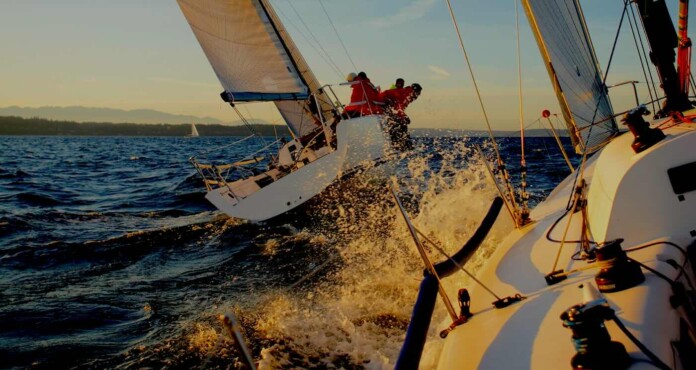
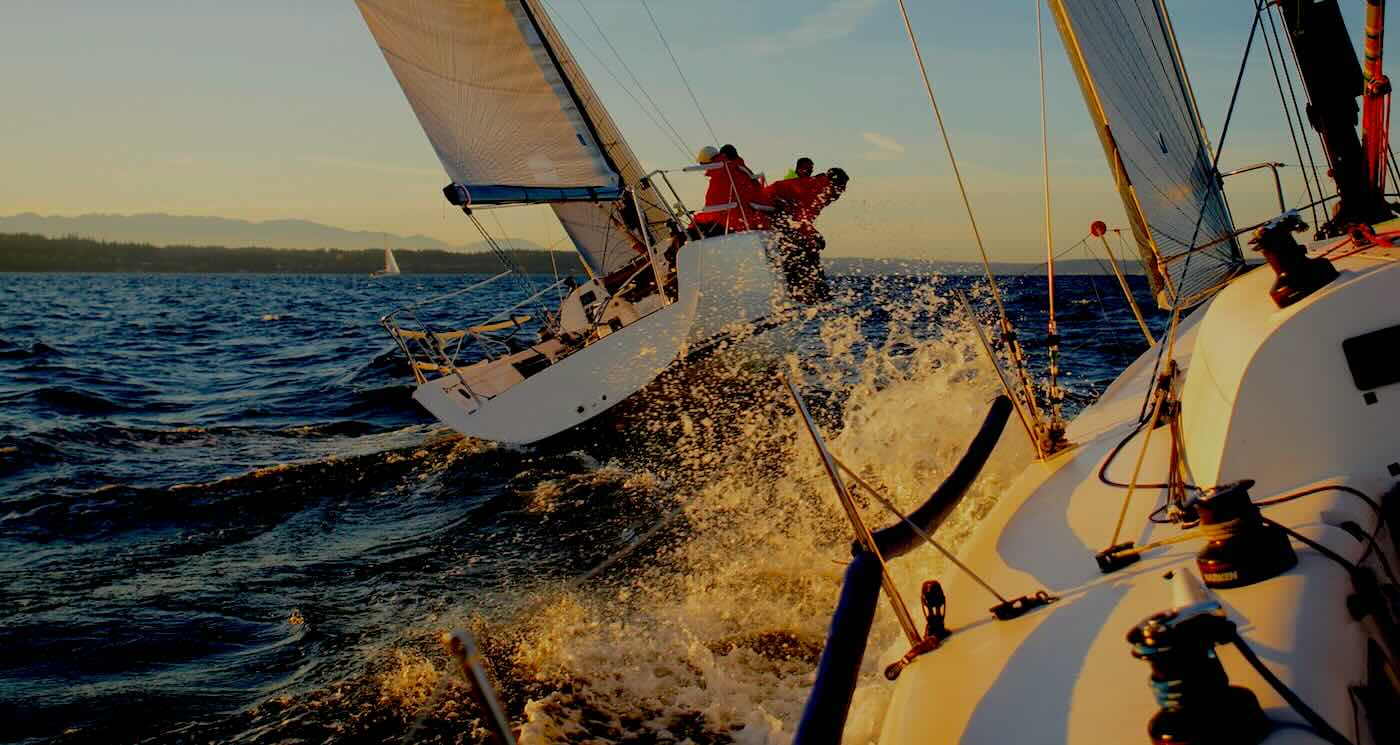
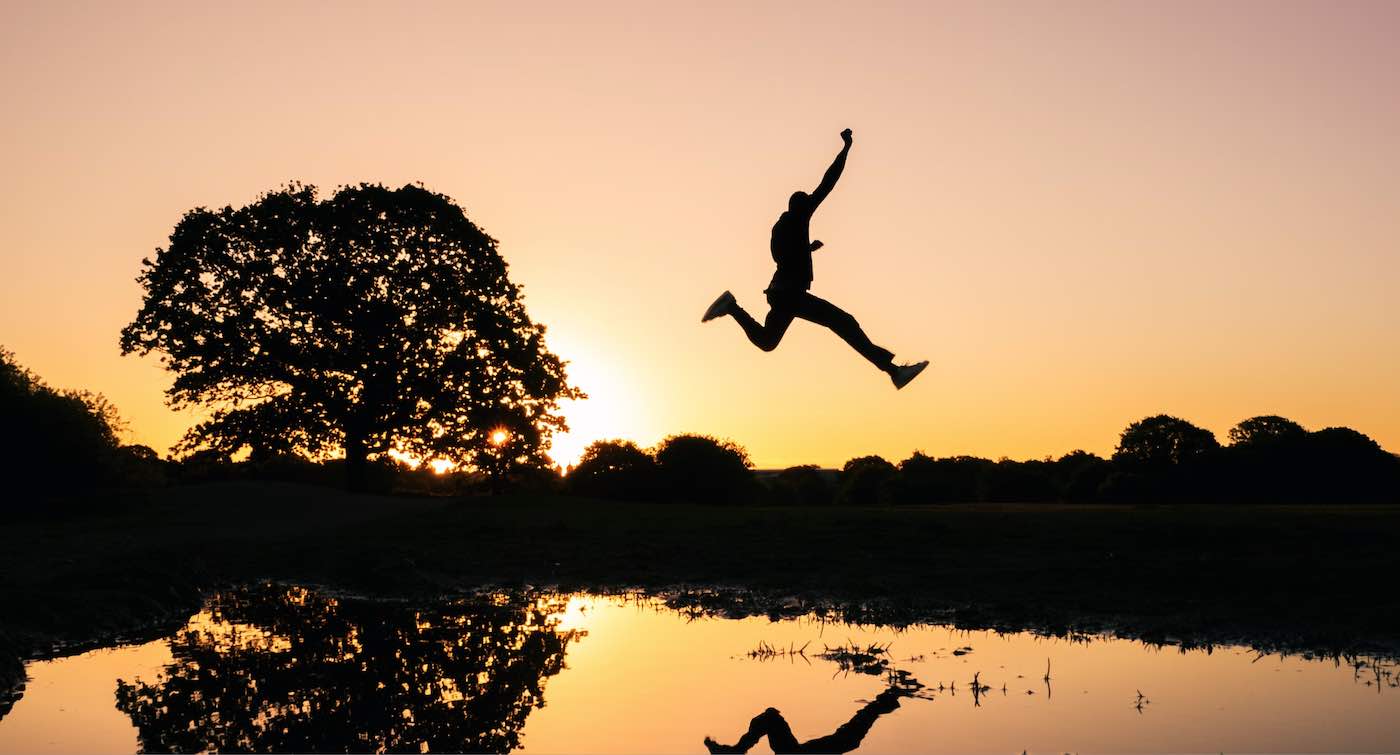
Quote of the Day: “The winds and the waves are always on the side of the ablest navigators.” – Edward Gibbon
Photo by: Getty Images for Unsplash+
With a new inspirational quote every day, atop the perfect photo—collected and archived on our Quote of the Day page—why not bookmark GNN.org for a daily uplift?
45 years ago today, Blizzard of Ozz, the debut solo album of the great and lately deceased metal singer Ozzy Osbourne, was released to moderate reviews and success. However it grew to become a staple of the genre, and was ranked as the ninth-greatest heavy metal album of all time by Rolling Stone. It includes the iconic singles “Mr. Crowley” and “Crazy Train,” both of which were sung by the great man only three months ago in his farewell tour, a week before his death at the age of 76 from Parkinson’s disease. READ more about the album… (1980)
A rendering of the planned library and housing project at 55 Hudson St. in Chinatown - credit, Stantec
A rendering of the planned library and housing project at 55 Hudson St. in Chinatown – credit, Stantec
Set to begin development in Boston’s historic Chinatown, an affordable housing complex will perch atop a branch of the Boston Public Library system.
It’s been 60 years since Chinatown had a BPL branch, and activists see it as the full-circle closure of a saga that began when it lost that branch all those years ago.
Demolished as part of a plan to thread Interstate 93 through town, the Chinatown library was located on Tyler St., near stretches of brick rowhouses inhabited by immigrants. A temporary library was opened nearby.
The rowhouses were demolished as part of an urban renewal project around the same time, which drove up rents and forced many residents to relocate to cheaper neighborhoods.
Now however, the interstate artery was demolished in 2008, and since 2021, the city has aimed at following New York City and Chicago’s lead of building affordable housing atop libraries—a community service at the very feet of the community that uses it.
“Families who live here will not only have affordable homes, they will also have a library just steps away, a place for children to learn, for elders to connect, for workers and students to find opportunity and to do so in community together,” said BPL President David Leonard, according to the Boston Globe.
Designed by Italian architecture firm Stantec, the 12-story mixed-use development project on 55 Hudson St. will include rental and subsidized condominium units on the top 10 floors.
“Seventy years ago, Hudson Street was a vibrant and tightknit immigrant community,” said Angie Liou, executive director of the Asian Community Development Corporation. “If it were not for the organizing of long time activists … we would not have reclaimed these parcels for community uses.”
Furthermore, BPL’s West End branch, on Cambridge Street near Mass. General Hospital, will be built over with an additional 13 floors containing 111 apartments.
“An essential function of modern libraries is to be a gathering space for residents of the neighborhoods we’re in,” Leonard said in 2023. “By building housing and libraries together, we’re dramatically improving the overall benefit that we’re having on the community.”
Upham’s Corner is the third library location being proposed.
SHARE This Potentially Great Idea With Your Friends On Social Media…
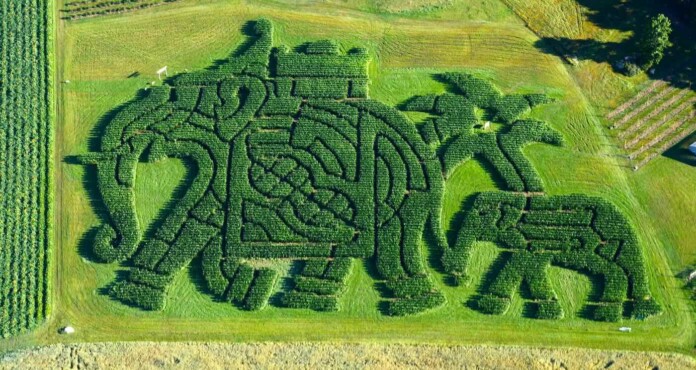
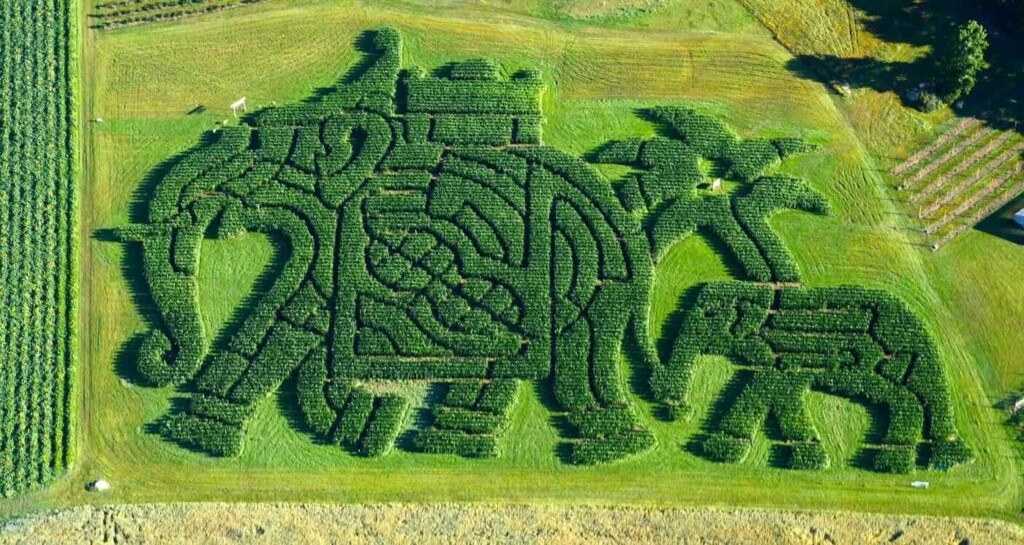
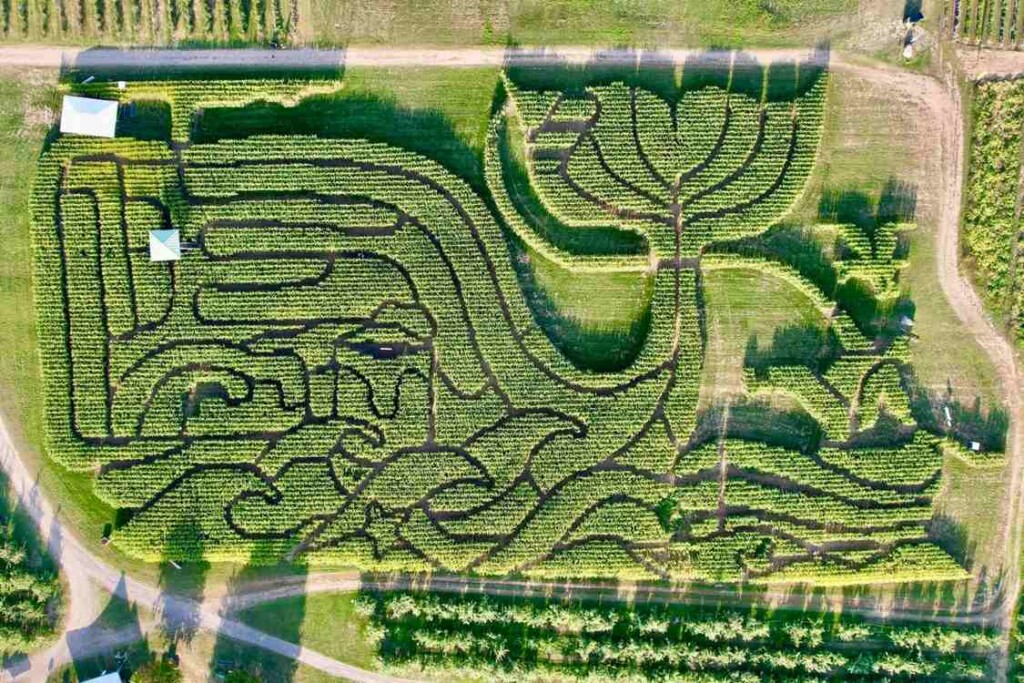
The Treworgy Orchard corn maze in 2015 featured Elephants - Courtesy of Treworgy
The Treworgy Orchard corn maze in 2015 featured Elephants – Courtesy of Treworgy
In Maine, a family farm that honors children’s books and local history has once again taken the #1 spot for the nation’s best corn maze.
It’s Treworgy Orchards’ 4th win in a row in the competition that measures the most unique and expressive corn maze in the country, organized by USA Today and voted on by the outlet’s readers.
Open Tuesdays through Sundays until November, tickets are $12 on weekdays and $15 on weekends. Members of the commercial fishing industry enter for free, in addition to children 2 or younger.
The seemingly strange carve out for fishermen comes as a result of the inspiration for this year’s design—the farmer and the fisherman—an homage to two of Maine’s important industries, represented on the state flag.
The whale among amber waves, with a man holding onto a rope attached to its tail, wasn’t inspired by Moby Dick, but rather by Maine author Robert McCloskey’s well-loved book, Burt Dow, Deep-Water Man. This children’s classic is the second to lend its theme to a corn maize at Treworgy Orchards, with their 2019 edition featuring a design based on Blueberries for Sal.
“This maze allows us to honor both Maine’s agricultural heritage and the fishermen who are such an important part of our state’s economy and culture,” said Jonathan Kenerson, co-owner of Treworgy Family Orchards.
– courtesy of Treworgy Orchards
“The Maine state flag features a farmer and a sailor; we wanted to highlight the twin industries that have defined Maine for generations: farming and fishing.”
Treworgy has also won the best corn maze vote with designs from Beatrix Potter’s Peter Rabbit and Winnie the Pooh.
SHARE This Great Day Out In America’s North Atlantic…
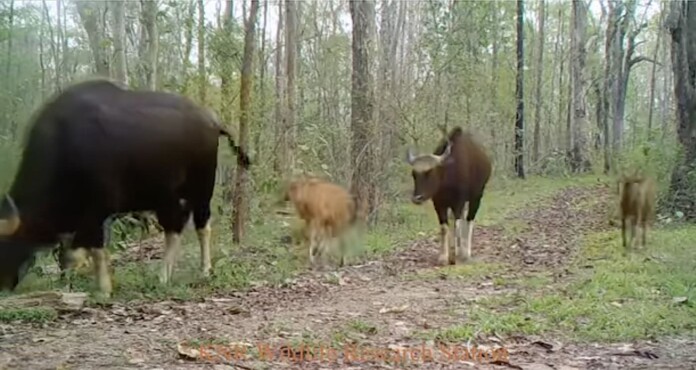
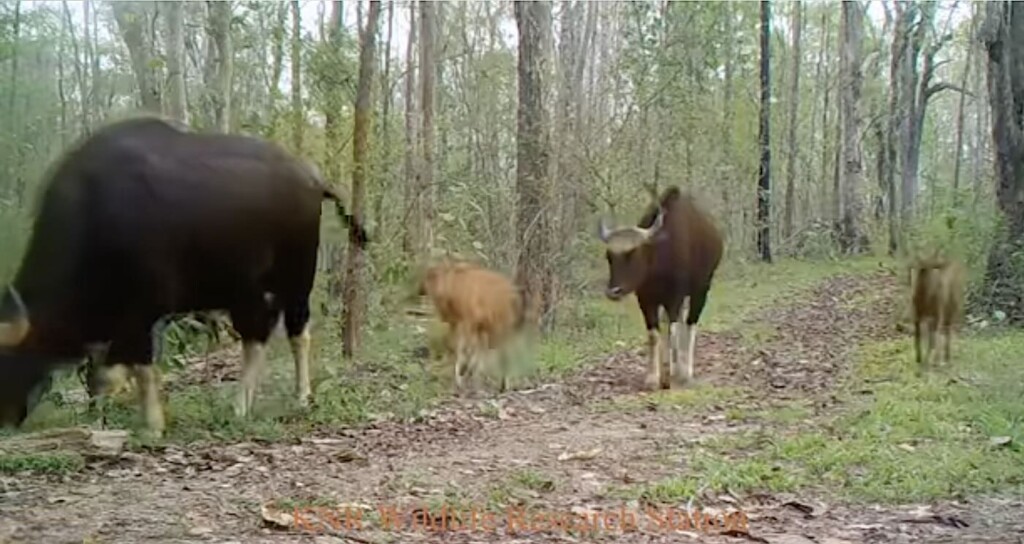
Trail cam footage -Released by Thailand Department of National Parks Wildlife and Plant Conservation
Trail cam footage -Released by Thailand Department of National Parks Wildlife and Plant Conservation
Thai wildlife officials are heartened by the site of the world’s largest bovine leading her calves down a forest trail.
The camera trap footage shows that conservation is working: that gaur are reproducing in numbers in the country’s Huai Kha Khaeng Forest, and that there’s enough food and habitat to facilitate that.
The gaur was once widely distributed across south and southeast Asia, but is today seriously fragmented. Nepal, Bhutan, Vietnam, Bangladesh, Cambodia, Laos, and Thailand all have small populations nestled in evergreen hills, and are generally considered vulnerable.
The beast remains widely dispersed and in healthy numbers in parts of India, but faraway Thailand boasts a lot less space.
Nevertheless, the UNESCO-listed Huai Kha Khaeng spans 1.4 million acres, and decades of conservation work have made it an enduring refuge for not only gaur, but elephants and tigers as well.
The nation’s Department of National Parks, Wildlife and Plant Conservation shared camera trap footage of the 4 animals moving down the trail on Facebook.
The largest extant bovines, gaur can grow 6 feet tall at the shoulder and weigh over 2,000 pounds. The horns of the bulls grow to be the largest of any animal on Earth.
WATCH the video below…
SHARE The Good News About The World’s Largest Bovine…
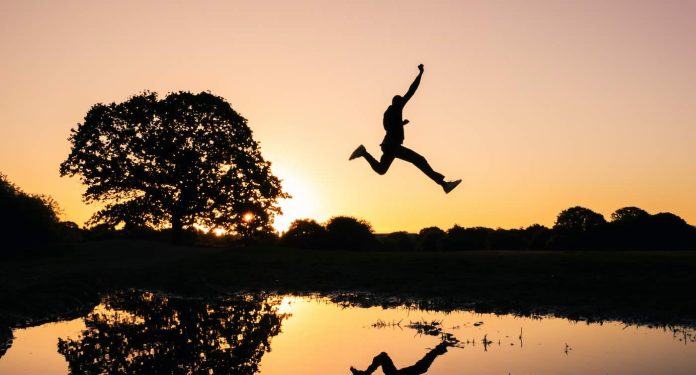
Quote of the Day: “One fails forward toward success.” – Charles Kettering
Photo by: Kid Circus
With a new inspirational quote every day, atop the perfect photo—collected and archived on our Quote of the Day page—why not bookmark GNN.org for a daily uplift?
50 years ago today,Fawlty Towers premiered on the BBC. John Cleese boldly stepped out into the situational comedy scene without the support of his legendary troupe, Monty Python, and created what the BBC considers “the British sitcom by which all other British sitcoms must be judged.” Capable of withstanding multiple viewings, the BBC continues, the show featuring John Cleese as a high-brow yet largely incompetent hotel owner is “eminently quotable, and stands up to this day as a jewel in the BBC’s comedy crown.” WATCH a video… (1975)
Rogers and Hammerstein wrote oh so famously that “at the end of the storm, there’s a golden sky.”
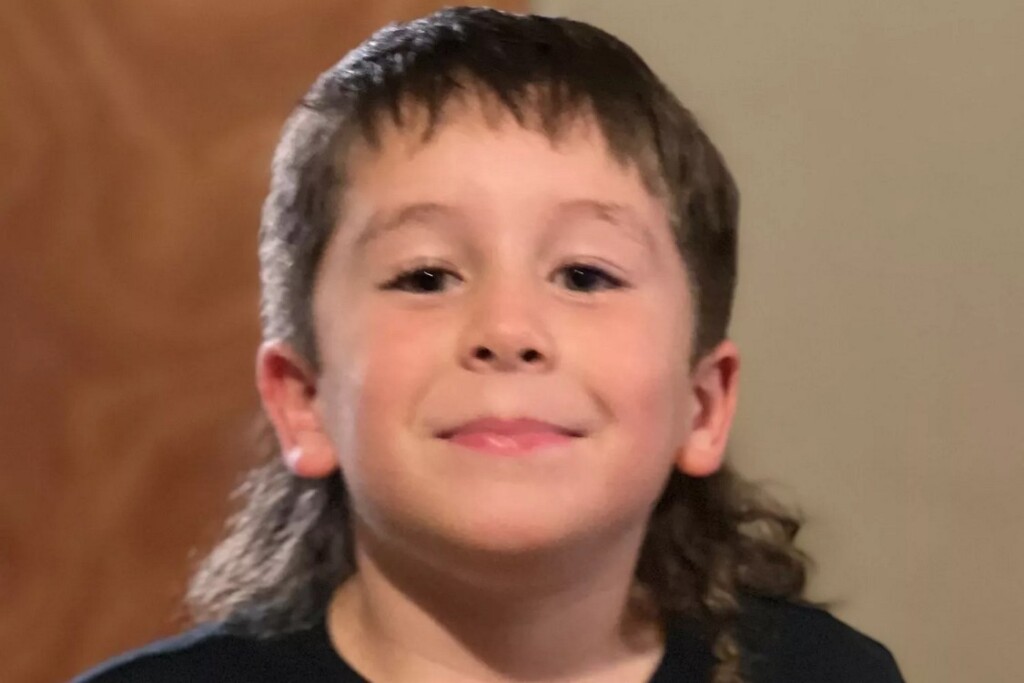
At their home on the range, an Oklahoma couple are beginning to see that golden sky beyond a stormy nightmare that forced their 9-year-old son to try and save their lives after a tornado overtook their car and left them with terrible injuries.
It was back in April when tornadoes were reported to be en route to the home town of Wayne and Lindy Baker, and it was on their evacuation path to a shelter in Dickson, Oklahoma, that disaster struck.
Seeing the tornado a mile or so off, it suddenly changed direction and overtook the Bakers as they drove down the road in their Ford pickup. It sent the truck smashing to the ground before a tree fell atop it, pinning the front seats under its weight.
Inside, Wayne and Lindy suffered broken necks, backs, ribs, and arms, but in the rear seats, 9-year-old Branson was unharmed. He got out of the truck and ran a mile down the road in pitch darkness due to a power outage from the winds until he found a house with people inside who could help.
CBS News got ahold of the story via Wayne’s brother, Johnny, who was on the phone with Wayne at the moment the tornado hit them.
“I heard a ‘ding ding ding’ like hail or rocks hitting the windshield, then a large crash and the phone went dead,” he told the outlet.
Johnny and his partner rushed to the scene, but with so much debris and live power lines down along the roads, it made for slow going. The truck was so mangled by the incident that it wasn’t clear to Johnny if it belonged to Wayne until he heard screaming from inside.
Shortly after, Branson, who had run a ten-minute mile, returned with a neighbor, and together they did what they could to help Wayne and Lindy before 911 arrived to transport the parents to OU Medical Center.
“The last thing Branson told them was, ‘Mom, dad, please don’t die, I will be back,'” Johnny recalled. “…He had to become his parent’s superman… That’s exactly what he said. He said, ‘I have to save my parents.'”
Wayne and Lindy are contractors and the injuries left them unsure as to their future ability to earn a living. A friend of the family set up a GoFundMe to help pay for their medical bills and replace the truck, which as of publishing has raised an inspiring $100,000.
In May, Branson and Wayne spoke to Good Morning America about their ordeal. The boy admitted he was very scared, and both were clearly still enduring the trauma of the event.
“I couldn’t be more proud to be a father,” Wayne said, conducting the interview in a neck brace. “A son that can accept a challenge in that way shows that he would go above and beyond for anyone.”
In a July update on the GoFundMe, the organizer revealed that Wayne has made a substantial recovery and was able to return to work, while Lindy has removed her back brace, but requires a second surgery on her right hand.
As parents, we sometimes fear our children will grow up too quickly. Forced into traumatic circumstances, there’s no doubt that Branson has done a lot of growing this year of a kind that Wayne and Lindy can hopefully be proud of.
WATCH the story on X…
.@ABC NEWS EXCLUSIVE INTERVIEW: 9-year-old hero saves parents during tornado.
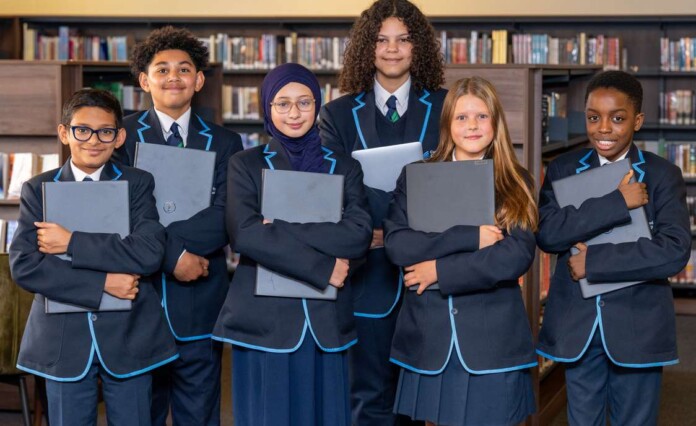
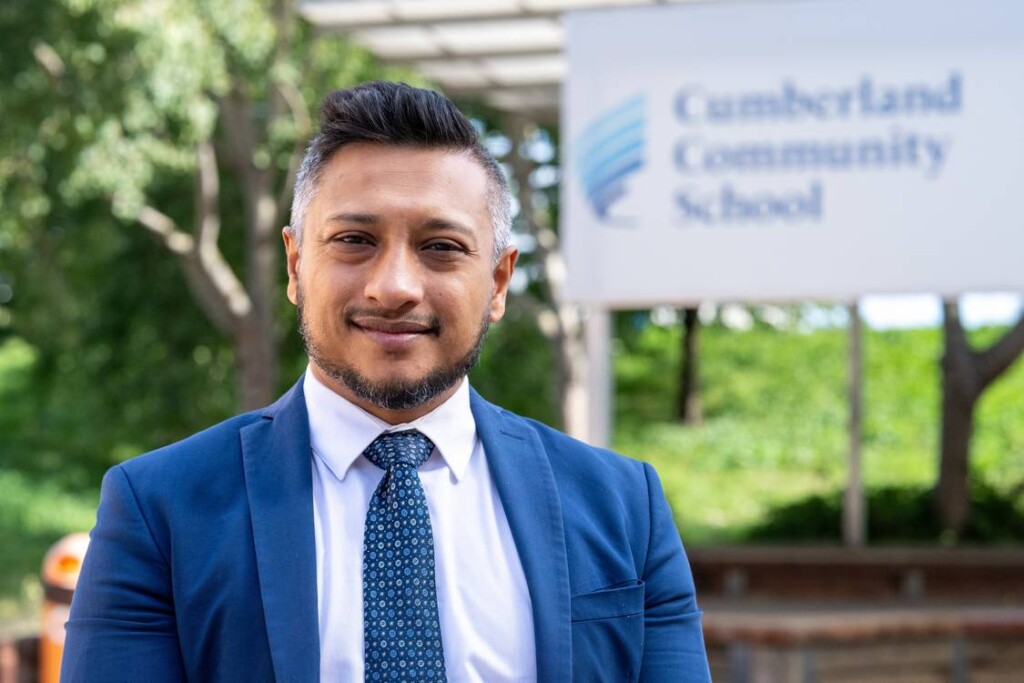
Students in Cumberland Community School - credit, Tony Kershaw / SWNS
Students in Cumberland Community School – credit, Tony Kershaw / SWNS
An English school has forked over $150,000 to buy all 270 incoming students a new blazer, tie, and laptop.
Located in one of the poorest parts of London, the aid comes off the back of sustained improvements in grades and higher education attainments at the school, proving that investing in students’ futures pays off.
The headteacher of Cumberland Community School in the London borough of Newham believes the uniforms help children feel “pride” in the institution, while removing fashion-focused distractions.
According to the Children’s Society, English parents spend on average £422, about $575 a year, on school supplies. Cumberland, however, serves one of the lowest income areas of London.
“For many families at our school the cost of uniform and computer equipment is an expense they can’t afford,” said the Headteacher, Ekhlas Rahman, according to Southwest News Service.
“I have had parents in my office telling me they just can’t afford certain items. As a school we felt like we had to act. We don’t want circumstance to be prohibitive to a good education, so we decided to foot the bill for the most expensive items.”
Head Teacher Ekhlas Rahman – credit, Tony Kershaw / SWNS
Under changes to the UK’s Education Act passed last year, schools in England are meant to be helping cut costs for parents. This could be by promoting cheaper second-hand uniform options, by removing unnecessary branded items from their uniform lists, or allowing generic substitutes.
Explaining his decision to stick with the uniforms even though families could rarely afford them, Rahman said “it gives a sense of pride to the school and the students.”
“By wearing the same outfit, students can focus more on their education and less on social pressures related to fashion.”
When he first took over, he reviewed the cost of the uniform and found it prohibitive, so in observance of the changes to the Education Act, Cumberland did away with the requirements on branded items.
Additionally, for the 270 new students entering the 7th grade this scholastic year, their families were provided with a voucher for £400 ($460) for the purpose of buying uniforms and equipment.
“These are small things, but they do add up,” Rahman said. “We know families are struggling now and we want to do everything we can to help out. We are a school committed to investing in our students, so their ambitions and dreams can become a reality.”
Cumberland Community School has been ranked as the most improved in the country over a five-year period.
Grades are up for 70% of all students, and many of the 15 and 16-year-olds were also awarded scholarships facilitated through the school’s Prestigious Colleges Program.
SHARE This Noble School Principal And Cumberland’s A+ Investment…
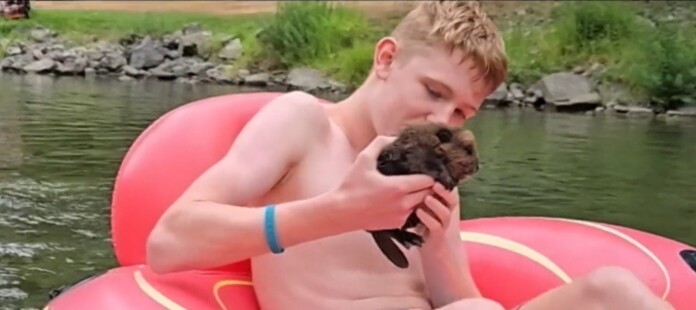
Connor with the baby beaver - credit, family photo
Connor with the baby beaver – credit, family photo
From British Columbia comes the story of a teeny critter and a kind teen sharing a “Canadiana” experience.
Connor Belanger and his mother Liz were enjoying a summer tubing trip on a fast-flowing river when the pair heard a high-pitched squeaking sound. Liz was a few yards ahead, so Connor lowered his hands into the river.
Clawing its way up into his palm was a baby beaver, then just a week old they would later learn.
“It felt awesome,” Connor said with a smile. “And I felt super protective of it immediately.”
Obviously exhausted, the animal was breathing heavily, but eventually curled up inside Connor’s hands and went to sleep against the teen’s chest.
When the two returned to shore they marked where they’d been on a GPS and called around looking for someone who knew what to do whilst the baby remained ensconced in Connor arms.
The family drove an hour and a half out of their way to the North Island Animal Rescue Association, which told CTV News that without the Belangers’ help there’s no chance the animal would have survived as it was only a week old and had likely been swept out of her den before mama beaver could retrieve her.
After a few weeks, “Little Timbre” is thriving, and currently practicing beaver skills on her way to a reintroduction into the same spot in the river where she was found 18 months from now.
“It’s such a ‘Canadiana’ experience!” Liz said. “If anyone is going to have this experience, it’s going to be Connor. He just has so much empathy for animals.”
Connor wasn’t the first young person to rescue a baby animal on a paddling trip down a Canadian river. Out in Alberta in July, two women were canoeing down the Kananaskis River, and encountered a mama horse whose baby was stuck in the water. The mare bolted, leaving the two women to rescue the foal, and carry it some hours down the river.
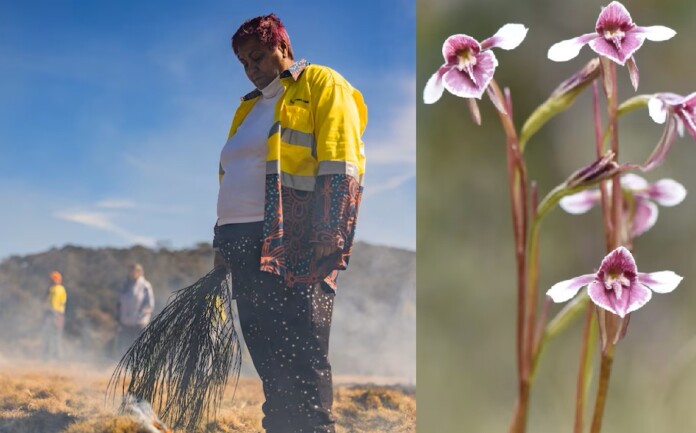
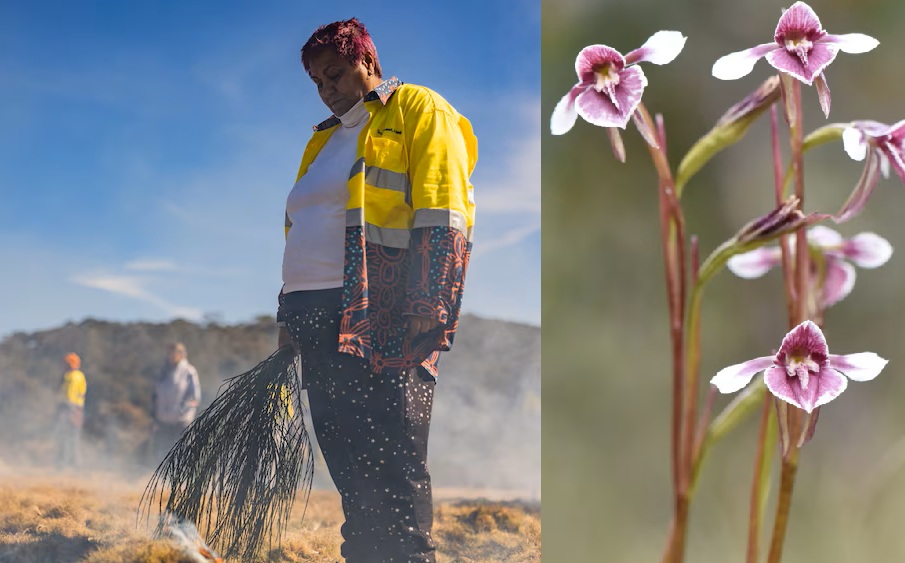
- supplied by Australia's Department of Climate Change, Energy, the Environment and Water
– supplied by Australia’s Department of Climate Change, Energy, the Environment and Water
Recapturing ancestral responsibility and restoring endangered orchids are the themes coming out of Australia’s scorched grasslands.
Burned by the cataclysmic bushfires of 2019, a national park called the Barrington Tops exploded in rare veined doubletail orchids, and now the traditional owners of the lands perform prescribed burns to aid these flowers in flourishing under duress from invasive species.
“During the… wildfires, fire jumped up here on the plateau,” Luke Foster, from the country’s Department of Climate Change, Energy, the Environment and Water (DCCEEW), told ABC News AU. “And in the burn footprint the following season, we had 4,000 [orchids] pop up right where the fire went through.”
Prior to 2023, it had been more than 50 years since the plain experienced a cultural burning, when slower, cooler fires are allowed to spread across the landscape according to elders’ deep knowledge of the terrain.
Birrbay, Warrimay, Wanarruwa, Gaewegal, and Guringay peoples all consider the Barrington Tops, called the Biyan Biyan Plain in their language, to be their traditional lands, and elders of these groups speak of a time when it was used as a place for gathering.
Warrimay elder Michelle Perry has been collaborating at the request of the DCCEEW to help lead the burning in aid of the veined doubletail orchid. According to Perry, Aboriginal groups have been conducting these burnings for millennia to prevent larger, more destructive wildfires from breaking out.
“There was a sense that they [our ancestors] were giving approval… it was just a sense of, ‘Yeah, they’re caring, watching.’ It has been one of the best things that’s happened for me and my family,” she told ABC.
So far the collaboration between the DCCEEW and some 150 different traditional owners has lit controlled fire to the Barrington Tops three times, and research is ongoing to study its effects on the orchids.
Ms. Perry relishes each chance to forge a greater connection to the land, and focuses on sharing and instilling that sense of connection into the younger generations of Warrimay and others.
SHARE This Story Of Resilience In Flowers And Humans From Australia’s Tablelands…
Quote of the Day: “The greatest gift I can give is to see, hear, understand and touch another person.” – Virginia Satir
Photo by: Bobby Stevenson
With a new inspirational quote every day, atop the perfect photo—collected and archived on our Quote of the Day page—why not bookmark GNN.org for a daily uplift?
187 years ago today, the Anti-Corn Law League was established in England by the economics-savvy liberals who understood that protectionism is immoral and useless in benefiting the economy. The League, led by Richard Cobden and heavily influenced by economist Daniel Riccardo, succeeded in seeing the Corn Laws of 1815 abolished, laying out the first laizzez-faire arguments against mercantilism to be heard in Europe, and establishing for all time the case study one their use. READ more about this successful political movement… (1838)
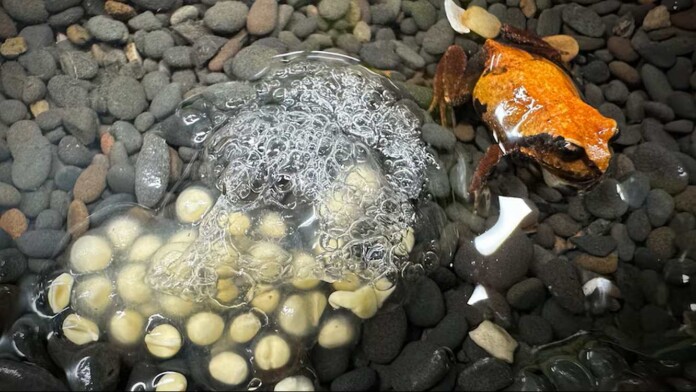
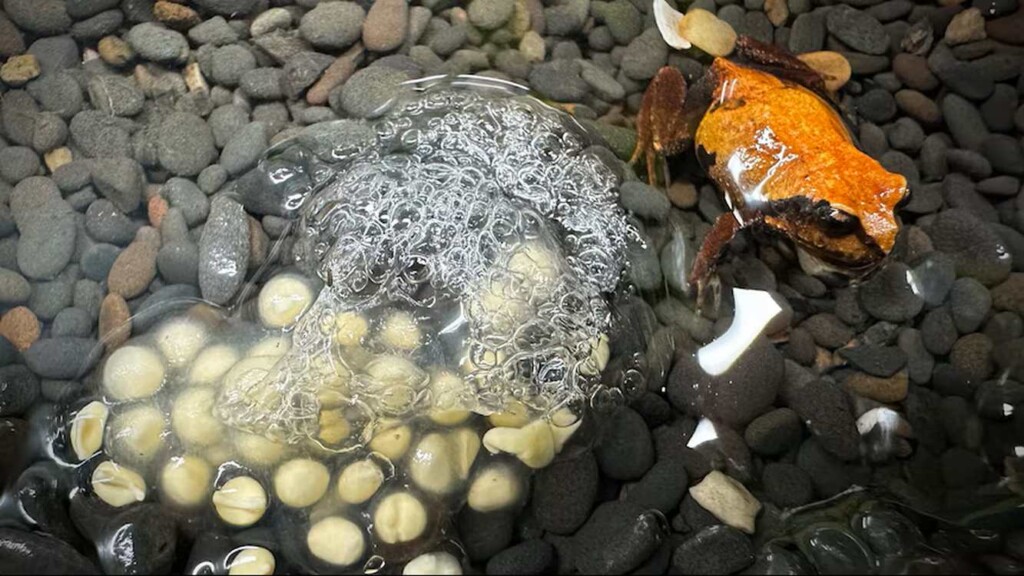
A unique and beautiful mountain-dwelling frog has been bred in captivity and released in the wild—the culmination of years of work by scientists and conservationists.
Dwelling in rainforests at higher elevation in southeast Queensland and northern New South Wales states in Australia, the red and yellow mountain frog was one of 110 priority species the government hoped to save over the next 25 years.
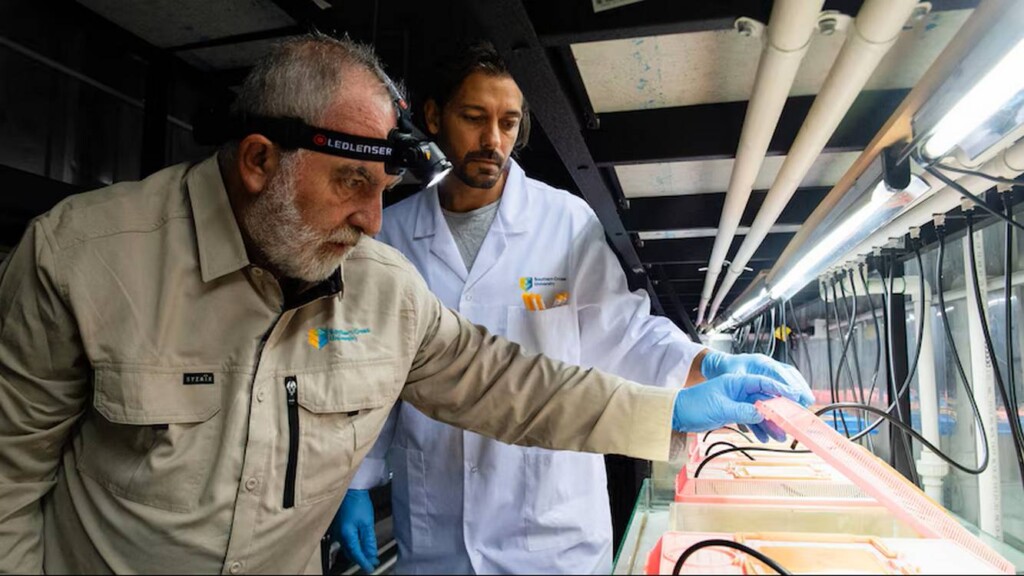
Captive breeding programs are rarer in amphibians than other animals, but the researchers at Southern Cross University have managed it. It required them to replicate much of the frog’s natural habitat; a challenging demand.
Unlike other tadpoles that swim around and feed, the infant red and yellows develop inside their egg sacs and emerge just three millimeters in length—another challenge as they have to be examined via magnifying lenses.
“But to get from egg to adult breeding stage has taken us four years… so it’s a much longer project than we ever envisaged,” said associate professor David Newell, whose colleague, research fellow Liam Bolitho, agreed.
“There’s temperature that we have to try to mimic, the substrate, plants, and also the sound, so we play them frog chorusing calls that we’ve recorded from the rainforest,” Dr. Bolitho told ABC News AU.
Researchers David Newell (left) and Liam Bolitho (right) – credit Southern Cross University
“All of these things we have to get perfectly right for them to breed, otherwise it’s not successful.”
In a very secretive place, a solemn yet hopeful ceremony was held as the research team, in partnership with national parks employees and members of the Githabul traditional owners, released 7 red and yellow frogs into a fenced off environment to begin a new chapter in their lives.
Like many animals in Australia, these frogs are threatened by invasive species like feral pigs. These mammals love to wallow in the pools where the frogs lay their eggs. One wrong roll can wipe out a whole generation of tadpoles.
Droughts can also dry out pools and creeks entirely, or shrink them down and thus increase the chance that pigs will smash the eggs.
The NSW National Parks and Wildlife department has undertaken feral pig trapping programs and fenced off several important frog habitats, while the Githabul and other local landowners vigilantly report any pig activity.
It’s a lot of work to save a 3 centimeter-long frog that few Australians will ever see, but it’s a big point of pride for this coalition of scientists and landowners who want to see this magnificent, rainforest ecosystem remain intact.
SHARE All This Effort To Save A Frog On A Far Away Mountaintop…
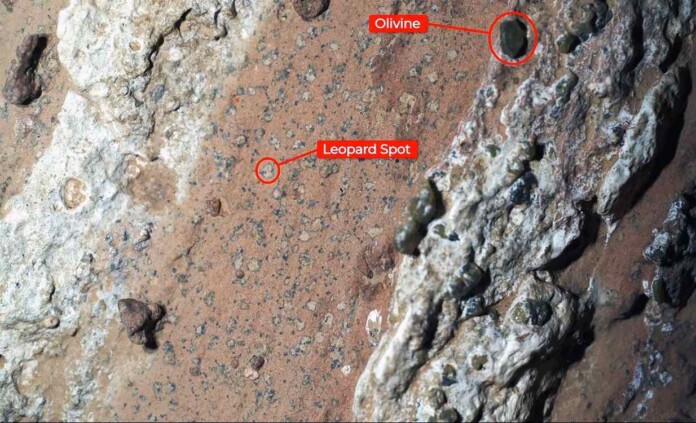
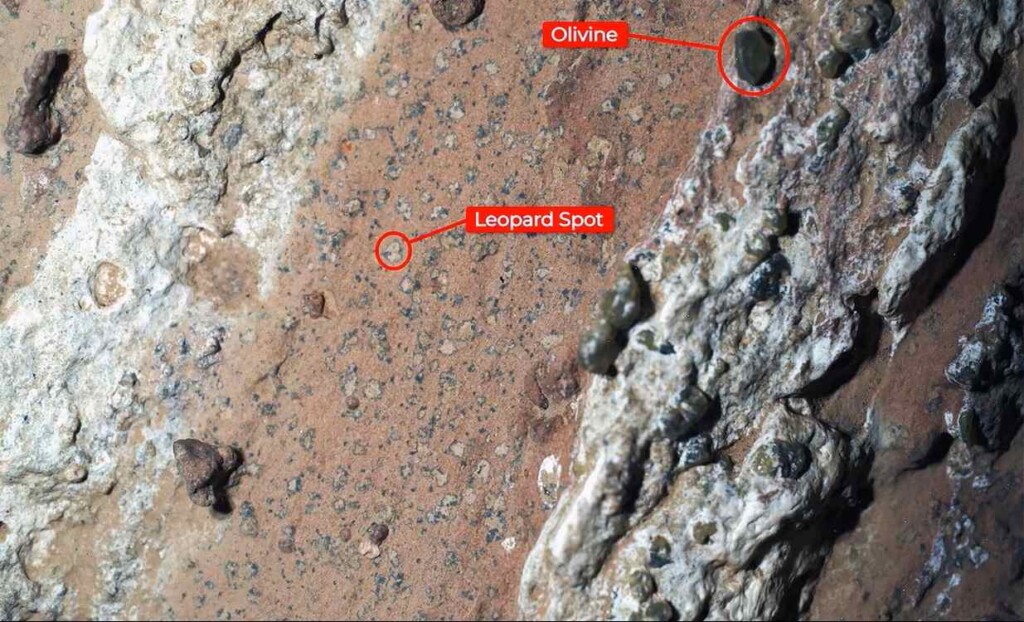
The so-called "Leopard spot" marks a mineral known on Earth for its production by microbes - Credit: NASA / JPL-Caltech / MSSS
The so-called “Leopard spot” marks a mineral known on Earth for its production by microbes – Credit: NASA / JPL-Caltech / MSSS
Two minerals, known almost exclusively to be linked with microbial metabolism, have been found in a recent drill sample by the Perseverance rover.
They sparked a flurry of excitement, and NASA Acting Administrator Sean Duffy was quick to point out that gold-standard science will need to be performed on what he called “the closest we have ever come to discovering life on Mars.”
The hype comes entirely from the presence of two minerals: vivianite and greigite.
Per the Mineralogical Society of America, greigite is formed by magnetotactic bacteria and sulfate-reducing bacteria in lake soils or hydrothermal vents. It’s one of several materials scientists have theorized could have acted as a catalyst for the origin of life, in part because a certain iron-based unit of greigite is present in a protein needed to drive the acetyl-COA pathway—a foundational metabolic process.
Vivianite is a hydrated iron phosphate mineral found in fossils, bivalve and gastropod shells, and in human graveyards and coffins; the result of a chemical reaction of the decomposing body with the iron enclosure. Sharp-eyed readers may think that the “vivi” in vivianite comes from the word for life, but it’s actually named after a scientist called John Henry Vivian.
Both vivianite and greigite were found in a recent core sample taken at Neretva Vallis, an ancient river channel about a quarter mile-wide that once fed the lake at the bottom of Jezero Crater, the site where Perseverance began its search for microbial life more than 5 years ago.
“This finding by Perseverance is the closest we have ever come to discovering life on Mars. The identification of a potential biosignature on the Red Planet is a groundbreaking discovery, and one that will advance our understanding of Mars,” said acting NASA Administrator Sean Duffy.
“NASA’s commitment to conducting Gold Standard Science will continue as we pursue our goal of putting American boots on Mars’ rocky soil.”
The reference to American boots isn’t just hyperbole. The recent NASA budget was directly tied to a human mission to Mars, and it included the canceling of a potential billion-dollar sample return mission that would have collected the Neretva Vallis cores, among dozens more, that Perseverance has cached across the landscape.
Instead, NASA has decided that rather than investing so much on a never-before-attempted mission, it would be far more straight forward to have astronauts collect them by hand.
Earth.com reports that the sample sediments showed a ring of vivianite penetrated by small “leopard spot” cores enriched in greigite, a pattern that matches a sequence seen in biologically mediated vivianite through the influence of extracellular electron transfer, another fundamental metabolic pathway, that has been documented in biologically-live Earth sediments.
None of this proves the Neretva Vallis samples were made by microbes, but it’s certainly the closest scientists have ever come to detecting evidence of life.
The discovery, whether it proves to be life or not, does extend the period during which Mars was potentially habitable (or not) to at least as far forward in the planet’s history as when this river channel was wet, an important reference date for future studies.
With such a strong biosignature being found within 6 years of exploration, there’s every chance other such mineral cycling evidence will be uncovered in future samples or missions, which in turn could be informed by the conclusions drawn from these core samples.
The big question will be whether or not scientists can demonstrate that greigite and vivianite need biological life to form, or can they do so a-biotically. Alternatively, is there some signature that biotic greigite and vivianite will always carry that a-biotic versions do not?
The answers to those questions will be the most impactful ones perhaps ever made in the quest to discover whether Mars was habited by microbes once upon a time.
SHARE This HUGE MILESTONE In The Story Of Discovering Life Beyond Earth…
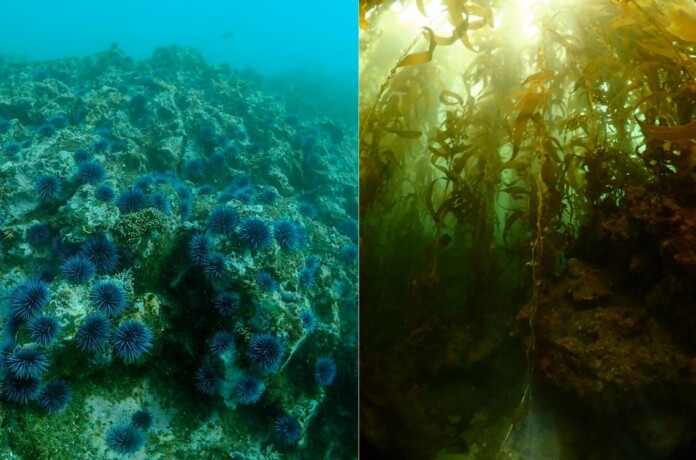
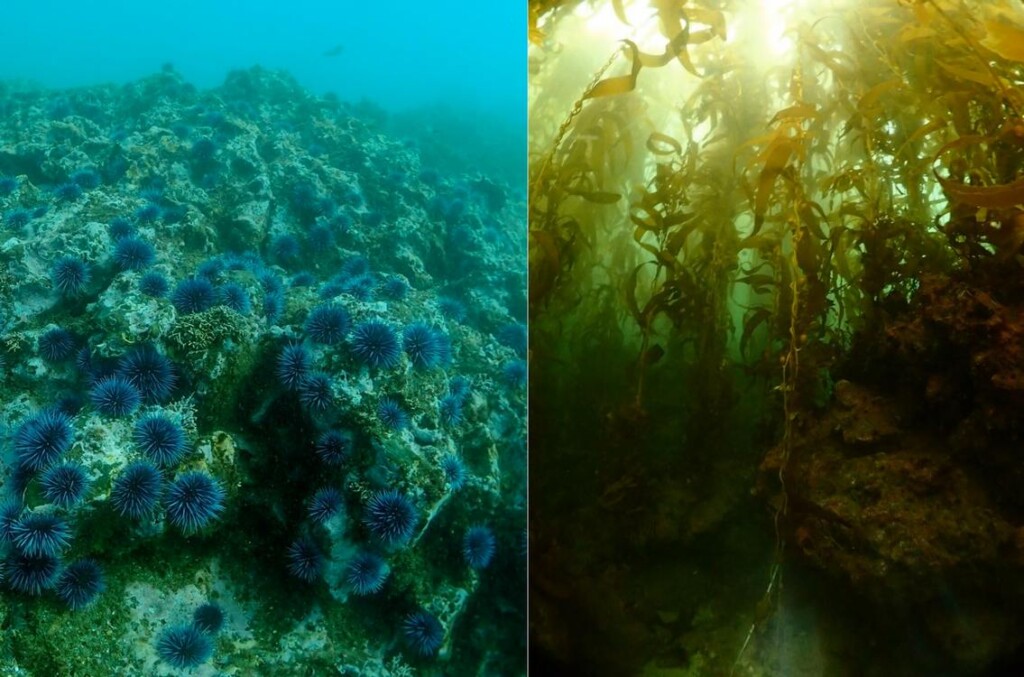
An area of kelp (right) that used to be covered in sea urchins (left) - credit, The Bay Foundation, provided to the Guardian
An area of kelp (right) that used to be covered in sea urchins (left) – credit, The Bay Foudnation, provided to the Guardian
GNN has reported before that conservation works, almost wherever, and with whatever method it’s undertaken—though to be honest, hammers aren’t usually involved.
They are, however, very much the tool of choice for the Bay Foundation, an extraordinary, dedicated outfit that has brought about the resurrection of the Santa Monica area’s kelp forests, an ecosystem described as an underwater cathedral or a grove of underwater sequoias.
They were decimated by the endemic purple spiny sea urchin, and for the last 13 years, an all-volunteer squad of divers have spent thousands of hours below the waves smashing them.
Smashing, smashing, and smashing.
Then smashing some more.
Mass extermination of non-invasive species surely is one of the strangest conservation methods you’ll read about, but the explanation is an understandable one.
Since the early 1900s, kelp-devouring spiny sea urchins have gradually been freed from the pressures of predation. Sea otters, who also love smashing a sea urchin or two, were overhunted for their furs. Recently, populations of sea stars have collapsed due to a wasting disease.
Thusly liberated, the sea urchins grew into horde-like populations that would wipe out kelp forests in a matter of days. Their spines scrape up the seabed and prevent any kelp spores—single-cell reproductive organelles that anchor themselves in the seabed—from taking hold and regrowing the forest.
The undersea barrens where the kelp used to grow has been described by the Guardian as covered in “zombie urchins” sometimes 70-80 individuals per square meter of seabed, which linger “hungry, empty of their meat, just hanging on and preventing kelp from growing.”
The Bay Foundation’s divers began routinely going down for astonishing shifts of up to 9 hours. Armed with hammers, they smash the zombie urchins one by one, leaving the larger, healthier urchins that provide a tidy profit to local fishermen, intact.
“You just tap, tap, and sometimes you have to reach into crevices to get the urchins out,” says Sean Taylor, a volunteer diver with the foundation. “Your forearms get super tired.”
Divers told the Guardian that the work is indeed tiring: manual labor underwater, in a wet suit and scuba gear. 15,575 hours were logged in smashing urchins—a mind-boggling 5.8 million of which have been smashed; clearing 61 football fields worth of seabed.
“Within three months, the kelp came back,” Mitch Johnson, another volunteer with the foundation said. “I’ve never seen a kelp forest that dense—and it was insane to see how quickly it returned.”
Kelp can grow almost as fast as the urchins can eat it—sometimes 2 feet per day. It can grow 100 feet high, providing a vital ecosystem service of dampening the impact of storm surges.
When fully grown, Johnson and Taylor describe swimming through kelp like flying through an unbelievably dense jungle of life, but with the canopy of a cathedral, with sunlight passing through the diaphanous kelp with a brazen hue like light through stained glass windows.
Hundreds of species inhabit the kelp forest preferentially, and the foundation is now seeing many return, like the California spiny lobster, now that the forests have regrown.
SHARE This Wild Underwater Story With Your Friends…
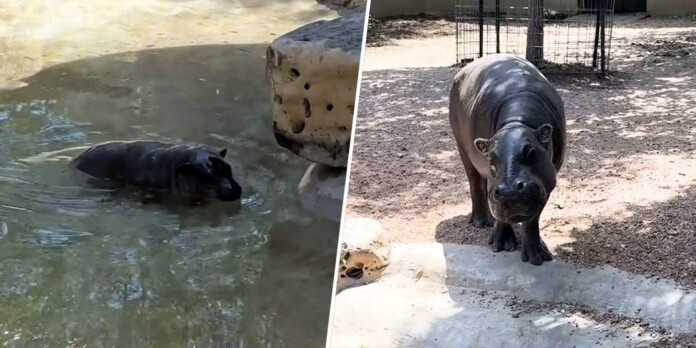
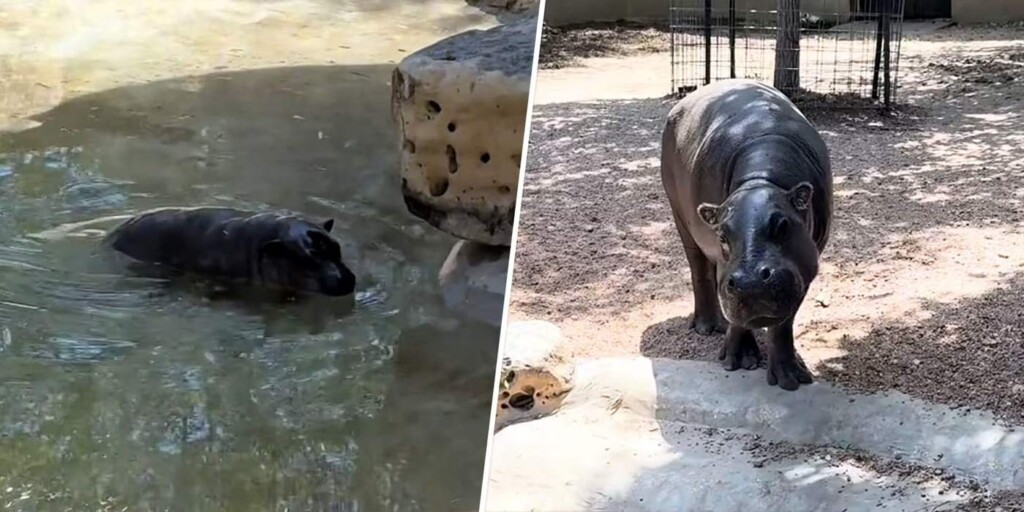
At a zoo in Kansas, keepers were having trouble with a slippery, recalcitrant, baby pygmy hippopotamus who didn’t want to get out of the pool.
It’s something they deal with every day, but in a viral video shared by the zoo, they demonstrate the best way to resolve the situation: calling his mother.
It amassed 4.6 million views on TikTok, and thousands of comments pointing out that Posie, the mother hippo, arrives and gives her son Mars the “mom stare.”
In the video, zookeepers are seen attempting to muscle Mars out of the pool so he can go inside a shelter in his enclosure for the night. The slippery devil continues to escape them and run back into the pool.
Tanganyika Wildlife Park’s staff explained to Today.com that baby hippos are covered in a slimy secretion called “blood sweat” which forms a protective layer around the newborn’s skin to shield it from the Sun’s rays.
“So between his size and that secretion, it’s really hard to pick him up and just carry him inside. So we found that we can call mom back out, or if mom is getting impatient because she wants to go inside, she’ll turn around and give kind of small little grunts,” said Curator of Research and Welfare, Dr. Samantha Russak.
Why might mom get impatient? Although Mars is nursing and so can eat when he wants, Posie eats in the early evening inside their shelter, so the longer that Mars stays in the pool, the longer Posie has to wait to eat.
Whether it was third time she announced that “dinner’s ready,” whether she gave him the “mom stare” as some in the comments suggested, whether she used all three of his names, or whether she started counting to three, the effect she has in the video is just so recognizable.
“It seems to be universal. Moms everywhere just have that power over babies. I saw someone comment and say, ‘She must have used his full three names.’”
“The ‘mom stare’ is universal in every species,” one person wrote in the comment section.
Quote of the Day: “Too low they build, who build beneath the stars.” – Edward Young
Photo by: Bobby Stevenson
With a new inspirational quote every day, atop the perfect photo—collected and archived on our Quote of the Day page—why not bookmark GNN.org for a daily uplift?
- CC 4.0. Michael Miller
- CC 2.0. AlexanderJonesi
Happy 40th birthday to The Great 8, Alexander Ovechkin. Playing left wing for the Washington Capitals since 2004, he is quite simply among the greatest goal scorers in the history of ice hockey. He has won the Hart Memorial Trophy for Most Valuable Player three times (in 2008, 2009, and 2013), the Lester B. Pearson Award for Best Player as voted on by the National Hockey League Players’ Association three times (2008, 2009, 2010) and the Maurice “Rocket” Richard Trophy, awarded annually to the NHL’s leading goal scorer, an NHL-record nine times. READ about his life and career… (1985)
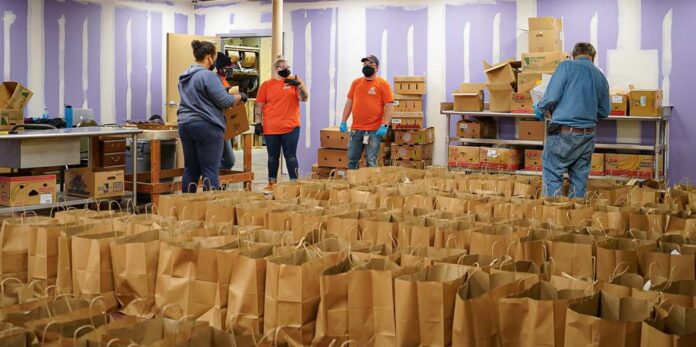
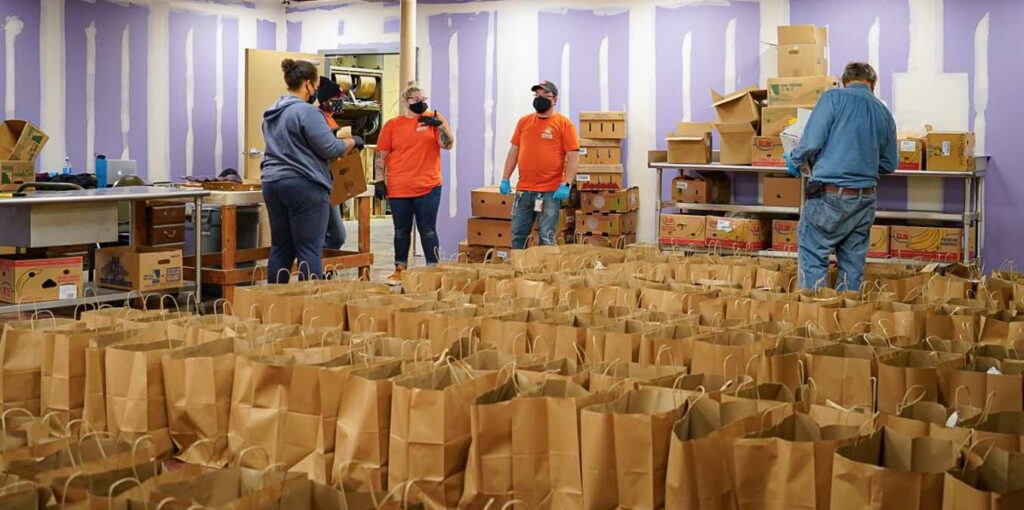
Donations from the Good Food Project-by Patrick Hogan / 412 Food Rescue
Donations from the Good Food Project-by Patrick Hogan / 412 Food Rescue
In the late 20-teens, a sort of DoorDash service for good began rescuing donated food in Pittsburgh that was nearing its expiration and diverting to other recipients who could use it.
Connecting with hundreds of local businesses, and with the help of an app they designed, 412 Food Rescue had created the largest volunteer-led food transport network in a single urban region by 2019.
25,000 volunteer drivers used a DoorDash-like app called Food Rescue Hero to find donations of food that was perhaps not saleable for aesthetic reasons, or was nearing its sell-by date, or had arrived as part of a shipping or ordering mistake. Collecting it all, the volunteers brought it back to the organization’s Good Food Project kitchen in Millvale, Pittsburgh.
They churned out sometimes 600 meals a day for nonprofits that help feed those in need, while amassing a truly monstrous mess of good—some 70 million pounds of food were turned into 57 million meals, saving 30 million pounds of emissions from the food going to waste.
Fast forward to 2025, and their impact has become truly remarkable. At the close of 2024, they had expanded to include partners in Illinois, Arkansas, California, New York, Colorado, North Dakota, and Texas, who together rescued tens of millions of pounds of food that prevented an estimated 102 million pounds of greenhouse gas emissions, which Food Rescue Hero estimates would be the same impact as removing 4,043 cars from the roads for an entire year.
In the United States, as much as 40% of the food we produce goes to waste—contributing substantially to greenhouse gas emissions along the way—while one in seven people goes hungry.
“We were founded on the principle that people are wired for good,” says Food Rescue Hero CEO Alyssa Cholodofsky, “and our Food Rescue Hero community has validated that belief many times over.”
“Ours is a story of regular people helping each other and working together to take on some of the biggest challenges facing our world. Two hundred and fifty million pounds is just the beginning.”
With 250 million pounds rescued, and 450 million pounds of emissions prevented, it’s the proof that people-powered solutions can prevail in the face of the biggest challenges we face today.
There are dozens of ways to get involved with 412 Food Rescue, for those in the Pittsburgh area, or Food Rescue Hero, their nationwide collaboration. More information can be found on their websites.
SHARE This Mammoth Rescue And Redistribution Effort With Your Friends…