











All News - Page 31 of 1688 - Good News Network
Home Blog Page 31

Your Weekly Horoscope – ‘Free Will Astrology’ by Rob Brezsny

Our partner Rob Brezsny, who has a new book out, Astrology Is Real: Revelations from My Life as an Oracle, provides his weekly wisdom to enlighten our thinking and motivate our mood. Rob’s Free Will Astrology, is a syndicated weekly column appearing in over a hundred publications. He is also the author of Pronoia Is the Antidote for Paranoia: How All of Creation Is Conspiring To Shower You with Blessings. (A free preview of the book is available here.)

Here is your weekly horoscope…

FREE WILL ASTROLOGY – Week of September 13, 2025
Copyright by Rob Brezsny, FreeWillAstrology.com

VIRGO (Aug. 23-Sept. 22):
The Basenji is a dog breed that doesn’t bark. Instead, it produces an eerie, melodic yodel called a baroo. This oddity isn’t a flaw or drawback; it’s an interesting uniqueness. In the coming weeks, Virgo, I invite you to express your personal versions of the baroo—your idiosyncratic offerings and singular gifts. Playfully resist the pressure to be more conventional or “on brand.” Be faithful to what yearns to come out of you, which may be raw, radiant, and a little weird. Let your authenticity be exactly what it is: a beacon, not a liability.

LIBRA (Sept. 23-Oct. 22):
Scientists discovered that some caterpillars, while dissolving inside their cocoons, retain memories of their caterpillar lives even after becoming butterflies. In my view, that’s equivalent to us humans remembering details of our previous incarnations: having an all-new body but being able to draw on what our past body learned. According to my analysis of the astrological omens, you will be able to draw on this amazing capacity in the coming weeks. The person you used to be will have key revelations and inspirations for the future you.

SCORPIO (Oct. 23-Nov. 21):
According to Celtic mythology, Cerridwen is the goddess of inspiration. In her cauldron, she brews magical elixirs that bestow the powers of wisdom, creativity, and transformation. The humans most likely to earn her blessings are those who are patient and willing to be changed. Of all the signs in the zodiac, you Scorpios are now at the top of the eligibility list for gifts like these. And the next three weeks will be the most favorable time for you to ask for and receive such blessings. Here’s a clue that will help you get all you deserve: Believe in magic.

SAGITTARIUS (Nov. 22-Dec. 21):
In ancient Chinese philosophy, ziran means naturalness, spontaneity. It might refer to the way a mountain is purely a mountain, and a wave is a wave without trying to be a wave. I think you Sagittarians are due for an extended engagement with this wild ease and elegant freedom. After weeks of inner labor, your soul wants to breathe in ziran. Your assignment is to let yourself be as natural and unconstrained as you dare—not correct or careful or “optimized.” So I advise you to head in the direction of what’s simple and real and good. Emphasize smoothness over effort. Choose your rhythm, not theirs. You aren’t required to prove your healing. You just have to live it.

CAPRICORN (Dec. 22-Jan. 19):
“Serendipity” is an English term that refers to beautiful accidents, fortunate interruptions, unexpected opportunities, and surprisingly wonderful discoveries (The French equivalent is sérendipité; Italian: serendipità; Japanese: serendipiti.) The word didn’t exist until 1754, when author Horace Walpole coined it. Lovely outbreaks of good luck and uncanny blessings had been happening from time immemorial, of course, even though there wasn’t this precise word for them. Here’s a key point: They are more likely to occur if you believe they’re possible and make yourself alert for their arrival. That’s good advice for you right now.

AQUARIUS (Jan. 20-Feb. 18):
The placenta is the only organ that the human body creates from scratch and then discards. Let’s pause for a moment to register how remarkable this is: to grow a temporary life-support system and then jettison it once its purpose is fulfilled. Inspired by this miracle, I speculate that you may soon undertake a metaphorical version of it. A situation or experience that has nurtured you is reaching the end of its mission. Though it has served you well, the wise move might be to outgrow it and move on to a new phase of your evolution. At the very least, it’s time to embark on a search for new forms of nourishment.

PISCES (Feb. 19-March 20):
In Balinese gamelan music, there’s a technique called kotekan. Two instrumentalists play distinct musical parts that together create a seamless, intricately melodic and rhythmic texture. Let’s make this your metaphor to live by in the coming weeks, Pisces. In my astrological opinion, you are not meant to work solo. Your greatest success and most fun will come by generating harmony through collaborative improvisation and shared timing. A small warning: Someone else’s input may at first feel like interference, but it’s actually the missing part of the song. Let yourself blend, bounce, echo, and respond. Genius will be born in the spaces between.

ARIES (March 21-April 19):
I can’t speak the Quechua language, which is Indigenous to the Andes Mountains. But I have lifted one of their words to use for our purposes here: munay. It refers to an intensely practical and visionary love that includes far more than sweet feelings and affection. When we practice munay, we offer discerning respect and detailed appreciation to those we adore. We are generously eager to help our allies live their best lives. It takes discipline! And focus! And ingenuity! To be a rigorous and vigorous source of munay, we must cultivate it as a daily practice. In the coming weeks, Aries, I hope you will go a bit wild in your expression of this tender force of nature. Imagine yourself as a gentle whirlwind of love that spreads interesting beauty and bestows useful blessings. Be a relentless dispenser of catalytic gifts.

TAURUS (April 20-May 20):
The medieval Persian polymath Avicenna believed the soul entered the fetus not with the first heartbeat, but with the first dream. I offer this idea for your poetic consideration, dear Taurus. Let’s imagine that the next beautiful thing you create will not arise from your forceful intention. Rather, it will emerge because you give yourself permission to fantasize, to wander freely in wonder, and to meander with curiosity on the frontiers. Your assignment is not to hustle, but to incubate; not to push forward, but to dwell expectantly in the mystery.

GEMINI (May 21-June 20):
The bowerbird constructs elaborate ground-based shrines not as nests but as seduction lures. The enticer might gather blue bottle caps, yellow flowers, and shiny stones so as to create a scene that piques the attention of a potential mate. These objets d’art are not merely decorative. They are displays that demonstrate discernment, skill, and aesthetic intelligence. I authorize you to be like a bowerbird, Gemini. What collection of symbols, words, gestures, and curiosities will magnetize the people or opportunities you long to engage with? It’s not about flashiness; it’s about alignment. What you draw into your sphere will reflect the vibes you emanate.

CANCER (June 21-July 22):
The pearl doesn’t begin as treasure. In its earliest form, it’s an irritation: a grain of sand that’s really a wound inside the oyster. Over time, the creature coats it with layers of nacre, turning discomfort into luminescence. Let’s use that as a metaphor for you, Cancerian. In my view, your task right now is not to escape or shed what’s bugging you, but to expedite the coating process. What is that gritty thing? A memory, injustice, or unmet yearning? It’s crucial you don’t reject it and don’t let it fester. I think it’s best to turn it, layer by layer, into a luminous asset, even a treasure. Prediction: The pearl you form will long outlast the wound.

LEO (July 23-Aug. 22):
Olive trees can thrive in rugged environments, including rocky and nutrient-poor soils. Their root systems are wide, deep, and resilient. They are well-adapted to full sun, high temperatures, and low water availability. In comparing you to an olive tree, Leo, I’m not implying you will always have to be as hardy as they are. But in the coming weeks, you will be wise to be equally plucky and persevering. Here’s another fact about the olive tree you can and should emulate: Its fruit is valuable and in demand.

WANT MORE? Listen to Rob’s EXPANDED AUDIO HOROSCOPES, 4-5 minute meditations on the current state of your destiny — or subscribe to his unique daily text message service at: RealAstrology.com

(Zodiac images by Numerologysign.com, CC license)

SHARE The Wisdom With Friends Who Are Stars in Your Life on Social Media…

“Between saying and doing, many a pair of shoes is worn out.” – Iris Murdoch

Curated Lifestyle for Unsplash+

Quote of the Day: “Between saying and doing, many a pair of shoes is worn out.” – Iris Murdoch

Photo by: Curated Lifestyle for Unsplash+

With a new inspirational quote every day, atop the perfect photo—collected and archived on our Quote of the Day page—why not bookmark GNN.org for a daily uplift?

Curated Lifestyle for Unsplash+

Good News in History September 13

Thomas Muller warming up during his last season for Bayern - credit, Werner100359 - CC 4.0. BY-SA

Happy 36th Birthday to German footballing star Thomas Müller, a World Cup and Champions League winner, 13-time German Bundesliga champion, and one of the best players of his generation. The all-weather attacking midfielder, described playfully in German once as a “space interpreter,” or Raumdeuter, will go down in history for his consistency across a career in which he set multiple all-time records for longevity and honors. A child couldn’t have a better role model, as the goofy-looking, lanky Bavarian boasted a sense of humor and lightness that defies the image of elite European footballers as rich snobs. READ more about the Bayern legend… (1989)

Resourceful Singapore Finds Perfect Place for 86 MW Solar Farm–its Biggest Reservoir

- credit, courtesy of Sembcorp
– credit, courtesy of Sembcorp

How do you decarbonize a city state? With so little space, so many demands on power, and so many citizens, generating any meaningful electricity from renewable energy is a major challenge for urban planners.

But over its history, the planners of Singapore have shown themselves to be nothing if not resourceful, and so maybe it’s no surprise they’re set to begin construction on an 86-megawatt solar farm.

The surprise though comes from where they’ve built it—on top of the country’s largest reservoir—forming a floating solar farm that will join two others already present on two other reservoirs.

The contractor, Singapore-based engineering firm Sembcorp Solar Singapore, won the bidding process with designs for an 86MW PV solar farm on Pandan Reservoir, issued by Singapore’s national water agency.

It will be the third such floating solar farm built by Sembcorp, with the other two located on Singapore’s two other reservoirs. One was built in 2021, and another was commissioned this year by Facebook parent company Meta to power the data center for its local subsidiary.

All tolled, the solar panels will generate 296 megawatts of clean energy.

“Floating solar projects at reservoirs like Pandan, Tengeh and Kranji are vital for Singapore’s land-scarce energy landscape,” said Ms. Jen Tan, CEO of Sembcorp Solar Singapore.

SOLAR PROJECTS, SOLAR PROGRESS:

Floating solar installations have a unique benefit to terrestrially-mounted panel arrays, which is that the water underneath helps keep their electronics cool even while their black surfaces bake in the tropical sun. When properly cooled, panels can produce around 2% more power.

Other installations such as rooftop panel arrays mean that Singapore actually generates over 1,000 megawatt-hours of solar energy, half of what the city-state plans to install by 2030. It will be fascinating to see where they put the next solar array, having run out of reservoirs.

SHARE This Innovative Development Strategy With Your Friends Who Love Good Ideas…

Officer Converts Old Train Car into ‘Hospital on Wheels’ to Bring Healthcare to Remote India

Ity Pandey and her railcoach hospital - credit, the Better India
Ity Pandey and her railcoach hospital – credit, the Better India

From a dusty plain in central India comes the story of a truly brilliant solution to a significant problem.

Brought to light in a report from the Better India, a railway manager has found a masterful way to bring much needed medical services to the vast network of railway employees and their families: by building a hospital in a train coach.

If you go to Wikipedia and look up the city of Bhusuwal, the first thing you see is an image of Bhusuwal Junction, the city’s train station. Indicative of what this story is about, the junction is one of the busiest railway depots not just in central India, but the entire country.

It houses the Bhusuwal Railway Division, whose manager is Ity Pandey, a 26-year veteran of one of the world’s most used and most complicated rail networks.

Much like an old Rustbelt factory town, Bhusuwal Junction is the best source of employment for locals, and the division contains thousands of workers who live for most of the year in the middle of nowhere in order to maintain the lines which bisect the subcontinent.

For these employees and their families, medical care was the matter of a long journey.

“I conceived the idea of a ‘hospital on wheels’ because we wanted to provide medical aid to our injured employees,” Pandey told the Better India.

“With more than 25,000 railway workers and their families spread across vast, remote areas, many did not have access to the essential healthcare or timely diagnoses needed to prevent worsening health issues. The remoteness of these areas, coupled with the shortage of medical professionals, aggravated the problem.”

BUILDING A BETTER INDIA: City in India Ranks the Cleanest 8 Years in a Row: ‘It Feels as Though You Aren’t in India’

Equipping an old first-class train carriage with an ECG station, blood collection and lab equipment, OBGYN facilities, and treatment rooms, the carriage, painted white and festooned with flowers, now crisscrosses the Bhusuwal Railway Division in Maharashtra state, providing medical care to the vast regiment of railway workers.

Every patient treated or examined on the carriage, called “Rudra,” is assigned a unique ID which creates a patient file at the Divisional Railway Hospital in Bhusuwal. If the patient needs a follow-up that can’t wait for the Rudra to come around again, they can visit the city and skip the diagnostics and paperwork.

MORE RAILWAY STORIES: AI Safety System Stops Train After Detecting Elephants Crossing the Tracks Ahead

“In just one day, Rudra delivered essential healthcare services to 259 beneficiaries, including 159 employees, 72 family members, and 25 retired workers,” Pandey said. Anemia and high-blood sugar were common ailments.

SHARE This Brilliant Way To Provide Medical Care To Hard-Working Indians…

This Little Marsupial Was Almost Extinct But Recovered Totally During Australian Mega Drought

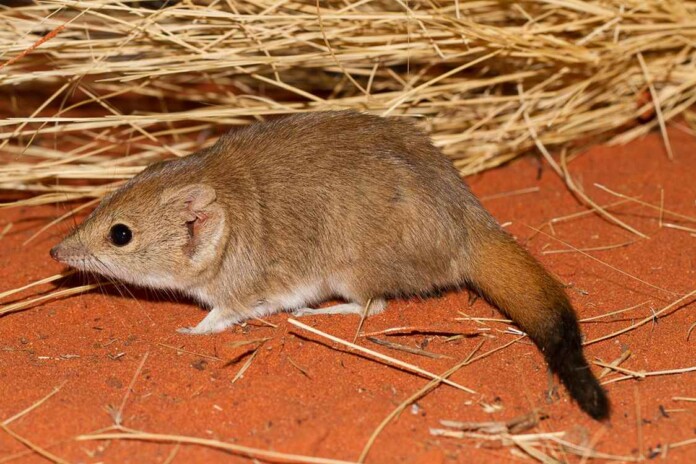
The ampurta, or crest-tailed mulgara - credit, Bobby Tamayo, Simpson Desert, Queensland CC 4.0.
The ampurta, or crest-tailed mulgara – credit, Bobby Tamayo, Simpson Desert, Queensland CC 4.0.

For an Australian marsupial facing extinction on a continent-wide scale, the news of an oncoming drought back in 2001 probably felt like the coming of the end times.

But in a surprising break from the narrative, the ampurta (Dasycercus hillieri) a rat-sized predatory marsupial that was listed as Endangered in 1999, thrived through the lean times when other animals could not.

We often read narratives that climate change will increase the rate of species extinctions because of intensifying weather patterns, but scientists studying the ampurta in Australia offer another narrative.

“Despite unprecedented and prolonged drought during the study period, ampurtas increased their known range by >48,000 km2, an area larger than Denmark, even extending into areas where their status was ‘presumed extinct,'” wrote the authors—a team of 5 from the Center for Ecosystem Science, at the University of New South Wales, Sydney.

The study is a fascinating and encouraging reminder of that most beloved and quotable parable in biology: that life, uh, finds a way.

Australian wildlife face greater risks of extinction than life in most other geographical areas, and though conservation efforts have lodged undeniable victories in conserving the endemic populations of mammals, these rarely graduate into landscape-level successes.

This is primarily due to the burden and presence of three invasive species: rabbits, and the foxes and feral cats which hunt them. Booms in the rabbit population following rainfall cause booms in the population of these invasives which chowed down on the ampurtas and other endemic marsupials. But eventually, Mother Nature throwed a lifeline to the little ampurta.

Looking at the first 2 decades of the 21st century, Australian climate and biological history in the country’s arid and semi-arid landscapes showed a fascinating phenomenon.

The rainfall which caused a boom in the country’s rabbit population also brought on Rabbit Hemorrhagic Disease Virus, which significantly reduced the population at the same time that the country experienced an 8-year-long drought, known as the Millennium Drought (2001 – 2009).

Being listed as Extinct in the Wild in several Australian states, the drought allowed the ampurta, with its flexible, omnivorous diet and low water requirements, to greatly repopulate the areas it was extirpated from.

AUSTRALIAN WILDLIFE RESILIENCE: A Mass Blossoming Is Occurring in Wake of Floods to Feed Honeyeater Birds in Australia Where Just 300 Remain

Further monitoring included another drought from 2017 to 2019, followed by average rainfall, which again demonstrated that it is in fact the drought phase when the ampurta expand and thrive, to the point at which the International Union for the Conservation of Nature listed the animal—which had been close to extinction in 1999, to one of “Least Concern” in 2019.

“[The] increase in global extent of occurrence for ampurta, achieved during severe drought, is one of the clearest recent examples of native mammalian re-expansion under climate extremes. This is a rare and hopeful conservation signal,” the authors write.

MORE AUSTRALIAN MAMMALS RECOVERING: School Kids Help Ensure Mountain Pygmy Possum Population Bounces Back in Australian Alps

Given Australia’s extreme breadth, landscape conservation efforts are hugely expensive and are therefore rarely undertaken and often unsuccessful. The bill for the recovery of the ampurta, however, was picked up by Mother Nature, and the authors of the study suggest that other species should be studied during drought periods to see if they too share the ampurta’s resilience.

If it were the case that multiple species thrived during periods of low rainfall, it would offer the best opportunities for assisted recovery efforts such as reintroductions in places where they’re absent, like New South Wales state, where the ampurta is still extinct.

SHARE This Flip Of The Climate Narrative With Your Friends… 

These Indian Cafes Let You Pay with Garbage: 1 Kilo of Plastic Gets You Rice, Two Curries and Dal

credit - Ambikapur Municipal Corporation
credit – Ambikapur Municipal Corporation

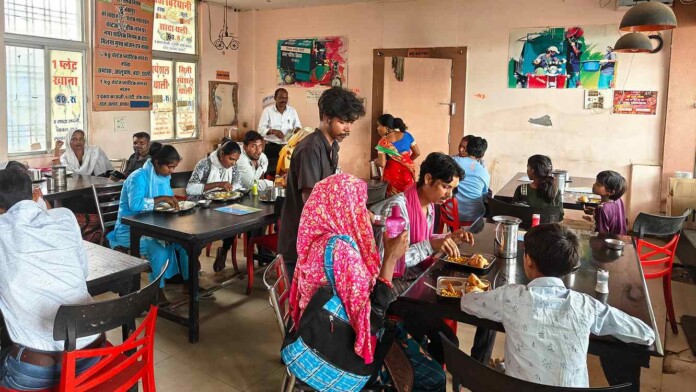
In the Indian city of Ambikapur, several Garbage Cafes will give a person an entire four-course meal if they bring 1 kilo of plastic waste with them.

Feeding on average 20 people a day, it’s a clever and distinctly Indian way of clearing two hurdles in one jump: that of hunger among the lower classes, and that of plastic litter in its cities.

Not that Ambikapur, in central India’s Chhattisgarh state, is particularly unkempt; it’s earned a reputation as the “city of no landfills.” But part of earning that reputation was coming up with great ideas like the Garbage Cafe.

Generating 226 metric tons of plastic waste per day, Ambikapur citizens and businesses recycle almost all of it already, but for the bits and pieces that slip through the cracks, locals like Rashmi Mondal can hunt them down, gather them up, and feed her whole family.

2.2 pounds of plastic trash like snack wrappers and water bottles will get you rice, two curries, dal, roti bread, and salad.

While Indian urban planners may not have the money to pay for sophisticated trash collection regimes and recycling machines, they can leverage a near-endless supply of cheap labor.

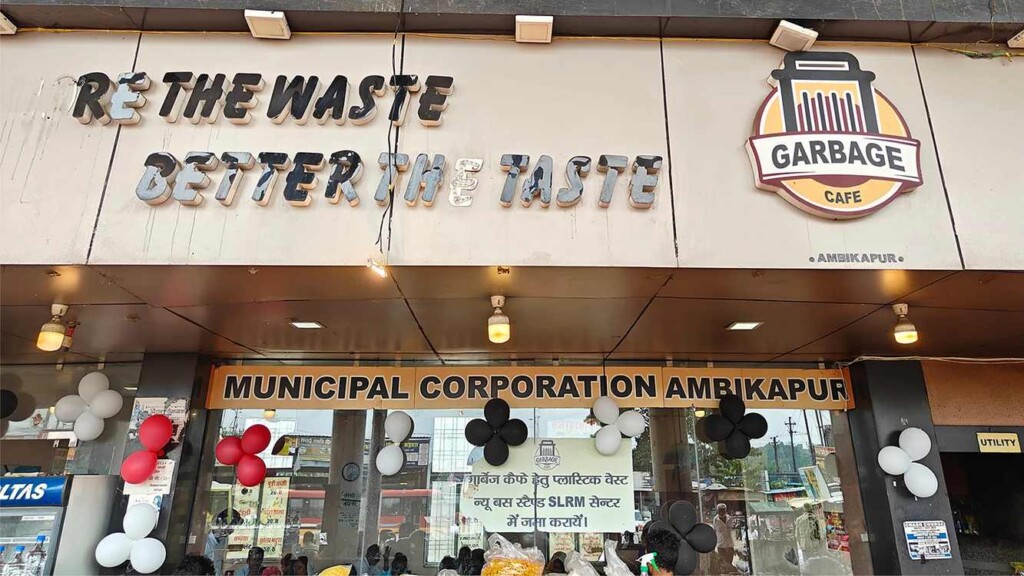
The Garbage Cafe’s exterior credit – Ambikapur Municipal Corporation

Small-time recyclers dot the city, and they used to pay the poor or homeless for plastic they collected. But at 10 rupees per kilo, it might require a whole day’s work to earn enough for the meal they can get at the Garbage Cafe.

“I can get food for my family in exchange for the plastic I collect. It makes all the difference in our lives,” Mondal told a BBC reporter visiting a Garbage Cafe.

The cafe is run by the Ambikapur Municipal Corporation (AMC), which is Indian parlance for what we in America would call a government sponsored enterprise: basically a corporate structure put together to carry out functions in place of a government bureau.

ALSO CHECK OUT: City in India Ranks the Cleanest 8 Years in a Row: ‘It Feels as Though You Aren’t in India’

Vinod Patel, the AMC employee who manages the Garbage Cafes, said that on average they feed 20 people a day, translating to 20 kg, or 44 pounds of plastic waste.

“If food is available in place of plastic, we’re not only helping to fill empty stomachs but also contributing to cleaning up the environment,” Patel told the BBC.

MORE GOOD INDIA NEWS: New Bamboo Plantations Are Healing Villages Choked by Toxic Ash from Coal Plants in India

The BBC story also reported in detail the extent of recycling operations in Ambikapur, which combine door-to-door waste collection with neighborhood recyclers employing 50,000 women, all of which has allowed the city to eliminate the need for a landfill or dumping ground in city limits.

The author of the report, Hazra Khatoon, also listed a number of other cities where Garbage Cafes can be found; and they’re not all in India, Cambodia has also replicated the idea.

SHARE This Great Idea With Your Friends Who Think India Is Only Dirty…

“A person who won’t read has no advantage over one who can’t read.” – Mark Twain

Photo by Leandro Crespi for Unsplash+

Quote of the Day: “A person who won’t read has no advantage over one who can’t read.” – Mark Twain

Photo by: Leandro Crespi for Unsplash+

With a new inspirational quote every day, atop the perfect photo—collected and archived on our Quote of the Day page—why not bookmark GNN.org for a daily uplift?

Photo by Leandro Crespi for Unsplash+

Good News in History September 12

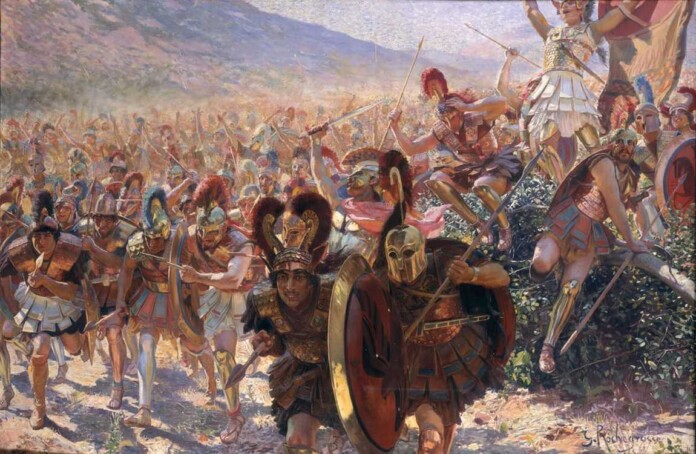
Greek troops rushing forward at the Battle of Marathon, Georges Rochegrosse, 1859.

2,515 years ago today was one of two days in the ancient era of world history that, if events had gone a different way, Western Civilization as we know it may never have sprouted. Athenian citizen soldiers, demonstrating superb athleticism and courage, ran a little over a mile in their heavy armor to smash a Persian invading force led by King Darius II which landed on a beach at Marathon. READ more about the battle… (490 BCE)

Kentucky Nurse Revives Drunk Raccoon Found in Dumpster By Using CPR

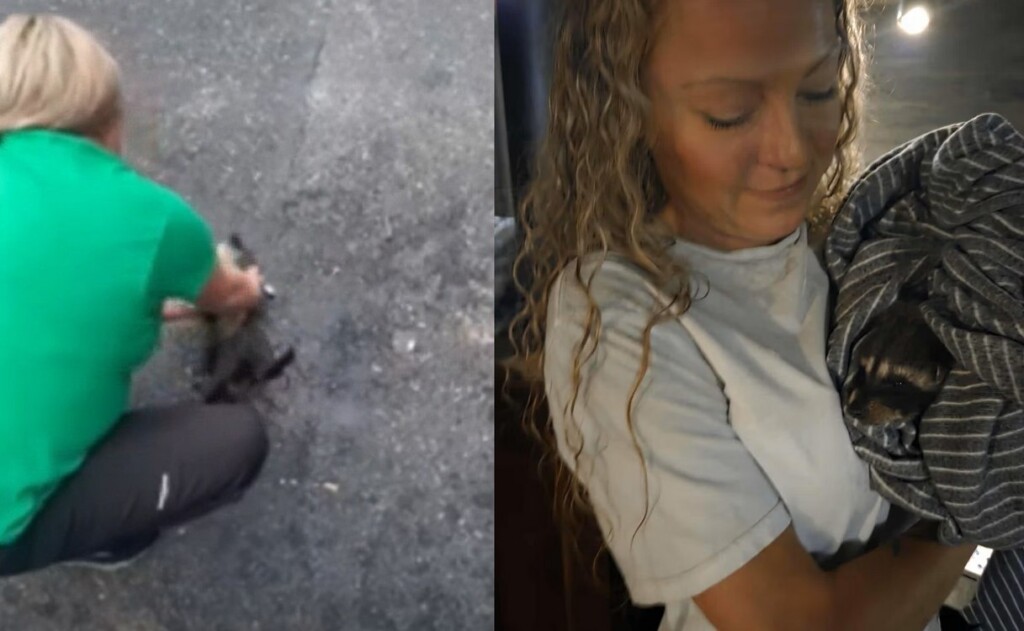
(left) Misty Combs performs CPR on a raccoon (right) Crystal Bakaluk cradles the raccoon she saved from drowning - credits, retrieved from social media.
(left) Misty Combs performs CPR on a raccoon (right) Crystal Bakaluk cradles the raccoon she saved from drowning – credits, retrieved from social media.

Yes, you’ve read the headline correctly. When a nurse in Kentucky’s Letcher County scooped a dead-drunk raccoon out of a dumpster, she was desperate to save its life.

It had been a normal day on the job for Misty Combs, arriving at the Letcher County Health Department location in Whitesburg, just next door to the Kentucky Mist Moonshine distillery.

It’s difficult to imagine many other states where these two firms would share a parking lot, but it was there that last week Combs saw a raccoon darting back and forth, behaving strangely.

Combs told local news that curiosity led her to follow the raccoon to a nearby dumpster where the stink of alcohols was heavy in the air. The distillery had discarded some fermented peaches in the dumpster, and looking inside, two juvenile raccoons had gotten stuck.

“I was like, ‘We have to get them out!'”, she told LEX 18’s Megan Mannering. “It was the motherly instinct in me because I saw that momma and she was trying so hard to get her babies back and she didn’t know what to do.”

Combs got a shovel and extracted one of the two babies easily enough. But the second, lying in water which was probably flammable at that point, seemed unconscious.

It was dead drunk; drunk as a skunk, but fortunately for this tipsy trash panda, Combs’ provided another round—this time of CPR.

“It had drowned and it was full of water, you could feel the water, so immediately, I just started doing CPR on it,” Combs said. “The entire time, I was afraid it’d come-to and eat me up, and raccoons carry rabies so I was afraid of that.”

At first she began by patting its back, but shortly flipped it over and began administering chest compressions. Fortunately raccoon ribcages are quite malleable, and their hearts small, so Combs needed only one hand.

Incredibly, the plastered Procyon recovered, and was carted off with animal control to sober up at the local veterinarian. Combs went back to work, but had the honor of releasing the animal, whom she and her colleagues had named “Otis Campbell,” for the infamous Andy Griffith Show character, back into the forest behind the Health Center days later to reunite with its family and attend the next raccoon AA meeting.

CPR IN A BIG WAY: How to Save An Elephant With CPR? Jump Up and Down on its Chest to Revive Her (Watch)

Combs wasn’t the only blonde-haired blessing to save a raccoon lately. A Canadian restaurant server on the sea-side of Lighthouse Pub in Sechelt leapt into the waters of the Pacific to rescue a baby raccoon that had somehow fallen in.

“The little raccoon was flailing on its back, screaming, and in a few seconds, the screaming stopped, and it went under. So, I went in,” Crystal Bakaluk told CTV News.

RESCUING ANIMALS IN NEED: Wisconsin Bear with Snack Jug Stuck on Head Freed, Relocated and Released

“As I swam back, I gave him a few little pumps on the chest with my thumb, and he let out a tiny little cough, and then I handed him off,” she recalled.

That hand off was to the pub’s other staff, who doted more on the raccoon than their colleague, who went back to her tables, apologized, and continued taking orders in sopping hair and squelching shoes.

Mammals have to stick together.

WATCH the ridiculous scenes from Kentucky below… 

SHARE These Women With Room In Their Hearts For Raccoons With Your Friends… 

Bee Stingers Inspire Superior and Comfortable Continuous Drug Delivery

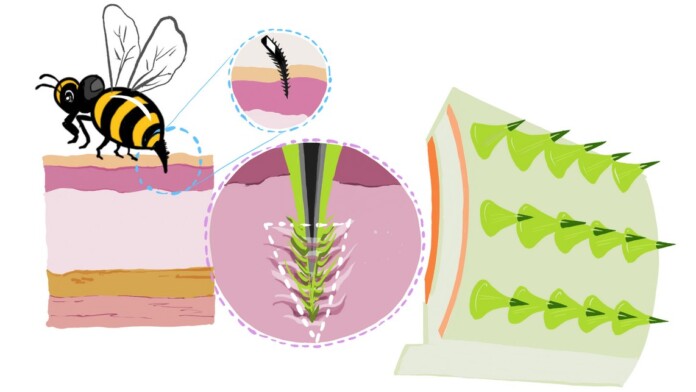
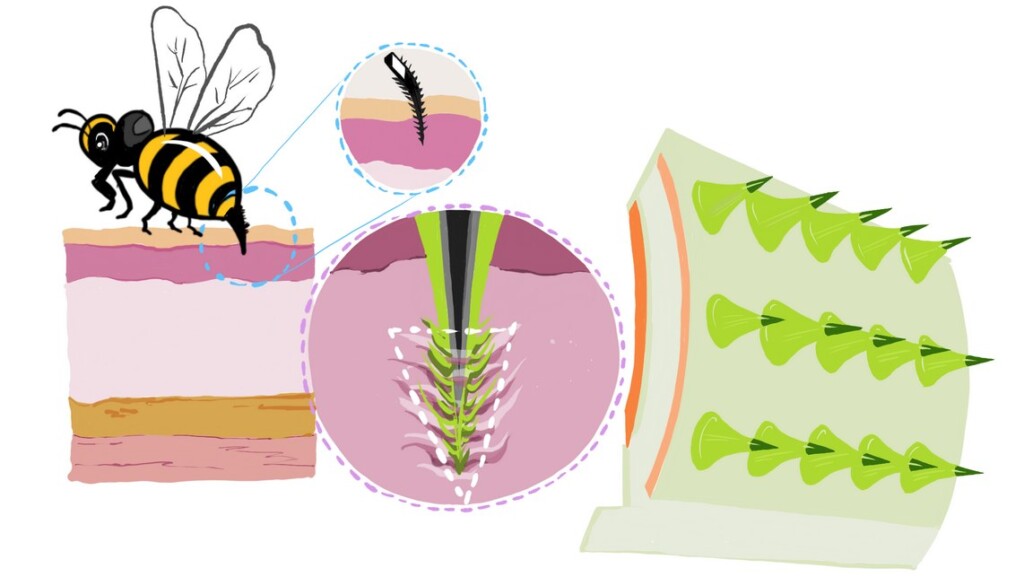
New wearable microneedle patches mimic bee stings to provide painless, long-lasting drug delivery - credit, Professor Wonku Kang from Chung-Ang University
New wearable microneedle patches mimic bee stings to provide painless, long-lasting drug delivery – credit, Professor Wonku Kang from Chung-Ang University

The animal kingdom has long been the source of inspiration for all manner for technologies, and now again in South Korea, where a new drug delivery method has been modeled after the bee sting.

Patients who suffer from chronic conditions often require continuous injections of drugs—often quite painful and inconvenient. To address this, researchers from South Korea have developed new wearable microneedles that behave the way a bee’s stinger does.

If you remember running to your mother after getting stung in the park, you may recall her pulling out the detached stinger, explaining that it keeps delivering venom even after separating from the bee’s thorax.

These electrospun web microneedles (EW-MNs) developed at Chung An University, deliver drugs continuously through the skin without causing discomfort. In animal models, the system enhanced drug absorption while ensuring comfort.

The micron-sized needle system isn’t a totally new technology, but existing products tend to lose their comfort over sustained use, limiting their adoption.

To fabricate the EW-MNs, the researchers used an electrospinning process (a technique that uses an electrical field to spin very fine polymer fibers) to create a web of nanoscale fibers on metal microneedles. This resulted in a fibrous layer around the microneedle tips which mimic the barbed structure of a bee’s stinger.

As a result, the microneedles anchor securely to the skin and ensure a steady attachment for continuous drug release. The EW-MNs were then attached to an adhesive tape and a backing layer to form a patch.

“Unlike traditional rigid microneedles, which can cause irritation during prolonged use, our EW-MNs are soft, breathable, and remain anchored to the skin just like a bee stinger,” explains Professor Wonku Kang at the university’s College of Pharmacy.

To test the efficacy of the patch, the team loaded the EW-MNs with rivastigmine (a drug commonly used to treat Alzheimer’s and Parkinson’s disease). In animal studies using guinea pigs, the microneedle patches significantly improved the absorption of rivastigmine—releasing over twice the drug and covering a five-fold larger area compared to conventional approaches. Importantly, all this was achieved while maintaining minimum discomfort, and even if any mild skin irritation occurred, it disappeared quickly on removing the patch.

MORE STORIES LIKE THIS: Less Invasive Way to Collect Blood Is Inspired by Leeches and Needs No Medical Training

“With further development, these EW-MNs could revolutionize drug delivery, allowing patients to receive effective long-term treatments without the fear or discomfort of needles!” Professor Kang said excitedly.

The study was made available online in Advanced Healthcare Materials on July 31st.

OTHER BIOMIMICRY: Bat-like Drone Can Hurl Itself at Trees and Perch There–Inspired By a Flying Squirrel

In the future, the team aims to extend the applications of EW-MNs beyond neurological diseases, offering medicated patches for a wide range of other chronic diseases. This approach particularly holds value for elderly patients, children, and cases where safety and patient-compliant treatments are urgently needed.

Overall, the study demonstrates a perfect example of how nature can drive innovations, bringing us one step closer towards safer, more comfortable, and patient-friendly drug delivery.

SHARE The Story Of Mother Nature Inspiring These Professors… 

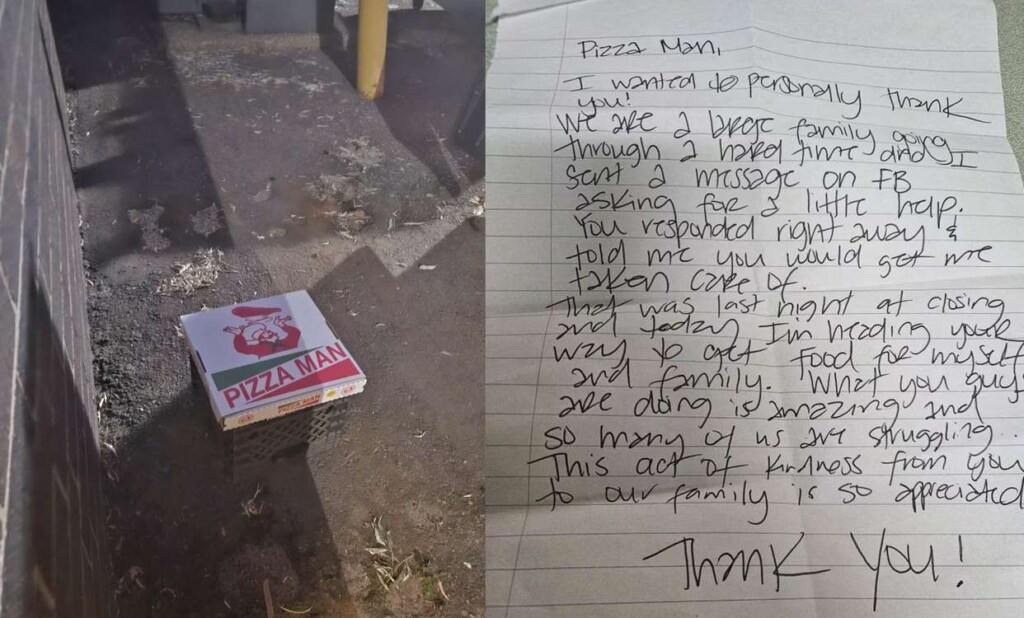
Pizzeria Owner Sees People Eating From Dumpster, Offers Them Free Pies and a Slice of Dignity

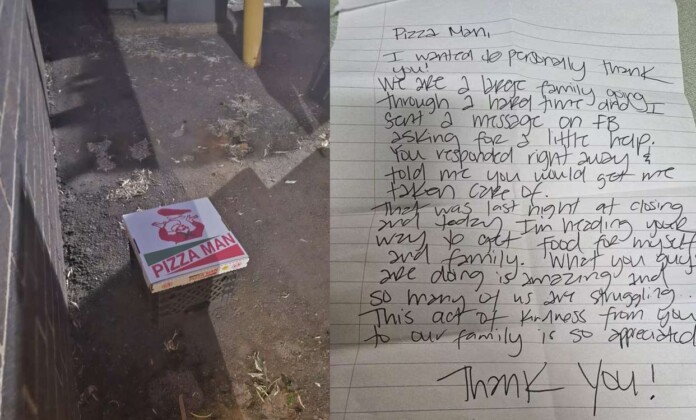
credit - Heights Pizza Man via Facebook
credit – Heights Pizza Man via Facebook

A Minnesota pizzeria owner is making headlines for the kindness he’s shown to dumpster divers behind his restaurant.

“I can’t sit in a building full of food and watch somebody starve in my parking lot,” he told national news, determined to take action.

Pretty much as soon as Chris Kolstad took ownership of Pizza Man in Columbia Heights 6 years ago, he discovered that people were eating out of his dumpsters. It could have been animals, but then again, animals don’t enjoy their food with napkins and a bottle of water.

He had put out signs at first, asking them to stop, but not only didn’t they, but a short time ago it became far more frequent.

On July 29th, he took to Facebook for a public plea.

“Please do not eat out of our dumpster,” wrote Kolstad. “If you are that desperate for food, please come ask.”

“If you are too embarrassed to ask, find a way to call us and ask if there is a way to leave a small cheese pizza outside the back door or something. You don’t even have to see us,” he continued.

ON A NATIONAL SCALE: Tony Robbins’ 100 Billion Meals Challenge Secures First 30 Billion, Redefining Global Hunger Relief

“If you are the ones doing so, leave me a note and we will find a way to leave any extras or mistakes out back so you have something to eat without going through the trash.”

TODAY reports that after his post went viral, Kolstad shared a donation link which has raised over $4,000 to help cover the costs of the pies he’d leave out back.

COMPASSION TOWARDS THE HUNGRY: Drive-Thru Food Pantry Serves Thousands in a California Food Desert with Nutritious Groceries

Speaking with the outlet, Kolstad estimates he’s helped over 100 people with food who have asked for it rather than dug for it. Recently, one of the recipients left a touching note behind for Kolstad and his staff to read.

“This is why we do what we do,” he captioned the photo with.

WATCH the story below from CBS News…

SHARE This Story Of A Pizza Man’s Kindness… 

Albania Digs Up a Roman Noble’s Tomb–the First of its Kind Ever Found in the Country

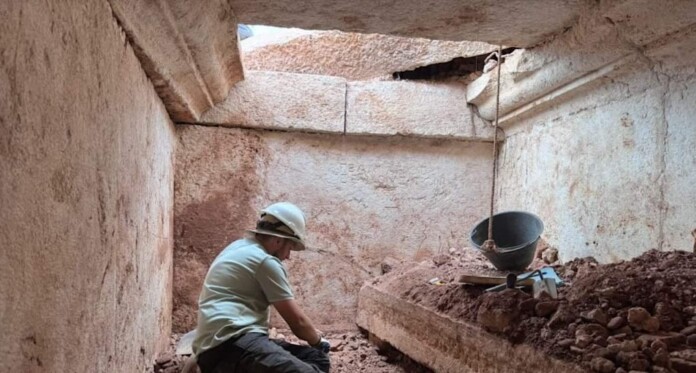
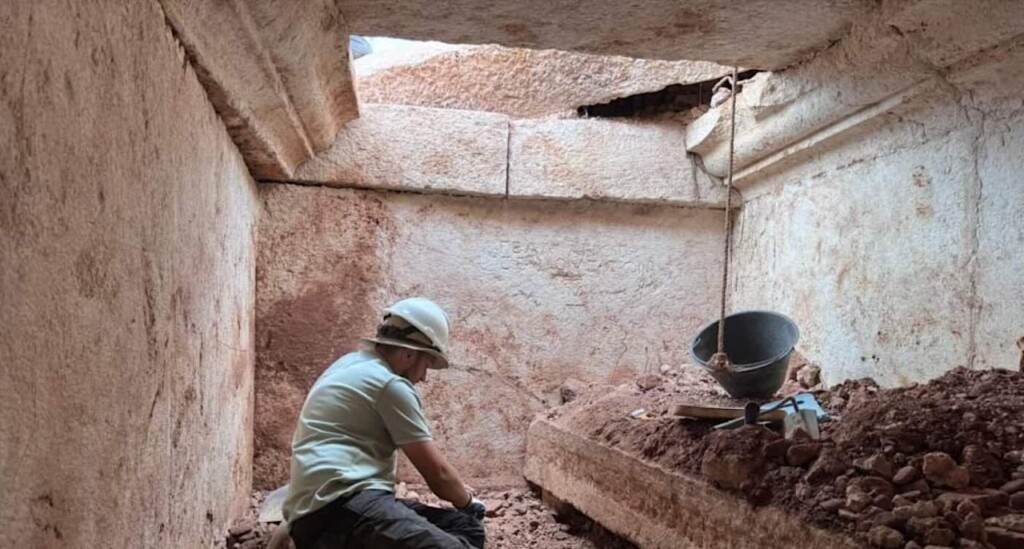
First Roman-Era Tomb found in Albania – Photo courtesy of Blendi Gonxhja

Once a byword for backward and mafiosos, Albania is experiencing a tourist boom, and sure to help the effort is the recent discovery of a Roman noble’s mausoleum.

Part of the Empire’s territory for 600 years, the south Balkan country has never dug up anything like the 29 by 19 foot long tomb, which likely belonged to an honored member of a wealthy family.

Grave goods included glass plates, knives, and fabric lined with gold, while the tomb walls are covered in Greek inscriptions that have yet to be deciphered largely.

“The inscription tells us that the person buried here was named Gelliano, a name typical of the Roman period,” the excavation’s lead archaeologist Erikson Nikolli said, noting that though inscribed in Greek, it had a Latin meaning. “We are uncertain about the identity of the second individual, but it is likely a family member.”

The discovery was made outside the village of Strikcan, near the border with North Macedonia. Many of the villagers came out to watch the excavation, which began when some locals informed the antiquities authorities of a large and unnatural stone formation up on a plateau.

Researchers from Albania’s Institute of Archaeology removed the large limestone slabs covering the tomb, which had been moved once before in modern times during a suspected plundering operation.

MORE ROMAN EXCAVATIONS: 

Not known for its Roman heritage, the country nevertheless contains Butrint, a coastal city settled by Greeks, built by Romans, and administered by Byzantines which was inscribed as a UNESCO World Heritage Site.

It’s described as “a microcosm of Mediterranean history,” by UNESCO, which adds that it features “occupation dating from 50,000 BCE, at its earliest evidence, up to the 19th century CE.”

SHARE This Latest Archaeological News With Your Friends… 

“Freedom is not enough.” – Lyndon B. Johnson (36th US president)

Credit: The Free Birds

Quote of the Day: “Freedom is not enough.” – Lyndon B. Johnson (36th US president)

Photo by: The Free Birds

With a new inspirational quote every day, atop the perfect photo—collected and archived on our Quote of the Day page—why not bookmark GNN.org for a daily uplift?

Credit: The Free Birds


Good News in History, September 11

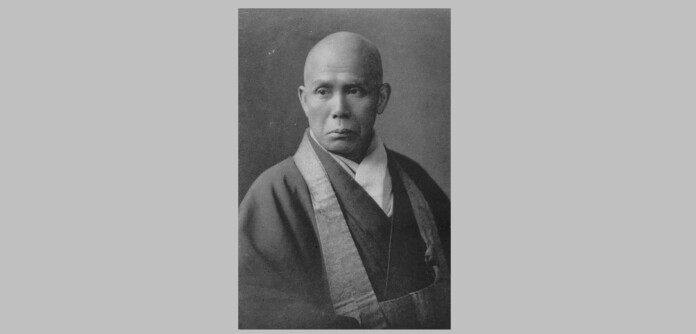
Soyen Shaku, Zen Buddhist monk (1860–1919)

132 years ago today, Roshi Soyen Shaku arrived to teach the doctrine of Zen to the United States. Shaku’s arrival was not on a lark, but rather coincided with the World Conference of Religions, at which he delivered a speech titled “The Law of Cause and Effect as Taught by Lord Buddha”. Though unable to speak English, he encountered an American publisher named Paul Carus, who asked Shaku to send a Zen practitioner knowledgeable in English to the US to write an introductory volume for American audiences. READ more about his influence on American Buddhism… (1893)

Orangutan Released After 9 Years of Intensive Rehabilitation in Nonprofit’s ‘Jungle School’

- credit, the Borneo Orangutan Rescue Alliance, supplied
– credit, the Borneo Orangutan Rescue Alliance, supplied

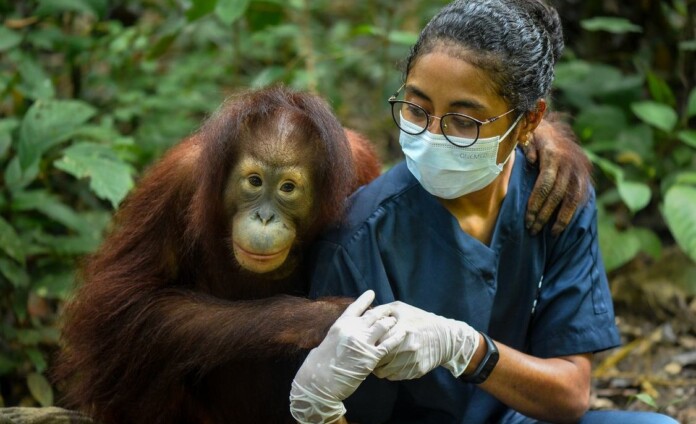
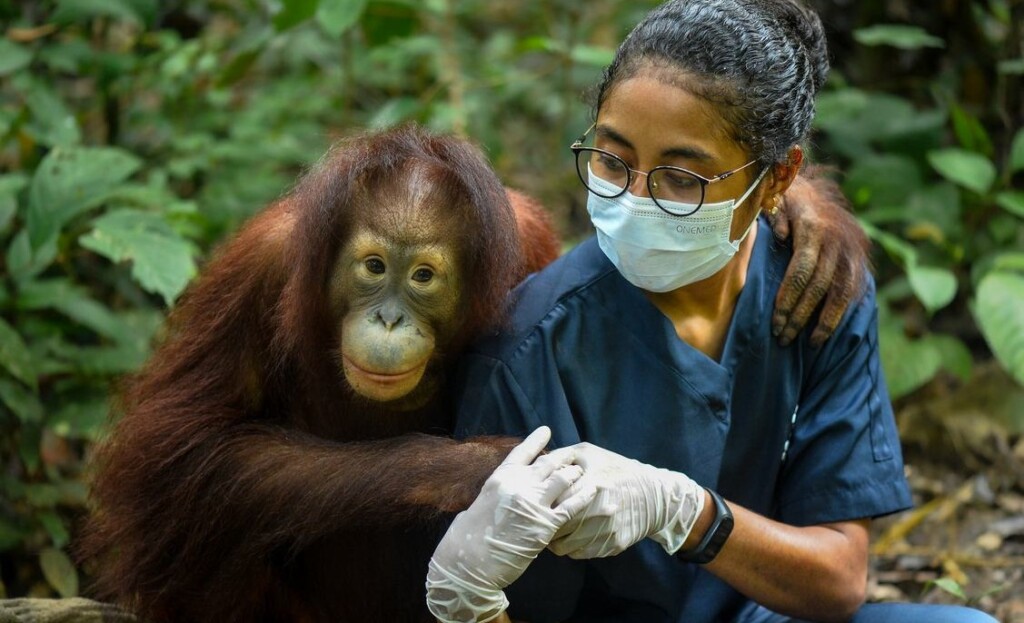
A conservation project just announced the successful release of Popi, a female orangutan rescued as an infant, into the Busang Ecosystem of East Borneo.

After nearly nine years of intensive rehabilitation, Popi has now returned to her natural rainforest home thanks to a collaboration led by the Borneo Orangutan Rescue Alliance (BORA).

– credit, the Borneo Orangutan Rescue Alliance, supplied

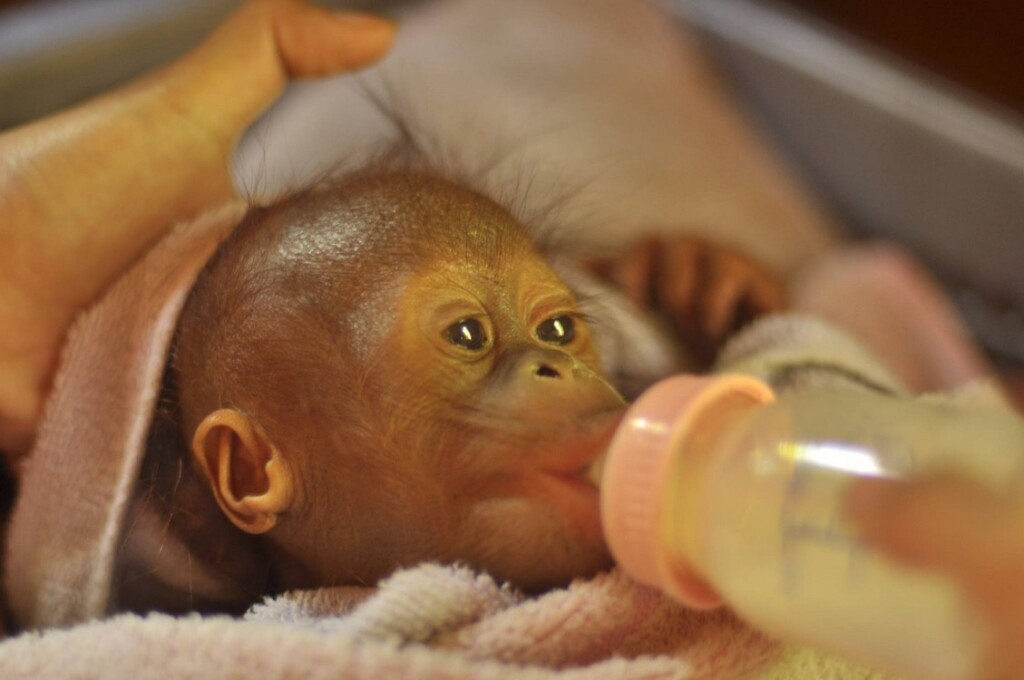
Popi was confiscated in September 2016 from a household in the Sempayau village near a palm oil plantation, where she had been kept illegally as a pet. Just eight weeks old at the time of her rescue she entered into the BORA team members’ hands completely dependent and highly vulnerable.

Popi’s story reflects the wider crisis facing orangutans in Borneo and Sumatra.

In the wild, young orangutans suckle from their mothers for up to 8 years, while learning vital survival skills such as nest building, climbing, and foraging. In captivity, orphans like Popi miss out on this critical learning period. To fill that gap, BORA’s dedicated staff act as surrogate mothers, providing round-the-clock care and gradually teaching the skills necessary for independent life in the forest.

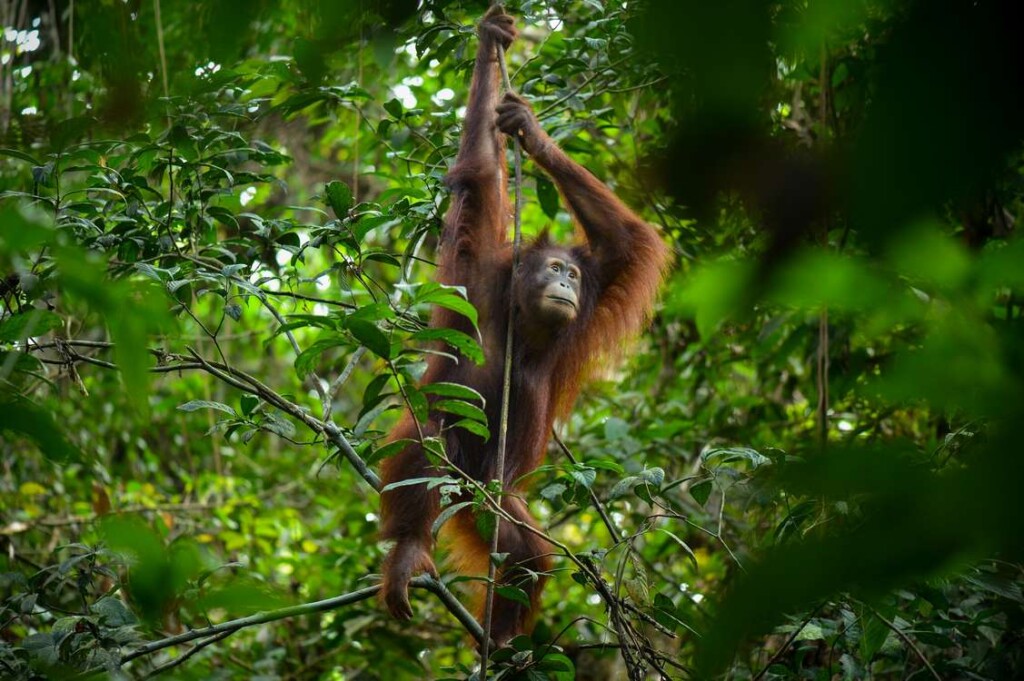
During her rehabilitation, Popi progressed through Jungle School, where she learned to climb confidently, forage for natural foods, and build secure nests. She developed important social bonds with other orphaned orangutans, which supported her emotional recovery. In May 2025, she was transferred to a forested pre-release island, where she refined her survival skills in preparation for release.

On August 10th, 2025, after 9 long years away from her natural home, Popi was transported to the Busang area by road and river. Upon arrival, she was released deep in the rainforest and immediately climbed into the canopy, demonstrating her readiness for life in the wild. Monitoring teams will continue to observe her transition to ensure her long-term success.

In a heartwarming development, Popi was reunited with Mary and Bonti, two female orangutans released earlier this year whom she had met in Jungle School. Their immediate recognition and bond underscore the importance of social connections in orangutan rehabilitation.

– credit, the Borneo Orangutan Rescue Alliance, supplied

“This release represents the culmination of years of dedicated care and the unwavering support of our partners and donors,” said Leif Cocks, Founder of the Orangutan Project, in a statement.

MORE ABOUT THESE AMAZING COUSINS OF OURS: 

“Popi’s return to the wild is a powerful reminder of what is possible when we work together to protect and restore orangutan populations. Every orangutan rescued, rehabilitated and released back to the wild helps to ensure the genetic survival of the species. Each successful release is not just a triumph for the individual, but also a critical step in securing the future of these great apes in their natural habitat.”

The rehabilitation and release was part of a collaboration between BORA and the Orangutan Project, the Center of Orangutan Protection, and the Indonesian Ministry of Forestry.

SHARE This Little One’s Long Road To Recovery, And Hopefully, A Healthy Happy Life… 

‘What are the odds?’ Canadian Wins New Cottage in Raffle After House Burned Down This Summer

- credit Daniel Drouin via Facebook
– credit Daniel Drouin via Facebook

From the far eastern coast of Canada comes the remarkable story of a man who entered a raffle to win a new house—just days before his home burned down.

The $50 that Mr. Daniel Drouin spent on the raffle ticket is now looking like a pretty tidy investment, as he has the option of choosing a prefabricated wooden cottage to fit a family, or $150,000.

A musician on Prince Edward Island, Drouin has two children, one of whom had been staying with friends, and the other with grandparents. He described the wild stroke of luck as “life-changing” and “a fresh start.”

It was early this summer that Drouin bought a ticket for the Big Brothers, Big Sisters charity raffle at the urging of his girlfriend. He had originally thought better of it, as over 10,000 people had already entered.

Life went on, presumably as usual, before he got a call at 2 a.m. in July from his son—the family house was on fire. The boy got everyone safely outside and called the fire department, but it looked like the Drouins were going to lose their home.

Disrupted and distributed, Mr. Drouin was settling in for a Saturday afternoon nap the day after a late night gig when he received a phone call from Myron Yates, executive director of Big Brothers Big Sisters of Prince Edward Island, with the news he had won the draw.

The interior of the cottage – credit Big Brothers, Big Sisters via Facebook

“It’s life-changing really,” Drouin told CBC News on Saturday. “It’s just such a weird coincidence that … I get picked out of that many people.”

“And then all the circumstances that’s happened with me and my family in the last month, and then you go and win the house. You know, it’s… what are the odds?”

MORE CRAZY TWISTS OF FATE: 

He told the national news that he planned to fill out the paperwork on Monday in Charlottetown, and check out the new cottage. He doesn’t own any land to put it on.

“It means a fresh start really, I mean, yeah, and a fresh start for the kids, too, and everybody will be back together,” he said.

SHARE This Wilder-Than-Wild Coincidence With Your Friends… 

A New Generation of Tuskegee Aviators Takes to the Skies to Tackle Another National Challenge

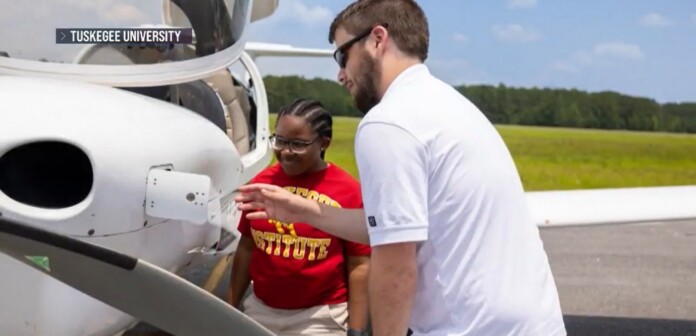
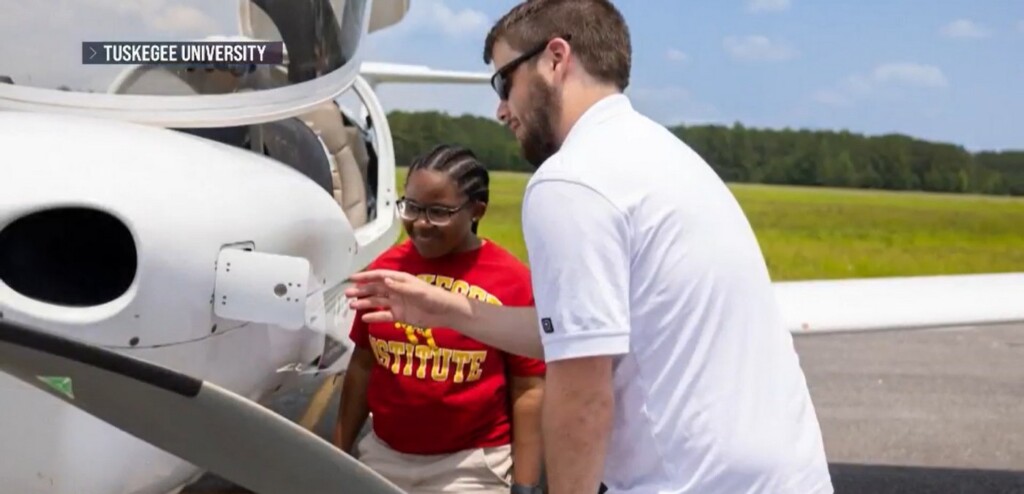
Tuskegee's Kembriah Parker during a flight lesson - credit, Tuskegee University
Tuskegee’s Kembriah Parker during a flight lesson – credit, Tuskegee University

Having once trained the first Black military pilots for deployment in World War II, Tuskegee University is now training another Black generation for another national challenge.

Hoping to address the nation’s pilot shortage, the aviation science program at Tuskegee University in Alabama is currently on track to graduate 50 young Americans as commercial and private pilots.

One of those, Kembriah Parker, has just received a pilot’s license, and is excited to be carrying on the legacy of the famous Tuskegee Airmen.

“There were Tuskegee women working but not flying,” Parker told NBC, “so it feels pretty good to be doing the flying.”

Of the more than 900 Black cadets who were trained as military pilots, 335 were deployed mostly to North Africa and Italy. They flew dozens of missions, and many of the pilots lost their lives in the course of the campaign.

The aviation science course combines ground crew studies with flight training on the tarmac at the historic Moton Airfield, where the Black pilots would have done similar training before shipping off to war.

Black Tuskegee Airmen astride a P-40 fighter aircraft plane

Even though the legacy of the war resounds today in the echoes of echoes, these modern Tuskegee airmen and airwomen are proud to carry that legacy—to fly with history under their wings.

ALSO CHECK OUT: Astronaut Training Pays Off at 90: Ed Dwight Finally Reaches Space, Making History as Oldest to Ever Do it

Originally afraid of heights, Parker said it was the sense that she was becoming someone greater than herself which gave her the bravery to face those fears and acquire her license, an accomplishment that now makes her feel “8 feet tall.”

WATCH the story below from NBC… 

SHARE This Young Woman And The History Under Her Wings… 

UK Railway Line ‘Hires’ Three New Cats Found Sleeping Rough Nearby

Titch, Clinker and Ash - credit North Yorkshire Moors Railway Line
Titch, Clinker and Ash – credit North Yorkshire Moors Railway Line

For one special UK railway line, cats have always been part of the station staff. These mousers play a vital role in controlling the rodent population among the Grosmont Station’s many small buildings, nooks, and crannies.

After their previous mouser passed away, the North Yorkshire Moors Heritage Railway Line, were hiring—until they found a trio of black strays sleeping rough nearby.

Black as shadows and cute as buttons, they were perfect for the dual responsibilities of mousing and guest-charming.

Titch, Clinker, and Ash are still in job training, sneaking up on acorns or each other before executing the take down maneuvers needed to surprise their rodent quarry. When not on the clock, they are doted on by this heritage railway service’s many visitors.

The line runs through one of the UK’s oldest national parks: the North Yorkshire Moors. Characterized by rolling hills and heather, it’s ideal rodent country.

“We’ve always had shed cats, for many, many years and they all do a great job for us, looking after the rodent population and being lovely for the public,” said Grosmont Station shop supervisor Simon Wall.

FELINES: New Study of 900 House Cats Finally Answers Age-Old Question About What Felines Do When They Go Outside

“They’re there on a night, and they’re always waiting for me on a morning for some breakfast,” he told the BBC. “They’re proving a good asset to the railway, and it’s nice we have friendly ones this time.”

Wall says the public absolutely loves to see them. When the pressures of the job and the public become too much, the mousers retire to a smaller building off-station where beds, a space heater, and refreshments await them.

MORE CATS AT WORK: 65 Cats Are Treated Like Favored Guests at the World Renown Hermitage Museum in Russia

The cat house is also decorated with the honors obtained by previous mousers in the course of their service, a term which for Titch, Ash, and Clinker, is expected to be long, fun, and fruitful for these once feral felines.

SHARE This Lovely Story Of A Traditional Railway Line Using Traditional Mouse Catchers…

“Don’t get lost in your pain. Rather, know that one day your pain will become your cure.” – Rumi

By Jan Kopriva

Quote of the Day: “Don’t get lost in your pain. Rather, know that one day your pain will become your cure.” – Rumi (Persian scholar, poet, and mystic )

Photo by: Jan Kopriva

With a new inspirational quote every day, atop the perfect photo—collected and archived on our Quote of the Day page—why not bookmark GNN.org for a daily uplift?

By Jan Kopriva