With the knowledge that dogs are easier to adopt out than cats, a Kansas City animal shelter took to social media with a simple, yet clever video to even the odds.
But Wayside Waifs Hospital and Shelter did more than even them, they managed to get all but two of their shelter cats adopted after the video went viral on TikTok, garnering a million views, and 2,500 shares.
In the video below, shelter workers are asked to recommend a cat with a specific personality type as a way of giving the felines, with only a name and a picture, a bit more character.
“It was actually something that one of our feline care technicians thought of. What kind of animal likes people? What kind of animal would wanna snuggle with the other kittens?” Casey Waugh with Wayside Waifs said.
The video went viral, as commenters from The Philippines, Brazil, the UK, and others all cheered on the shelter for their admirable efforts.
One commenter even offered to relocate to Kansas City if the shelter was hiring, which they are as it turns out.
Although methane is harmful in its effect on our climate, a new study of the greenhouse gas shows that its effects are not as intense as previously thought.
The biggest sources of methane gas emissions come from coal, oil, and gas development, although emissions from agriculture is probably the most heavily publicized.
As the planet absorbs heat from the sun, it would naturally radiate this long-wave energy back out into space. But greenhouse gasses trap the heat inside the atmosphere, causing ‘the greenhouse effect’.
Scientists at the University of California-Riverside have now found that methane also absorbs short-wave energy, which, through the creation of cooling clouds, actually cancels 30% of its own heat (the heat which the gas has created in the greenhouse effect).
Specifically, it creates more low-level clouds that offset the short-wave energy from the sun and fewer high-level clouds which increase the outward radiation of long-wave energy from the Earth.
“This has implications for understanding in more detail how methane and perhaps other greenhouses gases can impact the climate system,” said Robert Allen, UCR assistant professor of Earth sciences. “Shortwave absorption softens the overall warming and rain-increasing effects but does not eradicate them at all.”
They also found, as Allen says, that methane cancels 60% of increased levels of precipitation predicted under global warming models—yet more good news for cities and towns around flood zones.
For a number of reasons, this could be a revolutionary discovery. The EPA says that methane’s greenhouse effect is 34 times that of CO2.
Using the U.S. as an example, methane accounts for only around 10% of the nation’s emissions. The lifespan of a methane molecule in terms of its harmful affect on climate is around 9 years.
This means that methane emitted 9 years ago is no longer causing a greenhouse effect. By contrast, the greenhouse effect of CO2 molecules is more than 1,000 years.
For years, climate scientists have known that methane was a critical greenhouse gas for humanity to target, but now we can create more accurate models that reflect how methane is 30% less harmful than we thought and it counteracts 60% of its own harmful rain effects.
In a paper published in 2021, Inter-governmental Panel on Climate Change (IPCC) member, and Oxford professor of geosystem science, Myles Allen, showed that over-accounting for methane’s effect, particularly from animal agriculture, risked “the reputation of environmental policy, and… undermining public confidence.”
It’s true, that recent climate models don’t account for these newly-discovered effects, but, with the new research from UC Riverside, climate forecasts will become that much more accurate in assessing CO2 vs methane emissions, so we can make good decisions about how to focus our resources in the future.
SHARE This Positive Climate News With Your Friends…
Like the ancients naming constellations after the animals they resembled, scientists at the European Space Agency say they have found a galactic ‘jellyfish.’
The presence of star-forming gas dripping from the disk of the galaxy JW100 in long streamers, over 800 million light-years away in the constellation Pegasus, was detected by the Hubble Space Telescope.
Comparing them to “streaks of fresh paint”, an ESA spokesperson says they point to a process called ram pressure stripping, which the view from Hubble shows as resembling “dangling jellyfish tentacles.”
Ram pressure stripping occurs when galaxies encounter the diffuse gas that pervades galaxy clusters.
“As galaxies plow through this tenuous gas, it acts like a headwind, stripping gas and dust from the galaxy and creating the trailing streamers that prominently adorn JW100,” ESA said in a statement.
ESA said the other bright elliptical patches in the Hubble image are other galaxies in the cluster that hosts JW100.
“This observation took advantage of Hubble’s Wide Field Camera 3 and its capabilities. The data is part of a sequence of observations designed to explore star formation in the tendrils of jellyfish galaxies.”
“These tendrils represent star formation under extreme conditions and could help astronomers better understand the process of star formation elsewhere in the universe.”
Launched more than 20 years ago, the Hubble Space Telescope is still in good working order thanks to its placement in Earth’s orbit. Engineers are able to launch into space in order to make repairs on the telescope, meaning it has the ability to continue its service for decades to come.
SHARE This Picture With Your Friends On Social Media…
Quote of the Day: “Hope is a form of planning.” – Gloria Steinem
Photo by: Nathan Dumlao
With a new inspirational quote every day, atop the perfect photo—collected and archived on our Quotes page—why not bookmark GNN.org for a daily uplift?
Two New Orleans high school students claim to have solved a 2,000-year-old puzzle in mathematics, which scientists are saying should be submitted to peer review.
Calcea Johnson and Ne’Kiya Jackson from St. Mary’s Academy presented their findings to a meeting of the American Mathematics Society in which they explain they were able to prove Pythagoras’ Theorem using trigonometry rather than circular logic.
For the mercifully uninitiated, trigonometry is the study of triangles. Pythagoras’ Theorem deals with triangles that are not perfectly symmetrical, and it goes like this.
The area of the square whose side is the hypotenuse (the side opposite the right angle) is equal to the sum of the areas of the squares on the other two sides. It is written as a2+b2=c2.
Pythagoras’ Theorem CC 3.0. Wapcaplet
One of the interesting things about this equation is that for 2,000 years, no mathematician has been able to demonstrate the truth of it without simply using the equation itself as proof; what is called circular logic, and not accepted as true evidence of proof.
Johnson and Jackson reference Elisha Loomis’s The Pythagorean Proposition, a book investigating this concept, which “flatly states that ‘there are no trigonometric proofs because all the fundamental formulae of trigonometry are themselves based upon the truth of the Pythagorean theorem,’” the girls wrote.
It was this conundrum that they managed to untangle, presenting “a new proof of Pythagoras’s Theorem which is based on a fundamental result in trigonometry—the Law of Sines—and we show that the proof is independent of the Pythagorean trig identity,” they said in their abstract. The equation they cite for this is sin2x+cos2x=1.
While we let mathematicians work out whatever that means, Catherine Roberts, executive director for the American Mathematical Society, encouraged the young ladies to submit their work for peer review, and commit themselves further to the study of mathematics so they can further advance the mathematical literature.
The two ladies were interviewed on WWL New Orleans, and said it was an “unparalleled feeling” to present their findings to the society.
“There’s nothing like it—being able to do something that people don’t think that young people can do,” Johnson said to the station. “You don’t see kids like us doing this—it’s usually, like, you have to be an adult to do this.”
WATCH the story below if you prefer to understand their genius further…
SHARE These Future Mathematicians And Their Accomplishment With Your Friends…
In the far western desert of Texas, a striking 3D-printed hotel with Swedish style will take shape over the coming years to present both the beauty and savings of 3D printing to the country and the world.
The architecture is handled by Swedish design architect Bjarke Ingels, while the printers will be supplied by Austin-based 3D printing company ICON, that’ve really taken the technology to the next level with 3D-printed batteries and whole neighborhoods besides.
The two are teaming up to transform the El Cosmico hotel/campground in Marfa, Texas, into a 62-acre remote hotel with an infinity pool, art exhibition hall, outdoor bathhouse, and outdoor kitchen, all designed as an homage to both the desert surroundings and the cosmic show on display in the night sky above.
The local West Texas earth is being added to the 3D printing cement mixture to ensure the luxury cabins blend in with their surroundings.
“The promise of 3D printing is that the printer doesn’t care how complex the design is, if it uses organic curvature, dome-like shapes, or hyperbolic paraboloids,” Ingels, an early investor in Icon and a frequent design collaborator on its 3D-printed projects, told AD.
“All it cares about is how long it takes to print and how much material [it is] going to deploy, so you can make a square box or a beautiful domed house at the same cost.”
That cost can be around 30% less than traditional methods, as well as 350% stronger depending on the size and scope of the project.
The hotel rooms will all feature skylights to allow unobstructed viewing of the night sky, and expansive views of the Davis Mountains. Just next door is Big Bend National Park, one of the largest in the Lower 48, and a paradise of desert exploration.
El Cosmico “2.0.” is predicted to begin construction in 2024.
SHARE This Stunning Use Of 3D Printing With Your Friends…
Archaeologists made a huge discovery while examining a golden pendant when they decoded the words “He is Odin’s man”—making the object the oldest ever found to bear the name of the chief Norse deity.
Dating to the 400s AD, the century of the fall of the Roman Empire, the pendant is believed to have been owned by some sort of leader, since gold symbolizes status and Odin was the god of kings.
Odin, also known as Wotan or Woden—the king of the gods and god of kings. He was also the god of runes, wisdom, magic, and death, and sat at the pinnacle of the Northern European pantheon worshiped by Anglo-Saxons, Germanic tribes, Celts, and of course most famously, the Vikings.
The pendant, officially called a bracteate, was found in a gold hoard near the village of Vindelev on Denmark’s Jutland Peninsula in 2020. The newly translated inscription of Odin’s name is 150 years older than the previous earliest reference found.
“It’s absolutely amazing,” said Lisbeth Imer, runologist, and writing expert at the National Museum of Denmark. “This means that Norse mythology can now be dated all the way back to the early fifth century,” she told Live Science.
The museum’s linguist, Krister Vasshus, described it as a “huge discovery” and a moment of “pure ecstasy.”
The 1kg of gold in the Vindelev hoard – Vejle Museum
“Odin’s man,” in this case, is believed to have been called Jaga, or Jagaz—a name that is a fair distance away from the names carved into the hundreds of runestones that dot Scandinavia from the Viking period, or which appear in the Norse or Icelandic sagas, perhaps suggesting he, and extension perhaps Odin worship, came from farther inland.
The inscription is written in runes—the alphabet from Iron Age Scandinavia and Germania. Runic language changed every few centuries, with many words falling out of use. The deciphering team from the National Museum of Denmark believes the discovery can reshape the study of early runic language, and potentially open up all-new interpretations of unknown passages.
Bacteates were popular jewelry in Iron Age Scandinavia, and more than 1,000 have been recovered by archaeologists, many of which bear inscriptions like the ones found at Vindelev.
For example, the “Odin’s man” bracteate was found to have been stamped by the same die used on another bracteate uncovered in 1852.
“So, the National Museum has been in possession of an inscription with the word Odin on it for 170 years—but we didn’t know until recently,” Imer said.
At the moment, the team is assuming this means the entire Norse canon is backdated along with Odin, since Odin’s presence in the Norse versions of stories like Genesis, Exodus, and Revelations from the Bible, is nearly ubiquitous. In short, almost none of the other stories can be told without him.
SHARE The Story Of Odin’s Man With Your Friends Obsessed With Vikings…
Happy the cow was never destined for greatness, born as he was a bull on a dairy farm.
Yet despite his inability to produce milk, Happy had another valuable skill that began working the minute he dropped onto the grass of Barry Coster’s dairy—making people smile.
The Holstein calf was born with a smiley face on one side of his body, a result of the naturally random black and white markings typical of their breed.
“We’ve seen some number sevens or love hearts on the head, and a few strange markings, but we’ve never seen anything that resembles a smiley face before,” Mrs. Megan Coster told ABC Australia.
Upon finding Happy, Brian snapped a picture and sent it to Megan who even suspected he was a victim of graffiti.
“I couldn’t believe it—I actually zoomed in at first to make sure that none of our workers had added some extra lines or anything, ” she added.
Happy is what is known in the Australian dairy industry as a “bobby calf” meaning one that is surplus to requirements for replacing the existing stock.
Quote of the Day: “I want enough time to be in love with everything.” – Marina Keega
Photo by: Kevin Ku
With a new inspirational quote every day, atop the perfect photo—collected and archived on our Quotes page—why not bookmark GNN.org for a daily uplift?
University of Cambridge Department of Engineering and Clinical Neurosciences
A brain implant that can restore arm and leg movements has been developed by British scientists to boost connections between neurons and the paralyzed limbs, offering hope to accident victims.
The device combines flexible electronics and human stem cells – the body’s ‘reprogrammable’ master cells – to better integrate with the nerve and drive limb function.
Previous attempts at using neural implants to restore limb function have mostly failed, as scar tissue tends to form around the electrodes over time, impeding the connection between the device and the nerve. By sandwiching a layer of muscle cells reprogrammed from stem cells between the electrodes and the living tissue in rats, the researchers found that the device integrated with the host’s body and the formation of scar tissue was prevented.
The cells survived on the electrode for the duration of the 28-day experiment, the first time this has been monitored over such a long period.
The researchers say that by combining two advanced therapies for nerve regeneration – cell therapy and bioelectronics – into a single device, they can overcome the shortcomings of both approaches, improving functionality and sensitivity.
“This was a high-risk endeavor, and I’m so pleased that it worked,” said Professor George Malliaras from Cambridge’s Department of Engineering, who co-led the research. “It’s one of those things that you don’t know whether it will take two years or ten before it works, and it ended up happening very efficiently.”
“This interface could revolutionize the way we interact with technology,” said co-first author Amy Rochford, who worked on the professor’s team. “By combining living human cells with bioelectronic materials, we’ve created a system that can communicate with the brain in a more natural and intuitive way, opening up new possibilities for prosthetics, brain-machine interfaces, and even enhancing cognitive abilities.”
While extensive research and testing will be needed before it can be used in humans, the device is a promising development for amputees or those who’ve lost function in limbs. The results were reported this month in the journal Science Advances.
A huge challenge when attempting to reverse such injuries is the inability of neurons to regenerate and rebuild disrupted neural circuits.
“If someone has an arm or a leg amputated, for example, all the signals in the nervous system are still there, even though the physical limb is gone,” said Dr. Damiano Barone from Cambridge’s Department of Clinical Neurosciences, who co-led the research. “The challenge with integrating artificial limbs, or restoring function to arms or legs, is extracting the information from the nerve and getting it to the limb so that function is restored.”
One way of addressing this problem is implanting a nerve in the large muscles of the shoulder and attaching electrodes to it. The problem with this approach is scar tissue forms around the electrode, plus it is only possible to extract surface-level information from the electrode.
To get better resolution, any implant for restoring function would need to extract much more information from the electrodes. And to improve sensitivity, the researchers wanted to design something that could work on the scale of a single nerve fibre, or axon.
“An axon itself has a tiny voltage,” said Barone. “But once it connects with a muscle cell, which has a much higher voltage, the signal from the muscle cell is easier to extract. That’s where you can increase the sensitivity of the implant.”
The researchers designed a biocompatible flexible electronic device that is thin enough to be attached to the end of a nerve. A layer of stem cells, reprogrammed into muscle cells, was then placed on the electrode. This is the first time that this type of stem cell, called an induced pluripotent stem cell, has been used in a living organism in this way.
“These cells give us an enormous degree of control,” said Barone. “We can tell them how to behave and check on them throughout the experiment. By putting cells in between the electronics and the living body, the body doesn’t see the electrodes, it just sees the cells, so scar tissue isn’t generated.”
The Cambridge biohybrid device was implanted into the paralyzed forearm of the rats. The stem cells, which had been transformed into muscle cells prior to implantation, integrated with the nerves in the rat’s forearm. While the rats did not have movement restored to their forearms, the device was able to pick up the signals from the brain that control movement. If connected to the rest of the nerve or a prosthetic limb, the device could help restore movement.
The cell layer also improved the function of the device, by improving resolution and allowing long-term monitoring inside a living organism. The cells survived through the 28-day experiment: the first time that cells have been shown to survive an extended experiment of this kind.
The researchers say that their approach has multiple advantages over other attempts to restore function in amputees. In addition to its easier integration and long-term stability, the device is small enough that its implantation would only require keyhole surgery. Other neural interfacing technologies for the restoration of function in amputees require complex patient-specific interpretations of cortical activity to be associated with muscle movements, while the Cambridge-developed device is a highly scalable solution since it uses ‘off the shelf’ cells supplied by the University’s Kotter lab, which are owned by synthetic biology company bit.bio.
In addition to its potential for the restoration of function in people who have lost the use of a limb or limbs, the researchers say their device could also be used to control prosthetic limbs by interacting with specific axons responsible for motor control.
“This technology represents an exciting new approach to neural implants, which we hope will unlock new treatments for patients in need,” said co-first author Dr Alejandro Carnicer-Lombarte, also from the Department of Engineering.
The researchers are now working to further optimize the devices and improve their scalability. The team have filed a patent application with the support of Cambridge Enterprise, the University’s technology transfer arm, which is also supporting the commercialization of the technology.
CONNECT This Breakthrough With Physical Therapists on Social Media…
University music students are working with new mothers who are incarcerated to compose heartfelt musical messages for their children—a partnership aptly titled The Lullaby Project.
Although concrete and steel bars separate the new moms at Camille Graham Correctional Institution from their babies, students use music to break down those barriers.
The musicians studying at the University of South Carolina are helping to foster family intimacy, despite the distances between parent and child, thanks to Carnegie Hall and its Weill Music Institute.
“No amount of training could truly prepare us for how impactful this project is,” said USC grad student Alyssa Santivanez, who has been co-writing original lullabies for the project.
“It’s one thing to learn about how to create alone and how to put everything together, and another thing to really be there with the women and work with them—it just means so much.”
Alexis, an inmate benefiting from the Lullaby project said, “I get sad so much not being around him, so just knowing that he’s going to be able to hear something that I wrote word for word. It’s amazing.”
“It’s amazing because I just wish I was there, but this is something for him to hold onto me. It’s an amazing feeling.”
“It kind of makes me feel accomplished…to be able to write a song and he is going to be able to hear it.”
Claire Bryant, USC Assistant Professor of Cello says, “This is a very special project and process. I personally have worked in corrections for the past 10 years through music, and I think music can do a lot of good for all of us, no matter our circumstance but especially incarcerated people I think need the chance with some positive programming.”
And, according to the Lullaby project participant featured in a new video below, it’s working.
“It makes me want to try to write more songs or poetry. It just makes me want to do more positive things… This is like the opening door. I feel like I can do it.”
“It’s very motivating how talented they are and I’m grateful for them.” adds Alexis.
Serena LaRoche, USC Assistant Professor of Voice, commented: “It’s just so rewarding. We all come from different backgrounds, myself as faculty and the students who come in with their own tonal preferences and ideas about composition and music and songwriting and all their life experience…and how a song can be born out of that—how it can create a real musical moment that can connect on a very personal level to her, but really to all of us.”
“While we’re in the songwriting process and talking to the women, it really means a lot just for that one moment when we can tell that their eyes get that sparkle.” said Santivanez. “It’s just it’s really emotional.”
“We are like the bridge between them right now and their kids and our families.” Eunice Koh, USC Music performance doctoral student.
“You can put as much metal and walls in the way as you want and you cannot break that connection and it will never be broken,” said Bryan Stirling, Director of the state’s department of corrections.
“I can’t thank USC South Carolina enough for what they’re doing— stepping up and helping these folks—and I hope they realize they’re not just helping the mothers. they’re helping the children and they’re helping the family and therefore they help their community and their state.”
SHARE This Fantastic Project With Music-Lovers on Social Media…
Scientists have documented plant species for centuries to help us understand and conserve the incredible diversity of flora in our world. But according to new research, many have never actually been photographed in their natural habitats—and Australian researchers say this is a problem.
A team from UNSW Sydney and the Australian Institute of Botanical Science surveyed 33 major online databases of plant photographs to examine the photographic record of plant species Down Under. The findings revealed that out of 21,077 native Australian vascular plant species, almost 20 percent lack a verifiable photograph.
Lead author of the study published in New Phytologist, UNSW Science PhD student Thomas Mesaglio, was shocked.
“It was surprising to see how many plant species had just line drawings, illustrations, paintings, or even no media at all.”
Dr. Hervé Sauquet, co-author of the study and Senior Research Scientist at the Institute based at the National Herbarium of New South Wales, was also surprised.
“Even in this digital age where most herbarium specimens have been scanned and are accessible on the web, photos of live plants in the wild remain in critical need.”
Senior author of the study from UNSW, Professor Will Cornwell, says a lack of detailed photos can have real consequences. Many plant species that are difficult to identify in the wild may go extinct if scientists cannot properly identify them with the help of photos.
“We had assumed every plant species would have simply been photographed by someone, somewhere, throughout history. But it turns out this isn’t the case.”
“This is where citizen scientists can come in and help us fill this gap with their photos,” he said.
Gaps in the photographic record
Photographs can help botanists and taxonomists who work with plant specimens by preserving characteristics like flower color that get lost over time in lab samples contained in collections. They can also show additional features, such as the orientation of leaves or bark appearance, and add ecological context by, perhaps, hinting at co-beneficial relationships with surrounding plants.
“Having a comprehensive photographic set helps us to be confident in our identifications,” said Mesaglio. “Particularly when it is practically challenging to collect and preserve the entire plant, photos complement the physical voucher by showing the soil type, the habitat it’s growing in, and other species growing alongside it.”
The first identified field photo of Olearia eremaea was taken last year in Western Australia – Credit: Thomas Mesaglio / UNSW
But it turns out, not all plant groups are photographed equally. Just as some animals receive less attention than others, there might also be a bias against less charismatic plants.
The study found the most well–photographed plant groups tend to be shrubs or trees with more noticeable or spectacular features, such as colorful flowers. Banksia, for example, is one of only two Australian plant genera with more than 40 species to have a complete photographic record. Meanwhile, the family with the most significant photo deficit was Poaceae – commonly known as grasses – with a whopping 343 unphotographed species.
Geography also affected the photographic record. While most species across the south-eastern states of Australia have comprehensive records, Western Australia had the largest void, with 52 percent of all unphotographed species found there.
“The primary ‘hotspots’ for unphotographed Australian plants are areas with high plant diversity, but the environments are rugged and often difficult to access, particularly by road,” Mesaglio says. “But it means there’s an exciting opportunity to visit these locations because we might capture something that has never before been photographed.”
Activate your snapping
Because digital photography is so accessible now, anyone can also help make a meaningful contribution to science by using the camera in their pocket.
Amaranthus tricolor – Amaranthaceae family, by Kurt Stüber, CC license
“Since April last year, we’ve identified nearly 10 percent of those previously unphotographed species, thanks to members of the public uploading their photographs and experts who’ve kindly identified them,” says Mesaglio. “There could be many more in personal collections or behind paywalls just waiting to be shared.”
“We also suspect more photos exist, but they’re hidden away on social media or behind scientific paywalls that aren’t accessible, discoverable, or searchable,” added Mesaglio, who, along with his team, is calling for all new species descriptions to be published as Open Access in searchable databases with Creative Commons licensing to maximize their usage.
“Of the species with photographs, many have a single photo. We not only want to capture those unrepresented species but also continue building the photographic record for all species. Doing so will help us identify, monitor, and conserve our native species for generations to come.”
“People can engage with, sympathies with, and get much more excited about plants with photographs, which is vital when our natural environments are more at risk than ever.”
SHARE The Need For Photographs on Social Media to Help Scientists…
A rugby player shocked his girlfriend by feigning a leg injury during a match—only to get down on one knee and propose.
Chris Robinson choreographed a rugby tackle with his whole team in on the elaborate plan that would catch his partner by surprise.
Called over to the pitch, Amanda Tuckwell, newly trained in first aid, believed that it must be serious, but when she arrived, the 30-year-old rolled over onto one knee and pulled out an engagement ring.
43-year-old Amanda thought he’d broken his leg, but recalled, “When he got up I thought he must have been in shock but then he got on one knee. I was very, very surprised.”
The couple from Halifax, West Yorkshire, had been together for five years when Chris started planning the proposal two months ago, waiting for a home game to make it special.
He was playing for amateur side Greetland All Rounders on Mar 18 at their Yorkshire League match against Kirkburton Courgars—and thought the surprise would also tickle the opposition.
“Amanda knew something was coming and I wanted to do it in a way she wouldn’t expect,” Chris, a primary school teacher from Halifax, explained. “If I’d booked a trip somewhere she would have guessed what was going on.
“I was a bit nervous. I was worried about what the other team would say but we were winning comfortably so it wasn’t a close game. I wouldn’t have done it otherwise!”
Amanda agreed, adding: “I usually know what Chris is going to do before he does, so it had to be something different. I was shocked.”
The happy couple who met on the dating app Bumble are planning a low-key registrar wedding followed by a big party with friends and family, to help them save their pennies to buy their first house together.
The video filmed on the referee’s GoPro headcam has since gone viral on Rugby Mad Dad’s Facebook page.
Quote of the Day: “We have subtle subconscious faculties we are not using, a vast realm of mind that includes extrasensory abilities; intuition; wisdom.” – Kabir Helminski (modern Sufi master)
Photo by: Michael Dziedzic
With a new inspirational quote every day, atop the perfect photo—collected and archived on our Quotes page—why not bookmark GNN.org for a daily uplift?
City Church in Gastonia NC – City Church Facebook group
A North Carolina pastor has been helping children in need throughout his county, whether they need clothes, housing, or even a family—with programs like his church’s Foster and Adoption Ministry.
A few years ago his City Church in Gastonia started Hope Closet, a clothing giveaway for kids who may be displaced, or kids in schools who need new shoes.
A few weeks ago he ran across a news article about the growing number of kids whose school lunch accounts remain unpaid.
School lunch debt is a problem for districts across North Carolina, including Gaston County where Pastor Dickie Spargo learned that families owe a total of $13,000.
“We decided that we were going to share it with our church, and then just take up an offering and see what would happen,” Spargo told local media.
In less than two weeks, the congregation raised $23,000.
“What a great opportunity to bless these kids,” the pastor told his congregation after delivering the check.
He learned that the schools are “doing their best” to reach parents, urging them to apply for the ‘free or reduced lunch program’, which the government uses to reimburse costs of meals that would otherwise be charged to the school.
The $23,000 donation from the large Christian church will eliminate student lunch debt for the year, and the rest will help pay off debt for next school year.
A survey of 2,000 Americans delved into their sentiments around environmentalism and found that a significant majority—seven in 10—feel they’ve become more ethically responsible as they’ve gotten older (71%).
Over the past year, U.S. adults have also been taking small steps in their everyday lives to do the right thing—such as starting conversations with their loved ones about going green (39%), donating clothing (37%), and purchasing sustainable products (36%).
When it comes to doing their part, other regular habits include avoiding littering (51%), recycling (49%), and using compostable eating materials, like plates and cups (46%).
The poll, sponsored by Chinet, found that, when asked about the businesses and brands they want to support, a majority of Americans said it’s important that they share the same values (73%).
Gen Z (77%) and millennials (82%) were especially likely to say this is the case.
Nearly half of all respondents have stopped supporting or using a brand because their values didn’t align with something they’ve said or done (48%), with the average person leaving five brands behind.
“As part of our 2030 strategy, we are committed to innovating our products to be recyclable, compostable or reusable, in order to help consumers enjoy gatherings knowing they are taking steps toward being more sustainable,” said Chinet brand manager Melissa Rakos.
“Hosts and guests alike shouldn’t worry about sacrificing convenience for sustainability,” she added. “Utilizing products that are made from recycled material and ridding unrecyclable foam items completely is an easy way for people to get started with making these changes in their everyday lives.”
A similar poll of Brits in the UK, found three-quarters of respondents described themselves as greener today than they were a decade ago—with a large majority believing they have a responsibility to live a sustainable lifestyle.
Making greener choices than ever before, 58 percent believe that being environmentally-conscious is a ‘badge of honor’.
The random double-opt-in survey of 2,000 adults in the general population was conducted by market research company OnePoll, a member of the American Association for Public Opinion Research and the European Society for Opinion and Marketing Research.
A wedding reception is a great occasion for people young and old to mingle—and things always get interesting when they start dancing.
One senior was ready to show who’s the boss of the dance floor, as soon as the DJ started playing Michael Jackson’s Billy Jean.
The balding, eyeglass-wearing gent is named John Lawless Jr. and he stole the show with his spot-on moves, including floor drops that floored everyone who gathered round at the Long Island reception.
“Oh my goodness gracious, I can’t believe a story has been done on me,” he exclaimed, after the GNN video began going viral on NewsBreak. “Totally blown away.”
“It makes me want to dance all over again,” said John, who works for the US Postal Service.
FREE WILL ASTROLOGY – Week of March 25, 2023
Copyright by Rob Brezsny, FreeWillAstrology.com
ARIES (March 21-April 19):
If we were to choose one person to illustrate the symbolic power of astrology, it might be Aries financier and investment banker J. P. Morgan (1837–1913). His astrological chart strongly suggested he would be one of the richest people of his era. The sun, Mercury, Pluto, and Venus were in Aries in his astrological house of finances. Those four heavenly bodies were trine to Jupiter and Mars in Leo in the house of work. Further, sun, Mercury, Pluto, and Venus formed a virtuoso “Finger of God” aspect with Saturn in Scorpio and the moon in Virgo. Anyway, Aries, the financial omens for you right now aren’t as favorable as they always were for J. P. Morgan—but they are pretty auspicious. Venus, Uranus, and the north node of the moon are in your house of finances, to be joined for a bit by the moon itself in the coming days. My advice: Trust your intuition about money. Seek inspiration about your finances.
TAURUS (April 20-May 20):
“The only thing new in the world,” said former US President Harry Truman, “is the history you don’t know.” Luckily for all of us, researchers have been growing increasingly skilled in unearthing buried stories. Three examples: 1. Before the US Civil War, six Black Americans escaped slavery and became millionaires. (Check out the book Black Fortunes by Shomari Wills.) 2. Over 10,000 women secretly worked as code-breakers in World War II, shortening the war and saving many lives. 3. Four Black women mathematicians played a major role in NASA’s early efforts to launch people into space. Dear Taurus, I invite you to enjoy this kind of work in the coming weeks. It’s an excellent time to dig up the history you don’t know—about yourself, your family, and the important figures in your life.
GEMINI (May 21-June 20):
Since you’re at the height of the Party Hearty Season, I’ll offer two bits of advice about how to collect the greatest benefits. First, ex-basketball star Dennis Rodman says that mental preparation is the key to effective partying. He suggests we visualize the pleasurable events we want to experience. We should meditate on how much alcohol and drugs we will imbibe, how uninhibited we’ll allow ourselves to be, and how close we can get to vomiting from intoxication without actually vomiting. But wait! Here’s an alternative approach to partying, adapted from Sufi poet Rumi: “The golden hour has secrets to reveal. Be alert for merriment. Be greedy for glee. With your antic companions, explore the frontiers of conviviality. Go in quest of jubilation’s mysterious blessings. Be bold. Revere revelry.”
CANCER (June 21-July 22):
If you have been holding yourself back or keeping your expectations low, please STOP! According to my analysis, you have a mandate to unleash your full glory and your highest competence. I invite you to choose as your motto whichever of the following inspires you most: raise the bar, up your game, boost your standards, pump up the volume, vault to a higher octave, climb to the next rung on the ladder, make the quantum leap, and put your ass and assets on the line.
LEO (July 23-Aug. 22):
According to an ad I saw for a luxury automobile, you should enjoy the following adventures in the course of your lifetime: Ride the rapids on the Snake River in Idaho, stand on the Great Wall of China, see an opera at La Scala in Milan, watch the sun rise over the ruins of Machu Picchu, go paragliding over Japan’s Asagiri highland plateau with Mount Fuji in view, and visit the pink flamingos, black bulls, and white horses in France’s Camargue Nature Reserve. The coming weeks would be a favorable time for you to seek experiences like those, Leo. If that’s not possible, do the next best things. Like what? Get your mind blown and your heart thrilled closer to home by a holy sanctuary, natural wonder, marvelous work of art—or all the above.
VIRGO (Aug. 23-Sept. 22):
It’s an excellent time to shed the dull, draining parts of your life story. I urge you to bid a crisp goodbye to your burdensome memories. If there are pesky ghosts hanging around from the ancient past, buy them a one-way ticket to a place far away from you. It’s OK to feel poignant. OK to entertain any sadness and regret that well up within you. Allowing yourself to fully experience these feelings will help you be as bold and decisive as you need to be to graduate from the old days and old ways.
LIBRA (Sept. 23-Oct. 22):
Your higher self has authorized you to become impatient with the evolution of togetherness. You have God’s permission to feel a modicum of dissatisfaction with your collaborative ventures—and wish they might be richer and more captivating than they are now. Here’s the cosmic plan: This creative irritation will motivate you to implement enhancements. You will take imaginative action to boost the energy and synergy of your alliances. Hungry for more engaging intimacy, you will do what’s required to foster greater closeness and mutual empathy.
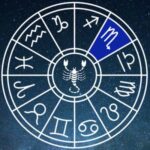
SCORPIO (Oct. 23-Nov. 21):
Scorpio poet Richard Jackson writes, “The world is a nest of absences. Every once in a while, someone comes along to fill the gaps.” I will add a crucial caveat to his statement: No one person can fill *all* the gaps. At best, a beloved ally may fill one or two. It’s just not possible for anyone to be a shining savior who fixes every single absence. If we delusionally believe there is such a hero, we will distort or miss the partial grace they can actually provide. So here’s my advice, Scorpio: Celebrate and reward a redeemer who has the power to fill one or two of your gaps.
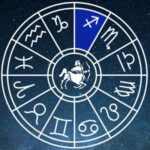
SAGITTARIUS (Nov. 22-Dec. 21):
Poet E. E. Cummings wrote, “May my mind stroll about hungry and fearless and thirsty and supple.” That’s what I hope and predict for you during the next three weeks. The astrological omens suggest you will be at the height of your powers of playful exploration. Several long-term rhythms are converging to make you extra flexible and resilient and creative as you seek the resources and influences that your soul delights in. Here’s your secret code phrase: higher love.
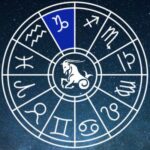
CAPRICORN (Dec. 22-Jan. 19):
Let’s hypothesize that there are two ways to further your relaxation: either in healthy or not-so-healthy ways—by seeking experiences that promote your long-term well-being or by indulging in temporary fixes that sap your vitality. I will ask you to meditate on this question. Then I will encourage you to spend the next three weeks avoiding and shedding any relaxation strategies that diminish you as you focus on and celebrate the relaxation methods that uplift, inspire, and motivate you.
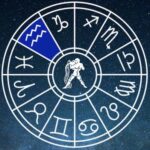
AQUARIUS (Jan. 20-Feb. 18):
Please don’t expect people to guess what you need. Don’t assume they have telepathic powers that enable them to tune in to your thoughts and feelings. Instead, be specific and straightforward as you precisely name your desires. For example, say or write to an intense ally, “I want to explore ticklish areas with you between 7 and 9 on Friday night.” Or approach a person with whom you need to forge a compromise and spell out the circumstances under which you will feel most open-minded and open-hearted. PS: Don’t you dare hide your truth or lie about what you consider meaningful.
PISCES (Feb. 19-March 20):
Piscean writer Jack Kerouac feared he had meager power to capture the wonderful things that came his way. He compared his frustration with “finding a river of gold when I haven’t even got a cup to save a cupful. All I’ve got is a thimble.” Most of us have felt that way. That’s the bad news. The good news, Pisces, is that in the coming weeks, you will have extra skill at gathering in the goodness and blessings flowing in your vicinity. I suspect you will have the equivalent of three buckets to collect the liquid gold.
WANT MORE? Listen to Rob’s EXPANDED AUDIO HOROSCOPES, 4-5 minute meditations on the current state of your destiny — or subscribe to his unique daily text message service at: RealAstrology.com
Quote of the Day: “It requires a self-esteem to receive—a pleasant acquaintance and liking for oneself.” – John Steinbeck
Photo by: Sebastián León Prado
With a new inspirational quote every day, atop the perfect photo—collected and archived on our Quotes page—why not bookmark GNN.org for a daily uplift?
In the oldest and most prestigious young adult science competition in the nation, 17-year-old Ellen Xu used a kind of AI to design the first diagnosis test for a rare disease that struck her sister years ago.
With a personal story driving her on, she managed an 85% rate of positive diagnoses with only a smartphone image, winning her $150,000 grand for a third-place finish.
Kawasaki disease has no existing test method, and relies on a physician’s years of training, ability to do research, and a bit of luck.
Symptoms tend to be fever-like and therefore generalized across many different conditions. Eventually if undiagnosed, children can develop long-term heart complications, such as the kind that Ellen’s sister was thankfully spared from due to quick diagnosis.
Xu decided to see if there were a way to design a diagnostic test using deep learning for her Regeneron Science Talent Search medicine and health project. Organized since 1942, every year 1,900 kids contribute adventures.
She designed what is known as a convolutional neural network, which is a form of deep-learning algorithm that mimics how our eyes work, and programmed it to analyze smartphone images for potential Kawasaki disease.
2023 Regeneron Science talent search winners – credit Society For Science
However, like our own eyes, a convolutional neural network needs a massive amount of data to be able to effectively and quickly process images against references.
For this reason, Xu turned to crowdsourcing images of Kawasaki’s disease and its lookalike conditions from medical databases around the world, hoping to gather enough to give the neural network a high success rate.
Xu has demonstrated an 85% specificity in identifying between Kawasaki and non-Kawasaki symptoms in children with just a smartphone image, a demonstration that saw her test method take third place and a $150,000 reward at the Science Talent Search.
WATCH the big winner explain her invention…
SHARE This Brilliant Kid’s Brilliant Idea With Your Friends…