












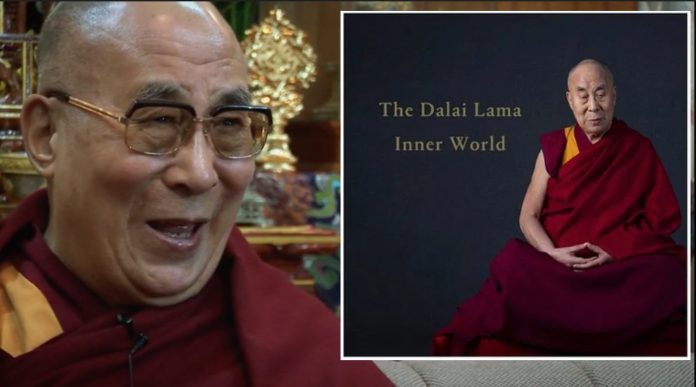
Happy 91st birthday to His Holiness the Dalai Lama. Born in Taktser, China, and named at a young age to be the 14th Dalai Lama of Tibet, he also became a spiritual guide for non-Buddhists—especially as the author of several best-selling books on happiness. He is also the subject of a 2020 film, The Dalai Lama – Scientist, an award-winning documentary about the little-known side of him that is always in pursuit of science, which is available for rent or purchase. WATCH a 2020 BBC interview… (1935)
Surprise Audio Played at Wedding Shocks Everyone When Bride Accurately Predicts Husband’s Name as a 4-Year-old


The surprise was waiting at the wedding reception.
Max Creamer and Jordan Rosenberg met at a Halloween party about ten years ago when they were in college at San Diego State University. They got engaged on a California beach and were married this past May.
At the reception, Jordan was in the middle of her father-daughter dance, bobbing back and forth to “God Only Knows” by the Beach Boys.
Suddenly, the audio changed. It was time for the surprise.
Weeks earlier, as the big day approached, Jordan’s parents, Lou and Jill Rosenberg, remembered that they had a video recording of Jordan at just four years old, describing all the details of her future wedding. The video was about 25 years old now. It provided a portal into the magic of childhood imagination—and it held a secret inside too.
Once the Rosenberg parents found it, they knew they had to share it with everyone else, so as father and daughter swayed together on the dance floor, the voice of four-year-old Jordan cut in.
“My wedding is going to have clowns dancing with the children and a moon bounce and face painting,” four-year-old Jordan exclaimed.
Then, the prescient preschooler started talking about her guest list—and it included three of her friends, Gracie, Kylie, and Sarah, all of whom were in attendance as adults.
The biggest surprise came next.
“Who will be your husband?” Lou Rosenberg asked his young daughter. And as the wedding reception videographer turned to the groom, young Jordan delivered his name. “Max!”
Max was overcome with shock, and Jordan broke out in tears.
“No way!” someone yelled in the background.
@jordannrose1 I could not stop crying!! 🥹🤍full backstory: my parents found a video from when I was 4 years old talking shout my future wedding, where I named my childhood friends as my bridesmaids that were in attendance, and said Max would be my husband…. While I didn’t meet Max until college it was kismet!! They edited that clip into our father daughter dance and totally surprised everyone including me!!! ❤️ #fatherdaughterdance #wedding #bride #2026bride #2026wedding @absocialstudio ♬ original sound - jordan
The unexpected recording added a dash of destiny to the wedding festivities—as sounds of surprise echoed throughout the reception room.
It turns out Jordan did have a friend named Max growing up, but she hadn’t thought of him or the recording in ages.
“I was just as surprised as everyone else!” Jordan told PEOPLE. “I was already emotional from the surprise of hearing my tiny 4-year-old voice. I couldn’t believe what was going on! I immediately started crying and laughing at the same time.”
Soon afterward, the reception video was posted to TikTok and went far beyond viral, receiving more than 22 million views and 3.5 million Likes, as hearts were warmed all over the internet.
MEANT TO BE: Couple Who Met as ‘Miracle Babies’ in Hospital Were Meant to Be Together–Now Have a Child of Their Own
“This is the most beautiful invisible string story I’ve ever heard of,” commented one TikTok fan.
TIE THIS INCREDIBLE STORY TO SOMEONE ELSE By Sharing On Social Media Feed…
Neighbors Pull Grandma Out of Burning Home But Looked Like ‘Drunk Thugs’ in Doorbell Camera Alert Sent to Daughter

Hero neighbors raced into a burning home to save an 87-year-old grandma after her daughter watched the terrifying fire on a doorbell camera.
Phyllis Day, who has Alzheimer’s, was asleep when a blaze broke out in the utility room of her home in Wigston, Leicestershire in England.
Luckily, neighbors spotted flames and smoke billowing from the property at around 11.30 PM last Thursday night—and charged in to help.
Daughter Suzanne Wright was at home five miles away when she awoke to a doorbell notification alerting her to activity at her mom’s house.
She watched in horror as around eight people tried to smash their way inside and initially thought they were drunken thugs trying to break in.
Using the intercom system on the doorbell, Suzanne realized the people were the neighbors and she guided them to a key box outside.
“It was just pure luck that her neighbors saw the flames and dashed round to help,” Suzanne told SWNS news.
“I could see a couple of men without tops on, hammering on the door. There were then lots of people outside trying to ram their way inside and a man was shouting ‘get out, there’s a fire’.”
“I was able to speak to them on the intercom on the camera and explained I lived elsewhere but my mum was inside.”
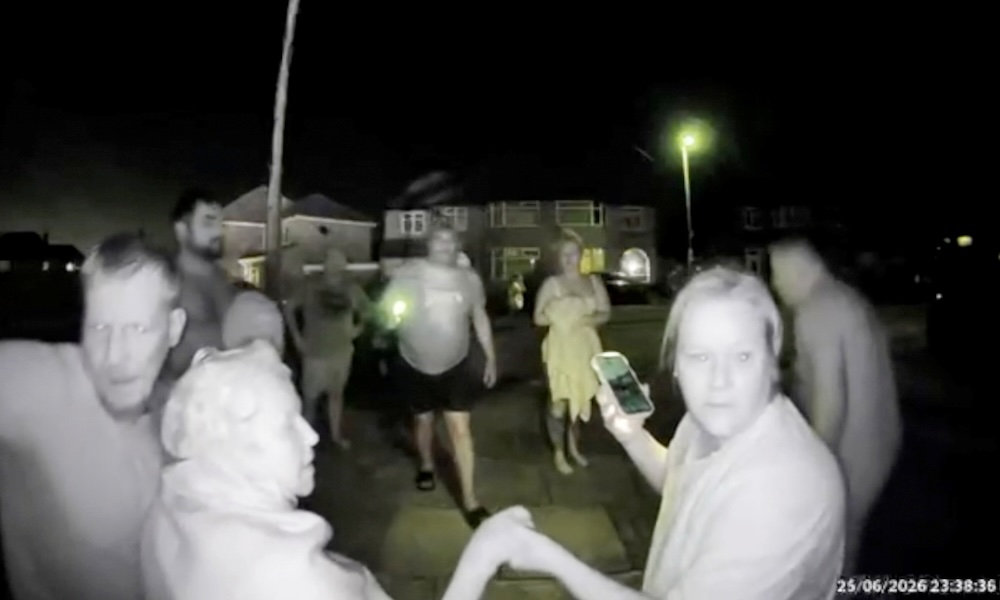
Suzanne, a full-time caregiver for her mother, quickly dressed, and while her husband drove them to the house, she watched as the neighbors rushed to save her mum.
“At one point I lost visual and could just hear shouting and screaming, it was terrifying. Luckily it came back on and I could see mum being led by the arm outside.”
Suzanne says she believes her mum, who has lived alone since her husband died in 2018, could not hear the smoke alarms because she took out her hearing aids before going to bed.
The neighbors, Pav Sarpal, 28, and Stephan Smart, 44, turned into heroes—running inside the house to rescue Phyllis.
“It’s the worst thing I’ve ever seen in my life,” said Pav. “All I could see were flames and smoke and it was getting worse by the second.
“When the door opened I ran in first, but I couldn’t breathe. I told Stephan to get me a towel so I could go upstairs where Phyllis was asleep.
“I was coughing so much, the smoke was everywhere. It felt like I was being physically choked by the smoke. I had to run downstairs twice to get fresh air before heading up to bring Sue’s mum down.”
MORE EVERY DAY BRAVERY: Heroic Neighbor Uses Sledgehammer to Rescue 85-year-old Woman in Wheelchair from House Fire
Stephan added: “I just saw flames coming straight through the kitchen door.
“I panicked a little to start with, but I knew somebody was upstairs and I had to get up there and get her down as quickly as possible.
“When we found her bedroom we woke Phyllis up but she looked at me like I was going to rob her. I told her there was a fire and she needed to come with us and we gently got her out of bed.”
Stephan and Pav took an arm each as they helped Phyllis down the stairs and out of the front door.
Another neighbor, Dean Archer, 30, also rushed to help when he heard a loud explosion come from inside the house.
“It was a mad panic really. Stephan and Pav got up the stairs and managed to bring her down and luckily we got her out just in time. It felt like it took ages, everything was in slow motion.”
DEATH-DEFYING HEROISM: Courageous Hero Climbs to 6th Floor Ledge to Save Children and Mom Trapped By Flames in Paris (WATCH)
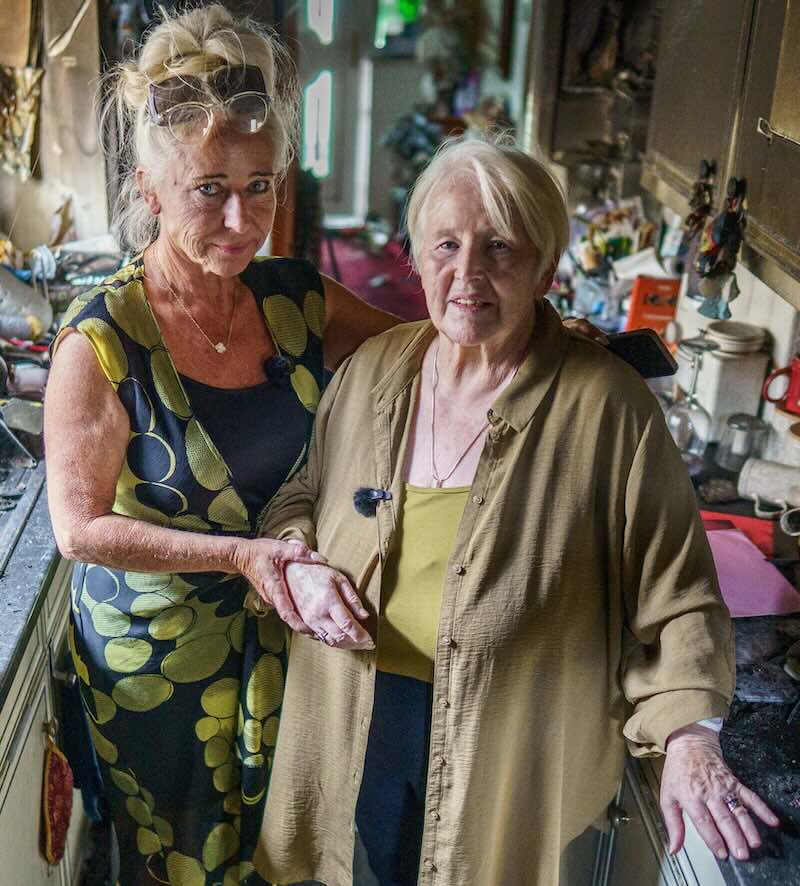
Phyllis, who has ten grandchildren and three great-grandchildren, will now stay with Suzanne until her home is repaired.
“I cannot thank the neighbors enough,” said the daughter. “They are absolute super heroes.”
A WHALE OF A RESCUE: Woman Rescues Shark Entangled in Fishing Line With Her Bare Hands as Friend Shoots Incredible Video
Afterward, local fire officials urged the public not to enter buildings that are on fire, because “doing so endangers more lives. Smoke inhalation can quickly disorientate, injure and incapacitate.”
But Suzanne has a different message: “I think King Charles should knight them all.”
SHARE THE BRAVERY With Friends on Social Media in Need of a Hero Story…
Crow Takes to Teaching a Starving Orphan Bird How to Eat (Watch)
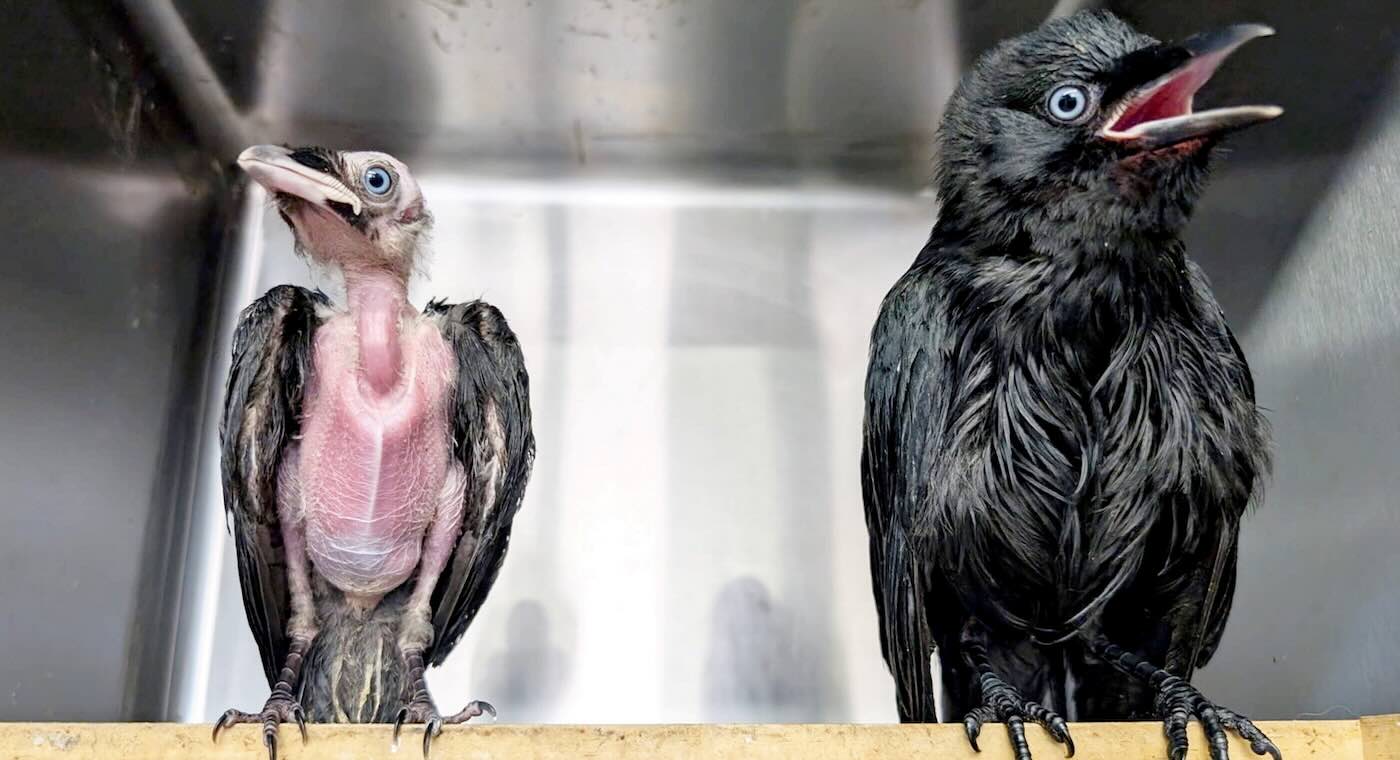
A starving baby crow with barely any feathers is being nursed back to health—and another older bird has taken him under his wing.
The tiny English crow known as the jackdaw was found in a “sorry state” and close to death.
He was spotted in a field in Nottingham, England earlier this month and taken to a rescue centre where volunteers nicknamed him Frank Sinatra because of his piercing blue eyes.
They placed him in a recovery unit with another fledgling crow who was a little older and wiser, and he took on the role of surrogate parent—even feeding little Frank his daily meals.
Adorable videos show the pair perched together as the black jackdaw helps his pupil to swallow worms and seeds.
Jon Beresford, who co-founded Brinsley Animal Rescue, said Frank is around six weeks old but was small due to malnutrition.
“As soon as he arrived with us he stole all our hearts,” he told SWNS news.
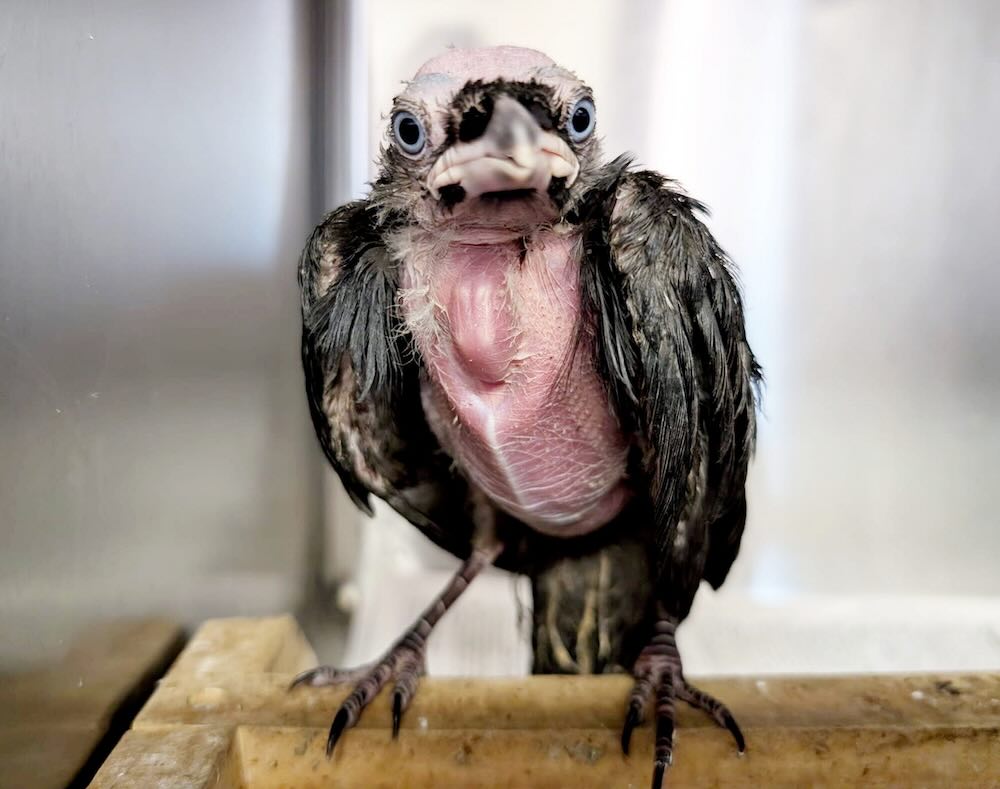
“It’s not usual that we name the animals that come to us but his piercing eyes led us to call him Frank Sinatra—and it’s stuck ever since.”
While quarantined for treatment, Frank was observed calling out to his new friend. Being placed together is really helping his development.
“At this stage of his growth, Frank would still be reliant on his parents for food.”
But, to the team’s “amazement”, the older fledgling started to feed him—despite the fact he had only just learned to feed itself. (See it in the video below...)
“It’s amazing to watch them interact. Frank watches the older one’s every move and copies him.”
CHECK OUT THESE WILD BIRDS:
• Woman Who Rescued Injured Crow Keeps Getting ‘Thank-you Gifts’ from Other Birds
• Family That Owned This ‘Wildlife Wonder of the World’ for 300 Years Sells Bass Rock to Protect 100,000 Seabirds
The rescue workers hope Frank will recover sufficiently to be moved into an aviary where it can learn to fly and prepare for eventual re-release into the wild.
WATCH the video below…
SHARE THE STORY WITH YOUR FLOCK On Social Media…
Rare 1776 Declaration of Independence Discovered by National Archives in UK–One of Only 11 Known to Survive
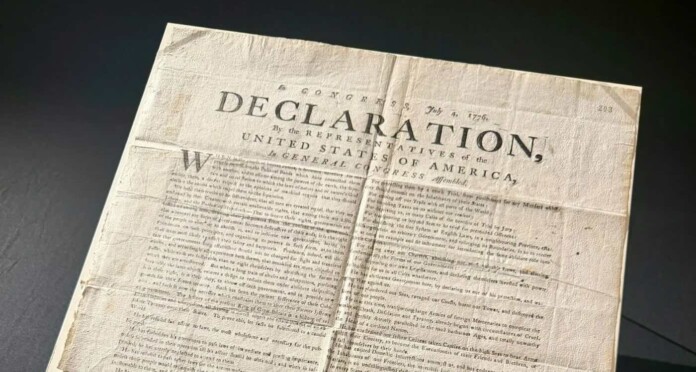
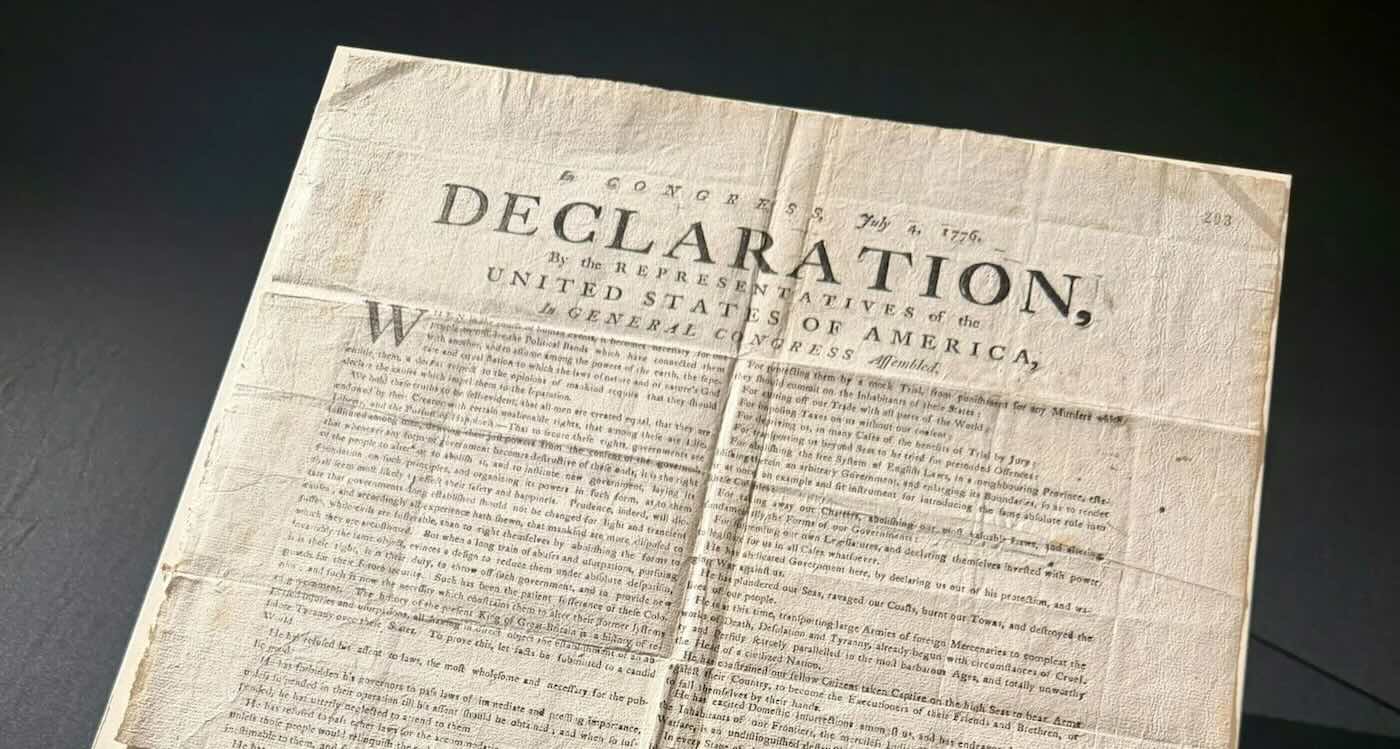
A rare 1776 printing of the US Declaration of Independence — one of just 11 known to survive and the only copy outside the United States — has been discovered by a volunteer sorting historical letters and papers at The National Archives in Kew.
As the Archives was preparing to open an exhibition charting the emergence of the United States for the 250th anniversary, a volunteer made an astonishing discovery: an unknown copy of the Declaration.
Michael Scurr, a volunteer on the institute’s America 250 – Royal Navy Admirals’ and Captains’ letters project, was cataloguing a box of correspondence when he the Declaration.
It was discovered among letters sent in by Thomas Fitzherbert, captain of HMS Raisonable, and the volunteer described his reaction in a video (see below).
This copy of the Declaration was taken from the papers of an American privateer (a private vessel commissioned by a government to attack enemy ships), the Dalton of Newburyport (Massachusetts), which was captured by the Raisonable on 24 December 1776.
It was printed in Exeter, New Hampshire, by Robert Luist Fowle sometime between the 16th and 19th July in 1776 for his newspaper, the New Hampshire Gazette or Exeter Morning Chronicle.
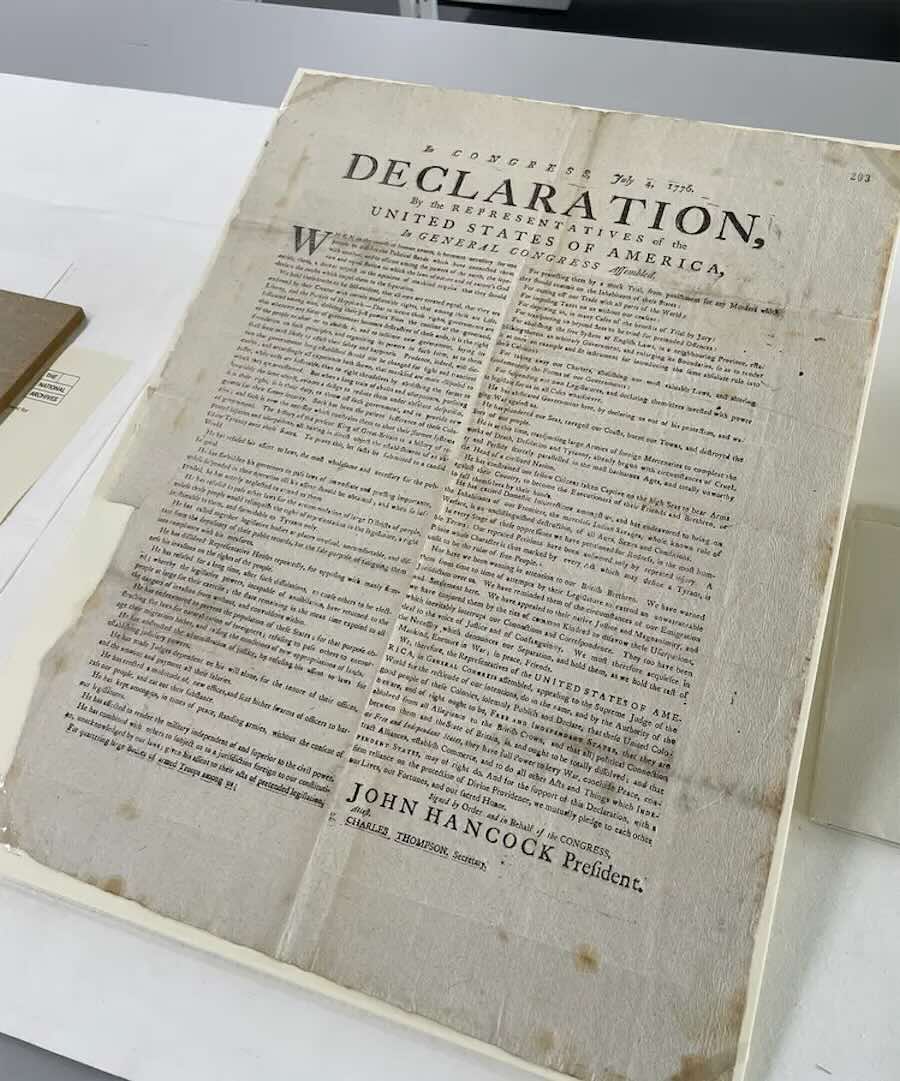
There are (now) only 11 known surviving copies of these so-called ‘Exeter Declarations’ and, prior to this discovery here in London, there were none known outside of the United States.
CHECK OUT OUR LIST: 250 Reasons to Love America On Her 250th Birthday
While cataloguing a letter dated January 10, 1777, in which Captain Fitzherbert reports the capture of the Dalton, Michael noted a reference to documents seized from the ship.
On closer inspection of these records, one that Fitzherbert described as ‘another document’ proved to be the extremely rare ‘Exeter Declaration’.
The capture of enemy ships was a normal practice of warfare at this time. To ensure it was legal, however, the captors had to bring all the papers taken from any captured ship before a court.
Fitzherbert’s junior officer swore to the court that all seized papers from the Dalton had been provided. We now know this was not the case, as Fitzherbert had forwarded the Declaration to officers in the Royal Navy in London.
And, there it has been ever since, first with the Navy and finally with The National Archives, where it was discovered 250 years later. (Watch Michael’s reaction below…)
[Source: The National Archives, UK]
SHARE THE EXCITING DISCOVERY On Social Media to Celebrate America’s Birthday…
“The bedrock of our democracy is the rule of law and that means we have to have judges who can make decisions independent of the political winds.” – Caroline Kennedy
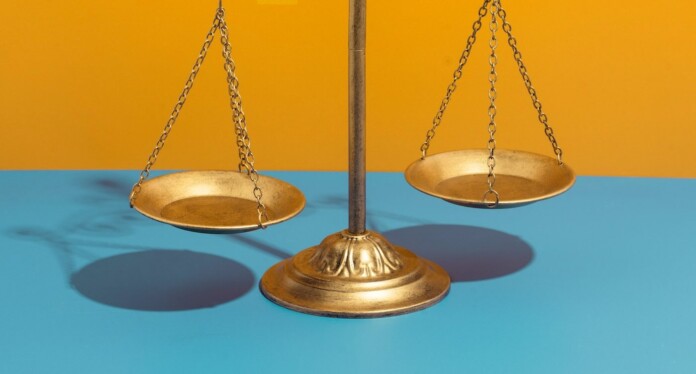
Quote of the Day: “The bedrock of our democracy is the rule of law and that means we have to have judges who can make decisions independent of the political winds.” – Caroline Kennedy
Photo by: Katelyn Perry for Unsplash+
With a new inspirational quote every day, atop the perfect photo—collected and archived on our Quotes page—why not bookmark GNN.org for a daily uplift?
Good News in History, July 5

32 years ago today, Jeff Bezos founded Amazon in the garage of his home in Bellevue, Washington. Originally founded as “Cadabra,” it was famously limited to book sales, the nearby distribution chains for which was why Bezos chose Washington for the entrepreneurial project. Fast forward to today, and it can be said to have launched the e-commerce revolution, changing the face of retail forever and becoming the world’s largest “store,” available in dozens of countries. READ some more milestones on Amazon’s way to success… (1994)
Giant Gorilla Maze Celebrates Sir David Attenborough’s 100th Birthday
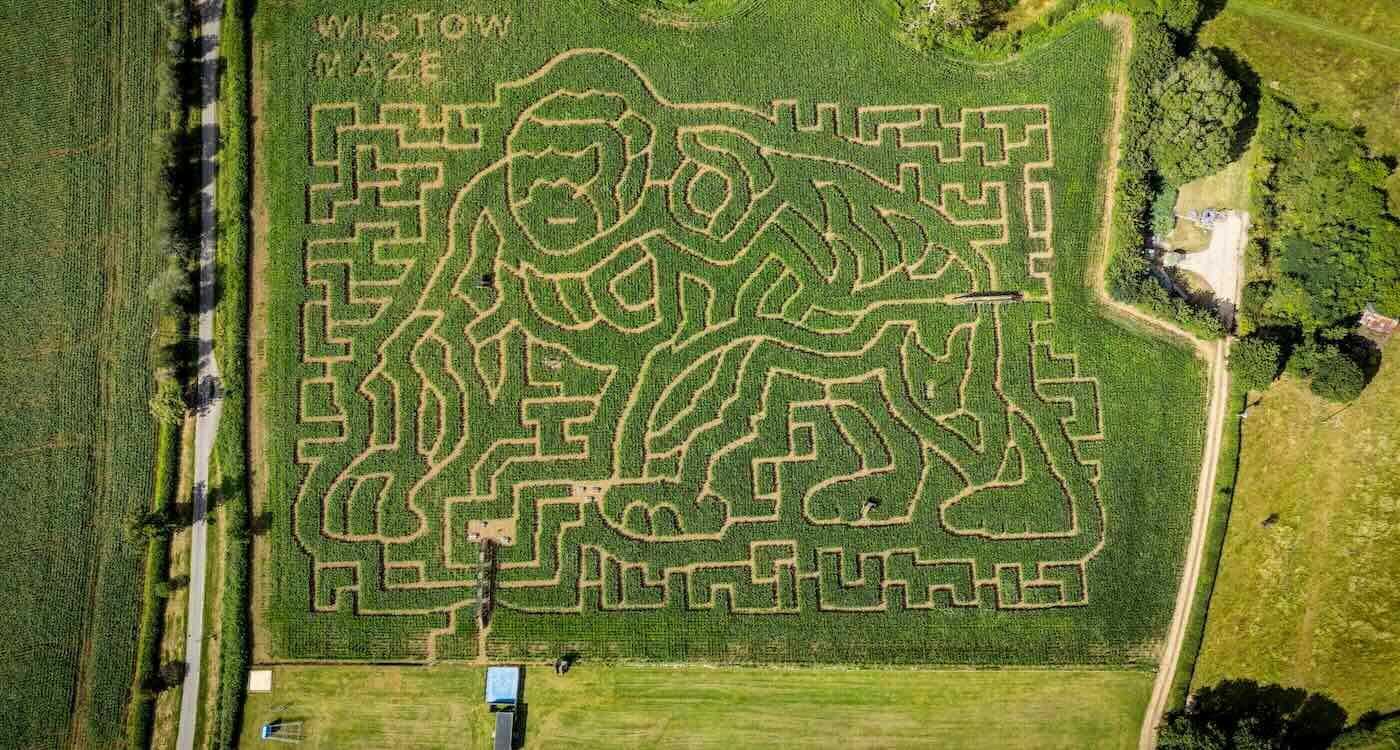
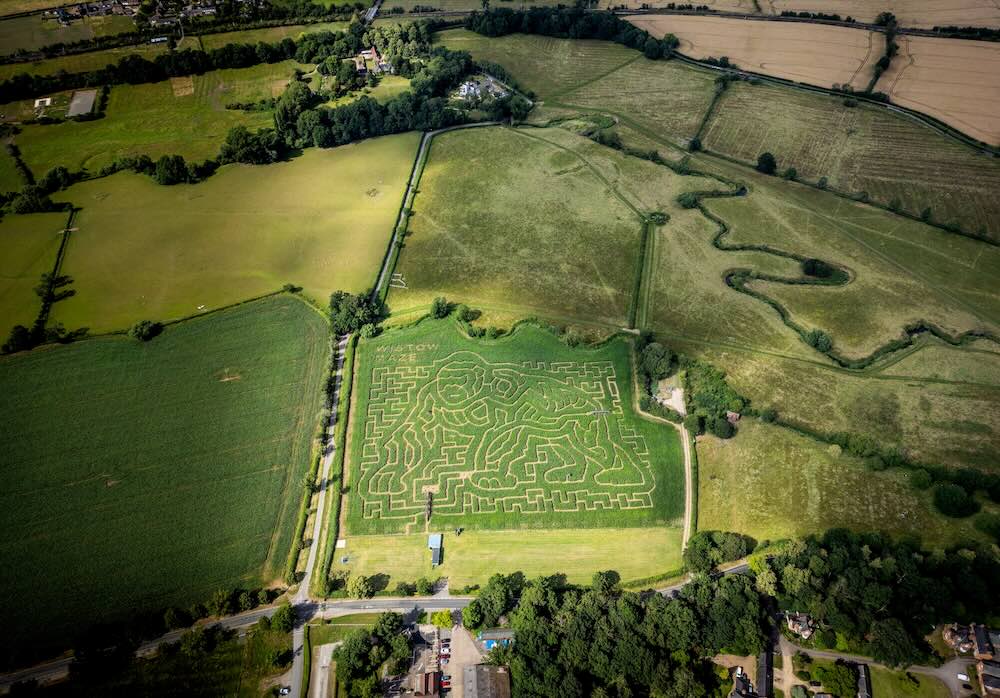
One of Britain’s biggest mazes is celebrating Sir David Attenborough’s 100th birthday by creating a spectacular design in the shape of a mountain gorilla.
Wistow Maze in Leicestershire, England, came up with the design to pay tribute to the legendary broadcaster who hails from their local county, having grown up near the University of Leicester.
The popular award-winning attraction features a winding labyrinth that stretches for three miles and takes around two hours to walk.
Each year the paths for the maze are marked out using GPS, so visitors can wind their way through towering walls of maize and sunflowers.
Each year a new topical design is chosen. Last year, it was designed in the shape of a steam train to commemorate 200 years of the modern British railway system.
It has also been shaped into a Crown to mark the Queen’s Jubilee, and a javelin thrower to mark the Olympics.
This year, its owner has paid tribute to one of Leicester’s most famous sons with a quirky design a gorilla—referencing the naturalist’s famous 1978 televised encounter with the creature in Rwanda.
“We spent almost a year mapping out the design,” said maze owner Diana Brooks. “It has been a lot hard work and effort since then to get it looking right.”
“He is certainly one of Britain’s national treasures, but it also ties-in nicely to him coming from Leicestershire, too.”
A-MAZE-ING!
• World’s Largest Corn Maze Immortalizes James Bond Movies with 10-Mile Masterpiece in Illinois – LOOK
• Maine Orchard Wins Best Corn Maze in America for 4th Year Straight by Staying True to Mainers
Visitors are encouraged to find 12 quiz boards hidden among the pathways, featuring animals from his pioneering nature series, as well as interesting facts about the famous naturalist and broadcaster.
High-level bridges and towers give visitors stunning panoramic views over the fields, which will eventually blossom with sunflowers.
At the end of the season, the maize is harvested for cattle fodder before being redesigned the following spring.
Wistow Maze is a winner of Leicestershire’s “Best Visitor Attraction” and attracts thousands of visitors each year.
The maze will open daily (10am – 6pm) from July 20 until September 6 as well as the weekend of September 12/13, costing £8.95 for a child and £10.95 for an adult ($10 and $15). A family ticket for two adults and two children is £37.
GO APE FOR THIS By Sharing the Fun on Social Media…
Voice Changes Measured by Phone Can Predict Asthma Flare-Ups 3 Days in Advance

Voice changes measured with a mobile phone can detect an oncoming potentially-deadly asthma attack up to three days in advance, according to new research.
Scientists from Maastricht University in the Netherlands say their high tech app can also provide a vital early warning for symptoms of chronic obstructive pulmonary disease (COPD).
A flare-up of asthma or COPD, known as an exacerbation, is when symptoms like difficulty breathing, coughing, and phlegm become suddenly worse—and sometimes, without prompt medical care, they can become dangerous.
It may soon be possible to use a daily voice-check to monitor for the earliest sign of a flare-up simply by speaking into your phone.
Study leader Dr. Sami Simons explained these sudden exacerbations are not only frightening, they can lead to longer-term deterioration and increase the risk of dying.
“Early on in my career I was told that the voice is different while a flare-up is happening.
“Now, the rise of artificial intelligence means it’s possible to perform sophisticated analysis to find patterns in audio recordings.
“Capturing voice via a mobile phone is the next logical step to detect deteriorations in asthma or COPD at home and on time.”
The study included 38 people with COPD and 35 people with asthma, who were being treated in the Netherlands.
Over the course of 12 weeks, participants were asked to use a specially designed app to record and analyze their voice daily.
Each person would record themselves speaking a long “a” sound, then either reading out a short piece of text or answering a question. They were also asked to complete a daily questionnaire to indicate whether their symptoms were flaring up.

Comparing the voice sounds with the data on symptom flare ups, researchers found that, at the very beginning of a flare up, people’s voices deteriorated in terms of tone, or pitch, the number of pauses, and voice quality.
The findings, published in the journal ERJ Open Research, showed that the measures improved as the flare-ups subsided.
“We found that the voice significantly changes—and this occurs as early as the first day that symptoms deteriorate,” said Dr. Simons, a consultant respiratory physician at Maastricht University Medical Centre.
“As the airways constrict during an exacerbation, the air that passes the vocal folds is limited.
“This weakens the normal vibration of the vocal folds, making it harder to keep the voice steady. As a result, the voice of someone with an exacerbation sounds ‘breathier’ and ‘rough.'”
The app called TACTICAS (Telemonitoring for Asthma and COPD Through voICe AnalysiS) was co-designed with patients and a start-up called Zana Technologies.
MORE GOOD NEWS: First New Treatment in 50 Years for Asthma Attacks and COPD ‘Could be a Game-Changer’
It’s currently only available for research purposes, but Dr. Simons and his team have created a website (www.speaktoCOPD.com) to explain how the voice technology works and how people can contribute to the research with their own voices.
The research team developed machine learning algorithms that can detect exacerbations based on voice changes as early as three days before symptoms—and they’re are now testing the technology in two new studies: one in the Netherlands and one in Brazil.
The breakthrough was welcomed by the European Respiratory Society’s Dr. Marc Miravitlles.
“Being able to spot a flare up, or even anticipate it by a few days, could be really valuable in terms of reducing symptoms such as breathlessness or coughing as well as lowering the risk of lung damage, hospital admission or death.”
GREAT NEWS FOR KIDS WITH ASTHMA: 2-in-1 Inhaler Reduces Asthma Attacks in Children by 45%, Shows New Study
“This technology could allow better monitoring and care for patients with asthma or COPD via a mobile phone wherever they are in the world,” added Dr Miravitlles, of Vall d’Hebron University Hospital in Barcelona, Spain.
“This is a good example of how new technologies and AI could really improve the quality of life of our patients with chronic respiratory diseases.”
TELL EVERYONE THE NEWS – BY Sharing This on Social Media…
250 Reasons to Love America On Her 250th Birthday
From purple mountain majesties to amber waves of grain, America’s 4 million square miles of jaw-dropping landscapes is matched only by the audacity of its founding premise: 250 years ago, British colonists looking for independence launched a radical experiment, betting that a free people could govern themselves—without the rule of a king or queen.
Despite years of political division and cultural friction in pursuing “a more perfect union”, America has a lot to be profoundly thankful for. Here are 250 reasons (in no particular order).
On this historic Semiquincentennial birthday, we look back at the brilliant tapestry of innovation, culture, and community flourishing for two and a half centuries—proving this nation is still a home worth cherishing. Happy Birthday, America!
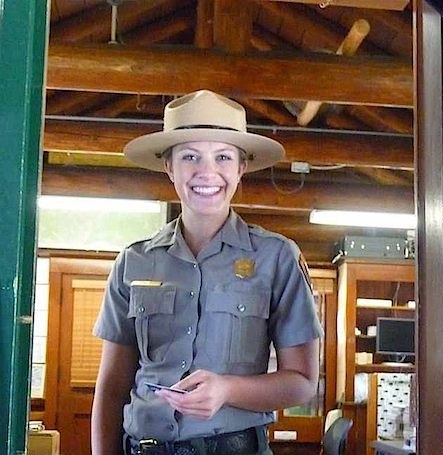
1. Yellowstone National Park: The world’s very first national park
2. The Chocolate Chip Cookie: Invented in Massachusetts, loved by the world.
3. The Birth of Jazz: America’s greatest original art form
4. Fall Foliage in New England
5. Air Conditioning: Willis Carrier’s invention made living in deserts possible
6. Freedom of Speech (enshrined in First Amendment of the U.S. Constitution
7. The Appalachian Trail: 2,200 scenic miles from Georgia to Maine
8. Motown: The pop-soul Detroit sound that mowed down racial barriers
9. Surfing: Born in Hawaii and became a laid-backculture in California
10. The Comic Book: An American invention that popularized superheroes
11. Craft Beer from thousands of innovative local microbreweries
12. Bob Dylan leading a generation with his protest anthems
13. The Declaration of Independence: Proclaiming unalienable rights to life, liberty, and happiness
14. Thomas Jefferson: Founding Father who wrote the above document, paid for the Library of Congress, and negotiated the Louisiana Purchase
15. Susan B. Anthony: Faced arrest leading the fight for women’s voting rights
16. Jonas Salk: Refused to patent his polio vaccine, giving it to the world
17. The Peace Corps: Sending Americans abroad to bring humanitarian aid
18. The Rocky Mountains
19. Woodstock: The greatest festival ever held
20. State Fair Food on a Stick: Deep-frying everything from butter to Oreos
21. Pickleball: The invented racquet sport sweeping the nation
22. New Orleans: Creole Culture and the birthplace of jazz
23. Diners: serving breakfast 24 hours a day
24. Route 66: One highway from Chicago to a California pier
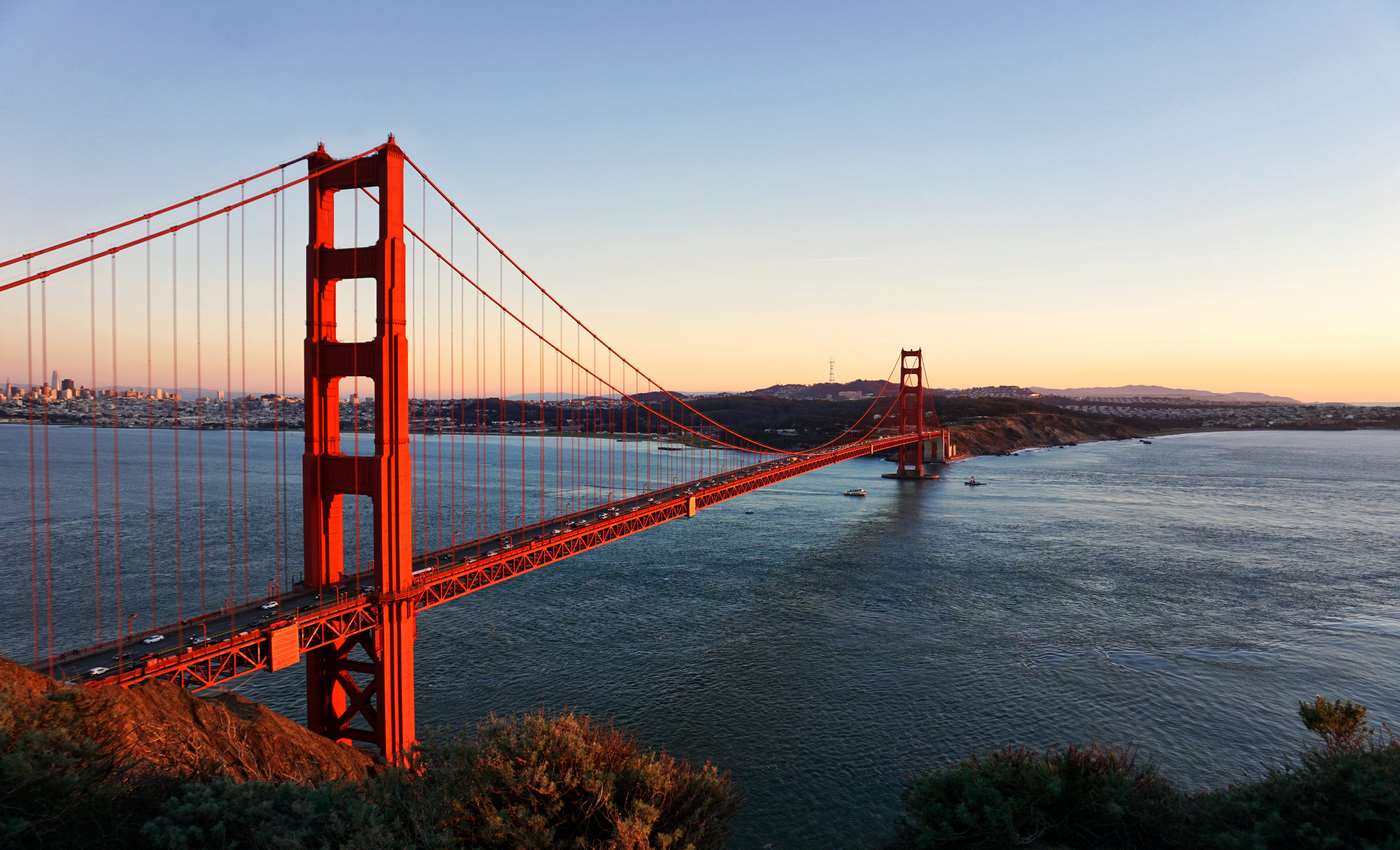
25. The Golden Gate Bridge: Architectural masterwork framed by San Francisco fog
26. Barbecue from Texas, Kansas City, Memphis, or Carolina.
27. Diversity of Landscape: tundra, desert, rainforest, and tropics in one nation
28. Redwood Trees
29. Clam Chowder

30. Frank Lloyd Wright: 400 buildings, including Fallingwater (above)
31. The Great American Novel: The Great Gatsby
32. Broadway musicals
33. Jackie Robinson: With immense poise he broke Major League Baseball’s color barrier
34. Food Trucks: Mobile kitchens democratizing gourmet food on the street
35. Rock and Roll: A rebellious genre that electrified the world
36. The Sitcom: Brought families together for laughs
37. Napa Valley: World-class wine in America
38. The Personal Computer
39. The Space Shuttle: Reusable rockets
40. Tailgating: Pre-game community party in stadium parking lots
41. The Bill of Rights: Protects crucial individual liberties
42. Bagel with Lox and cream cheese
43. Green Bay Packers’ Lambeau Field: Home of America’s only publicly owned football team
44. Kentucky Bourbon
45. Teddy Roosevelt (and Teddy Bears, which were named for him!)
46. Hip-Hop: Musical genre born in the Bronx
47. Adopt-A-Highway: Keeping local roads clean out of civic pride.
48. March Madness
49. Jim Henson’s Muppets
50. The Western: movies about the old west
51. Buffalo Wings: Game-day snack, born in upstate New York.
52. The Blues: Soulful songs of struggle from the Mississippi Delta
53. Hollywood
54. Bluegrass music
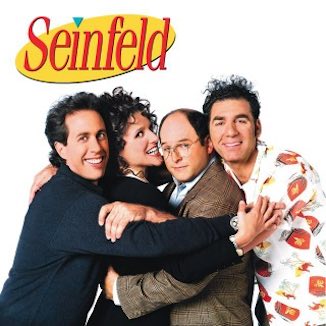
55. Stand-Up Comedy: From Mark Twain to Jerry Seinfeld
56. Martin Luther King Jr: Guided the Civil Rights Movement with nonviolence
57. The Assembly Line from Henry Ford
58. Baseball: (The National Pastime)
59. Macy’s Thanksgiving Day Parade
60. The Porch Swing
61. The Gettyburg Address: Lincoln’s immortal 272 words about government of, by, and for the people
62. The Boston Marathon: the nation’s oldest
63. The Pacific Coast Highway: One of the most scenic coastal drives in the world
64. Coachella and Bonnaroo
65. Late-Night Talk Shows
66. Mr. Rogers: Championed kindness for kids on public television
67. Hamilton: invented new way to teach history
68. Apple, inc
69. Sundance Film Festival
70. The Smithsonian: Free museums on the National Mall
71. Henry David Thoreau – From Walden pond to Civil Disobedience
72. The Music Video: invented by MTV
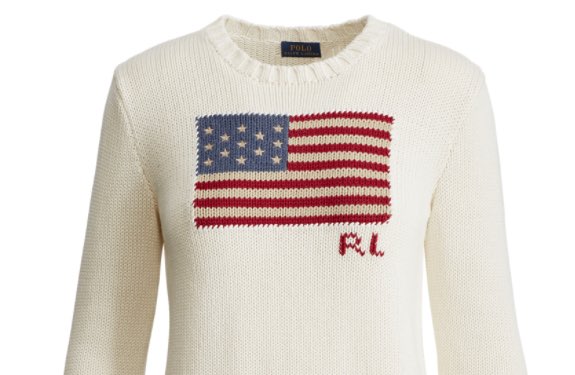
73. Ralph Lauren fashion
74. Freedom of the Press
75. Walt Disney
76. The Apollo Moon Landing and Neil Armstrong’s inspiring first words
77. Silicon Valley tech hub
78. GPS: Developed by the military, but given to the public
79. Lighthouses along the Atlantic coast
80. The Airplane: The Wright brothers proved humans could fly
81. Mammoth Cave: World’s longest known cave, hidden in Kentucky
82. The Liberty Bell in Philadelphia
83. Louis Armstrong’s voice
84. Morgan Freeman
85. George Washington: Won the Revolution but said NO to Presidency after 2 terms
86. Hubble and James Webb Telescopes: Gorgeous views of deep space
87. The Mars Rovers: exploring the red planet
88. The Airstream Trailer: The sleek, silver icon of freedom
89. The National Laboratory System like Los Alamos for scientific research
90. The Great Smoky Mountains
91. Open-Source Software
92. Halloween Trick-or-Treating
93. Southern Biscuits and Gravy
95. The National Science Foundation: Public funding driving discovery
96. The Cotton Gin: Transformed agricultural tech
97. Zion National Park: Massive sandstone cliffs of pink, and red
98. The Transistor: The foundation of all modern microelectronics.
99. Television: Invented by Philo Farnsworth in Rigby, Idaho
100. George Lucas

101. Carlsbad Caverns: Stunning limestone formations in New Mexico
102. Friday Night Lights: High school football games uniting entire small towns
103. The Super Bowl
104. Roadside Attractions: Giant balls of twine and dinosaur statues
105. The NBA
106. Cesar Chavez: His Nat’l Farm Workers group secured migrant laborers’ dignity
107. Lobster Rolls: Atlantic lobster served on a buttered, toasted bun
108. The Seventh-Inning Stretch: Singing “Take Me Out to the Ball Game” with thousands of strangers.
109. Skateboarding: Invented in Southern California
110. The Outer Banks: Pristine white beaches and pirate history galore
111. Red Rocks amphitheater
112. DC monuments on the National Mall
113. Little Free Libraries
114. Winslow Homer paintings
115. Niagara Falls
116. Social Security
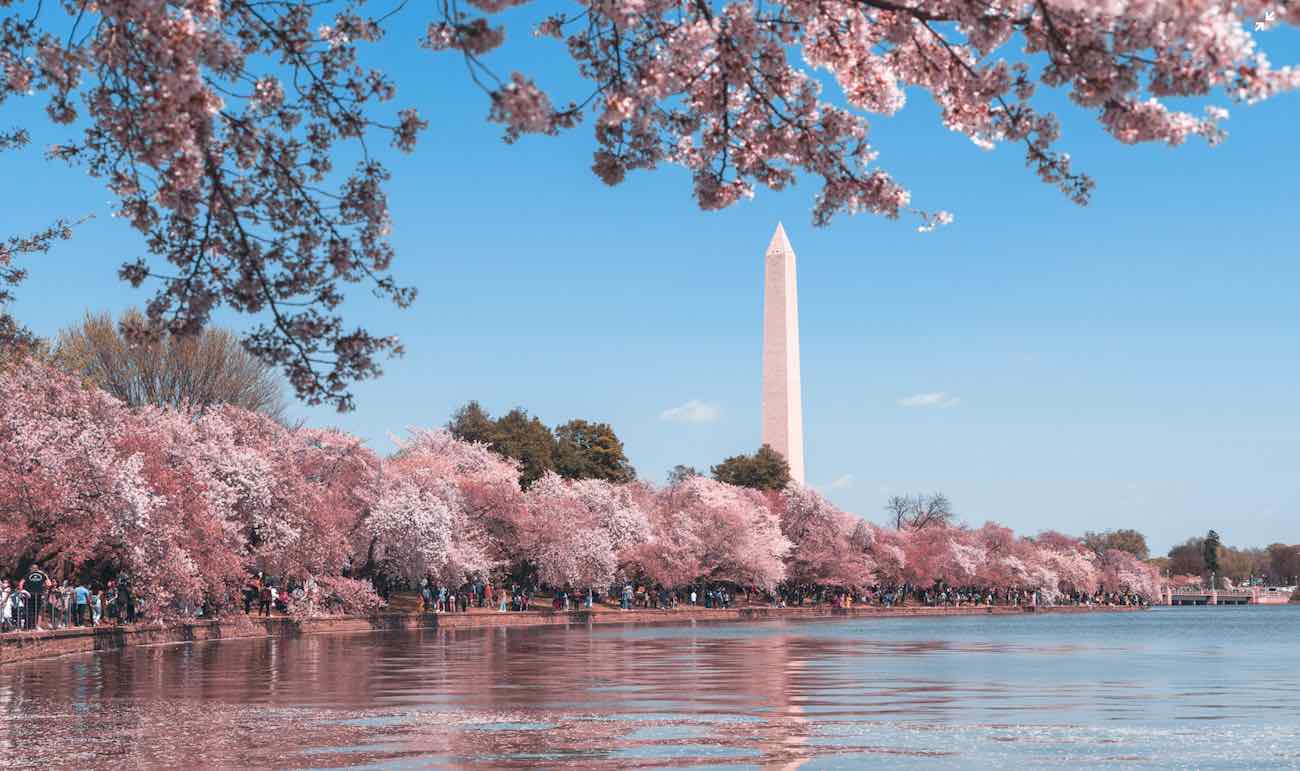
117. The Cherry Blossoms in DC
118. Title IX Legacy: Funding equal opportunities for female athletes
119. Tex-Mex
120. Paul Newman: His Newman’s Own food products give hundreds of millions to charity
121. The Sports Bar: Where fans of all backgrounds instantly become family
122. Mount Rushmore
123. The Smash Burger
124. Oprah
125. S’mores
126. Key Lime Pie: Florida’s tart, creamy dessert
127. The U.S. Constitution: A resilient, adaptable framework for self-governance.
128. Amelia Earhart
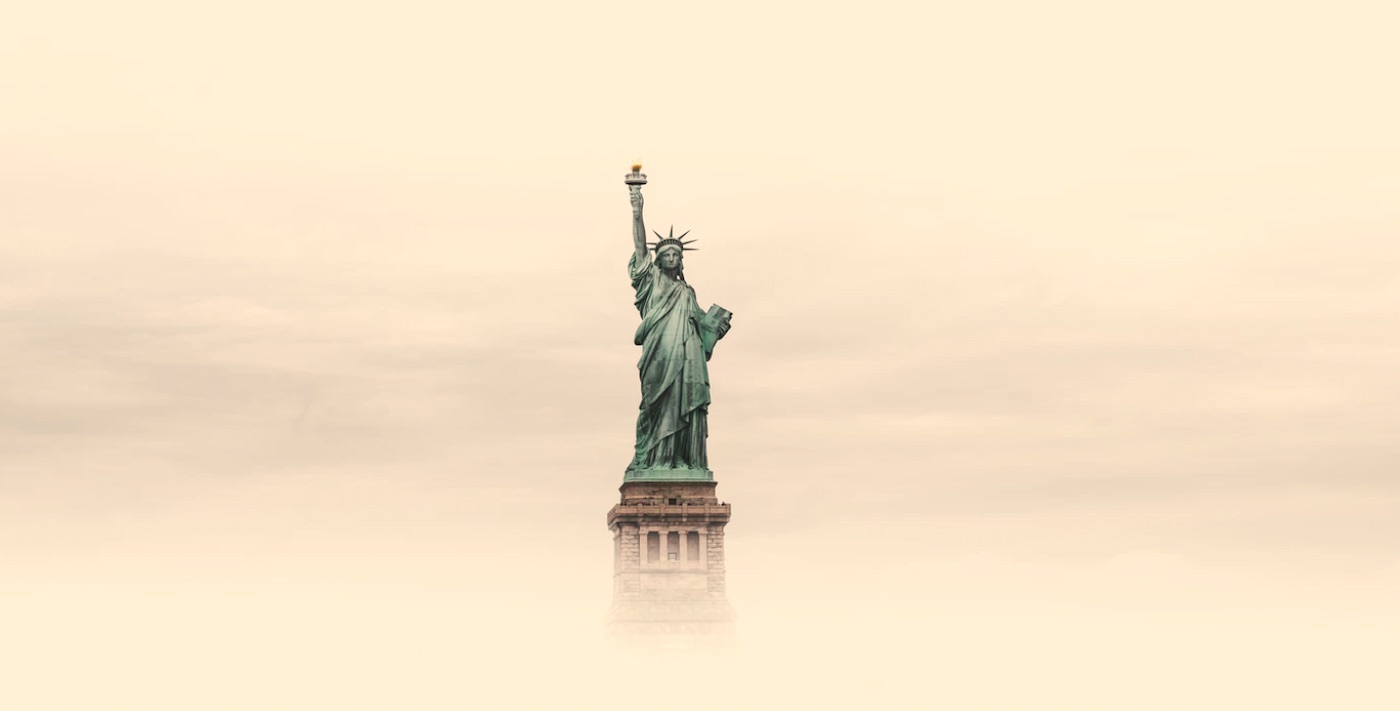
129. The Statue of Liberty
130. The Civil Rights Movement: Citizens marching to force the U.S to live up to its promises.
131. Thurgood Marshall and Sandra Day O’Connor: Supreme Court pioneers
132. The Underground Railroad: Brave networks of secret routes defying unjust laws for freedom.
133. Charlie Brown: Especially the Christmas special
134. The Separation of Powers: A system of checks and balances designed to prevent tyranny.
135. A Walk-Off Home Run: One of the most dramatic, instantaneous moments in sports
136. The Florida Keys
137. The Spirit of Generosity: Millions giving to charities even in hard times
138. The Great Lakes
139. The Right to Peacefully Assemble: Empowering citizens to protest
140. Robert De Niro and Martin Scorsese
141. Carol Burnett
142. Taylor Swift: Donated $26 million to charity to honor her recent marriage
143. The Federalist Papers: A brilliant masterclass in political philosophy and debate.
144. Daniel Boone: Pioneering the West
145. Dolly Parton: Her Imagination Library gifted 240 million free books to kids
146. Elvis Presley
147. Native American Heritage: The First Americans
148. Johnny Carson’s Tonight Show
149. The Great Seal’s Motto: E Pluribus Unum — “Out of many, one.”
150. The Peaceful Transfer of Power: A foundational election tradition
151. The Getty Museums
152. The Interstate Highway System

153. Central Park in NYC
154. The Classic Road Trip: Snacks, music, and changing landscapes.
155. Dick van Dyke
156. The Skyline of New York City
157. Medicare for Seniors
158. The Brooklyn Bridge: offering breathtaking pedestrian walks.
159. Charming Covered Bridges
160. The Hoover Dam: A triumph of 1930s tamed the mighty Colorado River
161. Amtrak’s Long-Distance Trains: Scenic rail journeys
162. The Yellow School Bus
163. Drive-In Movie Theaters
164. The Gateway Arch in St. Louis
165. County Fairs
166. Bruce Springsteen
167. Cable street cars in SF and New Orleans
168. The Cobb Salad: A protein-packed California invention
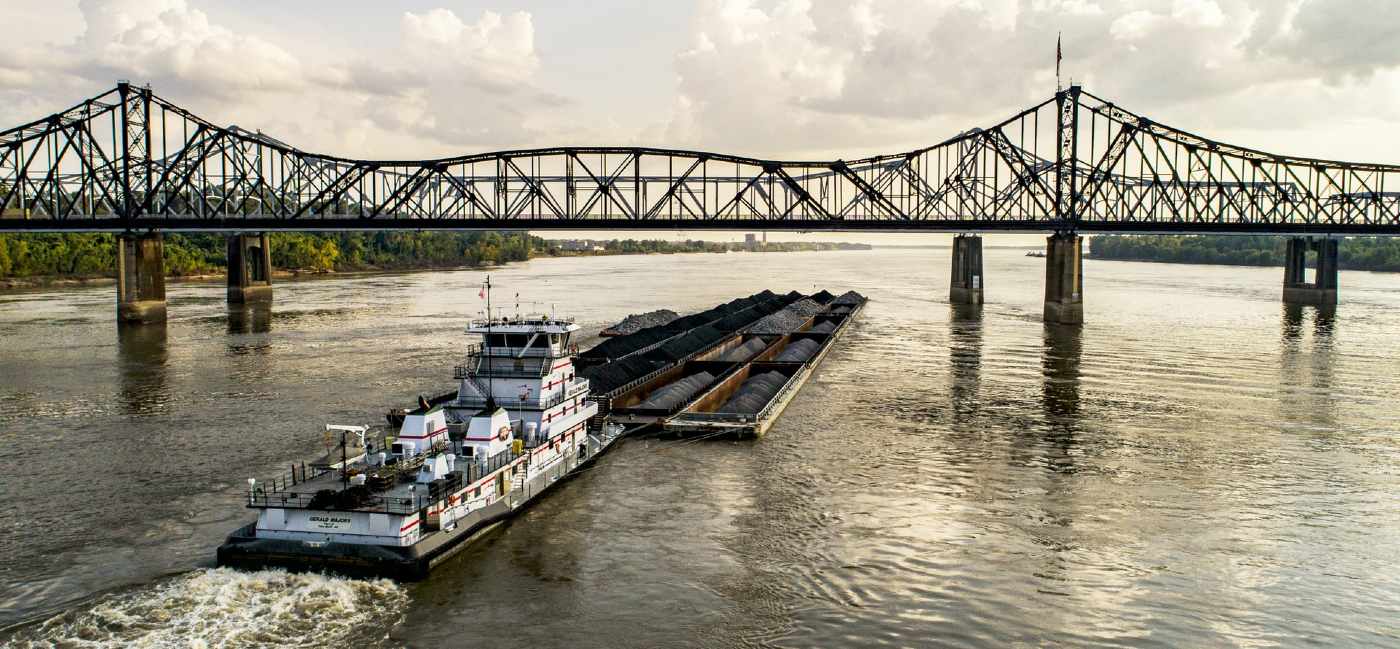
169. The Mississippi River
170. Walter Cronkite
171. The Yellow Cab
172. State Welcome Signs: The joyful marker of entering a new state
173. Fleetwood Mac
174. Roller Coasters at Theme Parks
175. New York Pizza
176. Block Parties
177. Small-Town Parades
178. Vibrant Neighborhoods like Chinatown, Little Italy, and Little Havana.
179. The Credit Union: invented in the US to compete with bigger banks
180. Meryl Streep
181. John Adams: The towering Founding Father who never owned slaves
182. The Twist: Popularized by Chubby Checker on American Bandstand
183. Benjamin Franklin: Founding Father; inventor of bifocals & Franklin stove
184. Volunteer Fire Departments: Also invented by Ben Franklin
185. The Stanley Thermos
186. Garage Sales
187. Crater Lake: A brilliantly blue, deep volcanic lake in Oregon
188. Pumpkin Spice Everything
189. Wilma Rudolph: Overcame childhood polio to become fastest woman in the world
190. The Friday Fish Fry
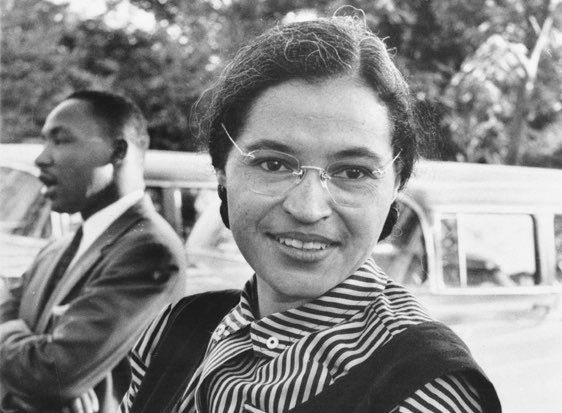
191. Rosa Parks: Wouldn’t give up her bus seat
192. Alexander Graham Bell: Invented the telephone
193. Johnny Cash
194. Skateparks
195. John Steinbeck: Great novels about the Great Depression
196. Clara Barton: Braved Civil War battlefields to nurse soldiers; founded the American Red Cross
197. John Muir: Founded the Sierra Club and fought to preserve National Parks
198. Lake Tahoe
199. A Coffee Shop Open Mic
200. Sacagawea: Guided the Lewis and Clark Expedition across thousands of miles of uncharted western territory
201. Mid-Century Modern Design
202. Eddie Murphy: Electrified with brilliant comedy in film and on stage
203. The Harlem Renaissance
204. Monticello: The stunning residence of Thomas Jefferson
205. Mary Tyler Moore
206. Wordle
207. Ansel Adams photographs
208. Ralph Waldo Emerson
209. Edward Hopper’s Nighthawks
210. Jack Kerouac and Allen Ginsberg: Defining the Beat Generation
211. The M*A*S*H TV series with Alan Alda
212. The Godfather: Francis Ford Coppola’s masterpiece
213. The Great American Songbook: Classics by Gershwin, Porter, and Berlin.
214. Jesse Owens: Shattered Hitler by winning 4 gold medals at Berlin Olympics
215. San Francisco Sourdough: Created by the city’s unique wild yeast strains
216. The Thriller Dance
217. Earnest Hemingway
218. Views from the Empire State Building
219. Eggs Benedict: A decadent NYC breakfast invention with hollandaise
220. Ray Bradbury and Isaac Asimov: Science Fiction Pioneers
221. The Indigenous Art Revival: Celebrating ancient pottery, weaving, and modern Native expressions.
222. Maya Angelou
223. Dr. Seuss books
224. The Martini and Moscow Mule: Invented in America
225. The Bean: Public art in Chicago
226. Ice Water: Restaurants serving free glasses at every table
227. Monument Valley: Iconic, red-rock silhouette of the American West
228. Walt Whitman Poetry
229. Helen Keller: Overcame deaf-blindness to become global author
230. The Slinky: Created accidentally by engineer Richard James, who dropped a tension spring and watched it gracefully “walk” across the floor
231. The Blue Ridge Mountains
232. Steven Spielberg Films
233. Robin Williams: a comedic force of natural improv talent
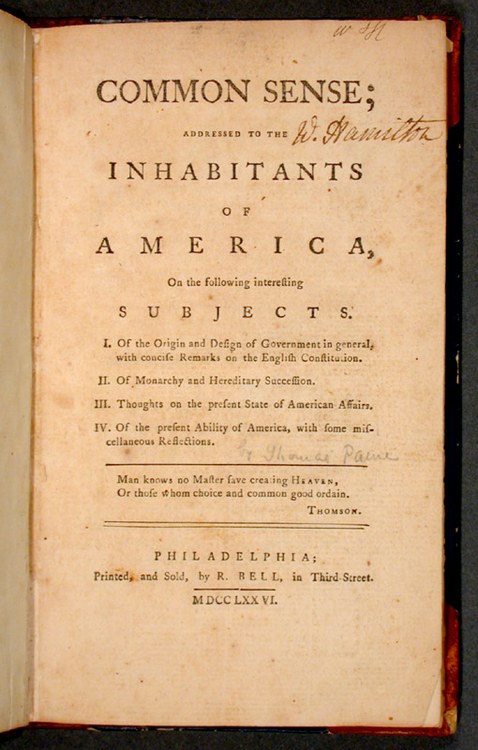
234. Thomas Paine: His pamphlet Common Sense convinced the public to break from the British monarchy
235. The Cha Cha Slide
236. The Reuben Sandwich
237. The Ugly Christmas Sweater Party
238. Cornhole
239. The Chesapeake Bay
240. Apple Pie
241. The Freedom Trail: Boston’s walking tour of epic American Revolution sites
242. Seattle’s Fish Market: Where shopkeepers fling today’s catch
243. The Times Square Ball Drop on New Year’s Eve
244. Dian Fossey: Legendary primatologist and conservationist
245. Election Workers: Volunteers trained to ensure every legal vote is counted
246. James Madison: ‘Father of the Constitution’ and a Statute for Religious Freedom
247. The Hula Hoop
248. The Marshall Plan: After WWII the U.S. channeled $13 billion to rebuild war-torn Western Europe
249. PEPFAR: George W. Bush’s Emergency Plan for AIDS Relief is considered one of the most impactful humanitarian health programs in human history
250. The Unwavering Optimism: The unique, overarching national belief that tomorrow can always be better than today.
TELL US WHAT WE MISSED And Share the List on Social Media to Celebrate July 4th…
Your Weekly Horoscope – ‘Free Will Astrology’ by Rob Brezsny

Our partner Rob Brezsny, whose latest book is Astrology Is Real: Revelations from My Life as an Oracle, provides his weekly wisdom to enlighten our thinking and motivate our mood. Rob’s Free Will Astrology, is a syndicated weekly column appearing in over a hundred publications. He is also the author of Pronoia Is the Antidote for Paranoia: How All of Creation Is Conspiring To Shower You with Blessings. (A free preview of the book is available here.)
Here is your weekly horoscope…

FREE WILL ASTROLOGY – Week of July 4, 2026
Copyright by Rob Brezsny, FreeWillAstrology.com

CANCER (June 21-July 22):
There are phases when the cosmic energies and I urge you to put others first—even tend to their pain before you tend to your own. But this isn’t one of those times. Right now, sacrificing yourself for the sake of others would obstruct the flow of righteous grace into your life. So then what is the most soul‑honoring path available? Here’s what I think: Summon your inventive brilliance and use it to imagine generous ways to care for yourself. Shower yourself with gifts, treats, and blessings that delight you. Take the loving care you so deftly pour into other people and lavish it wholeheartedly on yourself.

LEO (July 23-Aug. 22):
Most fields of human endeavor work like this: A few people are truly brilliant, a handful are actively harmful, and the majority fall somewhere between “not great” and “pretty good.” That’s true whether you’re talking about engineers, doctors, poets, or astrologers. So it’s inadvisable to assume a physician is wise about your well-being just because they’ve logged 15 years on the job, or to trust your life direction to the first astrologer whose promotion catches your eye. In the coming weeks, dear Leo, discernment like this matters even more than usual. Let your natural hopefulness be balanced by sharp, thoughtful judgment. Don’t just challenge obvious authority. Put every so-called fact, spin, assumption, and official line under your own clear-eyed review.

VIRGO (Aug. 23-Sept. 22):
Architects designing spaces for collective use try to balance two human needs: to see expansively and also have safe places to retreat. Too much exposure creates anxiety; too much enclosure brings claustrophobia. The ideal is to provide both shelter and spaciousness. Let’s use this theme as a metaphor for your life during the coming months. You’ll be wise to create an equilibrium between engagement and privacy, between vastness and protection. Make it easy for yourself to observe the larger scene and also withdraw when needed.

LIBRA (Sept. 23-Oct. 22):
Self-proclaimed “skeptics” love to sneer at astrologers, as if pondering what lies ahead were a violation of scientific purity. And yet economists, sports analysts, trend watchers, and political commentators churn out shaky predictions every day. Honestly, those professionals of probability often create more confusion than those of us who read the heavens. Take weather forecasters, for instance: From Europe to Japan, their models routinely miss sudden floods and twisters and trigger more than a few false alarms. But do the debunkers brand them as charlatans? Of course not. Forgive the outburst, but I’m building to a key foresight: Every forecast, projection, or vision that crosses your path over the next month will miss the mark—except for this one. So free yourself of their meddling.

SCORPIO (Oct. 23-Nov. 21):
Ethnobotanists describe how certain Indigenous traditions work with “teacher plants.” These are flora that offer not only physical benefits but spiritual instruction. They include psychoactive substances, but also ordinary plants approached with extraordinary attention. In the spirit of reinventing your education, Scorpio, I invite you to expand your understanding of who and what your teachers are. What ordinary elements of your daily life might offer wisdom if you engage them with deep respect? What situations at the edges of your awareness could bring lessons that enrich your perspectives? Now is an excellent time to seek new apprenticeships.

SAGITTARIUS (Nov. 22-Dec. 21):
Western science and Western religions may disagree about how the universe began, but both place its birth in the distant past. Tantra and other spiritual paths, by contrast, propose that the universe is born afresh in every instant through the sacred, erotic interplay of God and Goddess. When humans approach love-making as an experimental sacrament, these traditions suggest, we can tune in to the union of those primordial forces and, in a sense, take part in the continual creation of existence. So, are you ready for a bit of world-making erotic play? The current astrological indicators say yes, you are.

CAPRICORN (Dec. 22-Jan. 19):
A common obstacle to healthy intimacy is the belief that a beloved ally should automatically know what you need, without you saying a word. I used to suffer from this delusion myself and worked hard to dissolve it. I no longer unconsciously assume that my companions are so attuned to me that they can always intuit my desires. But I know this bad idea feels romantic to many people, even though it can sabotage even the most promising bond. In the weeks ahead, Capricorn, I invite you to starve this fantasy. Your intimate world is ripe for a fresh infusion of lucid, straightforward honesty.

AQUARIUS (Jan. 20-Feb. 18):
Your next few weeks will be sponsored by CoffeeBeer, the paradoxical elixir that both pumps up your energy and decompresses your defenses. You will be an exemplary role model for this innovative product because you will epitomize what occurs when a sensitive soul gets excited and mellows out at the same time. I also expect you will soon be exploring intriguing opportunities that become available to you because of your supercharged calm. Fortunately, you don’t need to drink actual coffee and beer together to make this happen. The cosmic forces will be conspiring to help you.

PISCES (Feb. 19-March 20):
Finish this sentence, Pisces: “The one thing that really keeps me from being myself is _______.” Is it someone’s opinion, an old story about who you are, a fear of loss, a habit of over-pleasing, a secret shame, or a belief that you’re “too much” or “not enough”? Whatever first pops into your mind is probably closest to the truth. Here’s your next step: Loosen the grip of this stressor by even just 20 percent. I bet your real self will feel relaxed enough to bloom more fully.

ARIES (March 21-April 19):
Archaeologists studying ancient wells have discovered that some weren’t finished in a single effort. Communities might dig to the current water table, use the well for years, then probe further down when water levels dropped or needs increased. This is a useful metaphor for you, Aries. As of yet, you don’t have the ability or tools to reach the deepest layers you aspire to reach. My counsel is to go as far as you can now and gather what you find there. Later, when you’re readier, you will build on what has come before.

TAURUS (April 20-May 20):
The doom‑and‑gloom wing of astrology is exhausting. The superstition that Mercury retrograde causes scrambled messages and dire mix‑ups is dull and misguided. The planet’s apparent backward motion, which is happening right now, shows up about three times every year like clockwork. It’s perfectly normal! In my view, Mercury retrograde isn’t threatening unless you obsess on the idea that it is, in which case, yes, your payment might go astray, and a friend may misunderstand you. But if cultivating relaxed clarity is more fun and productive for you than coping with fearful tension, treat the time between now and July 23 as a rich opportunity to refine, deepen, and upgrade how you communicate.

GEMINI (May 21-June 20):
You Gemini readers have decreed that I must halt all musings about maddening, riddle-drenched ambiguity. You’ve delivered the message to me that you’re tired of wrestling with enigmas wrapped in paradoxes. Straightforward, plainspoken factualness is what you want. Well, OK. (Please remember that I don’t make this stuff up; I simply channel cosmic omens.) Maybe I’ll start obeying your orders next time. But first, I will advise you: 1. Unexpected gifts are coming from people and situations in transition. 2. Tough but friendly interventions will nudge you toward healthy course corrections. 3. Mysterious assistance is on its way.
WANT MORE? Listen to Rob’s EXPANDED AUDIO HOROSCOPES, 4-5 minute meditations on the current state of your destiny — or subscribe to his unique daily text message service at: RealAstrology.com
(Zodiac images by Numerologysign.com, CC license)
SHARE The Wisdom With Friends Who Are Stars in Your Life on Social Media…
“Those who won our independence… believed liberty to be the secret of happiness—and courage to be the secret of liberty.” – Louis D. Brandeis (Happy Birthday, America!)
Quote of the Day: “Those who won our independence… believed liberty to be the secret of happiness—and courage to be the secret of liberty.” – Louis D. Brandeis (Happy Birthday, America!)
Photo by: Jakob Owens (cropped)
With a new inspirational quote every day, atop the perfect photo—collected and archived on our Quotes page—why not bookmark GNN.org for a daily uplift?
Good News in History, July 4
Happy Birthday to the United States of America. On this day 250 years ago, the leaders of the Continental Congress of the 13 American colonies voted to adopt the Declaration of Independence, breaking with the King of England to form their own country. Unlike any other founding document, the D of I affirmed that rights are inherent to Man, “endowed” by his creator, and not granted by political structures or sovereigns; that when these structures prove detrimental to the exercise of natural rights, it is the duty of those governed to abolish them. From there, the fledgling nation created the Articles of Confederation to bind the 13 sovereign states in perpetual union and firm friendship. READ the Declaration’s most enduring message… (1776)
Taylor Swift and Travis Kelce Donate $26 Million to Charities in Honor of Their Wedding
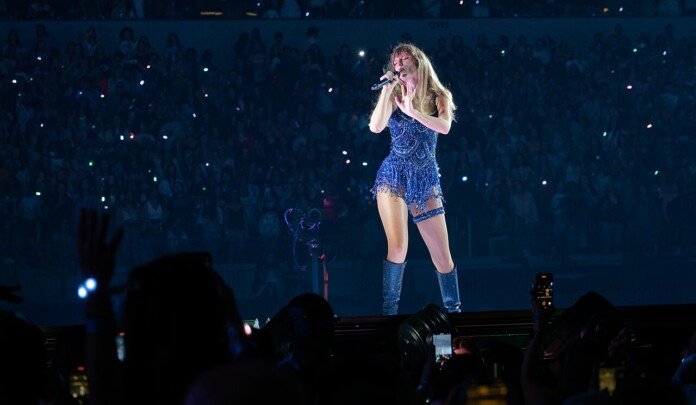
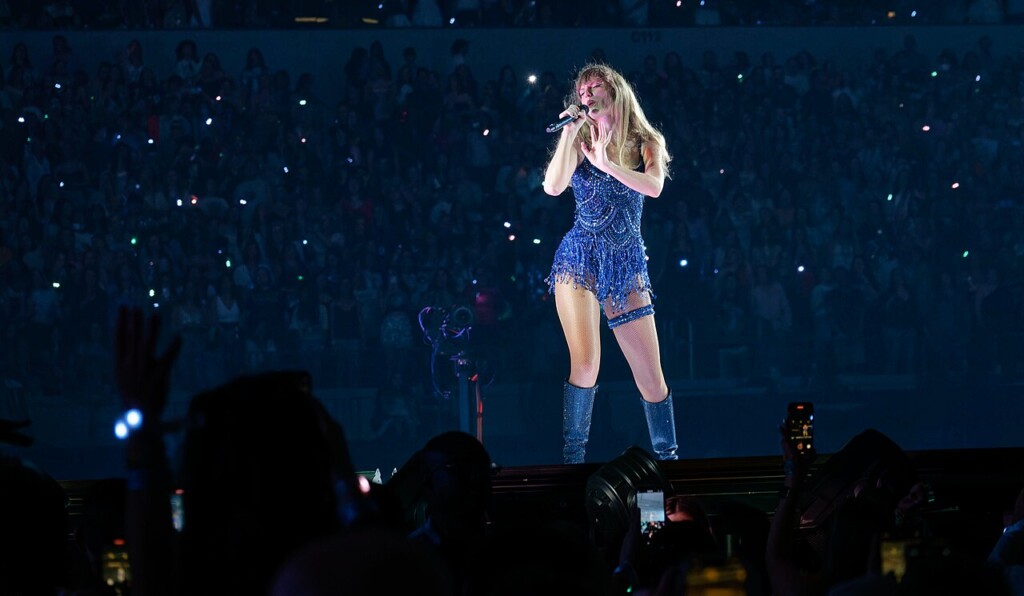
A representative for America’s favorite showgirl said that Taylor Swift and Travis Kelce have made donations totaling $26 million to over a dozen nonprofit organizations and charities.
Though it’s not entirely clear when and where the couple will have their wedding, some sleuthing from the Guardian suggests it might be soon, and it might be at Maddison Square Garden.
The donations go mostly to organizations in 4 cities: Nashville, where Swift got her start in the music industry, Kansas City, where her fiancé Kelce has won 2 Super Bowls with the Chiefs, and New York City, the supposed location of their wedding. Other cities such as Los Angeles, also appeared on the list.
The release from the representative stated the following.
“This week, Travis Kelce and Taylor Swift donated $26 million to charities across the United States. They include the following: City Harvest, New York City; Food Bank For NYC; New York Cares; Los Angeles Regional Food Bank; Harvesters – The Community Food Network, Kansas City, MO.”
“The Store, Nashville, TN; Helping Harvest, Reading, PA; Rhode Island Community Food Bank; Feeding America; ASPCA; Dolly Parton’s Imagination Library; Grammy In The Schools; Education Through Music, New York, NY; Answer The Call, New York, NY and Musical Mentors, New York, NY.”
MORE OF TAYLOR’S GENEROSITY: After Taylor Swift Visits Children’s Hospital, Her Fans Donate Tens of Thousands to Patients
It follows a pattern of Swift making huge donations—particularly to hunger related causes—when her record-setting Eras Tour generated billions in economic activity across the country.
The tour also saw Swift present her tour staff with 6-figure bonuses.
SHARE The News About Taylor’s Big Day, Bigger Wallet, And Even Bigger Heart…
The Majestic ‘Gloucester Tree’ Reopens to Climbers in Australia After 3 Years of Repair
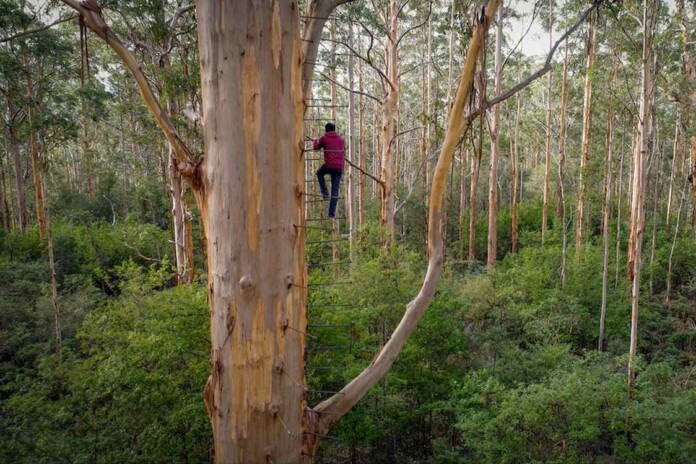
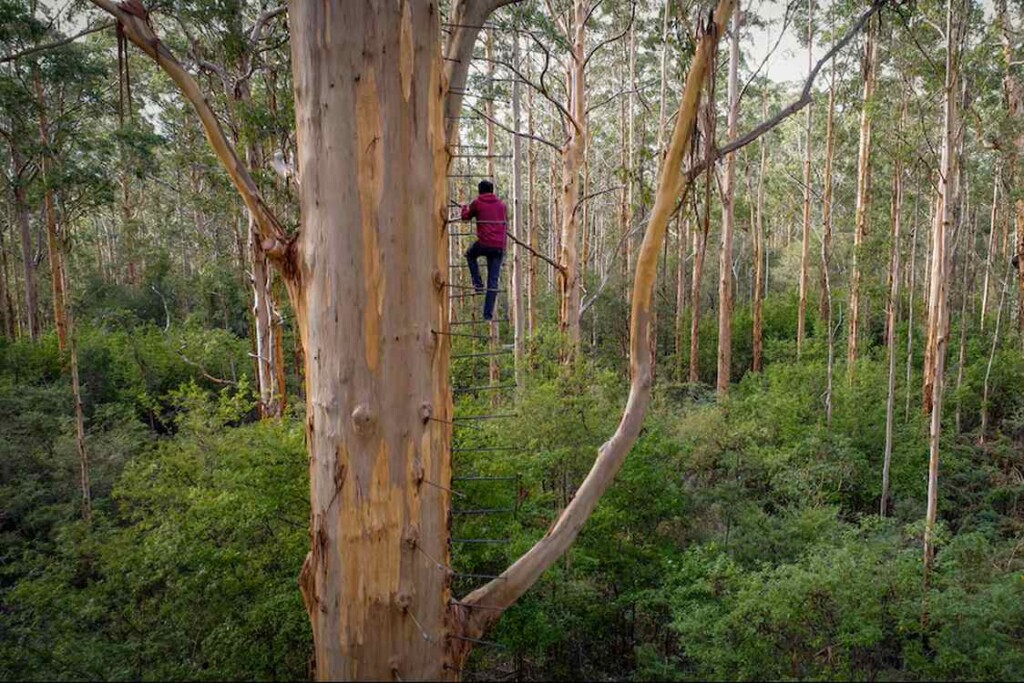
In one of Australia’s premier wine regions, a woody tourist icon closed for 3 years has reopened to the relief of locals.
The second-tallest “fire-lookout tree” in the world, climbing the Gloucester Tree is something of a rite of passage for locals and visitors to Australia’s far southwest.
Not far from the massive land-locked coastal sand dunes at D’Entrecasteaux National Park, residents of the former timber industry town of Pemberton loved little more than watching sunrise and sunset from the observation platform 200 feet up the Gloucester Tree.
Since 1947, the 250-year-old Eucalyptus, or Karri tree, has worn a curving ladder of pegs stuck into its trunk which once upon a time were used by foresters to survey the vast karri forests for wildfires.
No harnesses or ropes have ever been provided to those looking to climb the tree, a strange relic of a bygone pioneer era in our safety-first society today.
“It is a magnificent view,” said local government president Donelle Buegge. “To watch the sunrise through the canopies of the trees is absolutely incredible.”
Then in 2023, the tree was closed because of safety concerns, dealing a blow to the local tourism industry which relies on outdoorsy types who visit looking to enjoy long-distance hiking trails, the rich forest ecosystem, multiple national parks, and the area’s wine and agricultural operations.
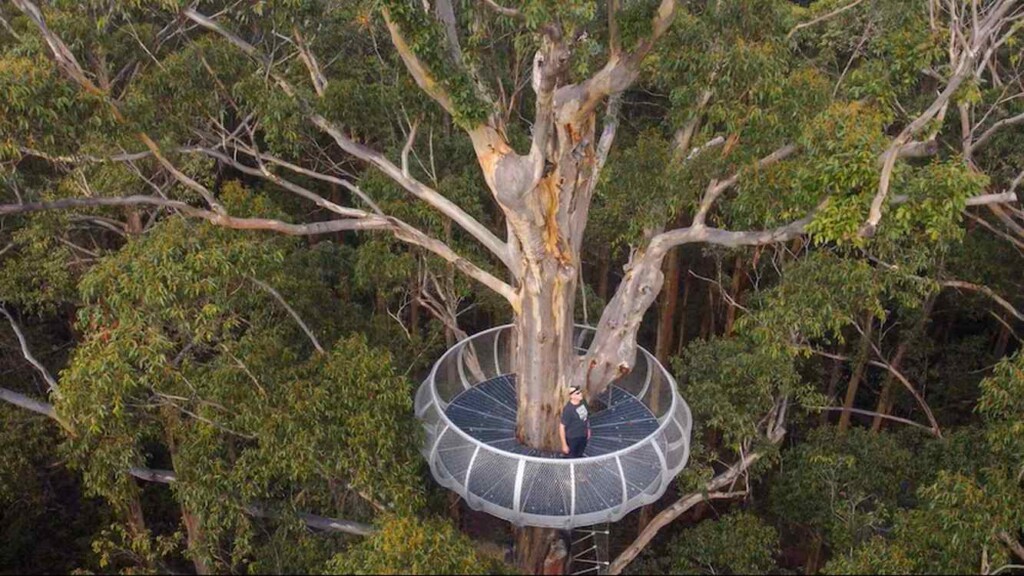
Engineers and arborists re-pegged the tree, along with another of similar age and height called the Dave Evans Bicentennial Tree, in 2023, but it was eventually closed while they evaluated how best to address structural issues.
Recently reopened, a new observation platform has been installed just over 100 feet up, while the one 200 feet, or 61 meters up the trunk remains closed. There are still no harnesses or ropes—climbing is done at your own risk, and although it takes some nerve it’s still substantially safer than Alpine skiing, which kills or injures dozens of people every year.
TRAVEL AUSTRALIA:
- Residents Need Patience and ‘a Rake’ to Enjoy the 200 Million Migrating Crabs on Christmas Island
- Oldest-Known Asteroid Crater is Discovered in the Outback–Made More Than 3 Billion Years Ago
- Local Artist’s Painted Coconuts Have Become a Sensation–and Are Now Found All Over the World
Tim Foley from the Department of Biodiversity, Conservation, and Attractions, told ABC News that he recognized how important visitation driven by the trees is to the community. Ensuring work was done right to avoid future closures was paramount.
“On an Australian level and probably on the international level, they’re pretty unique … so we’re encouraging people to come visit the sites and also all the other amazing things you can do around Pemberton.”
Pemberton is located 190 miles south of Perth, the capital of Western Australia.
SHARE This Rare Opportunity For An Epic Tree Climb To Anyone Visiting Perth…
Simply Add Water to Diesel Fuel to Cut Engine Pollution by 67%–with No Loss in Efficiency
You can reduce your diesel engine’s emissions by 60% with THIS surprisingly simple solution—just add water.
In all seriousness, according to a review of studies from around the world published by a research team from Nigeria, mixing small amounts of water into diesel fuel could dramatically reduce harmful emissions while preserving, and in some cases even improving, engine performance.
Diesel engines power the industrial world. They are valued for their strength, durability, and fuel efficiency. Diesel exhaust, however, is a major source of air pollution, releasing gases like nitrogen oxides and particles that can harm human health and contribute to environmental problems.
Now, researchers in Nigeria say a surprisingly simple solution may help tackle that problem.
The research team from the Federal University of Technology Owerri examined evidence on Water-in-Diesel Emulsion (WiDE) technology, an approach that blends tiny water droplets into diesel fuel.
Their findings suggest that this relatively straightforward fuel modification could provide a practical way to make diesel engines cleaner without requiring expensive redesigns.
Nitrogen oxides contribute to the formation of city smog and can irritate the lungs, while particulate matter consists of microscopic particles that can be inhaled deep into the respiratory system. Exposure to these pollutants has been linked to respiratory illnesses and other health concerns, and millions of life-years are lost in urban centers around the world every year because of them.
Modern diesel vehicles often rely on technologies such as catalytic converters and particulate filters to reduce pollution. While effective, these systems can increase both the complexity and cost of engines. The researchers suggest that Water-in-Diesel Emulsion technology may offer a simpler complementary approach.
At first glance, adding water to diesel fuel may sound counterintuitive. Water and fuel are usually considered a bad combination inside an engine.
The key is that the water is not simply poured into the fuel tank. Instead, tiny droplets of water are evenly dispersed throughout the diesel using compounds known as surfactants. Surfactants act like stabilizers, helping the water remain suspended in the fuel and preventing the mixture from separating. According to the review, properly formulated emulsions can remain stable for up to 60 days.
When the fuel is injected into the engine and ignites, something unusual happens. The trapped water rapidly turns into vapor. This sudden expansion creates what researchers call a “micro-explosion,” breaking the fuel into finer droplets and improving the way it mixes with air.
Better mixing leads to more complete combustion. At the same time, the presence of water helps lower peak combustion temperatures inside the engine. This combination delivers two important benefits. Lower temperatures reduce the formation of nitrogen oxides, while more complete combustion reduces soot and particulate emissions.
AUTOMOTIVE AFRICA: Tunisian Solar-Powered Cars Leverage African Sunshine to Charge 30 Miles for Free Everyday
Compared with conventional diesel fuel, WiDE fuels reduced nitrogen oxide emissions by as much as 67% percent and particulate matter emissions by up to 68% percent.
The benefits were not limited to cleaner exhaust. Many experiments also found improvements in brake thermal efficiency, a measure of how effectively an engine converts fuel energy into useful mechanical power. Higher efficiency means more of the fuel’s energy is used to perform work rather than being lost as heat.
“Water-in-diesel emulsions are a practical and cost-effective way to make diesel engines cleaner,” said lead author Dr. Chukwuemeka Fortunatus Nnadozie. “Because the technology does not require redesigning the engine, it offers an immediate path toward lower emissions in developing and developed countries alike.”
MORE FOSSIL FUEL FIXES: World-First South Korean Natural Gas Project Paves a Route to More Power and Cheaper Carbon Capture
A major factor in the success of WiDE technology is the choice of surfactants.
The researchers found that using combinations of surfactants often produced the most stable fuel mixtures and the best combustion performance. Selecting the right surfactant formulation was identified as one of the most important aspects of making the technology work effectively.
Although the results are promising, the researchers emphasize that additional studies are still needed. Future work could help identify the most effective surfactant combinations and determine how long-term use of water diesel emulsions affects engine components over time.
INTERNAL COMBUSTION: Ferries, Planes Line up to Purchase ‘Solar Diesel’ a Cutting-Edge Low-Carbon Fuel from Swiss Start-up
“This technology can bridge the gap between conventional diesel use and a cleaner energy future,” said co-author Professor Emeka Emmanuel Oguzie. “With proper formulation and testing, it could become an important part of sustainable transportation and industrial power systems.”
For industries that continue to depend on diesel power, a simple blend of water and fuel could offer an unexpectedly effective path toward cleaner air.
SHARE This Remarkably Simple Fix That Could Cut Emissions Enormously…
Yet More Scrolls Burned by Vesuvius Are Decoded by AI–Revealing Insights by Unknown Stoic Philosopher
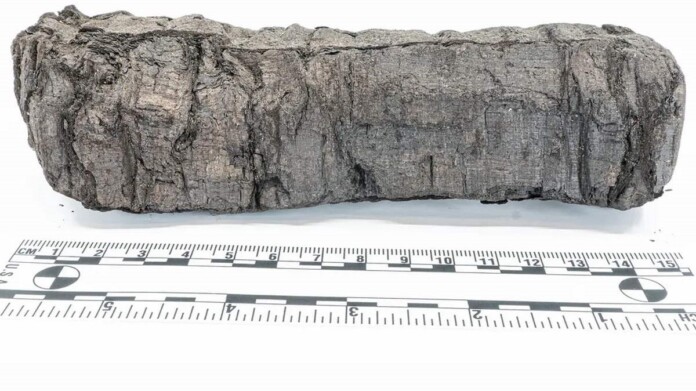
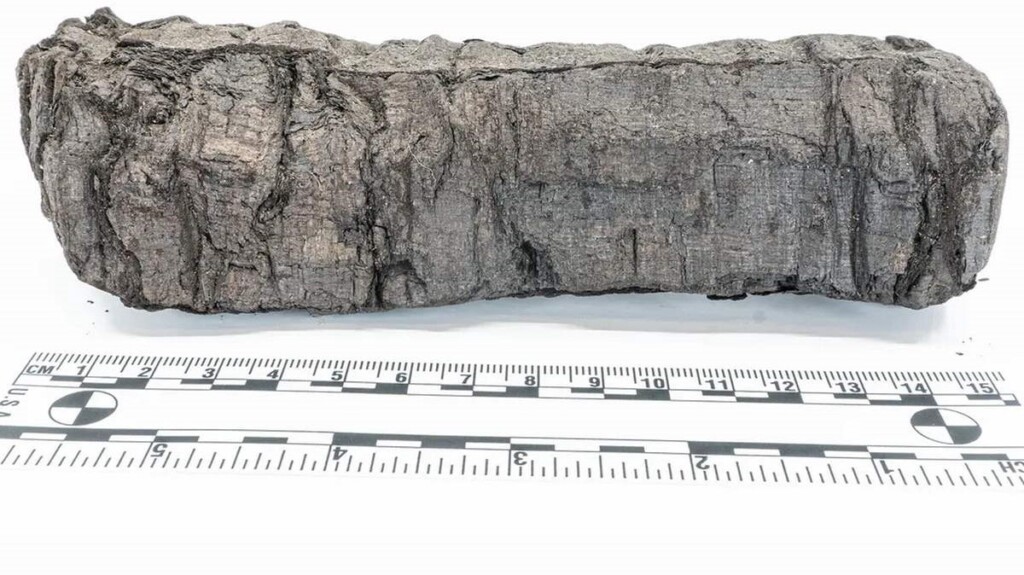
More insights into Classical literature have been recovered from the burned papyrus scrolls destroyed in the same eruption that buried Pompeii.
They include ruminations on Stoic philosophy by an unknown author, and the title “Book 8” from a work called On Gods, by the Greek philosopher Philodemus.
Fruits of major scientific advancements in particle acceleration and AI, the discoveries shed light on what people were reading at the time, of the bibliographies themselves, and the philosophical content.
The papyrus scrolls in question were found in Herculaneum, a city destroyed by Vesuvius’ eruption in a villa that may have belonged to Julius Caeser’s father-in-law.
The collection of 800 scrolls was found 275 years ago, and represents the only intact library known from the Classical World. Many archives of thousands of clay tablets from the ancient kingdoms of Assyria and Babylon have been found, but being made of clay, they tend to last longer than papyrus.
Many scientists have attempted over the years to safely unravel them, or utilize chemical methods to duplicate some of the writing, but all such efforts were met with not only failure, but irreparable damage to the scrolls in some cases.
Today though, using a combination of CT scans and machine learning, a distributed series of efforts are managing to recover bits and pieces of this ancient literature.
None of these efforts have gone farther than the Vesuvius Challenge, which sought to inspire young people to use AI technology to decode the burnt scrolls which started in 2023.
The Challenge’s grand prize was collected by Youssef Nader, Luke Farritor, and Julian Schilliger, splitting a $700,000 bounty for their efforts.
The trio was able to create a deep learning program that took a rolled-up scroll of papyrus that was turned to charcoal in the Vesuvius eruption and decode 4 passages of 140 characters each, with at least 85% of characters legible.
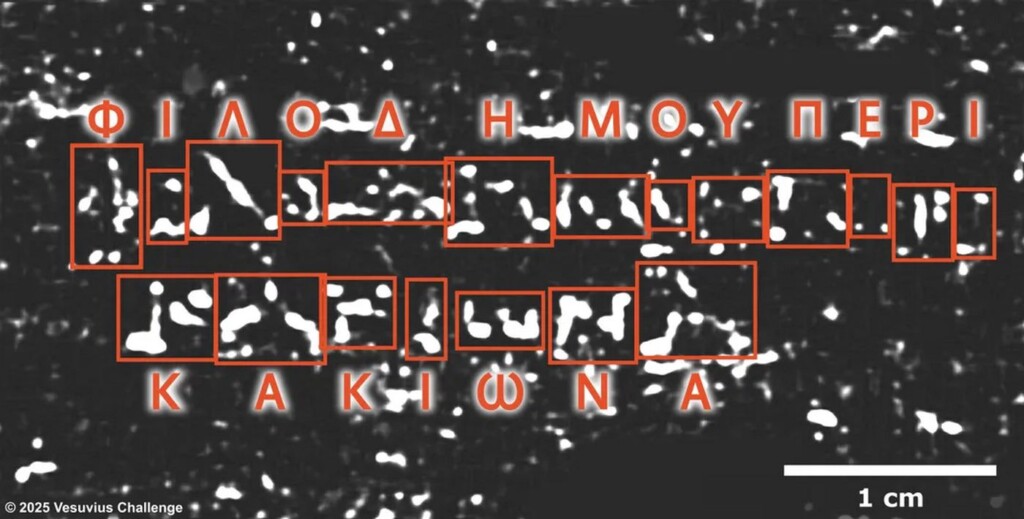
Silicon Valley figures Daniel Gross and Nat Friedman created the Vesuvius Challenge in coordination with Brent Seales, a computer science professor at the University of Kentucky, in March of 2023. They offered up to $1 million in cash prizes to any engineers who could program AIs to read the carbonized papyrus.
The scrolls can’t be unrolled—they would simply turn to ash—but some of them held at the Institut de France were imaged at the Diamond Light Source particle accelerator near Oxford by Gross and Friedman. These high-resolution CT scans of the scrolls were then released to anyone who wanted to try to decode them.
Nader, Ferritor, and Schilliger, recovered a page from On Vices, written by Epicurean philosopher Philodemus, a Greek who lived at Pompeii nearly 200 years before Vesuvius’ eruption, and several centuries after the life of Epicurus himself, a prominent Athenian thinker whose ideas have been discovered among the scrolls before.
On Vices has received special attention over the decades, not only because of its philosophical content, but also because in one of its books, Philodemus addresses some of his friends, namely Quintilius Varus, Varius Rufus, Plotius Tucca, and the great Vergil.
Now, scientists led by the University of Naples Federico II have succeeded in fully unwrapping one scroll—almost 1.5 meters (4.9 feet) of text. Work to render legible the 20 columns of text is ongoing. Lead researcher from the university Federica Nicolardi, an assistant professor in papyrology, shared the status of the scroll in a statement released at an international press conference.
“While a few isolated letters were visible, overlapping layers obscured the writing, and the scroll was assigned a readability score of zero. But now, with virtual unwrapping, we can follow sustained arguments across multiple columns. That’s a transformational shift.”
AI IN HISTORY AND ARCHEOLOGY: Mystery of Nazca Lines Deepens as AI Survey Doubles Number of Geoglyphs and Alters Their Meaning
“The scroll’s handwriting and internal references suggest the artifact dates from the second century BC or possibly from the late third century BC—making it one of the oldest scrolls in the collection.”
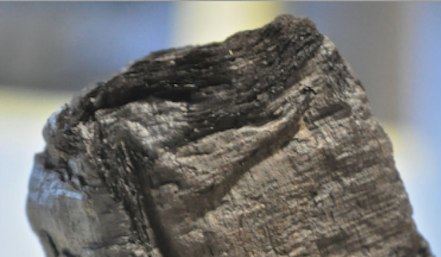
Legible parts so far include references to two concepts of Greek philosophy: “horme” and “phronesis,” the first translated as something like impulse and the second as practical wisdom.
Horme is something to guard against, while phronesis is considered one of the highest virtues in Greek and Stoic philosophy.
“We will inquire into something, but we will not grasp it, if in some way we depart from ourselves and from our own nature,” the scroll reads.
MORE ANCIENT LITERATURE: Lost Page from Archimedes Manuscript Found in Museum with Hidden Text Beneath Illustration
Additional work was done on another scroll which offered up the tantalizing headline On Gods: Book 8. On Gods was not known as a book series, nor was it known to be anywhere long enough to fill up another 7 installments.
Undoubtedly more of these scrolls will be decoded as the years progress as the yet-young methods of their decoding are refined further.
SHARE This Latest Chapter In An Ongoing Effort To Recover Lost Literature…
“True independence and freedom can only exist in doing what’s right.” – Brigham Young
Quote of the Day: “True independence and freedom can only exist in doing what’s right.” – Brigham Young
Photo by: Jovan Vasiljević
With a new inspirational quote every day, atop the perfect photo—collected and archived on our Quotes page—why not bookmark GNN.org for a daily uplift?
Good News in History, July 3
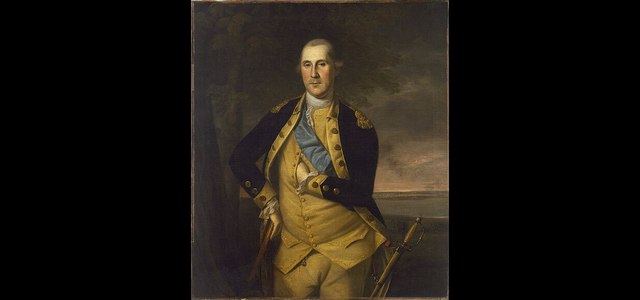
251 years ago today, George Washington assumed command as “General and Commander in Chief of the army of the United Colonies,” having been nominated for the post by John Adams the previous month. Following the engagements at Lexington, Concord, and the Battle of Bunker Hill, Washington’s first act as wartime leader was to drive the British out of Boston thanks to the sneaky placement of heavy artillery on a hill in the city suburb of Dorchester, causing the British garrison commander Viscount Howe to evacuate. READ more about his generalship during the war… (1775)
New Solar Tech Makes Desalinating Seawater Cheaper Than Producing Bottled Water
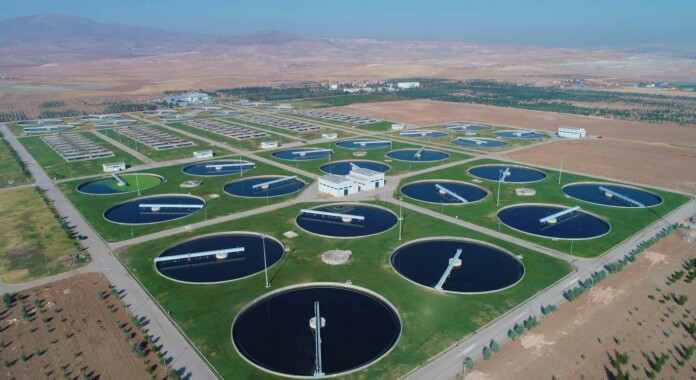
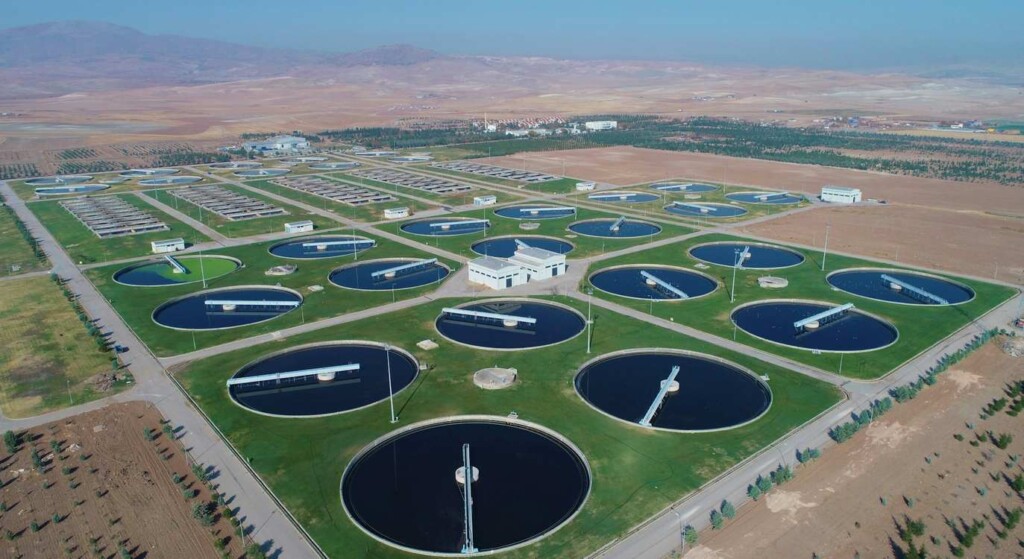
A team of materials scientists in China have developed a solar-powered device that can produce freshwater from seawater with better economics than bottled water.
By creating a weave of nanomaterials and organic polymers which were both durable and highly reflective, they created a device that could absorb 90.2% of incoming sunlight and use it to evaporate water with 47.5% less energy.
After it generated 5 gallons of fresh water every day for a year of testing, the scientists say that at scale it would be cheaper than producing bottled water.
It wasn’t a coincidence that after seawater desalination plants were threatened with destruction during the recent war in the Persian Gulf, virtually all belligerents came to the negotiating table.
The some-400 desalination plants located along the Gulf’s shoreline represent most of the world’s R&D into the technology, which for decades has been stuck with an energy-intensive process known as membrane or reverse osmosis desalination.
Engineering teams around the world have been attempting to develop new methods of seawater desalination to improve drinking water economies around the world’s arid regions; GNN has reported on several.
This new method, pioneered from a team from Beijing-based Institute of Process Engineering (IPE) at the Chinese Academy of Sciences and Shenzhen University, was used in a test to irrigate 50-square feet of vegetables year round.
Membrane desalination forces seawater through a thin membrane that catches the salt particles. It sounds simple, but other steps drive the energy use up to the point that only energy-rich countries like Saudi Arabia can afford to base their entire water supplies around it.
Solar-powered evaporation is another potential method—the one used by the Chinese scientists—but it had been plagued with materials failures. Ultrafine solar-absorbing powders clumped like flour; organic polymers cracked like cheap plastic.
CHINESE WATER TECH: How Beijing Restored its Aquifer and Reversed its Groundwater Depletion
Drawing inspiration from a shirt button, the Chinese scientists constructed nanoparticle spheres that could be threaded together with polymer like yarn pulled through the holes in a button. The resulting structure consisted of billions of these microspheres, and proved extremely robust and durable, even in conditions that simulated a squally coastline.
All the individual spheres reflected light out into each other, boosting the solar-thermal capacity to 90.2%, ensuring the heat radiating out into the water was hot enough to drive evaporation at the highest rate possible.
MORE INNOVATION: California’s First Solar Panel-Covered Canal Is Now Fully Online
This device was able to produce 5.3 gallons of WHO-grade drinking water every day to irrigate bok choi, beans, and corn for a year. According to their calculations, the system could do far more if scaled up exponentially, to the point where it would produce, after 2 years of use, drinking water for less than a bottled water plant.
“The team is now working to improve condensation efficiency and reduce system costs, with the aim of scaling up the technology for use in water-scarce coastal areas, islands and remote regions,” SCMP reported.
SHARE This Potentially World-Changing Innovation With Your Friends…