Quote of the Day: “The emotion of love is not self-sustaining; it endures only when lovers love many things together, and not merely each other.” – Walter Lippman (Happy Valentine’s Day!)
Image: Oziel Gómez
With a new inspirational quote every day, atop the perfect photo—collected and archived on our Quotes page—why not bookmark GNN.org for a daily uplift?
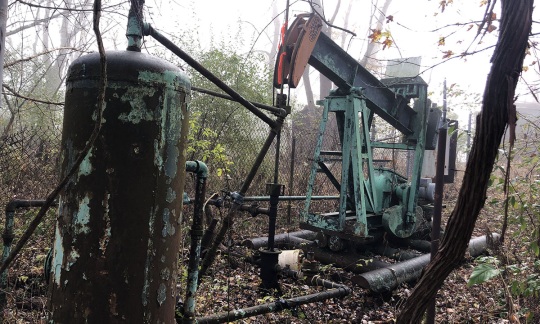
The Biden Administration is spending hundreds of millions of dollars to close abandoned oil and gas wells across the country, but what if they could solve the problem of renewable energy storage instead?
3,000 feet below the Midwestern state in a geological structure of porous sandstone, researchers from the University of Illinois deposited excess energy as heated water which could be used to generate electricity in the same way that geothermal power plants function.
The Illinois Basin is ideal for oil extraction, but has no subsurface source of heat to produce geothermal power. The same reasons however that make it ideal for extracting oil make it perfect for a potential new method of solving the problems with renewable energy storage.
The Illinois Basin boasts the correct thermal conductivity for the deposition of water heated through excess renewable energy production from solar or wind. Minerals with high conductivity are sandwiched between insulative layers, creating the conditions for the water to retain its heat enough to generate electricity.
“Many of the same properties that make a subsurface rock formation ideal for oil and gas extraction also make it ideal for geothermal storage,” said lead researcher Tugce Baser, an environmental engineering professor at the University of Illinois, in a statement. “And because our test site is a former gas well, it already has most of the needed infrastructure in place.”
To test the heat storage capacity of the site, the researchers injected water heated to 50 degrees Celsius into the well for three days of injection in April 2021. After shutting down the well, the team monitored changes in pressure, thermal conditions, and hydraulics for five days.
“Our field results, combined with further numerical modeling, find that the process can sustain a thermal storage efficiency of 82%,” Baser said.
The study further reports an average overall net cost of electricity generation of $0.138 per kilowatt-hour, making the proposed system economically viable and profitable.
“Our findings show that the Illinois Basin can be an effective means to store excess heat energy from industrial sources and eventually more sustainable sources like wind and solar,” Baser said. “The underground reservoir essentially acts as a large underground battery while repurposing abandoned oil and gas wells. It is a win-win situation.”
SHARE This Productive Use Of Existing Infrastructure With Your Friends…
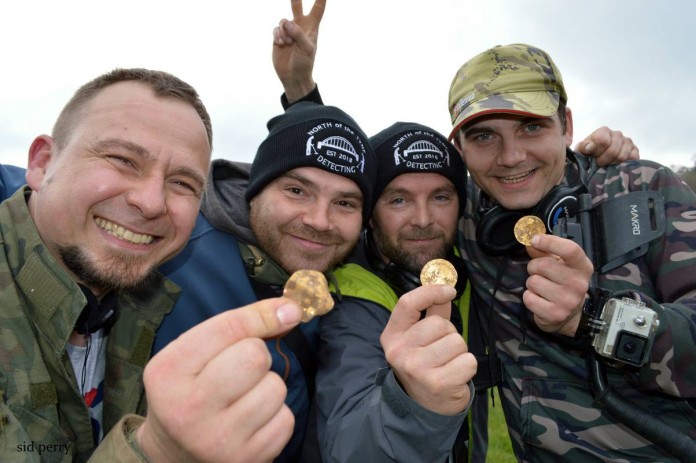
Dariusz Fijalkowski, Mateusz Nowak, Andrew Winter, and Tobiasz Nowak - SWNS
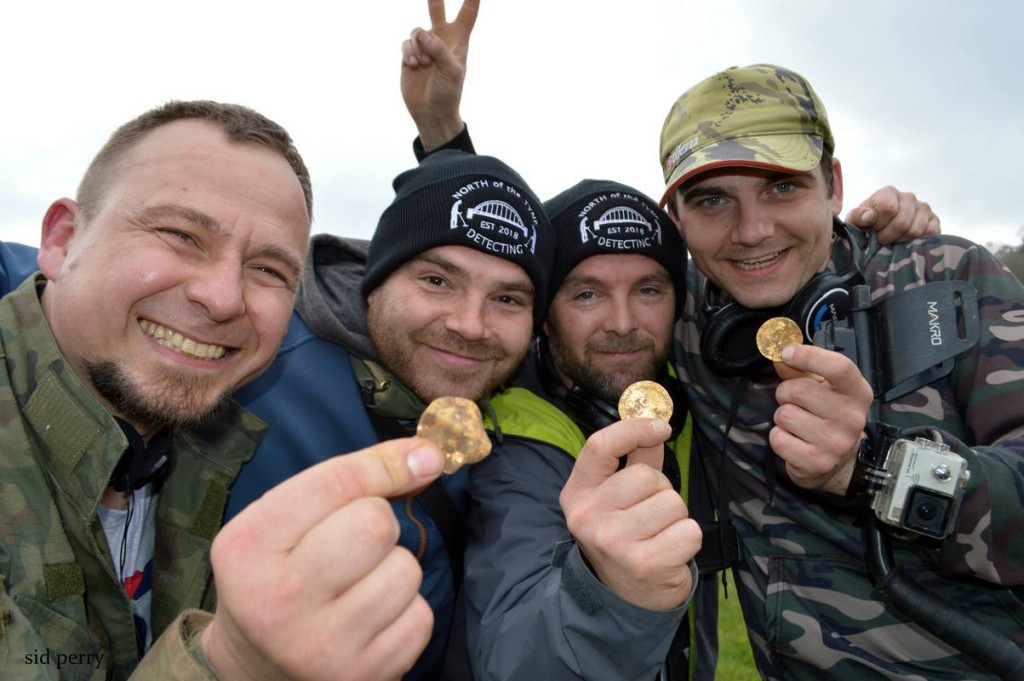
Dariusz Fijalkowski, Mateusz Nowak, Andrew Winter, and Tobiasz Nowak – SWNS
It’s always big news among Britain’s metal detecting hobbyists when a hoard is found, and a new one from Buckinghamshire is the biggest in a decade.
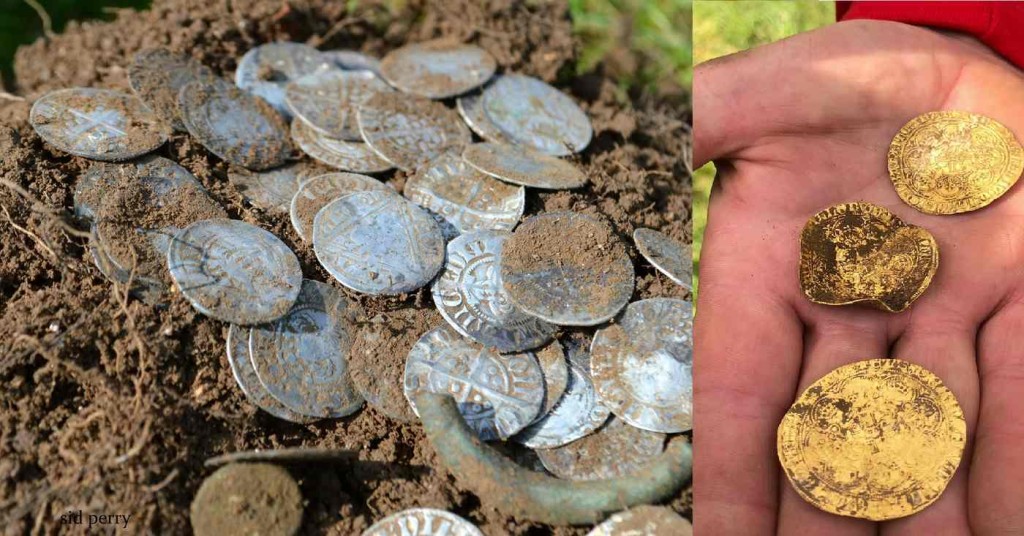
600 Medieval coins, including 12 rare gold “nobles” from the reign of Edward III, have been declared treasure by the British Government, and valued at around £150,000 ($180,000).
Seven men found the hoard which has been nicknamed the “Hambleden Hoard” on the Culden Faw Estate, Buckinghamshire, back in April 2019. It’s the biggest gold and silver hoard found in England in over a decade.
The metal detectorists Andrew Winter, Dom Rapley, Eryk Wierucki, Jaroslaw Giedyna, Dariusz Fijalkowski, and brothers Tobiasz and Mateusz Nowak were more used to digging up shotgun shells and thimbles than treasure, and were astonished to find coin after coin in the dirt.
It took four days to excavate all 627 coins, almost all of which were silver. They slept in tents three nights straight to ensure robbers couldn’t visit the site while they were away.
At an inquest last week at Beaconsfield Coroners Court, senior coroner Crispin Butler said the hoard met the criteria for treasure after reading a report by Dr. Barrie Cook, a curator at the British Museum.
Mr. Butler described the 12 gold coins as dating from 1346 to 1351 and extremely rare. There are, ironically, only 12 previously-known examples, all found during a 1963 survey.
The rest of the hoard—547 silver pennies from the reigns of Edward I and II, 21 Irish pennies, 20 continental coins, and 27 Scottish pennies from the reign of Alexander III, John Balliol, and Robert the Bruce respectively, are more common finds.
Some of the coins from the Hambleden Hoard – Credit Sid Perry, SWNS
A miracle moment
“After finding the hoard, and then clearing the area, we had to extend the search twice more because we were finding so much,” said Mateusz Nowak. “It felt unreal. It was a miracle moment after moment for everyone.”
The spot price of the silver in the coins would be a little over £6 in today’s money, but the estimates of their worth as a historical find, plus the price of the gold, range as high as £150,000.
For American readers, it bears explaining that the find was made at an organized metal detecting rally, something really only possible in countries as old and as small as England. The setting was a field near Hambleden, a village that was big enough for registry in the famous Domesday survey of England commissioned by William the Conquerer in 1,086.
“When I found the coins I was shouting so much because I was so excited,” said Dariusz Fijalkowski, one of the contestants who sort of co-discovered the hoard with some other participants.
“Maybe I should have stayed quiet but I was so happy. For me those coins alone were special. They are small pieces of silver and also a piece of history.”
Andrew, Tobiasz, and Mateusz spent an hour digging in a field without finding anything and were on their way to another location when their detectors began signaling.
The trio turned over a clod of earth which contained two coins and could see more in the hole they had made. At around the same time, Dariusz found two coins of his own nearby. Putting their total finds in the category of “hoard,” which British treasure law stipulates must be more than 3.
The area was cleared and claimed jointly by the team who were then left to work alone.
They admit it got “absolutely hectic” when news of the find got around the festival. Detectorists from all over the world who were at the festival came to take a look, as the four drew out coin after coin.
In a rare moment of beauty at Guantánamo Bay, detainees managed to win themselves the rights to own and control their own artwork.
A recent Pentagon ruling reversed a previous decision that blocked Guantánamo Bay prisoners from exhibiting paintings that were made during their imprisonment.
Now, outgoing inmates will be allowed to take a “practicable quantity of their art” with them, paintings and sketches they made during the Art from Guantánamo project. Twenty of 34 who participated are now slated for release.
The original decision came after a collection of 36 paintings called “Ode to the Sea” were exhibited at New York’s John Jay College of Criminal Justice back in 2017. Many were available for purchase through the detainees’ lawyers.
Last October, seven previous detainees and 1 current inmate published a letter calling on President Biden to allow them possession and distribution of their art.
“Art from Guantánamo became part of our lives and of who we are,” the prisoners jointly wrote. “It was born from the ordeal we lived through. Each painting holds moments of our lives, secrets, tears, pain, and hope. Our artworks are parts of ourselves. We are still not free while parts of us are still imprisoned at Guantánamo.”
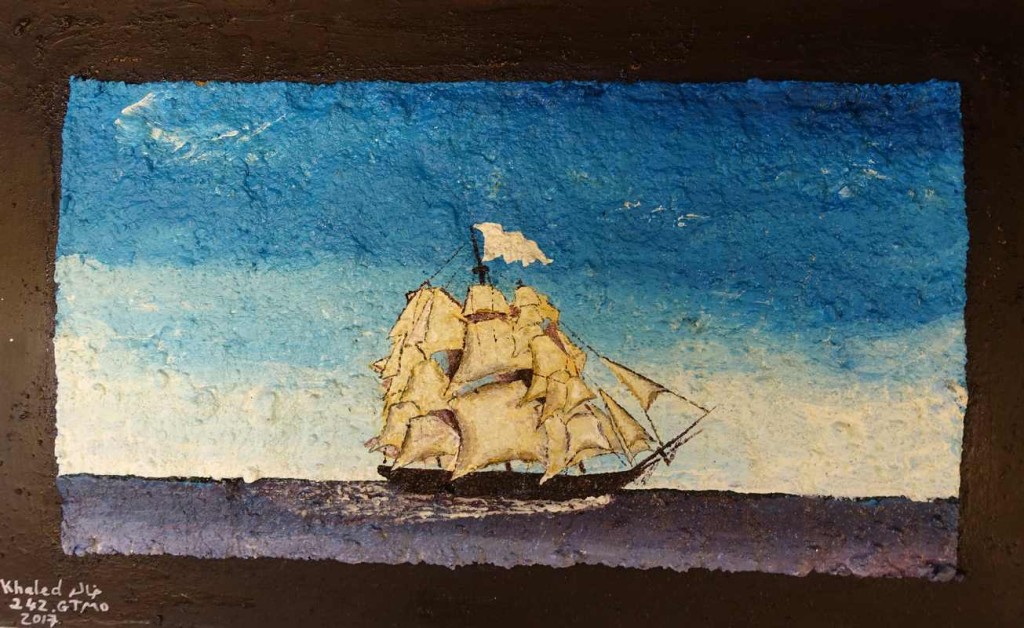
Khalid Qasim, Large Sailboat on the Ocean, 2017, paint over gravel mixed with glue – Credit: Art from Guantanamo
The State Dept. also received a letter from the UN saying the art ban “contravene[s] the rights to free artistic expression, to take part in cultural life, and to benefit from the protection of moral and material benefits resulting from artistic production.
“Painting makes me feel as if I am embracing the universe…,” wrote Ghaleb Al-Bihani, a Yemeni imprisoned without charge for 15 years before being released in 2017 to Oman, where he now teaches painting.
“I also see things around me as if they were paintings, which gives me the sense of a beautiful life.”
During his indefinite detention, Al-Bihani learned English and Spanish, developed his GED proficiency, educated himself about his diabetes, and tried to cope with his anxiety and depression through exercise and yoga. In the last few years of his detention, he created an incredible collection of over one hundred paintings and drawings.
Another who joined Art from Guantánamo, Khalid Qasim, spent his time constructing artificial canvasses from the materials he could find in prison, including sand from the exercise yard and coffee grounds.
SHARE This Inspiring Story And Works Of Art With Your Friends…
There’s something for everyone at the Super Bowl, sport, the halftime show, and of course, the commercials.
It started all the way back in 1967 that Super Bowl ads became premium price, and they’ve only gotten more expensive for companies looking to showcase their products. In fact, a 30-second spot costs around $7 million.
Today it’s a tradition, with many employing high-profile celebrities and million-dollar budgets. Have a laugh session and see below what these companies spent it all on.
Watch Ben Affleck surprise Dunkin’ customers
John Hamm gets pressed into a sandwich
Breaking Bad reunites to ‘cook’ Popcorners
Ben Stiller tries to fake that Pepsi actually tastes good
Will Ferrell does his best to sell a GM electric car
A website that makes websites? Adam Driver goes meta
Watch Jeff Ross host the Roast of Mr. Peanut
Busch teaches survival skills with Sarah McLachlan
Bradley Cooper forced to work with his mother
Amazon solves a doggo’s destructive habits
Honorable mention: NFL Celebrates women in football
SHARE This Year’s Lineup Of Clever Writing And Side-Stiching With Your Friends…
Quote of the Day: “We should not pretend to understand the world only by the intellect; we apprehend it just as much by feeling.” – Carl Jung
Image: Steve Halama
With a new inspirational quote every day, atop the perfect photo—collected and archived on our Quotes page—why not bookmark GNN.org for a daily uplift?
Today marks the 30th anniversary of the movie Groundhog Day. Starring Bill Murrary as a cynical Pittsburgh-based news reporter and the brilliant and endearing Andie McDowell as his TV producer and boss, who becomes the focus of his new understanding of love.
The story takes place on February 2, Groundhog’s Day, a day marked annually by its simplicity, traditions, and celebration within the town of Punxsutawney, Pennsylvania (where in real life a groundhog is paraded out every year to “see its shadow”, thus predicting how long the winter weather will continue that year).
Written and directed by the late Harold Ramis (from a screenplay by him and Danny Rubin), the movie progresses as Phil Connors (Murray) and his misanthropic nature seem to be stuck in a time loop, repeating the same day, i.e. Groundhog’s Day in Punxsutawney, where the town’s jubilation seems to be seen and felt by everyone, but Phil.
Eventually realizing that he can not escape this “loop” until he betters himself as part of the community, Murray’s character improves his demeanor, learns to play a musical instrument as well as a foreign language and poetry, uses his knowledge and premonitions about the repetitious day to help the others in hid path.
Released on February 12th, 1993, the film has been noted by various religious leaders, scholars, and even physicists—and was inducted into the Library of Congress’ National Film Registry in 2012.
It received multiple award nominations and won a BAFTA Award for Best Original Screenplay. For all its success, the film marked the end of Ramis’s and Murray’s long collaborative partnership, which produced films like Caddyshack (1980) and Ghostbusters (1984). The film also became a showcase for Murray; previously seen only as a comic actor, his performance led to more serious lead roles in critically acclaimed films.
A box-office success on its release, Groundhog Dayearned over $105million to become one of the highest-grossing films of 1993. Reviewers were consistent in praise for the film’s successful melding of highly sentimental and deeply cynical moments—and for the philosophical message beneath the comedy.
The lessons of the movie are indeed profound: One can not always predict the weather, but one can prepare for the unpredictability and opportunities of life.
WATCH the Trailer…
CELEBRATE the 50th Anniversary of This Classic Film by Sharing on Social Media…
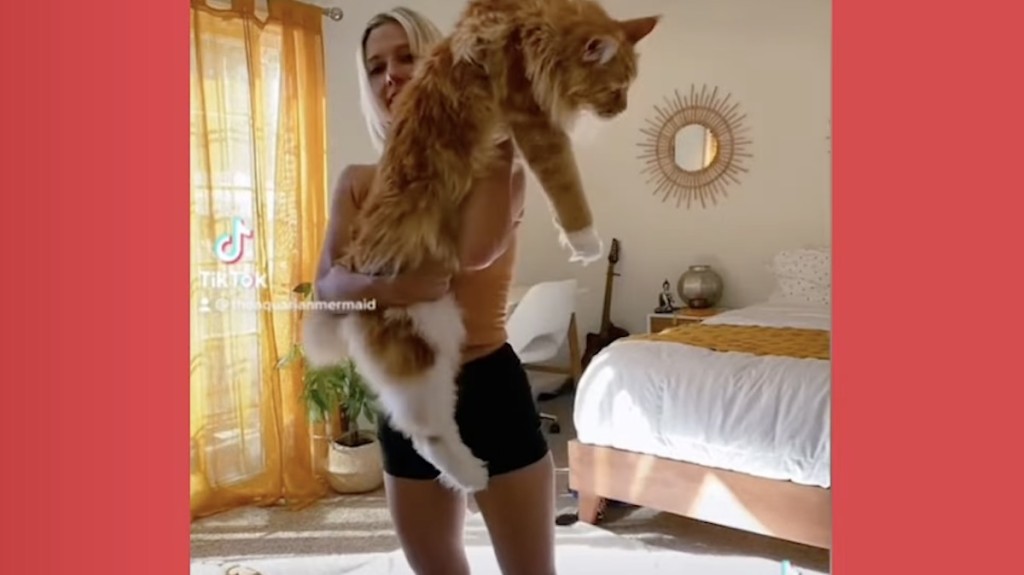
When Natalie has visitors to her home in San Carlos, California, they are often spooked by the enormous feline whenever he appears.
“I’ve had service people come around to fix things, it’s always fun to see grown men get shocked by my cat,” says Natalie. “They say he looks like a bobcat or a wildcat.”
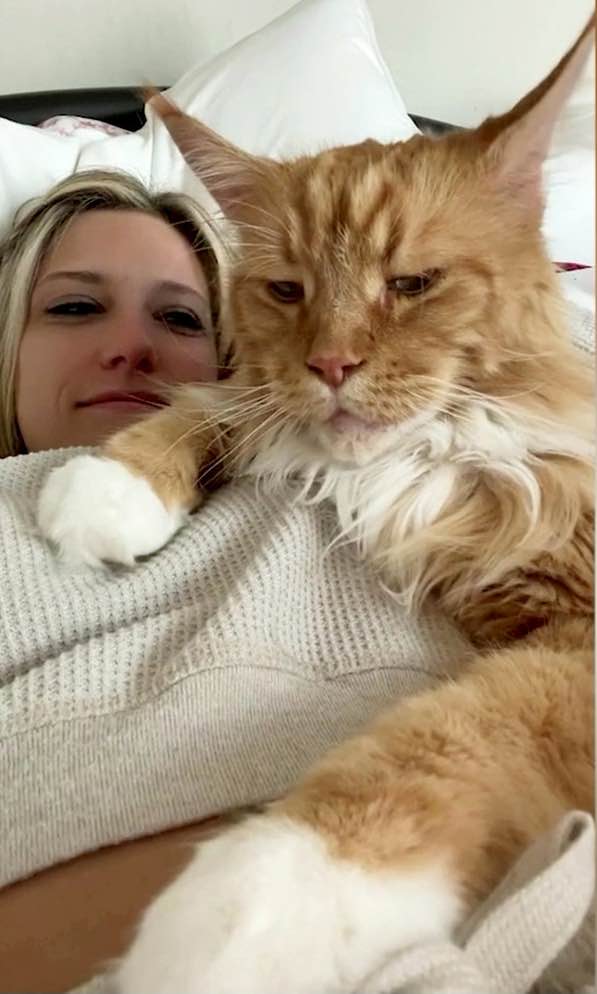
Despite his size, Finn is a gentle giant, which is typical for Maine Coons, and he gets along splendidly with Natalie’s other cat.
“Finn is really docile and curious, he is so funny and affectionate. He loves cuddles and to be spooned.
Finn, a six-year-old Maine Coon, with Natalie – SWNS
He is also quite needy, and Natalie sometimes brings him to the office when he’s exhibiting separation anxiety. It’s not the best option because, although the tabby Coon is sociable and loves to talk, he’s “very loud”.
The Maine Coon is a large domesticated cat breed—one of the oldest natural breeds in North America, and one that originated in the U.S. state of Maine.
Predominantly known for its size and dense coat of fur which helps the large feline to survive in the harsh climate of Maine, the Coon is often cited as having “dog-like” characteristics.
Get a better sense of his size in the video from SWNS…
AND, Don’t Forget to Share With Cat Lovers on Social Media…
pigeon study by University of Iowa / pigeon photo by Nandkumar Patel
pigeon study by University of Iowa / pigeon photo by Nandkumar Patel
Can a pigeon match wits with artificial intelligence? At a very basic level, yes.
In a new study, psychologists at the University of Iowa examined the workings of the pigeon brain and how the “brute force” of the bird’s learning shares similarities with artificial intelligence.
The researchers gave the pigeons complex categorization tests that high-level thinking, such as using logic or reasoning, would not aid in solving. Instead, the pigeons, by virtue of exhaustive trial and error, eventually were able to memorize enough scenarios in the test to reach nearly 70% accuracy.
The researchers equate the pigeons’ repetitive, trial-and-error approach to artificial intelligence. Computers employ the same basic methodology, the researchers contend, being “taught” how to identify patterns and objects easily recognized by humans. Granted, computers, because of their enormous memory and storage power—and growing ever more powerful in those domains—far surpass anything the pigeon brain can conjure.
Still, the basic process of making associations—considered a lower-level thinking technique—is the same between the test-taking pigeons and the latest AI advances.
“You hear all the time about the wonders of AI, all the amazing things that it can do,” says Ed Wasserman, Professor of Experimental Psychology in the Department of Psychological and Brain Sciences at Iowa, and the study’s corresponding author. “It can beat the pants off people playing chess, or at any video game, for that matter. It can beat us at all kinds of things. How does it do it? Is it smart? No, it’s using the same system or an equivalent system to what the pigeon is using here.”
The findings back previous research suggesting pigeons can discriminate Picasso paintings from Monets. They have also been found to count as well as primates, detect cancer in radiology images, recognize words, and have remarkable powers of recall.
The researchers sought to tease out two types of learning: one, declarative learning, is predicated on exercising reason based on a set of rules or strategies—a so-called higher level of learning attributed mostly to people. The other, associative learning, centers on recognizing and making connections between objects or patterns, such as, say, “sky-blue” and “water-wet.”
Numerous animal species use associative learning, but only a select few—dolphins and chimpanzees among them—are thought to be capable of declarative learning.
Yet AI is all the rage, with computers, robots, surveillance systems, and so many other technologies seemingly “thinking” like humans. But is that really the case, or is AI simply a product of cunning human inputs? Or, as the study’s authors put it, have we shortchanged the power of associative learning in human and animal cognition?
Wasserman’s team devised a “diabolically difficult” test, as he calls it, to find out.
Each test pigeon was shown a stimulus and had to decide, by pecking a button on the right or on the left, to which category that stimulus belonged. The categories included line width, line angle, concentric rings, and sectioned rings. A correct answer yielded a tasty pellet; an incorrect response yielded nothing. What made the test so demanding, Wasserman says, is its arbitrariness: No rules or logic would help decipher the task.
“These stimuli are special. They don’t look like one another, and they’re never repeated,” says Wasserman, who has studied pigeon intelligence for five decades. “You have to memorize the individual stimuli or regions from where the stimuli occur in order to do the task.”
Each of the four test pigeons began by correctly answering about half the time. But over hundreds of tests, the quartet eventually upped their score to an average of 68% right.
“The pigeons are like AI masters,” Wasserman says. “They’re using a biological algorithm, the one that nature has given them, whereas the computer is using an artificial algorithm that humans gave them.”
The common denominator is that AI and pigeons both employ associative learning, and yet that base-level thinking is what allowed the pigeons to ultimately score successfully. If people were to take the same test, Wasserman says, they’d score poorly and would probably give up.
“The goal was to see to what extent a simple associative mechanism was capable of solving a task that would trouble us because people rely so heavily on rules or strategies,” Wasserman adds. “In this case, those rules would get in the way of learning. The pigeon never goes through that process. It doesn’t have that high-level thinking process. But it doesn’t get in the way of their learning. In fact, in some ways it facilitates it.”
Wasserman sees a paradox in how associative learning is viewed.
“People are wowed by AI doing amazing things using a learning algorithm much like the pigeon,” he says, “yet when people talk about associative learning in humans and animals, it is discounted as rigid and unsophisticated.”
The study, “Resolving the associative learning paradox by category learning in pigeons,” was published Feb. 7 in the journal Current Biology.
Study co-authors include Drew Kain, who graduated with a neuroscience degree from Iowa in 2022 and is pursuing a doctorate in neuroscience at Iowa; and Ellen O’Donoghue, who earned a doctorate in psychology at Iowa last year and is now a postdoctoral scholar at Cardiff University.
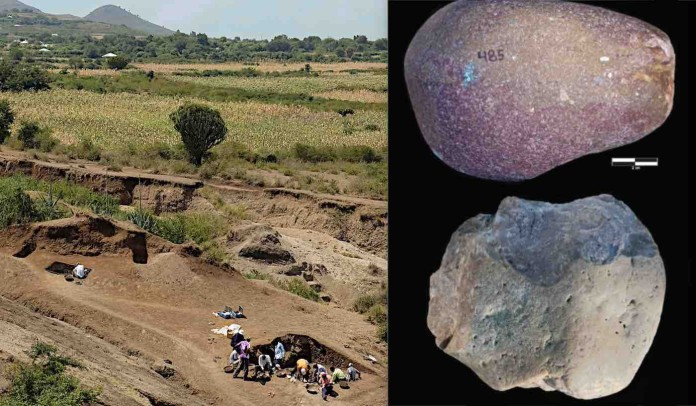
The earliest evidence of human ancestors using tools up to three million years ago has been unearthed in Kenya.
They were employing some of the oldest stone implements ever found to cut up hippo meat and pound plant material on the shores of Lake Victoria, say scientists.
The team explained that because fire would not be harnessed by hominins for another two million years, the toolmakers would have eaten everything raw, maybe pounding the meat into something like a “hippo tartare” to make it easier to chew.
The discovery is one of the oldest examples of the stone-age innovation known to scientists as the ‘Oldowan toolkit’, as well as the oldest evidence of hominins eating very large animals.
Bones from at least three individual hippos were found at the site, according to the findings published in the journal Science, and two of the incomplete skeletons included bones that showed signs of butchery.
Archaeologists found a deep cut mark on one hippo’s rib fragment and a series of four short, parallel cuts on the shin bone of another.
Antelope bones that showed evidence of hominins slicing away flesh with stone flakes or of having been crushed by hammerstones to extract marrow were also discovered.
Analysis of wear patterns on 30 of the stone tools found at the site showed that they had been used to cut, scrape and pound both animals and plants.
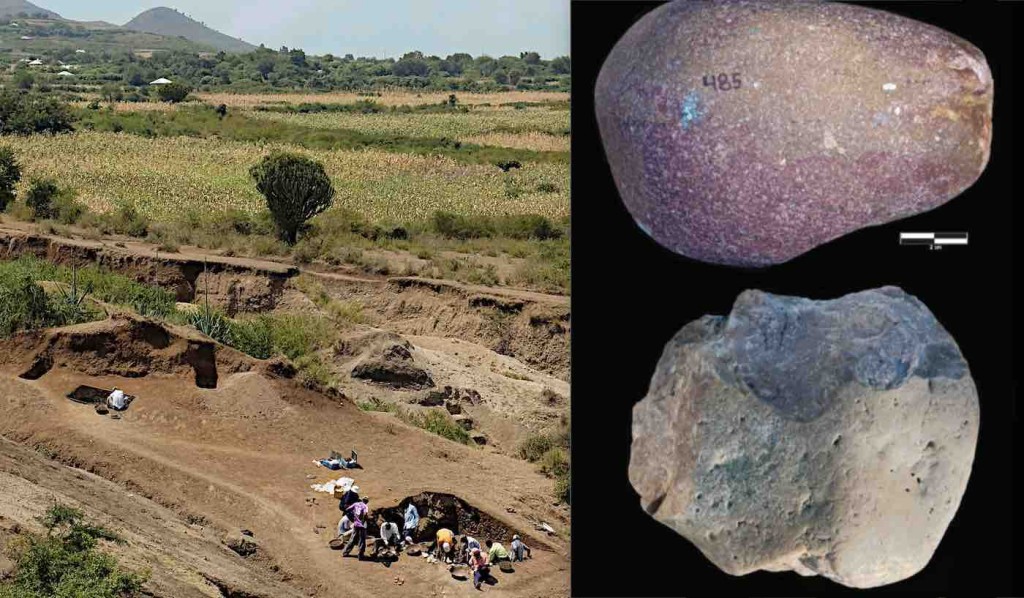
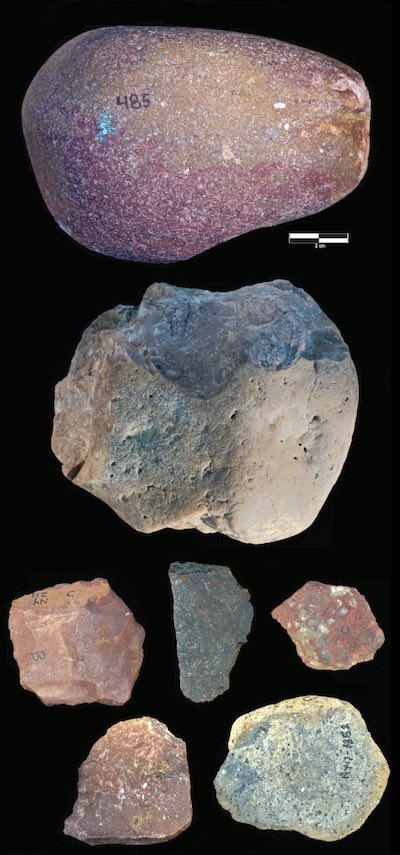
Examples of Oldowan percussive tool, core, and flakes from the Nyayanga site. (Top row) Compared to other tools found in recent years. – SWNS
The international research team say various state of the art dating techniques suggest the artefacts are likely to be about 2.9 million years old, but they are certainly between 2.58 and three million years of age.
Study lead author Professor Thomas Plummer, of Queens College, City University of New York (CUNY), said: “This is one of the oldest if not the oldest example of Oldowan technology.
“This shows the toolkit was more widely distributed at an earlier date than people realized, and that it was used to process a wide variety of plant and animal tissues.
“We don’t know for sure what the adaptive significance was, but the variety of uses suggests it was important to these hominins.”
Excavations at the Nyayanga site also unearthed a pair of massive molars belonging to the human species’ close evolutionary relative Paranthropus.
Study senior author Dr Rick Potts says the teeth are the oldest fossilized Paranthropus remains found, and their presence at a site laden with stone tools raises intriguing questions about which human ancestor made them.
Dr Potts, of the National Museum of Natural History in the US, said: “The assumption among researchers has long been that only the genus Homo, to which humans belong, was capable of making stone tools.
“But finding Paranthropus alongside these stone tools opens up a fascinating whodunnit.”
The tools were found more than 800 miles from the previously oldest known examples of Oldowan stone tools.
Those 2.6-million-year-old implements were unearthed at Ledi-Geraru in Ethiopia could not be tied to any particular function or use.
Analysis of the wear patterns on the tools and animal bones discovered at Nyayanga suggests they were used by early human ancestors on various materials and food – including plants, meat and even bone marrow.
The researchers explained that the Oldowan toolkit includes three types of stone tools: hammer-stones, cores, and flakes.
Dr. Potts said: “With these tools you can crush better than an elephant’s molar can and cut better than a lion’s canine can.
“Oldowan technology was like suddenly evolving a brand-new set of teeth outside your body, and it opened up a new variety of foods on the African savannah to our ancestors.”
The team were first attracted to the Homa Peninsula in Kenya by reports of fossilized baboon-like monkeys which are often found alongside evidence of human ancestors.
A series of digs at Nyayanga, beginning in 2015, unearthed 330 artifacts, 1,776 animal bones and the two hominin molars identified as belonging to Paranthropus.
Prof. Plummer said the artifacts were “clearly part” of the stone-age technological breakthrough that was the Oldowan toolkit.
He says that compared to the only other stone tools known to have preceded them – a set of 3.3-million-year-old implements unearthed at another site in Kenya – the Oldowan tools were a “significant upgrade” in sophistication.
Prof. Plummer explained that, over time, the Oldowan toolkit spread throughout Africa and as far as present-day Georgia and China, and it was not meaningfully replaced until around 1.7 million years ago.
Dr Potts added: “East Africa wasn’t a stable cradle for our species’ ancestors.
“It was more of a boiling cauldron of environmental change, with downpours and droughts and a diverse, ever-changing menu of foods.
“Oldowan stone tools could have cut and pounded through it all and helped early toolmakers adapt to new places and new opportunities, whether it’s a dead hippo or a starchy root.”
SHARE the Important Discovery With Paleo Pals on Social Media…
Quote of the Day: “Don’t tell me how wonderful things will be someday. Show me you can risk being at peace with the way things are right now.” – Oriah
Image: Aaron Burden
With a new inspirational quote every day, atop the perfect photo—collected and archived on our Quotes page—why not bookmark GNN.org for a daily uplift?
Elizabeth with her Miracle Friend Joan / Miracle Messages
Formerly homeless, Elizabeth poses with her Miracle Friend Joan / Miracle Messages
A privately-funded program to provide basic income to 100 California homeless people aims to study how the cash—plus one-on-one social support—can be potentially life-changing.
‘Miracle Money: California’ is being funded primarily by a $1.15Mil donation from Google.org and is being evaluated through a randomized control trial led by researchers at the University of Southern California.
The pilot, organized by Miracle Messages, will distribute $750 each month for 12 months to 100 individuals experiencing homelessness in Los Angeles County, San Francisco, and Oakland.
In addition, each participant will be matched 1:1 with a caring trained volunteer phone buddy for weekly calls and texts—and scores of volunteers are already participating from around the world.
Miracle Messages has received over $2 million to launch Miracle Money: California.
The precursor, Miracle Money, first launched amid the pandemic in December 2020 as one of the first basic income pilots in the US to include social support. In its proof of concept study from the Bay Area, 66% of unhoused recipients (6 of 9) were able to secure stable housing as a result of $500 a month for 6 months. Recipients overwhelmingly used their funds toward food, housing, transportation, savings, storage, child care, medications, debt reduction, unexpected family emergencies, and other essentials.
In total, over $1 million will be distributed to the 100 individuals chosen for the new pilot, with the first cash payments currently underway. Miracle Money: California will then track multiple outcomes including housing stability, food security, mental and emotional health, and relational poverty.
Ray with his Miracle Friend Jen / Miracle Messages
Dr. Benjamin F. Henwood who directs the Center for Homelessness, Housing, and Health Equity Research at USC will lead the randomized control trial in order to evaluate the impact of social support with and without basic income.
“20 years ago the idea of providing ‘housing first’ to people experiencing homelessness and mental illness was not widely accepted; today ‘housing first’ is national policy based on rigorous research including a randomized control trial that demonstrated the model worked,” explains USC Professor Ben Henwood, PhD, MSW.
“Based on promising but limited pilot data, my hope is that science will again demonstrate that there are person-centered interventions that can address homelessness and alleviate suffering; to that end we will let the data speak for itself and be our guide.”
The mechanics of disbursing funds to recipients who often do not have bank accounts or mailing addresses is being overcome by utilizing AidKit, a technology company focused on “delivering direct cash with dignity”.
“When we invest in our neighbors experiencing homelessness, offering even modest financial resources and supportive relationships, problems get solved and people get housed,” says Kevin Adler, the founder of Miracle Messages. “Miracle Money: California hopes to demonstrate that a little bit of love and financial support can transform lives, restore dignity, and help people get off the streets.”
AidKit will also save time for the Miracle Messages team, so they can focus on the critical relationships they are building with the unhoused communities they serve.
The Miracle Messages nonprofit has won awards for its unique work reunifying homeless folks with their families. To date, founder Kevin Adler and his team have helped reunite over 700 families. Caring volunteers have also been matched with over 250 unhoused friends, to provide calls and texts of support—more than 10,000 so far.
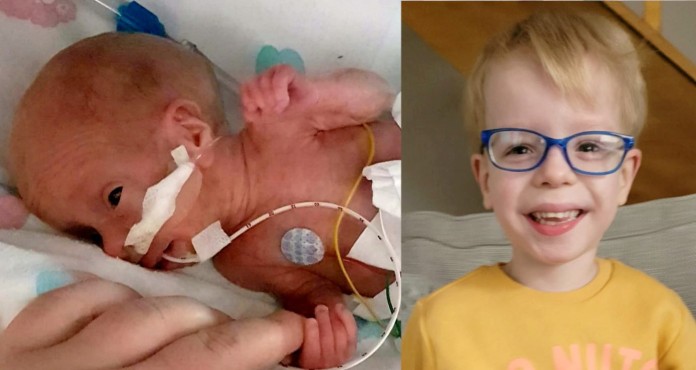
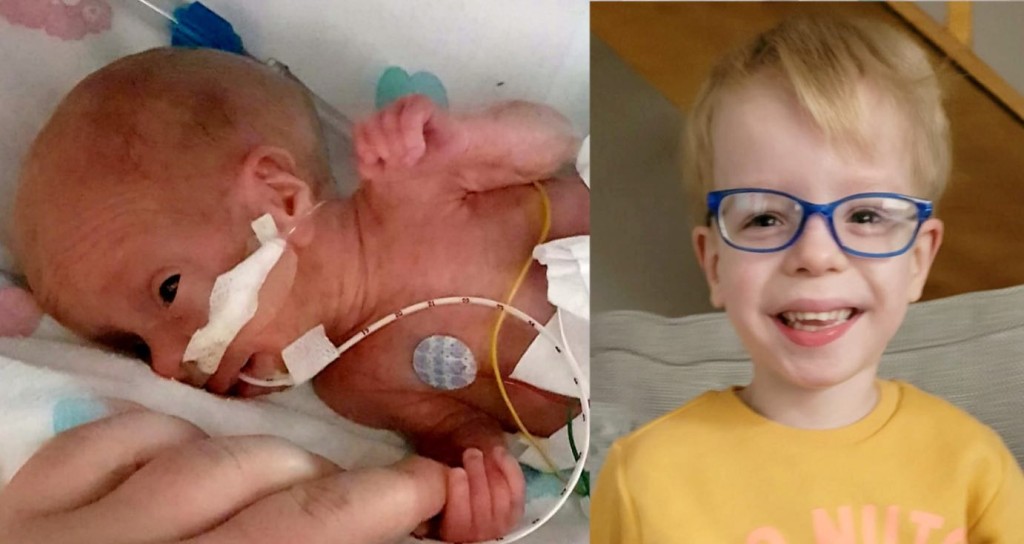
Jamie Mohr who was given a 10 percent chance of survival when he was born weighing just 1lb 8oz has defied the odds—and now is a genius prodigy at age 4.
Jamie’s mom was told her placenta stopped working at 20-weeks and the baby was no longer getting the nutrients to grow. Doctors warned Lorraine that the fetus would not survive if brought to term, so they decided to deliver the infant at 28 weeks—despite only a 10 percent chance of survival.
“I was told not to expect him to survive but he went from strength to strength and I took him home 11 weeks after he was delivered.”
Today the 4-year-old is labeled a “prodigy” and can do mathematics in six different languages.
A savant with numbers, he can even total up his mom’s groceries to the penny.
Lorraine, a 38-year-old senior policy officer in Glasgow, Scotland, says, “He is outsmarting his teachers; I got a message the other day from his nursery teacher who said he was ‘out schooling’ her. I don’t know where he gets it from.”
Lorraine first noticed Jamie was extremely clever just before his second birthday. She began testing the little lad at home, and a few weeks later, he was able to count to 50 and then 100.
On another occasion Jamie was watching a show on YouTube when the character started counting in French, and when he switched the show-off, he started counting in French.
“I couldn’t believe it. I tested it out, I got on other programs in Spanish and Japanese and he started counting in those languages too.”
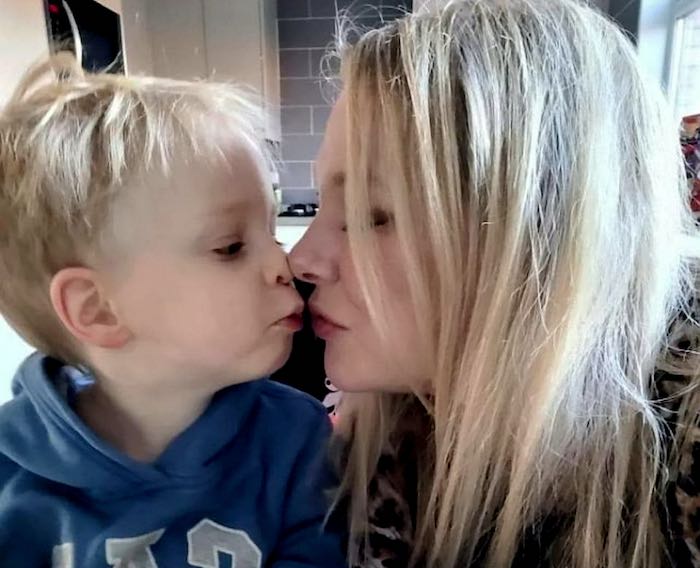
Jamie Mohr and his mom / SWNS
He now counts in German and Mandarin, and has a photographic memory. He’s been labeled as having hyperlexia—an advanced and unexpected ability in children for reading and decoding words way beyond their chronological age.
“He’s just a little miracle, especially after being told he would likely have a severe disability or learning difficulty. I’m just so proud of him.
“He is completely self-taught, but now that I know his ability I encourage it.”
He rivals most 10-year-olds in his ability to do equations, and can now do fractions and percentages. He’s set to start primary school later this year where they will set out a special independent curriculum for him.
“Jamie is incredibly funny, articulate, affectionate and humble—and is completely unaware he is so fantastic.
“He had such a rocky start, but has proved everyone wrong. To even to get him to a point where we could deliver him—that was miraculous—but then to find out he is a gifted learner? I am no longer surprised at the things he can do.”
Although his mom envisions her son going into a STEM field, perhaps finding a cure for an awful disease, Jamie wants to grow up to be a pirate.
WATCH him count by 19s, by 12s, and read ridiculously long numbers…
MULTIPLY the HOPE – Share the Preemie Success Story on Social Media…
Researchers at MIT (Massachusetts Institute of Technology) have developed a new AI deep learning model that can predict lung cancer risk up to six years in advance through a single low-dose CT scan.
Lung cancer is the deadliest cancer in the world—resulting in more deaths than the next three cancers combined. It is also extremely difficult for humans to find the disease early by looking at scans.
Current lung cancer prediction models require a combination of demographic information, clinical risk factors, and radiologic annotations, whereas the model called ‘Sybil’ is designed to use a single low dose chest scan to predict the risk of lung cancers occurring 1-6 years after a screening.
Peter Mikhael, co-first-author and PhD student at MIT likened the overall process of lung cancer screening to “trying to find a needle in a haystack.”
However, working with a diverse set of scans from two hospitals and the National Lung Cancer Screening Trial, the study showed Sybil was able to forecast both short-term and long-term lung cancer risk, earning C-indices scores ranging from 0.75 to 0.80. Values over 0.8 indicate a strong model.
When predicting cancer risk one year in advance, the model was even more successful: they obtained between 0.86 to 0.94 on a ROC-AUC probability curve (considered excellent for AUC values with 1.00 being the highest possible score).
No visible cancer on the scans
The imaging data used to train Sybil was largely absent of any signs of cancer because early-stage lung cancer occupies small portions of the lung—just a fraction of the hundreds of thousands of pixels making up each CT scan.
Denser portions of lung tissue known as lung nodules have the potential to be cancerous, but most are not and are, instead, healed infections or airborne irritants.
Co-author Jeremy Wohlwend was surprised by how highly Sybil scored, despite the lack of any visible cancer.
“We found that while we as humans couldn’t quite see where the cancer was, the model could still have some predictive power as to which lung would eventually develop cancer.”
Professor Regina Barzilay led the research team at the Jameel Clinic at MIT, in partnership with Mass General Cancer Center and Chang Gung Memorial Hospital in Taiwan, which published the study in the Journal of Clinical Oncology.
This model aims to bring the research community one step closer to outgrowing legacy systems in the healthcare industry and help better treat current and future patients.
SHARE This Medical Breakthrough With Friends on Social Media…
FREE WILL ASTROLOGY – Week of February 11, 2023
Copyright by Rob Brezsny, FreeWillAstrology.com
AQUARIUS (Jan. 20-Feb. 18):
To get the most out of upcoming opportunities for intimacy, intensify your attunement to and reverence for your emotions. Why? As quick and clever as your mind can be, sometimes it neglects to thoroughly check in with your heart. And I want your heart to be wildly available when you get ripe chances to open up and deepen your alliances. Study these words from psychologist Carl Jung: “We should not pretend to understand the world only by the intellect; we apprehend it just as much by feeling. Therefore, the judgment of the intellect is, at best, only the half of truth, and must, if it be honest, also come to an understanding of its inadequacy.”
PISCES (Feb. 19-March 20):
“In love there are no vacations. Love has to be lived fully with its boredom and all that.” Author and filmmaker Marguerite Duras made that observation, and now I convey it to you—just in time for a phase of your astrological cycle when boredom and apathy could and should evolve into renewed interest and revitalized passion. But there is a caveat: If you want the interest and passion to rise and surge, you will have to face the boredom and apathy; you must accept them as genuine aspects of your relationship; you will have to cultivate an amused tolerance of them. Only then will they burst in full glory into renewed interest and revitalized passion.
ARIES (March 21-April 19):
During my quest for advice that might be helpful to your love life, I plucked these words of wisdom from author Sam Kean: “Books about relationship talk about how to ‘get’ the love you need, how to ‘keep’ love, and so on. But the right question to ask is, ‘How do I become a more loving human being?'” In other words, Aries, here’s a prime way to enhance your love life: Be less focused on what others can give you and more focused on what you can give to others. Amazingly, that’s likely to bring you all the love you want.
TAURUS (April 20-May 20):
You have the potential to become even more skilled at the arts of kissing and cuddling than you already are. How? Here are some possibilities. 1. Explore fun experiments that will transcend your reliable old approaches to kissing and cuddling. 2. Read books to open your mind. I like Margot Anand’sThe New Art of Ecstasy. 3. Invite your subconscious mind to give you dreams at night that involve intimacy.
GEMINI (May 21-June 20):
You are an Italian wolf searching for food in the Apennine Mountains. You’re a red-crowned crane nesting in a wetland in the Eastern Hokkaido region of Japan. You’re an olive tree thriving in a salt marsh in southern France, and you’re a painted turtle basking in a pool of sunlight on a beach adjoining Lake Michigan. And much, much more. What I’m trying to tell you, Gemini, is that your capacity to empathize is extra strong right now. Your smart heart should be so curious and open that you will naturally feel an instinctual bond with many life forms, including a wide array of interesting humans. If you’re brave, you will allow your mind to expand to experience telepathic powers. You will have an unprecedented knack for connecting with simpatico souls.
CANCER (June 21-July 22):
My Cancerian friend Juma says, “We have two choices at all times: creation or destruction. Love creates and everything else destroys.” Do you agree? She’s not just talking about romantic love, but rather love in all forms, from the urge to help a friend, to the longing to seek justice for the dispossessed, to the compassion we feel for our descendants. During the next three weeks, your assignment is to explore every nuance of love as you experiment with the following hypothesis: *To create the most interesting and creative life for yourself, put love at the heart of everything you do.*
LEO (July 23-Aug. 22):
I hope you get ample chances to enjoy deep soul kisses in the coming weeks. Not just perfunctory lip-to-lip smooches and pecks on the cheeks, but full-on intimate sensual exchanges. Why do I recommend this? How could the planetary positions be interpreted to encourage a specific expression of romantic feeling? I’ll tell you, Leo: The heavenly omens suggest you will benefit from exploring the frontiers of wild affection. You need the extra sweet, intensely personal communion that comes best from the uninhibited mouth-to-mouth form of tender sharing. Here’s what Leo poet Diane di Prima said: “There are as many kinds of kisses as there are people on earth, as there are permutations and combinations of those people. No two people kiss alike.”
VIRGO (Aug. 23-Sept. 22):
Borrowing the words of poet Oriah from her book The Dance: Moving to the Deep Rhythms of Your Life, I’ve prepared a love note for you to use as your own this Valentine season. Feel free to give these words to the person whose destiny needs to be woven more closely together with yours. Oriah writes, “Don’t tell me how wonderful things will be someday. Show me you can risk being at peace with the way things are right now. Show me how you follow your deepest desires, spiraling down into the ache within the ache. Take me to the places on the earth that teach you how to dance, the places where you can risk letting the world break your heart.”
LIBRA (Sept. 23-Oct. 22):
Libran author Walter Lippman wrote, “The emotion of love is not self-sustaining; it endures only when lovers love many things together, and not merely each other.” That’s great advice for you during the coming months. I suggest that you and your allies—not just your romantic partners, but also your close companions—come up with collaborative projects that inspire you to love many things together. Have fun exploring and researching subjects that excite and awaken and enrich both of you.
SCORPIO (Oct. 23-Nov. 21):
Scorpio writer Paul Valéry wrote, “It would be impossible to love anyone or anything one knew completely. Love is directed towards what lies hidden in its object.” My challenge to you, Scorpio, is to test this hypothesis. Do what you can to gain more in-depth knowledge of the people and animals and things you love. Uncover at least some of what’s hidden. All the while, monitor yourself to determine how your research affects your affection and care. Contrary to what Valéry said, I’m guessing this will enhance and exalt your love.
SAGITTARIUS (Nov. 22-Dec. 21):
In his book Unapologetically You, motivational speaker Steve Maraboli writes, “I find the best way to love someone is not to change them, but instead, help them reveal the greatest version of themselves.” That’s always good advice, but I believe it should be your inspirational axiom in the coming weeks. More than ever, you now have the potential to forever transform your approach to relationships. You can shift away from wanting your allies to be different from what they are and make a strong push to love them just as they are.
CAPRICORN (Dec. 22-Jan. 19):
I analyzed the astrological omens. Then I scoured the internet, browsed through 22 books of love poetry, and summoned memories of my best experiences of intimacy. These exhaustive efforts inspired me to find the words of wisdom that are most important for you to hear right now. They are from poet Rainer Maria Rilke (translated by Stephen Mitchell): “For one human being to love another human being: that is perhaps the most difficult task that has been entrusted to us, the ultimate task, the final test and proof, the work for which all other work is merely preparation.”
WANT MORE? Listen to Rob’s EXPANDED AUDIO HOROSCOPES, 4-5 minute meditations on the current state of your destiny — or subscribe to his unique daily text message service at: RealAstrology.com
Quote of the Day: “I find the best way to love someone is not to change them, but instead, help them reveal the greatest version of themselves.” – Steve Maraboli
Image: Roberto Nickson
With a new inspirational quote every day, atop the perfect photo—collected and archived on our Quotes page—why not bookmark GNN.org for a daily uplift?
Many employees of school systems leave behind important memories with their students, but for bus driver Patty Reitz, she principally leaves behind a memory of friendship, and warm ears.
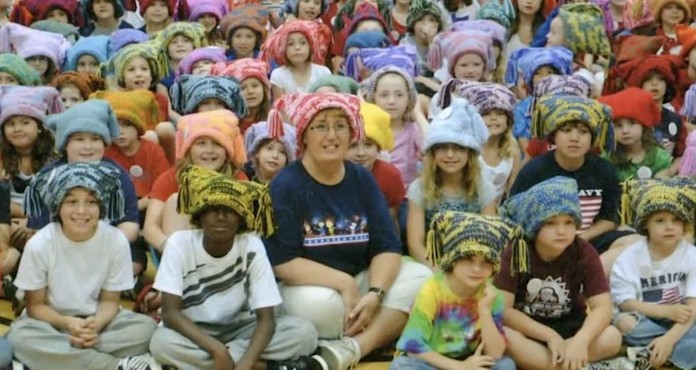
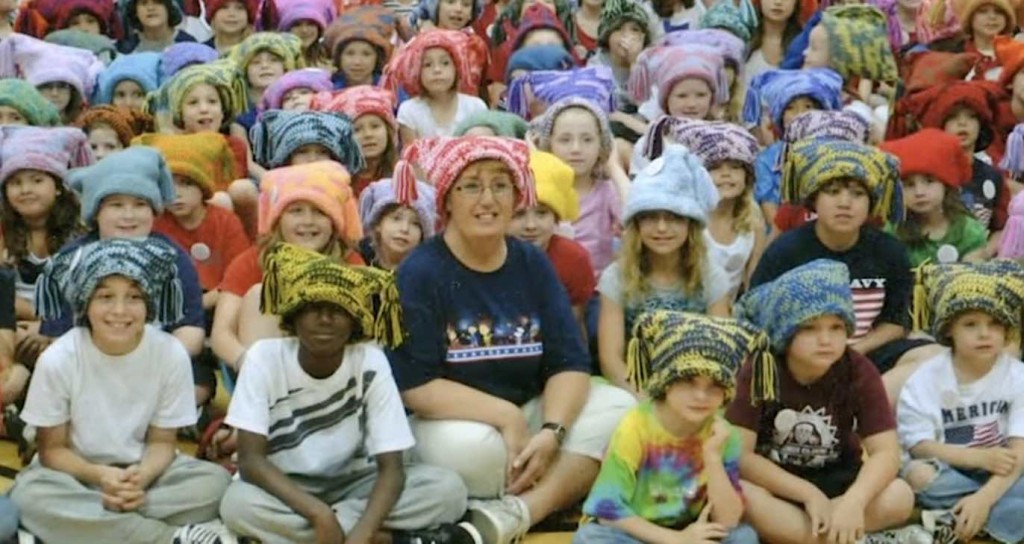
Known as Miss Patty, the Clarence Central School District bus driver has crocheted 7,083 hats over three decades of service for the students and the school.
Her career included years working in the elementary school’s cafeteria, but she began crocheting in 2005 to pass the time while caring for her mother while she was in the hospital.
“I needed something to do,” she said. Later she took it up while waiting for the students to board her bus.
Back on her first attempt at a hat, a high schooler started it all when he noticed what she was doing.
“The one boy gets on the bus, and he goes ‘what are you doing?’ I said I’m making a hat. He said ‘that would be great going down ski slopes at Holiday Valley.’ So I said what color would you like? That started everything,” Reitz told the local NBC affiliate.
Her specialties are either an elf hat with pompom or a sort of potato sack-shaped affair with tassels on the corners.
She uses colored yarn and buys it all herself, though she regularly receives gift cards and other presents, certainly around Christmas time.
“She cares. She cares about her students,” said third-grade teacher Deborah Bosworth. “Any student that I’ve had that has been on Miss Patty’s bus gets a hat, and they also get a friend. Miss Patty is one of the favorites.”
Despite the tremendous amount of work that she’s already done, Reitz says she has no plans to stop with her hat-making. The bus driver said she’s already getting organized for next year’s bus riders.
“I’m going to do it until I can’t do it anymore,” she said.
WATCH the story below from WGRZ…
SHARE This One Person Hand-Making a Difference In Kids’ Lives…
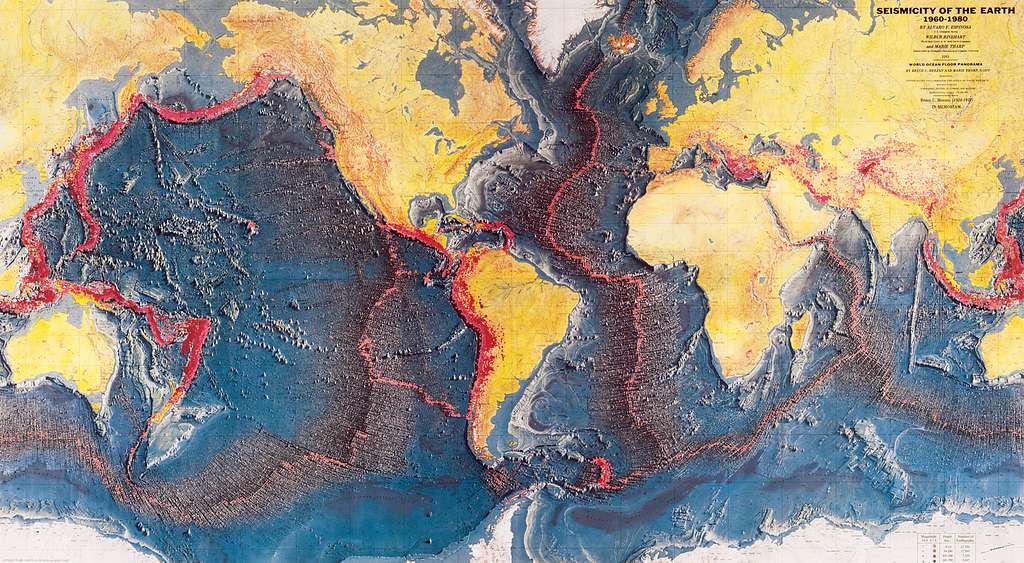
The Heezen-Tharp World Ocean Map depicting Tharp's discoveries
As massive a project as it would see to be now, once upon a time humanity needed to formulate the theory of plate tectonics.
That’s where perhaps the most influential cartographer of the 20th century, and of all human history besides, Marie Tharp came into the picture: hand-combining the hard data collected by colleagues into the first proof of the theory of continental drift and plate tectonics.
Before this, it was believed that the Earth began as a blob of molten material. As it cooled, like a date drying in the sun, cracks began to form the ocean basins and mountain ranges as heavier metals wiggled down towards the core and lighter metals rose up to the surface.
Tharp would prove instrumental in advancing the true understanding of the movement of the continents from her position in the geology department at Columbia University, piecing together maps of the ocean floor made by sonar depth measurements gathered by the department’s head.
These maps, when combined with a colleague’s maps of the placement of undersea volcanoes, provided irrefutable evidence that Pangea had split apart based on the movements of the continental plates.
The Heezen-Tharp World Ocean Map depicting Tharp’s discoveries
In 1999, Tharp won the Mary Sears Woman Pioneer in Oceanography Award for her discovery. In her acceptance speech, she colored in the glory of her accomplishment by highlighting it as once-in-a-lifetime.
“Not too many people can say this about their lives: The whole world was spread out before me (or at least, the 70% of it covered by oceans). I had a blank canvas to fill with extraordinary possibilities, a fascinating jigsaw puzzle to piece together: mapping the world’s vast hidden seafloor.
“It was a once-in-a-lifetime—a once-in-the-history-of-the-world—opportunity for anyone, but especially for a woman in the 1940s. The nature of the times, the state of the science, and events large and small, logical and illogical, combined to make it all happen.”
SHARE The Story And Glory Of This Little Known Cartographer…
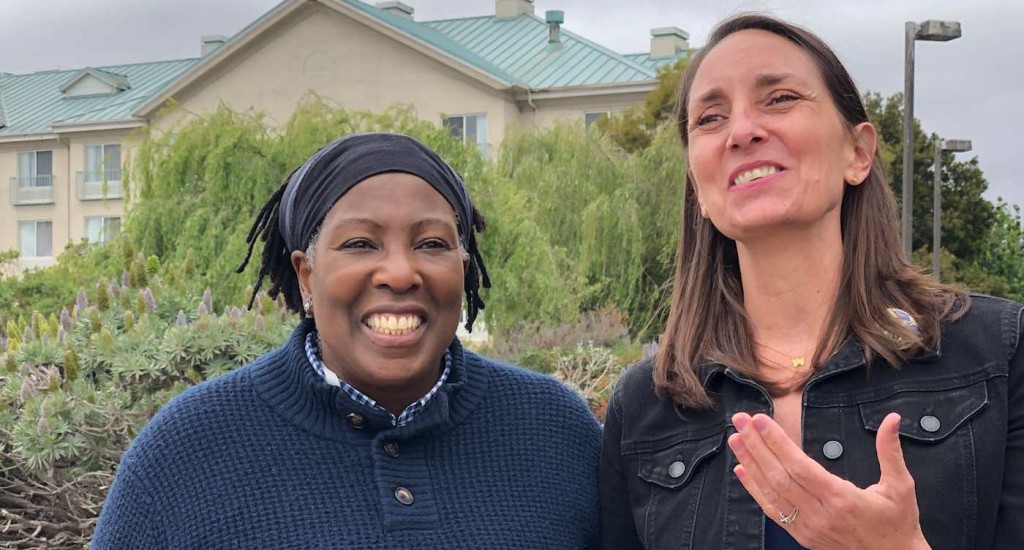
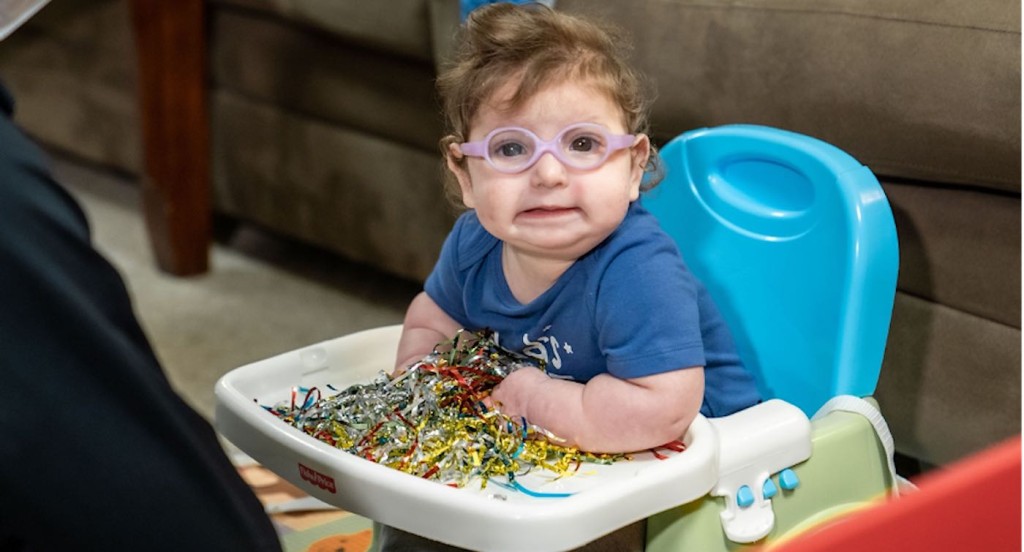
What parent could imagine anything worse than hearing their newborn has a genetic mutation that impedes neuromotor development that’s so rare, it affects just 300 infants worldwide?
Yet even for something as rare as a CASK Disorder, the miracles of modern medicine can lend a healing hand—as they did for Anna and Bella Burkhart.
Bella had a noticeably small head that announced what tests would later confirm: Bella was born with a rare genetic disorder. Mother Emily Burkhart immediately suspected a genetic problem because she’d seen this before—in Bella’s older sister, Anna.
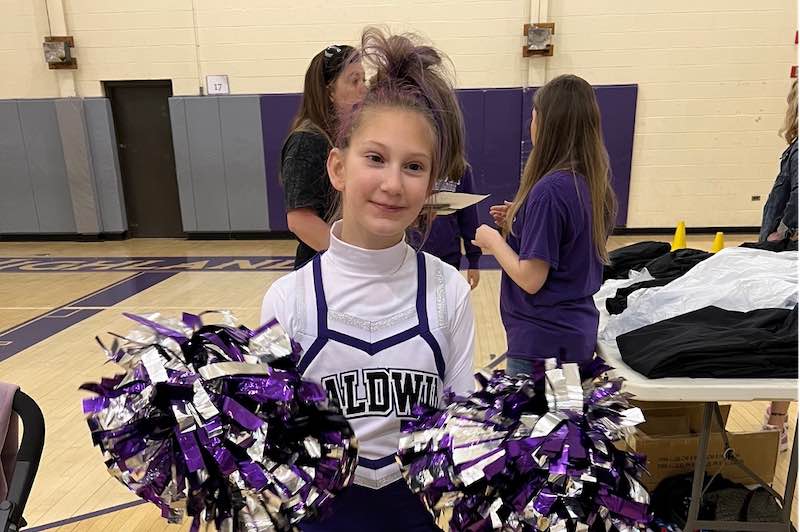
A decade earlier, doctors predicted Anna would never walk, talk, or have a fulfilling life. Today, she rides the bus to school, interacts with her friends on TikTok, has plans to dye her hair, and even made her middle school cheerleading squad.
When Anna, and Bella for that matter, were born, few signs of the coming disorder were present, but both soon began to miss developmental milestones such as the inability to grasp, roll around, and crawl. She didn’t walk until she was nearly 3 years old.
Her parents sought answers for Anna’s delays. After years of testing and hospitalizations, Anna was finally diagnosed with a rare mutation of a gene common in many species, called CASK. Doctors knew little about the condition, said Burkhart.
“Basically, she was just going to struggle, and she was probably going to be wheelchair-bound and non-verbal,” she said. “I just wasn’t going to accept that.”
Soon, the family was visiting Roanoke, Virginia so Anna could receive intensive therapy through an experimental research protocol. While customary occupational and physical therapy is delivered for only one hour a week, therapists at the Neuromotor Research Clinic at the Fralin Biomedical Research Institute at Virginia Tech, work with children 3 to 6 hours a day, 5 days a week, for up to 4 weeks.
Anna Burkhart – submitted
Turning a corner
The research clinic’s team had worked with many children with disabilities that had affected their brain development and function, including those with cerebral palsy. But the team never worked with a child with Anna’s diagnosis before and wasn’t sure what to expect.
“What Anna needed was different than previous kids we’d worked with,” said Dory Wallace, a senior occupational therapist. “It was about helping her learn how to pay better attention, how to use her words, and how to interact and engage with the people in her environment. Once we met her, we completely changed what we thought we were going to do to meet her needs.”
Anna responded right away.
“I love seeing that light switch go on when a child realizes she’s learned something new,” Wallace said. Two weeks later, the change was already dramatic.
“She was sorting colors and she was sitting still to play with a toy,” said Burkhart “She was just doing all the things that we were able to want and expect, plus some.”
A similar turnaround came when nearly 10 years later, Burkhart’s second daughter Bella was born with microcephaly, a clear sign of a potential CASK diagnosis. Bella was 14 months old when she started therapy.
“Dory had her doing things the first day that we hadn’t seen Bella be able to do,” said Burkhart. “I started to cry because it was like, ‘OK, we’re in the right place.’”
Emily’s husband Charlie was mesmerized.
“I’ve never seen Bella work so hard. I videotaped a lot so I can replicate it at home,” he said. “To be able to come down here for a month and get this blueprint and get her going, there are no words to describe how appreciative I am.”
The Burkharts have high hopes for Bella because they’ve seen how big sister Anna has progressed. Anna continues to use some of the therapeutic program the family learned at the clinic years ago.
The program is called I-ACQUIRE, and while usually utilized in cases of infantile stroke or hemiparesis, it worked with CASK by relying on the brain’s plasticity to develop the disrupted portion of the child’s brain, for example by restraining overactive limbs to force the child to learn how to control the under-utilized one in the case of hemiparesis.
“We’re learning from each child while we’re simultaneously trying to help that child,” said Stephanie DeLuca, co-director of the Neuromotor Research Clinic. “We provide very specific guidelines for how therapists should deliver the interactions of therapy to help the child progress and maximize their development.”
WATCH another success story from the Neuromotor Research Clinic…
SHARE These Incredible Scientists’ Work Saving Children’s Productive Lives…
John Cleese in Fawlty Towers – By Flickr User, Insomnia Cured Here (CC BY-SA 2.0)
John Cleese in Fawlty Towers – By Flickr User, Insomnia Cured Here (CC BY-SA 2.0)
The classic British sitcom Fawlty Towers has been recognized for decades as one of, if not the greatest British sitcoms of all time. Now more than 40 years after it ended, it’s getting a reboot.
Spinoffs and squeals can be nervous endeavors but with John Cleese at the helm, it’s sure to keep its original brand of brutal social contract humor.
The original Fawlty Towers sets one of the original Monty Python members, John Cleese, as Basil Fawlty who operates a hotel in the seaside town of Torquay with his wife Sybll. Together with the Spanish butler Manuel, they try (and mostly fail) to keep the hotel running smoothly while keeping their marriage afloat.
The new series was picked up by Castle Rock Entertainment, and stars Cleese as the ever-misanthropic Basil, alongside his daughter Camilla Cleese.
Rob Reiner, the director of The Princess Bride, and his director wife Michelle have come on as executive producers, ensuring that the original humor of the show is preserved for modern audiences.
Cleece said that an additional exec. producer for the show, Matthew George, came to Cleese with the idea over dinner, and it resulted in “one of the best creative sessions I can remember”.
Camilla Cleese at the Laugh Factory: Credit Laugh Factory, Hollywood, retrieved from YouTube
“By dessert we had an overall concept so good that, a few days later, it won the approval of Rob and Michele Reiner,” Cleese told the BBC. “Camilla and I look forward enormously to expanding it into a series.”
Camilla Cleese is John’s daughter with his second wife, Barbara Trentham. She has credits in several American comedy TV shows, writing credits on her father’s 2011 live show, and is a regular stand up comedian herself.
The new Fawlty Towers will feature a much older Basil attempting to run a boutique hotel with Camilla, even after discovering she’s his daughter.
KNOW Any Fans Of The Show? Share This Cracking Good News But DON’t Mention The War…