The Massachusettes Name a Snowplow contest is just one of many around the country.
The Massachusettes Name a Snowplow contest is just one of many around the country.
For the third year in a row, Minnesota is opening the now-traditional “Name a Snowplow” contest to residential voting.
The contest, held by the MN Department of Transportation, has included past winners that include Betty Whiteout, Plowy McPlowFace, Ctrl Salt Delete, Snowbi Wan Kenobi, “Ope, Just Gonna Plow Right Past Ya”, and The Truck Formerly Known As Plow.
Voters are encouraged to head to the DoT website to cast their vote, with submissions open until next Friday, the 16th. The only limitations are a 30 character name that excludes vulgarity and political partisanship.
This is fast becoming an international tradition all over not just America, but the Northern Hemisphere. Contests are also being held by the Ohio DoT, the Massachusettes DoT, the Nebraska DoT, and several cities in Canada like Edmunton, and Calgary.
It became an even better idea since the adoption of map applications that gave residents in blizzard-prone areas real-time updates on the positioning of the snowplows.
Last year, GNN reported of a similar contest in Scotland, which included winners like, “You’re a Blizzard Harry,” Brinestone Ploughboy, Lord Coldemort, Spreddie Van Halen, Mary Queen of Salt, and On Her Majesty’s Slippery Surface.
In Minnesota, 8 winners will be chosen, all of which will feature in each district.
SHARE This Story With Friends And Come Up With A Real Good One!
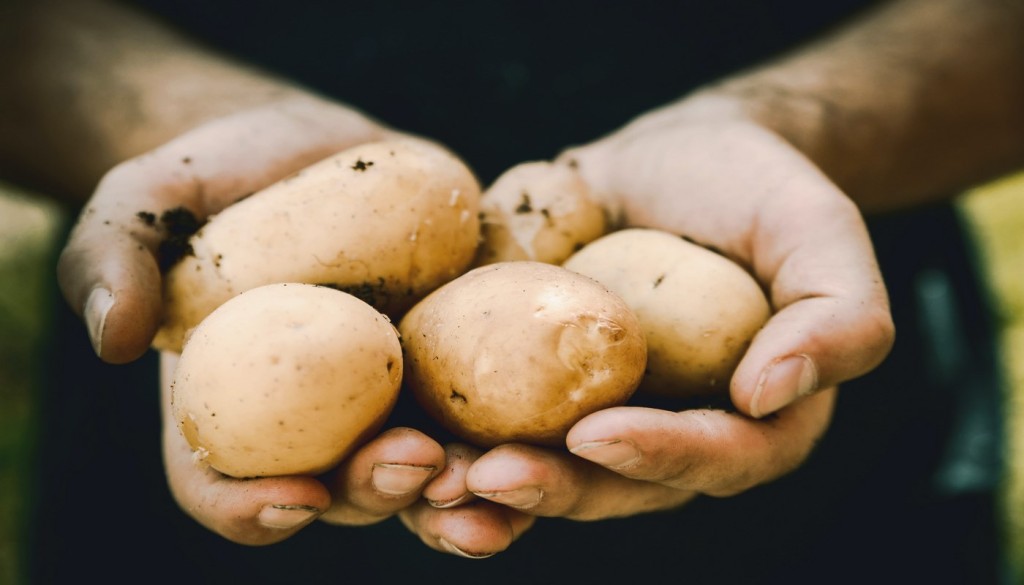
Data from Denmark has shown that as more and more Westerners shun the humble potato for other vegetables, its reputation as a carb-heavy diabetes risk is unfounded.
There are many different ways to prepare potatoes, and the data indicates that this is why they are looked at unfavorably from a health perspective.
“In previous studies, potatoes have been positively linked to incidence of diabetes, regardless of how they’re prepared—but we found that’s not true,” said Edith Cowan University Ph.D. candidate Pratik Pokharel.
To examine this, Pokharel looked at self-reported data from 54,000 people from the Danish Diet, Cancer, and Health study, a long term study with the objective to produce a dataset which could be examined for trends and patterns the way Pokharel did.
“In Denmark, people consume potatoes prepared in many different ways; in our study, we could distinguish between the different preparation methods, and when we separated boiled potatoes from mashed potatoes, fries, or [chips], boiled potatoes were no longer associated with a higher risk of diabetes: they had a null effect,” said Pokharel.
Most chips and french fries are cooked in ultra-processed vegetable oils—one of the least-healthy calorie sources in the American diet. Mashed potatoes often include things like butter, cream, or cheese, which can contain a lot of calories, but because they’re processed once from the original source (milk) and then processed a second time (melted into the potatoes) those calories are not triggering satiety mechanisms the same way whole foods will.
Boiled or roasted potatos on the other hand maintain the natural food matrix, preserve the rich sources of resistant starch—the form of fiber in potatoes—all of which means their effect on blood sugar levels is reduced.
There was another aspect of the data which Pokheral parsed out—the place of processed potatoes in a meal.
“In our study, people who ate the most potatoes also consumed more butter, red meat and soft drink—foods known to increase your risk of type 2 diabetes,” he said.
In the largest meta-analysis on red meat consumption ever done, there was no health benefit observed from excluding red meat from the diet. This came as a surprise to many, and it was widely reported. In essence, the meta-analysis found that red meat suffers from the same guilt-by-association that potatoes are burdened with.
When the humble spud is prepared without fats, there’s no reason to avoid it. Roasted potatos in the oven with their skins on, covered in rosemary and a bit of salt, and drizziled with cold olive oil is one of the great Italian preparations for the vegetable, which contains a lot of fiber, and more potassium than a banana.
SHARE This Story With Your Friends In Time For Christmas Dinner…
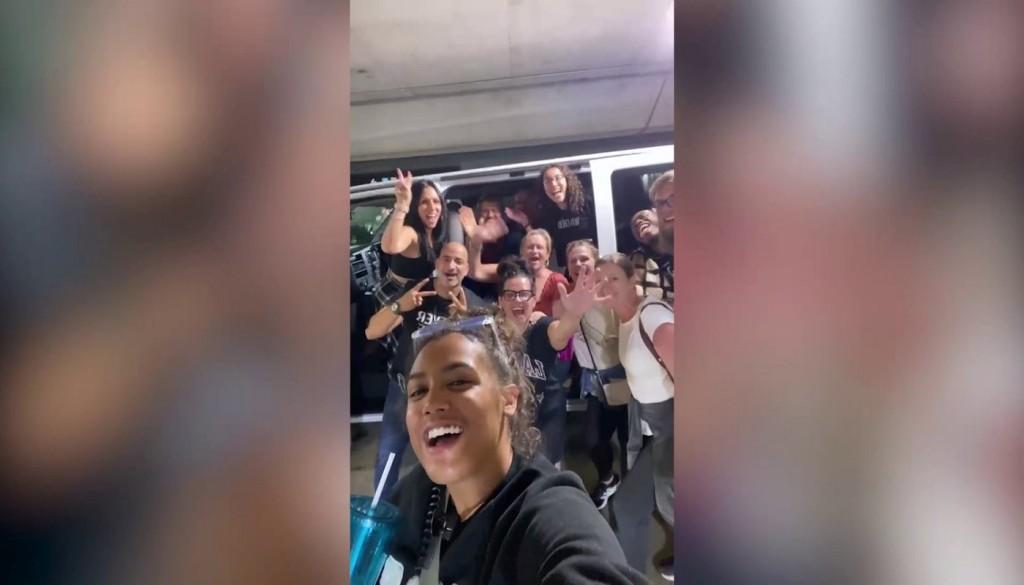
A group of strangers banded together to rent a 15-person van after their flight was cancelled and went on a eight-hour road trip to their destination. See SWNS story SWSMvan. Alanah Story, 23, was travelling from Orlando, Florida to Knoxville, Tennessee when her flight home was cancelled. She had been visiting her family in Orlando with her mother Renee, 45, and her godmother, Robin, 50. Alanah and her family arrived at Orlando International airport for their 7 pm flight but found out that it was delayed. After waiting over an hour, their flight was eventually cancelled, leaving the group with little recourse to make their appointments on time. Alanah's mother Renee tried to get them booked on another flight but the airline Frontier was unable to give them assurances that they will be able to flight out that night. While at help desk, Renee met Carlos, a police officer also heading to Knoxville to visit the University of Tennessee with his daughter Michaela. The two agreed that they could rent a van and drive to Knoxville, located over 1,000 km (650 miles) away from Orlando. They suggested the idea to several passengers and they were able to gather a group of 13 passengers.
– SWNS
A determined mother’s positive thinking got her daughter home when her flight was canceled by helping to organize other stranded passengers to pitch in for a rental car.
Alanah Story was set for a 7:00 PM flight from Orlando to Knoxville when like so many others this year, it was delayed, then canceled.
Alanah’s mother Renee tried to book them on another flight, but Frontier Airlines was unable to give them assurances that they will be able to fly out that night.
While at help desk, Renee met Carlos, a police officer who “doesn’t argue” and was also heading to Knoxville for a 10:00 AM appointment with his daughter the next morning at a university. The two agreed that they could rent a van to drive there.
“I was off to one side because I didn’t want to be involved, my mom just turned to me and said ‘we’re headed downstairs to get a van, come on people!'” said Alanah. “Like 15 people followed her, I was just wondering what was happening.”
What was happening was that Carlos and Renee had suggested the idea to several passengers and they were able to gather a group of 13.
Among the rest of the group were Johan and Adolf, from Mexico, Michelle, who was headed to a farming convention in Knoxville as a keynote speaker, and Q, who was simply trying to get home.
What started as a journey of convenience, ended after 650 miles, paced over 10 hours, with some brand new friendships.
“We made our 10:00 AM appointment, all because of a community that came together,” said Carlos in a video he posted to his TikTok.
Seth, another traveler, added that he “tried to nap a good bit, but I’d like to think that I was good moral support to Carlos, the driver, so I’m gonna go with that.”
“It was not a quiet ride,” Alanah said, “no one was getting any sleep on that drive, I think I slept around 20 minutes. I really couldn’t have picked a better group of people to make the trip with.”
Alanah made friends with Q, who lives in Knoxville, and the two are planning on going out for karaoke soon. Carlos’ wife Lauren and Alanah’s mother Renee have also kept in touch.
“The whole experience really confirmed my faith in humanity for a little bit, in the States right now we’re going through a period of division, so it was nice to see.”
In the end, all the passengers managed to keep their appointments, Carlos’ daughter made it to the university appointment and Michelle was able to deliver her speech as the keynote speaker.
ALANAH interviewed the whole gang, take a look!
SHARE This Bit Of Good Organization With Your Friends…
Quote of the Day: “Reflect upon your present blessings of which everyone has many—not on your past misfortunes, of which all people have some.” – Charles Dickens
Photo by: Lin Po-Tsen
With a new inspirational quote every day, atop the perfect photo—collected and archived on our Quotes page—why not bookmark GNN.org for a daily uplift?
New author Chelsea Banning tweeted to being “a little embarrassed” after the first book signing of her first book was attended by no one but her two friends.
A blessing in disguise it was, as her tweet somehow attracted a large crowd of authors ranging from successful to legendary, sharing their own stories of book-signing flops.
The first to comment was bestselling crime author Linwood Barclay.
“Once sat out front of mall bookshop for a signing,” Barclay tweeted. “No one stopped, until the very end, when an old guy paused, looked at me, looked at the books, looked at me, approached and asked, ‘Do they sell flags here?’”
This was followed by even more famous names: maybe you’ve heard of them.
Terry Pratchett and I did a signing in Manhattan for Good Omens that nobody came to at all. So you are two up on us.
Banning was optimistic upon arriving at Pretty Good Books in Ashtabula, Ohio, on the release weekend of her novel Of Crowns and Legends. She had secured 37 RSVPs for the signing, but only two friends came who she chatted to before becoming disappointed that no one else showed up.
“I have sat lonely at a signing table many times only to have someone approach … and ask me where the bathroom is,” serial author Jodi Picoult chimed in.
Fonzy actor Henry Winkler, who mused that it was only the beginning, and Flavor Flav of all people piled on as well, with the latter saying “Here to hype up ya next signing!”
Sales of her book on Amazon have skyrocketed, and she admitted to the Guardian to being “elated” and “definitely reassured.”
At the end of her career, there’s every chance it will be the most memorable book signing of them all.
SHARE This Heartwarming Story On Your Own Twitter…
Some of the best conservation stories in history begin by properly organizing and regulating the hunting of that animal, and the “pirarucu” or arapaima, of the Amazon River Basin is a perfect example.
It used to take fishermen five days or more to land one, but sustainable fishing laws have have quadrupled their adult populations in some waterways, and increased them 10-fold in others.
The pirarucu is a prehistoric beast of a fish, with a gaping maw, red scales, and under-developed fins. They can weigh as much as 450 pounds (220 kilos) and grow 10 feet in length (3 meters).
Famous TV fisherman Jeremy Wade recorded an episode of his show River Monsters about reported pirarucu attacks on people; such is their monstrous size.
But for fishermen, who trap them with nets and wooden clubs, a single large adult inspires joy rather than dread, and can fetch $100—a major boon to their families who get by with subsistence farming outside the short fishing season.
During the 1960s, improved boat motors, ice machines, and fishing equipment led to overfishing of the pirarucu, and it wasn’t until the 90s that river-dwelling locals, indigenous communities, and Dutch missionaries banded together to petition the government for protection of the area from illegal fishermen.
In 2011 the managed fishing began, and every year since then fishermen row out to the lakes and floodplains of regions like Carauari, São Raimundo, Mamirarua, and Medio Jurua to count the pirarucu adults.
Along with being the largest fish in the Amazon Basin, they are also unique in that they need to surface for air—which like whales they sometimes do by slapping the water with their bright red tails.
The numbers are reported to environmental authorities, and 30% of that number is allowed to be caught in a three-week period of September the following year when water levels are lowest. Each one caught is tagged so buyers in Manaus—a large city three-days journey down the river, can be sure it wasn’t poached.
According to AP, there were 1,335 pirarucus in the São Raimundo region in 2011. Last year, there were 4,092 specimens, according to their records.
In the Carauari region, the number of pirarucu spiked from 4,916, in 2011, to 46,839, ten years later.
“Our pirarucu is so tasty, everybody that eats it falls in love with it and wants more,” Rosilda da Cunha, a sister of Manoel who lives in Sao Raimundo, told the AP.
The money these extremely rural communities make from this fishing is allowing them to buy solar panel arrays to supplement the diesel generators they use for electricity.
In America, every charismatic bird and mammal seemed to have its own brush with extinction. Regulated hunting was a piece of the conservation puzzle that led to massive recoveries—some of which led to flourishing of greater numbers than were seen when the Pilgrims landed at Plymouth.
SHARE This Brilliant Fish And Its Bounty On Social Media…
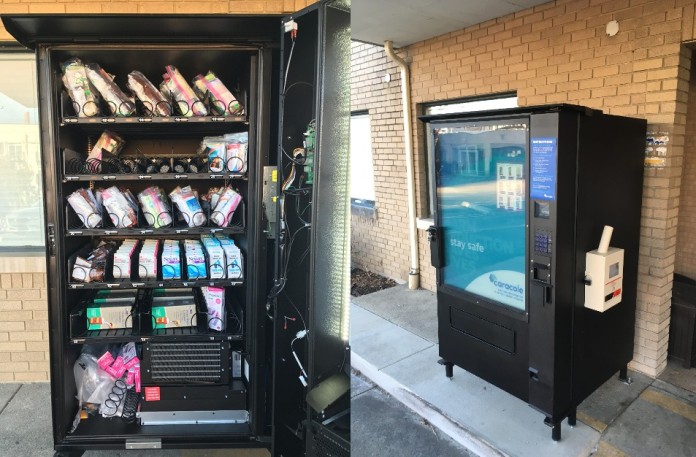
Wanting to see if a simple idea could help a huge problem, a Cincinnati health center filled a vending machine with overdose prevention equipment and asked a university to record its uses.
From February to November in 2021, a call center registered 637 anonymous people for the program giving them an access code to the vending machine, which then distributed 3,360 naloxone doses and 10,155 fentanyl test strips.
Located in Hamilton County, Ohio, the machine is credited for a reduction in drug overdose deaths—as well as HIV incidence—and is still operating at the Caracole HIV/AIDS treatment center.
A University of Cincinnati scientist studying its effects, Daniel Arendt, described the method as “harm reduction,” which acknowledges that some people always have used drugs, and probably always will, even if they are potentially lethal in large doses.
Harm reduction, as the Univ. of Cincinnati press release describes, is a paradigm that “does not support or enable drug use, but instead aims to empathetically meet people where they are in the course of their drug use and help empower them to take steps which minimize the potential hazards associated with its use.”
To this end, program participants were able to visit the vending machine 24/7, away from prying eyes and judgmental glances.
Naloxone is the drug that can counteract opioid overdoses, and the test strips can test drugs, like heroin, that can potentially contain fentanyl. The machine also has safer injection kits, tourniquets, and bandages.
The machine was first conceived, put together, and operated by Caracole, an HIV/AIDS service organization in Cincinnati with the help of their non-profit partner Interact for Health.
“If you are interested in stopping, we’re here to help,” said Arendt. “But if not, we aren’t going to turn you away and refuse to help. We are going to work with you and help you take steps that will help keep you safe.”
Some of the results are extremely encouraging. At the time the study was published, clients reported 288 overdoses were reversed with naloxone, a number which almost reached 1,000 by the time of writing. More than two-thirds of those who reenrolled after their first enrollment detected fentanyl present in the drugs they were consuming.
“You would never tell someone who has wildly uncontrolled diabetes to get their blood sugar in check before we will help them or give them insulin,” Arendt said.
“So it is critical to recognize that substance use is not a moral failing, and it’s not this thing that should be stigmatized. Instead, we can acknowledge that drug use is becoming increasingly risky, and we can use that recognition to help spur the development of new, innovative methods of providing people with the care, services and support that they need, no strings attached.”
These sorts of vending machines have some data of their use in Europe that show they do help, and Arendt’s data is the first research done in America, despite such machines being located in Las Vegas and Puerto Rico.
Editor’s note: This story has been altered to correctly reflect Caracole’s inception and leadership of the project, and that the machine is still where it was found during the study period.
SHARE This Compassionate And Hopeful News With Your Friends…
Human beings have a well-known urge to leave marks of our passing on things we interact with, and a new state-of-the-art 3D scan of a Medieval manuscript has shown just that.
“Eadburg” was her name; an 8th century scribe translating the Acts of the Apostles during the Monastic period in England from Latin into Old English, who left her name and several stick-figure like drawings on the manuscript.
Questions abound—she used no ink, only the dry point of her quill; her full name was etched into the manuscript’s margins five times, while abbreviations appear another ten times.
The 3D imaging of the manuscript was carried out at the Bodleian Library at Oxford, under the work of the ARCHiOx Project of using a new technology to scan many of the library’s most treasured artifacts for exactly this kind of hidden information.
“It’s a hugely significant and very powerful text—the word of God, conveyed through the apostles. And I think that might be at least part of the reason why somebody chose to write Eadburg’s name into it, so that she was close to that,” said Jessica Hodgkinson, a Ph.D. student at the University of Leicester who made the discovery.
The manuscript also includes two doodles—there’s no other way to describe them—of a person with outstretched arms and a second who is turning their back on the first, with a hand raised in protest trailing behind.
Hodgkinson hopes to study the names and doodles further in the coming months, as well as perhaps try to pinpoint who Eadburg might have been.
Since those who could speak and write both Old English and Latin were among the most educated in society during the 8th century, it’s possible records of the woman scribe exist, in particular, Hodgkinson has found, an abbess from Kent with the same name.
“We don’t know all that much about Eadburg, but now, because of this amazing technology, we’ve seen her name, we know she was there,” said Hodgkinson. “She’s here, in this book —and it speaks across the centuries.”
Quote of the Day: “Difficulties illuminate existence, but they must be fresh and of high quality.” – Tom Robbins
Photo by: Louis Hansel
With a new inspirational quote every day, atop the perfect photo—collected and archived on our Quotes page—why not bookmark GNN.org for a daily uplift?
The Acoustical Society of America is 3D-printing violins to make the instrument more affordable for hundreds more children and adults who want to learn how to play.
Learning how to play music with a poorly built instrument can lead to poor technique, but quality violins are thousands of dollars.
The society’s AVIVA Young Artists Program is using a specially engineered plastic polymer substance that replicates the tonal qualities of a traditionally built violin. The neck and fingerboard are also printed in plastic to ensure a comfortable grip for musicians.
“There’s nothing quite like the sound of a [well-made] violin,” said program director Mary Elizabeth Brown. “Building such a quality string instrument takes time, perfect materials, and a lot of skill, and the best ones can cost millions of dollars.”
“Even mediocre violins can cost thousands, which puts them out of reach for most beginners and music classrooms.”
AVIVA has helped kids of all ages pursue music, particularly with violins, and has described the sound as darker and more mellow than a normal violin.
“Our goals were to explore the new sound world created by using new materials, to leverage the new technology being used in other disciplines, and to make music education sustainable and accessible through the printing of more durable instruments,” said Brown.
Violins aren’t the first instrument to be 3D-printed, Interesting Engineering details that guitars and saxophones have also been printed.
For anyone looking to be notified when the AVIVA Young Artists program is in their area, and printed violins are available, they can join the program’s mailing list.
SHARE This Cool Innovation With Someone Who Wants To Learn…
The world’s first solar car has begun production—a 4-5 passenger EV that hails a new chapter in automotive history.
The Dutch company Lightyear officially commenced assembly of its first vehicle, aptly titled ‘Lightyear 0’, becoming the first automotive firm to manufacture an electric vehicle that generates a realistic amount of charge via sunlight.
Taking advantage of as much body space as possible with their 5 curved solar arrays totaling 53 square feet, the Lightyear 0 (formerly the Lightyear One; see more pics here) charges wherever there is daylight, whether parked or on the move.
Lightyear claims the model can yield up to 40 miles of free range per day from the sun alone (70 km), explaining, “with an infinite power source like that on its roof, Lightyear 0 can drive for months without charging.”
Non-solar charging can be achieved by plugging into a regular home socket, which will offer over 186 miles (300 kilometers) of of range overnight.
“After six years of developing its own technologies, Lightyear has surpassed one of the most challenging phases for new automotive companies: entering the market with novel technology,” said the company in a statement.
Lightyear 0 solar panels on roof
At the Valmet Automotive facility in Finland, the firm plans to produce one of the cars every week—priced at around $255,000 (£216,000), with plans to scale up production in the first quarter of 2023 to help wealthy city-drivers decarbonize.
If in the next 10-20 years solar panels can become greater producers of energy, electric cars would finally circumvent the criticism that just because a car uses electricity and not fossil fuels, doesn’t mean its any better for the environment since most electricity is generated through fossil fuels.
“We have hit many milestones in recent years, from major funding achievements to great partnerships,” said Lex Hoefsloot, CEO and Co-Founder of Lightyear. “However, today is the most significant, and probably the most challenging, milestone we have reached so far.”
“Starting production of Lightyear 0, the first solar car, brings us a big step closer to our mission of clean mobility for everyone, everywhere. We may be the first to achieve this, but I certainly hope we aren’t the last.”
WATCH a word from the company…
SHARE This Story Of Solar Cruising On Social Media…
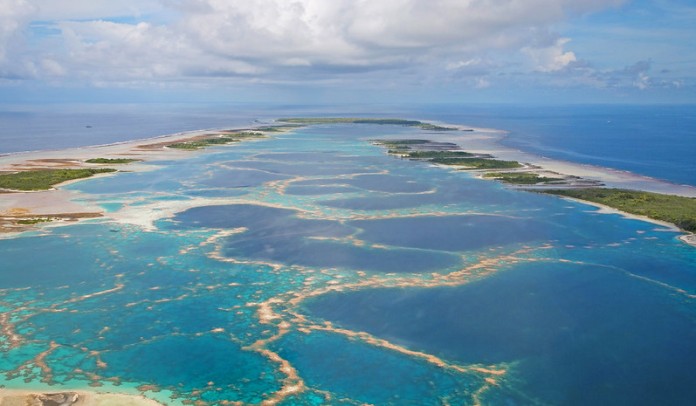
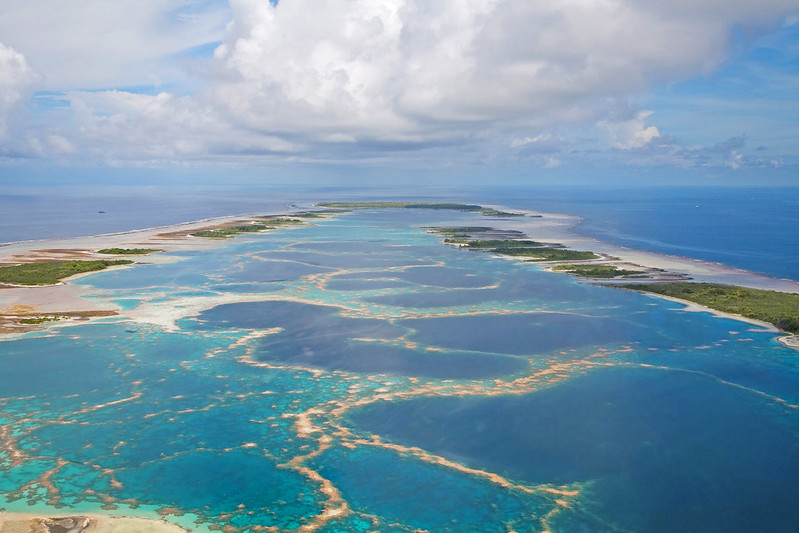
Millennium atoll one of the Southern Line Islands - CC 2.0.
Millennium atoll one of the Southern Line Islands – CC 2.0.
As remote as they were beautiful, the coral reefs around the 5 volcano tips making up the Southern Line Islands dazzled National Geographc explorers in 2009 during a visit.
Remarking that they re-painted the image of what a pristine coral reef looks like—bursting with color and life—the team of the Pristine Seas Expedition had been crushed when a record-warming even in 2015 called El Niño caused mass coral die offs.
Then a return in 2021 revealed a remarkable scene—bright healthy corals teeming with life as far down as 100 feet off the island slopes. After record numbers of coral deaths, a team member estimated their populations averaged around 43 million to 53 million coral colonies per square mile.
The Southern Line Islands belong to the Pacific island nation of Kiribati, and Enric Sala, a marine biologist and member of Pristine Seas, detailed that it took longer to reach them by plane and boat than it took the astronauts of the Apollo missions to land on the Moon.
During the 2017 trip to Vostock, Flint, and Millennium islands, the vast swaths of cauliflower corals, pocillopora were all gone, while the species acropora was also hard hit. Some other species were less damaged however, giving the Sala, who was preoccupied at the time and didn’t get to join the 2017 trip, hope they could recover.
In fact, the expedition found promising signs the reef could do just that, since rather than being covered with seaweed, the dead corals were covered in “crustose coralline algae” a marine plant which coral larvae can latch onto to build new reefs in the same way that a brick latches onto mortar.
Sure enough, this foundation led to near-total regeneration of the reefs around the Southern Line Islands.
“The reef was covered by light-blue corals that looked like giant roses—a garden of Montipora aequituberculata stretching as far as I could see,” says Sala.
Since the Southern Line Islands are so remote, no one was keeping an eye on how the corals were able to regrow so significantly, but Sala has an idea. Since most of the montipora were the same size, it’s possible that one or two massive coral spawning events, where they reproduce and launch their eggs out into the sea before the larvae rain back down on the reef, are enough to repopulate large areas of dead corals.
Its resilience earned it the moniker of a “super reef” among the crew.
“The corals that were resistant to the phenomenal 2015-16 El Niño provided the reefs’ resilience,” wrote Sala. “The Southern Line Islands lie in one of the hottest hot spots of warming in the Pacific Ocean, so the corals apparently have adapted to heat.”
As for the flush of the mortar-like crustose coralline aglae over the dead corals as opposed to seaweed, Sala chalks it up to the out-the-wazoo numbers of grazing fish like zebrafish, parrotfish, surgeonfish, and others that would simply devour any seaweed before it could overgrow the coral.
Kiribati’s government has ensured that these seas which have never seen large-scale commercial fishing, will never see it, and now make up the Southern Line Islands Marine Protected Area (SLIMPA)
DON’T miss this mini-doc from Nat Geo on the 2009 expedition…
SHARE This Story of Marine Magic With Your Friends…
If you don’t mind the nip of the cold, this month’s celestial phenomena are ones to watch, and include a Nutcracker ballet between the Moon and Mars, and the king of the meteor showers.
Mars is at its brightest this December between the 7th and 8th, when an occultation occurs. This is the passing of the Moon directly across Mars, and will take place between late night on the 7th and early morning on the 8th, depending on your location.
Mars will also partake in a pas de deux with the Sun when on the night of the 8th, the Red Planet will be perfectly framed with the light of the sun passing around the Earth. The surface details of Mars will be visible with telescopes and binoculars on this night.
Orbiting back to the Moon, it will be full on the 8th of December, and is the last full-moon of autumn.
The full moon this month is known as the Cold Moon, for obvious reasons. The Old Farmer’s Almanac has collected the traditional names for moons from the Native Americans, and they are as follows: Drift Clearing Moon (Cree) Frost Exploding Trees Moon (Cree), Moon of the Popping Trees (Oglala), Hoar Frost Moon (Cree), Snow Moon (Haida, Cherokee), Winter Maker Moon (Western Abenaki), Moon When the Deer Shed Their Antlers (Dakota), Little Spirit Moon (Anishinaabe), and Long Night Moon (Mohican).
Also in December is the Winter Solstice, the last day of autumn and the longest night of the year.
On that same night there will be a good time to see Mercury, as it rises to its highest point in the sky this year, and farthest away from sunset.
Between December 7th and the 17th, the Geminid Meteor Shower will pelt the sky with 120 multi-colored streamers per night with peak pelting occuring between the 13th and the 14th.
Between the 17th and Christmas, one can also see the Ursid Meteor Shower, which is less spectacular and more for meteor junkies and the hipster-class of celestial phenomenon viewers.
Meteor showers were named once upon a time after the constellation from which they appear to originate from—the Geminids from Gemini, and the Ursids from Ursa the Bear.
Look to the east around 2:00 AM to see the Geminids at peak, and the North to see the Ursids—the New Moon on December 23rd will offer the best chance to see this sparser showing.
Quote of the Day: “The bad news: There is no shortcut to success. The good news is, it’s doable.” – Don Santo
Photo: Joshua Earle
With a new inspirational quote every day, atop the perfect photo—collected and archived on our Quotes page—why not bookmark GNN.org for a daily uplift?
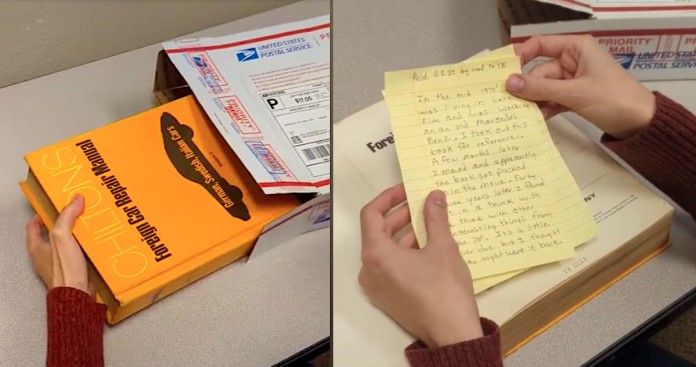
47 years ago, a Minnesota man walked into his local library and took out a book that subsequently got lost during a move.
Now, nearly half a century later, he returned the book with an apology letter and a donation to cover the cost of a new book.
He returned it anonymously, and over the mail—”wisely” as local news WREG Memphis described it, “thereby avoiding the disapproving glare of any librarians at the front desk.”
The book was “Chilton’s Foreign Car Repair Manual” and was checked out in 1975 from Lake Elmo location of the Washington County Library, and it included the following explanation:
“In the mid-1970s, I was living in [Lake Elmo] and was working on an old Mercedes Benz. I took out this book for reference. A few months later I moved and apparently the book got packed up in the move. Forty-seven years later I found it … in a trunk with other interesting things from the ‘70s. It’s a little overdue but I thought you might want it back,” the borrower wrote.
“My apologies to anyone in Lake Elmo who was working on an old Benz in the last 47 years. I probably can’t afford the overdue charge but I will send you enough for a new book.”
The librarians contacted were just happy to have the book back, and seemed charmed enough by the gesture. They wrote on the library Facebook Page that they no longer charge daily late fees, but only flat replacement fees if the book was lost or damaged.
They intend to use the money to buy a more updated version, as the pages of the returned book were yellow as grain mustard, and the pictures sill in black and white.
SHARE This Cute Local Library Story With Your Friends…
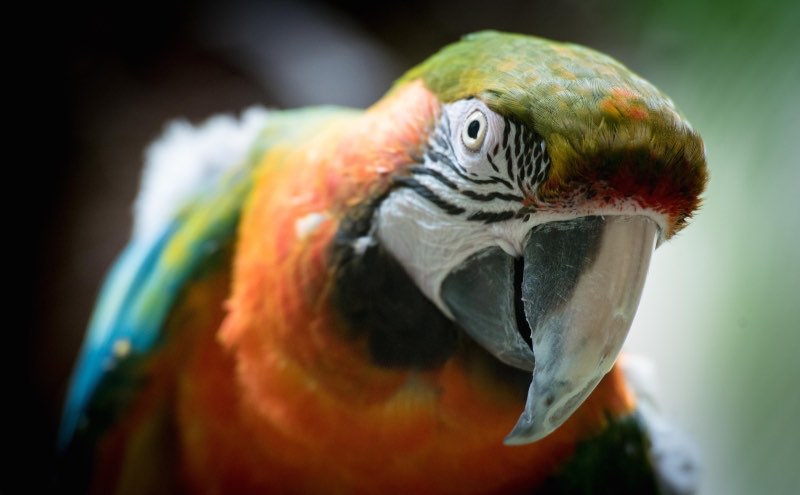
Did you know that parrots know when to use the phrases they mimic from their owners? That’s just one fascinating discovery that has come out through a large crowdsourced dataset on mimicry among parrots.
In a project entitled “What Does Polly Say?” 900 parrot owners answered a survey about the speaking habits of their birds, of which 73 species were represented. The results indicated that parrot vocal learning varies from without, but not so much from within species, suggesting that the mechanisms and functions of learning also vary.
No other species has been found to use true language, a term scientists use to distinguish between it and vocalization, in which animals use sounds to communicate. Where the line is drawn probably lies on top of decades of scientific arguments.
However parrots can command pretty astonishing mimicry skills that not only include mimicking accents, but also improvisation (e.g. rearranging words) and using what they learn in appropriate human contexts.
Despite these amazing abilities, the birds’ gregariousness varies based on unexpected grounds. Age and gender were poor predictors of mimicry: a 50-year-old parrot had the some vocal repertoire as a 5-year-old parrot on average, and whether the sex of the bird was male or female also didn’t alter the performance.
What did affect it was the species. African gray parrots are long known master mimics, which came out in the survey data. They are capable of producing repertoires of 60 words, while amazons, cockatoos, and macaws all managed 20-30 words.
As most genders in most species didn’t vary on words, there were some variations on other behaviors.
Budgerigar males had larger vocal repertoires than females, and male Pacific parrotlets were the only ones that would “talk.” Among yellow-headed amazons, the females learned more sounds, but of all these differences, they were statistically insignificant.
But perhaps the coolest finding in the data was that 89% of parrots understood how to use their mimicry in exactly the right context as a human would.
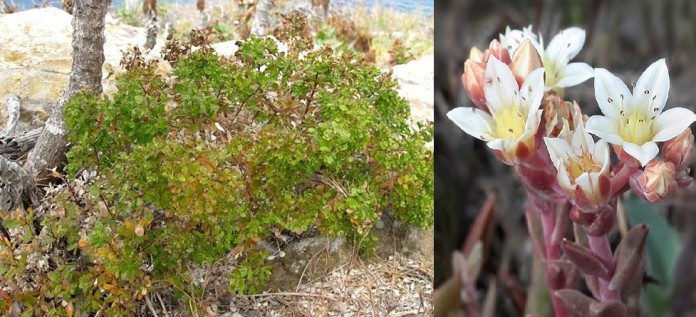
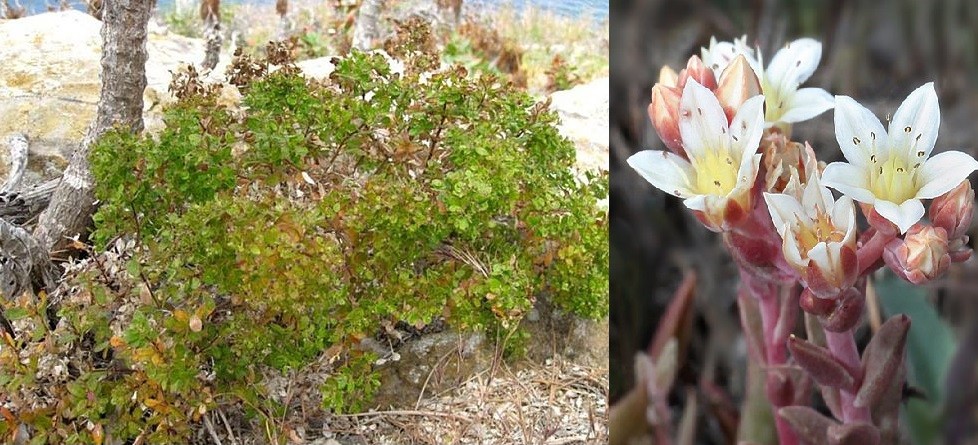
Island Bedstraw and the Santa Cruz liveforever – CC John Game
Two plants that live on California’s Channel Islands and nowhere else on earth have reached recovery thanks to Endangered Species Act (ESA) protections.
The Santa Cruz Island dudleya and island bedstraw are now recommended for delisting after the Fish and Wildlife Service restored their population to flourishing levels with the help of partners like the Nature Conservancy.
The ESA is the most successful conservation legislation of any nation, preventing 99% all species listed since 1973—around 291—from going extinct.
In 1997, the Service determined 13 plants on California’s northern Channel Islands needed ESA protections as a result of decades of habitat loss and alteration due to sheep grazing and soil loss caused by rooting of non-native feral pigs.
By 2000, sheep grazing ended, and by 2006, all non-native feral pigs were removed from the islands. In 2000, the Service worked with botanists and land managers to develop a recovery plan to guide recovery efforts for the imperiled plants.
Island bedstraw (Galium buxifolium) is a long-lived woody shrub with small flowers that lives on coastal bluffs, steep rocky slopes, sea-cliffs, and occasionally pine forests, on Santa Cruz and San Miguel islands. At the time of listing, population estimates were in the hundreds. Helicopter surveys from 2017 estimate more than 15,000 individual plants now occur on the islands.
The Santa Cruz Island dudleya (Dudleya nesiotica) also known as the “liveforever” is a flowering succulent perennial that lives on Santa Cruz Island. Scientists say the population has remained relatively stable over the last 25 years, with current estimates around 120,000 individuals.
“The recovery of these island plants is the result of long-term cooperation and conservation efforts by scientists and land managers,” said Paul Souza, director of the U.S. Fish and Wildlife Service’s Pacific Southwest Region. “That’s what the ESA can bring to the table – attention, resources, and incentive for sustained conservation work that produces meaningful results.”
Quote of the Day: “Let go of the thoughts that don’t make you strong.” – Karen Salmansohn
Photo: Nathan Dumlao
With a new inspirational quote every day, atop the perfect photo—collected and archived on our Quotes page—why not bookmark GNN.org for a daily uplift?
The Lesson: Newman’s Own brand pizzas, pasta, lemonade, salad dressing, etc. has raised $600 million through its for-profit operations and its purpose-driven foundation, in what is now its 40th year of operations since Paul Newman first bottled up his homemade salad dressing, caused a market craze, and then gave away all the money he earned that fiscal year. Now following the actor’s death in 2008, the foundation gives away all the profits and royalties from its sales in order to support children—nutritionally and otherwise—for children that face adversity.
Notable Excerpt: “We look at food as one of the essential school supplies. It’s hard for a child to learn if they aren’t well-nourished, and when a kid grows something, I can tell you they love everything they grow; but it’s even more than that. That’s critical but it’s also changing the system and that’s really what our foundation is all about is really thinking about the ecosystem change.”
The Guest: Dr. Miriam Nelson is an international leader, scientist, author and social entrepreneur renowned for her extensive research, policy work, and civic action in public health, children’s wellness, sustainability, and food systems. In her current role as the President and CEO of the Newman’s Own Foundation, she is leading the Foundation’s new and more focused mission to nourish and transform the lives of children who face adversity.
In addition to authoring the bestselling Strong Women books, a series of ten including five New York Times bestsellers that provide evidence-based strategies to help woman live strong and healthy lives (more than one million copies in 14 languages), she has authored or co-authored more than 100 scientific studies, research papers, and policy reports, many of them introducing groundbreaking findings.
The Podcast: Livin’ Good Currency explores the relationship of time to our lives. It focuses on learning how super-successful people align their purpose with their passions to do good for themselves and others daily, and features a co-host who knows better than anyone the value of time (see below). How do you want to spend your life? This hour can inspire you, along with upcoming guests, to be sure you are ‘Livin’ Good Currency’ and never get caught running out of time.
The Hosts: Good News Network fans will know Tony (Anthony) Samadani as the co-owner of GNN and its Chief of Strategic Partnerships. Co-host Tobias Tubbs was handed a double life sentence without the possibility of parole for a crime he didn’t commit. Behind bars, he used his own version of the Livin’ Good Currency formula to inspire young men in prison to turn their hours into honors. An expert in conflict resolution, spirituality, and philosophy, Tobias is a master gardener who employs ex-felons to grow their Good Currency by planting crops and feeding neighborhoods.
Are you ready to start your health journey today? Go to viome.com/goodcurrency to get $50 off Viome’s Full Body Intelligence test or bundle, the most advanced at-home health test currently available to consumers. Use Promo Code: CURRENCY50
Join us and over 400,000 like-minded people who have already discovered the Viome difference. Get personalized and precise recommendations on how to optimize your health and help you function at peak performance.
Seven banded armadillo, a natural carrier of leprosy, by Warren Garst – CC 4.0
Seven banded armadillo, a natural carrier of leprosy, by Warren Garst – CC 4.0
Leprosy has appeared in medical literature as far back as there has been medical literature, but its latest appearance doesn’t involve talk of a treatment or cure, but rather a unique ability the parasites that cause leprosy have to regenerate livers.
The findings suggest the possibility of adapting this natural process to renew aging livers and repair damaged ones to increase health span in humans and remove a significant number of those waiting on liver transplant lists.
Working with the US Department of Health and Human Services in Baton Rouge, Louisiana, a team from the Univ. of Edinburgh observed that the livers of 57 armadillos, a natural carrier of the leprosy parasite, were enlarged compared to uninfected ones, but healthy and without damage.
“If we can identify how bacteria grow the liver as a functional organ without causing adverse effects in living animals, we may be able to translate that knowledge to develop safer therapeutic interventions to rejuvenate aging livers and to regenerate damaged tissues,” said Professor Anura Rambukkana, lead author from University of Edinburgh’s Centre for Regenerative Medicine.
Inside, the team found the infected livers demonstrated gene-expression similar to those of young livers or even fetal livers, suggesting that the “rejuvenated state” observed in the liver cells was due to their biological age being reversed.
Genes related to metabolism, growth and cell proliferation were activated and those linked with aging were down-regulated, or suppressed.
Scientists think this is because the bacteria reprogramed the liver cells, returning them to the earlier stage of progenitor cells, which in turn became new hepatocytes and grow new liver tissues.
The team are hopeful that the discovery has the potential to help develop interventions for aging and damaged livers in humans. Liver diseases currently result in two million deaths a year worldwide.
This is not to be construed as a PSA to go find an armadillo to kiss if you have a liver disease.
























 The manuscript also includes two doodles—there’s no other way to describe them—of a person with outstretched arms and a second who is turning their back on the first, with a hand raised in protest trailing behind.