When a father and son’s fishing boat hit rocks out from Boston Harbor, their lives were saved in part thanks to their desire for some liquid libations on board.
While the headline sounds like a barrel of laughs, 15 minutes of frigid Atlantic waters almost caused the pair to enter hypothermia.
Two officers from the Boston Harbor police unit were on patrol when they got the call about a sinking ship.
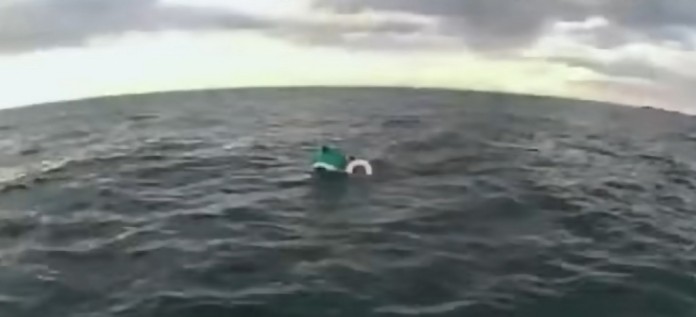
When they arrived on the scene, all that could be spotted bobbing about was a turquoise cooler, on which were dangling a pair of life-preservers.
The whole rescue was caught on the officers’ body cameras, during which the son requests that the police help his father up before himself.
Again, what appears in the video to be a simple act of pulling oneself onto a boat belies the fact that the simple act of recruiting muscle fibers becomes extremely difficult since cold transmitted through water immersion chills the body 25x faster than air.
Both men are no worse for wear for their time at sea, and the cooler was presumably saved and set aside for the next time they cast off.
WATCH Inside Edition go through the body cam footage…
SHARE This Remarkable Rescue Story And The Heroic Cooler’s Actions…
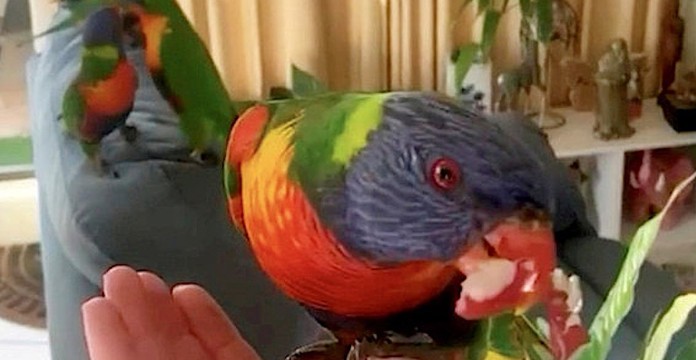
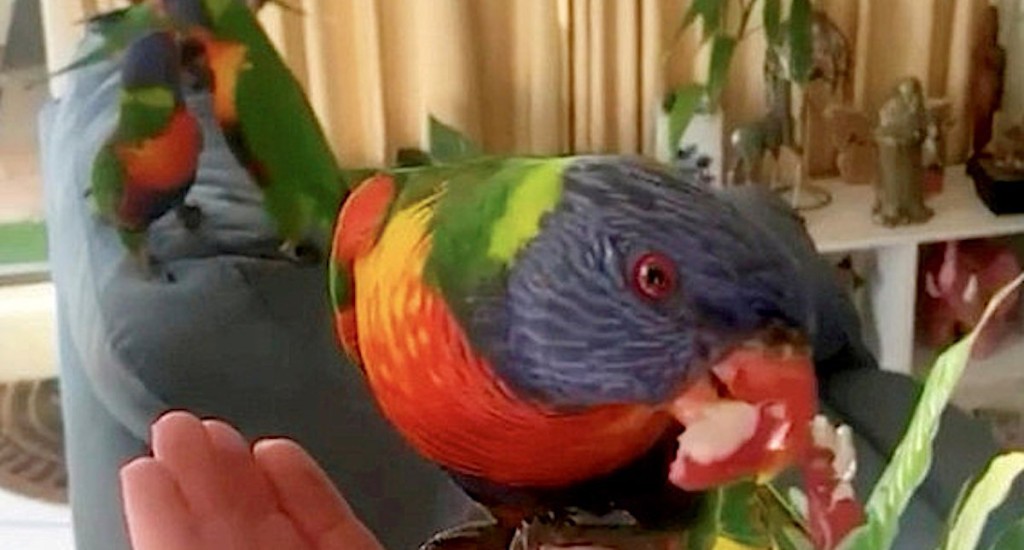
Video grab of the flock of wild lorikeet birds inside Georgina Brough and Christian Allen's apartment in Gold Coast, Australia See SWNS story SWFSlorikeet. This Aussie couple gets daily visits from a group of wild lorikeet birds who broke in 1 year ago and now want to hang out in their apartment every day. Georgina Brough and Christian Allen, both 21, had their first visit from the birds in early 2021 when they broke in through their balcony door hoping to score some lunch.The birds lived in trees opposite their apartment and the couple often spotted them watching ‘hopefully’ as they would eat lunch outside.After leaving their door open one summer morning, the birds saw their opportunity and broke in - beginning their daily visits.
By Georgina Brough and Christian Allen via SWNS
Georgina Brough and Christian Allen get daily visits from a group of wild lorikeets—birds that broke in a year ago and now want to hang out constantly.
The new feathered friends first visited the young couple in early 2021.
They flew in through their balcony door hoping to score some lunch at their apartment in Australia.
The birds lived in trees opposite their patio table and the couple often saw them eyeing ‘hopefully’ whenever they would eat lunch—especially grapes—outside.
After leaving their door open one summer morning, the birds saw their opportunity and broke in, which began their daily visits.
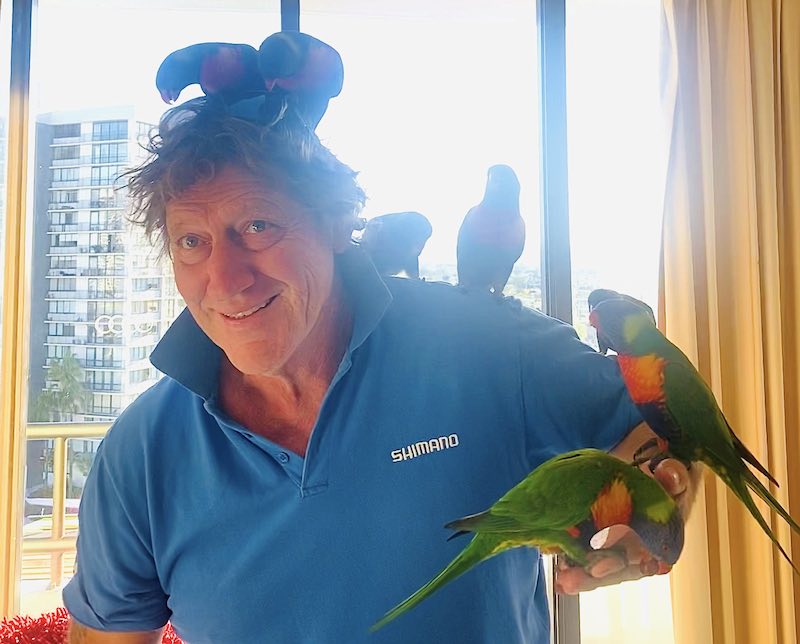
Georgina, who is a bartender, and Christian, who is a laborer, said the lorikeets will watch TV with them, sit on their laundry, hang out on their couches—and would probably explore the apartment all day if they were allowed.
“They are super friendly birds,” said Georgina. “We can touch them and hold them, so naturally we love them.”
By Georgina Brough and Christian Allen via SWNS
The couple, who are both 21-years-old, described one downside of their visitors: They are ‘super loud’ and frequently wake up the couple, begging for more grapes.
Quote of the Day: “Sometimes your only available transportation is a leap of faith.” – Margaret Shepard
Photo by: Stuart Anthony
With a new inspirational quote every day, atop the perfect photo—collected and archived on our Quotes page—why not bookmark GNN.org for a daily uplift?
A company is seeking to target the worst aspects of wasteful fast fashion and demonstrate and economically-profitable circular economy with that most standard of garments—the t-shirt.
Utilizing the second-largest source of cotton on Earth, Teemill’s business model is making mass-produced t-shirts from mass-produced t-shirts.
These days, if you’re having a corporate event, a good idea is to print 100 cotton t-shirts to commemorate it. Going on tour and looking to drum up some merchandise money for your band? Print 500 cotton t-shirts to sell at the merch booth.
Trying to keep the World Wildlife Fund’s profits going? Print 10,000 cotton t-shirts to send to donors.
In the world of fast fashion, the ubiquity of the casual t-shirt with something printed on it seems immeasurable in scope.
That’s where Teemill comes in. Claiming a truckload of clothes is dumped in a landfill or burned around the world every second, they’re trying to get a handle on this waste flow by cutting off the t-shirt spigot.
Every t-shirt bought from Teemill can be sent back, ground up into cotton fibers, sterilized and remade into new t-shirts in a pair of carbon-neutral factories powered by renewable energy.
“We get told constantly as consumers ‘change what you buy, make better choices, educate yourself, do your bit.'” explains Teemill Co-founder Mart Drake-Knight in a TedX about his experience entering into sustainable fashion.
“So when we tried to do our bit and buy products made from organic materials… or products that are designed in such a way that they don’t eventually end up in a landfill, it’s like they don’t exist. Actually the more we looked, the more we learned that almost everything in the world seems to be made in the exact same way.”
– Teemill
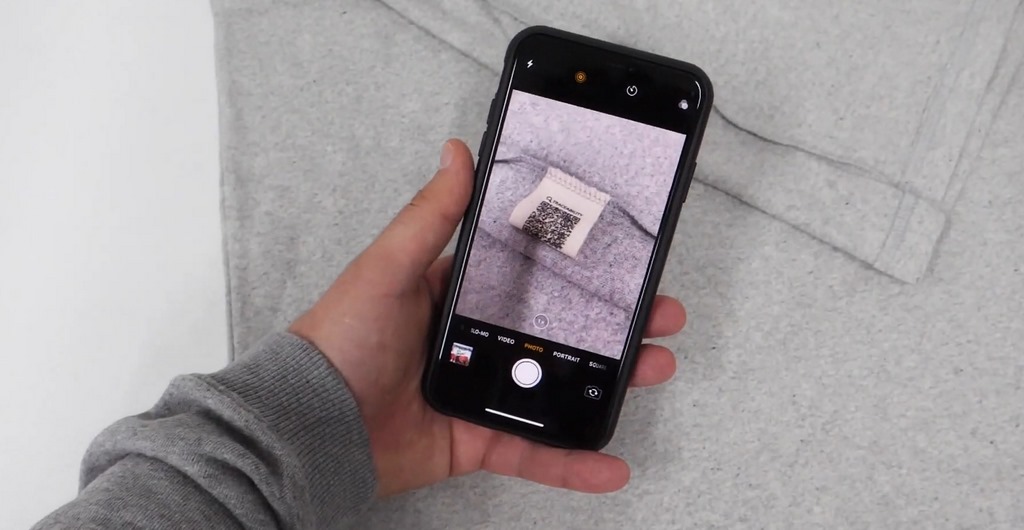
The torso tag on every shirt comes with a QR code that when sent back to Teemill is scanned and worth a little rebate. In this way the consumer also becomes the supplier, and where Teemill would have to buy new cotton, they instead spend that money on shipping to retrieve old or unwanted Teemill tees from previous buyers, and on a little incentive for them to do so.
Sustainable fashion is not catching up to the waste from its more wasteful industry cousins, and selling sustainably grown cotton, or t-shirts made from recycled water bottles, when the price point is over $25 a shirt, is just not going to catch on.
Taking advantage of economies of scale by selling in bulk to people who need hundreds of t-shirts, and lower manufacturing costs from opening a factory in India, Teemill is adapting the aspects that made fast fashion so wasteful and using them to their advantage.
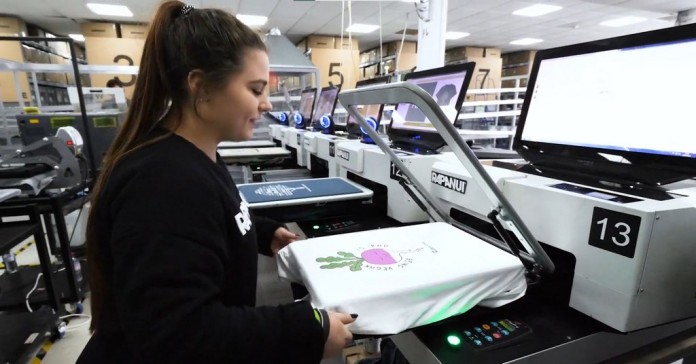
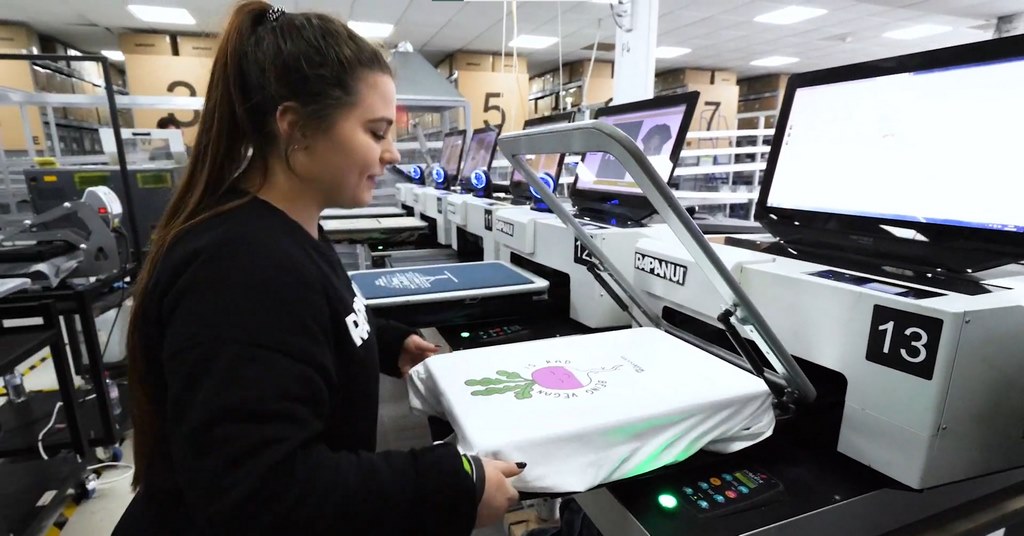
To these they pair smart tech innovations like machines that print t-shirts with custom designs in real-time along with orders to reduce the amount of warehouse inventory needed, and cloud platforms that allow small designers to start their own fashion brands linked to the Teemill circular model.
WATCH the start to finishing T-milling process…
LOOP This News Out On Social Media And “Do Your Bit”…
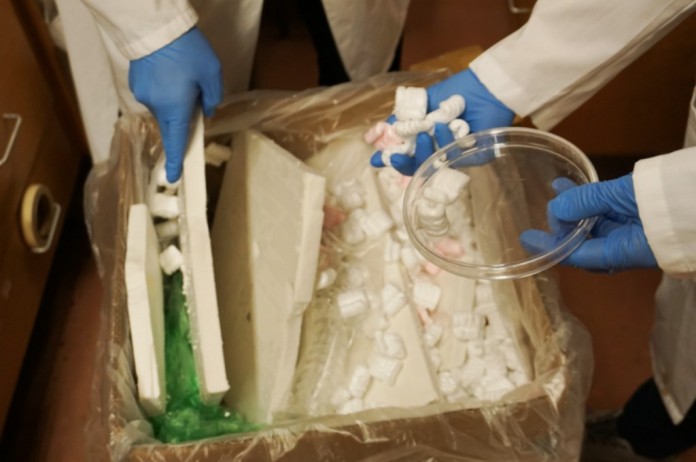
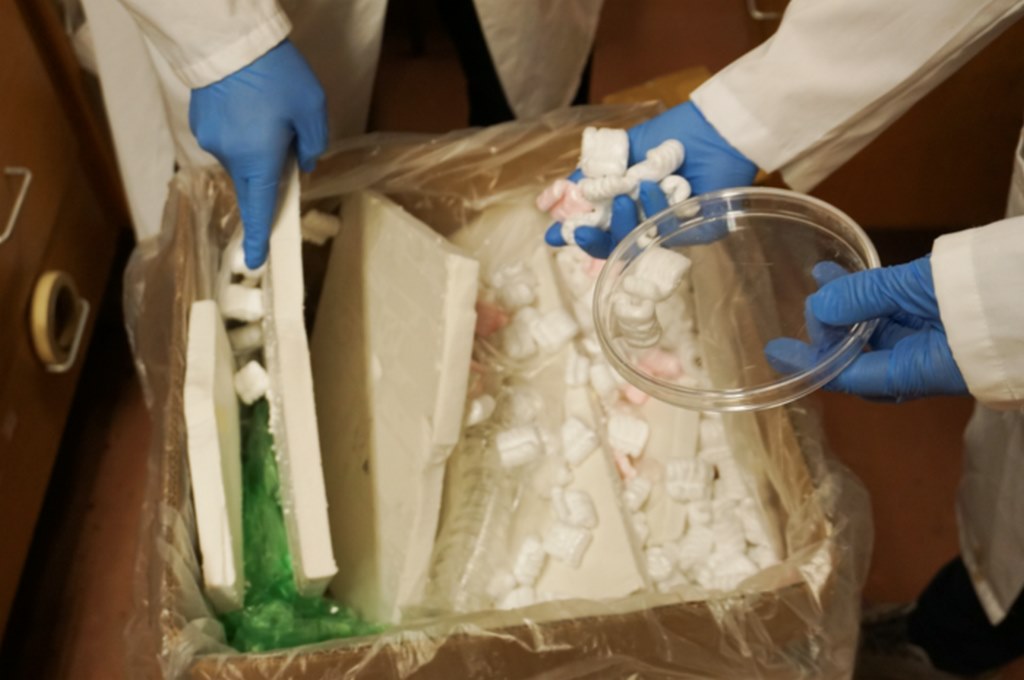
Polystyrene (Styrofoam) has been turned into a valuable chemical found in seaweed by exposing it to sunlight.
Broken down, it produces DPM (diphenylmethane,) a molecule in the aquatic plant used in drug development, polymer manufacturing, and even fragrances and other cosmetics.
Polystyrene is the indestructible plastic is found in everything from takeaway containers to TV packaging.
It’s rarely recycled due to costly and complex processes required, as well as the difficulty of collecting it.
Now scientists have broken it down using a simple and inexpensive technique that combines UV (ultraviolet) rays and a chemical catalyst.
Market incentive is baked into the process, since the market price for DPM is 10-times higher than other materials currently made from polystyrene. Other valuable chemicals produced included benzophenone, used for clear coatings in the printing and film industry, and 4-oxo-4-phenyl-butyric acid.
“Many municipal recycling facilities instruct residents not to put polystyrene in their home recycling bins,” explains lead author Professor Greg Liu, of Virginia Tech. “Currently, the main method for recycling polystyrene yields a product that is often too low-quality to make the process economically viable.”
“In other words, if a recycling plant tries to recycle polystyrene on a large scale, it will either need a financial boost, such as a government subsidy, or the operation risks running out of money and shutting down.”
The VA Tech team published a study in PNAS that demonstrated their technology, but also included economic viability findings through consulting business experts from Santa Clara University in California and Dongbei University in China.
Around 1.15 billion polystyrene food and drink containers were sold in England in 2018, according to the Department for Environment, Food and Rural Affairs.
Unlike most plastics, polystyrene can remain intact for over 1,000 years, and its presence in the environment has been linked to diseases, including some cancers.
However when exposed to UV light it weakens. The researchers showed sunlight degrades polystyrene chemically. While this brings up the possibility of recycling methods, it also means that floating in the oceans, it will break apart into microplastics, causing a different sort of damage.
Sales of single-use polystyrene food containers have been banned in Scotland for just this reason.
“Many of us are comfortable tossing a metal can or a glass jar into the recycling bin without a second thought,” said Professor Liu. “Not every recycling plant is equipped to handle every type of plastic. That’s because the chemistry and structure of plastic materials are diverse, and each type requires a specific recycling procedure.”
“We at Virginia Tech can contribute a small piece to the big puzzle and offer solutions to positively impact the world.”
BREAKDOWN This Good News To Your Friends On Social Media
Neural Sleeve by Cionic and Fuseproject - Released
Neural Sleeve by Cionic and Fuseproject – Released
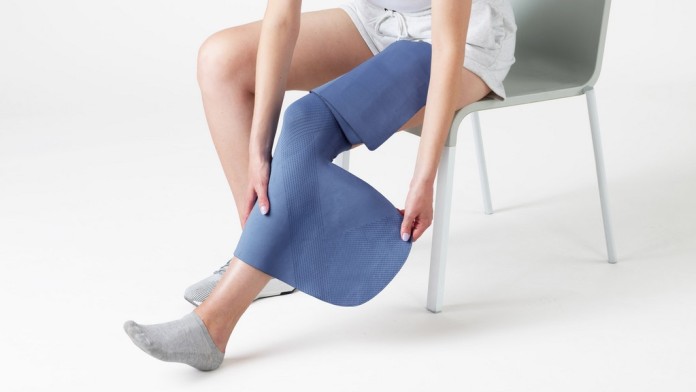
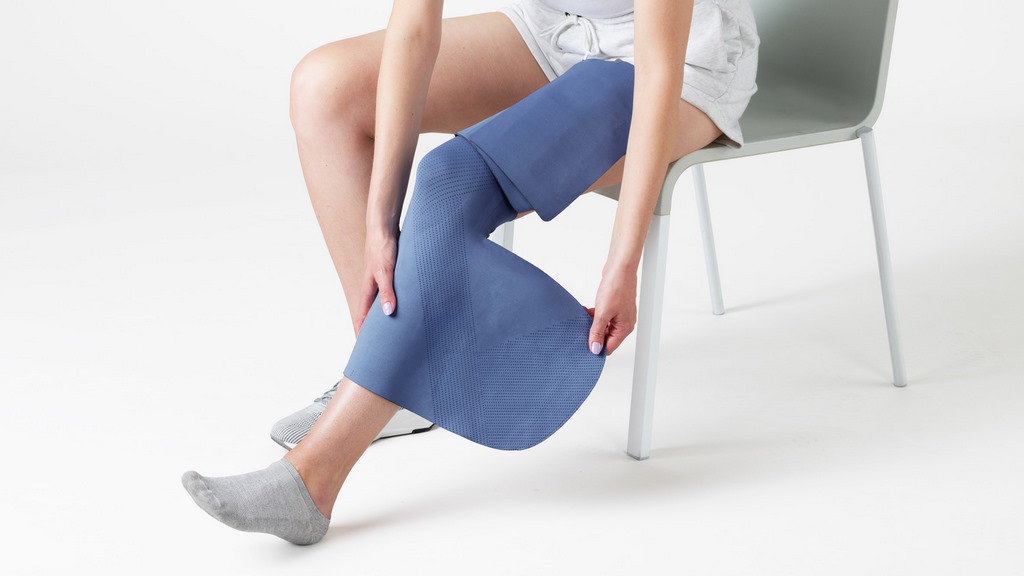
A Velcro sleeve fastened around the leg has been designed with electrodes that help stimulate the muscles of those who experience difficulty getting around due to nervous system conditions.
It uses artificial intelligence to detect walking gait, and sends that information to the electrodes to ensure each leg is moving as much in sync as possible.
Furthermore, this device will be ready for delivery to those who have experienced a stroke, or have multiple sclerosis or cerebral palsy, in 2023. All testing and approval has already been concluded.
Called the Neural Sleeve, it was developed by a company that makes bionic wearables called Cionic.
“Think of it as a way to sort of remote control your own leg,” said Yves Béhar, the brains behind a design studio Fuseproject, which worked with Cionic to make the technology usable and scalable.
“What the algorithms do and what the electrodes do is they deliver that right sequence. And when the brain has relearned and re-acquired the knowledge of how to fire those muscles, the sleeve is not needed anymore,” Béhar told Dezeen.
The lightweight fabric is fastened around the leg with Velcro, and comes in different colors and patterns so wearers don’t need to look at it like a medical device, but more like a knee-brace or similar non-tech wearable.
An app on the phone can also quickly change the mode in which the electrodes are firing to suit different actions, such as sitting down or cycling.
When testing of the Neural Sleeve began, Cionic started with 50 prototypes, and initially targeted a condition known as foot drop, where the patient can’t lift the front half of their foot. 94% of these trialists experienced greater mobility in and around the feet.
“Not only has reported mobility improved for many of these users, the number of users experiencing moderate to severe pain was reduced by 60% and the number of users experiencing moderate to severe anxiety or depression was reduced by 75%,” Cionic claims.
“Wearing the Neural Sleeve, I move in a way that is more flowing and natural. I am walking more quickly and smoothly, while using less energy in doing so. Already I feel that I am getting stronger and more enduring,” said Jim Vecchi, trial patient.
“I should also mention that the Neural Sleeve is surprisingly comfortable and my body has become accustomed to wearing it surprisingly quickly. I do not have the words to properly explain the positive effects on my confidence and outlook.”
Founder of Cionic, Jeremiah Robison, pursued the idea originally after his daughter was diagnosed with cerebral palsy, and he realized that by helping her, he could help millions of other Americans.
WATCH the wearable in action…
HELP Get The Word Out About This Amazing Available Technology…
Editor’s note: This article has been changed as Mr. Robison’s name had been misspelled.
Quote of the Day: “Let me keep company with those who say ‘Look!’ and laugh in astonishment, and bow their heads.” – Mary Oliver
Photo by: Richard Jaimes
With a new inspirational quote every day, atop the perfect photo—collected and archived on our Quotes page—why not bookmark GNN.org for a daily uplift?
Written by Tim Vernimmen, this article originally appeared in Knowable Magazine, a nonprofit publication dedicated to making scientific knowledge accessible to all.
Bodies lose their vigor with the passing of the years, but in the emotional realm, older people seem to rule supreme.
For the past 20 years, Susan Turk Charles, a psychologist at the University of California, Irvine, has been monitoring the shifting moods, the sense of satisfaction, and the outbursts of anger and sadness in people of all ages—with a special interest in how we handle and experience emotions as we grow older.
She fell in love with the idea of studying a process related to aging that is not defined by a decline. Unlike physical fitness or cognition, where you may see slowing or declines, emotional regulation and experience are often as good, if not better, as we age.
What is the secret behind this grizzled levelheadedness? How can we make sure that as many people as possible can benefit from it? And what can it teach the young? In 2010, Charles and Stanford psychologist Laura Carstensen coauthored an article on social and emotional aging in the Annual Review of Psychology. They have found that, on average, older people have more satisfying social contacts and report higher emotional well-being.
Since then, the research has revealed even more. Here’s the latest from Susan:
What might explain why aging brains get better at managing emotions?
Some neuroscientists believe that because we’re processing information a little slower with age, that makes us think before we act, instead of reacting quickly. We do see a decline with age in overall mass of the brain’s frontal lobe, the part that is responsible for emotion regulation, complex reasoning, and speed of processing. But researchers such as Mara Mather at the University of Southern California find that older adults often exhibit greater prefrontal cortex activity than younger adults when processing emotions.
A lot of work has found that older people have a positive bias, even without realizing they’re actually doing this. Their default mode is, as we say, “Don’t sweat the small stuff.” We find that older people more often let go of a situation they experience as negative, especially with friends and family. So it is really picking their battles that we think older adults are better at (unless they have cognitive decline, which causes them not to default toward the positive).
File photo by Marisa Howenstine
Is there a certain age at which we reach a peak in emotional satisfaction?
It depends on what aspects you’re looking at, but the peak we see in terms of the highest positive and lowest negative emotions is between 55 and 70. Then there’s the measure of “life satisfaction,” which includes both happiness and sadness, as well as a cognitive evaluation of how your life is going. For that, we often see a little lower ratings in midlife, lowest among people who are in their early 50s, and then it goes up. So again, it’s higher with older age. Only after 75 do negative emotions start increasing again.
Yet even centenarians report overall high levels of emotional well-being. Do people who have more positive attitudes and emotions, or encounter less adversity, live longer?
Researchers have looked at what could explain this, and they find that psychological well-being is consistently related to lower levels of the stress hormone cortisol and better cardiovascular health. Other researchers have modeled that—and they still see an age-related advantage.
Emotion regulation improves with age; we see this again and again. These are small effects, but they are consistent. We see improvement for the majority of people, but not for everyone. I don’t know the percentages, but let’s say you have 40 percent remaining stable, 40 percent going up and 20 percent going down, you’ll see people still going up on average.
Why do some people not experience these improvements?
Most of the people who have been included in these studies are what researchers define as WEIRD — people from Western, educated, industrialized, rich, and democratic societies. A lot of the people had financial security, pensions, social systems, and often the people we would interview were middle-class white people who were employed, who had a higher level of education. Compared to younger people of comparable socioeconomic status, the older people looked a lot better. But if older people are in vulnerable situations with constant stressors, or if they are living in pain, you may not see these benefits.
My former mentor Laura Carstensen’s “socioemotional selectivity theory” talks about how everyone has a sense of how much time we have left in our lives. As you get older, you see that there is less and less time left, and people start valuing emotional goals more. Older people will also rather spend time with family and friends than meet brand new people who might be interesting.
Your findings might inspire people to pursue a more positive attitude, but someone who is getting older and more unhappy, might not feel the same.
For people who are unhappy, it’s really important to look at how to structure your days to feel more fulfilled. When you’re making a list of health behaviors, getting enough sleep and exercise, and eating right, are important factors that most people agree should be included, but social relationships is something that is as important as your cholesterol level, yet is often forgotten.
Make sure that you spend time cultivating your social ties, treasuring and prioritizing your close friends and family members, at whatever age you are. Finding purpose and meaning in life is also vitally important. What that is can be different for different people, but finding an important purpose and following that can be very emotionally gratifying.
Does that imply there might also be a risk of becoming too emotionally comfortable?
Yes. You can be so comfortable that you no longer encounter any challenges. You really need to stay engaged in cognitive challenges. In a very night over eight days, we followed people over eight days. Every night, they were interviewed, and we’d ask about stressors. Did they get into an argument? Was there a situation where they could have argued, but decided not to? Are there any problems at home or at work?
We asked over 2,500 people every night over 8 days about the relatively minor stressors they had experienced. About 10 percent of the people reported never having experienced even one stressor. They also reported being happier than those who reported at least one stressor. But what we also found was that they performed worse on cognitive tests compared to people who reported at least one stressor. They also reported having received or given less help to others, and that they had spent more time watching TV.
20 years ago, we thought that if you have positive relationships and a certain lifestyle, you can have the highest emotional functioning, the highest cognitive functioning, the best physical health, the perfect life for you. Now it turns out to be a little more complicated. People who are reporting being happiest might not be as high in cognitive functioning.
This may be because people who have no stressors are spending less time with other people. But people you know and love also challenge you and engage you in problem-solving activities. It’s not that you can find optimal well-being in all areas; there might be a tradeoff. It’s like: “I want to be a volunteer, it gives me emotional meaning, I have a lot of purpose in life, but I’m also going to run into some people that may bother me.”
So how can people strive for some balance?
No one size will fit all. For example, we know that people benefit from having strong social ties, but people vary in the number of close friends and time they spend with others. We know that activities that are challenging for some people are boring for others.
To achieve balance, people need to know themselves, and make decisions that create dynamic lives where they are socially active and engaged in a way that makes them feel a sense of belonging and makes them feel needed. They need activities that are challenging for them, where they learn new information and have to remember this information—like learning a new musical instrument or the layout of a new park, or even a new video game.
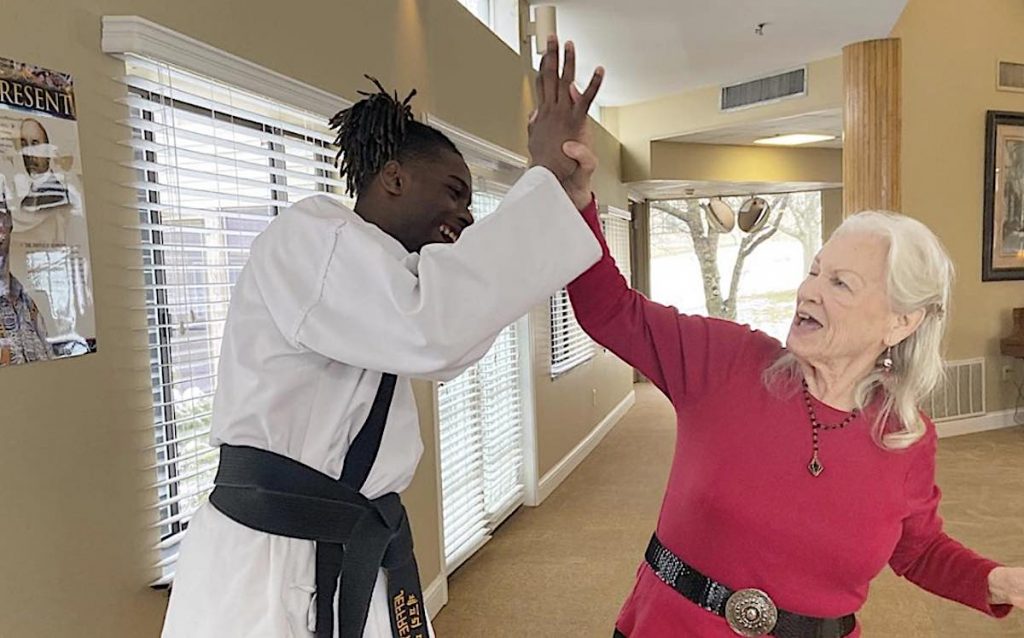
Jeffrey Wall Golden Age Karate
Might there be a way for young people to press the fast-forward button to achieve some of the same emotional benefits older people acquire with age?
In the past 10 years, people have been talking more about mindfulness as an emotional regulation strategy. It takes you away from focusing on the future and reminds you that the present moment is the most important. I think those are things that older people often do, but younger people may need to be reminded of. It can really help to have a moment at the end of the week to say, “Right now, things are going well — let’s just enjoy that for today.” It would be wonderful if that was something the youth could learn from older people.
I think as I grow older, I really understand it more profoundly. I always get a kick out of experiencing myself what the research shows.
A student smuggled lightsabers into his graduation ceremony—and challenged his principal to a fun impromptu duel on stage.
Star Wars fanatic Hunter Wark-Pantoja had an elaborate plan to combine his favorite film with one of the most important moments of his life.
The 18-year-old walked to the stage and after receiving his high school diploma he pulled two lightsabers from under his gown and challenged Todd Clerkson to a battle.
The Canadian kid from Port Moody, British Colombia, had already asked his principal earlier this year if he could bring one, and Clerkson said ‘maybe’.
“So I obviously took that as a yes,” joked Hunter.
But he wanted to surprise the entire audience of the Heritage Woods Secondary School ceremony—including the principal—and make it an epic moment to remember.
Mr. Clerkson said he was completely surprised but jumped straight into battle mode. when Hunter struck his Jedi pose.
“The whole crowd was screaming and applauding – it couldn’t have been a better way to graduate.”
Hunter’s friend Joey Aconley captured the moment on camera, saying “Ever since I’ve known him, he was always a big Star Wars fan.”
“Every May 4th—a globally-recognized Star Wars Day—he would bring lightsabers to school for battles,” said Joey. “In photography class, he would use them as light sources.”
“One day we were chatting about doing something on stage at graduation, but when he actually did it, we all screamed. We cheered so loud for him.”
Nearly two-thirds of dog owners want to get their pets involved in their wedding day—acting as ring bearers, bridesmaids, and even the best man, according to a new poll.
Of 2,000 dog owners, 60 percent already knew someone who included their dog in their wedding.
The most popular roles for dogs on the big day were ring bearer (50 percent), flower girl (17 percent) and page boy (13 percent).
And just shy of one in 10 (nine percent) would even have their dog as the groom’s best man.
It also emerged that couples would be prepared to spend an average of $75 to get their pooches ready for the nuptials.
“This poll reflects the growing trend of newlyweds wanting to involve pets in their big day, whether it’s to walk them down the aisle or be a ringbearer,” said Xavier Flamand, of Amazon Handmade which launched its new wedding store and commissioned the poll.
The survey also found that a full 93 percent believe that because a dog is part of the family, they should be involved at the wedding.
76 percent of respondents agree that guests would react positively to having dogs involved at a wedding.
It seems, dogs would also have their own banquet, as 68% said they would get a special dish prepared for their pet.
Alexandra Moston, who had her Labrador Hugo by her side at her special day last year, said: “Hugo is such an important part of the family, so it was only natural for us to make sure he was a part of our day.
“We wanted Hugo’s presence as ‘Best Dog’ and ring bearer to be a surprise for all our guests, so we only told the best men and vicar!
“We got the best man to pretend he had forgotten the rings, but then Hugo came bounding down the aisle. It was an amazing moment that made everyone smile.
Alexandra and Mike Moston’s wedding, with Hugo. SWNS / OnePoll
“He also treated our guests to some dog biscuits for their four-legged friends to take home.”
When deciding what their dog will wear for the special occasion, a special collar with a ring box on it was the most popular choice (46 percent), according to the survey carried out by OnePoll.
This was closely followed by a custom suit (42 percent), bow tie (39 percent), floral collar (26 percent) and a custom dress (21 percent), as other possible outfit options.
1. A special collar with a ring box on it – 46%
2. A custom suit – 42%
3. A bow tie – 39%
4. A floral collar – 25%
5. A special bandana – 23%
6. A custom dress – 21%
7. A hat – 13%
8. A bow for their tail – 11%
9. Special shoes – 7%
10. A fascinator (formal headpiece) – 5%
Keanu Reeves was spotted having “a couple of whiskies” and chatting with a wedding party in the UK this week—continuing his reputation as the nicest guy in Hollywood.
Reeves met the groom on his wedding day at the bar of a 4-star hotel in Daventry and promised to come to the reception.
James Roadnight and bride Nikki were then thrilled when the actor turned up at Fawsley Hall Hotel & Spa, and happily took photos with the couple.
Later, the Matrix actor walked into The Fox and Hounds in Charwelton, and happily mingled with customers and posed for photos.
The bar’s owner Danny Ricks was shocked when the film star entered and sat down at a table.
“It’s not every day you get a Hollywood star walk into your pub. It made everyone’s evening.”
The 57-year-old ate a Caesar salad and appetizer followed by a main course of falafel—and washed it all down with “quite a few double whiskies.”
“It was bizarre. I had to do a double take when he walked in as I couldn’t quite believe my eyes. I thought ‘that guy looks quite a lot like Keanu Reeves.’
“He was just a down-to-earth guy and was really nice to everyone. Everything nice you would think about him was all true.
The Canadian actor was in the area filming a documentary about Brawn GP’s F1 championship-winning year of 2009. Reeves, famous for The Matrix franchise, is next starring in John Wick: Chapter 4, due to release in 2023.
SHARE Your Love of Kindness on the Big Screen of Social Media…
Quote of the Day: “If you can change the way people see themselves–you can change the way people live their lives.” – Chuck Palahniuk
Photo by: Bekah Russom
With a new inspirational quote every day, atop the perfect photo—collected and archived on our Quotes page—why not bookmark GNN.org for a daily uplift?
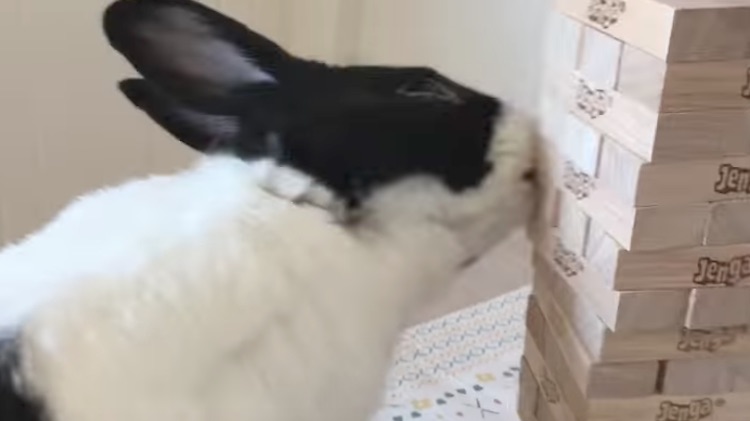
A man rescued a dying bunny that was drowning in his pool after spotting a strange reflection out of the corner of his eye.
The Arizona resident noticed the rabbit while walking back inside from his backyard.
He found the bunny just as it had stopped moving, clearly exhausted, and began dropping its head underwater.
The 35-year-old frantically scrambled to find his pool scooper and get the bunny to safety.
The man, who makes YouTube videos, then grabbed his camera and began filming the situation.
Initially, the bunny was too tired and far too weak to even move—occasionally it would try to raise its head but even that was too strenuous.
The content creator from Lake Havasu City, moved the rabbit into the sunlight and fed it vegetables, sitting with the animal for several hours hoping it would begin to warm up and get some strength.
The bunny came over really close to him and looked at him for a while before hopping off—which he sees as a sign that the animal knew just who he was and was grateful.
HOP This Rescue Over to Bunny Lovers on Social Media By Sharing it…
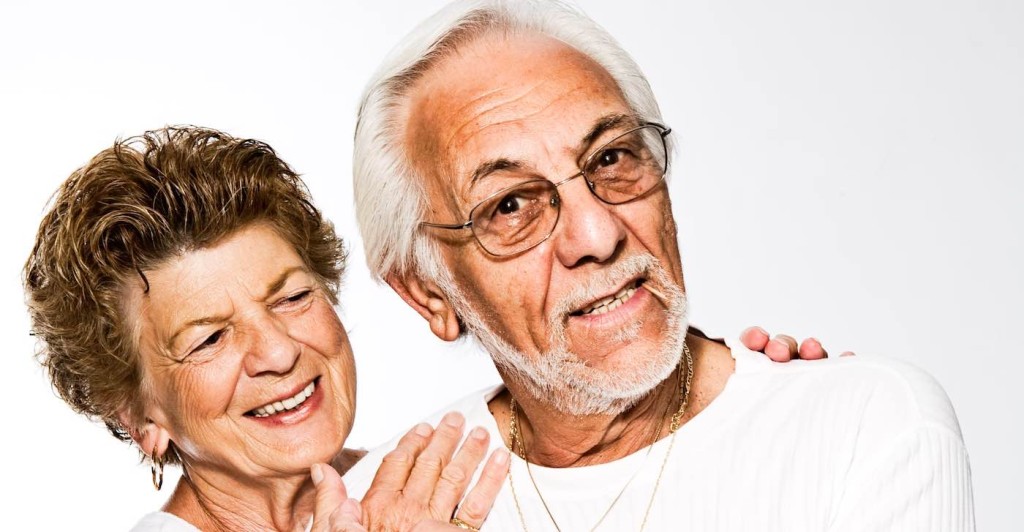
A long awaited update to a 2020 medical breakthrough could have a natural knee-cartilage replicant on deck for replacement surgeries by 2023.
Knee pain comes from the progressive wear and tear of cartilage between the knee joint known as osteoarthritis, which affects nearly one in six adults—867 million people—worldwide.
For those who want to avoid replacing the entire knee joint, there may soon be another option that could help patients get back on their feet fast, pain-free, and stay that way.
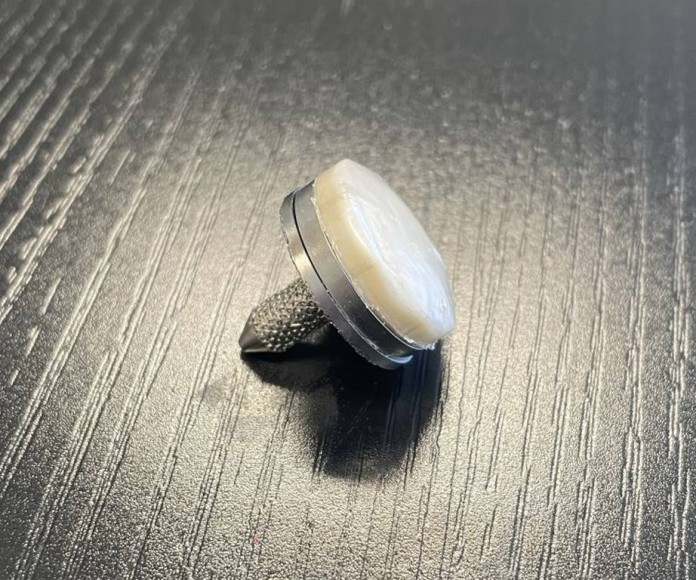
GNN reported in 2020 on Duke University’s development of a water-based gel designed to replace worn out cartilage in knee joints based around the principles of biodesign found in our God-given cartilage.
To make this material, the Duke team took thin sheets of cellulose fibers and infused them with a polymer called polyvinyl alcohol—a viscous goo consisting of stringy chains of repeating molecules—to form a gel.
Although 60% water, a single quarter-sized disc of the special gel can bear the weight of a 100-pound kettlebell without tearing or losing its shape.
When the gel is stretched, the cellulose fibers resist pulling and help hold the material together. And when it is squeezed, the negative charges along the rigid polymer chains repel each other and stick to water, helping it spring back to its original shape.
In one experiment, the team subjected it to 100,000 cycles of repeat pulling, and the material held up just as well as porous titanium used for bone implants,
They also rubbed the new material against natural cartilage a million times. They found that its smooth, slippery self-lubricating surface is as wear-resistant as the real thing and four times more wear-resistant than synthetic cartilage implants currently FDA-approved for use in the big toe.
“If everything goes according to plan, the clinical trial should start as soon as April 2023,” said Duke chemistry professor Benjamin Wiley, who led the research.
Since 2020, improvements in design have given the team more encouragement that they will one day become the norm.
In the past, researchers attempting to create stronger hydrogels used a freeze-thaw process to produce crystals within the gel, which drive out water and help hold the polymer chains together.
In the new study, instead of freezing and thawing the hydrogel, the researchers used a heat treatment called annealing to coax even more crystals to form within the polymer network.
By increasing the crystal content, the researchers were able to produce a gel that can withstand five times as much stress from pulling and nearly twice as much squeezing relative to freeze-thaw methods.
Furthermore the tests found that the design stays fastened 68% more firmly than natural cartilage on bone.
For young people with worn out knee cartilage—maybe from a career of top level sports, a full knee replacement is an unattractive option, since modern knee prosthetics wear out over time and would facilitate another total replacement surgery in their lifetime. The hydrogel could simply be replaced if they managed to destroy it as well.
REPLACE The Bad News On Social Media With This Good Health Tech News…
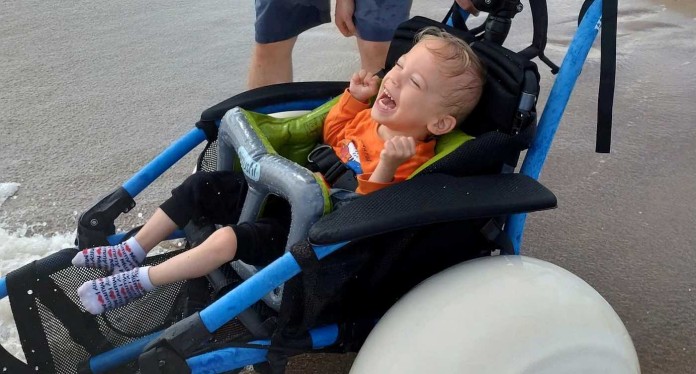
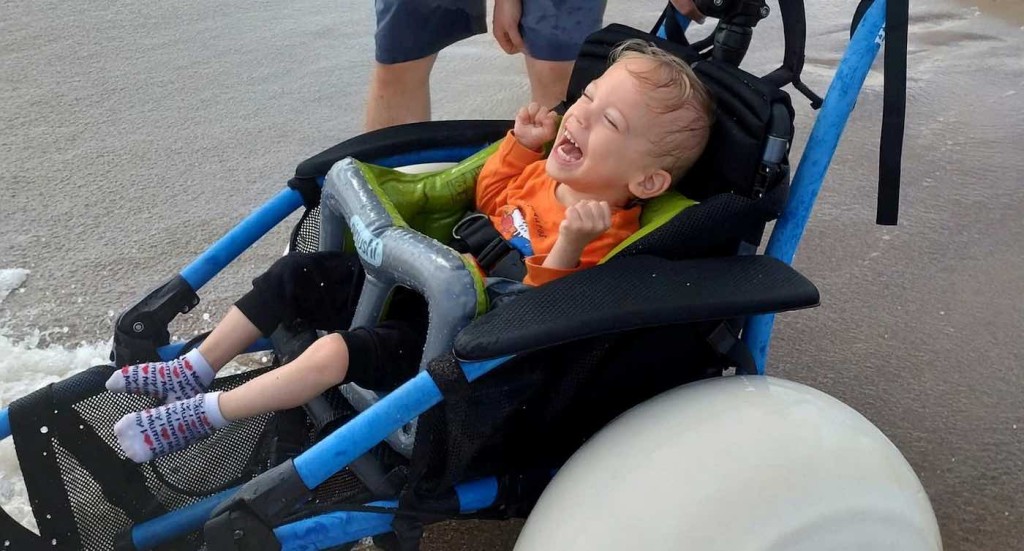
A little boy finally got to play in the sea, thanks to the use of a beach wheelchair—and his laughter brought his mom to tears.
Joey has quadriplegic cerebral palsy, which affects both of his arms and legs, and sometimes his torso and face.
The two-year-old suffers with very bad sensory issues and cannot stand the feel of grass, sand, carpet, and snow.
Trips to the beach were impossible, but thanks to a charity offering the big-wheeled wheelchairs on Ingoldmells beach in Lincolnshire, the family has finally been able to enjoy the sea for the first time.
Helen Butterfield filmed her little boy squealing with excitement as the sea water washed over him and his dad.
The mother of three who lives in Sheffield as Joey’s full time care-giver, said seeing his reaction was one of the most special moments of her life.
“Honestly, he has never laughed so much.”
She credits the community group Beach Ability Ingoldmells with having given her boy a special gift: “the chance to experience waves and mother nature’s beauty instead of feeling left out and different.”
“I’m just so glad I managed to get it on camera. We will never, ever forget this day.
Joey, who was born prematurely at 27 weeks, weighing just 2 pounds 6 ounces, cannot support his body enough to sit unaided with the diagnosis of quadriplegic cerebral palsy.
Doctors have prepared the family for the possibility that he will never be able to walk but mum Helen is determined to do everything she can to give him the best life possible.
Joey hates how pretty much everything feels, but the one thing he loves is water.
“He doesn’t handle well, especially with strangers, and gets so frustrated, but pop him in the bath and he is in heaven. It was like Joey was born to be a water baby.
“He has been through so much, so seeing him in the sea was the best feeling ever. He is so tiny, but mighty—and I’m sure his strength and determination won’t stop there.”
SHARE The Joy With Ability-Challenged Families on Social Media…
FREE WILL ASTROLOGY – Week of August 27, 2022
Copyright by Rob Brezsny, FreeWillAstrology.com
VIRGO (Aug. 23-Sept. 22):
Whenever you are contemplating a major decision, I hope you raise questions like these: 1. Which option shows the most self-respect? 2. Which path would be the best way to honor yourself? 3. Which choice is most likely to help you fulfill the purposes you came to earth to carry out? 4. Which course of action would enable you to express your best gifts? Are there questions you would add, Virgo? I expect the coming months will require you to generate key decisions at a higher rate than usual, so I hope you will make intensive use of my guiding inquiries, as well as any others you formulate.
LIBRA (Sept. 23-Oct. 22):
Libran blogger Ana-Sofia Cardelle writes, “I look back on past versions of myself with such love and tenderness. I want to embrace myself at different parts of my life.” I hope you’re inspired by her thoughts as you carry out the following actions: 1. Create an altar filled with treasures that symbolize major turning points in your destiny. 2. Forgive yourself for what you imagine to be old errors and ignorance. 3. Summon memories of the persons you were at ages 7, 12, and 17, and write a kind, thoughtful message to each. 4. Literally kiss seven different photos of your face from earlier in your life. 5. Say “thank you” and “bless you” to the self you were when you succeeded at two challenging tests in the past.
SCORPIO (Oct. 23-Nov. 21):
You know more about how karma works than all the other signs. Scorpio-style intelligence typically has a fine intuitive grasp of how today’s realities evolved out of the deep patterns and rhythms of the past. But that doesn’t mean you perfectly understand how karma works. And in the coming weeks, I urge you to be eager to learn more. Become even savvier about how the law of cause and effect impacts the destinies of you and your allies. Meditate on how the situations you are in now were influenced by actions you took once upon a time. Ruminate on what you could do in the near future to foster good karma and diminish weird karma.
SAGITTARIUS (Nov. 22-Dec. 21):
Kabbalistic writer Simon Jacobson says, “Like a flame, the soul always reaches upward. The soul’s fire wants to defy the confines of life. It cannot tolerate the mediocrity and monotony of sheer materialism. Its passion knows no limits as it craves for the beyond.” That sounds both marvelous and hazardous, right? Jacobson concludes, “Whether the soul’s fire will be a constructive or destructive force is dependent on the person’s motivation.” According to my astrological analysis, your deep motivations are likely to be extra noble and generous in the coming weeks, Sagittarius. So I expect that your soul’s fire will be very constructive.
CAPRICORN (Dec. 22-Jan. 19):
In the Spansh language, there’s the idiom pensando en la inmortalidad del cangrejo. Its literal translation is “thinking about the immortality of the crab.” It applies to a person engaged in creative daydreaming—her imagination wandering freely in hopes of rousing innovative solutions to practical dilemmas. Other languages have similar idioms. In Finnish, istun ja mietin syntyjä syviä means “wondering about the world’s early origins.” Polish has marzyć o niebieskich migdałach, or “dreaming about blue almonds.” I encourage you to enjoy an abundance of such explorations in the coming days, Capricorn. You need to fantasize more than usual.
AQUARIUS (Jan. 20-Feb. 18):
My Aquarian reader Georgie Lee wrote to tell me what it’s like being an Aquarius. I offer it to you because you are potentially at the peak of expressing the qualities she names. She says, “Accept that you don’t really have to understand yourself. Be at peace with how you constantly ramble, swerve, and weave to become more of yourself. Appreciate how each electric shift leads to the next electric shift, always changing who you are forever. Within the churning, ever-yearning current, marvel at how you remain eternal, steady, and solid—yet always evolving, always on a higher ground before.”
PISCES (Feb. 19-March 20):
Here’s a good way to build your vibrancy: Use your emotional intelligence to avoid swimming against strong currents for extended periods. Please note that swimming against strong currents is fine, even advisable, for brief phases. Doing so boosts your stamina and fosters your trust in your resilience. But mostly, I recommend you swim in the same direction as the currents or swim where the water is calm and currentless. In the coming weeks, I suspect you can enjoy many freestyle excursions as you head in the same direction as vigorous currents.
ARIES (March 21-April 19):
In the coming weeks, I urge you to flee from stale and rigid certainty. Rebel against dogmatic attitudes and arrogant opinions. Be skeptical of unequivocal answers to nuanced questions. Instead, dear Aries, give your amused reverence to all that’s mysterious and enigmatic. Bask in the glimmer of intriguing paradoxes. Draw inspiration and healing from the fertile unknown. For inspiration, write out this Mary Oliver poem and carry it with you: “Let me keep my distance, always, from those who think they have the answers. Let me keep company with those who say ‘Look!’ and laugh in astonishment, and bow their heads.”
TAURUS (April 20-May 20):
A blogger named Chaconia writes, “I’ve cultivated a lifetime of being low maintenance and easy-going, and now I’ve decided I’m done with it. Demanding Me is born today.” I’m giving you temporary permission to make a similar declaration, Taurus. The astrological omens suggest that in the coming weeks, you have every right to be a charming, enchanting, and generous version of a demanding person. So I authorize you to be just that. Enjoy yourself as you ask for more of everything.
GEMINI (May 21-June 20):
Lisa Chamberlain writes about the magical properties of colors. About brown, she says it “represents endurance, solidity, grounding, and strength.” According to my reading of the astrological omens, the upcoming weeks should be a deeply brown time for you Geminis. To move your imagination in a righteous direction, have fun wearing clothes in shades of brown. Grace your environment with things that have the hues of chestnut, umber, mahogany, sepia, and burnt sienna. Eat and drink caramel, toffee, cinnamon, almonds, coffee, and chocolate.
CANCER (June 21-July 22):
Cancerian poet Danusha Laméris discovered that earthworms have taste buds all over their bodies. Now she loves to imagine she’s giving them gifts when she drops bits of apples, beets, avocados, melons, and carrot tops into the compost bin. “I’d always thought theirs a menial life, eyeless and hidden, almost vulgar.” But now that she understands “they bear a pleasure so sublime,” she wants to help the worms fulfill their destinies. I mention this, Cancerian, because I suspect you may have comparable turnarounds in the coming weeks. Long-held ideas may need adjustments. Incomplete understandings will be filled in when you learn the rest of the story. You will receive a stream of interesting new information that changes your mind, mostly in enjoyable ways.
LEO (July 23-Aug. 22):
You should never allow yourself to be tamed by others. That advice is always apropos for you Leos, and even more crucial to heed in the coming weeks. You need to cultivate maximum access to the raw, primal sources of your life energy. Your ability to thrive depends on how well you identify and express the beautiful animal within you. Here’s my only caveat: If you imagine there may be value in being tamed a little, in harnessing your brilliant beast, do the taming yourself. And assign that task to the part of you that possesses the wildest wisdom.
WANT MORE? Listen to Rob’s EXPANDED AUDIO HOROSCOPES, 4-5 minute meditations on the current state of your destiny — or subscribe to his unique daily text message service at: RealAstrology.com
Quote of the Day: “Judge nothing; you will be happy. Forgive everything; you will be happier. Love everything; you will be happiest.” – Sri Chinmoy (born 91 years ago today)
Photo by: Irudayam, CC license
With a new inspirational quote every day, atop the perfect photo—collected and archived on our Quotes page—why not bookmark GNN.org for a daily uplift?
It’s World Photography Day—and we couldn’t find any exposures this cool to celebrate with.
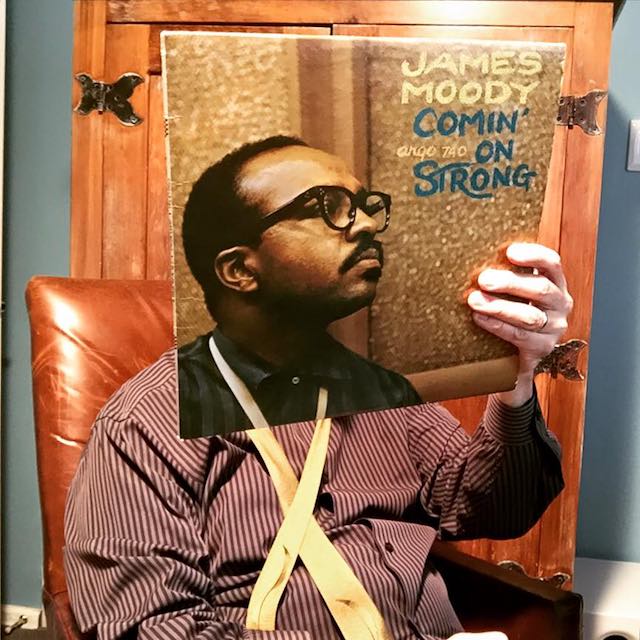
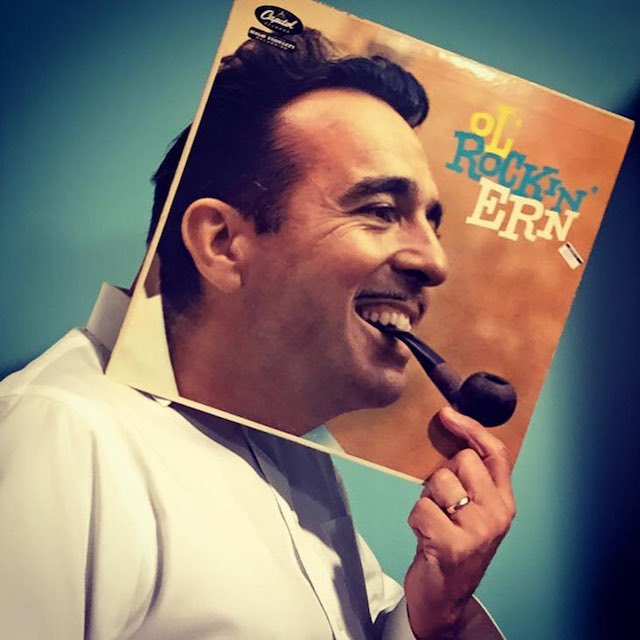
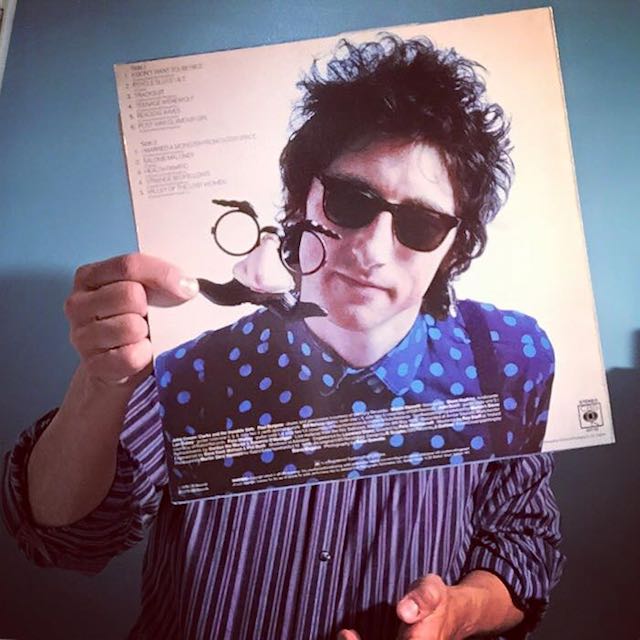
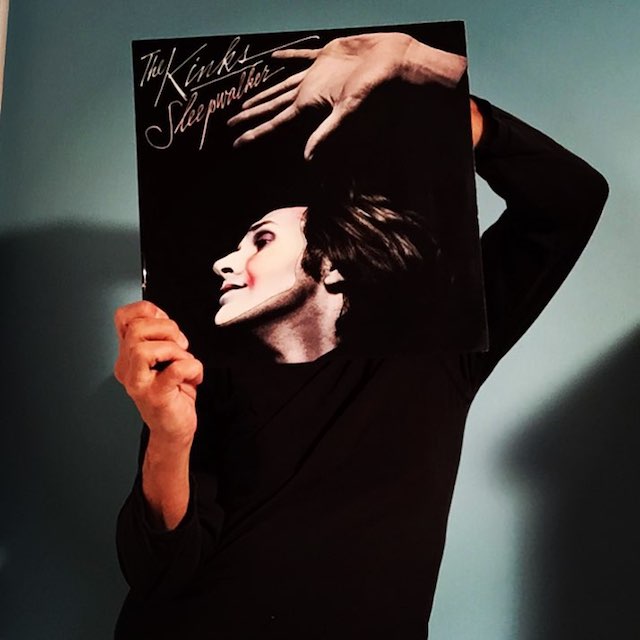
From old school entertainers like Frank Sinatra and Sammy Davis Jr. to rock staples like The Kinks and Todd Rundgren – this guy has a knack for jumping into the artwork of his favorite album covers.
Illustrator Wayne Honath, also known as Wayno, is a cartoonist and photographer whose hobbies include posing with LPs from his record collection.
In every one of his “Record Head” photos, Wayno perfectly frames himself so that it looks like his body belongs to the face of the artist on the album.
Despite our never having seen images like this, Wayno informed us that it was not an original idea—though his own choices for Record Head poses are praiseworthy.
“People have been doing things like this forever, it’s certainly not a new idea on my part!” he told Good News Network. “A Canadian artist I know … set up a Record Heads Facebook group, and I decided to participate.”
“I looked through my own record collection to find suitable covers to photograph and I did all of the photos on my phone, using a small phone tripod.”
Since he’s dedicated himself to illustrating for Bizarro, the online comic series, he hasn’t had time for any new Record Head photo shoots, but you can see all 46 of his images here in this Wayno Illustration Facebook album.
“I had to cut back because (now) I have a daily deadline, so my creative energies are primarily to the comic,” he told GNN. “I still have some album covers set aside for future record head photos, but I don’t know when I’ll ever get to them. I’ll only do them when I have time to make them as good as the ones I’ve done in the past.
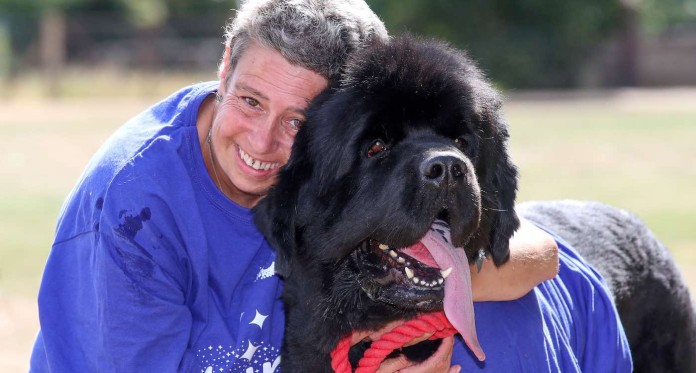
A woman said she owes her life to a rescue dog who sensed her breast cancer and wouldn’t keep its nose out of her right armpit.
Lucy Giles thought her beloved Brody was initially just craving some attention.
The 45-year-old had welcomed the gentle giant into her life a year ago, after her partner had spent six months in the hospital on life-support with the Covid virus.
When he returned home, and as part of his recovery, the pair decided to add to the family of pets that they love doting on.
They adopted Brody—whose Newfoundland breed is well-known for lifesaving due to their swimming abilities and intelligence—from a family who could no longer look after him.
Lucy, of Oxon, said he started to “sniff and nuzzle” at her right armpit.
“It was mostly when I was sat down, so either watching TV or sitting down for a rest and always in the same spot on my right side.”
“At first, I thought it was him wanting a bit of fuss and attention but I decided that I should perhaps take notice as it was just my right side he would do this.”
She examined herself and, sure enough, felt a lump there—and soon after was diagnosed with breast cancer.
“It was the same day my nan had died from bowel cancer the year previously and I was with her when she died.”
Giles underwent six rounds of chemotherapy followed by a lumpectomy and radiotherapy afterwards.
She said she has a brilliant support network of family and friends who take her to appointments and help by “just being there”, along with Brody of course.
An artists rendering of what WASP 39b. would look like. - Credit: NASA, ESA, CSA, and J. Olmsted (STScI)
An artists rendering of what WASP 39b. would look like. – Credit: NASA, ESA, CSA, and J. Olmsted (STScI)
For all the grief carbon dioxide gets down here on Earth, its detection for the first time ever in the atmosphere of an exoplanet has scientists elated.
The finding, produced by the James Webb Space Telescope, offers evidence that in the future Webb will be able to measure carbon dioxide in the thinner atmospheres of smaller rocky planets—and zero in on those most likely to contain life.
This observation of a gas giant planet orbiting a Sun-like star 700 light-years away provided important insights into the composition and formation of the planet,
WASP-39 b is a hot gas giant with a mass roughly one-quarter that of Jupiter (about the same as Saturn) and a diameter 1.3 times greater than Jupiter. Its extreme puffiness is related in part to its high temperature (about 1,600 degrees Fahrenheit or 900 degrees Celsius).
Unlike the cooler, more compact gas giants in our solar system, WASP-39 b orbits very close to its star, completing one circuit in just over four Earth-days.
Previous observations from other telescopes, including NASA’s Hubble and Spitzer space telescopes, revealed the presence of water vapor, sodium, and potassium in the planet’s atmosphere. Webb’s unmatched infrared sensitivity has now confirmed the presence of carbon dioxide on this planet as well.
“As soon as the data appeared on my screen, the whopping carbon dioxide feature grabbed me,” said Zafar Rustamkulov, a graduate student at Johns Hopkins University and member of the JWST who worked with the investigation. “It was a special moment, crossing an important threshold in exoplanet sciences.”
The research team used one of Webb’s four peerless instruments, known as the Near-Infrared Spectrograph (NIRSpec).
In the resulting spectrum of the exoplanet’s atmosphere, a small reading between 4.1 and 4.6 microns presented the first clear, detailed evidence for carbon dioxide ever detected in a planet outside the solar system.
Access to this part of the spectrum is crucial for measuring abundances of gases like water and methane, as well as carbon dioxide, which are thought to exist in many different types of exoplanets.
The team’s light readings from WASP 39b. explained. Credits: Illustration: NASA, ESA, CSA, and L. Hustak (STScI); Science: The JWST Transiting Exoplanet Community Early Release Science Team
“Carbon dioxide molecules are sensitive tracers of the story of planet formation,” said Mike Line of Arizona State University, another member of this research team.
“By measuring this carbon dioxide feature, we can determine how much solid versus how much gaseous material was used to form this gas giant planet. In the coming decade, JWST will make this measurement for a variety of planets, providing insight into the details of how planets form and the uniqueness of our own solar system.”
It’s also entirely fundamental to life’s processes on Earth at both higher and foundational orders—an inescapable constant in our bodies, ecosystems, and technology.
With a great demand for Webb’s unparalleled capabilities among scientists, Line and Rustamkulov are part of the “Early Science Release Team” whose job is to make robust and foundational observations with Webb and release them as swiftly as possible to the astronomy community.
SHARE This Color-Coded Carbon Breakthrough On Social Media…