













All News - Page 347 of 1714 - Good News Network
Home Blog Page 347

NASA Detects Carbon Dioxide–the Building Block of Life–in Exoplanet’s Atmosphere for First Time

An artists rendering of what WASP 39b. would look like. - Credit: NASA, ESA, CSA, and J. Olmsted (STScI)
An artists rendering of what WASP 39b. would look like. – Credit: NASA, ESA, CSA, and J. Olmsted (STScI)

For all the grief carbon dioxide gets down here on Earth, its detection for the first time ever in the atmosphere of an exoplanet has scientists elated.

The finding, produced by the James Webb Space Telescope, offers evidence that in the future Webb will be able to measure carbon dioxide in the thinner atmospheres of smaller rocky planets—and zero in on those most likely to contain life.

This observation of a gas giant planet orbiting a Sun-like star 700 light-years away provided important insights into the composition and formation of the planet,

WASP-39 b is a hot gas giant with a mass roughly one-quarter that of Jupiter (about the same as Saturn) and a diameter 1.3 times greater than Jupiter. Its extreme puffiness is related in part to its high temperature (about 1,600 degrees Fahrenheit or 900 degrees Celsius).

Unlike the cooler, more compact gas giants in our solar system, WASP-39 b orbits very close to its star, completing one circuit in just over four Earth-days.

Previous observations from other telescopes, including NASA’s Hubble and Spitzer space telescopes, revealed the presence of water vapor, sodium, and potassium in the planet’s atmosphere. Webb’s unmatched infrared sensitivity has now confirmed the presence of carbon dioxide on this planet as well.

“As soon as the data appeared on my screen, the whopping carbon dioxide feature grabbed me,” said Zafar Rustamkulov, a graduate student at Johns Hopkins University and member of the JWST who worked with the investigation. “It was a special moment, crossing an important threshold in exoplanet sciences.”

The research team used one of Webb’s four peerless instruments, known as the Near-Infrared Spectrograph (NIRSpec).

CONTINUE EXPLORING: Scientists Stunned by New Jupiter Images With Galaxies ‘Photobombing’ the Webb Telescope

In the resulting spectrum of the exoplanet’s atmosphere, a small reading between 4.1 and 4.6 microns presented the first clear, detailed evidence for carbon dioxide ever detected in a planet outside the solar system.

Access to this part of the spectrum is crucial for measuring abundances of gases like water and methane, as well as carbon dioxide, which are thought to exist in many different types of exoplanets.

The team’s light readings from WASP 39b. explained. Credits: Illustration: NASA, ESA, CSA, and L. Hustak (STScI); Science: The JWST Transiting Exoplanet Community Early Release Science Team

“Carbon dioxide molecules are sensitive tracers of the story of planet formation,” said Mike Line of Arizona State University, another member of this research team.

“By measuring this carbon dioxide feature, we can determine how much solid versus how much gaseous material was used to form this gas giant planet. In the coming decade, JWST will make this measurement for a variety of planets, providing insight into the details of how planets form and the uniqueness of our own solar system.”

It’s also entirely fundamental to life’s processes on Earth at both higher and foundational orders—an inescapable constant in our bodies, ecosystems, and technology.

WATCH: Travel 2,000 Light-Years in 60 Seconds With New Video From NASA’s Webb Telescope

With a great demand for Webb’s unparalleled capabilities among scientists, Line and Rustamkulov are part of the “Early Science Release Team” whose job is to make robust and foundational observations with Webb and release them as swiftly as possible to the astronomy community.

SHARE This Color-Coded Carbon Breakthrough On Social Media…

Watch How Texas Man Found Huge Dinosaur Tracks in Riverbed Dried From Drought

- dinosaur valley state park
– Dinosaur Valley State Park

Droughts aren’t all bad. Sometimes the receding of rivers reveals amazing things, such as the tracks of a meat-eating giant that roamed Cretaceous-Era Texas 113 million years ago.

Prints mostly left by the Acrocanthosaurus—a theropod that stood 15 feet and weighed 7 tons have emerged in recent weeks as the Paluxy River has dried up almost entirely in most parts of Dinosaur Valley State Park in Glen Rose, Texas.

Dinosaur Valley State Park is rather unique, says Paleontologist Timothy Rose. Visitors are given buckets with glass bottoms and encouraged to roll their pantlegs up, kick off their shoes, and go have a look through the bucket at the tracks which were known to science before the recent drought.

However what the drought did do is reveal dozens more tracks than anyone knew existed.

Acrocanthosaurus specimen – CC 2.0. Famille Wielosz-Caron

Arcocanthosaurus was a big impressive dinosaur that would have looked like T-Rex, only a bit smaller, with three toes instead of two, and an array of impressive spines on its back.

READ ALSO: 100 Million-Year-Old Footprints of Giant Dinosaur Found at Restaurant in China

Definite Acrocanthosaurus fossils have been found in the Twin Mountains Formation of northern Texas, the Antlers Formation of southern Oklahoma, and the Cloverly Formation of north-central Wyoming and possibly even the Arundel Formation in Maryland.

Rose, speaking to Australian news at the time, explained the tracks show the animals moving around slowly, perhaps hunting, perhaps not, but the lack of any fast or leaping movements is clear.

TAKE an intimate look at the tracks in the video below…

STEP On The Social Media Buttons Below To Share This Cool Discovery…

“We create ourselves by what we choose to notice.” – Margaret Wheatley

Quote of the Day: “We create ourselves by what we choose to notice.” – Margaret Wheatley

Photo by: Warren Wong

With a new inspirational quote every day, atop the perfect photo—collected and archived on our Quotes page—why not bookmark GNN.org for a daily uplift?

Breeding Corals for the Great Barrier Reef Achieves First Out-of-Season Spawning Event Ever

Spawning coral – Credit: Australian Institute of Marine Science by Marie Roman

Scientists in Australia have achieved the first-ever offseason coral spawning in the history of coral breeding and restoration sciences.

The breakthrough dramatically expands the capacity to grow corals in captivity to then use to restore the Great Barrier Reef, since it allows the scientists to spawn coral 50% more often than in nature.

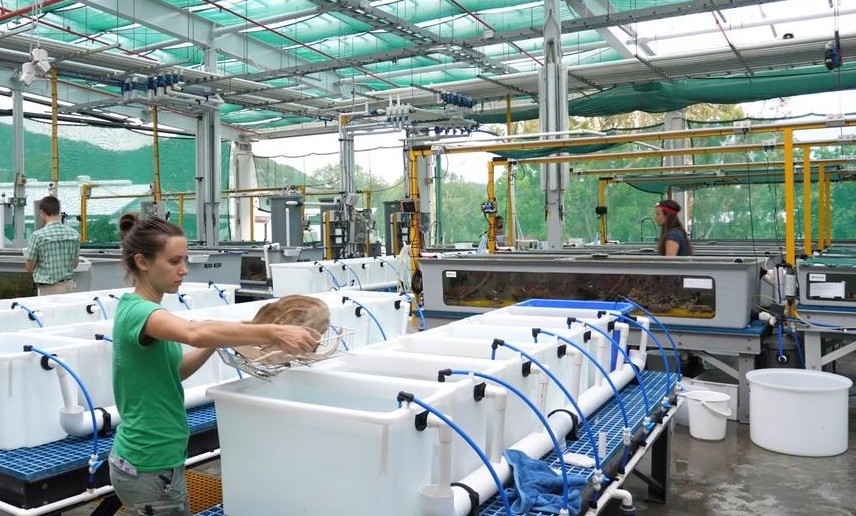
At the Australian Institute of Marine Sciences, coral colonies are kept in captivity with the hopes of one day transplanting them to the biggest reef on earth. Out on the GBR, coral spawning happens only twice a year, between October and December.

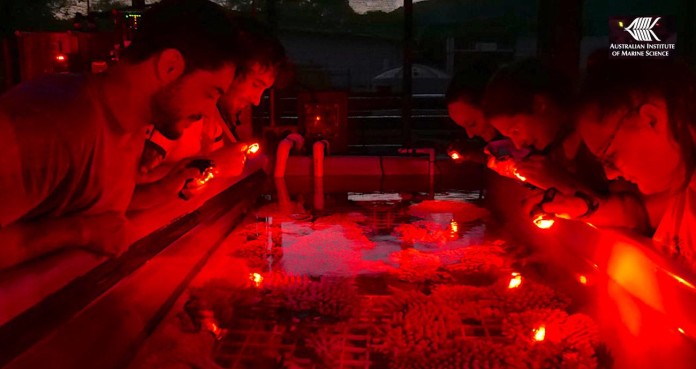
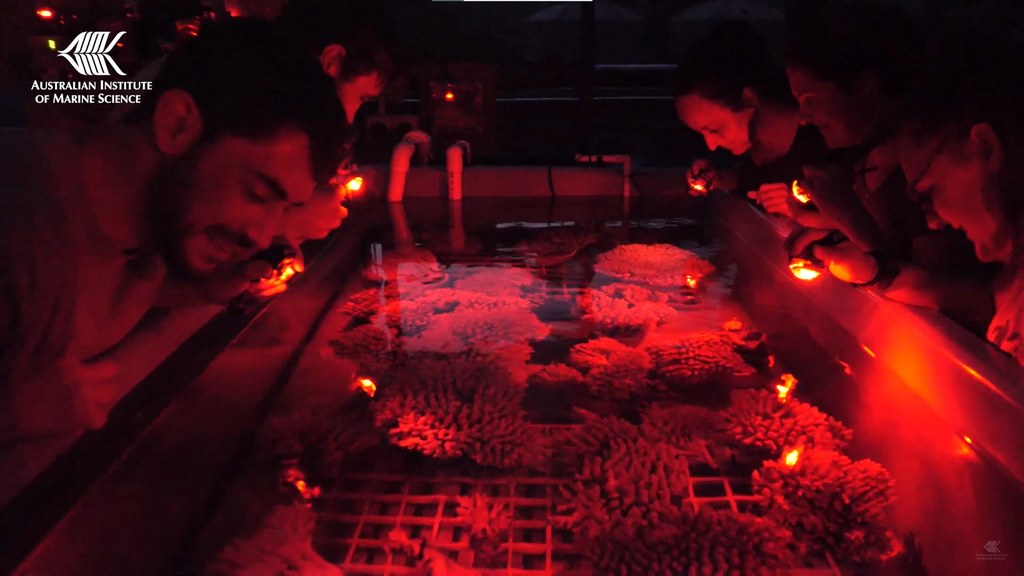
At the Institute’s Townsville lab, coral have now reproduced in the middle of winter, thanks to artificial moonlight and controlled temperatures which convinced the 43 lab corals the time was right, despite being 6-months ahead of schedule.

“We’re going to have a lot of opportunities to advance coral reproductive biology,” senior aquarist Lonidas Koukoumaftsis told ABC Australia. “Normally we can only explore this once a year in the summer period.”

A scientists collects the larva from a coral during the 2019 coral spawning season. Credit: Australian Institute of Marine Science
Preparing for the 2019 coral spawning season. Credit: Australian Institute of Marine Science

Corals, guided by seasonal warming, moon phases and tides, release egg and sperm into the water around the same time to create new corals. In the Institute’s National Sea Simulator (SeaSim) some corals were subjected to artificial conditions for the purpose of seeing if they could spawn during another period before eventually being transplanted back to the coral.

“At the moment we only have about two times a year we can generate these juvenile corals and then plant them on the reef,” said Koukoumaftsis “Possibly in the future we can increase that ability to restore the reef.”

READ ALSO: Parts of the Great Barrier Reef Show Highest Coral Cover in 36 Years

The natural coral spawning on the GBR, which takes place normally under the cover of darkness, yet with the help of a full moon, is one of the planet’s most incredible natural phenomena.

SPAWN A Bit Of Enthusiasm On Social Media With This Story…

Ingenious Dancers Stun Judges to Make Finals of America’s Got Talent – WATCH

America's Got Talent / YouTube
America’s Got Talent / YouTube

A all-female Lebanese dance troupe promised to hypnotize the judges on America’s Got Talent: a bold call before performing for someone as notoriously spikey as Simon Cowell.

The “Mayyas” lined up in single file after answering some questions, before proceeding to do just that; wowing the judges and winning a Golden Buzzer from Sophia Vergara.

“It was the most creative dance I’ve ever seen,” the latter said when it was all over.

The Mayyas, which means “proud walk of the lioness” in Arabic, carried out what was essentially a giant illusion with their synchronized movements.

“Seeing the Mayyas in America’s Got Talent is the most beautiful feeling I’ve ever felt,” Nadim Cherfam, founder of the Mayyas, says in a video. “Lebanon is not considered a place where you can build a career out of dancing. It’s hard. Really hard. [And] it’s harder for women.”

Winning the Golden Buzzer means the Mayyas are placed in the Live rounds of the show, and have a chance at making the finals.

WATCH the performance on the troupe’s Instagram…

HYPNOTIZE Your Friends On Social Media With This Knockout Performance…

A Startup Is Using Recycled Plastic to 3D Print Tiny $25,000 Prefabricated Homes in LA

Azure Homes
Azure Homes

There’re 3D-printed homes, and there’re prefabricated homes. Take the best of both technologies, throw in a groundbreaking use for discarded plastic, and you have a genius idea.

Born in Culver City, the startup Azure is mostly using recycled plastic water and drink bottles to create homes that are 90% complete by the time they leave the factory.

By blending the manufacturing speed of 3D-printing with the assembly speed and modular possibilities given by prefabrication, Azure’s houses are a game changer for sustainability in the housing industry.

The startup says it can build homes 70% faster and 30% cheaper than “traditional home construction methods” by 3D printing the floor, roof, and walls of its models inside its factory.

Practically all that’s left to be done at the build site is to connect the prefab panels to each other, and to the foundation, and connect the utilities.

Azure Homes

In April, Azure unveiled what it called the world’s first 3D-printed building with recycled plastic materials. It was a small addition, meant to be marketed as a gym or outdoor office, and priced at $25,000, while the larger “accessory dwelling unit” (ADU) or what is essentially a one-bed one-bath comes in at $40,000.

A rush of pre-orders for the ADU has left Azure’s Culver City factory backed up for 3-months as it waits for the rest of the equipment it needs to begin mass producing the houses.

RELATED: The ‘World’s Longest’ 3D-Printed Concrete Bridge Erected in The Netherlands

At the moment the company has a number of partners who provide plastic waste recycled from industry, but it hopes to shift more towards plastic waste generated by consumers.

By December Azure hopes to have 14 of their print-prefab houses arranged in a community in partnership with an LA real estate company, and by 2024 be able to manufacture bigger ADUs.

Once the concept is firmly established and revenue is stable, they also want to turn their technology towards helping to end the homelessness epidemic of California.

“3D printing is a more efficient way of building and it should only get better as we develop the processes, technology, and materials further,” Co-founder Ross Maguire told Business Insider. “I can only see it becoming more and more prominent in [construction] as we move forward.”

PRINT This Story On Social Media And Let Your Friends Know…

“If you find yourself drawn to an event against all logic, go. The universe is telling you something.” – Gloria Steinem

Quote of the Day: “If you find yourself drawn to an event against all logic, go. The universe is telling you something.” – Gloria Steinem

Photo by: Peppe Ragusa

With a new inspirational quote every day, atop the perfect photo—collected and archived on our Quotes page—why not bookmark GNN.org for a daily uplift?

8-Year-old Girl Gets to Chat with Orbiting Astronaut Using Dad’s Ham Radio

Some old tech was able to make a new connection for a little English girl who got to speak with an orbiting astronaut after her dad hailed him on a Ham radio.

It was August 2nd when Isabella Payne had just settled down for her “beauty sleep.” But her father, Matthew, knew that since they shared a passion for space and radio communications, a brief opportunity to hail American astronaut Kjell Lindgren was not to be missed.

Dragging Isabella out of bed, the pair ran to the radio bench.

“I was like ‘Why are you doing this to me? I need my beauty sleep,'” Isabella told CNN on Wednesday.

Aboard the International Space Station, a Ham radio station is maintained so that astronauts can occasionally talk with people on the ground—usually schools—through classic radio communications.

SIMILAR: 96-Year-Old Radio Enthusiast Fulfills Childhood Dream With Far Out Connection to Outer Space

Such exchanges are typically brief, with operators giving over their radio’s unique callsign, a name and location, a thank you and a goodbye. However when Lindgren, who just happened to be passing over Kent that night, heard Isabella’s name and age, his voice changed from routine to joyful.

The astronaut took to Twitter and said it might have been his favorite contact so far.

“I was elated when I heard his voice,” Isabella told CNN. “I thought it was a dream.”

Isabella shares her father’s passion for space and radio, and watches every launch and spacewalk from her usual position on his knee at the radio desk.

They’ve shared that special bond all their life, even when Mr. Payne helped a school radio British astronaut Tim Peake aboard the ISS in 2016, when little Isabella was just 2-years-old—she maintained the front-knee seat for the event.

Her dream is to become a communications specialist with a space agency so she can replicate her exchange with Lindgren as many times as she’d like.

COMMUNICATE This Inspired Little Girl’s Encounter With Your Friends…

Man Stores Rainwater Since 1976 and Has 6,000 Liters to Get Through Drought

- SWNS
– SWNS

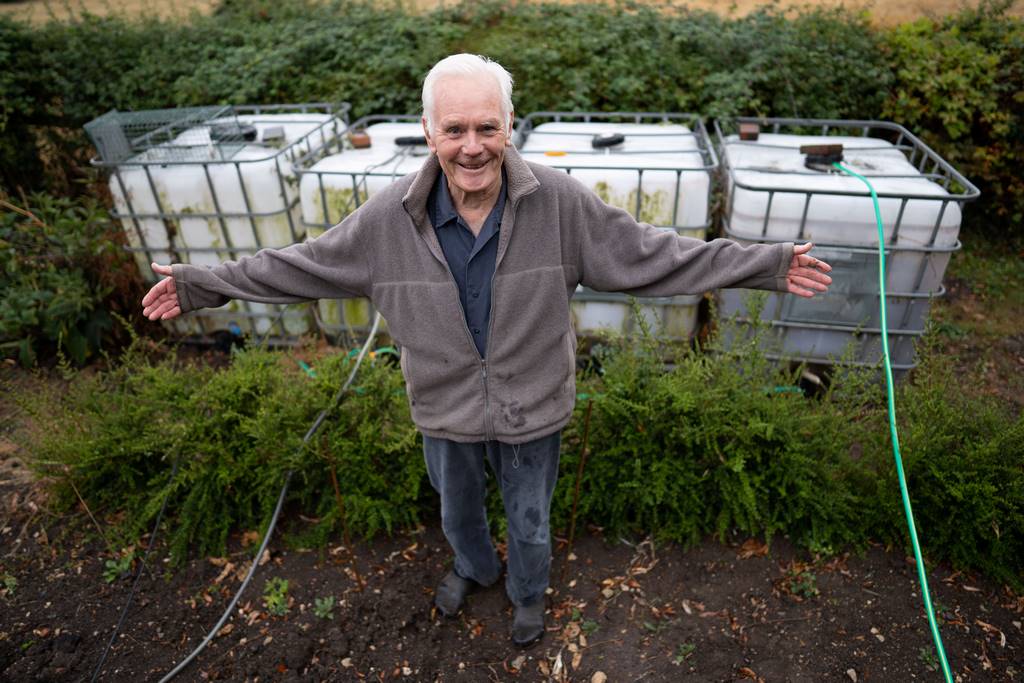
Even though the English government recently announced a ban on garden hose watering in the west of the country, Peter Harden has kept right on hosing worry-free.

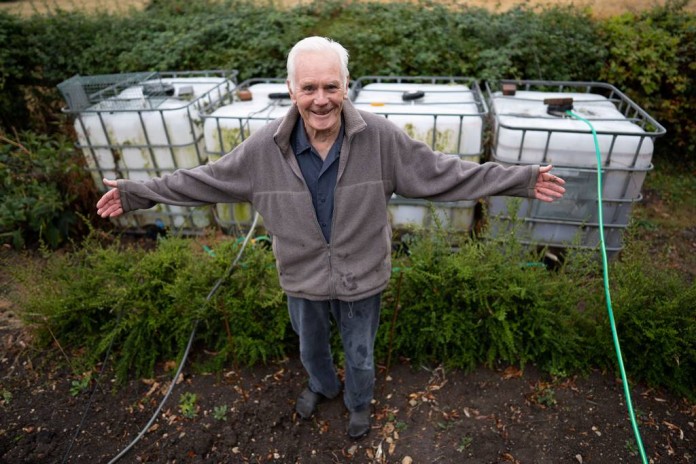
That’s because Harden has been storing rainwater in large catch thanks for almost 50 years, and with 6,000 liters (1,500 gallons) of water available to him, his paddock is the greenest on the block.

An 82-year-old retired teacher, Peter Harden has lived in his bungalow for 52 years, and said he installed his first rainwater catch tanks after a famous English drought in 1976.

The keen gardener noticed droughts in the UK were getting more intense and became inspired to take precautions by he and his wife’s holidays to Europe.

“Our holidays abroad in Europe over 50 years frequently included cultural visits to ancient Greek and Roman towns,” said Harden. “We were always impressed by the huge number of domestic underground cisterns that the Romans et al. pre-built to catch rainwater for very dry summers.”

READ MORE: Farmer Thrives by Growing Gluten-free Grain Needing No Water During Drought

“With this experience in mind, I gradually increased the number and size of my rainwater catch tanks until about 15 years ago when I had nine 375 liter capacity tanks fed directly by rainwater from the bungalow’s guttering.”

But why such dedication? Peter lives in one of the driest areas in the UK. The clay beneath his property in Ingoldsby, Lincolnshire, does hold water, but as soon as the UK gets a drought the clay starts to crack.

Now the region is experiencing its worst drought in 26 years, and to protect municipal water reserves, a hose pipe ban has been introduced in parts of the West Country.

“We live in an area with one of the lowest mean rainfalls in the country. We get a circa of 22 inches per year,” said Harden, who about eight years ago supplemented his 9 catch tanks with two more, 1,000 liter (250 gallon) intermediate bulk containers, before adding another pair just recently.

SEE:  Baling Water: These Young Farmers Built a DIY Swimming Pool With Hay Bales to Beat the Heatwave

The bulk water containers sit at the bottom of the garden and are filled directly by garden hose from some of the 375-liter catch tanks.

“Using an electrically-powered submersible water pump, I pump water through a garden hose from one of the tanks through a spray attached to the garden hose,” he explained.

“As the level of water falls in the one tank it levels out in the other tanks through gravity feed through the interconnected pipes.

“Three of my original 375-liter tanks have since become unserviceable and I am waiting to replace them. I also am trying to buy two more 1,000 liter bulk containers to increase my water storage volume.”

Not slowing down, he says he aims to store 9,000 liters soon.

HOSE Down Social Media With This Good News…

Scientists Invent Ultra-Thin Battery-Like Device that Generates Electricity from Air Moisture—Perfect for Health Monitors

Professor Tan Swee Ching

Imagine being able to generate electricity by harnessing moisture in the air around you with just everyday items like sea salt and a piece of fabric.

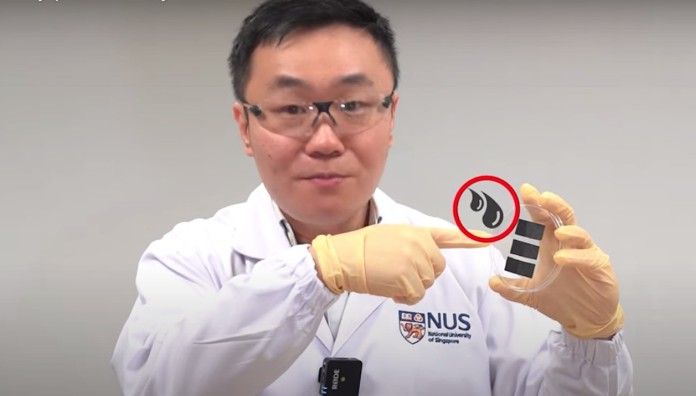
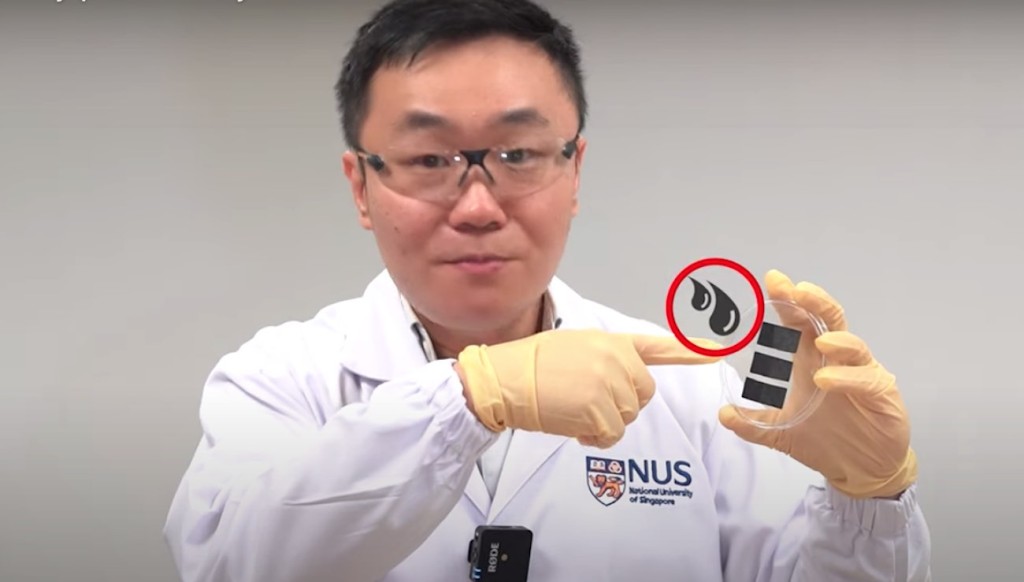
That’s just what a team of researchers from Singapore has shown, having developed a moisture-driven battery made of a thin layer of fabric, sea salt, carbon ink, and a special water-absorbing gel.

About 0.3 millimeters in thickness, the moisture-driven electricity generation device, or MEG, is built upon the ability of different materials to generate electricity from the interaction with moisture in the air, and could potentially fit a wide range of real-world applications, including wearable electronics like health monitors, electronic skin sensors, and information storage devices.

Such devices have already been developed, but face major challenges with balancing and maintaining moisture content between where it shouldn’t be and where it needs to be.

Now, a research team led by Assistant Professor Tan Swee Ching from the National University of Singapore’s Department of Materials Science and Engineering have devised a novel MEG device that can perpetually maintain a difference in water content and generate electrical output for hundreds of hours.

The team’s MEG device consists of a thin layer of fabric which was coated with carbon nanoparticles. In their study, the team used a commercially available fabric made of wood pulp and polyester.

One region of the fabric is coated with a hygroscopic ionic hydrogel, and this region is known as the wet region. Made using sea salt, the special water-absorbing gel can absorb more than six times its original weight, and it is used to harvest moisture from the air.

SIMILAR:  Innovation in Organic Solar Cells Promise Low-Cost, Bendable, and Efficient Panels

“Sea salt was chosen as the water-absorbing compound due to its non-toxic properties and its potential to provide a sustainable option for desalination plants to dispose of the generated sea salt and brine,” shared Assistant Professor Tan.

The other end of the fabric is the dry region which does not contain a hygroscopic ionic hydrogel layer. This is to ensure that this region is kept dry and water is confined to the wet region.

Once the MEG device is assembled, electricity is generated when the ions of sea salt are separated as water is absorbed in the wet region. Free ions with a positive charge are absorbed by the carbon nanoparticles which are negatively charged. This causes changes to the surface of the fabric, generating an electric field across it.

Using a unique design of wet-dry regions, the team showed they could sustain electrical output even when the wet region was saturated with water. After being left in an open humid environment for 30 days, water was still maintained in the wet region demonstrating the effectiveness of the device in sustaining electrical output.

“With this unique asymmetric structure, the electric performance of our MEG device is significantly improved in comparison with prior MEG technologies, thus making it possible to power many common electronic devices, such as health monitors and wearable electronics,” explained Tan.

RELATED: Samsung Cuts Energy Usage of Their Computer Chips by 50% In Big Market Innovation

The MEG device has immediate applications due to its ease of scalability and commercially available raw materials. One of the most immediate applications is for use as a portable power source for the portable-powering of electronics directly by ambient humidity.

By connecting three pieces of the power-generating fabric together and placing them into a 3D printed case that was the size of a standard AA battery, the voltage of the assembled device was tested to reach as high as 1.96V—higher than a commercial AA battery of about 1.5V—and enough to power small electronic devices such as an alarm clock.

The scalability of the NUS invention, the convenience of obtaining commercially available raw materials as well as the low fabrication cost of about SIN$0.15 per square meter make the MEG device suitable for mass production.

“Our device shows excellent scalability at a low fabrication cost. Compared to other MEG structures and devices, our invention is simpler and easier for scaling-up integrations and connections. We believe it holds vast promise for commercialization,” said Tan.

CHARGE Up Your Friends With This Awesome Innovation…

Scientists Stunned by New Jupiter Images With Galaxies ‘Photobombing’ the Webb Telescope

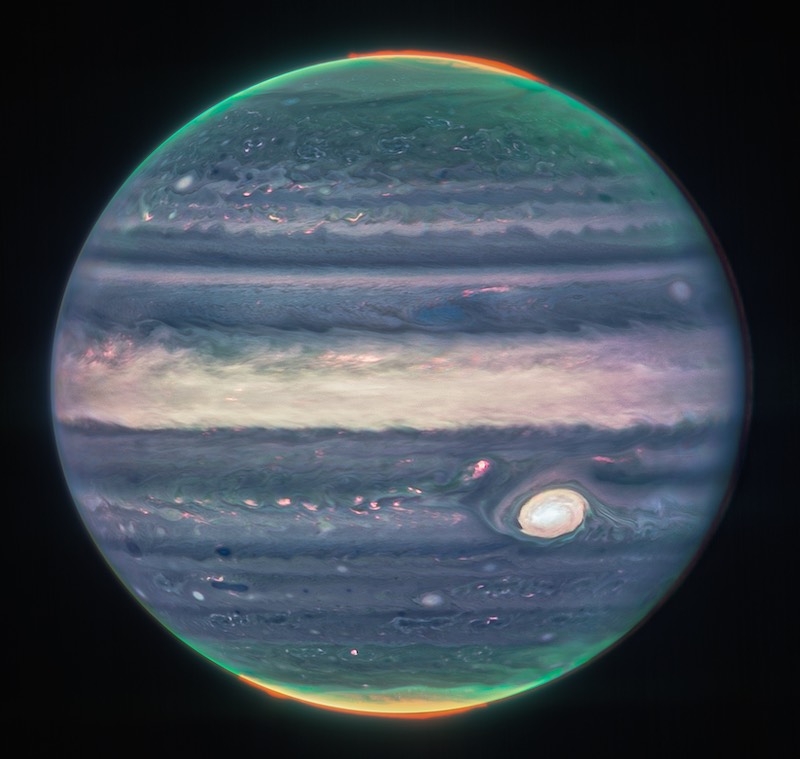
Jupiter with its 2 tiny moons Amalthea and Adrastea – NASA/ESA Image processing by Ricardo Hueso and Judy Schmidt

With giant storms, powerful winds, auroras, and extreme temperature and pressure conditions, Jupiter has a lot going on—and NASA’s James Webb Space Telescope has captured some incredible new images of the planet.

“We hadn’t really expected it to be this good, to be honest,” said planetary astronomer Imke de Pater, professor emerita of the University of California, Berkeley, who led the observations of Jupiter with Thierry Fouchet, of the Paris Observatory.

“It’s really remarkable that we can see details on Jupiter together with its rings, tiny satellites, and even galaxies in one image,” she said.

The two images come from the observatory’s Near-Infrared Camera (NIRCam), which has three specialized infrared filters that showcase details of the planet.

In the wide-field view (above), Webb sees Jupiter with its faint rings, which are a million times fainter than the planet, and two tiny moons called Amalthea and Adrastea. The fuzzy spots in the lower background are likely galaxies “photobombing” this Jovian view.

“This one image sums up the science of our Jupiter system program, which studies the dynamics and chemistry of Jupiter itself, its rings, and its satellite system,” Fouchet said.

In the standalone view of Jupiter below, created from a composite of several images from Webb, dreamy auroras extend to altitudes high above both the northern and southern poles of Jupiter.

James Webb telescope NIRCam image of Jupiter from three filters (NASA/ESA/CSA with image processing by Judy Schmidt)

Since infrared light is invisible to the human eye, the light has been mapped onto the visible spectrum using three filters.

POPULAR: Travel 2,000 Light-Years in 60 Seconds With New Video From NASA’s Webb Telescope

The auroras shine in a filter that is mapped to redder colors, which also highlights light reflected from lower clouds and upper hazes. A different filter, mapped to yellows and greens, shows hazes swirling around the northern and southern poles. A third filter, mapped to blues, showcases light that is reflected from a deeper main cloud.

The Great Red Spot, a famous storm so big it could swallow Earth, appears white in these views, as do other clouds, because they are reflecting a lot of sunlight.

“The brightness here indicates high altitude, so the Great Red Spot has high-altitude hazes, as does the equatorial region,” said Heidi Hammel, Webb interdisciplinary scientist for solar system observations. “The numerous bright white ‘spots’ and ‘streaks’ are likely very high-altitude cloud tops of condensed convective storms.” By contrast, dark ribbons north of the equatorial region have little cloud cover.

LOOK: Webb Telescope Captures Images That Move a NASA Scientist ‘to Tears’

Scientists collaborated with citizen scientist Judy Schmidt to translate the Webb data into processed images. Together, the researchers have already begun analyzing Webb data to log new science about our solar system’s largest planet—and more clues to its inner life.

Webb is an international mission led by NASA with its partners ESA (European Space Agency) and CSA (Canadian Space Agency). Learn more at NASA Blogs.

WATCH more images in the Reuters video below… (Note: GNN is not affiliated with any of their ads.)

SEND the Heavenly Images to Space-Lovers By Sharing on Social Media…
“Some people have a wonderful capacity to appreciate again and again the basic goods of life, with awe, pleasure, wonder, and even ecstasy.” – Abraham Maslow

Quote of the Day: “Some people have a wonderful capacity to appreciate again and again the basic goods of life, with awe, pleasure, wonder, and even ecstasy.” – Abraham H. Maslow

Photo by: Debby Hudson

With a new inspirational quote every day, atop the perfect photo—collected and archived on our Quotes page—why not bookmark GNN.org for a daily uplift?

First Study to Show Dogs Cry ‘Happy Tears’ When Reunited With Their Owners

SWNS
SWNS

Dogs cry “happy tears” when their owners come home, according to a study inspired by a scientist whose own pup welled up with joy whenever they reunited.

It’s well known that dogs have tear ducts designed to flush dirt from their eyes, but the process had never been linked with emotion—until now.

Professor Takefumi Kikusui decided to investigate after his poodle had puppies and he noticed the dog’s face changed when it nursed the babies. It had tears in its eyes.

That gave him the idea that oxytocin might be causing the watery flood—and dogs, like humans, may produce tears when they are flooded with emotion.

Oxytocin is known as the maternal or “love hormone” and he knew from earlier observations that oxytocin is released in both dogs and their owners during interactions. So, he decided to run an experiment to see if it brought dogs to tears.

Prof. Kikusui, of Azabu University in Japan, used a standard test to measure dogs’ baseline tear volume before reuniting with their owners. They found the volume indeed went up by 10% when the animals got back together with their favorite human. It did not increase when it was a person they didn’t know well.

POPULAR: After Losing My Dog, Neighbors on Nextdoor Loaned Me Their Own Pups to Grieve

When they added oxytocin to the dogs’ eyes, their tear volume also went up. That finding supports the idea that the release of oxytocin plays a role in tear production when dogs and their people get back together.

“We had never heard of the discovery that animals shed tears in joyful situations, such as reuniting with their owners, and we were all excited that this would be a world first!” said Kikusui, whose study was published this week in the journal Current Biology.

RELATED: Why Do Dogs Tilt Their Heads? Scientists Look at What’s Going On in Their Minds

The Japanese team hasn’t yet tested whether dogs produce tears in response to negative emotions. They also are wondering if dogs make tears when they reunite with other dogs.

For now, they say it seems to have clear implications for the dog-human bond. They have posited that perhaps there was an evolutionary driving force behind the process, because teary-eyed dogs may forge a stronger connection between people and their dogs—a relationship that goes back tens of thousands of years.

RELATED: Vast Majority of Dog Owners Believe They Can Read Their Pooch’s Mind

“It is possible that the dogs that show teary eyes during interaction with the owner would be cared for by the owner more,” says Kikusui.

Forest Group is Saving Scottish Habitat ‘One Sausage at a Time’

Deep in the heart of the Scottish highlands, deer hunters are fueling conservation from the sale of hunted venison.

Cairngorms National Park is 1,748 square miles of pristine and unique habitat, through which tens of thousands of red deer roam without natural predators.

Every year thousands of are culled by deer stalkers to protect over-feeding on the vegetation in the delicate natural ecosystem. Now, one of the organizations responsible for managing the park is taking those culled animals and turning them into commercial venison to help fund their work.

Saving the Cairngorms “one sausage at a time,” has become a bit of a rallying cry for Cairngorms Connect, who are responsible for protecting and restoring around 239 square miles of the park’s finest features.

“As a 200-year project, Cairngorms Connect needs local people to be at the heat of the habitat restoration vision,” Jack Ward, deer stalker with Cairngorms Connect, said.

“At a time when people are becoming more conscious of their consumer habits, venison provides an exciting opportunity to involve new audiences in our habitat restoration vision.”

SIMILAR: After Being Extinct in the Wild, Mexican Wolf Roams the U.S. Desert Once Again Thanks to a Former Wolf Hunter

As part of its work, Cairngorms Connect is looking to grow new patches of native Caledonian woodland to replace the 99% of this unique habitat that has been historically lost.

The regenerating Rothiemurchus Forest in Cairngorms – Cairngorms Connect.

Rampant grazing by the red deer threatens the project, and with no natural predators, the population, as so many are across America, have to be controlled.

The partnership is now selling official Cairngorms Connect Venison, using meat produced during its deer management.

Cairngorms Connect partners, the organization writes, have seen the positive impact of deer management—there are more young trees visible on the forest edge, and the slow march of native woodland is now visible on the slopes of the Cairngorms.

Necessary deer management also produces venison which they believe should represent an accessible and environmentally-sustainable source of high quality and sustainable protein.

Press and Journal reports that the venison sausages are a big hit among birdwatchers from the Royal Society for the Protection of Birds, (RSPB) which, like Cairngorms Connect, manages a part of the park.

SEE ALSO: Fungi Species New to Science Discovered in Scottish Highlands

“The venison has been really popular with visitors to the RSPB Loch Garten Nature Centre,” said Fergus Cumberland, visitor operations manager for RSPB Scotland, “And what better way to restore a habitat than one sausage at a time?”

Give Your Friends A TASTE Of This Good News…

Archaeologists Found a Perfectly Preserved 1,500 Year-old Arrow Inside a Glacier

SWNS
– SWNS

Archeologists found a perfectly preserved 1,500 year old arrow inside a Norwegian glacier.

It was a team of seven people from a glacier archeology program who discovered the arrow, dated to between 300 and 600 CE, in the Jotunheimen Mountains on August 17.

It was found during a survey of the reindeer hunting site, and was “really well preserved,” even when compared to other arrows from the ice.

“The arrows melting out of the ice are a very important new source material to archeology,” said Lars Pilø, who co-directs the glacier archeology program at the Department of Cultural Heritage.

“Due to their preservation, we can learn we at lot more about the past, such as how advances their bow-and-arrow technology really was. The age of the arrow can be assessed by the shape of the arrowhead and the arrow shaft, which both point to AD 300-600.”

RELATED: Metal Detector Left Him Stunned After Unearthing Ancient Ring Belonging to the Sheriff of Nottingham

Glaciers and other perennial ice sheets are gold mines for artifacts, as the items are preserved and often appear like they were made recently.

The Glacier Archeology program at the Department operates under Innlandet County Council, who established back in 2006 that rising temperatures are leading to increased melting of mountain ice in Innlandet.

RELATED: Legendary Spanish Galleon Shipwreck Discovered After Vanishing 300 Years Ago

2006 was the year of the first ‘big melt’ in 2006, an unusually warm summer in the area.

“The degree of preservation is linked to time of exposure, the micro-environment where it was found, and the pressure of snow and ice has impacted where the arrow lay.”

THAW Out The Bad News On Social Media With This Cool Discovery…

“Constant kindness can accomplish much. As the sun makes ice melt, kindness causes misunderstanding, mistrust, and hostility to evaporate.” – Albert Schweitzer

Quote of the Day: “Constant kindness can accomplish much. As the sun makes ice melt, kindness causes misunderstanding, mistrust, and hostility to evaporate.” – Albert Schweitzer

Photo by: Karolina Kołodziejczak

With a new inspirational quote every day, atop the perfect photo—collected and archived on our Quotes page—why not bookmark GNN.org for a daily uplift?

6 High School Football Players Combine Their Strength to Rescue Injured Woman Trapped in a Wrecked Car

(From left to right) Rome High School students Cesar Parker, Treyvon Adams, Antwion Carey, Messiah Daniels, Tyson Brown and Alto Moore made the rescue.
(From left to right) Rome High School students Cesar Parker, Treyvon Adams, Antwion Carey, Messiah Daniels, Tyson Brown and Alto Moore – by Luis Goya

A Georgian woman is thanking her stars that it was nothing less than a group of buff high schooler football players who just happened to be passing by her when she needed help.

Together they leant their strength to pry open the jammed door of the woman’s wrecked car, which allowed the rescuers to access the badly injured driver.

The Rome City Football Team was out in force that morning, with teammates Treyvon Adams, 16, Antwion Carey, 16, Cesar Parker, 16, Messiah Daniels, Tyson Brown, 17, and Alto Moore, 16, all heading to school together in Adam’s car, or with their mom in the case of Caesar.

As soon as they saw the wrecked car they leapt into action.

“We just ran as fast we (could) to the lady and check on her to see if she was alright,” Adams told CNN. “We were seeing she was in pain, she was screaming and asking us to help her.”

READ MORE: 80-Year-old Man Walks Through Blizzard to Rescue 3 Cars of People

The car was totaled, and badly bent out of shape. Without thinking, the teens managed to pry the passenger door open, but realized only afterwards that it was the other door that had to be removed for her to be reached.

“We used all our muscles,” Adams said. “We’re pretty big people, we’re strong. We play football, so we lift weights a lot, but (the door) was just extremely bent and broke.” It all happened in about a minute.

But when it was over, the teens had freed the woman from the vehicle and carried on their way back to class after checking on the driver of the other car in the collision.

Adams admitted that the team had been getting a lot of love and recognition for their act, which teachers said they deserved, and the school has helped drive.

In a post on Twitter, the school’s football team wrote, “PROUD of our MEN!” in reference to the story.

At the end of the day, like all great rescuers, the teens admitted that while the recognition was nice, it was something anyone would do.

PRY Open Social Media And Share This Great Teen Story…

Breakthrough Might Finally Destroy the Harmful ‘Forever Chemicals’ in Our Water

PFAS, a group of manufactured chemicals commonly used since the 1940s, are called ‘forever chemicals’ for a reason. Bacteria can’t eat them; fire can’t incinerate them; and water can’t dilute them. And, if these toxic chemicals are buried, they leach into surrounding soil.

Now, Northwestern University chemists have done the seemingly impossible. Using low temperatures and inexpensive, common substances, the research team developed a process that causes two major classes of PFAS compounds to fall apart—leaving behind only benign end products.

The simple technique potentially could be a powerful solution for finally disposing of these harmful chemicals, which are linked to dangerous health effects and may be common in your water supply.

“PFAS has become a major societal problem,” said Northwestern’s William Dichtel, who led the study. “We wanted to use chemistry to address this problem and create a solution that the world can use. It’s exciting because of how simple — yet unrecognized — our solution is.”

PFAS (per- and polyfluoroalkyl substances) have been in use for 70 years as nonstick and waterproofing agents. They are commonly found in nonstick cookware, waterproof cosmetics, firefighting foams, water-repellent fabrics, and products that resist grease and oil.

Over the years, however, PFAS have seeped into the drinking water supplies. Although the health effects are not yet fully understood, PFAS exposure is associated with many adverse health effects—and the US Environmental Protection Agency recently declared several PFAS as unsafe even at trace levels.

Unbreakable bonds

Although community efforts to filter PFAS from water have been successful, there are few solutions for how to dispose of PFAS once it is removed. The few options that have emerged generally involved its destruction at high temperatures and pressures or other methods that require large energy inputs.

RELATED: Texas Scientists Have Created a Protein That Breaks Down Plastic Bottles

The secret to PFAS’s indestructibility lies in its chemical bonds. PFAS contains many carbon-fluorine bonds, which are the strongest bonds in organic chemistry. As the most electronegative element in the periodic table, fluorine wants electrons — and badly. Carbon, on the other hand, is more willing to give up its electrons.

Pinpointing the Achilles’ heel

But, while studying the compounds, Dichtel’s team found a weakness. PFAS contains a long tail of unyielding carbon-fluorine bonds. But at one end of the molecule, there is a charged group that often contains charged oxygen atoms, according to Brittany Trang, who worked in Dichtel’s laboratory conducting the project for her doctoral thesis, and is the paper’s co-first author.

They targeted this group by heating the PFAS in dimethyl sulfoxide and sodium hydroxide, a common household chemical used to make products like soap or painkillers.

The process decapitated the head group, breaking the bond and leaving behind the rest, showing that the researchers had indeed found an “Achilles’ heel.”

POPULAR: Quarter-Million Pounds of Plastic Cleared From Great Pacific Garbage Patch in Dutch Milestone

In previous attempts to destroy PFAS, other researchers have used high temperatures — up to 400 degrees Celsius. Dichtel is excited that the new technique relies on milder conditions and a simple, inexpensive ingredient, making the solution potentially more practical for widespread use.

After discovering the PFAS degradation conditions, Dichtel and Trang also discovered that the fluorinated pollutants fall apart in a more complex process than generally assumed—not one carbon at a time, but actually two or three carbons at a time. By understanding these pathways, researchers can confirm that only benign products remain.

CHECK OUT: New Enzyme Discovery is Another Leap Towards Dissolving Plastic Waste With ‘Amazing Efficiency’

“This proved to be a very complex set of calculations that challenged the most modern quantum mechanical methods and fastest computers available to us,” said collaborator Ken Houk, a research professor in organic chemistry at UCLA.

The US has identified more than 12,000 different PFAS compounds. Although this might seem daunting, Dichtel remains hopeful (and his team is supported by the National Science Foundation).

“Our work addressed one of the largest classes of PFAS, including many we are most concerned about,” said Dichtel. “There are other classes that don’t have the same Achilles’ heel, but each one will have its own weakness. If we can identify it, then we know how to activate it to destroy it.”

BREAK the Bonds of Hopelessness By Sharing This on Social Media…

Alzheimer’s Memory Loss Reversed in Mice After Scientists Discover Method to Form New Brain Cells

Brain memory neurons activated during memory formation - UIC image

Alzheimer’s has been reversed in mice after scientists at the University of Illinois-Chicago boosted the formation of new brain cells, a breakthrough that could lead to new treatments.

Their gene therapy fueled new neurons in the hippocampus—a region in the brain vital for learning and remembering where you put your car keys.

Experiments have shown this growth process is impaired—particularly in the hippocampus—in patients and mice with mutations linked to Alzheimer’s.

The team found that the increasing production of neurons transformed the lab rodent’s defects, as the new neurons were incorporated into memory circuits, restoring normal function.

Brain cells send electric signals. We keep producing them throughout our lives, with help from our neural stem cells. But numbers tail off as we age—and fall dramatically in Alzheimer’s.

“This is the first time that there is evidence that neurogenesis plays an active role in Alzheimer’s disease pathology,” said lead author Professor Orly Lazarov. “Our discovery really opens up a huge opportunity for new therapies to develop in the field that are based on the enhancement of neurogenesis.”

In the study, published in the Journal of Experimental Medicine, stem cell survival was enhanced by deleting a gene called Bax, which is related to cell death, in the neurons of the mice.

This led to the maturation of more neurons. Follow-up testing showed that the altered mice performed better in spatial recognition and contextual memory tasks, which included finding their way around a maze.

POPULAR: Large Study Suggests Doing Chores May Be Linked to a 21% Reduced Risk For Alzheimer’s Disease

Brain memory neurons activated during memory formation – UIC image

Scans of healthy mice showed the circuits involved in storing memories include many newly-formed neurons alongside older ones.

Fluorescent labels were added to the neurons, which lit them up as they were activated during memory acquisition and retrieval. Typical Alzheimer’s mice show a lack of new neurons.

Further analyses revealed there was also a rise in the number of tiny protrusions called dendritic spines. They connect neurons and are critical for memory formation.

Integration of newly formed brain cells was restored when neurogenesis was increased. When the researchers specifically inactivated the new neurons, mice with dementia lost any improvement in memory, which confirmed the results.

CHECK OUT: Eating Oily Fish Like Salmon May Cut Risk of Developing Alzheimer’s by Nearly 50%

Their study is the first to show impairments in hippocampal neurogenesis play a role in the memory deficits associated with Alzheimer’s by decreasing the availability of immature neurons for memory formation. Before the neurogenesis-based therapy can be tested in humans, the team’s findings in mice must be confirmed by other trials.

Lazarov said this work could lead to a whole new spectrum of medications that could restore memory in patients—and it offers hope to the Alzheimer’s community because current drugs target just the symptoms, not the cause.

MORE: Sunshine Could Ward Off Dementia and Strokes—First-Ever Direct Link to Vitamin D Found

DON’T FORGET to Share the Hope With Friends on Social Media…

Vulture Soars Around a Paraglider Then Lands on His Lap – WATCH

Credit: Ricardo Guimarães Cunha, licensed by SWNS

This is the thrilling moment a vulture flies alongside a paraglider and then lands on his lap, as he soared 100-ft in the air.

Ricardo Guimarães Cunha was paragliding in the mountainous region of Pacatuba, Ceará, Brazil, when he captured the experience on his GoPro camera.

The 30-year-old had planned to take some videos of the beautiful scenes when the bird began flying alongside him.

Ricardo never expected the vulture to land on him, let alone multiple times during his flight.

Now, they call it parahawking…

FLY THIS New Adventure Option to Birdwatchers on Social Media…