All News - Page 353 of 1714 - Good News Network
Home Blog Page 353

Archeologists Find 12th Century Pendant Resembling English National Football Badge Ahead of Historic Euro 2022 Final

- SWNS
– SWNS

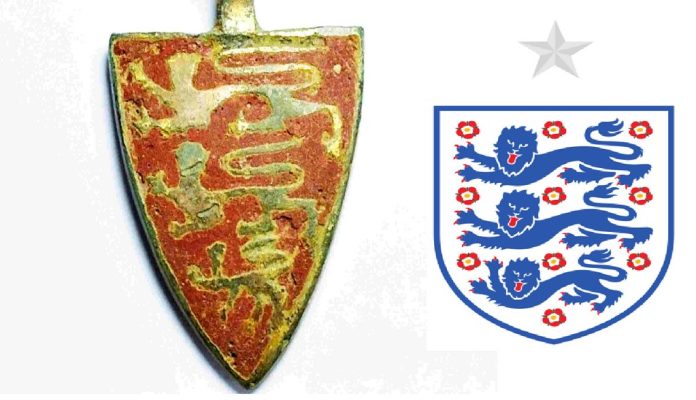
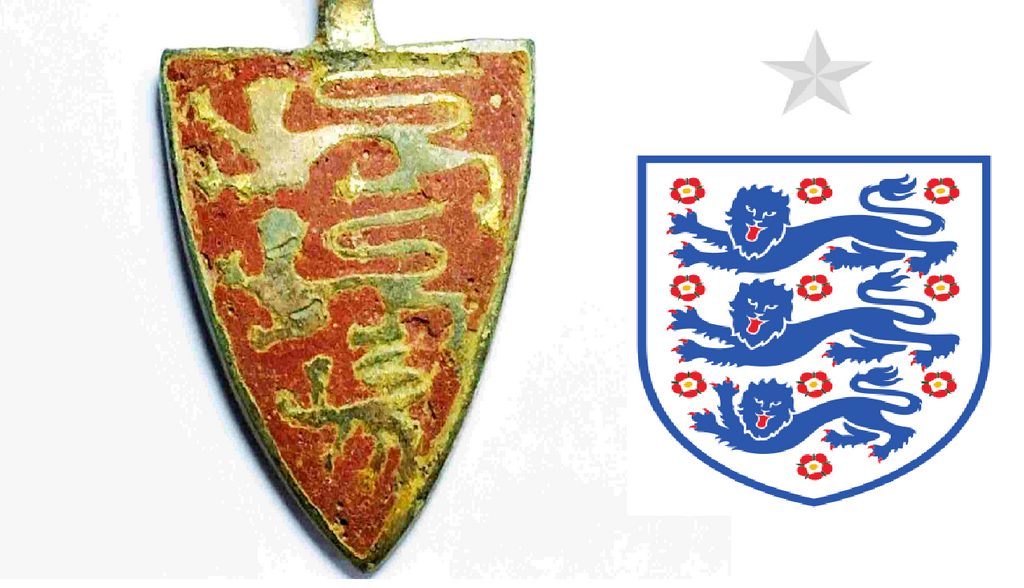
Archeologists uncovered an ancient 12th century pendant resembling the England National team soccer badge ahead of the first European Championships Final in the women’s team’s history.

The 920-year-old relic, which bears a striking resemblance to the iconic national team’s crest, was excavated from a field in Wormleighton, Warwickshire.

It depicts three golden lions on a field of red and was discovered at a site that experts believe would have been an Iron Age or Romano British settlement.

As if in premonition, days after the find was recovered, the “Lionesses” were victorious against national arch-rivals Germany, winning 2-1.

With the score tied 1-1 after normal time, Chloe Kelly scored in the 110th minute to seal the first major trophy in English national football for 56 years.

The Sun newspaper ran the headline “Move over fellas, it’s home.”

CHECK OUT: Archaeologists Discover Mighty Queen’s Seat of Medieval Power in a Lost Monastery in England

“You have all set an example that will be an inspiration for girls and women today, and for future generations,” said the Queen.

Back in Warwickshire, historians say it’s likely that the pendant would have decorated a horse’s harness in medieval England, adding that the form of heraldry associated with the arms of England was used by the Crown between 1189 and 1340.

– Taken from official Facebook page.

Before this, William the Conqueror used two lions on a red background as his coat of arms and brought the symbol to the English throne.

It was Henry II who first used three lions on a red background, adding an extra lion when he married Eleanor of Aquitaine, possibly to represent his marriage into the family.

SIMILAR: Men on Norway’s Soccer Team Take Wage Cut So Women Players Earn Equal Pay (They Already Win More)

From this point onwards, the Three Lions would remain the symbol of the crown of England in the United Kingdom’s Royal Coat of Arms.

King Henry VII created the Tudor Rose, having ended the War of the Roses in 1485, and ten red roses still adorn the national teams’ crests today.

SHARE This Historic News… 

Quarter-Million Pounds of Plastic Cleared From Great Pacific Garbage Patch in Dutch Milestone

The Ocean Cleanup
The Ocean Cleanup

Last year, wiz kid Boyan Slat announced that “The Great Pacific Garbage Patch can now be cleaned,” after a prototype cleaning system proved successful.

Since that deployment in August 2021, System 02 (or “Jenny”) has now collected 220,000 pounds (101,353 kg) of plastic over 45 extractions, sweeping an area of ocean of over 3,000km2 comparable to the size of Luxembourg or Rhode Island.

“Added to the 7,173 kg of plastic captured by our previous prototype systems, The Ocean Cleanup has now collected 108,526 kg of plastic from the “GPGP”—more than the combined weight of two and a half Boeing 737-800s, or the dry weight of a space shuttle,” Slat wrote on his website.

According to a 2018 study organized by The Ocean Cleanup to map the GPGP, the total amount of accumulated plastic is around 79,000,000 kg, or 100,000,000 kg if one includes exterior areas.

“Thus, if we repeat this 100,000 kg haul 1,000 times—the Great Pacific Garbage Patch will be gone”.

CHECK OUT: UPDATE: Plant Opens to Change the Recycling Game by Breaking Down Plastic Bottles With Enzyme From Leaves

While that’s not particularly encouraging since that 100,000 kilograms were extracted over a year, meaning 1,000 years would be needed to clean the GPGP, Slat has better ideas.

“System 03, which is expected to capture plastic at a rate potentially 10 times higher than System 002 through a combination of increased size, improved efficiency, and increased uptime, will be starting soon,” Slat said.

The idea with System 03 will be to go big—and to remove the need for support vessels, thusly reducing the cost of each ton of plastic removed as the support vessels are the highest input cost.

KEEP READING: Dutch Guy Famous for Cleaning Up Pacific Garbage Patch is Now Clearing the World’s Rivers Too

The capture area is nearly two miles in total, and despite the fact that it’s essentially a net, the capture of fish or other marine life remains less than a quarter of a percentage point of the total haul.

Slat, despite his humanitarian brilliance, seems to receive his fair share of criticism, but in a recent Instagram post, he helps us understand just exactly how critical the work he is doing will be to the future of the oceans.

CATCH Your Friends Attention With Some Positive News For A Change…

“If you think adventure is dangerous, try routine. It is lethal.” – Paulo Coelho

Quote of the Day: “If you think adventure is dangerous, try routine. It is lethal.” – Paulo Coelho

Photo by: Takumi Yoshida, CC license

With a new inspirational quote every day, atop the perfect photo—collected and archived on our Quotes page—why not bookmark GNN.org for a daily uplift?

Large Study Suggests Doing Chores May Be Linked to a 21% Reduced Risk For Alzheimer’s Disease

Photo by joeyz51, CC license

Cooking, cleaning, and gardening may be linked to reducing your risk for developing Alzheimer’s by more than one-fifth (21%), according to new research.

The study that looked at more than a half-million Brits also found the biggest protective activity to be regular brisk walks or bike rides, which were linked to a 35 percent reduction in the onset of the disease.

The other vital factor was meeting up with family and friends, which was associated with a 15 percent reduced risk.

The study looked at the effects of these activities, as well as mental activities and use of electronic devices in people both with and without higher genetic risk for dementia.

“Many studies have identified potential risk factors for dementia, but we wanted to know more about a wide variety of lifestyle habits and their potential role in the prevention of dementia,” said study author Huan Song, MD, PhD, of Sichuan University in Chengdu, China. “Our study found that exercise, household chores, and social visits were linked to a reduced risk of various types of dementia.”

RELATED: Sunshine Could Ward Off Dementia and Strokes: First-Ever Direct Link to Vitamin D Found

The study involved 501,376 people from a UK database without dementia with an average age of 56.

Participants filled out questionnaires at the beginning of the study, including one on physical activities. They were asked how often they participated in activities such as climbing a flight of stairs, walking, and participating in strenuous sports. They were also asked about household chores, job-related activities, and what kind of transportation they used, including walking or biking to work.

Participants completed another questionnaire on mental activities. They were asked about their education level, whether they attend adult education classes, how often they visit with friends and family, visit pubs or social clubs or religious groups, and how often they use electronic devices such as playing computer games, watching TV, and talking on the phone.

POPULAR: This Fruit Could Help Improve Memory and Ward Off Dementia, Study Says

Additionally, participants reported whether they had any immediate family members with dementia. This helped researchers determine if they had a genetic risk for Alzheimer’s disease. Study participants were followed for an average of 11 years. At the end of the study, 5,185 people had developed dementia.

After adjusting for multiple factors such as age, income, and smoking, researchers found that most physical and mental activities studied showed links to the risk of dementia. Importantly, the findings remain after considering the high correlations and interactions of these activities.

People who were highly engaged in activity patterns including frequent exercises, household chores, and daily visits of family and friends had 35%, 21%, and 15% lower risk of dementia, respectively, compared to people who were the least engaged in these activity patterns.

MORE: Cannabis Could Hold the Key to Preventing Neurodegenerative Diseases Like Parkinson’s and Alzheimer’s

“Our study has found that by engaging more frequently in healthy physical and mental activities people may reduce their risk of dementia,” Song said. “More research is needed to confirm our findings. However, our results are encouraging that making these simple lifestyle changes may be beneficial.”

Researchers also looked at dementia incidence rates by identified activity patterns. The rate in people who exercised frequently was 0.45 cases for every 1,000 person-years compared to 1.59 for people who rarely exercised. (Person-years take into account the number of people in a study as well as the amount of time spent in the study.) Those who frequently did household chores had a rate of 0.86 cases for every 1,000 person-years compared to 1.02 for people who rarely did household chores. People who visited family daily had a rate of 0.62 cases for every 1,000 person-years compared to 0.8 cases for those who only visited friends and family once every few months.

ALSO: Coffee and Tea Drinking May be Associated With Reduced Rates of Stroke and Dementia

The researchers found that all participants benefited from the protective effect of physical and mental activities, whether or not they had a family history of dementia.

A limitation of the study was that people reported their own physical and mental activity, so they may not have remembered and reported these activities correctly.

The research, published this week in Neurology, the medical journal of the American Academy of Neurology, was supported by National Natural Science Foundation of China, West China Hospital, Sichuan University, and National Clinical Research Center for Geriatrics.

ENCOURAGE More Activity By Sharing This News on Social Media…

Imperial Moth Spotted With Name ‘Anna’ Spelled Out on its Back Below a Face

PIC FROM Kennedy News and Media (PICTURED: REAGAN LEWALLEN, 25, WAS STUNNED TO SPOT A GIRL'S FACE AND THE NAME 'ANNA' APPEAR ON A MOTH'S BACK) A trainee dog groomer was stunned to spot a girl's face and the name 'Anna' appear on a MOTH'S back - believing it to be a female ghost communicating through the insect. Reagan Lewallen, from Senoia, Georgia, US, did a double-take when she let her pal's dog out into the garden while house sitting and spotted the huge five-inch Imperial Moth sunning itself last Sunday [July 24th]. On closer inspection the 25-year-old saw yellow markings on its brown back that perfectly spelled out 'Anna' underneath an eerie-looking face complete with pigtails. DISCLAIMER: While Kennedy News and Media uses its best endeavours to establish the copyright and authenticity of all pictures supplied, it accepts no liability for any damage, loss or legal action caused by the use of images supplied and the publication of images is solely at your discretion. SEE KENNEDY NEWS COPY - 0161 697 4266
REAGAN LEWALLEN via KENNEDY NEWS / SWNS

Put this in your file called, Mother Nature Did WHAT?

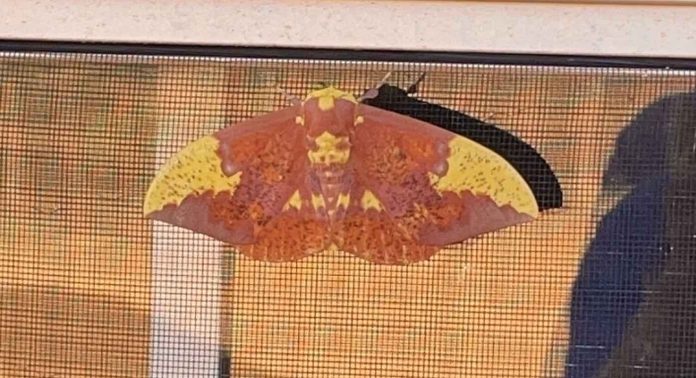
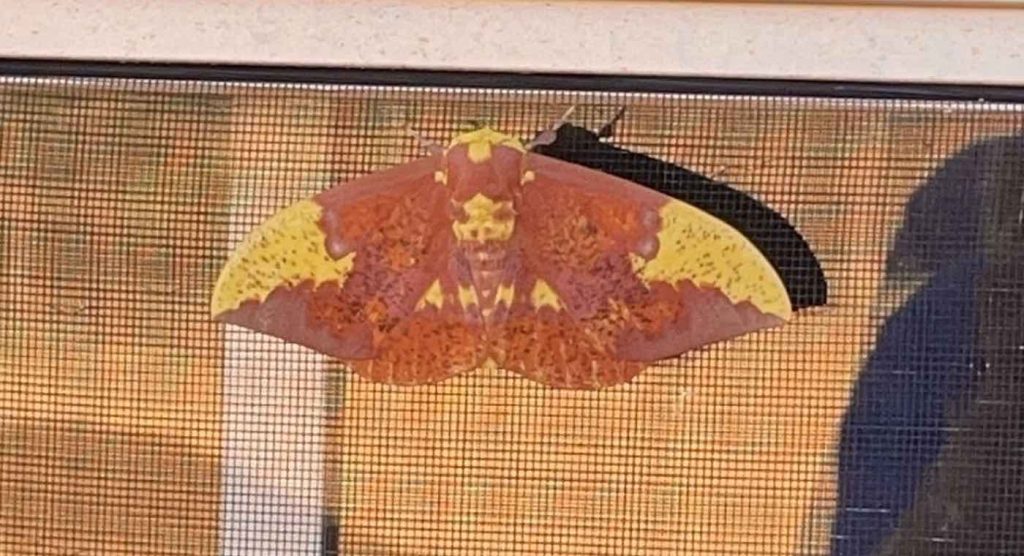
A 25-year-old woman was stunned to spot a face and the name ‘Anna’ appearing on a moth’s back.

Reagan Lewallen did a double-take when she let her friend’s dog out into the yard while house-sitting and spotted the huge five-inch imperial moth sunning itself last Sunday.

She noticed yellow markings on its brown back that perfectly spelled out ‘Anna’ underneath an eerie-looking face.

Reagan said she got goosebumps when she spotted the face and name on the bug’s back, whipping out her phone to take a picture.

She sent it to her mom who said she could see a little girl with pigtails.

Reagan is convinced that the spooky sight is a sign from a spirit called Anna reassuring people that she’s ok in the afterlife.

After sharing the picture on social media, the post racked up thousands of shares and comments.

People began tagging friends named Anna and commenting about the face’s resemblance to famous people like Charles Manson, Jimi Hendrix, Bob Marley, and Jesus.

RELATED: 9 Years After Mom’s Death, Man Has Amazing Encounter With Yellow Butterfly Right When He Needed It

The natural design of any imperial moth (Eacles imperialis) makes it somewhat easy to see a face in many of them, but the well-proportioned letters, ANNA, are more remarkable.

Reagan, who lives in Senoia, Georgia, says, “I’m the kind of person that if I see a cool bug, a cool tree or the sky looks pretty I’ll stop and take a picture.”

“I’ve seen this kind of moth before but nothing like that, nothing with a face on it and a name.

LOOKSmithsonian Says These Moths Are So Gorgeous, They Put Butterflies to Shame:

“Just the fact that it was spelled out so perfectly, I was like ‘oh my goodness I’ve never seen anything so crazy’, I got goosebumps.”

Know Any Anna Who Needs to See This? Share on Social Media…

How 14-Year-old Philo Farnsworth’s Tinkering Brought the Moon Landing to Your Living Room

NASA
NASA

14-year-old Philo Farnsworth wasn’t looking up at the sky while plowing the field at his father’s farm in Rigby, Idaho. He was looking down at the straight furrows that coursed over the earth. That’s when he had an epiphany.

The same way the plow went back and forth over the field, an image could be scanned electronically and then transmitted line by line, much like furrows in a field. It was a vision of the first transmittable TV image.

Philo was a curious boy and was often lost in thought. When he was 12 years old, he was delighted to find that the farmhouse his family moved into was wired with electricity. He also discovered other treasures in the house: a cache of electronics magazines, a burned-out electric motor, and plenty of bits and pieces to tinker with.

He fixed the motor and converted his mother’s hand-powered washing machine into an electric-powered one.

At 14, he showed his high school teacher a handful of sketches of an electronic television system inspired by the furrows in the field. Encouraged by his science teacher, Philo covered several blackboards with diagrams.

After Philo’s father died when he was in high school, the boy went to work supporting his siblings and mother while keeping up his studies. He started a radio repair business, but it failed.

He briefly attended college, but his mind was on television—and so he dropped out and began looking for somebody to fund his ideas. That opportunity came, and he traveled to Berkeley, California, with his new bride Pem to set up shop together.

RELATED: One Man Set Out to Make the Perfect Pasta Shape, And it’s So Popular That Orders are Backed Up for Months

The TV tube Philo developed would become the standard in broadcasting. Yet Philo Farnsworth spent years defending his patent and rebuilding his business after an economic crash.

33-year-old Philo Farnsworth

Like all of us, he had his share of challenges—perhaps more—but he kept pushing forward and registered hundreds of patents.

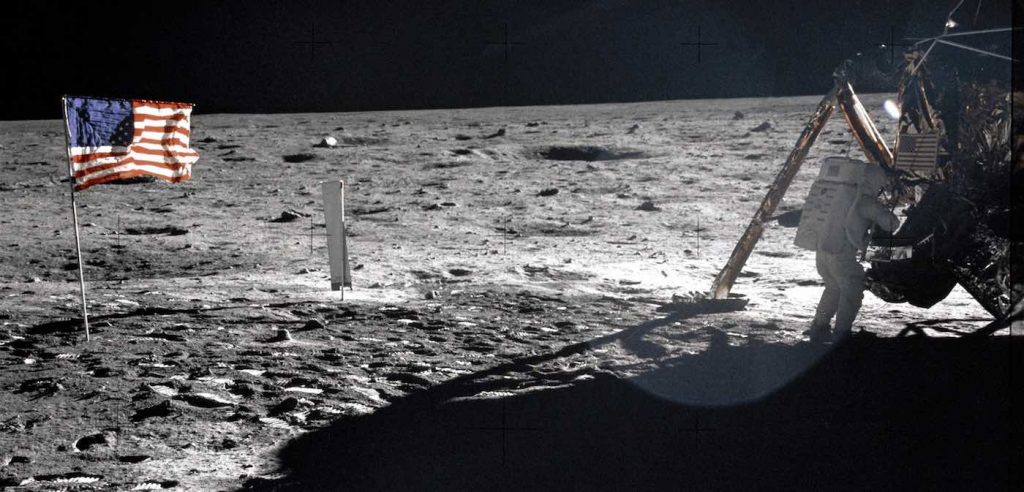
Finally, on July 21, 1969, Neil Armstrong stepped out of Apollo 11 onto the moon’s surface in an area called the Sea of Tranquility.

LOOK: Teen Invents Clever Fire Extinguisher to Save Your Home When You’re Away – and He’s Donating All the Profits

Philo Farnsworth was sitting in his living room with his wife Pem, watching the live feed — the image transmitting quickly, row by row like the furrows in a field. He turned to her and said, “Pem, this has made it all worthwhile.”

(By The Foundation for a Better Life)

SHARE the Inspiration For Dreaming Big on Social Media…

“Learn to see things in the right proportions… great things great and small things small.” – Corrie Ten Boom

Quote of the Day: “Learn to see things in the right proportions… great things great and small things small.” – Corrie Ten Boom

Photo by: Sarah Kilian

With a new inspirational quote every day, atop the perfect photo—collected and archived on our Quotes page—why not bookmark GNN.org for a daily uplift?

Sweet Dog Was Born With a Defect That Makes Her Look Permanently Surprised

Lieschen O'Connor / SWNS
Lieschen O’Connor / SWNS

Meet Belle, whose doctor diagnosed her with a birth defect that makes her look permanently surprised.

The adorable mix of doberman and cattlehound was born with the muscles in her head stretched back, leaving her looking wide-eyed at all times.

Lieschen O’Connor adopted Belle in 2017 from Lawrence Humane Society, an organization that provides care for homeless and abused animals.

Belle’s condition doesn’t cause her any pain but her 38-year-old mom regularly needs to apply eye drops as they often get dry.

The dog’s unique look has won her over 160,000 followers on TikTok.

“Her expressions make my heart swell,” said one fan. Another called her the cutest dog on TikTok. “I love her so much”.

LOOK: Family Left Stunned When Their Dog Escaped–Only to Return Later With a Ribbon From a Dog Show

Lieschen O’Connor / SWNS

Lieschen, a 38-year-old who lives in Tyler, Kansas, says, “Belle is extremely sweet and a little goofy.”

Lieschen O’Connor / SWNS

“If dogs could laugh, Belle would definitely laugh a lot!”

WATCH Stray Dog Become a Fierce Crossing Guard for These Children Every Day

SHARE This One-of-a-Kind Doggy Smile With Friends on Social Media…

Watch a Drone Save a 14-Year-old From Drowning in Powerful Spanish Current

General Drones

A pioneering drone lifeguard service rolled out across Spanish beaches has saved the life of a 14-year-old boy as he struggled against a powerful current.

General Drones supplies 30 surf rescue drones with operators to lifeguard stations across 22 beaches along Spain’s coast.

The company released a compelling video of the recent rescue in Valencia.

It shows the drone dropping a life vest to the exhausted teen, providing valuable assistance until the jet-ski could arrive with a lifeguard.

They told Reuters, “Because of the heavy waves it was a complicated maneuver, but we finally managed to give him the vest and he could float until the lifeguards reached him.”

RELATED: Drone Helps Save the Life of a 71-Year-old Man Who Has Cardiac Arrest While Shoveling Snow

Watch the real-time video below… (Note: GNN has no affiliation with any ads displayed)

ALSO SEE: Man Brings His Heat-Sensing Drone to Help Find Missing Boy at 1:50 AM

FLY THIS to Social Media and Rescue Your Friends From Hopelessness…

Delaware Will Install Free Solar Panels For Low-income Residents and Paying 70% For Moderate-incomes

File photo by Jeremy Bezanger

A new two-year pilot program launched this month will spread the benefits of solar power to Delaware residents who otherwise would not be able to afford installing the green energy.

The Solar Pilot Program from the Delaware Department of Natural Resources and Environmental Control seeks to test future expansion of photovoltaic systems into low- and moderate-income populations, which have been underserved in the U.S. by existing renewable energy assistance and tax credit programs.

Low-income residents can get an installation of up to 4 kilowatts with no out-of-pocket costs. For moderate-income residents, the program covers 70 percent of the cost for up to 6 kilowatts, with residents paying the remaining 30 percent.

Low-income households must first apply through DNREC’s Weatherization Assistance Program (at 302-504-6111), which helps renters and homeowners cut their energy bills.

Canary Media reports that low credit scores are not going to effect eligibility, and households will qualify as low-income if they live at or below 200 percent of the federal poverty guidelines. “For a family of three, a total income of $46,060 or less qualifies them for free solar. The thresholds for moderate-income families are the median incomes for different counties.”

RELATED: ‘Radical’ Solar Breakthrough Allows Energy to Now Be Stored for Up to 18 Years, Say Scientists

Moderate-income households must contact one of three approved solar contractors—CMI Solar & Electric, KW Solar Solutions, or Clean Energy USA. The homeowner choses one of the participating contractors, who then sends the application for the program to the agency.

The experiences logged during the two-year pilot program by the DNREC Division of Climate, Coastal and Energy will be used to develop a statewide solar program.

LOOK: Solar Panels That Make Electricity at Night are Finally Here – And They’re Cheap and Don’t Need Batteries

SHINE Some Good Government News on Social Media for Those in Delaware…

Your Inspired Weekly Horoscope From Rob Brezsny: A ‘Free Will Astrology’

Our partner Rob Brezsny provides his weekly wisdom to enlighten our thinking and motivate our mood. Rob’s Free Will Astrology, is a syndicated weekly column appearing in over a hundred publications. He is also the author of Pronoia Is the Antidote for Paranoia: How All of Creation Is Conspiring To Shower You with Blessings. (A free preview of the book is available here.)

Here is your weekly horoscope…

FREE WILL ASTROLOGY – Week of July 30, 2022
Copyright by Rob Brezsny, FreeWillAstrology.com

LEO (July 23-Aug. 22):
It’s always advisable for you Leos to carry on a close personal relationship with mirrors. I’m speaking both literally and metaphorically. For the sake of your mental health, you need to be knowledgeable about your image and monitor its ever-shifting nuances. And according to my analysis of the astrological omens, you are now authorized to deepen your intimate connection with mirrors. I believe you will thrive by undertaking an intense phase of introspective explorations and creative self-inquiry. Please keep it all tender and kind, though. You’re not allowed to bad-mouth yourself. Put a special emphasis on identifying aspects of your beauty that have been obscured or neglected. By the way, Leo, I also recommend you seek compassionate feedback from people you trust. Now is an excellent time to get reflections about your quest to become an even more amazing human.

VIRGO (Aug. 23-Sept. 22):
At your best, you are a flexible purist, an adaptable stickler for detail, and a disciplined yet supple thinker. Maybe more than any other sign of the zodiac, you can be focused and resilient, intense and agile, attentive and graceful. And all of us non-Virgos will greatly appreciate it if you provide these talents in abundance during the coming weeks. We need you to be our humble, understated leader. Please be a role model who demonstrates the finely crafted, well-balanced approach to being healthy.

LIBRA (Sept. 23-Oct. 22):
In my Astrological Book of Life, your life purposes as a Libra may include the following: 1. to be beautiful in the smartest ways you can imagine and smart in the most beautiful ways you can imagine; 2. to always see at least two sides of the story, and preferably more; 3. to serve as an intermediary between disparate elements; 4. to lubricate and facilitate conversations between people who might not otherwise understand each other; 5. to find common ground between apparent contradictions; 6. to weave confusing paradoxes into invigorating amalgamations; 7. to never give up on finding the most elegant way to understand a problem. PS: In the coming weeks, I hope you will make extra efforts to call on the capacities I just named.

SCORPIO (Oct. 23-Nov. 21):
Author Clive James loved the Latin term gazofilacium, meaning “treasure chamber.” He said that the related Italian word, gazofilacio, referred to the stash of beloved poems that he memorized and kept in a special place in his mind. In accordance with astrological omens, Scorpio, now would be an excellent time to begin creating your own personal gazofilacium: a storehouse of wonderful images and thoughts and memories that will serve as a beacon of joy and vitality for the rest of your long life. Here’s your homework: Identify ten items you will store in your gazofilacium.

SAGITTARIUS (Nov. 22-Dec. 21):
Tips to get the most out of the next three weeks: 1. Keep your interesting options open. Let your mediocre options shrivel and expire. 2. Have no regrets and make no apologies about doing what you love. 3. Keep in mind that every action you perform reverberates far beyond your immediate sphere. 4. Give your fears ridiculous names like “Gaffe” and “Wheezy” and “Lumpy.” 5. Be honest to the point of frankness but not to the point of rudeness. 6. Don’t just run. Gallop.

CAPRICORN (Dec. 22-Jan. 19):
Capricorn poet Richard Hugo wrote, “It doesn’t bother me that the word ‘stone’ appears more than 30 times in my third book, or that ‘wind’ and ‘gray’ appear over and over in my poems to the disdain of some reviewers.” Hugo celebrated his obsessions. He treated them as riches because focusing on them enabled him to identify his deepest feelings and discover who he really was. In accordance with astrological omens, I recommend a similar approach to you in the coming weeks. Cultivate and honor and love the specific fascinations at the core of your destiny.

AQUARIUS (Jan. 20-Feb. 18):
Authors Violet Trefusis (1894–1972) and Vita Sackville-West (1892–1962) loved each other. In one letter, Violet told Vita, “I want you hungrily, frenziedly, passionately. I am starving for you. Not only the physical you, but your fellowship, your sympathy, the innumerable points of view we share. I can’t exist without you; you are my affinity.” In the coming weeks, dear Aquarius, I invite you to use florid language like that in addressing your beloved allies. I also invite you to request such messages. According to my reading of the planetary omens, you are due for eruptions of articulate passion.

PISCES (Feb. 19-March 20):
I’d like to honor and pay homage to a past disappointment that helped transform you into a beautiful soul. I know it didn’t feel good for you when it happened, but it has generated results that have blessed you and the people whose lives you’ve touched. Would you consider performing a ritual of gratitude for all it taught you? Now is an excellent time to express your appreciation because doing so will lead to even further redemption.

ARIES (March 21-April 19):
Fiction-writer John Banville tells us, “There are moments when the past has a force so strong it seems one might be annihilated by it.” I suspect that’s sometimes true for many of us. But it won’t apply to you Aries anytime soon. In fact, just the opposite situation will be in effect during the coming months: You will have more power to render the past irrelevant than maybe you’ve ever had. You will wield an almost indomitable capacity to launch new trends without having to answer to history. Take full advantage, please!

TAURUS (April 20-May 20):
Researchers have proved that lullabies enhance the health of premature babies being cared for in hospitals. The soft, emotionally rich songs also promote the well-being of the babies’ families. I bring this to your attention because I believe you should call on lullaby therapy yourself in the coming weeks. Listening to and singing those tunes will soothe and heal your inner child. And that, in my astrological opinion, is one of your top needs right now. For extra boosts, read fairy tales, eat food with your hands, make mud pies, and play on swings, seesaws, and merry-go-rounds.

GEMINI (May 21-June 20):
Dancer and singer-songwriter FKA Twigs has taken dance lessons since she was a child. In 2017, she added a new form of physical training, the Chinese martial art of wushu. Doing so made her realize a key truth about herself: She loves to learn and practice new skills. Of all life’s activities, they give her the most pleasure and activate her most vibrant energy. She feels at home in the world when she does them. I suspect you may have similar inclinations in the coming months. Your appetite for mastering new skills will be at an all-time high. You will find it natural and even exhilarating to undertake disciplined practice. Gathering knowledge will be even more exciting than it usually is.

CANCER (June 21-July 22):
Cancerian author Laurie Sheck writes, “So much of life is invisible, inscrutable: layers of thoughts, feelings, and outward events entwined with secrecies, ambiguities, ambivalences, obscurities, darknesses.” While that’s an experience we all have, especially you Cancerians, it will be far less pressing for you in the coming weeks. I foresee you embarking on a phase when clarity will be the rule, not the exception. Hidden parts of the world will reveal themselves to you. The mood will be brighter and lighter than usual. The chronic fuzziness of life will give way to a delightful acuity. I suspect you will see things that you have never or rarely seen.

WANT MORE? Listen to Rob’s EXPANDED AUDIO HOROSCOPES, 4-5 minute meditations on the current state of your destiny — or subscribe to his unique daily text message service at: RealAstrology.com

(Zodiac images by Numerologysign.com, CC license)

SHARE The Wisdom With Friends Who Are Stars in Your Life on Social Media…

“Whatever else we might think of this world—it is astonishing.” – Wislawa Szymborska

Quote of the Day: “Whatever else we might think of this world—it is astonishing.” – Wislawa Szymborska

Photo by: Yanguang Lan

With a new inspirational quote every day, atop the perfect photo—collected and archived on our Quotes page—why not bookmark GNN.org for a daily uplift?

Religious Practices Have Preserved 125,000 Sacred Groves in India, Growing a Conservation Success

A sacred grove in Kerala. CC 4.0. Renjusplace

Belief in Hinduism and other folklore has an incredible capacity to protect biodiversity in India, where devotees possibly protect 125,000 sacred forest groves containing hundreds of species.

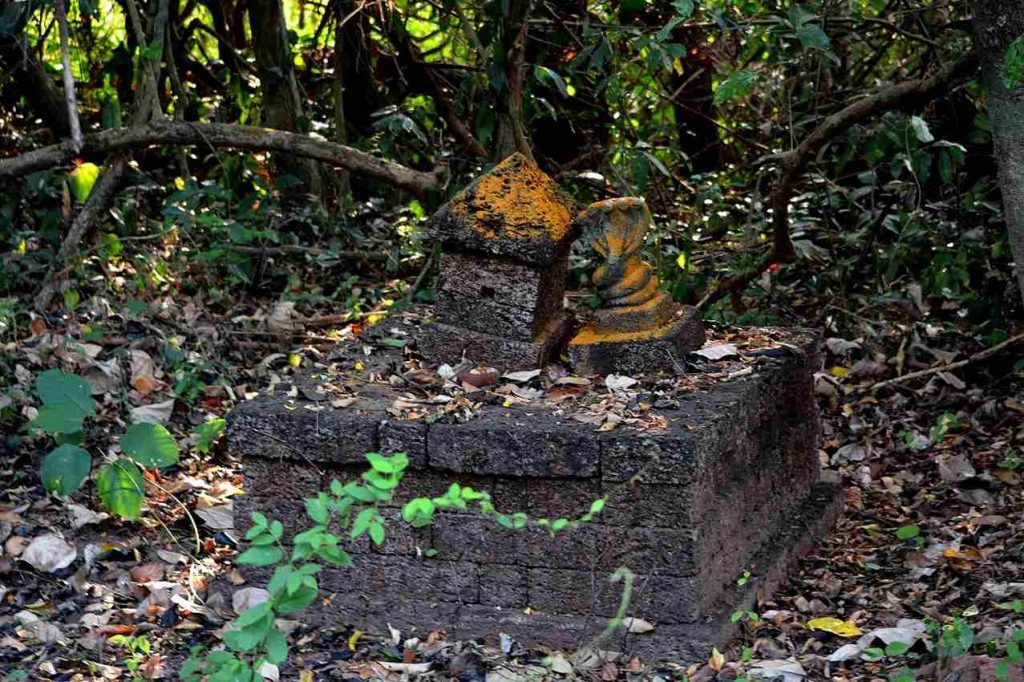
Sacred groves in India are patches of land that are communally protected with religious zeal, that at the same time tend to be relic forest segments. Inside, traditions often lead to the protection even of animals that the broader civilization would find undesirable, like snakes.

Preserved, and mostly associated with temples, sacred groves are culturally important to the people of India, but also harbor incredibly dense amounts of biodiversity.

A landmark paper published in 2017 used a case study of two sacred groves in the western Himalayas to extrapolate their influence on biodiversity in the country.

Hariyali Devi is located above Kodima village at an altitude of 4,200 feet (1,400 meters) in Rudraprayag, in the high northern Indian state of Uttarakhand. Inside the temple contains a bejeweled idol of Ma Hariyali Devi astride a lion, and is an important center of local festivities.

CHECK OUT: 17 Years After Being Declared Extinct in the Wild, Turtle Species is Saved by Caretakers of Hindu Temple

Within this relatively small space were 80 species of plants, 12 kinds of mammals, 9 species of birds, and 7 species of butterflies. The neighboring Tungnath sacred grove even included black bears.

Other studies have confirmed the incredibly rich biodiversity in sacred groves and their tree species, according to a 2018 study. There were 144 tree species recorded in sacred groves in the central-western Ghats, compared with 91 species counted in rural forests in the region.

Indian sacred grove, Kerala – Manoj Karingamadathil/ CC 3.0

“It’s something which is ingrained into every Hindu worshipper: temples, trees and ponds are all meant to be a collective space of worship,” Lakshman Acharya, a priestess in Pallalamma temple in Andhra Pradesh, southern India, told the BBC.

SIMILAR: Muslims in Town Adopt a Sacred Hindu Tenet So They Won’t Hurt the Feelings of Their Religious Neighbors

All manner of institutions are beginning to recognize the value of these groves to the natural heritage of the country, as well as to the country’s ambitious reforestation goals.

The Applied Environmental Research Foundation (AERF) has helped restore 80 of these sacred groves across the western Ghats mountain range while simultaneously helping locals switch from destructive logging to cultivation of commercially-important fruit species that happen to be the favorite haunts for endangered hornbills and tree pangolins.

The Devrai Foundation, an environmental non-profit in Pune in western India, is involved in building man-made sacred forests, known as devrais. To date they have preserved 119 species of plants, including the giant crape myrtle and Indian coral tree, also called pangara or flame of the forest.

While they can’t support India’s biodiversity on their own, their existence is both romantic and practical for the policy maker looking to try and protect the country’s wild places.

Share This Hindu News With Your Friends On Social Media…
Good Gardening Week 4: What Are Your Zone, Climate Risks, and Weather Conditions? – Share Tips and Photos

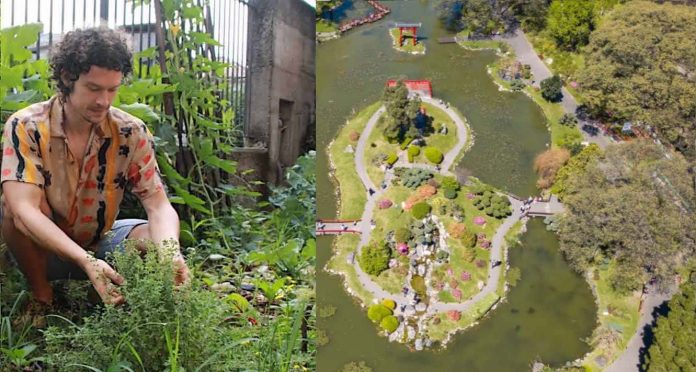
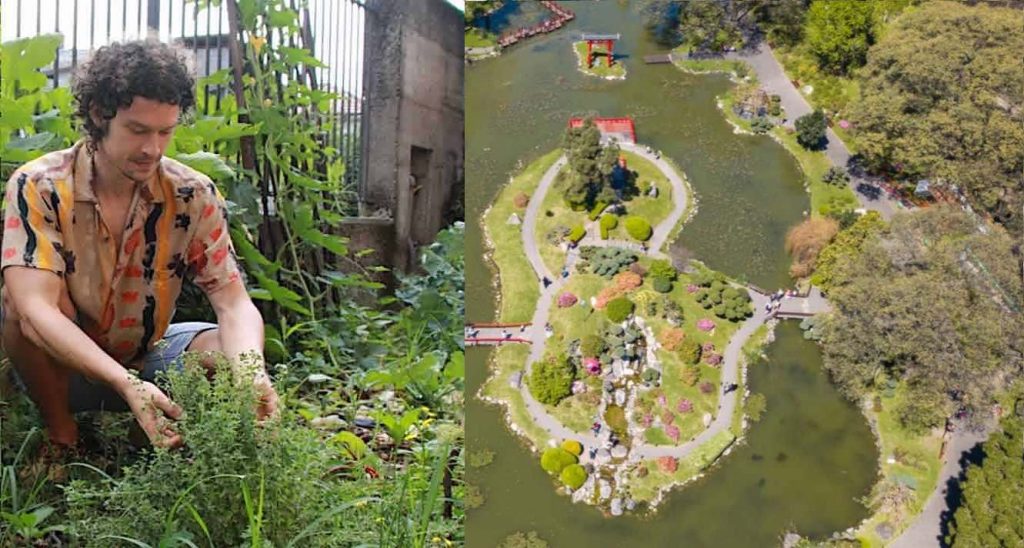
Japanese Garden in Argentina – Photo by Willian Justen de Vasconcellos

Welcome back to Good Gardening! In our Week 3 discussion, we wanted to know what people’s go-to flowers or vegetables were—the kind they can’t get through a season without growing. We took it to social media and shared photos

ELIZA CAIN was the first to chime in, writing about a variety of species we had never heard of before, including Tzimbalo which is a very rare fruit with a melon-like taste, giant goosefoot, and blue sweet peas.

Eliza’s blue sweet peas and giant goosefoot

Ilanit Eliaz told the group she grows tomatoes are her go-to crop, mainly because they are tasty, and can be started so early in the year. Ilanit added that more plants than she remembered planting came up this year, which she attributes to fruit falling between the cracks in the beds. She notes how awesome nature is—we agree!

Joe Pye Weed – CC 2.0. Pollinator

From the mail bag, Owen wrote in to tell us about us about his go-to vegetable—cucumbers. These he uses for pickling. He is doing a little native gardening also, waiting every year for his Joe Pye weed to return and bring in the pollinators, which apparently arrive in droves.

“Slowly, through records, letters and diaries, I came to see how vegetable plots, ornamental plants, landscapes and forests had played a crucial role in America’s struggle for national identity and in the lives of the founding fathers,” — Andrea Wulf.

Topic Week 4: Zone, Climate, Conditions

Question 1: Which zone are you located in?

Question 2: Which climatic hazards do you face gardening in your zone?

Question 3: Do you try to work with conditions naturally, or beat them with technology?

Tell Us Here in The Comments… or, send your questions, tips, and photos to [email protected]Join our Facebook Good Gardens thread every Friday on the GNN Facebook Page

Good gardening rules

  • Positive attitude required.
  • Green thumbs can help novice greenhorns.
  • Share your gardening photos and resources.
  • Garden jargon encouraged!

Send In Your Favorite Tartan For Year-Long Scottish Exhibition Honoring the Iconic Fabric


Scotland’s premier design museum is calling all Scots to rummage through their house and find unusual objects made or decorated with that most iconic of Scottish contributions to the world—Tartan.

The result of this nationwide appeal will be Tartan, a year-long museum exhibition on the fabric, celebrating its unique history.

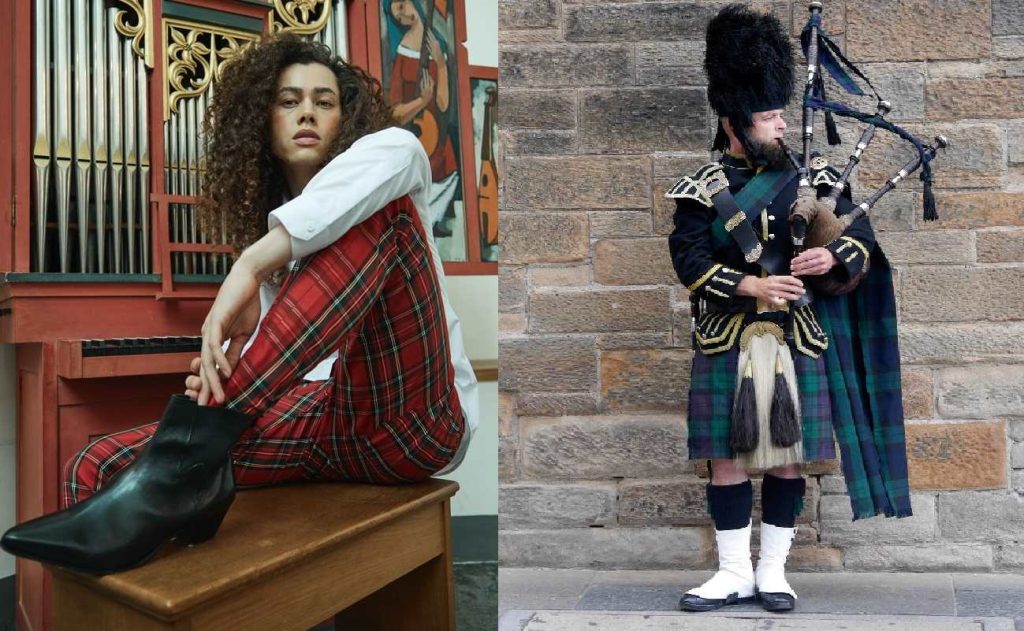
Flannels, plaid, tartan, the fabric has many names, but what started as a textile art to identify family clans has become one of the most widely-used patterns on Earth.

The museum, V&A Dundee, is asking for any object covered in tartan, from Christmas decorations to ceramics, and are being urged to email details of their own “tartan story.”

Tartan will celebrate the story of this unique pattern which has connected communities worldwide, expressed unity and dissent, tradition and rebellion, which has been adored and derided, and inspired diversity, playfulness, and drama.

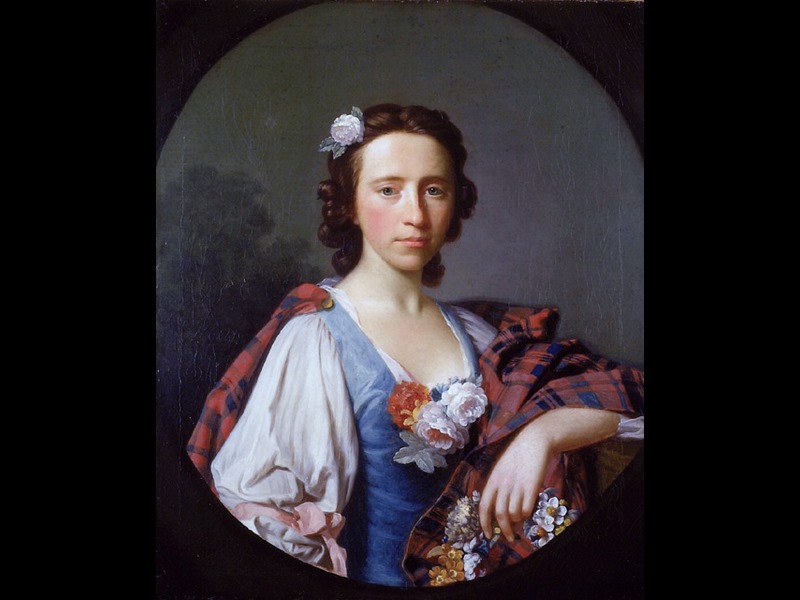
Flora Macdonald helped potential Scottish king Charles Edward Stuart avoid capture after battle, painted here wearing tartan.

It was outlawed during the 18th century Jacobite Uprising, but eventually made its way onto the British Army uniforms, and even embraced and worn by the royal family. It decorated the jacket linings and pockets of the UK punk scene, and is now utilizing its multicolored character to express queer identity, according to The Scotsman.

CHECK OUT: Wes Anderson Designed a Luxury Train Car – and It Looks Like Something Out of His Movies

“We will be looking at its history of attachment to tourism, tradition and the clans, how it was used across the Empire, how it has been subverted by punks and fashion designers, and how it has endured from quite simple beginnings to be something that is recognized by everybody,” said V&A Dundee director Leonie Bell.

The exhibition will launch in 2023, and run until 2024. It will even include a tartan festival featuring a performance by Rod Stewart.

Ramble Over To Social Media And Share This Scottish Appeal With Your Friends…

Dead Solar Panels Are About to Become a Lot More Valuable – a $2.7 Billion Market by 2030

CC B137 via Wikipedia Commons

The demand for recycled solar photovoltaic (PV) panel components is set to skyrocket in the coming years as the number of installations surges and the threat of a supply bottleneck looms.

A Rystad Energy analysis shows recyclable materials from PV panels at the end of their lifespan will be worth more than $2.7 billion in 2030, compared to just $170 million this year.

This trend will only accelerate in the coming decades and the value of recyclable materials is projected to approach $80 billion by 2050.

PV recycling is still in its infancy but is seen as an essential element of the energy transition, with solar PV waste projected to grow to 27 million metric tons per annum by 2040.

Landfills are an easy and cheap option as current resale prices for recycled materials do not compensate for the transportation, sorting and processing costs. Yet, the rapid growth rate of large-scale utility farms within solar energy can change this. A growing demand for minerals is projected, meaning recycling can be a supply relief as panels reach the end-of-life stage.

READ ALSO: IKEA Will Start Selling Solar Panels in Some U.S. Stores This Fall

“Rising energy costs, improved recycling technology, and government regulations may pave the way for a market where more defunct solar panels are sent to recycling rather than the nearest landfill. Recycling PV panels can help operators save costs, overcome supply chain woes and increase the likelihood of countries meeting their solar capacity goals,” says Rystad Energy analyst Kristin Stuge.

Demand for the materials and minerals used in solar PV is set to climb with the energy transition, with higher prices a likely result.

Solar recycling projections – Rystad energy

By assuming a 15-year lifespan of a PV panel and analyzing installation activity in 2022, Rystad estimates which regions and countries will benefit most from recycling PV materials in 2037. China is set to account for 40% of global installations this year, and when these panels mature in 15 years, the estimated recycling value will be around three-fourths of Asia’s total of $4.8 billion, out of a $9.6 billion global total.

Recycled PV materials in North America in 2037 is projected to be worth $1.5 billion, with Europe set to hold $1.4 billion.

The panel components with the highest value are aluminum, silver, copper and polysilicon. Silver accounts for about 0.05% of the total weight but makes up 14% of the material value.

MORE GOOD NEWS: General Electric Produces Its First 100% Recyclable Wind Turbine That Can be Reconstructed as It Ages

The first step of PV panel recycling is disassembly, where the aluminum frame and junction box are separated from the panel, ground into pieces, and sorted by material. There are PV disassembly machines on the market today, including one by Japan-based NPC, which separates the panel parts even further before grinding the remains, enhancing the recovery rate for materials.

With evolving technology, the market is gradually perceived with greater enthusiasm, and new companies are emerging, such as the US-based start-up SolarCycle, which has generated significant seed funding from investors.

Recycle This Rare-Earth News With Your Friends On Social Media…

“Advice is like snow; the softer it falls, the longer it dwells upon, and the deeper it sinks into the mind.” – Samuel Taylor Coleridge

Quote of the Day: “Advice is like snow; the softer it falls, the longer it dwells upon, and the deeper it sinks into the mind.” – Samuel Taylor Coleridge

Photo by: Jason Mitrione

With a new inspirational quote every day, atop the perfect photo—collected and archived on our Quotes page—why not bookmark GNN.org for a daily uplift?

Rare Chinese ‘Magic Mirror’ That Projects Hidden Image Rediscovered After Decades in Museum Storage

Credit: Rob Deslongchamps / Cincinnati Art Museum

Mirror, mirror on the wall—what is the rarest artwork of them all?

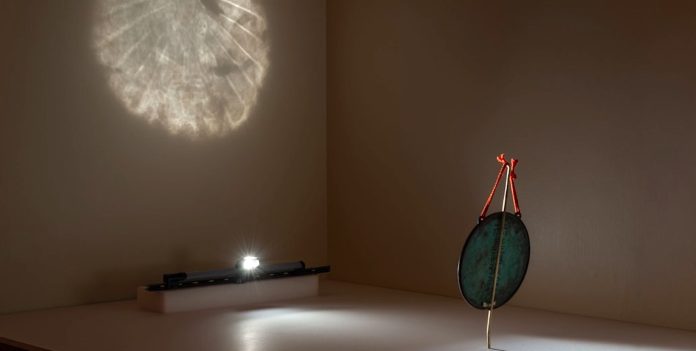
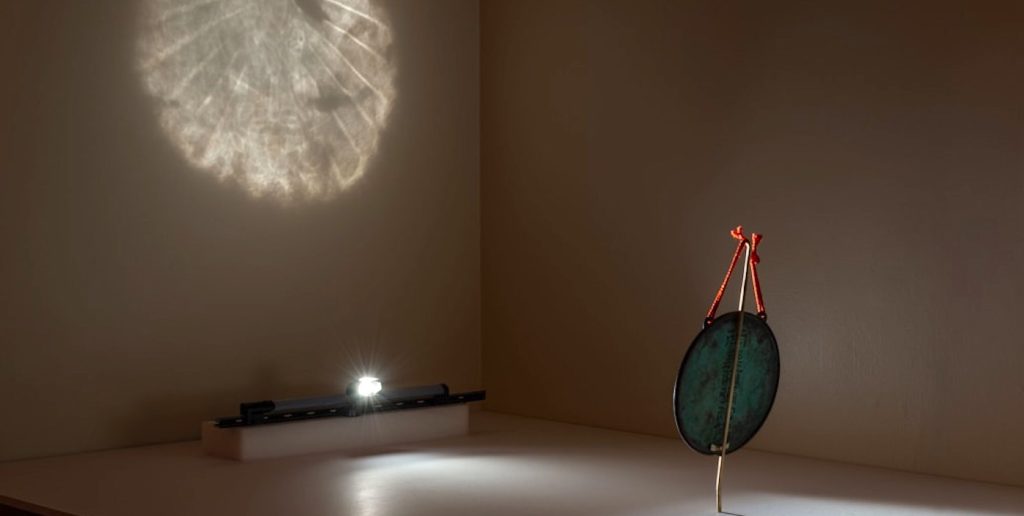
Under special lighting conditions, a plain-looking bronze mirror from the 16th century held at the Cincinnati Art Museum, reflects an image of a Buddha surrounded by numerous emanating rays of light.

This “magic” mirror will be on display beginning July 23, 2022, for the world to finally see.

It was in spring 2021, while conducting research on an ancient artwork in the museum’s collection that the Curator of East Asian Art, Dr. Hou-mei Sung, made a once-in-a-lifetime discovery.

Before glass manufacturing, people groomed themselves in mirrors of polished bronze. This technology has been found everywhere from Ancient Egypt to the Indus Valley.

READ ALSO: Modern Art Cache Stolen by Nazis Found in Munich

Known as “magic” or “transparent” or “light penetrating” (透光鏡) mirrors, these types of artworks were first created in China during the Han dynasty (202 BCE – 220 CE). When light is projected on them, the mirrors appear transparent and reveal characters or a decorative design.

“This is a national treasure for China, and we are so lucky to have rediscovered this rare object and have on view in Cincinnati,” said Sung.

Indeed, before being exhibited once in 2017, the mirror had sat in the East Asian collection without being touched for decades, according to CNN.

The front of the museum’s mirror is a polished reflective surface, and the back is marked with six characters, 南無阿彌陀佛, the name of Amitābha Buddha.

Credit: Rob Deslongchamps/Cincinnati Art Museum

Ancient magic mirrors are extremely difficult to make and are very rare. Other than the Han dynasty magic mirrors in the Shanghai Museum, only two other similar Buddhist magic mirrors are known: one in the Tokyo National Museum and the other in the Metropolitan Museum of Art.

Both are Japanese mirrors made in the Edo period (1603–1867). Sung believes the one in Cincinnati was made in an early period in China.

While the nature of their function is broadly understood, how ancient metalworkers achieved the effect of light-penetration is not known. To create the effect, metalworkers carved images or words on one side of a bronze plate. On the opposite side, it was polished to become the mirror aspect, and perhaps even treated with mercury.

CHECK OUT: Seven Lost Artistic Masterpieces That Were Found in 2021

The trick was that the carvings on one side would indent ever-so-slightly into the mirror side that when struck by sunlight, they would appear on the wall behind. However the carvings were so dainty and shallow as to not disturb the mirror-like surface, so that people could still use it as a mirror.

Visitors can see the secrets of the mirror for free in the museum’s East Asian Gallery (Gallery 140) after July 23.

The museum acquired its first East Asian art works in 1881, making it one of the oldest museum collections of East Asian art in the United States.

Watch local news have a field day with the discovery…

REFLECT This Story Back Onto Social Media And Share The Buddha’s Light…

1 In 30 Million Orange Lobster Noticed in Delivery and Rescued By Restaurant Workers

- courtesy of Red Lobster
– Red Lobster. Released.

An incredibly rare sea creature was saved from the jaws of death after restaurant workers were struck with its unusual color and called experts for a second opinion.

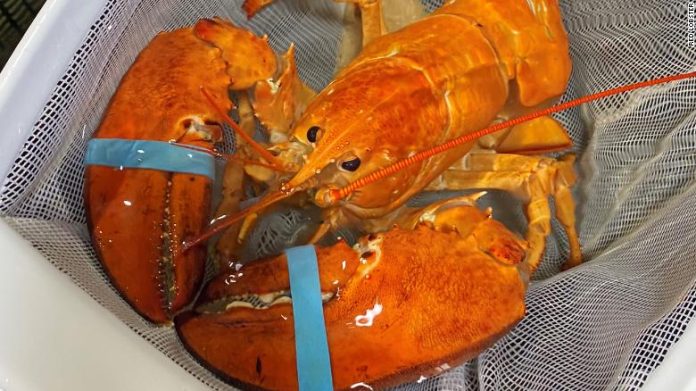
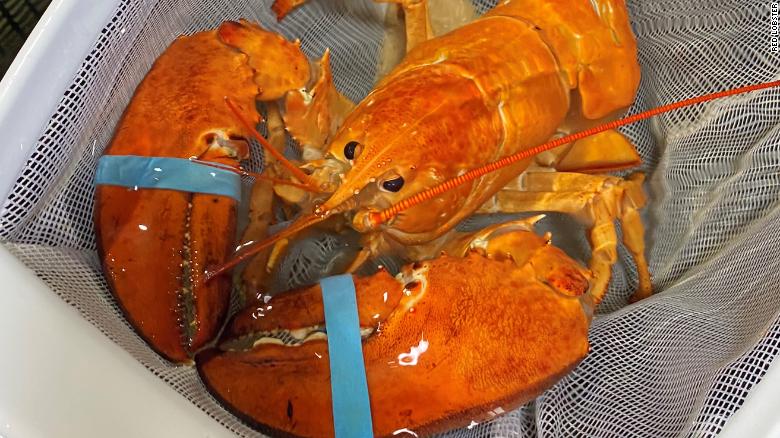
A bright orange lobster arrived in a shipment at a Red Lobster restaurant in Hollywood, Florida, where an alternative universe would have seen it cooked on a plate.

But this one in particular was saved from becoming someone’s date night dinner when staffers noted her unusual golden coloring.

They called Ripley’s Aquarium in Myrtle Beach, who sent two members of its husbandry team to inspect the crustacean. Sure enough, they identified her as an orange lobster—a one in 30 million find.

“Sometimes ordinary miracles happen, and Cheddar is one of them,” said Mario Roque, a manager at Red Lobster who led the rescue of Cheddar, in the release. “A group of incredible people helped us make this possible. We are so honored to have been able to save Cheddar and find her a good home.”

SIMILAR: Red Lobster Employee Saves a Rare Blue Lobster And Restaurant Finds a Zoo To Adopt It

The restaurant admitted they were incredibly proud of Mario for recognizing and ultimately rescuing her.

It’s now found a forever home at the aquarium, whose staff said they are grateful the Red Lobster team recognized how special she was. She was named “Cheddar” after Red Lobster’s famous Cheddar Bay Biscuits.

“Ripley’s Aquarium of Myrtle Beach is honored to become Cheddar’s forever home,” said the aquarium in a statement emailed to CNN. “Though the odd and unusual are a part of everyday life here at Ripley’s, orange lobsters like Cheddar are truly one in 30 million.”

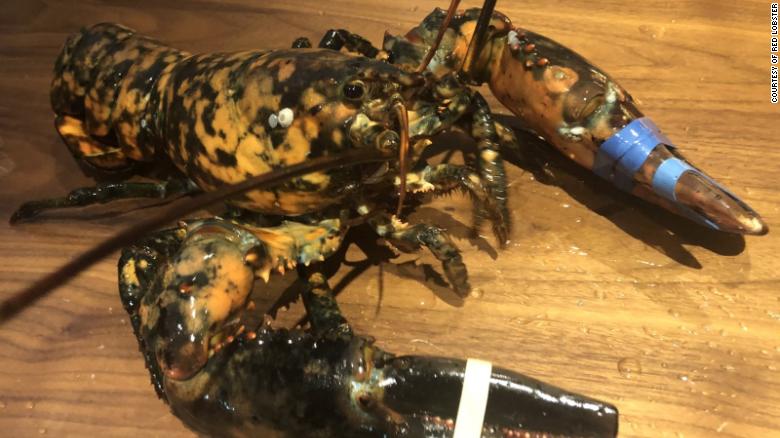
Red Lobster is on the front line of rescuing fantastically rare lobsters. In 2021, restaurant workers at their location in GNN’s birth place of Manassas, Virginia, rescued another rare mutant known as a calico lobster, which they also said were born at a rate of 1 in 30 million.

This one was a male, and called Freckles.

– Red Lobster. Released.

“Calico-colored lobsters like Freckles are so rare because their coloring makes them very visible and thus vulnerable to predators,” the Red Lobster spokesperson said. “Because a calico-colored lobster is so rare and vulnerable in the wild, it was important that we found him a good home versus setting him free in the wild where he likely would not survive.”

READ ALSO: Conservationists Save Rare Blue Iguana From Extinction

They contacted the Akron Zoo, who transferred the restaurant’s inquiry to the Living Museum in Virginia, which arrived days later to take Freckles to their Chesapeake Bay Gallery.

“We hope Freckles brings lots of joy to guests of the museum and lives a long and wonderful life,” the spokesperson said.

Share These TWO In 30 MILLION Lobsters… 

Village Tackles Speeding by Planting Thousands of Flowers Because Drivers Slow Down as They Pass By

- SWNS
– SWNS

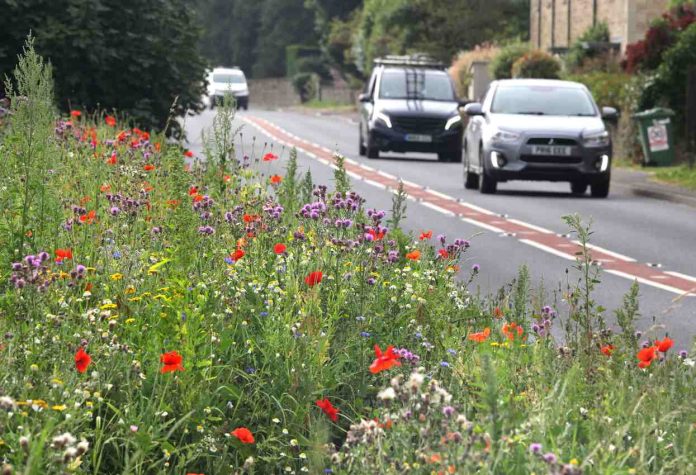
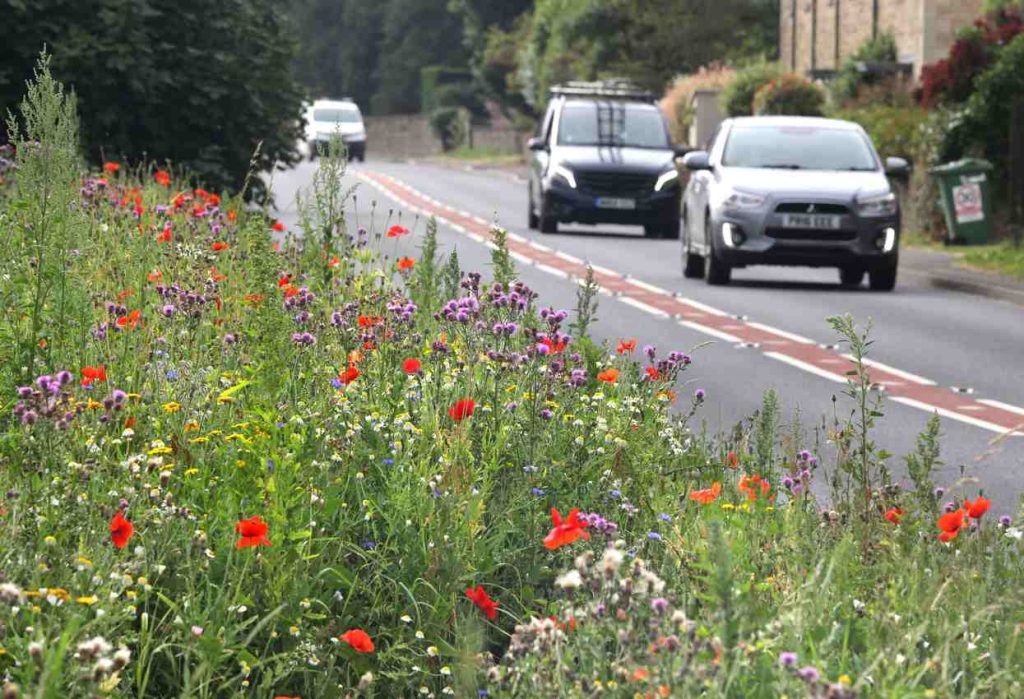
Wildflower meadows are beautiful; so beautiful in fact that a village in Britain has found they act as natural speed traps from motorists slowing down to look at them.

The village of Long Newnton in Gloucestershire has a problem with fast moving through-traffic between nearby towns. Almost all drivers moving through areas they frequent will break posted speed limits, and neither a 30 mile per hour limit, nor warning signs made any difference.

Officials first planted flowers along the roadside during the pandemic to help improve biodiversity.

But they noticed that as well as attracting more wildlife, motorists also slowed down when they passed the flowers.

The village, between Tetbury and Malmesbury, has traffic regularly travelling between them, and the small parish council receives limited funds from the government for traffic control measures.

READ ALSO: Virginia Joins 20 Other States Banning Ticket Quotas For Traffic Cops

Putting two and two together, the village is now relying on its flowers to do the work that the road signs could not, paying for the blooms with crowdfunding in the village.

Why exactly people slow down isn’t entirely clear.

“Evidence has shown that if you introduce things like wildflowers, drivers will slow down because they feel like they’re coming into somewhere that’s looked after,” said Jenny Forde, cabinet member for health and wellbeing at Cotswold District Council.

A crowdfunding campaign that has raised almost £8,000 for traffic-calming measures will be used to fund a three-year care program for the wild flowers.

A sign that flashes and records data when people are breaking the 30mph (48kmph) speed limit was also installed by the council.

RELATED: Impact-Absorbing Traffic Light Poles Could Save Lives

According to the data, 90% of motorists drive above the speed limit.

It goes to show that something the homeschooling revolution in America is getting right applies elsewhere too, that rewards for good behavior will always outperform penalties for bad behavior.

SLOW Down And Share This Clever Idea With Your Friends…