All News - Page 362 of 1734 - Good News Network
Home Blog Page 362

Doctor Ditches Car Stuck in Traffic to Run 45 Minutes and Perform Critical Surgery

credit - Dr. Nandakumar
credit – Dr. Nandakumar

Stuck in total gridlock, an Indian doctor ditched his car and ran 1.8 miles (3 kilometers) to the hospital where one of his patients was awaiting him for gallbladder surgery.

Traffic in the 8-million-man metropolis of Bengaluru can be so bad, it’s “meme-triggering” according to the Times of India.

Heavy rains had, on August the 30th, caused a particularly infamous stretch of road in the capital of the state of Karnataka to become partially waterlogged. With traffic showing no signs of easing, gastroenterological surgeon, Dr. Govind Nandakumar, made a decision.

He knew he already had a patient prepped for surgery, and two other patients later in the day with scheduled procedures.

“I did not want to waste any more time waiting for the traffic to clear up as my patients aren’t allowed to have their meals until surgery is over,” said Dr. Nandakumar to the Times. “I did not want to keep them waiting for so long.”

The traffic in Bengaluru has prevented patients from reaching hospital emergency rooms before, so Nandakumar didn’t bother to chance it.

CHECK OUT: Doctors on a Plane Save Woman’s Life by Constructing Makeshift Ventilator Out of Nearby Parts

“The patient recovered well, and the surgery went smoothly,” he said. “I run everyday and in fact before I had to do this I just finished in the gym. Normally I run 3-5 kilometers a day, but running in the middle of the road in formal shoes is not ideal.”

There’s something to be said here about being able to run a 5K; it could save your life, or someone else’s.

SHARE This Great Story And Important Lesson With Your Friends…

Guam Kingfishers Could Soon Return to the Wild After a 30-Year Absence Thanks to Ambitious Scientists

Guam kingfisher - CC 2.0. Heather Paul
Guam kingfisher – CC 2.0. Heather Paul

A long shot rescue plan for the Critically-Endangered Guam kingfisher is set to take place on the wilds of an island nowhere near Guam.

Having been extirpated from Guam via invasive brown tree snakes, captive breeding centers have kept the species treading water until now.

A scientific mission born of a partnership between the Nature Conservancy and the Fish and Wildlife Service, to return them to the wilds—not of Guam, but on the Palmyra Atoll chain next year, is likely their only hope of long term survival.

Sometimes in the Anthropocene, biodiversity can be saved—just not in its original form. The world is better off with the strikingly beautiful Guam kingfisher, all rusty brown with blue prim, but until the past wrong of introducing the brown tree snake can be righted, the “Sihek” as it’s called in the language of Guam, needs a place to grow up again.

Today, only two of Guam’s 12 native forest birds remain in the wild. The successful release of the sihek on the atoll could inspire similar recovery initiatives on Guam, but most importantly stop the inbreeding that’s currently harming the birds’ lifespans in captivity.

“Like all extinct-in-the-wild species, the fate of sihek rests directly in our hands,” said Dr. John Ewen of the Zoological Society of London and chair of the Sihek Recovery Team. “We have the opportunity to return this species to the wild in a highly responsible way, learning about their needs in a wild environment with low risk.”

The first challenge for the Team, founded in 2020, was finding a place to put the bird. The Cocos Islands next door to Guam was thought an ideal place, until the discovery of a flourishing brown tree snake population scuppered that idea.

Palmyra Atoll – CC 2.0. Island Conservation

As GNN has reported before, eradication of invasive species on islands has been the great success story of modern conservation. Among these beneficiaries are the islands of the Palmyra Atoll, which lie around 1,000 miles south of Hawai’i.

SIMILAR: Island is Wonderland for Penguins Once Again After Dog Helps Eradicate 300,000 Invasive Rabbits

Palmyra had a rat problem, but has returned to its pristine state of insects, geckos, and other animals.

“This proposed experimental conservation translocation of our sihek to Palmyra Atoll not only benefits the sihek but gives us the opportunity to highlight Guam’s biological uniqueness,” said Anthony Tornito, wildlife biologist for Guam Department of Agriculture Division of Aquatic and Wildlife Resources.

The plan is by no means straightforward. While Palmyra has a scientific research station, there is nothing in the way of an aviary. All materials must be flown out in advance, reports Audubon. 

20 sihek eggs will then be transferred to Hawai’i, and in order to reduce the risk of foreign germs or parasites spreading on the recently-recovered atoll, the resulting chicks will be hand-reared until 9 of them can be transferred in cages to Palmyra. After getting their “ticket to ride” by the vet traveling with them, they will finally be able to return to wilderness.

CHECK OUT: We Finally Rid An Island of 300,000 Rats – Now Everything is Blooming

“This release is coinciding with Guam’s Chamoru cultural renaissance and this initial release on Palmyra Atoll is a catalyst for the species’ eventual, and long-awaited, return to the wild on Guam,” said Tornito.

It’s going to be long-awaited for the scientists of the Shiek Recovery Team as well, who don’t know which of the available prey species the sihek will favor, who won’t know what time of year, considering the 365-day perfect temperatures, the birds will breed, or how far they will disperse.

“It’s going to be really interesting to see what they will choose to eat once they are in the wild,” Stefan Kropidlowski, the refuge manager of Palmyra Atoll National Wildlife Refuge, told Audubon Society.

“We’re such a small, tiny little island that most people don’t even know about—the fact that we can help another small, little, tiny Pacific island achieve their conservation goals is fantastic.”

TWEET Or Talk About This Birds Comeback With Your Friends…

Innovative Paint Cools Down the School Playground By 12 Degrees: ‘I don’t feel like I’m in an oven’

A solar-reflective paint has been used to coat the asphalt playground of a school outside Atlanta, relieving the children from baking in the “urban heat island effect.”

Despite mid-September weather sitting around a perfect 75°F for sports, surface air temp of the SAE School playground blacktop routinely tops 120°F.

Recently however, teams of volunteers and students armed with blue and tan paint turned their blacktop into a “bluetop” thanks to a special radiation-reflecting paint created by StreetBond.

Thanks to the paint, the playing surfaces and surface air temp are now 12°F cooler, a welcome relief for the kids during recess.

“Is it still hot? Yes. But is it as hot as it was? Absolutely not,” Shannan Tilson, cofounder and director of operations at the school, told Fast Company. “I don’t feel like I’m in an oven.”

Donated by StreedBond’s parent company GAF, the paint is specially-designed for cement and asphalt demarcations like bike lanes, playgrounds, crosswalks, hotel driveways, or parking lots, and is made to prevent the flat, black surface absorbing solar radiation.

SIMILAR: Reforestation of English Midlands Turns 30 Years Old With 9 Million Trees Planted Across 200 Square Miles

Cities on average are far hotter than the countryside, or even well shaded urban areas, because of the amount of flat black surfaces. They absorb copious solar energy and then radiate it out, raising the surrounding temperature on the ground and in the air. This is known as the urban heat island effect, and has the added inconvenience of molecularly damaging the asphalt even faster, in addition to roasting anyone who wants to sit down on it.

READ ALSO: Arkansas Schools Install Solar Panels to Save Millions on Energy and Pay Teachers More

Children’s bodies are more vulnerable to the extreme heat, and for the SAE School, a private institution that incorporates many projects into the curriculum including those relating to environmental challenges, it’s a great example for the students of modern solutions to modern problems.

The school held a vote to decide which color to use on their playground, and the majority selected blue and tan—the school’s colors, along with some dragon footprints—their school’s mascot.

The school plans to use the paint for their large parking lot as well.

PAINT Social Media Blue With This Cool Story…

Good Gardening Week 8: Seed Saving – and Best Tips Sent By Our Viewers Last Week

Welcome back to Good Gardening! In our Week 7 discussion, we wanted to know the best garden hacks our Good Gardeners know. As always we took the conversation to social media and shared pictures and anecdotes. We had all kinds of different topical tricks.

M. Hanson wrote in with a surprising fail-safe to use for direct seeding. M recommends using a dusting of ground egg shells to cover the soil area one wishes to seed, in order to serve the dual purpose of making misplaced tiny seeds (think carrot, fennel, or radish seed,) pop next to the white eggshells, and adding calcium to the soil.

Drew Holloway wrote in with a hack to use beneficial nematodes to eat the larva of that most famous of pestilential invasive species—the Japanese beetle. Furthermore, Drew uses PlantNet for identifying plants he found in the wild and weeds growing in the garden.

Monica Richards water garden made from an old bookshelf.

These belong to Monica Richards who wrote in to show off her own DIY skills with this perimeter wall made from stone and chicken wire (which survived a California wildfire) and a water garden from an an old bookshelf.

You can build a garden very quickly using things you no longer need around your house! An old bookshelf – lay it on its back in a place where you need a raised garden, remove the shelves (or don’t – you can keep them in as separators), fill it with cardboard, soil, compost, old bills, straw, layers of anything that will break down. Fill the top 2” with some soil and add some seedlings! 

The Sharing Gardens’ milk carton plants

The Sharing Gardens sent in this excellent photo of milk-carton plants, along with some links to their blog resources on DIY hacks.

Whether it’s creative use of milk cartons, tofu containers or baling twine…Or processing spent coffee grounds or wood ashes to increase soil fertility, at the Sharing Gardens we’re always trying to find ways to ‘re-purpose’ things that might otherwise go to the landfill.

Lastly we got a comment from Elisha who has a hack made of peppermint oil especially for staving off deer.

I use diluted pure Peppermint essential oil (not synthetic) to keep the deer and rabbits from snacking on my pretty flowers. I even use it when the “deer resistant” plants and flowers are young and haven’t developed the chemicals yet that the deer won’t eat. I put about 3-4 drops pure Peppermint essential oil in around a gallon of water which I spray from standard spray bottle. All the critters will leave Peppermint alone. I’ve even used it to get rid of a wasp nest in the eves of my carport. I love it!


“There are no gardening mistakes, only experiments.,” — Janet Kilburn Phillips.


Topic Week 8: Seed Saving

Question 1: Do you save seeds?

Question 2: Have you ever created a personal variety?

Question 3: Recount some experiences with seed saving: for example have you ever saved a crop or heavy rain tolerant variety that you’ve used in later years?

Tell Us Here in The Comments… or, send your questions, tips, and photos to [email protected]Join our Facebook Good Gardens thread every Friday on the GNN Facebook Page

Good gardening rules

  • Green thumbs can help novice greenhorns.
  • Share your gardening photos and resources.
  • Garden jargon encouraged!

INVITE Friends to our Gardening Discussion on Social Media–And Share Your Photos and Tips!

“Sometimes serendipity is just intention being unmasked.” – Elizabeth Berg 

Quote of the Day: “Sometimes serendipity is just intention being unmasked.” – Elizabeth Berg

Photo by: Josh Mills

With a new inspirational quote every day, atop the perfect photo—collected and archived on our Quotes page—why not bookmark GNN.org for a daily uplift?

Honda to Introduce 10 New Electric Motorcycles and Scooters to Ease Air Pollution in Asia’s Megacities

- Released
– Released

Honda, who created the most-produced motor vehicle in history with the Super Cub scooter, is offering 10 new fully-electric motorbikes to ease air pollution in Asia’s megacities.

Scarcely understood by Americans, the ubiquity of Honda Motor Company’s scooters and motorcycles across Asia is absolute—as entrenched a phenomenon as the monsoon rains.

Through their guiding principle that ‘the purpose of technology is to help people,’ they’ve motorized three generations of working poor, which they now aim to electrify.

Between the end of 2022 and 2025, Honda plans to release 10 new electric bikes to fit all the activities their bikes nearly monopolize across Asia, where millions of people commute daily through some of the most polluted urban air on Earth.

For electric mopeds and bikes capable of going up to 35 miles an hour, Honda plans to release 5 models for the Chinese, Japanese, European, and greater Asia markets between the end of this year and 2024.

SIMILAR: Largest Purchase of Electric Vehicles in History: Amazon Orders 100,000 EV Delivery Vans

Another two specialty-commuter electric bikes (classified as a bit slower than mopeds) are going to be released outside of China with a variety of factory-changeable features to suit market conditions, and another 4 electric “vehicles,” which look more like highway-speed bikes, will be released by 2025.

– Honda

Covering all the bases

In 2019 Honda passed an incredible milestone of 400 million bikes sold. For perspective, you could go to Japan, South Korea, Malaysia, Vietnam, Cambodia, and Thailand, and put every man, woman, and child you found in the saddle of a Honda bike, and have a few million left over when the job was done.

Honda boasts 37% of the world’s motorbike market share, and 34% of the company’s sales are derived from bikes. And it’s not all quantity; their 2020 profit margins on bikes were the second highest for a fiscal year, and their sales were around 4-5 times that of two-wheeled competition like Suzuki or Yamaha.

This kind of market dominance doesn’t come by chance, it comes by good business models, and Honda have a few tricks up their sleeve with this huge rollout.

READ ALSO: Trading Old Cars for Electric Bikes: France Proposes Handsome Financial Incentives

“Electric motorcycles, which promise to contribute to CO2 reduction, have their own issues such as heavier vehicle weight and higher prices,” Honda explains in a press release. “Demand for electric models depends largely on government regulations and incentives such as subsidies and tax credits and the availability of charging infrastructure in each respective country.”

– Honda

To get around the issue of charging infrastructure in less rich countries, the bike series will come with interchangeable battery packs, and Honda are even investigating the possibility of roping their competitors into harmonizing battery and charging modules across their bikes.

Honda has also introduced the Honda e: Business Bike series, models which are already in use by Japan Post, and which the Vietnam Post has now begun using for its mail delivery service.

Expecting businesses to continue becoming more conscious of the environment, Honda is introducing its business-use EVs globally, and Honda is also conducting joint trials with Thailand Post, with plans to begin production and sales of the Benly e: in Thailand this September.

SHOW These Awesome New Bikes To Your Friends On Social Media…

Stunning Image of Lobster Nebula Captured by Chilean Telescope

Lobster Nebula -(Image credit CTIO-NOIRLab-DOE-NSF-AURA)

While surveying the universe for dark energy, a telescope took the most detailed image of the Lobster Nebula ever, and it’s beautiful.

Located 8,000 light years away in a star forming region of the constellation Scorpius, the image was released on the 12th of September, and measures 400 light years across.

Bright young stars are scattered across the region surrounded by quilts of gas and dust, while at the bright center is an open star cluster, which is a very tightly packed group of very young, and very massive stars.

“Interstellar winds, galactic radiation, and powerful magnetic fields batter the nebula, squeezing the gas and dust inside into twisting streams and braids,” writes Space.com’s Tereza Pultarova.

The image was actually taken in search of that which cannot be imaged—dark energy. The Dark Energy Camera is a device mounted atop the Víctor M. Blanco Telescope at Cerro Tololo Inter-American Observatory in Chile, and was designed to search for dark energy as part of an international project called the Dark Energy Survey.

The cousin to dark matter, dark energy is another force in the universe which we’ve not discovered any way of measuring other than through its effects on observable matter.

Dark energy is thought to make up most of the matter in the universe, and be responsible for the universe’s continuous and accelerating expansion. This is partly due to calculations made based on its observable effects on visible matter.

Dark matter on the other hand is believed to be a force that keeps the universe from expanding even faster, and used to be the reason that the universe was much smaller than it is today, based again on calculations of its effect in a given environment.

SEE: Glimpse of God? The Hubble Telescope’s 12 Best Photos on the 30th Anniversary of its Launch into Orbit

The final image here of the Lobster Nebula consists of multiple exposure levels layered on top of each other through different filters. This is more or less what the Nebula would look like with the naked eye if it were much brighter than it actually is.

WATCH the video from Space.com…

SHARE This Top Lobsta With Your Space-Loving Friends… 

Couple Finds 400-Year-Old Coins Worth $250,000 Stashed Under Their Floor

– credit Spink and Son

A lucky couple found a hoard of 260 British gold coins stashed away in a small metal pot under the floorboards of their home.

Dating from the reigns of James I to George I, they contain £100,000 worth of gold in todays money, but as numismatic relics of Great Britain’s past, auctioneers expect the collection to fetch £250,000.

Recently moving into a 18th-century property in Ellerby, North Yorkshire, kitchen renovations saw the the couple uncover the treasure on July 13th, 2019.

Originally believing it to be the ruins of electrical wiring, they called a London-based auctioneer, Spink & Son for help appraising the mysterious glittering coins. Auctioneer Gregory Edmund said the remarkable trove is unlike any find in British archeology or like any coin auction in living memory

Whilst the find is the stuff of dreams, Edmund added that the actual contents are not especially ‘mind-blowing’—they simply reflect the £50 and £100 coins of day-to-day exchange buried and mysteriously never recovered by their wealthy owner.

RELATED: Workers Discover Stash of 239 Rare Gold Coins Hidden in Walls of French Mansion—And They Get to Share Half

The Ellerby Hoard is almost undoubtedly the property of the wealthiest family from that area—Joseph and Sarah Fernley-Maisters who married in 1694, and who were perhaps the most influential mercantile family in nearby-Hull from the late 16th to 18th centuries, trading as importers and exporters of iron ore, timber and coal from the Baltic.

Several generations served as Members of Parliament in the early 1700s, and Joseph would also become something like a real estate tycoon.

Minted during the reign of George I – credit Spink and Son
A Rare James I Scotch Double-Crown of Six-Pounds – credit Spink and Son

Auctioneer Edmond felt the Fernley-Maisters clearly distrusted the newly-formed Bank of England, the ‘banknote’ and even the gold coinage of their day because they choose to hold onto so many coins dating to the English Civil War and beforehand.

While most of the coins were standards issues, a few stick out as unique. One, a George I guinea from 1720, has a minting error in that the coin is missing the king’s head. A second is a Brazilian gold coin that was minted in 1720 and which circulated, albeit in a state of outlawry, in England during that time.

READ ALSO: Family Finds 15th Century Gold Coins While Pulling Weeds in the Garden–6,000 Have Dug Up Treasures During Lockdown

Coincidentally, as the 1996 Treasure Law stipulates, any gold or silver coin minted 300 years in the past becomes government property and is bought from the finder at a fair market price for placement in a museum.

All but one of the coins were minted around 292 years ago, making them not treasure and therefore able to be auctioned.

SHARE This Couple’s Wild Luck And Amazing Treasure On Social Media…

Young Amazon Driver Hailed a Hero for Rescuing Family From a Burning Home

credit Amanda Johnson

An Amazon delivery driver is congratulated by a Long Island community for selflessly risking his life to help a family evacuate from their burning house.

Syosset Long Island firefighters arrived at the house 4 minutes after they got the 9/11 call, but to their relief the family was standing outside by the curb.

Minutes before, Kevin Rivera was finishing his Amazon delivery route when he saw the flames consuming the front of the house, yet despite the front door being wide open, it was clear the family inside didn’t know what was going on.

“I just saw the fire just getting bigger and bigger,” Rivera said. “I just rushed in, because I didn’t want nobody to die in that house.”

An interesting situation arose when, rushing in, he realized that not only did the family of 6 which included a baby, not know their house was burning down, but a language barrier made communication impossible.

CONTINUE READING: 25-Year-Old Runs into Burning Home and Saves 5 Kids–Gets Rewarded With $500K and ‘New Lease on Life’

Eventually he got the family to escape out of the back door. When the family finally saw the flames, they began to cry.

A neighbor who filmed the house told local news that everyone thanks Mr. Rivera an awful lot more than most Amazon delivery drivers would be accustomed to when he arrives with their packages.

WATCH The video below… *Note to Those Outside the U.S: View video here at CBS.com…

CELEBRATE This Driver’s Heroism On Social Media…

“What we call the beginning is often the end. And to make an end is to make a beginning. The end is where we start from.” – T. S. Eliot

Quote of the Day: “What we call the beginning is often the end. And to make an end is to make a beginning. The end is where we start from.” – T. S. Eliot

Photo by: Joshua Earle

With a new inspirational quote every day, atop the perfect photo—collected and archived on our Quotes page—why not bookmark GNN.org for a daily uplift?

China’s New Moon Rock Samples Contain Beautiful Crystal New to Geology

Changesite-(Y) - Beijing Institute for Uranium Geolgoy
Changesite-(Y) – Beijing Institute for Uranium Geology

Chinese scientists have found a mineral new to science among the 3.81 lbs. (1.7 kilograms) of lunar samples taken in 2020.

The phosphate columnar crystal is called Changesite—(Y) after the name of a mythical moon goddess who also gave the mission which retrieved the crystal its name.

The sample and return mission, Chang’e-5, landed on the Moon’s Oceanus Procellarum region to acquire the youngest samples retrieved by humans, and the first in 40 years.

Changesite—(Y) is the 6th new mineral found in lunar regolith, and China became the third nation to make such a discovery.

The International Mineralogical Association had confirmed it as a new mineral by the time the discovery was announced in a press conference on September 9th.

The crystal was discovered by researchers at the Beijing Research Institute of Uranium Geology who used X-ray refraction to find the 10-micron-long crystal.

According to the research team, the mix of totally-lifeless rock and dirt of other planets, called regolith, was 1 billion years younger than the samples brought back from the Apollo Missions. They speculated that this vast gulf in geological history was probably why neither the Soviets nor the Americans found Changesite—(Y).

In total, the Chang’e-5 regolith contained 40 chemical elements, from which interesting observations were made.

READ MORE: Huge Black Diamond Sold for $4.3 Million–and No One Knows Where it Came From or How it Was Formed

“For example, we can extract more than 30 kilograms of titanium from one ton of lunar samples, the content of which is more than six times the average of titanium on Earth,” Guo Bing at the China Institute of Atomic Energy, said in a report on their examination of the regolith.

Several more Chang’e missions to the moon are planned, including Chang’e-6, which will will land on the moon’s far side in a similar sample-return expedition.

SHARE This Rocking New Discovery With Your Friends…

Corgis Dressed in Royal Attire Gather in Australia to Honor the Late Queen, a Corgi Mum of Five

- SWNS
– SWNS

Dozens of Welsh Corgi owners dressed their pampered pooches in royal attire as they gathered to honor the late Queen Elizabeth II, herself the world’s most famous Corgi enthusiast.

The event, organized by the Perth Corgi group, took place in Langley Park, Perth, Australia, where approximately 50 dogs and their owners gathered in tribute to the Queen.

Elizabeth II owned more than 30 Welsh Corgis throughout her life.

Minnesota-native Tessa Vernstrom, who is studying in Australia, attended the event with her two corgis, one-year-old Tendi and three-year-old Riker.

“The event was organized on very short notice by the Perth corgi group, as soon as we heard the news,” she said. “It’s a tight knit community and we said we should do something to honor the Queen, so we organized this.”

“I didn’t dress up my dogs, but I wish I had. I usually dress them up for events like Halloween, but I didn’t have time to find something appropriate.”

“Personally, I was saddened by the Queen’s passing,” she added. “I personally respected… her love of animals and corgis in general.”

– SWNS

Indeed, the BBC reports, the late Queen started a phenomenon through her preference for Corgis, and many of them throughout her life would make headlines for this or that reason.

SEE: Till Death Do Us Bark: Watch Inseparable Shelter Dogs Get Married in Adorable Ceremony

Susan the Corgi was famously smuggled under the rug of the royal carriage during Elizabeth’s wedding to Prince Philip. Susan also bit the royal clock-winder and a young palace sentry.

Susan’s lineage produced almost all of Elizabeth’s Corgis, including the few “dorgis” which were a mix of a Dachshund and Corgi.

REALTED: Cats and Dogs May Protect Owners From Memory Loss in Later Life, Study Finds

Princess Diana was said that a “moving carpet” preceded Her Majesty wherever she went, referring to a jumble of these short-legged stunted herding breeds running ahead of her.

Vernstrom believes the international community will be inspired to pay their own unique tributes to Queen Elizabeth II and for what must be the most Instagrammable dog breed.

CHECK OUT: Chinese Monk Dedicates Life to Rescuing 8,000 Dogs – He Finds Them New Homes Around the World

“I have seen already that there is another event on the way, planned by the Melbourne Corgi group. I think many other corgi groups will follow,” said Vernstrom. “She was an important figure for the breed and she played a big role in bringing attention to the world.”

The Queen’s corgis will be looked after by Prince Andrew and Sarah Ferguson, according to a spokesperson for the Duke of York.

BARK Your Own Tribute To The Late-Queens Support Of Animals…

Mexico’s First Cross-County Hiking Trail Will Support Mayan Culture –Cyclists Welcome too

Mayapan, and the X'batan cenote
Mayapan, and the X’batan cenote

Mexico’s first long-distance hiking and cycling trail has recently been finished in the Yucatan Peninsula.

Passing through colonial haciendas, sacred cenotes, and archeological sites, it’s a community-focused tourist attraction to give people a glimpse into the Maya’s great history.

For the history lover, a trip to Cancun can be difficult. Attached to the all-inclusive resort and the near-flawless beaches, the desire to strike out and see the Mayan heartland behind them is there, but not always easy to capitalize on.

Now the Camino del Mayab offers tourists a totally new way to experience Mayan food, history, and civilization. The 68-mile journey aims to help better the lives of 14 communities of Mayan descendants that reside along it.

Across three-days of cycling, or five-days of walking, travelers start in the town of Merida before heading to the first of many abandoned haciendas. 

These are the Yucatan’s own unhappy version of a cotton plantation manor in the southern U.S., and were run by Spanish families that grew henequen, a fibrous rope-making material, on the backs of Mayan labor.

Abandoned haciendas – Camino del Mayab Facebook

Now they are abandoned, and act as excellent camping destinations.

The trail also passes by several Maya communities, that run handicraft shops and, most importantly, restaurants—the food of the Yucatan and the Maya is legendarily tasty.

Sacred freshwater sinkholes called cenotes are also there to be seen in abundance. These, the Maya believed, were doorways to the underworld, and many religious ceremonies were conducted above, around, and inside of them.

– Camino del Mayab Facebook

The trail is jungled the whole way, and all manner of beautiful birds and other tropical animals can be seen by those with sharp enough eyes.

The Camino del Mayab ends at Mayapán, on top of the pyramid of Kulkulkan, though the trail passes paved country roads that will take them on to Ticul or Uxmal for more exploration of ruins.

CHECK OUT: Queensland Continues to Transfer Millions of Acres of Wilderness Back to Aboriginals in Australia

Despite their civilization collapsing during the 9th century, and becoming slaves in the 15th, roots remained strong in the Yucatan, and today the locals are trying to make their ancestral home, food, animals, cities, and culture work for them rather than big hotel companies.

For a lover of Mexico, the trail is certainly a must-do.

SHARE This Mega-Hike On Social Media…

New Wyoming Carbon Capture Project Will Eliminate 5 Million Tons of CO2 Per Year

A facility that will pull carbon out of the air and deposit it underground believes new incentives will allow it to do so by the megaton at the end of the decade.

The Project Bison direct air carbon capture machinery is capable of storing 5 million tons of CO2 underground in specially approved wells in Wyoming, and the company believes it makes up the first realistic and scalable business model for carbon capture.

The development is marked by improvements on the ideas of two other flagship projects, the Climeworks’ carbon capture facility in Iceland, and Carbon Engineering’s first large-scale project in Texas, backed by a number of airline companies and Occidental Petroleum, which has a target of 1 million metric tons per year.

President Biden’s recent Inflation Reduction Act contains strong tax incentives to invest in direct air capture of CO2, such that companies like CarbonCapture managed to raise big money from investors for their Project Bison facility in Wyoming.

In particular, the tax write-off for a ton of carbon stored underground has been raised to $180 from $45.

The Intergovernmental Panel on Climate Change have advised that large-scale removal of carbon from the atmosphere is needed to prevent the severe climate disruptions to society.

RELATED: A Dozen Airlines Team Up for Half-Million Ton Carbon Capture Technology

Project Bison is slated to be fully-operational by 2023 in a state that has long been a stronghold for fossil fuel industries.

Governor Mark Gordon told Reuters he has plans to make Wyoming a center of these kinds of technologies that can reduce the impact of fossil fuels in the state.

“We’re really trying to get ourselves positioned to be the place of first choice for industry as they emerge with new climate technologies,” he said.

SHARE This Good Climate News From America’s Heartland…

“Where there are bees there are flowers, and wherever there are flowers there is new life and hope.” – Christy Lefteri

Adonyi Gábor

Quote of the Day: “Where there are bees there are flowers, and wherever there are flowers there is new life and hope.” – Christy Lefteri 

Photo by: Adonyi Gábor

With a new inspirational quote every day, atop the perfect photo—collected and archived on our Quotes page—why not bookmark GNN.org for a daily uplift?

Author Spends Lifetime Searching for Woman Who Taught Him to Read, and Then She Surprised Him

- Twitter Jamil Jan Kochai
– Twitter @JamilJanKochai

Author Jamil Jan Kochai tried for years to reconnect with his second grade teacher—a woman whom he credits with all the success he’s had in life.

A young immigrant who didn’t know any English, it was Mrs. Lung who stayed after hours every day in their Sacramento elementary school to teach Kochai one-on-one how to read and write—something she managed in just a year.

It was something Kochai never forgot, but after moving to new schools and districts, he lost track of her. The more Kochai’s career grew with success, the more he felt he had to reconnect with the special teacher who kickstarted his life as an author.

After many years, he finally got to thank Mrs. Lung, after a friend brought her to one of Kochai’s book readings.

“This is Susan Lung. She taught me to read and write in a single year when I was 7 years old,” he wrote on Twitter. “I’ve been looking for Susan, hoping to thank her in person.”

It was more than ten years that Kochai had been looking for his former teacher, ten years where calling school districts, looking names and leads up on Google and social media, and visiting schoolhouses all proved fruitless.

He said he felt like a detective “running into another dead end,” as he explained in a Twitter thread.

“A few years earlier, after 99 Nights in Logar came out, someone reached out to me, out of the blue, on Facebook. It was Mrs. Lung’s husband!” he continued. “Apparently, Allen Lung heard about an article I wrote for LitHub where I mentioned Mrs. Lung. He asked me if I wanted to speak with her that night.”

RELATED: Americans Say They Owe a Lot to Their Favorite Teachers; And Their Most Enduring Memories Might Make You Cry

They exchanged a phone call, but as it was during COVID-19 lockdowns, they decided not to meet face to face.

That moment finally came when, after years of turmoil and joyful events both in Kochai’s professional and family life, he was doing a book reading/signing event for his new released The Haunting of Hajji Hotak – And Other Stories when “Mrs. Lung’s husband, Allen, rushed up to me, introduced himself, and brought me over to Mrs. Lung, and seven-year-old-me finally got to hug my 2nd grade teacher again.”

CONTINUE READING: Teen Sends Fan Letter to Her Favorite Author; 3 Years Later, They Have Finished Co-Writing Her Debut Novel

They caught up, he signed her copy with all the words he couldn’t say, but which had been in his head and heart for a decade and more.

SHARE This Inspiring Story Of Great Teachers On Social Media… 
World’s First Non-Polluting Ferry Sets Sail From Marseille, France

copyright of La Meridionale - Mr. Jolly
copyright of La Meridionale – Mr. Jolly

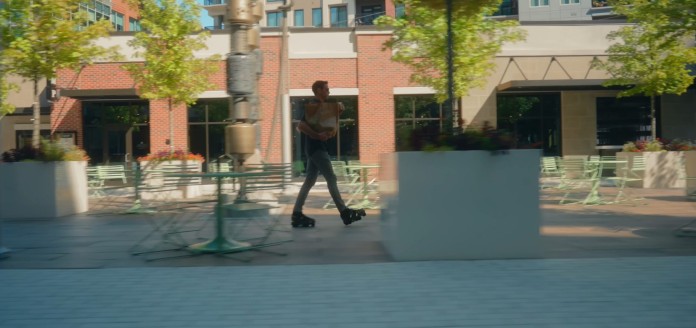
A ferry boat with technology that filters all the particulate matter from its emissions is now boarding for service around the French coast.

The vessel keeps her passengers and the sea at large healthier thanks to filters that capture 99.9% of sulphur oxide fine particulates, allowing the Côte d’Azur to breathe easier.

If you’ve ever traveled by ferry or cruise around the Mediterranean’s islands, for example Caremar from Naples to Capri, you may have had the unfortunate opportunity to breathe in the black, sulphur oxide-laden smoke coming from the engine.

This contributes to substantial pollution of the sea via the deposition of these fine particulates into the water. La Piana, a ship designed by the French ferry company La Méridionale, has built-in filters modeled on those of ground-based waste incinerators or biomass power plants.

Sulphur oxides from the motor are emitted into a chamber of sodium bicarbonate, which destroy the particulates. The chamber is then emptied, and sent to a filter which captures them all. Once ashore a hazmat truck can cart the material away.

RELATED: Greening Our Shipping: Wind-Powered Cargo Ships Can Change Future of Freight Cutting Emissions By 90%

“The challenge for us was to make it suitable for the maritime sector,” said Christophe Seguinot, technical director of La Méridionale. “This involved making the device smaller and lighter, so it could be installed on board a ferry while leaving enough space for travelers.”

La Piana currently services Ajaccio and Propriano on the island of Corsica, and Tangier in Morocco.

It departs from Marseilles, which suffers inordinately of air pollution coming from cruise ships. Marseilles is one of the most frequented ports for European cruise ships, all the more now that Venice has banned them from entering her canal. Recently, 50,000 citizens signed a petition to ban cruise ships from entering the New Port, but they’re likely to make an exception for La Piana.

WATCH The Company Presentation (In French)…

SHARE This Unique Transport Innovation On Social Media… 

World’s Largest Container Line is Rerouting its Fleet to Avoid Collisions with Endangered Blue Whales

blue-whales-from-above-oceans-NOAA


Mediterranean Shipping Company (MSC) has taken a major step to help protect blue whales and other cetaceans living and feeding in the waters off the coast of Sri Lanka by altering shipping lanes to avoid their habitat.

A global leader in container shipping and logistics, MSC began in mid-2022 to voluntarily re-route its vessels passing by Sri Lanka, on a new course that is approximately 15 nautical miles to the south, in line with the advice of scientists and other key actors in the maritime sector.

The decision was based on research surveys completed by the International Fund for Animal Welfare (IFAW), with the World Trade Institute (WTI), Biosphere Foundation, University of Ruhuna (Sri Lanka), and supported by the World Wildlife Fund (WWF).

Westbound ship traffic is now limited to a latitude between 05 30N and 05 35N, and eastbound traffic is limited to a latitude between 05 24N and 05 29N in order to avoid designated cetacean habitats.

– Released.

Sri Lanka lies in the Indian Ocean, between Asia and Europe, and the port of Colombo is a major transshipment hub for global trade.

The area off its southern coast is one of the busiest shipping lanes in the world and is also inhabited by large populations of whales, meaning that these animals may be at risk of colliding with ships.

Simulations have shown that moving the official shipping lane 15 nautical miles to the south could reduce the strike risk to blue whales by a whopping 95%. However, despite years of advocacy by scientists, the shipping industry and NGOs, the boundaries of the official shipping line have not been reassigned to reduce the risk of ship strikes on cetaceans.

MSC is now taking measures to protect marine wildlife seriously, from adapting shipping service networks to keep away from designated whale breeding and feeding grounds, to reducing vessel speed and re-routing ships to avoid reported marine wildlife populations.

READ ALSO: A New Detection System Could Save Sperm Whales From Ship Strikes

“We believe that the commercial shipping sector has an important role to play in protecting cetaceans, specifically in helping to reduce the risk of ship collisions with whales,” said Stefania Lallai, Vice President Sustainability at MSC.

“MSC is proud to rank at or near the top of whale safety shipping rankings. However, we are not at all complacent. We believe that raising awareness of these issues and encouraging collaboration between industry, scientific bodies, civil society and governments is essential as we strive collectively to do more to minimize the risk of ship strikes.”

CHECK OUT: Fin Whales Are Feeding In Huge Numbers in Antarctica for First Time in 45 Years – WATCH

In Sri Lanka specifically, the liner shipping industry led by the World Shipping Council, of which MSC is a member, has advocated to create a new official marine traffic scheme that is fully separated from the blue whale feeding area.

It is hoped that this will soon become a reality, so all large-scale commercial marine traffic moves to the more southerly zone that MSC ships are now guided to follow. In the meantime, MSC urges all other ship operators to consider choosing a more southerly route past Sri Lanka, to significantly reduce the possibility of whale strikes.

SHARE This Example Of Good Corporate Governance With Your Friends…
Here’s an Interactive Map that Will Allow You to Plan a Precise Fall Foliage Road Trip

A Smokey Mountains tourist website has created an interactive map that allows you to see how the leaves change color across the United States.

While the map is updated by first-hand accounts of leaf color, the team behind it actually built an algorithm to take into account historical temperatures, precipitation levels and weather predictions.

An autumn road trip to see the leaves turn red, orange, and yellow, whether you live in Virginia, Wisconsin, Vermont or anywhere else, is not always easy to get right.

Fortunately the science of the leaving of leaves can be pretty accurate, since chemical changes that result in the autumn preparation can be measured reliably.

The Smokey Mountains 2022 Foliage Map is simple—just move the slider down the days and months and watch the United States turn yellow and red.

Smithsonian reports that this year’s forecast is a good one for Colorado’s ghee-yellow aspen trees, which turn the most yellow and last the longest with warmer temperatures and less rainfall.

October 3rd would probably be the best of all worlds for a trip to Washington state, with much of the state’s colors nearly peaking, but not so much so as to run into crowds of other leaf-lookers.

While the onset of pumpkin spice lattes and other treats in the grocery store might lead a family zooming up the Blue Ridge Parkway as soon as the nights turn crisp, the map this year asks patience of those in Appalachia, who should wait until around the 26th of October for peak color.

RELATED: 56% of Americans Say They’re Happier in Autumn Than Any Other Season: Here’s The Top 20 Reasons

Trees shed their leaves to prepare for winter, everyone knows that, but what makes some leaves turn yellow and others brown? The colors come from phytonutrients and vary from species to species.

Leaves are green during summer due to the constant creation of chlorophyll, without which there would be autumn colors year-round.

SIMILAR: Autumn Foraging Guide: Find Yourself a Harvest Haul of Mushrooms, Berries, and Nuts

Yellow leaves are flush with flavonols, an antioxidant in humans, and something present in all leaves but which can’t make the yellow hue until chlorophyll production ceases. Red leaves are expressing their anthocyanin content—think grape leaves. Just like our bodies, anthocyanins protect the leaves from damage.

Leaves with a lot of beta-carotenoids absorb blue and green photons and reflect them as yellow and reds, making them seem orange to our eyes.

SHARE This Map With Other Vacationing Leaf-Lookers…

“It’s what’s in yourself that makes you happy or unhappy.” – Agatha Christie

By Mor Shani

Quote of the Day: “It’s what’s in yourself that makes you happy or unhappy.” – Agatha Christie

Photo by: Mor Shani

With a new inspirational quote every day, atop the perfect photo—collected and archived on our Quotes page—why not bookmark GNN.org for a daily uplift?