All News - Page 37 of 1689 - Good News Network
Home Blog Page 37

A Policing Act of Kindness After Little Boy in Detroit Calls 911 to Chat About Soccer

Photo by Ken Porter
Photo by Ken Porter

After doing laundry last Saturday, Ken Porter noticed a missed call on his phone from the local police department.

“When I returned the call, I learned that my 4-year-old had called 911 and struck up a conversation about soccer and swimming,” Micah’s father told GNN.

“What sounded like the start of a crisis turned into one of the most unforgettable moments of my two sons’ lives.”

18 police vehicles ended up at their home in Farmington Hills, Michigan, over the next day—a parade of kindness sparked by the child’s enthusiasm.

“Instead of treating it as a misuse of 911, the officers invited my sons, Micah and Mitch, to tour their patrol cars, test the sirens, and speak on the loudspeaker.

During the visit, Micah proudly mentioned that the next day would be his big brother Mitch’s 7th birthday, and one of the officers mentioned he might stop by to celebrate.

“The next morning, as we were leaving for Mitch’s birthday breakfast, nearly ten police cars filled our street.

Credit: Ken Porter

“Officers were waiting in the yard with gifts, and made Mitch an honorary officer with a sticker badge and a toy police hat. Every single officer wished him a happy birthday.”

And the kindness didn’t stop there.

Later that evening, a second shift of officers returned—this time with a soccer goal net that they purchased, ready to play a game. They even introduced Mitch and Micah to the police K9 dog named Kane.

“This simple act of kindness transformed into a story of empathy, joy, and community my sons will never forget,” said Mr. Porter.

“We are deeply grateful to the Farmington Hills Police Department for showing what good policing looks like at its very best.

KUDOS TO THIS OFFICER: Canadian Mountie Sits Down With a Senior–And The Conversation Saved His Life

PASS ON THE KINDNESS By Sharing on Social Media…

Retooled Cancer Drugs Eliminated Aggressive Tumors in ‘Remarkable’ New Trial

Cancer drugs that have been used for two decades were retooled until they were able to eliminate aggressive tumors in a “remarkable” clinical trial.

Two of the patients—one with the deadliest form of skin cancer called melanoma and another with breast cancer—were told their tumors disappeared completely.

Scientists at Rockefeller University in New York engineered an upgrade to an antibody that improved a class of drugs—called CD40 agonist antibodies—which have struggled to make good on their early promise, but showed great potential.

While effectively activating the immune system to kill cancer cells in animal models, the drugs had only “limited” impact on humans, while also triggering dangerous adverse reactions.

So, five years ago, the team at the New York university engineered an enhanced CD40 agonist antibody so that it improved its efficiency and limited any serious side effects for mice, with the next step being a clinical trial with cancer patients.

The results from the phase 1 clinical trial of the drug, dubbed 2141-V11, showed that six out of 12 cancer patients saw their tumors shrink, including two that saw them disappear completely.

“Seeing these significant shrinkages and even complete remission in such a small subset of patients is quite remarkable,” said study first author Dr. Juan Osorio.

He said the effect wasn’t limited to tumors that were injected with the drug; tumors elsewhere in the body either got smaller or were destroyed by immune cells.

“This effect—where you inject locally but see a systemic response—that’s not something seen very often in any clinical treatment,” said Professor Jeffrey Ravetch who oversaw the study.

“It’s another very dramatic and unexpected result from our trial.”

ANOTHER BREAKTHROUGH: Lung Cancer Drug Elicits Unprecedented Results in 2024 Trial

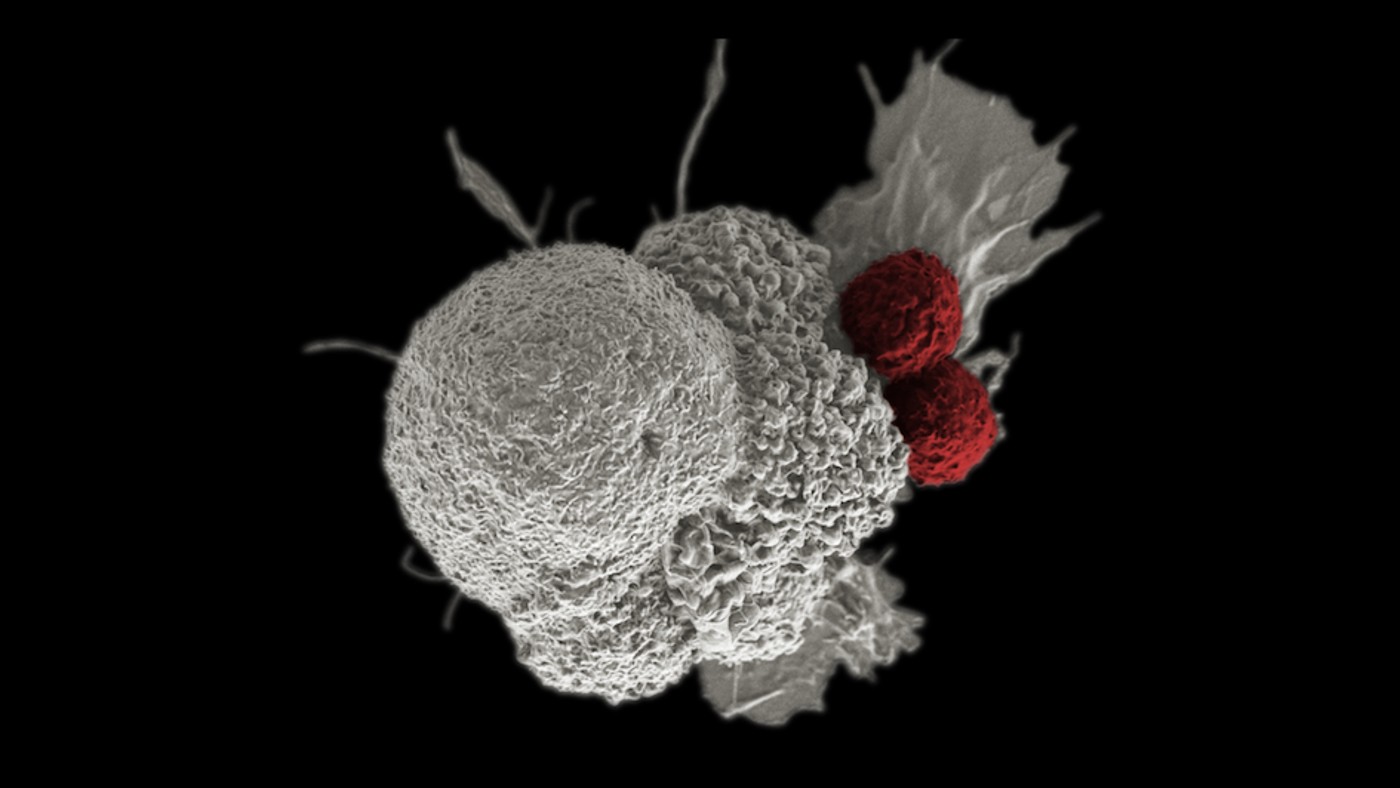
Oral squamous cancer cell (white) being attacked by two cytotoxic T cells (red) – Credit: NIH

He explained that CD40 is a cell surface receptor and member of the tumor necrosis factor (TNF) receptor “superfamily”—proteins that are largely expressed by immune cells. When triggered, CD40 prompts the rest of immune system to spring into action, promoting anti-tumor immunity and developing tumor-specific T cell responses.

In 2018, Prof. Ravetch’s lab engineered the 2141-V11, a CD40 antibody that binds tightly to human CD40 receptors and is modified to enhance its cross-linking by also engaging a specific Fc receptor.

It proved to be 10 times more powerful in its capacity to elicit an anti-tumor immune response.

The research team then changed how they administered the drug. When previously given intravenously, too many non-cancerous cells picked it up, leading to the well-known toxic side effects.

They instead injected the drug directly into tumors. When they did that, they saw “only mild toxicity”, said Prof. Ravetch.

ALSO CHECK OUT:
Cancer Vaccine Triggers Fierce Immune Response to Fight Malignant Brain Tumors in Human Patients
Oxford Breakthrough Could Allow Cancer to be Detected 7 Years Earlier Than Current Methods

The new trial included 12 patients who had various types of cancer, and of those 12, six experienced systemic tumor reduction, of which two had their cancers (notorious for being aggressive and recurring) disappear entirely.

“The melanoma patient had dozens of metastatic tumors on her leg and foot, and we injected just one tumor up on her thigh. After multiple injections of that one tumor, all the other tumors disappeared,” Ravetch said.

“The same thing happened in the patient with metastatic breast cancer, who also had tumors in her skin, liver, and lung. And even though we only injected the skin tumor, we saw all the tumors disappear.”

Tissue samples from the tumor sites revealed the immune activity that the drug stimulated.

“We were quite surprised to see that the tumors became full of immune cells—including different types of dendritic cells, T cells, and mature B cells—that formed aggregates resembling something like a lymph node,” said Dr. Osorio.

“The drug creates an immune micro-environment within the tumor, and essentially replaces the tumor with these tertiary lymphoid structures, which are associated with improved prognosis and response to immunotherapy.”

BRILLIANT: Glowing Dye Clings to Cancer Cells Giving Doctors ‘Second Pair of Eyes’

The team also found TLS in the tumors they didn’t inject.

“Once the immune system identifies the cancer cells, immune cells migrate to the non-injected tumor sites,” said Dr. Osorio.

The findings, published in the journal Cancer Cell, sparked several other clinical trials that the Ravetch lab is currently working on with researchers at Memorial Sloan Kettering and Duke University.

The trials are investigating 2141-V11’s effect on specific cancers, including bladder cancer, prostate cancer, and glioblastoma—all aggressive and hard to treat.

Nearly 200 people are enrolled in the various studies that the researchers hope will explain why some patients respond to 2141-V11 and others do not—and how to potentially change that.

SHARE THE AMAZING NEWS With Patients on Social Media…

Pea Plant Virus Creates a Powerful Immune Attack on Cancer—A Cheap Treatment Headed for Clinical Trials

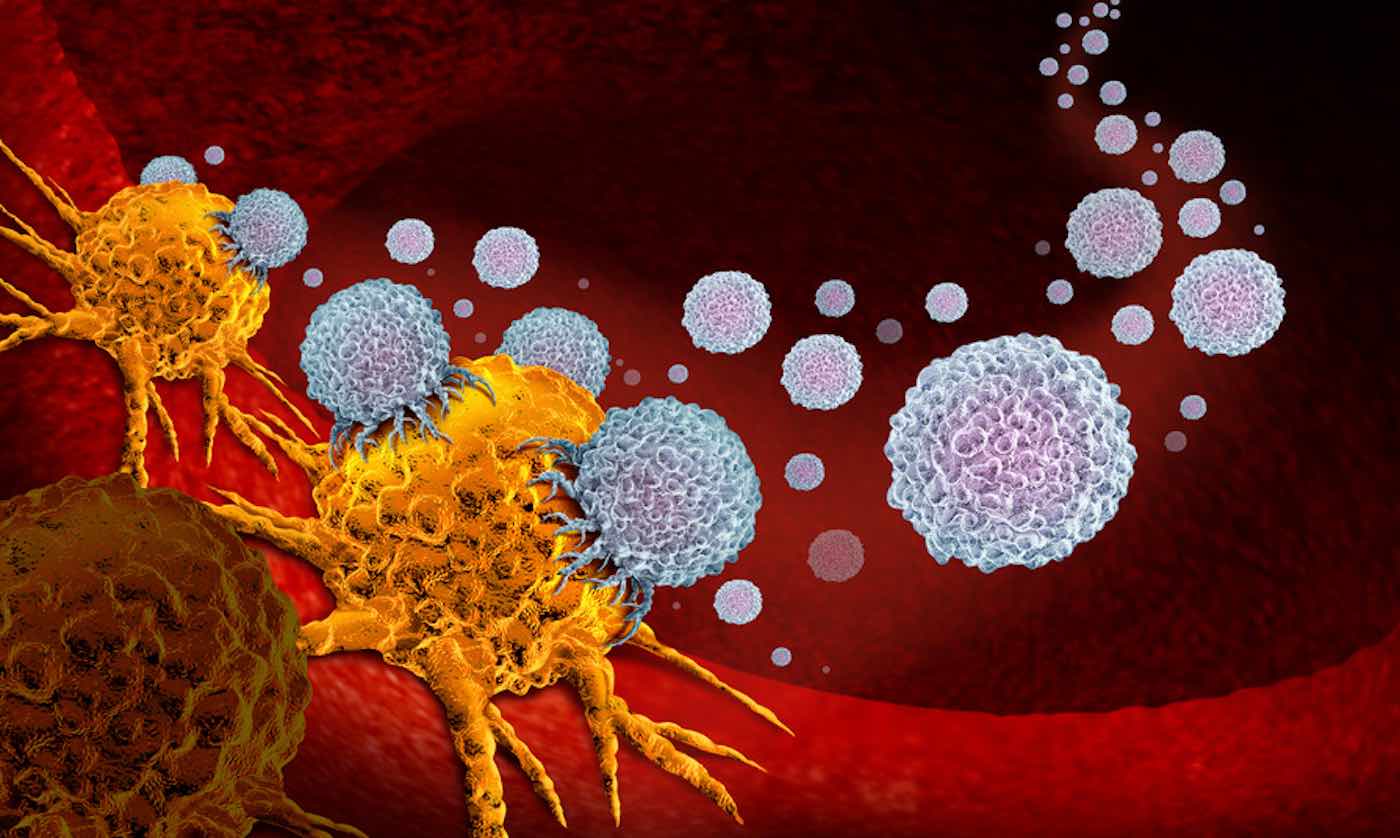
Immunotherapy vaccine attacks cancer cells

A virus that infects the humble black-eyed pea plant is showing great promise as a low-cost, potent cancer immunotherapy—thanks to researchers at the University of California San Diego.

The team led by chemical and nano engineers just published their study in Cell Biomaterials, showing how the cowpea mosaic virus (CPMV), unlike other plant viruses, is uniquely effective at activating the body’s immune system to recognize and attack cancer cells.

In preclinical studies, CPMV has demonstrated potent anti-tumor effects in multiple mouse models, as well as in canine cancer patients. When injected directly into tumors, CPMV therapy recruits innate immune cells—such as neutrophils, macrophages and natural killer cells—into the tumor microenvironment to destroy cancer cells.

Meanwhile, it activates B cells and T cells to establish systemic, long-lasting anti-tumor memory—an immune “reawakening” that not only helps clear the targeted tumor but also primes the immune system to hunt down metastatic tumors elsewhere in the body.

“It is fascinating that CPMV—but not other plant viruses—stimulates an anti-tumor response,” said Nicole Steinmetz, at UC San Diego’s Department of Chemical and Nano Engineering and the study’s corresponding author.

“What we found most exciting is that although human immune cells are not infected by CPMV, they respond to it and are reprogrammed towards an activated state, which ultimately trains them to detect and eradicate cancerous cells,” said study first author Anthony Omole, a chemical and nano engineer who works in Steinmetz’s lab.

BREAKTHROUGH: The First At-Home Cervical Cancer Screening Device Was Approved by the FDA, Set to Roll Out This Year

It also offers a unique advantage as a cost-effective immunotherapy. Unlike many other therapies that require complex and costly manufacturing, CPMV can be produced using molecular farming. “It can be grown in plants using sunlight, soil and water,” Omole said.

But what makes this plant virus so effective at fighting cancer?

To investigate, the team, along with colleagues at the National Cancer Institute’s ​​Nanotechnology Characterization Laboratory, performed a side-by-side comparison of CPMV with the cowpea chlorotic mottle virus (CCMV), a closely related plant virus that does not exhibit anti-tumor effects. Both viruses form similarly sized nanoparticles and are taken up by human immune cells at similar rates. Yet, once inside, the viruses produce different outcomes.

CPMV, the team found, stimulates type I, II and III interferons—proteins with well-known anti-cancer properties. “This is particularly interesting because some of the earliest cancer immunotherapy drugs were recombinant interferons,” noted Omole.

“CCMV stimulates a set of pro-inflammatory interleukins that do not translate to effective tumor clearance. Another difference lies in how these viruses’ RNAs are processed within mammalian cells. CPMV RNAs persist longer and get delivered to the endolysosome, where they activate toll-like receptor 7 (TLR7), a critical component in priming antiviral—and more importantly—anti-tumor immune responses. CCMV RNAs, on the other hand, fail to reach this activation point.”

The team is working toward advancing CPMV to clinical trials.

MORE BREAKTHROUGHS:
Fighting Cancer Without Fighting: Scientists Switch Tumor Cells Back to Healthy Ones at ‘Critical’ Moment’
Simple Supplement Discovered Actually Causes Prostate Cancer Cells To Self-Destruct
Hope for Patients with Aggressive Breast Cancer: Vaccine Trial Results in 88% Survival Rate After 3 Years

“The present study provides important insights into the mechanism of action of CPMV. We are diligently working toward the next steps to ensure that the most potent lead candidate is selected to achieve anti-tumor efficacy and safety,” Steinmetz said.

“This is the time and we are poised to move this work beyond the bench and toward clinical trials.”

SHARE THE INTRIGUING RESEARCH On Social Media…

Retired ‘Tech Fairy’ Rebuilds Old Computers and Gives Them to Folks Who Can’t Afford One–700 Gifted So Far

Craig Clark may call himself ‘the oldest computer technician in America’, but everyone else calls him the Tech Fairy because of all the wishes he has granted to strangers.

In his field, as a technician, people sometimes give Craig their old computers after he sets up their new ones.

Then about 8 years ago he began to take those used laptops, rebuild them, and find someone who needs a computer because they can’t afford one. It suddenly became easier to find people in need once Craig discovered Nextdoor—an app and website where neighbors in localities talk to neighbors who live in the same area.

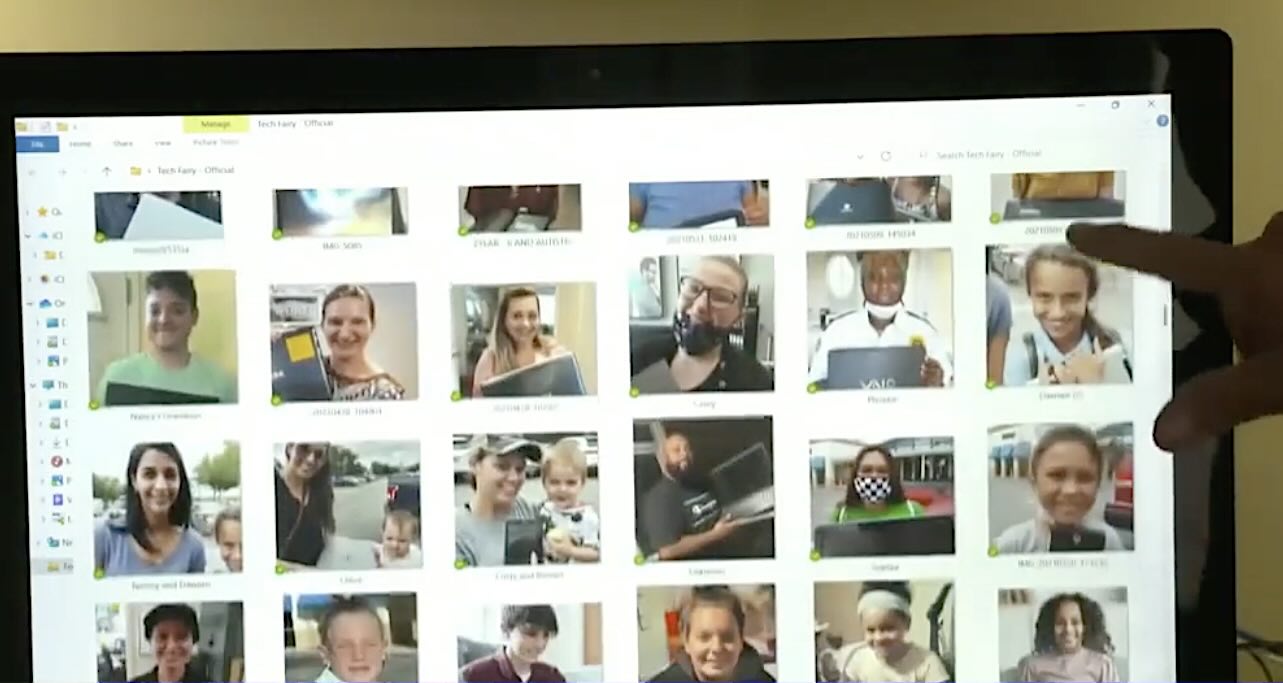
“I began posting pictures on the website of the smiling folks with their “new” laptops,” he told GNN.

“Then somehow I branded myself as the ‘Tech Fairy’. I have no memory as to why I did that, but it turned out to be a stroke of genius.”

People started hearing stories about deserving people who’d received a free laptop from the Tech Fairy—and readers began contacting Craig, who is now 79-years-old, to offer up that old laptop they had in a closet.

After 8 years, he has re-homed over 700 devices around Sarasota, Florida.

He’s received some notoriety, from local news—and nationally too. In 2022, ABC News flew Craig to New York to appear on Good Morning America, along with a family who’d been gifted one of his laptops. All four children now call him ‘Grandpa Craig’, which still makes him cry. (Watch the video at the bottom…)

The smiling faces of those graced with free laptops by the Tech Fairy

“Being the Tech Fairy is a fairly expensive project,” he told GNN. “For security, I install a new SSD hard drive into every computer I rebuild—and new batteries are often required—but the smiles in the pictures I take are worth the investment.”

Most of the pictures are of smiling workers at fast food restaurants or convenience stores. One reason is that his primary career was as an executive for 7-Eleven convenience stores.

“I made good money on the efforts of thousands of terrific store employees making minimum wage. I was making 10 times the money as these folks and they were working much harder than I was.”

But, he’s been steadily giving back ever since—like a Pied Piper of Good Deeds.

KINDNESS RETURNED: Years After She Saved a Magpie Bird it Returns the Favor Saving Her Life After She Fell from Window

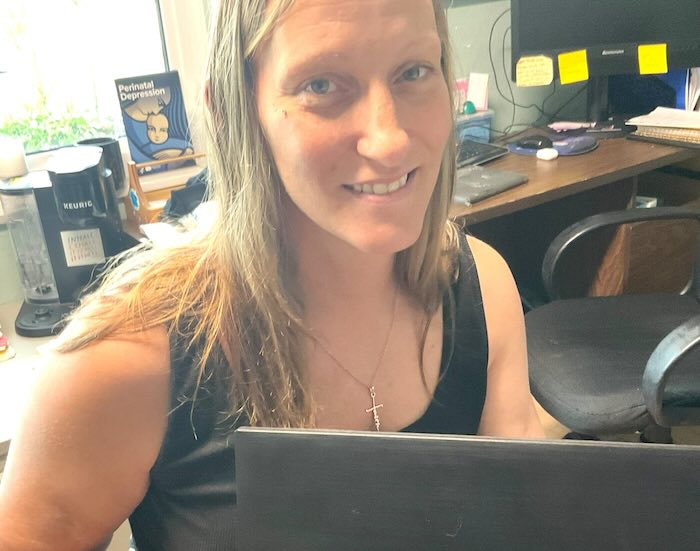
“Yesterday I drove to an organization that helps women recovering from addiction. They have 2 women graduating from their program this week, and as they start their new lives each now has a beautiful semi-new laptop to get them started.” (One of them, Amber, is pictured below.)

Amber is graduating from Prodigal Daughters in Sarasota with a “new” laptop to help her get started in her new life – submitted by The Tech Fairy

“I get a lot of credit for this project but I never forget that this effort is possible only because of the selfless folks who donate their used devices to me. It’s a true community project…”

MORE KINDNESS FOR STRANGERS: Dry Cleaner Gives Away his Services to Unemployed Folks Headed to Job Interviews: ‘Just Pay it Forward’

Watch the story from ABC’s Good Morning America, from 3 years ago…

SPREAD THE OPPORTUNITY To Others in Florida By Sharing This on Social Media…

“The first principle is that you must not fool yourself, and you are the easiest person to fool.” – Richard P. Feynman 

By Daniel Lincoln

Quote of the Day: “The first principle is that you must not fool yourself, and you are the easiest person to fool.” – Richard P. Feynman 

Photo by: Daniel Lincoln

With a new inspirational quote every day, atop the perfect photo—collected and archived on our Quote of the Day page—why not bookmark GNN.org for a daily uplift?

By Daniel Lincoln

Good News in History, August 24

An artist's impression of Proxima Centauri - credit, ESO H. Kornmesser CC 4.0.

9 years ago today, the European Southern Observatory confirmed the existence of Proxima Centauri b, the closest exoplanet to Earth orbiting within the habitable zone of the red dwarf star Proxima Centauri. It’s just over the hedge at 4.2 light years from Earth, and its discovery has led to numerous research activities attempting to establish whether it would harbor conditions for life. READ more about this 10th rock from the Sun… (2016)

Two 10-Year-old Girls Just Defeated Chess Grandmasters on Separate Continents Just Hours Apart

Keya Jha is the second-youngest girl to defeat a grandmaster in classic chess – Courtesy of Ayoosh Jha

Two ten-year-old girls have recently conquered one of the world’s oldest board games, taking down two grandmasters in chess, men considered to be the kings of the sport.

It all started at the 2025 British Chess Championships in Liverpool, England earlier this month. London’s Bodhana Sivanandan (10 years, 5 months, 3 days) beat 60-year old grandmaster Pete Wells to become the youngest female ever to defeat a chess grandmaster.

“She’s on course to be one of the best British players ever,” Malcolm Pein, manager of the England chess team, said in an earlier article from the BBC.

Bodhana, who started playing chess during the COVID pandemic, previously won three world championships in the under 8 age group. Now, she has a new milestone.

But Bodhana is not the only female chess player making recent headlines. A few hours after she defeated the British grandmaster in England, 10-year-old Keya Jha beat American grandmaster Bryan Smith at the Joe Yun Memorial chess tournament in Akron, Ohio.

Keya recorded the victory at the age of 10 years, nine months, and two days to become the youngest American female ever to defeat a grandmaster.

HERE’S ANOTHER CHESS KING: 18-year-old Is Youngest World Chess Champion–Besting Garry Kasparov Who Did it in 1985 at Age 22

The Ohio resident also began playing chess during the pandemic. In addition to chess, Keya is a black-belt in taekwondo as well and a top-ranked table tennis player in the state.

She plans to compete in the Ohio Chess Congress competition at the end of the month and will likely have many other highlights in her future.

But for now, becoming the youngest female in America to beat a grandmaster is pretty special. She called it “a dream come true” in a recent article. Bodhana probably feels the same way.

Dreams were reached, grandmasters were vanquished, and history was made.

In a game where every move matters, two 10-year-olds are making big ones.

SO INSPIRING: Homeless Nigerian Boy Becomes U.S. Chess Champion at 10-Years-old After Immigrating to US

And on a single day earlier this month, the queens were king.

SHARE THIS ON SOCIAL MEDIA With The Kings And Queens In Your Life…

Great-Grandad Gets Hole-in-One at Age 93 – May Be the Oldest Golfer in Britain to Do it

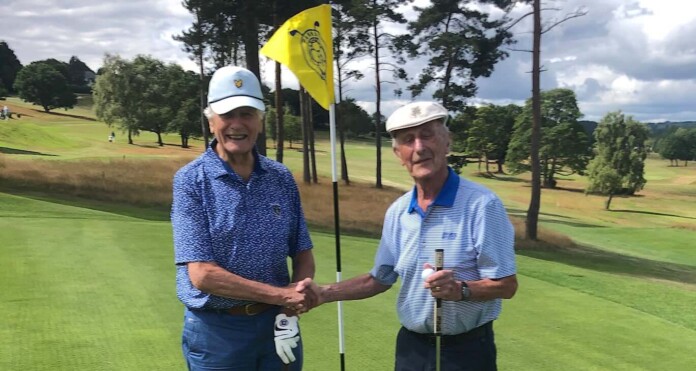
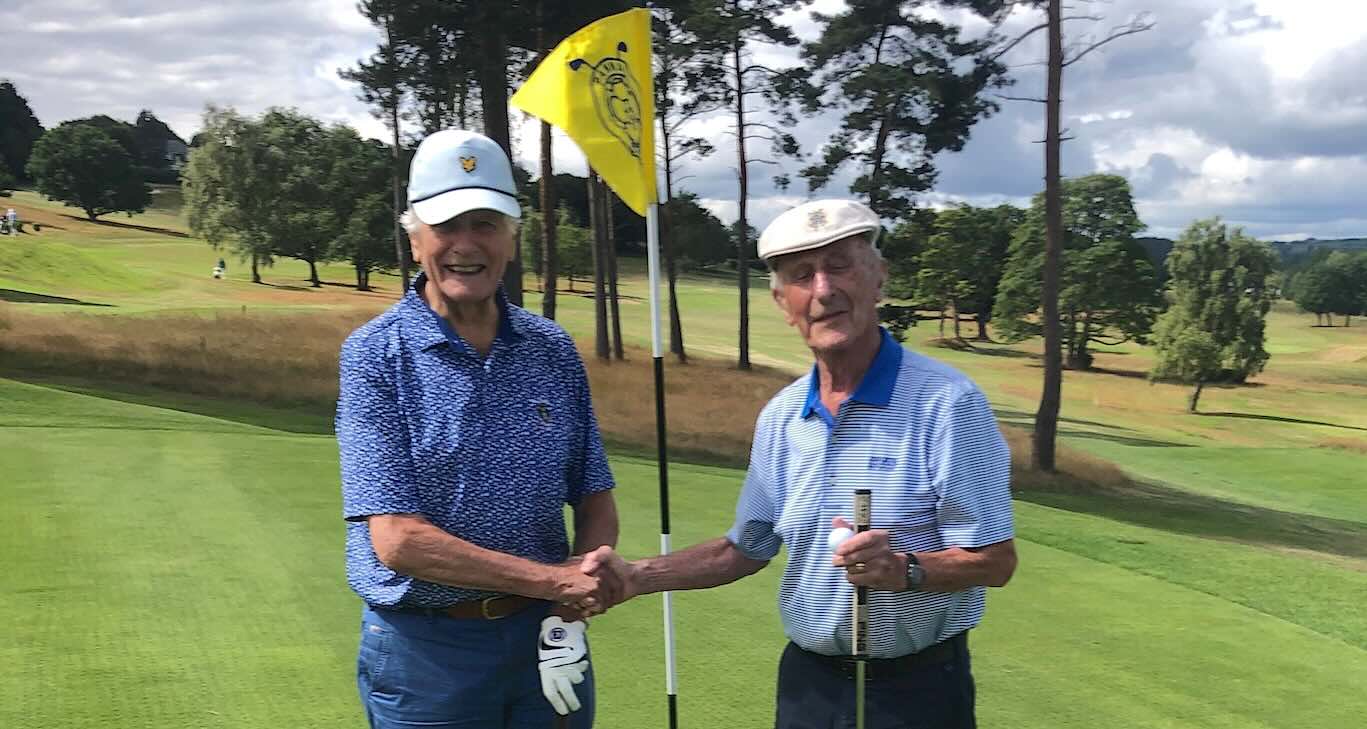
Jack Ponsford (right) with golf partner George Bruce after his hole in one at Pannal Golf Club in England - SWNS
Jack Ponsford (right) with golf partner George Bruce after his hole in one at Pannal Golf Club in England – SWNS

A 93-year-old great-grandfather could be the oldest golfer in Britain to get a hole-in-one after achieving the feat in a recent round.

Jack Ponsford notched the ace on a 135-yard third hole at Pannal Golf Club in North Yorkshire, England.

It was his first ever hole-in-one—and due to his age it could make him a record-breaker.

It is thought Derek Jackson previously held the title for Britain’s oldest golfer to get an ace, which he achieved at age 92.

Mr. Ponsford watched his ball roll in for a one alongside regular playing partner George Bruce, 97.

Pannal Golf Club has now placed a plaque on the bar announcing the achievement.

“I hit the ball and it landed on the green and George said ‘I think that’s gone in the hole’,” recalled Jack. “I didn’t believe him.

“We walked down, and there it was down the hole.

“It was the first hole-in-one I have ever had so I couldn’t believe it. I was really excited.”

Jack says he has quite a lot of family members who play golf and none of them have ever scored a hole-in-one either—and he’s quite tickled about that.

STUNNING LUCK: Golf Buddies Sink Consecutive Holes-in-One on Same Tee-Shot–Beating 17 Million to 1 Odds

Jack Ponsford gets award from staff at Pannal golf club after his hole-in-one at age 93 – SWNS

“I was definitely the oldest to ever get a hole in one at that golf course, and the pair of us might be the oldest duo in the country to get one. It could be a record.”

Jack has been playing golf his whole life and first played Pannal Golf Club when he moved to the area in 1985. He currently plays twice a week to keep active, and says he always walks to keep fit instead of using a cart.

“I have never been a great golfer, but I enjoy it anyway,” he told SWNS news. “My wife and I used to play golf together before she died in 2018.

The senior says he is hoping to get many more hole-in-ones in the future.

“To get a hole in one was a lifetime achievement. A lot of people never see one.

“All my friends and family were excited. It really was amazing.”

GOLF COMES FULL CIRCLE: Dentist Who Caddied There as a Kid Just Qualified to Play in the US Open on the Same Course: ‘It’s a Dream Come True’

The Pannal Golf Club wrote on Facebook: A huge congratulations to Jack Ponsford aged 93 for getting his first ever hole in 1 on the 3rd hole. Even more remarkable was that it was witnessed by his playing partner and friend, George Bruce aged 97!

“Could this be a world record for the oldest pairing involved in a hole-in-1?

“Fantastic achievement and another reason we love golf!”

INSPIRE HOPE Among Golfers By Sharing This on Social Media…

Grandma Delivers Daughter’s Baby in the Back Seat of Car and Then Saves His Life

Sonja Cook with daughter Shelby (left) and newborn grandson Mason – SWNS

A proud grandma says she is ‘thrilled’ after helping deliver her daughter’s baby in the back seat of her car—and then saving its life.

Shelby Cook was one week overdue when she arrived flustered at her mom’s house in early August.

Her mother Sonja Cook thought she would only be babysitting the couple’s other children while they gave birth at the hospital in South Yorkshire, England, but suddenly she heard her daughter shout, ‘it’s coming,’ from the car.

After finding Shelby lying on the back seat she telephoned for an ambulance.

It was anything but smooth sailing in the following moments—but it was Sonja’s quick thinking that saved Mason’s life due to the “caul birth,” as a part of the unbroken amniotic sac membrane covered the baby’s face.

“The whole time I was telling myself ‘this is not happening’,” the 46-year-old grandmother told SWNS news.

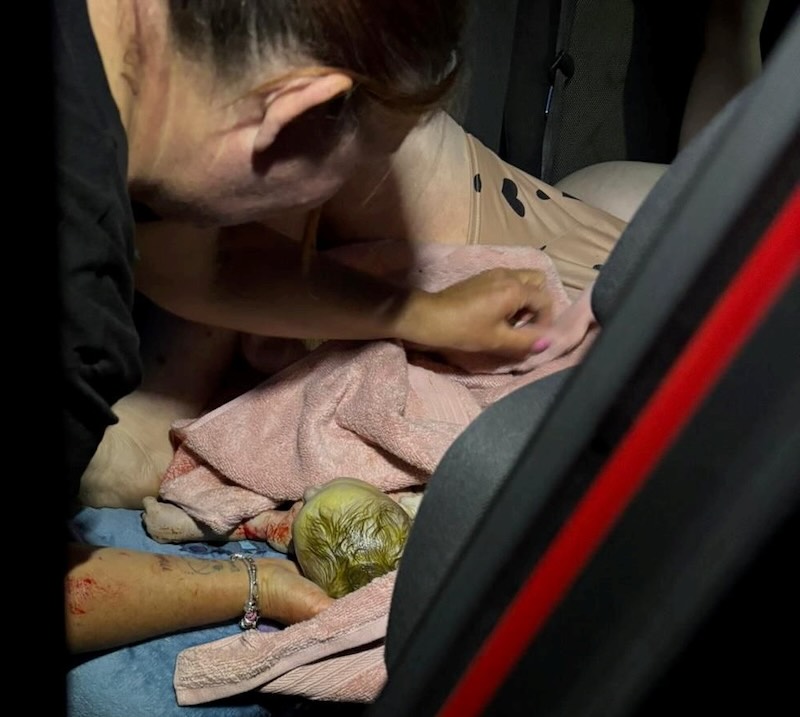
“After I saw his head he just flew out. He literally flew out into my arms, and I couldn’t believe what had just happened.”

“The men were running around to get towels and blankets to keep the baby warm.

Family photo via SWNS

But Sonja’s delight was quashed when they noticed the baby wasn’t crying and that’s when she realized something was wrong.

“I began patting his back and rubbing his airways but still nothing.

“He began turning bluey green, and I was panicking, but that’s when I felt a thin sack over his face, which I pulled off and sure enough he started having a little cry.

“I had watched TV programs before where stuff like goes on but I couldn’t believe it was happening to me.

“It all happened quite fast,” said Shelby, who named the baby Mason. “I was scared when I couldn’t hear him cry as that’s what you want to hear.”

CHILDBIRTH MIRACLE? British Woman Gives Birth After Receiving Transplant Womb from Sister and Pro Bono Surgery at Hospital

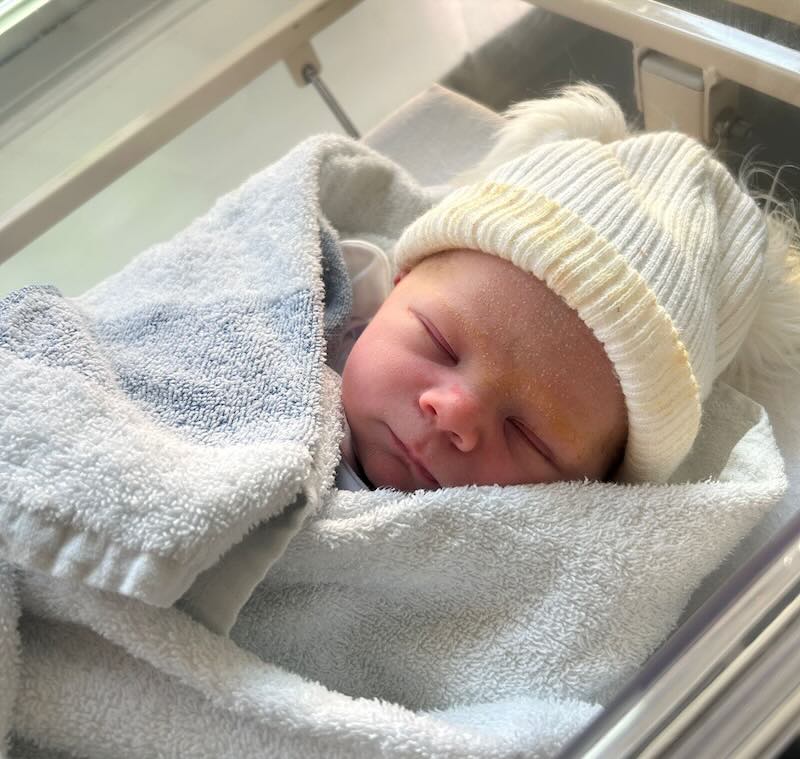
Newborn Mason wrapped in blanket – Family photo via SWNS

When Shelby arrived at her mom’s house at 4:39 that morning, her ‘water’ hadn’t broken yet, as usually happens during labor. The amniotic sac was still in tact and she was also worried the hospital wouldn’t accept her, because her contractions weren’t coming every three minutes.

Sonja urged her to come drop the kids off and get to the hospital.

“Delivering Mason was terrifying, as his life was in my hands,” she recalled. “It was dark in the back of the car so I couldn’t see it at first. But it was a huge relief.”

“Mason is doing absolutely amazing, he is a such a lovely baby.”

He weighed eight pounds and five ounces.

SWEET DONATIONS: Texas Woman Sets Record for Donating Almost 700 Gallons of Breastmilk

“I’ve been there for each of my grandchildren’s births. But to actually deliver your final grandson was special.”

CHILDBIRTH BREAKTHROUGH: Cure for Pre-Eclampsia is On Horizon as Researcher Discovers Lipid Nanoparticle to Deliver Directly to Placenta

“Mason is a good healthy baby, and now we have a good story to tell him when he is older.”

SHARE THE STORY on Social Media to Prepare Others For Such an Emergency…

Your Weekly Horoscope – ‘Free Will Astrology’ by Rob Brezsny

Our partner Rob Brezsny, who has a new book out, Astrology Is Real: Revelations from My Life as an Oracle, provides his weekly wisdom to enlighten our thinking and motivate our mood. Rob’s Free Will Astrology, is a syndicated weekly column appearing in over a hundred publications. He is also the author of Pronoia Is the Antidote for Paranoia: How All of Creation Is Conspiring To Shower You with Blessings. (A free preview of the book is available here.)

Here is your weekly horoscope…
FREE WILL ASTROLOGY – Week of August 23, 2025
Copyright by Rob Brezsny, FreeWillAstrology.com

VIRGO (Aug. 23-Sept. 22):
In Mesoamerican myth, the god Quetzalcoatl journeys to the underworld not to escape death, but to recover old bones needed to create new life. I propose you draw inspiration from this story, Virgo. In recent weeks, you have been gathering pieces of the past, not out of a sense of burdensome obligation, but as a source of raw material. Now comes the time for reassembly. You won’t rebuild the same old thing. You will sculpt visionary gifts for yourself from what was lost. You will use your history to design your future. Be alert for the revelations that the bones sing.

LIBRA (Sept. 23-Oct. 22):
In the Hebrew language, the word for “face” is plural. There is no singular form for panim. I love that fact! For me, it implies that each of us has a variety of faces. Our identity is multifaceted. I think you should make a special point of celebrating this truth in the coming weeks, Libra. Now is an excellent time to explore and honor all of your many selves. Take full advantage of your inner diversity, and enjoy yourself to the max as you express and reveal the full array of truths you contain.

SCORPIO (Oct. 23-Nov. 21):
In the ancient Hindu holy text known as the Upanishadsananda means bliss, though not so much in the sense of physical or psychological pleasure as of deep, ecstatic knowing. I believe you are close to attracting this glorious experience into your soul, Scorpio—not just fleetingly, but for a while. I predict you will glide into alignments that feel like coming home to your eternal and perfect self. Treasure these moments as divine gifts. Immerse yourself with total welcome and gratitude. Let ananda inform your next steps.

SAGITTARIUS (Nov. 22-Dec. 21):
In Daoist cosmology, the nature of life is characterized by cyclical, flowing patterns rather than linear, static motions. In my study of its gorgeous teachings, I exult in how it inspires me to honor both contraction and expansion, the power of circling inward and reaching outward. With this in mind, Sagittarius, I invite you to make the spiral your symbol of power. Yes, it may sometimes feel like you’re revisiting old ground. Perhaps an ex will resurface, or an old goal will seek your attention. But I guarantee it’s not mere repetition. An interesting form of evolution is underway. You’re returning to longstanding challenges armed with fresh wisdom. Ask yourself: What do I know now that I didn’t before? How can I meet these interesting questions from a higher point of the spiral?

CAPRICORN (Dec. 22-Jan. 19):
Inuit artworks are often made from materials available in their environment, like driftwood, stones, walrus ivory, whale bones, and caribou bones and antlers. Even their tools are crafted from that stuff. In part, this is evidence of their resourcefulness, and in part, a reflection of how lovingly they engage with their environment. I recommend you borrow their approach, Capricorn. Create your practical magic by relying on what’s already available. Be enterprising as you generate usefulness and fun out of scraps and leftovers. Your raw material is probably better if it’s not perfect.

AQUARIUS (Jan. 20-Feb. 18):
The medieval alchemists had a central principle, rendered in Latin as follows: Visita interiora terrae, rectificando invenies occultum lapidem. Translated, it means, “Seek out the lower reaches of the earth, perfect them, and you will find the hidden stone.” I invite you to go on a similar underground quest, Aquarius. The purpose is not to wallow in worry or sadness, but rather to retrieve a treasure. Some magnificence beneath your surface life is buried—an emotional truth, a creative impulse, a spiritual inheritance. And it’s time you went and got it. Think of it as a quest and a pilgrimage. The “hidden stone,” an emblem of spiritual riches, wants you to find it.

PISCES (Feb. 19-March 20):
In ancient Greece, the god Janus presided over doorways. He had two faces, one looking outward and forward, one gazing inward and backward. I believe this is your Janus phase, Pisces. Before you launch into your next fluidic quest, pause and take inventory. Peer behind you, not with regret but with curiosity and compassion. What cycle has fully ended? What wisdom has settled into your bones? Then face the future, not with shyness or foreboding, but with eager intention and confidence. What goals, rooted in who you are becoming, can inspire an exciting new plot thread?

ARIES (March 21-April 19):
When glassmakers want to cool a newly blown piece, they don’t simply leave it out to harden. That would cause it to shatter from the inside. Instead, they place it in an annealing oven, where the temperature drops in measured increments over many hours. This careful cooling aligns the internal structure and strengthens the whole. Let’s invoke this as a useful metaphor, Aries. I absolutely love the heat and radiance you’ve expressed recently. But now it’s wise for you to gradually cool down: to allow your fervor to coalesce into an enduring new reservoir of power and vitality. Transform sheer intensity into vibrant clarity and cohesion.

TAURUS (April 20-May 20):
To paraphrase Sufi mystic poet Rumi: “Don’t get lost in your pain. Know that one day your pain will become your cure.” In my astrological opinion, Taurus, you have arrived at this pivotal moment. A wound you’ve had to bear for a long spell is on the verge of maturing into a gift, even a blessing. A burdensome ache is ready to reveal its teachings. You may have assumed you would be forever cursed by this hurt, but that’s not true! Now it’s your sacred duty to shed that assumption and open your heart so you can harvest the healing.

GEMINI (May 21-June 20):
As you enter a Tibetan Buddhist temple, you may encounter statues and paintings of fierce spirits. They are guardian figures who serve as protectors, scaring away negative and destructive forces so they can’t enter the holy precincts. In accordance with astrological omens, Gemini, I invite you to be your own threshold guardian. Authorize a wise and strict part of you to defend and safeguard what truly matters. This staunch action doesn’t have to be aggressive, but it should be informed with fierce clarity. You can’t afford to let the blithe aspect of your personality compromise your overall interests by being too accommodating. Assign your protective self to stand at your gate and say: “I protect this. I cherish this. I won’t dilute this.”

CANCER (June 21-July 22):
“Dear Dr. Feelgood: Lately, you seem to be extra nice to us hypersensitive Crabs. Almost too kind. Why? Are you in love with a Cancerian woman, and you’re trying to woo her? Did you hurt a Cancerian friend’s feelings, and now you’re atoning? Please tell me you’re not just coddling us. —Permanently Drunk on a Million Feelings.” Dear Drunk: You use your imagination to generate visions of things that don’t exist yet. It’s your main resource for creating your future. This is especially crucial right now. The coming months will be a fertile time for shaping the life you want to live for the next 10 years. If I can help you keep your imagination filled with positive expectations, you are more likely to devise marvelous self-fulfilling prophecies.

LEO (July 23-Aug. 22):
In traditional Chinese medicine, the heart is the seat of joy. It’s also the sovereign that listens to the wisdom of the other organs before acting. Dear Leo, as you cross the threshold from attracting novelty to building stability, I encourage you to cultivate extra heart-centered leadership, both for yourself and for those who look to you for inspiration. What does that mean? Make decisions based on love and compassion more than on rational analysis. Be in service to wholeness rather than to whatever might bring temporary advantage.

WANT MORE? Listen to Rob’s EXPANDED AUDIO HOROSCOPES, 4-5 minute meditations on the current state of your destiny — or subscribe to his unique daily text message service at: RealAstrology.com

(Zodiac images by Numerologysign.com, CC license)

SHARE The Wisdom With Friends Who Are Stars in Your Life on Social Media…

“Nature uses human imagination to lift her work of creation to even higher levels.” – Luigi Pirandello 

Quote of the Day: “Nature uses human imagination to lift her work of creation to even higher levels.” – Luigi Pirandello 

Photo by: Muralist Ernest Zacharevic paints among shrubbery in Kuala Lumpur

With a new inspirational quote every day, atop the perfect photo—collected and archived on our Quote of the Day page—why not bookmark GNN.org for a daily uplift?


Good News in History, August 23

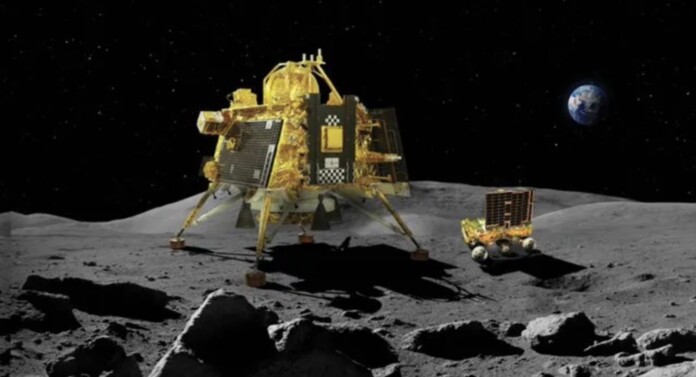
Chandrayaan-3's rover Pragyan – Image credit: ISRO

2 years ago today, the chief of the Indian Space Research Organization (ISRO) exclaimed “India is on the Moon!” after the successful landing of Chandrayaan-3, the Indian Lunar lander. In doing so India became the fourth nation to operate on the Moon after the US, Russia, and China, while also beating Japan to our nearest satellite after their attempted mission failed after hitting a crater rim. India is the first-ever nation to visit the South Polar Region. READ more about this event from GNN’s coverage… (2023)

Astronomers Capture Jaw-Dropping New Image of a Hand Amid the Stars

Pulsar B1509-58 and a hand-shaped nebula known as MSH 15-52 - credit, NASA / CXC / Un Hong Kong Zhang et al. via SWNS
Pulsar B1509-58 and a hand-shaped nebula known as MSH 15-52 – credit, NASA / CXC / Un Hong Kong Zhang et al. via SWNS

A coalition of telescopes have allowed astronomers to produce an image of the nebula MSH 15-52 in unprecedented color and detail.

Centered in the middle of the nebula is a pulsar, or the rapidly-spinning, extremely dense remnant of an exploded star. Captured together, some astronomers see in the mixture of the two the image of a hand.

NASA / CXC / Un Hong Kong Zhang et al. via SWNS

In 2009, NASA’s Chandra X-ray Space Observatory released a captivating image of this pulsar, designated B1509-58, located approximately 17,000 light-years from Earth.

Since then, astronomers have used Chandra and other telescopes to continue to observe this object. Now, new radio data from the Australia Telescope Compact Array (ATCA) has been combined with Chandra’s X-ray data to provide a fresh view of this exploded star and its environment, to help understand its peculiar properties and shape.

This tiny object, called a pulsar or neutron star alternatively, is responsible for producing the intricate nebula which spans over 150 light-years, or about 900 trillion miles.

The researchers from Chandra do not fully understand all that the data is showing them.

“One area that is perplexing is the sharp boundary of X-ray emission in the upper right of the image that seems to be the blast wave from the supernova.”

X-ray images of Pulsar B1509-58 and a hand-shaped nebula known as MSH 15-52 – credit, NASA / CXC / Un Hong Kong Zhang et al. via SWNS

“Supernova blast waves are usually bright in radio waves for young supernova remnants like RCW 89, so it is surprising to researchers that there is no radio signal at the X-ray boundary,” some of the study authors wrote in a statement.

Further work is needed to provide better understanding of the complex interplay between the pulsar and the supernova debris.

MORE IMAGES FROM CHANDRA:

A paper describing this work, led by Shumeng Zhang of the University of Hong Kong,  has been published in The Astrophysical Journal.

SHARE This Beautiful Image With Your Friends Who Love Space…

Sense of Smell May Be Restored Using Radio Waves-Without Need for Surgery

Getty Images for Unsplash +

A patient’s of smell could be restored using radio waves without having to undergo surgery, according to new research.

Worldwide, there are actually very few effective treatments for those who have lost their sense of smell, perhaps from a brain injury. Treatments that do exist often use strong ‘scentas’ or medicines that can cause discomfort in patients.

Now, a new study by researchers in South Korea suggests that a “simple and painless” way to regenerate the olfactory is to utilize radio waves to directly target the part of our brain responsible for smell, without causing pain.

Researchers from Hanyang and Kwangwoon universities asked volunteers with a healthy sense of smell to sit while a small radio antenna was placed near, but not touching, their forehead.

For five minutes, the antenna gently sent out radio waves to reach the smell-related nerves deep in the brain.

Before and after the short treatment, the research team tested how well the patient could smell very faint odors, such as diluted alcohol or fruit scents.

The researchers also recorded the patients’ brain signals to see how active their smell nerves were.

The findings, published in the journal APL Bioengineering, showed that the method improved subjects’ sense of smell for over a week after just one treatment.

“The method is completely non-invasive—no surgery or chemicals needed—and safe, as it does not overheat the skin or cause discomfort,” said study author Professor Jang Yon-woong.

“This study represents the first time that a person’s sense of smell has been improved using radio waves without any physical contact or chemicals, and the first attempt to explore radio frequency stimulation as a potential therapy for neurological conditions.”

CHECK THIS OUT: 10 out of 10 Patients with Congenital Deafness Have Hearing Restored in Children’s Gene Therapy Trial

One potential weakness in the study pursuant to the idea that the method could help those with olfactory dysfunction is obviously that the patients didn’t suffer from it.

Being that the focus was on people with a normal sense of smell, however, the authors note it could help professionals such as perfumers, chefs, or sommeliers who need to distinguish aromatic subtleties.

PUTTING HUMANS BACK TOGETHER: UPDATE—World’s First Drug to Regrow Teeth Enters Clinical Trials

Dr. Jang next plans to conduct a similar study on people with olfactory dysfunction such as anosmia, a complete loss of smell, or hyposmia, a reduced sense of smell.

“This will help us determine whether the treatment can truly benefit those who need it most.”

SHARE The News About This Pioneering Smellomedicine With Your Friends…

Archaeologists to Excavate Glasgow’s First Skatepark with the Help of Former Skateboarders

The remains of the slalom run - credit, Dr. Brophy via the Society of Antiquiries of Scotland
The remains of the slalom run – credit, Dr. Brophy via the Society of Antiquaries of Scotland

Though it might make someone feel old, a Scottish skatepark from 1978 is set to undergo archaeological excavation—with help from the city’s skaters who once hung out there.

Kelvin Wheelies in Glasgow was a radical design when it first opened to host the first Scottish Skateboard Championships. It incorporated a half pipe, several bowls, and a dual slalom run.

Just 5 years later, however, a dip in the popularity of skateboarding combined with a lack of maintenance led Kelvin Wheelies to be closed down and eventually buried under ruble and overgrowth in Kelvingrove Park.

Speaking with the Guardian, Dr. Kenny Brophy, a lecturer in archaeology at the University of Glasgow, who’s helping to organize the excavation said it was an opportunity to explore the city’s modern heritage.

“Glasgow city council spent £100,000 building it, which was a large investment at the time and it was designed with skaters in mind, and for teenagers who were involved in an activity that many people deemed to be antisocial and marginal,” he said.

It’s not everyday that archaeologists excavate with the help of people who were active at the site they’re digging down into, but with Kelvin Wheelies, that’s exactly what will happen for the volunteer excavation efforts.

MORE ARCHAEOLOGY: A 16th c. Scottish Plaid was Found in a Bog–Now Becomes Oldest Historical Tartan Available to Wear Today

Part of the university’s New Audience’s program, volunteers will work alongside middle-aged skaters who once used the park to dig several trenches down to the original concrete with hand-tools, just as if they were excavating a Roman villa.

SCOTLAND NEWS: Awesome Bridge Swings Back and Forth to Allow Boats to Pass Over Long-Divided Scottish River (LOOK)

Their hope is that they may expose some original 1980s graffiti.

“It’s such a rare opportunity for an archeologist that we’ll be digging the site with people that used it,” said Dr. Brophy said. “We’ll have skateboarders on site who used the park as teenagers and will be re-living that experience at the end of a trowel.”

SHARE This Rare Archaeological Opportunity With Your Friends… 

China’s ‘Bulldozer Hero’ Saves Over 100 Stranded Neighbors During Recent Beijing Flooding

Wang Tianyu, with people perched in his dozer scoop - credit, handout via SCMP
Wang Tianyu, with people perched in his dozer scoop – credit, handout via SCMP

A freak rain event dumped 40% of Beijing’s average yearly precipitation down in a single week, triggering floods.

From out of the chaos, Chinese social media rose to salute the “Bulldozer Hero,” Wang Tianyu, a business owner turned rescuer.

On July 28th far outside the city limits, Wang woke to an urgent phone call from his friend, asking the 35-year-old owner of a construction company to come help rescue an elderly couple that was trapped in a village.

Wang immediately got into his bulldozer and headed to the village through floodwaters 3 feet high.

Along the way, they encountered several others sheltering on the roofs of their homes. Wang would stop, raise the scoop, and allow them to jump down into it. Wang continued working all day ferrying people to the evacuation areas from their lowland homes. At one point, there were 10 people perched in his dozer scoop.

At times he carried firefighters and other rescue personnel out to affected areas in the scoop, before bringing people back the other way. South China Morning Post also reports that he used the bulldozer like a dam to allow rescuers to access flooded areas.

EVERYDAY HEROES: Brothers Save Their Home from Massive Flood with Homemade Levee–Dad Who Taught Them ‘Would have liked that’ (WATCH)

Wang kept at it for hours; finally turning off the engine at 7:00 p.m., having started 13 hours earlier.

There were several times that Wang was afraid even his bulldozer would be washed away, and the waters reached his cabin more than once.

MORE SOCIAL MEDIA FROM CHINA: Millions Praise Crossing Guard Waltzing with Sad Girl Whose Mom Arrived Late to School

Fire station chief Zang Hui said that the bulldozers—no less than 15 were helping in the area—were real assets in the rescue effort.

It didn’t take long for images and videos of the bulldozers to go viral, earning the drivers the moniker of “Bulldozer Hero.”

SHARE This Every Day Guy Turned Lifesaver To 100 People… 

“Treat a work of art like a prince. Let it speak to you first.” – Arthur Schopenhauer

By Barbara Burgess

Quote of the Day: “Treat a work of art like a prince. Let it speak to you first.” – Arthur Schopenhauer

Photo by: Barbara Burgess

With a new inspirational quote every day, atop the perfect photo—collected and archived on our Quote of the Day page—why not bookmark GNN.org for a daily uplift?

By Barbara Burgess

Good News in History, August 22

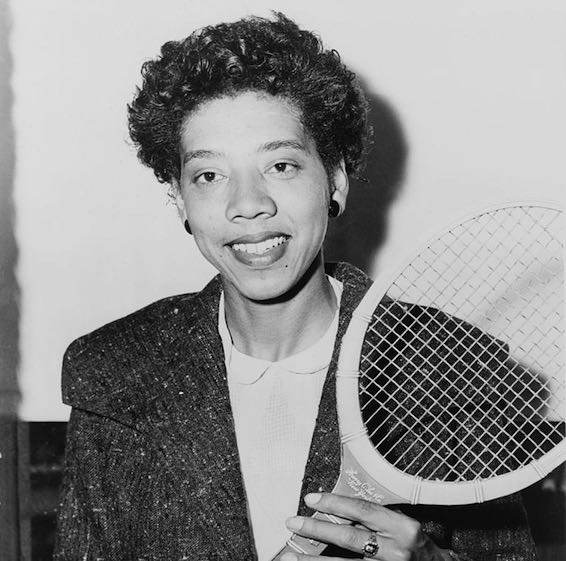
75 years ago today, Althea Gibson became the first black competitor in international tennis, after US officials, bowing to pressure, invited the 23-year-old to play in the National Championships (now the US Open). Born in South Carolina to sharecropper parents who moved to Harlem when Althea was six, their neighbors took up a collection to pay for her tennis lessons. SEE her accomplishments in a short video… (1950)

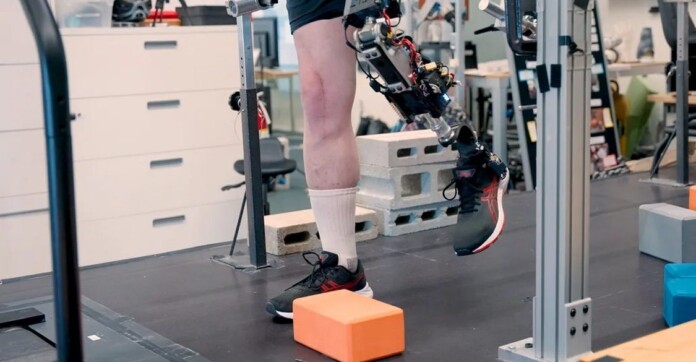
This New Bionic Knee Is Changing the Game for Lower Leg Amputees

Courtesy of the researchers, MIT

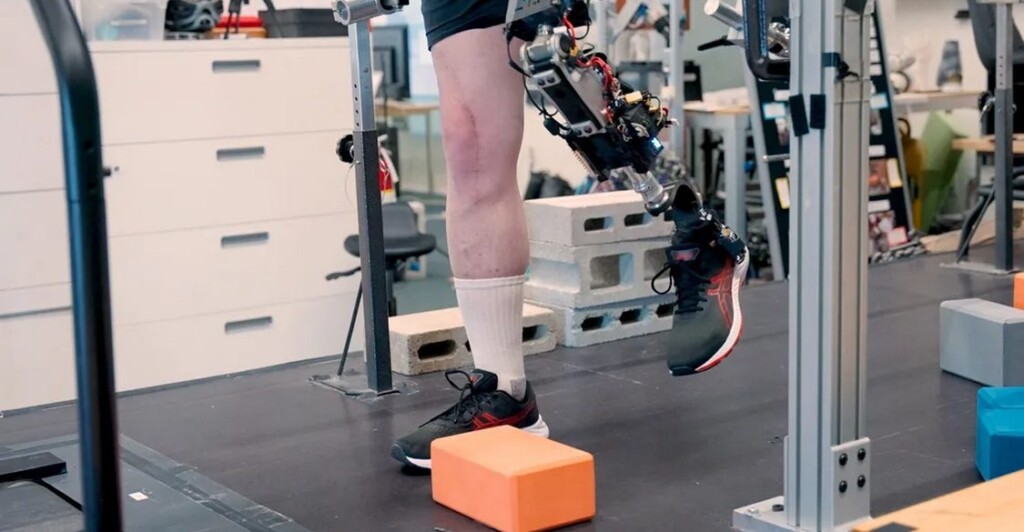
An advance in prosthetics 7 years in the making has jumped into life with a lower-leg device that feels more like a part of the body than any other commercially-available product.

Considered something like a prosthesis in three layers, tests have shown it to grant greater agility, comfort, and sense of “embodiment,” a sensation of oneness that’s usually reserved for upper body prosthetics.

“We actually are pushing the definition of what a prosthesis can be, and that’s why we say it’s a tissue-integrated prosthesis,” said Tony Shu, lead author of the study from MIT’s Yang Center for Bionics. “There’s a part that you will never be able to take off without another surgery.”

The three layers begin with a restoration of the push-pull function of muscles—in this case, with above the knee amputees—which was done by connecting the severed tissue directly to the prosthetic.

Along with being vital for using muscles with force, the push-pull function also gives a sense of “proprioception” or the natural awareness of where limbs are in space at any given moment.

The next layer is that of the bone—a titanium rod drilled directly into the severed femur. Almost all lower-leg prosthetics are a socket or a cup that’s placed over the patient’s stump, placing load on the soft muscle tissue that covers the end of the amputation, opening up the chance for nerve pain and chafing.

By reestablishing the natural load-bearing functions of bone, patients achieved lower fatigue rates and greater mobility.

The third layer is the robotic limb that’s attached to the skeletomuscular implants, which can be replaced as better technology becomes available over the next few decades.

In a series of tests performed at Massachusetts General Hospital/Brigham and Women’s Hospital, Shu was able to compare the fruits his 7 years of work with currently-available prosthetic options.

PROSTHETIC ADVANCEMENTS: New Prosthetic Hand Allows Man to Sense Temperature: ‘I could feel the warmth of another person’

In tests of walking up and down stairs, as well as avoiding obstacles while walking, the three-layer prosthetic performed substantially better. It also scored higher in patients’ perceptions of whether the object was part of their body or just a tool, known as embodiment.

“Embodiment is actually hugely critical for patient well-being,” Shu says, according to Smithsonian Magazine. “This is one of the first studies that really actually asks a lower limb amputee, ‘How do you feel about your prosthesis?’”

PROSTHETIC ADVANCEMENTS: Scientists Harness Phantom Limb to Allow an Amputee to Feel Hot and Cold in New Prosthetic

Scientists not involved with the development or the study said the enhanced capabilities on top of a greater sense of agency was a very exciting development, as agency is directly tied to how much amputees trust their prosthetic.

In a way similar to an athlete learning to trust their body again after a bad injury, fully trusting the capabilities of one’s prosthetic may actually go farther than better neuro-muscular integration in allowing patients to unlock more of their missing performance.

WATCH the leg in action below…

SHARE This Really Cool Techno Leg With Your Friends On Social Media… 

Woman Received Thousands of Letters from Dad Growing Up, Now Anyone Can Request a ‘Letter from Dad’

Rosie Paulik with her father, Buz - credit, courtesy photo
Rosie Paulik with her father, Buz – credit, courtesy photo

A woman who was blessed with a loving father as her pen pal while growing up has decided to share her gift—her father—with the world.

Starting the Dad Letter Project, she’s now connecting the love of letter writing among a group of fathers with a world of lonely, discouraged, or simply curious people.

The story centers around the heartwarming 30 year-relationship of Buz Ecker and his daughter Rosie Paulik. Whatever the event was—a weekend, the week before summer camp, the first day of university, the day she moved into her first apartment, Paulik would receive a letter from her dad in the mail.

Throughout her young life, she received a letter from dad virtually every 10 days, until a box in her house contained 3,500. With so many letters they often began to feel like journal entries, with dad Ecker actively narrating what was happening around him, or even small curiosities like the sandwich he was eating at the time.

Paulik’s 2-year-old son Andrew is now the recipient of the prolific paternal figure, but she began to wonder if Ecker’s gift could be used to spruce up both the world, and her dad’s retirement.

“Sometimes, you just need a dad to remind you that you’re doing great, to offer unsolicited life advice, or to tell you a joke so bad you have no choice but to laugh. It’s like a hug, but on paper,” the project’s website said.

“People wanted to hear from a dad. They wanted to hear from a father figure,” Paulik told ABC News about the Dad Letter Project. “So many people don’t receive anything in the mailbox besides maybe coupons and bills. [The dads] are coming up with words to say for you, they’re putting the address on the envelope, putting a stamp on it and sending it out. It’s so authentic and special.”

THE POWER OF A GOOD DAD: Son Surprises Dad with Dream Car He Gave up for Diaper Money 41 Years Ago

Ecker is currently spending his summer in Michigan, and he’s writing sometimes 3 or 4 letters to people a day. Such was the demand that Ecker and Paulik had to find other pen-happy dads to join the program.

Each participant requests a letter based around a topic or event in their lives, which may be somber or celebratory, or something else entirely.

ALSO CHECK OUT: Deceased Man’s List of 3,599 Books He Read Inspiring Readers and Was Memorialized in Local Library

“I address the problems that they have as best as I can. I’m honored that they write me, and I’m happy to write them back,” Ecker told ABC News.

WATCH the story below from ABC…

SHARE This Touching Story About A Dad With Love (And Ink) To Spare…