Quote of the Day: “Stories create community, enable us to see through the eyes of other people, and open us to the claims of others.” – Peter Forbes
Photo by: Kuzzat Altay
With a new inspirational quote every day, atop the perfect photo—collected and archived on our Quotes page—why not bookmark GNN.org for a daily uplift?
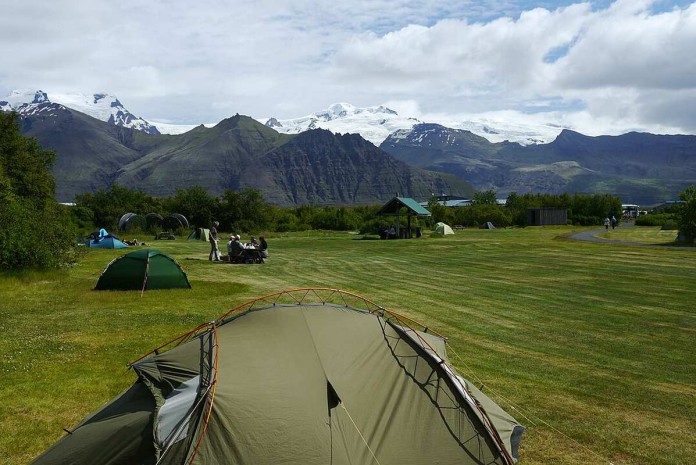
Campsite in Skaftafell, Vatnajorkull National Park - CC 3.0. SA Gummao
18 years ago today, Iceland enshrined the area surrounding Vatnajökull glacier as a national park, the second-largest in all of Europe behind Yugyd Va in Russia. The Vatnajökull glacier is the largest in Europe outside the Arctic, but the national park includes two areas that were previously protected called Skaftafell and Jökulsárgljúfur. READ about the area’s volcanoes… (2008)
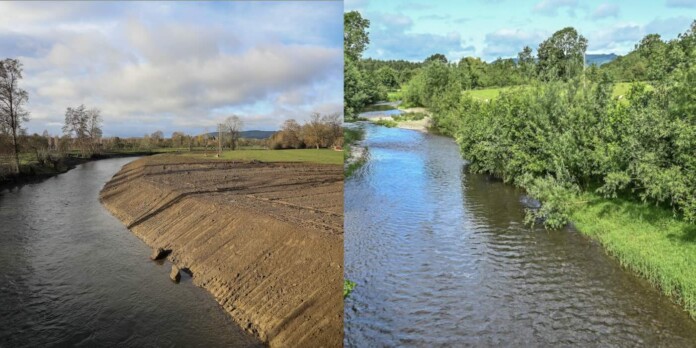
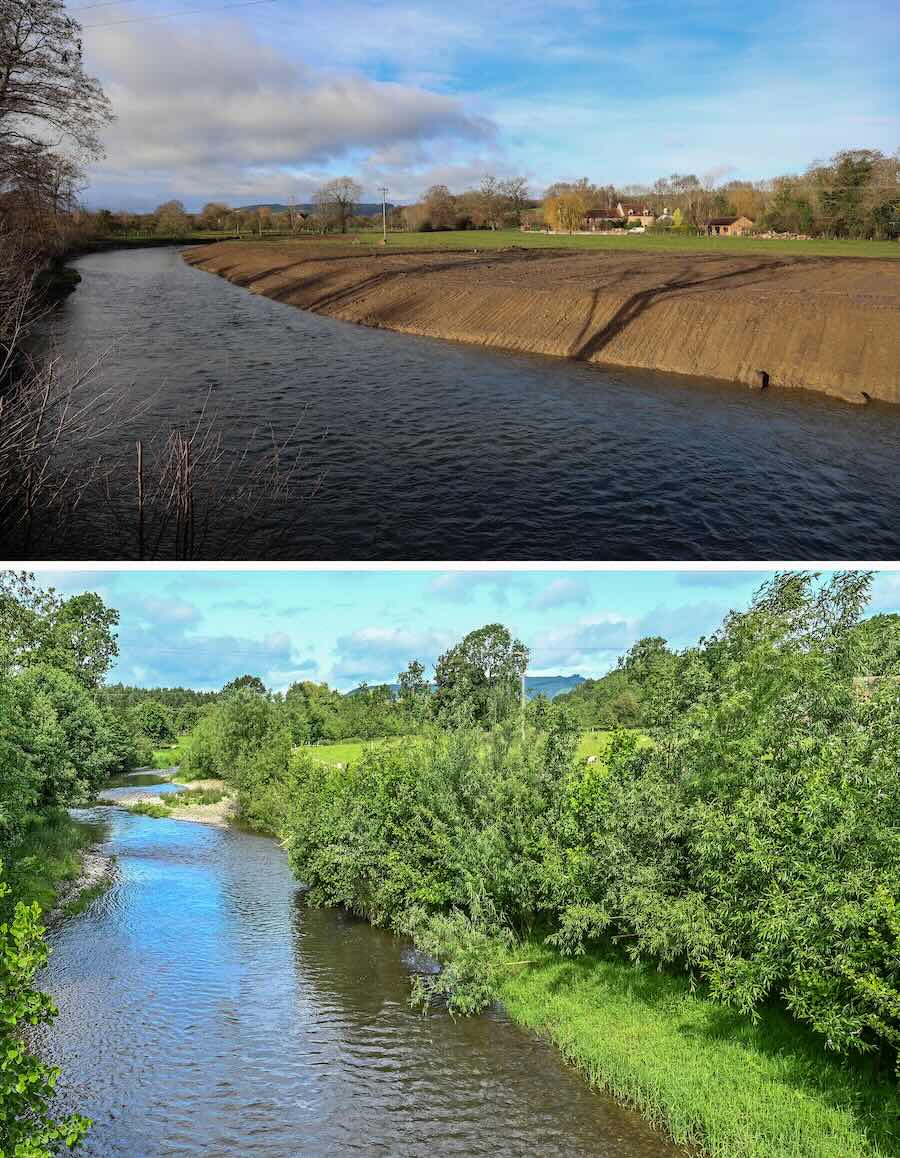
Stretch of the River Lugg in Herefordshire before and after nature is restored following farmer razing shoreline – SWNS
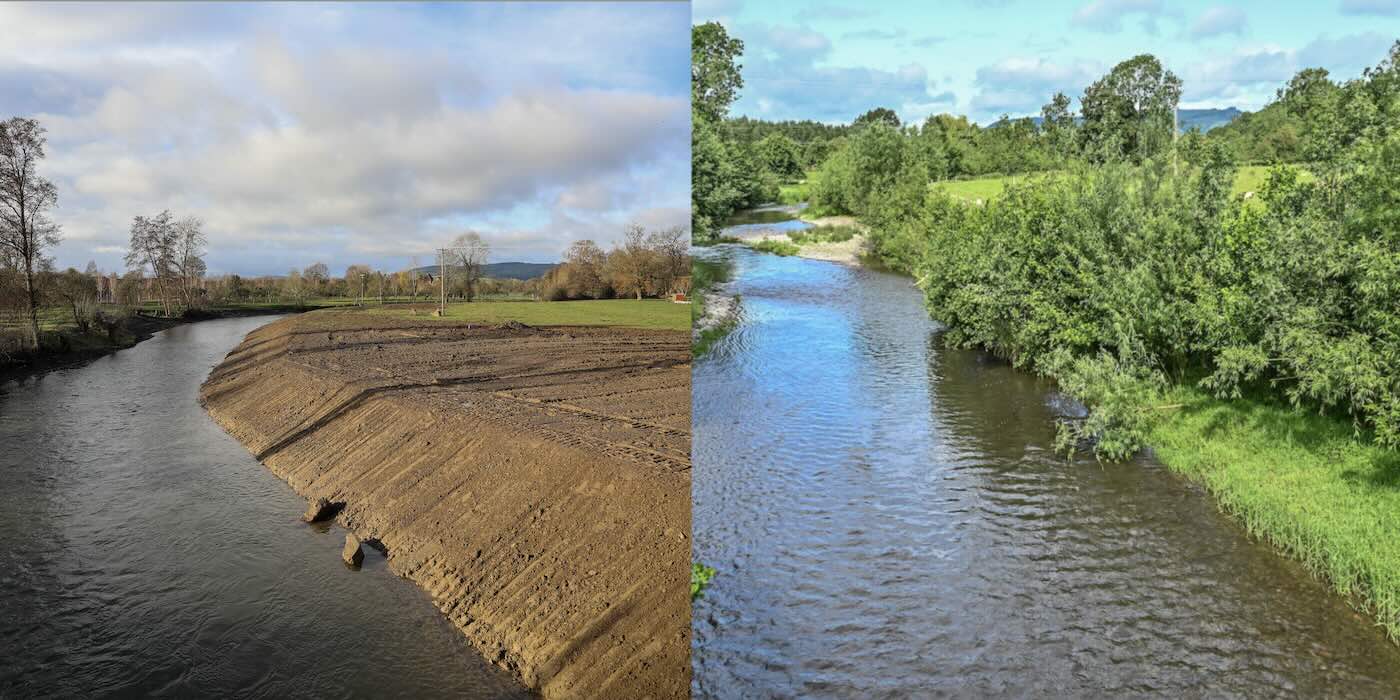
Stretch of the River Lugg in Herefordshire before and after nature is restored following farmer razing shoreline – SWNS
Before-and-after photos from Herefordshire, England, show how nature’s beauty has returned to a riverside previously obliterated by a local farmer.
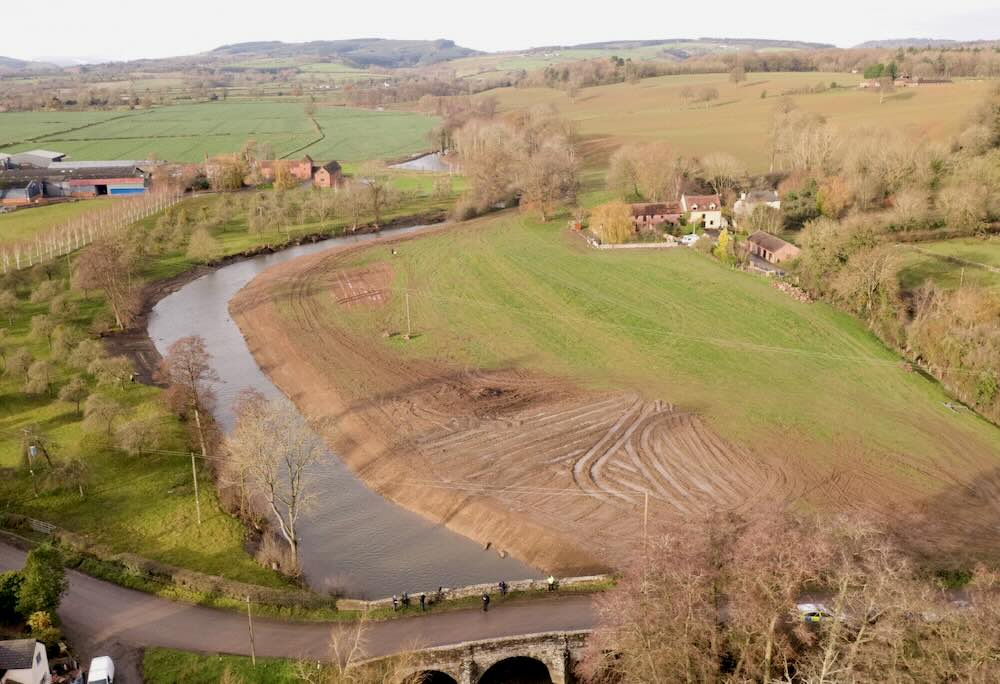
The farmer used an 18-ton digger to dredge a section of the River Lugg near Leominster, and stripped every tree from a mile-long stretch of one of Britain’s most important salmon rivers.
He was jailed for 12 months in 2023 by a judge who told him he had committed “ecological vandalism on an industrial scale” along a section of the riverbank back in 2020.
A court heard how he illegally removed tons of gravel from the riverbed to build a road and a horse yard at his home while also tearing out 71 trees.
He had claimed he had done so to help protect locals in the nearby hamlet whose homes were devastated by flooding, but it led to a “devastating” effect on local wildlife, which has only started to recover six years later.
However, photos taken in 2020 and at the same location this week show the drastically transformed landscape around parts of the river.
Stretch of the River Lugg in 2020 and June 2, 2026 – SWNS
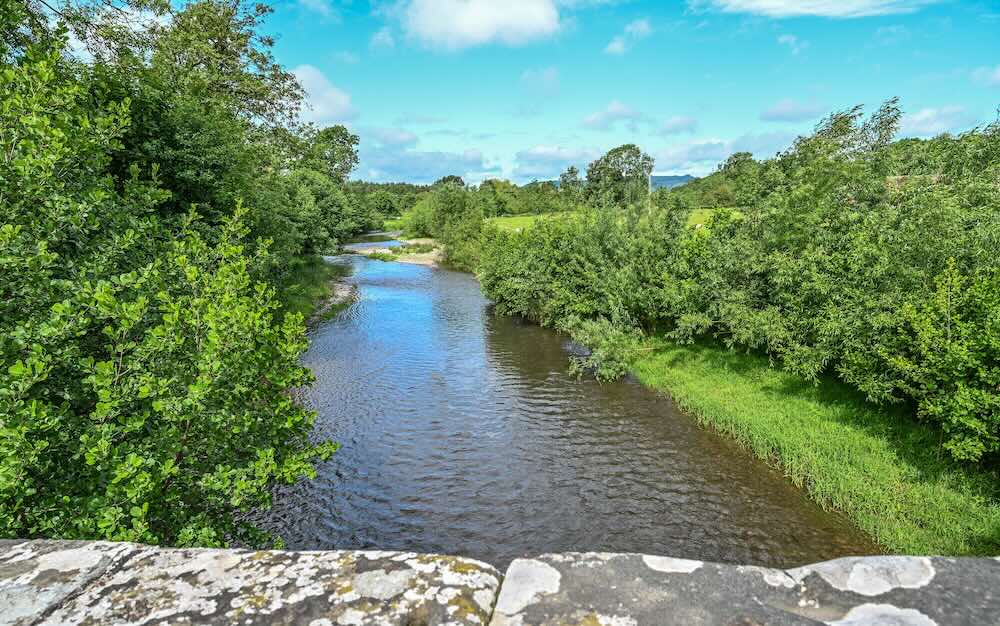
New trees, bushes, and greenery are growing back.
“Some of the new natural regeneration that is happening is one positive to take from it.
“If you let Mother Nature flourish, she will work her magic.
“The amount of gravel taken just to build a road was shocking,” said environmental designer Richard Fishbourne.
“It can take decades to build up this wonderful community of species and habitat.”
“It’s really important to have a mix of biodiversity in this space, but it’s going to take a long time.”
Aerial view of the River Lugg with bridge shows deforested shoreline- SWNSStretch of River Lugg with bridge shows nature recovering – SWNS
Monitoring by Britain’s Environment Agency and Natural England confirms the river’s condition is improving—with trout, bullhead and minnows present, alongside key indicator species such as kingfishers and sand martins,” said Emma Johnson, West Midlands deputy director for Natural England.
Although the habitats of “iconic wildlife” such as otters and salmon had been destroyed along the 1.5 kilometer stretch of river, local supporters of the farmer, John Price, claimed that he had simply done what generations of farmers before him had done.
He was found guilty of seven offenses and ordered to pay £600,000. Additionally he was ordered to re-plant trees and restore the riverbed and bank.
MULTIPLY THE POWER OF NATURE By Sharing This on Social Media…
Retirees Allan and Bev Taylor win same Postcode Lottery twice - SWNS
Retirees Allan and Bev Taylor win same Postcode Lottery twice – SWNS
A lucky retiree doubled his money when he accidentally bought two lottery tickets—and won nearly a million dollars.
The 65-year-old reckons he pressed the wrong button when purchasing the tickets online, and ended up ordering two tickets instead of one.
But Allan Taylor’s blunder turned into his favorite mistake when he was presented with two checks for £333,333 each ($450,000)—nearly $900,000.
His whopping windfall was the biggest prize so far this year for a single player of the Postcode Lottery, which is a subscription-based UK lottery where players use their residential postal code as their ticket to win cash prizes.
“I must have ticked it twice when I was subscribing,” said Allan, who lives in Derbyshire in the East Midlands region of England.
“This was the best mistake I’ve ever made.”
His wife, Bev, remembers asking Allan why he had two tickets and he said, ‘I don’t know’.
His big win comes just weeks after the couple retired early after months of carefully planning the next chapter of their lives.
Bev, who had a stressful job as a dementia mental health nurse, said she still can’t believe it.
“We’ve worked all our lives and just both retired in March. I did wonder if I should have finished so early or stayed on until my state pension (kicked in). We worked it out that it would be ok.”
Allan, a former building maintenance worker, believed it was time to retire “to make the most” of their lives.
Allan and Bev Taylor – SWNS
“This is proper unbelievable,” he exclaimed. “I’m 66 this year and I retired a bit earlier than my state pension age. Now I’m not going to worry at all.”
Allan shared the one-million-pound pot with one other neighbor in Tupton, when S42 6AE was drawn in the lottery’s weekly Millionaire Street prize last Saturday—with each of the three tickets worth £333,333, and Allan doubling his prize.
“We were expecting a reasonable amount, maybe £10,000 to £20,000. But we were never in a million years expecting this.
“When I opened the second check my legs wouldn’t work. But it’s a nice feeling.
“It’s going to enable us to help other people which is what we’ve always wanted to do. We’ll help a lot of family and friends.”
The couple also plans to use some of their winnings traveling the world and treating their family.
“I’ve always wanted to go to Australia, but Allan said he would never go unless we fly business class.” Now they can afford the upgrade.
“My son is getting married in three weeks; this might mean a bit of an extra wedding present.”
Car fanatic Allan mused that he’d always wanted an Aston Martin, but now at his age he figures he could get into the sports car, but might not be able to get out.
“Maybe a Range Rover now!”
SHARE THE FUN On Social Media–And Double The Inspiration…
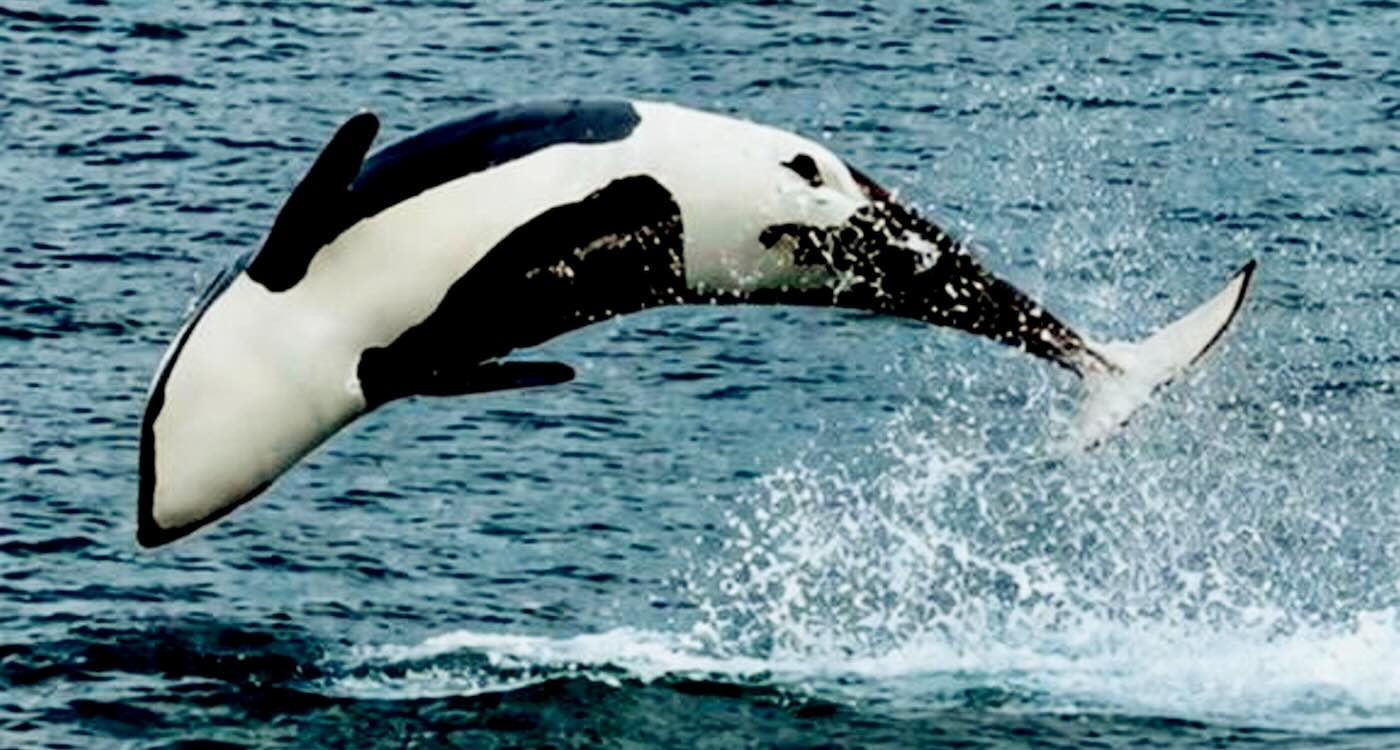
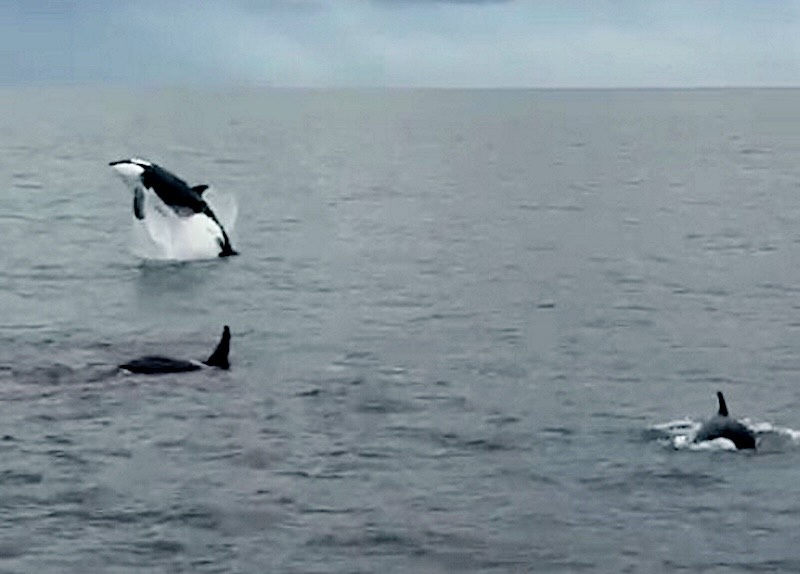
Orca breaches in the North Sea in front of whale watching boat – Credit: Jake Tiffin via SWNS
Orca breaches in the North Sea in front of whale watching boat – Credit: Jake Tiffin via SWNS
Orca sightings in the North Sea are creating excitement for tourists and fishermen—some of whom can’t remember ever seeing them before.
Researchers report in 2025 there were five verified sightings off the Northumberland coast in northeast England, after having been rarely seen for decades.
This year in April, fishermen spotted a pod of up to 10 in Northumberland, and last Saturday tourists were left stunned when a pod of around 30 orcas were swimming around a Farne Islands boat tour.
It is believed to be one of the largest pods of orcas ever seen off the coast here.
“We went out and spoke to boatmen in all the ports along the North East and nobody could actually remember seeing them in the past,” Martin Kitching, coordinator of The North East Cetacean Project, told the BBC.
“Now, all of a sudden, sightings—in Northumberland at least—are definitely up.”
Crew member Jake Tiffin caught an amazing moment on camera last week when one of the ‘killer whales’ leapt out of the sea—in an acrobatic flip that thrilled tourists on the Billy Shiel boat tour of the Farne Islands.
The giant mammal was one of dozens feeding off the coastal village of Seahouses in Northumberland, located 60 miles south of Edinburgh, Scotland.
Orcas in the North Sea near NE England – Credit- Jake Tiffin via SWNS
In the clip, the orca can be seen breaching the surface and becoming momentarily airborne before crashing back down into the sea. (SEE the video below…)
“This is extremely rare,” said the 19-year-old crewman. “Before last year they weren’t sighted for 40 to 50 years.”
“We do our usual routes around the islands where there are some famous pinnacle rocks where the seabirds nest.
“We were thought they were dolphins at first, but as we got closer we realized they were orcas, which was insane.
“It looked like there were two or three initially, but we actually think there were 20 to 30 which is the biggest ever seen in Northumberland,” he told SWNS news. “They just kept coming up, it was amazing.
“All these orcas came up out the water and we noticed some massive bulls which can weigh around six tons. I jumped up on the wheelhouse and recorded as much as I possibly could.
“I was about to stop recording when I heard one orca surface to breathe, and I managed to get the amazing jump.”
“To see a creature that big jumping out of the water is mental, it must have been ten or 15 meters in length.”
Orcas normally travel in pods for survival and hunting. Pods can often be seen working together to hunt prey, most famously using their size and weight to trap seals.
Jake, an engineering student, recalled that there were even some calves doing barrel rolls in the water.
“They were popping their head out of the water to take a look at us.”
Wildlife experts say the animals, which can measure up to 32ft long, are attracted to the huge colony of 6,000 seals and seabirds living on and around the Farne Islands—and it may be they are coming back more often due to fish supplies being more abundant.
Globally, orcas as a single species are not listed as endangered, but specific local populations are critically endangered, like The West Coast Community in the North Sea, which is a unique pod facing pollution threats off the coast of Scotland, located on the opposite side of Great Britain from Northumberland—separated from these feeding grounds by the entire width of northern England and Scotland.
SHARE THE LEAP FOR JOY With Friends and Whale-Lovers on Social Media…
FREE WILL ASTROLOGY – Week of June 6, 2026
Copyright by Rob Brezsny, FreeWillAstrology.com
GEMINI (May 21-June 20):
Neurologist Oliver Sacks said, “I am haunted by the density of experience.” He meant that every moment contains far more richness than we can fully register or remember. This observation will be especially relevant for you in the coming weeks. Your mind (and heart!) will be flooded with an abundance of stimuli, ideas, feelings, and impressions. It might initially feel overwhelming, but will ultimately be a boon—especially if you prepare yourself for the intensity and abundance. Imagine yourself standing next to a fountain and feeling cheerful about getting soaked.
CANCER (June 21-July 22):
You have superpowers that hardened hearts and tough guys can’t fathom. Receptivity is a key part of your genius, for example. Emotional fluency is at the root of your intelligence. Your ability to feel so much and so deeply makes you dangerous to status quos managed by people who overthink everything. Wait! There’s more. You can nurture without smothering and protect without imprisoning. You wield the powers of memory without being enslaved by nostalgia. You make home a verb, not a noun, as you build shelter for yourself and your tribe. I hope you will express these gorgeous talents to the max in the coming weeks and months.
LEO (July 23-Aug. 22):
An astrologer rooted in older traditions might claim that now is an ideal time to promote your personal agenda through sly, gossipy maneuvering. But since I am devoted to building a new culture grounded in compassionate values that nourish the soul, my message is different. I’m pleased to tell you that the coming weeks will be a potent phase to engage in elevating gossip that serves the greater good, to celebrate unsung heroes, and to call attention to everything that is thriving. For practical dreamers like you and me, carelessly speaking ill of others undermines our own aspirations. One of the most effective ways to expand our own possibilities is to use the power of language to boost other people’s chances for joy and success.
VIRGO (Aug. 23-Sept. 22):
The ancient Library of Alexandria contained over half a million scrolls. If you devoted eight hours a day to reading, you could finish about 5,000 books over the course of your life. The librarians back then knew they would never read all the texts they managed and protected. Their job wasn’t to consume all knowledge but to be stewards of abundance. They’re good role models for you, Virgo. The wonderful fact is that you don’t have to master every single thing that attracts your attention. Your far more relaxing task is to curate with care and wisdom. Your growing edge is to know what to preserve and what to release. One of your noblest projects is to commune pleasurably with the intriguing mysteries that life brings you, not obsess on them.
LIBRA (Sept. 23-Oct. 22):
Libra psychologist Carol Dweck distinguishes between fixed mindsets (”I’m not smart enough”) and growth mindsets (”I can become smarter”). When you have a fixed mindset, obstacles weigh you down. With a growth mindset, they motivate you to develop. What determines your trajectory isn’t your current skill level but how you relate to your edge. With this in mind, Libra, I invite you to monitor your self-talk as you encounter challenges. Are you prone to thinking that limitations are permanent, or do you see them as temporary states you can use as opportunities? You now have a good chance to instill the latter as a root habit.
SCORPIO (Oct. 23-Nov. 21):
What’s something you wish you could change about yourself? Is it a trait, pattern, fear, or story about your body? And what exactly tells you that this can never change? Is it loyalty to old expectations or a rotting prophecy someone laid on you? Consider the possibility that maybe the “can’t” is really a “won’t,” or a “don’t know how yet,” or “I’m afraid of who I’d be without this.” Then imagine that you don’t have to transform this thing instantly, but, for starters, need only shift it by 10 percent in the direction of mercy and freedom. What small, specific action would generate that 10 percent?
SAGITTARIUS (Nov. 22-Dec. 21):
What’s your most vital relationship? I dare you to surprise each other in the coming weeks. Refresh your bond with playful experimentation. Here are adventures you two could explore: 1. Take a walk together with no destination in mind, letting curiosity guide you. Talk about the paths you have not yet taken in life but might like to. 2. Describe the most beautiful future you can imagine for each other. Share practical steps you could take to make these scenarios happen. 3. Choose a food treat you both love, speak a blessing over it, then eat it slowly together as you name what you are most grateful for in your connection.
CAPRICORN (Dec. 22-Jan. 19):
Chess masters and accomplished musicians practice differently from amateurs. They focus most intensely on their weak points, less so on rehearsing what they already do well. It’s uncomfortable to confront inadequacy, but they’re better for it. In my astrological opinion, Capricorn, you should specialize in a similar courage during the coming weeks. I invite you to direct your generous attention toward your shakiest skills and most uncertain territories. Glorious growth will happen at the edge of your competence.
AQUARIUS (Jan. 20-Feb. 18):
Be more like a lightning storm over a green meadow and less like a porch light attracting moths. Be more like a spiritual riddle in an ecstatic poem and less like a slogan printed on a T‑shirt. Be more like a Miles Davis improvisation and less like a tune played note‑for‑note from the sheet music for a formulaic pop song. Can you stretch yourself into more fertile wildness, Aquarius? Will you expand your future with adventures that thrill your imagination? I believe you can and should. For bonus magic, be more like a dream of wandering in a rowdy paradise and less like the old version of yourself. Trust the frontier signals that make your pulse quicken, and speak less about the obvious truths that make everyone nod in agreement.
PISCES (Feb. 19-March 20):
Are you ready to assess the state of your emotional pain? Every few years, I invite you to take stock. I ask you to reflect on how well you’ve been cultivating meaningful stress while avoiding useless pain and misery. So, how’s your progress since our last check-in? Have you improved at sidestepping dull torments you’ve relived a thousand times? Are you less vulnerable to being wounded by ignorant or thoughtless people? Can you more swiftly shake off the sting of minor troubles? Most importantly, are you increasingly magnetized to the intriguing dilemmas that challenge you to grow wiser and more resourceful?
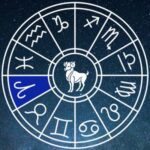
ARIES (March 21-April 19):
You are often the best possible remedy for stale, unoriginal thinking that’s festering in your vicinity. And you are especially so these days. Others might have the gall to disrupt the deadening status quo, but you have the charm to do it without scorching every bridge and laying waste to the land. So I invite you to step into the role of cheerful troublemaker. Unleash your iconoclastic sparks with the intention of making life friskier and more imaginative, not more tangled and irritating.
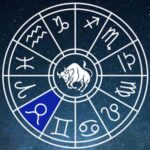
TAURUS (April 20-May 20):
In many farming cultures, including parts of India, growers speak or sing to their crops as they walk through the fields. It’s a gesture of personal care that mirrors growing scientific interest in how plants respond to sound and vibration. Some studies suggest that plants exposed to sustained speech and song may grow more vigorously. Your assignment in the coming weeks, Taurus, is to speak to the growing things in your life with similar devotion. Talk to your projects. Sing to your relationships. Tell jokes to your dreams. The universe is extra responsive to your sweet voice.
WANT MORE? Listen to Rob’s EXPANDED AUDIO HOROSCOPES, 4-5 minute meditations on the current state of your destiny — or subscribe to his unique daily text message service at: RealAstrology.com
Quote of the Day: “Falling out of love is chiefly a matter of forgetting how charming someone is.” – Iris Murdoch
Photo by: Khamkeo
With a new inspirational quote every day, atop the perfect photo—collected and archived on our Quotes page—why not bookmark GNN.org for a daily uplift?
80 years ago today, the National Basketball Association (NBA) was created with 11 teams. Interestingly, it was founded in New York City by owners of the major ice hockey arenas. First known as the Basketball Association of America, the league changed its name to the National Basketball Association in 1949, after merging with the competing NBL—National Basketball League. Today, it has 30 teams—29 in the United States and 1 in Canada. Watch this cool video: the Best Player From Every Decade In NBA History…
(1946)
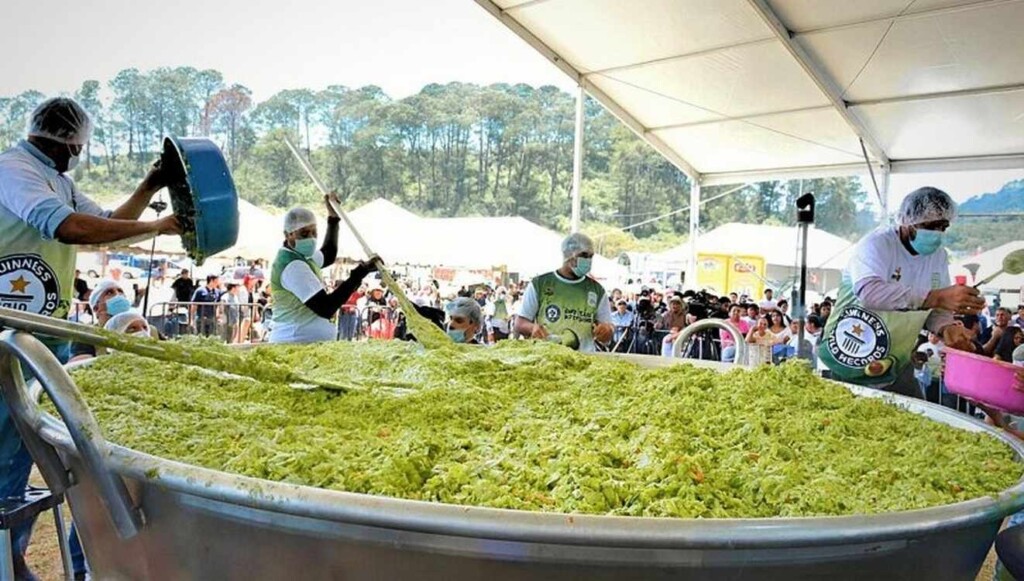
World's largest bowl of guacamole ever made - credit, Avocado Institute of Mexico
World’s largest bowl of guacamole ever made – credit, Avocado Institute of Mexico
After a record avocado harvest, over 1,000 growers in the Mexican state of Michoacan sat down to set another one: the largest bowl of guacamole in history.
They succeeded, as Guinness World Record was on hand to verify, when their gargantuan guac weighed in at a terrier short of 15,000 pounds of scoopable goodness.
It took just 2 and a half hours to make the giant dish, which was then enjoyed by the thousands of visitors and local producers there to celebrate the economic lifeblood of the region.
The harvest tradition known as the Avocado Festival, held now for 13 years in Tancitaro, celebrates the state’s incredible capacity for producing the fruit.
Far more than a standard trade show, the 4-day festival transformed the municipality into a vibrant celebration of its signature export, giving thousands of visitors and industry leaders guacamole to enjoy with their families and a front-row seats to the latest breakthroughs in sustainable and efficient avocado production
“This moment belongs to the thousands of Michoacán families whose livelihoods are rooted on avocado farms,” Raul E. Martínez Pulido, president of Association of Avocado Exporting Producers and Packers of Mexico, said in a news release.
Projections estimate that 2026 will see 2.5 billion pounds of avocados grown and exported to the United States, with plenty leftover for sale to international partners who come from around the world to this great avocado Eden.
A nearby municipality of Periban took the title of world’s largest guacamole off Tancitara in 2022, and the latter was eager to reclaim its crown.
SHARE This World Record Guacamole With Your Friends Who Love The Stuff…
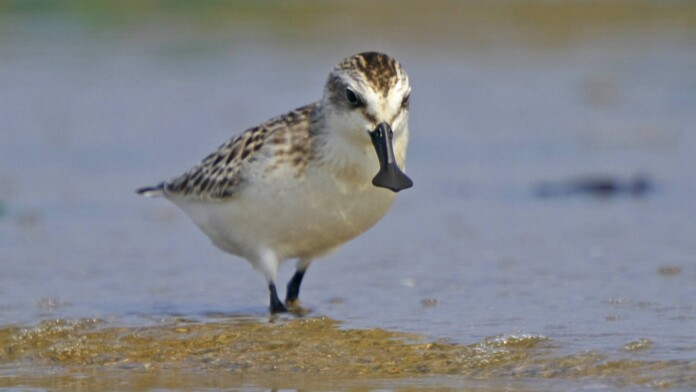
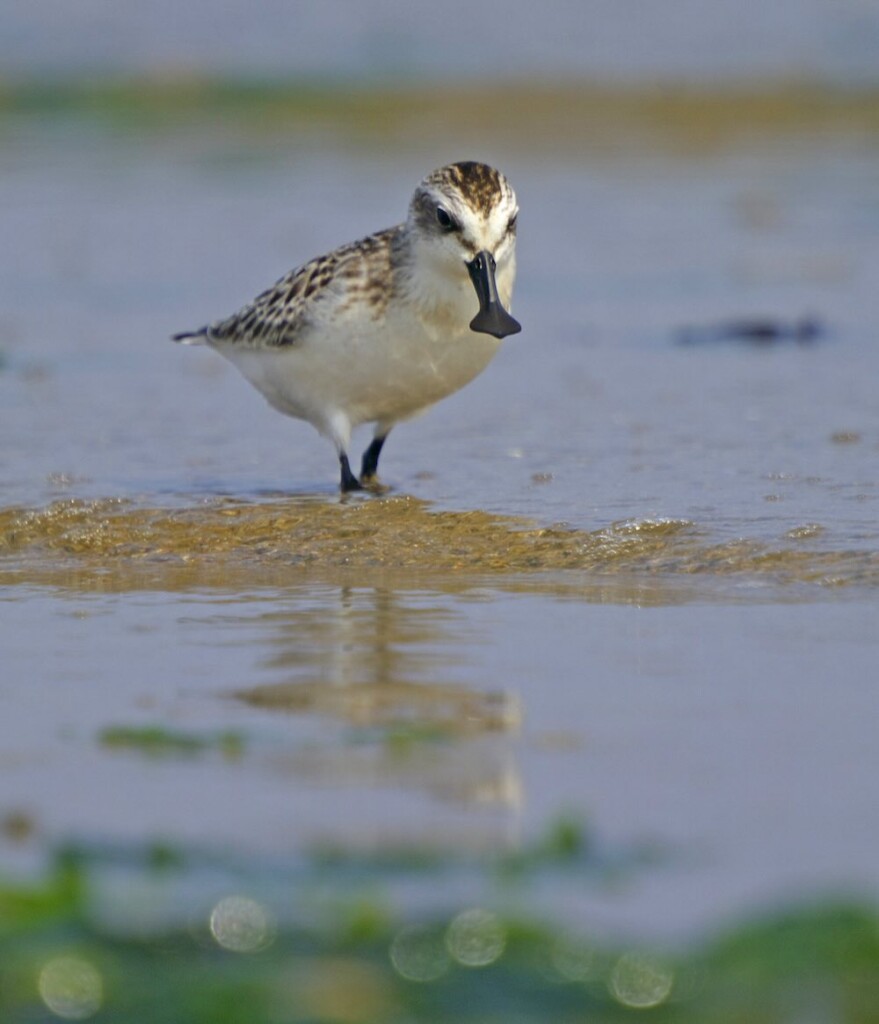
Spoon-billed sandpiper – Credit: ken on Flickr (CC BY-NC-ND 2.0(
Spoon-billed sandpiper – by ken on Flickr (CC BY-NC-ND 2.0)
Following 25 days of vigorous local campaigning, residents in the supposedly-totalitarian country of China succeeded in halting highway construction that would have plowed through mudflats which 49 species of bird rely on for dinner and rest.
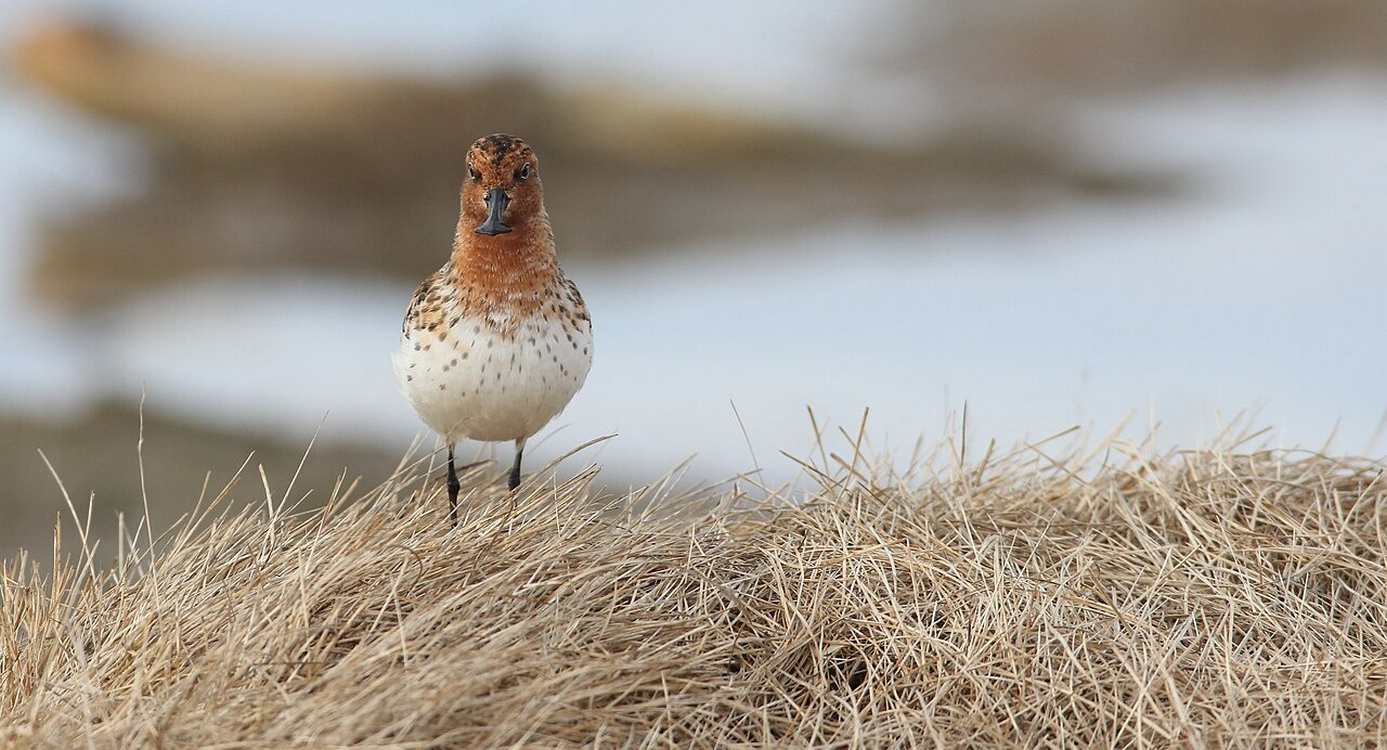
Among these is the spoon-billed sandpiper, a migratory shorebird with a global population of less than 500, and which is considered “Critically-Endangered” by the IUCN.
It’s a story as old as the automobile: straight roads make easy plans, and woe betide anything or anyplace, whether old-growth forest or mudflat, that is located along its path.
So it was that on April 30th, in southernmost province of Guangxi, a highway plan was approved that would have severely impacted coastal mudflats that host 20,000 birds from 46 species including migratory ones.
Under Chinese law, environmental impact assessments are required before any infrastructure project. A 27-mile long stretch of highway near Xichang town would cut right across more than 50 acres of mudflats and coastal mangroves, where a survey recently identified 14 spoon-billed sandpipers.
The number qualifies the area to be of international importance under China’s commitment to the Ramsar Convention on the protection of ecologically significant wetlands. Aside from international law, the sandpiper is also rarer than virtually any other animal in the country, and already guaranteed the highest national protections.
Li Jiahe came to learn about the sandpiper and the highway which threatened it while he was at university in the Netherlands. Online outcries reached Mr. Li at school, and loving all animal species, he quickly took action for the first time in his life to try and save what the Chinese English-language outlet Sixth Tone described as “a handful of birds he has never seen in a place he has never visited.”
“We’re all ordinary people. We are small. But if we can raise awareness and plant a seed in people’s minds, that’s already a good thing,” Li told the outlet.
Spoon-billed sandpiper – credit, By Mads Syndergaard, CC BY-SA 3.0
He skipped the grassroots campaigning and went straight to the top: emailing the Ramsar Convention authorities at the UN and explaining the situation.
According to the planning documents for the highway, the builders believed the road to be exempt from requirements under China’s wildlife protection laws on two grounds: the road was a nationally-important infrastructure project, and the local building environment was constrained by the sea to the south and the presence of roads and other property further inland.
Other activists in Guangxi noted their concern and objection to the environmental authorities whose numbers were listed on the planning documents, while Bird Life International were contacted and referred the matter to the Chinese chapter.
Spoon-billed sandpipers rely “faithfully” on familiar patches of wetland for resting, overwintering, and feeding, and will return over and over to the same places, making their removal an extreme disruption to the pattern of this animal that will travel from as far north as Siberia to as far south as Thailand.
Sixth Tone reports that correspondences between the international groups with Li and with another local activist and birdwatcher named Mr. Liu stopped in early May, just a few days after permission for the build was approved. It seemed like the battle to protect the “Little Spoon,” as a Chinese social media campaign had come to call the sandpiper, had been lost.
But that changed on May 9th when a central environmental inspection team—a sort of nomadic authority who rotate around the country enforcing environmental regulations and accepting public comment—happened to arrive in Guangxi for a monthlong review. They got more than an earful about the highway.
According to a May 25th statement by Guangxi authorities, an environmental investigation was conducted in the nearby city and highway terminus of Beihai, and it was determined the original environmental impact assessment lacked “scientific basis.”
The project was suspended. The local government has since pledged to evaluate alternative routes and consider public concerns, overall regarding the birdlife.
Mr. Liu said that the online contingent of the save the little spoon campaign can be extreme in their proposals, adding that he tries to encourage people to see things from the perspective of the nearby villagers, for whom a fast and direct route to the big city would have significant utility.
Others told Sixth Tone that there are definitely alternative routes that will improve local mobility and project wildlife.
Wherever the road eventually does lead, those “birds never seen from a place never visited” are safe to continue feeding and migrating along Guangxi as they have done for thousands of years.
SHARE This Inspiring Activist Story From Southern China With Your Friends…
A new law passed in Tennessee will protect residents from incurring rising electricity costs from nearby data centers’ demands on the grid.
Republican-led bill HB 1847 prohibits utilities companies and municipalities from paying for a data center’s electrical needs, or any of the infrastructure costs involved in expansion.
Sponsored by Republicans Senator Brent Taylor from Memphis, and State Representative Ed Butler from Rickman County, it was signed into law by Governor Bill Lee a month ago.
The issue came into focus with the impact of xAI’s two large data centers near Memphis, the first, Colossus 1, being the world’s largest supercomputer, and the second, Colossus 2, slated for a half-billion dollar expansion.
The construction of data centers to power a raft of AI solutions companies, many of which have led the US stock market to all-time-record highs, has drawn fire from residents virtually everywhere they’re built.
Reports say they instantly drive up local electricity costs, and Tennessee is not alone in attempting to protect citizens from this effect.
According to the private lobbying solutions firm Multi State, “about one-third of enacted energy policy bills related to data centers this biennium include ratepayer protection provisions, requiring data centers to fully fund their energy demand and any related grid buildout or expansion.”
HB 1847 places an impact threshold on the grid of 50 megawatts. Anything beyond that may not be billed to the general ratepayers, nor any government body eager to bring the jobs associated with building, maintaining, and running a data center into their jurisdiction.
Florida’s SB 484 also set a threshold of 50 MW, while South Dakota and Nebraska set it at 10 MW and 20 respectively.
South Dakota’s SB 135 requires power companies to maintain separate terms and conditions for data centers, and that the data centers pay for any instance their electricity usage materially reduces its the power grid total load.
Alabama’s threshold is the highest at 150 MW, but not only requires separate contracts with data centers, but requires those contracts to “promote positive benefits for the utility’s other retail customers.”
SHARE These States Protecting Their Citizens’ Bottom Line From AI Giants…
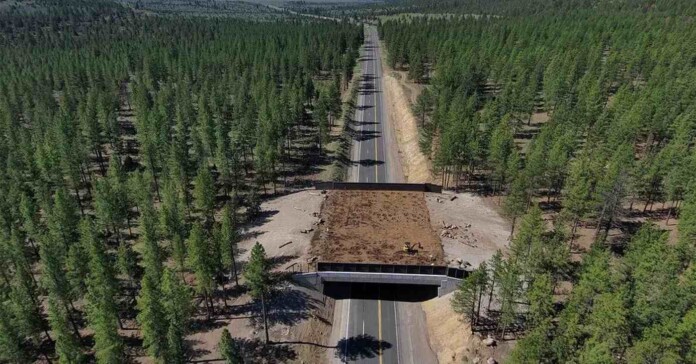
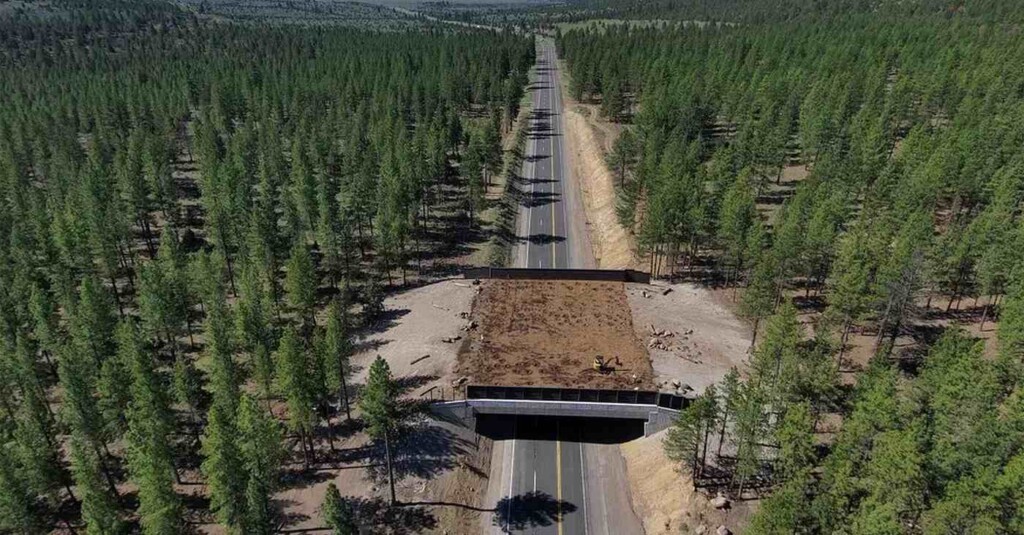
Siskiyou County - Courtesy of Caltrans, UC Davis Road Ecology Center
Siskiyou County – Courtesy of Caltrans, UC Davis Road Ecology Center
A California wildlife overpass is already proving popular with the local deer—and it’s not even finished yet.
In what is certainly a ringing endorsement of the $20 million bridge, 3 mule deer were caught on camera traps using the bridge to safely cross I-97 in Siskiyou County.
This wildlife overpass was designed to provide animals with a safer way to cross the highway while helping reduce wildlife-vehicle collisions for motorists traveling through the corridor.
Commissioned by the California, the completed version will have trees right the way across it, but the deer didn’t feel like waiting around.
This particular corridor of I-97 starts about 20 miles south of the bridge near Weed, and continues up to Canada, bisecting migratory routes for deer, elk, bison, and other animals.
Vehicles killed over 50 deer and 16 elk in the area between 2015 and 2020, the DoT reports, any one of which could have seriously injured the driver. In addition to the bridge, 8-foot-high fencing will ensure that animals 3 mile north or south of the bridge will be funneled towards it, and not have an alternative route onto the road.
“While the contractor is still completing final touches, it’s incredible to see wildlife already embracing the new structure, even with workers still in the area. In addition to deer, a bobcat and other wildlife have also been spotted using it,” DoT wrote in a post on Facebook.
“Seeing animals use the structure this quickly is an exciting sign of the positive impact this project will have for both wildlife connectivity and public safety for years to come.”
SHARE This Great Example Of Success In California’s Wildlife Overpass Project…
Quote of the Day: “He who is not courageous enough to take risks will accomplish nothing in life.” – Muhammad Ali (marking the 10th anniversary of his death this week)
Photo by: Painter John Stango – CC BY-SA 3 (cropped)
With a new inspirational quote every day, atop the perfect photo—collected and archived on our Quotes page—why not bookmark GNN.org for a daily uplift?
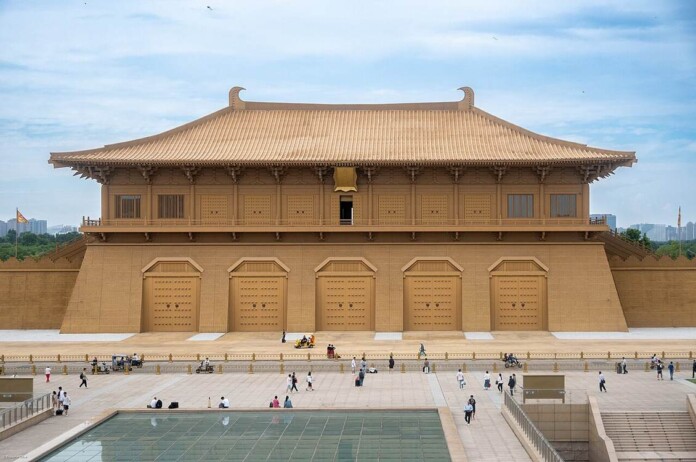
The Daming Palace Danfeng Gate - credit CC 2.0 Xiquinho Silva
1,363 years ago today, the Daming Palace Complex in the Tang Dynasty capital of Chang’an, modern day Xi’an, was completed. This colossal power center covered more than 4,800 Chinese acres, making it 3.5 times more expansive than the Forbidden City in Beijing, 3 times more than Versailles, and 13 times more than the Louvre. Today, its ruins and reconstructed elements are part of a special UNESCO World Heritage Site documenting the reach of the Chinese portion of the Silk Road, from Xi’an to the Tianshan mountains. READ more about this great site of architecture… (663)
In the real Caribbean, there were once real pirates, and now a team of archaeologists and filmmakers has discovered the first shipwrecks that can help tell the story of the Golden Age of Piracy.
Between the 1690s and 1720s, a cast of pirates including illustrious names as Blackbeard, Benjamin Hornigold, Calico Jack Rackham and Anne Bonny, made Nassau on the island of New Providence their base.
There, plans of attack were hatched, plunder divided and partied away. Rum was presumably drunk, and songs were presumably sung during this golden age.
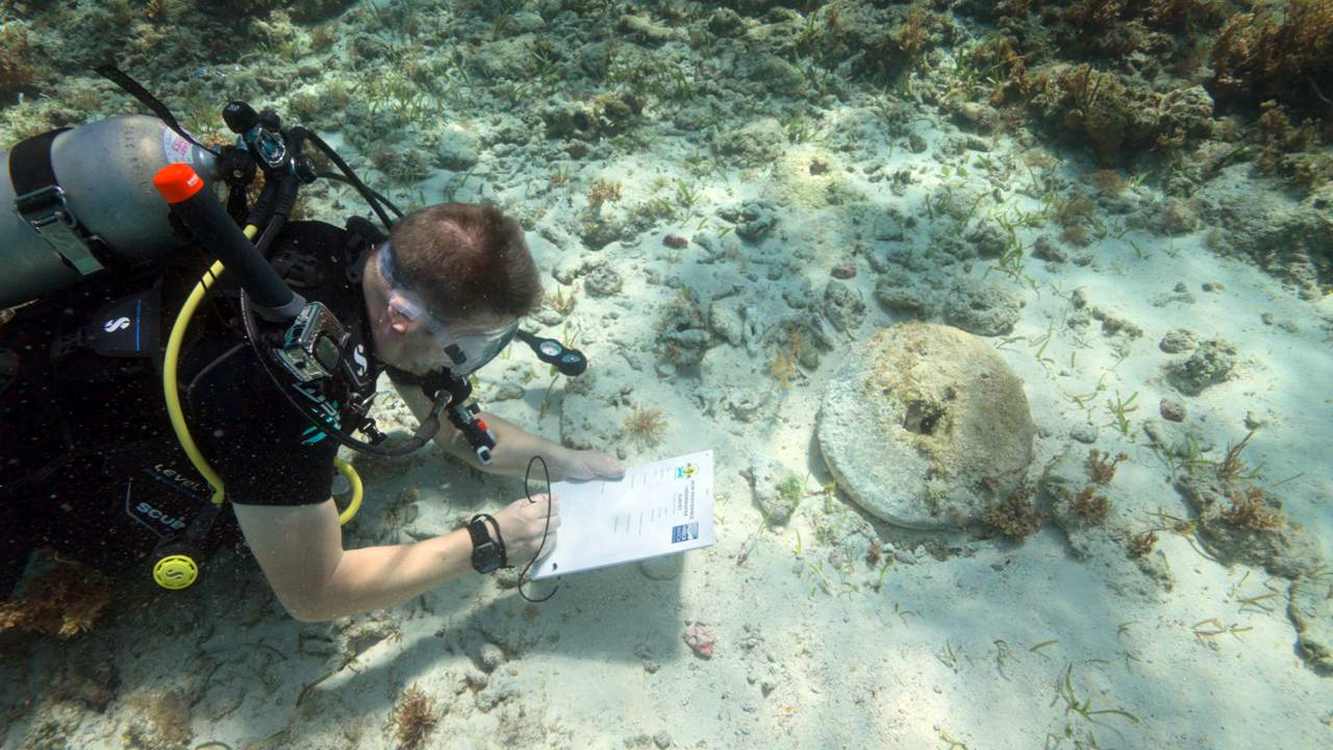
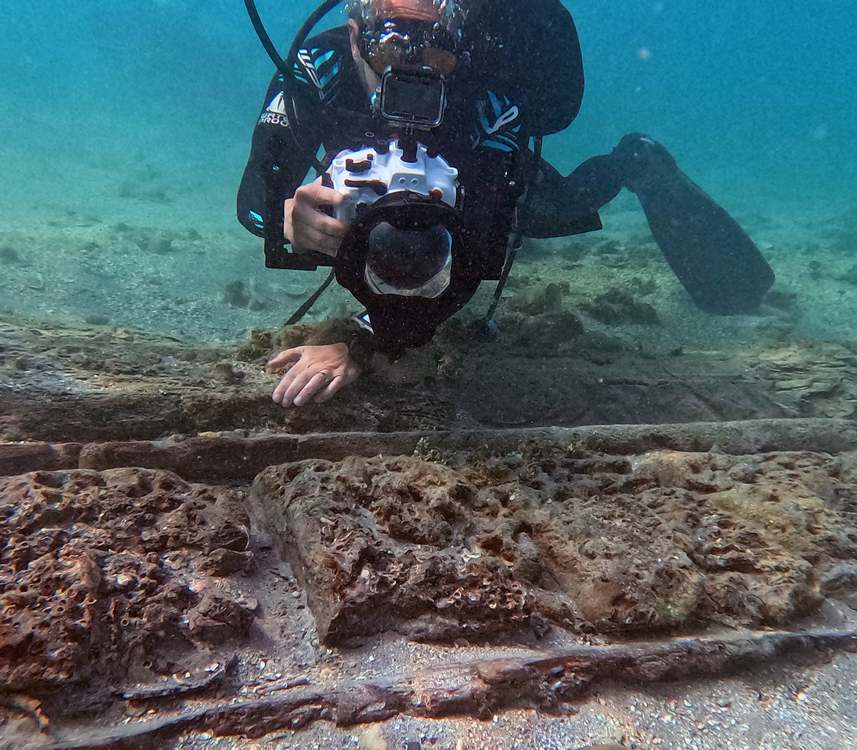
Now, with the first-ever permission to dive in the closed zone of Nassau harbor, the New Providence Pirates Expedition and Wreckwatch TV have discovered six wrecks, three tied to the iconic Golden Age of Piracy of which these figures were chiefly involved in leading.
“Thanks to Hollywood, everyone loves the legend,” says marine archaeologist and project co-director, Dr. Sean Kingsley. “But beyond the fantasy, nobody knows how these sea dogs really lived, what their ‘Piratetown’ looked like and what happened to the vehicles of their mayhem, wooden ships.”
At the height of the piracy in 1718, Woodes Rogers, Governor of New Providence, spotted 40 wrecks burnt and sunk by pirates on Nassau’s shore. Throughout the Golden Age of Piracy, 1,000 sea dogs settled in the port town. Until now, not one of their ships has ever come to light in their home waters.
“Nassau harbor is huge,” says explorer and project filmmaker Chris Atkins. “Tides flush dangerous currents through its waters twice a day. It’s home to notorious packs of sharks. This was a risky expedition with high chances of finding nothing.”
Through dives in and around Nassau, and thanks to knowledge from local divers, six wrecks were discovered. Iron cannons, a grinding stone for sharpening swords and lead musket balls were found 21 miles east of Nassau.
“The crystal-clear visibility was incredible. The whole wreck was laid out before us,” says project co-director Dr. Michael Pateman. “The ship was heavily armed, especially with swivel guns, the cannon of choice for pirates. Slotted onto deck rails, these anti-personnel weapons raked devastating fire on enemy crews.”
Inside the harbor, the team found a stone ballast pile still pinning down its wooden hull. The ship’s planks and frames were connected by wooden treenails, an 18th-century shipbuilding style. And the hull was charred.
“After seizing a ship and taking its cargo, cannon and fittings, pirates had to get rid of all signs of their crime. Burning ships to the waterline was an infamous tactic to hide felony from authorities. The Nassau hull shows all the signs of pirate mischief,” says Pateman.
Midway through the project, the team got a tip-off about another 18th-century wreck beneath Nassau’s old bridge, guarded by a mean bull shark. The cutting of an underwater pipeline and the construction of a modern marina had supposedly destroyed all the remains.
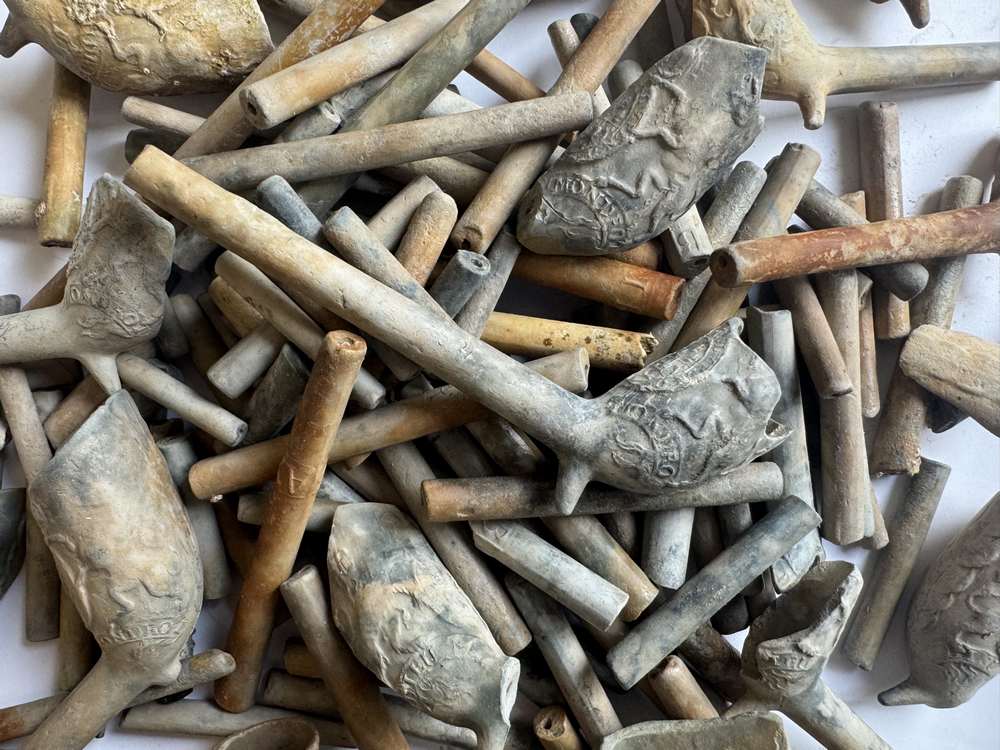
“Never say never in archaeology,” Kingsley remarks. “We decided to take a look and were shocked to see hull planks, rigging, glass bottles and bricks from the ship’s cooking galley still preserved. Dozens of clay tobacco pipes were sticking out of the sand next to splintered wooden shipping crates.”
The pipes were decorated with a unicorn, horse, crown and the royal crest of England. The cargo was made in London around the 1740s. The ship was likely English and sailed for Nassau just after the pirate menace had been crushed. The survival of the wreck, heavily smashed by urban construction, is a miracle. The trader’s cargo of wine in glass bottles and fancy smoking pipes sheds rare light on Nassau becoming a normal port of trade, bouncing back from the pirate anarchy.
The 1710s were a time of poverty, when the Royal Navy cut its staff by more than half. Piracy offered rebels a chance to escape whipping, poor food and worse on navy warships and to earn up to 1,000% more than sailing on regular merchant vessels. “It might have been a short life, but for a brief period of mayhem, sailors found freedom and wealth unmatched anywhere on earth. That escape was the pirate dream,” says Pateman.
“Nassau’s history is deep and colorful,” says Atkins. “Blue seas, exquisite landscapes and endless visibility for diving make this place incredibly special to film. You can see why the pirates chose to live here. Helping bring The Bahamas’ pirate past back to life has been epic.”
The team’s pirate adventures and discoveries in New Providence are showcased in a documentary series produced by Sean Kingsley and Chris Atkins for Wreckwatch TV, also co-presenters, alongside Michael Pateman. The show, airing from June 4th 2026, also unveils the first historically accurate 3D digital model of what Nassau’s ‘Piratetown’ looked like around the year 1715.
The latest issue of Wreckwatch Magazine, published the same day presents the first results of the New Providence Pirates Expedition.
The New Providence Pirates Expedition was conducted with the kind permission and under agreement with the Antiquities, Monuments & Museum Corporation of The Bahamas.
SHARE This Exciting Archeaological Adventure Beneath The Waves Of Nassau…
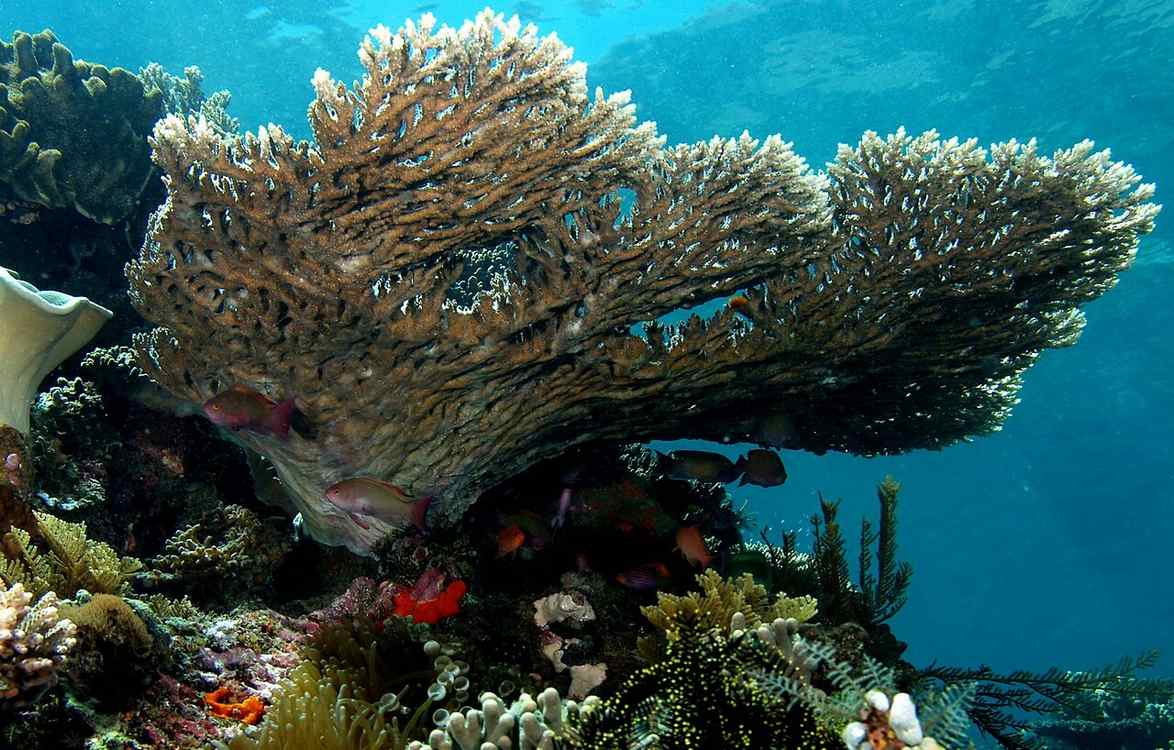
Acropora latistella (Table coral) - credit, Nhobgood Nick Hobgood CC 3.0. SA
Acropora latistella (Table coral) in the Coral Triangle – credit, Nhobgood Nick Hobgood CC 3.0. SA
In the legendary Coral Triangle, where the Pacific and Indian Oceans meet, 200,000 square kilometers of tropical seas will be off limits to fishing thanks to bold conservation action by Papua New Guinea.
The newly-designated Western Manus Marine Protected Area (MPA) will form part of the newly established Melanesian Ocean Corridor of Reserves, a network of national and jointly managed protected areas spanning Fiji, Vanuatu, and Papua New Guinea.
Revealed at the inaugural Melanesian Ocean Summit in Port Moresby in mid-May, the Western Manus ocean region in PNG’s territorial waters is characterized by undersea mountains and volcanoes, ridgelines, and canyons, harboring remarkable biodiversity.
Scientists have called it a “marine highway” connecting shallow corals with deep water zones bursting with pelagic life: orcas that migrate there seasonally, the giant deep-sea fish known as a yokozuna slickhead, Cuvier’s beaked whale, and over a hundred species of coral.
“Papua New Guinea is one of the most biodiverse places on the planet,” said Jelta Wong, minister of the country’s National Fisheries Authority. “Establishing the Western Manus Marine Protected Area will allow us to preserve and protect our ecological legacy and, at the same time, ensure that our ocean continues to provide people with what we need – food and a source of income.”
Located in the north of PNG’s territorial waters, the 77,000 square-mile reserve covers seas which account for 10% of the country’s tuna fisheries, and about 6.7% of all fishing output. However, as Oceanographic Magazine writes, previous research has found that once MPAs have been established, catch rates tend to increase in boundary areas—the result of a spillover effect from a robust and unharmed natural environment.
The decision comes as part of PNG’s commitment to conserve 30% of its territorial waters.
The Western Manus area was included in the survey itinerary of the National Geographic Pristine Sea’s expedition, which sought to document the biodiversity of the Coral Triangle over 2 years.
What they found was one of the world’s healthiest and most diverse coral ecosystems, but with warning signs that not all might be well. Shark populations were low—a clear hint at overfishing for other predatory fish like tuna.
The 200,000 square kilometers that encompass the MPA weren’t selected at random. Instead, key mobile species were tracked to get a sense of the movements of animals between the deep sea and the coral reefs. Grey reef sharks obliged the surveyors, while seabirds capable of foraging 200 miles a day were also consulted.
“Our ancestors have always lived in harmony with the sea, but today, we are writing a new chapter for our children,” stated Powes Parkop, governor of the National Capital District, who grew up in Manus Province.
“To see the waters of Western Manus recognized as the largest marine protected area in Papua New Guinea fills my heart with a profound sense of… pride. We aren’t just protecting fish or coral; we are safeguarding our identity.”
SHARE This Inspiring Act Of Marine Conservation In Papua New Guinea…
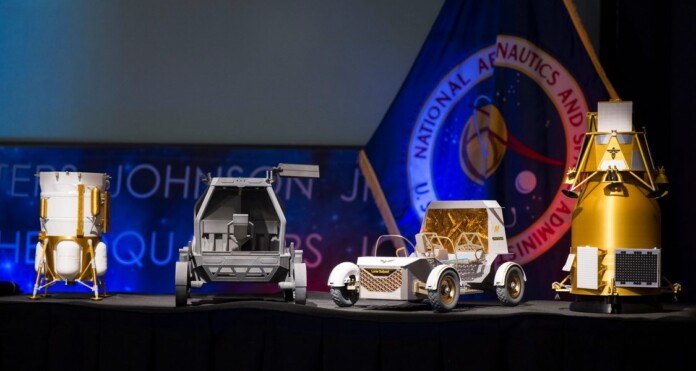
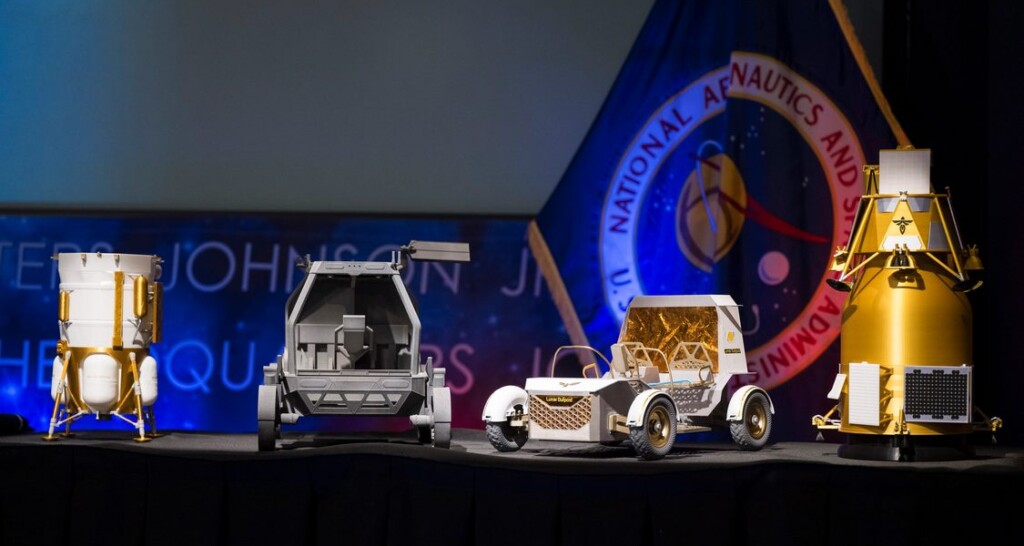
Models of some of the vehicles that will lead the Moon Base mission - credit NASA - Aubrey Gemignani
Models of some of the vehicles that will lead the Moon Base mission – credit NASA – Aubrey Gemignani
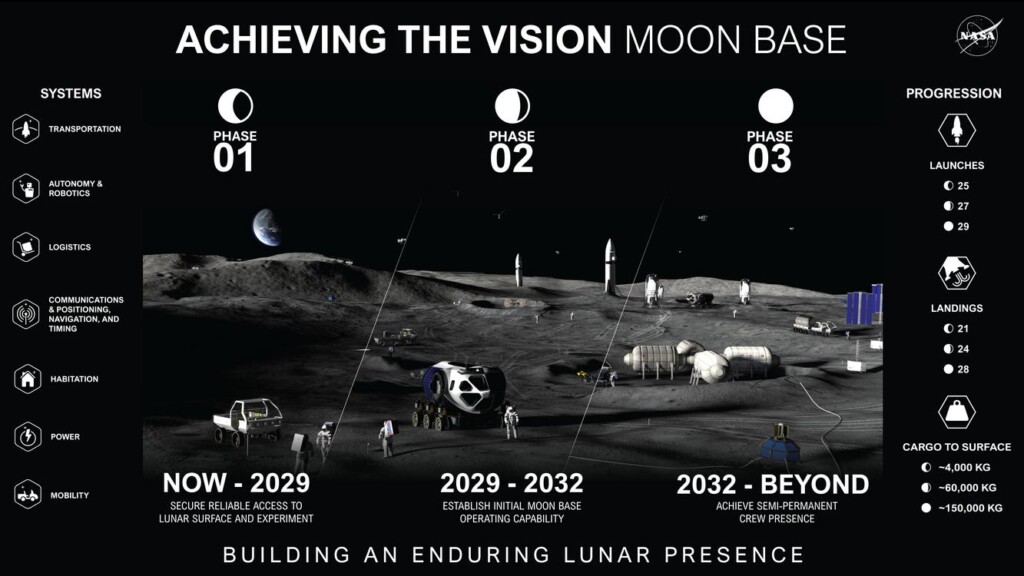
NASA recently announced details of its first three missions of the Moon Base program, a series of landings on the Lunar south pole.
Moon Base is the first stage of establishing a semi-permanent human presence on our satellite, and the data gathered during missions I, II, and III will inform the first visit of humans to the Moon since Apollo 11 in 1969.
Both Moon Base I and II are targeted for 2026. The first mission will utilize Blue Origin’s Mark 1 Endurance lander to drop two critical science instruments on the Moon. The first will gather data on how thrusters impact the regolithic Lunar surface, while the Laser Retroreflective Array will help orbiting spacecraft determine a more precise landing location using reflected laser light.
Moon Base II will see Astrobotic, another commercial spaceflight company, get a crack at the Moon with its Griffin lander. The delivery will include 1,100 pounds of equipment, including Astrolab’s FLIP rover, a “Lunar terrain vehicle” or LTV, that will gather crucial data on how wheels, treads, tires, pitch, yaw, acceleration, braking, etc. changes when done on the surface of the Moon in microgravity.
“The Moon Base will be America’s and humanity’s first outpost on another celestial world,” said NASA Administrator Jared Isaacman at the announcement event on Tuesday.
“Every mission, crewed and uncrewed, will be a learning opportunity as we return to the lunar surface, build the infrastructure to stay, and master the skills required to live and operate in one of the most demanding and dangerous environments imaginable.”
The Moon Base missions are the first of more than a dozen missions that will be announced this year, each designed to generate operational data and reduce risk ahead of crewed Artemis surface activities later this decade.
The Moon Base vision – credit, NASA
Moon Base III will include payloads from the European Space Agency and the Korea Astronomy and Space Science Institute.
The agency also shared new updates on MoonFall, a mission that will send four drones to fly short hops on the lunar surface as they survey potential landing sites for Artemis astronauts.
NASA‘s Jet Propulsion Laboratory in Southern California has been developing the design and testing prototype hardware and has selected Firefly Aerospace to build the spacecraft that will transport the drones from Earth orbit to the Moon. Launch is targeted for 2028.
Trillions of dollars worth of resources are found on the Moon—all contained in an environment that’s devoid of any trees to cut down, rivers to pollute, or animals to drive to extinction.
Particular among the Moon’s riches is helium-3, a light, stable isotope of helium that costs $2,000 per liter, which is needed for cryogenic supercooling and can also can take the place of other fuels in nuclear fusion reactors, powering them at a lower cost.
Just a few tons of helium-3 could power the US over a year in nuclear fusion reactors, though estimates like this vary wildly.
Helium-3 can be used for diagnosis and treatment management of chronic respiratory diseases such as chronic obstructive pulmonary disease (COPD), emphysema, cystic fibrosis, and asthma.
The Moon also contains billions of tons of common metals and the rare earth elements that are so coveted in political economy these days. Some estimates of the Moon’s material wealth expand into the quadrillions of dollars, but that doesn’t discount the fall in current prices for these materials should a supply as large as the Moon come online.
SHARE NASA’s Vision For The Next Chapter Of Human Space Exploration…
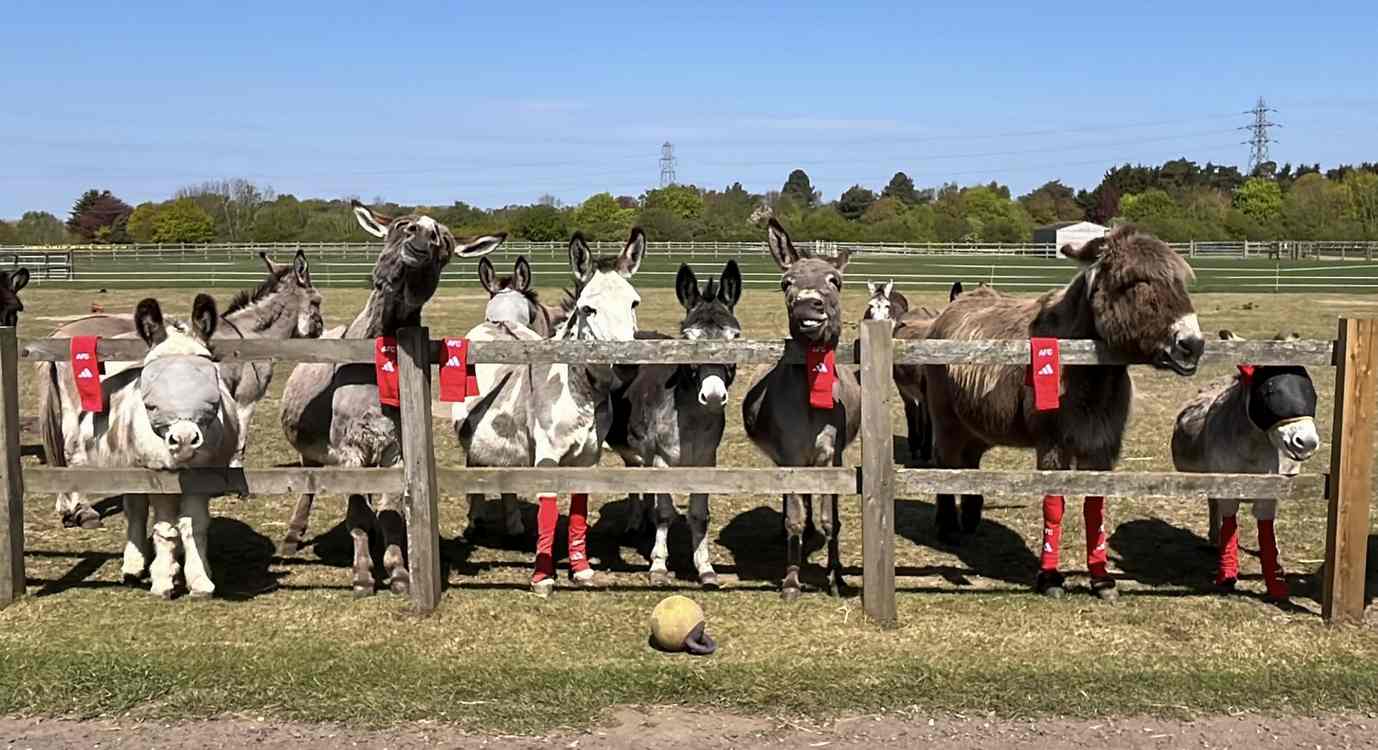
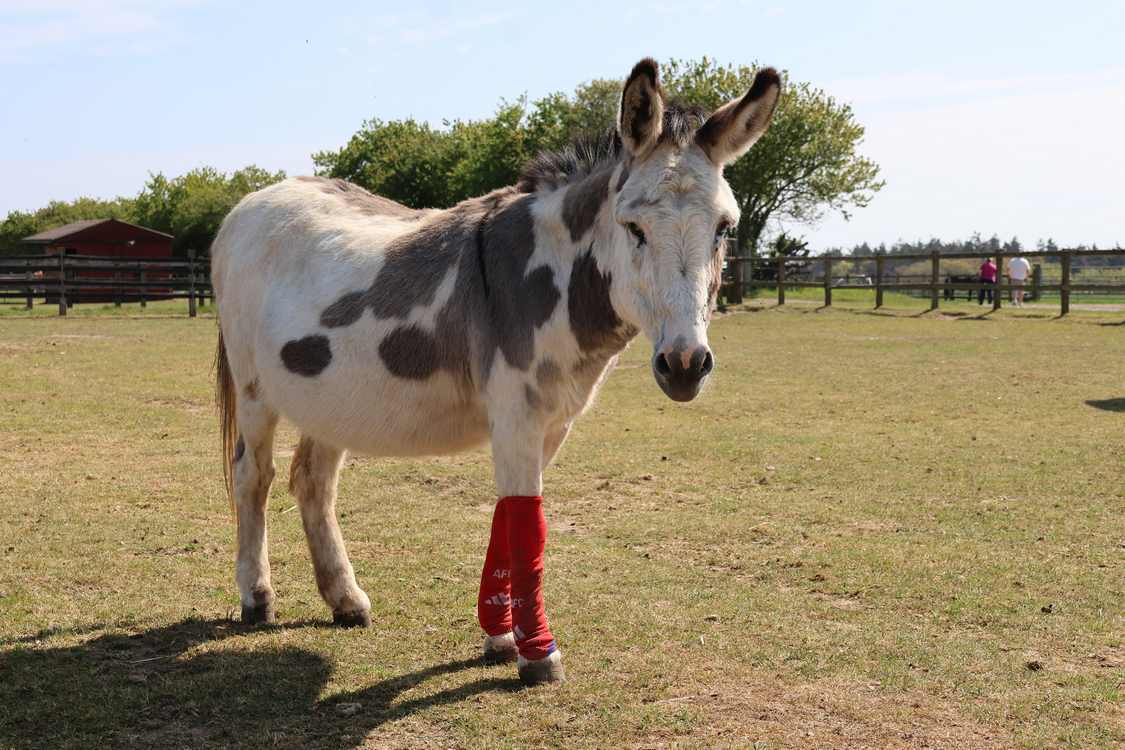
Donkeys with their donated Arsenal socks - credit, Redwings via SWNS
Donkeys with their donated Arsenal socks – credit, Redwings via SWNS
Socks are the pinnacle of lousy gifts—used socks so much the worse—but for these horses and donkeys they’re every child’s dream.
That’s because these fancy red socks were donated by the players of the recently-crowned-title-winners, Arsenal FC.
The footless socks have been used as dressings for horses and donkeys recovering from surgery and to keep insects off any sore legs at their Horse Hospital in Norfolk.
Nicola Knight, from Redwings, said the donation was “one of the more unusual” the organization had received, but would nevertheless be a “game changer.”
“The socks are being used for anything from protecting our rescued residents’ sensitive legs from flies to holding their vet bandages in place,” Knight told Faye Martin of the Southwest News Service.
A donkey wearing donated Arsenal socks – credit, Redwings via SWNS
“They’re also protecting them from headcollar rubs and even holding back the hair on their legs while they get their feet trimmed. They are a fantastic bit of kit and we’re so pleased that Arsenal reached out to us.”
Contrary to American preconceptions, English football can be a brutal old game, and while a jersey or pair of shorts might survive to be washed and worn again, socks rarely survive the flurry of cleats, kicks, and sliding challenges endured over 90 minutes of the beautiful game.
Michael Lloyd, Arsenal FC’s Operational Sustainability Manager, came up with the idea of donating the players’ unwanted or too-used-to-use socks and contacted Redwings.
“We’re always looking for ways to reduce waste and make a positive impact through the actions we take as a club, and it’s great we can work together to repurpose our old kit towards the care and wellbeing of animals,” said Lloyd.
Arsenal field 11 players every game, and can bring on as many as 5 substitutions. Having just played 63 games across all competitions during a season that saw them lift the Premier League title for the first time in 22 years and reach the UEFA Champions League final, the team may have worn and tossed as many as 1,000 pairs of socks.
But Redwings is responsible for more than 1,500 horses, ponies, donkeys, and mules, with over 1,000 in their daily care.
Additionally, these animals need 2 pairs, not one. Undoubtedly many more bales of socks will be showing up at Horse Hospital, as the team—now back among Europe’s elite—seek to defend their title when football resumes in August.
SHARE These Equine Gooners With Your Friends Who Watch Soccer…
Quote of the Day: “Art does not reproduce what we see; rather, it makes us see.” – Paul Klee
Photo by: Andrej Lišakov for Unsplash+
With a new inspirational quote every day, atop the perfect photo—collected and archived on our Quotes page—why not bookmark GNN.org for a daily uplift?
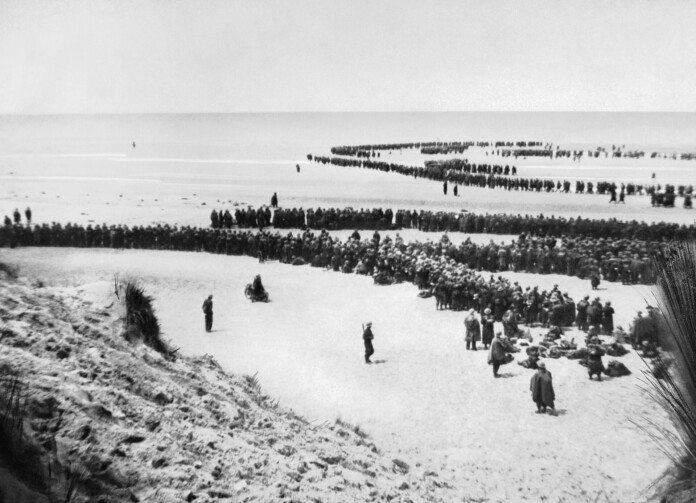
BEF and Allied forces que on the beaches of Dunkirk for evacuation
86 years ago today, the British Army completed the “Miracle of Dunkirk” by evacuating 338,226 Allied troops from France via a flotilla of over 800, mostly civilian vessels, including merchant marine boats, fishing boats, pleasure craft, and lifeboats escorted by Royal Navy destroyers. READ a quick summary of how it happened… (1940)