











All News - Page 433 of 1733 - Good News Network
Home Blog Page 433

This Week’s Inspiring Horoscopes From Rob Brezsny’s ‘Free Will Astrology’

Our partner Rob Brezsny provides his weekly wisdom to enlighten our thinking and motivate our mood. Rob’s Free Will Astrology, is a syndicated weekly column appearing in over a hundred publications. He is also the author of Pronoia Is the Antidote for Paranoia: How All of Creation Is Conspiring To Shower You with Blessings. (A free preview of the book is available here.)

Here is your weekly horoscope…

FREE WILL ASTROLOGY – Week beginning November 26, 2021
Copyright by Rob Brezsny, FreeWillAstrology.com

SAGITTARIUS (Nov. 22-Dec. 21):
Poet Renée Ashley describes what she’s attracted to: “I’m drawn to what flutters nebulously at the edges, at the corner of my eye—just outside my certain sight. I want to share in what I am routinely denied or only suspect exists. I long for a glimpse of what is beginning to occur.” Although I don’t think that’s a suitable perspective for you to cultivate all the time, Sagittarius, I suspect it might be appealing and useful for you in the coming weeks. Fresh possibilities will be coalescing. New storylines will be incubating. Be alert for the oncoming delights of the unknown.

CAPRICORN (Dec. 22-Jan. 19):
What could you do to diminish your suffering? Your next assignment is to take two specific steps to begin that process. You’re in a phase of your astrological cycle when you’re more likely than usual to see what’s necessary to salve your wounds and fix what’s broken. Take maximum advantage of this opportunity! I proclaim this next chapter of your life to be titled “In Quest of the Maximum Cure.” Have fun with this project, dear Capricorn. Treat it as a mandate to be imaginative and explore interesting possibilities.

AQUARIUS (Jan. 20-Feb. 18):
“It is a fault to wish to be understood before we have made ourselves clear to ourselves,” wrote my favorite Aquarian philosopher, Simone Weil. I agree. It’s advice I regularly use myself. If you want to be seen and appreciated for who you really are, you should make it your priority to see and appreciate yourself for who you really are. The coming weeks will be a favorable time to make progress in this noble project. Start this way: Write a list of the five qualities about yourself that you love best.

PISCES (Feb. 19-March 20):
Nigerian author Ben Okri, born under the sign of Pisces, praises our heroic instinct to rise above the forces of chaos. He writes, “The most authentic thing about us is our capacity to create, to overcome, to endure, to transform, to love, and to be greater than our suffering.” You’ve been doing a lot of that excellent work throughout 2021, dear Pisces. And I expect that you’ll be climaxing this chapter of your life story sometime soon. Thanks for being such a resourceful and resilient champion. You have bravely faced but also risen above the sometimes-messy challenges of plain old everyday life. You have inspired many of us to stay devoted to our heart’s desires.

ARIES (March 21-April 19):
Aries author Chris Brogan says, “Don’t settle. Don’t finish crappy books. If you don’t like the menu, leave the restaurant. If you’re not on the right path, get off it.” That’s the best possible counsel for you to hear, in my astrological opinion. As an Aries, you’re already inclined to live by that philosophy. But now and then, like now, you need a forceful nudge in that direction. So please, Aries, go in pursuit of what you want, not what you partially want. Associate with the very best, most invigorating influences, not the mediocre kind.

TAURUS (April 20-May 20):
Author Kurt Vonnegut wrote wistfully, “I still catch myself feeling sad about things that don’t matter anymore.” If similar things are running wild in your head, dear Taurus, the coming weeks will be a favorable time to banish them. You will have extra power to purge outdated emotions and reclaim at least some of the wild innocence that is your birthright. PS: There’s nothing wrong with feeling sad. In fact, feeling sad can be healthy. But it’s important to feel sad for the right reasons. Getting clear about that is your second assignment.

GEMINI (May 21-June 20):
“I’ll walk forever with stories inside me that the people I love the most can never hear.” So says the main character in Gemini author Michelle Hodkin‘s novel The Evolution of Mara Dyer. If that heart-rending statement has resonance with your own personal experience, I have good news: The coming weeks will be a favorable time to transform the situation. I believe you can figure out how to share key stories and feelings that have been hard to reveal before now. Be alert for unexpected opportunities and not-at-all-obvious breakthroughs.

CANCER (June 21-July 22):
A study of people in 24 countries concluded that during the pandemic, over 80 percent of the population have taken action to improve their health. Are you in that group? Whether or not you are, the coming weeks will be a favorable time to go further in establishing robust self-care. The astrological omens suggest you’ll find it easier than usual to commit to good new habits. Rather than trying to do too much, I suggest you take no more than three steps. Even starting with just one might be wise. Top three: eating excellent food, having fun while exercising right, and getting all the deep sleep you need.

LEO (July 23-Aug. 22):
Leo-born scholar Edith Hamilton loved to study ancient Greek civilization. She wrote, “To rejoice in life, to find the world beautiful and delightful to live in, was a mark of the Greek spirit which distinguished it from all that had gone before.” One sign of Greece’s devotion to joie de vivre was its love of play. “The Greeks were the first people in the world to play,” Hamilton exulted, “and they played on a great scale. All over Greece, there were games”—for athletes, dancers, musicians, and other performers. Spirited competition was an essential element of their celebration of play, as was the pursuit of fun for its own sake. In resonance with your astrological omens, Leo, I propose you regard ancient Greece as your spiritual home for the next five weeks.

VIRGO (Aug. 23-Sept. 22):
Virgo singer-songwriter Florence Welch of the band Florence and the Machine told an interviewer why she wrote “Hunger.” She said, “I looked for love in things that were not love.” What were those things? According to her song, they included taking drugs and performing on stage. Earlier in Florence’s life, as a teenager, “love was a kind of emptiness” she experienced through her eating disorder. What about you, Virgo? Have you looked for love in things that weren’t love? Are you doing that right now? The coming weeks will be a good time to get straight with yourself about this issue. I suggest you ask for help from your higher self. Formulate a strong intention that in the future, you will look for love in things that can genuinely offer you love.

LIBRA (Sept. 23-Oct. 22):
There’s a Grateful Dead song, with lyrics written by John Perry Barlow, that says, “You ain’t gonna learn what you don’t want to know.” I propose you make that your featured advice for the next two weeks. I hope you will be inspired by it to figure out what truths you might be trying hard not to know. In so doing, you will make yourself available to learn those truths. As a result, you’ll be led on a healing journey you didn’t know you needed to take. The process might sound uncomfortable, but I suspect it will ultimately be pleasurable.

SCORPIO (Oct. 23-Nov. 21):
Scorpio author and philosopher Albert Camus was a good thinker. At age 44, he won the Nobel Prize for Literature—the second-youngest recipient ever. And yet he made this curious statement: “Thoughts are never honest. Emotions are.” He regarded thoughts as “refined and muddy”—the result of people continually tinkering with their inner dialog so as to come up with partially true statements designed to serve their self-image rather than reflect authentic ideas. Emotions, on the other hand, emerge spontaneously and are hard to hide, according to Camus. They come straight from the depths. In accordance with astrological potentials, Scorpio, I urge you to keep these meditations at the forefront of your awareness in the coming weeks. See if you can be more skeptical about your thoughts and more trusting in your emotions.

WANT MORE? Listen to Rob’s EXPANDED AUDIO HOROSCOPES, 4-5 minute meditations on the current state of your destiny — or subscribe to his unique daily text message service at: RealAstrology.com

(Zodiac images by Numerologysign.com, CC license)

SHARE The Wisdom With Friends Who Are Stars in Your Life on Social Media…
Government Saves Rare Old-Growth Trees From Further Logging on 10,000 Sq-Miles of BC Forest

TJ WATT:ANCIENT FOREST ALLIANCE

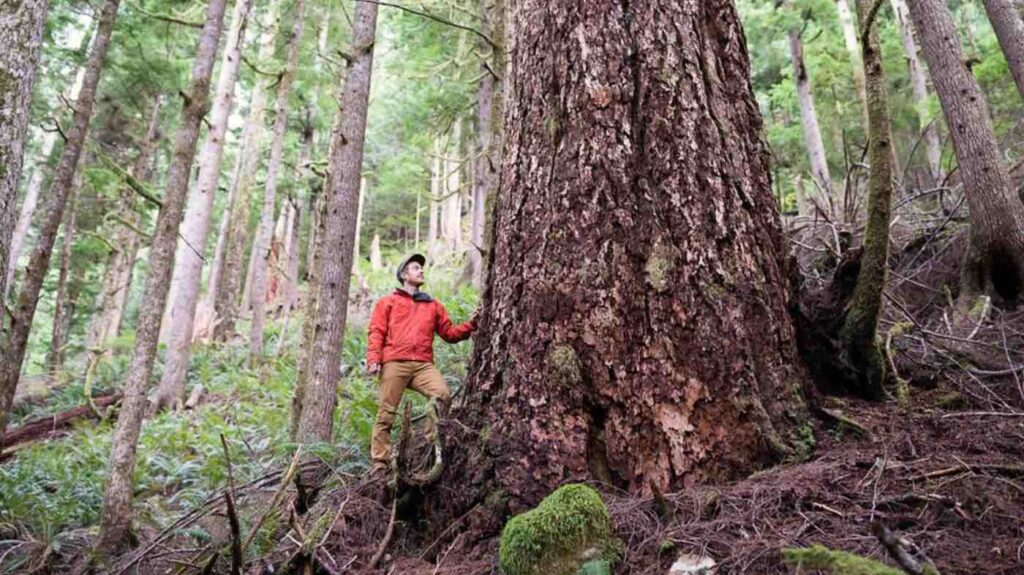
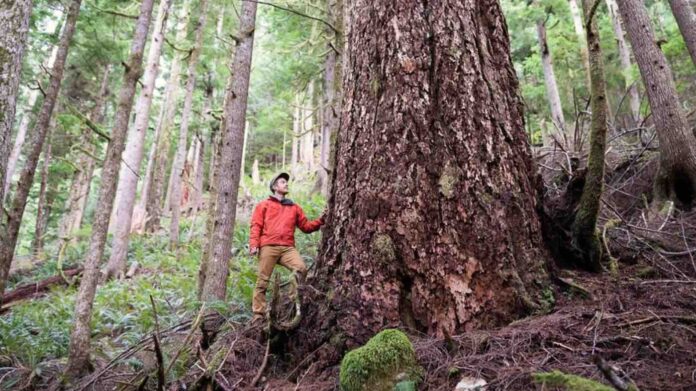
British Columbia’s provincial government has recognized that its old-growth forests are irreplaceable, vital ecosystems, and has spared 10,000 square miles, or 2.6 million hectares of forest from logging.

TJ WATT: ANCIENT FOREST ALLIANCE

The pause was issued following B.C.’s recently announced commitment to halt one-third of all old-growth logging, which itself came on the same day as world leaders at COP26 announced their own attempts to end deforestation.

The woods of B.C. gave it the name the “Brazil of the North” in the 1990s, and are filled with Douglas fir, western red cedar, and Roosevelt elk, black bears, wolves, and endangered birds. Some of the forests have remain undisturbed essentially since the last Ice Age, reports Globe and Mail.

“We’ve identified 2.6 million hectares of our largest, rarest and most ancient old-growth forests,” Forests Minister Katrine Conroy told a news conference. “Deferring harvest in an area this large is unprecedented and surpasses the size of 226 cities of Vancouver.”

The only catch is that based on the United Nations Treaty on the Rights of Indigenous Peoples, the B.C. government must receive the free, prior, and informed consent of 204 First Nations tribes that inhabit the province before making the logging moratoriums concrete.

Essentially, the First Nations could decide to continue to develop timber resources if they so wished.

MORE: Refugees in Cameroon Have Turned a Treeless Desert Camp Into a Thriving Forest – LOOK

The 2.6 million hectares are part of the 7.6 million hectares of ancient or old growth forest which remain in B.C., and represent a uniquely biodiverse and critical stands of trees.

Further plans to reform the governmental timber company and its logging patterns—away from clear-cutting and towards mimicking natural disturbances—are also coming, as the province looks toward a preservation-first attitude to forestry following pressure from community groups and non-profits like the Ancient Forest Alliance to protect local endangered old-growth areas.

“[This] means that we would harvest in a manner more linked to the way nature would change the forest. In some coastal forests, that’s a few trees at a time,” said Gary Merkel, a professional forester who participated in a government-ordered panel review of B.C. timber harvesting two years ago.

RELATED: Jane Goodall Enlists Fans to Help Plant a Trillion Trees Around the World by 2030

The provincial government hopes to complete the consultation with the Nations in a spritely 30 days, at which point it will ask timber operators to voluntarily give up their permits.

In the event they should not, Globe and Mail report, processes to repeal them will be followed, and future permit issuing banned.

LET Good News Grow—Share This With Tree Lovers on Social Media…

NASA and SpaceX Launched First Rocket to Test a Defense System Against Giant Asteroids in the Future

NASA / JPL

NASA’s Double Asteroid Redirection Test (DART), the world’s first full-scale mission to test technology for defending Earth against potential asteroid or comet hazards, launched Wednesday on a SpaceX Falcon 9 rocket from the Vandenberg Space Base in California.

NASA / JPL

Just one part of NASA’s larger planetary defense strategy, DART – built and managed by the Johns Hopkins Applied Physics Laboratory in Maryland – will impact a known asteroid that is not a threat to Earth. Its goal is to slightly change the asteroid’s motion in a way that can be accurately measured using ground-based telescopes.

DART will show that a spacecraft can autonomously navigate to a target asteroid and intentionally collide with it – a method of deflection called kinetic impact. The test will provide important data to help better prepare for an asteroid that might pose an impact hazard to Earth, should one ever be discovered. LICIACube, a CubeSat riding along with DART and provided by the Italian Space Agency (ASI), will be released prior to DART’s impact to capture images of the impact and the resulting cloud of ejected matter.

“It is an indescribable feeling to see something you’ve been involved with since the ‘words on paper’ stage become real and launched into space,” said Andy Cheng, one of the DART investigation leads at Johns Hopkins APL and the individual who came up with the idea of DART. “The teams have much work to do over the next year preparing for the main event ─ DART’s kinetic impact on Dimorphos. But tonight we celebrate!”

The spacecraft completed the successful unfurling of its two, 28-foot-long, roll-out solar arrays. They will power both the spacecraft and NASA’s Evolutionary Xenon Thruster – Commercial ion engine, one of several technologies being tested on DART for future application on space missions.

DART is making a one-way trip to the Didymos asteroid system, which comprises a pair of asteroids. DART’s target is the moonlet, Dimorphos, which is approximately 530 feet (160 meters) in diameter. The moonlet orbits Didymos, which has a diameter of 2,560 feet (780 meters).

CHECK OUT: This Asteroid is a $10,000-Quadrillion Lump of Iron and a Potential Opportunity to Study an Exposed Planetary Core

NASA / JPL rendering

Since Dimorphos orbits Didymos at much a slower relative speed than the pair orbits the Sun, the result of DART’s kinetic impact within the binary system can be measured much more easily than a change in the orbit of a single asteroid around the Sun.

The spacecraft will intercept the Didymos system between Sept. 26 and Oct. 1, 2022, intentionally slamming into Dimorphos at roughly 4 miles per second (6 kilometers per second). Scientists estimate the kinetic impact will shorten Dimorphos’ orbit around Didymos by several minutes—and researchers will precisely measure that change from telescopes on Earth.

POPULAR: The First Amateur Astronomer to Ever Discover a New Moon – And it’s Orbiting Jupiter

Roughly four years after DART’s impact, ESA’s (European Space Agency) Hera project will conduct detailed surveys of both asteroids, with particular focus on the crater left by DART’s collision and a precise determination of Dimorphos’ mass.

“DART is turning science fiction into science fact and is a testament to NASA’s proactivity and innovation for the benefit of all,” said NASA Administrator Bill Nelson. “We’re also working to protect that home, and this test will help prove out one viable way to protect our planet from a hazardous asteroid should one ever be discovered that is headed toward Earth.”

No one has yet identified any significant asteroid impact threat to Earth, but the goal of the DART collaboration is to find any possible impact, years to decades in advance, so it can be deflected with a capability like DART, which is possible with the technology we currently have.

LOOK: Astronomers Spot Light From Behind a Black Hole for the First Time – Proving Einstein Right Again

DART’s single instrument, the Didymos Reconnaissance and Asteroid Camera for Optical navigation (DRACO), will turn on a week from now and provide first images from the spacecraft. DART will continue to travel just outside of Earth’s orbit around the Sun for the next 10 months until Didymos and Dimorphos will be a relatively close 6.8 million miles (11 million km) from Earth.

For more information, visit the the DART mission website.

BLAST This Amazing News Over to Your Friends on Social Media…

Winner of 2021 Dyson Award Goes to First Ever Device to Monitor Glaucoma Symptoms From Home

The 2021 winners of the International James Dyson Award were announced, presented to young engineers whose devices might make the world a brighter place—like his breakthrough vacuum cleaners have.

Inspired by her father’s diagnosis of glaucoma and the multiple uncomfortable hospital visits, this year’s top winner, Kelu Yu, realized there is a global need for a less invasive, accessible home eye care device.

About 80 million people have glaucoma worldwide, and there is no cure but, if diagnosed and treated early, blindness can be prevented.

Kelu, along with Si Li and David Lee, spent 18 months designing a home testing device known as an Intraocular Pressure monitor (IOP) to be a critical, yet convenient, pain-free tool for eye care.

Called HOPES, the self-monitoring device and its app are a safe low-cost solution for any doctor to monitor the disease without requiring patient trips to their office.

HOPES, (which stands for Home eye Pressure E-skin Sensor) is a wearable biomedical device powered by patent-pending sensor technology and artificial intelligence.

RELATED: College Students Invent Device That Curbs Microplastics Emitted From Tires–And They Won a 2020 Dyson Award

After creating a profile in the App, the user wears the HOPES glove with the sensor placed at the fingertip, and pressed against the center of the eyelid. The unique sensor captures dynamic pressure information of the user’s eye with sub-millisecond precision. The captured signals are processed by machine learning algorithms and then transmitted to the Cloud via Bluetooth to be accessed remotely by clinicians.

LOOK: Tiny Wind Turbine That Generates Power From Your Apartment Balcony Wins Dyson Award

“I’ve experienced first-hand how invasive and unpleasant the tests for glaucoma can be, but it is a vital test,” said Sir James Dyson, the Founder and Chief Engineer at Dyson who started the awards.

Commercializing an idea, especially a medical device, is very difficult, he added. “I hope that the awareness this Award drives, as well as the financial support it provides, will give these ideas a springboard to success.”

The inventors, from National University of Singapore, were awarded $40,000 with the Prize, and plan to collaborate with clinicians at the National University Hospital to collect and analyze patients’ eye pressure data to train the device’s machine learning mode.

MORE: A Low Cost Inflatable Incubator for Babies Wins Dyson Award

“We want to improve people’s quality of life and aspire to one day apply our research group’s sensor technology across different health monitoring applications, such as robotics and biomedical devices.”

LET Others See The News– Share on Social Media…

“We cannot change what we are not aware of, and once we are aware, we cannot help but change.” – Sheryl Sandberg

Quote of the Day: “We cannot change what we are not aware of, and once we are aware, we cannot help but change.” – Sheryl Sandberg

Photo: by Max Felner

With a new inspirational quote every day, atop the perfect photo—collected and archived on our Quotes page—why not bookmark GNN.org for a daily uplift?


Spectacular Coral Event This Year Spawns Hope –And Billions of Babies For Great Barrier Reef (LOOK)

Courtesy of Reef Teach

Oceanographers enjoyed a burst of color and life flowing forth in the annual spawning of coral from the Great Barrier Reef last week.

Courtesy of Reef Teach

Taking place after the November full moon, researchers witnessed a banner year that inspired hope for the revitalization of the world’s coral reefs.

At the iconic reef off the coast of Cairns, Queensland, different corals synchronized the release of their sperm and eggs, which look almost like the shaking of a giant snow globe.

The coral offspring floated in waves of vivid pink, purple, or blue, depending on the species—and this year it was uniquely impressive.

“Unbelievably beautiful spawning from last night! The party sure has started and the corals are going off,” Reef Teach exclaimed on Twitter, posting a video (see below).

Billions of new coral babies born are good news for the reef, after a difficult few years.

“It is gratifying to see the reef give birth. It’s a strong demonstration that its ecological functions are intact,” Reef Teach marine scientist Gareth Phillips told EcoWatch.

LOOK: Gigantic 438-Year-old Coral Discovered in the Great Barrier Reef in ‘Excellent Condition’

Phillips has spent the past 10 years watching coral spawning.

“The conditions were magical with the water like glass and beautiful light coming from the moon,” he said.

CHECK OUT: Breathtaking Photos of Poppy Field’s First Bloom in Years

He was very reassured when he saw a lot of spawning, “it is a sign that there is recovery underway, that the system is working.”


MULTIPLY The Good By Sharing This Hopeful News on Social Media…

MORE: Sanctuary Containing ‘Healthiest Coral Reefs in the World’ Just Tripled in Size Thanks to U.S. Government Protection

New ‘988’ Suicide Prevention Hotline Will Include Texting Option to Make it Easier

Last week the US agency in charge of telecommunications adopted rules to expand access to the suicide prevention hotline by establishing the ability to text, in addition to calling.

Mikel Parera

Last year, the FCC established 988 as the new, nationwide, easy-to-remember 3-digit phone number for Americans to connect with suicide prevention and mental health crisis counselors.

As soon as next summer, people will be able to call—or—text 988 for instant access to the emergency service.

The rules require phone service providers to direct all 988 calls to the existing National Suicide Prevention Lifeline by July 16, 2022.

During the transition to 988, if you need help you need to call the National Suicide Prevention Lifeline at 1-800-273-TALK (800-273-8255).

The National Suicide Prevention Lifeline is also available today through online chats.

SPREAD the Message Through Your Hotline if Friends…

Firefighters Rescue a Dog Trapped Down a 15-Foot Underground Burrow Overnight

SWNS

Using equipment that is normally found at disaster sites after building collapses or earthquakes, firefighters worked for hours to free a trapped Jack Russell pet.

Digging at Sutton Park – SWNS

The 11-year-old Freddy was chasing a rabbit on Monday when he got trapped down a narrow hole in Blackroot Pool, West Midlands.

His owner Richard Hill said he could hear Freddy’s whimpers underground but was unable to reach him.

The 55-year-old reluctantly gave up searching for him when it got dark.

“I really thought I had seen Freddy for the very last time,” said Hill.

He returned on Tuesday morning and called 999 after he could hear Freddy’s cries for help.

He had been trapped for 24 hours by that time.

The West Midland Fire and Rescue Service found them after Hill used an app to help firefighters find his exact location: What3Word has divided the world into 3m squares and given each square a unique combination of three words—and if you have the app, it is as accurate as GPS coordinates.

Crews used camera and listening gear on their mission to find the distressed pup, and eventually dug a 6-ft by 9-ft crater.

POPULAR: Sikh Men Created a Lifeline Using Turbans to Rescue Hikers at a Canadian Park

Thankfully, after two hours digging, firefighters freed the exhausted Freddy, who “ran out of the hole as they got closer to him.”

SWNS

“I have to say a huge thank-you to the firefighters, they were just unbelievable,” says Hill.

“It was just incredible when he ran out of the hole after the rescue, it was just like nothing had happened.”

Freddy is still sporting an orange tint after being covered with the clay soil.

RELATED: Dog Trapped in Narrow Crevice Licked Moisture From Walls Until Rescuers Found Her With Plumber’s Camera

According to the relieved owner, the 4-legged adventurer will “definitely be staying on the lead the next time we go out for a walk.”

GIVE Thanks to the Firefighters By Sharing the Puppy Rescue on Social Media…

“We only regret the chances we didn’t take, the relationships we were afraid to have, and the decisions we waited too long to make.” – Lewis Carroll

Quote of the Day: “We only regret the chances we didn’t take, the relationships we were afraid to have, and the decisions we waited too long to make.” – Lewis Carroll

Photo: by Sathish J. via CC license

With a new inspirational quote every day, atop the perfect photo—collected and archived on our Quotes page—why not bookmark GNN.org for a daily uplift?


Toronto is Replacing Air Conditioners With Deep Lake Water to Cool Hundreds of Buildings

ESFOX Projects/Enwave
Enwave

180 Toronto buildings have ditched energy intensive air-conditioning in favor of cooling by pumping frigid waters from the depths of Lake Ontario through pipes in the walls and floors.

These include City Hall, Toronto General Hospital, hotels, data centers, and the Scotiabank Arena, home to the Raptors basketball franchise—altogether the 54 million square feet of real estate saves 90,000 megawatt hours of electricity annually, which is enough to power 25,000 homes.

The Deep Lake Water Cooling (DLWC) system of Toronto is the largest of its kind on Earth.

It relies on three pipes lying 3.5 miles south of the city, 280 feet below the lake, which suck up the 39°F (4°C) water before pumping it to a central station that then sends it through to the buildings. Warm water exiting the building is pumped back into the lake to make up the difference, taking the heat it absorbs with it.

At first the CAD170 million ($133 million) DLWC system, built and managed by Enwave, had a hard time finding clients in the city, but after initial evidence of energy savings (Scotiabank uses 3 million kilowatt hours less energy per year) they have been growing in number ever since.

RELATED: Australian Company Works to Make Energy From Nuclear Fusion – But Without the Fiery Ball of Plasma

A new program to increase capacity in town by an additional 60% testifies to its popularity as a low-carbon cooling system.

Enwave

“It’s a big investment,” Carlyle Coutinho, president of Enwave, told the Post of the upcoming CAD100 million ($78 million) project. “It would be challenging to keep growing commercially without increasing the baseload.”

ESFOX Projects/Enwave

Another big expansionary project in Toronto is called The Well. Enwave will create a thermal storage system using a two million gallon tank of cold water from the lake which can store energy at night during off-peak times, easing strain on the electricity grid and reducing costs.

This, the company says, will open the door to another 17 million square feet of real estate.

MORE: First Wind Turbine Designed to Harness Typhoon Energy is Erected in Storm-prone Asia, Soon Tested by 154 mph Winds

DLWC isn’t the only method of cooling buildings via water; the other involves evaporating water using large tanks as a means of expelling heat. However this leads to mass water usage, and DLWC can keep 220 million gallons of water in the lake, in the pipes, or in the ground, compared to evaporative cooling.

DLWC isn’t something every city or building has access to, but some buildings, like the million square foot HSBC Headquarters in Hong Kong, is cooled via seawater instead.

POWER UP Those Feeds With This Green News…

Who Needs Turkey? Most Would Be OK With Thanksgiving Meal That Was Only Side Dishes, Says Poll

Jim Choate , CC license

While the turkey was likely the main attraction on the Thanksgiving dinner table, three in four Americans agree that a holiday dinner sans turkey, consisting of only side dishes, would be just as satisfying.

2,005 people were asked about their favorite Turkey Day sides, and mashed potatoes were crowned the favorite by nearly half (46%)—just narrowly beating stuffing (43%).

While stuffing is usually considered the most common Thanksgiving side dish, it surprisingly isn’t America’s favorite side this year, according to the new poll.

Meanwhile, sweet potatoes (39%) and cranberry sauce (37%) were among the popular choices, as well.

The survey, which was carried out by OnePoll on the behalf of The Fresh Market, also found that many Americans would be keeping their eyes peeled for sweet potatoes—with three in 10 considering them to be underrated.

And when it comes to after-dinner desserts, apple pie (43%) surprisingly beat out pumpkin pie (42%) for the top spot, with chocolate (34%) securing third place.

43% of respondents said their family had gone 4 or more years without adding any variety to their family’s Thanksgiving menu.

They expected that five side dishes would be available on the table and 74% planned on eating at least four of them.

CHECK OUT: Be a Star at Thanksgiving – 8 Awe-Inspiring Stories to Bring to the Party

Respondents listed stuffing (22%) and mac and cheese (20%) as the hardest dishes to make “just right.”

And, 86% said their family had its own recipes for those dishes, with homemade stuffing (29%), mashed potatoes (26%) displaying individual flare.

“Whether it’s continuing family traditions or starting new ones with unique sides like mascarpone whipped potatoes with rosemary, oyster stuffing or cranberry relish with walnuts, bringing flavorful sides to the table makes the meal even more delicious,” said Kevin Miller, Chief Marketing Officer at The Fresh Market.

MORE: Anxious About Hosting for the Holidays? Survey Offers Proven Tactics for Impressing Your Guests

Additionally, 86% said they planned on preparing extra helpings for those highly coveted dishes like mashed potatoes (31%), stuffing (30%) and mac and cheese (27%), as those will likely be the first dishes to be polished off—because who doesn’t love an extra helping of mashed potatoes?

AMERICA’S TOP THANKSGIVING SIDES
Mashed potatoes (46%)
Stuffing (43%)
Sweet potatoes (39%)
Cranberry sauce (37%)
Mac and cheese (36%)
Green bean casserole (35%)
Candied yams (33%)
Cornbread (32%)
Baked potato (31%)
Corn on the cob (30%)
Brussels sprouts (29%)
Butternut squash (29%)
Collard greens (29%)
Peas (28%)

TOP THANKSGIVING SIDES AROUND THE COUNTRY

Northeast: mashed potatoes (45%), sweet potatoes (43%), cranberry sauce (41%)
Southeast: stuffing (45%), mashed potatoes (44%), sweet potatoes (38%)
Midwest: mashed potatoes (51%), stuffing (50%), green bean casserole (35%)
West: mashed potatoes (43%), sweet potatoes (41%), stuffing (38%)
Southwest: mashed potatoes (46%), stuffing (42%), cranberry sauce (40%)

Featured image: Jim Choate, CC license

SHARE a Side of Fun News With Your Thanksgiving Buddies…

Royal Air Force Lifts Off With Guinness World Record for First Flight Using 100% Synthetic Fuel

RAF's Project MARTIN
RAF’s Project MARTIN

As nations get more and more serious about climate change, certain sectors are finding it a more difficult subject than others. Commercial and military aviation for example, or racing series like F1 and NASCAR, don’t currently enjoy many zero-emissions developments.

Now, however, a Formula One legend has partnered with the British Royal Air Force to create a zero-emissions fuel alternative for these activities, and they were just rewarded with a Guinness World Record for the first-ever flight test using synthetic petroleum.

It was the morning of November 2nd when an Icarus C42 ultra-light plane launched from Cotswold Airport to complete a short flight using Zero Petroleum’s synthetic UL91 fuel.

UL91 is just hydrogen extracted from water and carbon extracted from atmospheric CO2, done by machines powered by renewable electricity. These are then synthesized to create a zero-emissions fuel which Zero Petroleum say can be used for “crucial for sectors in which electrification is not currently an option, including aviation, agriculture and a wide range of high-performance vehicles.”

It’s hard to imagine, with an invention as potentially critical as zero-emissions aviation fuel, how quickly this all went through: from first-planning to testing needed just five months from Zero Petroleum, run by F1 royalty Paddy Lowe.

RELATED: Fashion Designer Makes Shoes that Grow into Apple Trees, Instead of Growing Landfills

Lowe, who contributed to 12 world championships with his time at the McLaren, Williams, and Mercedes racing teams, added that the fuel “ran successfully in the aircraft as a whole-blend without any modification whatsoever to the aircraft or the engine.”

“The engine manufacturer Rotax’s measurements and the test pilot’s observations showed no difference in power or general performance compared to standard fossil fuel,” he said.

The RAF see it as a chief innovation towards the force becoming carbon-neutral by 2040.

“Climate change is a transnational challenge which threatens global resilience and our shared security and prosperity,” said Air Chief Marshall Sir Mike Wigston. “I am determined to tackle this head on… and this exciting project to make aviation fuel from air and water shows how it might be done.”

MORE: World’s First Electric Self-Propelled Container Ship Launches in Oslo to Replace 40K Diesel Truck Trips

Other methods of greening aviation have seen devices that catalyze atmospheric CO2 into jet fuel right onboard the aircraft, while carinata, a mustard-like oil seed crop, could be used to create a more sustainable jet fuel alternative capable of reducing emissions by 68%, and is being grown in the American Southwest in a trial.

SHARE the Good Green News and Let it Soar…

Teens Show Holiday Spirit Grabbing Rakes to Help Elderly with Leaf Removal

Instagram – iwanttomowyourlawn

This blog was submitted to GNN by one of our readers for publishing. If you have an interesting story of kindness or positivity, be sure and send it to us for review.

Instagram – iwanttomowyourlawn

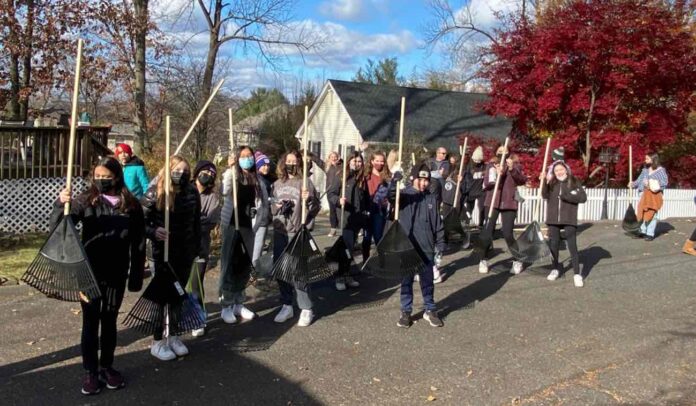
A school bus load of 21 New Jersey teens in 7th and 8th grade traveled to volunteer for community service, serving seniors and inspiring neighbors with their good deeds.

Equipped with rakes and recycled paper bags, they cleaned up property around elderly homes in Wayne providing leaf removal free of charge.

Approved by the Ramsey NJ Board of Education, the kids volunteers for the nonprofit organization I Want To Mow Your Lawn Inc., which was started over the pandemic last summer.

Brian Schwartz founded I Want To Mow Your Lawn after getting laid off from his advertising job.

“We’re now in 35 states with over 150 volunteers,” he told GNN this week.

RELATED: Folks in New Jersey Are Caring For More Than 800 Baby Turtles Rescued From Storm Drains

Iwanttomowyourlawn.com

With the success of this week’s ‘field trip,’ Schwartz is looking to partner with schools in other towns to get more groups like this involved in his ‘grassroots’ campaign.

Iwanttomowyourlawn.com

These same kids will be returning in the coming weeks to clean more yards, offering leaf removal and a new ‘branch’ of kindness.

POPULAR: This Cycling Group is Repairing Bikes for Free All Over the Navajo Nation

Sign up to be a volunteer, or apply for help with your landscaping at IwantToMowYourLawn.com

WATCH a recent segment featured on the Drew Barrymore Show…


MULTIPLY The Good by Sharing This Free Service on Social Media…
“There are scores of people waiting for someone just like us to come along; people who will appreciate our compassion, our encouragement, who will need our unique talents. Someone who will live a happier life merely because we took the time to share what we had to give.” – Leo Buscaglia

- Tyler Nix

Quote of the Day: “There are scores of people waiting for someone just like us to come along; people who will appreciate our compassion, our encouragement, who will need our unique talents. Someone who will live a happier life merely because we took the time to share what we had to give.” – Leo Buscaglia

Photo: by Tyler Nix

With a new inspirational quote every day, atop the perfect photo—collected and archived on our Quotes page—why not bookmark GNN.org for a daily uplift?


Coffee and Tea Drinking May be Associated With Reduced Rates of Stroke and Dementia

Gaelle Marcel - Unsplash

Drinking coffee or tea may be associated with a lower risk of stroke and dementia, according to a study of healthy individuals aged 50-74. Drinking coffee was also associated with a lower risk of post-stroke dementia.

Strokes are life-threatening events which cause 10 percent of deaths globally. Dementia is a general term for symptoms related to decline in brain function and is a global health concern with a high economic and social burden. Post-stroke dementia is a condition where symptoms of dementia occur after a stroke.

Yuan Zhang and colleagues from Tianjin Medical University, Tianjin, China studied 365,682 participants from the UK Biobank, who were recruited between 2006 and 2010 and followed them until 2020.

At the outset participants self-reported their coffee and tea intake. Over the study period, 5,079 participants developed dementia and 10,053 experienced at least one stroke.

People who drank 2-3 cups of coffee or 3-5 cups of tea per day, or a combination of 4-6 cups of coffee and tea had the lowest incidence of stroke or dementia.

Individuals who drank 2-3 cups of coffee and 2-3 cups of tea daily had a 32% lower risk of stroke and a 28% lower risk of dementia compared with those who drank neither coffee nor tea.

Intake of coffee alone or in combination with tea was also associated with lower risk of post-stroke dementia.

MORE: 4 Common Medicines Have Reversed Alzheimer’s in Mice

The UK Biobank reflects a relatively healthy sample relative to the general population which could restrict the ability to generalize these associations.

Also, relatively few people developed dementia or stroke which can make it difficult to extrapolate rates accurately to larger populations.

Finally, while it’s possible that coffee and tea consumption might be protective against stroke, dementia and post-stroke dementia, this causality cannot be inferred from the associations.

RELATED: New Study of ‘MIND’ Diet Shows It May Improve Memory and Thinking Skills in Old Age

The authors add of their findings, published in PLOS Medicine, that they “suggested that moderate consumption of coffee and tea separately or in combination were associated with lower risk of stroke and dementia.”

Source: PLOS

HELP Others Drink Up the Good News; Share This Story…

Woman Spends 4 Days Outside Gaining an Abandoned Pet Bunny’s Trust (WATCH)

SWNS
SWNS

This heart-warming video shows a young woman who spent four days outside gaining the trust of an abandoned rabbit.

25-year-old Alicia Castro spent all day, every day, trying to catch the pet rabbit that had been dumped outside her apartment.

She endured freezing temperatures and talked to the rabbit while leaving food, before finally coaxing him into a crate.

Alicia, from Montana, said: “Tons of people knew the rabbit was there! A few said they tried to catch it but nobody really cared enough to do anything.

“With the cold weather incoming, I knew that time was important and I’d feel so guilty if I didn’t do anything.

“Once I looked in his eyes I knew that I had to save him, no matter what it took.

“It was very stressful. I was sick and it was barely above freezing.

“Everyday I would sit outside in the cold with him, gaining his trust, feeding him, and trying to get him to climb into my crate.

RELATED: Rare Canadian Cat Has Thumbs Making His Paws Look Like Cute Mittens

“Filming [and sharing] the process felt pretty normal for me, but it was great to have so much helpful advice. At first I just had a towel to grab him with but by day four, I had proper food, a crate, and knowledge that made rescuing him possible.

SWNS

“Day three was definitely the hardest. I was so frustrated and started to worry that I would never catch him, not only letting down this poor, helpless rabbit, but also the millions of people who were watching along too.”

Alicia’s patience paid off and the rabbit, now named Bunny, is living the life of cozy luxury.

“I called every Humane Society in the area,” Alicia says, “and they were full, so I planned to foster him until we could find him a good home.” But the more time she spent with the rabbit, the more she fell in love with him.

“My partner and I have a cat, Kiki, who we adopted four years ago, so we knew we could only keep him if they could coexist.

MORE: Why Do Dogs Tilt Their Heads? Scientists Look at What’s Going On in Their Minds

“We spend every day acquainting them and getting them used to each other. I’m so happy with the progress we’ve made.”

SWNS

Her advice for others who might find an abandoned pet animal in need of help?

“Even if it’s hard, even if it takes time, don’t give up. There are so many animals that need help and don’t have anybody to stand up for them, so be that person.”

(WATCH the video for this story below.)

HOP This Sweet Story Over to All Your Besties…

World’s First Electric Self-Propelled Container Ship Launches in Oslo to Replace 40K Diesel Truck Trips

Kongsberg
Kongsberg

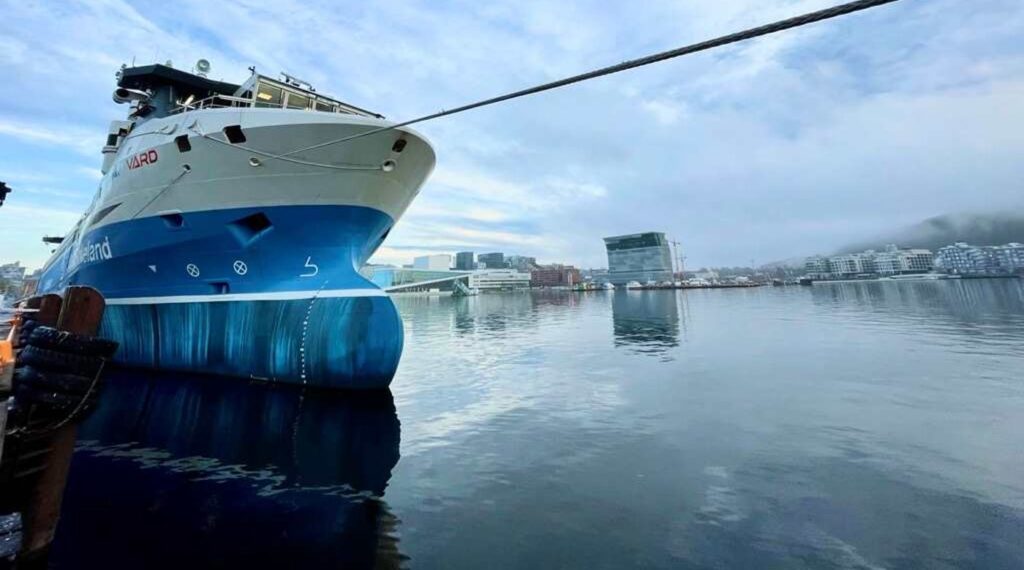
Their ancient ancestors brought many modern sailing techniques to the North Sea, and now the Norwegians have successfully launched the world’s first electric autonomous container ship.

Built by Yara to transport their mineral fertilizer stocks between the towns of Porsgrunn and Brevik, a trip which normally requires 40,000 trips by diesel truck per year, the Yara Birkeland will save around 1,000 tons of CO2 annually.

On November 19th, Yara Birkeland departed for a crewed maiden voyage—which included Norway’s prime minister—on a short 43-mile trip across the fjord from Horton to Oslo.

“We have been looking forward to this day for a long time,” stated Svein Tore Holsether, CEO of Yara. “This is an excellent example of green transition in practice, and we hope this ship will be the start of a new type of emission-free container ships. There are a lot of places in the world with congested roads that will benefit from a high-tech solution like this.”

Onboard the 262-foot (80 meter) vessel is a 6.8 megawatt-hours battery pack that can generate 17 mph (28 kph). It can carry 3,200 tons of fertilizer, and should begin commercial operations next year while it carries out lengthy certification for its autonomous navigation technology.

“Norway is a big ocean and maritime nation… the project demonstrates how we have developed a world-leading innovation that contributes to the green transition and provides great export opportunities for Norwegian technology and industry,” stated Geir Håøy, CEO of the Kongsberg Group, the firm responsible for delivering all the technologies, including the navigation ones, onto the Yara Birkeland.

In parallel with the development of the Yara Birkeland, Yara, the world’s largest producer of fertilizer, has launched an ambitious program to develop a zero-emissions fuel source by using their own massive stocks of ammonia, a key component in the fertilizer making process, and one which could be responsible for as much as 1.2% of global annual greenhouse gas emissions.

Kongsberg

“As the world’s largest producer of ammonia, Yara has launched an offensive plan of international scale, both to remove current emissions and to establish the production of new, clean ammonia,” says Magnus Krogh Ankarstrand, CEO of Yara Clean Ammonia.

(WATCH the ship’s maiden voyage below…)

SAIL This Positive Story Over to Your Social Feeds…

Heartwarming Photo Captures Man’s Gesture of Gratitude Towards the Nurses Who Saved His Wife’s Life

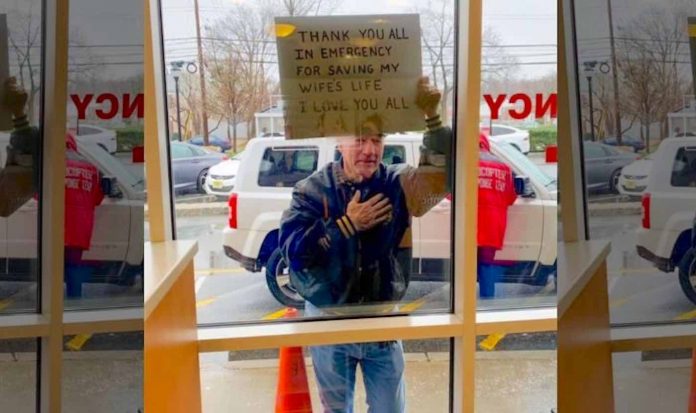
A New Jersey man won hearts across social media after he was photographed using a cardboard sign to express his gratitude to local hospital workers.

The man, who was not identified, was pictured holding up a handwritten sign to the glass windows of the emergency department at Morristown Medical Center as he held his other hand to his heart. The sign read: “Thank you all in emergency for saving my wife’s life; I love you all.”

Karen Zatorski, Senior Public Relations Manager at Morristown Medical Center, later told The Daily Record: “We don’t know who the man is, we don’t know who his wife is. The nurses happened to be there and took his picture. What’s beautiful is that’s all we know.”

WATCH: Love in the Time of Corona—NYC Man is Now Dating His Neighbor After He Creatively Woos Her in Quarantine

A woman named Shay Vander Vliet shared the photo on Facebook after her sister-in-law Paige, who works as a nurse at the hospital, caught sight of the man at work.

“She sent me this picture the other day and I feel like it needs to be seen as much as possible!” wrote Shay. “I don’t know how to make a photo go viral but I think this one is worth sharing—so please, share away!

RELATED: Restaurant Flooded With Business After Launching an ‘Adopt a Doc or Nurse’ Catering Service

“And thank you, Paige, and ALL of the nurses and doctors, for your hard work and dedication, especially during this scary time.”

Just as Shay hoped for, social media users have since shared the photo more than 61,000 times. Not only that, the photo raised awareness for a GoFundMe campaign to raise money for New Jersey hospitals in need of protective medical gear. Within a matter of days, the campaign managed to raise more than $12,000.

This is just one of many positive stories and updates that are coming out of our COVID-19 news coverage. For more uplifting stories, click here.

Multiply The Good By Sharing This Sweet Story With Your Friends On Social Media…
“When we focus on our gratitude, the tide of disappointment goes out and the tide of love rushes in.” – Kristin Armstrong (Happy Thanksgiving!)

Quote of the Day: “When we focus on our gratitude, the tide of disappointment goes out and the tide of love rushes in.” – Kristin Armstrong (Happy Thanksgiving!)

Photo: by Ricardo Gomez Angel

With a new inspirational quote every day, atop the perfect photo—collected and archived on our Quotes page—why not bookmark GNN.org for a daily uplift?


Assisted Dying is Rapidly Becoming Legal and Accepted – Currently in 11 Countries and 10 US States

In 1997, only Switzerland allowed their residents to decide if they wanted to end their life, but compassion for end-of-life sensibilities has seen that number rise dramatically across the West.

Since 2015, Belgium, Luxembourg, Canada, New Zealand, Spain, the Netherlands, Colombia, Germany, Austria, Portugal, five Australian states, ten American states, and D.C. have legalized assisted dying. Countries that are largely Catholic such as Ireland, Chile, Italy, and Uruguay are currently crafting legislation to follow suit.

As the Economist reports, more and more people who have seen their relatives suffer through chronic or incurable illnesses—and who may be worried they might face the same fate—are on the crest of a wave of activism to return the right to die to the individual, their doctors, and families, rather than the state.

In 2015, the state of Oregon passed the Death with Dignity Act, which was copied internationally in places like New Zealand and all but one of the states of Australia.

In the UK, three-quarters of people support the right to die, though only 35% of parliament agrees, and so an Oregon-like bill is unlikely to pass at the moment.

RELATED: Dutch Man Invents Coffin That Turns Bodies Into Mushrooms: ‘We are nutrients, not waste’

In Peru, the constitutional court recently ruled that a doctor’s decision not to help a woman with degenerative polio end her life was a violation of human rights, and a potential challenge to a ban is being made in the courts.

Movements like the one for green funerals or for medically-assisted suicide are part of a changing attitude to death. Naomi Richards, an anthropologist tells the Economist that now death should be, for some people, “an event to be scheduled, controlled.”

READ ALSO: The First State in the U.S. Approves Human Composting; Local ’Green Reaper‘ Has Your Guide to Eco-Friendly Burials

One of the founding principles of classical liberalism was the right to self-ownership: one owns the rights and fates of one’s person. It’s the ultimate vote of confidence in not only the sovereignty of the individual, but in the principles which many of our Western countries were found upon.

SHARE Your Opinion on This Thought-Provoking Topic on Social Media…