(L)ABC Australia/YouTube/(R) Huonville High School
(L)ABC Australia/YouTube/(R) Huonville High School
Students at a Tasmania high school are riding bikes out of desire to combat climate change, implementing a dizzyingly-thorough transformation of their school building into an energy efficient inspiration.
It’s paying off big time, as they’ve helped save $44,000 in utility bills since they started their energy-saving activities, but it’s also inspiring young people in the community to take action for the planet’s future on a local scale.
400 students attend Huonville High School in Australia, which recently won the Zayed Future Energy Prize of $133,000, some of which was used to renovate a building to serve as the Zayed Future Energy Hub; a clubhouse where 13 volunteers learn and teach about how renewable energy can be applied to our everyday lives.
Among the myriad of efficiency modifications, they installed solar panels on the roof, and replaced the old windows with double and triple glazed ones. They added improved insulation and energy efficient curtains.
They even have stationary bikes that create electricity to cook food, which in the case of a feature in ABC News Australia, were doughnuts.
The classroom was cold in the mornings, but the students wanted zero carbon emissions through their heating. So they went out and got a pellet stove, and then if that wasn’t enough, they went out and built a pellet mill to make their fuel from waste sawdust.
Powering one small building on a high school campus or cooking doughnuts in renewable fat fryers is nice, but will do little on their own to slow global climate change, but the Hub is much more about the big picture. Nel Smit, the volunteer teacher-head of the Hub knows their biggest contribution is exciting the minds of the next generation.
“This little school in the Huon Valley, is actually doing amazing things,” Smit told ABC. “It’s raised awareness of renewable energy, energy efficiency, and opportunities in the community for engaging them around that sort of technology.”
It’s not only the grown-ups that are excited about the project—now in its fifth year.
“Being part of Zayed has definitely helped me feel like I’m doing something. I’m making a change, and that has reassured me to not be so worried or frustrated with the world,” said Zayed Hub volunteer and student Aisha Fisher.
“Belief that it’s possible to stop it is the key, I believe,” said Christopher Allen, another Hub Volunteer. “We can act as young people, no matter your age, you have a voice and any action counts.”
(WATCH the ABC video about the Hub below.)
RENEW Your Social Feeds With This Story of Great Teens…
We often hear of “harnessing the power of nature” to generate electricity through renewables, but what if there were a way to harness the destructive forces of nature, not just the everyday ones?
That’s exactly what a Japanese energy start-up is doing as they look to build the first wind turbine that can withstand tropical storms, and capture that tremendous energy in typhoon-plagued countries where normal wind turbines need to shut down.
Japan endures 26 typhoons and lower-level storms per year on average, and partly for this reason wind energy capacity in the country remains very low.
Atsushi Shimizu, founder of Challenergy, has radically changed the look and function of the traditional mill-like wind turbine to allow it to generate power under extreme storm conditions.
The company’s “Magnus Wind Turbine” features large vertical blades spinning around a horizontal axis, which is the opposite of the long, pointed blades spinning from a vertical axis in normal wind turbines.
“One of our goals is to turn typhoons into a strength,” said Shimizu, who founded Challenergy in 2014 after the Fukushima nuclear disaster inspired him to get into the sustainable energy field.
“If we can just partially leverage the vast energy brought by typhoons, we can consider typhoons not just as disasters, but as a source of energy,” he told Reuters during an online demonstration of the turbines.
Challenergy’s first demonstration unit was built on the island of Batanes in the Philippines— a country of 7,600 islands that often have serious problems maintaining rural power grids, and is directly in the path of an average 16.8 typhoons annually.
Demonstration turbine in Philippines – Challenergy
The company’s turbine wasn’t erected long before its first major challenge hit: Typhoon Kiko, a Category 5 storm with winds greater than 154 mph (249 km/h)—and the second-strongest typhoon since 1987 to hit Batanes—arrived shortly after the unit was constructed.
The wind turbine started operating the day before the typhoon struck, and continued to operate normally until the early morning of September 11. It achieved the maximum power generation capacity, 11 kWh (net power), even under strong wind conditions.
At 6:00 AM local time, the wind turbine expectedly halted its operations as it reached its designed maximum allowable rotation speed, before the eye of the typhoon passed later that morning. After the typhoon regained its strength, it became difficult to obtain wind speed data due to the poor connection of the anemometer.
Though the demonstration unit experienced wind speeds that exceeded its designed maximum allowable speed, there were no major structural problems with the tower or support arms. The cylinder and the rectifying plate of one of the two wings, however, were partially damaged due to a collision with flying debris.
Challenergy says they are taking advantage of this first real-world test to implement countermeasures and make improvements so it can achieve stable operation during typhoons.
(WATCH the Reuters video about this story below.)
POWER UP Those Social Feeds With This Innovative News…
Quote of the Day: “Every moment is a golden one for the person who has the vision to recognize it.” – Henry Miller
Photo: by Nicole Giampietro
With a new inspirational quote every day, atop the perfect photo—collected and archived on our Quotes page—why not bookmark GNN.org for a daily uplift?
When a marathon runner was put out of action by lupus, a debilitating auto-immune disorder, an experimental trial got her back on track, and may prove to create the first safe therapy to stop the progression of the disease.
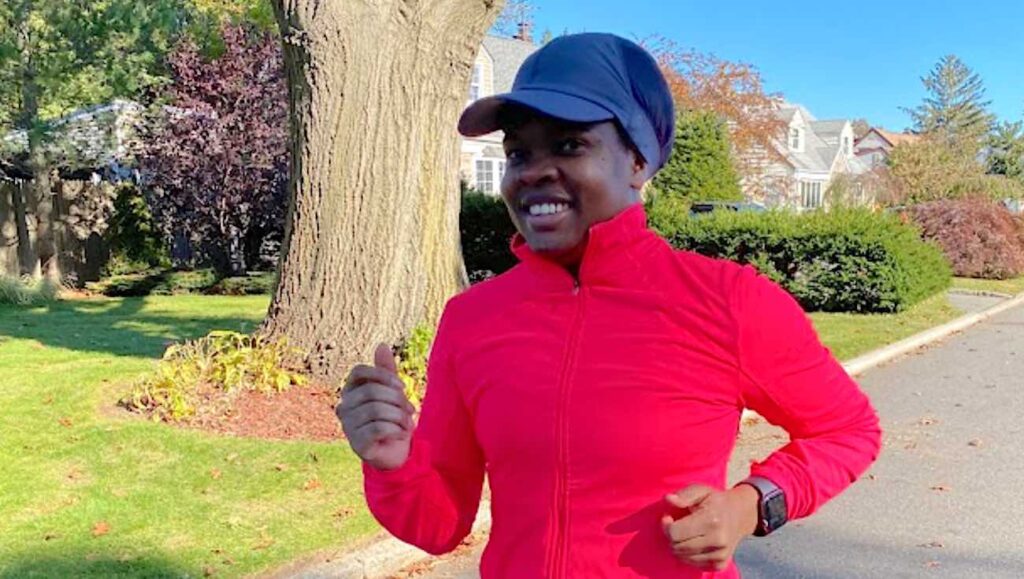
Sasheen Reid
It was during the training for the 2020 NYC Marathon that 35-year-old Sasheen Reid had the unfortunate honor of living in the city with the harshest lockdown in the country, putting her marathon plans on hold.
“I gave birth in May of 2020 and then I went into a really bad flare for about six weeks post partum,” Reid told GNN.
Like multiple sclerosis or ALS, lupus is a disorder of the immune system that results in the natural defense mechanisms of the body turning against itself.
A trial was opening at the same time at the Feinstein Institutes for Medical Research in Manhasset to study the effects of a lupus drug called Benlysta. So Reid signed up to take part.
“I started the trial in October 2020. My husband subscribes to the Lupus Foundation, so whenever new medication comes out he would tell me,” says Reid. “I’ve read a lot about peoples’ struggles with lupus, I have only the joint pain and the hair-loss. I don’t have involvement with kidneys or heart arrhythmia, and I think that’s the point of the trial, if patients can be diagnosed early, can you prevent a progression of the disease?”
Catching it early and stopping the disease in its tracks
“One of the biggest hurdles [to treatment] is diagnosing patients early with the condition,” Cynthia Aranow MD, a Rheumatologist at Feinstein involved with the trial, told GNN. “On average, it can take up to six years to get a proper diagnosis, which can delay starting people on medications to manage their symptoms, control their disease, and prevent organ damage.”
Benlysta has been approved for patients with lupus for over ten years, and, most recently, it was approved by the FDA for the treatment of lupus kidney disease. However, it’s usually used after other medications have failed.
“The goal of this two-year trial is focused on patients with a recent and early diagnosis. We are specifically interested in seeing if early treatment with Benlysta can stop the progression of the disease in its tracks,” she said.
“If we can alter the course of the disease through early intervention, we hope to spare patients from needing immunosuppressive medications (which are associated with many side effects) to control their disease in the future.”
Reid doesn’t know if she received the placebo or Benlysta, but she already feels much better, and her tests for the principal lupus biomarker—anti double-stranded DNA—have fallen from 650 (normal for lupus patients) to 176.
For Reid this translated to: getting the running shoes out, buying the post-workout collagen drinks, and hitting the track.
“I was a runner. I did 10Ks, I did half-marathons, I traveled to Barbados to do Marathons, in upstate New York,” she said. “So when I got diagnosis I was determined to, as much as possible, not have it change my lifestyle.”
She says that with a runner’s training schedule, a full-time job, and three kids, she has to make double-sure she takes care of herself, specifically with stretching before and after runs, and alternating runs with cross-training for strength, in order to fortify her joints which are subject to greater inflammation with lupus.
Reid recently completed a 6k, a milestone in her training for the upcoming 2023 NYC Marathon.
“We are hopeful that the important data gathered from Sasheen and others will lead to breakthroughs in understanding, treating, and caring for people with lupus,” says Dr. Aranow.
RUN These Results Over to Those Social Media Feeds…
They brought access to fresh water for millennia, and existed as long-honored pieces of cultural heritage, and then they were abandoned. Now a new chapter is opening on the stepwells of India.
Modern sewage and irrigation systems made them obsolete, but under the weight of extreme drought, the stepwells of India big and small are being restored for their ancient ingenuity and modern thirst-quenching design.
Stepwells are sometimes small stone-lined trenches, capturing rainwater and refilling underground aquafers, while others are masterpieces of inverted architecture, like the Chand Bawri in Rajasthan—a World Heritage Site consisting of the inverse of a step pyramid dug straight into the ground and lined by 3,200 steps set on symmetrical staircases.
However at their core principal, stepwells once restored, still function just as well now as they did in their heyday, and different states in the country are looking to add them to their hydrological arsenal as India faces the worst drought in history.
“It’s ironic that stepwells been ignored, considering how wonderfully efficient they were at providing water for nearly 1,500 years,” said Victoria Lautman, author of the book The Vanishing Stepwells of India. “Now, thanks to the restoration efforts, stepwells will come full circle.”
The stepwells are known as “baolis” or “bwaris” and have not always been conserved as monuments to cherish. Instead, many of India’s more than 3,000 baolis have fallen into disrepair or outright abandonment, being turned instead into dumps or being buried by foliage.
“When they began clearing what they thought was a garbage dump, they found the structure of a step-well beneath the garbage,” writes Vikramjit Singh Rooprai, a heritage advocate and writer who works with the Aga Khan Trust for Culture—a non-profit leading the restoration of India’s baolis.
Stepwell in Parbhani District Maharashtra, by Rohan Kale Explorer, CC license
“It was one of the deeper stepwells of Delhi. After restoration, the Purana Qila Baoli has so much water that the entire lawns of the [Old Fort in Delhi] are being irrigated by it,” he adds.
Aga Khan Trust works with stepwells around the country, sandblasting the build up of toxic residue and crumbing material and working with heritage architects for governments interested in repairing the baolis.
Well-wishes
Karnataka/CC license
15 wells have been restored or targeted for restoration in the city of Delhi alone, which will cost less than $60,000, but supply another 33,000 gallons of water to the city. The Toorji stepwell was fixed up in Jodhpur, an old warrior city sitting on the edge of the Thar Desert, which will contribute a staggering 6.2 million gallons.
The Gram Bharati Samiti (Society for Rural Development), a non-profit in the Jaipur district of Rajasthan, has revived seven stepwells in various villages, restoring reliable water access to 25,000 people.
One of those villages was Shivpura, and Rajkumar Sharma, the head teacher of the government primary school there, celebrated the baoli’s return.
“The stepwell in our village was the only source of water. With time, it had dried up and had converted into a heap of rubbish,” he told the BBC. “We now have access to clean water for drinking, domestic use and for religious ceremonies. The baoli has become the grandeur of our village.”
SaraswaT VaruN/CC license
Adding a traditional stepwell to the water provision of a state also revives architectural features of India going back to the Indus Valley Civilization of 2,500 BCE. They generate tourist revenue, and can serve in religious ceremonies, and socially as swimming holes.
Steps lead down to the bottom of the well, which as it’s depleted, continue to allow access to the water below. While the idea of putting a water source on top of what is essentially a pedestrian walkway might seem strange, the stepwells also channel rain into groundwater sources better than rivers, meaning that even if no-one actually draws water out in a bucket, they are still providing water to the community.
“Stepwells are a repository of India’s historical tales, used for social gatherings and religious ceremonies,” historian Rana Safvi told the BBC. “They served as cool retreats for travelers as the temperature at the bottom was often five-six degrees lesser.” They created a community atmosphere and common space for people as well as providing water. And, says, Safvi, their revival could be a genuine step towards helping India overcome water shortages. That’s hopeful indeed.
BRING Good News to Parched News Feeds; Share This Story…
Night sky fans, it’s time to prepare for an exciting week—as coming right up is both is longest lunar eclipse of the century, and this year’s Leonids meteor shower.
On Thursday-Friday, November 18-19—look up to see a Blood Moon lunar eclipse, as the full moon slips into the Earth’s shadow over the course of 3 hours and 28 minutes.
While you won’t be experiencing a full lunar eclipse, the event is still set to be spectacular: At its peak, only a small sliver (2.6%) of the moon will remain lit up by the sun.
Eclipse schedule
This partial eclipse will be visible wherever it’s night and the moon is above the horizon.That translates to quite a lot of places around the world, as you can see from this map by NASA.
Map showing visibility of the November 18-19 partial lunar eclipse. Darker areas indicate greater visibility. NASA_JPL-Caltech
If you’re in North America, you’re in a prime location for watching the lunar show.
According to NASA, for people on the U.S. East Coast, the partial eclipse begins a little after 2 in the morning, reaching its maximum at 4am—that’s when you’ll really want to be watching the moon.
For those on the West Coast, the partial eclipse begins at 11 p.m., with a maximum at 1 a.m.
For times that are accurately tied to exactly where you are, Time and Date has a location-specific lunar eclipse tracker that can be viewed here.
A Blood Moon to remember
Larry Johnson, CC license
This partial eclipse is set to be a great example of what’s known as the Japanese Lantern Effect—in other words, according to Farmer’s Almanac, the surface of the moon will appear the color of glowing copper, gradating down to a beautiful “uneclipsed yellow sliver.”
Bright meteor shower
If the Beaver Moon’s show towards the end of the week isn’t enough, Wednesday morning is set to be the peak for the Leonid meteor shower.
Sighting the Leonids is a yearly occurrence. Centered around the comet Tempel-Tuttle that takes about 33 years to fully orbit Earth, it’s named for the constellation Leo—as the point in the sky where most of the meteors streak from is around the mane of the lion constellation.
Time and Date has an hourly-updating tracker showing where the meteors will be coming from and where they can be seen.
The best time to see bright trails is before dawn on November 17. The only dark spot? That nearly-full moon won’t make it so easy to see meteors.
The human papillomavirus (HPV) vaccine reduces cervical cancer rates by 87% in women who were offered the jab between the ages of 12-13, confirms a new study.
Researchers at King’s College London have found the HPV vaccination program prevented around 450 cervical cancers and around 17,200 pre-cancers by the middle of 2019.
They also found cervical cancer rates were reduced by 62% in women offered vaccination between the ages of 14-16, and 34% in women aged of 16-18 when they were offered the jab.
The paper, funded by Cancer Research UK, looked at all cervical cancers diagnosed in England in women aged 20-64 between January 2006 and June 2019.
Three of these cohorts formed the vaccinated population, where women were vaccinated with Cervarix between the ages of 12-13, 14-16 and 16-18 respectively.
Incidences of cervical cancer and non-invasive cervical carcinoma (CIN3) in the seven populations were recorded separately.
The vaccine program started in England in 2008 and at the time used the bivalent vaccine, Cervarix, which protects against the two most common types of HPV. Since September 2012 the quadrivalent vaccine Gardasil has been used instead.
Almost all cervical cancers are caused by HPV. The vaccine is most effective when given before sexual activity when people are unlikely to have been exposed to HPV. The virus is linked to other cancers including vaginal, vulval, anal, penile, and some head and neck cancers.
He added, “Assuming most people continue to get the HPV vaccine and go for screening, cervical cancer will become a rare disease. This year we have already seen the power of vaccines in controlling the COVID-19 pandemic. These data show that vaccination works in preventing some cancers.”
Dr Vanessa Saliba, Consultant Epidemiologist in Immunisations at Public Health England, said, “These remarkable findings confirm that the HPV vaccine saves lives by dramatically reducing cervical cancer rates among women. This reminds us that vaccines are one of the most important tools we have to help us live longer, healthier lives.
“This fantastic achievement has been made possible thanks to the high uptake of the HPV vaccine in England. We encourage all who are eligible for the HPV vaccine to take it up when it is offered in school. All those eligible can catch-up until their 25th birthday. Together with cervical screening, this will help to protect more women from preventable cases of cervical cancer.”
The breakthrough study was published this month in Lancet journal.
Quote of the Day: “Sacrifice is the pinnacle of patriotism.” – Bob Riley (Happy Veteran’s Day)
Photo: by Aaron Burden
With a new inspirational quote every day, atop the perfect photo—collected and archived on our Quotes page—why not bookmark GNN.org for a daily uplift?
You won’t be able stop the tears once you see these veterans being surprised with new homes.
Daniel gets new home-Veterans United Home Loans
To celebrate Veteran’s Day in the U.S. tomorrow, the nation’s top Veterans Administration-affiliated home lender launched a national campaign to highlight vets and their service.
With the help of actor, comedian and retired U.S. Marine Rob Riggle, Veterans United Home Loans has been giving thanks to veterans across the country by surprising them with new houses—completely paid off.
“These Veterans have continued to live the military value of ‘selfless service’ even after they’ve hung up their uniforms,” said Riggle. “Teaming up with Veterans United to recognize these incredible Veterans has been an amazing experience.”
Veterans play a pivotal role in strengthening civic health, from volunteerism and voting to charitable giving and community involvement. As the initiative’s first expression of gratitude, the Missouri-based lending company and its charitable foundation surprised 10 deserving Veterans with a new house each.
And, the big news for veterans nationwide is that they can enter for a chance to win the 11th house by joining the sweepstakes at ThanksToVeterans.com.
“Our #ThanksToVeterans campaign underscores the daily commitment of veterans as local leaders, dedicated volunteers, and exemplary neighbors,” said Pam Swan, vice president of military relations for Veterans United Home Loans and a military spouse. “And what better way to thank these deserving individuals than by giving them houses of their very own in the communities they call home?”
Jim L., one of the recipients – Veterans United Home Loans
From a single widowed mother of three to a Vietnam veteran (above) in need of a wheelchair-accessible home, the 10 veterans selected are all active in their communities from every military branch—the Army, Navy, and Marine Corps.
Riggle says, “We hope, through shining a light on their stories, we inspire folks across the country to show Veterans just how much they mean to our communities.”
Houses are being given away in California, Georgia, New Mexico, New York, North Carolina and Wisconsin—and maybe keys to the 11th house will be given to a veteran in your neighborhood, if you aren’t one yourself.
Watch the heartwarming moment below when Daniel is given a home for his family, and visit ThanksToVeterans.com to see all the surprise videos, and official sweepstakes rules.
SALUTE Veterans By SHARING the Sweepstakes Opportunity on Social Media…!
You’ve probably seen dogs tilt their head. It’s adorable, but why do they do it? According to scientists, it may be a sign of concentration and memory recall.
Several animals, including humans, present an asymmetry in the way they move or perceive the environment through their senses. For instance, one can prefer an ear or an eye over the other when processing a vocal signal or an image. In dogs, these asymmetries manifest in behaviors such as tail wagging, nostril use while sniffing, or even paw preference when trying to grasp something out of their reach.
“Tilting the head is yet another asymmetrical movement in dogs, but it had never been studied. We investigated the frequency and direction of this behavior in response to a specific human verbal vocalization: when the owner asks the dog to bring a toy by saying its name. We did so after realizing that it often happened when the dogs were listening to their owners,” explains Dr. Andrea Sommese, lead researcher for this study, from the Eötvös Loránd University in Budapest.
The researchers analyzed the videos collected during a previous study that showed not every dog could learn toy names after three months of intensive training. The test was fairly easy to execute: the toys were placed in one room and the owner in another, together with the experimenter. In each trial, the owner asked the dog to fetch a specific toy by saying its name.
“Over the course of two studies, carried out in several months, we observed the two groups of dogs: 33 typical dogs and [what turned out to be] seven Gifted Word Learner dogs”, continues Dr. Sommese.
For this study, the group of scientists recorded the presence (or absence) of head-tilts when the owner requested the toys, and also analyzed the side of the tilt.
The Gifted dogs—who can be seen in the Genius Dog Challenge, a series of live broadcasted experiments that become viral over social media—very often tilted their head upon hearing the owner’s request for a named toy, while typical dogs rarely did. That is why the researchers then decided to observe head tilts only in the gifted dogs during two further similar experiments, with more toys involved.
The researchers found that the side towards which the dogs tilted their heads was stable for each individual, across the experiments that spanned over 24 months.
“It seems that there is a relationship between success in retrieving a named toy and frequent head tilts upon hearing its name.
That is why we suggest an association between head-tilting and processing relevant and meaningful stimuli” clarifies Shany Dror, co-author of the study.
“It is important to notice that this study only investigated head tilts during a very specific dog-owner communicative interaction: when the owner asks the dog to fetch a named toy. Hence, it is important to refrain from thinking that only Gifted Word Learner dogs tilt their heads in other situations not tested in this study” adds Andrea Temesi, another researcher working on the project, published in Animal Cognition journal.
The researchers of the Family Dog Project also show a new way of conducting science. Just as they did in a recent study, they had to collect part of the data while COVID-19 regulations were in place, which meant to virtually bring their activity to the owner’s households.
“To do this, we asked the owners to set up two cameras connected to a Livestream software, so we could fully monitor the dogs’ and their owners’ behaviour,” says Dr. Claudia Fugazza, co-author of the study. “This way the COVID restrictions and lockdowns did not stop our research”.
My dog often tilts its head, why?
Often owners observe dogs tilting their heads and we still do not have a full understanding of the function and circumstances in which this behavior happens. However, this study is the first step in a direction that shows how this trait could be related to dogs’ sweet attempts to understand us.
A sweat-collecting patch has been developed using the principle based on how the cactus spines attract water.
POSTECH
Sweat is an effective body fluid for analyzing bioanalytes in the body without collecting blood. The sweat sensor can reduce the hassle for diabetic patients who repeatedly have to draw blood, and can also be used in wearable devices for daily healthcare monitoring.
However, the practical use of sweat sensors has always been impeded by irregular and low sweat-secretion rates—until now.
To this, a research team led by Professor Kilwon Cho and Ph.D candidate Jonghyun Son of POSTECH’s Department of Chemical Engineering has recently developed a skin-attachable patch that quickly collects sweat by mimicking the principle behind cactus spines.
Cacti, which grow in arid environments, move water droplets that form on the tip of their spines to their base in order to survive. During this process, the fine water droplets move due to the difference in pressure acting on the inside and outside of the curved surface of the water droplet. This phenomenon is called the Laplace pressure.
The patch newly developed by Professor Kilwon Cho’s research team applied this principle of how cactus spines collect water. The researchers mimicked the structure of the cactus spine by using the wedge-shaped wettability patterns with superhydrophobic / superhydrophilic surfaces.
Through this, a sweat droplet on the wedge-patterned surface spontaneously moves to the wide end of the wedge pattern because the Laplace pressure difference between the front and back surfaces of the droplet is maximized.
The results confirm that the wedge-patterned channel can collect sweat quickly and spontaneously regardless of the inclination of the microfluidic channels, without the need for additional force.
In addition, the wedge-patterned channel shows great sweat-collecting efficiency as it transports nearly all sweat droplets to the sensing area without leaving much behind inside the channel, enabling it to collect sweat much faster than the conventional microfluidic channels. This allows the patch to continuously monitor the bioanalytes in the blood.
“Difficulties in collecting sweat has hindered its use in wearable healthcare devices,” explained Professor Kilwon Cho of POSTECH. He added, “This newly developed patch solves that issue by quickly collecting sweat and facilitating its use in various wearable healthcare devices, including blood sugar monitoring.”
A third-grade teacher has gone viral for sharing a sweet and simple lesson on fairness—using band-aids as a prop.
On her social media channels, the elementary teacher known as @aimeesedventures explains, in a way that’s accessible to both kids and adults, “Fair doesn’t mean everyone gets the same thing… it means that everyone gets what they need to be successful.”
Quote of the Day: “You don’t have to worry about burning bridges, if you’re building your own.” – Kerry E. Wagner
Photo: by Wai Siew
With a new inspirational quote every day, atop the perfect photo—collected and archived on our Quotes page—why not bookmark GNN.org for a daily uplift?
There’s a reason why Dwayne Johnson gets called the most likable celebrity around. Not only is he funny; he has his own foundation that helps at-risk and terminally ill children. Kindness just seems to be in this actor’s bones. As for his latest act? He’s just gifted a brand new Ford F-150 to an old friend.
@TheRock/Instagram
On New Year’s Day, the 48-year-old Fast and Furious star visited pal Bruno Lauer.
It’s true that the Rock’s initial greetings didn’t sound all that friendly. “Hey you son of a gun!” Dwayne yelled across the parking lot. But his tone was just in jest.
Bruno took the actor in when he was homeless as a teen in Tennessee. Nine years later, after Johnson fell on hard times once again while trying to make his name as a wrestler, it was Bruno who again came to the rescue and said he could live in his Nashville trailer.
‘I love you, brother,” Johnson wrote to his friend in a post on Instagram. “Your kindness and heart – helped change my life’s trajectory. And when you’re ready to retire from ‘the business’ you just say the word. I got you covered.”
The LEGO Group has revealed the new LEGO Ideas Home Alone set, an incredibly detailed recreation of the McCallister family residence from the much-loved Home Alone movie, where mayhem ensued as Kevin was left to his own devices and the bumbling burglars Harry and Marv descended.
Now in brick form for the first time, the new set is based on a design submitted to the LEGO Ideas platform by 28-year-old Alex Storozhuk from Ukraine. At an impressive 3,955 pieces, it is also the largest set created from a LEGO Ideas concept.
The LEGO Ideas Home Alone set is instantly recognizable, perfectly capturing the grand McCallister family home, and is also packed with features that tell the story of Kevin’s holiday antics. As well as the exterior, the interior layout is true to the movie and includes the ground and first floor, kitchen, basement, and attic.
A new opening mechanism opens up the house for full enjoyment; the walls separate in the middle to open sideways and fully reveal the interior, while the roof also opens upwards. In addition, the set comes complete with the main characters of the movie in LEGO minifigure form, including; Kevin, robbers Harry and Marv, the old man Marley—and Kevin’s mom Kate.
Every room is packed with details from the classic film, such as the after-shave lotion from “The Scream” bathroom scene, Buzz’s pet tarantula, the robbers’ van, the paint cans used to knock them down, and the treehouse with zipline. Other features include the fireplace, Christmas tree, a toy train, grandfather clock, dining table, and record player.
As the festive season draws in, the LEGO Ideas Home Alone set is designed to provide the ultimate holiday at home together and a unique building experience.
LEGO
Split into an Advent Calendar-like 24 build bags, you can build the iconic house in sequence with the movie, starting with meeting the robbers and their van and ending with Kevin’s reunion with his mom.
Talking about his inspiration for the set, the LEGO fan designer Alex Storozhuk, commented, “Just like every 90s kid, I grew up watching Home Alone and it takes a very special place in my heart. I can’t even imagine holidays without it. This movie is very nostalgic and makes those warm childhood memories come up every time.”
LEGO
Taking Alex’s original design and creating the final set was the job of Antica Bracanov, LEGO Designer.
Talking about the task, Antica said, “Bringing Alex’s Home Alone house to life has been brilliant fun. He’d thought about every aspect, from the layout of the rooms to the use of color and of course the details from the movie to make it instantly recognizable.
“Following the themes of the film, we wanted to make the experience as immersive as possible for fans of LEGO building and the movie. The step-by-step build which mirrors the movie, and the ability to open up the set and see inside lends itself well to hours of joyful focus this holiday season—just add a festive backdrop and a certain Christmas movie!”
Dierdre Wolownick Honnold / Instagram and El Capitan by Mike Murphy, CC license
You may have heard about Alex Honnold, the daredevil climber whose historic ascent of El Capitan in Yosemite with little more than a T-shirt and hand chalk was portrayed in the Oscar-winning documentary Free Solo.
Dierdre Wolownick Honnold / Instagram and El Capitan by Mike Murphy, CC license
Well, now his mother just became the oldest woman to conquer the famous granite peak, having reached the peak on September 23rd—the morning of her 70th birthday.
Dierdre Wolownick, the writer and language teacher, decided to take up climbing as a means to connect more deeply with her son, who made history in 2018 when he became the first man to climb El Capitan without ropes or safety equipment.
“Climbing El Cap at 70 takes its toll, physically, mentally, emotionally,” Wolownick writes in her blog. “I’m not ‘down’ yet. Not sure I ever will be, completely.”
In 2008, Honnold was home nursing an injury, which allowed him the time to accompany his mother on her first visit to the climbing gym Pipeworks in Sacramento. She completed 12 routes that first day with his help, but it was months before she had worked up the courage to return on her own.
Wolownick became committed to the sport, and began to meet friends and sharpen her skills. She scaled parts of Half Dome and Cathedral peak at a time when many people her age are thinking about retirement and slowing down.
The writer would go on to publish a memoir of her experiences climbing with Alex called The Sharp End of Life: A Mother’s Story, referring to the climber at the sharp, or lead end of a route who essentially bears all the responsibility for guiding the route and securing the rope for the other climbers.
“As a mother, I marveled at this process of swapping leads. Parents and children often wind up changing roles in life, as they get older,” she writes in her book. “But never, I thought, is that transformation as obvious as when they climb together.”
“This year, on September 23, 10 friends and I set out in the dark, at 6am,” Wolonick writes in her blog. The first third of the route is a hike steep enough to require all-fours, grabbing boulders and trees and whatever else will hold your weight.
The second-third of the climb involves ascending fixed ropes using mechanical grips that slide upwards along the rope, and which require immense core strength to use, which Wolownick writes wore out pretty fast.
“The granite slabs that lead you up that last third stretch for what seems like miles. Impossible to protect with rope or any other way. Just walk steeply uphill, endlessly, grabbing whatever tiny edges you can find. But my foot no longer works the way it should (from a botched surgery), and the toes can’t grip,” she remembers.
“My head, though, was the worst offender. My writer’s imagination could see exactly what would happen if I stumbled…I’d roll down slab after slab, breaking parts of me at every bump of rock, until I reached the edge. Then I’d sail out over the Valley to plummet down 3,200 feet to the Valley floor.”
Yet despite the fear, the squad made it to the top, where champagne and cupcakes—much needed sugars, were produced to celebrate with views of the famous valley.
“It was really awe-inspiring to watch her and then to have her on top with all of us,” said McMackin, a friend of Dierdre’s to the LA Times. “There was a special look on everyone’s face. We knew where we were. We knew how awesome the moment truly was.”
INSPIRING Stories Should Soar; Help This One Travel Far by Sharing…
While nations announced pledges to do more to prevent climate change, one announcement at COP26 was rather more playful.
An inflatable bouncy castle, or what we Americans refer to as a moon bounce, was debuted as a means to clean the air of CO2 and provide hours of entertainment in the process.
Within the inflatable tubes that make up the structure of the moon bounce are microscopic algae that feed on carbon and other minerals in the air. The algae actually create a biomass which can be used to make plastic-like material for manufacturing, or fuel for certain kinds of electricity production.
The pump that continuously inflates the moon bounce pulls in the CO2 in the air, and the children’s bouncing movements channel it into the algae chambers.
It was tested in Poland, and went on display early on at the 2021 United Nations Climate Change Conference happening in Glasgow.
Featured on the BBC, this technology could give climate change the most formidable enemy it has yet faced: the relentless energy of a play-hungry schoolkid.
Quote of the Day: “Always tell what you feel; do what you think.” – Gabriel García Márquez
Photo: by Claire Fischer
With a new inspirational quote every day, atop the perfect photo—collected and archived on our Quotes page—why not bookmark GNN.org for a daily uplift?
Dogs may be man’s best friend, but let’s not forget that a faithful fetching stick is a dog’s other best friend if you don’t have a tennis ball at hand.
So when 59-year-old Andrew Taylor noticed that there was a lack of good sticks at his local park, he decided to take matters into his own hands.
The dad from Kaiapoi, New Zealand had been chopping off excess branches from some trees in his yard when he decided to make them into a “Stick Library” for all the local pups.
After chopping up the branches into several dozen conveniently-sized pieces, he put them into a hand-crafted box emblazoned with the words “Stick Library: Please Return” and brought it to the park.
Since Taylor and his daughter hosted a small neighborhood inauguration party for the Stick Library, more than 50 dogs and their owners have enjoyed a game of fetch with the sticks.
“As people started to arrive, there was a disbelief of how simple the idea was, but it’s one of those ideas no one had thought of,” said Taylor’s daughter Tayla Reece. “All the dog owners appreciate it, as they all have experienced the ‘good stick search’, which isn’t always fruitful. It’s an idea that just makes sense to them.”
(WATCH the pawesome video below)
Be Sure And Share This Fetching Story With Your Friends On Social Media…
Mike Palen has practiced Olympic-style weightlifting since he was 12, and 68 years later, he’s still going strong—800 lbs. strong, to be precise.
The 80-year-old has been keen to get back in his local New York Sports Club after the easing of lockdown restrictions, wanting to resume training two to three times a week—as he has done since Kennedy was in the White House.
“What I lifted yesterday happened to be 765 (lbs.), and that’s my own technique,” Palen told GNN in an interview. He’s working towards a higher number in his custom lift, which is in a simple half-squat position and using a rack, but we can’t specify the number because he doesn’t want his wife to find out he’s going back to the “heavy stuff.”
GNN has reported on silver-haired lifters before, such as a 100-year old great-great-grandmother who set a Guinness World Record after completing a 150-pound deadlift, and a World War II veteran who took out the bench press record for his 91-year old age group with a 187-pound press, but for the moment at least Mike is on another level.
Mike Palen’s fitness journey began, like so many others, under the shadow of an athletic big brother—but where his brother Steve took to football, Mike was drawn to the “heavy stuff.”
A fitness journey
“My dad was making a bench in the open lot next to our house… and left some of the remaining cement pillars that held the bench up. They made perfect dumbbells, and I saw immediate results,” says Palen, whose love of the competitive rush of completing a lift led to Olympic aspirations as a young adult.
“I felt I could compete in the Olympics; probably in the late 50s, early 60s,” he said. “I got up to 315 in the clean and jerk, 265 in the military press, and the snatch was a tough lift, but I did a total of 235. And that was up there; that was a lot of weight for those days.”
Tommy Kono, a Japanese-American Gold-medalist weightlifter who is often considered the greatest Olympic lifter America ever produced, was posting world-record numbers which Mike was approaching. In 1953, Kono won the National Weightlifting Championship with a world-record 280 in the snatch, and 350 in the clean and jerk.
Palen’s Olympic ambitions were cooled after he married his wife Sandy and had children, but he never stopped lifting 2 to 3 times a week, even through a host of injuries.
“That’s why I don’t let myself get old”
A member of the SilverSneakers senior fitness program, the New York state resident now offers immediate inspiration to all those around him, particularly as they watch him continually slide plates onto the bar.
It wasn’t all smooth sailing, and like so many heavy lifters he had problems with his knees.
“When I flexed it a certain way, the tissue would go in between my knee, and you can imagine what that does, I was on crutches for awhile,” says Palen. “Eventually that went away, and my knees have returned and that’s why I immediately went back to heavy squats in my late 70s.”
“My legs are still what they used to be, I like to think. They [doctors] told me eventually when you get old…and that’s why I don’t let myself get old—you’re going to feel like you’ve got problems, but I still have that strength. I still ski.”
There’s truth in Mike’s iron-headedness. Intense exercise stimulates the production of chemicals in the brain, such as brain-derived neurotrophic factor, which promotes neuroplasticity—the speed which the brain can create new connections, and neurogenesis—the creation of new neurons.
Perhaps more important than a muscular physique, weightlifting helps maintain bone density, which begins to decline at a relatively early age, and accelerates in one’s silver years. Bone density loss is a leading factor of morbidity, and is why something like a fall can be so dangerous for a senior, when for a younger person it’s pretty harmless.
SilverSneakers offers virtual classes at pretty much every fitness level, and access to 22,000 fitness centers across the country.
“Our whole mission is to help older adults live happier, healthier lives, and the classes promote physical activity social connection and mental enrichment,” said Debbie Jacobson, from SilverSneakers. “Not everybody’s Mike, not everybody can do what he’s doing, but we have classes for all levels.”
“I’m a member of SilverSneakers and I have to say honestly, it should be offered to everybody that’s getting old, because it keeps us off the insurance liability!” adds Mike. “Better health, maintained, is better than the alternative, it puts us on a different course.”
It’s not only seniors he wants to inspire, he left GNN with a message for the youth as well.
“Time flies by so fast, and before you know it you’re 80. [Let] an exercise of your choice be your vehicle to good health. If for some reason you quit always return as soon as possible.”
GOOD News Never Ages—Share Mike’s Story With Mates…