












All News - Page 444 of 1716 - Good News Network
Home Blog Page 444

Astonishing Peek Into Travels of Mammoth 17,000 Years Ago: A Diary Written in Their Tusks

UAF/Illustration by James Havens
Illustration by James Havens/ UAF

An international research team has retraced the astonishing lifetime journey of an Arctic woolly mammoth, which covered enough of the Alaska landscape during its 28 years to almost circle the Earth twice.

Scientists gathered unprecedented details of its life through analysis of a 17,000-year-old fossil from the University of Alaska Museum of the North. By generating and studying isotopic data in the mammoth’s tusk, they were able to match its movements and diet with isotopic maps of the region.

Few details have been known about the lives and movements of woolly mammoths, and the study offers the first evidence that they traveled vast distances. An outline of the mammoth’s life is detailed in the new issue of the journal Science.

“It’s not clear-cut if it was a seasonal migrator, but it covered some serious ground,” said University of Alaska Fairbanks researcher Matthew Wooller, senior and co-lead author of the paper. “It visited many parts of Alaska at some point during its lifetime, which is pretty amazing when you think about how big that area is.”

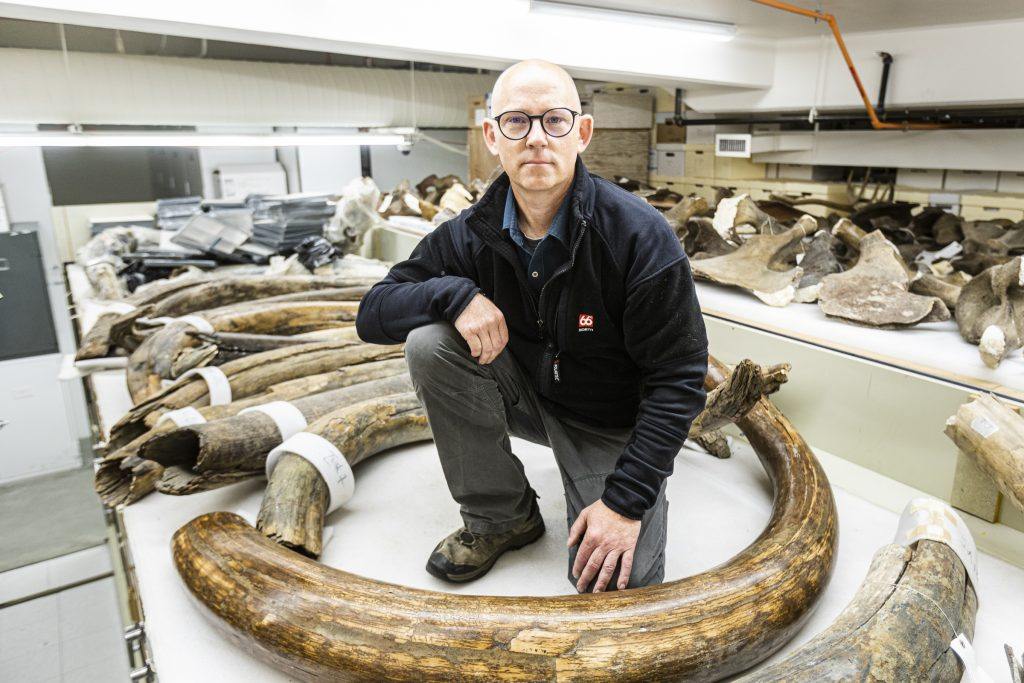
Researchers at the Alaska Stable Isotope Facility, where Wooller is director, split the 6-foot tusk lengthwise and generated about 400,000 microscopic data points using a laser and other techniques.

The detailed isotope analyses they made are possible because of the way that mammoth tusks grew. Mammoths steadily added new layers on a daily basis throughout their lives. When the tusk was split lengthwise for sampling, these growth bands looked like stacked ice cream cones, offering a chronological record of an entire mammoth’s life.

UAF photo by JR Ancheta/A close-up view shows a split mammoth tusk at the Alaska Stable Isotope Facility

“From the moment they’re born until the day they die, they’ve got a diary and it’s written in their tusks,” said Pat Druckenmiller, a paleontologist and director of the UA Museum of the North, in a statement. “Mother Nature doesn’t usually offer up such convenient and lifelong records of an individual’s life.”

Scientists knew that the mammoth died on Alaska’s North Slope above the Arctic Circle, where its remains were excavated by a team that included UAF’s Dan Mann and Pam Groves, who are among the co-authors of the study.

Researchers pieced together the mammoth’s journey up to that point by analyzing isotopic signatures in its tusk from the elements strontium and oxygen, which were matched with maps predicting isotope variations across Alaska. Researchers created the maps by analyzing the teeth of hundreds of small rodents from across Alaska held in the museum’s collections. The animals travel relatively small distances during their lifetimes and represent local isotope signals.

Using that local dataset, they mapped isotope variation across Alaska, providing a baseline to trace the mammoth movements. After taking geographic barriers into account and the average distance it traveled each week, researchers used a novel spatial modeling approach to chart the likely routes the animal took during its life.

Ancient DNA preserved in the mammoth’s remains allowed the team to identify it as a male that was related to the last group of its species living in mainland Alaska. Those details provided more insight into the animal’s life and behavior, said Beth Shapiro, who led the DNA component of the study.

MORE: Researchers Identify a ‘Fearsome Dragon’ With 23-ft Wingspan That Soared Over Australian Outback

For example, an abrupt shift in its isotopic signature, ecology and movement at about age 15 probably coincided with the mammoth being kicked out of its herd, mirroring a pattern seen in some modern-day male elephants.
UAF/JR Ancheta Mat Wooller, director of the Alaska Stable Isotope Facility,

“Knowing that he was male provided a better biological context in which we could interpret the isotopic data,” said Shapiro, a professor at the University of California Santa Cruz and investigator at the Howard Hughes Medical Institute.

Isotopes also offered a clue about what led to the animal’s demise. Nitrogen isotopes spiked during the final winter of its life, a signal that can be a hallmark of starvation in mammals.

RELATED: Giant Rhinoceros Skeleton Found in China – One of the Largest Land Mammals Ever (Look)

“It’s just amazing what we were able to see and do with this data,” said co-lead author Clement Bataille, a researcher from the University of Ottawa who led the modeling effort in collaboration with Amy Willis at the University of Washington.

Discovering more about the lives of extinct species satisfies more than curiosity, said Wooller, a professor in the UAF Institute of Northern Engineering and College of Fisheries and Ocean Sciences. Those details could be surprisingly relevant today as many species adapt their movement patterns and ranges with the shifting climate.

CHECK OUT: Astounding Fossil Discovery in California After Man Looks Closely at Petrified Tree And Finds Bones of Great Beasts

“The Arctic is seeing a lot of changes now, and we can use the past to see how the future may play out for species today and in the future,” Wooller said. “Trying to solve this detective story is an example of how our planet and ecosystems react in the face of environmental change.”

UNEARTH Fascinating Stories For Your Friends By Sharing This Story…

New Jersey Gang Member Turns Into Singing Star After Videos of Him Serenading Hospital Patients Go Viral

SWNS

A real-life Soprano went from New Jersey gang member to musical star after videos of him singing to patients at the hospital where he worked went viral.

28-year-old Enrique Rodriquez from Central Jersey, now works as a phlebotomist at Robert Wood Johnson University Hospital and is widely renowned for his musical talent.

He began posting videos on his TikTok account, which now boasts over 80,000 followers, of him singing and playing the piano for critically ill patients in the hospital’s Intensive Care Unit.

He left behind a history of violence and crime to help people who are suffering after turning to religion.

He said of his turnaround: “I found God at an extremely troubling period in my life and he showed himself to me when I needed him most. I know that God wanted me to care for people just as he cared for me, and the hospital was the perfect place to do that.”

It was 2009 when Rodriguez first got involved with gangs after his eldest brother went to prison.

The loss of his brother to the jail system meant that Rodriquez felt disconnected from his loved ones, and he went out searching for what he called “the wrong kind of family.”

He became a ‘blood member’ of a local gang for three years after being misled by the idea of joining a strong brotherhood and making quick and easy money.

He explained: “The gang lifestyle is pure manipulation. They make you feel like they care about you, that they’ve got your back that you’re family; but all they do is use you so they don’t have to get their hands dirty.”

The turning point for Rodriguez came when he hurt the “wrong person” and a rival gang came after his mother.

There were two attempts made on his mother’s life before the aggressors were arrested, and Rodriguez believes it is down to God that his mother is still alive today.

He added: “I have done a lot of bad things and mixed with a lot of bad people.

“I’m just grateful God looked out for me and my family. He has given me the opportunity to start a new life, and music is a huge part of that.”

SWNS

Rodriguez began working in the hospital in 2012 as a housekeeper in order to get a job there as quickly as possible.

RELATED: Redefining ‘Rich’ and Reorienting Life Towards Your Own—Not Others’—True North

A year later, he completed training to become a patient carer in the ICU, and now works as a phlebotomist ferrying COVID-19 and blood samples from different laboratories.

He has worked at the hospital for nine years now, and during his career, he discovered that he possessed a raw musical talent.

Unable to read sheet music, Rodriguez taught himself to play both the piano and the guitar, and practiced by playing in front of several patients on the ward.

Sadly, Barbara Freud, a cancer patient who was one of Rodriguez’s first listeners, passed away whilst he was on holiday, but he will always remember the musical bond they shared.

He now makes regular visits to patients’ bedsides and uses TikTok to live stream his performances to tens of thousands of viewers.

Rodriquez plans to grow his following by making more videos and spreading love and happiness through his music.

CHECK OUT: Scrappy 81-Year-old Woman Completes Her Second Tough Mudder Race Over Huge Obstacles

He said: “I love what I do and I believe my purpose in this world is to help other people.

“When I’m singing to these patients I can feel the connection we have and it’s wonderful.

“There was a time where I was singing to a patient in a coma and he woke up for the first time in weeks.

MORE: Farmer Becomes YouTube Star at 84-Years-old With His Softly Spoken Words of Wisdom

“It was a true miracle.”

Next week, Rodriguez will travel to Puerto Rico with his church group to give aid to disadvantaged children, and there’s no doubt his guitar will be making the trip too.

You can enjoy his musical talent on his TikTok channel @thesingingphlebotomist.

(WATCH the SWNS video of Rodriguez singing below.)

SHARE This Inspiring Story With Pals on Social Media…

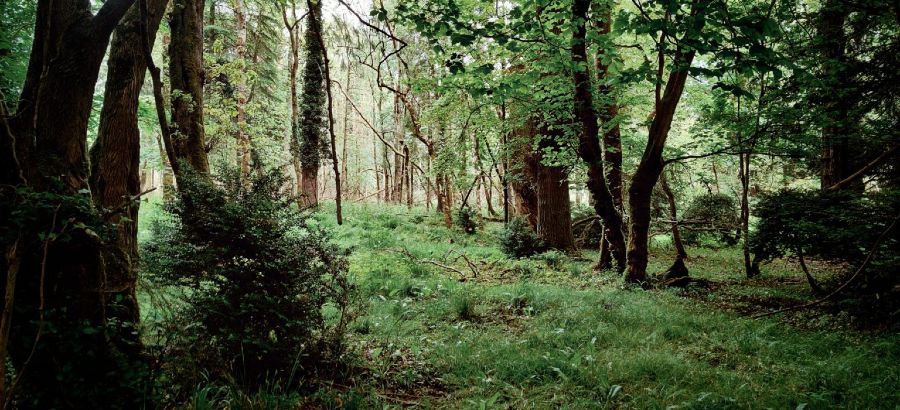
Irish Metalhead Turns His Ancestral Estate into Model of Rewilding: It Naturally Grew Into Biodiverse Eden

@Randal Plunkett;Twitter (L)/Dunsany Nature Reserve
@Randal Plunkett, Twitter (L)/Dunsany Nature Reserve

There’s a lot of talk about rewilding in Europe, where so much wild country has been eliminated over the last 1,000 years, but it usually comes from radical farmers, not death metal musician-filmmakers.

That’s exactly who Randal Plunkett is: a living, working testament to the power of humanity to create change for a better future.

In the face of his lifestyle (as a steak-eating body-building, death metalhead) and under the weight of his heritage (as the 21st Baron of Dunsany Castle in Ireland’s County Meath) Randal decided to take action to restore the dwindling number of truly wild spaces on the Emerald Isle by converting his entire 650-hectare (1,600-acre) estate into Ireland’s most ambitious rewilding project.

First installed in Dunsany Castle in 1402, the Plunkett family is one of Ireland’s oldest clans of blue-bloods. A Plunkett was canonized after being executed by the Church of England in the 17th century, and another ancestor, Horace Plunkett, advocated on behalf of rural development and farming innovations during the early 20th century.

“I’ve never been a country bumpkin,” Randall told The Guardian. “I saw it as a burden, a life of servitude.”

MORE: Australian Scientists Create Seaweed Supplement for Cows that Reduces Methane Emissions by 80%

Now though, concerns about the climate crisis and his country’s native ecosystem destruction has led him to turn his estate over to nature, letting grasses grow tall, and animals to run wild—a clean break from his ancestor Horace’s ideas of agriculture.

Green in nature and name

Dunsany Nature Reserve

“The reserve is pretty much left untouched, with natural processes left to reshape the landscape,” Randall, officially ‘Lord Dunsany,’ told the European Rewilding Network (ERN), which he recently joined. “There’s no drainage, and areas of grassland are left to be grazed by wild animals, such as deer.”

“Otters have returned—the first time the species has been seen on the estate in my lifetime. We have pine martens, stoats, hedgehogs, foxes, badgers and barn owls. Red kite and snipe have returned. We have seen a big increase in insects—with a massive surge in butterflies—and we now see many different bat species. Even endangered Irish species such as corncrakes have come back. Nature really is flourishing,” he added.

RELATED: Trailblazing Gardener Discovers How to Grow Vegetables in Winter—Now He’s Helping Others Do It Too

With several small streams meandering through what is mostly unforested land, there’s room for natural processes to stretch out and create that marvelous chaos most ecosystems need to make substantial, resilient food webs and habitat.

Lord Dunsany doesn’t have much interest in opening the estate up to much more than small tour groups, but as a filmmaker, he does allow filming crews on to shoot, most recently for his own independent film The Green Sea, named for that most stunning shade of green that covers so much of Ireland, not least of which, his family estate.

Private estates like those owned by historically royal families are often some of Europe’s best places to experiment with rewilding.

CHECK OUT:  The Largest Urban Rooftop Farm in the World is Now Bearing Fruit (and More) in Paris

ERN details how places like Bunloit and Glenfeshie Estates in Scotland, and Ken Hill and Knepp Estates elsewhere, are often the only ones which have the large tracks of countryside that aren’t already deeply agricultural necessary to give rewilding a shot.

As GNN reported last year, Knepp is a success story—a broke descendant of lords who couldn’t farm his land anymore turned it into an English wildland safari, creating one of England’s most biodiverse areas and wiping out his debts at the same time.

REWILD Friends’ Feeds by Sharing This Story On Social Media…

Is This Heaven? Kevin Costner Hosts Real Baseball Game at ‘Field of Dreams’ Site –And it’s Perfect

Fox / MLB on Youtube - Fair Use
Fox / MLB on YouTube – Fair Use

“It’s hard not to be romantic about baseball,” said Brad Pitt’s character in the film Moneyball—and this story unfolding last week on an Iowa farm is a great example.

For those lucky enough to have watched Kevin Costner’s enduring classic Field of Dreams as a young boy or girl signed up for little league, the sight of Costner and the real-life Yankees and White Sox walking through the corn stalks onto a regulation size baseball diamond to play an actual Major League Baseball game is, well, ‘perfect.’

The first-place Chicago White Sox faced the New York Yankees adjacent to the corn field in Dyersville, where the iconic film was shot—and it was the first MLB league game ever played in Iowa.

Appearing from a stretch of mature corn beyond the warning track in right field, Costner— who has a great baseball arm and threw his own pitches in movies like Bull Durham and Field—led the two teams onto the field in the video below, to rousing applause before throwing the first pitch at the game.

“Build it and they will come,” goes the famous line in the film, and indeed thousands of MLB fans from around the country showed up to watch on this perfect occasion.

Randy Peterson, writing for the Des Moines Registerrecapped the thoughts of Yankees manager Aaron Boone after their team lost, 9-8.

“That’s probably the greatest setting for a baseball game that I’ve ever been a part of.”

CHECK OUT: Leonardo DiCaprio Announces a $43 Million Pledge to Save the Galápagos Islands

One of the fans commented, “I was in attendance and it was by far the best sporting event I ever attended. MLB hit a home run on this!”

“(The) coolest part was, in order to get to the game you had to enter through the corn in center field on the original Field of Dreams field”

“Everything was just so well planned out.”

How perfect was it?

Fox / MLB on YouTube – Fair Use

James Earle Jones starred in the movie as author Terrance Mann, and, now 90-years-old, he honored the project by contributing his famous deep voice to read the Fox pre-game teaser.

Sports Illustrated detailed how refreshing it was to watch a ballgame without the endless inter-inning pageantry, advertisements on the jumbotron, constant requests to “make some noise,” and blaring music.

MLB commissioner Rob Manfred said the Field of Dreams game will be back next year, likely featuring the Reds and the Cubs, cementing another special date in the MLB calendar, alongside the All-Star Game, Homerun Derby, and Post Season.

RELATED: Dad Rallies Celebrities to Offer Life Lessons to COVID-Year Seniors in Denver—See The Great Gift for Free

“It does feel like all the teams are going to want to touch this,” Costner told MLB. “There’s going to be hot competition to play here. There’s going to be records set here as a result of Field of Dreams. I hope it does happen.”

Maybe a record wasn’t set this time, but a riveting final inning delighted the crowd.

By the top of the ninth inning, Chicago was leading 7-4, after several home runs had sailed into the cornfields surrounding the park (pictured below, next to the smaller film site).

Fox / MLB on YouTube – Fair Use

In a nightmare for the otherwise-stellar pitcher Liam Hendricks, he allowed New York to wipe out that 3-run lead after a single by Tyler Wade led to a home run by Aaron Judge—Judge’s second of the game. With just three outs left in the game, the Sox were only down by one run.

MORE: Ryan Reynolds and ‘It’s Always Sunny’ Star Buy Bad English Football Team to Turn it Around – Now an FX Series

Seby Zavala made it to first base, and then Tim Anderson proceeded to hit a walk-off homer over the corn stalks where the teams had entered three hours earlier, sealing the win, 9-8.

It’s hard not to be romantic about baseball. It was perfect; it was everything a baseball fan could want. A celebration of a simpler period in the history of America’s Pastime.

Is this heaven? Pretty much.

(WATCH the video introduction to the game below.)

BAT the Good News Out For Friends to See—Share This Story…

“Suffering and discomfort are the call to inquiry… You may even experience them as friends coming to show you what you have not yet investigated thoroughly enough.” – Byron Katie

Quote of the Day: “Suffering and discomfort are the call to inquiry… You may even experience them as friends coming to show you what you have not yet investigated thoroughly enough.” – Byron Katie

Photo: by Nik Shuliahin

With a new inspirational quote every day, atop the perfect photo—collected and archived on our Quotes page—why not bookmark GNN.org for a daily uplift?


The Yellow Center of the Deadliest Flower is a Lifeline to Farmers – and the Planet

yrethrum_cc license wikimedia common Krzysztof Ziarnek, Kenraiz
Pyrethrum, Krzyszt of Ziarnek, Kenraiz/CC license

In Kenya, a drive through the Central Highlands will sometimes reveal a landscape covered in a beautiful white-petaled flower with a lethal secret.

The yellow center of the Chrysanthemum cinerariifolium contains one of the world’s great natural insecticides, that as well as being totally harmless to plants, humans, and animals, supports the livelihoods of hundreds of thousands of rural Kenyans who supply much of the world’s pyrethrum, the principle chemical in the flower.

Pyrethrum is becoming a major tool in the fight against mosquito-borne illnesses, as the toxin attacks the central nervous system of the insect, causing it to spasm around and drop still over a 30-second period.

It’s also an excellent natural pesticide, not only for gardens and crops but livestock, who can breath a sigh of relief from biting ticks and flies if a little pyrethrum is rubbed onto their neck, legs, and shoulders.

Simply growing Chrysanthemum cinerariifolium near any plants you wish to keep insect free is enough to protect them from most pests, such is the power of the pyrethrum therein.

“Pyrethrin is the most important insecticide in the world,” says Joel Maina Kibett, chief agriculture officer of Nakuru County in Kenya. “It is natural, organic, and it has no environmental effects. And it is user friendly.”

CHECK OUT: Orchid Thought to Be Extinct in UK Was Discovered Blooming on the Rooftop of London Bank

As chemical insecticides are responsible for mass insect death around the world, declines in honeybees, and many other deleterious effects on animals, the need for mass-produced natural chemicals is high. Kenya is uniquely suited for the cultivation of the flower and the pyrethrum it produces, as its Central Highlands region provides perfect growing conditions for the flower which bursts out of the ground following Kenya’s two rainy seasons.

Flower monopoly

Tanacetum Cinerariifolium/Köhler’s Medizinal-Pflanzen

During the 1970s and ’80s, Kenya grew nearly all the pyrethrum in the world decades after the arrival of the chrysanthemum species from Japan along with British colonizers. It became such an economic driver that it was placed in the Kenyan coat of arms following independence.

After the rise of industrial agriculture and cheaper pyrethrum produced elsewhere, the entire pyrethrum farming industry in Kenya collapsed. The pyrethrum state monopoly only finished paying off debts to growers in 2018, a year after Kenya liberalized the market, encouraging competition, production, and innovation.

MORE: Shade From Solar Panels Increases Abundance of Flowers, Benefiting Pollinators

In Kibett’s Nakuru County, 2017 saw 15,703 farming households receive C. cinerariifolium seedlings from the county government and half a dozen private companies. National Geographic reports that these are already generating income for more than 100,000 rural Kenyans.

“In total, we have given out 23.3 million seedlings since we started the revival of the sector,” Kibett told Nat Geo in a special feature on pyrethrum. “Most of us became what we are because of that flower. We remember seeing beautiful landscapes covered with white sheets of flowers. We have done it before, and the results were very good. And we have the knowledge. We have the existing infrastructure.”

Where before farmers sometimes had to wait months to receive payments for their deliveries, the private sector are settling up within a few days on a popular mobile payment app which in turn allows farmers to quickly pay for school and other things.

Much of the pyrethrum goes to making mosquito-killing incense: coils of pyrethrum produced from dried C. cinerariifolium that are popular insect repellents around the world.

RELATED: A Rose Inspired This Design For the Smartest Way to Collect And Purify Water

A University of Nairobi field study reported that pyrethrin-based insect spray managed to kill around 96% of a recent desert locust plague, a devastating phenomenon that creates unstoppable swarms of flying insects that can devour 300 million pounds of crops in a single day.

Since much of the world’s pyrethrum is grown in the Horn of Africa, where locusts are such a problem, it seems like the perfect solution.

LET Good News Grow—Share This Story on Social Media…

New Zealand is Hearing the Kiwi Call Once Again After 5 Years of Silence: ’It’s Amazing‘

Judi Lapsley Miller/CC license

In the latest audio survey of kiwi bird populations on New Zealand’s North Island, many areas that were silent in 2016 now have airways filled to bursting with kiwi calls.

The male’s high shriek contrasts with the females low growl, but regardless of which sound it was—the early morning hours in December, when the last survey was made, were filled with stifled cries of joy from 150 volunteer bird conservationists.

The manual population survey, called the Kiwi Call Count, uses the human ear to record population numbers of the nation’s five kiwi species to assess the status of the birds in a given area. The same sites are used every year, and 2021 saw a 50% increase in the number of sites in which calls were heard, while not one site had become silent over the last year.

MORE: New Zealand Penguin Hospital Saves Endangered Birds That Would Be ‘Functionally Extinct’ Without Help

A complex kiwi-saving action plan to combat invasive species was implemented to protect the national bird in the early ’90s. Stoats, dogs, feral cats, and other introduced mammals have flourished on the easily caught kiwi chicks, a species that evolved with no native mammalian predators.

“To sit out there and hear how many kiwi there are and how close they are—it makes the effort put into trapping worthwhile,” Ayla Wiles, a biodiversity ranger for the Department of Conservation, told The Guardian

This trapping has been hugely successful, and in 2017 two species of kiwi—the northern brown and the rowi, waddled off the Endangered designation on the IUCN’s Red List. Wiles told reporters that some areas are seeing more of a sprint than a waddle. A place called Whangerei Heads has gone from having 80 kiwi to more than 1,000 since the program began.

CHECK OUT: Size Doesn’t Matter to a Dolphin Mom As She Adopts a Whale Calf

As a nocturnal bird, the call of the kiwi is the most reliable way to track the animals. The calls are easy to discern in the darkness, and even have unique characteristics that allow conservationists to recognize the same birds year after year.

“You can be trapping, you know, week after week after week, in the hope that your kiwi are doing well,” said Ngaire Sullivan, an organizer at Kiwi Coast. “And then for four nights a year, for just those eight hours… You sit there and get to hear your outcome.”

Watch and hear the call of a kiwi below…

CALL OUT the Good Conservation News to Pals—Share This Tale…

Professor Develops Technology That Cools People Down – Without Electricity or AC

SkyCool Systems
SkyCool Systems

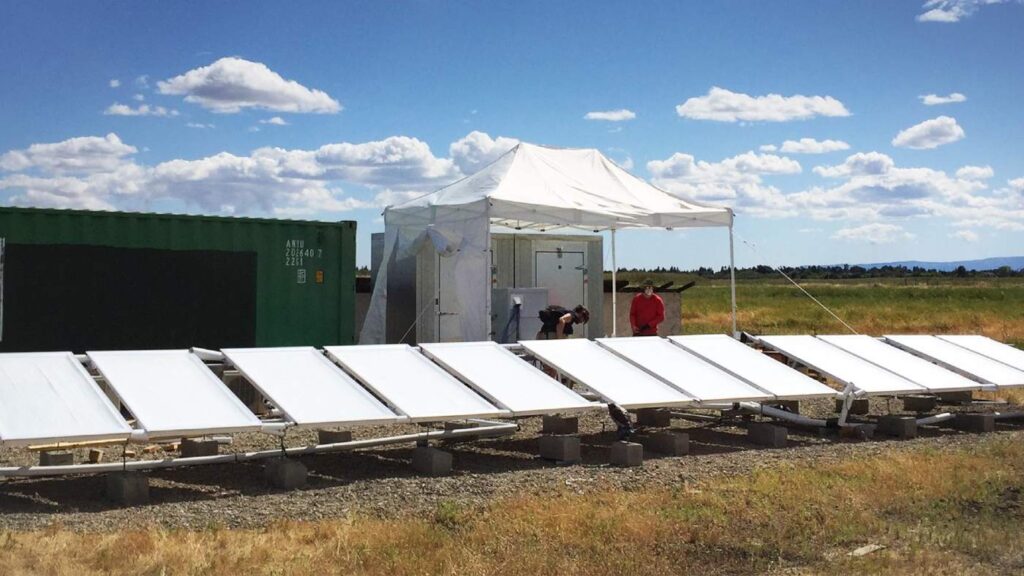
If in mid-summer you went onto the top of the Grocery Outlet supermarket in Stockton, California, and placed your hand on the strange, glossy black panels you found there, you’d be shocked to find they were as cold to the touch as a basement fuse box.

Installed by a company called SkyCool Systems, they are the first of a new breed of cooling technologies that radiate heat out through the atmosphere, lowering nearby air temperatures by about 10°F.

Radiative cooling is what happens when the electromagnetic waves we call heat leave an object. It’s the phenomenon that puts you at risk for heat stroke in the desert during the day, and hypothermia at night; the absorbed heat evacuates the landscape at sundown, and without any moisture to trap it, leaves through Earth’s atmosphere into outer space.

A UCLA scientist reasoned that if a certain spectrum of warming rays is radiated out to the atmosphere during the day, it would cool whatever it left, potentially offering an alternative to traditional air conditioning.

An estimated 7% of global greenhouse gas emissions are generated through cooling systems, both for homes and transport, but as global temperatures continue to climb, the use of cooling systems for homes and businesses is expected to triple over the coming years.

SkyCool’s radiative panels can absorb all the heat-producing light from the sun, and rather than sending it back into the swirling cauldron of gasses that are heating the planet, expels it out into space.

Counter intuitive

Aaswath Raman, a materials scientists at the University of California LA, discovered that radiative cooling technologies like panels and special reflective paints had been investigated before but then abandoned as impossible.

The idea was that if something could radiate heat even in broad daylight, it could save thousands in refrigeration costs. Raman decided to submit a funding proposal to the Advanced Research Projects Agency-Energy, or ARPA-E, a branch of the Department of Energy.

Despite the quilt of material and all the water vapor and CO2 that make up the atmosphere, infrared radiation between 8 to 13 micrometers in length passes through it as if it weren’t there, so Raman aimed to creative a film that reflected visible light, and which radiated the infrared light which can leave the atmosphere, ensuring the heat he disperses doesn’t become someone else’s problem.

MORE: In 24 Years California Has Cut Toxic Air Pollution By 78%, Resulting in 82% Fewer Attributable Deaths

With colleagues from the Stanford engineering department led by Shanhui Fan, he created an ultra-thin film, which he says could be produced in rolls a meter long by two-meters wide, made of silica, glass, and hafnium dioxide, a coating agent used in the optics industry.

Placed on a rooftop, they found their prototype panel became warmer when shaded from the sun’s rays—a counter-intuitive reaction to what one would expect, because the radiation was impeded by the material generating the shade. Furthermore, under the blazing summer sun, the panel was cool to the touch.

Applications abound

If placed on the hood of a car, the film would not only reflect any light from the sun, but radiate away some of the heat from the engine; if placed above where water pipes run through a building, it would cool the water therein, reducing the load on air-conditioning systems.

RELATED: Rooftop Panels of Tiny Plants Can Cleanse Polluted Air at 100 Times the Rate of a Single Tree

After a trip to Mumbai in India revealed the speed at which the home A/C market is growing, Raman needed to ensure the panels and film would be cheap enough to be employed in developing countries near the tropics, where they’re needed most.

In Stockton, the Grocery Outlet supermarket spent $40,000 on refrigeration per year between their freezer isles and the deli. SkyCool panels placed on the roof and is now saving about $5,800 in costs per year.

Washington Post reports that Raman and SkyCool Systems have gone in search of grant money to replace all the air conditioners in a school as part of a project to see if their special film can itself be the principle cooling agent of a building, while National Geographic adds that some scientists have created models that suggested if only 1.5% of the world were covered in these panels, and that they could be maintained over a long enough period, it would reflect all the additional heat created by the climate crisis.

REFRESH Friends’ Feeds With Some Positive News by Sharing This Story…

King Khufu’s Solar Boat Is on the Move After 4,600 Years Next to Egyptian Pyramids

Ministry of Tourism and Antiquities
Egyptian Ministry of Tourism and Antiquities

Although it may not number amongst the seven ancient wonders of the world, the 4,600-year-old solar boat belonging to Egyptian Pharaoh Khufu is an amazing marvel of the ancient world nonetheless.

Last week, King Khufu’s reassembled solar craft was moved intact to its new permanent location, the Grand Egyptian Museum, where it’s sure to become a feature attraction among the museum’s reported 100,000 artifacts when the venue opens to the public later this year.

Under the supervision of a team of engineers and archeologists, after being secured in a specially built, shock-absorbing container, the craft was ferried via a remote-controlled all-terrain vehicle for the five-mile, 10-hour journey from Giza to Cairo.

An ancient story

King Khufu ruled Egypt during the Fourth Dynasty (circa 2613 to 2494 BCE). In 1954, Egyptian archaeologist Kamal el-Mallakh uncovered the remains of the cedar-wood barque buried outside Khufu’s royal tomb in the Pyramid of Cheops (a.k.a., the Great Pyramid), the largest of the three pyramids at Giza.

The craft itself was no longer intact when el-Mallakh made the discovery, however, having rested for centuries in a tightly sealed chamber, the wood from which it was built remained in surprisingly good condition.

RELATED: Archaeologists in Egypt have Unearthed the World’s Oldest Known Beer Factory, Thought to Date Back 5,000 Years

Archaeologists toiled more than 20 months to painstakingly excavate the boat’s 1,224 component fragments. Using methods as historically accurate as possible to those by which the ship was originally built, it was almost another 10 years before a crew of researchers and restorers were able to piece the puzzle back together.

MORE: Archaeologists Discover ‘Dazzling’ 3,000-Year-old Egyptian City, Left ‘As if it were yesterday’

Solar boats containing burial chambers were patterned after the mythical Barque of Ra, the Egyptian god revered as the embodiment of the Sun as it sailed the heavens from dawn to dusk each day.

Olaf Tausch, CC license

While historians are unclear whether this particular boat was part of Khufu’s working fleet or was built to facilitate the pharaoh’s ascension from the mortal to the immortal plain, it was common practice to outfit Pharaohs’ tombs with what the Egyptians believed to be the essentials of the afterlife—including transportation.

CHECK OUT: A Team of Maverick Engineers Want to Roll the Geological Clock Back on Sinai and Replace Desert with Lush Greenery

A big move

As reported by Reuters, The aim of the recent transportation project was “to protect and preserve the biggest and oldest organic artifact made of wood in the history of humanity for future generations,” Egypt’s Ministry of Tourism and Antiquities said in a statement.

And while that might not exactly be immortality, it’s still a pretty fine legacy indeed.

(WATCH the video for this story below.)

UNEARTH the Good News for Pals—Share This Story With Them…

“Don’t live down to expectations. Go out there and do something remarkable.” – Wendy Wasserstein

Quote of the Day: “Don’t live down to expectations. Go out there and do something remarkable.” – Wendy Wasserstein

Photo: by Toa Heftiba

With a new inspirational quote every day, atop the perfect photo—collected and archived on our Quotes page—why not bookmark GNN.org for a daily uplift?


Metabolism Does Not Slow Down in Mid-Life as is Commonly Believed, Says Study

Most of us remember a time when we could eat anything we wanted and not gain weight. But a new study suggests your metabolism—the rate at which you burn calories—actually starts its inevitable decline much later than we all assumed.

Additionally, we tend to think of our teens and 20s as the age when our calorie-burning potential hits its peak. But the researchers found that, pound for pound, infants had the highest metabolic rates of all.

Duke University associate professor Herman Pontzer joined an international team of scientists to analyze the average calories burned by more than 6,600 people ranging in age from one week to 95 as they went about their daily lives in 29 countries worldwide.

Focusing on puberty, menopause, and other phases of life, Pontzer, the study’s co-author was surprised. “What’s weird is that the timing of our ‘metabolic life stages’ doesn’t seem to match those typical milestones.”

Previously, most large-scale studies measured how much energy the body uses to perform basic vital functions such as breathing, digesting, pumping blood—in other words, the calories you need just to stay alive. But that amounts to only 50% to 70% of the calories we burn each day. It doesn’t take into account the energy we spend doing everything else: washing the dishes, walking the dog, breaking a sweat at the gym, even just thinking or fidgeting.

To come up with a number for total daily energy expenditure, the researchers relied on the “doubly labeled water” method. It’s a urine test that involves having a person drink water in which the hydrogen and oxygen in the water molecules have been replaced with naturally occurring “heavy” forms, and then measuring how quickly they’re flushed out.

Scientists have used the technique—considered the gold standard for measuring daily energy expenditure during normal daily life, outside of the lab— to measure energy expenditure in humans since the 1980s, but studies have been limited in size and scope due to cost. So multiple labs decided to share their data and gather their measurements in a single database, to see if they could tease out truths that weren’t revealed or were only hinted at in previous work.

Pooling and analyzing energy expenditures across the entire lifespan revealed some surprises, including the data showing that babies have the highest metabolic rates of all.

During the first 12 months of an infant’s life, their energy needs shoot upward, such that by their first birthday, a one-year-old burns calories 50% faster for their body size than an adult.

And that’s not just because, in their first year, infants are busy tripling their birth weight. “Of course they’re growing, but even once you control for that, their energy expenditures are rocketing up higher than you’d expect for their body size and composition,” said Pontzer, author of a book on the science of metabolism, Burn: How We Really Burn Calories, Lose Weight, and Stay Healthy.

An infant’s gas-guzzling metabolism may partly explain why children who don’t get enough to eat during this developmental window are less likely to survive and grow up to be healthy adults.

“Something is happening inside a baby’s cells to make them more active, and we don’t know what those processes are yet,” Pontzer said.

After this initial surge in infancy, the data show that metabolism slows by about 3% each year until we reach our 20s, when it levels off into a new normal.

Despite the teen years being a time of growth spurts, the researchers didn’t see any uptick in daily calorie needs in adolescence after they took body size into account. “We really thought puberty would be different and it’s not,” said Pontzer.

RELATED: Drinking This Juice Could Help Promote Healthy Aging, Scientists Find

30s, 40s, and 50s

Midlife was another surprise. Perhaps you’ve been told that it’s all downhill after 30 when it comes to your weight. But while several factors could explain the thickening waistlines that often emerge during our prime working years, the findings suggest that a changing metabolism isn’t one of them.

In fact, the researchers discovered that energy expenditures during these middle decades—our 20s, 30s, 40s and 50s—were the most stable. Even during pregnancy, a woman’s calorie needs were no more or less than expected given her added bulk as the baby grows.

The data suggest that our metabolisms don’t really start to decline again until after age 60. The slowdown is gradual, only 0.7% a year. But a person in their 90s needs 26% fewer calories each day than someone in midlife.

CHECK OUT: The 3 Most Promising Longevity Supplements From Scientific Research So Far

Lost muscle mass as we get older may be partly to blame, the researchers say, since muscle burns more calories than fat. But it’s not the whole picture. “We controlled for muscle mass,” Pontzer said. “It’s because their cells are slowing down.”

The patterns held even when differing activity levels were taken into account, according to the research, which was published August 12 in the journal Science and funded by the National Science Foundation and IAEA.

For a long time, what drives shifts in energy expenditure has been difficult to parse because aging goes hand in hand with so many other changes, Pontzer said. But the research lends support to the idea that it’s more than age-related changes in lifestyle or body composition.

“All of this points to the conclusion that tissue metabolism, the work that the cells are doing, is changing over the course of the lifespan in ways we haven’t fully appreciated before,” Pontzer said. “You really need a big data set like this to get at those questions.”

(Source: Duke University) – File photo by Emma Simpson

SHARE the Myth-Busting Research on Social Media…

Boy Raises $700,000 For Hospice By Camping Out For 500 Nights After Dying Man Gives Him a Tent

A serendipitous series of events turned an 11-year-old boy into a stalwart hero, after a dying man gave him a tent.

Last year, just before the pandemic reached the UK, Max Woosey’s parents were helping to care for a neighbor, Rick Abbott, who had terminal cancer.

They came to appreciate how vital it was that the local hospice in North Devon was able to help their neighbor remain in his own home, which was his final wish.

Just before he died, Abbott gave Max a gift.

“My friend Rick gave me his tent before he died and made me promise to go have an adventure.”

Max realized that most of the fundraising for the hospice was cancelled and services were closed due to COVID-19, so on March 29th, 2020, he began sleeping in his new tent pitched in the backyard, hoping to raise £100 for the hospice.

With his plush stuffed animals to keep him cozy, he posted updates on his fundraising page, while waiting for the pandemic to be over.

As lockdown restrictions dragged on, and warm summer nights turned into chilly autumn frost, Max refused to come in from the cold—and donations poured in.

On October 12, he wrote, “Thank you so much for all the donations. I can’t believe how much I have raised. I have decided to camp out for a year to see if I can get to £20,000.”

The boy blew past that goal, hitting milestones of 100 consecutive days, then 200 days, then 300 days.

RELATED: Remarkable 10-Year-old Inspires the World to Donate Half a Million Books For Kids: ‘A Catalyst’ For Kindness

His dog Digby was more than welcome to spend the night and keep this Cub Scout warm through the nights.

During one December storm, his tent blew over but he repitched it so he could cross-off another day on his calendar. His dad kept him company during Storm Bella and its 70mph winds.

He even had to get a new tent when the first one sprung a leak.

When Christmas season arrived, the family decorated his tent with lights and santa ornaments. Sleeping outside, maybe he hoped to catch a glimpse of the red-suited guy when his sleigh flew by.

JustGiving

Max’s mission attracted national and international media attention and he was invited to camp next to the lion’s enclosure at London zoo and in the Downing Street garden, according to The Guardian.

Last week, the boy from Braunton celebrated his 500th consecutive night on an adventure that was spurred on by tragedy but raised more than $770,000 from strangers around the world for the life-giving service of hospice.

SHARE the Great Kindness Adventure on Social Media…

Amaranth is a Health Trend 8,000 Years Old That ‘Could Feed the World’

Amaranthus tricolor - Amaranthaceae family, by Kurt Stüber, CC license

“Nutritious ancestral plant of the Mayans, its flowers a treasure, a small but
powerful grain; eat the leaf and the grain, which is ideal for roasting and making
popcorn.”

Amaranthus tricolor – Amaranthaceae family, by Kurt Stüber, CC license

This brief description, on a website translated from Spanish, belittles the grand potential and grander history of a humble but potential superfood that could replace nutrient-deficient grains across the developing world.

The first growers of the grain called amaranth were the always ahead-of-their-time Mayan peoples of Central and South America. It was also cultivated by the Aztecs.

When Spanish conquerors  arrived in the 1600s, they threatened anyone seen growing amaranth, because the spiritual connection they had to the plant was thought to undermine Christianity, according to a recent article in The Guardian. Now free from such persecution, the ancestors of Mesoamerican peoples across Latin America are bringing this once-common crop to the attention of the world’s markets.

A source of all nine essential amino acids, as well as several key minerals like iron and magnesium, amaranth is a pseudo-cereal, lying somewhere between a seed and grain, like buckwheat or quinoa—and, it does not contain gluten.

Additionally, it’s now being grown and marketed in high-end products for the beauty industry, in essential oils, and health food stores, in far-flung places like South Asia, China, India, West Africa, and the Caribbean.

With nearly 75 species in the Amaranthus genus, some amaranth species are cultivated as leaf vegetables, some for grain, and some for ornamental plants that you may have planted in your garden.

POPULAR: This Wonder Tree is a Game-Changer for Rainforest Agriculture in Honduras And Deforested Sites Worldwide

Densely packed flower clusters and stems grow in a range of striking pigments, from maroon and crimson to ochre and lime, and can grow from 3 to 8 feet tall. Some of them are summer annual weeds, commonly referred to as pigweeds.

Amaranth explosion

The total value, since the 1970s when amaranth first began appearing on the shelves of stores, has ballooned into a global trade that’s now valued at $5.8 billion.

And, one Pueblo woman from New Mexico thinks it has the potential to feed the entire world.

Much of the revival of traditional amaranth cultivation methods, which involve saving the seeds of the best plants, similar to corn cultivation by Mexico’s campesinos, have created a seriously-resilient crop. A 2010 article from the New York Times detailing the rise of weeds resistant to the Monsanto herbicide “Roundup,” explained that amaranth, considered a weed by some, displayed such resistance.

Amaranthus caudatus, by C T Johansson, CC license

Organizations like Qachoo Aluum in Guatemala, a Mayan word for Mother Earth, sell these ancient grains/seeds on their website, and host workshops to help indigenous communities regain food security through ancestral methods of cultivation.

Regain is a key word here because, as The Guardian article details, government forces had been persecuting the Mayan population and burning their fields. Farmers kept amaranth seeds in secret jars buried underground, and when the two-decade war ended, the remaining agriculturalists began to spread the seed, and the growing methods, across the countryside.

RELATED: Date Seeds Unearthed From the Time of Jesus Are Revived, Adding Fruit to Jewish, Arab Unity

Qachoo Aluum rose from the ashes of this conflict, thanks to more than 400 families from 24 Guatemalan villages, who have been traveling every year to the United States to share their ancestral knowledge about the crop to predominantly indigenous and Latin-language garden centers.

“Amaranth has completely changed the lives of families in our communities, not only economically, but spiritually,” said Maria Aurelia Xitumul, a Mayan descendent and member of the Qachoo Aluum community since 2006.

The interchange of seeds—a vital part of healthy ag systems, has revived friendly connections between the Guatemalan Qachoo Aluum and their New Mexican Pueblo relatives.

ALSO: Cherokee Nation First U.S. Tribe to be Invited to Preserve Their Heirloom Species in Global Seed Vault

“We’ve always viewed our seed relatives as relatives and kin,” said Tsosie-Peña, who believes the resilient, nutritious plant can feed the world.

A perfect plant for drought-prone regions, amaranth has the potential to improve nutrition, boost food security, foster rural development, and support sustainable land care.

GROW This Nutritional Good News By Sharing it on Social Media…

“In nature, improbabilities are the one stock in trade. The whole creation is one lunatic fringe . . . so far-fetched as a single giraffe.” – Annie Dillard

Quote of the Day: “In nature, improbabilities are the one stock in trade. The whole creation is one lunatic fringe . . . so far-fetched as a single giraffe.” – Annie Dillard, Pilgrim at Tinker Creek

Photo: by MARIOLA GROBELSKA

With a new inspirational quote every day, atop the perfect photo—collected and archived on our Quotes page—why not bookmark GNN.org for a daily uplift?


This Week’s Inspiring Horoscopes From Rob Brezsny’s ‘Free Will Astrology’

Our partner Rob Brezsny provides his weekly wisdom to enlighten our thinking and motivate our mood. Rob’s Free Will Astrology, is a syndicated weekly column appearing in over a hundred publications. He is also the author of Pronoia Is the Antidote for Paranoia: How All of Creation Is Conspiring To Shower You with Blessings. (A free preview of the book is available here.)

Here is your weekly horoscope…

FREE WILL ASTROLOGY – Week beginning August 13, 2021
Copyright by Rob Brezsny, FreeWillAstrology.com

LEO (July 23-Aug. 22):
According to Leo author Guy de Maupassant, “We are in the habit of using our eyes only with the memory of what people before us have thought about the things we are looking at.” That’s too bad. It causes us to miss a lot of life’s richness. In fact, said de Maupassant, “There is an element of the unexplored in everything. The smallest thing contains a little of what is unknown.” Your assignment in the next two weeks, Leo, is to take his thoughts to heart. In every experience, engage “with enough attention to find an aspect of it that no one has ever seen or spoken of.” You are in a phase when you could discover and enjoy record-breaking levels of novelty.

VIRGO (Aug. 23-Sept. 22):
Poet Brigit Pegeen Kelly wrote a poem I want you to know about. She described how, when she was a child, she stayed up all night picking peaches from her father’s orchard by starlight. For hours, she climbed up and down the ladder. Her hands “twisted fruit” as if she “were entering a thousand doors.” When the stars faded and morning arrived, her insides felt like “the stillness a bell possesses just after it has been rung.” That’s the kind of experience I wish for you in the coming days, Virgo. I know it can’t be exactly the same. Can you imagine what the nearest equivalent might be? Make it happen!

LIBRA (Sept. 23-Oct. 22):
Ancient Greek philosopher Plato mistrusted laughter, poetry, bright colors, and artists who used bright colors. All those soulful activities influenced people to be emotional, Plato thought, and therefore represented a threat to rational, orderly society. Wow! I’m glad I don’t live in a culture descended from Plato! Oh, wait, I do. His writing is foundational to Western thought. One modern philosopher declared, “The European philosophical tradition consists of a series of footnotes to Plato.” Anyway, I’m counseling you to rebel against Plato in the coming weeks. You especially need experiences that awaken and please and highlight your feelings. Contrary to Plato’s fears, doing this will boost your intelligence and enhance your decision-making powers.

SCORPIO (Oct. 23-Nov. 21):
A biography of Nobel Prize-winning Scorpio author Albert Camus noted that he had two modes. They are summed up in the French words solidaire (“unity”) and solitaire (“solitary”). When Camus was in a solidaire phase, he immersed himself in convivial engagement, enjoying the pleasures of socializing. But when he decided it was time to work hard on writing his books, he retreated into a monastic routine to marshal intense creativity. According to my astrological analysis, you Scorpios are currently in the solidaire phase of your rhythm. Enjoy it to the max! When might the next solitaire phase come? October could be such a time.

SAGITTARIUS (Nov. 22-Dec. 21):
During the 76 years since the end of World War II, Italy has had 69 different governments. That’s a great deal of turnover! Is it a strength or weakness to have so many changes in leadership? On the one hand, such flexibility could be an asset; it might be wise to keep reinventing the power structure as circumstances shift. On the other hand, having so little continuity and stability may undermine confidence and generate stressful uncertainty. I bring this to your attention, Sagittarius, because you’re entering a phase when you could be as changeable as Italy. Is that what you want? Would it serve you or undermine you? Make a conscious choice.

CAPRICORN (Dec. 22-Jan. 19):
Capricorn actor Nicholas Browne testifies, “My heart is too full; it overflows onto everything I see. I am drowning in my own heart. I’ve plunged into the deepness of emotion, and I don’t see any way back up. Still, I pray no one comes to save me.” I’m guessing that his profound capacity to feel and express emotions serves Browne well in his craft. While I don’t recommend such a deep immersion for you 24/7/365, I suspect you’ll be wise to embark on such an excursion during the next three weeks. Have fun diving! How deep can you go?

AQUARIUS (Jan. 20-Feb. 18):
In accordance with current astrological omens, I’m calling on author Byron Katie to offer you a message. Is it infused with tough love or sweet encouragement? Both! Here’s Katie: “When you realize that suffering and discomfort are the call to inquiry, you may actually begin to look forward to uncomfortable feelings. You may even experience them as friends coming to show you what you have not yet investigated thoroughly enough.” Get ready to dive deeper than you’ve dared to go before, Aquarius. I guarantee you it will ultimately become fun and educational.

PISCES (Feb. 19-March 20):
In August 1922, author Nikos Kazantzakis wrote this triumphant declaration: “All day today I’ve had the most gentle, quivering joy, because I’m beginning to heal. Consciously, happily, I feel that I am being born anew, that I am beginning once again to take possession of the light.” On behalf of the cosmic powers-that-be, I authorize you to use these words as your own in the coming weeks. They capture transformations that are in the works for you. By speaking Kazantzakis’s declarations aloud several times every day, you will ensure that his experience will be yours, too.

ARIES (March 21-April 19):
“Consecrate” isn’t a word you often encounter in intellectual circles. In my home country of America, many otherwise smart people spurn the possibility that we might want to make things sacred. And a lot of art aspires to do the opposite of consecration: strip the world of holiness and mock the urge to commune with sanctified experiences. But filmmaker Pier Paolo Pasolini (1922–1975) expressed a contradictory view. He wrote, “I am not interested in deconsecrating: that’s a fashion I hate. I want to reconsecrate things as much as possible, I want to re-mythicize them.” In accordance with astrological omens, Aries, I invite you to look for opportunities to do the same.

TAURUS (April 20-May 20):
Anais Nin wrote, “I don’t want worship. I want understanding.” George Orwell said, “Perhaps one did not want to be loved so much as to be understood.” Poet Marina Tsvetaeva declared, “For as long as I can remember, I thought I wanted to be loved. Now I know: I don’t need love, I need understanding.” Here’s what I’ll add, Taurus: If you ask for understanding and seek it out, a wealth of it will be available to you in the coming weeks.

GEMINI (May 21-June 20):
The English idiom “playing hard to get” means “pretending to be unavailable or uninterested so as to make oneself more attractive or desirable.” Psychologists say this strategy often works, although it’s crucial not to go too far and make your pursuer lose interest. 17th-century philosopher Baltasar Gracián expressed the concept more philosophically. He said, “Leave people hungry. Even with physical thirst, good taste’s trick is to stimulate it, not quench it. What’s good, if sparse, is twice as good. A surfeit of pleasure is dangerous, for it occasions disdain even towards what’s undisputedly excellent. Hard-won happiness is twice as enjoyable.” I suggest you consider deploying these strategies, Gemini.

CANCER (June 21-July 22):
Painter John Singer Sargent sometimes worked alongside painter Claude Monet at Monet’s home. He sought the older man’s guidance. Before their first session, Sargent realized there was no black among the paint colors Monet gave him to work with. What?! Monet didn’t use black? Sargent was shocked. He couldn’t imagine painting without it. And yet, he did fine without it. In fact, the apparent limitation compelled him to be creative in ways he hadn’t previously imagined. What would be your metaphorical equivalent, Cancerian: a limitation that inspires?

WANT MORE? Listen to Rob’s EXPANDED AUDIO HOROSCOPES, 4-5 minute meditations on the current state of your destiny — or subscribe to his unique daily text message service at: RealAstrology.com

(Zodiac images by Numerologysign.com, CC license)

SHARE The Wisdom With Friends Who Are Stars in Your Life on Social Media…

Retired Officer Engages With Scammers to Expose Their Schemes – WATCH the Call

The internet makes it easy for criminals to reach out from anywhere to illegally obtain your money or personal data—and a retired police officer is pointing out some of the most dubious ways scammers use smart phones to trick innocent people.

Dave has spoken directly with hundreds of scammers in an attempt to understand what they do, so he can help the public avoid falling prey to their frauds.

Their ploys are varied, and sophisticated enough to be convincing even to the most savvy people.

Dave, who resides in Canada, received a call from a number disguised as if it were a local caller. When he answered, a voice told him that he was in trouble unless he spoke with a government agent about his bank account.

The caller pretended to be with the investigations department of Service Canada. In this case, the scammer told Dave that his accounts were connected with serious crimes. In the US, many scammers identify themselves as being with the FBI.

The scammer even set up a fake call with a local police officer, while he waited on hold.

RELATED: 14-Year-old Awarded $25,000 For Invention That Totally Eliminates Blind Spots in Your Car Using a Projector

Together, the thieving tag-team explained that Dave’s money needed to be moved to a secure government account.

Dave’s advice is that you should never engage with these scammers. One correct piece of data, even a first name or your correct city, can be used with your phone number to find you on social media and gather even more information.

If the call seems real, ask for a name and then hang up. Use a different phone to call the agency or bank directly to verify the caller’s identity.

Always look up a bank or police department number yourself, instead of dialing one provided by the caller. Police will never call somebody on the phone to threaten arrest. Your bank will never call and ask you to divulge information. And government agencies will not call you to help you secure your funds.

CHECK OUT: City’s Police Force Says No Officer Fired a Single Shot in 2020, Citing Successful De-escalation Training

Sometimes, scammers will hijack your phone and your verification call to any number will be rerouted to them without you knowing it was done. If you understand the scam and you refuse to provide any information or follow any instructions, you will be less likely to ever be the victim of one of these scams.

SHARE Some Police Training on Social Media…

Solar-Powered Refrigeration Trucks Will Cut Pollution From Idling Diesel Engines

A provider of solar and battery power systems is set to outfit refrigeration trucks with solar paneled roofs that would cut emissions while keeping cool 1,000 trailers full of food.

The transporting of tons of food to local supermarkets are normally cooled by diesel fuel. Idling diesel tractors burn about a gallon of fuel every hour while releasing more than 22 pounds of carbon dioxide into the atmosphere.

Under the terms of a new agreement, XL Fleet will supply battery and power electronics systems for the first 1,000 units of eNow’s new electrified refrigerated trailer solutions.

XL Fleet’s mission is to help corporations and their fleets lower operating costs while helping them achieve their green goals.

eNow’s solar systems capture the sun’s energy with roof mounted solar modules, and then store the energy in auxiliary batteries used to power lift gates, in-cab air conditioning, refrigeration and lighting.

RELATED: Daimler Trucks is Now Accepting Orders for All-Electric Freight Trucks, Having Tested Them on American Highways

Approximately 50,000 new diesel-powered refrigerated trailers are sold annually in the U.S., and XL Fleet’s partnership with eNow accelerates a sustainable all-electric solution.

XL Fleet and eNow are collaborating on the design and development of the system, especially an integrated lithium-ion battery and power electronics technology that will be installed underfloor on the Class 8 trailers, providing approximately 12 hours or more of run time between charges.

Solar panels mounted on the roof of the trailer will be used for charging of the batteries and powering systems when idling or during loading and unloading of the trailer.

The system will be equipped with a thermal management system to enable year-round operation across North America.

CHECK OUT: Instead of Dumping Rejected Food Shipments into Landfills, Truckers Are Donating Them to Local Charities

They can be hauled by traditional internal combustion engine or electrified tractors, as a way for fleet managers to immediately and significantly reduce emissions. Delivery is expected in the first half of 2022.

“We have been collaborating with eNow on critical engineering elements of this exciting next generation electrified refrigerated trailer offering for some time now, and continue to be impressed by the team’s technology, ingenuity and shared passion for sustainability,” said Dimitri Kazarinoff, CEO of XL Fleet.

“This partnership will change the way the transportation industry thinks about energy and refrigerated transportation,” said Jeff Flath, President & CEO at eNow, “to eliminate a major source of diesel fuel consumption and emissions for fleets.”

SHARE the Green Good News on Social Media…

Steelworkers Union is Helping Turn Massive Abandoned Steel Mill into Producer of Wind Turbines

Once the largest steel mill in the world, the Sparrows Point shipyard in Maryland will provide new jobs in Baltimore as a manufacturer of wind turbine parts.

The United Steelworkers union (USW) announced this month that it will partner with US Wind as it transforms the former steel mill into a manufacturing facility supporting the growth of offshore wind energy.

US Wind plans to use the site to make the monopile foundations needed for their offshore wind developments, including their maiden MarWin project consisting of 22-turbines.

The union has pledged to work with the company to recruit and train local workers, while supporting workers’ rights to unionize and collectively bargain.

RELATED: World’s Largest Wind Turbine Manufacturer Says All Its Blades Will Soon be Fully Recycled

“The loss of the Sparrows Point steel mill, which once employed thousands of workers, was a huge blow to the Baltimore community and to U.S. manufacturing as a whole,” said USW International President Tom Conway. “Now, we have a chance to create the jobs of the future right here on this historic site and ensure that they are good, union jobs that will again support families across this region.”

Catalyzed by a 90-acre lease agreement and $150 million investment by US Wind, the plant is expected to support more than 500 permanent jobs, as well as 3,500 construction jobs to prepare the site.

Welcoming steel back to the storied Sparrows Point site is truly a full-circle moment that shareholders hope will create a ripple effect of jobs and prosperity to power Maryland’s post-COVID economy.

ALSO: Retired Wind Turbine Blades Get Turned into Bridges and Reinforced Concrete

“Sparrows Point has always been hallowed ground for me and my fellow Steelworkers,” said USW’s Jim Strong. “We’re thrilled to be a part of US Wind’s visionary plans to bring steel back to Baltimore, back to this hallowed ground.”

BLOW This Good News to Job-seekers on Social Media… (File photo by Jschnalzer, CC license)

“The world’s not perfect. But it’s there for us, trying the best it can; that’s what makes it so damn beautiful.” – Hiromu Arakawa

Quote of the Day: “The world’s not perfect. But it’s there for us, trying the best it can; that’s what makes it so damn beautiful.” – Hiromu Arakawa, Fullmetal Alchemist, Vol. 1

Photo: by Cristofer Maximilian

With a new inspirational quote every day, atop the perfect photo—collected and archived on our Quotes page—why not bookmark GNN.org for a daily uplift?


Physical Activity During Depression Not Only Reduces Symptoms, But Increases Brain’s Ability to Change, Says Study

Physical activity does the brain good.

Not only does it reduce depressive symptoms, it actually fosters the brain’s ability to change and adapt.

This dual beneficial effect of physical activity was reported by researchers at Ruhr-Universität Bochum in Germany following a small study.

“The results show how important seemingly simple things like physical activity are in treating and preventing illnesses such as depression,” says study leader associate professor Dr. Karin Rosenkranz.

People with depression often withdraw and are physically inactive. To investigate the effect of physical activity, Karin Rosenkranz’s working group enlisted 41 people for the study, all of whom were undergoing treatment at the hospital. The participants were each assigned to one of two groups, one of which completed a three-week exercise program.

The program, which was developed by a sports science team at the University of Bielefeld, was varied. It contained fun elements, and did not take the form of a competition or test, but instead required teamwork from the participants.

RELATED: Embrace Your Darker Moods And You’ll Feel Happier in the Long Run, Say Scientists

“This specifically promoted motivation and social togetherness while breaking down a fear of challenges and negative experiences with physical activity—such as school PE lessons,” explains Karin Rosenkranz. The other group took part in a control program without physical activity.

The study team ascertained the severity of the depressive symptoms, such as a loss of drive and interest, lack of motivation and negative feelings, both before and after the program.

The brain’s ability to change, known as neuroplasticity, was also measured. It can be determined externally with the help of transcranial magnetic stimulation. “The ability to change is important for all of the brain’s learning and adaptation processes,” explains Karin Rosenkranz.

Ability to change increased—symptoms decreased

The brain’s ability to change is lower in people with depression than in healthy people.

After the program of physical activity was completed, this ability to change increased significantly and achieved the same values as healthy people.

MORE: Moving Your Sleep Time An Hour Earlier Could Cut Depression Risk by 23%, Study Says

At the same time, depressive symptoms decreased in the group.

The more the ability to change increased, the more clearly the clinical symptoms decreased, according to Rosenkranz, and these changes were not so pronounced in the group who took part in no physical activity.

Though physical activity had an effect on symptoms and the brain’s ability to change, the doctor could not say to what extent the changes are causally linked, based on this study, which was published in June 2021 in the journal Frontiers in Psychiatry.

“It is known that physical activity does the brain good, as it, for instance, promotes the formation of neuron connections, adds Rosenkranz. “This could certainly also play a role here.”

So, next time you’re feeling low, it’s worth it to try and move your body, to change your brain.

(Source: Ruhr-University Bochum)

UPLIFT Your Friends With a Friendly Suggestion on Social Media…