












All News - Page 446 of 1736 - Good News Network
Home Blog Page 446

Nebraska Teen Runner Helps Competitor Finish Race After He Collapsed, Giving Up His Own Qualifying Hopes

Featured image By Jay Slagle www.preprunningnerd.com

In the sport of track and field, athletes compete not only with one another but against themselves, and with each race they strive to achieve a new personal best.

For one Nebraska teen running in what would likely be his final cross country outing before graduating high school, his personal best turned out not to be about marking the fastest time but displaying the biggest heart.

Although it was a long shot when he came out of the blocks last Thursday, Bellevue East senior Brandon Schutt knew if his time was good enough that day, he still had the potential to qualify for the upcoming state meet.

A mile into the 3.1-mile race, however, Schutt realized he wasn’t going to be able to keep up the necessary momentum.

Rather than risk injury, he slowed to a comfortable pace that would allow him to simply enjoy the moment and the day.

Meanwhile, Omaha Burke High School sophomore Blake Cerveny was running a very different kind of race.

Aiming to beat his own personal record, after a fast start, he continued to push himself hard.

With less than 400 meters to go, Cerveny’s legs cramped up and failed him.

Jay Slagle/www.preprunningnerd.com

His will did not.

Determined to finish, Cerveny rose from the ground and continued on, only to fall again after another 150 meters… and again, he got up and started running. This time he’d made it only 25 meters more before going down. But he wasn’t done yet.

Concerned, his dad and his coach asked Cerveny if he wanted to stop. He didn’t. With Herculean effort, the young runner pulled himself up and with an unsteady gait, moved forward for one final push.

It wasn’t enough. A scant 100 meters from the finish line, he lay curled on the ground. His legs had simply given out.

Before Cerveny’s dad could reach his son, another runner—Brandon Schutt—was at his side to offer a helping hand.

Jay Slagle/www.preprunningnerd.com

His first attempt to get Cerveny up failed, but like Cerveny, he too refused to quit. With a second tug, Cerveny was on his feet.

At a measured jog, with Cerveny holding Schutt for support and Schutt helping Cerveny maintain balance, the two completed the final 75 meters of the course in tandem.

Jay Slagle/www.preprunningnerd.com

Schutt even made sure the injured runner crossed the finish line first, securing his opponent a faster time.

Jay Slagle/www.preprunningnerd.com

(Although Cerveny was automatically disqualified for having received help, Schutt’s time for the race will stand.)

RELATED: The 7 Mental Health Benefits of Running That You May Not Know About

“I saw Blake zig-zagging with 100 meters to go, a classic sign that his legs were about to give. As I kept my camera trained on him, I saw Brandon come into the picture. I began whispering, ‘No, no, no,’ to myself, because at the time, I didn’t know the Good Samaritan rule had been changed,” Jay Slagle, the citizen journalist who first broke the story on his blog, PrepRunningNerd.com told GNN.

“This is the first time I’ve ever seen an athlete stop his race and work so hard to help his fellow competitor across the finish line,” he added. “Perhaps more impressively, Brandon had virtually no time to think about whether he should help or not; he reacted so quickly that he did it instinctively.”

Three weeks prior to this meet, Schutt had found himself in the same situation as Cerveny, unable to complete the race. “I felt awful about not finishing,” he told KETV-7. “I felt like I was letting my teammates down and I was letting myself down—so ultimately I just made the call [to help him].”

As Cerveny was taken to the medical tent for care, Schutt rejoined his teammates for a post-race cool-down. (Cerveny, who was only suffering from extreme muscle fatigue with no sustained injuries, was soon up and able to leave on his own steam.)

Ironically, though the pair had competed in five separate races over the course of the season, they were still strangers. At the end of the eventful day, neither Cerveny nor Schutt knew each other’s names.

Thanks to Slagle’s coverage and a whirlwind of social media, however, Schutt’s uncredited act of kindness was quickly anything but anonymous. Soon enough, the local news outlet that picked up the story and ran with it arranged an on-camera reunion in which the boys were given the opportunity to reflect on what the day’s events had meant to them.

In today’s competitive world in which the emphasis in athletics is so often put on breaking records, it was inspiring to see that for an athlete like Brandon Schutt, the value of true sportsmanship still had legs.

“Brandon is an excellent person,” Bellevue East’s head track coach Rachel Carraher told KETV-7. “He is really kind and a great leader on the team.”

MORE: Hero Park Ranger Carries Dehydrated Dog To Safety Down a Treacherous Mountain Trail

And for others, like Blake Cerveny, knowing that finishing the race—no matter the odds or adversity–is the true meaning of a win.

(WATCH the KETV7 video showing the runners meeting below.)

SHARE This Heart-Warming Act of Kindness With the Favorites in Your Life…

This Carbon-Negative Perfume is Made from Captured CO2 – And it Smells Like Figs and Orange Peel

Air Company
Air Company

Demonstrating that CO2 isn’t only pollution, but can also be a valuable raw material, a company has launched a perfume line smelling of figs and tobacco, but made from greenhouse gases instead.

With the principal ingredient being ethanol, Air Company ditches the normal process of fermenting corn for that of their proprietary technology which acts as a kind of artificial photosynthesis when fed CO2 captured from nearby Brooklyn factories.

The result is entirely sustainable ethanol, since the factory is powered by 100% renewable energy.

Air Company has released a line of ethanol-based products sourced from CO2, including the Air Eau de Parfum, Air Vodka—which GNN has previously reported on—and Air hand sanitizer.

This has the double impact of reducing the amount of corn produced to create ethanol by commercial means, freeing up farmland for more productive and desired uses.

“The goal for us has always been to use these products in our own internal research and development for the company, but as beacons for people to show you that you can make these really sustainable products that people use every day in their lives,” cofounder and CEO Gregory Constantine told Fast Company.

RELATED: Spray-on Treatment Could Lengthen Life of Roads While Making Cities Cooler

Eau de Parfum contains hints of fig, jasmine, orange peel, powdery musk, tobacco, and azalea. However novel and exciting Eau de Parfum may be, the true innovation from this company’s technology is yet to come.

Air Company is hoping to open up the market for regenerative jet fuel, synthesized directly from the emissions in the air, from nearby factories, or from the airport itself to give chances for airlines to dramatically reduce their carbon-emissions footprint.

“We’re emerging as a pioneer in this space, creating a carbon-neutral jet fuel to be distributed across North America. To curb our emissions stemming from transport, we’ll deploy modular sites as close to airports as possible, creating a direct facility-to-airport pipeline,” the company writes.

MORE: Ralph Lauren Gives Competitors New Way to Dye Cotton, Uses 90% Less Chemicals, 40% Less Energy and Half the Water

CO2 contains several of the most fundamental building blocks of nature, and infrastructure that allows manufacturers to tap into it provides a serious incentive to invent new ways of capturing it from the atmosphere.

SPRITZ the News of This Fresh New Perfume in This Social Feeds…

Want to Learn to Code? This Nintendo-Style Video Game Will Teach You – And It’s Free

Twilioquest
Twilioquest

Writing code is a skill almost anyone can make use of, and now there’s a video game that will teach you how.

Set in an old school, Super Nintendo-like, 16-bit world, TwilioQuest teaches common coding languages like Python, JavaScript, and Open Source and combines the satisfying sense of progression inherent in role-playing games, with actual skills instead of virtual ones, allowing users to level-up in real life just as they level-up in the game.

Twilio is now releasing a version 3.2 of the game, which is free for Windows, Mac, and Linux systems, and which features better graphics and more levels, as well as a feature that allows players to code their own additional extensions into the game.

This peculiar way of teaching started back in 2013, and is now welcoming other platforms to contribute to the game’s content, such as media processing-software company Cloudinary, who are currently designing an extension to teach players how to use their video-processing APIs, a body of code that provides access to server infrastructure necessary to deliver video content.

“Our mission is to unlock the imagination of builders,” CEO Jeff Lawson told Fast Company.

MORE: Boys Who Play Video Games Linked With Lower Depression Risk, UK Shows Study

Each level is set to a different language. For Python coders, there are adventures in “The Pythonic Temple,” or you could risk a trek through “The Forest of Open Source”.

Their most recent level is “The Arcane Academy of API Arts,” set in a wizardry school reminiscent of the one in Harry Potter or The Magicians.

TwilioQuest’s popularity (it’s even used in middle and high schools as a fun way to help kids practice coding skills) is naturally beneficial to Twilio, a cloud-based communications company which offers clients solutions for video APIs, and automated emailing and text messaging.

But the lean team of just six developers responsible for making and updating TwilioQuest is proud of their work, and plan to continually introduce many, many more features over time to expand the capacity of their user base to develop their skills.

RELATED: Video Game Industry Is Nudging 250 Million Gamers To Protect The Planet

“Being a fellow nerd who definitely did play a bunch of Chrono Trigger and other classics of the 16-bit era, the metaphor of a role-playing game where you could kind of level up at your own pace seemed like a useful thing to build upon for training,” Kevin Whinnery, the game’s creator and head of the TwilioQuest team, told Fast Company.

(WATCH the TwilioQuest video below.)

CODE a Little Good News Into Mates’ Feeds by Sharing This Story

People Who’ve Tried Psychedelics Have Lower Risk of Heart Disease and Diabetes

Arp, CC license
Arp, CC license

A study has confirmed that the rates of heart disease and diabetes found in users of classic psychedelic substances, like psilocybin or MDMA, are lower compared to the general public.

Parsed from data of a survey of 375,000 Americans—with the results controlled for age, gender, marital status, income bracket, education level, race, and use of other types of drugs—it found non-users were twice as likely (2.3% to 4.5%) to develop heart disease and almost twice as likely (3.95% to 7.7%) to develop diabetes.

While there’s no evidence of a chemical association for this reduction, as psilocybin or other psychedelic substances really don’t act much on our metabolic or cardiovascular systems, the results could be of a behavioral nature, since the usage of these substances are typically associated with large changes in lifestyle, even when taken only once.

These could involve the decisions to exercise more, give up smoking, drink less, or other impactful decisions that could be hard without the aid of what many see as the wisdom of psychedelics.

It’s predicted that by 2030, half of Americans will be diabetic or pre-diabetic, and considering that many of such cases are entirely preventable, behavioral alternations could be far more important and impactful than pharmaceutical aids.

RELATED: Eating Mushrooms a Few Times a Week Could Dramatically Reduce Dementia Risk, Says 6-Year Study

The data, which came from the National Survey on Drug Use and Health, asked if the participants had even once used the classic psychedelic substances DMT, ayahuasca, LSD, MDMA, mescaline, peyote, or psilocybin, and if they had been diagnosed with heart disease or diabetes in the last year.

One potential explanation is that medicine like DMT and psilocybin activate serotonin receptors which can potentially act as an appetite suppressant, reducing cravings. However there would have to be enough frequent use of these compounds to make a lasting impact on body weight, blood lipids, or other cardiometabolic measurements.

“The findings are novel and build on previous findings on the associations between lifetime classic psychedelic use and various markers of physical health,” the authors wrote in their paper, noting the drawbacks of the study, specifically that the cross-sectional nature makes determining causality impossible.

MORE: Psychedelic Found in Magic Mushrooms Spurs Growth of Neural Connections Lost in Depression, Landmark Study Finds

“The direction of causality remains unknown,” lead author Otto Simonsson told Psypost. “Future trials with double-blind, randomized, placebo-controlled designs are needed to establish whether classic psychedelic use may reduce the risk of cardiometabolic diseases and, if so, through which mechanisms.”

SHARE This Groundbreaking Research With Friends on Social Media…

“A thousand words leave not the same deep impression as does a single deed.” – Henrik Ibsen

Credit: Tyler Lagalo

Quote of the Day: “A thousand words leave not the same deep impression as does a single deed.” – Henrik Ibsen

Photo: by Tyler Lagalo

With a new inspirational quote every day, atop the perfect photo—collected and archived on our Quotes page—why not bookmark GNN.org for a daily uplift?

Diver Finds 900-Year-old Sword Wielded in the Crusades Off the Coast of Ancient Israeli Town (LOOK)

Shlomi Katzin
Shlomi Katzin

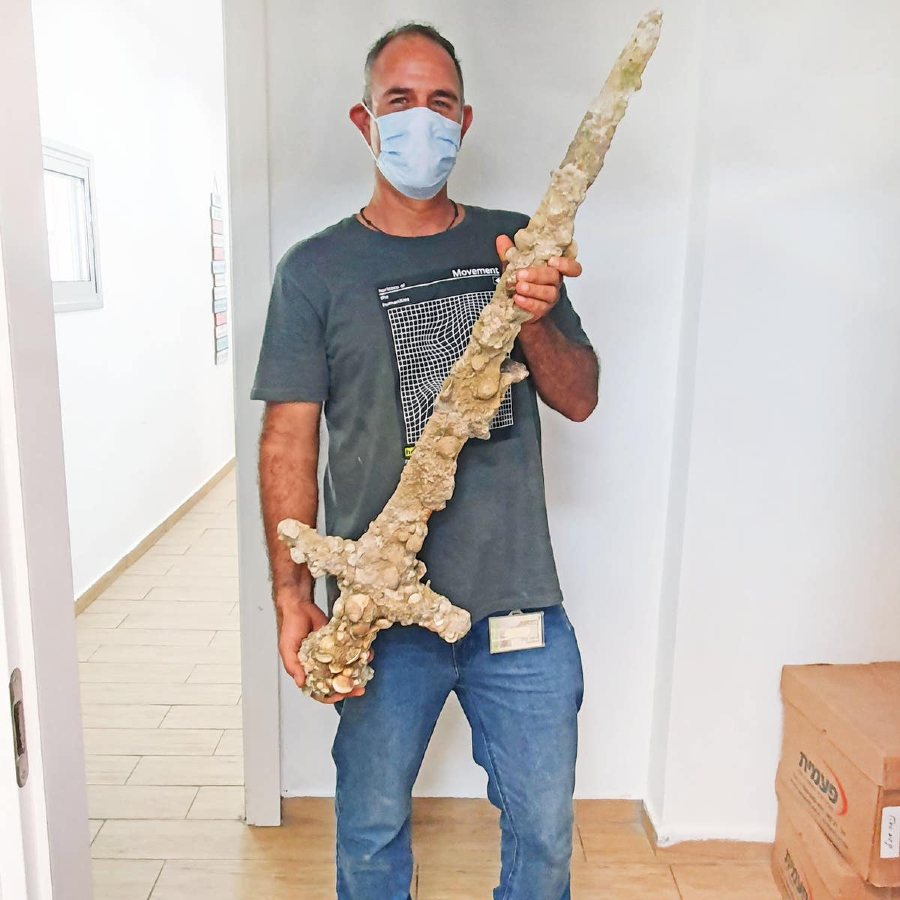
A man in Israel noticed the unmistakable shape of a sword during a recreational dive, and it turned out to be a 900-year-old relic from the Crusades.

Encrusted with shells and marine life, it’s not clear if the sword was from the Muslim or European side, but it’s now in possession of the Israeli Antiquity Authority (IAA) for further study.

Some of the most important tools and icons of mankind have similar shapes.

In abstract, a sword, a pickaxe, a cross, or an axe all look very similar, and so even when it was so entirely reclaimed by the sea as to be invisible in color, Shlomi Katzin, a resident of the town of Atlit, had no trouble spotting the sword and a number of other nearby artifacts off the Carmel coast.

“The sword, which has been preserved in perfect condition, is a beautiful and rare find and evidently belonged to a Crusader knight,” stated Nir Distelfeld, Inspector for the IAA.

“It was found encrusted with marine organisms, but is apparently made of iron. It is exciting to encounter such a personal object, taking you 900 years back in time to a different era, with knights, armor and swords.”

All locked up in shells and sand, it looked like it could have been forged in mythical Atlantis.

Nir Distelfeld/Israel Antiquities Authority

Shifting sands had apparently revealed the one meter-long weapon, along with stone and metal anchors, and pottery shards, in an area archaeologists knew to be rich with potential finds.

MORE: Human Footprints Found in New Mexico Are 23,000 Years Old – Long Before the Ice Age Glaciers Melted

“The Carmel coast contains many natural coves that provided shelter for ancient ships in a storm, and larger coves around which entire settlements and ancient port cities developed, such as Dor and Atlit,” explains Kobi Sharvit, Director of the IAA’s Marine Unit. “These conditions have attracted merchant ships down the ages, leaving behind rich archaeological finds.”

Indeed, Atlit was known to harbor seafaring vessels as early as 2,000 BCE, according to Sharvit.

In the 11th century, medieval European kings and the Catholic Church sent invading armies to the Holy Land in order to take back sites holy to Christendom.

Many of their initial successes were fleeting, as the Muslim armies, led by the Sultan Saladin, eventually retook everything they lost to Richard the Lionheart and others.

RELATED: 1,500-Year-Old Skeletons Found Locked in Loving Embrace Might Have Been ‘Romeo and Juliet’ Ending in China

However, their victories provide unique insight into the nature of the sword. No account of the Ayyubid or Mamluk forces taking to the sea has come down to us.

Smithsonian reports that while the Muslim armies built fortifications on the coasts, the sword is likely a Crusader sword, as even though virtually all participating nations used straight swords, and the barnacles make it impossible to find telling details, it was only the Europeans who were known to have traveled by sea.

SHARE This Amazing Discovery With Your History-Minded Chums…

Photo Catches the Moment a Squirrel Strikes ‘Mr Universe’ Pose on Their Windowsill

SWNS
SWNS

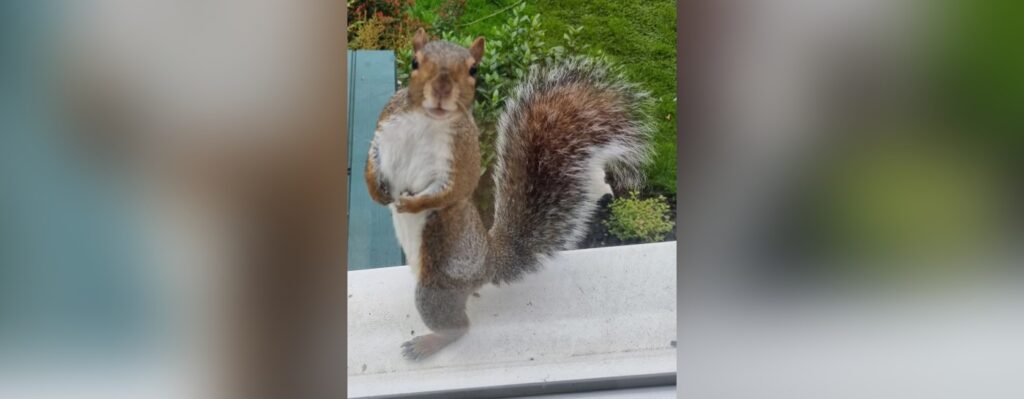
This funny picture shows a squirrel pulling a ‘Mr Universe’ pose on a windowsill.

65-year-old David Roberts snapped the tough-looking rodent in his garden in Glasgow.

Retired David said of his lucky moment with the critter, ”It was on the window ledge running about and looking in.” Basically, it was just acting like any other normal squirrel that makes its home in the gardens and parks around the Scottish city.

Then David looked again. He noticed the squirrel had stopped moving for a moment. In fact, it appeared to be cracking a pose.

Luckily, David had his camera ready to go—and got the perfect shot.

RELATED: From Cheeky Bears to Goofy Gophers, See the Fun Finalists of the Comedy Wildlife Photo Awards

”I was pretty chuffed with it,” David say. “I am always taking photos of birds at the feeders and try to get good shots with them in flight.”

SWNS

We’re just happy serendipity lined up to let us see these photos for ourselves.

LET This Fun Story Strike a Pose for Pals—Share This One…

20-Inch Deep Moss Is Like Walking on a Pillow of Green Snow (WATCH)

For all the curious attributes inherent in mosses, height is not among them. But a video of two jolly lads trudging through a field of 20-inch deep moss serves to make us feel like that’s a shame.

Like a pillowy green snow that doesn’t fall down the back of your neck if you jump in it, the moss is in the Dawsonia genus, and is found only in New Zealand and Australia.

Normally reaching heights reserved for vascular plants, those in the Dawsonia group are part of the highest-growing mosses on the planet: D. superba can reach up to 24 inches (60 cm) high, making it the tallest self-supporting moss on Earth.

Dawsonia mosses are more vascular-like, meaning they can move water further up and down their stems than other mosses.

Furthermore, they have a special moisture-retaining structure in their leaves, which also increases its width and collection area for sunlight.

These adaptations allow the moss to grow much higher than others.

MORE: Ditch That Hard-to-Grow Lawn And Start Cultivating Moss

That makes wading through it, or falling into its velvety arms, a truly special experience.

(WATCH the fun video below.)

CREATE Sweet Footsteps in Those News Feeds; Share This Story…

Internet Sleuth Solves 45-Year Guitar Mystery Returning the Beloved ’57 Gretsch to a Rock Idol

Bachman & Bachman YouTube channel

Back in 1976, when Canadian rock star Randy Bachman of The Guess Who and Bachman-Turner Overdrive discovered his favorite guitar had been stolen from his Toronto hotel room while he was on tour, he cried all night.

Having done every odd job on the block as a boy to afford the $400, 1957 Gretsch 6120 Chet Atkins model in Western Orange, its departure left a hole in his heart that would only be filled 35 years later, when an internet sleuth managed to track down the distinctive instrument to Japan.

Bachman, who used that guitar to write hits like Takin’ Care of Business and American Woman, told CBC News that he and Neil Young would “spend hours drooling over it” in the window of a Winnipeg music store.

“So I have a paper route where you make, like, two bucks a week delivering the paper, you mow a lawn for a dollar, you babysit someone, you get a dollar, you’re working at a car wash and you’d get 50 cents an hour. This is way, way back,” he told CNN. “So to save the 400 bucks was a big, big, big deal.”

Then it was stolen after the road manager didn’t use the 12-foot long tow chain to lock it up, as was Bachman’s custom, and in the aftermath he would buy hundreds of Grestch guitars trying to replicate the magic of the one he’d lost.

COVID sleuthing

Fast forward more than three decades, and a fan of Bachman was watching some Guess Who videos on YouTube when he came across one of Bachman and his son explaining the story of the guitar theft, and—being a fan of solving puzzles—he decided to see if he could locate the missing Gretsch by comparing hi-resolution imagery of the stolen guitar with second-hand listings of the same model around the world.

MORE: Restaurant Wants to Give Burglar a Second Chance – Offering Him a Job Application

“I probably went through maybe 300 Gretsch images and I got pretty good at it so I could see them and I could know right away that it wasn’t it,” William Long, the fan in question, told CNN.

He tracked it down to a Tokyo vintage music store, but looking over their website, found it had been sold. Comparing footage of a particular Japanese guitarist to that of Bachman playing the song Looking Out For #1 on Dutch television, Long concluded it was the same instrument by the distinctive pattern in the grain of the wood.

When Long finally got in contact with Bachman and explained the situation, Bachman said it was “like being hit in the face with a shovel.”

“Man, my guitar, I was in tears. It’s just unbelievable, because I’ve been searching for this forever and basically gave up on it,” he recounted.

The Japan connection

KoKo, Bachman’s Japanese daughter-in-law, reached out to Takeshi, the guitar’s then-owner, to explain the situation.

KoKo translated a Zoom meeting between the artists, in which Takeshi assured Bachman he was not the thief. “But of course,” said Bachman, noting Takeshi had only just been born the night the Gretsch was taken from his hotel room.

RELATED: ‘World’s Most Dangerous Malware’ Emotet Taken Down in International Cyber Crime Effort

Takeshi agreed to return the guitar if Bachman could find one just like it, a difficult task as fewer than 40 remain from the 1957 lot code. Fortunately, having been deprived of such a model for so long, Bachman had already amassed a rolodex of distributors and collectors, into which he dove until he found a guitar which he described as likely made “on the same bench.”

“When I first strummed this guitar at the music shop in Tokyo, it spoke to me like no other guitar I’ve ever played. I knew and felt it was destiny—I immediately and impulsively purchased it,” Takeshi said in a statement that was translated by KoKo.

“I’m so honored and proud to be the one who can finally return this stolen guitar to its owner, the rock star, Mr. Bachman who was searching for it for nearly half a century and I feel very grateful for this miracle happening in both our lives.”

CHECK OUT: After Botched Restaurant Burglary Attempt, Owner Offers Free Meals to Anyone Who is Desperate

Once the country eases COVID-19 restrictions, Bachman plans to travel to Japan to make the swap and have a jam session with Takeshi in a Tokyo club.

Bachman is considering turning the story into a mini-documentary, and will probably write some music about the whole saga in the upcoming album he’s preparing with his son under the somewhat expected handle of Bachman & Bachman—the same name as the YouTube channel they share.

(WATCH the Bachman & Bachman video for this story below.)

Editor’s note: This story has been altered to correctly account for the number of remaining guitars in the world. 

SHARE This Amazing Real-Life Sleuthing Story on Social…

Walking Storyteller Continues Historic 24,000-Mile Trek Retracing Passage of Human Ancestors Out of Africa

Paul Salopek/@OutofEdenWalk

The Out of Eden Walk, a National Geographic-sponsored retracing of our ancestor’s slow-motion exodus from Africa, through time and countless footsteps, is finally resuming after COVID-19 closed overland borders last year.

The host (or perhaps victim) Paul Salopek is a Pulitzer-winning journalist and photographer, and has been traveling overland on foot since the middle-years of Barack Obama’s presidency, documenting his trip across the beltline of the world. In Myanmar, the pandemic hit, and like everyone else he was stuck in one place for months.

Finally back on the road again, his latest dispatch is characteristic of a great travel memoir.

“For more than eight years, I have trailed the first human beings who roamed out of Africa during the Stone Age,” he writes in his most recent entry.

“My storytelling journey, called the Out of Eden Walk, has been stalled for more than a year in Myanmar. The novel coronavirus, a life form one thousand times thinner than a human eyelash, has blocked thousands of miles of Asian land borders.”

MORE: New Jersey Brothers Walk to California and Raise $70,000 for Restaurant Workers Like Them

Salopek describes thinking back to eight years ago, when he started in the rocky highlands of Ethiopia, visiting resting sites of the earliest human ancestors.

Entering the Holy Land, he wandered through scenes of war and the worst refugee crisis of a generation in Syria, before crossing the vast grasslands and savannas of the Central Asian Steppe, then the Indian subcontinent, before reaching the steamy river valleys of Yunnan.

“Roads are older than empires in Yunnan,” Salopek says as he finishes his first travel days in 20 months. “A hundred generations of long-legged mountaineers have hauled jade, tea, copper, and ivory atop the crooked lanes of Yunnan.”

While difficult to say, Salopek’s journey could be described as half over, as he still must cross northeastward through China and Russia, before crossing the Bering Strait in winter and plunging south all the way to the tip of South America, just as our early ancestors did, with the special exception of the Pacific Islanders.

RELATED: An Epic Adventure Few have Heard of: ‘The Great Loop’ Circles the Eastern US on Waterways Never Far from Shore

Half-time is often a good period to jump into a sports match, and as Salopek prepares to continue one of humanity’s all-time great walkabouts, it’s worth tuning in to see how the match ends.

LET Great Stories Wander Far and Wide; Share This One…

“Remind thyself, in the darkest moments, that every failure is only a step toward success… Every adversity will only hide, for a time, your path to peace and fulfillment.” – Og Mandino

Quote of the Day: “Remind thyself, in the darkest moments, that every failure is only a step toward success… Every adversity will only hide, for a time, your path to peace and fulfillment.” – Og Mandino

Photo: by Andreas Schmid, CC license on Flickr

With a new inspirational quote every day, atop the perfect photo—collected and archived on our Quotes page—why not bookmark GNN.org for a daily uplift?


More Than Half of Women Were Seven Months Into the Menopause Before Realizing What It Was

More than half of women didn’t realize they were going through the menopause until seven months after they first experienced signs, a poll has found.

A new survey of 1,000 women, who are going or have gone through the menopause, found 52 percent took considerable time to realize what was causing the aching joints, fatigue, and anxiety.

The poll found that 30 per cent wish there had been more education available about what to expect during menopause—with one in 10 taking over a year to recognize the signs.

More than a third reckon menopause should be more openly discussed, while a quarter didn’t feel there was enough information readily available about it.

A metallic taste, hair loss, and itchy skin were also among the health complaints women didn’t realize could be linked to menopause—until they were going through it.

Nearly two-thirds agreed menopause should not be a taboo topic and over half admitted it is so much more than ‘when your period stops’—as it’s currently defined in the dictionary.

The survey was commissioned by Always Discreet, which has created an online educational hub offering free menopause masterclasses designed to educate women on how best to manage their menopause.

Emma Gerrard, from P&G Fem Care, UK & Ireland said, “There appears to be a real information gap when it comes to the menopause and clearly many feel it’s simply not spoken of enough.

“But the more women speak to each other about it, the more we can demystify the experience and empower women to live it and define it, their way.

“Many believe women who go through menopause experience a few hot flushes and then their period stops.

“But it can last for many years and there are a variety of other signs some women experience which are completely swept under the carpet and not spoken about. It’s time women got talking.”

The poll also found more than a quarter (28 percent) of women felt ‘too young’ to be going through the menopause when the signs started.

While one in four (24 percent) felt apprehensive and 17 percent felt worried—although 15 per cent admit it left them feeling sentimental about the past.

And 52 per cent would have felt more empowered if they knew more about how to better manage their menopause.

MORE: Scrappy 81-Year-old Woman Completes Her Second Tough Mudder Race Over Huge Obstacles

It also emerged 67 per cent admitted they didn’t realize the signs of menopause would last so long.

More Confident

Despite this, more than one in 10 (11 per cent) said they felt more confident since going through the menopause, and a further one in 14 claimed to feel more feminine.

Just under half (45 percent) of those polled, via OnePoll, were lucky to have been able to share their experience with others to try and help them through it all.

But 54 percent said they had no one to help them through the menopause at all.

Always Discreet Brand Ambassador, Lorraine Kelly said: “It took me a while to realize I was going through the menopause, but when I did, it honestly was a relief. It suddenly all clicked and what I had been going through made sense.

“I think it’s because people don’t talk about it enough and so when it does happen, you don’t recognize the signs.

RELATED: Grave of 9,000-Year-old Skilled Huntress Found in the Peruvian Andes, Changing the Stereotype of ‘Man the Hunter’

“The awareness and education that Always Discreet are driving will help more women understand what is happening to them and will empower them to live their menopause their own way.”

To access the free menopause masterclasses created in conjunction with experts Over The Bloody Moon, head to their website.

SHARING is Caring—Pass on the Knowledge…

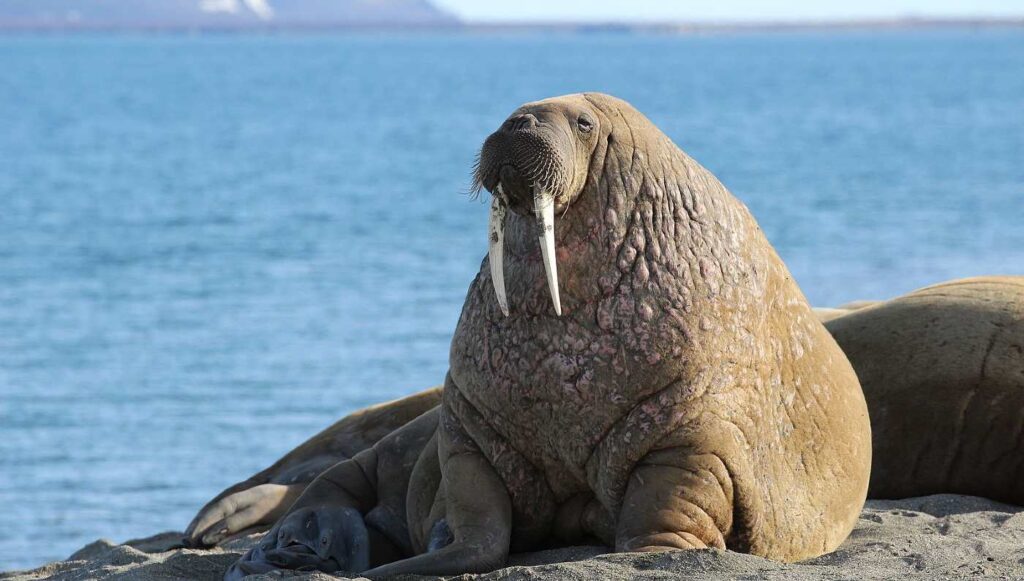
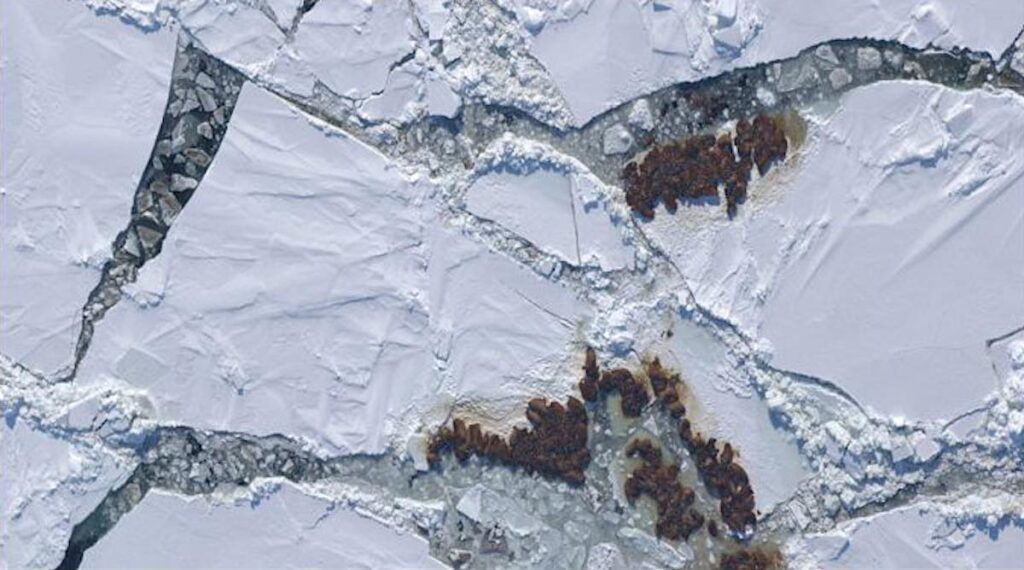
Where’s Walrus? You Can Help Scientists by Volunteering to Count Marine Mammals In Satellite Images

Walrus in the Arctic via satellite- NASA
Gary Bembridge, CC license

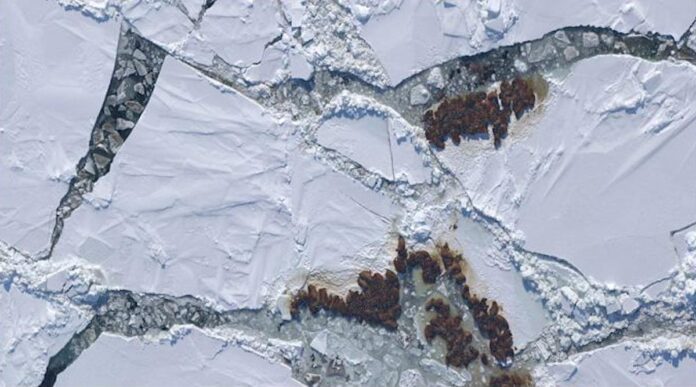
Scientists are appealing to the public to help them monitor the number of Walrus in the Arctic by looking at images—taken from space.

The real-life Where’s Wally? project will see animal-lovers scanning satellite images to help monitor Walrus populations along the Arctic coastline.

Conservationists hope that the ‘Walrus from Space’ research project will give a clearer picture of how each population is doing without disturbing the animals.

The project, led by the WWF and British Antarctic Survey, uses space satellites to capture thousands of high-resolution images of walrus congregated on more than 25,000 square kilometers (9653 square miles) of Arctic coastline—an area larger than Wales.

MORE: Study Reports Incredible New Numbers For Critically Endangered Grauer’s Gorilla Species

Anyone can take part in the walrus census using their own computer but they must undergo a short online training module before starting.

Rod Downie, chief polar adviser at WWF, said, “It’s easy to feel powerless in the face of the climate and nature emergency, but this project enables individuals to take action to understand a species threatened by the climate crisis, and to help to safeguard their future.

“What happens in the Arctic doesn’t stay there; the climate crisis is a global problem, bigger than any person, species or region.

Walrus in the Arctic via satellite- NASA

LOOK: Amur Tigers Are Back From the Brink in China – Thanks to Government Policies

“Walrus are an iconic species of great cultural significance to the people of the Arctic, but climate change is melting their icy home.”

(WATCH the video…)

RAISE a Tusk For Citizen Science—Share This Story So Others Can Help…

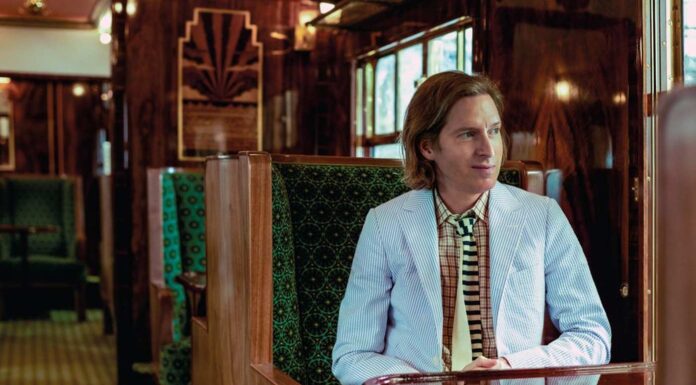
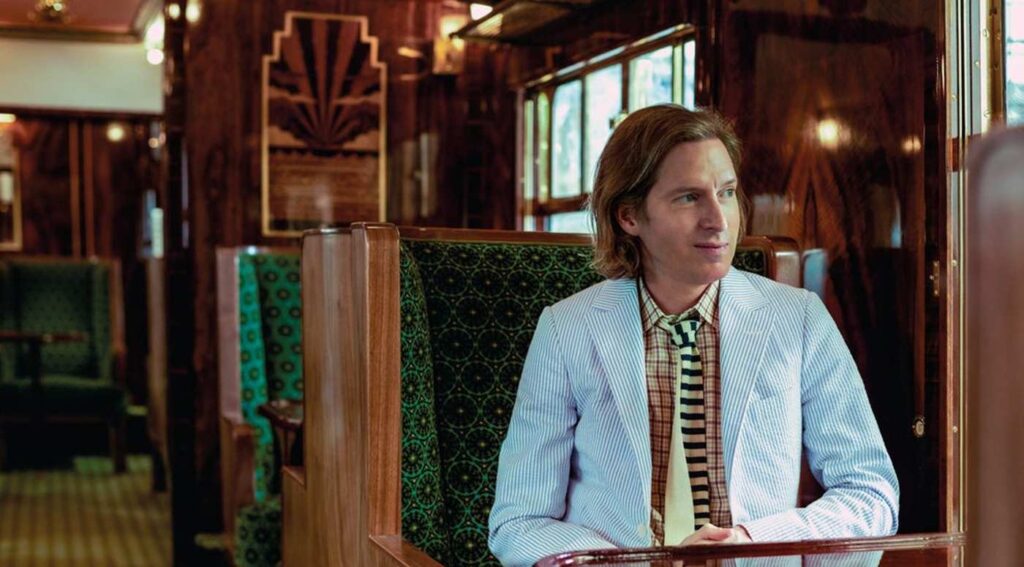
Wes Anderson Designed a Luxury Train Car – and It Looks Like Something Out of His Movies

Belmond
Belmond

Train travel is a lost art in the United States, a fact not lost on film director Wes Anderson, who revels in using train travel in his films.

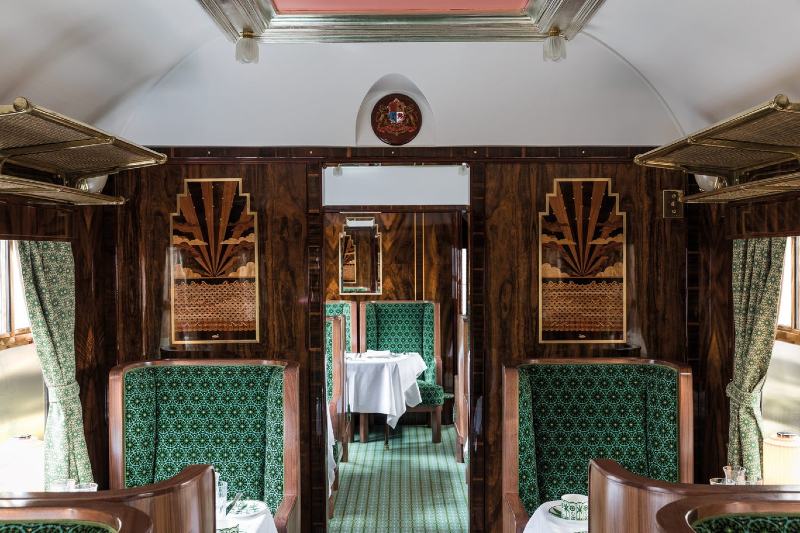
Now he’s taken his passion to a country that understands it: to England, where a company has built a Wes Anderson-inspired train carriage complete with all the rich details one expects from his movies.

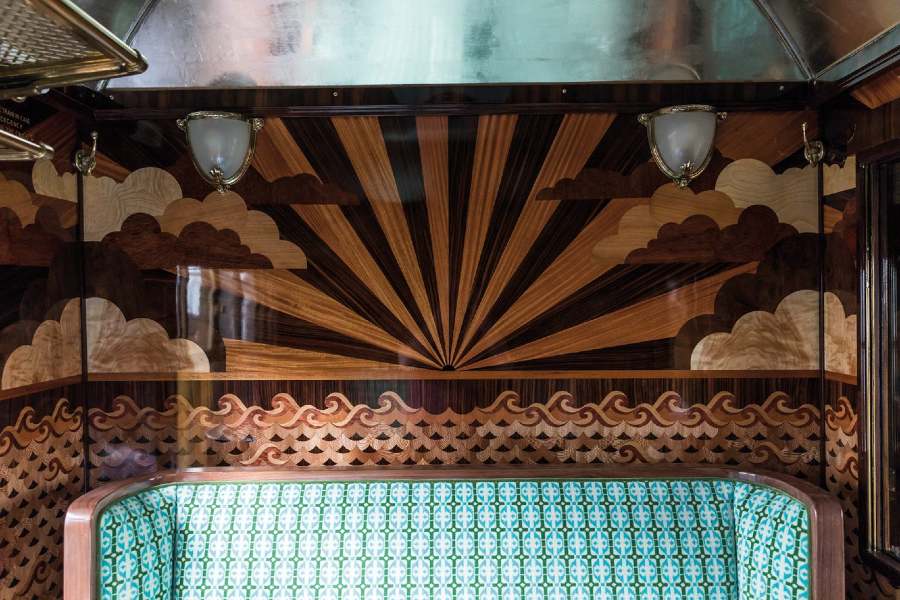
Travelers with cash to burn can book a ticket on the Cygnus train carriage—built by Belmond, it will service cities all over the UK with its pastel-pink ceiling, richly embroidered green seats, and Art Deco wooden walls and window frames inspired by the train coaches Anderson designed for his films Darjeeling Limited, and The Grand Budapest Hotel.

“I have often had the chance to invent train compartments and carriages in my movies,” Wes tells Belmond.

“So I was very eager to make something new while also participating in the process of preservation which accompanies all the classic Belmond train projects. They are keeping something special alive. An endangered species of travel which is nevertheless very suited to our time.”

MORE: A Floating Flower Garden in Tokyo Immerses Visitors With Orchids That Move as You Approach (WATCH)

The carriage is named after the mythical Greek god of balance, as well as an older luxury train carriage maintained by British Pullman trains in the middle 20th century.

It hosted royalty and dignitaries, and survived World War II bombing raids.

Belmond

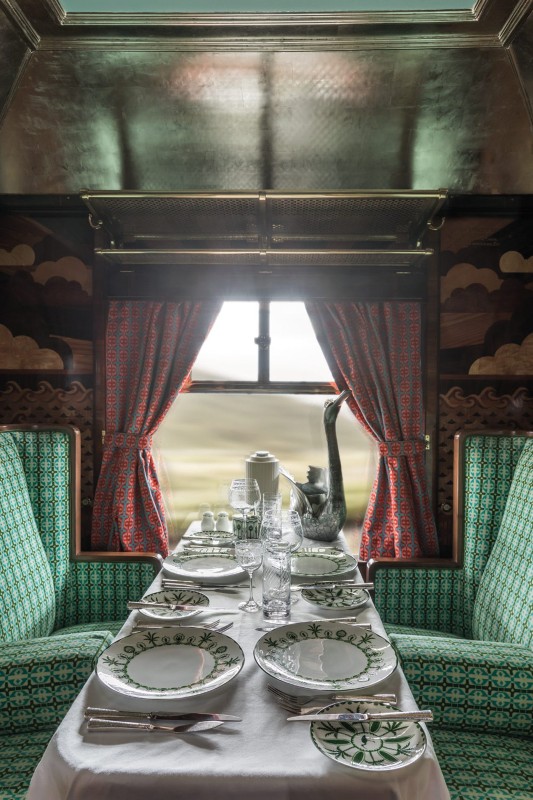
Cygnus now travels this way and that across the countryside, and serves a five-course English menu that’s ever changing, complete with real crockery, cheeses, afternoon teas, and champagne—poured from a bottle made of glass into a glass made of glass, just as it would have been in the Golden Age of Travel.

Belmond

A table in the main carriage is not for a last minute getaway, as it runs $545 per person, while one of the private coupés, a small private dining room for four, will go for $2,455 per coupé.

Belmond

“Wes is an expert in rendering fantasy worlds that are a little more beautiful and satisfying than the ones we live in,” Belmond said.

With relentless details to feast upon and carefully calibrated colour palettes to pore over, his films aren’t just thrilling stories: they’re works of art.

MAKE Beautiful Design Travel Further—Share This Story…

20,000 Pounds of Trash Removed From Pacific Garbage Patch: ‘Holy mother of god. It worked!’

The Ocean Cleanup
The Ocean Cleanup

“The Great Pacific Garbage Patch can now be cleaned,” announced Dutch entrepreneur Boyan Slat, the wonderkid inventor who’s spent a decade inventing systems for waterborne litter collection.

Recent tests on his Ocean Cleanup rig called System 002, invented to tackle the 1.8 trillion pieces of plastic pollution, were a success, leading Slat to predict that most of the oceanic garbage patches could be removed by 2040.

Intersections of ocean currents have created the massive floating islands of plastic trash—five slow-moving whirlpools that pull litter from thousands of miles away into a single radius.

The largest one sits between California and Hawaii, and 27-year-old Slat has been designing and testing his systems out there, launching from San Francisco since 2013.

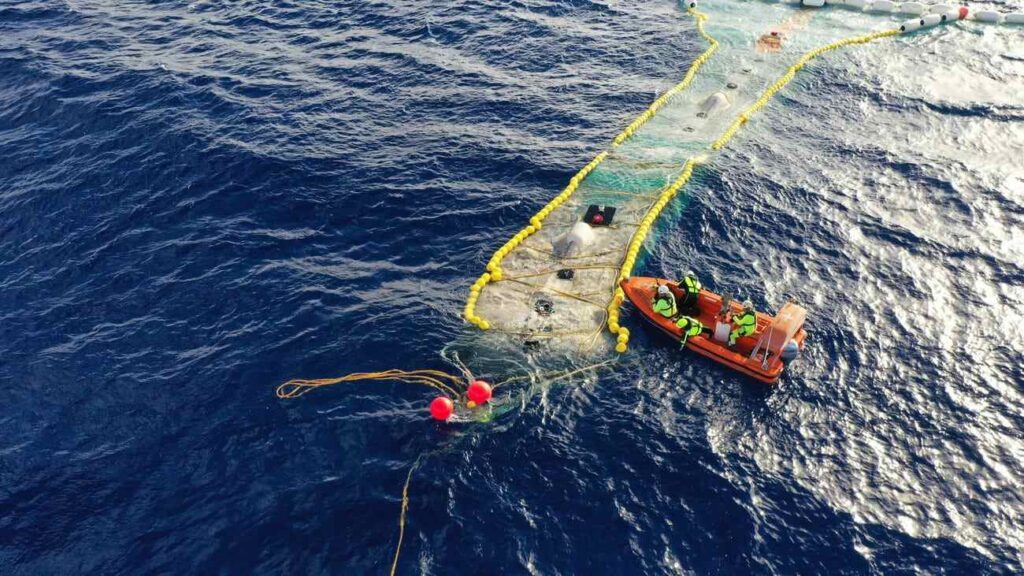
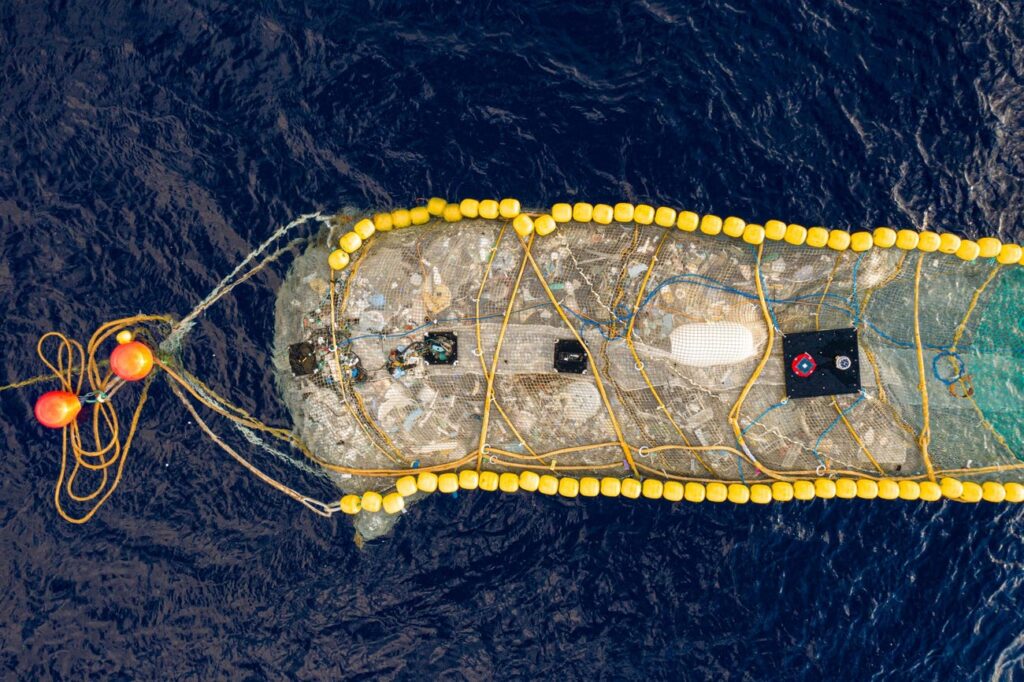
GNN has reported on his original design for the floating device, but his engineering team improved upon it. System 002, nicknamed “Jenny,” successfully netted 9,000 kilograms, or around 20,000 pounds in its first trial.

It’s carbon-neutral, able to capture microplastics as small as 1 millimeter in diameter, and was designed to pose absolutely no threat to wildlife thanks to its wide capture area, slow motion, alerts, and camera monitors that allow operators to spy any overly-curious marine life.

MORE: UPDATE: Plant Opens to Change the Recycling Game by Breaking Down Plastic Bottles With Enzyme From Leaves

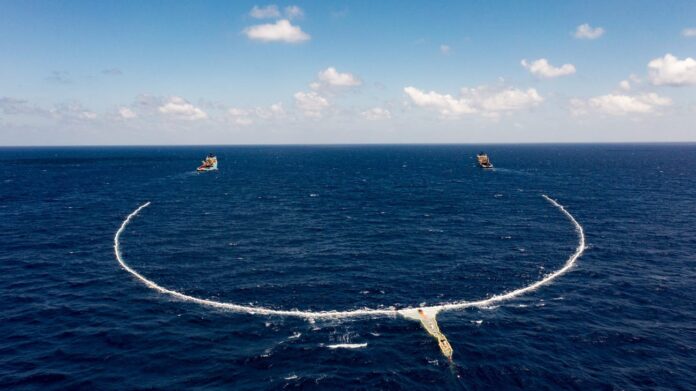
Jenny consists of two boats dragging a very long net in a U-shape behind them.

The Ocean Cleanup

They use computational modeling to predict where and at what speed the movements in the water will be shifting the plastic. They then fill up their net, pull it on board, and bring it ashore for recycling.

The team are also turning some of the trash they collect into designer sunglasses—and earnings from the stylish shades will go toward helping support the nonprofit so they can continue cleaning up the ocean. The new glasses are the first product to be created from the recovered ocean debris—but they say it will not be the last.

The Ocean Cleanup

A timeline of hope

Slat estimates ten Jennies could clean half the garbage patch in five years, and if 10 Jennies were deployed to the five major ocean gyres, then 90% of all floating plastic could be removed by 2040.

There are obvious challenges, like the fact that millions of pieces of plastic flow into the oceans every year, and that investors may believe river cleanup is easier, cheaper, and doesn’t require the use of fossil fuels to power the boats.

And that’s why Slat’s nonprofit has also launched a number of ‘interceptor’ barges to clean up polluting rivers, intercepting plastic before it reaches the ocean.

The Ocean Cleanup

Nevertheless—this is a huge breakthrough in the cleanup of ocean plastics, and one worth celebrating.

SCOOP Up the Innovative News and Share It Far and Wide…

“Life is not a process of discovery, but a process of creation. You are not discovering yourself, but creating yourself anew.” – Neale Donald Walsch

Quote of the Day: “Life is not a process of discovery, but a process of creation. You are not discovering yourself, but creating yourself anew.” – Neale Donald Walsch

Photo: by Onkarphoto

With a new inspirational quote every day, atop the perfect photo—collected and archived on our Quotes page—why not bookmark GNN.org for a daily uplift?

Retired Banker Devotes His Millionaire Fortune to Restoring Protective Sand Dunes on Island Beaches

Tybee_Island_Beach3 cc license wikimedia commons Melissa P from Douglasville, GA, USA
Melissa P, CC license

Like with spouses, some people lay their eyes on a stretch of beach and are never the same again.

Fortunately for the dunes along the shoreline of Tybee Island, Georgia, they caught the eye of a rich banker with a green heart of gold, who is paying a king’s ransom to create a storm-resistant living beach where animals and beachgoers can coexist.

Sea oats sway in the breeze, while ghost crabs skitter around the dunes and kestrels hunt on the winds above. They are set among small overwalks, wind fences, dunes built up over time around coastal vegetation, which all serve to create a natural ecosystem that is also, according Alan Robertson, the best chance his small island has of surviving storms and sea-level rise.

“If you didn’t know it was not nature, well, you wouldn’t know [it was built by bulldozer],” Mr. Robertson, a former international banker who spent $15 million of his own money to restore an eight-acre beach on Tybee, told Christian Science Monitor. 

Involving nearly 50,000 cubic yards of sand, the rebuild was costly but necessary, as scientists hypothesize that climate change will cause stronger storm surges, which has already raised sea levels around the Earth by around one foot.

Robertson’s restoration, which kindly included two parking lots offshore, is so successful, the National Oceanic and Atmospheric Administration asked him to write a book of best practices for beach restoration, while some experts have said he’s 6-7 years “ahead of this country.”

Out of beach reach

While many coastal communities in the U.S. turn to dykes, seawalls, floodgates, flood channels, and more to stop storms surges, these have the often deleterious effect of diminishing beaches, which themselves act as excellent storm protectors. Many beaches around the world however require regular “nourishment” in the form of thousands of tons of dredged sand which tends to erode twice as fast.

MORE: Australia Returns Huge Daintree Rainforest to its Aboriginal Owners, Bordering Great Barrier Reef

This is a consequence of the encroachment of civilization onto the beach ecosystem, leaving it a strip of manicured sand, but removing the dunes and other aspects behind.

Beach restoration is often at the center of discussion about whether to try and reinforce the coast against storms and rising oceans, or whether to simply stop building expensive infrastructure on what may become prone to regular flooding over the next 20-40 years.

However some scientists believe that if beaches are returned to their natural state, the worst of these effects will be avoided.

“The beach is a wonderful, free natural defense against the forces of the ocean. Beaches absorb the power of the ocean waves reducing them to a gentle swash that laps on the shoreline,” Orrin Pilkey, a professor of earth and ocean sciences at Duke University, told the Guardian.

RELATED: World’s First 5-Nation Reserve Spans 4,000 Sq-Miles in Austria, Slovenia, Croatia, Hungary, Serbia: ‘The Amazon of Europe’

Robertson describes himself as having entered “the Matrix,” after retiring to Tybee Island and buying a house, before immediately joining the local beach task force.

“Now I can’t look at this [sand] without seeing all the processes at work,” he says.

CONSERVE the Good News—Share This Story With Your Friends…

Their Dream Home Tipped as They Pulled It Across the Water – Then Neighbors Came to the Rescue

Keith Goodyear
Keith Goodyear

If a place that truly floated your boat was about to be torn down, you could try to move heaven and earth to save it—or, you could just move the house.

And that’s just what one determined couple did—but they didn’t take an overland route, they went by sea.

Daniele Penney fell in love with a two-story “biscuit box” house on the shores of Newfoundland’s Bay of Islands and longed to someday make it hers.

“It was the little green house on the point that I loved… I talked about it to my friends, my family. Everybody knew that my heart always belonged to this house,” Penney told CBC.

When Penney learned the home had been sold this past June and was slated for the wrecker’s ball, she and her boyfriend Kirk Lovell came up with an alternative solution. Rather than demolition, the couple asked the new owners if they’d allow them to relocate the structure to a different location and were given the go-ahead.

The logistics of moving the house overland weren’t in their favor, however, in Newfoundland, transporting various buildings across the local waterways had plenty of historical precedents.

During a government-sponsored resettlement period in the 1960s through the ’70s, seeing a home being hauled over the water was a fairly common sight along the coasts of Newfoundland and Labrador, but the practice goes back even further than that.

“My mother was born in a house that was transported from Cape Breton across the Canso straight to Mulgrave on the Nova Scotia mainland back in the 1910s,” CBC reader Murray Brown noted in a comment. “That house is still standing to this day.”

Prior to the move, the house was stripped to its studs, and holes were drilled in the flooring to allow any water that got inside to quickly drain.

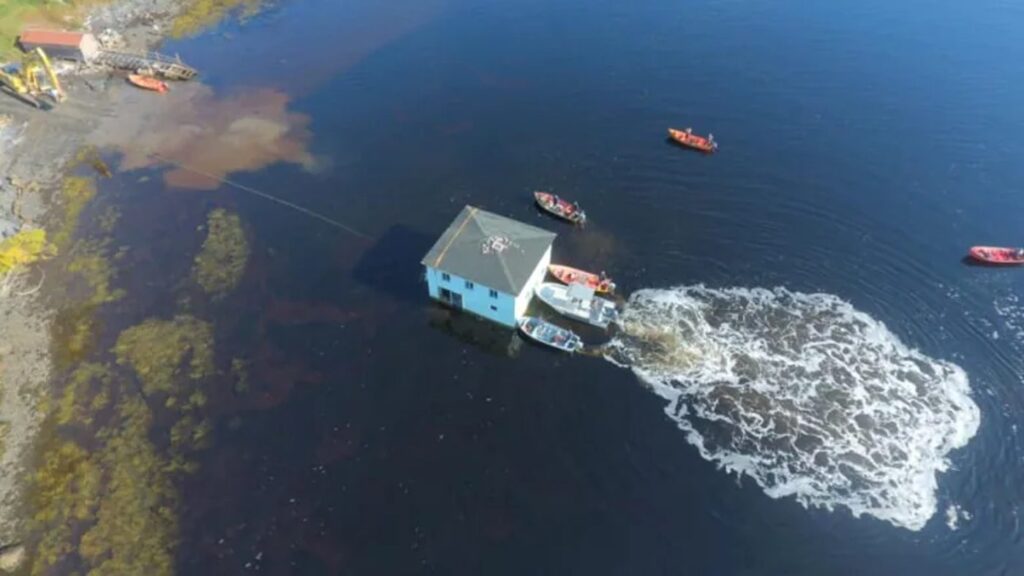
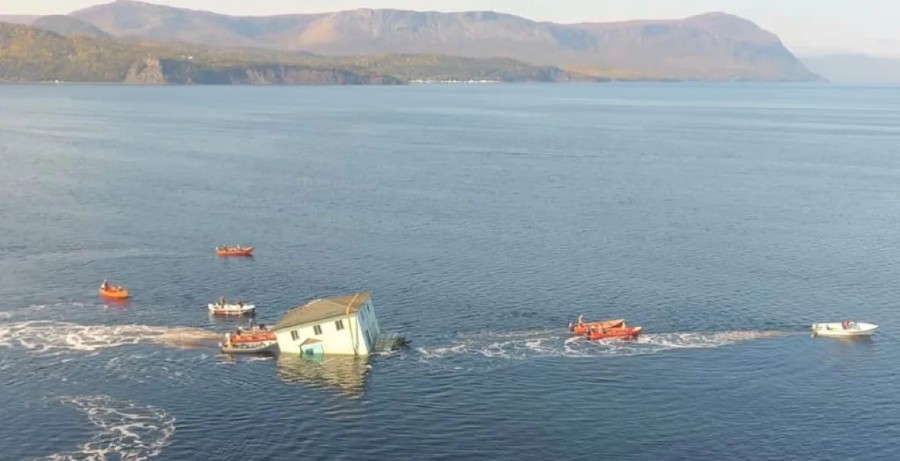
Next, it was lashed to a frame and placed on a series of floatation devices, including barrels and old tires, and launched into the water for the move to its final destination in the town of McIvers, about one kilometer away.

Guided by a small convoy of dories, the shore-to-shore journey took eight hours. For one heart-stopping moment, the house listed, one of its corners sinking precariously into the bay at the same time Lovell’s boat lost power.

Keith Goodyear

But just as it looked as if the beloved green biscuit box houseboat might go the way of the Titanic, a fleet of neighboring fisherfolk with small boats swooped in to help right the precious cargo.

MORE: Rent Winnie the Pooh’s Tree House in the Original Hundred Acre Wood at This ‘Bearbnb’

“All of a sudden, there [were] dories coming from everywhere,” a grateful Penney told CBC. “The community definitely stepped up to help us get this house over.”

As friends and neighbors gathered to monitor the flotilla’s progress and cheer things on, “Operation House Float” became a true Newfoundland affair.

“Went to watch this unfold yesterday when we heard. I thought she was a goner for a few minutes. You should see it in its final resting place. Absolutely beautiful. Amazing that people did this often years ago,” CBC reader Haley Jesso proclaimed.

“You followed your dreams and I could not be happier for you,” added Lori Patrick. “I love that the extra dories saw your predicament and came to lend a hand. True Newfoundlanders!”

LOOK: This Simple 10-Question Word Test Reveals How Creative You Are

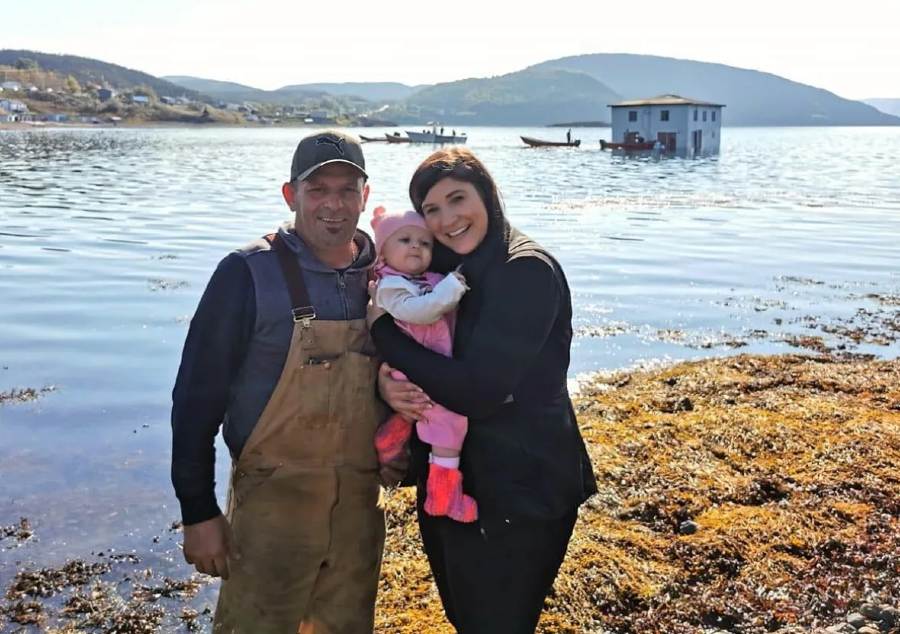
Although the house did take on a great deal of water during its voyage, the drainage holes seem to have done their job. Penney, Lovell, and their 6-month-old daughter, Harper—who are currently living in a trailer during the drying out and renovations—hope to be able to make the home their own once everything’s back in ship shape.

Daniele Penney

So while we’ve heard it said that hope floats, it’s nice to know that when it comes to saving the house of your dreams, home floats too.

(WATCH the video to see the boat being pulled below.)

FLOAT Your Mates’ Boats With This Fun Story…

DNA Sequencing of Viking Bones ‘Will Rewrite History’: They Weren’t All Scandinavian

Hans Splinter, CC license

Invaders, pirates, warriors—the history books taught us Vikings were brutal predators who travelled by sea from Scandinavia to pillage and raid their way across Europe and beyond.

Hans Splinter, CC license

Now cutting-edge DNA sequencing of more than 400 Viking skeletons from archaeological sites scattered across Europe and Greenland will rewrite the history books as it has shown:

Skeletons from famous Viking burial sites in Scotland were actually local people who could have taken on Viking identities and were buried as Vikings; many Vikings actually had brown hair not blonde hair; the genetic legacy in the UK has left the population with up to six per cent Viking DNA, and Viking identity was not limited to people with Scandinavian genetic ancestry—the study shows the genetic history of Scandinavia was influenced by foreign genes from Asia and Southern Europe before the Viking Age.

The six-year research project debunks the modern image of Vikings.

Co-first author Dr Daniel Lawson, from the University of Bristol, said, “The Vikings have an image of being fierce raiders, and they certainly were. What was more surprising is how well they assimilated other peoples.”

“Scottish and Irish people have integrated into Viking society well enough for individuals with no Scandinavian ancestry to receive a full Viking burial, in Norway and Britain. We studied two Orkney skeletons from Viking graves with Viking swords who share ancestry with present-day Irish and Scottish people, who could be the earliest Pictish genomes ever studied.”

Work from the School of Mathematics at the University of Bristol specialized in separating out very similar ancestries.

RELATED: Genetic Code from 5,700 Year-old ‘Chewing Gum’ Reveals Extraordinary Details of Young Danish Woman

“People in Scandinavia during the Viking age were relatively similar, but we developed advanced methods to separate their ancestries. This showed that Norwegians predominantly went to Ireland and Iceland, whilst Danes came to England,” said Dr Lawson, Senior Lecturer in Data Science.

“But Viking were often diverse, with ancestry from all over Scandinavia and the British Isles found in the same raiding party. The Vikings coming to Britain and Ireland were part of a wider migration spanning several centuries.”

A history lesson

The word Viking comes from the Scandinavian term ‘vikingr’ meaning ‘pirate’.

The Viking Age generally refers to the period from A.D. 800, a few years after the earliest recorded raid, until the 1050s, a few years before the Norman Conquest of England in 1066.

The Vikings changed the political and genetic course of Europe and beyond: Cnut the Great became the King of England, Leif Eriksson is believed to have been the first European to reach North America, 500 years before Christopher Columbus, and Olaf Tryggvason is credited with taking Christianity to Norway. Many expeditions involved raiding monasteries and cities along the coastal settlements of Europe but the goal of trading goods like fur, tusks, and seal fat were often the more pragmatic aim.

LOOK: Lamb, Coriander, and Leeks: Decoded Babylonian Recipes Reveal Ancient Culinary Traditions

Lead author Professor Eske Willerslev, a Fellow of St John’s College at the University of Cambridge and director of the University of Copenhagen’s Lundbeck Foundation GeoGenetics Centre, said: “We didn’t know genetically what they actually looked like until now. We found genetic differences between different Viking populations within Scandinavia which shows Viking groups in the region were far more isolated than previously believed. Our research even debunks the modern image of Vikings with blonde hair as many had brown hair and were influenced by genetic influx from the outside of Scandinavia.”

DNA testing

The team of international academics sequenced the whole genomes of 442 mostly Viking Age men, women, children, and babies from their teeth and petrous bones found in Viking cemeteries. They analyzed the DNA from the remains from a boat burial in Estonia and discovered four Viking brothers died the same day. The scientists have also revealed male skeletons from a Viking burial site in Orkney, Scotland, were not actually genetically Vikings despite being buried with swords and other Viking memorabilia.

There wasn’t a word for Scandinavia during the Viking Age—that came later. But the research study shows that the Vikings from what is now Norway traveled to Ireland, Scotland, Iceland, and Greenland. The Vikings from what is now Denmark traveled to England. And Vikings from what is now Sweden went to the Baltic countries on their all-male ‘raiding parties’.

MORE: While Excavating 1000-Year-old Viking Ship, Norwegians Find Remnants of Elite Society

DNA from the Viking remains were shotgun sequenced from sites in Greenland, Ukraine, The United Kingdom, Scandinavia, Poland, and Russia.

The team’s analysis also found genetically Pictish people ‘became’ Vikings without genetically mixing with Scandinavians. The Picts were Celtic-speaking people who lived in what is today eastern and northern Scotland during the Late British Iron Age and Early Medieval periods.

The Viking Age altered the political, cultural, and demographic map of Europe in ways that are still evident today in place names, surnames, and modern genetics.

Professor Søren Sindbæk, an archaeologist from Moesgaard Museum in Denmark who collaborated on the ground-breaking paper, explained: “Scandinavian diasporas established trade and settlement stretching from the American continent to the Asian steppe. They exported ideas, technologies, language, beliefs, and practices and developed new socio-political structures. Importantly our results show that ‘Viking’ identity was not limited to people with Scandinavian genetic ancestry.”

Assistant Professor Fernando Racimo, also a lead author based at the GeoGenetics Centre in the University of Copenhagen, stressed how valuable the dataset is for the study of the complex traits and natural selection in the past.

SEE: Watch a Billion Years of Shifting Tectonic Plates Forming Our Continents in 40 Seconds

He explained, “This is the first time we can take a detailed look at the evolution of variants under natural selection in the last 2,000 years of European history. The Viking genomes allow us to disentangle how selection unfolded before, during and after the Viking movements across Europe, affecting genes associated with important traits like immunity, pigmentation and metabolism. We can also begin to infer the physical appearance of ancient Vikings and compare them to Scandinavians today.”

Source: University of Bristol

The genetic legacy of the Viking Age lives on today with six per cent of people of the UK population predicted to have Viking DNA in their genes compared to 10 per cent in Sweden.

Professor Willerslev concluded of the research, published in Nature, “The results change the perception of who a Viking actually was. The history books will need to be updated.”

LET Fascinating Stories Like This One Evolve in Those News Feeds—Click Share…

Guy is Giving Free Food to Anyone in Bali Who Brings Plastic – And He’s Recycled 500 Tons in First Year

Plastic Exchange Bali/Facebook

As the pandemic ground the tourism industry on Bali to a halt, a man sought to do the same to the problem of plastic pollution, by offering rice in exchange for plastic garbage.

The reaction was immediate, and compounding, with over 500 tons of plastic collected by over 200 villages on the Indonesian island, for which the organizers have given out over 550 tons of rice.

Bali’s beaches are so beautiful, it’s created an economy that derives 50% of GDP from tourism alone. But when COVID-19 grounded airlines around the world, and Bali’s principal supply of vacationers, Australia, went into severe lockdown, workers in the tourism industry had to go back to their rural villages—and plastic pollution skyrocketed.

A local restauranteur wanted to do something to help, and so started a barter system to help “cleanse the soul of nature” and relieve the economic hardship of his neighbors. In May 2020, he hosted the first Plastic Exchange in his own childhood village.

“I thought to myself, if it works in my village, it will work in other places as well,” Made Janur Yasa, Plastic Exchange’s founder, told CNN.  “I realized this thing was getting bigger than I had ever imagined.”

Local neighborhood groups called Banjars began organizing plastic collections once a month in the forests, towns, and on the beaches, before bringing it to Yasa for their main staple food.

Plastic Exchange Bali/Facebook

Bali Tribune reports that in a single two-hour period in August of this year, a Plastic Exchange in the village of Saba collected turned in two tons of plastic, and that Yasa’s project was beginning to change the attitudes of islanders.

“Now, people think that plastic waste must be sorted and collected, then exchanged. There are even my people who collect plastic on the streets every day,” explained the director of the Saba Banjar, Kadek Merta Anggara.

Plastic Exchange Bali/Facebook

The most commonly turned-in plastic is single-use carrier bags—shocking when one considers the success of Bye-Bye Plastic Bag, another plastic collection movement on Bali that focused exclusively on single-use bags, but plastic bottles and wrappers are also very common.

“People in Bali live in nature,” Yasa said. “Traditionally, we believe nature has a soul. People do care about the environment. But the plastic pollution in Bali is because of lack of education and practice.”

MORE: UPDATE: Plant Opens to Change the Recycling Game by Breaking Down Plastic Bottles With Enzyme From Leaves

Yasa works with a small company that will send all the plastic he collects to the much larger island of Java, where it can be recycled, as no such infrastructure exists on Bali.

The sale of that raw material allows for the buying of rice from growers on Bali, supporting the local economy.

RELATED: Thailand is Making COVID-19 Protective Gear From Upcycled Bottles

According to Yasa, picking up and recycling plastic is no longer tedious or pointless, he says it’s become “sexy,” and “the cool thing to do.” Long may it be so.

DON’T WASTE the Good News—Share This Article…