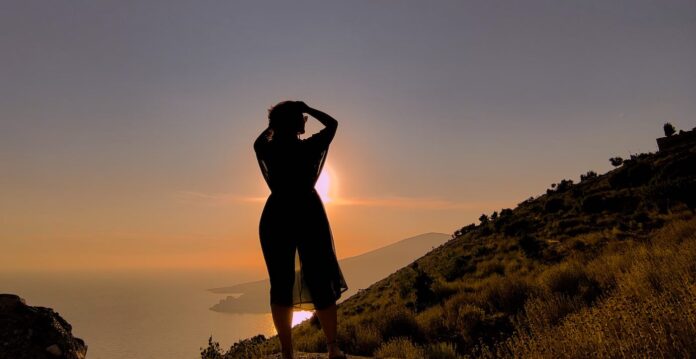
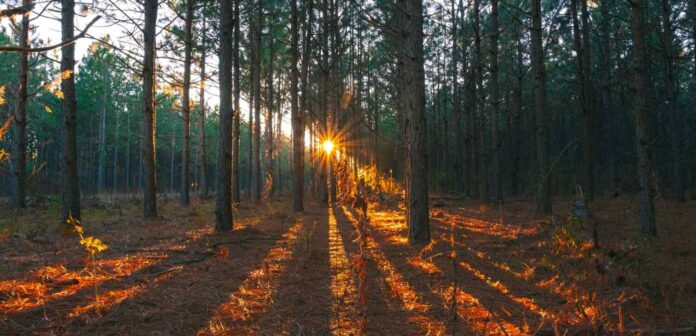
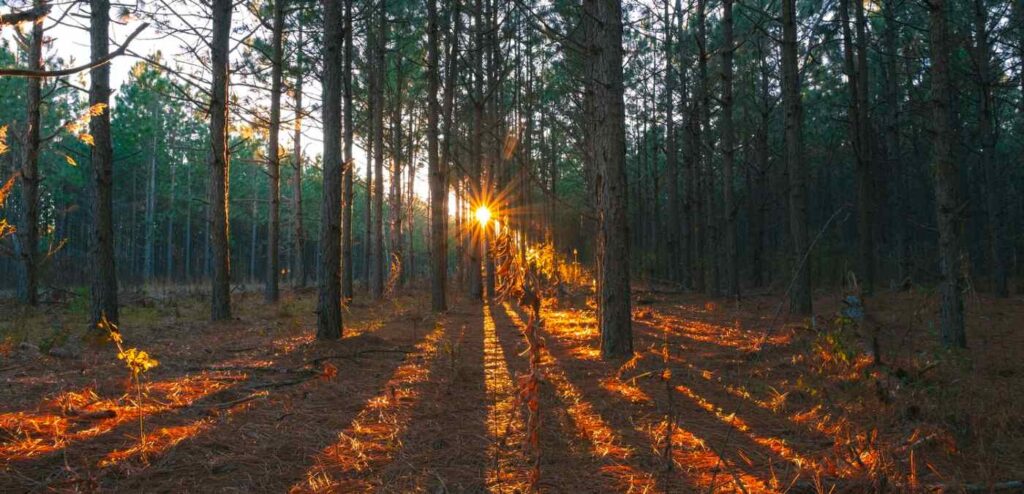
Quote of the Day: “Here is a rule to remember, when anything tempts you to feel bitter: not ‘This is misfortune,’ but ‘To bear this worthily is good fortune.’” – Marcus Aurelius, Meditations
Photo: by Sara Darcaj
With a new inspirational quote every day, atop the perfect photo—collected and archived on our Quotes page—why not bookmark GNN.org for a daily uplift?
Cozying up in a warm fleece blanket after a day on the slopes is a lovely feeling; cozying the slopes themselves up in a fleece blanket, as it turns out, can also be an excellent way to keep snow and ice from melting high in the Swiss Alps.
While making something cozy under a blanket isn’t exactly how one would first think to keep something cold, it’s protecting Switzerland’s vulnerable glaciers from the summer sun by reflecting the rays away like ultra-white paint.
The 3,238-meter (10,623-ft) Mount Titlis has seen large portions of its glacial coverage disappear over the last few decades, and ski resort employees who rely on the glaciers to keep the snow thick and crisp for winter holidays work for 4-6 weeks securing blankets to give the ice rivers all the help they can get.
After the worst of the heat has passed, they spend another 4-6 weeks peeling the blankets off again.
The polyester fleece blanket coverage on Titlis now extends 100,000 square meters, or roughly the same size as 14 football fields. This allows snow patches to keep the ice underneath cool year-round, and be deployed to barer slopes once winter returns.
The snow is even used to reinforce the piles of the ski lifts that are drilled into the ice, but which need the snow to support them.
Known as “white gold,” the Swiss winter tourism market is worth $5.65 billion annually. The blankets are a bit makeshift, but ski resorts depend on the glaciers, and preserving them helps preserve, as John Muir pointed out, the entire mountain ecosystem.
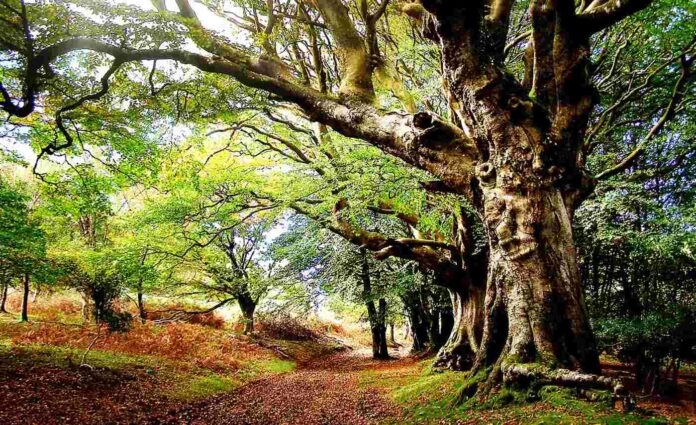
Big old trees. Are there any living things that speak to us the same way as big old trees?
Italy has ensured through law that every Italian and visitor to the country has the right of happening upon the oldest, gnarliest, and most storied trees in the nation, and thereby having that wonderful feeling of discovery and reverence we get from seeing an ancient tree.
The 1939 law described monumental trees as “immovable things that have remarkable characteristics of natural beauty,” which as Elisabetta Zavoli writing for National Geographic explains, gave a visual emphasis on what was already a vague categorization for the law.
One of the most important aspects of monumental trees is not their beauty, but their effect as micro-ecosystems. Their hollows, scars, dead branches, and living ones all play host to a wide variety of species like insects, mushrooms, birds, and small rodents.
Signs of damage or decay, while hardly being pleasing on the eye, provide vital nutrients and shelter for the forest animals, such that in 2013 a better, more representational definition of a monumental tree was passed into Italian law.
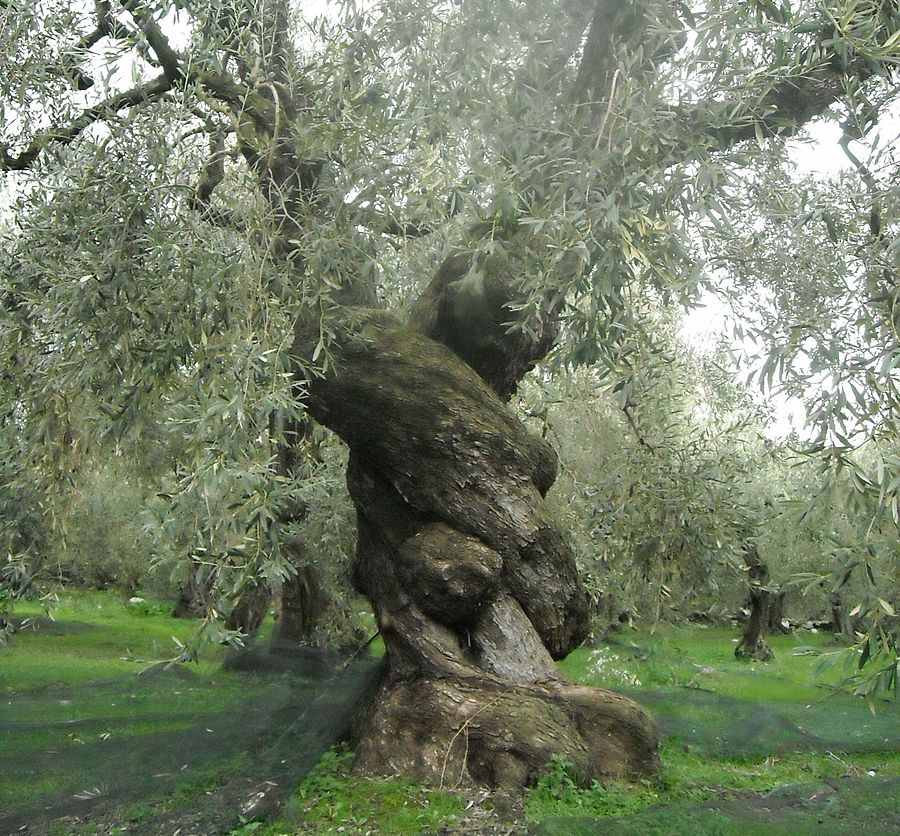
It’s a good thing too, as many of the monumental trees Zavoli highlights didn’t become monumental for their beauty, but for their age. The olive tree in the village of Villastrada in Umbria could be 2,500 years old, but it isn’t exactly a looker. Its principal trunk has long since decayed, and other younger trunks have grown over its lifespan.
Ancient olive, Dennis Koutou/CC license
Another example is the Pontone beech tree in Abruzzo, which is actually seven beech trees fused together, wrapped in the same layer of bark.
Since 2013, over 3,000 new entries have joined the national monumental tree registry.
Some are treasured for their beauty, others for their age; yet more are valued for the legend and myth surrounding their lives.
The 800-year-old Cypress of Saint Francis is said to have been planted when, returning from a walk, Saint Francis of Assisi tried to burn the walking stick he had just used.
When it failed to catch fire, he decided to plant it instead, allegedly saying “If you do not want to burn, grow up!” The cones that fall every year from that tree, located in a convent, are gathered in the hopes that pilgrims who can manage to grow something from its seeds will have a blessed tree.
Rather than give in to depression, one man chose to fight back in a way that not only changed his own life for the better—it gave a stranger he’d never met a second chance as well.
Gage Tappe had recently moved to Idaho and had part-time custody of one of his kids.
Alone and isolated, he admits he was at an “all-time low.”
Looking for something to help him cope with his sadness and feel more connected, Tappe signed up as a donor with the national bone marrow registry.
“I felt like my life wasn’t worth very much, so I hoped that I gave myself a chance to put some value to my own life by trying to help somebody extend theirs and continuing to stay on the list… and you have to be alive to do that,” Tappe TODAY correspondent Carson Daly. “It gave me a sense of value to myself that I didn’t previously have.”
Several months later, Tappe got a call to let him know he’d been identified as a match. Tappe says since he was raised to help others in need, in any way big or small, he just needed to know where and when his marrow could be harvested for the transplant.
The donation was made anonymously. The identity of the recipient didn’t matter to Tappe, the only thing he cared about was being able to have a meaningful and positive impact on someone’s life—but neither he nor the woman his bone marrow was going to could know just how life-changing his donation would turn out to be.
By the time Tia Jensen was diagnosed with leukemia in 2018, she’d already been dealing with the effects of multiple sclerosis for two decades.
For this latest health hurdle, she started a course of chemotherapy at the Seattle Cancer Center Alliance and added her name to the waiting list for a bone marrow donor.
After the successful transplant procedure, Jensen was stunned to learn that not only had her leukemia gone into remission, but thanks to her newly revitalized immune system, the multiple sclerosis she’d been battling for 20 years was in remission as well.
Ecstatic, Jensen wanted to reach out and thank her donor. Two years and many letters later, Jensen was eventually given Tappe’s contact information and the two struck up a correspondence. Though delayed by the COVID-19 pandemic, they finally met in person on the set of The TODAY Show.
“I have been wanting to meet [him] for so long… I missed meeting Gage because of the pandemic. And I realized that because of Gage, there’s a lot of milestones that I won’t miss. I’m alive. I’m here. I’m going to get to be with my family, to be in the memories,” Jensen told TODAY’S Sheinelle Jones.
A grateful Jensen sees Tappe as a true role model. To honor him, and so that more patients might enjoy recovery stories with similar happy outcomes, Jensen has teamed up with Be the Match for an online donor registration event in hopes of inspiring others to follow his example of getting tested and stepping up to donate if and when they’re matched.
“I think we forget too often how kind and big-hearted people are. And I am so grateful that [Gage] was willing to just be brave and take that step and share this kindness and marrow and give me a second chance at life,” she told Daly. “All this was done not knowing a thing about me, and I am just floored by the charity and the beauty in that.”
ADD A Little Joy to Those Social Feeds—Share This Story…
Meet the teen who entered the US Open while ranked 150th in the world, won every set, and took the winning trophy (as well as a cool $2.5 million prize) home.
Born in Canada to a Romanian father and Chinese mother, Emma Raducanu and her family moved to London when she was two.
As a kid, she loved a range of sports, including golf, ping pong, motocross racing—and, of course, tennis.
Her new rank is 23rd in the world, but we have the feeling she’s going to soar on that front ever upwards.
An Apple co-founder is launching a company to clean up space debris, and not a moment to soon, as NASA estimates there may have been 27,000 pieces of junk floating or hurtling around the Earth last year.
With thousands of additional satellites slated for placement around the Earth as part of future plans for universal internet connectivity, the job to tackle the growing orbital refuse must fall to someone.
The company, called Privateer Space, has nothing to do with piracy, and is in fact in “stealth mode,” and as such we know little about it. Steve Wozniak, an Apple co-founder of the I software, who has a net worth of $100 million, tweeted out a link to the Privateer website, which currently has nothing but a YouTube video on it.
Later, a press release sent out regarding a titanium 3D printer developed under a company called Desktop Metal featured a quote from Wozniak.
“’3D printing with titanium is incredibly valuable in industries like aerospace because of the material’s ability to support complex and lightweight designs,’ co-founder of Privateer Space, a new satellite company focused on monitoring and cleaning up objects in space,” the press release stated.
Far from the Musk/Branson/Bezos space race, the fact that at least one tech one-percenter is investing in space clean-up is huge for all of humanity.
Former NASA administrator Jim Bridenstine asked Congress for $15 million solely for a space cleanup mission, tweeting that the ISS had to maneuver out of the way of dangerous space debris on three separate occasions last year.
The @Space_Station has maneuvered 3 times in 2020 to avoid debris. In the last 2 weeks, there have been 3 high concern potential conjunctions. Debris is getting worse! Time for Congress to provide @CommerceGov with the $15 mil requested by @POTUS for the Office of Space Commerce.
One of the major problems with space debris is that the smaller it is the more dangerous it becomes, as NASA reports.
“A number of space shuttle windows were replaced because of damage caused by material that was analyzed and shown to be paint flecks,” the agency wrote, noting that debris can travel as fast as 17,500 mph. “In fact, millimeter-sized orbital debris represents the highest mission-ending risk to most robotic spacecraft operating in low Earth orbit.”
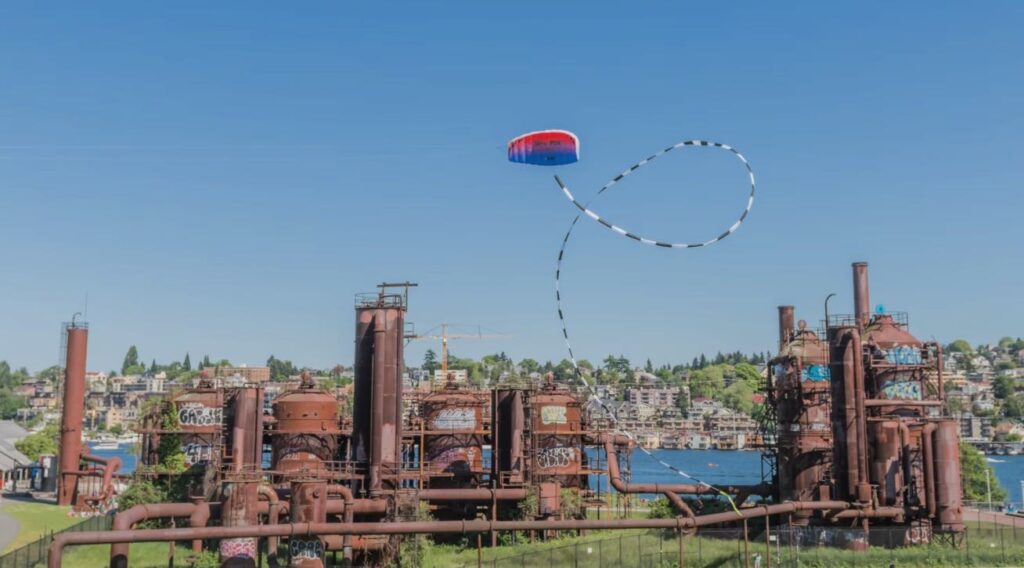
Quote of the Day: “The supreme accomplishment in life is to blur the line between work and play.” – Arnold J. Toynbee
Photo: by Alex @alx_andru – Gas Works Park, Seattle
With a new inspirational quote every day, atop the perfect photo—collected and archived on our Quotes page—why not bookmark GNN.org for a daily uplift?
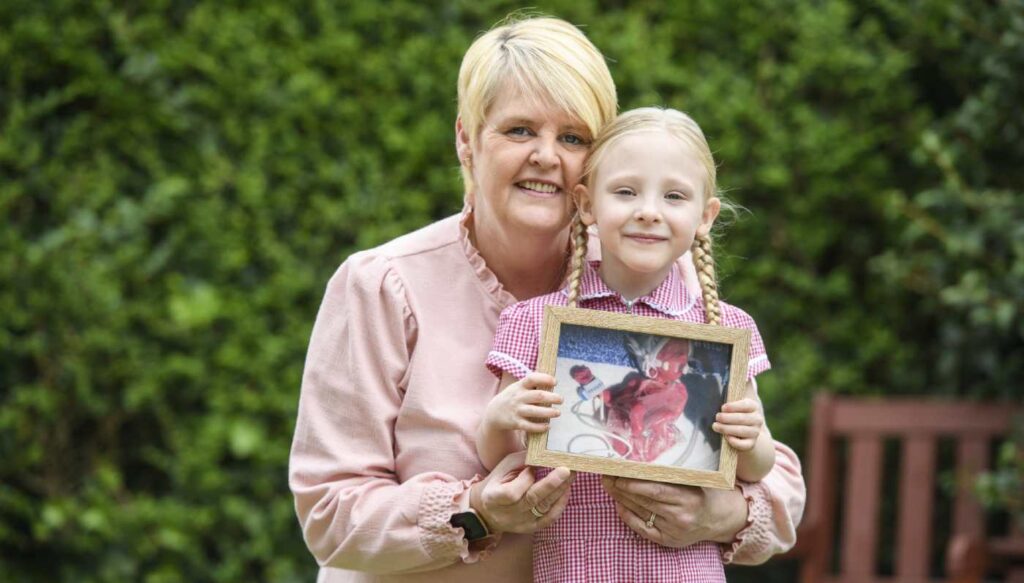
A premature baby born the size of a bag of sugar and kept alive in a sandwich bag has defied the odds to start elementary school.
Darcey Clegg, who is now four years old, weighed just 1lb 5oz when she was born in September 2016 via an emergency c-section—three months early.
The little girl had to fight for her life in the neonatal unit at Royal Oldham Hospital, Greater Manchester, until she miraculously came home on 30th December after 64 days in hospital.
Now despite everything, she is getting ready to start school in September, and mom, 50-year-old Gill Glegg, couldn’t be prouder.
Gill, who works as a carer, said, “Darcey is amazing. She was so tiny in that little sandwich bag, I didn’t know if she would make it.
“It’s so emotional to see her start school. We’ve got her uniform and everything ready to go.”
Gill’s pregnancy was smooth sailing until a scan at 28 weeks revealed her baby was not receiving enough blood and there was a placental abnormality. She was immediately rushed to Royal Oldham Hospital for an emergency operation.
SWNS
“It was terrifying,” Gill said. “I wasn’t given much hope that she would make it. But she came out crying.”
Darcey was immediately taken to the neonatal intensive care unit to help her survive the crucial early months. She battled blood transfusions and had to build up strength before she could come home in time for New Year’s Eve.
“She was the best present,” Gill said.
Since then Darcey has defied the odds to be a normal healthy girl. “She started walking a bit late, but it was an amazing moment,” Gill said. “She is a dream.”
In the classic Dr. Seuss children’s book, Horton Hatches the Egg, lazy bird Mayzie finagles hapless Horton the Elephant into sitting on an egg she’s too bored to hatch while she flies off to Palm Beach for a frivolous vacation.
Says Horton to Mayzie: “Me on your egg? That doesn’t make sense. Your egg is so small, ma’am, and I’m so immense.” But being the faithful elephant he is, he sits down to get the job done nonetheless.
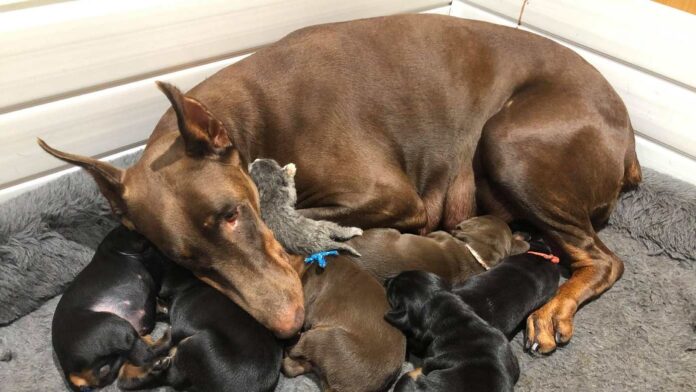
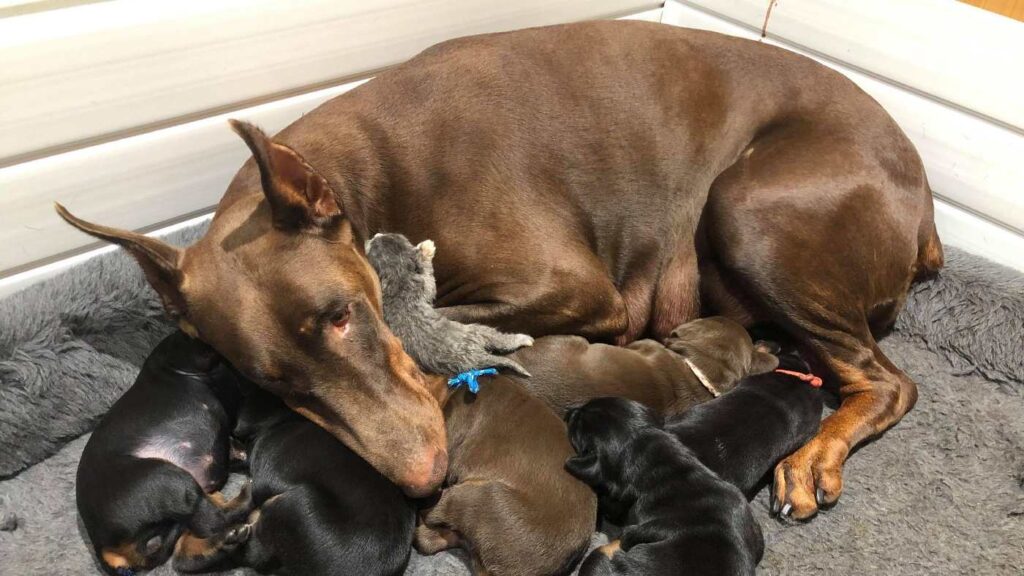
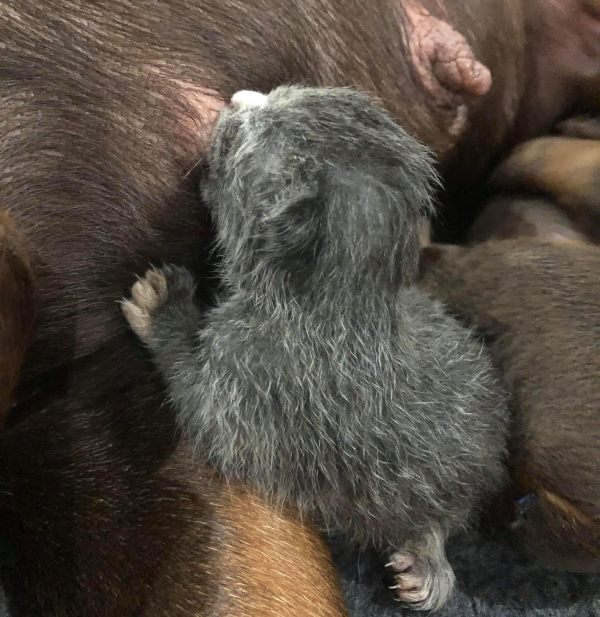
When a similar scenario recently unfolded in the upstate New York town of Geneseo, a sizable Doberman Pinscher named Ruby—who was nursing six of her own puppies at the time—had no qualms about adding a tiny newborn kitten whose mother was nowhere to be found to her hungry brood.
Ruby’s owner Brittany Callan breeds Dobermans on her family’s farm. Even though the breed is best known for being consummate guard dogs, when she happened on the lost kitty, her thoughts turned to Ruby, whose pups were less than a week old.
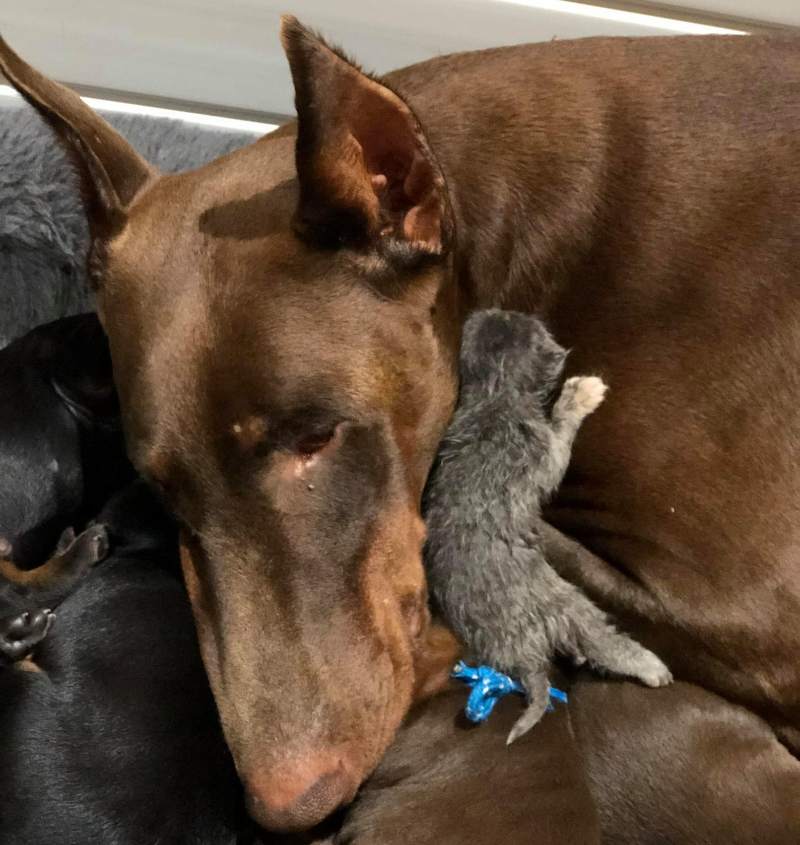
After a careful introduction, the infant cat Callan had named Ramblin’ Rose settled in next to her adoptive siblings for a feed and Ruby was only too happy to accommodate the extra little mouth.
Brittany Callan
“[Ruby] took right to her and didn’t seem to mind at all,” Callan told Daily Paws, adding, “She grew up with small animals [and learned] to be nice and just lick them and be friendly with everything… She’s just an extremely, extremely compassionate dog.”
While the occurrence of interspecies nursing is rare, it’s certainly not unprecedented.
Back in 2012, two abandoned Siberian Tiger cubs were adopted by a Shar-Pei named Cleopatra at a Russian zoo in the Black Sea resort of Sochi.
Two years later, a determined farm feline from County Offaly, Ireland took on three motherless ducklings and raised them as kin along with her kittens.
Unprecedented or not, Callan believes Ruby’s über-developed maternal instinct is something truly special. “She was meant to be a mother to anything,” Callan told the Rochester Democrat and Chronicle.
“We’ve had baby bunnies, guinea pigs, chickens, ducks… Ruby licks them like she’s cleaning them, like she’s their mother.”
Since taking over mom duties for Ramblin’ Rose, Ruby has started carrying the kitten around by the scruff of the neck and protectively separating her from her puppy litter mates when their behavior gets too rambunctious for the itty-bitty kitty.
Brittany Callan
Under Ruby’s loving care—with a little extra nutrition in the form of kitten formula administered by Callan—Ramblin’s Rose’s weight has gone from 4.37 ounces to 7.27 ounces in the span of one week.
When Horton’s egg finally hatches at the end of his tale, the creature that emerges is part bird and part elephant.
Her impressive growth rate notwithstanding, it’s not likely Ramblin’ Rose will catch up with her adoptive mom’s stature or take up barking—but she might just make someone a pretty fierce guard cat when she’s fully grown.
Way back in the mists of time, before Guttenberg’s printing press, before the Chinese invented parchment paper, before clay tablets and papyrus, humans passed information along through stories.
It turns out those thousands of years of storytelling tradition may have actually altered our very biology, as a new paper published in Cell reveals that narrative stimuli, i.e. “Once upon a time,” or “My fellow Americans,” synchronizes the fluctuations of heart rates between the individuals listening.
Human hearts don’t beat in perfect rhythm. Depending on a person’s level of physical fitness, fluctuations and variability in the regularity of those beats at rest can actually measure almost entire seconds.
As strange as it sounds that a speaker and listeners’ hearts literally beat as one, further findings from the study reinforce the idea of storytelling as a biological determiner. For example, the matching of heart rates is determined by the attention paid by the listener to the speaker, and that this phenomenon predicts the memorization of the narrative content.
This isn’t the first time this incredible connection with stories has been demonstrated to have a biological impact on humans.
It’s been shown that the brains of people watching films together tend to “tick collectively,” suggesting why films can be so enjoyable as a group activity, and why the greatest films affect us the way they do—because they are literally changing our biology into “pay attention and remember” mode.
In the heart rate experiment, subjects were presented with a 1 minute audiobook snippet of Joules Verne’s 20,000 Leagues Under the Sea. They found that there was significant correlation of heart rate synchronicity between subjects. To control for error, they gave all the subjects different 1 minute sections, and as predicted, the heart rate synchronicity dropped significantly.
This explains why story time is such an effective teaching tool for kids.
Distractions were found to disrupt this synchronicity, specifically when during the narrative stimuli, participants were asked to repeatedly count backwards.
Most people can probably remember a live performance that held them in a spell, when the instruments were perfectly mixed, or the orchestra was in perfect harmony with the conductor.
It’s pretty astonishing to imagine what’s really going on in that concert hall: all the musicians are playing in perfectly synchronized rhythm according to the time signature of the piece, and all the notes are matched identically along an almost infinitely-sensitive scale of frequencies, while all the brains of all the audience members are “ticking over” the same, and all their hearts beat collectively down to razor-thin differences.
Essentially, all humans become one large organ of perfect order.
SYNCHRONIZE Your Favorite Stories With Your Chums—Share This…
Reprinted and altered with permission from World At Large, a news website of nature, politics, science, health, and travel.
Naturally regenerated forests are much better ways of achieving climate targets than mass planting, and Brazil could achieve 150% more reforestation if the forests are left to their own schemes.
Home to a wealth of biodiversity that includes ocelots and golden lion tamarins, the Atlantic Forest biome is recognized as a UNESCO Biosphere Reserve and a Brazilian Natural Heritage site.
However, it has lost nearly 80% of its original area due to logging and agricultural expansion, making it ideal for restoration initiatives, reports a study from 2018.
A report from Forest News finds that Brazil’s Atlantic Forest, the oft-ignored, great forest habitat in the country is a perfect site for natural reforestation.
In a separate study, seeking to map and quantify the potential for natural forest regeneration in the Atlantic Forests, the researchers found that of the current forest cover, which is around 34.1 million hectares (131,000 square miles) 8% was regenerated naturally between 1996 and 2015, but that another 20 million hectares could be reforested with a mix of natural and assisted strategies, between now and 2035, all the while saving around $90 billion in operation costs.
The savings in dollars is key, since natural forest regeneration efforts are reported to only account for 2% of the total climate change funding in the world. Furthermore, tree planting and soil preparation can cost on average between $1,400 and $34,000 per hectare.
Letting nature take its course
The Center for International Forestry Research feels the best bet for the world’s forests in a changing climate is to simply take our hands off the wheel.
Several small examples of natural reforestation in Ireland and the UK, two nations keen on restoring past versions of their ecosystems, show the breadth of success one can have if one simply lets nature take its course.
The rewilding project on the 3,500 acres of Knepp Estate has created one of the most biodiverse ecosystems in lower England, while a 600 year-old 1,600 acre-estate in south Ireland has achieved something similar.
Natural regeneration has this potential, unsurprisingly, of restoring far more biodiversity, especially if helped along with seed dispersion, de-weeding, and other simple management strategies.
A meta-analysis found as much, when it looked at 133 papers on the topic and found that forest areas freed from agriculture and allowed to regenerate created 56% greater species richness in all categories of animals, and in five measures of vegetation structure: cover, density, litter, biomass, and height.
“Instead of conserving with specific species in mind where you’re focusing on keeping a habitat, locking it down as it is, so that that preserves the numbers of certain species, what we’ve done here is just taken our hands off the steering wheel and just stood back and let nature take over,” said Isabella Tree, co-director of the rewilding project on the Knepp Estate.
Another benefit is that naturally occurring forests trap far more carbon in the soil on average, as one study found that regenerated forests absorb 32% more carbon above ground, and sequester 11% more below, than is generally estimated by the Intergovernmental Panel on Climate Change.
For these regenerated forests to last, however, the scientists and policy makers need to know the best way for locals and other interest groups to be motivated enough to leave the regenerating forests intact long-term.
The Forest News article suggests that schemes like a payment system for rural dwellers who leave or protect and maintain stands of regenerated forests, or increased access to investment capital for agroforestry production, could be used to help convince those who rely on rural areas to leave the trees alone rather than turning them into wood chips.
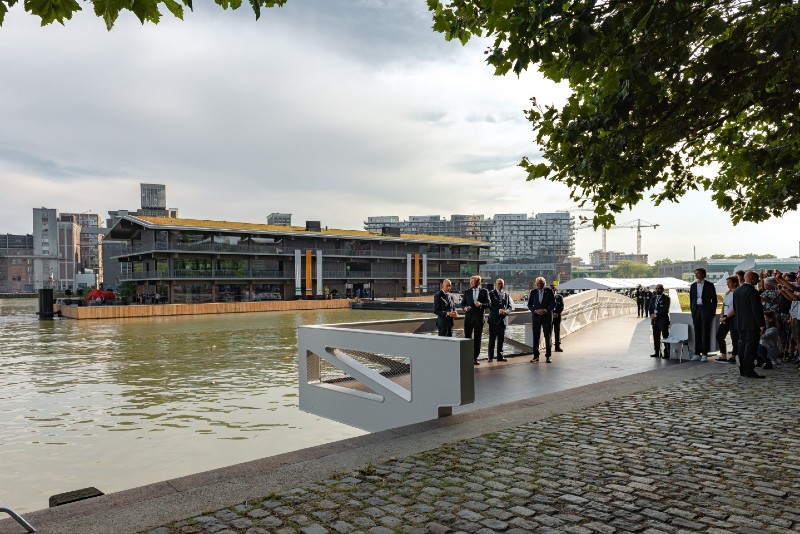
The world’s largest floating office building opens in the Netherlands, where unsurprisingly it will host the offices of the Global Center on Adaptation.
Anchored in the harbor of Rijnhaven in Rotterdam, both office and organization will make a fighting partnership in the attempts to lessen the impact of climate change on our society, particularly in a country that’s below the level of the sea.
Floating Office Rotterdam, or FOR, was recently inaugurated by King Willem-Alexander, and former UN Secretary General Ban Ki-moon who heads the team taking up residence in the 4,500 square-meter (48,500 square-foot), three-floor office space.
Built of prefabricated timbers arranged atop 15 custom built concrete pontoons, the upper floors feature wrap around terraces to enjoy the view of the city.
An overhanging roof shades the interior from the sun. Powering FOR is an 800 square-meter array of solar panels hooked up to batteries ashore.
It also uses the northerly waters of the Dutch harbor as a heat sink to regulate temperatures in the offices without using climate control. Finally the offices are fully recyclable after the materials are no longer safe for continued use.
Powerhouse Company
“We designed our floating office to reflect the values of its inhabitants: the Global Center on Adaptation,” writes Powerhouse Company, the architects of the FOR.
“This Rotterdam-based NGO… aims at promoting planning, investment, and technology to mitigate climate change.
“The carbon-neutral building is designed to be climate resilient and will float if sea levels rise due to climate change. Our climate-resilient office is both an illustration of the center’s mission and sets an example for how to build sustainable floating structures.”
The Global Center on Adaptation has a lease in the building for ten years, after which it will move to another tenant.
Quote of the Day: “Intelligence is composed mostly of imagination, insight—things that have nothing to do with reason.” – Vivienne Westwood (turned 80 years old this year)
Photo: by Martin Adams
With a new inspirational quote every day, atop the perfect photo—collected and archived on our Quotes page—why not bookmark GNN.org for a daily uplift?
A company that GNN began supporting in 2017 when they were making fashion-forward scarves that filter the air at the level of N95 or higher, has gone above and beyond, producing a new single-use mask that closes the lifecycle loop for every wearer concerned about the environment—especially since the pandemic has created so much landfill waste.
The company, G95 (formerly Bioscarf) is so committed to sustainability, they began developing a special version of their filtration material after seeing the damage that discarded PPE was doing to our oceans since the pandemic began.
Everything related to the newly developed Oceanshield mask—from the ear loops to the nose bridge—is made entirely using plant-based PLA materials which is 100% biodegradable. This includes the bags they ship in, the individual wrappers for each product, and the G95 filtration technology built-in. And they provide KN95- and FFP2-certified filtration.
But how they’re “going beyond” is the best part. When you are done with the mask, instead of throwing it away, simply put it in the envelope that it arrived in, and mail it back to the company for free—and they will recycle them into new masks!
If any of the masks do happen to reach the landfill or waterway, because they are 100% made out of plant-based materials, they will fully biodegrade in approximately 90 days.
“Lab-tested & certified!” says the company’s founder, Carlton Solle, talking with GNN. “It’s the world’s first single-use mask made using 100% plant-based materials.”
And they will give you a $1.00 store credit for every Oceanshield mask that you return for responsible disposal.
Also, because Carlton and his co-founder, wife Hazel Solle, are serious about preventing masks from ending up polluting the ocean, you can send them used masks from ANY other manufacturers and receive a 25¢ in G95 store credit for each one shipped back.
Insane brilliance, right?
How to close the lifecycle loop
When you receive your shipment, carefully open it by using the tear strip on the back. Keep your bag because you’ll need it to mail back your used masks. At the end of each day, simply put your used mask into the bag, together with the wrapper it came in.
When you have used up all of the masks, put them into the bag, place the enclosed mailing return sticker over the old sticker on the front of the bag. Be sure to fill out the enclosed card with your contact information and write in how many masks you are returning to receive the store credit mentioned earlier.
“We’ve spent years developing these, and are really passionate about it,” says Solle. “Given the state of things, it will be a real game-changer.”
Their founding story is as good as the product
During a business trip to China, Carlton Solle became ill, most likely due to complications related to air pollution. As an alternative to wearing an ugly mask to protect himself, he turned to fashion. Back in Atlanta, his wife Hazel came up with the idea to design a product that would work both as a scarf and also a filter. (You might have seen the photo of our GNN founder wearing one during the wildfires in California when the air was so bad.)
For people traveling outside the US, these masks are FFP2 rated, and they have been submitted for FFP2 and CE registrations, so you can use them all around the world. Some European airlines may insist on FFP2-rated masks for boarding passengers.
The company, G95, is currently shipping their products within 1-2 days for FREE—using USPS Priority Mail in the US—and they now ship international orders over $100 FREE via UPS.
Discount code for GNN readers gives 20% off
If you enter the code GNN20 at checkout you will get a 20% discount on any order over $100.
The G95 website has a number of products that filter with their G95 technology, which they say is “like N95 on steroids.” Their hoodies and pullovers are designed to turn up to filter nose and mouth, and their gaiters and masks can be washed 50 times and still retain an N95 rating. They also have an informative FAQs page here.
The Oceanshield is available now and sold in packs of 30 for $79 USD via the G95 website.
SHARE the Phenomenal Deal With Anyone Who Needs a Single-Use Mask… (And, Spread the Word on Social Media!)
A team of investigators has succeeded in restoring brain trauma by hyperbaric oxygen therapy.
This is the first time in the scientific world that non-drug therapy has been proven effective in preventing the core biological processes responsible for the development of Alzheimer’s disease.
Using a specific protocol of hyperbaric oxygen therapy (HBOT), cerebral blood flow (CBF) improved/increased in elderly patients by 16-23%, alleviating vascular dysfunction and amyloid burden.
The study from Tel Aviv University, part of a comprehensive research program directed toward aging and accompanying ailments as a reversible disease, holds promise for a new strategic approach to the prevention of Alzheimer’s by addressing not only the symptoms or targeting biomarkers, but rather the core pathology and biology responsible for the development of the disease.
Hyperbaric medicine is a form of therapy that requires patients to be kept in special chambers in which the atmospheric pressure is much higher than that normally experienced at sea level.
In addition, they breathe air composed of 100% oxygen.
Hyperbaric medicine is considered safe and already serves to treat an extensive list of medical conditions. In recent years, scientific evidence has indicated that unique protocols of hyperbaric therapy are capable of inducing repair of damage brain tissue and renewed growth of blood vessels and nerve cells in the brain.
The first stage of the study, published in Agingjournal, was carried out on an animal model, in the course of which it was proven conclusively through examination of brain tissues that a certain therapeutic protocol brings about an improvement in vascular function and the creation of new blood vessels.
It also prevents the deposit of new amyloid plaques on the brain cells and even leads to the removal of existing amyloid plaque deposits. Amyloids are non-soluble proteins. Deposits of such proteins in the brain are connected with severe degenerative conditions such as Alzheimer’s disease.
At the next stage, the effects of the treatment were examined for people above the age of 65 with cognitive decline, with an emphasis on memory loss, a stage preceding Alzheimer’s and dementia.
The therapy included a series of 60 session of HBOT unique in pressure chambers over a period of 90 days.
The effects on the brain were evaluated by high resolution perfusion MRI. The hyperbaric treatment protocol gave rise to: increased blood flow in the range of 16%-23%; significant improved in memory by 16.5% on average, significant improvement in attention and information processing speed.
Dr. Ronit Shapira said, “The combination of an animal model from which we could learn the pathology of the disease, together with existing and available therapy, raises the hope that we will now be able to fight one of the greatest challenges to the western world.
“According to our findings, hyperbaric therapy given at a young age is likely to prevent this severe disease entirely.”
An early Bronze Age log coffin containing the remains of a man buried with an axe thought to date from 4,000 years ago has been discovered accidentally on a golf course.
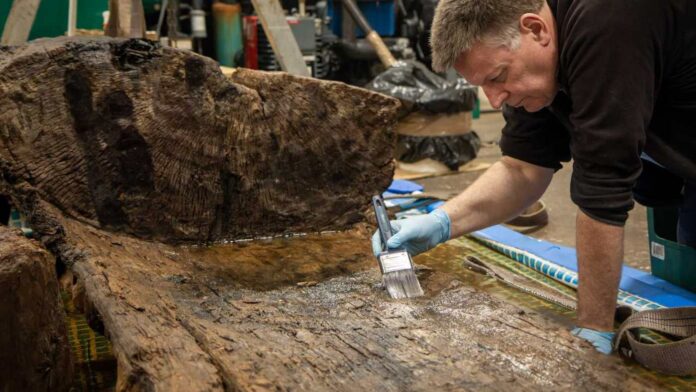
The discovery of the coffin and its contents sparked a rescue mission funded by a £70,000 ($97,000) grant from Historic England and supported by a team of staff and students from the University of Sheffield’s Department of Archaeology working nearby who offered their assistance.
The coffin, which is three meters long and one meter wide, was specially protected to ensure the delicate structure did not crumble after it was exposed to the sun and air.
It was made from hollowing out a tree trunk, and plants were used to cushion the body, then a gravel mound was raised over the grave; practices that were only afforded to people with a high status within Bronze Age society.
The remarkable find was made by chance during works to a pond at Tetney Golf Club in July 2018, during a spell of hot weather. The golf club’s owner, Mark Casswell, was put in contact with the Portable Antiquities Scheme and Historic England.
Following a year of cold storage while being assessed, it was moved to York Archaeological Trust where it has been undergoing preservation work.
According to the archaeologists, the axe seems more a symbol of authority than a practical tool, while the coffin gives an insight into how social hierarchy was marked out in the early Bronze Age.
So far, yew or juniper leaves have been found within the coffin and further work is planned to discover more about how plants were used in this burial practice, and the time of year the burial took place.
The axe is extremely rare, there’s thought to be only 12 known from Britain, especially because the wooden shaft survives as well as the stone head.
The log-coffin was originally created by carving a large, single, fast-growing oak tree.
It used ‘split timber’ construction technique, where the tree trunk was split lengthways first to create a half or slightly larger log for carving, rather than hollowing out a whole tree from scratch. It probably had a lid, of which part survives.
There are around 65 early Bronze Age log coffins known from Britain as it is rare for them to survive, given they are made of wood. In this case a deep layer of silt aided its preservation. However, once the coffin was exposed it was a race to prevent its rapid deterioration.
Tim Allen, of Historic England, said, “The man buried at Tetney lived in a very different world to ours but like ours, it was a changing environment, rising sea levels and coastal flooding ultimately covered his grave and burial mound in a deep layer of silt that aided its preservation.
Mark Casswell, owner of Tetney Golf Club, added, “My family farmed here for years before we opened the Golf Course and I’d never have imagined that there was a whole other world buried under the fields.
“It’s amazing how well preserved the axe is with its handle still there like it was made yesterday. We’ll have a nice photograph of it up on the Clubhouse wall, all those years that people have been living here working the land, it’s certainly something to think about while you’re playing your way round the course.”
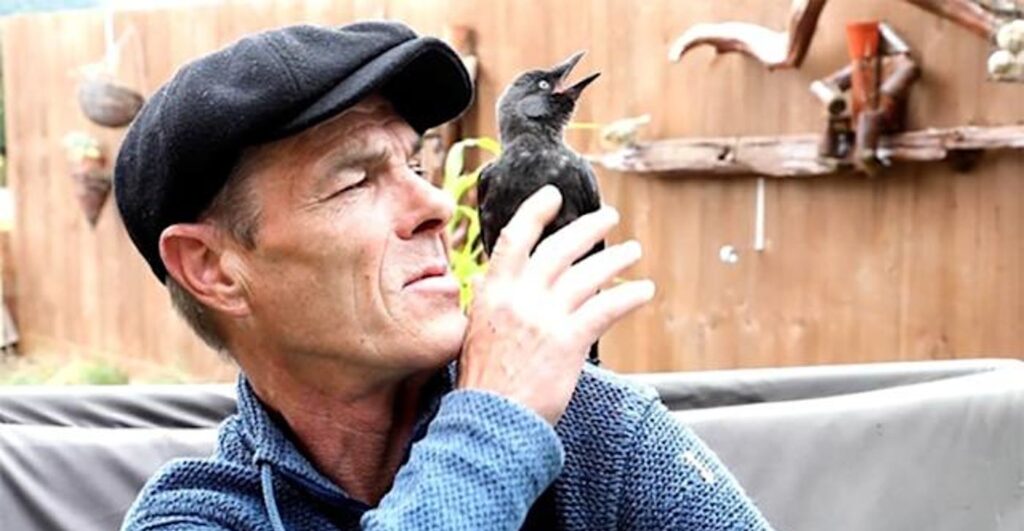
Meet the man and jackdaw who have an adorable bond after a chance roadside encounter, and now even go on bicycle rides together.
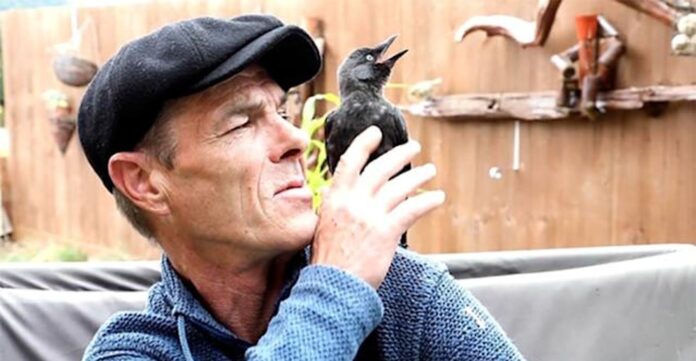
55-year-old Michael Smith spotted an injured baby jackdaw lying on the roadside as he cycled home one evening in May.
He scooped up the tiny bird, now named Patch, and took him home where he made him a little nest and fed him scrambled eggs.
Now recovered, and about 16 weeks old, Patch has spread his wings, but comes back to his rescuer when Michael calls.
Bird and man have such a close relationship that Patch gives his friend little beaky kisses and hitches lifts on his bike rides and walks.
Patch has been a celebrity guest at a wedding, and Michael loves him so much he even slept rough one night when his feathered friend didn’t come out of a tree.
Michael, an ex-builder from Malvern in Worcestershire, said, “I love nature and animals, so I couldn’t leave him injured in the hedgerow.
“He’s like my best friend now, and I spend as much time with him as possible. When I’m without him I’m thinking about him, and when I see him again he does a little joyful squark that is different from his normal screech. He’s the best pet and everyone loves him. He is the talk of the town, and if I’m without him everyone’s asking after him.”
Michael suspected Patch, who he thinks is a boy, had been attacked by another animal when he found him with a mangled wing.
After living in an old pigeon box Michael got from a friend, and tucking into scrambled and boiled eggs, bread and milk, Patch took four weeks to recover use of his wing.
Michael still feeds Patch mealworms, and fruit like cherries and grapes, but the now-recovered bird catches moths, wasps, and flies for himself.
Patch lives in an aviary that Michael built in the garden, but comes in for play dates and occasional sleepovers in the house Michael shares with his mother 78-year-old mother Mary.
Michael said, “People call me the bird whisperer, or bird-man of Malvern. It came quite naturally to me. And I remembered all these tales I’ve heard about people rescuing birds and forming a bond.”
“He sits on my shoulder and puts his little beak to my face or gently nibbles my ear. He lets me stroke him under his breast and his feathers on his back all quiver. And he lets me rub his beak. He’s so much fun.
“I was quite well known around here but I’m even more so now: it’s a lovely thing to be known for,” said Michael.
When out walking, he hops down to play in puddles, and once enjoyed paddling in a stream on a Malvern hills excursion.
“Having him is such a lovely thing to happen.”
(MEET Mike and Patch in the video below.)
ADD a Little Croak to Social Media and Share This Sweet Story…
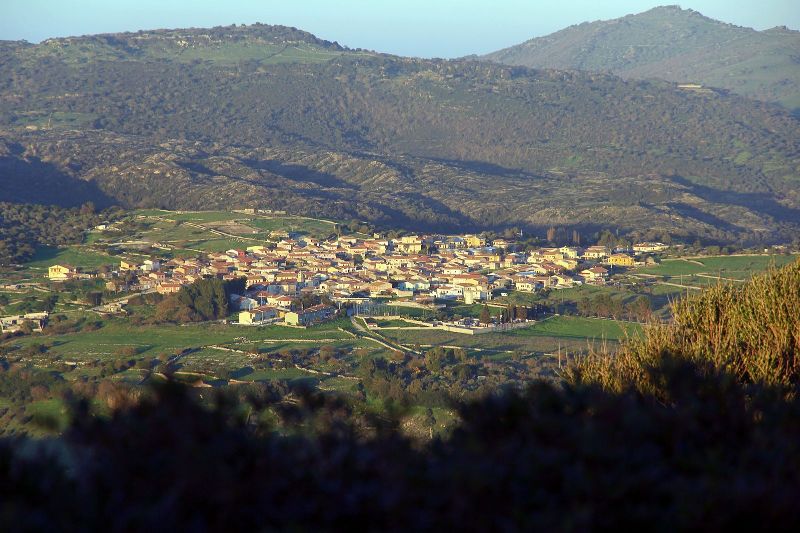
If you’re the mayor of a rustic 800 year-old town with just 1,000 people, how can you stop the town from fading away as young people move to the major cities? How about you sell all the empty properties for one euro?
44 towns in Italy are currently listed under the €1.00 House Project, which serves the triple-purpose of saving old abandoned real estate from condemnation, repopulating historic towns with dwindling populations, and allowing young people a super-easy entrance into the real estate market for the purposes of investment or starting a family.
These towns are the kinds of places that we Americans could never believe could be abandoned, and that delight us with their antiquity.
The €1.00 House Project allows mayors of small towns to put their empty properties up for sale for just one euro. Housing agreements are for three years typically, and struck with a deposit of €5,000 euro from the buyer to ensure the property will be restored.
A detailed plan of the restoration, be it for the purpose of a restaurant, a B&B, or a normal home, must be agreed upon, and at least semi-permanent residence is encouraged, reports CNN, who took a look a Maenza in Lazio.
Here are some other towns looking for fresh oxygen.
Pignone – La Spezia – Liguria
Pignone/Davide Papalini, CC license
The beautiful town of Pignone, or “feather,” is located in the La Spezia Province of southeast Liguria, near the Cinque Terre National Park, made famous by Rick Steves.
“Ancient is the history of Pignone that dates back to some finds in the Bronze Age,” writes the listing on the €1.00 House Project website. “The village is without walls but the compactness of the houses, leaning against each other, forms a defensive barrier along the canal that crosses it. To enter the village you have to cross a characteristic Romanesque bridge in the form of a “donkey’s back” built around 1500.”
As part of the Valley of Vara, Pignone is the sight of corn, legume, and potato cultivation, the former of which is very important as it goes towards the production of polenta, a regional staple. Every year at the end of summer, a farmer’s festival is held in town attended by hundreds of people to showcase the local products.
Sambuca – Agrigento – Sicily
Sambuca/Mboesch, CC license
A hilly town about 900 feet above sea level, Sambuca is inhabited by around 6,000 people and has the honor of being included in the club of the most beautiful villages in Italy.
Founded by Arabs around 1,000 CE, the city center still carries many of the architectural motifs of the Islamic travelers. It was one of the first towns to offer old houses for €1.00, and it’s famous for sheep cheese, focaccia, and is part of the National Association of Wine Cities.
There’s regular theater, hiking on the nearby mountain, and a short drive to the beach. Literally what’s not to love?
Oyace – Aosta – Valle D’Aosta
Oyace/ Patafisiki, CC license
Located in one of the lesser-known regions of Italy, Oyace is a tiny little mountain hamlet that offers perspective home buyers a totally different kind of Italy.
“The mayor Stefania Clos is eager to repopulate her mountain village, where 200 people currently reside,” reads the listing on the website. “From Roman times, the town of Oyace has its main economic resource in the breeding of livestock and [is] an excellent producer of Fontina.”
A hearth and stove in Oyace gives the strong-legged homeowner access to the highest massifs in Europe, for trekking, stargazing, camping, skiing, and more.
Romana – Sassasri – Sardinia
Romana/Gianni Careddu, CC license
Surrounded by karst rock landscapes and evidence of prehistoric civilizations, Romana is not your average island town. Instead a house in Romana, with its muraled streets and walls will make one feel part of a very old way of life.
Numerous nearby churches lie carved into the walls of cliffs or established in caves, while the agropastoral life which dominated this elevated volcanic plain means that amazing local meat and cheese is available for cheap.
“For those who love nature and immersion in ancient history, Sardinia and the municipality of Romana are the right place to plan your dream 1 Euro House Project,” writes the website. “We must not forget that you are only a 45-minute drive away from the most beautiful sea in Sardinia.”
BUILD Up the Idea of New Opportunities in Chums’ Feeds…
Quote of the Day: “I’m a believer in belief. Faith is something that works—it causes people to do things, it has results. It’s an intangible, indefinable, very real thing.” – Tommy Lee Jones (turns 75 today)
Photo: by Jay Mullings
With a new inspirational quote every day, atop the perfect photo—collected and archived on our Quotes page—why not bookmark GNN.org for a daily uplift?
As city officials wrangle under the pressure to reduce urban violence and deal with demands from police unions, homeowners’ associations, and gun lobbyists, residents in some of the most violent neighborhoods in the country have opted instead to pull up a chair, and have a sit down.
One such movement has been the 21 Days of Peace event in Minneapolis, a place where, even before the death of George Floyd, sometimes saw 11 homicides a month.
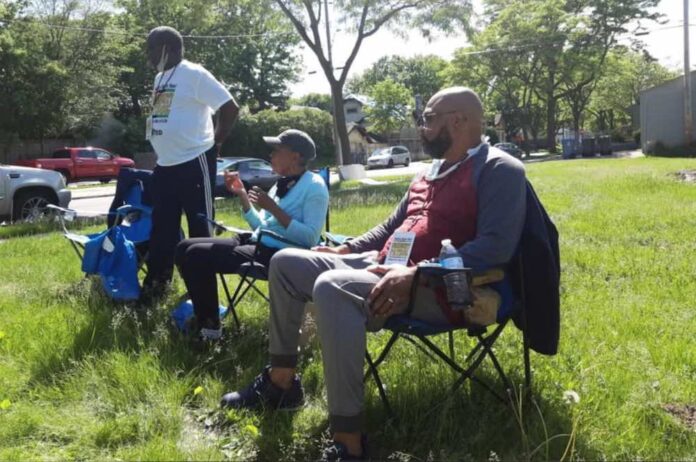
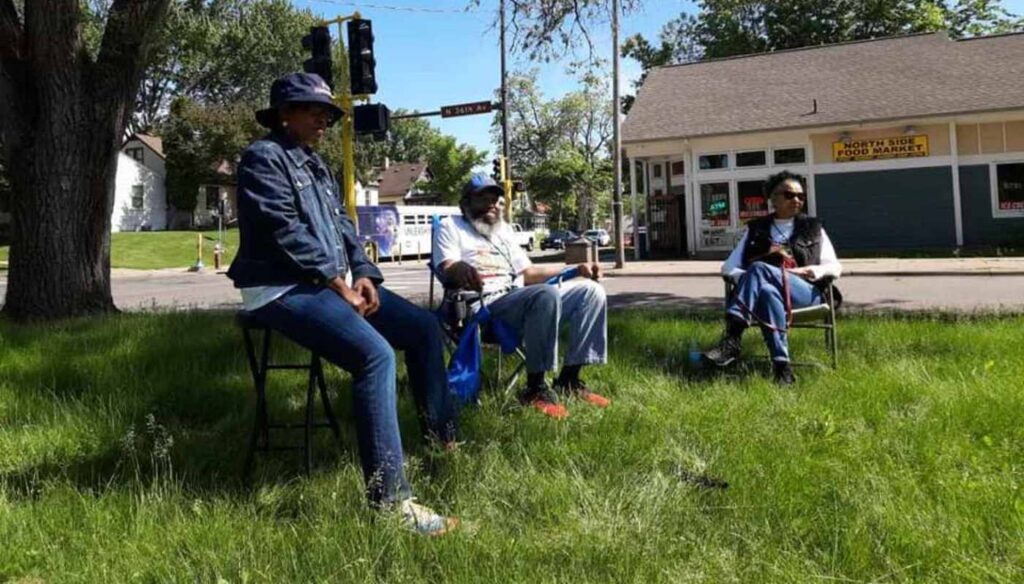
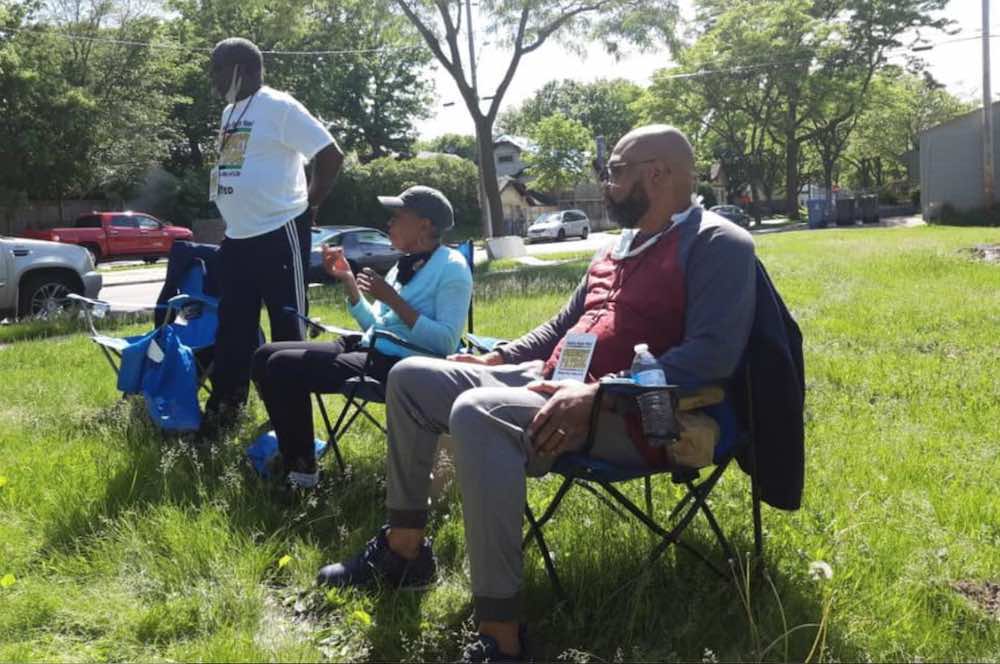
Here, community and church congregation members are simply seating themselves in lawn chairs on street corners in the most dangerous neighborhoods, and acting as “violence interrupters”—and police statistics show it’s working.
Compared to last summer, in June 2021 homicide numbers took a dive during the 21 Days of Peace, and continued to stay low in the following months, along with incidents of rape and aggravated assault.
“Our group asked the Minneapolis Police Department to identify the most dangerous spots in our neighborhood, the 4th Precinct, and then we went there, pulled out our chairs and sat down,” write Louis King and Jerry McAfee, in an op-ed in the Washington Post.
King is president and chief executive of Summit Academy OIC in Minneapolis, and McAfee is pastor of the city’s New Salem Missionary Baptist Church, but both are part of this new wave of violence interrupters.
“Too many leaders are responding by adopting a Nixonian ‘tough on crime’ stance—which usually translates into over-policing and under-supporting these communities,” they wrote. “The people sitting on these corners in their chairs are members of the community. We know our young people, and they know us.”
Similar movements of violence interruption have broken out with success in Nashville, where the groups Gideon’s Army and West Nashville Dream Center are working through community outreach to rebuild trust and using successful de-escalation to decrease crime by 40%, while arrests plummeted.
AP reports that in the areas where the Dream Center operates, crime has fallen 40%, giving a totally new perspective to police departments that for years had adopted tough-on-crime policies.
“We thought that was going to make it safer, and what we ended up doing was breaking down trust in those communities,” said police Lt. Jason Picanzo, who works with West Nashville Dream Center. Now, he says, it is the community that has made these neighborhoods safer.
Back in Minneapolis, King and McAfee believe that the moral bastion of the Black Church gives them a unique advantage over the police forces. They site similar examples in Baltimore where church groups are doing more for underserved communities, and at the same time reducing violence.
“We draw on the power of congregation—of family, of friends, and of community to try to interrupt the violence. And our faith gives us the courage to put ourselves in harm’s way,” they wrote.
It’s a strong gesture to unfold and lawn chair and simply sit where many people fear even to drive. Violence of any kind, whether it involves us or not, is a difficult situation to risk being caught up in, but desperate times also call on our ‘better angels’—and these Minnesotans are stretching their wings.
“We’re not declaring victory, by any means. But as elected officials look for answers to end the violence, they would be wise to pull up a chair and take a look at what’s working.”