All News - Page 453 of 1716 - Good News Network
Home Blog Page 453

Venom From Extremely Poisonous Caterpillar May Hold Healing Tonic That Saves Lives

Jiayi Jin
Jiayi Jin

The venom of one Australian caterpillar shows promise for use in medicines and pest control, researchers say.

The Doratifera vulnerans is common to large parts of Queensland’s south-east and is routinely found in Toohey Forest Park on Brisbane’s southside.

Dr Andrew Walker at the Institute for Molecular Bioscience has been researching the striking looking caterpillar since 2017.

Venomous caterpillar has strange biology

“We found one while collecting assassin bugs near Toowoomba and its strange biology and pain-causing venom fascinated me,” Dr Walker said.

Unlike The Very Hungry Caterpillar that charmed generations of children around the world, this caterpillar is far from harmless.

“Its binomial name means ‘bearer of gifts of wounds’,” Dr Walker said.

Caterpillar venom similar to spiders

Dr Walker’s research found the caterpillar has venom toxins with a molecular structure similar to those produced by spiders, wasps, bees, and ants.

The research also unlocked a source of bioactive peptides that may have uses in medicine, biotechnology or as scientific tools.

“Many caterpillars produce pain-inducing venoms and have evolved biological defences such as irritative hairs, toxins that render them poisonous to eat, spots that mimic snake eyes or spines that inject liquid venoms,” Dr Walker said.

“Previously researchers had no idea what was in the venom or how they induce pain.”

Venom with stunning complexity

“We found that the venom is mostly peptides and shows stunning complexity, containing 151 different protein-based toxins from 59 different families.”

The researcher team synthesized 13 of the peptide toxins and used them to show the unique evolutionary trajectory the caterpillar followed to produce pain-inducing venom.

“We now know the amino acid sequences, or the blueprints, of each protein-based toxin,” Dr Walker said.

“This will enable us to make the toxins and test them in diverse ways.”

Venom which can kill bacteria

Some peptides already produced in the laboratory as part of Dr Walker’s research showed very high potency, with potential to efficiently kill nematode parasites that are harmful to livestock, as well as disease-causing pathogens.

The research is published in the Proceedings of the National Academy of Sciences of the USA, and “unlocks a new source of bioactive peptides that may have use in medicine, through an ability to influence biological processes and promote good health,” he said.

MORE: Paramedics in the UK Have a New Teammate – a Robot That Does the CPR for Them

Potential for medicines and pesticides

“First, we need to work out what the individual toxins do, to inform us about how they might be used.” We’ll keep you updated on this poison that may well be a cure as the research develops.

Source: The University of Queensland Australia

(MEET this caterpillar in the video below.)

HELP Good News Crawl Further—Share This Story With Pals…

NASA Helicopter Sends Stunning Photos of Martian Landscape from 33 Feet Up – LOOK

NASA/JPL-Caltech
NASA/JPL-Caltech

The little helicopter that the Perseverance rover brought along to Mars has repaid its big brother for the tagalong—snapping aerial images of the Red Planet the rover can then use to help its journey across the Jezero Crater.

Having performed the first ever rotary flight on Mars earlier this year, NASA’s Ingenuity Helicopter is now on its ninth flight—and on July 5th, it revealed details about the over-and-underlying geography of Mars that will be crucial to completing the rover’s mission.

During its recent two-minutes and forty-six seconds in the air, the helicopter quadrupled its own record for distance covered, and also broke records for cruising speed and time as it moved over an area called Séítah—which will be difficult for a rover like Perseverance to navigate due to the soft sand there.

Rover tracks, NASA/JPL-Caltech

It also snapped amazing images of rippling sand, shadows, rock, and other Utah-like terrain features.

Dunes, NASA/JPL-Caltech

“We’re hoping the color images will provide the closest look yet at ‘Pilot Pinnacle’, a location featuring outcrops that some team members think may record some of the deepest water environments in old Lake Jezero,” wrote Ingenuity team members on the project website.

MORE: Listen to the First Eerie Sounds From Mars: China’s Rover Films Itself Driving on Red Planet, Making History

Indeed this most recent flight, and the photos that took three days to be beamed back and processed, revealed some high-value science targets like the so-called Raised Ridges that NASA scientists believe could be the key to finding remains of ancient life in a lakebed that’s billions of years old.

Raised Ridges, NASA/JPL-Caltech

“Spying the ridges in images from Mars orbiters, scientists have wondered whether water might have flowed through these fractures at some point, dissolving minerals that could help feed ancient microbial colonies,” write NASA.

Bedrock, NASA/JPL-Caltech

Other areas found during Flight 9 include open sand dunes of which Perseverance must avoid at all costs—or risk getting stuck—and images of Martian bedrock, which looks like an interesting feature to be later checked out by the rover.

CHECK OUT: NASA Image Shows the Spectacular Beauty of the Milky Way’s ‘Downtown’

“Our current plan is to visit Raised Ridges and investigate it close up,” Perseverance Deputy Project Scientist Ken Williford said. “The helicopter’s images are by far better in resolution than the orbital ones we were using. Studying these will allow us to ensure that visiting these ridges is important to the team.” That’s an important detail when the mission’s schedule is tight and power resources are limited.

SHARE These Far-Out Photos With Pals on Social Media…

Paramedics in the UK Have a New Teammate – a Robot That Does the CPR for Them

Lucas CPR
Lucas CPR

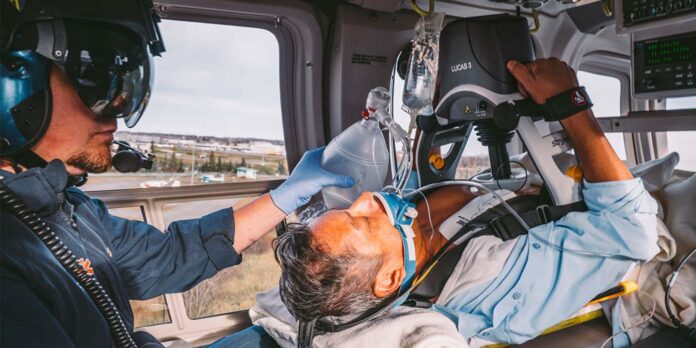
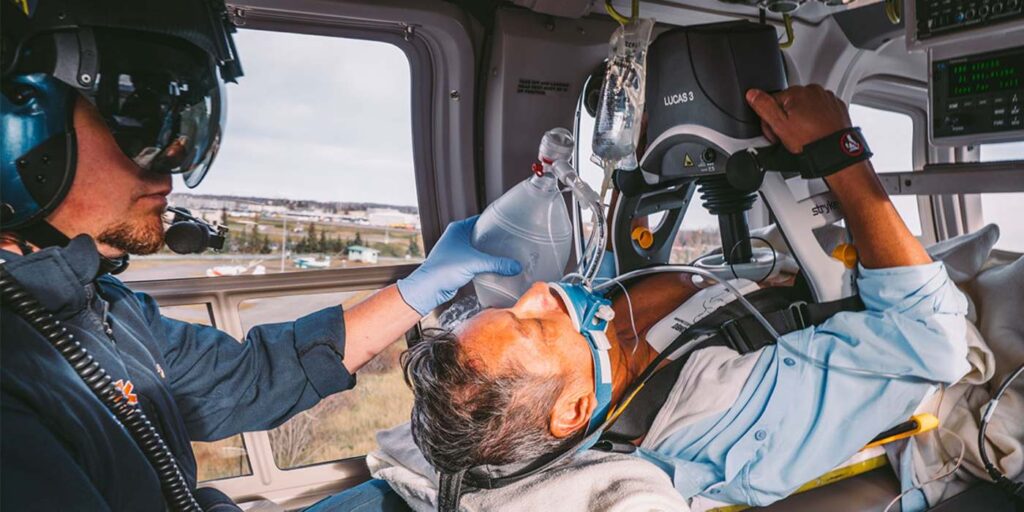
Normally limited to listening to your every request for music to play in your living room or assembling things in a factory, a robot paramedic that can perform CPR will soon be joining first responder teams across the south of England.

For the very first time, an automaton has been made that can perform the life-saving chest compression—a vital part of sustaining oxygen flow through the body during cardiac arrest.

Called the LUCAS-3, its performance of CPR will free up paramedic hands for other tasks, which could be essential for ensuring patient survival.

The South Central Ambulance Service (SCAS) will be the first one to receive the robot, which costs £12,000 ($17,000), for their servicing of Hampshire, Berkshire, Buckinghamshire, and Oxfordshire. The SCAS Charity funded the purchasing of 28 for the purpose of equipping their ambulances.

MORE: Researchers Create AI Device to Sniff Out Cancer in Blood Samples With 95% Accuracy For Hard to Detect Types

An SCAS spokesman said: “Once paramedics arrive and begin CPR or take over from bystanders who may have initiated it, the transition from manual compressions to LUCAS can be completed within seven seconds, ensuring continuity of compressions.”

LUCAS works through Bluetooth connectivity, and performs CPR according to various inputs such as time between compressions, force of compressions, or according the guidelines of medical institutions.

Dr. John Black, medical director at SCAS, said: “We know that delivering high quality and uninterrupted chest compressions in cardiac arrest is one of the major determinants of survival to hospital discharge but it can be very challenging for a number of reasons.”

RELATED: Pentagon is Funding Ultrasound Devices That Prevent Tissue Death After Spinal Cord Injuries

“People can become fatigued when performing CPR manually which then affects the rate and quality of compressions, and patients may need to be moved from difficult locations, such as down a narrow flight of stairs, or remote places which impedes the process.”

LUCAS’ big day has finally come, but it’s taken as long is it takes a student to finish medical school before he was ready for the jump to live action—the current iteration is based on a model that was first tested by the University of Warwick back in 2014.

CURE Your Friends With a Little Good News—Share This Story on Social Media…

“If you want to control things in your life so bad, work on the mind. That’s the only thing you should be trying to control.” – Elizabeth Gilbert

Quote of the Day: “If you want to control things in your life so bad, work on the mind. That’s the only thing you should be trying to control.” – Elizabeth Gilbert

Photo: by Callum Shaw

With a new inspirational quote every day, atop the perfect photo—collected and archived on our Quote of the Day page—why not bookmark GNN.org for a daily uplift?


Teens Raise Thousands for Their Graduation Trip Abroad, Then Donate it to the Community Instead

If you had the choice of seeing the world by going on a trip or bettering the world by staying home and focusing your energies there, which would it be? For the youthful kindred spirits of one close-knit Maine community, the answer was obvious.

The island of Islesboro lies three miles off the mainland. Its population numbers about 700 full-time residents. While comprised of only a baker’s dozen students, this year’s high school graduating class—eight from the island and five who ferried in from the mainland—was larger than usual.

Traditionally, Islesboro’s Central School seniors hold fundraising events to finance a once-in-a-lifetime class trip at the end of their final semester. Former student destinations include Paris, Iceland, Norway, and Panama.

The Class of 2021 had already garnered close to $8,000 in donations by the time their hopes of a journey to Greece, Japan, or South Korea were quashed by COVID-19 travel restrictions. With their plans curtailed, the group decided to spend the money they’d earned a whole lot closer to home by reinvesting it in their community.

As 18-year-old senior Liefe Temple explained, per a group consensus, it would have felt strange to indulge in the luxury of foreign travel when they knew their neighbors were suffering such extreme day-to-day duress.

“We could really see how the whole world and the island, too, was struggling,” he told the Associated Press, “So it felt really good to do that with our money—to give it back to the people who gave it to us.”

MORE: Instead of Skipping Graduation to Work at Waffle House, His Boss and Co-Workers Cooked up Miracles to Get Him There

The bulk of students’ earnings was donated to the Island Community Fund in aid of residents whose livelihoods were broadsided by the COVID-19 pandemic. Another portion was put to good use funding coronavirus vaccination clinics. (The rest will go to philanthropic causes as yet to be determined.)

“There [is] a strong sense of pride in these students. That’s because their decision demonstrated an awareness of the hardship in their community and a willingness to do something about it,” Community Fund president Fred Thomas told AP.

RELATED: Teen from Wildfire-Hit Town Wins $250k Scholarship for Awesome Explanation of Quantum Tunneling

The geography of the post-COVID-19 landscape has shifted. Not literally, of course, but figuratively. We’re all living in a very different place from where we were prior to the onset of the pandemic.

How we chose to move forward in this strange new world will define the days ahead—but if the unselfish worldview of Isleboro’s Senior Class of 2021 is any indication, the future looks to be in pretty fine hands.

PASS On the Generosity by Sharing This Story… 

Dementia Cases Have Declined by 13% in US and Europe Every Decade Since 1988, Researchers Found

Maria Magdalens, CC license

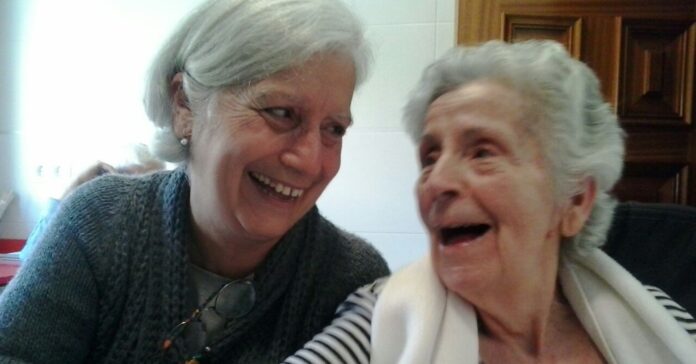
Over the past 30 years, the incidence of dementia has declined an average of 13% every decade in people of European ancestry living in the U.S. or Europe.

Using this trend, researchers at Harvard T.H. Chan School of Public Health estimate that 15 million fewer people could develop dementia by 2040 in high-income countries than if the incidence of the disease remained steady.

“As the populations of the U.S. and Europe age and life expectancy increases, the prevalence of dementia and Alzheimer’s disease has dramatically increased, due to the larger pool of people in the ages of highest risk,” said Lori Chibnik, assistant professor in the Department of Epidemiology at Harvard Chan School.

“However, our analysis shows that the incidence, or rate of new cases, has been declining, translating into fewer new dementia and Alzheimer’s disease cases than what we would have expected.”

The results of this study were published in Neurology journal, and noted that 47 million people worldwide live with dementia. Due to the rapidly aging population, the number of people living with the disease is expected to triple over the next 30 years, as is the expected socioeconomic burden associated with dementia.

MORE: Coffee is Now Linked to Reduced Risk of Many Ailments, Including Liver Disease, Parkinson’s, Melanoma, Even Suicide

Previous analyses suggested a decline in incidence over the last 40 years, but most studied smaller populations.

In the current study, Chibnik and her co-authors aggregated data from seven studies that included more than 49,000 individuals with up to 27 years of follow-up.

In addition to showing a total decline in incidence, the researchers also saw consistent trends across different populations from North America and Europe.

In both men and women, incidence decreased, although men had a greater reduction (24%) than women (8%).

RELATED: ‘Let’s Do It:’ Alzheimer’s Patient Asks Wife to Marry Him After Falling in Love for a Second Time

The reasons for the decreased incidence are not clear, although several medical interventions that influence blood pressure, cholesterol, and inflammation may have contributed.

The researchers note due to the ethnic background of the participants included in the study, the results may only apply to a minority of the world population, and they recommend that future analyses include more diverse populations.

CHECK OUT: Devoted Son Took His Mom With Alzheimer’s on Incredible Round-the-World Adventure–And She Improved

“The steady decline in incidence over three decades suggests that preventive efforts involving lifestyle education and health interventions such as blood pressure control and antithrombotic medication can offset at least part of the growing burden of dementia from global gains in life expectancy,” said Chibnik.

“Providing this evidence of a decline is the first step toward elucidating the factors at play behind that decline and eventually effective interventions to promote brain health.” We’ll be sure to keep you updated on more positive news from Chibnik and the team.

Source: Harvard T.H. Chan School of Public Health; Featured image: Maria Magdalens, CC license

SHARE This Hopeful Finding With Pals on Social Media…

Tiger Dad Upends Stereotype By Caring For 4 Cubs After Mom’s Death, Surprising Researchers

Panna Tiger Reserve
Panna Tiger Reserve

With tiger families, it’s the mother who provides the parental care. After giving birth to cubs, for two years they stay near her side, learning hunting and survival skills. Then they head off on their own.

But since a tigress died of unknown causes at Panna Tiger Reserve in India this May, the father tiger has been exhibiting “rare behavior” by caring for the four cubs beyond the usual protector role. He’s been observed hunting a sambar deer and sharing the prey with the young. He’s been heard calling to the cubs in communication.

The 8-month-old cubs are being carefully monitored by conservationists, and currently look healthy, active, and neither hungry nor stressed, Mongabay has reported.

“The tiger visits these cubs regularly, and his behavior shows that he is not a threat to the cubs. We have seen the cubs playing with the male tiger and sharing kills,” Panna Tiger Reserve director Uttam Sharma told Mongabay-India.

MORE: Police Capture Elusive Tiger Poacher After 20 Years of Pursuing the Bengal Cat Killer

(WATCH the Mongabay video about this story below.)

HELP Good News Prowl Further—Share This Story…

World’s First Underwater Vegetable Garden Reopens Growing Lettuce and Basil in Perfect Temperature

Nemo's Garden, OceanReef
Nemo’s Garden, OceanReef

From the ancient rice terraces of Yunnan to modern vertical hydroponics, agriculture comes in many different forms. Now a group of Italian brainiacs have created the world’s first underwater garden for terrestrial plants.

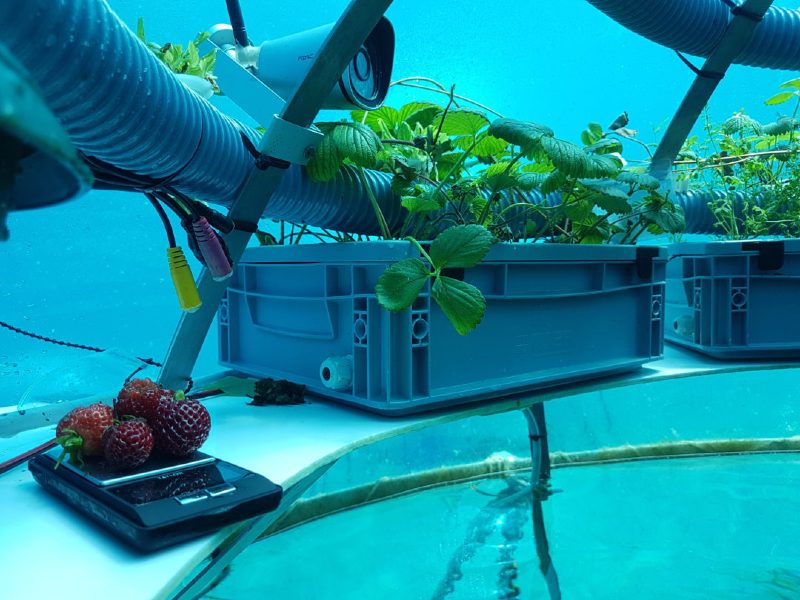
Seaweed and kelp have been cultivated along shorelines for centuries, but in small submersible glass domes, pots of basil, lettuce, tomatoes, and even zucchini flowers, green peas, aloe vera, and mushrooms are growing like in any other home garden.

Called Nemo’s Garden, the project was launched by the Ocean Reef Group as a means to experiment with food supply diversity, should climatic changes make parts of Italy too dry to farm.

The large self-sustaining, totally-contained biospheres would in theory be scalable, and perhaps in the future might look like the underwater city from Star Wars: The Phantom Menace.

MORE: Build With Compost: Researchers Turn Food Scraps Into Materials Stronger Than Concrete

The challenges inherent in growing plants underwater, given that they are normally at home in soil, was but one hurdle Nemo has had to overcome. The six air-filled greenhouses (or should that be bluehouses?) suffered major storm damage in October 2019, and before they could be fully repaired, COVID-19 had all the researchers sheltering in place.

Yet the team never gave up hope, as Euronews reports, and the months of abandonment did not harm the facility in any way. June 6th saw the garden fully-operational again, including their livestream where one can watch the plants literally grow.

The biospheres, which sit eight meters under the surface off the coast of Noli in Liguria, use solar energy for their minimal electrical needs, and evaporated seawater condenses on the glass of the ceiling which waters the plants. A diver swims under and up into the air pocket of the pod to harvest what’s ready to eat.

RELATED: Farmers Now Use Floating Gardens To Keep Crops Alive When it Floods — A Climate Crisis Lesson

The project website says that increased pressure like that found under the ocean is actually beneficial to the speed at which plants can germinate, though they admit very little research has been published on the topic—after all, not so many people are currently trying to grow strawberries underwater.

The conditions create a really intense flavor in the vegetables, and also allow the plants’ environment to be completely controlled, with nothing impacting their life that the growers don’t want.

Nemo’s Garden, OceanReef

For now Nemo’s Garden is essentially a research lab, but if the idea were expanded, it’s expected to be able to reinforce food security for the peninsula, and the world.

(SEE Inside Nemo’s Garden in the video below.)

SHARE This Fascinating Food Project With Pals on Social Media…

Teen With Special Needs Raises Huge Amount for Charities Through 1,600 Acts of Kindness

SWNS
SWNS

A selfless teenager has carried out a random act of kindness every single day since the start of the pandemic.

18-year-old Sebbie Hall, who has learning difficulties, began his kindness marathon after he wanted to gift his own iPad to a pal so they could Zoom in early 2020.

His proud mum Ashley asked him to think about what skills he could use to raise cash, to which he answered: “I can be kind.”

Since then the teen, who also has a rare chromosome anomaly, has performed at least one act of kindness every day—more than 1,600 in total.

British Prime Minister Boris Johnson has thanked him for his “wonderful determination” while actress Joanna Lumley said his kindness has “stolen my heart.”

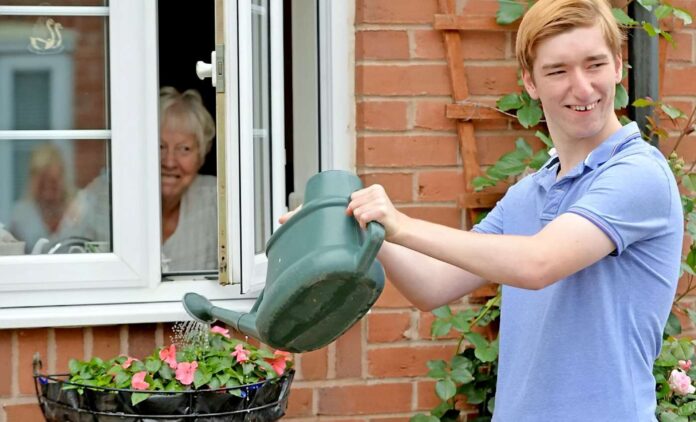
Sebbie has walked neighbor’s pets, watered gardens, posted mail for isolating locals, washed cars—and even a boat—and baked cakes for nurses.

He’s handed out PPE, collected unwanted Halloween pumpkins and turned them into soup and pies for needy people, and given warm coats to the homeless.

The teen has also handed out lottery tickets bought with his pocket money to strangers, given 100 roses to 100 women to make them smile, and helped at food banks.

Not only that but his deeds attracted a staggering £28,000 ($39,000) in donations, which he has given to countless charities.

The money pledged by people inspired by his kindness has paid for 300 families to get adapted IT devices and funded a disability rugby team.

It’s paid for three IT suites for youngsters to use to find work, bought communication kit for kids at four specialist schools, and set up a disability arts hub.

MORE: An Armless Archer Aims to Win Gold at Summer Paralympic Games Joining Team USA – VIDEO

The teen—who was told that he would never walk or talk—has defied those expectations and his own nervousness about speaking to strangers.

Sebbie, from Lichfield, Staffordshire, put it simply: “Kindness is my superpower. I’m not stopping. I want to raise more money and make people more happy.”

Mom Ashley added: “It’s hard for any young person to go up to random strangers and speak to them, and even harder for Sebbie because he finds it really hard to find words himself.”

“But he somehow found this inner strength of being kind.

RELATED: Inspired By Brother With Autism, New App Helps Adults With Special Needs Make Friends

“It’s given him a position within his own community and a confidence that he didn’t have before.

SWNS

Other sweet gestures this selfless teen has done? He handed out 365 donated Easter eggs to random houses dressed as a bunny, and left made-up secret Santa bags on 80 doorsteps last December. The school pupil has written poems for friends and delivered toiletries to the women’s refuge.

Now he is currently raising money for to set up physical therapy suites by running two miles every day. Three cheers for Sebbie—who’s an inspiration for so many.

SHARE the Generosity—Send This Uplifting Story to Pals on Social Media…

“Without leaps of imagination or dreaming, we lose the excitement of possibilities. Dreaming, after all is a form of planning.” – Gloria Steinem

Credit: Jr Korpa

Quote of the Day: “Without leaps of imagination or dreaming, we lose the excitement of possibilities. Dreaming, after all is a form of planning.” – Gloria Steinem

Photo: by Jr Korpa

With a new inspirational quote every day, atop the perfect photo—collected and archived on our Quote of the Day page—why not bookmark GNN.org for a daily uplift?

First African American to Win National Spelling Bee Takes Trophy After Just 2 Years’ Practice

PBS/YouTube
PBS/YouTube

E-X-T-R-A-O-R-D-I-N-A-R-Y spells extraordinary, and when you look it up in the dictionary don’t be surprised if you see a picture of Zaila Avant-garde next to the entry.

At 14, Zaila recently became the first African American—and the first from Louisiana—to take home top honors at the 96th Annual Scripps National Spelling Bee.

Zaila correctly tackled “retene,” “ancistroid,” and “depreter” in preliminary rounds.

After asking for clarification—“Does this word contain the English name Murray, which could be the name of a comedian?”—she clinched the title by putting the seven letters of the word “murraya” (defined as “a genus of tropical Asiatic and Australian trees having pinnate leaves and flowers with imbricated petals”) in their proper order.

Winning is a grand achievement to be sure, but what makes Zaila’s feat even more remarkable is that she only recently set her sights on spelling tournaments.

In 2019, she tied for 370th place in the Scripps competition. Not bad for her first time out, but Zaila was determined to do better. In short order, the homeschooled teen embarked on a regimen of intensive training that included tutoring and targeted study programs.

“For spelling, I usually try to do about 13,000 words (per day), and that usually takes about seven hours or so,” Zaila told the Associated Press. “We don’t let it go way too overboard, of course. I’ve got school and basketball to do.”

CHECK OUT: This High Schooler Invented Color-Changing Sutures to Detect Infection

Indeed, spelling is only one of this prodigy’s pursuits. In addition to her dictionary prowess, Zaila already has three basketball-related Guinness World Records under her belt, has co-starred in a TV spot with NBA basketball superstar Steph Curry, and has more than 77,000 Instagram followers.

MORE: She’s Starting College at Age 12, With Plans to Be a NASA Engineer

Even with her impressive list of interests, Zaila’s immersive approach to spelling definitely paid off. As footage of her enthusiastic reaction shows, she was overjoyed with the win.

“It felt like really good to become a winner simply because of the fact that I’ve been working on it for like two years and then to finally have it like the best possible outcome was really good,” Zaila told Good Morning America.

Although she’s set her sights on a Harvard degree with possible career paths at NASA or with the NBA, since taking the Scripps title, Zaila has been offered full-ride college scholarships to three Louisiana universities. She also received a congratulatory Twitter shout-out from former president Barack Obama.

Zaila, who is taking her well-earned place in the spotlight in her stride, considers being a positive role model one of the most important aspects of her championship status.

READ: Honoring The Black Astrophysicist at NASA Whose Innovative Space Telescope is Still on the Moon (1939-2020)

“I’m hoping that in a few years I’ll see a whole lot more African American females, and males too, doing well in the Scripps Spelling Bee,” Zaila told AP. “You don’t really see too many African Americans doing too well in spelling bees and that’s a bit sad because it’s a really good thing … and kind of is a gate-opener to be interested in education.”

And—not that we need to spell it out for you—that’s just one of the many things that make this amazing teen absolutely P-H-E-N-O-M-E-N-A-L.

(WATCH the winning moment below from PBS.)

SHARE Avant-Garde’s Excellent Feat On Social Media…

Redefining ‘Rich’ and Reorienting Life Towards Your Own—Not Others’—True North

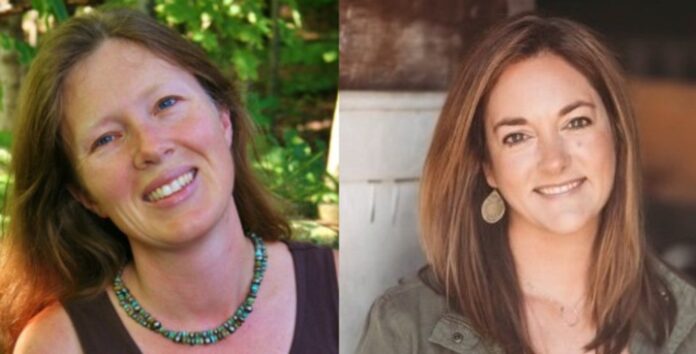
Shannon Hayes; Diana Rodgers

The Lesson: From the hearth and home, to farm and family, to business and betterment, human beings can pick up and accumulate concepts—sometimes very fundamental ones about what is most important—from other people, adopting them without scrutiny. Imposing these external ideals or concepts onto how we live our own lives, raise our kids, or manage our business, can often mean we are leading someone else’s life.

Redefining things like happiness, wealth, and success—as oriented through our own compass—is the ultimate way we can live our best life.

Notable Excerpt: “Scarcity economics teaches us that it’s a race—it’s a race to get there first, to have the highest score, to achieve the most, to learn the most first—and we have that same problem around how we treat ourselves and it’s why we have this overwork epidemic.”

The Speaker: Holding a Ph.D. in sustainable agriculture, and the record for the most swimming holes visited in a single day in her home of rural West Fulton, New York, Shannon Hayes is the owner of Sap Bush Hollow Farm and is the host of The Hearth of Sap Bush Hollow podcast, a weekly exploration of the adventures of keeping life, business, family, community, and fun in balance.

Books: Hayes is the author of eight books, most notably Radical Homemakers and the just-published Redefining Rich: Achieving True Wealth with Small Business, Side Hustles, and Smart Living, two cookbooks, and a how-to for running a regenerative agriculture outfit.

The Host: A practicing real-foods registered dietician and regenerative agriculturalist, Diana Rodgers is also the producer/director of the documentary Sacred Cow, the Case for Better Meat, which looks at how combining organic farming with cattle and animal agriculture creates a much more robust agro-ecology for nutrition, biodiversity, and the climate.

Podcast: Diana Rodgers and her colleagues host the Sustainable Dish Podcast. This weekly review features a wide variety of guests talking about regenerative agriculture, but also diet and nutrition, homesteading, nutritional science, and farm/food policy.

(LISTEN to the podcast episode below – Featured photos: Shannon Hayes and Diana Rodgers)

RELATED: How to Wake Up From the Trance of Unworthiness
MORE: 3 Ways to Deal With the Anxiety of a New Situation by Brene Brown

SHARE the Good Living Advice With Pals on Social Media… 

Artwork Painted By Picasso Discovered in a Closet in Maine After a Half Century

John McInnis Auctioneers

While it sounds like the height of absurdity to say, one could never imagine how often it happens that paintings by art’s great masters are found in people’s attics.

In recent years, GNN has reported on a possible Da Vinci being found tucked away in a Scottish farmhouse. Then there was the case of a Fra Angelico Renaissance masterpiece being discovered in a modest house in the middle of England.

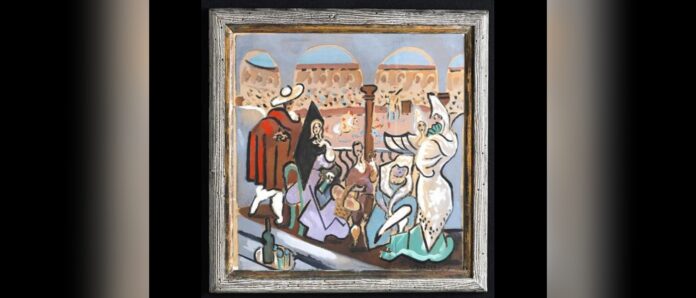
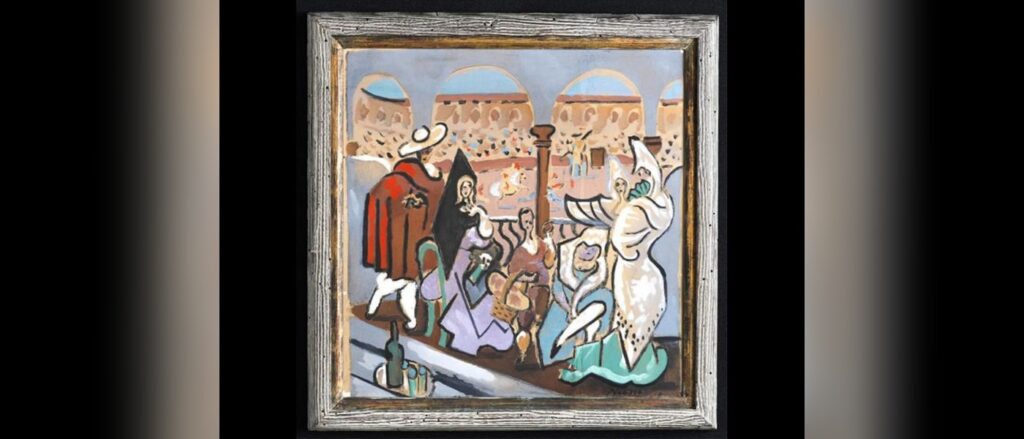
Now, a recent auction in Massachusetts featuring rare pieces of art collected from estates around the north-east has seen a previously unknown painting by Pablo Picasso being sold for $150,000.

Depicting Spanish well-to-dos attending the bull fighting arena, it is thought to be a preparatory sketch for a stage curtain as part of a 1919 Ballets Russes production (it’s still to be officially authenticated by the Picasso estate).

It was found tucked away with other paintings in the closet of a house belonging to a New England man’s recently deceased relative.

It would not be the first time a Picasso has turned up where one wouldn’t expect: A decade ago, GNN reported that hundreds of Picasso’s works, collected by a French electrician, had been received by a museum as a gift.

RELATED: The First Time a 10-Year-old Boy Uses His Birthday Metal Detector, He Unearths a Centuries-Old Sword

According to a statement by the anonymous seller on the auction house website, the Maine home in which the sketch work was found belonged to the man’s great aunt—she had studied in Europe, enjoyed bringing things back to the States, and generally lived an exciting life.

Then man came to own the house when his father inherited it after the great aunt passed away.

The 16×16 image on paper is believed to be a preliminary mock-up for the curtain that would act as the backdrop to Le Tricorne, which debuted at the Alhambra Theater in London after World War I.

MORE: Rare Archeological Treasures Discovered Beneath Attic Floorboards of English Tudor Mansion

The actual curtain which Picasso would later make is 20 feet by 19 feet, and is currently located in the New York Historical Society after spending 55 years on the wall in the Four Seasons restaurant. Picasso also designed the sets and the costumes for the play.

SHARE This Stunning Find With Arty Pals on Social Media…

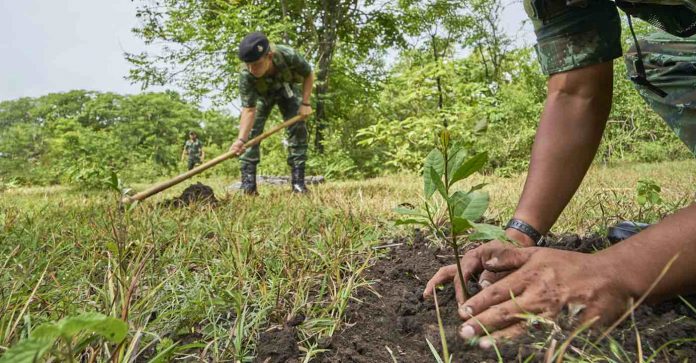
Volunteers in India Do it Again–Planting 250 Million Saplings in Single Day and Seeing 80% Survival Rate

In just a single day, Indians have planted an impressive quarter-billion tree saplings in their quest to clean the air.

Whereas mass tree planting operations around the globe are receiving more and more skepticism for their actual impacts on climate stabilization, the last four major plantings in the state of Uttar Pradesh have climbed to an impressive average sapling survival rate of 80%.

As per Peter Wohlleben, the renowned German forester and author of The Secret Life of Treesour woody neighbors need an average 50 years of growth before their full “sequestration” potential can be achieved—but the fact that many of Uttar Pradesh’s new trees are now going on five means there’s a much better chance for them surviving any pests, drought, or other perils to become contributing members of tree society.

Along riverbanks and highways, and on farms, schools, and in forests, Sunday saw millions of residents of the most-populous Indian state continue what is now a yearly tradition (a year ago, 20 million saplings were planted along the Ganges).

“We are committed to increasing the forest cover of Uttar Pradesh to over 15% of the total land area in the next five years,” said state forest official Manoj Singh.

MORE: Ingenious Musician Turns Rain Drops Into Otherworldly Music – LISTEN

According to DW, the forest cover of the state has increased over the last few years.

“There has been an increase of 127 square kilometers [79 square miles] in the forest cover in Uttar Pradesh as compared to 2017,” a state government spokesperson was quoted as saying in The Indian Express newspaper.

RELATED: Precious Rainforests Are Being Preserved at Highest Rate in 30 Years, After Palm Oil Moratorium in Indonesia

Mass tree plantings have been launched as an easy and inexpensive method of drawing carbon from the atmosphere, with hundreds of millions of trees being planted in countries around the world, including in ChinaPakistan, India, Madagascar, and the nations of the Sahel, especially Ethiopia and Senegal, GNN has reported.

Geo-tagged with QR codes, forest officials can monitor plantation survival rates and maintain records of success and failure at individual sites.

CHECK OUT: This Single Tree Could Restore Degraded Land, Create a Biofuel Revolution, Power Cars, and Feed Families

Such efforts will be indispensable in India, which plants to expand its tree cover by 95 million hectares by 2030.

PLANT Good News in Friends’ Feeds—Share This Story…

Irish Musicians Saving Oral History By Recording Elders Singing the Old Songs (Watch)

The Song Collectors Collective/Facebook

A small collective of intrepid and inquisitive young Irish musicians have taken it upon themselves to rescue a tradition of song when perhaps no-one else was willing to listen.

With an emphasis on the Irish, Scottish, and English traveler communities, their project aims to put the elders of a nearly-past generation in front of a microphone, to enshrine their songs and stories for musicians and folklorists to hear and study for all time.

Anthropologists and linguists often pass warnings about how much oral tradition the human race loses to modernity every year. Well that’s not confined exclusively to places within the Southern Hemisphere, or among the world’s Indigenous communities. It can also be found in the most developed countries on Earth.

In Ireland, a country famous for its singers, the Song Collectors Collective (SCC) celebrates that history by honoring the people who have kept its roots alive.

Those people are sailors, tinsmiths, tinkers, but most are from the reclusive and sometimes difficult-to-approach traveler communities. Their strong culture and tight-knit families make them living goldmines of folklore and song.

Quite the characters

Rather than simply collecting words, each song can be accessed only by exploring the life and story of the person who sang it for the SCC, or the so-called “Tradition Bearer.”

Take Freda Black for example, a Romany Traveler and great-grandmother in her mid-eighties. Daughter to a legendary gypsy boxer, and member of a family who roamed all across England, Black kept a repertoire of songs so vast she admitted she couldn’t possibly count them. She would go on to feature in the recently released album by modern folk singer, Mercury Prize nominee and SCC member, Sam Lee.

“I loved spending time at the knee of these elders,” Lee told The Guardian on the topic. “I could have gone to university and got a music degree and have learned from the textbook or just go to the well and drink from the most incredible source. I was very lucky. I caught an end of an era.”

Lee was also the host of a four-part BBC Radio 4 documentary on this effort—which took him to Greece, Georgia, and other countries.

MORE: Come Into the Nightingale’s Thicket and You’ll Find a Musician Singing with Them

In some cases, the words of these elders are caught on the microphone along with the songs, so you can hear their musings on where they heard the pieces the first time—and whether their mother used to sing the melodies to them.

The SCC writes that within the songs “there is a memory of the days of life on the road, in tents and the music, song and dance that went hand-in-hand with this way of life.

“It is a common plea for the songs and stories to be recorded and shared as the old ways are not being passed on and this huge store of knowledge of an ancient way of life is forgotten. In the current era of accessible recording technology there is no excuse for not documenting and sharing this rich but fragile lore,” write the SCC.

RELATED: That Song Stuck in Your Head is Helping the Brain With Long-Term Memory

Copies of all the songs are donated to the Irish Traditional Music Archive and the National Sound Archive in London, so they can be enjoyed for centuries to come.

Having collected hundreds of recordings from dozens of singers, the SCC is beginning to host educational events and workshops, featuring some of these Tradition Bearers, sharing their stories and singing voices for those interested in hearing them, as well as how everyday people can become collectors in their own way.

(WATCH the Song Collectors video below.)

SHARE a Note of Good News With Pals—Send Them This Story…

“For each one who begins to weep somewhere else another stops. The same is true of the laugh.” – Samuel Beckett

Credit: Joseph Pearson

Quote of the Day: “For each one who begins to weep somewhere else another stops. The same is true of the laugh.” – Samuel Beckett

Photo: by Joseph Pearson

With a new inspirational quote every day, atop the perfect photo—collected and archived on our Quote of the Day page—why not bookmark GNN.org for a daily uplift?

Smart Technology is Not Making Us Dumber After All, According to New Study

There are plenty of negatives associated with smart technology—texting and driving or blue light rays inhibiting sleep. But now we can be assured that the digital age is not making us dumber, according to a new study.

While some might struggle to find places without Google Maps, the researchers found that the digital age is not sapping away any brainpower.

“Despite the headlines, there is no scientific evidence that shows that smartphones and digital technology harm our biological cognitive abilities,” says the University of Cincinnati professor Anthony Chemero, who co-authored a new paper in Nature Human Behavior.

In the paper, Dr. Chemero and colleagues at the University of Toronto’s Rotman School of Management expound on the evolution of the digital age, explaining how smart technology supplements thinking, thus helping us to excel.

“What smartphones and digital technology seem to do instead is to change the ways in which we engage our biological cognitive abilities,” Chemero says, adding “these changes are actually cognitively beneficial.”

Computers, tablets, and smartphones assist with memorization, calculation, and storing information and presenting it when you need it. Because our phones can direct us to where we want to go, can solve mathematical problems with ease, and memorize phone numbers, our brains can use that energy for other uses.

RELATED: Honda Designs Ingenious In-Shoe Navigation System For The Visually Impaired

Additionally, smart technology allows us to make decisions that we would find difficult to make on our own. For example, using GPS technology we can choose a route based on traffic conditions or whether to take a more scenic route.

Henry Perks

For example, he says, your smart phone knows the way to the baseball stadium so that you don’t have to dig out a map or ask for directions, which frees up brain energy to think about something else. The same holds true in a professional setting: “We’re not solving complex mathematical problems with pen and paper or memorizing phone numbers in 2021.”

Albert Einstein once described how he never memorized anything, so he could use his brain power for forming ideas.

“You put all this technology together with a naked human brain and you get something that’s smarter…and the result is that we, supplemented by our technology, are actually capable of accomplishing much more complex tasks than we could with our un-supplemented biological abilities,” added Chemero.

RELATED: Seniors Are Now Texting Grandchildren After Learning Skill in Lockdown – And 1/3 Like it More Than Calling

“While there may be other consequences to smart technology, making us stupid is not one of them.”

TELL Your Friends They’re Still Smart By Sharing This on Social Media…

One Man’s Crazy Idea For Michigan Town Lands Them As Finalist in ‘Nicest Places in America’ Contest

This story was chosen as one of the top ten nominations to win the Reader’s Digest “Nicest Places in America” contest: a crowd-sourced effort to uncover nooks where people are still kind and compassionate in an era of global pandemic and political divide. Be sure and vote for which story you think should be nominated as the Nicest Place by visiting the Reader’s Digest website. Public voting closes July 16. As a judge in the contest for three consecutive years, GNN chose this story to be one of the best. 

It was a Field of Dreams, just waiting to be built.

On Christmas Eve 2020, fire trucks rushed to the Chittle home in the sleepy little town of Manton, Michigan. It wasn’t because of an accidental fire, or anything you might associate with a holiday nightmare. Instead, it was a dream come true. The local fire department was there to pitch in on a project that would capture the imaginations of the 1,287 souls who call Manton home, bringing them months of mirth during one of the darkest winters in memory.

Outdoor activities and a slower pace of life are a mainstay in this rural town about 110 miles North of Grand Rapids. But, when the COVID-19 pandemic forced the town to shut down, Scott Chittle decided that the community needed a safe place to come together, and something to spark some joy during the dreary winter months.

And what is a better activity to get people outside in the cold than ice skating?

In order to make his dream a reality, Chittle scoured the Internet for YouTube tutorials on how to build an ice rink. He ordered a large 3,000 square foot tarp online and purchased some lumber to create the walls. It took 12 firetrucks to get enough water to fill the plot.

After his ‘field of dreams’ was built, however, nobody came.

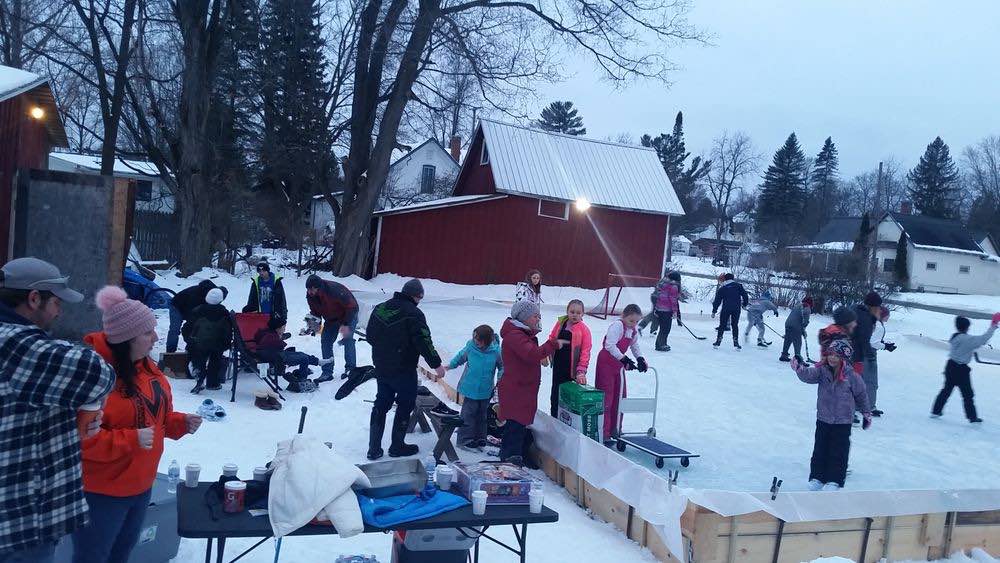
So, Chittle went door-to-door coercing neighbors to convince people to come see his creation, and soon Chittle’s backyard ice rink became a Manton hotspot. Parents pitched in to help Chittle purchase second-hand skates and hockey sticks for all the neighborhood children. Soon enough, the children were skating and shooting, a fire was burning, and hot chocolate was steaming in to-go mugs.

RELATED: Refugee-Run Falafel House Voted ‘Nicest Place in America’ For Feeding Furloughed Workers, Too

“When things were tough, it was a place,” says neighbor Audrey Hooker. “We kept seeing more things donated. It was fantastic because the whole community just came together. It was amazing how everybody worked together because of Scott.”

Skaters were welcome to come at any time. Even with Chittle’s day job, he aimed to Zamboni the ice rink every night. And each Saturday from 4:00 until 8 p.m., dozens of children and their parents gathered at the ice rink for skate parties. String lights twinkled over the ice as the sun set early in the evening. The chilly air smelled of hot dogs on the grill and burning firewood. The children who had been confined to their homes for almost a year laughed and shrieked with joy while skating around the rink with their hockey sticks.

Reader’s Digest

Parents gathered around holding warm hot cocoa in their mittened hands, feeling relief that their children had found a purpose again. It became a weekly event that neighbors could look forward to and it offered a place for people to see each other in a socially distanced way. The rink was in full swing until March, when the ice began to thaw.

POPULAR: Reader’s Digest Names the ‘Nicest Place in America’ For 2019, A Town Where Nobody Gets Left Behind

But the kindness didn’t stop with Chittle. When the community heard how much money he used to make this project happen, everyone helped. A Facebook fundraiser brought in about $1,300, and letters sent to Chittle’s home stuffed with cash brought in an additional $1,500, covering all of the costs with money to spare. Traffic increased dramatically around the ice rink as cars pulled over just to get a glimpse of the kids skating. Many people even took the time to knock on Chittle’s door.

“I have had almost 30 complete strangers knock on my door to just shake my hand and say thank you,” says Chittle. “Most of them handed me money as well. Three of them asked for a hug.”

Companies began sending supplies for next year’s ice rink including outdoor lights from Steel Light Company, a snow sweeping machine and shovels from Western Snow Plow, and a skate sharpening device from Sparxs. Chittle even plans to expand the rink to 5,000 square feet.

MORE: A City in Alaska is Housing its Homeless – Which Makes It Possibly The ‘Nicest Place’ in America

Even though Chittle will have to invest in a larger tarp, the smaller one will not go to waste. Ed Salter, who has owned a getaway cabin in Manton for 55 years, has decided to create his own ice rink for the community at his home in Clarkston, just outside of Detroit. He bought the smaller tarp from Chittle.

“This has been a community thing,” explains Chittle. “It’s not just me. I want to show the rest of the world what a little effort, the best intentions, and community can do not only for others but for the souls of all.”

Chittle plans to recreate the ice rink in his backyard for many years to come, with the plans of it being bigger and better each year.

“I think the main thing that I want everybody to know is that memories for kids last a lifetime,” says Hooker. “Scott made that possible on the darkest of days.”

Watch the video by Steve Hartman below… *PLEASE NOTE: Outside of the US, view it here, on CBS.com

SKATE This News About America’s Nicest Places to Your Friends on Social Media…

“If a problem is fixable, (and) you can do something about it, then there is no need to worry. If it’s not fixable, then there is no help in worrying. There is no benefit in worrying whatsoever.” – Dalai Lama

Quote of the Day: “If a problem is fixable, (and) you can do something about it, then there is no need to worry. If it’s not fixable, then there is no help in worrying. There is no benefit in worrying whatsoever.” – the Dalai Lama

Photo: by Molnár Bálint

With a new inspirational quote every day, atop the perfect photo—collected and archived on our Quote of the Day page—why not bookmark GNN.org for a daily uplift?


This Week’s Inspiring Horoscopes From Rob Brezsny’s ‘Free Will Astrology’

Our partner Rob Brezsny provides his weekly wisdom to enlighten our thinking and motivate our mood. Rob’s Free Will Astrology, is a syndicated weekly column appearing in over a hundred publications. He is also the author of Pronoia Is the Antidote for Paranoia: How All of Creation Is Conspiring To Shower You with Blessings. (A free preview of the book is available here.)

Here is your weekly horoscope…

FREE WILL ASTROLOGY – Week beginning July 9, 2021
Copyright by Rob Brezsny, FreeWillAstrology.com

CANCER (June 21-July 22):
Cancerian author Vladimir Mayakovsky wrote a poem about how one morning he went half-mad and conversed with the sun. At first he called the supreme radiance a “lazy clown,” complaining that it just floated through the sky for hours while he, Mayakovsky, toiled diligently at his day job painting posters. Then he dared the sun to come down and have tea with him, which, to his shock, the sun did. The poet was agitated and worried—what if the close approach of the bright deity would prove dangerous? But the visitor turned out to be friendly. They had a pleasant dialog, and in the end the sun promised to provide extra inspiration for Mayakovsky’s future poetry. I invite you to try something equally lyrical and daring, dear Cancerian.

LEO (July 23-Aug. 22):
A blogger named Bunny-Gal writes, “I almost completely forgot who I was there for a while. But then I dug a hole and smelled the fresh dirt and now I remember everything and am okay.” I recommend you follow her lead, Leo—even if you haven’t totally lost touch with your essence. Communing with Mother Earth in the most direct and graphic way to remind you of everything you need to remember: of the wisdom you’ve lost track of and the secrets you’ve hidden too well and the urgent intuitions that are simmering just below the surface of your awareness.

VIRGO (Aug. 23-Sept. 22):
I can’t understand the self-help gurus who advise us to relentlessly live in the present moment—to shed all awareness of past and future so as to focus on the eternal NOW. I mean, I appreciate the value of doing such an exercise on occasion for a few moments. I’ve tried it, and it’s often rejuvenating. But it can also be downright foolish to have no thoughts of yesterday and tomorrow. We need to evaluate how circumstances will evolve, based on our previous experience and future projections. It can be a deadening, depleting act to try to strip ourselves of the rich history we are always embedded in. In any case, Virgo, I advise you to be thoroughly aware of your past and future in the coming days. To do so will enhance your intelligence and soulfulness in just the right ways to make good decisions.

LIBRA (Sept. 23-Oct. 22):
Psychotherapist and author Clarissa Pinkola Estés poetically refers to the source of our creativity as “the river under the river.” It’s the deep primal energy that “nourishes everything we make”—our “writing, painting, thinking, healing, doing, cooking, talking, smiling.” This river beneath the river doesn’t belong to any of us—is potentially available to all—but if harnessed correctly it works in very personal ways, fueling our unique talents. I bring this to your attention, Libra, because you’re close to gaining abundant new access to the power of the river beneath the river.

SCORPIO (Oct. 23-Nov. 21):
In formulating personal goals, Scorpio author Brené Brown urges us to emphasize growth rather than perfection. Trying to improve is a healthier objective than seeking flawless mastery. Bonus perk: This practical approach makes us far less susceptible to shame. We’re not as likely to feel like a failure or give up prematurely on our projects. I heartily endorse this strategy for you right now, Scorpio.

SAGITTARIUS (Nov. 22-Dec. 21):
In a letter to Jean Paul Sartre, author Simone de Beauvoir described how she was dealing with a batch of challenging memories: “I’m reliving it street by street, hour by hour, with the mission of neutralizing it, and transforming it into an inoffensive past that I can keep in my heart without either disowning it or suffering from it.” I LOVE this approach! It’s replete with emotional intelligence. I recommend it to you now, since it’s high time to wrangle and finagle with parts of your life story that need to be alchemically transformed and redeemed by your love and wisdom.

CAPRICORN (Dec. 22-Jan. 19):
In one of his poems, Capricorn-born Kenneth Rexroth complains about having “a crooked guide on the twisted path of love.” But in my view, a crooked guide is the best kind. It’s unwise to engage the services of a love accomplice who’s always looking for the simplest, straightest route, or who imagines that intimate togetherness can be nourished with easy, obvious solutions. To cultivate the most interesting intimacy, we need influences that appreciate nuance and complexity—that thrive on navigating the tricky riddles and unpredictable answers. The next eight weeks will be an excellent time for you Capricorns to heed this advice.

AQUARIUS (Jan. 20-Feb. 18):
Aquarian singer Etta James (1938–2012) won six Grammy Awards and is in the Rock and Roll Hall of Fame, Grammy Hall of Fame, and Blues Hall of Fame. She testified, “Most of the songs I sing have that blues feeling in it. They have that sorry feeling. And I don’t know what I’m sorry about.” Wow! I’m surprised to hear this. Most singers draw on their personal life experience to infuse their singing with authentic emotion. In any case, I urge you to do the opposite of Etta James in the coming weeks. It’s important for the future of your healing that you identify exactly what you’re sorry about.

PISCES (Feb. 19-March 20):
“Sometimes you win, sometimes you learn,” writes Piscean self-help author John C. Maxwell. His statement is useful, but it harbors a problematic implication. It suggests that you can experience either winning or learning, but not both—that the only time you learn is when you lose. I disagree with this presumption. In fact, I think you’re now in a phase when it’s possible and even likely for you to both win and learn.

ARIES (March 21-April 19):
Poet Joshua Jennifer Espinoza writes, “i name my body girl of my dreams / i name my body proximity / i name my body full of hope despite everything.” I love her idea that we might give playful names and titles and descriptors to our bodies. In alignment with current astrological omens, I propose that you do just that. It’s time to take your relationship with your beautiful organism to a higher level. How about if you call it “Exciting Love River” or “Perfectly Imperfect Thrill” or “Amazing Maze”? Have fun dreaming up further possibilities!

TAURUS (April 20-May 20):
The English language, my native tongue, doesn’t ascribe genders to its nouns. But many languages do. In Spanish, the word for “bridge” is puente, which is masculine. In German, “bridge” is Brücke, which is feminine. A blogger named Tickettome says this is why Spanish speakers may describe a bridge as strong or sturdy, while German speakers refer to it as elegant or beautiful. I encourage you to meditate on bridges that possess the entire range of qualities, including the Spanish and German notions. In the coming weeks, you’ll be wise to build new metaphorical bridges, fix bridges that are in disrepair, and extinguish fires on any bridges that are burning.

GEMINI (May 21-June 20):
Académie Française is an organization devoted to preserving the purity and integrity of the French language. One of its ongoing missions is to resist the casual incorporation of English words, which the younger generation of French people is inclined to do. The Académie will not give official approval to, for instance, podcast, clickbait, chick-lit, deadline, or hashtag. I appreciate the noble intentions of the Académie, but regard its crusade as a losing battle that has minimal impact. In the coming weeks, I advise you to refrain from behavior that resembles the Académie’s. Resist the temptation of quixotic idealism. You Geminis often thrive in environments that welcome idiosyncrasies, improvisation, informality, and experimentation—especially now.

WANT MORE? Listen to Rob’s EXPANDED AUDIO HOROSCOPES, 4-5 minute meditations on the current state of your destiny — or subscribe to his unique daily text message service at: RealAstrology.com

(Zodiac images by Numerologysign.com, CC license)

SHARE The Wisdom With Friends Who Are Stars in Your Life on Social Media…