











All News - Page 461 of 1734 - Good News Network
Home Blog Page 461

Breathing With This Device for 5 Minutes May Lower Blood Pressure as Much as Exercise or Drugs: Study

– University of Colorado Boulder

A five-minute breathing exercise that you can do while watching television can lower your blood pressure as much as medication, according to a new small study.

– University of Colorado Boulder

Described as “strength training for your breathing muscles”, it uses a hand-held medical device that provides resistance as a person inhales through a tube. Scientists say it can lower cardiovascular disease risk in aging adults—and could also aid athletes in running faster marathons.

High-Resistance Inspiratory Muscle Strength Training (IMST) is meant to be done in reps like high-intensity interval training, with quicker, higher resistance breaths leading to “cardiovascular, cognitive, and sports performance improvements.”

The technique could be even more effective at lowering blood pressure than going for a run, especially in postmenopausal women.

Professor Doug Seals at the University of Colorado Boulder hailed it as an easy and drug-free option.

Developed in the 1980s for respiratory disease to help patients strengthen their diaphragm and other breathing muscles, the regimen was prescribed for 30-minute-per-day at low resistance.

But inspired by HIIT, researchers now believe 30 inhalations a day at high resistance, six days per week, could reap many benefits.

RELATED: Life-saving Treatment for Heart Attacks Discovered Inside Protein of Deadly Spider Venom

The study, published in the Journal of the American Heart Association, recruited 36 healthy adults aged 50 to 79 with above-normal blood pressure with half doing high resistance IMST for six weeks and the others doing a placebo where the resistance was much lower.

Even six weeks after they quit doing IMST, they maintained most of that improvement.

The treatment group also saw a 45% improvement in vascular endothelial function, or the ability for arteries to expand upon stimulation, and a significant increase in levels of nitric oxide, a molecule key for dilating arteries and preventing plaque buildup. Nitric oxide levels naturally decline with age.

The IMST group saw their systolic blood pressure dip nine points on average, a reduction generally exceeds that achieved by walking 30 minutes a day five days a week.

That decline is also equal to the effects of some blood presssure-lowering drugs.

“We found that not only is it more time-efficient than traditional exercise programs, but the benefits may also be longer-lasting,” said lead author Dr. Daniel Craighead, at UC Boulder. “If aerobic exercise won’t improve this key measure of cardiovascular health for postmenopausal women, they need another lifestyle intervention that will. This could be it.”

POPULAR: Coffee is Now Linked to Reduced Risk of Many Ailments, Including Liver Disease, Parkinson’s, Melanoma, Even Suicide

Craighead, who uses IMST for his own aerobic training, added, “It’s easy to do, it doesn’t take long, and we think it has a lot of potential to help a lot of people.”

Indeed, to have a form of therapy available that lowers blood pressure without drugs, or doing aerobic exercise, which so many people tend to abhor, would be a great option.

The National Institutes of Health recently awarded Seals $4 million to launch a larger follow-up study of about 100 people, comparing a 12-week IMST protocol head-to-head with aerobic exercise.

Meanwhile, the research group is developing a smartphone app to enable people to do the protocol at home using already commercially available devices.

NO Pressure: Share This With Your Circle on Social Media…

“If you haven’t the strength to impose your own terms upon life, then you must accept the terms it offers you.” – T.S. Eliot

Quote of the Day: “If you haven’t the strength to impose your own terms upon life, then you must accept the terms it offers you.” – T.S. Eliot

Photo: by Matt Seymour

With a new inspirational quote every day, atop the perfect photo—collected and archived on our Quotes page—why not bookmark GNN.org for a daily uplift?

San Francisco Airport Protects Endangered Species Until it Boasts More of Them Than Any Place on Earth

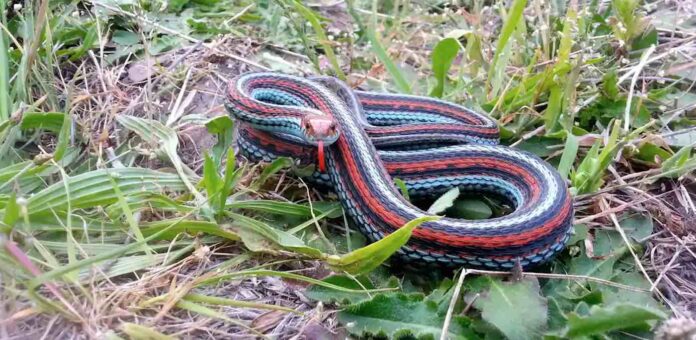
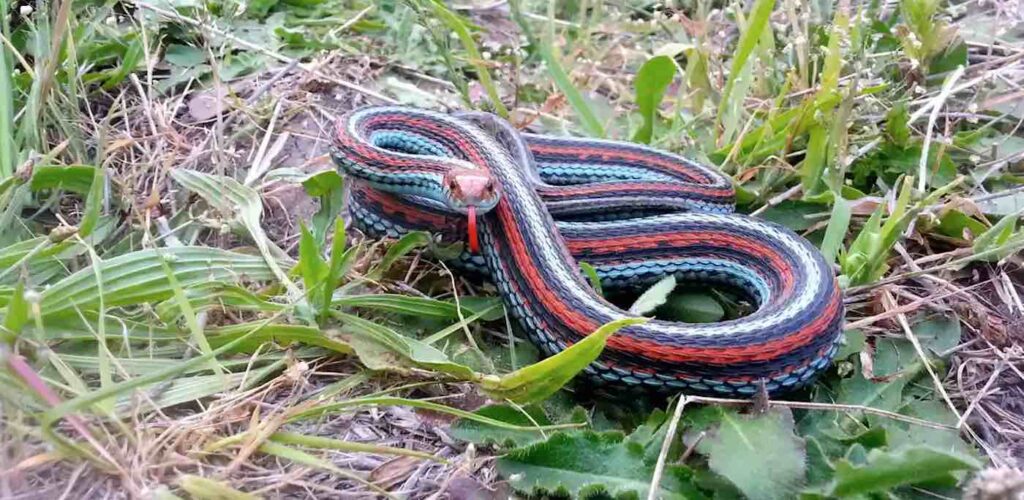
San Francisco garter snake-credit-Richard Kim:USGS Western Ecological Research Center

One of the most beautiful of its species, the garter snake that inhabits the San Francisco peninsula is also the most endangered of its kind. Fortunately for the California serpent, it has human protectors who have given it a safe haven near the runways of the San Francisco International Airport.

The San Francisco garter snake (thamnophis sirtalis tetrataenia), which can grow to three-feet in length, has skin that looks like a black canvas painted with racing stripes of bright orange and neon turquoise.

As the Bay Area has grown and developed, the wetland habitat that is needed to sustain the harmless snake has diminished, so the animal was listed as endangered 54 years ago. Brutal droughts have also thinned its population, and that of their prey, as well.

While the snake is mostly isolated around the San Francisco peninsula, they are thriving in numbers near the tarmac of the airport known as SFO.

A tract of 160 privately-owned acres has been put to work to save the beautiful reptile, including the construction of many small ponds where the snake can keep moist, breed, and hunt for its favorite prey: the red-legged frog—which is also endangered and given sanctuary on the SFO runway lawn.

LOOK: Man is Stunned After He Sets Up Camera Inside Bird Box and Attracts 41 Million Fans Worldwide

The officials who own the land and operate the airport now boast that they’ve kept 1,300 snakes happy and fed while the U.S. Fish and Wildlife Service (FWS) looks for a better solution.

Richard Kim, USGS-Western Ecological Research Center

In fact, the recent survey by the FWS declared this to be the largest population of this particular garter snake anywhere—something the SFO brass found to be a “pleasant surprise.”

“Everything that happens there is designed to protect these species,” said SFO spokesperson Doug Yakel, according to The Guardian.

“For us, success would be that there is a stable thriving population, but to find out we had the largest population—it was really a pleasant surprise.”

POPULAR: Mussels Can Help Filter Microplastics Out of Our Oceans Without Any Harm to the Molluscs

In the rest of the Bay Area, cats and dogs have become two of the snake’s top predators. But, at the airport the snakes pretty much have the land to themselves—a double-positive as the airport wildlife biologist can make sure that they are insulated from the effects of climate change that would normally damage wild populations.

The frogs too, have ponds they can safely raise their tadpoles in.

“As our airport continues to evolve, this is the one place that continues to stay the same,” Yakel said. “We want to continue to provide a good stable environment for these two endangered species. Hearing that they are thriving—that is the ultimate validation.”

RELATED: Florida Just Enacted a Sweeping Law to Protect Its Vast Wildlife Corridors – And Save Panthers

In the 1985 recovery plan laid out alongside the endangered listing, the FWS wrote that 10 populations of at least 200 snakes must be stable or growing for 15 consecutive years before the snake can be considered for delisting. By this criteria, at least one habitat, SFO, has come through with spades.

Give This Snake Some Travel Miles By Sharing On Social Media…

Police Dog Trained to Find Weapons Aces Special Assignment of Finding Lost Wedding Ring on a Sandy Beach

Elsa Green/Facebook

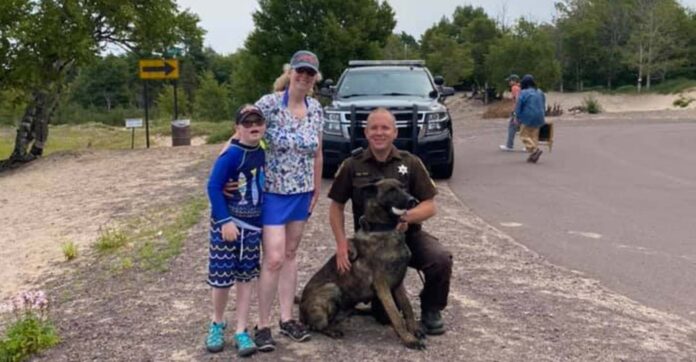
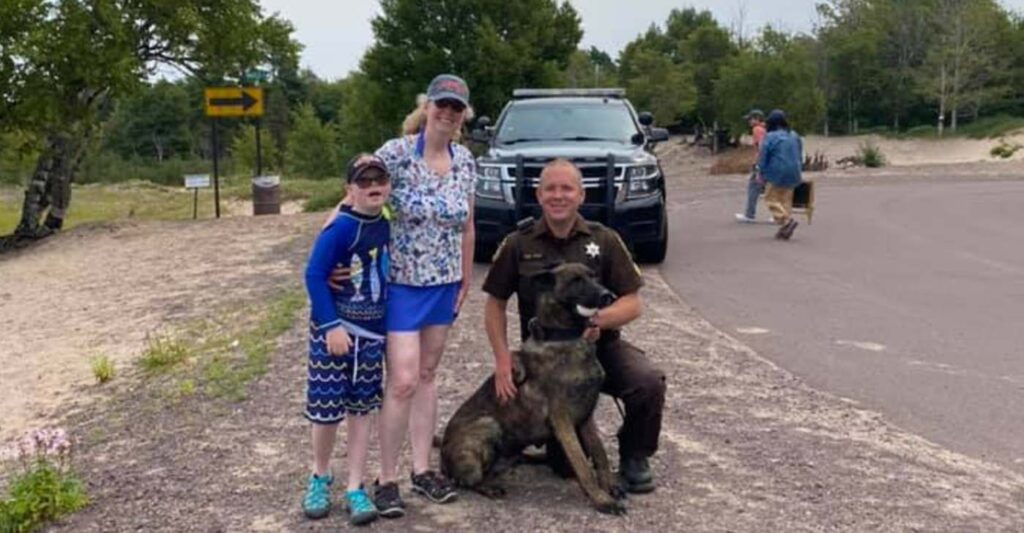
A Michigan woman accidentally lost her wedding rings on the sandy shores of Lake Superior—but soon celebrated the return of the precious jewels after some stunning police work by the local sheriff’s K-9 dog.

Elsa Green/Facebook

Elsa Green had taken her rings off at Eagle Beach to apply some sunscreen, setting them carefully in her hat. Later, she was suddenly startled by a large bug crawling on the cap and she tossed it into the air—remembering only seconds later that her precious rings were inside.

When a frantic search for the wedding band and matching engagement ring turned up nothing, Green and her friends enlisted the aid of someone using a metal detector who was scanning the sand—but he couldn’t find them, either.

“I felt sick about it,” she told the Washington Post. “I’d been wearing those rings every day for 17 years. But at that moment, I figured they were gone.”

Hoping the police might have another metal detector that would allow them to continue the search, Green’s pal drove to the Keweenaw County Sheriff’s Office. While the department didn’t have a metal detector, they did have a ‘Dogo’— a specially trained 5-year-old Dutch shepherd with a nose for ferreting out weapons.

Dogo can also find things by honing in on a person’s signature odor.

According to Dogo’s, handler Sgt. Brad Pelli, K-9s trained in “article search” can detect pretty much anything that still has a human scent trail on it. But, looking for a lost wedding ring would be a ‘first’.

Arriving at the beach, Pelli cleared the area of people, so Dogo would have the best shot at locking onto the olfactory clue he was searching for, without distraction.

It didn’t take him long. The intrepid pooch latched onto the scent of Green’s engagement ring, and dutifully sat down on the spot. Pelli sifted some sand through his hand and found its hiding place—and then found the second ring close by.

MORE: Black Cat’s Meows Led Rescuers to 83-Year-old Owner After She Fell Into Ravine

Elsa Green

With the rings back on her finger where they belonged, Green and her 9-year-old son gave Dogo a huge hug and heaped praise on Sgt. Pelli for volunteering his services without any payment.

An ecstatic Green posted on Facebook, celebrating the amazing find: “K9 Dogo, you will forever be my hero!” she enthused. “Dogo put his training and skills to use and sure enough he found my rings! I’ll be bringing you ice cream to say thank you!”

All Dogo requires for a job well done is some praise and a chance to play with his favorite ball—but after the mini-miracle at the beach, a little treat might be a pawsome reward.

RELATED: Italian Dogs Trained as Lifeguards Save 20 Lives Every Year – With New Teams Headed to Germany and US

Green’s friend Karen Saunders Kezele commented, “Amazing job!! We’re so fortunate to have that team here in the Keweenaw!”

SEND Some LOVE to Dogo—a Diamond in the ‘Ruff’—By Sharing on Social Media…

Partners in a Golf Foursome Score 2 Back to Back Holes-in-one

SWNS
SWNS

A pair of golfing pals were astonished when they both got a hole in one in succession, breaking 17 million to one odds.

48-year-old David Giles was playing in a duo against two colleagues when he scored a hole in one on the seventh tee.

After an excited celebration, the group of businessmen couldn’t believe it when his team mate, 51-year-old Chris Bunce, took the next shot and scored a hole in one using the same club.

David said, “I was over the moon with my hole in one and once we had calmed down, who would have ever thought another was about to follow!

“We had two witnesses who were playing with us and we were all just left speechless. There was plenty of laughing, swearing, and high fives all round. What a game!”

MORE: Watch 84-Year-old’s Reaction to Winning New Car After Sinking Incredible 93-Foot Putt

It was the first ever hole in one for David’s manager Chris, from Southend, Essex, who has only been playing golf for a year.

SWNS

The super shot at The Oaks Golf Club in York was David’s second ever hole in one.

The pair each scored a hole in one after hitting the ball 146 yards from the tee on the seventh hole.

David’s co-worker Garry Marsh, who had been playing with the two men, added: “I’d never seen a hole in one in the flesh, so to speak, so to see two on the same hole on the same round was absolutely fantastic.”

RELATED: Golfer Embraces Fan With Down Syndrome Whose Yell Caused Him to Lose Crucial Game-Making Shot

“I also enjoyed the pint I was bought afterwards too!”

SWING This Fun Story Over to Pals on Social Media…

Teen Thought Neighbors Called the Cops After He Played Noisy Basketball –Watch the Sweet Surprise He Got Instead

Canadian teenager Anthony Muobike is a huge fan of basketball. When summer hits Edmonton, the 14-year-old can be spotted in the street practicing his dribbling skills on pretty much any day of the week.

When he recently got a knock on the door from the neighbors, he assumed they must be sick and tired of hearing him work on his skills.

That wasn’t the case at all.

MORE: Watch Insanely Talented Girl Performing Mind-Blowing Basketball Stunts at Just 12 Years Old

(WATCH what happened next in the Global News Edmonton video below.)

DRIBBLE This Sweet Story to Your Teammates…

“May your choices reflect your hopes, not your fears.” – Nelson Mandela

Harshil Gudka

Quote of the Day: “May your choices reflect your hopes, not your fears.” – Nelson Mandela

Photo: by Harshil Gudka

With a new inspirational quote every day, atop the perfect photo—collected and archived on our Quotes page—why not bookmark GNN.org for a daily uplift?

Harshil Gudka, enhanced

The Internet Raises $6 Million in One Day to Rescue Afghans Targeted By Taliban

Kabul, Scott Clarkson, CC license

A New Yorker has launched a hugely successful GoFundMe campaign to fly at-risk Afghans out of the country as quickly as possible.

Internet meme artist Quentin Quarantino’s GoFundMe campaign raised $550,000 in just two hours. Now, after only a day, the total has rocketed toward $6 million and is still climbing.

After two decades of U.S. military intervention and their recent withdrawl, the Taliban extremist group has returned to power and specifically targeted certain individuals and their families.

The GoFundMe campaign hopes to help these human rights lawyers, activists, translators, journalists, and artists—all of whom are “at imminent risk” of being killed.

The asylum seekers will be transported in family groups, and the funds raised so far should translate into the evacuation of thousands of refugees.

If you do the math, Quarantino says that every $550,000 will buy two airplanes out of Kabul. Per the GoFundMe page, “Every $1,500 raised represents a seat on one of the planes, and a life saved.”

RELATED: Afghan Translator Who Saved U.S. Soldiers Finally Celebrates 4th of July as an American Citizen

Tommy Marcus, known by his pandemic pen name, Quentin Quarantino, is a University of Michigan grad who donned the alter ego in the early days of COVID-19 as a humorous way to cope with the stresses of life in lockdown. Initially, posting funny memes, the musings morphed into serious social commentary.

Kabul, Scott Clarkson, CC license

“The internet can be a force for good,” Quarantino stated on his Instagram page, which currently has over 767,000 followers. “Raising five million dollars in less than 24 hours for this rescue mission has given us, and so many around the world, hope for humanity. Most importantly, it’s a direct line to attempt safe passage for Afghans in danger.”

The stunning total of funds so quickly raised is a testament to the human spirit that Quarantino finds humbling.

WATCH: Girls in War Zone Find Their Power On Skateboards; Documentary About Them Wins Oscar

“The amount of impact this is going to have and the lives it will save is so mesmerizing that no words I can put in this tweet will do it justice,” he posted.

If you’d like to add to the appeal, head to the GoFundMe page here. Anything left over will be earmarked for the International Women’s Media Foundation to aid in their efforts to safeguard at-risk female journalists in Afghanistan.

LET Your Friends Be Generous – Share This Campaign on Social Media!

Bandicoots Return to Australian National Park After Being Locally Extinct For More Than a Century

UNSW Sydney
UNSW Sydney

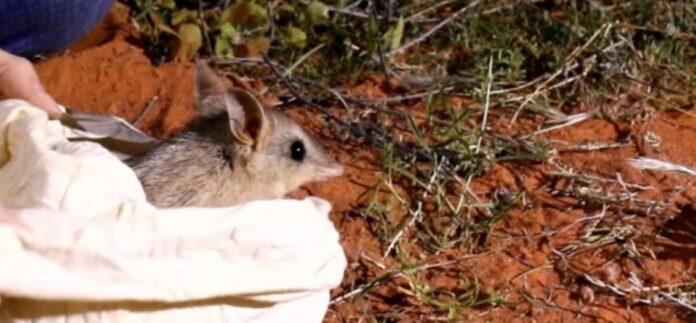
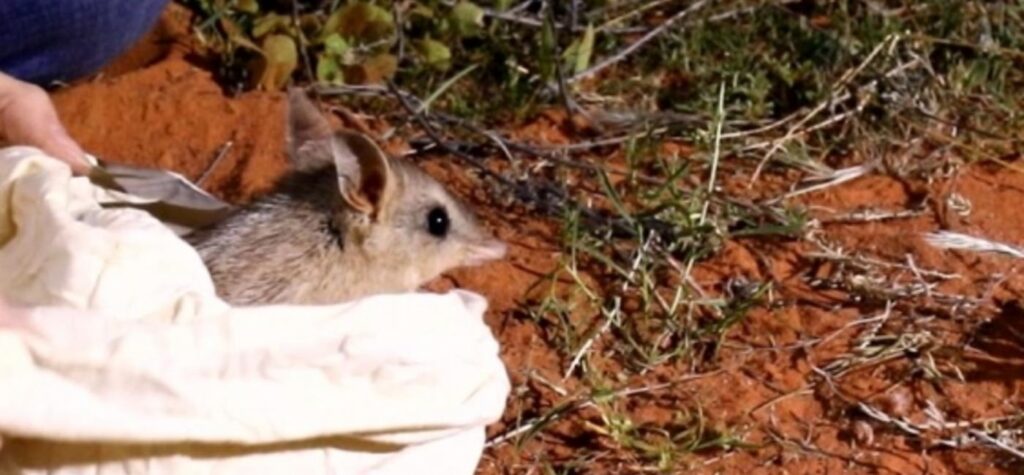
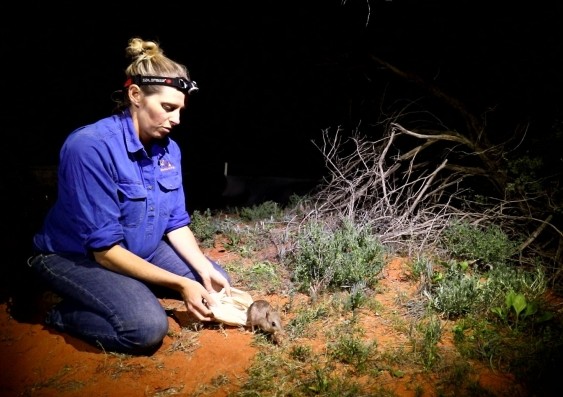
Locally extinct bandicoots have returned to an Australian national park in New South Wales after more than 100 years.

The nationally threatened species—known by local Aboriginal people as ‘talpero’—once ranged across inland Australia, including the area now managed as Sturt National Park.

The small, native marsupials became extinct in the region after ecosystem changes caused by rabbits and predation by feral cats and foxes.

Now, a founding population of talpero have been reintroduced to the area by the team at Wild Deserts.

Their reintroduction is another major milestone in the Wild Deserts conservation project, which last year reintroduced bilbies and mulgaras into the national park.

“The season has been tremendous out here with the rains we had last year and then again in March,” says UNSW’s Dr Rebecca West, an ecologist based at Wild Deserts.

“These rains have helped create a highly productive system that is excellent for the reintroduction of this species.”

Up until recently, western barred bandicoots were considered one species with five subspecies, but this has recently split into five species. Only the Shark Bay species, the species translocated to Sturt National Park, survived. UNSW scientists acknowledge this important taxonomic work.

READ: Declared Extinct 100 Years Ago, DNA Found the Gould’s Mouse Still Living On Sunny Island Down Under

This remaining species has been moved to two islands and three fenced locations. The Wild Deserts conservation reintroduction came from one of these, a self-sustaining population at Arid Recovery near Roxby Downs.

Supported by governments because of their conservation value, the Wild Deserts conservation reintroduction recognizes the important role that this species complex played in ecological function, important for restoring desert ecosystems.

The Wild Deserts team eradicated every last rabbit, cat, and fox from two 2,000 hectare feral-proof fenced exclosures within Sturt National Park, creating one of the largest feral-animal-free areas in Australia.

These exclosures in the wild work as ‘training zones’, where reintroduced vulnerable species can learn to live in the wild without dangers from predators like cats and foxes.

When their populations start thriving, the animals will be released into a second training area with predators, where they will learn to become predator-smart.

The ultimate project aim is to release a smarter generation of bandicoots and other locally extinct mammals back into the wild.

CHECK OUT: Visit This Nightingale Thicket and You’ll Hear a Musician Singing with Them – WATCH the Duets

NSW Environment Minister Matt Kean says: “The reintroduction of this important species to the Corner Country in Sturt National Park is another huge step in our battle to halt and reverse the tide of mammal extinctions.

“Our aim is to re-establish ecosystems as they were before feral cats, foxes and rabbits wreaked havoc on Australian native wildlife.”

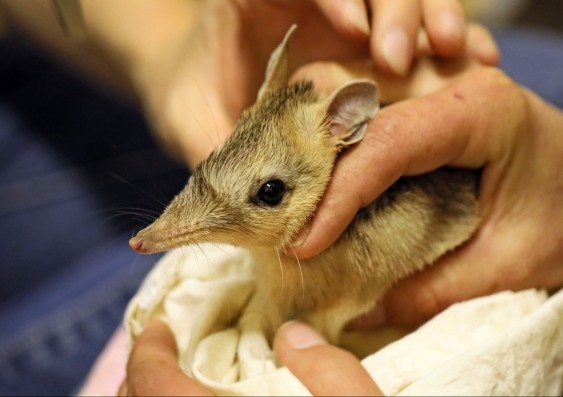
Talpero are the smallest members of the bandicoot family, roughly the size of a guinea pig. They can be distinguished from other bandicoots by their fawn-coloured coat with pale stripes across their rump.

The nocturnal marsupials dig for their food in sandy environments, making foraging pits to find seeds, tubers, insects, and fungi. This process turns the soil and helps it catch water and nutrients, contributing to the overall health of the ecosystem.

The Wild Deserts team have introduced 10 talpero as a founding population, but they hope to add more members soon.

“If they keep doing as well as they are, then I think we will be able to add some more characters to the mix,” says Dr West.

“Hopefully that will re-establish bandicoots back into Sturt National Park into the future.”

UNSW Sydney

A recovering ecosystem

The founding talpero population are from Arid Recovery, an independent not-for-profit conservation and research project that manages a large feral-free safe haven near Roxby Downs in South Australia.

The marsupials were released into Wild Deserts’ southern exclosure, called ‘Mingku’—named after the word meaning happy in the Maljangapa language. The talpero joined two other recently reintroduced species, the bilbies and mulgaras.

“This is an important step in restoring this desert ecosystem,” says Professor Richard Kingsford, leader of the Wild Deserts project and director of the UNSW Centre for Ecosystem Science.

“We are already starting to see the beginnings of a transformation occurring in the landscape. The soil is starting to turn over, which gives great opportunities for lots of little invertebrates and catches water and nutrients.

“We think that’s part of how we can transform these deserts back into what they were.”

RELATED: Two-Headed Turtle Discovered Hatched on South Carolina Beach Gives Conservationists a Big Surprise

Dr John Read from Ecological Horizons, a major partner of the Wild Deserts project, says “These energetic little diggers at Wild Deserts are important culturally, historically and ecologically and will be great for restoring the desert.”

The Wild Deserts scientists will check in on the animals daily using radio tracking devices to ensure they’re adapting well to their new environment.

“We have deliberately designed the Wild Deserts project to allow us opportunities for scientific monitoring to assess our management and the success of the species,” says UNSW’s Dr Reece Pedler, the Wild Deserts project coordinator, in a statement.

UNSW Sydney

“We hope to establish talpero in other parts of the Wild Deserts site—and ultimately into neighbouring areas of Sturt National Park or beyond. We have already recorded recruitment of young that were translocated in pouch and other young that were born at Wild Deserts.”

MORE: New Zealand is Hearing the Kiwi Call Once Again After 5 Years of Silence: ’It’s Amazing‘

Wild Deserts is part of a major NSW Government initiative to protect threatened native mammals via the Reintroduction of Locally Extinct Mammals project and the Saving our Species initiative.

Next, the team plan to reintroduce other threatened mammals into the Wild Deserts exclosures, including western quolls, stick-nest rats, and golden bandicoots.

CONSERVE the Good News By Sharing This Story With Friends…

A Fisherman’s Underwater Sculptures Have Stopped Illegal Trawling – Bringing Art and Biodiversity Back to Italian Bay

Andy Corbley
Andy Corbley

When Paolo Fanciulli dropped 39 large marble sculptures down to the bottom of the sea off Tuscany’s Maremma Regional Park, it was not his first strike in the battle against unsustainable fishing, but it was his first step into the art world.

This fascinating story, at the heart of which is a fascinating and charismatic figure, recounts the confluence of an ancient relationship between man and nature and a celebration of the Mediterranean Sea as a cradle of civilization.

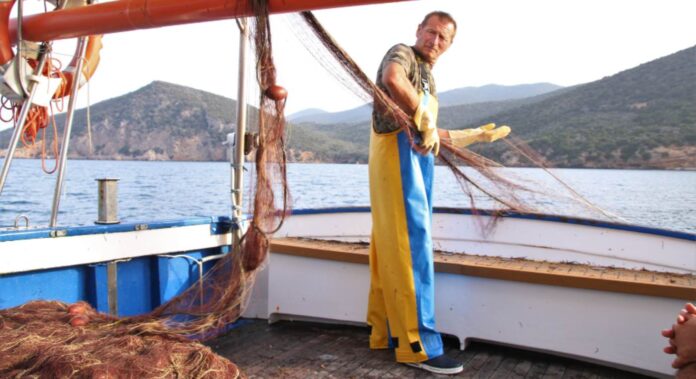
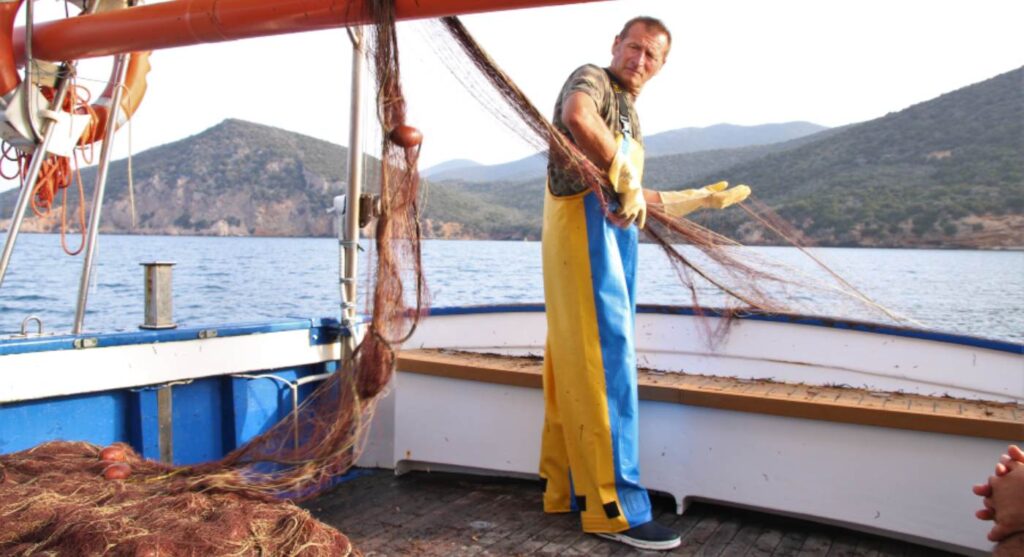
60-year-old Fanciulli practices sustainable fishing and “pescaturismo” or fishing-tourism at his home in the village of Talamone.

He still wakes up at dawn before heading out into the clear waters off the coast of Tuscany’s Grosseto province. He and his colleague Francesco fish, as their ancient ancestors did, by casting shallow nets that take mullet and bream while leaving the bottom reaches undisturbed.

Fanciulli’s “war” against illegal or unsustainable methods of fishing is long documented, and has appeared in newspapers around the globe.

From 2002 to 2006, he gathered the help of the Tuscan government and WWF-Italia to deploy a strategic formation of 126 underwater cement bollards to ruin any of the deep sea trawling nets which he realized were rapidly destroying the fish stocks he grew up harvesting.

The nets would tear up the delicate seabed ecosystem, including seagrass meadows, and simply decapitate the marine food-web. But Fanciulli knew the nets were extremely expensive to replace, and the relatively-inexpensive bollards, costing about €560 to make and transport, would last a lot longer than the poachers would.

That work took him twenty years to complete, recount the authors of his biography The House of the Fish.

His next project would be similar, but quite different. It would expand the protection of his beloved Mediterranean, while enlisting some of the greatest marble sculptors on Earth to bring the world’s attention to the greater problem of general environmental degradation.

Andy Corbley

The House of the Fish

“The importance of the project is that we need some sensible consumption of resources,” Fanciulli told GNN. “However the illegal industry is devastating everything, and with this project we can send a message to the whole world to give back; not only to take.”

CHECK OUT: 80-Year-old Bonsai Master Creates Incredible Tiny Forests As a Rebel in the Ancient Art – LOOK

“But the intent of mine is also to think of the future; a better future, with more sustainable fishing, and a greater respect for the environment.”

Paolo Fanciulli is, as he told me when I went out on a tour with him and Francesco, a fisherman, not a super-savvy marketer or social media manager.

So with the help of a childhood friend who had become a successful engineer, Fanciulli imagined a series of large marble sculptures, taken from the Carrara Quarry, the font of so much of the marble which Michelangelo used to create his artworks.

Even while Fanciulli asked for merely two, after meeting with the President of Grosseto region and Ippolito Turco, the president of an association that now looks after the sculptures—he received 100.

MORE: Historian Believes the Holy Grail and Lost Ark of the Covenant May be Hidden Under This House in English Countryside

But who would sculpt them? He needed to find generous and far-sighted sculptors who would put their creativity at the service of the sea, and enough funding to transport the 10-20 ton blocks from the north of Tuscany to the south.

Arriving at the house of an artist named Massimo Catalani, who lived in Rome and worked at the famous Federici Palace, Paolo, who brought his morning’s catch in a large pot to cook for dinner, was connected with scores of people from the world of art and architecture, one of whom was Emily Young, considered Britain’s best living sculptor.

“It was like a film,” Paolo writes.

Atlantis in Tuscany

Young was among a dozen international and Italian sculptors who donated their time and effort to contribute to a project that would not be seen in traditional museums, but that would slowly become covered in seaweed, and seen only by divers as they sit sentinel-like, defending the life of the depths.

In May 2015, the first 20 stone blocks, each costing thousands simply to transport to the pier of Talamone, were loaded onto a barge and floated out to their final resting place. A second group of 19 were lowered down last summer.

Ippolito Turco told The Independent, “We’ve managed to totally stop the illegal fishing in the area. Now we’re looking at extending the project along the coast to the north. We want to put more sculptures on the seafloor. It has proved to be very effective.”

“What you want to happen is that in time, you won’t know they are sculptures,” said Ms. Young. “They will be so covered in seaweed and algae that they will look like a coral reef or the remains of a wreck.”

LOOK: Seniors Play Dress Up With Nature to Personify the Magic Around Us– LOOK

Young added that she likes to hope they will be found by marine archaeologists one day, and hypothesized as being part of an ancient civilization.

Looking to the future

61 blocks of greyish marble remain in Turco and Fanciulli’s possession, waiting for world-renowned sculptors to carve them into statues.

For those familiar with the 17 contrade or guilds of Siena, one sculptor plans to make one of every animal-symbol on the guilds’ coats of arms, something bound to attract major investment from the uber-patriotic city, while Paolo also wants to work with the Grosseto Cultural Office to install underwater lighting amid the sculptures to light them up for a few hours at night time.

Andy Corbley

“If there are artists that want to come to the House of the Fish, we are available, because the more artists we have the stronger the project,” Fanciulli told GNN“I think if famous artists come here, there’s a bigger impact. If there are artists reading this, our sea has need of your talents.”

MORE: Artist Takes Twigs and Turns Them Into Dancing Figures—Creating New Images Every Day

The La Casa dei Pesci website is one big fundraiser, where people can contribute in all sorts of ways to the project. Artists looking to carve a block will post their idea as a fundraiser, and anyone who contributes gets gifts in return, such as dinner and a fishing trip with Paolo, paintings, and more.

SHARE the Sustainable News From the Deep Blue With Friends…

Hacker Who Stole and Gave Back $600M is Offered a Reward and a Job on the Company’s Security Team

File photo by arif riyanto

In dramatic digital turn of events, a hacker with a heart of gold who exploited a flaw to steal $600 million worth of cryptocurrency from a trading site has been offered a job as Chief Security Advisor to the very company he robbed.

He was even offered $500,000 as a reward if he could track down and identify the flaw which allowed him to breach the network’s security, but he turned it down before returning the stolen property to the users who lost it.

Poly Network, a platform for making cryptocurrency (CC) transactions across different blockchains, was shocked to find that more than half a billion was stolen through a vulnerability identified by a hacker named Mr. White Hat.

While the assets were flagged, making them almost impossible to convert into dollars, Poly Network decided the best way to ensure their network was hack-proof was to hire the man that proved it wasn’t.

In a statement, Poly Network said they maintain daily communication with Mr. White Hat, who “shared his concerns about Poly Network’s security and overall development strategy in a recent public dialogue.”

RELATED: CEO Becomes First Crypto Billionaire to Pledge Bulk of His Wealth Towards the Greater Good

“We are also counting on more experts like Mr. White Hat to be involved in the future development of Poly Network… Also, to extend our thanks and encourage Mr. White Hat to continue contributing to security advancement in the blockchain world together… we cordially invite Mr. White Hat to be the Chief Security Advisor of Poly Network,” they added.

Poly Network has said several times they have chosen not to pursue legal recourse, and while Mr. White Hat declined the offer of the 500K to hunt down the source of the security breach, the company gave it to him anyway “to use it at his own discretion for the cause of cybersecurity and supporting more projects and individuals.”

Poly Network has also announced that anyone using their platform to trade CC will receive up to $100,000 in Ethereum as a “bug bounty” for each critical vulnerability they identify and bring to the attention of the company.

MORE: Student Invents Toilet That Converts Poop into Energy – And Pays in Digital Currency if You Help to Fill it!

So far all but $33 million of the $600 million worth of CC Mr. White Hat lifted has been returned, with the remainder still frozen and unable to move.

SHARE a Little Good News Currency on Social Media…

Mining Zinc, Nickel, and Cobalt from Plants: “Phytomining” is the Sustainable Future

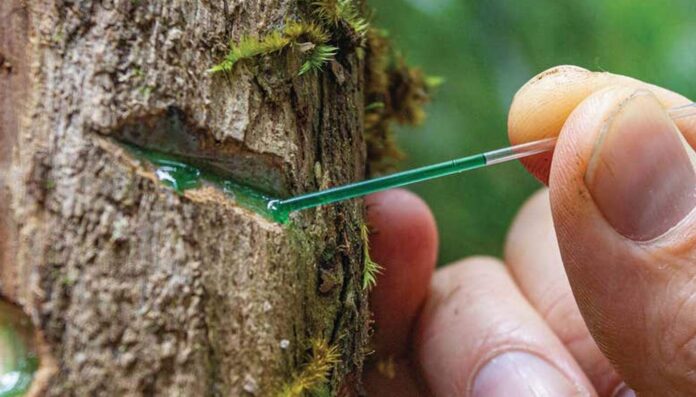
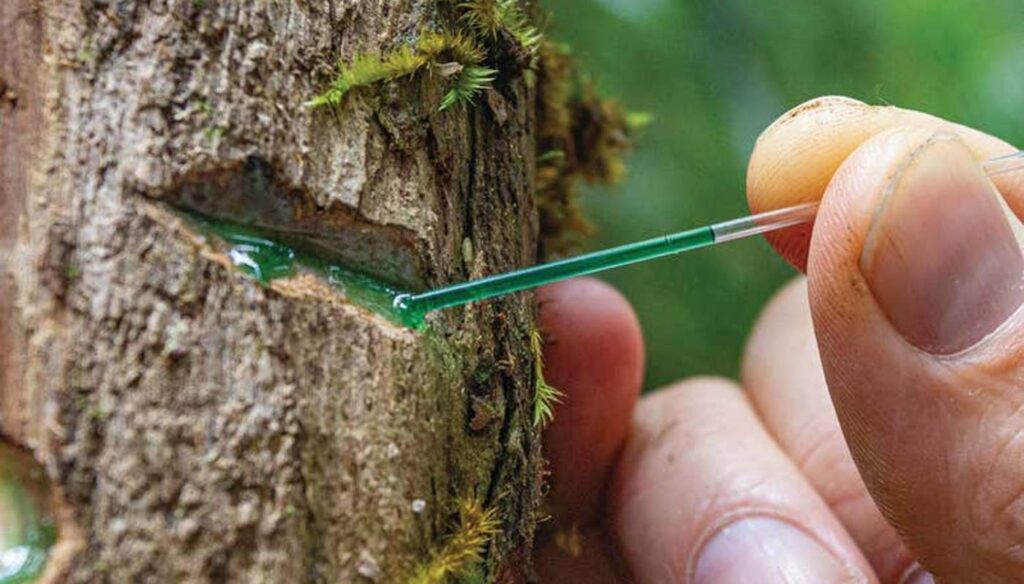
Nickel-rich sap coming from a Phyllanthus rufuschaneyi oozing nickel-rich sap (Photo credit Anthony van der Ent UQ)
Nickel-rich sap coming from Phyllanthus rufuschaneyi/Anthony van der Ent, UQ

Big tropical mining companies could soon be presented with a green alternative to traditional strip mining by letting plants hoover up the trace minerals instead of mining equipment.

Phytomining, as it’s called, relies on a select few species of plants that can literally suck the soil dry of minerals like zinc, selenium, nickel, and cobalt.

Rather than polluted rivers, plumes of sulfur dioxide, and the throng of heavy machinery, phytominin—as one demo site which started in 2015 bears witness—relies on locals to trim a few feet of a 20-feet tall green shrub. These leavings are collected and burned to create “bio-ore” filled with 20 to 25% nickel by weight.

The mining industry is keen to see how this green alternative to one of the most carbon-heavy industries can actually perform. Allowing plants to gather materials for you beats rooting around for it in the ground on a remote island like Borneo.

“We can now demonstrate that metal farms can produce between 150 to 250 kilograms of nickel per hectare (170 to 280 pounds per acre), annually,” Antony van der Ent, a senior research fellow at Australia’s University of Queensland, told Gristin a special report on phytomining in Indonesia.

MORE: Professor Develops Technology That Cools People Down – Without Electricity or AC

“At this stage, phytomining can go full-scale for nickel immediately, while phytomining for cobalt, thallium, and selenium is within reach,” van der Ent said.

Farming metal

Nickel mining companies might be drooling over the scientific modeling van der Ent and other “metal farmer” experts have done that found nickel phytomining to be on a similar cost basis to corn farming, but with an after-production gross of around $1,800 per hectare—making it a very profitable activity.

While the Grist report details phytomining in Borneo, trials have been done in the U.S.A, Italy, Albania, Canada, France, Spain, and New Zealand. There are around 700 recognized “hyperaccumulators,” which is the term for plant species that can absorb large quantities of these minerals before depositing them in their shoots, branches, and leaves.

There are some parallels to food agriculture, for example the amendment of calcium is vital, while nitrogen and organic material supplementation seem to increase the available nickel in plant shoots.

CHECK OUT: Solar-Powered Refrigeration Trucks Will Cut Pollution From Idling Diesel Engines

By far the most advantageous aspect of phytomining if you run a major mining corporation is actually not where the soil is rich, but where the soil is poor, in nickel. At concentrations of 1% or less, the only option is to strip mine, for example in locations like Brazil, Cuba, Indonesia, the Philippines, and New Caledonia.

It involves taking a surface layer of rock and soil off a stretch of ground, and using acid-leaching heavy machinery to extract the scarce nickel particles. All this unhappy work for very little metal results in a layer of toxic topsoil filled with trailing metal particles that has to be collected and sold to landfills at great cost to the miners.

READ: Massive Balloon the Size of a Soccer Stadium to Launch Telescope to Edge of Space to Study How Stars Form

With production in the Indonesian site slowed due to COVID, van der Ent is using this time to develop a hydro-metallurgical extraction method so as to avoid burning the plant trimmings for nickel, thus eliminating the CO2 generated. That’s exciting news indeed.

SHARE This Good Green News With Pals on Social Media…
“Be a lamp, or a lifeboat, or a ladder. Help someone’s soul heal.” – Rumi

Ian Britton, CC license

Quote of the Day: “Be a lamp, or a lifeboat, or a ladder. Help someone’s soul heal.” – Rumi

Photo: by Ian Britton, CC license

With a new inspirational quote every day, atop the perfect photo—collected and archived on our Quotes page—why not bookmark GNN.org for a daily uplift?


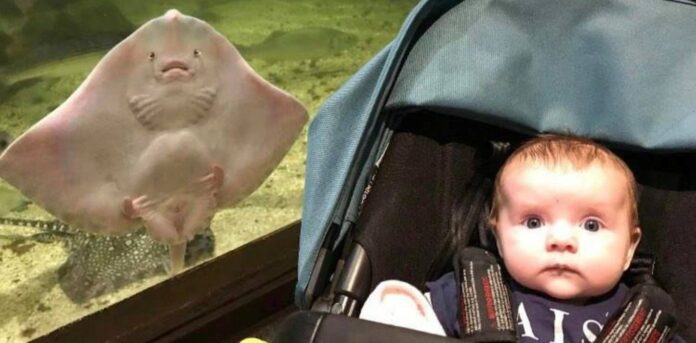
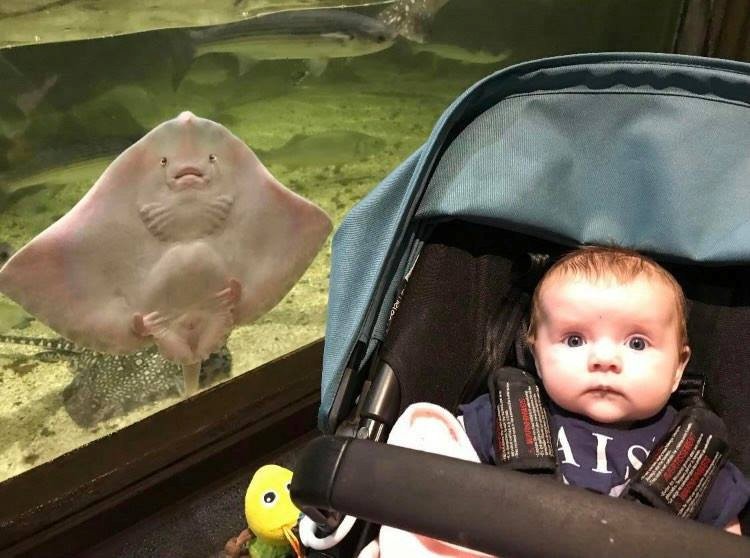
Mom’s Zoo Pic is Adorably Photo-bombed by Stingray With Remarkable Resemblance to Her Daughter

SWNS
SWNS

A mom’s photo was amusingly photobombed by a bemused stingray—pulling the exact same face as her baby daughter.

41-year-old Wendy Armstrong regularly takes her young daughters, two-year-old Aurora and six-month-old Daisy, for a day out to the Lake District Coast Aquarium in England.

During one visit, Wendy noticed a stingray was taking a particular interest in Daisy… and that both were pulling the same forlorn facial expression.

Nurse Wendy and her power plant worker husband, Mike Armstrong, said Daisy has been a very serious baby.

The mom-of-two from Workington in Cumbria said, “It is definitely up there as one of our favourite pictures that we have of our kids.

MORE: Daughter Can’t Stop Laughing About Her Mom’s Exercise Routine – WATCH

“I had my phone out, and when I saw they were both pulling the same miserable facial expression I burst out laughing and took a photo. Thankfully Daisy is much happier now!”

Thanks for bringing a big smile to so many faces, Daisy.

TURN a Friend’s Frown Upside Down—Share This Sweet Story With Them…

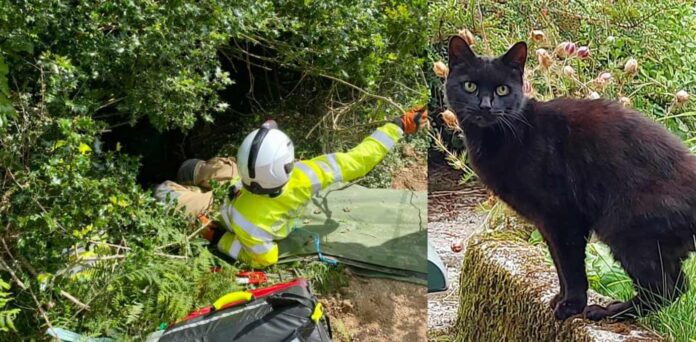
Black Cat’s Meows Led Rescuers to 83-Year-old Owner After She Fell Into Ravine

Bodmin Police/Facebook

Black cats may have the reputation for being bad luck, but don’t tell that to the owner of one ebony feline who helped save her life.

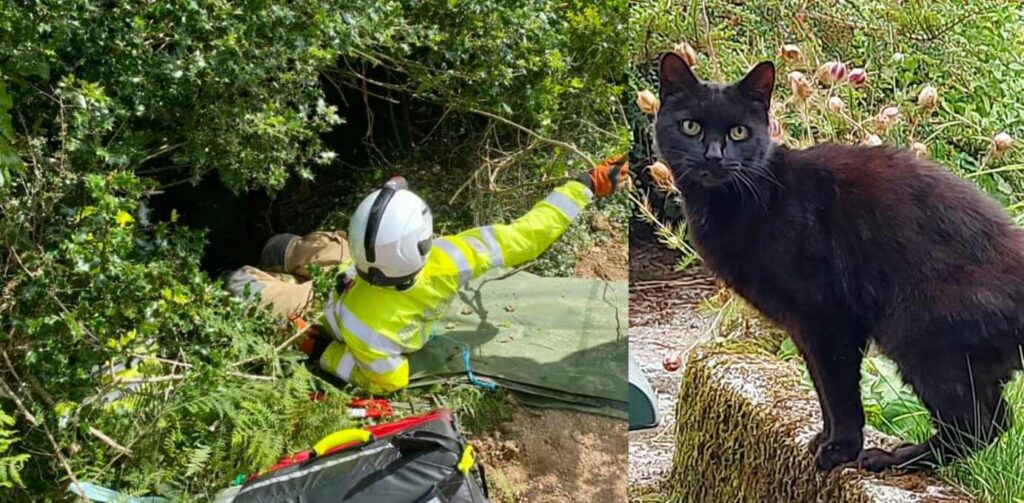
Piran the kitty lives with his cat mom in a rural area of Cornwall, England. When the 83-year-old Bodmin woman went missing, neighbors launched a search party, scouring the nearby countryside, but she was nowhere to be found—until searchers caught sight of an agitated Piran, mewing loudly by a cornfield gate.

“The cat is very attached to her, and he was going back and forth in the gateway and meowing, so I decided to go and search the maize field,” searcher Tamar Longmuir told Sky News.

With the crop standing seven feet tall, the going was difficult. Keeping to the perimeter, Longmuir skirted the field, calling out her neighbor’s name. She’d reached the bottom of the field when she finally heard a faint response.

To Longmuir’s dismay, she realized the elderly woman had taken a tumble down a steep, 70-foot ravine, and after passing through some barbed wire, had finally come to rest in a stream.

Although Longmuir was able to make her way down to assess the situation, and thankfully, learned her neighbor lady had sustained no major injuries, it’s believed the octogenarian had been stuck there for several hours.

Longmuir had to climb back up the ravine to get cell phone service, but she was able to contact emergency crews who soon arrived to extricate the stranded senior from the ravine.

After a concerted two-hour effort by almost 25 emergency personnel from the police, fire department, and air and water rescue services, the woman was airlifted to a nearby hospital for treatment.

MORE: Italian Dogs Trained as Lifeguards Save 20 Lives Every Year – With New Teams Headed to Germany and US

“Whilst the lady concerned is still currently receiving care, she is in good spirits and is being well looked after,” Bodmin Police said in a Facebook post. “Piran the cat saved the day!”

Indeed, had Piran not sounded the alarm, the outcome might have been vastly different.

RELATED: Dog Missing for Weeks Wanders Into Walmart and Finds Owner Working at the Register

“Without the cat waiting at the gate to that field, it could have been hours later that I or anyone else would have checked in there,” Longmuir told Sky News.

Grateful for Piran’s persistent vocal intervention in aid of his human, neighbors are pitching in to take care of her kitty while she recuperates.

In America, August 17th marks National Black Cat Appreciation Day, but considering Piran’s recent heroic deeds, we think an international show of appreciation for a tale that begins and ends with the cat’s meow would be just about “purrfect.”

PAW This Lucky Rescue Over to Pals on Social Media…
After Collecting Over 8000 Titles, Woman Fulfills Dream of Opening a Bookstore While Recovering From Diagnosis

(L)The Book Rest, Facebook/The Book Rest, Twitter

While youth is often a time of great promise and achievement, a life well lived can also be filled with any number of next chapters and second—or even third—acts that add depth, nuance, and meaning to our stories.

At 65 years old, Somerset native Carole-Ann Warburton experienced a plot twist that led to the fulfillment of a long-cherished dream she’d never even spoken of aloud.

After a debilitating illness incapacitated her, Warburton was left with the question of what to do going forward. During her convalescence, her daughter brought around some real estate listings for the sort of homes in which she thought her mum might best spend her golden years. Coincidentally, amongst the notices was an offering for a small barbershop with an above-stairs apartment.

For Warburton, although she admits “the place was awful,” it was love at first sight—and the perfect opportunity to do something she’d yearned to do for almost as long as she could remember—work in a bookshop.

Less than three months after coming to her decision, Warburton had handed in her retirement notice, sold her house, bought the store, and—using a personal inventory totaling between 8,000 to 9,000 titles—she launched her new venture, The Book Rest.

Warburton has been an avid book collector since she was a child. As an adult, she married a man with a similar avocation. The four-bedroom home she and her ex-husband shared with their children (much to their dismay) was “chock-a-block” with books.

MORE: Iconic Paris Bookstore Gets So Many Orders After Pleading With Fans, They Had to Shut Down Website to Catch Up

Warburton admits learning to let go of her beloved tomes was a bit of an adjustment, but one she feels the better for making.

“It still feels, when a special book goes out, like a bit of a loss—as if some little part of me has been taken away,” she said in an interview with The Guardian. “And then I make common sense come back to me and say, ‘Let someone else learn from it.’ It’s a growing up, if you like, an acceptance.”

A decade on, The Book Rest recently celebrated its 10th anniversary. Although the pandemic has slowed foot traffic, since Warburton’s driving motive isn’t monetary profit, but rather, something of a deeper, more idiosyncratic personal value, she has no plans to close up shop.

RELATED: 100-Year-old Bookshop Flooded With Orders After Heartbreaking ‘Tumbleweed Day’ Tweet

Having achieved her own dream, Warburton sees every day in the bookstore as an opportunity to help others realize theirs as well.

“All the dreams are in the books,” she told The Guardian. “They are all there waiting to be picked up… Someone can walk in tomorrow and say, ‘I have been looking for that for an awfully long time!”

And as gatekeeper to her own small universe of literary wonders, Warburton says she plans to stay around as long as she can to ensure that they do.

INSPIRE Friends With This Story of Fresh Beginnings…

Company Turns Your Loved One’s Ashes into Elegant Stones

Parting Stone
Parting Stone

A smooth pebble, fired in a kiln from the ashes of a dearly departed, is the latest way Americans can choose to carry on the memory of a loved one.

Parting Stone is a startup looking to give people both a personal and portable way to remember someone they’ve lost, with one person’s ashes capable of producing a collection of stones.

As GNN has reported before, Americans as a whole don’t have the best relationship with death. While the cost of traditional casket burial funerals is reaching unsustainable levels, a sea of new companies are rushing in to help people find better, cheaper solutions.

Some have leaned towards the green funeral movement, with composting caskets made of mushrooms, or forest conservation funded by scattering ashes at the base of a tree. Others have moved into personalized ash-crafting, such as pressing a loved one into a vinyl record, a beautiful glass sculpture, or even an artificial diamond.

Parting Stone is a mixture of the two, sparing soils from the near-ammonia levels of pH found in human ashes, while also allowing people to quite discretely carry a small memory of the departed with them.

A parting gift

Parting Stone

“It’s a canvas for the experience, not the experience itself,” explains founder Justin Crowe to Fast Company. 

The ashes are milled into a really fine powder and mixed with water to create a clay-like base. This is placed into a kiln and fired into the stone which is then polished. Without knowing exactly why, the stones tend to vary in color, which Crowe hypothesizes could be due to physiological differences between the deceased, such as diet composition or medications.

Regardless, they can appear white, brown, faintly blueish-grey or green, lavender, or with a variety of speckled patterns. Weighing between 4-8 pounds, a family will typically get anywhere from 40-60 stones at the cost of $675 for a human and $300 for a pet.

Crowe explains that he came up with the idea after losing his grandfather in 2014, and wanted a better experience with his remains, which felt void of spirit, even in a decorative urn.

Of course, as Crowe points out, ashes usually come in a plastic bag before an urn is chosen. “We don’t accept this experience in any other part of modern life. Why are we accepting it for people we love?” he said.

He remembers how people felt around the stones at a business conference, when more than 200 people asked to hold them. Collecting small, beautiful or fascinating stones is something many of us do, especially in natural places like a waterfall or in a desert wash where interesting geological processes occur.

Holding a smooth stone that fits nicely in one’s palm, knowing it contains a piece of something you love, speaks to that very primal desire.

MORE:

RELATED:

SHARE This Thoughtful Mission With Friends on Social Media…

“Success is not the key to happiness. Happiness is the key to success.” – Albert Schweitzer

Jason D

Quote of the Day: “Success is not the key to happiness. Happiness is the key to success.” – Albert Schweitzer

Photo: by Jason D

With a new inspirational quote every day, atop the perfect photo—collected and archived on our Quotes page—why not bookmark GNN.org for a daily uplift?

Trash Company Finds $25,000 Stashed in a Discarded Freezer and Tracks Down Owners to Return Cold Hard Cash

There’s plenty a humorous tale to prove the adage “one man’s trash is another man’s treasure,” but when one Ohio family accidentally threw their grandma’s treasure into the trash, it was no laughing matter.

Unbeknownst to her relatives, the canny granny had stashed $25,000 in cold hard cash in her freezer. While tidying up the kitchen, her erstwhile kinfolk accidentally tossed out the tidy sum along with the outdated frozen veggies.

It was only after the fact that the elderly woman remembered to warn her family not to misplace the envelope with the money in it, but by then, it was too late. The garbage had already been collected and her nest egg was on its way to the city landfill.

Frantic, the family reached out to Republic Solid Waste Services to see if there was any way their grandma’s missing savings could be retrieved.

It would all depend, they learned, on whether or not the truck had already arrived at the landfill. Had the truck offloaded at the dumpsite, it would have been a lost cause.

MORE: Man Goes on 2000-Mile Quest to Mine His Own Diamonds for Engagement Ring—and Finds a 2.2 Carat Beauty

“The bulldozers… immediately start smoothing it out, pushing it into the hill, dropping dirt on it and start covering up the process of the landfill,” Republic operations supervisor Gary Capan told Cleveland’s ABC News-5. “…We do that in a nonstop process [so] if it got dropped there, there’s no finding it anymore.”

Luckily, Capan was able to track down the driver who had yet to make the drop-off. The truck was diverted to a nearby recycling center where its six-ton cargo of garbage was disgorged on the tarmac, and a crew of 10 stalwart workers immediately began sifting through the mountain of refuse in search of the buried booty.

And find it they did—in record time.

CHECK OUT: Fisherman Thrilled to Find Rare Melo Pearl in His Seafood Lunch – Worth up to $350,000

“[I] couldn’t believe it took 10 minutes and actually, I said, ‘Man, it looks just like that,’ pulled it off, opened it up and there was the package inside with the money. They (the family) were so happy, they were tearing up,” Dan Schoewe, operations manager at the recycling center told News-5. “It’s rare that we can find something for somebody, so this is like the biggest one I’ve seen in 30 years.”

While we’re glad this story has a happy ending, a word of warning to the well-meaning de-clutters of the world: elderly people often have a habit of squirreling money and other valuables away in the oddest places, so if helping clear out a loved one’s residence is on your to-do list, be sure to proceed with caution.

Since “greens” from the U.S. Mint generally have no expiration date, it would be a sin to throw them out.

PASS ON the Good Luck—Share This Story With Your Friends…

Astonishing Peek Into Travels of Mammoth 17,000 Years Ago: A Diary Written in Their Tusks

UAF/Illustration by James Havens
Illustration by James Havens/ UAF

An international research team has retraced the astonishing lifetime journey of an Arctic woolly mammoth, which covered enough of the Alaska landscape during its 28 years to almost circle the Earth twice.

Scientists gathered unprecedented details of its life through analysis of a 17,000-year-old fossil from the University of Alaska Museum of the North. By generating and studying isotopic data in the mammoth’s tusk, they were able to match its movements and diet with isotopic maps of the region.

Few details have been known about the lives and movements of woolly mammoths, and the study offers the first evidence that they traveled vast distances. An outline of the mammoth’s life is detailed in the new issue of the journal Science.

“It’s not clear-cut if it was a seasonal migrator, but it covered some serious ground,” said University of Alaska Fairbanks researcher Matthew Wooller, senior and co-lead author of the paper. “It visited many parts of Alaska at some point during its lifetime, which is pretty amazing when you think about how big that area is.”

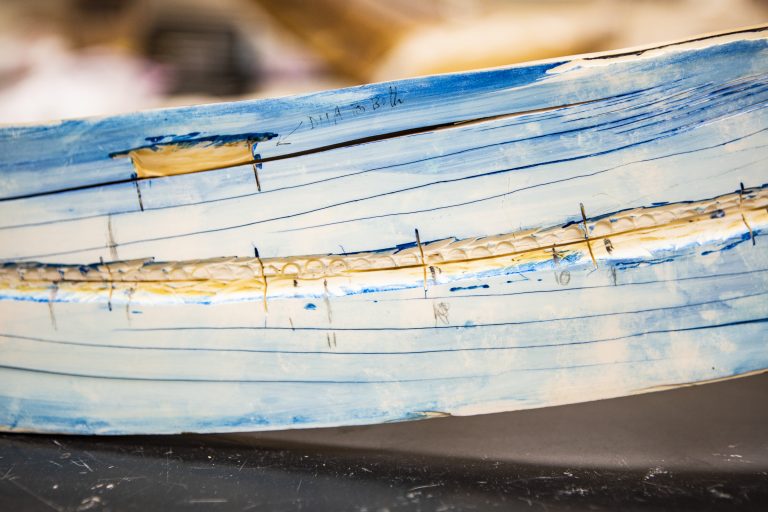
Researchers at the Alaska Stable Isotope Facility, where Wooller is director, split the 6-foot tusk lengthwise and generated about 400,000 microscopic data points using a laser and other techniques.

The detailed isotope analyses they made are possible because of the way that mammoth tusks grew. Mammoths steadily added new layers on a daily basis throughout their lives. When the tusk was split lengthwise for sampling, these growth bands looked like stacked ice cream cones, offering a chronological record of an entire mammoth’s life.

UAF photo by JR Ancheta/A close-up view shows a split mammoth tusk at the Alaska Stable Isotope Facility

“From the moment they’re born until the day they die, they’ve got a diary and it’s written in their tusks,” said Pat Druckenmiller, a paleontologist and director of the UA Museum of the North, in a statement. “Mother Nature doesn’t usually offer up such convenient and lifelong records of an individual’s life.”

Scientists knew that the mammoth died on Alaska’s North Slope above the Arctic Circle, where its remains were excavated by a team that included UAF’s Dan Mann and Pam Groves, who are among the co-authors of the study.

Researchers pieced together the mammoth’s journey up to that point by analyzing isotopic signatures in its tusk from the elements strontium and oxygen, which were matched with maps predicting isotope variations across Alaska. Researchers created the maps by analyzing the teeth of hundreds of small rodents from across Alaska held in the museum’s collections. The animals travel relatively small distances during their lifetimes and represent local isotope signals.

Using that local dataset, they mapped isotope variation across Alaska, providing a baseline to trace the mammoth movements. After taking geographic barriers into account and the average distance it traveled each week, researchers used a novel spatial modeling approach to chart the likely routes the animal took during its life.

Ancient DNA preserved in the mammoth’s remains allowed the team to identify it as a male that was related to the last group of its species living in mainland Alaska. Those details provided more insight into the animal’s life and behavior, said Beth Shapiro, who led the DNA component of the study.

MORE: Researchers Identify a ‘Fearsome Dragon’ With 23-ft Wingspan That Soared Over Australian Outback

For example, an abrupt shift in its isotopic signature, ecology and movement at about age 15 probably coincided with the mammoth being kicked out of its herd, mirroring a pattern seen in some modern-day male elephants.

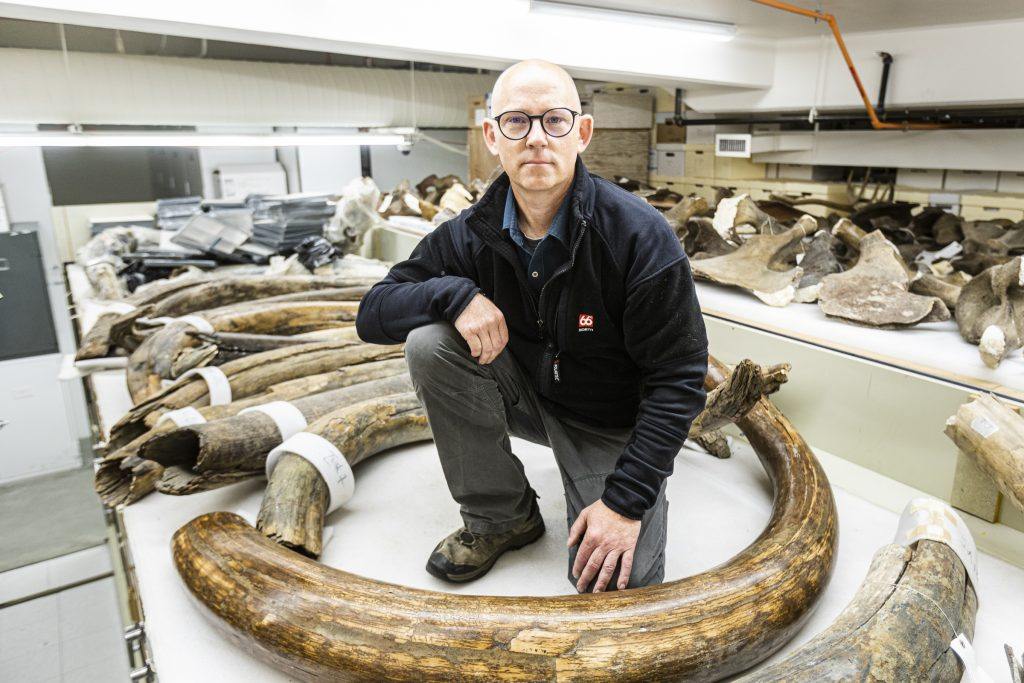
UAF/JR Ancheta Mat Wooller, director of the Alaska Stable Isotope Facility,

“Knowing that he was male provided a better biological context in which we could interpret the isotopic data,” said Shapiro, a professor at the University of California Santa Cruz and investigator at the Howard Hughes Medical Institute.

Isotopes also offered a clue about what led to the animal’s demise. Nitrogen isotopes spiked during the final winter of its life, a signal that can be a hallmark of starvation in mammals.

RELATED: Giant Rhinoceros Skeleton Found in China – One of the Largest Land Mammals Ever (Look)

“It’s just amazing what we were able to see and do with this data,” said co-lead author Clement Bataille, a researcher from the University of Ottawa who led the modeling effort in collaboration with Amy Willis at the University of Washington.

Discovering more about the lives of extinct species satisfies more than curiosity, said Wooller, a professor in the UAF Institute of Northern Engineering and College of Fisheries and Ocean Sciences. Those details could be surprisingly relevant today as many species adapt their movement patterns and ranges with the shifting climate.

CHECK OUT: Astounding Fossil Discovery in California After Man Looks Closely at Petrified Tree And Finds Bones of Great Beasts

“The Arctic is seeing a lot of changes now, and we can use the past to see how the future may play out for species today and in the future,” Wooller said. “Trying to solve this detective story is an example of how our planet and ecosystems react in the face of environmental change.”

UNEARTH Fascinating Stories For Your Friends By Sharing This Story…