













All News - Page 466 of 1751 - Good News Network
Home Blog Page 466

Ford Announces ‘Transformative’ $11.4 Billion Investment in New Electric Vehicle Plants in Tennessee and Kentucky

Ford Motor Co.
Ford Motor Co.

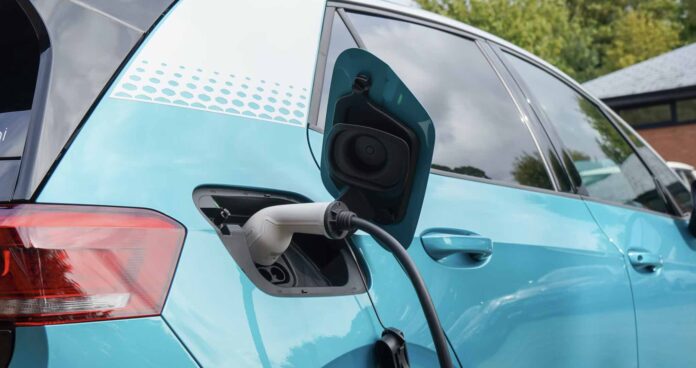
Ford just announced it is spending $11.4 billion to build two new factories in Tennessee and Kentucky to manufacture batteries and its electric F-series pickup trucks.

Together, they’ll create over 11,000 jobs, and the Tennessee factory will be Ford’s largest ever—and its first new American vehicle-assembly plant in decades.

“This is a transformative moment where Ford will lead America’s transition to electric vehicles and usher in a new era of clean, carbon-neutral manufacturing,” said Ford Executive Chair Bill Ford. “With this investment and a spirit of innovation, we can achieve goals once thought mutually exclusive—protect our planet, build great electric vehicles Americans will love, and contribute to our nation’s prosperity.”

This news comes amid strong demand for the all-new Ford F-150 Lightning truck, E-Transit, and Mustang Mach-E electric vehicles, and is on top of Ford’s recent announcement to expand production capacity and add jobs at the Ford Rouge Electric Vehicle Center in Dearborn, Michigan.

“This is our moment—our biggest investment ever—to help build a better future for America,” said Jim Farley, Ford president and CEO. “We are moving now to deliver breakthrough electric vehicles for the many rather than the few. It’s about creating good jobs that support American families, an ultra-efficient, carbon-neutral manufacturing system, and a growing business that delivers value for communities, dealers and shareholders.”

Ford’s $7 billion investment is the largest ever manufacturing investment at one time by any automotive manufacturer in the U.S.

Part of Ford’s more-than-$30 billion investment in electric vehicles through 2025, this investment supports the company’s longer-term goal to create a sustainable American manufacturing ecosystem, and to accelerate its progress towards achieving carbon neutrality, backed by science-based targets in line with the Paris Climate Agreement. Overall, Ford expects 40% to 50% of its global vehicle volume to be fully electric by 2030.

“We are proud to be partnering with Ford as they open a new chapter in automobile history,” said Dongseob Jee, president of battery business SK Innovation. “We are excited to be taking this decisive leap together, as partners, and to bring about our common vision for a cleaner planet. Our joint venture, BlueOvalSK, will embody this spirit of collaboration. We look forward to growing our trust-based partnership by delivering on our market-leading value proposition, experience and cutting-edge expertise.”

All-new Ford Blue Oval City

Reimagining how electric vehicles—and the batteries that power them—are designed, manufactured, and recycled, Ford is creating an all-new electric vehicle manufacturing ecosystem.

Blue Oval City will be among the largest auto manufacturing campuses in U.S. history. Like the iconic Rouge complex in Michigan did a century earlier, Blue Oval City will usher in a new era for American manufacturing.

MORE: Long-lasting Solid-state Lithium Battery From Harvard May Solve a 40-year Problem

The 3,600-acre campus covering nearly six square miles will encompass vehicle assembly, battery production. and a supplier park in a vertically integrated system that delivers cost efficiency while minimizing the carbon footprint of the manufacturing process. The assembly plant will use always-on cloud-connected technologies to drive vast improvements in quality and productivity. The mega campus is designed to add more sustainability solutions, including the potential to use local renewable energy sources such as geothermal, solar, and wind power.

“West Tennessee is primed to deliver the workforce and quality of life needed to create the next great American success story with Ford Motor Company and SK Innovation,” said Tennessee Governor Bill Lee. “This is a watershed moment for Tennesseans as we lead the future of the automotive industry and advanced manufacturing.”

Creating approximately 6,000 jobs, Blue Oval City will be a hive of technical innovation to build next-generation electric F-Series trucks. This growth opportunity will allow Ford to reach new customers with an expanded electric truck lineup.

Bigger assembly plant, smaller environmental impact

Despite its size, the assembly plant at Blue Oval City is designed to have as minimal an impact as possible on the surrounding environment—and even to generate positive impacts. The assembly plant’s goal is to have a regenerative impact on the local environment through biomimicry in design of the facility.

From the start of production in 2025, Ford’s goal is for the assembly plant to be carbon neutral.
Through an on-site wastewater treatment plant, the assembly plant aspires to make zero freshwater withdrawals for assembly processes by incorporating water reuse and recycling systems. Zero-waste-to-landfill processes will capture materials and production scrap at an on-site materials collection center to sort and route materials for recycling or processing either at the plant or at off-site facilities once the plant is operational.

CHECK OUT: Daimler Trucks is Now Accepting Orders for All-Electric Freight Trucks, Having Tested Them on America’s Highways

Ford is collaborating with Redwood Materials, a leading battery materials company, to make electric vehicles more sustainable and affordable for Americans by localizing the supply chain network, creating recycling options for scrap and end-of-life vehicles, and ramping up lithium-ion recycling.

BlueOvalSK Battery Park

Joining the Ford electric manufacturing revolution is a planned $5.8 billion, 1,500-acre BlueOvalSK battery manufacturing campus in Glendale, Kentucky, which is targeted to open in 2025.

Twin co-located plants will be capable of producing up to 43 gigawatt hours each for a total of 86 gigawatt hours annually. Together, these American-made batteries will power next-generation electric Ford and Lincoln vehicles.

RELATED: The Best Selling Truck in the US, the Ford F-150, Has Gone Electric 

Bringing 5,000 new jobs to Kentucky, BlueOvalSK Battery Park will be centrally located to support Ford’s North American assembly plants’ footprint.

“We thank Ford Motor Company and SK Innovation for their investment in Team Kentucky,” said Kentucky Governor Andy Beshear. “This is the single largest investment in the history of our state and this project solidifies our leadership role in the future of the automotive manufacturing industry. It will transform our economy, creating a better Kentucky, with more opportunities, for our families for generations. Our time is now. Our future is now.”

POWER UP and Invest in the Good News; Share This News Story…

Dog That Was Stuck in a 30-Foot-Deep Cavern For Two Weeks is Rescued and Joyfully Reunited (WATCH)

SWNS
SWNS

The dramatic footage shows the heroic rescue and reunion of ‘Dewey’ the dog trapped at the bottom of a 30-foot-deep cave—for over two weeks.

Elizabeth Acosta filmed the operation as rescuers climbed into the huge cave to save the emaciated pup.

The rescue team, led by experienced caver Tray Heinke, were actually trying to locate the perfect spot for a member of the group to propose to his partner when they spotted the pup.

Sharp-eyed hero Josiah Meert saw movement at the bottom of the 30-foot-deep pit at Dewey Hickman Nature Reserve, Indiana, and realized it was a dog.

The group put aside their plans and raced off to grab ropes, helmets, and harnesses and, with teamwork and determination, ‘Dewey’ was freed in only 30 minutes.

Tray said, “We spotted his collar about 15 feet down surrounded by claw marks. He then withstood another 15-foot drop to the floor of the pit. He’d lost about 86lbs.”

“We firmly believe that had he been in the pit only a few more days, he’d be gone. Everything depended on the outcome of the rescue so once he was safe and given a bite to eat, Sean popped the question… and she said yes!

“You could hear the cheers a mile away.”

Tray Heinke’s reunion footage shows the incredible moment the pup was reunited with his relieved owners.

MORE: Saved From Bulldozers, Baby Bird Steals Hearts

‘Dewey’, initially nicknamed after where he was found, excitedly runs over to his family who are delighted to be back with their loving pet, actually named Hawkeye.

His owners confirmed that he was lost just over two weeks before his rescue.

Tray added, “Getting Hawkeye out of the cave was huge but finding his owner and reuniting them so quickly was the icing on the cake.

“

The power of social media! We didn’t expect a quick reunion. However within two days of finding him, we’d connected with his owners and made arrangements to meet!

“

I think this nightmare could have been avoided had Hawkeye been neutered. He blindly followed a female scent into the wilderness, animal instincts aren’t always the best!

RELATED: Firefighters Finally Reach Deaf Dog Trapped in Storm Drain After 10 Hours of Trying

“The quick rescue and reunion were also very lucky, so it’s best to leave situations like this to experienced professionals. If one of us had fallen in too, we’d have really been screwed.

“We’re all very proud to be a part of this story, the world could use some good news right now.”

That’s certainly true.

(WATCH the rescue video below.)

RESCUE This PAWsome Story For Pals; Share This This With Them…

How Planets May Be Seeded With the Chemicals Necessary for Life

An artist's impression of the gas and dust in the protoplanetary disk surrounding the young star. The inset shows the molecular gas targeted by the MAPS observations, made up of a ‘soup' of both simple and complex molecules in the vicinity of still-forming planets. Credit: M.Weiss/Center for Astrophysics/Harvard & Smithsonian.
Artist’s impression of the gas and dust in the protoplanetary disk surrounding the young star. The inset shows the molecular gas targeted by the MAPS observations, made up of a ‘soup’ of both simple and complex molecules in the vicinity of still-forming planets; M.Weiss/Center for Astrophysics/Harvard & Smithsonian

Analysis of unique “fingerprints” in light emitted from material surrounding young stars has revealed “significant reservoirs” of large organic molecules necessary to form the basis of life.

Dr John Ilee, Research Fellow at the University of Leeds who led the study, says the findings suggest that the basic chemical conditions that resulted in life on Earth could exist more widely across the Galaxy.

The large organic molecules were identified in protoplanetary disks circling newly formed stars.

A similar disk would have once surrounded the young Sun, forming the planets that now make up our Solar System.

The presence of the molecules is significant because they are “stepping-stones” between simpler carbon-based molecules such as carbon monoxide, found in abundance in space, and more complex molecules that are required to create and sustain life.

Dr Ilee and his team, comprising astrophysicists from 16 universities across the world, focused on studying the existence, location, and abundance of the precursor molecules needed for life to form.

He said, “These large complex organic molecules are found in various environments throughout space. Laboratory and theoretical studies have suggested that these molecules are the ‘raw ingredients’ for building molecules that are essential components in biological chemistry on Earth, creating sugars, amino acids, and even the components of ribonucleic acid (RNA) under the right conditions.

READ: Apple Co-Founder Steve Wozniak Launches Company to Clean Up Space Debris

“However, many of the environments where we find these complex organic molecules are pretty far removed from where and when we think planets form. We wanted to understand more about where exactly, and how much of, these molecules were present in the birthplaces of planets—the protoplanetary disks.”

Observing chemistry deep in space

The investigation has been made possible by advances in the ability of the ALMA telescope to detect very faint signals from the molecules in the coldest regions of outer space.

Each molecule emits light at distinctly different wavelengths producing a unique spectral ‘fingerprint’.  These fingerprints allow scientists to identify the presence of the molecules and investigate their properties.

Dr Catherine Walsh, also from the School of Physics and Astronomy at Leeds, was one of the five co-principal investigators leading the study. Called the ‘Molecules with ALMA at Planet-forming Scales’ (or MAPS) program, it has used data collected by the Atacama Large Millimetre/submillimetre Array (or ALMA) radio telescope in Chile.

RELATED: 900-Year-old Mystery That Puzzled Stargazers is Now Solved – It’s A ‘Zombie’ Star

Dr Walsh explained, “The power of ALMA has allowed us to measure the distribution and composition of material that is actively building planets around nearby young stars for the first time. The telescope is powerful enough to do this even for large complex molecules that are the precursors for life.”

The research team was looking for three molecules—cyanoacetylene (HC3N), acetonitrile (CH3CN), and cyclopropenylidene (c-C3H2)—in five protoplanetary disks, known as IM Lup, GM Aur, AS 209, HD 163296, and MWC 480. The protoplanetary disks range between 300 and 500 light years from Earth.

All of the disks show signatures of on-going planet formation occurring within them.

Protoplanetary disks ‘feed’ young planets

The protoplanetary disk that surrounds a young planet will feed it with material as it forms.
For example, it is thought that the young Earth was seeded with material via impacts of asteroids and comets that had formed in the protoplanetary disk around the Sun. But scientists were uncertain whether all protoplanetary disks contain reservoirs of complex organic molecules capable of creating biologically significant molecules.

This study is beginning to answer that question. It found the molecules in four out of the five disks observed. In addition, the abundance of the molecules was greater than the scientists had expected.

Dr Ilee said: “ALMA has allowed us to look for these molecules in the innermost regions of these disks, on size scales similar to our Solar System, for the first time. Our analysis shows that the molecules are primarily located in these inner regions with abundances between 10 and 100 times higher than models had predicted.”

MORE: This is What it Looks Like When a Black Hole Snacks on a Star

Importantly, the disk regions in which the molecules were located are also where asteroids and comets form. Dr Ilee says it is possible a process akin to that which may have helped to initiate life on Earth could also happen in these disks—where bombardment by asteroids and comets transfers the large organic molecules to the newly formed planets.

Dr Walsh added, “The key result of this work shows that the same ingredients needed for seeding life on our planet are also found around other stars. It is possible that the molecules that are needed to kick-start life on planets are readily available in all planet-forming environments.”

One of the next questions the researchers want to investigate is whether even more complex molecules exist in the protoplanetary disks.

Dr Ilee added, “If we are finding molecules like these in such large abundances, our current understanding of interstellar chemistry suggests that even more complex molecules should also be observable.

LOOK: Have We Detected Dark Energy? Cambridge Scientists Say It’s a Possibility

“We’re hoping to use ALMA to search for the next stepping stones of chemical complexity in these disks.  If we detect them, then we’ll be even closer to understanding how the raw ingredients of life can be assembled around other stars.”

Details of the study are published in the Astrophysical Journal Supplement Series. It is one of 20 papers reporting on a major international investigation into the chemistry of planet formation.

Source: University of Leeds

SHARE This Far Out Story With Other Astrophysics Fans…

Why Do Animals Play? Because They Need To Play – Just Like Children Do

Photo by Tambako The Jaguar, CC license

As much as it’s a time for growing and learning, childhood is also a time for unabashed joy. Pastimes like careening down a snowy hillside on your sled, flying off a rope swing into a cool lake on a hot summer day, or even just a game of catch are part and parcel of growing up.

But the joys of playtime aren’t just reserved for human kids—animal offspring are just as likely to get into the act as well, and some of their activities are startlingly similar to our own.

Young ravens hold body-surfing “competitions” down the slopes of wintery rooftops; juvenile elephants create impromptu waterslides along muddy riverbanks; herring gulls engage in their own version of airborne hacky sack substituting seashells for bean-filled projectiles.

Scientists believe that for certain animal species, some fun and games is strictly that—play for the sake of play—but as with humans, other forms of diversion are preparing youngsters for the rigors of adulthood.

“Play is essential to development because it contributes to the cognitive, physical, social, and emotional well-being of children and youth,” wrote Kenneth R. Ginsburg in the American Journal of Pediatrics. “Play also offers an ideal opportunity for parents to engage fully with their children.”

Those same tenets, it seems, hold true in the animal kingdom as well.

“Horses…are known to engage in play almost as soon as they are born. Once they can walk, they immediately start to gallop, frolic and buck, again, honing the motor skills they may need when they’re mature,” notes BBC Earth.

Play with purpose

But along with social and motor skills, play also teaches animals essential hunting and survival skills.

Inge Wallmrod

While the antics of cute cavorting kittens is the stuff that’s spawned a myriad of viral videos, whether it’s an opportunity to take down an errant mouse or to avoid harm in the face of unexpected danger, their ninja-like antics may in fact be helping kittens learn to be ready when life hands them a surprise.

Even natural-born predators, such as kestrels, use play to hone their hunting skills by practicing with targets that look like real prey when they’re young.

In the oceans, dolphins chase underwater air rings to fine-tune their sonar skills.

And while it’s unclear why bear cubs are so quintessentially playful, zoologists believe at least some of their shenanigans have a more serious purpose that aids in their survival as adults.

MORE: That Song Stuck in Your Head is Helping the Brain With Long-Term Memory

One of the most important teaching aspects of play is socialization. These days, for human kids, that usually means the basics like learning to share, teamwork, and knowing boundaries.

For animals, especially those that live in packs, flocks, or herds, play (often in the form of play fighting) imparts an understanding of where each animal fits into the community hierarchy.

In ways that are remarkably similar to the training children of traditional tribal cultures receive, it is through the rules of play that lion cubs, kangaroo joeys, and wolf pups discover and establish the roles they’ll be expected to perform as adults.

But for animals, not all socializing play is about fighting or establishing dominance. Some of it’s about learning to be better parents—and that involves playing with dolls. While they might lack a perambulator and a fancy wardrobe, female chimpanzees are known to lavish their doll babies with love and emulate their own mothers’ attentive care.

RELATED: Musical Training Gives the Brain a Crucial Advantage—Especially at an Early Age, Says New Study

So whether it’s frolicking in the pasture, hanging from a tree, or rollicking in the surf, it seems that play will always be an intrinsic—and fun—part of both human and animal development.

And we’re pretty sure when those ninja-kitten TikTok stars stop climbing that curtain, they’ll be thrilled to hear about it.

RAISE A Paw For Fascinating Research; Share This Piece…

“Creativity can be intangible in the form of a good life, or a beautiful act, or in other virtues of the soul such as freedom and openness, style and tact, humor, kindness.” – James Hillman

Quote of the Day: “Creativity can be intangible in the form of a good life, or a beautiful act, or in other virtues of the soul such as freedom and openness, style and tact, humor, kindness.” – James Hillman

Note: Hillman (1926-2011) was a psychologist and author of one of my favorite books, The Soul’s Code: In Search of Character and Calling.

Photo: by Ava Sol

With a new inspirational quote every day, atop the perfect photo—collected and archived on our Quotes page—why not bookmark GNN.org for a daily uplift?


5 Midwestern Governors Sign Up to Create EV Charging Network to Keep Electric Vehicles Moving

Governors from the neighboring states of Illinois, Indiana, Michigan, Minnesota, and Wisconsin signed an agreement Friday to collaborate on an EV charging network across the Midwest to support electric car sales, reduce harmful emissions, and protect public health.

The bipartisan partnership, called REV Midwest — the Regional Electric Vehicle Midwest Coalition, also hopes to ensure the entire Midwest region is able to effectively compete for new private investment and federal funding for vehicle electrification.

“The Midwest has the ingenuity and the drive to develop innovative solutions to curb climate change,” said Minnesota Gov. Tim Walz.

Building on the automotive history of expertise in the Great Lakes Region, REV Midwest members will coordinate to improve access to charging infrastructure and reduce range anxiety by coordinating to optimize charging infrastructure, cooperate on best practices, and support standardization.

RELATED: With EV Battery Prices Dropping 87% in a Decade, Tesla is Now Making a Car That Will Cost $25,000

An estimated 105,000 new jobs in the utility sector are anticipated to be needed to deploy EV charging infrastructure by 2030. The states will work together with industry to understand future workforce needs and support workforce training programs to build the transportation system of the future.

The network will initially focus on interstate and regionally significant commercial corridors and creating publicly accessible charging opportunities on interstate freeways. It also focus on serving MHDV (medium heavy-duty vehicles) to leverage its existing role as a shipping and logistics hub.

One benefit of the initial focus on MHDVs will be to reduce pollution in communities located near freight and shipping facilities and along transportation corridors, where nearby communities are harmed by emissions.

CHECK OUT: The Best Selling Truck in the US, the Ford F-150, Has Gone Electric

“Illinois’ Climate and Equitable Jobs Act puts us on track to be the best state in the nation to manufacture and drive an electric vehicle – but we’re just getting started, and the work doesn’t stop at our state borders,” said Illinois Governor JB Pritzker. “By working together with our Midwestern neighbors, we can accelerate the region’s growth.”

DRIVE This Good News to EV Enthusiasts on Social Media…

Australia Returns Huge Daintree Rainforest to its Aboriginal Owners, Bordering Great Barrier Reef

Daintree Rainforest and Great Barrier Reef by Manny Moreno

Over 600 square-miles of ancient rainforest with rivers, waterfalls, gorges and white sandy beaches was handed back to the traditional people who had lived here for generations.

Daintree Rainforest and Great Barrier Reef by Manny Moreno

The historic announcement last week came from officials in Queensland, Australia, who transferred management of the world-famous Daintree National Park to the Eastern Kuku Yalanji people, who are one of the world’s oldest living cultures.

“This agreement recognizes their right to own and manage their country, to protect their culture, and to share it with visitors as they become leaders in the tourism industry,” said Environment Minister Meaghan Scanlon.

Negotiations over the last 4 years, determined that the world renown Daintree park—a UNESCO World Heritage Area—will eventually be solely and wholly managed by the Eastern Kuku Yalanji.

For now, the agreement transfers responsibility for management of Daintree’s 160K hectares, with three other national parks, the Ngalba-bulal, Kalkajaka and the Hope Islands National Parks, to be jointly-managed with the Queensland Government.

“Today’s handback marks the government returning more than 3.8 million hectares of land back to Traditional Owners on Cape York, with 2.3 million hectares to be jointly-managed by our rangers and the community,” said Minister Scanlon in a statement. “It means there are now 32 Aboriginal-owned and jointly-managed national parks on the Cape York Peninsula.”

The goal is to provide opportunities for mentoring, training, apprenticeships, work experience and employment to fill positions for land and sea management, hospitality, tourism, and research.

RELATED: Farmer Returns 700 Acres of California Coast to Native American Tribe

Queensland ministry

The Daintree borders the Great Barrier Reef, so is one of Australia’s top tourist destinations.

“We will also provide funds to develop a tourism hub at Dubudji, first options for contracting on national parks, first rights to consider new tourism proposals, and endeavor to increase the skills and numbers of Jabalbina Indigenous rangers.”

Scanlon said Australia has an uncomfortable and ugly shared past, and the handback was a key step on the path towards reconciliation.

“These national parks will protect important Aboriginal cultural sites, diverse ecosystems including rainforests, woodlands, wetlands and mangroves, and form part of the Wet Tropics World Heritage Area which is recognized as the second most irreplaceable World Heritage site on Earth.”

RELATED: Island on California Coast is Returned to Indigenous Tribe in Unprecedented Restoration of Land Rights

SEND Some Reconciliation to Your Social Media Feed—Share This…

Rescued Seal Celebrates Birthday With Ice Cake –Then Falls Asleep Right On Top of it (LOOK)

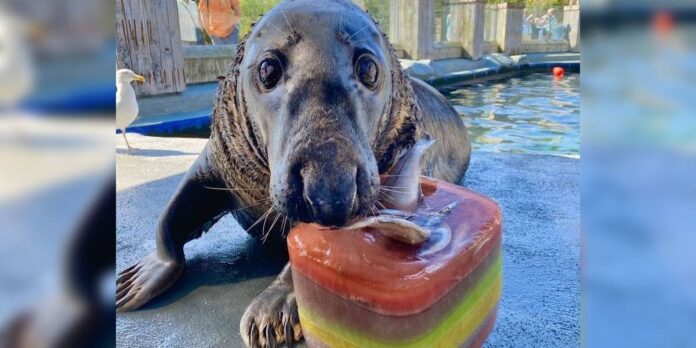
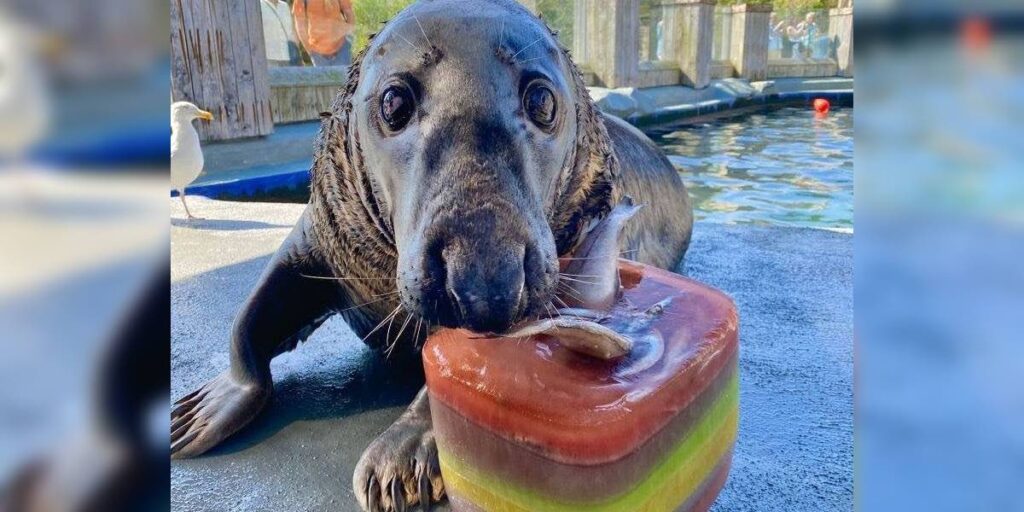
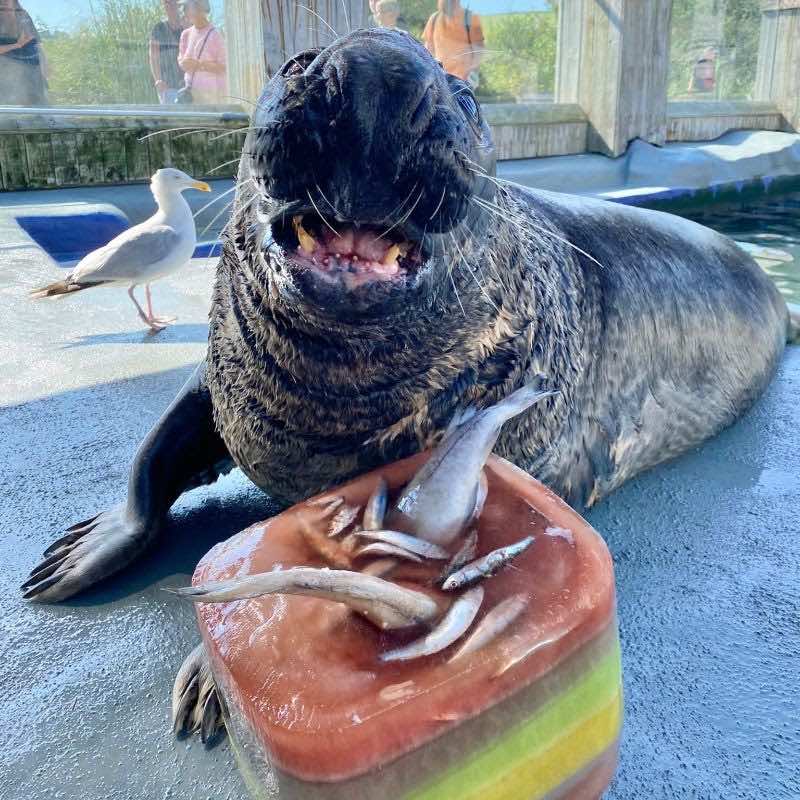
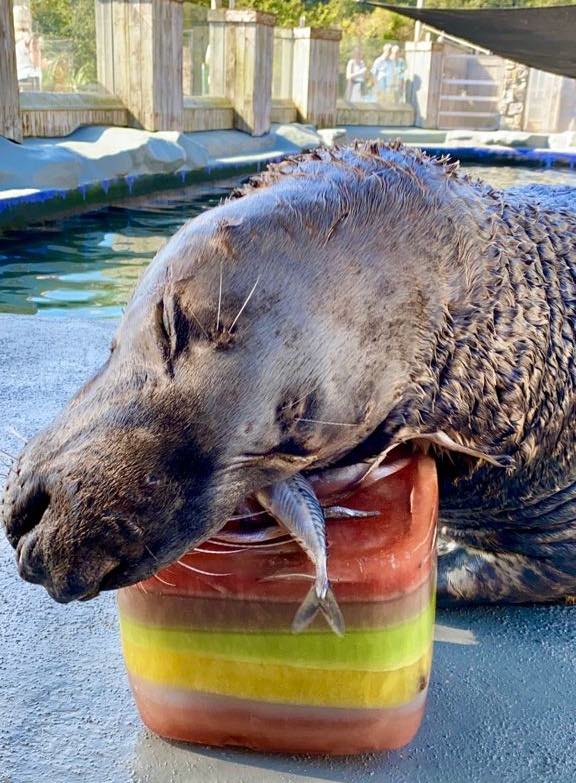
Last month the Cornish Seal Sanctuary celebrated the 31st birthday of one of their favorite residents—and the team spoiled him with a colorful layered ice cake.

Cornish Seal Sanctuary

The grey seal named Yulelogs is a big favorite among guests. He was rescued as a pup in 1989 by a marine park in the north of England. When the park closed down, Yulelogs was released back into the wild. However, as he had spent such a long time in captivity, he had no idea how to feed himself and had become too attached to humans.

Three months after his release, Yulelogs was rescued by the RSPCA after receiving calls from concerned members of the public reporting that he had been chasing people with buckets on the beach, because he thought they contained fish.

At the time, he weighed only 132-lbs (60kg), compared to the standard 550-lbs (250kg).

Today, Yulelogs is energetic and enthusiastic, especially when it comes to his husbandry training and environmental enrichment, according to the sanctuary.

The birthday cake is made of layers of colored ice with a few fish stuck in the top—personally made by the sanctuary.

POPULAR: Fisherman Has a Decade-Long Friendship With a Blind Seal Who Follows Him Each Day

Cornish Seal Sanctuary

“It has become a tradition to make a birthday cake for our resident seals as a special treat,” a sanctuary spokesperson, Kayleigh Slowey, told GNN.

“And, it wouldn’t be a Log’s birthday celebration without a snooze on top of his cake after all the excitement!”

Cornish Seal Sanctuary

The sanctuary in South West England, run by the nonprofit Sea Life Trust, accepts donations and you can sponsor “adopt” of their animals if you would like to contribute.

LOOK: Watch the Moment This Seal Jumps Right on the Back of a Paddle Board to Hitch a Ride

CLAP Your Hands For This Story By Sharing it on Social Media…

Making Clean Hydrogen Energy Is Hard, But Researchers Just Solved a Major Hurdle

UT Austin

For decades, researchers around the world have searched for ways to use solar power to generate the key reaction for producing hydrogen as a clean energy source—splitting water molecules to form hydrogen and oxygen. However, such efforts have mostly failed because doing it well was too costly, and trying to do it at a low cost led to poor performance.

Now, researchers from The University of Texas at Austin have found a low-cost way to solve one half of the equation, using sunlight to efficiently split off oxygen molecules from water. The finding, published recently in Nature Communications, represents a step forward toward greater adoption of hydrogen as a key part of our energy infrastructure.

As early as the 1970s, researchers were investigating the possibility of using solar energy to generate hydrogen. But the inability to find materials with the combination of properties needed for a device that can perform the key chemical reactions efficiently has kept it from becoming a mainstream method.

“You need materials that are good at absorbing sunlight and, at the same time, don’t degrade while the water-splitting reactions take place,” said Edward Yu, a professor in the Cockrell School’s Department of Electrical and Computer Engineering. “It turns out materials that are good at absorbing sunlight tend to be unstable under the conditions required for the water-splitting reaction, while the materials that are stable tend to be poor absorbers of sunlight.

“These conflicting requirements drive you toward a seemingly inevitable tradeoff, but by combining multiple materials—one that efficiently absorbs sunlight, such as silicon, and another that provides good stability, such as silicon dioxide—into a single device, this conflict can be resolved.”

However, this creates another challenge—the electrons and holes created by absorption of sunlight in silicon must be able to move easily across the silicon dioxide layer. This usually requires the silicon dioxide layer to be no more than a few nanometers, which reduces its effectiveness in protecting the silicon absorber from degradation.

RELATED: World’s First Home Hydrogen Battery: Powers Your House for 3 Days, is Recyclable, and Not a Fire Risk

The key to this breakthrough came through a method of creating electrically conductive paths through a thick silicon dioxide layer that can be performed at low cost and scaled to high manufacturing volumes.

UT Austin

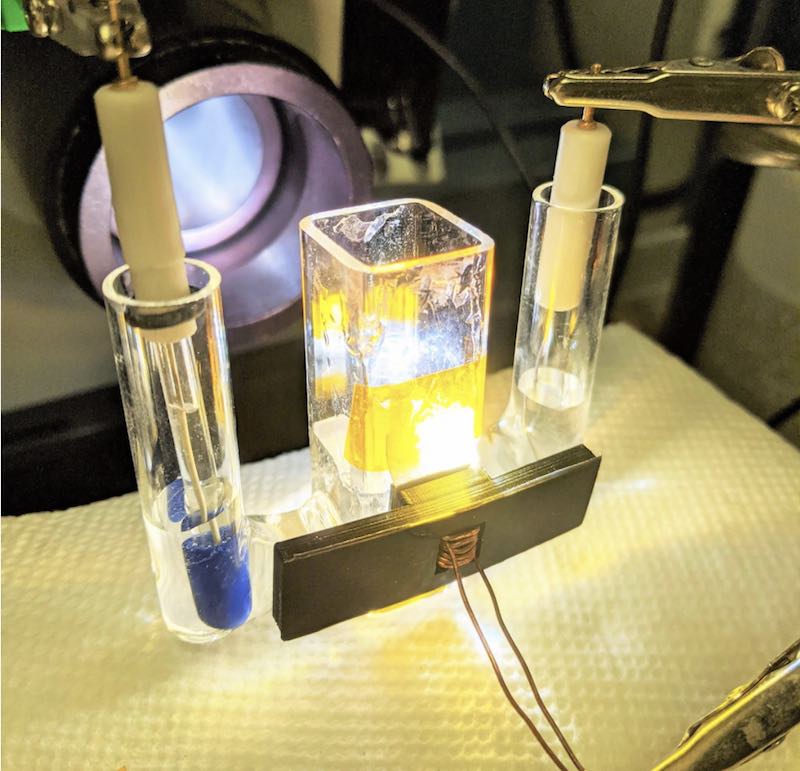
To get there, Yu and his team used a technique first deployed in the manufacturing of semiconductor electronic chips. By coating the silicon dioxide layer with a thin film of aluminum and then heating the entire structure, arrays of nanoscale “spikes” of aluminum that completely bridge the silicon dioxide layer are formed. These can then easily be replaced by nickel or other materials that help catalyze the water-splitting reactions.

MOREZero-Emission Trucks Set To Make Island Nation a World Leader In Hydrogen Energy

When illuminated by sunlight, the devices can efficiently oxidize water to form oxygen molecules while also generating hydrogen at a separate electrode and exhibit outstanding stability under extended operation. Because the techniques employed to create these devices are commonly used in manufacturing of semiconductor electronics, they should be easy to scale for mass production.

Experimental water-splitting apparatus, University of Texas Austin

The team has filed a provisional patent application to commercialize the technology.

RELATED: World’s Largest Green Hydrogen Plant Will Soon Be Turning California’s Trash into Ultra-Cheap Fuel

Improving the way hydrogen is generated is key to its emergence as a viable fuel source. Most hydrogen production today occurs through heating steam and methane, but that relies heavily on fossil fuels and produces carbon emissions.

There is a push toward “green hydrogen” which uses more environmentally friendly methods to generate hydrogen. And simplifying the water-splitting reaction is a key part of that effort.

Hydrogen has potential to become an important renewable resource with some unique qualities. It already has a major role in significant industrial processes, and it is starting to show up in the automotive industry. Fuel cell batteries look promising in long-haul trucking, and hydrogen technology could be a boon to energy storage, with the ability to store excess wind and solar energy produced when conditions are ripe for them.

CHECK OUT: Tokyo University Uncovers a Solution to the Problems of Hydrogen Fuel Production – Use Rust

Going forward, the team—which includes Professor Li Ji at Fudan University—will work to improve the efficiency of the oxygen portion of water-splitting by increasing the reaction rate. The researchers’ next major challenge is then to move on to the other half of the equation.

“We were able to address the oxygen side of the reaction first, which is the more challenging part,” Yu added, “but you need to perform both the hydrogen and oxygen evolution reactions to completely split the water molecules, so that’s why our next step is to look at applying these ideas to make devices for the hydrogen portion of the reaction.”

(SOURCE: UT Austin)

“Let the truth be your delight. Proclaim it—but with a certain congeniality.” – Catherine of Siena

Quote of the Day: “Let the truth be your delight. Proclaim it—but with a certain congeniality.” – Catherine of Siena

Photo: by Evelyn Semenyuk

With a new inspirational quote every day, atop the perfect photo—collected and archived on our Quotes page—why not bookmark GNN.org for a daily uplift?

A Floating Flower Garden in Tokyo Immerses Visitors With Orchids That Move as You Approach (WATCH)

teamLab Planets

A three-dimensional mass of floating flowers created by teamLab in Japan has been moving visitors not only with its technological magic, but with its overwhelming natural beauty.

In this work called Flowers and I are of the Same Root, the Garden and I are One, people immerse themselves in the flowers, becoming one with the garden, says teamLab.

Open since July, the museum space is scented by the fragrance of 13,000 living orchids suspended from near-invisible wires.

They’re able to survive in mid-air because orchids are able to grow without soil, by absorbing water from the air. In fact, all the diverse orchid species used here evolved to live on rocks and trees where other plants could not survive—and in the exhibit they growing and blooming with each passing day.

The artwork space seems to be completely filled with flowers (especially because of the mirrored floor), but enter and pause, and the blossoms slowly rise to the ceiling whenever people approach, opening spaces previously concealed.

RELATED: Orchids Make Fake Pollen to Tempt the Bees – it’s as Valuable as the Real Thing

“The garden starts to make a space for humans… But they are moving super slowly, so you have to adjust your time to the garden’s,” reports CNN.

You can see in the video below, that after you move through the curtain of orchids, they slowly descend again behind you.

teamLab Planets

Founded in 2001 by Toshiyuki Inoko, teamLab is an art collective and interdisciplinary group of technologists who are blending art and science; technology and the natural world. The team includes artists, programmers, engineers, CG animators, mathematicians, and architects.

teamLab Planets

Although the floating garden exhibit is running until the end of 2022 at the teamLab Planets museum in Tokyo, other works can be found in the US, Australia, and Istanbul, in the permanent collections of the Art Gallery of New South Wales, Sydney; Art Gallery of South Australia, Adelaide; Asian Art Museum, San Francisco; Asia Society Museum, New York; Borusan Contemporary Art Collection, Istanbul; and National Gallery of Victoria, Melbourne.

CHECK OUT: Never-Before-Documented Flower Blooms on One of World’s Rarest Trees – A Hopeful Sign For a Comeback

(Watch the video below…)

RAISE The CURTAIN on Social Media to Share This Awesome Exhibit…

There Are Still Honest People in the World – And That Honesty Can Lead to ‘Miraculous’ Outcomes

This blog was submitted to GNN by one of our readers, Ethel Chadwick, of Scottsville, New York. If you have an interesting story of kindness or positivity, be sure and send it to us for review.

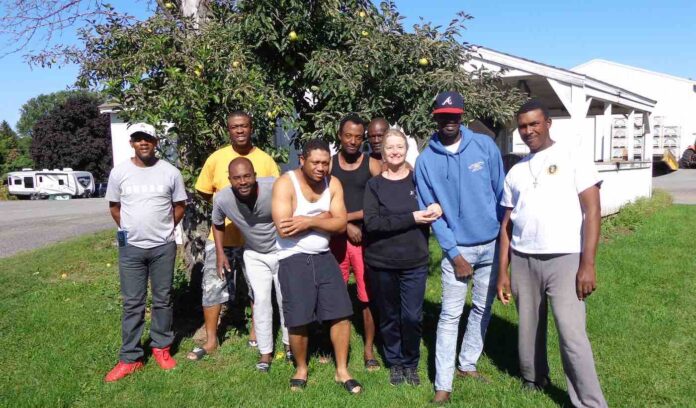
I have a friend who found a wallet and through a series of amazing circumstances found the owner who was part of a migrant group from Jamaica who came to the United States to pick apples. The way she found him and what happened next was truly miraculous.

One day recently, Laurie Fenby, was shopping at a garage sale in Rochester New York and as she was leaving, she found a wallet on the ground.

She looked inside and found a Jamaican driver’s license, some American cash and some Jamaican cash. She tried all the usual ways to locate the man, whose name was George.

She couldn’t find him through Google or Facebook and then she asked for suggestions through Nextdoor, a community website. Laurie received a lot of ideas and responses— some of them not so positive.

But one lady suggested that she contact a little store that is known to have many Jamaican migrant workers as clients. Laurie called the store and found that yes, indeed, there was someone named George who lost his wallet.

RELATED: When Pastor’s Bike Was Stolen, His Response Was to Start a Free Bicycle Repair Service for People in Need

She suggested that the owner contact George and have him call her. When George contacted her he was able to identify all the contents of the wallet and Laurie was able to return it.

But it didn’t stop there.

Laurie asked George, “What do you and the migrant workers need?” He said they could use some warm clothes.

Laurie immediately contacted the next-door community and was able to organize a clothing drive.

POPULAR: Hero Hispanic Teen is Rewarded for Returning $135,000 He Found Next to ATM

She received lots of T-shirts, sweatshirts, shoes and other supplies.

Recently Laurie was able to meet George and the other migrant workers here in Rochester, and she joined them to pick apples together.

They’re so thankful to Laurie and her friends—and none of this community-building or friendship would have happened if the wallet had stayed in George’s pocket.

SHARE The Kindness on Social Media to Show There Are Good People Everywhere…

This Week’s Inspiring Horoscopes From Rob Brezsny’s ‘Free Will Astrology’

Our partner Rob Brezsny provides his weekly wisdom to enlighten our thinking and motivate our mood. Rob’s Free Will Astrology, is a syndicated weekly column appearing in over a hundred publications. He is also the author of Pronoia Is the Antidote for Paranoia: How All of Creation Is Conspiring To Shower You with Blessings. (A free preview of the book is available here.)

Here is your weekly horoscope…

FREE WILL ASTROLOGY – Week beginning October 1, 2021
Copyright by Rob Brezsny, FreeWillAstrology.com

LIBRA (Sept. 23-Oct. 22):
Being “nude,” said art critic Kenneth Clark, has “no uncomfortable overtone,” but indicates “a balanced, prosperous, and confident body.” I bring this to your attention because I believe you would benefit from experiencing extra nudity and no nakedness in the days ahead. If you choose to take on this assignment, please use it to upgrade your respect and reverence for your beauty. PS: Now is also a favorable time to express your core truths without inhibition or apology. I urge you to be your pure self in all of your glory.

SCORPIO (Oct. 23-Nov. 21):
Scorpio poet Anne Sexton wrote, “One has to get their own animal out of their own cage and not look for either an animal keeper or an unlocker.” That’s always expert advice, but it will be extra vital for you to heed in the coming weeks. The gorgeous semi-wild creature within you needs more room to run, more sights to see, more adventures to seek. For that to happen, it needs to spend more time outside of its cage. And you’re the best person to make sure that happens.

SAGITTARIUS (Nov. 22-Dec. 21):
Sagittarian composer Ludwig van Beethoven (1770–1827) could be a marvelous friend. If someone he cared for was depressed or feeling lost, he would invite them to sit in his presence as he improvised music on the piano. There were no words, no advice—only emotionally stirring melodies. “He said everything to me,” one friend said about his gift. “And finally gave me consolation.” I invite you to draw inspiration from his example, Sagittarius. You’re at the peak of your powers to provide solace, comfort, and healing to allies who need such nurturing. Do it in whatever way is also a blessing for you.

CAPRICORN (Dec. 22-Jan. 19):
At age 23, Capricorn-born Jeanne Antoinette Poisson (1721–1764) became French King Louis XV’s favorite mistress. She was not born into aristocracy, but she wielded her Capricornian flair with supreme effectiveness. Ultimately, she achieved a noble title as well as high prestige and status in the French court. As is true for evolved Capricorns, her elevated role was well-deserved, not the result of vulgar social-climbing. She was a patron of architecture, porcelain artwork, and France’s top intellectuals. She ingratiated herself to the King’s wife, the Queen, and served as an honored assistant. I propose we make her your role model for the next four weeks. May she inspire you to seek a boost in your importance and clout that’s accomplished with full integrity.

AQUARIUS (Jan. 20-Feb. 18):
The bad news is that artist Debbie Wagner was diagnosed with two brain tumors in 2002. The good news is that surgery not only enabled her to survive, but enhanced her visual acuity. The great news is that on most days since 2005, she has painted a new image of the sunrise. I invite you to dream up a ritual to celebrate your own victory over adversity, Aquarius. Is there a generous gesture or creative act you could do on a semi-regular basis to thank life for providing you with the help and power you needed?

PISCES (Feb. 19-March 20):
A self-described “witch” named Lars wrote, “I am a ghost from the 1750s, and my life is currently in the hands of a group of suburban 13-year-olds using a ouija board to ask me if Josh from homeroom has a crush on them.” He’s implying that a powerful supernatural character like himself is being summoned to do tasks that are not worthy of him. He wishes his divinatory talents were better used. Are there any resemblances between you and him, Pisces? Do you ever feel as if you’re not living up to your promise? That your gifts are not being fully employed? If so, I’m pleased to predict that you could fix this problem in the coming weeks and months. You will have extra energy and savvy to activate your full potential.

ARIES (March 21-April 19):
Blogger AnaSophia was asked, “What do you find attractive in a person?” I’ll reproduce her reply because it’s a good time to think about what your answer would be. I’m not implying you should be looking for a new lover. I’m interested in inspiring you to ruminate about what alliances you should cultivate during the coming months. Here’s what AnaSophia finds attractive: “strong desire but not neediness, passionate sensitivity, effortlessness, authenticity, innocence of perception, sense of humor, vulnerability and honesty, embodying one’s subtleties and embracing one’s paradoxes, acting unconditionally and from the heart.”

TAURUS (April 20-May 20):
Taurus author Roberto Bolaño confessed, “Sometimes I want greatness, sometimes just its shadow.” I appreciate his honesty. I think what he says is true about most of us. Is there anyone who is always ready for the heavy responsibility of pursuing greatness? Doubtful. To be great, we must periodically go through phases when we recharge our energy and take a break from being nobly ambitious. What about you, dear Taurus? If I’m reading the omens correctly, you will benefit from a phase of reinvention and reinvigoration. During the next three weeks, you’ll be wise to hang out in the shadows of greatness.

GEMINI (May 21-June 20):
“Have fun, even if it’s not the same kind of fun everyone else is having,” wrote religious writer C. S. Lewis. That advice is ten times more important right now than it usually is. For the sake of your body’s and soul’s health, you need to indulge in sprees of playful amusement and blithe delight and tension-relieving merriment. And all that good stuff will work its most potent magic if it stimulates pleasures that are unique to you—and not necessarily in line with others’ tastes.

CANCER (June 21-July 22):
“It is one thing to learn about the past,” wrote Cancerian journalist Kenneth Auchincloss. “It is another to wallow in it.” That’s stellar advice for you to incorporate in the coming weeks. After studying your astrological omens, I’m enthusiastic about you exploring the old days and old ways. I’m hoping that you will discover new clues you’ve overlooked before and that this further information will inspire you to re-envision your life story. But as you conduct your explorations, it’s also crucial to avoid getting bogged down in sludgy emotions like regret or resentment. Be inspired by your history, not demoralized by it.

LEO (July 23-Aug. 22):
Would you like to deepen and strengthen your capacity to concentrate? Cosmic rhythms will conspire in your favor if you work on this valuable skill in the coming weeks. You’ll be able to make more progress than would normally be possible. Here’s pertinent advice from author Harriet Griffey: “Whenever you feel like quitting, just do five more—five more minutes, five more exercises, five more pages—which will extend your focus.” Here’s another tip: Whenever you feel your concentration flagging, remember what it is you love about the task you’re doing. Ruminate about its benefits for you and others.

VIRGO (Aug. 23-Sept. 22):
What’s your favorite feeling? Here’s Virgo poet Mary Szybist’s answer to that question: hunger. She’s not speaking about the longing for food, but rather the longing for everything precious, interesting, and meaningful. She adores the mood of “not yet,” the experience of moving toward the desired thing. What would be your response to the question, Virgo? I’m guessing you may at times share Szybist’s perspective. But given the current astrological omens, your favorite feeling right now may be utter satisfaction—the gratifying sensation of getting what you’ve hungered for. I say, trust that intuition.

WANT MORE? Listen to Rob’s EXPANDED AUDIO HOROSCOPES, 4-5 minute meditations on the current state of your destiny — or subscribe to his unique daily text message service at: RealAstrology.com

(Zodiac images by Numerologysign.com, CC license)

SHARE The Wisdom With Friends Who Are Stars in Your Life on Social Media…

4 in 10 Older Americans Say They’ve Had the Best Sex of Their Lives as They’ve Aged

Fotolia

There may be a good reason grandma and grandpa haven’t returned your phone call.

Fotolia

A new survey of 2,000 Americans aged 50 and older found that 45% reported having the best sex of their lives as they’ve aged.

In fact, the results showed that one in eight respondents have sex at least five times a week.

Conducted by OnePoll on behalf of LELO, the survey found that 35% are surprisingly more intimate than ever before and the same amount said their sex drive is higher than when they were younger.

More than a third of people over 50 would like to be more intimate but don’t have the time (38%) — likely because 42% claimed they were ‘always working’, 39% were living with others or often have family coming over.

Nearly half of those whose kids are out of the nest said their sex life had improved drastically.

Although some Americans 50 and older don’t have as much time to be intimate as they’d like, more than half said they take advantage of their free time by being intimate with their partner (56%).

While the most popular places in the home that respondents have had sex are the bedroom (69%) and living room (48%), one in four older people admitted to getting a little adventurous in the laundry room or on the staircase.

RELATED: Drinking This Juice Could Help Promote Healthy Aging, Scientists Find

“Even though we don’t see many older adults being sexually romantic in the media, it doesn’t mean they don’t enjoy it too,” said Luka Matutinovic, LELO’s chief marketing officer.

But, one in eight said they would feel uncomfortable talking to their partner about changes in their sex drive.

“The myth around it is related to people’s discomfort with aging,” said Matutinovic. “But, intimacy comes in different forms as we age and it can be just as satisfying.”

Forty-two percent of those who have a low sex drive fear that it might destroy their relationship.

MOST: Hearing Loss For Adults Shows Promising Decline

But intimacy doesn’t always have to be about sex

Americans 50 and over enjoy bonding with their partners non-sexually by watching movies (53%), having intimate dinners (46%) or going on walks (44%).

One respondent said “a night out enjoying each other’s company” helps to spark their intimacy, while others say it’s important to remind one another that they love each other.

“The changes that come with aging make women and men communicate more, get more creative, have more time to explore, which leads to getting the right type of satisfaction,” adds Matutinovic.

CHECK OUT: Even Moderate Socializing With Friends Could Ward Off Dementia in Older People, Study Finds

SHARE This Sexy-Good News With the Over-50 Crowd on Social Media…

“Joy and sweetness and affection are a spiritual path… You just have to get rid of so much baggage to be light enough to dance, to sing, to play.” – Anne Lamott

Quote of the Day: “Joy and sweetness and affection are a spiritual path… You just have to get rid of so much baggage to be light enough to dance, to sing, to play.” – Anne Lamott

Photo: by Senjuti Kundu

With a new inspirational quote every day, atop the perfect photo—collected and archived on our Quotes page—why not bookmark GNN.org for a daily uplift?

Want to Know Where The Best Fall Colors Are in Your Area? Check Out This Interactive U.S. Map

Lady Dragonfly, CC license

Across the northern hemisphere, leaves are currently turning from deep summer green to the most brilliant shades of red and orange, yellow and gold.

Lady Dragonfly, CC license

It’s quite the show, and for leaf peepers in the Lower 48 states, it’s possible to take a look at a virtual, interactive map to see just where the tree leaves are at their brilliant best.

At SmokyMountains.com, publicly accessible data such as National Oceanic and Atmospheric Administration precipitation forecasts, temperature forecasts, and average daylight exposure gets collated and synthesized in order to create a map that changes color according to where the most colorful scenes might be seen across the States.

Just move the date lever to predict the foliage for a future date.

Co-founder of the map, David Angotti, noted that its predictions aren’t quite perfect. It might show amazing fall colors happened in the middle of Arizona, but if there are no deciduous trees in that area—of course there won’t be much of a show.

“I wish I could make fall happen in South Florida or in the desert,” Angotti told the Washington Post, “but at the end of the day, the math is basically showing when the temperature and precipitation trends would cause peak fall to occur in each of these areas.”

RELATED: Stunning Aerial Video of Iceland’s Green Volcano Can Soothe Your Lockdown Stress

So just why do leaves change their color? According to SmokyMountains.com, “As the fall days begin to get shorter and shorter, the production of chlorophyll slows to a halt, eventually giving way to the ‘true’ color of the leaf.”

SmokyMountains.com

When it gets cold, the trees then “slowly close off the veins that carry water and nutrients to and from the leaves with a layer of new cells that form at the base of the leaf stem, protecting the limbs and body of the tree.

MORE: Americans Say COVID-19 Has Given Them a Newfound Appreciation of Nature

“Once the process of new cell creation is complete, water and nutrients no longer flow to and from the leaf—this enables the leaf to die and weaken at the stem, eventually falling gracefully to the ground.”

We hope it’s beautiful where you are right now.

PASS This Story On To The Leaf Peepers In Your Life Via Social Media…

Weight Lifting Can Burn Fat Just Like Cardio: New Research About Strength Training vs Aerobics

public domain image via Flickr

It’s basic exercise knowledge that to gain muscles, you strength train, and to lose fat, you do cardio—right? Not necessarily, a new UNSW study suggests.

In fact, the study—a systematic review and meta-analysis that reviewed and analysed existing evidence—shows we can lose around 1.4 percent of our entire body fat through strength training alone, which is similar to how much we might lose through cardio or aerobics.

“A lot of people think that if you want to lose weight, you need to go out and run,” says senior author of the study Dr Mandy Hagstrom, exercise physiologist and senior lecturer at UNSW Medicine & Health.

“But our findings show that even when strength training is done on its own, it still causes a favorable loss of body fat without having to consciously diet or go running.”

Up until now, the link between strength training and fat loss has been unclear. Studies have investigated this link in the past, but their sample sizes tend to be small—a side effect of not many people wanting to volunteer to exercise for months on end. Smaller sample sizes can make it difficult to find statistically significant results, especially as many bodies can respond differently to exercise programs.

“It can be really difficult to discern whether there’s an effect or not based on one study alone,” says Dr Hagstrom. “But when we add all of these studies together, we effectively create one large study, and can get a much clearer idea of what’s going on.”

Dr Hagstrom and her team pulled together the findings from 58 research papers that used highly accurate forms of body fat measurement (like body scans, which can differentiate fat mass from lean mass) to measure the outcomes from strength training programs. Altogether, the studies included 3000 participants, none of which had any previous weight training experience.

While the strength training programs differed between the studies, the participants worked out for roughly 45-60 minutes each session for an average of 2.7 times per week. The programs lasted for about five months.

The team found that, on average, the participants lost 1.4 per cent of their total body fat after their training programs, which equated to roughly half a kilo in fat mass for most participants.

While the findings are encouraging for fans of pumping iron, Dr Hagstrom says the best approach for people who are aiming to lose fat is still to stick to eating nutritiously and having an exercise routine that includes both aerobic/cardio and strength training.

READ: Metabolism Does Not Slow Down in Mid-Life as is Commonly Believed, Says Study

But if aerobics and cardio just aren’t your thing, the good news is you don’t need to force it.

“If you want to exercise to change your body composition, you’ve got options,” says Dr Hagstrom.

“Do what exercise you want to do and what you’re most likely to stick to.”

Busting the fat loss myth

Part of the reason many people think strength training doesn’t live up to cardio in terms of fat loss comes down to inaccurate ways of measuring fat.

For example, many people focus on the number they see on the scale—that is, their total body weight. But this figure doesn’t differentiate fat mass from everything else that makes up the body, like water, bones, and muscles.

“More often than not, we don’t gain any muscle mass when we do aerobic training,” says Dr Hagstrom. “We improve our cardiorespiratory fitness, gain other health and functional benefits, and can lose body fat.

LOOK: Is Your Goal to Walk 10,000 Steps? Science Shows We Need A Lot Fewer

“But when we strength train, we gain muscle mass and lose body fat, so the number on the scales won’t look as low as it would after aerobics training, especially as muscle weighs more than fat.”

The research team focused on measuring how much the total body fat percentage—that is, the amount of your body that’s made up of fat mass—changed after strength training programs. This measurement showed fat loss appears to be on par with aerobics and cardio training, despite the different figures on the scales.

“A lot of fitness recommendations come from studies that use inaccurate measurement tools, like bioelectrical impedance or scales,” says Dr Hagstrom.

“But the most accurate and reliable way of assessing body fat is through DEXA, MRI or CT scans. They can compartmentalize the body and separate fat mass from lean tissue.”

RELATED: A World Food Prize Winner Wants You To Reconsider Anchovies – Here’s How Nutritious They Are

While this study didn’t show whether variables like exercise duration, frequency, intensity, or set volume impacted fat loss percentage, the team hope to next investigate whether how we strength train can change the amount of fat loss.

A better way of measuring progress

As part of their study, published in Sports Medicine, the team conducted a sub-analysis comparing how different ways of measuring fat can influence a study’s findings.

Interestingly, it showed that when papers used more accurate measurements like body scans, they tended to show lower overall changes in body fat.

“Using accurate fat measurements is important because it gives us a more realistic idea of what body changes to expect,” says lead author of the study Mr Michael Wewege, PhD candidate at UNSW and NeuRA.

“Future exercise studies can improve their research by using these more accurate body measurements.”

MORE: Scientists Design Junk Food Game to Help People Eat Less, Lose Weight – Study Shows it Works

Reframing the way we measure progress doesn’t just apply to sports researchers, but to everyday people, too.

“Resistance training does so many fantastic things to the body that other forms of exercise don’t, like improving bone mineral density, lean mass, and muscle quality. Now, we know it also gives you a benefit we previously thought only came from aerobics,” says Dr Hagstrom.

“If you’re strength training and want to change how your body looks, then you don’t want to focus on the number on the scale too much, because it won’t show you all your results.

“Instead, think about your whole body composition, like how your clothes fit and how your body will start to feel, and move, differently.”

Source: University of New South Wales

ADD Strength to Your Mates’ Wellness Knowledge; Share This Story…

Batteries of the Future Set to be Cheaper and Better – Thanks to Sugar

Simply by adding sugar, researchers from the Monash Energy Institute have created a longer-lasting, lighter, more sustainable rival to the lithium-ion batteries that are essential for aviation, electric vehicles, and submarines.

The Monash team, assisted by CSIRO, report that using a glucose-based additive on the positive electrode they have managed to stabilize lithium-sulfur battery technology, long touted as the basis for the next generation of batteries.

“In less than a decade, this technology could lead to vehicles including electric buses and trucks that can travel from Melbourne to Sydney without recharging. It could also enable innovation in delivery and agricultural drones where light weight is paramount,” says lead author Professor Mainak Majumder, from the Department of Mechanical and Aerospace Engineering and Associate Director of the Monash Energy Institute.

In theory, lithium-sulfur batteries could store two to five times more energy than lithium-ion batteries of the same weight. The problem has been that, in use the electrodes deteriorated rapidly, and the batteries broke down.

There were two reasons for this—the positive sulfur electrode suffered from substantial expansion and contraction weakening it and making it inaccessible to lithium, and the negative lithium electrode became contaminated by sulfur compounds.

Last year the Monash team demonstrated they could open the structure of the sulfur electrode to accommodate expansion and make it more accessible to lithium.

Now, by incorporating sugar into the web-like architecture of the electrode they have stabilized the sulfur, preventing it from moving and blanketing the lithium electrode.

Test-cell prototypes constructed by the team have been shown to have a charge-discharge life of at least 1000 cycles, while still holding far more capacity than equivalent lithium-ion batteries.

“So each charge lasts longer, extending the battery’s life,” says first author and PhD student Yingyi Huang. “And manufacturing the batteries doesn’t require exotic, toxic, and expensive materials.”

MORE: To Replace Lithium Batteries For Grid Storage ‘Gravitricity’ Uses Gravity

Yingyi and her colleagues were inspired by a 1988 geochemistry report that describes how sugar-based substances resist degradations in geological sediments by forming strong bonds with sulfides.

RELATED: Biodegradable Algae Solar Panels Clean The Air While Growing Green Energy

Dr Mahdokht Shaibani, second author of the paper, published in Nature Communications, and Monash researcher, says, “While many of the challenges on the cathode side of the battery has been solved by our team, there is still need for further innovation into the protection of the lithium metal anode to enable large-scale uptake of this promising technology—innovations that may be right around the corner.”

Source: Monash University

POWER Up Friends’ Feeds With This Energizing Story…

Inventor of Hand-Cranked Washing Machine is Distributing the Low-Cost Device to Refugees

SWNS
SWNS

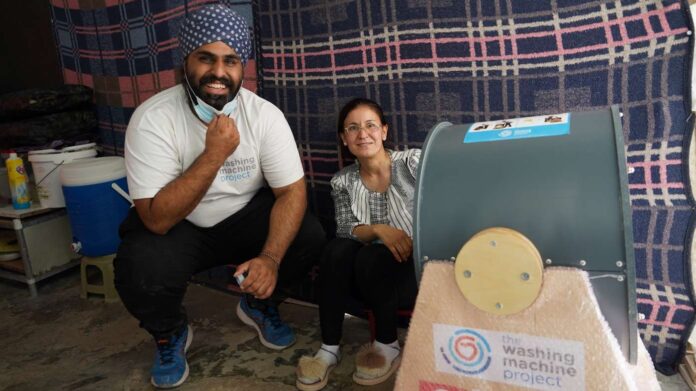
The inventor of a hand-cranked washing machine has traveled to Iraq to distribute the low-cost device to refugees.

Navjot Sawhney created the ‘Divya’ to allow those living in poverty to be able to wash their clothes more easily.

It is thought around 70 percent of the world’s population does not have access to electric washing machines.

The machines are created in the UK and sent to those without access to electricity and water, who would otherwise need to wash clothes by hand.

Former Bath University student Navjot told the BBC the two-week trip to northern Iraq to hand out the machines has been a “completely humbling experience.”

“To give them the dignity of clean clothes is very fulfilling,” he said.

“Some of these families still have members missing, some of these women have suffered major trauma and abuse. It’s just really heartbreaking stuff.

RELATED: French Beekeeper Invents a Trap to Take on Asian Hornets Decimating Bee Populations in Europe

“Handwashing clothes is restrictive and painful. The Divya means women, who are usually the primary washers, have more time to rest.”

Navjot was inspired to create the machine after witnessing the struggles of his neighbour while volunteering in India, after quitting his engineering job in Wiltshire.

“When you read the news, places like this can seem really daunting but the people here are like everyone else in the world,” he said.

“They just want their lives to go back to normal.

“This is my third trip to Iraq and each time I come it is unique and I learn so much. Every time I’m reminded of the dignity and pride people have in clean clothes.”

MORE: Malawi Inventor Lights Up His Whole Village Basically for Free–Starting With a Bicycle and a River

The engineer set up the Washing Machine Project in 2018 and it now has orders from 15 countries around the world. He is working towards rolling the device out in Uganda, India, Lebanon, and Jordan.

“We’re really proud to be here to do our part.”

CRANK Out a Little Good News by Sharing This Inspiring Story…

“We must adjust to changing times and still hold to unchanging principles.” – Jimmy Carter (turns 97 today)

Quote of the Day: “We must adjust to changing times and still hold to unchanging principles.” – Jimmy Carter (turns 97 today)

Photo: by Joshua Rawson-Harris

With a new inspirational quote every day, atop the perfect photo—collected and archived on our Quotes page—why not bookmark GNN.org for a daily uplift?