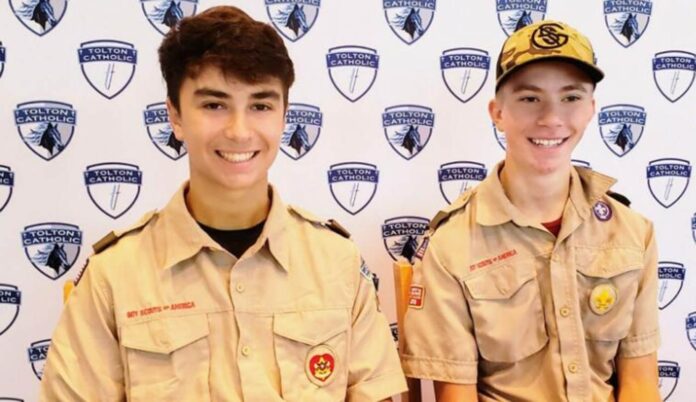
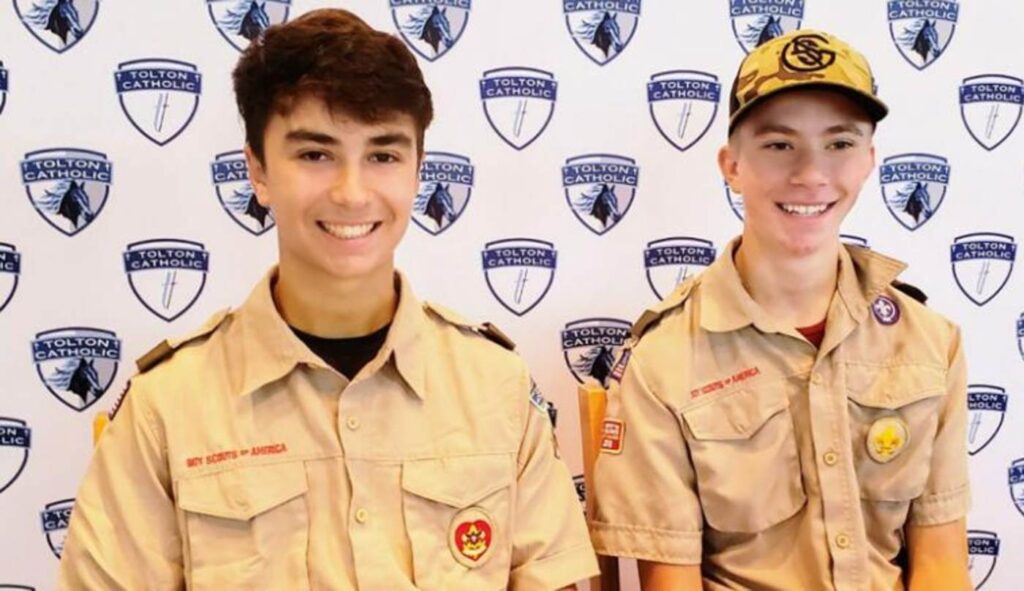
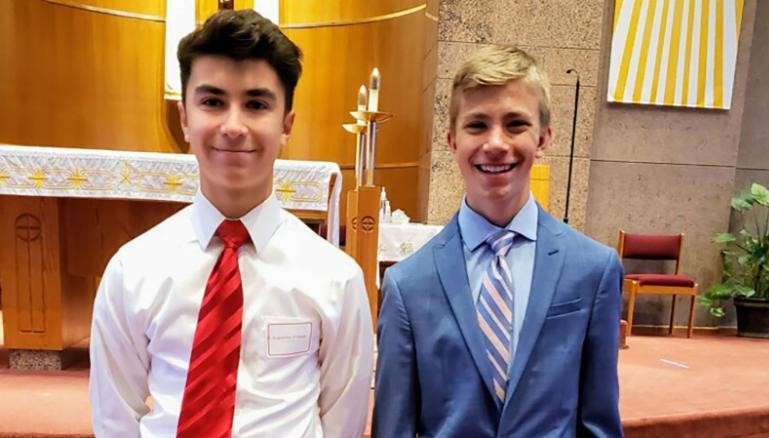
Saving drowning women is all in a day’s work for a couple of Missouri boy scouts who had already collected their swimming and lifesaving merit badges.
Monica Viet
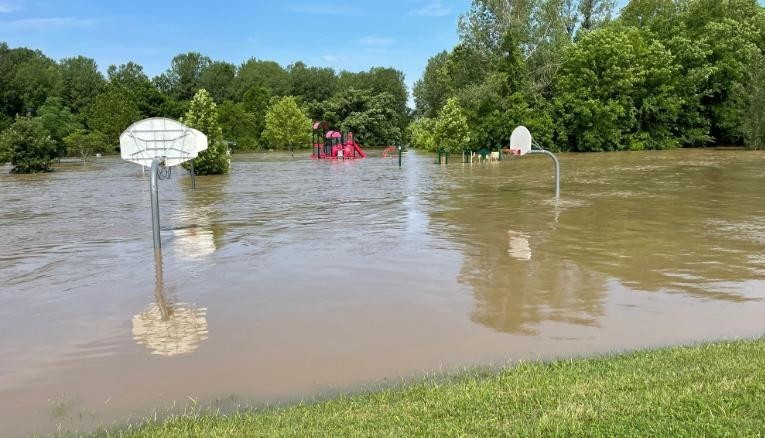
The county recreation center swimming pool where one gets such badges presents very different conditions to those created when a June storm dumped six inches of rain over Columbia in Missouri with little warning—causing floodwaters from creeks to burst their banks, causing overflow zones to turn into ponds.
When 15-year-old Dominic Viet and 16-year-old Joseph Diener passed a basketball court that had turned essentially into a water polo area, they heard the frantic shouting of a young woman desperately trying to keep her head above water under the force of a current.
The boys had seen the girl swimming with a friend there before, but it was now obvious she was drowning.
“The first thing that came into my mind was to get into the water,” Dominic told CNN. “We didn’t have time to think, her head was barely above the water and we could see her sinking more down every second. We didn’t think about the risks, we had to get her out.”
Heroes will do as heroes do, and hoisting her up onto their shoulders, Dom and Joseph got her ashore, where emergency services arriving at someone else’s call performed first aid and rushed her to the hospital.
Jerry Jenkins
Floodwaters are no conditions to be swimming in. There can be sewage runoff, loose chemicals, downed power lines charging the current with electricity, or physical debris such as manhole covers that have been lifted out of their sockets by the force of the water.
Assistant Fire Chief Jerry Jenkins described the boys’ act as heroic and brave, as did Dominic’s mom, who had been calling her son for some time before and was growing nervous.
She sent her husband, Dom’s father, to check on his position, but when he arrived he saw ambulances and firetrucks from the call that was meant to rescue the young woman.
“I thought of the worst, he’s on a bike and people weren’t paying attention and my fear was he was going to pull up and see our son on the ground,” said Mrs. Viet. “But then he saw them on their bikes heading back to their friend’s house, and I got a text from Dominic saying ‘Coming home soon, just saved a woman’s life Mom.'”
Reprinted with permission from World At Large, a news website of nature, politics, science, health, and travel.
COVID-19 chased millions of traditionally office and computer-based workers into remote working situations—a place where many, especially young people, were trying to get to all along.
The revelation of how many office functions can be done at home is opening up the option for many to travel the world in between workdays, a lifestyle known as digital nomadism.
Digital nomads are growing in number as technology advances both in terms of the software they use to work, and in terms of the countries they visit. The digital nomad brand and business is coveted, and recently the Portuguese government turned an entire community on the beautiful island of Madeira into a “digital nomad village.”
Recently, an Italian firm conducted a broad-scale analysis of 75 major cities around the world, and ranked them for a variety of factors pertaining to digital nomading—such as average Wi-Fi speed, average rent cost, security, burden of government, weather and air quality, and more.
Called the “Work From Anywhere Index,” it was put together by an international renters agency based in Italy, and for digital nomads it provides a good overview of known possibilities as well as opening up new ones.
Oyster world
“The last year has truly demonstrated to many firms that remote working is not only a possibility, but in reality something which can be advantageous for everyone involved,” stated Omer Kucukdere, CEO and founder of Nest Pick.
Scored from 1 to 100, 16 categories are added together to create the index. The #1 destination for remote workers across all the categories was Melbourne, Australia—a city which along with being clear, fun, free, and relatively less expensive than other global metropolises—has a special entry visa for digital nomads.
Other cities that have digital nomad or remote working visas include Dubai, Medellin in Colombia, Chiang Mai in Thailand, Tallinn in Estonia, and Athens in Greece.
The Icelandic capital of Reykjavik had the highest score for internet speed and almost the highest across the board for religious or sexual freedom, but was overall ranked 23 due largely to taxes being so high there.
In contrast Dubai has 0 taxes on foreigners, and was ranked #2 overall. For cost of renting an apartment, St. Petersburg is second lowest, while also scoring second lowest for tax burden. The interesting conclusions could continue.
When someone realizes the world is their oyster, and they don’t need a desk, office, or a suit to go to work, it can be a little overwhelming. If you could go anywhere, deciding where you’d go could be really difficult.
The Work From Anywhere Index can make all that indecision a little bit easier.
SHARE These Sweet Spots With Friends on Social Media…
Quote of the Day: “To all I care about, here’s a friendly tip: enlightenment is gaffe upon error upon blooper.” – Ikkyu Sojun, poet
Photo: by Michael Dziedzic
With a new inspirational quote every day, atop the perfect photo—collected and archived on our Quote of the Day page—why not bookmark GNN.org for a daily uplift?
Let the bells ring out in every direction from Toledo to Tokyo. Flying cars—the vision of transportation from science-fiction writers—may finally be landing in the modern world.
AirCar by Klein Vision
In a test flight, a Slovakian pilot drove what appeared to be an exotic sports car up a runway in the city of Nitra.
It then took flight with the aid of a fixed propeller, and landed 35 minutes later at Bratislava, before folding up the wings and driving straight out onto the highway.
The aptly-named AirCar (prototype 1) was developed by a company called KleinVision, founded by Stefan Klein, who spent 20 years turning his dream into a reality. For an unbelievably small amount of money—about 2 million euro—the Slovak created the world’s first flying car to travel between two airports.
During the maiden flight, AirCar was able to reach a cruising speed of 105 mph (170 kph) at an altitude of 8,200 feet (2,500 meters.) Fuel economy would allow it to maintain this trajectory for 600 miles (1,000 kilometers).
Once the flying portion of its journey is over, a push of the button causes a Transformer-like sequence that in under three minutes leaves the vehicle as a slightly-oversized, perfectly road-legal sports car with a 160 horsepower gas-powered BMW engine, a seat for another passenger, and a convertible roof.
WATCH the video…
In order to be certified to fly under modern regulations, planes or helicopters must be safe to fly for many years, without having an incident.
“I have to admit that (the AirCar) looks really cool—but I’ve got a hundred questions about certification,” Dr. Stephen Wright, a research fellow of avionics at the Univ. of West England, told the BBC. “I can’t wait to see the piece of paper that says this is safe to fly and safe to sell.”
One company did get certified for a flying car this year. Terrafugia, founded in 2006 by five MIT engineering grads, first flew its flying car, the Transition, at a New York airport in Plattsburgh in 2012. Featuring its own parachute and a flight range of around 480 miles, Terrafugia took deposits on pre-orders for 100 vehicles, retailing for around a quarter million dollars each.
Terrafugia Transition
After years of product delays and refunding of customers’ deposits, Terrafugia was bought in 2017 by a Chinese company. But, in January they announced that the Transition had finally received a Special Light-Sport Aircraft (LSA) airworthiness certificate from the U.S. Federal Aviation Administration.
The problem is, that flying car cannot be driven, because it has not proven its road-worthiness through various crash tests. By February 2021, Terrafugia had laid off most of their employees and said it would close down operations in Massachusetts, with the intention of moving to China.
At least they proved it is possible to receive FAA certification in the U.S.
Klein Vision has specified that they are looking to take a share out of the aircraft market with the AirCar, not the auto market—and Morgan Stanley estimates the flying car market over the next 20 years will be worth over a trillion dollars, similar to the buzz that arose around the recent boom in private spaceflight.
AirCar by Klein Vision
Klein Vision is looking to upgrade their prototype engine with more power, allowing it a top cruising speed of 186 miles per hour, while other companies like Hyundai, Toyota, and VW are looking into flying cars of their own.
FLY This Cool Video to Your Friends By Landing it on Social Media…
After a year of lockdowns, six in 10 families want to spend more quality time together outdoors this summer, since enjoying nature became more important than ever during the pandemic.
Steven Sim, CC license
The poll shows that families want to make the most of getting outside but are sometimes lacking inspiration for how to turn the day into a fun adventure.
TV presenter and nature enthusiast, Helen Skelton, says, “I think over the last 18 months we have exhausted our ideas bank.”
67 percent of parents have struggled to come up with ideas to keep their child amused since the pandemic began.
Indeed, the top ten outdoor family activities that parents said they plan to do this summer are fairly standard:
Have a picnic, watch the sun set, go to theme parks, ride bikes, swim in the sea, visit nature reserves, go sightseeing, jump in the waves, pick fruit, and build sandcastles.
So, Skelton teamed up with the sunscreen brand Soltan, which commissioned the poll, to come up with some tips to help parents foster fun adventures this summer—from map making and obstacle courses to cloud-spotting and treasure hunts.
‘Glamping’ (glamorous camping in an RV), according to the survey, was a top activity that families have never done but would consider for the first time this year, but there are many ideas from Helen to keep children entertained for free.
Become a wildlife ranger: When out exploring, take a closer look at the nature around you. Before you head outside, make a list of the creatures you’d like to spot and see if you can find them all during your adventures.
Create a nature obstacle course: Use the landscape around you to create the ultimate obstacle course.
Nature bracelets: Before heading off on a hike, take a piece of masking tape and put it around your wrist, sticky side out. Once you’re out and about, find pieces of nature to stick onto the bracelet: twigs, grass, fallen petals.
Go on a rainbow hunt: Go for a walk with your family and find something from every color of the rainbow to create your very own wildlife museum. It could be a pink petal, some yellow straw or a green leaf.
Learn to find your way with a map: Find a paper map of the area and start off by working out where you are right now on the map. Choose an end point and plan your route there, making sure the map is facing in the right direction.
Cloud spotting: The aim of the game is to see what unusual or unexpected things you can see in the clouds. Do you see a snake, a star or a face?
Make natural art: When out and about, collect fallen leaves, petals and sticks and use them to make a picture when you get home.
Build a twig raft: If you come across a source of water like a river or a lake, build a raft using objects you find around you and see how long it floats for.
Build a wildlife hotel: Collect fallen branches you come across when you’re out exploring to build a wildlife den that small animals can use for protection and shelter.
We hope these ideas will give your creativity a jumpstart for your next family adventure.
While resuming our lives post-pandemic and enjoying happy outdoor activities, some simple pleasures just make you smile—and dancing with friends is one of the best.
We found this video of one Asian youth taking it to the next level. It’s not just the smooth dance moves, but the fact that they do it while moving between double-Dutch jump ropes.
Their pure joy as they sway to the music is just what we needed to see…
JUMP This Video Over to Your Friends on Social Media, and Make Them Swoon…
FREE WILL ASTROLOGY – Week beginning July 2, 2021
Copyright by Rob Brezsny, FreeWillAstrology.com
CANCER (June 21-July 22):
Philosopher Friedrich Nietzsche said that when our rational minds are working at their best, they inspire us to cultivate our most interesting and enlivening passions. They also de-emphasize and suppress any energy-draining passions that might have a hold on us. I’m hoping you will take full advantage of this in the coming weeks, Cancerian. You will generate good fortune and sweet breakthroughs as you highlight desires that uplift you and downgrade desires that diminish you.
LEO (July 23-Aug. 22):
Leo author Wendell Berry suggests, “It may be that when we no longer know what to do, we have come to our real work, and when we no longer know which way to go, we have begun our real journey.” Although there’s wisdom in that formulation, I don’t think it’s true a majority of the time. Far more often we are fed by the strong, clear intuitions that emerge from our secret depths—from the sacred gut feelings that give us accurate guidance about what to do and where to go. But I do suspect that right now may be one of those phases when Berry’s notion is true for you, Leo. What do you think?
VIRGO (Aug. 23-Sept. 22):
Is there anything you have unfairly gained from others? Is there anything others have unfairly gained from you? The next six months will be prime time to seek atonement and correction.
LIBRA (Sept. 23-Oct. 22):
Libran Zen teacher Thich Nhat Hanh advises you and me and everyone else to “seek the spiritual in every ordinary thing that you do every day.” You have to work at it a bit, he says; you must have it as your firm intention. But it’s not really hard to do. “Sweeping the floor, watering the vegetables, and washing the dishes become holy and sacred if mindfulness is there,” he adds. I think you Libras will have a special knack for this fun activity in the coming weeks. (Thich Nhat Hanh wrote a series of “Mindfulness Essentials” books that includes How to Eat, How to Walk, How to Relax, and How to Connect. I invite you to come up with your own such instructions.)
SCORPIO (Oct. 23-Nov. 21):
My unexpected interpretation of the current astrological omens suggests that you will be wise to go naked as much as possible in the coming weeks. Being skyclad, as the pagans say, will be healing for you. You will awaken dormant feelings that will help you see the world with enhanced understanding. The love that you experience for yourself will soften one of your hard edges, and increase your appreciation for all the magic that your life is blessed with. One important caveat: Of course, don’t impose your nakedness on anyone who doesn’t want to witness it.
SAGITTARIUS (Nov. 22-Dec. 21):
If you analyzed the best-selling songs as measured by *Billboard* magazine, you’d think we were in the midst of a dangerous decline in population. The vast majority of those popular tunes feature lyrics with reproductive themes. It’s as if there’s some abject fear that humans aren’t going to make enough babies, and need to be constantly cajoled and incited to engage in love-making. But I don’t think you Sagittarians, whatever your sexual preference, will need any of that nagging in the coming days. Your Eros Quotient should be higher than it has been in a while.
CAPRICORN (Dec. 22-Jan. 19):
Pulitzer Prize-winning author Donna Tartt, born under the sign of Capricorn, writes, “Beauty is rarely soft or consolatory. Quite the contrary. Genuine beauty is always quite alarming.” In my view, that’s an unwarranted generalization. It may sometimes be true, but is often not. Genuine beauty may also be elegant, lyrical, inspiring, healing, and ennobling. Having said that, I will speculate that the beauty you encounter in the near future may indeed be disruptive or jolting, but mostly because it has the potential to remind you of what you’re missing—and motivate you to go after what you’ve been missing.
AQUARIUS (Jan. 20-Feb. 18):
On July 21, 1969, Aquarian astronaut Buzz Aldrin was the second human to walk on the moon. It happened during a spectacular astrological aspect, when transiting Jupiter and Uranus in Libra were trine to Aldrin’s natal Sun in Aquarius. But after this heroic event, following his return to earth, he found it hard to get his bearings again. He took a job as a car salesman, but had no talent for it. In six months, he didn’t sell a single car. Later, however, he found satisfaction as an advocate for space exploration, and he developed technology to make future trips to Mars more efficient. I hope that if you are now involved in any activity that resembles Aldrin’s stint as a car salesman—that is, a task you’re not skilled at and don’t like—you will spend the coming weeks making plans to escape to more engaging pursuits.
PISCES (Feb. 19-March 20):
Astronomers say the Big Bang birthed the universe 13.8 billion years ago. But a star 190 light years away from Earth contradicts that theory. Its age seems to be 14.5 billion years, older than the universe itself. Its scientific name is HD 140283, but it’s informally referred to as Methuselah, named after the Biblical character who lived till age 969. Sometimes, like now, you remind me of that star. You seem to be an impossibly old soul—like you’ve been around so many thousands of lifetimes that, you, too, predate the Big Bang. But guess what: It’s time to take a break from that aspect of your destiny. In the next two weeks, you have cosmic permission to explore the mysteries of playful innocence. Be young and blithe and curious. Treasure your inner child.
ARIES (March 21-April 19):
Columnist Linda Weltner says that there’s a dual purpose to cleaning your home, rearranging the furniture, adding new art to the walls, and doting on your potted plants. Taking good care of your environment is a primary way of taking good care of yourself. She writes, “The home upon which we have lavished so much attention is the embodiment of our own self love.” I invite you to make that your inspirational meditation for the next two weeks.
TAURUS (April 20-May 20):
“For peace of mind, I will lie about any thing at any time,” said author Amy Hempel. Hmmmm. I’m the opposite. To cultivate peace of mind, I try to speak and live the truth as much as I can. Lying makes me nervous. It also seems to make me dumber. It forces me to keep close track of my fibs so I can be sure to stick to my same deceitful story when the subject comes up later. What about you, Taurus? For your peace of mind, do you prefer to rely on dishonesty or honesty? I’m hoping that for the next four weeks, you will favor the latter. Cultivating judicious candor will heal you and boost your intelligence.
GEMINI (May 21-June 20):
In her essay about education, “Don’t Overthink It,” philosopher Agnes Callard reminds us, “No matter how much we increase our investment at the front end—perfecting our minds with thinking classes, long ruminations, novel-reading, and moral algebra—we cannot spare ourselves the agony of learning by doing.” That will be a key theme for you in the next four weeks, dear Gemini. You will need to make abundant use of empiricism: pursuing knowledge through direct experience, using your powers of observation and a willingness to experiment.
WANT MORE? Listen to Rob’s EXPANDED AUDIO HOROSCOPES, 4-5 minute meditations on the current state of your destiny — or subscribe to his unique daily text message service at: RealAstrology.com
Quote of the Day: “You will never know how much it has cost my generation to preserve your freedom. I hope you will make a good use of it.” – John Adams (Happy Fourth of July!)
Photo: by Debby Hudson
With a new inspirational quote every day, atop the perfect photo—collected and archived on our Quote of the Day page—why not bookmark GNN.org for a daily uplift?
Words With Friends is collaborating with the Scripps National Spelling Bee, after the pandemic year that cancelled the Bee, to have fun around the highly anticipated 2021 finals on July 8.
In the eight days leading up to the contest, the Words With Friends ‘Word of the Day’ will be the winning word from each of the eight champions from the 2019 finals, which ended with an unprecedented eight-way tie.
This year, in addition to a new rule that launches a spell-off in case of a tie, Words With Friends will prepare us for the thrills and intensity of the Bee’s return by featuring an 8-day ‘Word of the Day’ takeover.
Underscoring the depth of language learned by these young spellers, four words had to be added to the Words With Friends dictionary for this initiative. As players click the ‘Word of the Day’ cell during this initiative, they can also access the word’s definition and a photo of the 2019 champion moment when each contestant turned into an historic champion.
The first word featured on July 1 was ‘auslaut’ (def: the final sound in any word), spelled correctly in 2019 by San Jose, California boy, Rishik Gandharsi.
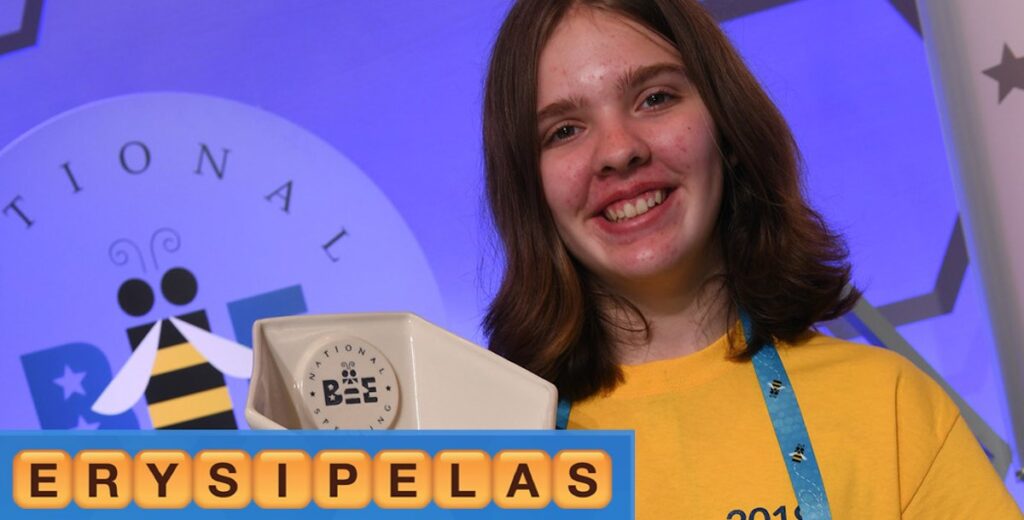
Yesterday, the featured word was ‘erysipelas’ (def: an acute bacterial disease)—the winning word of Erin Howard, of Huntsville, Alabama—pictured below.
Words With Friends
The word for July 4th, will be ‘aiguillette’ (def: a shoulder cord worn by military aides), which was the winning word for Shruthika Padhy, of Cherry Hill, New Jersey.
Closing out the program, and landing on the day of the 2021 National Spelling Bee Finals, will the word ‘odylic’ (def: related to the hypothetical force oddly or Od), spelled by Rohan Rajas of Dallas, Texas to round out the 8-way tie.
“The Scripps National Spelling Bee contestants spend years preparing for this linguistic contest of intellect and calm under pressure,” said Bernard Kim, of game company Zynga, which created Words With Friends.
“Our Words With Friends players are also lovers of words and friendly competition, and I could not think of a better beacon of inspiration than these Spellers to encourage us to continue to learn, strive and achieve.”
“Games and play are powerful tools for learning, and we’re excited to work with Zynga to bring additional joy and attention to this year’s event through their Words With Friends community,” said Dr. J. Michael Durnil, executive director of the Bee.
The event will be televised on ESPN on July 8, with the winner taking home the Scripps Cup trophy.
SHARE the Tips With Your Friends on Social Media Who Play Words With Friends…
Walmart is seeking to bring “everyday low prices” to medical care.
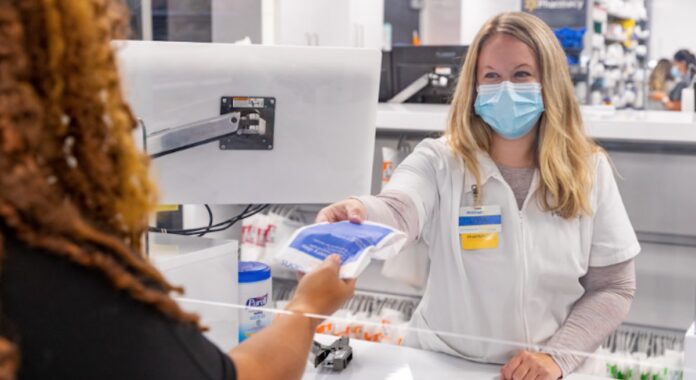
They announced the launch of a version of insulin that will be less expensive to people who do not have health insurance or struggle to afford the cost of life-saving drugs.
“These products will save customers between 58% to 75% off the cash price of branded analog insulin products, which translates to a savings of up to $101 per branded vial or $251 per package of branded FlexPens,” said the company in a new release this week.
Starting this week, Walmart will be selling its own private-label version of analog insulin (a newer, more reliable form of the drug) to anyone who has a prescription. Called ReliOn NovoLog, it will also be available at Sam’s Club in mid-July.
The insulin will cost about $73 for a vial or about $86 for a package of pre-filled insulin pens.
“We know many people with diabetes struggle to manage the financial burden of this condition, and we are focused on helping by providing affordable solutions,” said Dr. Cheryl Pegus, executive vice president, Walmart Health & Wellness. “We also know this is a condition that disproportionately impacts underserved populations.”
“With ReliOn NovoLog insulin, we’re adding a high-quality medication for diabetes to the already affordable ReliOn line of products and continuing our commitment to improve access and lowering cost of care.”
ReliOn products include private label, lower priced versions of blood glucose monitors, lancets, and other diabetes management essentials.
According to CNBC, US lawmakers have scrutinized diabetes drug companies in the past, like Eli Lilly and the French company Sanofi, for increasing prices over the last two decades, leading Sanofi to roll-out a limited price reduction program.
Walmart worked directly with manufacturer Novo Nordisk to reduce costs.
“This price point, we hope, will improve and hopefully revolutionize the accessibility and affordability of insulin,” said Dr. Cheryl Pegus, Walmart’s executive vice president of health and wellness.
SAVE Your Friends Some Money By Sharing This on Social Media…
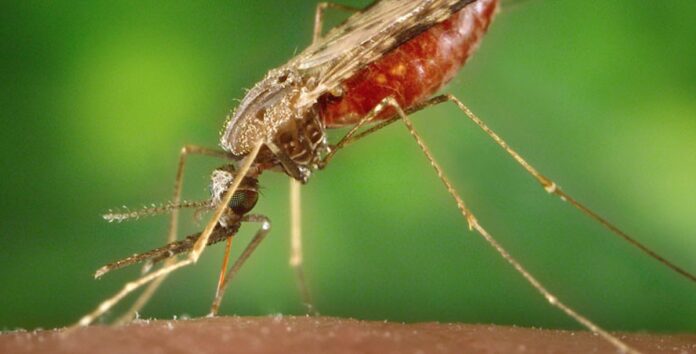
Following a 70-year effort, China has been awarded a malaria-free certification from WHO—a notable feat for a country that reported 30 million cases of the disease annually in the 1940s.
According to the global health organization, every 2 minutes, a child dies of malaria, but now China has joined the growing number of countries that are proving that a malaria-free future is a viable goal.
“China’s tireless effort to achieve this important milestone demonstrates how strong political commitment and strengthening national health systems can result in eliminating a disease that once was a major public health problem,” said Dr Takeshi Kasai, Regional Director, WHO Western Pacific Regional Office.
Globally, 40 countries and territories have been granted a malaria-free certification from WHO, including Australia, Singapore, El Salvador, Algeria, Argentina, Paraguay, and Uzbekistan.
Beginning in the 1950s, health authorities in China worked to locate and stop the spread of malaria by providing preventive medicines, reducing mosquito breeding grounds, and stepping up the use of insecticide spraying in homes in at-risk areas.
In 1967, the Chinese Government launched the “523 Project”—a nationwide research program aimed at finding new malaria treatments that involved more than 500 scientists from 60 institutions. It led to the discovery in the 1970s of artemisinin—the core compound of artemisinin-based combination therapies (ACTs), the most effective antimalarial drugs available today.
In the 1980s, China was one of the first countries in the world to extensively test the use of insecticide-treated nets. By 1988, more than 2.4 million nets had been distributed nationwide, which led to such a drastic reduction in the disease that by the end of 1990, the number of deaths was reduced by 95%.
In 2020, after reporting 4 consecutive years of zero indigenous cases, China applied for an official WHO certification of malaria elimination. Members of the independent Malaria Elimination Certification Panel travelled to China in May 2021 to verify the country’s malaria-free status as well as its program to prevent re-establishment of the disease.
Effective multi-sector collaboration was also key to success. In 2010, 13 ministries in China—including those representing health, education, finance, research and science, development, public security, the army, police, commerce, industry and information technology, customs, media and tourism—joined forces to end malaria nationwide.
IMMUNIZE Your Friends With Global Good News – Share it on Social Media…
Quote of the Day: “It’s the children the world almost breaks who grow up to save it.” – Frank Warren
Photo: by Fonzie‘s cousin on Flickr, CC license
With a new inspirational quote every day, atop the perfect photo—collected and archived on our Quote of the Day page—why not bookmark GNN.org for a daily uplift?
How did Sherlock Holmes solve The Case of the Missing Sheepdog? By using simple logic. What do sheepdogs do? They herd sheep. So, if a sheepdog were to suddenly vanish, where might one expect to find him? Herding sheep, of course.
All right, for all you sticklers, we’re aware that Sir Arthur Conan Doyle never wrote a story called The Case of the Missing Sheep Dog, but when Tilly, a 2-year-old border collie/red heeler mix recently went AWOL after his humans and their truck were involved in a traffic accident, he was later located practicing his herding skills on a flock at a nearby farm.
Tilly (named for Gonzaga University basketball player Killian Tillie, currently on the roster of the Memphis Grizzlies) was thrown from the Oswald family’s GMC Yukon when it collided with a Buick LeSabre late last Sunday morning on Idaho State Highway 41 near Rathdrum. Ejected through a broken window, a frightened Tilly ran off through the fields.
A search was mounted almost immediately. Strangers stopped their cars near the site of the crash to help Mike and Linda Oswald look for their lost fur baby.
After 10 hours of hunting with no luck, the Oswalds called it a night and headed home, but not before posting a picture of Tilly to Facebook and asking for folks to be on the lookout for their precious pooch. Their plea was shared more than 3,000 times.
The following Tuesday, Tyler Potter noted something peculiar going on with one of the dogs on their family farm: an Aussie Shepherd named Hooey looked a bit off—like his fur was darker. She mentioned it to her brother, Travis.
But it was only later, when another brother, Zane noticed Hooey behaving strangely—rather than coming when called, the normally obedient hound ran in the other direction—the Potters began to suspect something unusual was afoot.
When the siblings finally put two and two together, they realized what they had on their hands wasn’t Hooey not being Hooey, it was, another doggo altogether. Having been privy to the Oswalds’ Facebook post, they knew immediately the counterfeit shepherd was none other than the absconded Tilly.
By pure coincidence, a Sheriff’s deputy, who happened to be scouting for signs of Tilly, was passing by just as the Potters reached their stunning conclusion. They relinquished custody of the sheepdog impersonator to the peace officer and did not press charges against Tilly for herding without a permit (even though they were fairly certain his enthusiastic but untrained attempts had gone awry and sent several flock members out of the pasture and onto a nearby road embankment).
Linda Oswald confirmed the Potters’ suspicions. “He’ll herd anything,” she told the Spokesman-Review. “When I go to the dog park, he tries to herd the people into one group.”
On Tuesday morning, Tilly was reunited with his joyful family. Unhurt and relieved to be home, the only lingering effect of his two-day adventure was a tremendous thirst (which he unceremoniously assuaged by lapping up huge quantities of water from the commode).
Linda Oswald admitted she’d been heartbroken over the loss of her beloved pet and couldn’t thank everyone who kept up the search enough. If pandemic-related social isolation has an upside, Oswald believes it’s inspired folks to try to reconnect any way they can.
“All of a sudden, I think people saw a time to really jump out and help, even if it was just a small thing like finding a dog,” she told Spokesman-Review. “There’s a lot of kind people out there.”
And so, The Case of the Missing Sheepdog is happily closed… without a single “Elementary, my dear Watson” exclaimed.
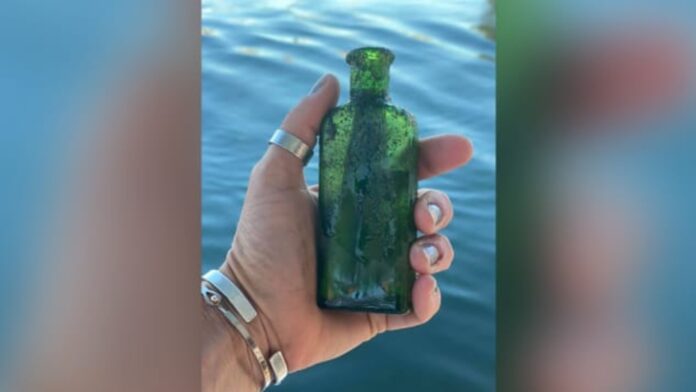
Turn back the clock to 1926. Imagine yourself a teenager, your whole life ahead of you, shining with possibility. It’s your birthday. As a gift to yourself, you toss a message in a bottle into the local river and watch it float from sight—never knowing if or when the bright-eyed boy you are now will reconnect with the man you’ll someday become.
While that may not have been the exact scenario, 95 years later, the message—if not the bottle—has finally found its way home.
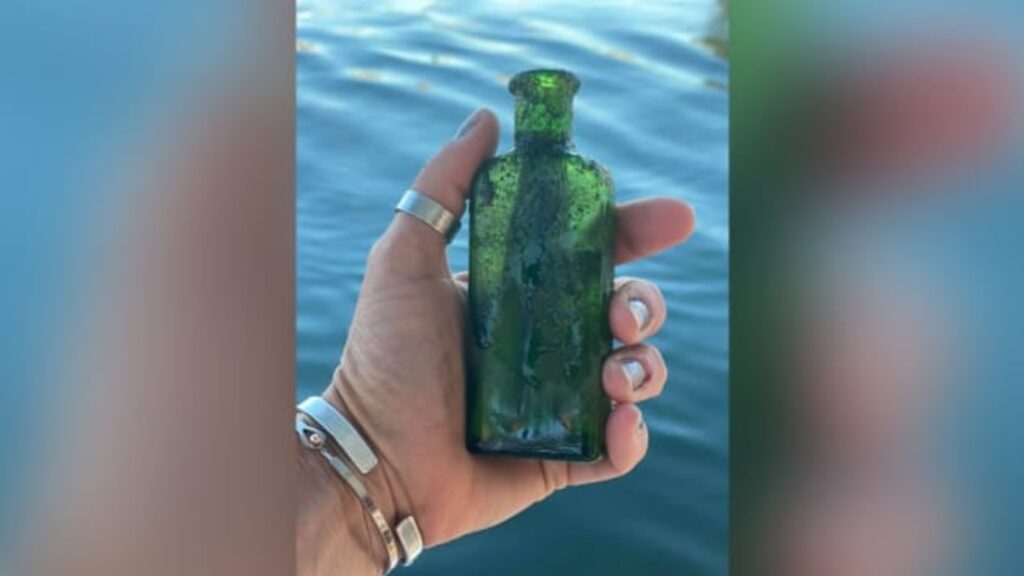
Jennifer Dowker, who captains Michigan-based Nautical North Family Adventures, spends her summers scuba diving and conducting shipwreck tours from her boat, the Yankee Sunshine. An avid collector, she was performing underwater maintenance on the glass-bottom window when she found a curious curio on the riverbed.
The bottle’s unusual antique shape and green glass were what first caught Dowker’s eye, but on closer inspection, she realized the find was something more. Though damaged and slightly water-logged, she and her crew learned the note inside the bottle had survived an amazing nine-plus decades in the water.
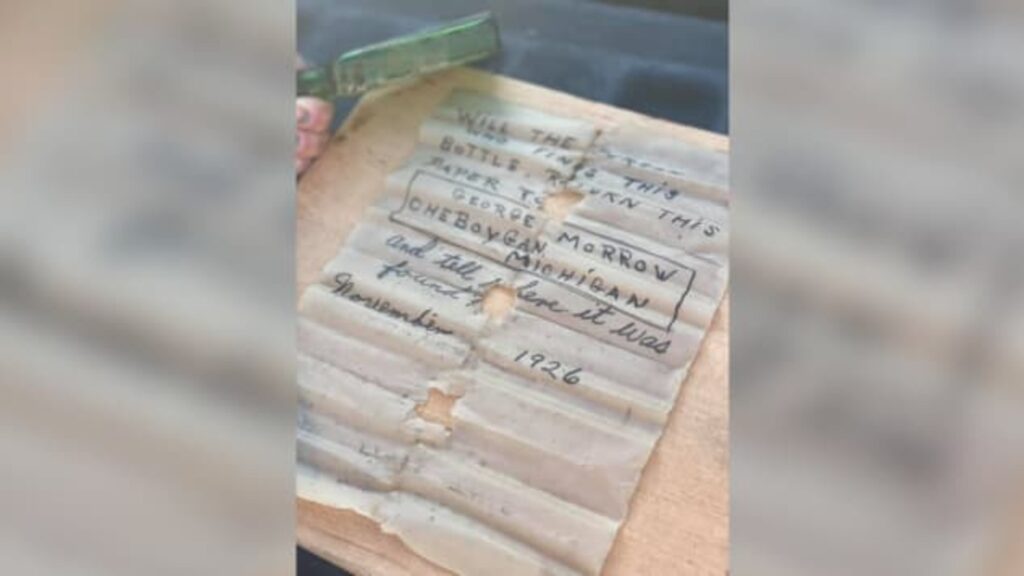
Dated November 1926, it read:
Will the person who finds this bottle return this paper to George Morrow Cheboygan, Michigan and tell where it was found?
Jennifer Dowker/Nautical North Family Adventures
After posting a picture of the long-missing missive to Facebook, word spread like wildfire. More than 100,000 shares and 6,000 comments later, one curious reader managed to locate Morrow’s daughter, Michele Primeau (who “doesn’t do Facebook”) to tell her the story and give her Dowker’s contact information.
Morrow passed away in 1995, but Primeau recognized her father’s handwriting. With a habit of secreting small notes away in unlikely places, she said that sending a message in a bottle was very much in keeping with his sentimental character.
“I can just see him going out and doing that because it was his birthday,” Primeau told CNN. “I don’t know for sure. But it just sounds like something he would have done.”
Though initially, Dowker told Primeau she’d forward the mementos to her, after sleeping on the idea for a night, Primeau decided a policy of “finders keepers” would better serve her dad’s memory.
“I thought the right thing to do would be to give it to her,” Primeau told CNN. “She found it and that would keep my dad’s name living on.”
Indeed, Dowker plans to put the souvenirs on prominent display and pass the story behind them along, preserving Morrow’s legacy. Primeau has planned a September visit to view the family keepsakes in person.
Now, perhaps it was purely coincidence, but this whole episode happened on Father’s Day weekend. Even if it wasn’t George Morrow’s way of letting his little girl know he was still watching over her all these years later, she says it brought back a boatload of wonderful memories.
DON’T BOTTLE UP the Good News—SHARE This Story With Pals…
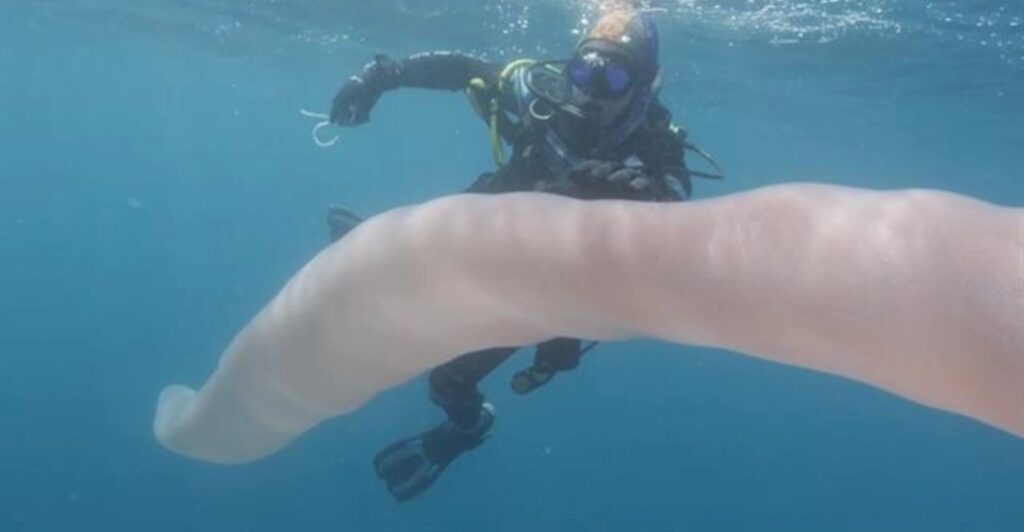
It turns out there are people in the world who, during a dive, choose to swim towards a 26-foot-long pink tube coming right for them. Thank goodness for that, because if there weren’t humanity wouldn’t have gotten the video below.
Videographer Steve Hathaway and his friend Andrew Buttle were diving off the coast of New Zealand in 2019 when they happened to cross paths with a pyrosome—a sometimes-giant, pink, translucent worm-like creature that was so big they could swim through it.
What would normally cause most people to get the heck out of the water was something the two men recognized immediately as totally harmless, and actually a rare spectacle.
Pyrosomes are free-flowing colonies known as tunicates, which consist of thousands of tiny creatures called zooids that come together to form a sort of frame.
Zooids filter feed by pumping water through their bodies and chowing down on plankton, poo, or detritus. This has earned them envious nicknames like “sea squirts” or “cockroaches of the sea.”
In total the divers spent 4 minutes swimming around it, an experience that “was pretty incredible,” Buttle reports to National Geographic. “We could see hundreds of thousands of tiny creatures right up close.”
These creatures and their cousin the salp are actually very common—it’s just that they’re normally a few centimeters long.
They feed by swimming vertically up to the ocean’s surface at night, and diving back down into the blackness when the sun comes up, a behavior theorized as a necessity for avoiding predation—as the ‘sea squirt’ has no defenses of any kind and is essentially a sort of all-you-can-eat buffet for a fish lucky enough to find one of that size.
One scientist told National Geographic such an event would be as if a human could simply hand on to the back of an elephant whilst eating it.
The marine creatures “reproduce” both sexually and asexually (they are also known for their bioluminescence, or ability to glow) but how they form their large colonies is not understood.
Hathaway, who spotted the translucent form off of Whakaari Island, 30 miles from the New Zealand coat, says the rich volcanic waters attract all kinds of sea life in summer, something that’s allowed him to have an 11-year career as a videographer filming animals like mantas and whales.
(WATCH the amazing video from National Geographic below.)
SWIM This Otherworldly Video Over to Pals on Social Media…
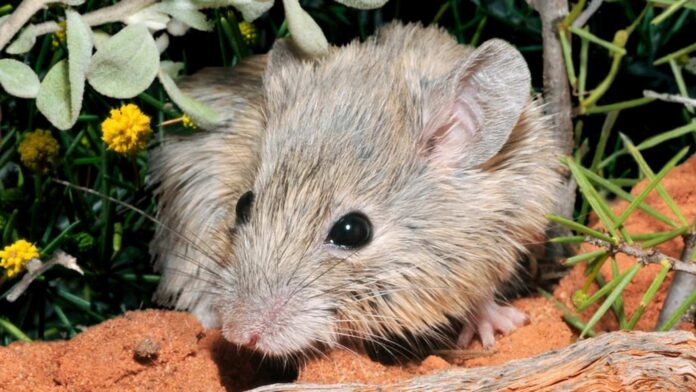
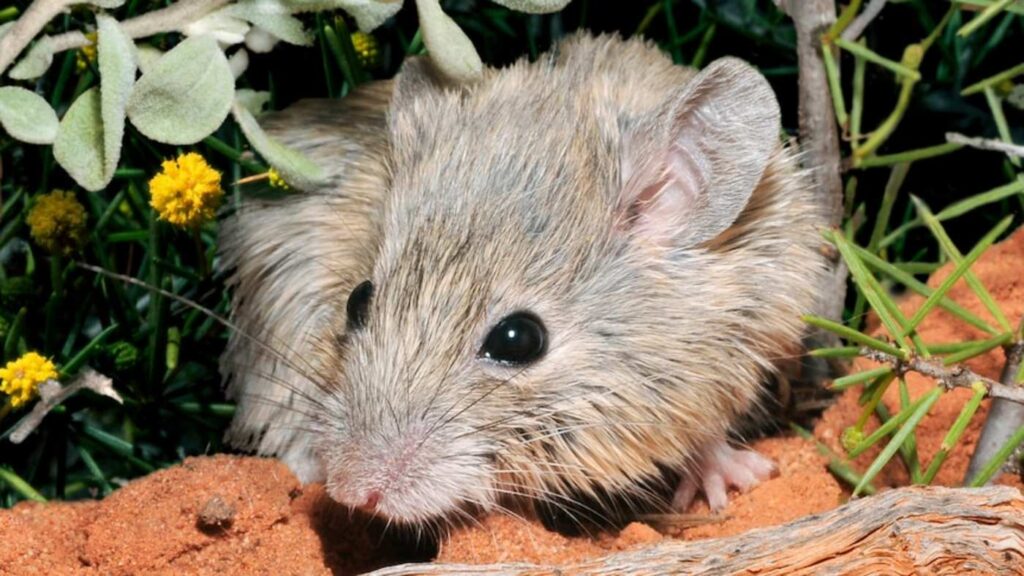
It must have been a shock when Emily Roycroft’s computer began telling her the mouse that has been recorded as extinct for over 100 years was alive and sitting on her very desk.
“I was quite surprised, extinction usually doesn’t offer second chances,” Roycroft admitted to ABC Australia.
The nation has the highest rates of endangered mammals on Earth, but Australia’s endemic rodent population is still more diverse that anywhere else in the world. However many species became endangered or extinct after colonists, or rather the animals onboard their ships, arrived from England.
Gould’s mouse was once thought to be such a casualty, and it was a simple investigation into how this came, or was supposed to have come, to pass that revealed the error.
Using a variety of different specimens from museums and close living relatives, Dr. Roycroft and her colleagues began examining the genetic record of the shaggy-haired, black-eyed mouse and other extinct rodents to see how genetically diverse the populations were at the time before their extinction.
A genetically-diverse record would suggest that they died off suddenly, as a result of a disease or natural disaster, while a poor genetic record would suggest overhunting by predators like cats and foxes. The pace of the change would also indicate how many years the decline took.
It was the latter that proved the case for Gould’s mouse, but something else appeared in the data collected by Roycroft, and that was the fact that the DNA of the Shark Bay mouse was not similar, but identical to that of Gould’s mouse.
This was a double surprise, first that the two were the same, and secondly because the Gould’s mouse specimen was collected from a museum in New South Wales, 4,000 kilometers (2,800 miles) from Shark Bay island. The hypothesis was that before it became an island, it was part of the continent, and as sea levels rose they trapped the mice there thousands of years ago.
ABCadded the two-cents of Dr. Euan Richie, who wasn’t involved in the research, but who works as a wildlife ecologist at Deakin University and considered it “fantastic news.”
“Given this species occurs in such an isolated and single location, establishing captive breeding colonies and additional wild populations should be a priority,” he said.
CONSERVE the Good News From Down Under—Share This Story With Friends…
Quote of the Day: “The power of finding beauty in the humblest things makes home happy and life lovely.” – Louisa May Alcott
Photo: by Jack Wilson
With a new inspirational quote every day, atop the perfect photo—collected and archived on our Quote of the Day page—why not bookmark GNN.org for a daily uplift?
Despite a few national governments continuing to keep their coal and oil projects afloat, market demand and private entrepreneurship is driving what can only be described as a revolution in renewable energy.
SWNS
These latest achievements might have been thought unbelievable when global climate change was first being discussed as a serious threat, but today each successive development of renewable energy, nuclear fusion, and electric cars, makes subsequent developments cheaper and easier to scale.
Just six months into 2021, we have already seen some amazing progress in wind, solar, and EVs.
Tapping the African sunshine
A half million people living in the Northern DR Congo cities of Gemena, Isiro, and Bumba, are in for a surprise, as a trio of UK, French, and Spanish solar power companies look to close deals to supply the region with reliable renewable energy.
Citizens from the DRC suffer from the lowest rates of reliable electricity in the world, and the solar power plants are set to help this problem with 18 months of construction commencing.
In West Africa, the Senegalese cities of Kael and Kahone will find 60MW of solar power available to them in the coming months as a variety of institutions offer the government financing for sustainable energy. Senegal is a heavy net energy-importer, placing enormous financial burdens on people, and thus the imports have generally been cheap i.e. brown coal and oil.
Lastly in Nigeria, one of Africa’s largest economies, the Solar Power Naija program is looking to equip 500,000 homes with solar panels, generating electricity for 25 million Nigerians over the next few years.
The community of Jangefe has already tasted the start of the mammoth green electrification, with 1,000 homes already equipped with rooftop solar panels.
The windiest on record
Pixabay
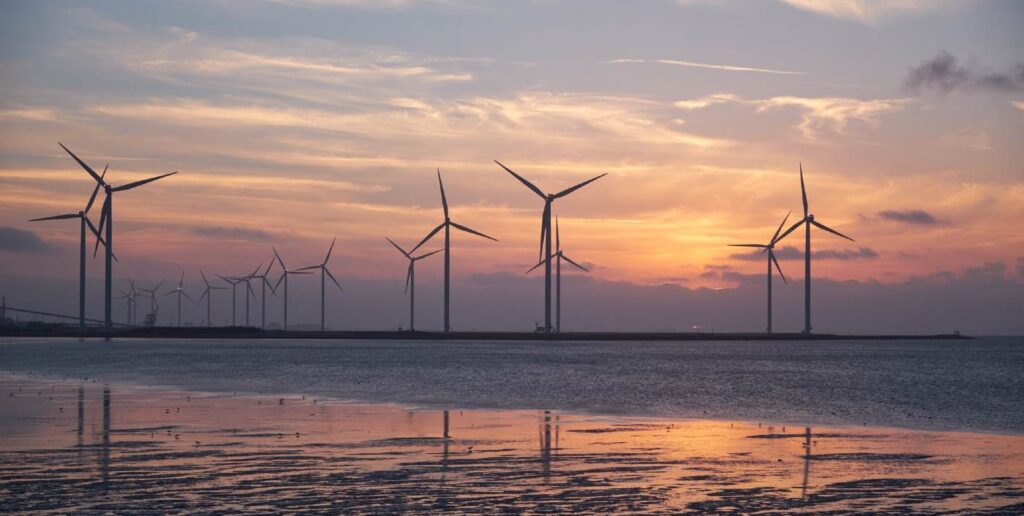
2021 was the single best year on record if you are a firm who manufactures wind turbines, or an institution that finances them, with 93 new gigawatts added—equaling a 53% increase since 2020. The 2021 Global Wind Report is a jaw-dropper, and it’s enough to quote the executive summary.
“Through technology innovations and economies of scale, the global wind power market has nearly quadrupled in size over the past decade and established itself as one of the most cost-competitive and resilient power sources across the world.”
“Today, there is now 743 GW of wind power capacity worldwide, helping to avoid over 1.1 billion tons of CO2 globally—equivalent to the annual carbon emissions of South America.”
The aluminum chancellor
Andrew Roberts
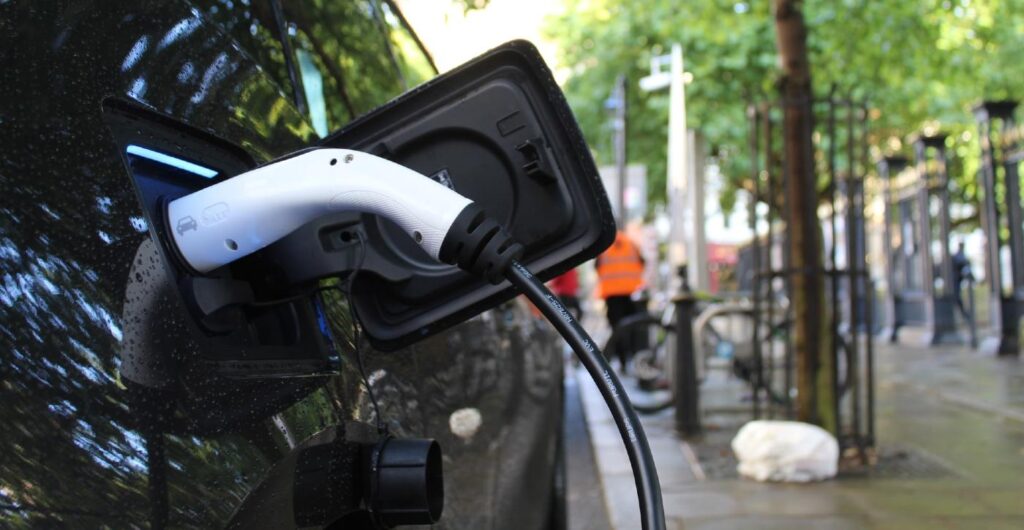
Data assembled back in March from Germany’s largest automotive industry review produced a startling statistic for anyone who’s ever looked at a full long-term airport parking lot—that 1 in 5 cars made in Germany can be plugged in.
The Schmidt Automotive Research Center found that 74,000 of the 373,900 cars that left German assembly lines were either electric or hybrid vehicles.
That was the story for the supply side, and on the demand side things are just as rosy. Germany is the fourth largest auto market in the world, and electric car registrations—that’s bought and driven EVs—grew from a 4% national market share in December 2019, to a whopping 26% market share just 12 months later. 24% of these EVs were made by Volkswagen.
Hybrids also jumped from 3% to 13%, meaning that there are more hybrids and EVs on German roads than gasoline-powered cars.
This is just in the background of a global surge in EV purchasing that climbed 40% during 2020, when most markets were suffering from COVID-related issues.
The green new pension
As the holders of the largest state-controlled pension fund on Earth, the South Korean monetary authorities released a statement in May that the $771 billion National Pension Fund will cease all investments related to coal power both at home and abroad.
The fund also announced that they would revamp guidelines for investment strategies to ensure a more sustainable pattern emerges in the future.
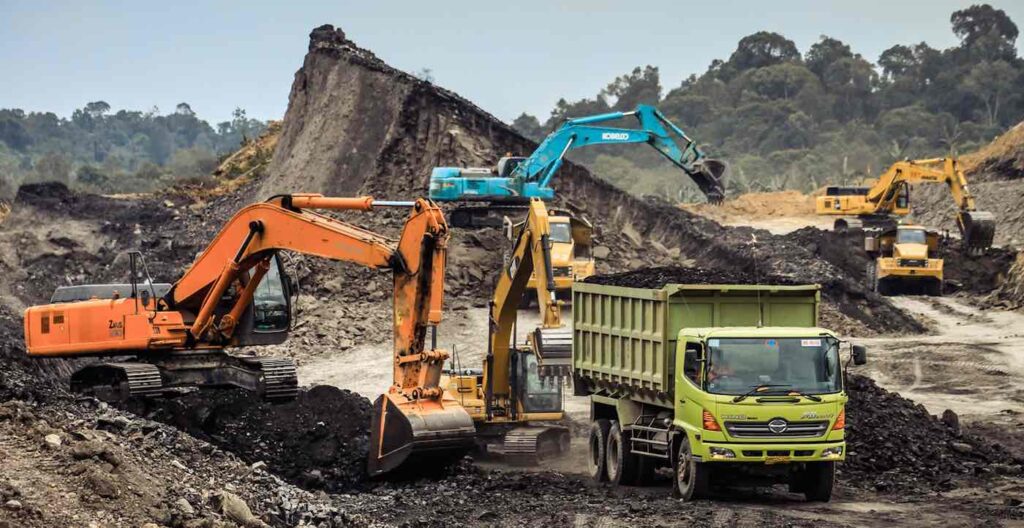
Adios, coal: Spain hits 50% renewable milestone
Coal mining: Parolan Harahap, CC license
Back in mid-May, the Spanish legislature announced it would be phasing out all oil, coal, and gas production by 2042, and that all carbon-emitting vehicle sales would be banned by 2040.
In the short term, the Spanish lawmakers want 74% of the national energy consumption to be entirely renewable by the end of the decade. They are quite close to that goal already, as the month of May saw 50% of the nation’s energy demand fulfilled by green energy.
Romania also joined the effort, alerting the EU that through its National Recovery and Resilience Plan the country would cease all coal production by 2032, at which time it hopes to have installed 34% renewable electricity to take over the baton.
G7, the world’s seven largest developed economies, all agreed to stop coal financing by the end of the year, leaving the big African emitters, India, and China as the last remaining holdouts now that Japan, part of G7, has got on board.
Green oil
All is not business-as-usual in the boardrooms of some of the world’s largest petroleum producers.
In a landmark court decision, a judge in the Netherlands ordered Royal Dutch Shell to cut emissions by 45% after 17,000 people brought a lawsuit that suggested Shell’s rather large footprint on the greenhouse gas situation merits a significant investment in CO2-slashing as a debt to society.
Elsewhere in Europe, the Italian oil company Eni became the first European oil company to launch a corporate bond that is linked to sustainability.
The €1 billion 7-year bond is linked to two key performance indicators: “Increasing renewable installed capacity to 5GW by the end of 2025; and halving the net carbon footprint of its upstream business to 7.4 million tons of CO2-equivalent by the end of 2024 from 2018 levels,” reports Dow Jones.
Lastly, Engine No.1, a shareholder group of ExxonMobil, managed to get two of their candidates elected to the American company’s board on the argument that the company’s long-term business strategy didn’t take into account all of the value loss potential from climate change, both from shareholders jumping ship, and potential damages from extreme weather events.
BlackRock, the world’s largest asset manager with $8.6 trillion in private capital, and whose sustainable investment strategies GNN has reported extensively on, ensured the Engine No.1 candidates got the positions by utilizing their vote as large shareholders.
From Everglades to Okefenokee, Florida legislatures just created one of the biggest wildlife corridors in the developed world with a $400 million funding seed.
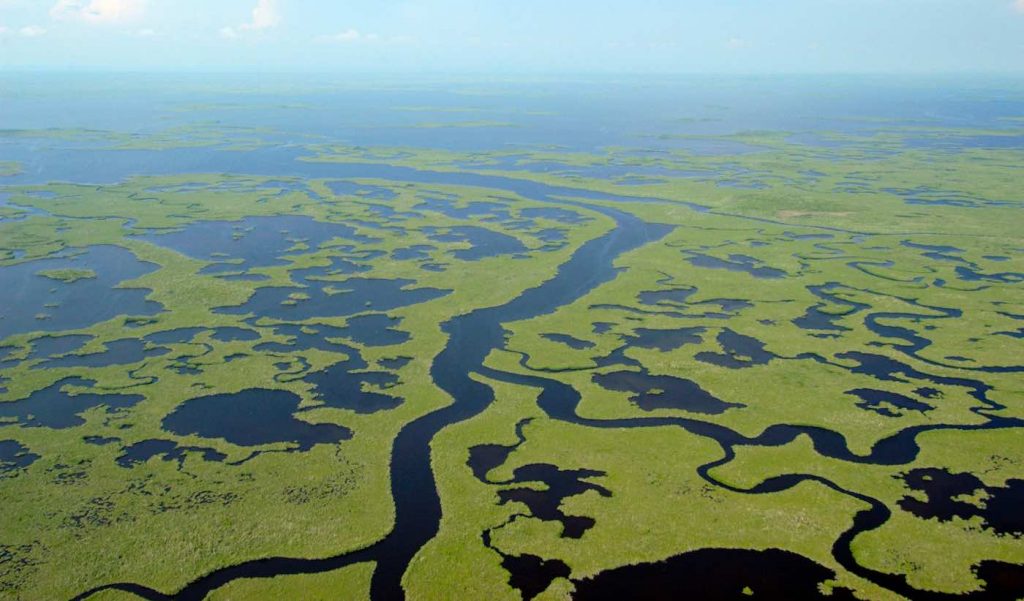
Everglades National Park, Marjory Stoneman Douglas/NPS
The Florida Wildlife Corridor Act, signed into law by Gov. DeSantis, ensures that animals can travel—without seeing a car or a human, from the Everglades Estuary to the borders with Georgia and Alabama—while protecting existing and new conservation areas, securing natural resources, and more.
Between the beach-bustle of Miami, Daytona, Fort Lauderdale, and elsewhere, and the lazy waters of the Gulf of Mexico on the western coast lies a mosaic of swamps, pastures, rivers, farmland, and forest. Among these varied ecosystems, 700 imperiled species live in habitat that may be owned privately, as state recreation areas, and as federally-protected wilderness.
The total bipartisan support the bill received, typical of American conservation legislation, has seen $300 million secured to protect these varied ecosystems, as well as to buy new conservation areas or to secure conservation easements—a subsidized incentive to conserve a particular feature on private acreage.
Another $100 million was earmarked for the general conservation program called Florida Forever, the largest state-controlled pubic land acquisition program of its kind in the U.S.
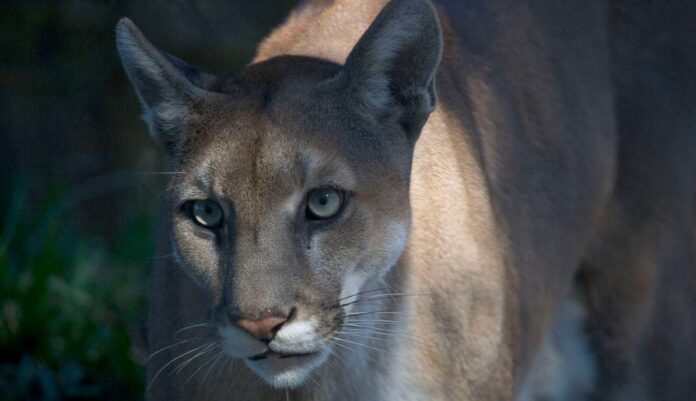
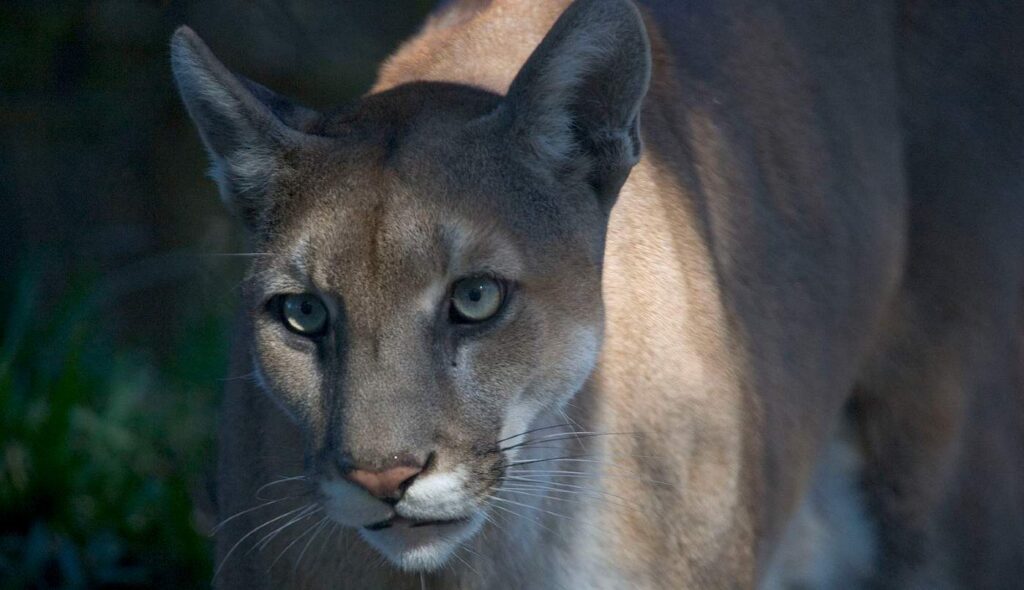
For many species this will be a windfall, especially for the iconic Florida panther, which must roam wide and far in search of food, and to secure genetic stability.
Panther path
NPS, Rodney Cammauf
The endangered cats almost went extinct during the 1970s until Texas provided an infusion of genes from their mountain lions. The last remaining sub-species of the puma in the Eastern U.S. is maybe the most endangered big cat on Earth.
National Geographic reports that a panther in 2016 was found north of Lake Okeechobee for the first time in 43 years, suggesting the species is reclaiming some of its previous habitat in the more northern areas of Florida. The further north panthers in the south can travel, the better for the species’ genetics, which have been damaged heavily by inbreeding.
The Florida Wildlife Corridor Commission—a conservation non-profit that was engaged for years in developing the idea of the Corridor and how to define it and write it into law—was set up in large part by dedicated photographer Carlton Ward Jr. and some of his friends.
For those who want to truly understand the magnitude of importance for Florida wildlife which the secured Corridor represents, they need only watch the excellent 17-minute documentary The Last Green Threadproduced by the Commission, which highlights the journey up the Corridor by Ward Jr. and his biologist friends Joe Guthrie and Mallory Dimmitt.
Ward Jr. also set up the Path of the Panther, a conservation initiative supported by National Geographic to try and save Florida’s state animal.
Path of the Panther highlights the dangers posed to the cat including genetic isolation and traffic collisions, and gathered priceless data on population numbers and movements through camera trapping.
In his documentary, Ward Jr. at one point explains that moving up the headwaters of the Everglades to the I-4 highway, there is a moment when the Corridor narrows to perhaps 200 meters before being stopped dead in its tracks northward by the I-4, forcing any migrating animals to trace the highway’s east-west path for miles before finding a possible crossing point.
The new Florida Wildlife Corridor Act specifically designates doing all of the following: “maintaining wildlife access to the habitats needed to allow for migration of and genetic exchange amongst regional wildlife populations,” as well as “preventing fragmentation of wildlife habitats,” and “providing for wildlife crossings for the protection and safety of wildlife.”
“This gives me a lot of hope for the future of land conservation in Florida,” Ward Jr. told National Geographic.
For those who want to learn more, hop over to the Commission’s website, watch their documentaries, and pour over their extremely detailed maps of the Corridor.
GROW the Good News; Share This Story With Friends…
Sewing is a craft that’s been passed down through the ages from mother to daughter and from father to son. Traditionally, it’s also served as one of the few consistent sources of income for women, especially marginalized ones.
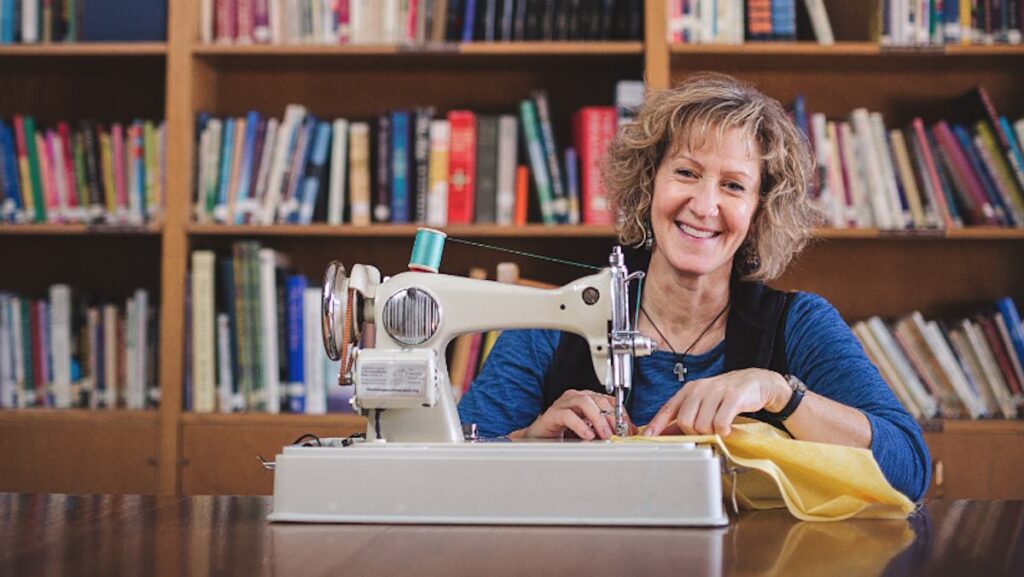
Margaret Jankowski learned to sew from her mom. As an adult, rather an avocation than a vocation, it wasn’t something she pursued full-time, but she enjoyed it enough that she taught sewing classes and created clothing for her first child.
In 2004, in the wake of the tsunami that devastated Sri Lanka, the story of a woman whose dream of becoming a tailor was dashed after spending years saving up to buy a sewing machine struck a chord that resonated with Jankowski.
“I could easily make a living without my sewing machine,” Jankowski told the Christian Science Monitor. “That wasn’t true of this woman.”
Inspired, Jankowski made a spur-of-the-moment decision to find a way to get some machines to Sri Lanka. Her original thought was to simply get hold of a few used machines and send them on, but when she outlined her plans on the local news, the project took on a life of its own and donated machines started rolling in.
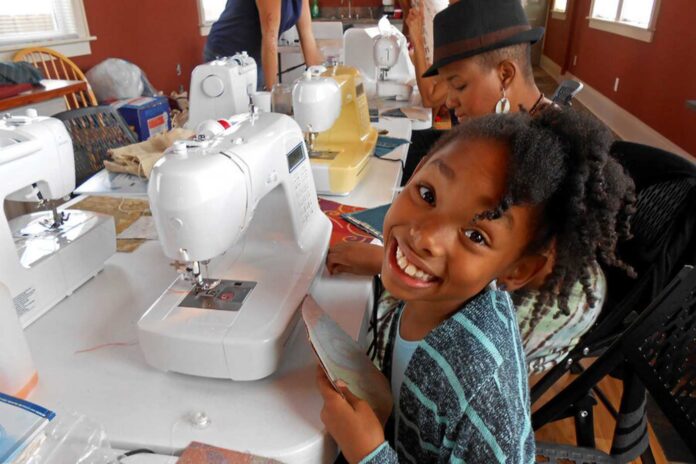
In 2005 the first shipment of 25 boxes containing toys, medical supplies, fabric, and a sewing machine were distributed between five orphanages in India and Sri Lanka. In addition to creating clothing, the machines were used as learning tools to teach the children an occupation they could put to good use later in life.
Since then, The Sewing Machine Project has re-homed 3,350 sewing machines to recipients facing a variety of socio-economic challenges resulting from a variety of causes from war conflicts to natural disasters to generational poverty.
Margaret Jankowski, – SewingMachineProject.org
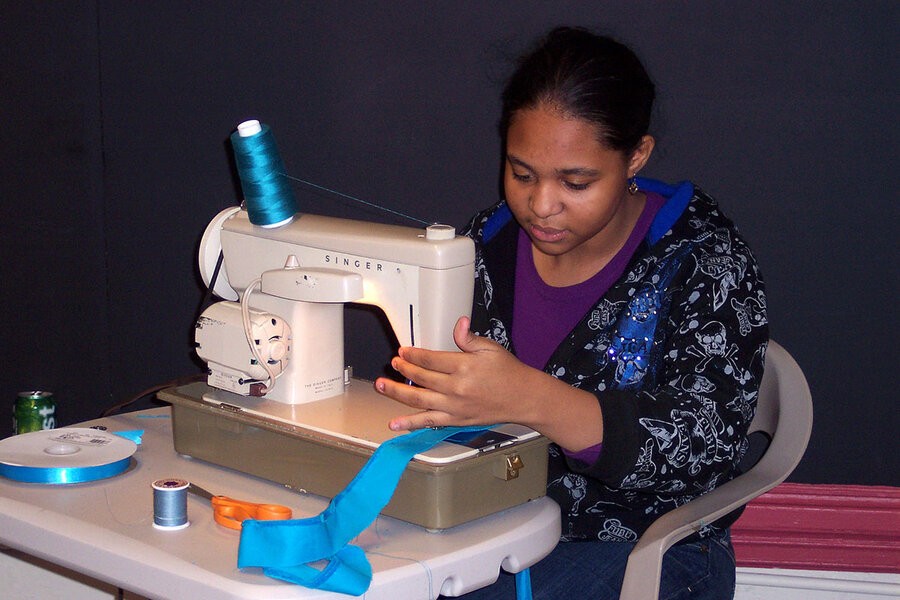
After Hurricane Katrina, hundreds of machines were delivered to New Orleans’ Mardi Gras costume makers. They’ve also found their way to Guatemala, Kosovo, and closer to home at immigrant training facilities and halfway houses for women trying to overcome drug addiction.
As valuable as learning to sew can be as a source of livelihood, whether you’re sewing to make something new or repair something old, creating something beautiful or something strictly utilitarian, being able to say, “I made this!” is an affirmation of self-esteem that can be life-changing.
Nowhere is that more true than in a pilot program in Rankin County, Mississippi, that the Sewing Machine Project serves.
Inmates at the Central Mississippi Correctional Facility began turning out backpacks filled with reusable menstrual pads and undergarments for girls in countries who often found themselves unable to attend school due to lack of sanitary items.
Since its inception, director Renee Smith has seen a definite shift in the participating inmates’ attitudes. “They know they’re making a difference in the life of someone else,” she told CSM. “To me that’s huge.”
The Sewing Machine Project, which is based in Madison, Wisconsin, accepts sewing machines of every brand. The only caveat is they must be in working condition. The Brother Sewing Machine company recently donated 500 machines, 25 of which went to Zaman International—a Detroit area nonprofit serving serving marginalized women and children, many of whom are immigrants and refugees.
Jankowski currently fields 10 to 15 emails every week from international groups looking to receive sewing machines. Having started the program almost on a whim, she initially had no idea just huge the demand would be. She says the funds aren’t available to supply everyone who asks at the moment, but she hopes in future the program will be able to expand to meet the growing need.
Dariel Thompson
As with many charitable programs, the parameters of the COVID-19 pandemic has forced a shift in the way The Sewing Machine Project operates its outreach. But here, Jankowski is especially hopeful.
“One of the many gifts I’ve received in leading The Sewing Machine Project is the opportunity to see not only the need that exists all around us but also the creative ways in which people and organizations work to address that need,” she said in their newsletter.
“Resiliency—bending and swaying in the face of challenge—shows up everywhere. We adapt and we look to one another for support. Together—all of us—are working to meet the needs of those who can benefit from the healing power of sewing.”
And while the transition may not be seamless, the Sewing Machine Project plans to continue its mission to make the world a better place, one stitch at a time.
SEW UP the Good News For Friends By Sharing This Story…