









All News - Page 498 of 1734 - Good News Network
Home Blog Page 498

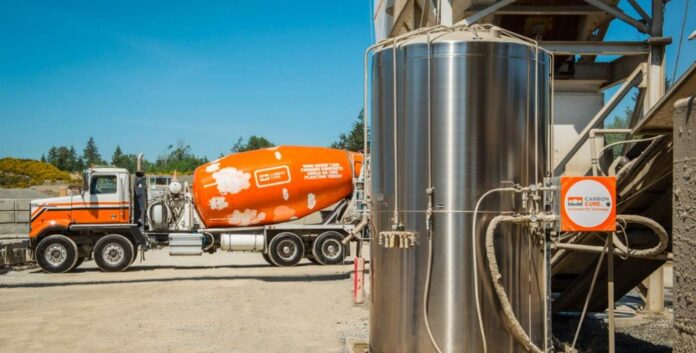
Branson-backed Company Captures Mega Tons of Carbon Injected Into Concrete–and Amazon is Building Their HQ With It

CarbonCure
CarbonCure

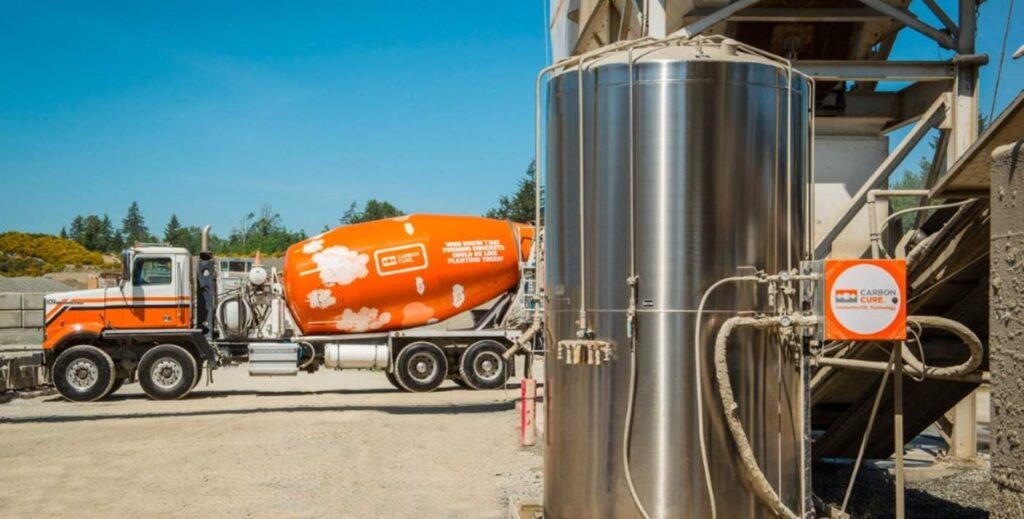
The second-most abundant manmade material in the world is being employed by a start-up to ‘jail’ carbon dioxide produced by factories before it’s sent into the atmosphere.

The material? Concrete. The startup: CarbonCure, and as well as sequestering carbon and reducing emissions, it solves a major longevity issue within concrete—strengthening the material and reducing production costs.

With so many merits, it’s as unsurprising as it is exciting to see that private sector giants like Amazon, Alibaba Group, and Mitsubishi are all pouring money into the small, understated Halifax firm which launched over a dozen years ago.

“CarbonCure is on its way to achieving 500 megatons of CO₂ reductions annually, helping to decarbonize the built environment while positioning the concrete industry to lead the transition to the new low-carbon economy,” CarbonCure CEO and Founder Robert Niven said in a statement.

How much is 500 megatons? Let’s talk about equivalents. One megaton in the metric system represents 1 million metric tons. CarbonCure are on track to remove 500 million metric tons of carbon annually.

According to the EPA, 500 million metric tons is equivalent to 126 coal plants firing non-stop for a year, or 91 million homes’ electricity consumption over a year. In smaller figures it’s what 109 million passenger vehicles create per year from driving, or the total emissions from vaporizing 56 billion gallons of gasoline.

It’s unsurprising then that with this incredible potential, CarbonCure won the 2020 American Cleantech Company of the Year by San Francisco’s Cleantech Group.

How it works

CleanTech has already captured 118 million tons of carbon so far, which was mostly bought from chemical engineering plants that make things like ammonia or ethanol.

MORE: Startup’s New Method to Recycle CO2 into Protein-Rich Animal Feed Gets $9 Million in Funding

A small and easily retrofitted device, colloquially known as the “box,” links a CO2 tank with a concrete mixture. Inside is the company’s secret tech, which injects CO2 in such a way as to turn it from a gas back to a solid.

A water-based solution triggers the CO2 to create carbonate ions early in the mixing process. The cement within the concrete, the key ingredient responsible for its thousands of years of use but also its heavy emissions profile, contains calcium ions which the carbonate binds to, creating calcium carbonate.

RELATED: 7 Years Ahead of Schedule, Maersk Will Deploy World’s First Carbon-Neutral Shipping Liner in 2023

These little bits of limestone help strengthen the concrete, but also solve a major longevity issue. Over time, concrete can absorb CO2 from the air, causing it to shrink and corrode the steel embedded within it such as rebar, causing a major headache particularly in the upkeep of bridges and overpasses.

The calcium carbonate helps the concrete resist this shrinking, giving producers or builders even more reason to employ CarbonCure’s tech.

Amazon, for instance, is constructing a goliath new headquarters in Virginia, and utilizing CarbonCure for all the concrete in the building, while Bill Gates brainchild Breakthrough Energy Ventures and Mitsubishi Corp have both injected serious capital in order to help the company reach that massive 500 megaton target.

CHECK OUT: Researchers Pull Carbon Out of the Sky And Convert it to Instant Jet Fuel, Reshaping Aviation For Good

Right now carbon sequestering is limited mostly to natural sources like trees, which don’t have as much economic value as electricity, steel, or concrete, but if humanity can add its most potent and prolific building materials into the family of CO2 sequesters, then the climate crisis is all but solved.

(WATCH CNN’s video about CarbonCure’s work below.)

GREEN UP Your Friends’ News Feeds—Share This Innovation on Social Media…

For International Dark Sky Week, Here Are Some City-Adjacent Locations For Viewing Celestial Wonders

Gusdiaz, CC license
Gusdiaz, CC license

It’s officially International Dark Sky Week, and officially the week of the new moon, which means there’s no better time to look up and seek out shimmering constellations, planets, meteors.

International Dark Sky Week was launched in 2003 by, fittingly enough, the International Dark Sky Association—an Arizona-based non-profit that works to “to preserve and protect the night time environment and our heritage of dark skies through quality outdoor lighting.”

Best known for giving hard-won ‘Dark Sky’ designations to public lands and even urban areas around the globe, check out this interactive map from the IDA to see where there’s a dark sky site near you.

If you’re near one of these major U.S. cities? Head out to one of these nearby International Dark Sky Parks or Sanctuaries. The former have been designated as such because they possess “exceptional or distinguished quality of starry nights and a nocturnal environment that is specifically protected for its scientific, natural, educational, cultural heritage, and/or public enjoyment.” In other words, they’re truly special places.

Just don’t forget your binoculars—and your super long lens for your camera.

MORE: Mind-bending Pictures of the Moon With Inverted Colors Shows Where Magma Once Flowed

Los Angeles, California – Joshua Tree National Park

Joshua Tree National Park, Geri Weis-Corbley

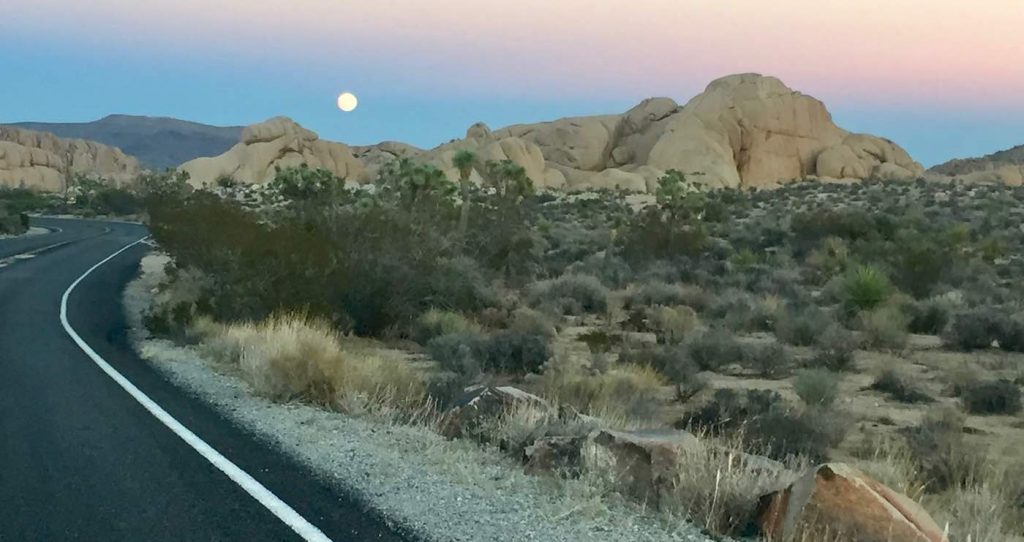
Just over 100 miles from L.A, Joshua Tree National Park has officially been a Dark Sky Park since 2017. In fact, according to the National Park Service it boats some of the darkest skies in Southern California.

Head to the park and look up to see, with any luck, the Milky Way glittering overhead. Also, make the most of the otherworldly landscape around you—by perhaps taking nighttime images of fantastical arboreal silhouettes juxtaposed against sparkling stars.

San Antonio, Texas – Devils River State Natural Area

Named the first International Dark Sky Sanctuary in Texas in 2019, there may be no better spot in the Lone State for solitude and clear night skies.

At Devils River, there are drive-up and hike-in primitive sites, so if you’re looking for a quiet place to camp out at—this might just be your place.

Washington, D.C. – Natural Bridge State Park

A few hours southwest of the capital, Natural Bridge State Park in Virginia is known for its eponymous limestone arch spanning Cedar Creek, its picturesque hiking trails running through the James River valley, and it’s really, really dark night skies. This spot is officially an International Dark Sky Park as of this week.

If that 3-hour drive from Washington, D.C. feels like a little much? There’s always Sky Meadows State Park. It’s only about an hour’s drive from the city, and it’s just been designated an International Dark Sky Park too.

CHECK OUT: Scientist Thinks He Finally Knows Why People Hear Sounds Coming From the Northern Lights

Orlando, Florida – Kissimmee Prairie Preserve State Park

Recognized as Florida’s first International Dark Sky Park in 2016, camp out here to experience some of the darkest skies in the Sunshine State.

How about reserving one of the park’s astronomy camping pads? Sleep at one of these sites and there are some dark-sky rules you’ll have to follow: such as, all lights must be red spectrum and no campfires are allowed. We’ve no doubt it’ll be worth it.

Phoenix, Arizona – Tonto National Monument

Outside of its cities—Arizona is rightly known for its amazing dark skies.

Less than two hours’ drive from Phoenix, you might want to check out Tonto National Monument.

A designated International Dark Sky Park since 2019, the National Park Service says: “With over 10,000 years of documented human history in our park, people have enjoyed the unspoiled night landscapes at Tonto for thousands of years… In addition to clean air and a magnificent soundscape, the night skies at Tonto preserve a setting and feeling rarely found near a large metropolitan city.”

It all sounds incredible, but wherever you are—even if it’s in the middle of a big city—there’s beauty worth experiencing when you look up. Enjoy it.

HELP Others Celebrate Wonder—Share This Story With Them… 

This Cancer Surviving Girl Scout Broke the Record, Selling 32K Boxes of Cookies – With Proceeds Going to Sick Kids

Lilly Bumpus/Facebook

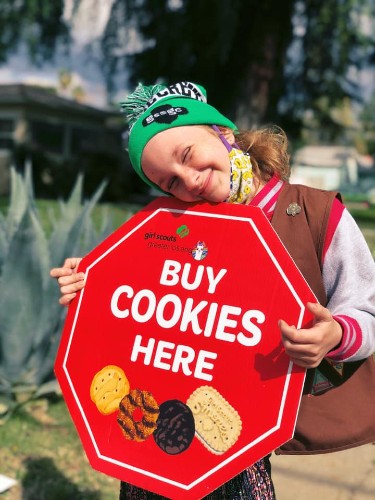
At age 8, Lilly Bumpus is already a warrior. As an infant, she took on rare Ewing’s Sarcoma and won.

The experience left her determined to take up the battle for other children fighting cancer. Her dream? To show them they, too can be strong.

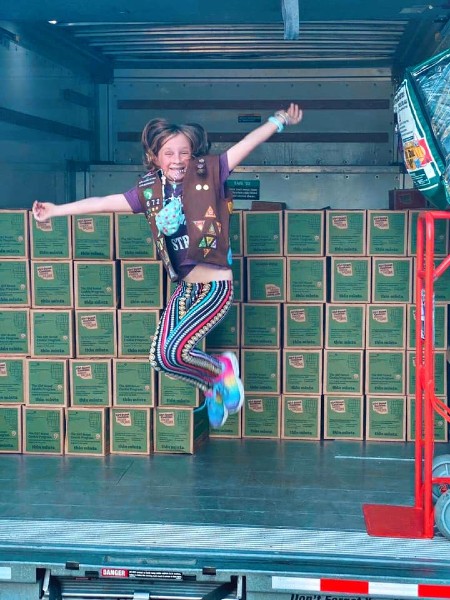
This year, Lilly took a huge step forward in making that dream come true by breaking the record for selling the most boxes of Girl Scout Cookies in a single season—32,484, to be exact.

Now that’s a lot of dough.

The victory is especially sweet because Lilly will be donating a huge chunk of the proceeds to fund childhood cancer research and to an organization that feeds the homeless.

“She showed our community and the world it’s more than just buying cookies or buying a product,” Lilly’s mother, Trish Bauer, told The San Bernardino Sun.

“It’s supporting someone’s dream. Whether it’s a business owner or an 8-year-old girl slinging Girl Scout cookies, Lilly encouraged people to support a dream and a mission, not just a product.”

Lilly Bumpus/Facebook

While the pandemic effectively derailed most of the Girl Scouts’ conventional in-person selling strategies, Lilly’s role as cancer awareness advocate had already put her on the social media fast track, so becoming something of an online brand ambassador was a piece of cake—or cookie—for her.

Lilly’s regular posts to her Facebook page—in which she answered questions, dished her unedited cookie reviews, and detailed her philanthropic philosophy—paid off.

She also set up a curbside booth outside her house where she spent two months’ worth of afternoons. One day, toward the end of the season, her mom reports that she and Lilly “boothed” for 11 hours straight, selling 500 boxes.

Lilly Bumpus/Facebook

But Lilly didn’t just conquer America, she conquered the world. In addition to selling cookies in all 50 states, her customer base spans Canada, England, Spain, Paris, Rome, and as far away as Egypt. Bauer was blown away by the widespread support. “[The world] is showing my 8-year-old cookie-hustling cancer survivor that together we can and will end cancer,” she posted to Facebook. “That nothing is impossible when you make it possible!”

To Lilly, the logic behind her global success is more simple: “The world hates cancer just like we do mom. It’s time for us all to work together to end it! End it for once and for all.”

Considering that Lilly and her family were the driving force behind the Team Lilly Foundation, an organization that offered financial supported and created holiday care packages for hospitalized kids across the country, it only makes sense that in addition to the cookies she sold, Lilly also collected 5,200 cookie boxes to be donated to a variety of worthy causes.

MORE: This Arkansas Doctor Forgave $650,000 in Medical Bills For Cancer Patients 

The tasty stash is set to be divvied up between the Children’s Hospital of Los Angeles, Loma Linda University Children’s Hospital, and the Children’s Hospital of Orange County—as well as pediatric patients New York and Texas cancer facilities, U.S. troops overseas, and the homeless.

The other girls in Lilly’s San Bernardino troop share one thing in common—cancer. Whether they’re survivors like Lilly, currently fighting, or have lost a family member to the disease, it’s a special bond that makes their shared achievements all the more meaningful.

Lilly Bumpus/Facebook

“It feels like the world believes in me and it feels really good,” Lilly told the San Bernardino Sun. “It means so much to me that people are coming to support me by buying cookies…. The reason I wanted to beat the record is because I wanted to help all kinds of Girl Scouts in the world and tell them they can do it just like I did… I just wanted to be inspiring. I wanted to help.”

RELATED: Cancer Survivor Becomes First Woman To Complete Grueling Triathlon Covering 330 Miles in 5 Days

Juliette Gordon Low brought the Girl Scout organization to the United States in 1917. Their cookie-selling efforts began five years later. The world may have changed a lot since then, but even now, purveying boxes of happiness to benefit a worthy cause while teaching young women they can accomplish the goals they believe in is a pretty darn sweet accomplishment.

SHARE The Sweetness of This Story With Friends…

North Carolina-based writer Judy Cole has a new rom-com murder mystery debuting at Amazon: And Jilly Came Tumbling After (from Red Sky Presents).

“Fake it until you make it. Act as if you had all the confidence you require, until it becomes your reality.” – Brian Tracy

Quote of the Day: “Fake it until you make it. Act as if you had all the confidence you require, until it becomes your reality.” – Brian Tracy

Photo by: Kyle Head

With a new inspirational quote every day, atop the perfect photo—collected and archived on our Quote of the Day page—why not bookmark GNN.org for a daily uplift?


Travel Agent Helps Aging Veteran Pilot Pals Go On Dream Boys’ Trip – Without Costing Them a Dime

SWNS
SWNS

A big-hearted woman has helped three nonagenarian veteran pilot chums go on their dream “last hurrah” boys’ trip—without costing them a dime.

Julie Pflaumer got a call from veteran and former pilot Jack Henderson to help him and two friends—also veterans and pilots—go to the Reno Air Races in Nevada.

90-year-old Jack was calling from an Oregon assisted living facility, where he’s become best buddies with David Crawford and Dick Snider.

“They happened to be former pilots too, so we got together rather quickly,” said Jack, who served in the Navy as a Petty officer first class (PO1) and later became a civilian pilot.

93-year-old David—a radio operator in the Navy before becoming a civilian—and 90-year-old Dick, who served in the US Army before getting his wings, do everything together.

But when travel agent Julie did some research on tickets, she found they wouldn’t be available until later in the year, which instantly saddened Jack, who thought, “Well, I might not even be around by the time they’re available.”

Julie decided that she had to find another option for the buddies. Then she hit on something: AeroLegengs Biplane Rides offers bi-plane experiences in the town where the three pals live. She could give them a day up in the skies, for free of course.

Julie posted her idea in a travel agents group on Facebook. Donations soon began pouring in, raising over $1,100—well over the $600 needed to fly all three men up.

“I don’t deserve all the credit here, this was merely an idea on my part and the only reason it turned into what it was was because everybody chipped in,” Julie said.

MORE: D-Day Hero’s Lost Postcard Finally Delivered to his Family 77 Years After Being Sent

Whe the former pilots were given their gift certificates for the bi-plane excursion this March, “Most of us had to go change our britches,” Jack joked. “It was such an unexpected, pleasant surprise.”

Julie learned that Dick had actually planned on flying with the company before—to spread his late wife’s ashes—but hadn’t got around to it yet. Now he had the chance.

RELATED: Medals Found in Dumpster Reveal Her Dad Was a WWII Hero But Never Told Anyone—WATCH

“I’d like to think his wife is up in heaven saying ‘Come on honey let’s get the show on the road’,” added Julie.

Julie said being the catalyst for this good deed has reminded her why she became a travel agent four years ago.

CHECK OUT: A 93-Year-old Veteran Whittling Walking Sticks Has Raised $16,000 For Food Pantry

“The biggest thing for me is being able to bring that happiness to people of being able to do something they didn’t think they could,” she said. That’s a beautiful sentiment indeed.

Fly This Story of Real Kindness Over to Friends on Social Media…

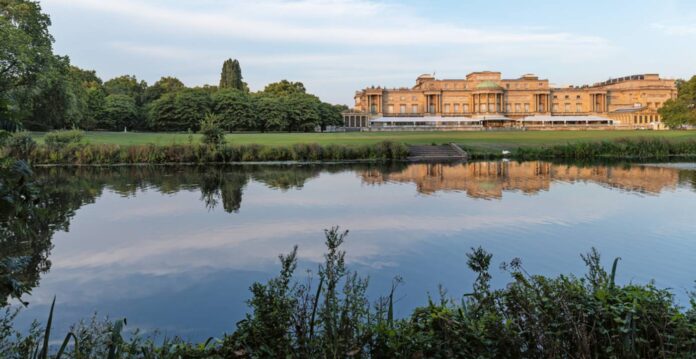
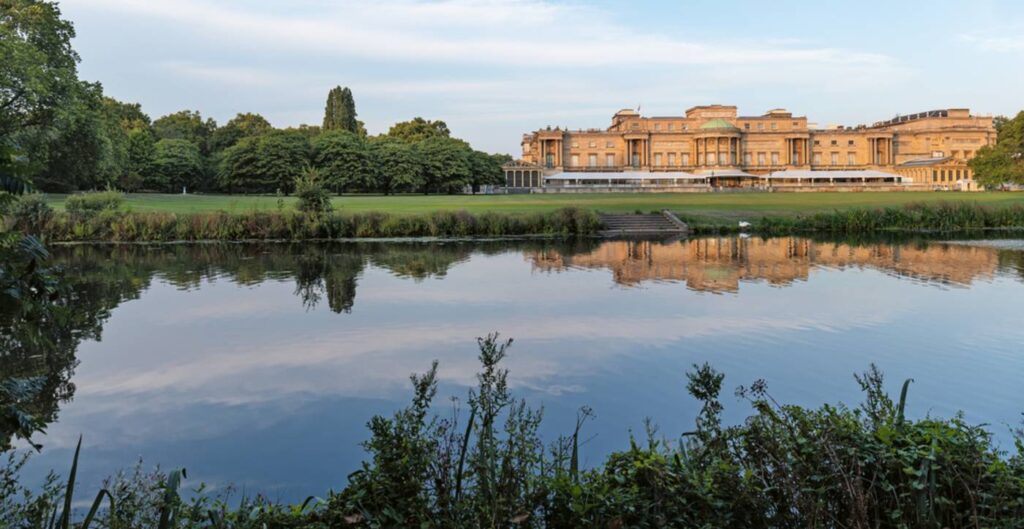
Queen is Opening Buckingham Palace Gardens to Picnickers for the First Time This Summer

Buckingham Palace Garden in the summer Royal Collection Trust : © Her Majesty Queen Elizabeth II 2021. Photographer John Campbell
Royal Collection Trust/John Campbell

As daffodils and cherry blossom mark the onset of spring across London lawns, one famous residence in the English capital is readying itself to welcome picnickers for the first time—with the Buckingham Palace gardens opening to the paying public.

The Royal Collection Trust has announced that a self-guided route through the gardens, and around its grand 3.5-acre lake, will this summer be open to those who’d like to explore.

The trust states: “You will be free to wander around the garden’s winding paths at your own pace and experience the beauty and calm of this walled oasis in central London. Among the many features to discover are the 156-metre Herbaceous Border, the Horse Chestnut Avenue, the Plane trees planted by Queen Victoria and Prince Albert, and the famous lake with its island that is home to the Buckingham Palace bees.”

Royal Collection Trust/John Campbell

Perhaps more importantly? Picnics in the grass can be experienced as part of the visit.

Of course, enjoying scones and clotted cream on a sweeping royal lawn might be a difficult ask when there’s so much else to see and explore.

According to the Royal Collection Trust, the garden is a rich biodiverse habitat, with more than a thousand trees, the National Collection of Mulberry Trees, and 320 kinds of wildflower and grass.

RELATED: The Queen has Launched Her Own Gin Featuring Botanicals Grown on Her Country Estate

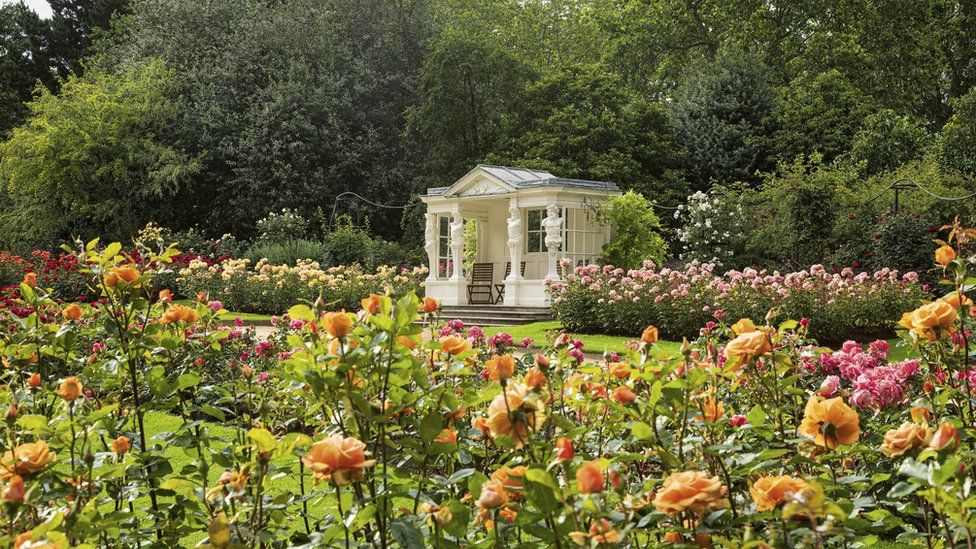
Among its 29 acres, there’s also a Rose Garden, a summer house, a wildflower meadow—all of which can be visited on daily guided tours through the summer from July 9-September 18.

Royal Collection Trust/John Campbell

If you’d like to sign up for a royal visit? Just head here.

SHARE This Story With Someone You’d Love to Share a Royal Picnic With….

Mind-Bending Pictures of the Moon With Inverted Colors Show Where Magma Once Flowed

SWNS

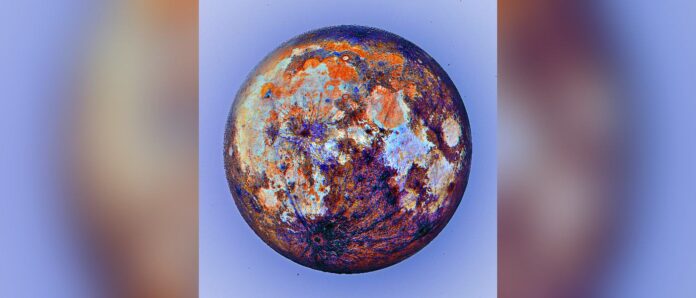
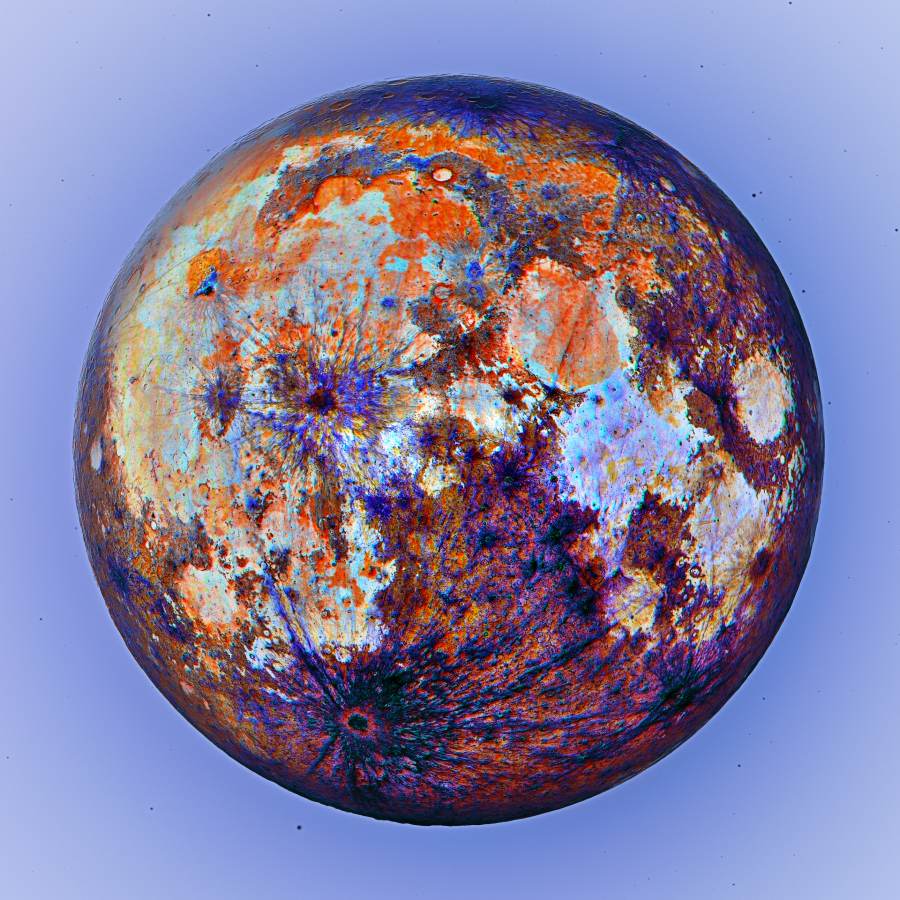
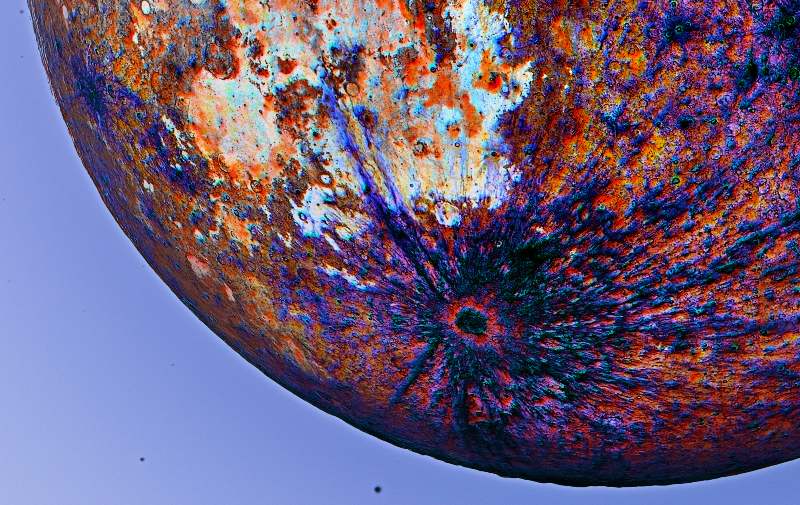
This mind-bending picture of the Moon with inverted colours shows where it once flowed with magma.

California-based astrophotographer Andrew McCarthy—aka Instagram’s @cosmic_background—has altered the image of the lunar surface to highlight the things the human eye cannot see.

His reason for doing so? “Our eyes are quite incredible, but sometimes it’s cool seeing what things could look like with superhuman vision.

CHECK OUT: Global Telescope Creates Exquisite Map of Black Hole’s Swirling Magnetic Field

This picture was created by processing the image with an inverted luminance layer to enhance the lunar texture.

SWNS

Andrew explains that the brighter regions show where the moon once flowed with molten rock, saying: “In this version the colors show how the composition changes where the magma once flowed, as well as how impacts striking the surface add an additional splash of color.

“The colors are real, and represent the hidden geological history of the Moon.”

Check out some of Andrew’s other work in the images below.

SHARE These Far-Out Photos With Pals on Social Media…

Compounds in Amber Could Help Fight Drug-Resistant Bacteria Superbugs, Scientists Find

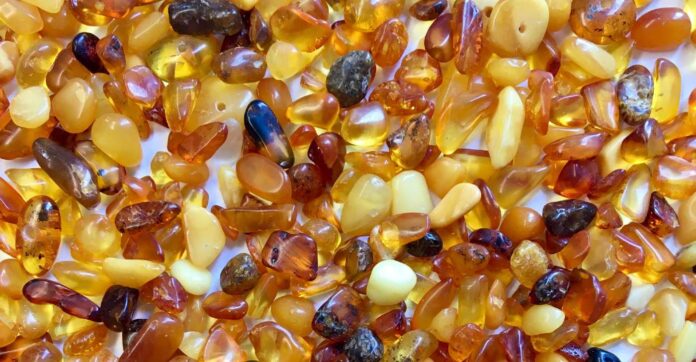
For centuries, people in Baltic nations have used ancient amber for medicinal purposes. Even today, infants are given amber necklaces that they chew to relieve teething pain, and people put pulverized amber in elixirs and ointments for its purported anti-inflammatory and anti-infective properties.

Now, scientists have pinpointed compounds that help explain Baltic amber’s therapeutic effects and that could lead to new medicines to combat antibiotic-resistant infections.

Each year in the U.S., at least 2.8 million people get antibiotic-resistant infections, leading to 35,000 deaths, according to the U.S. Centers for Disease Control and Prevention.

“We knew from previous research that there were substances in Baltic amber that might lead to new antibiotics, but they had not been systematically explored,” says Elizabeth Ambrose, Ph.D., who is the principal investigator of the project. “We have now extracted and identified several compounds in Baltic amber that show activity against gram-positive, antibiotic-resistant bacteria.”

Ambrose’s interest originally stemmed from her Baltic heritage. While visiting family in Lithuania, she collected amber samples and heard stories about their medicinal uses.

The Baltic Sea region contains the world’s largest deposit of the material, which is fossilized resin formed about 44 million years ago.

MORE: An Avocado a Day May Keep Your Gut Microbes Happy, Study Shows

The resin oozed from now-extinct pines in the Sciadopityaceae family and acted as a defense against microorganisms such as bacteria and fungi, as well as herbivorous insects that would become trapped in the resin.

Ambrose and graduate student Connor McDermott, who are at the University of Minnesota, analyzed commercially available Baltic amber samples, in addition to some that Ambrose had collected.

“One major challenge was preparing a homogeneous fine powder from the amber pebbles that could be extracted with solvents,” McDermott explains. He used a tabletop jar rolling mill, in which the jar is filled with ceramic beads and amber pebbles and rotated on its side. Through trial and error, he determined the correct ratio of beads to pebbles to yield a semi-fine powder. Then, using various combinations of solvents and techniques, he filtered, concentrated, and analyzed the amber powder extracts by gas chromatography-mass spectrometry (GC-MS).

Dozens of compounds were identified from the GC-MS spectra. The most interesting were abietic acid, dehydroabietic acid, and palustric acid—20-carbon, three-ringed organic compounds with known biological activity.

Because these compounds are difficult to purify, the researchers bought pure samples and sent them to a company that tested their activity against nine bacterial species, some of which are known to be antibiotic resistant.

“The most important finding is that these compounds are active against gram-positive bacteria, such as certain Staphylococcus aureus strains, but not gram-negative bacteria,” McDermott says. Gram-positive bacteria have a less complex cell wall than gram-negative bacteria. “This implies that the composition of the bacterial membrane is important for the activity of the compounds,” he says.

RELATED: A Single Injection Reverses Blindness in Patient with Rare Genetic Disorder – Another RNA Success

McDermott also obtained a Japanese umbrella pine, the closest living species to the trees that produced the resin that became Baltic amber. He extracted resin from the needles and stem and identified sclarene, a molecule present in the extracts that could theoretically undergo chemical transformations to produce the bioactive compounds the researchers found in Baltic amber samples.

“We are excited to move forward with these results,” Ambrose says. “Abietic acids and their derivatives are potentially an untapped source of new medicines, especially for treating infections caused by gram-positive bacteria, which are increasingly becoming resistant to known antibiotics.”

CHECK OUT: Yale Scientists Successfully Repair Injured Spinal Cords Using Patients’ Own Stem Cells

The researchers presented their results at the spring meeting of the American Chemical Society, which is being held through April. As scientists study the active properties in other traditional medicines from around the world, it’ll be exciting to see what other findings come up.

Source: American Chemical Society; Featured image: Connor McDermott

HELP Your Friends’ News Feeds Glow With Good News—Share This Story…

Particle Mystery Deepens As ‘Strong’ New Evidence Hints at ‘5th’ Force in Nature

Reidar Hahn/Fermilab

Like the four cardinal elements of yore, or the four cardinal directions, there are also four forces of nature—the ones which cause particles to move in different ways, like gravity and electromagnetism.

Through discoveries made while working with a fundamental particle called the muon, physicists working in Chicago have recently made the case for a fifth force of nature, something that would turn physics on its head.

Called the Muon g-2 experiment, conducted at the U.S. Department of Energy’s Fermi Laboratory, the results could either point to an undiscovered particle, or a completely new force acting in the universe—which would be far more exciting.

While smashing atoms together in a particle accelerator, an international team of researchers found that some particles were “wobbling” in ways that couldn’t be explained by the current theory of four forces: gravity, electromagnetism, and two nuclear forces: the strong force and the weak force.

A muon is about 200 times as massive as its cousin, the electron. Muons occur naturally when cosmic rays strike Earth’s atmosphere.

“This quantity we measure reflects the interactions of the muon with everything else in the universe. But when the theorists calculate the same quantity, using all of the known forces and particles in the Standard Model, we don’t get the same answer,” said Renee Fatemi, a physicist at the University of Kentucky and the simulations manager in an official press release.

MORE: 50 Years Ago NASA Sent a Map Into Space to Help Aliens Find Earth—Now They’ve Got An Awesome Update

Several mysteries pervade astrophysics that could be attributable to a force of nature as yet undetected, such as why galaxies spin faster than mathematical calculations suggest they should.

Professor Mark Lancaster at the University of Manchester told BBC News: “Clearly, this is very exciting because it potentially points to a future with new laws of physics, new particles and a new force which we have not seen to date.”

Nevertheless, for now the experiment currently carries a “1” instead of a “0” in the column labeled “chance this may have been nothing but a fluke.”

RELATED: Geophysicists Confirm Plato’s Theory—the Earth Is Made of Cubes

The BBC reports that other experiments in Japan, the U.S., and at the Large Hadron Collider in Europe have all produced experiments of a similar nature, though, and GNN can only imagine that physicists everywhere will be revving up their particle accelerators again to find out more about this 5th force mystery—and potentially bring the discipline into a new epoch.

SHARE The News of This Fascinating Research With Friends…

“Knowing Is Not Enough; We Must Apply. Wishing Is Not Enough; We Must Do.” – Goethe

Quote of the Day: “Knowing Is Not Enough; We Must Apply. Wishing Is Not Enough; We Must Do.” – Johann Wolfgang Von Goethe

Photo by: Cameron Venti

With a new inspirational quote every day, atop the perfect photo—collected and archived on our Quote of the Day page—why not bookmark GNN.org for a daily uplift?


Global Telescope Creates Exquisite Map of Black Hole’s Swirling Magnetic Field

The new image of the region around the supermassive black hole at the core of the galaxy M87, from the Event Horizon Telescope. Lines show polarization of the radio emission from the area closest to the black hole/EHT Collaboration
The new image of the region around the supermassive black hole at the core of the galaxy M87/EHT Collaboration

A new view of the region closest to the supermassive black hole at the center of the galaxy has shown important details of the magnetic fields close to it—and hints about how powerful jets of material can originate in that region.

A worldwide team of astronomers using the Event Horizon Telescope (EHT) measured a signature of magnetic fields—called polarization—around the black hole. Polarization is the orientation of the electric fields in light and radio waves, and it can indicate the presence and alignment of magnetic fields.

The new images allowed scientists to map magnetic field lines near the edge of Messier 87’s (M87’s) black hole, and are a key to explaining how the black hole, 50 million light-years from Earth, can launch energetic jets from its core.

The black hole at M87’s center is more than 6 billion times more massive than the Sun. Material drawn inward forms a rotating disk—called an accretion disk—closely orbiting the black hole.

Most of the material in the disk falls into the black hole, but some surrounding particles escape and are ejected far out into space in jets moving at nearly the speed of light.

“The newly published polarized images are key to understanding how the magnetic field allows the black hole to ‘eat’ matter and launch powerful jets,” said Andrew Chael, a NASA Hubble Fellow at the Princeton Center for Theoretical Science and the Princeton Gravity Initiative in the U.S.

MORE: Hawking’s 50-Year Mystery About Falling into Black Holes Has Finally Been Solved

The scientists compared the new images that showed the magnetic field structure just outside the black hole with computer simulations based on different theoretical models. They found that only models featuring strongly magnetized gas can explain what they are seeing at the event horizon.

CHECK OUT: Biggest Bang Since ‘The Big Bang’ Creates a Black Hole Science Says Should Not Exist

“The observations suggest that the magnetic fields at the black hole’s edge are strong enough to push back on the hot gas and help it resist gravity’s pull. Only the gas that slips through the field can spiral inwards to the event horizon,” explained Jason Dexter, Assistant Professor at the University of Colorado Boulder and Coordinator of the EHT Theory Working Group.

View of the M87 supermassive black hole and jet/EHT Collaboration, ALMA

To make the new observations, the scientists linked eight telescopes around the world to create a virtual Earth-sized telescope, the EHT. The impressive resolution obtained with the EHT is equivalent to that needed to measure the length of a credit card on the surface of the Moon.

RELATED: ‘Unprecedented’ New Photos of the Sun’s Surface Are Being Hailed as Landmark Achievement for Science

This resolution allowed the team to directly observe the black hole shadow and the ring of light around it, with the new image clearly showing that the ring is magnetized. The results are published in two papers in the Astrophysical Journal Letters.

As the EHT collaboration continues to do more work on what’s just happening around us in space, we’ll be sure to let you know their latest findings.

Hollywood Legend Dick Van Dyke Hands Out Money to Struggling People Standing in Line For Jobs

Gage Skidmore, CC license

He may be best known for his delightful rooftop dance moves while playing a chimney sweep in Mary Poppins, but Dick Van Dyke hasn’t quietly slipped into retirement since his breakthrough 1964 role.

In fact, the 95-year-old has been caught doing all sorts of good deeds over the years.

His latest kindness? Last week, the actor showed up at Los Angeles’ Malibu Community Labor Exchange—and began handing out cash to job seekers waiting in line outside the non-profit.

Helping others has been an important part of Van Dyke’s life for decades. He’s known for spending over 20 years volunteering at LA shelter The Midnight Mission. He’s also served as a spokesperson for the Cell Therapy Foundation and the National Reye’s Syndrome Foundation.

The last time we shared the good news relating to this Hollywood legend? It was to report on Van Dyke dancing with his real-life wife, Arlene Silver, in the most joyful music video ever for bluegrass group Dustbowl Revival.

Oh, and then there was the time he treated diners at a Santa Monica Denny’s to a spontaneous performance of Chitty Chitty Bang Bang with his a cappella group Vantastix.

CHECK OUT: Yo-Yo Ma Gives Surprise Performance at the COVID Vaccine Site After Getting His Second Jab

The secret to ageing gracefully? It seems it may just be taking a step out of Van Dyke’s shoes, by giving to others, and dancing and singing whenever we can.

For proof, just watch this video of Van Dyke dancing in a department store.

The beloved star quipped, “That rule about having to act one’s age? – I just don’t buy it.”

SHARE the Practically Perfect Good News With Pals on Social Media…

Dog Saved From Icy River After 4 Days Gets Adopted by Rescuer – And a New Name ‘Miracle’

Woodhaven Animal Hospital/Facebook

For four days and three nights this past February, a dog stranded on an ice floe in the frigid waters of the Detroit River between the U.S. and Canada struggled to stay alive. Even though the situation was desperate, the dog held out for a miracle—and finally got one.

First spotted by a wildlife photographer shooting images on the Michigan bank of the river, soon enough, concerned parties on both sides of the border were struggling to find a way to save the imperiled pup, but the extreme elements were against them.

After tapping numerous resources, it seemed no one could help, but determined rescuers refused to give up. “We had to fight for him,” Patricia Trevino of the River Rouge Animal Shelter (RRAS) told WXYZ-Detroit. “It was a level of frustration I’d never felt because this was a life; it was out there in front of us. We could all see it.”

That’s when Jude Mead and his son, who own a marine construction company in Windsor, Ontario, took the helm of the lifesaving operation—literally.

Setting off in an airboat loaned to them by the BASF Corporation, the pair were able to pilot their way across the ice, finding and securing the dog with relative ease.

After having spent such a prolonged period in sub-zero temperatures—much of the time under the stressful threat of prowling coyotes—the poor pooch was in pretty rough shape.

Woodhaven Animal Hospital/Facebook

Once ashore, he was immediately taken to Woodhaven Animal Hospital for evaluation. The diagnosis confirmed the young dog suffered frostbite, dehydration, and pancreatitis as a result of his ordeal, however, the veterinarians speculated that the dog’s badly matted fur was likely a blessing in disguise, keeping him from further harm.

MORE: Stray Dog Kept Sneaking Into Dollar Store For a Stuffed Unicorn – Now He and the Toy Have a New Forever Home

“I feel like what saved him out there is the fact that he wasn’t groomed and his coat was pelted,” Woodhaven vet Dr. Lucretia Greear told The Detroit Free Press. “He had literally like a layer of insulation that protected him from the water and the ice and it protected him from freezing to death—but he’s a miracle.”

After successful treatment and recovery, the lucky pup, who’d been going by the name Alonso, was aptly renamed ‘Miracle’ and put up for adoption.

While there were many contenders for the role of new pet parent, when the man who’d plucked him from the ice stepped forward to lay his claim, the shelter staff agreed that nothing could feel more right than reuniting them.

RELATED: Heroic Sailor Dives Into Choppy Seas to Save 4 Kittens From Burning Ship

“Today the story came full circle. Today the little Miracle dog was placed into the hands of the hero who saved his life. That’s right—this dog who defied ALL THE ODDS will now live happily ever after with the man who saved his life,” Friends of the RRAS announced.

“Miracle could not ASK for a better or more ideal family to love him! We are all so grateful for this happily ever after ending to this AMAZING story… Congrats Jude and family on the addition to your family! Happy life, Miracle!”

WOOF Your Approval of This Great Rescue Story on Social Media… 

North Carolina-based writer Judy Cole has a new rom-com murder mystery debuting at Amazon: And Jilly Came Tumbling After (from Red Sky Presents).

Amid the Green Funeral Movement, Scattering Ashes Ensures These Forests Remain Pristine Forever

Better Place Forests

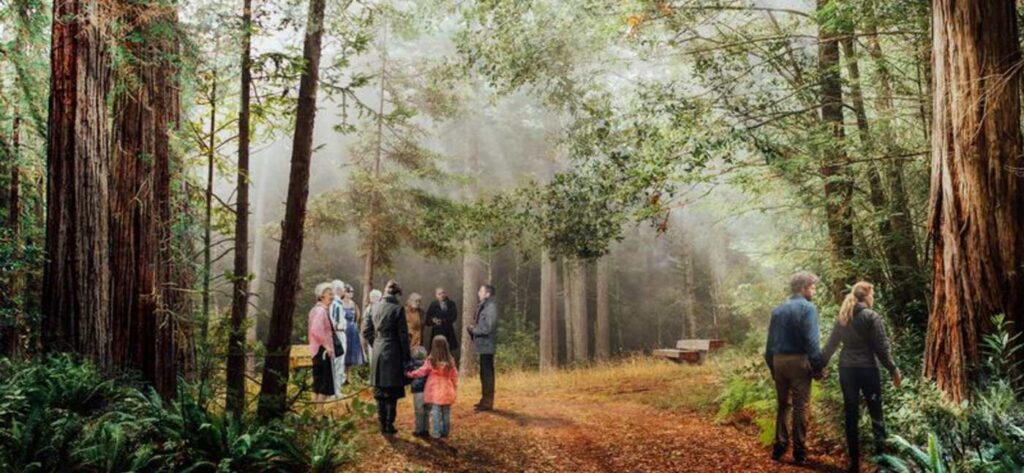
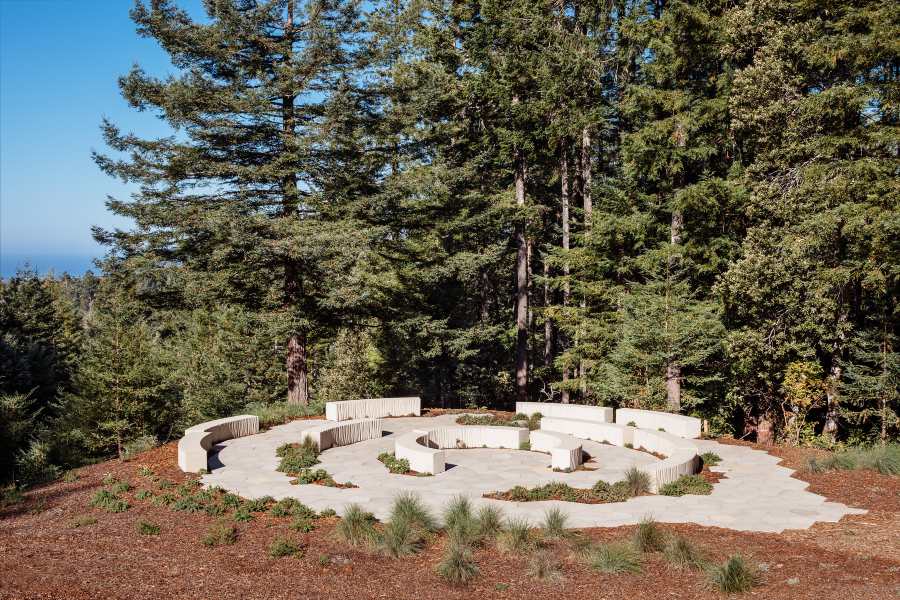
Across America, small parcels of forested land are being bought from private owners by a conservation group called Better Place Forests.

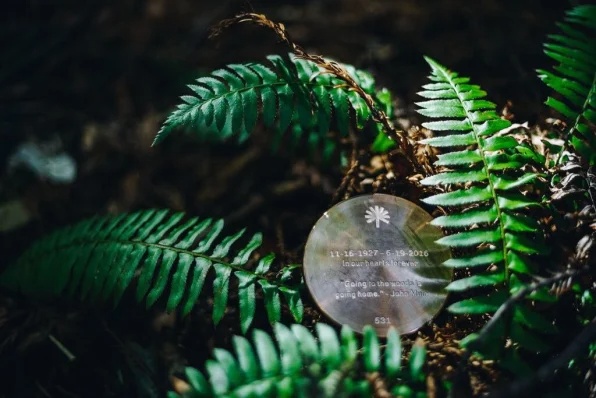
With the intention of providing the roots, trunk, and branches of a tree as the site of a loved one’s final resting place, the group is also ensuring that by law the forest will remain preserved forever.

They own and maintain “memorial forest preserves” in Connecticut, Massachusetts, California, Arizona, Minnesota, and soon Illinois. These preserves feature heritage sugar maple stands, California redwoods, quaking aspen colonies, views out across the Pacific or the Twin Lakes, and every tree is up for grabs for just a few thousand dollars.

“There’s this moment when you choose your tree, and it’s like nothing you’ve ever expected,” says Sandy Gibson, the CEO of Better Place Forests. “It’s this moment as you choose it, and you’re looking around and you realize this is what forever looks like.”

“This is where you’re going to be, and it’s a beautiful image: you’re in a beautiful place, you can hear the wind blowing through the trees, and it’s something we’ve heard from all of our customers after they choose their tree is that this feeling of peace, of knowing what the end of the journey looks like,” he adds.

Every year the funeral industry consumes 20 million feet of hardwood, 64,500 tons of steel, 1.6 million tons of concrete, and 5 million gallons of embalming chemicals.

RELATED: Dutch Man Invents Coffin That Turns Bodies Into Mushrooms: ‘We are nutrients, not waste’

“One of the most popular reasons to choose cremation is the idea that [people] want to take up less space, also to reduce the burden on the Earth,” says Gibson. “The environmental aspect of what we do is incredibly important to our customers.”

A healthy alternative

Fletcher Studio/Better Place Forests

As the cost of traditional casket-service-cemetery funerals continues to rise ever higher in the U.S., it’s estimated that 80% of the Baby Boomer generation will chose cremation.

“If you wanted a 10 to 20 person family plot anywhere near a major city, I’d be incredibly surprised if you could find that for less than $200,000,” says Sandy, adding that despite the shift towards cremation, Americans haven’t lost the desire for place or ritual with their families.

“Our customers are drawn to Better Place Forests because they love the idea of being in nature, and leaving a legacy of nature. For those who are very religious, for them nature is the place they felt closest to God.”

The choice of cremation and the subsequent scattering-of-ashes ceremony releases the bereaved from the constraints of the traditional funerary service which is typical planned without much time and under duress of grief.

But in a funny way, that freedom creates a significant complication for some, in that what is perceived as a very important detail in one’s life story—their funeral, has to be imagined from within a far greater realm of possibilities. This, Sandy said, can create a sort of funerary writer’s block, which Better Place Forests helps people overcome, especially those who are environmentally minded.

“Part of it is this legacy of conservation; knowing that you contributed to the protection of a beautiful forest and then it’s protected for future generations because of something you did. When you walk on these forests that’s when it makes sense; we choose properties that are incredibly beautiful, trying to find properties that are iconic to each region.”

Very North American

Fletcher Studio/Better Place Forests

“Our costs are derived from buying forests and protecting them forever,” says Sandy in response to how he manages to undercut the cost of a traditional funeral.

While legal fees soak up the majority of the cost, part of the expense also includes customizable services either indoors or in the forest. Each tree can host several ash scattering ceremonies, and the cremation techniques employed ensure the ashes are optimally and rapidly turned into nutrients, merging spirit and soil for eternity.

READ ALSO: The First State in the U.S. Approves Human Composting; Local ’Green Reaper‘ Has Your Guide to Eco-Friendly Burials

One might say that Americans are uniquely suited to this sort of internment, as our connection with nature, particularly with our forests, changed the world. In 1872, we became the first ever nation to create a national park, and by 1906, we had created five others.

In the 19th century, Canada and the United States attracted all manner of Europeans to join in the timber industry, and immense forests containing magnificent trees quickly became iconic images of the New World.

Fletcher Studio/Better Place Forests

There was the era of the Mountain Man, the Gold Rush, the conservation movement sparked by Field and Stream Magazine, the Audubon Society, and the Sierra Club—all cultural epochs centered around extraordinary American landscapes, while throughout the 20th century our commitment to the protection of forests may have surpassed those of any other nation.

“One of the beauties of this job is we get to go around the entire United States and see what the different forests and landscapes look like everywhere, and they are very unique, and you see why people are connected to their woods,” says Sandy.

“What’s amazing is every region has their iconic tree. In Arizona people love aspens. It’s something magical; the idea that that aspen grove could be alive 8,000 years and keep sprouting new trees over time, it’s kind of an amazing thing to think about. On the east coast it’s chestnuts.”

“There’s a new forest we’ll be announcing soon where we’ll be able to plant some giant sequoias,” he adds excitedly. “How cool is that, to get to be a part of a reforesting of regional sequoias?”

Environmentalists of all stripes, from climate warrior activists to permaculture farmers, often talk about having a better relationship with nature. Our physical relationship with nature is very one-sided, but maybe changing our attitudes towards it could start with our eternal placement, namely one borne from a desire to give back, and not to be lodged stubbornly in a concrete burial vault within a chemically treated coffin.

GIVE BACK by Sharing This Story From the Woods With Pals…

A Morning Cup of Coffee Not Only Charges You Up, But the Leftovers Have Reinvigorated Forests

Uriel Mont

A jolt of coffee in the morning sets the world’s workers right, but a new study shows that for trees, a bit of caffeine is just as good.

Tropical forests can regrow much faster when running on the caffeine from coffee pulp, a waste product from coffee production.

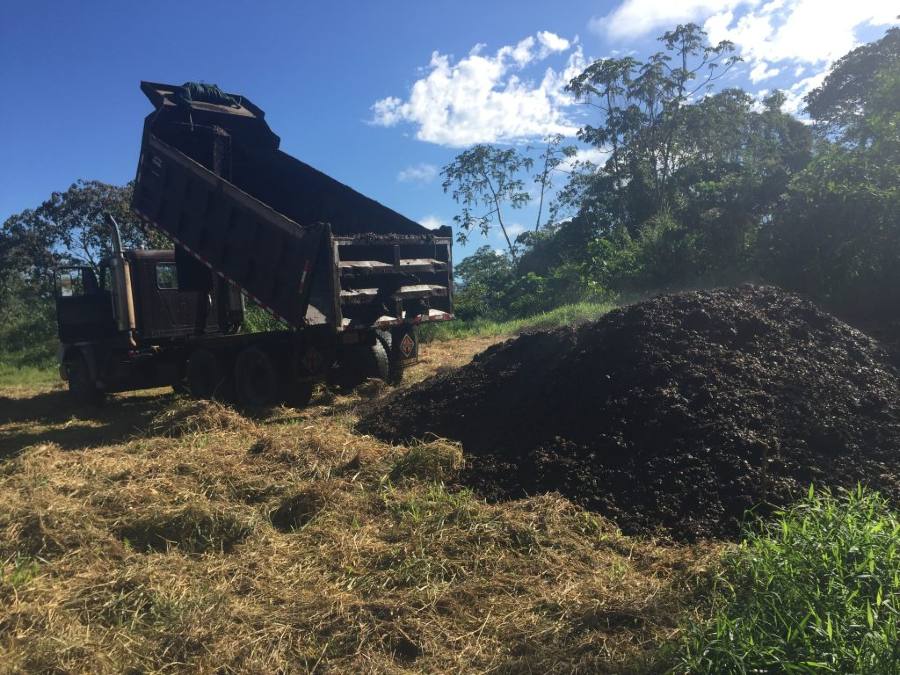
This was found in a direct case-control study of degraded tropical land in Costa Rica, where scientists from the University of Hawai’i and ETH-Zurich spread 30 dump truck loads of coffee pulp over a 35 x 40 meter plot of land.

Pulp being applied to the Costa Rica forest/Dr. Rebecca Cole

They designated an equal size plot of the same land just next to it as a control plot.

People who drink coffee that also start composting in their homes often find that coffee grounds make up the majority of their weekly biomass. But coffee grounds are naturally acidic, with a pH of less than 5, and therefore aren’t always nutritious for some houseplants or decorative flowers.

Tropical soil on the other hand, traditionally containing very poor nutrient profiles, can tolerate the coffee’s acidity, it being acidic itself, and contains a variety of plants and microorganisms that thrive in low pH environments.

“Our results show that soil carbon, nitrogen, and phosphorous were substantially elevated in the coffee pulp compared to control treatment after 2 years,” write the authors in their study led by Dr. Rebecca Cole. “Coffee pulp addition significantly altered the ground cover characteristics, eliminating pasture grasses, facilitating establishment of herbaceous plants, and increasing the percent area covered by leaf litter.”

MORE: This Brilliant Low-Income Housing in Colombia is Made From Coffee Waste

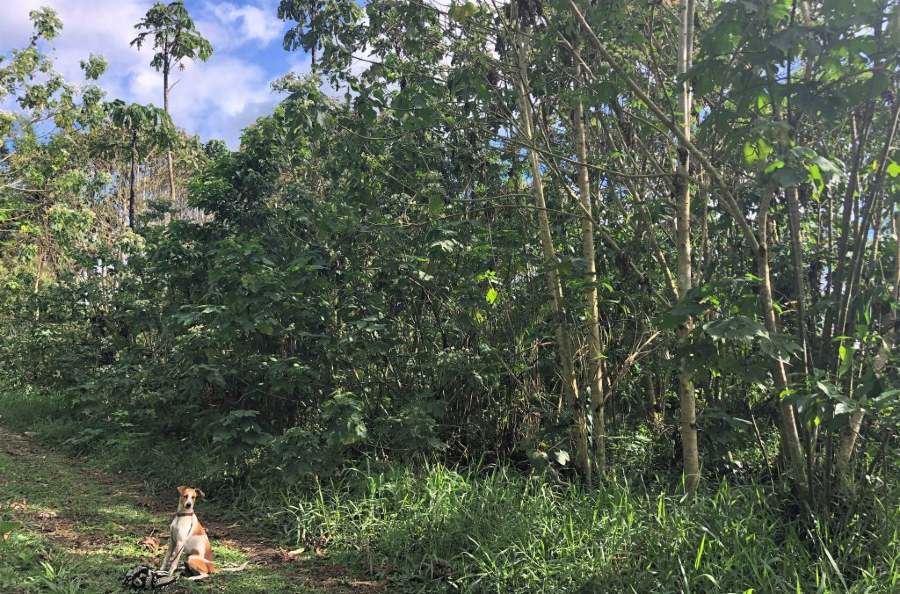
Indeed, a report from the British Ecological Society claimed the area treated with pulp became a small forest, with 60% greater canopy coverage reaching 4 times as high than the non-treated area, which mostly remained filled with invasive grasses and weeds.

3 years after coffee pulp was applied to a forest area in Costa Rica/Dr. Rebecca Cole

It’s a significant finding, since coffee is grown mostly in tropical climates, tropical soil tolerates coffee’s acidity, tropical forests are cut down at rates faster than any others, and tropical forests sequester more carbon and contain greater biodiversity than arboreal ones.

Normally heaped into storage lots and left to decompose, coffee pulp—which consists of the husk, skin, and pulpy interior—is rich in nutrients and also represents more than half of the weight of the coffee harvest. The authors cite one study that figured there are 218,000 tones of pulp that must be managed for every one million bags of coffee sent to market.

RELATED: Coffee Could Be Used to Fight Obesity, Says ‘Pioneering’ New Study

It’s a brilliant solution—to enrich tropical lands as countries produce a cash crop. It’s cheap, it’s local, the nutrients match, it gives animals more habitat and pulls more carbon from the atmosphere, and best of all, we can keep drinking that lovely cup o’ joe.

ENERGIZE Your Friends’ News Feeds—Share This Story on Social Media…

“Don’t Let Yesterday Take Up Too Much Of Today.” – Will Rogers

Quote of the Day: “Don’t Let Yesterday Take Up Too Much Of Today.” – Will Rogers

Photo by: Luke Stackpoole

With a new inspirational quote every day, atop the perfect photo—collected and archived on our Quote of the Day page—why not bookmark GNN.org for a daily uplift?


Boy Hero Saves Sister From Choking After Watching John Cena, Who Congratulated Him With a Video

Jaxson Dempsey and his sister, PA News-YouTube/John Cena, CC license
Jaxson Dempsey and his sister, PA News-YouTube/John Cena, Gage Skidmore, CC license

In moments of peril, superheroes don’t hesitate, they leap into action. And so, it seems, do little boys if their baby sister’s life depends on it.

When 8-year-old Jaxson Dempsey realized his 20-month-old sister Lelia was choking on a chicken nugget, he didn’t panic. Instead, he calmly directed his dad to pull over the car they were driving in and proceeded to dislodge the obstruction from Lelia’s airway.

Jaxson said he’d learned the lifesaving technique from watching WWE superstar John Cena perform the maneuver on an episode of the Nickelodeon show The Substitutes.

Jaxson’s father Matt has nothing but gratitude for his son, whose quick thinking staved off a potential tragedy.

“I couldn’t hear her because she was choking. She wasn’t coughing; she wasn’t panicking. She just had no air going through; she wasn’t breathing,” Dempsey told WNEP-News. “Thank God Jaxson was there because, without him, I don’t know if Lelia would be here.”

While kudos were the last thing on Jaxon’s mind for doing what came naturally when his sister needed him, they’ve been rolling in nonetheless ever since.

MORE: After Neighbors Ran to Save a Man’s Life, He Put Up a Sign to Thank Them for the Happy Ending

The first big “Well done!” came from none other than John Cena himself, who sent a personal message via video after learning of the boy’s heroics.

“I heard a story about you, and it really touched my heart,” Cena said. “A story that in a time of crisis, you were brave enough to take action… Usually, when bad things happen, one of the toughest things for all of us to do is to take action. You jumped right in, helped out the best you could. [By] doing so, you saved your sister’s life. I really want to say thank you for being you, Jaxson. Thank you for being an inspiration; thank you from all of us.”

CHECK OUT: Foot Doctor Saves Passenger’s Life by Following His Instincts and Ignoring Orders From the Ground

Cena’s tribute was high praise indeed, but the accolades didn’t stop there. On March 31, Jaxson’s hometown of Hazleton, Pennsylvania fêted him with his very own parade featuring more than a dozen fire trucks, sirens blaring and lights blazing, all in honor of a pint-sized hero who turned out to be the best big brother a little sister could have.

(WATCH the PA video and meet Jaxson below.)

SHARE This Positive Story With Friends on Social Media…

North Carolina-based writer Judy Cole has a new rom-com murder mystery debuting at Amazon: And Jilly Came Tumbling After (from Red Sky Presents).

Bird Protectors Built a Giant Sandcastle to Ensure These Martins Have a Nesting Home For Years to Come

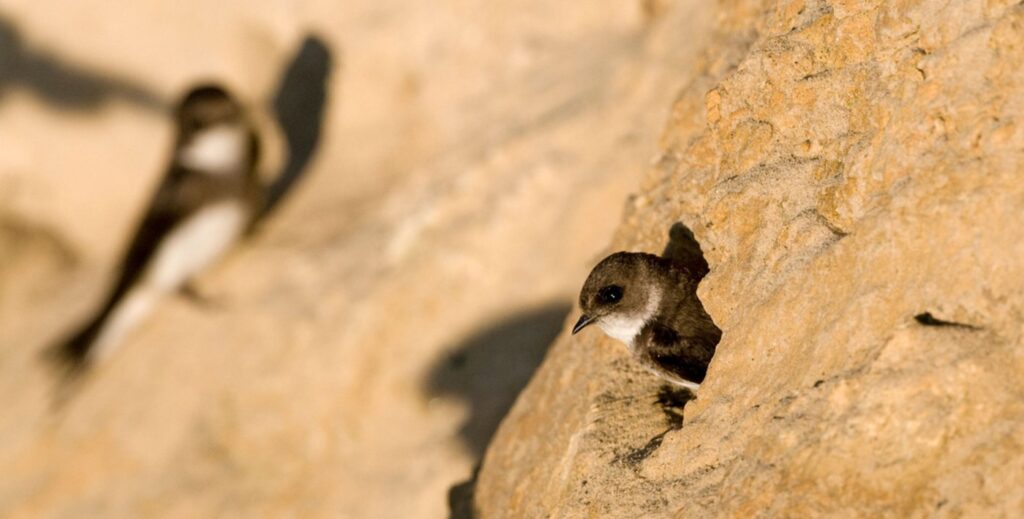
Sand martins, copyright David Tipling for Surrey Wildlife Trust

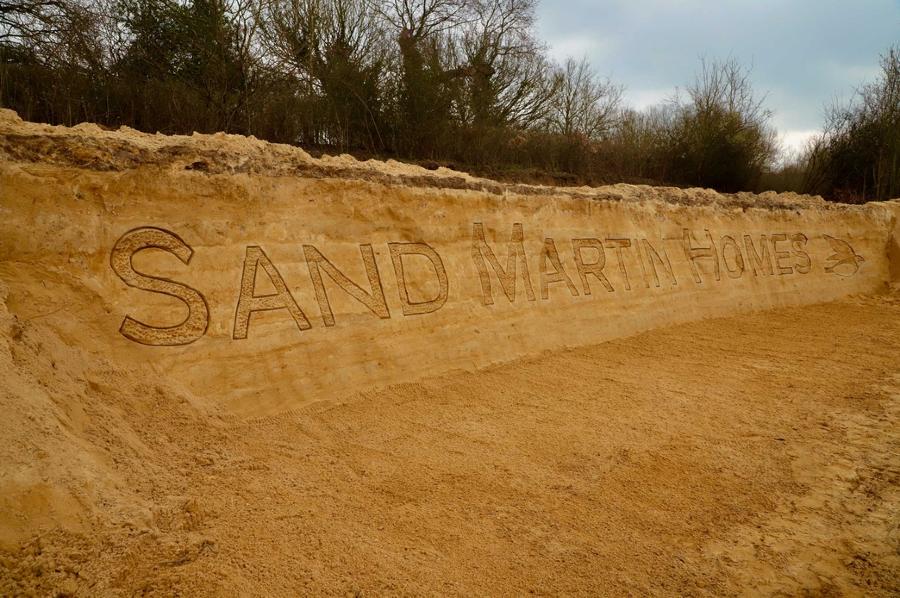
Conservationists realized they needed more than a bucket and shovel to build a 400-ton sand castle large enough to be an attractive home for sand martins to roost in England.

Sand martins, copyright David Tipling for Surrey Wildlife Trust

To help the tiny birds they needed big machines—and building a sandbank large enough for them to build their nests in required the help of a sand-sculpting firm.

The sand martin The smallest English members of both the martin and the swallow family—the birds were finding fewer and fewer places perfect for boring their nests, as so much development had replaced their previous nesting habitats with infrastructure.

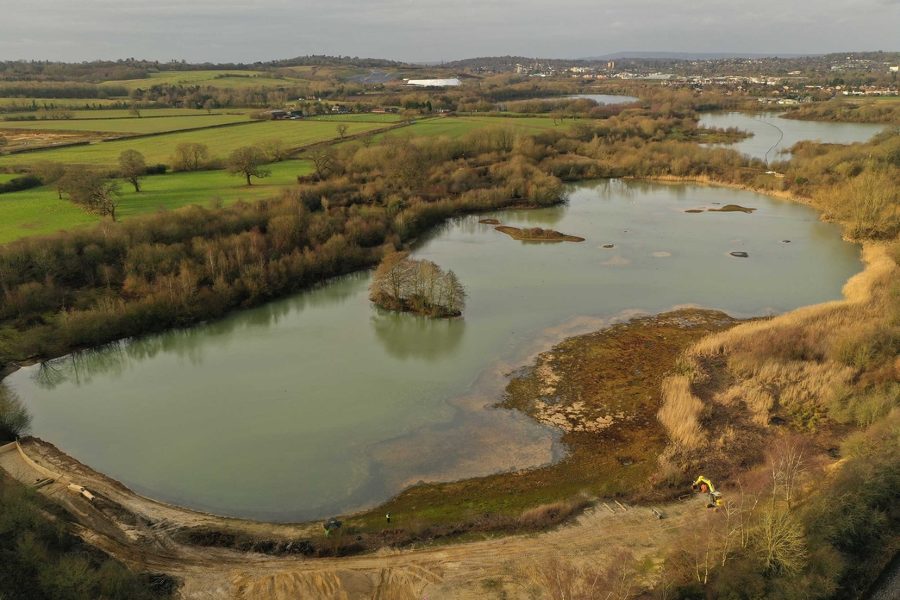
The martins return annually from wintering grounds in sub-Saharan Africa. Burrowing into the side of high riverbanks means that sand martins are choosy homemakers—but the Surrey Wildlife Trust, acting as real estate developer, is building an enormous artificial sandbank for them in the Spynes Mere Nature Reserve.

Enlisting the help of a specialist construction and landscaping firm named ‘Sand in Your Eye’, it took weeks of filling in a mold, getting the water content right, and packing down the sand before they were able to remove the wooden supports.

Copyright Surrey Wildlife Trust

James Herd, project manager at Surrey Wildlife Trust, said in a video about the project: “Sand martin numbers have plummeted twice in the last 50 years as a result of droughts in their wintering grounds in Africa. In the bank here we’re giving them a long-term sustainable home to nest in for the future.”

“The design is similar to building a sandcastle on the beach, but rather than buckets and spades we were using nine-ton excavators and dumper trucks,” he added.

MORE: ‘Like a Beautifully-tuned Instrument’: 2000 Microphones Unlock the Mystery of Why Hummingbirds Hum

The petite passerines, which arrive in England around mid-March and depart in September, use their claws to dig nesting holes up to a meter deep into the bank. At the end of the tunnel a small chamber is created where between four and eight eggs get laid in a nest of feathers and vegetation.

RELATED: Being Around Birds Makes Us Much Happier Says New Science

Over time, layers of sand on the face of the bank will be scraped away by the Trust to remove nest parasites.

Spynes Mere Nature Reserve, copyright Surrey Wildlife Trust

The returning martins will dig new nests—and every six years or so the bank will be restored to its original size, ensuring their home remains intact for years to come.

(WATCH the Surrey Wildlife Trust video about this initiative below.)

Fly the Good Conservation News Over to Pals on Social Media…
Teen Refugee Collects Thousands of Coats for Charity—With a Little Help From Mark Cuban

Ashis Dhakal, Facebook/Mark Cuba, Gage Skidmore CC license
Ashis Dhakal, Facebook/Mark Cuban, Gage Skidmore CC license

Anyone who’s experienced poverty knows firsthand how hard finding a pathway out can be. For some lucky enough to have made the transition, the desire to lift up those who are still struggling can become a huge part of their lives.

When 18-year-old Ashis Dhakal arrived in Utah  from a refugee camp in Nepal, he knew he’d been given a tremendous opportunity. Though he was bullied at his Salt Lake City school, the tenets of service and giving that are integral to his Hindu faith became the cornerstone of a long-term goal to pay his good fortune forward.

A few years ago, while he was bussing tables for his job at KFC, Dhakal met a homeless man for whom he felt a great deal of empathy. Understanding only too well the difference in life between “the haves” and “the have nots,” once he’d learned the man’s history, he was inspired to help.

One of the most obvious needs Dhakal observed while talking with the man was for clean, serviceable clothing. With that in mind, he launched his first clothing drive Ashis Collects Clothes, in 2019.

Dhakal’s good works won him the attention of The TODAY Show’s Hoda Kolb, who took the teen on as a mentee.

“My biggest ‘why’ in my life is that as a young child, going through poverty, I was in the same shoes as they were in right now,” he said, explaining his drive to Kolb in a recent interview. “I have a house. I have a computer now. I have a phone. But think about it: Those kids are still suffering. What I can do is better others so that, you know, they can give back to their community.”

RELATED: Watch Dwayne Johnson Give $30K Truck to the Guy Who Took Him In When ‘The Rock’ was a Homeless Teenager

Recognizing Dhakal’s keen entrepreneurial spirit, it seemed natural for Kolb to hook her protégé up with one of his all-time heroes, Shark Tank’s billionaire philanthropist Mark Cuban. During their online meeting, Cuban gave Dhakal a challenge: Collect 575 coats for folks in need.

While the task was initially daunting, Dhakal parlayed some of Cuban’s networking advice into a winning strategy. After partnering with the Utah outreach organization Serve Refugees, Dhakal was able to chalk up 3,000 coat donations in a matter of days (for which TODAY parent company NBC offered matching donations).

Cuban was suitably impressed, telling TODAY: “You’re setting an example, Ashis, that it’s not about connections… It’s all about how hard you’re willing to work to getting something done.”

MORE: Alex Trebek’s ‘Jeopardy!’ Wardrobe Is Now Going On Job Interviews, Dressing the People Who Need it Most

Dhakal is certainly willing to do whatever it takes to build a better world. Wherever his entrepreneurial spirit takes him in the future, helping others is sure to drive him along the way.

(MEET Dhakal in the TODAY video below.)

INVEST in This Story—Share it With Friends on Social Media…
North Carolina-based writer Judy Cole has a new rom-com murder mystery debuting at Amazon: And Jilly Came Tumbling After (from Red Sky Presents).

In 24 Years California Has Cut Toxic Air Pollution By 78%, Resulting in 82% Fewer Attributable Deaths

Curimedia, CC license

California’s air pollution control standards have drastically dropped the amount of diesel particulate matter in the air, and cardiopulmonary deaths attributable to air quality.

Scientists at UC Berkeley are hailing the state’s diesel engine standards and other measures imposed over a number of years, even in the face of loosened environmental regulations in recent years.

If one has never seen the pictures of the city of Los Angeles before the Clean Air Act, they look like something out of the movie Escape from L.A. But encouraging shifts away from high-sulfur fuels, and replacements of diesel ships with electric ones, has gradually scaled the horror show back—despite the fact that still today there are more cars registered in the state of California than any other state.

“Our analysis of mobile-source DPM (diesel particulate matter) emissions suggests that many California sector-based policies have been highly effective relative to the rest of the US,” write the authors of the paper published in Science.

They found that from the period between 1990 and 2014, the amount of DPM in the California skies fell by 78%, while cardiopulmonary and cancer deaths linked to diesel pollution dropped by 82%.

CHECK OUT: Air Pollution Laws May Have Saved Over 1.5 Billion Birds in American Skies, Finds New Cornell Study

The largest fall came from tractor-trailers, which is unsurprising given the fact they often run on diesel and cover many miles. Reductions were also observed in passenger and construction vehicles, as well as from the marine sector.

California’s overall consumption of diesel actually increased over this period, which suggests that mandates to move to more refined fuels and retrofitting existing vehicles with pollution filters are highly effective strategies (both are recommended for implementation in other states by the Berkeley scientists).

MORE: Insert This On Your Bike Wheel to Filter the Air Pollution While You Cycle

Moves towards electric public and private transportation, such as Governor Newsom’s executive order to ban the sale of fossil fuel vehicles beyond 2035, should clear California’s skies substantially more—and will be a momentous accomplishment from one of the country’s largest economies.

GIVE Your Friends a Breath of Fresh Air—Share the Good News…