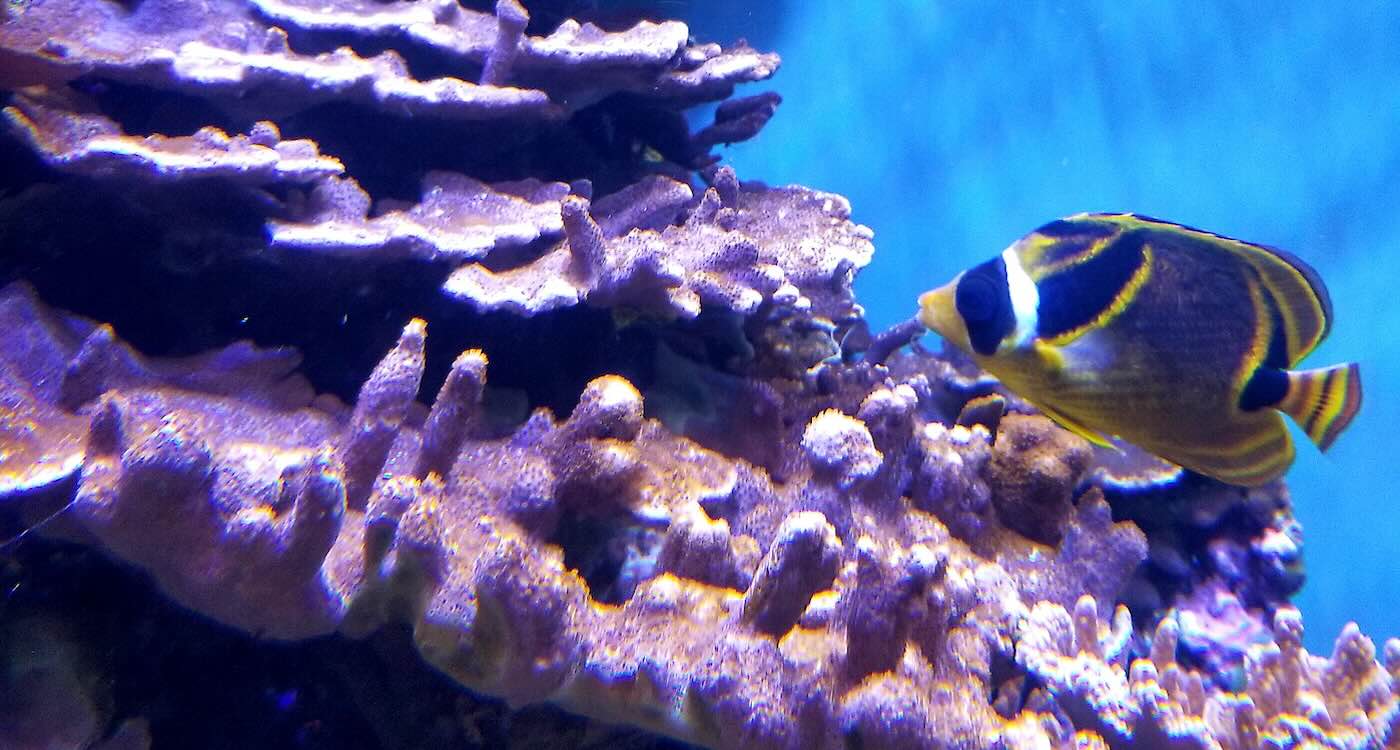












Quote of the Day: “Everything is phenomenal; everything is incredible. Never treat life casually.” – Abraham Joshua Heschel
Image by: Diego PH
With a new inspirational quote every day, atop the perfect photo—collected and archived on our Quote of the Day page—why not bookmark GNN.org for a daily uplift?
61 years ago today,Rudolf the Red-Nosed Reindeer, the animated stop-motion Christmas special, was first broadcast on CBS television. The beloved Rankin/Bass production chronicles the bullying endured by Rudolph (at reindeer school) and a misfit elf named Hermey, who wants to be a dentist. WATCH the reprise finale below… (1964)
Tribal Secretary Tara Fouch-Moore at the western edge of the property - credit Pacific Forest Trust
Tribal Secretary Tara Fouch-Moore at the western edge of the property – credit Pacific Forest Trust
Nearly 900 acres of land bordering Yosemite National Park have been transferred back to tribal ownership after 175 years,
The transfer from Pacific Forest Trust to the Southern Sierra Miwuk Nation provides the tribe with ownership of the naturally and culturally significant Henness Ridge, site of a traditional Native American trail from the Central Valley to Yosemite, and a key migration corridor for deer and other mammals.
“This transfer reunites our people to this unique area of our homeland after 175 years of displacement,” said Tara Fouch-Moore, Tribal Secretary.
The Pacific Forest Trust spent two decades preparing the land for its return to tribal ownership after the organization purchased it under threat of development.
Located just west of Chinquapin/Badger Pass and State Highway 41, the property overlooks both branches of the Wild and Scenic Merced River to the south and north, the Central Valley to the west, and the main Yosemite Valley to the north.
For generations, the Southern Sierra Miwuk people cared for these forests, meadows, and springs. But with the 19th-century increase in settlements and the establishment of the Yosemite National Park, the tribe was eventually expelled.
“Having this significant piece of our ancestral Yosemite land back will bring our community together to celebrate tradition and provide a healing place for our children and grandchildren,” said Southern Sierra Miwuk Nation’s Tribal Council Chair and elder Sandra Chapman, in a statement. “It will be a sanctuary for our people.”
The transfer will enable the Southern Miwuk to restore biodiversity and climate resilience using traditional ecological practices such as cultural fire, cultivation of native plants, forest restoration, and protection of water quality feeding the two tributaries of the Merced.
In 2018, the property was heavily impacted by the Ferguson Fire. With a significant portion of the property burned, Pacific Forest Trust restored almost 500 acres by removing dangerous snags, thinning overstocked areas, improving access and other conditions for reforestation, and planting 125,000 native seedlings.
In fact, the Ferguson Fire was stopped from further spread on this Ridge, protecting the community of Yosemite West.
The project will also facilitate movement across private-public corridors for plants and animals adapting to climate change, and provide a unique platform for public education on the multiple benefits of indigenous land stewardship.
“When we were first approached to conserve this land over 20 years ago, we recognized immediately how important it was to protect and conserve. As we’ve protected it from development, strengthened its role as a buffer to Yosemite, and prioritized both conservation and cultural restoration, this is an extraordinarily fitting and positive outcome!” said Laurie Wayburn, cofounder and president of Pacific Forest Trust.
In addition to re-establishing the Southern Sierra Miwuk Nation as the stewards of Henness Ridge, this project will support and strengthen the Tribe’s case for federal recognition, an ongoing pursuit since 1982.
The land transfer was facilitated by a grant from the California Natural Resources Agency Tribal Nature-Based Solutions Program, which GNN recently reported helped set up another reunion a century and more in the making when the Tule River Indian Tribe celebrated the return of 17,000 acres of ancestral lands by releasing several of the region’s native Tule elk to roam the hills of the southwest Sierra Nevada.
Much like the Henness Ridge and its adjacency to Yosemite, the 17,00 acres are made up of former ranch properties that connect the Tule River Tribe’s existing reservation with a large block of US Forest Service land that connects with Giant Sequoia National Monument in Sequoia National Forest.
By turning the land, known as the Yowlumne Hills, over to the tribe, a substantial conservation corridor for animals including these Tule elk will be established.
As for the Miwuk, they look forward for rebuilding their identity landowners and stewards
“We will be able to harvest and cultivate our traditional foods, fibers, and medicines and steward the land using traditional ecological knowledge, strengthening our relationships with plants and wildlife, and benefiting everyone by restoring a more resilient and abundant landscape,” Fouch-Moore said in a statement.
SHARE This Land-Back News With Your Friends In California…
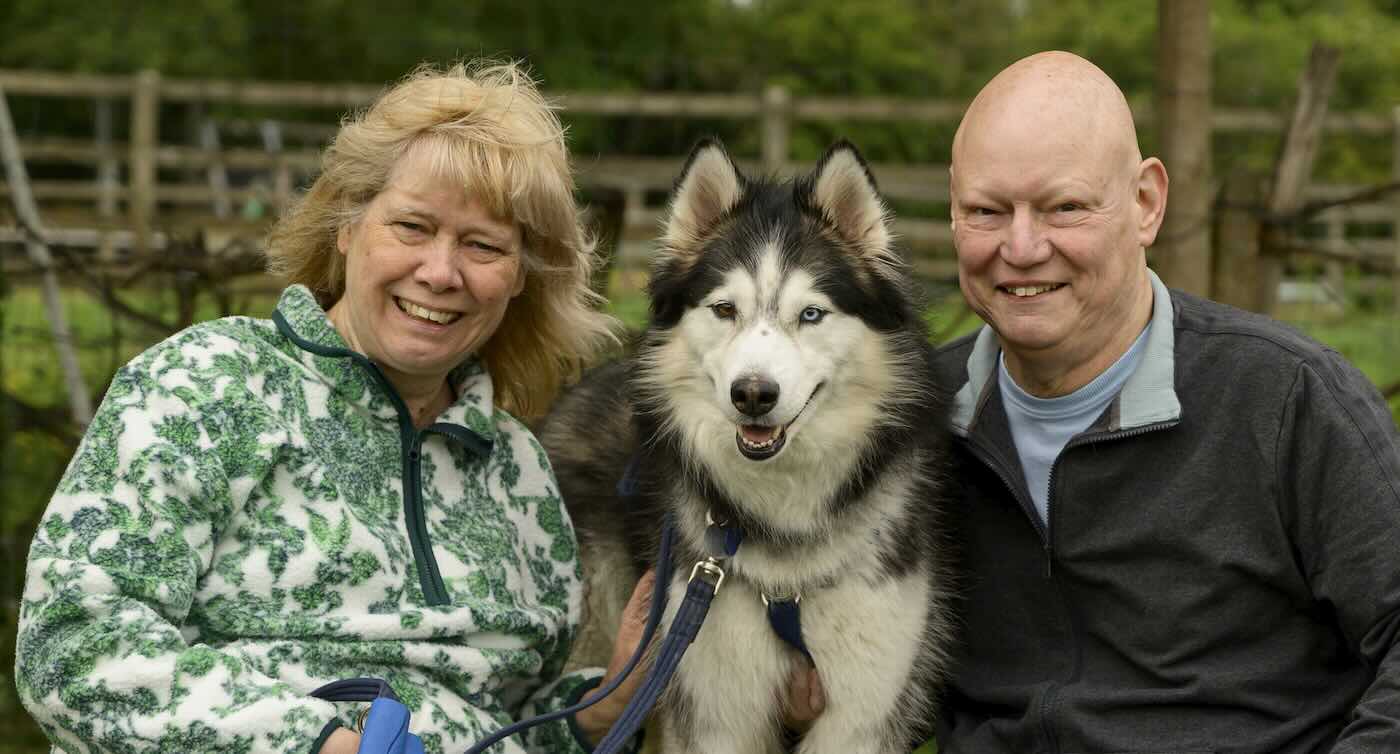
Family dogs boost kids’ mental health by changing microbes that live in their bodies, according to a new study.
Researchers found that the pets prompt changes in the human microbiome, the collection of all microorganisms, including bacteria, fungi and viruses, that inhabit the human body.
Hundreds of studies have shown directly and circumstantially that this community of microbes play a crucial role in health, immunity, digestion, fertility, and emotional wellbeing.
The composition of a person’s microbiome is unique and can change based on factors such as diet, medication, and environmental exposures.
Other studies have shown dog owners have differences in their gut microbiomes, including greater microbial diversity, compared to non-dog owners.
Described in a new paper, lead author Professor Takefumi Kikusui, of Azabu University in Japan and his team found that young people who grow up with a dog from a young age and continue to have dogs later in life score higher on measures of companionship and social support.
These effects, he says, may be mediated through symbiosis with microorganisms.
In the new study, published in the journal iScience, the research team set out to explore whether some of the beneficial effects of dogs on adolescent mental health might be tied to these differences in the microbiome.
“Adolescent children who keep dogs exhibit higher mental well-being, and we also found that dog ownership alters the gut microbiota,” said Professor Kikusui “Since the gut microbiota influences behavior through the gut-brain axis, we conducted this experiment.”
The Japanese team found that whether someone owned a dog at age 13 predicted their mental health and behavioral scores. Social problems were “significantly” lower in adolescents with a dog at home compared to those without a dog.
They then looked at microbiome samples collected from the mouth.
After sequencing the microbes, the researchers found similar species diversity and richness between the two groups of teens. But the microbiome composition showed differences, suggesting that owning a dog shifted the abundances of specific oral bacteria.
They hypothesized that some of the bacteria might correlate with the teenagers’ psychological scores.
To put the theory to the test, the researchers treated lab mice with microbiota from dog-owning teens to see whether and how it affected their social behavior. Mice with the dog-owning microbiome spent more time sniffing their cage mates.
The animals also showed a more social approach toward a trapped cage-mate—a behavior test standardly used to test prosocial behavior in mice.
“The most interesting finding from this study is that bacteria promoting pro-sociality, or empathy, were discovered in the microbiomes of adolescent children who keep dogs,” said Kikusui.
“The implication is that the benefits of dog ownership include providing a sense of security through interaction, but I believe it also holds value in its potential to alter the symbiotic microbial community.”
A young man has folded his origami hobby into to a potential career path as an innovator, having used the Japanese artform to create a structure capable of holding 10,000 times its own weight.
His demonstration, which included extensive testing and personal invention, took first prize at the Thermo Fisher Scientific Junior Innovators Challenge in October, giving the lad $25,000 to fold—into his wallet.
Miles Wu has been folding origami for years – credit, Wu family photo
14-year-old Miles Wu from New York City has been folding origami animals and insects for years. He got so good at it that he has even started designing his own folding designs.
His eventual award-winning idea came from studying how origami had previously been used as a field for innovation in medicine. It was during January’s wildfires in Southern California and Hurricane Helene, when Wu familiarized himself with deployable disaster shelters that he realized he might use origami to build a better one.
He began personal experimentation with a kind of origami fold known as Miura-ori, which creates patterned parallelograms by folding a piece of paper over itself into a smaller area.
“A problem with current deployable structures and emergency structures is, for example, tents are sometimes strong, sometimes they can compact really small, and sometimes they’re easily deployable, but almost never are they all three, but Miura-ori could potentially solve that problem,” Wu told Business Insider.
“I found that Miura-ori was really strong, light, and folds down really compactly.”
He tested three different types of paper, folded into three different heights, lengths, and angles of parallelograms—creating 54 variations, which he tested over 108 trials attempting to see how much weight they could support by collapsing in on themselves.
Using every book in his small library, he eventually had to ask his parents to buy research weights to finish his trials.
“The final statistic I got about the strongest Miura-ori that I tested was that it could hold over 10,000 times its own weight,” Wu said. “I calculated that to be the equivalent of a New York City taxi cab holding over 4,000 elephants.”
Miles with his winning Miura-ori fold – credit, Society for Science
It’s not bad for a 14-year-old.
Wu believed that less-acutely angled smaller folds with heavier material would prove the strongest, which was partially true. Counterintuitively perhaps, it was the lighter material that held up better.
Taking first prize in the Thermo Fisher Scientific Junior Innovators Challenge requires being selected in a body of 300 peers and their experiments out of 2,000 entrants. Of those 300, 30 are then selected to travel to Washington, DC, for a presentation on their work. Wu’s parents have decided the money will go towards his higher education, and Wu himself is already returning to his origami research.
APPLAUD This Brilliant Young Man And His Work With A Share On Social Media…
A side-by-side comparison of two different moons - credit, Marco Langbroek, the Netherlands, using a Canon EOS 450D + Carl Zeiss Jena Sonnar MC 180mm lens / Marcoaliaslama, CC BY-SA 3.0 via Wikimedia Commons
A side-by-side comparison of two different moons – credit, Marco Langbroek, the Netherlands, using a Canon EOS 450D + Carl Zeiss Jena Sonnar MC 180mm lens / Marcoaliaslama, CC BY-SA 3.0 via Wikimedia Commons
2025 has been blessed with three consecutive supermoons in the autumn skies, with the final one of the trio visible tonight over the United States.
It will crest the horizon at just after 5:00 pm, which depending on your latitude in the eastern United States may already be twilight, and therefore give a great chance to see it shining near the horizon where it appears largest.
A supermoon is a colloquial name for when our satellite reaches perigee, or the point of its elliptical orbit around the Earth when it’s the closest to us. This is the opposite of apogee, when the Moon reaches its farthest point.
When the Moon is full at perigee, it’s called a supermoon, and when full at apogee, it’s called a “micromoon.”
A supermoon appears 8% larger than a normal full moon, and 14% larger than a micromoon.
The cool thing is that it can appear even bigger the closer it is to the horizon, a phenomenon known as the Moon illusion.
“Being near perigee and full, this Moon can also produce slightly higher tides, known as perigean spring tides or king tides, especially along coastlines,” writes Old Farmer’s Almanac, which also detailed while the December full moon is called the “Cold Moon.”
Although it doesn’t take much detailing—it’s a cold time of the year. Cold Moon was what the Mohawk nation called it, while the Mohican referred to it as the Long Knight Moon, due to its proximity to the Winter Solstice. Other tribes associated it with nature phenomena, like frost crystals cracking tree bark, or when deer shed their antlers.
SHARE This Great Opportunity For Some Near-Winter Stargazing…
Quote of the Day: “If you do not conquer self, you will be conquered by self.” – Napoleon Hill
Image by: Professor Habits
With a new inspirational quote every day, atop the perfect photo—collected and archived on our Quote of the Day page—why not bookmark GNN.org for a daily uplift?
146 years ago today, Clyde Cessna was born. Founding the Cessna Aircraft Company in the 1920s, the company was one of the highest-volume and most diverse producers of general aviation aircraft in the world during the 20th century. Cessna’s interest in aviation began in 1910 after witnessing an aerial exhibition in his home state of Kansas. He moved to New York state to pursue a career in aviation, and built his first airplane at age 32. READ more about his innovations… (1879)
The pancreatic cancer testing device has a similar appearance - credit, Getty Images for Unsplash +
The pancreatic cancer testing device has a similar appearance – credit, Getty Images for Unsplash +
A quick and easy breath test to detect the difficult-to-diagnose pancreatic cancer is being trialed nationally in the UK with huge expectations.
Pancreatic cancer has a high mortality rate among cancers because of the tendency to discover it at later stages.
There has never been a breath test authorized by a major regulatory body like the British NIH or US Food and Drug Administration, but the initiative has far bigger aspirations than simply setting milestones.
An analysis of pancreatic cancer across the UK found that over 60% of cases are detected at stage 4. At this point, there’s not much to be done, and indeed, the same analysis found only 22% of patients diagnosed at this stage survive even a month beyond it.
It’s difficult to diagnose in part because it manifests in vague symptoms like backpain and indigestion.
Imperial College London and Pancreatic Cancer UK are teaming up to launch a major trial of a new breath testing device in 40 different locations across the Scotland, Wales, and England, with a target for 6,000 patients. The breath test will detect volatile organic compounds, or VOCs that are linked with pancreatic cancer; even in early stages.
Thousands of these VOCs travel around the bloodstream and can be expelled in a single breath. An analysis of the entire collection can pinpoint to cancer from other potential infections.
“The breath test has the potential to revolutionize the early detection of pancreatic cancer. It is, undoubtedly, the most significant step toward a lifesaving breakthrough in 50 years,” said Diana Jupp, chief executive of Pancreatic Cancer UK which is funding the study.
“While more years of development are still needed before we can put this exciting new technology into the hands of GPs across the country, thousands of patients with an unknown diagnosis will now help refine it in the real-world.”
“This is the first pancreatic cancer breath test to ever reach a national clinical trial of this scale. That in itself makes this a moment of real, tangible hope.”
SHARE This Fantastic Potential For Advancing An Undertreated Disease…
There are dozens of ways to implement mosquito control, but none have proved a cure-all against the deadliest animal on Earth.
Now, researchers have genetically-engineered a natural enemy of the mosquito—with millions of years of evolution backing up its deadly design—to attract and kill the insects even when humans were also on the menu.
It’s called Metarhizium, and it’s a parasitic fungus that lures insects to their death with an odorous compound called longifolene. The fungus plays the olfactory role of a nectar-rich flower, attracting bugs like mosquitoes before infecting them with its spores that kill and eat the creature from the inside out.
The problem is that the fungus only creates longifolene after it kills a bug, which means a lot of waiting around to start; not a positive for a potential mosquito-control agent.
In a study published last week in Nature Microbiology, mycologist Raymond St. Leger at the Department of Entomology at the University of Maryland and his co-authors from China and Burkina Faso elaborated how they were able to genetically engineer Metarhizium to produce longifolene in huge amounts around the clock.
“The fungus is completely harmless to humans as longifolene is already commonly used in perfumes and has a long safety record,” Dr. St. Leger explained to his university press. “This makes it much safer than many chemical pesticides.
When grown on simple wheat or rice substrate in a patent-pending trap design that admits only mosquitoes and not beneficial insects, it successfully culled about half of all mosquitoes released into a room that included a human volunteer sleeping under a bug net over a period of 5 days, and nearly all followed a few days later.
Dr. St. Leger doesn’t believe his traps are a solution on their own, and his collaborators in China are experimenting with other methods of mosquito control to see if there’s an ideal complement.
The fungus is easily produced in a variety of settings, including in rural communities where it can be grown on common feedstock like rice. Unlike synthetic chemicals that coat mosquito nets, some of which the insects are now resistant to, Metarhizium has millions of years of evolution behind it, meaning it’s unlikely the bugs will be able to withstand these traps anytime soon.
“If mosquitoes evolve to avoid longifolene, that could mean they’ll stop responding to flowers,” St. Leger said.
“But they need flowers as a food source to survive, so it would be very interesting to see how they could possibly avoid the fungus yet still be attracted to the flowers they need. It’ll be very difficult for them to overcome that hurdle, and we have the option of engineering the fungus to produce additional floral odors if they evolve to specifically avoid longifolene.”
SHARE This Latest Weapon In The Fight Against Mosquitoes…
A cinereous vulture (left) and a griffon vulture - credit Mike Prince CC 3.0 BY-SA
A cinereous vulture (left) and a griffon vulture – credit Mike Prince CC 3.0 BY-SA
Young griffon vultures are set to be reintroduced to the Carpathian Mountains in Romania, around 100 years after they went extinct there.
The reintroduction is part of a grand vision for “Europe’s Yellowstone,” a national park based in the Carpathians that would boast robust populations of wildlife unrivalled by any ecosystem on the continent.
It began in 2009, when Foundation Conservation Carpathia (FCC), an organization that has been restoring landscapes in the southern Carpathians called the Făgăraș, targeted three major species reintroductions to restore the chains of food and function chains that still include Europe’s three largest predators: the Eurasian lynx, the wolf, and the brown bear.
With the bison, beaver, and vulture, the Făgăraș would then also have its three largest custodians, as the beaver’s effect on rivers, the bison’s effect on the underbrush, and the vulture’s effect on carcasses, are essential for a perfectly functioning ecosystem.
But all four native European vulture species have been extirpated in the Carpathians for a century; victims of persecution, habitat loss, and lead poisoning.
Together with the Vulture Conservation Foundation, the FCC aims to reintroduce griffon vultures to the mountains by releasing young birds into large aviaries in-situ to acclimatize to their new surroundings.
“If they are released immediately, they would just fly off and go somewhere else,” said Christoph Promberger, co-founder of FCC.
“The vultures are the last keystone species missing from the Romanian Carpathians. They’re nature’s sanitary police. They’ve been gone for 100 years, it’s time to bring them back.”
Vultures are wide-ranging scavengers, capable of traveling long distances while barely flapping their wings. In 1986, in neighboring Bulgaria to the southeast, there were only 3 pairs of griffon vultures remaining in the wild, but by 2016 they’d made a triumphant return.
Cinereous vultures from Bulgaria have even been recorded flying into the Făgăraș Mountains, and it’s hoped those in Romania will travel just as freely. FCC plans to begin with griffon vultures, and follow-up with cinereous and bearded vultures.
While all three species are scavengers by trade, bearded vultures have some of the most acidic stomachs in the animal kingdom, and can swallow animal bones whole to support their diet of marrow. They and the other vultures play a crucial role by cleaning up dead animals and preventing the spread of diseases, while quickly recycling nutrients into the soil through a combination of their messy eating and nutrient rich droppings.
In 2016, the Romanian government adopted a non-binding memorandum for supporting the creation of a Făgăraș Mountains National Park, which they labeled a “European Yellowstone.” Stretching 2,000 square kilometers across the southern end of the Carpathian range, they include the highest mountain peak in Romania, Moldoveanu.
Only about 1.5% of Romania’s land area is protected within its system of 13 national parks. Support for the park is reportedly mixed between locals that are involved in ecotourism, skiing businesses, and logging interests. Bird Guides Europe reports that many now recognize the strong potential for tourism to improve rural livelihoods with small carve outs for sustainable rural economies.
“It’s the local communities who will decide whether they want the park, and many are now saying yes,” said Promberger.
SHARE This Ambitious Goal Of A European Yellowstone, And The Vulture’s Part In Achieving It…
Ed Bambas the veteran - credit, Samuel Weidenhofer
Ed Bambas the veteran – credit, Samuel Weidenhofer
In time for the holidays comes the incredible story of a stranger using GoFundMe to change a live.
Encountering 88-year-old Army Veteran Ed Bambas working at a local grocery store in Detroit, Australian content creator and TikToker Samuel Weidenhofer decided to try and raise some money to allow the man to retire.
The veteran, who lost his wife some years ago, works 8 hours a day 5 days a week having not received the pension he should have as a veteran.
But Americans being one of the giv-iest breeds on the planet, the GoFundMe exploded with interest, such that, despite the moonshot goal being set at $1 million, a life-changing $1.5 million has been donated in just a few days.
A Mr. William Ackman donated $10,000 to this veteran who he never met, but it’s reflective of the overall response, both in the donations and the words of support section, where between veterans and active duty servicemembers, and the general public at large, the message was clear: we’ve got your six.
“Every dollar we raise will go directly to supporting him: helping with living expenses, medical care, and the small joys that make life meaningful,” Weidenhofer wrote.
“Ed fought for his country, he worked his whole life, and now it’s our turn to fight for him. If you’ve ever been moved by someone’s courage, if you believe our elders and veterans deserve dignity, please consider contributing. Even sharing this story can help us reach more people who want to make a difference.”
Having met the fundraising goal and how, Weidenhofer is working around the clock to set up a bank account and trust in Bambas’ name where the money can be deposited safely and securely.
In a December 2nd update, Weidenhofer said that there is a planned surprise event for Bambas, who doesn’t know he will be able to retire with dignity after a life of hard work.
WATCH Weidenhofer’s first meeting with Bambas below that went viral…
Quote of the Day: “To live is like to love – all reason is against it, and all healthy instinct for it.” – Samuel Butler
Image by: A. C. for Unsplash+
With a new inspirational quote every day, atop the perfect photo—collected and archived on our Quote of the Day page—why not bookmark GNN.org for a daily uplift?
Feng Youlan from the China Weekly Review's "Who's Who in China" column. 3rd Edition.
130 years ago today, Feng Youlan was born. This Chinese academic and philosopher was instrumental in reintroducing the Chinese classics of philosophy to the world. Critically for this form of Intangible World Heritage, as UNESCO describes it, he did so during a time of enormous upheavel, stretching from the fall of the imperial Qing Dynasty to after the Cultural Revolution, when the fervor for tearing down the old to build the new was at a fever pitch. READ more about what he accomplished… (1895)

The Goldenstein Castle, in Elsbethen, Austria - credit, CC BY-SA 3.0. Arne Müseler
The Goldenstein Castle, in Elsbethen, Austria – credit, CC BY-SA 3.0. Arne Müseler
From Austria comes the story of 3 ‘rebel’ nuns who left an elderly care home and broke into the historic abbey where they had lived their entire adult lives.
While doing so they made headlines worldwide, amassed a captivated and supportive following on social media of over 100,000 people who cheered them on as they attempted against the will of their spiritual superiors to return to the life they loved.
Sisters Rita, 82, Regina, 86, and Bernadette, 88, had spent a life of spiritual discipline and seclusion in the Goldenstein Castle Abbey near Salzburg, until the head of the religious order under which their nunnery was controlled determined they were no longer physically and medically fit to live alone in the historic, multi-story stone building.
But watching the videos on social media shows the dynamic trio are anything but helpless.
In September, supporters of the sisters, which included a locksmith, helped them move back into Goldenstein Castle. Former pupils have helped them settle back into their old lives, including by bringing them food, bedding and other supplies. Supporters even installed of an expensive chairlift to the convent’s third-floor living quarters.
Their cheerleaders also include legal counsel offering help with ongoing litigation between them and the religious authorities headed by Provost Markus Grasl from Reichersberg Abbey, who initially made the decision to move the sisters into a nursing home.
“We had the right to stay here until the end of our lives and that was broken. I have been obedient all my life, but it was too much,” Sister Bernadette said, according to the Female Quotient. Sister Rita added, “I was always homesick at the care home. I am so happy and thankful to be back.”
Litigation outside of court has gone on since the nuns broke into Goldenstein in September, but came to something of a tentative conclusion on Friday when Abbot Grasl agreed that the nuns could remain in the convent, and offered to furnish them with a full-time caregiver, an on-call doctor, and a priest to offer regular mass, per the New York Times.
But he demanded that the trio return to the discipline demanded by their religious vows, give up their popular social media activity, and stop letting laypeople onto the convent grounds.
The dispute is ongoing, with the sisters’ legal counsel arguing that the agreement lacks legally-binding authority.
Their Instagram feed continues, and features clips like Rita, in her black and white shift, running a morning 3 kilometers after breakfast.
“These sisters are the most positive message the Catholic Church has! Commitment, dedication and character!” said one commenter on Rita’s video.
Whatever happens next in their wild journey, their physical capacities seem well maintained, and they’re a sterling example of how it’s never to late to take control of your life and stand up for yourself.
A photo of a male forest elephant captured near the site where some of the gunshot recordings were taken - credit, Anahita Verahrami / SWNS
A photo of a male forest elephant captured near the site where some of the gunshot recordings were taken – credit, Anahita Verahrami / SWNS
Wildlife poachers can now be located and arrested across the central African forests thanks to state-of-the-art AI listening technology.
A network of microphones has been deployed across the rainforests to detect gunshots from illegal poaching of elephants and other animals, and American scientists are using AI to ensure the network can distinguish gunshots over the din of the jungle environment.
The web of acoustic sensors was deployed in Gabon, Congo, and Cameroon, creating the possibility of real-time alerts to the sounds of gun-based poaching.
But the belly of the rainforest is loud, and scientists say sorting through a constant influx of sound data is computationally demanding. Detectors can distinguish a loud bang from the whistles, chirps, and rasps of birds and bugs, but they often confuse the sounds of branches cracking or trees falling with gunshot noises, resulting in a high percentage of false positives.
Project leader Naveen Dhar at Center for Conservation Bioacoustics at Cornell University aimed to develop a lightweight gunshot detection neural network that can accompany sensors and process signals in real-time to minimize false positives.
He worked alongside colleagues at the Elephant Listening Project to create a model that will work through autonomous recording units (ARUs), which are power-efficient microphones that capture continuous, long-term soundscapes.
“The proposed system utilizes a web of ARUs deployed across the forest, each performing real-time detection, with a central hub that handles more complex processing.”
An initial scan filters all audio for “gunshot likely” signals and sends them to the ARU’s microprocessor, where the lightweight gunshot detection model lives.
If confirmed as a gunshot by the microprocessor, the ARU passes the information to the central hub, initiating data collection from other devices in the web.
By determining if other sensors also hear a “gunshot likely” noise, the central hub then decides whether the event was a true gunshot or a potential false positive.
If it determines a true positive, the central hub collates audio files from each sensor, allowing it to pinpoint the location of the gunshot and alert rangers on the ground with coordinates for immediate poaching intervention.
“Down the road, the device can be used as a tool for rangers and conservation managers, providing accurate and verifiable alerts for on-the-ground intervention along with low-latency data on the spatiotemporal trends of poachers,” Dhar said.
He plans to expand the model to detect the type of gun that fires each gunshot and other human activities, such as chainsaws or trucks, before field-testing the system, which is currently under development.
“I hope the device can coalesce with Internet of Things infrastructure innovations and cost reduction of materials to produce a low-cost, open-source framework for real-time detection usable in any part of the globe.”
He is due to present his findings at a joint meeting of the Acoustical Society of America and Acoustical Society of Japan, in Honolulu, Hawaii.
SHARE This Very Positive Use Of AI With Your Friends Who Fear It…

In a Louisiana state penitentiary, incarcerated men were able to dance with their daughters for one special night: many of whom had not seen each other for years.
The tear-jerking occasion was organized by the brilliant God Behind Bars, a nonprofit that partners with churches and ministries on behalf of jailed men and women, in Angola Louisiana.
“When I turned around and saw my baby in that dress and she busted out crying… I sobbed, man, and I ain’t no crier,” said Leslie, an incarcerated father in Angola, who participated in the dance.
It’s potentially fair to say that the United States prison system and its population have been the victim of an overly-intense focus on punitive justice rather than restorative justice. While every society will have people that must be taken out of it for the good of the community, the focus of any prison system has to be the point at which the inmate reenters society.
To that end, and pursuant to the best of Christian values that all men are created in the image of the Lord, God Behind Bars went above and beyond to put on an unforgettable night in one of the most notorious of all Louisiana’s prisons.
37 daughters attended the dance, aged between 5 and 20, with 29 fathers, each one of whom wore a suit donated by Amor Suits.
Other donations included the time and expertise of hair and makeup estheticians, a beauty product bag courtesy of T3 Micro, and decorations and floral arrangements by God Behind Bars.
A Thanksgiving dinner was prepared before the dance, which included pieces choreographed by the fathers.
“We’re supposed to be the worst of the worst and the hardest of the hardest… and we walk around like that sometimes,” said one of the inmates, named Kevin. “Seeing all of us together with our kids, the loves of our lives, with no masks… that was cool.”
“It’s hard to put into words what took place at the first ever Daddy Daughter Dance inside Angola prison,” said Jake Bodine, founder of God Behind Bars, in a statement sent to Newsweek.
“I watched a group of men stand with pride and dignity, shedding every label the world had ever put on them. For one night they were not inmates. They were Dad. And the empty places in every heart were filled with joy, laughter, and a love only God can author.”
SHARE This Good Kind Of Sob Story With Your Friends…
South Korean scientists recently determined that patients with restless legs syndrome (RLS) showed approximately double the Parkinson’s disease incidence.
If that doesn’t sound like good news, it’s because you haven’t heard what they found next.
Researchers from Korea University Ansan Hospital and collaborators then found that among those RLS patients, those who were treated with a recently-developed dopamine agonist treatment experienced a protective buffer against Parkinson’s disease onset.
The findings were gathered from a nationwide cohort of nearly 20,000 people, involved Ansan Hospital, Pohang Stroke and Spine Hospital, and National Health Insurance Service Ilsan Hospital, and were published online in the journal JAMA Network Open on October 6th, 2025.
Restless legs syndrome (RLS) is a common neurological sleep disorder characterized by an uncontrollable urge to move the legs, often worsening at night. Parkinson’s disease, a progressive neurodegenerative disorder, is marked by tremor, rigidity, and slowed movement. Both conditions are associated with dysfunction in the brain’s dopaminergic system, but their causal relationship has remained unclear.
This retrospective cohort study, led by Professor Jong Hun Kim from the Department of Neurology, Ansan Hospital, analyzed data from the Korean National Health Insurance Service Sample Cohort (2002–2019). The researchers identified 9,919 individuals with RLS and compared them with an equal number of matched controls without the condition.
Over a median follow-up of 15 years, Parkinson’s developed in 1.6% of RLS patients compared with 1.0% of controls, confirming a heightened risk. When analyzed by treatment status, the results revealed a striking divergence.
Patients with untreated RLS showed the highest Parkinson’s incidence (2.1%) and an earlier onset of the disease, whereas patients given a dopamine agonist treatment showed a markedly lower Parkinson’s incidence (0.5%) and a delayed onset compared with controls.
“These findings indicate the existence of ‘heterogeneity within RLS’ which allows for multiple interpretations,” Professor Kim explained. “One of the interpretations is that restless legs syndrome may serve as an early clinical marker for Parkinson’s disease, particularly among untreated individuals.”
SOUTH KOREAN STORIES:
“Our results also indicate that dopamine therapy, used for symptom control, may confer protective benefits to the brain’s motor pathways.”
To strengthen the validity of their conclusions, the team employed target-trial emulation methods, an advanced analytical approach that reduces bias in observational research. This methodological rigor reinforces the biological plausibility of a link between RLS and PD rather than a mere overlap in symptoms.
PARKINSON’S
The authors propose that beyond dopamine dysfunction, other factors—such as sleep disruption, iron deficiency, and immune or metabolic pathways—may mediate this association. The protective trend observed with dopamine therapy could reflect neuroprotective mechanisms or improved identification of genuine RLS cases that are distinct from early-stage Parkinson’s.
“This dual pattern underscores the importance of recognizing and managing restless legs syndrome early,” adds Professor Kim. “Monitoring and treating RLS may not only improve sleep quality but could also influence long-term neurological health.”
SHARE This Story With Anyone You Know With RLS, It Could Save Their Brains…
Quote of the Day: “The ear is the avenue to the heart.” – Voltaire
Image by: Pedro Ribeiro Simões (CC license)
With a new inspirational quote every day, atop the perfect photo—collected and archived on our Quote of the Day page—why not bookmark GNN.org for a daily uplift?
60 years ago today, the sixth album by The Beatles was released—Rubber Soul. With the 14 new songs, the British band expanded their sound using a wide range of instruments. Influences included African-American soul music and the new folk-rock of Bob Dylan. George Harrison’s use of a sitar on “Norwegian Wood” sparked a craze for the Indian instrument that lasted beyond the 60s. WATCH The Making of Rubber Soul, and buy books or music about it here. (1965)