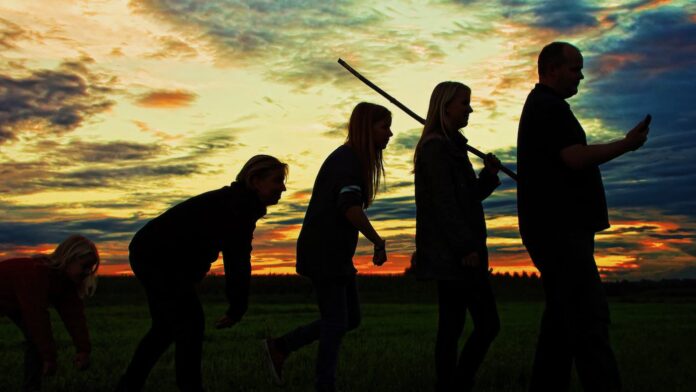
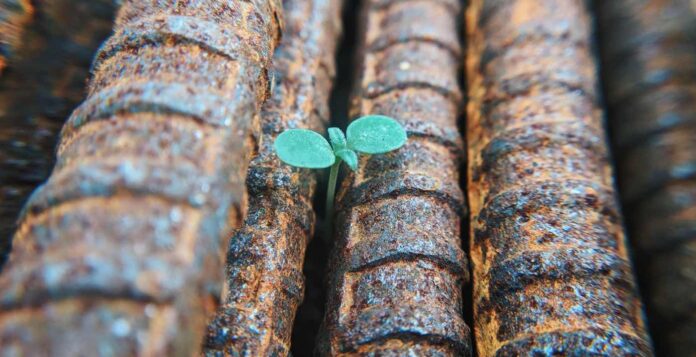
Quote of the Day: “Don’t think too far into the future. Use what you have right now & see the magic of your being.” – Rajesh Goyal
Photo by: Almos Bechtold
With a new inspirational quote every day, atop the perfect photo—collected and archived on our Quote of the Day page—why not bookmark GNN.org for a daily uplift?
GNN is happy to announce that we’ve partnered with FabFitFun to promote their “Winter Box” and GNN users will receive $10 off the box using code ‘GNN10.’ And, perhaps the best part: $10 from each box sold using our code will be donated to support Stand Up To Cancer.
The box—available in the US, UK, and Canada—is valued at over $200 but it costs just $39, when you use the code GNN10.
Every season, FabFitFun members receive a selection of 8-10 products, some of which are curated by their team of experts, while others can be customized based on personal taste and preferences. The FabFitFun Box includes products from both premium and emerging brands.
I got my box and loved the robe, cups, and incredibly cozy thick socks, which are pictured at the top of the page.
FabFitFun will give 100% of all donations made in the Winter Add On Sale and Winter Edit Sale between October 29, 2020 – January 14, 2021, to Stand Up To Cancer, which brings together the best and the brightest in the cancer community, facilitating collaboration to help new therapies move from the laboratory to the patient.
FabFitFun will guarantee a minimum donation amount of $50,000 USD in connection with these promotions. Your donation may be tax-deductible, but because taxes are dependent on your individual circumstances, you should check with your tax advisor.
50 frontline workers across America are driving home new cars this month, after they were nominated as heroes in the 2020 Mazda Heroes program.
CBS-2 – Youtube
Mazda, which is celebrating its 100th anniversary, announced in October it was giving away fifty brand new MX-5 Miata 100th Anniversary Special Edition models, with each car destined for individuals who “tirelessly dedicated themselves to their communities throughout 2020” through “selfless acts, creative thinking and contributions to community.”
After receiving 1,000 inspiring nominations from across the nation which embody the car company’s value of “omotenashi”—putting other’s needs first—they selected 50 heroes, including three from New York City, who recently picked their new cars up at a dealership in Queens. (See video below.)
“This year has been full of challenges and we wanted to lean into our brand’s heritage of finding innovative ways to brighten people’s lives,” Mazda North America President Jeff Guyton said.
The selected Mazda Heroes selflessly leveraged personal skills and resources to care for those in need, from creating free grocery delivery services, to partnering with local restaurants to provide free meals to healthcare workers, to a musician who created curbside concerts for a senior community that had to remain indoors.
One of the winners, Jason Erdreich, used his skills as a shop teacher in Randoph, New Jersey, and his access to 3-D printers, to print 12,000 pieces of PPE for medical workers who were in dire need of equipment.
Triana Davis, a teacher in Byram, Mississippi created and hand-delivered custom curricula to her students and produced special commemorative t-shirts, goodie bags, and custom-engraved medals, after the pandemic cancelled graduation ceremonies.
An ICU nurse in The Woodlands, Texas, Christie Purviance worked grueling 15-hour days throughout the pandemic, yet always treating her patients like family. She delivered photos of patients’ family members who couldn’t visit, and helped facilitate video chats with loved ones—all while leaving daily sticky-notes of encouragement.
Another winner, Leandro de Araujo Pessoa of Lansing, Michigan lost his job after the lockdown hit in March, but he ended up using all his extra time to become the leader of a food pantry run by a local church. He devoted his time and a portion of his unemployment checks to the food pantry to keep it stocked with all the items necessary.
Mazda hopes that by acknowledging their achievements, these 50 heroes will feel empowered to continue to giving back to those around them.
WATCH the winners picking up cars in New York…
SHARE the Convertible Joy With Friends on Social Media…
Quote of the Day: “To disagree, one does not have to be disagreeable.” – Barry Goldwater (5x Republican U.S. Senator from Arizona)
Photo by: Johannes Plenio
With a new inspirational quote every day, atop the perfect photo—collected and archived on our Quote of the Day page—why not bookmark GNN.org for a daily uplift?
As kids, when snow began to fall in earnest, many of us waited with bated breath, fingers crossed, for word of school closings. Snow days were a special treat; an unexpected holiday, a chance to trade in books and blackboards for sleds and snowball fights.
Over the past year, in light of escalating stress over the pandemic and its far-ranging fallout, it was sometimes hard to keep sight of life’s simple joys, but in Jefferson County, West Virginia, school superintendent Bondy Shay Gibson never lost focus on the bigger picture and what truly matters.
When a major snowstorm was forecast for her district, Gibson took the initiative to close the schools, but she also seized the moment to remind her community that nourishing the spirit is sometimes just as important as fueling the intellect.
The carpe diem announcement she posted to Facebook, reminding parents to simply enjoy this time out of time to let their kids just be kids quickly snowballed in popularity, garnering in the neighborhood of 17,000 shares in just a few days:
“For generations, families have greeted the first snow day of the year with joy. It is a time of renewed wonder at all the beautiful things that each season holds. A reminder of how fleeting a childhood can be. An opportunity to make some memories with your family that you hold onto for life.”
… It has been a year of seemingly endless loss and the stress of trying to make up for that loss. For just a moment, we can all let go of the worry of making up for the many things we missed by making sure this is one thing our kids won’t lose this year.
So please, enjoy a day of sledding and hot chocolate and cozy fires. Take pictures of your kids in snow hats they will outgrow by next year and read books that you have wanted to lose yourself in, but haven’t had the time. We will return to the serious and urgent business of growing up on Thursday, but for tomorrow—go build a snowman.”
Snowstorms come and go, but creating memories with our loved ones can last a lifetime. Now, perhaps more than ever, when we’re blessed with the unexpected opportunity to write a joyful chapter in our family history books, we should welcome it with open hearts.
Cherished remembrances of the simple shared pleasures we forge today may well offer strength and comfort in challenging times, and ultimately, be what sustains us and gives us hope for brighter days ahead.
SHARE This Joyful Story With Pals on Social Media…
18 months into the first serious clinical trials of CRISPR gene therapy for sickle cell disease and beta-thalassemia—and all patients are free from symptoms and have not needed blood transfusions.
Sickle cell disease (SCD) can cause a variety of health problems including episodes of severe pain, called vaso-occlusive crises, as well as organ damage and strokes.
Patients with transfusion-dependent thalassemia (TDT) are dependent on blood transfusions from early childhood.
The only available cure for both diseases is a bone marrow transplant from a closely related donor, an option that is not available for the vast majority of patients because of difficulty locating matched donors, the cost, and the risk of complications.
The clinical trials involve collecting stem cells from the patients. Researchers edit the stem cells using CRISPR-Cas9 and infuse the gene-modified cells into the patients. Patients remain in the hospital for approximately one month following the infusion.
Prior to receiving their modified cells, the seven patients with beta thalassemia required blood transfusions approximately every three to four weeks and the three patients with SCD suffered episodes of severe pain roughly every other month.
All the individuals with beta thalassemia have been transfusion independent since receiving the treatment, a period ranging between two and 18 months.
Similarly, none of the individuals with SCD have experienced vaso-occlusive crises since CTX001 infusion. All patients showed a substantial and sustained increase in the production of fetal hemoglobin.
Before receiving CRISPR gene therapy, Gray worried that the altitude change would cause an excruciating pain attack while flying. Now she no longer worries about such things.
She told NPR of her trip to Washington, D.C: “It was one of those things I was waiting to get a chance to do… It was exciting. I had a window. And I got to look out the window and see the clouds and everything.”
This December, the New England Journal of Medicinepublished the first peer-reviewed research paperfrom the study—it focuses on Gray and the first TDT patient who was treated with an infusion of billions of edited cells into their body.
“There is a great need to find new therapies for beta thalassemia and sickle cell disease,” said Haydar Frangoul, MD, Medical Director of Pediatric Hematology and Oncology at Sarah Cannon Research Institute, HCA Healthcare’s TriStar Centennial Medical Center. “What we have been able to do through this study is a tremendous achievement. By gene editing the patient’s own stem cells we may have the potential to make this therapy an option for many patients facing these blood diseases.”
Because of the precise way CRISPR-Cas9 gene editing works, Dr. Frangoul suggested the technique could potentially cure or ameliorate a variety of diseases that have genetic origins.
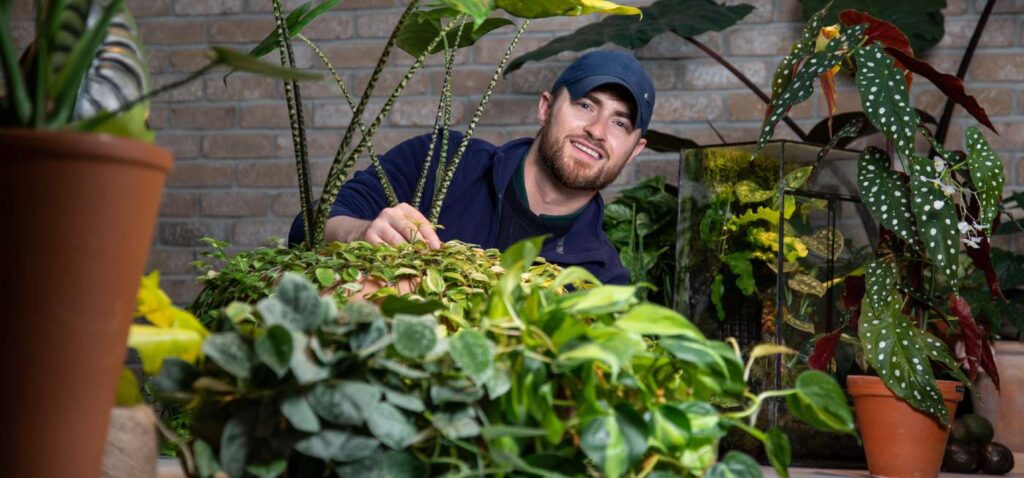
A green-thumbed Brit has grown the ultimate collection of house plants, including a species worth $15,500 a leaf.
SWNS
30-year-old Tony Le-Britton turned his lounge into a jungle and transformed his spare room into an incredible greenhouse to nurture his passion.
He has collected some of the world’s rarest plants—including one previously thought to have been extinct.
And Tony, from Gloucestershire, England is now hawking the leaves of another rare species for thousands of dollars per leaf to eager collectors.
He’s not only good at grooming plants, he is a top hair and beauty photographer professionally.
His prized possession? That’d be the Rhaphidophora Tetrasperma Variegata—the most valuable species in his collection.
“The non-variegated plant is really common—you can pick it up in most supermarkets and garden centers,” Tony said. “But my version, a genetic mutation—it’s completely random, which makes it rare. It’s the only one in the world [with that leaf pattern].”
“I have already taken three pre-orders at £12,000 each, per leaf. There’s a waiting list. I have had so many people contacting me. It’s like growing money on trees!”
Tony is also the proud owner of a Monastera sp Bolivia—which is currently undocumented by science.
“It’s from a botanical collector in Austria. I got it as a very small piece of stem. It’s grown to huge proportions.”
“I put a picture online and a botanist in the field in Bolivia got in touch with me asking for more pictures—he had no record of the plant.”
“The only way to find out what it truly is is to find it in the wild. Using the stem and leaf, we can then identify the family it belongs to.”
A Begonia Chloristica, an exotic plant previously thought to have been lost in the wild, also has a special place in Tony’s greenhouse.
According to Tony, it was thought to be extinct up until a couple of years ago—and he found one from a collector in Europe.
Tony credits his interest in plants to his grandparents, who would take him to their garden when he was a small boy.
SWNS
He also remembers sitting at his grandmother’s feet and watching the popular BBC television show ‘Gardener’s World’.
The ‘Gardener’s World’ television show has even been in touch about doing an episode from his house, which he described as life coming “full circle”.
Tony has never worked out the total cost of his collection—but guessed that it be could be significant: “From an insurance point of view, it’s definitely added to the value. It’s probably worth more than some houses!
Americans are holding their loved ones tighter as they look to close out 2020 with a sense of optimism, according to a new poll.
A new survey of 2,000 Americans found that nearly 70% say this year has made them appreciative of their family and friends more than ever before.
As a result, two-thirds are adamant about putting more thought into the gifts they give their loved ones this year.
The poll, conducted by Groupon, aimed to discover how 2020 has impacted the holiday shopping habits of Americans and discovered 76% are hoping to get gifts for loved ones that uplift their spirits while a further three in five plan on getting more personalized gifts for others this year.
Besides gifting others with something that brings a smile to their face, 56% are planning to buy gifts that can be used after all the lockdown measures are lifted.
Since we all know the 2020 holiday season is going to look different than any other year, people are still looking forward to certain aspects of the holidays in this unconventional year.
From being home and not having to travel (44%) to watching holiday movies (41%), people are excited about the holidays this year—even if it is slightly different.
This optimism is in line with the essence of the holiday season. But, how are Americans staying so optimistic about the holidays despite the pandemic?
Forty-eight percent say listening to music allows them to maintain their optimism while a further 38% say diving into their favorite book is a great way to keep their spirits up.
Overall, 48% of Americans stay optimistic by spending time with their immediate family and another third of people say they like to spend time outdoors.
As a way to break free from all the stress of 2020, two-thirds of those surveyed are also treating themselves to a gift when shopping for others this year.
This trend is unique to 2020, as 43% say they don’t normally get themselves a gift for the holidays. In fact, the average American plans on spending over $100 solely on self-gifting this holiday season.
TOP 5 THINGS AMERICANS ARE LOOKING FORWARD TO THIS HOLIDAY SEASON
Being home (not traveling)
Eating/drinking
Exchanging gifts
Watching holiday movies
Cooking for family
TOP 5 WAYS PEOPLE STAY OPTIMISTIC
Listening to music
Spending time with others
Watching a favorite movie/TV show
Reading a favorite book
Self-care (‘me-time’)
TOP 5 HOLIDAY SELF-GIFTS
Dinner
Clothes
Staycation/road trip
Wine delivery
Spa day
SHARE the Silver Lining From 2020 With Your Own Loved Ones…
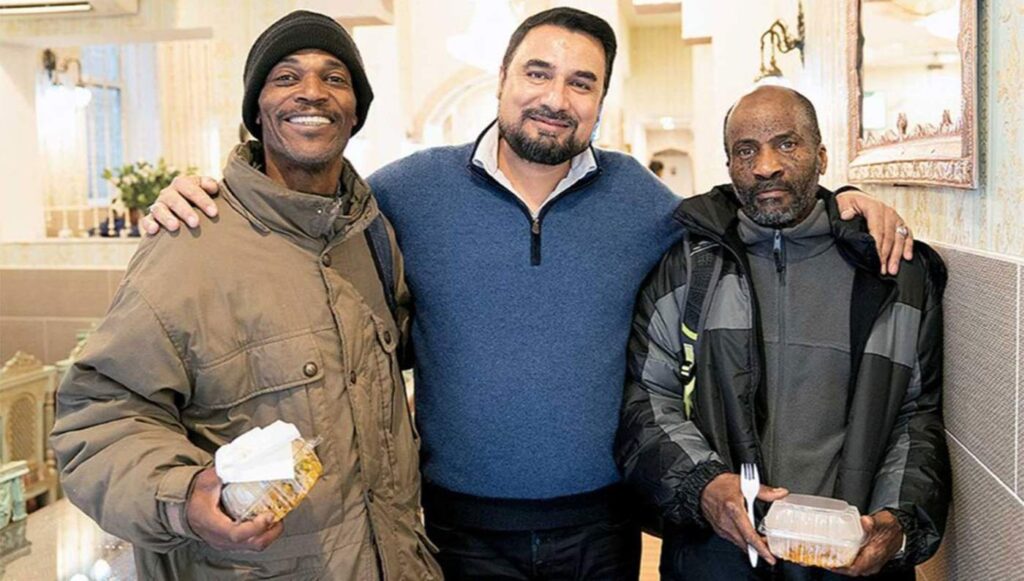
A restaurant owner known for feeding anyone—regardless of whether they can pay for their meal—nearly lost his business because of the pandemic. Then the local community began giving in the most generous way.
Kazi Mannan, GoFundMe
Since a family member posted a GoFundMe campaign for his D.C. restaurant, Sakina Halal Grill, Kazi Mannan has received over $331,430 from more than 7,100 people—and the donations keep rolling in.
“I used to preach don’t let anybody fall, and pick them them up,” said to his donors in an interview with NBC Washington. “You picked me up and I am overwhelmed. I have tears in my eyes … tears of joy. Thank you, thank you, America. Thank you, generous people.”
Many of the thousands donating see Mannan as the generous one. Before COVID-19 hit, he was serving up 80 free meals to people in need every day day.
“I used to see people looking for food in trash cans. It would break my heart,” Mannan told NBC.
The streets of downtown D.C. became deserted as people began working from home in the pandemic. Mannan had to let his employees go. He had to close the grill.
At a loss, a family member decided to launch a GoFundMe campaign for the popular restaurant on November 11. Abdul Mannan wrote:
“We are underwater and looking to survive this season so the doors do not close on Sakina Halal Grill… Every cent is equally important in keeping this dream, and important community resource, alive so please do what you can. We appreciate your support and prayers.”
With that campaign still going strong more than a month on, the restaurant that serves anyone—no matter their circumstances—looks set to last through these difficult times.
(WATCH the NBC video below for more on this story of real kindness.)
RESTORE Your Friends’ Faith in Humanity By Sharing This Story…
Quote of the Day: “All of us every single year, we’re a different person. I don’t think we’re the same person all our lives.” – Steven Spielberg (turns 74 today)
Photo by: Johannes Plenio
With a new inspirational quote every day, atop the perfect photo—collected and archived on our Quote of the Day page—why not bookmark GNN.org for a daily uplift?
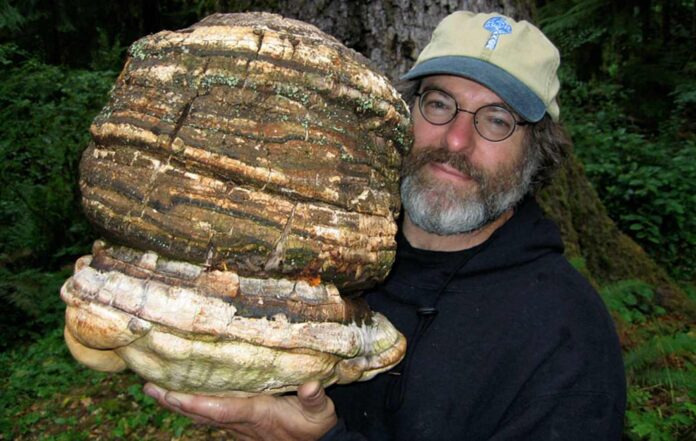
Paul Stamets with agarikon, Dusty Yao Stamets, CC license
There are some people born to this earth in whom a particular purpose or pursuit is embodied in such a complete way as to make them seem its avatar. Paul Stamets is such a man—The Crocodile Hunter, but for Mushrooms—a world-leading mycologist who eats, grows, lives, breathes, sells, and even wears, fungi.
Dusty Yao Stamets, CC license
Now, the famous mushroom scientist wants to create a research station on a remote island to protect old-growth forests containing a rare type of ancient fungus which he believes could protect people against COVID-19, or even future pandemics.
The coronavirus is a natural fit, as Paul Stamets, an expert in the medicinal-use and history of fungi, explains, because for thousands of years fungus was used to treat respiratory infections.
Some will have heard of Stamets through his TED Talk,6 Ways Mushrooms Can Save the World, which garnered three million views on YouTube, or from his two appearances on the Joe Rogan Experience podcast when he gave the host one of his hats made from mushrooms.
Others might have read his book: Mycelium Running, or come across numerous journalistic reports on his famous use of mycelium to clean up oil spills, and even nuclear radiation.
Regarding the current pandemic, the agarikon mushroom which Stamets has found in plentiful supply in the old-growth forests of British Columbia’s Cortes Island is just one of several species that he’s working with to cure the ills of the world.
“This rare, old-growth mushroom has a multi-thousand-year history of use in Europe,” Stamets told Rochelle Baker at Canada’s National Observer, while doing research on the island.
Stamets notes that ancient Greek physician Dioscorides actually described agarikon in his works, calling it the elixir of long life—particularly when used to treat tuberculosis.
He has used other species, such as the Garden Giant, and the oyster mushroom, to advance his science called myco-restoration, by proving they can clean up septic runoff and toxic hydrocarbon oil spills both in the ocean and on land respectively.
Mycorrhizal fungi, he hypothesized in an online manifesto entitled “The Nuclear Forest Recovery Zone,” are able to absorb and remove heavy metals, including actual radioactive isotopes, from the soil.
The third branch
If you are lacking a knowledge of mycelia, the vegetative part of a fungus, Stamets’ body of work is like walking into the best museums you’ve ever been to, as there are many simple truths about mushrooms that are simply mind-blowing, but not often told.
Long after plants split off from the genetic lineage of animals to form the second kingdom, fungi developed, like us, to 1111breath oxygen and release carbon dioxide. They get their energy from eating other organisms, rather than through photosynthesis.
Their network of roots and filaments, called mycelium, invented the first soil in the dim light of eons past by breaking down the long molecular chains of tough minerals. Under the microscope, mycelium networks appear to transmit copious amounts of information that appears much more like the neural brain-wave oscillations that characterize human neurons firing than the equivalent patterns in plants.
And, like us, they produce compounds to defend themselves against bacteria and viruses.
There may be something hippie about that claim, but, far from toting the benefits of “essential oils,” fungi have a more impressive medical CV—after all, it spawned a certain important compound known as penicillin, isolated by Alexander Fleming from the penicillium rubens mold in 1929.
The value of Cortes Island
Stamets calls the agarikon mushrooms of Cortes Island “too valuable while living” to harvest. They can survive between 75-150 years, but are endangered in Europe and rare in North America. Stamets, who claims Cortes Island should be renamed “Agarikon Island,” is trying to capture as many strains as possible by taking small samples of the fruiting bodies he finds to help the species recover.
“When we cut down the old-growth forests, we are potentially losing genomic libraries that could have a strain of fungi that could have enormous implications for human biosecurity, and moreover, habitat health,” Stamets told Baker at the National Observer.
He clarifies that old-growth forests, therefore, should be viewed as a defense against future pandemics.
Stamets is researching agarikon and other forgotten or unknown species of mushrooms on his Fungi Perfecti farm, where he grows all types of fungi to sell to health food stores, labs, or those looking to utilize his methods of pollution cleanup. This includes new species of magic mushrooms that he grows following the expert advice provided by online mycologists. These guides include how to properly spawn spores for magic mushrooms inside your home and complete the growing process.
Lacking any academic paper-on-the-wall accreditation or affiliation with any lab or university, Stamets funds all his research from Fungi Perfecti sales.
Although research on mushroom use for just about anything is extremely limited to individuals like Stamets or cutting-edge superfood companies, they have been used as food and medicine for thousands of years, and changing attitudes in thousands of North Americans towards slimy, deep-forest toadstools associated more often with decay and toxicity than nutrition and viral-defense comes down to the work of people like the Crocodile Hunter of Mushrooms.
(Watch as Stamets goes on a walk to find agarikon mushrooms in B.C.)
SHARE This Fascinating News With Pals on Social Media…
While many folks can reel off their names by rote, did you know there’s a pretty good chance that Santa’s entire reindeer posse is female? It’s true.
Nicholas LaFargue
The names aren’t gender-specific—Dasher, Dancer, Prancer, Vixen, Comet, Cupid, Donner (“Donder” in the original Clement Moore poem), and Blitzen—and we’re guessing savvy St. Nick wisely opted for an all-girl sled-pulling squad on purpose.
You want proof?
Even though they are mythical reindeer we’re talking about, there’s actual evidence to support the femme-centric reindeer theory—and it’s all about the antlers.
It seems that male reindeer shed theirs in early December, just after the mating season, while female reindeer retain their headgear all winter long. In pretty much every depiction of St. Nick making his iconic Christmas Eve run, the team pulling his sleigh are sporting antlers, ergo, said reindeer are female.
Before we rest our case, there’s actually another practical reason for Santa to have hitched his harnesses to an estrogen-powered team: Female reindeer have about a 45% greater fat-to-body-mass ratio than their male counterparts. This extra tissue serves as insulation that keeps them warm in frigid conditions as low as minus 45 degrees Fahrenheit (minus 43 degrees Celsius), and baby, it’s cold outside—especially in the upper atmosphere.
In an article for Live Science, Physiologist Perry Barboza of the Institute of Arctic Biology, University of Alaska at Fairbanks, who studies the creatures and their close cousins, the caribou, likens female reindeer to “seals on hooves,” since seals are similarly equipped with toasty internal padding.
Of course, the extra fat layer means extra weight, so how do the female reindeer manage to fly so fast while hauling a prodigiously not-so-slim man and the world’s largest sack of toys?
Magic, of course.
Okay, okay, so maybe the main reindeer squadron is female, but what about Rudolph, you ask?
Well, as it turns out, Rudolph, created in 1939 by department-store copywriter Robert L. May, may in fact be the only male reindeer in the bunch.
Before finding fame in song as well as on film and television, Rudolph the Red-Nosed Reindeer was the hero of what amounts to an anti-bullying-themed children’s story. In the book’s original cover art, Rudolph’s red nose may be shining beacon-bright—but he’s not sporting antlers, only cute little nubbins.
Fair use, Marion Books
So, is Rudolph’s antler deficit due to the fact he’s a juvenile reindeer… or is it because he’s a boy? We’ll leave that up to you.
In yet another bid to rebrand himself in a more positive light, this week Florida Man made the news as a good Samaritan once again (okay, if you ignore the story about him snatching that stray golf ball off the back of an alligator).
Michael Esmond
In a true humanitarian gesture, Mike Esmond of Gulf Stream, Florida paid off $7,600-worth of outstanding utility bills for 114 of his neighbors who were facing cut-off deadlines.
It’s not the first time.
Last year, Esmond launched his generous Christmas tradition by doling out $4,600 to ensure community members in need wouldn’t go without basic services during the holiday season.
“This year to me probably is more meaningful than last year with the pandemic and all the people out of work having to stay home,” the 74-year-old said in CNN interview reported by People.
“Hurricane Sally slammed us pretty good and hurt a lot of people. We still have a lot of the blue roofs here, where they’re just covered with tarps.”
As the owner of Gulf Breeze Pools and Spas, Esmond admits he found himself in a very different financial position at the end of 2020 than those less fortunate. While the COVID-19 lockdown left many people struggling, it also meant they were staying home—which proved to be a boon to his business.
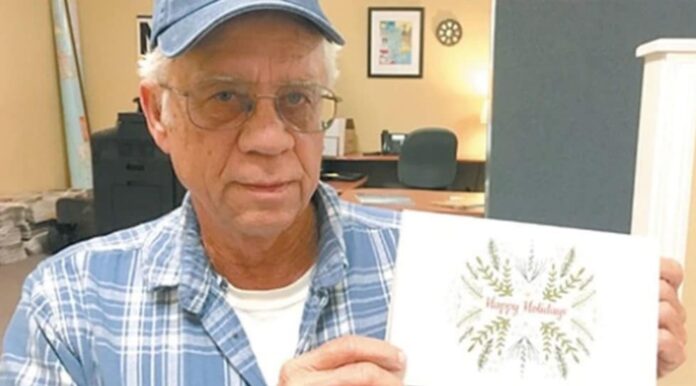
“We’ve had a good year, and that’s why I want to share what I have with the people who need it,” he said. Rather than a shut-off notice, 114 families will instead be receiving a holiday greeting from the city letting them know they’re no longer in the red.
“You can imagine people this time of the year that know they’re behind on their bills, when they get this envelope and when they open it up, it’s a Christmas card from the City of Gulf Breeze telling them that Gulf Breeze Pools has paid their utility bill and that’s one less stressful thing that you have to worry about,” Esmond told CBS.
Since his story made the headlines, Esmond has heard from lots of folks offering to help his cause, but he believes their money would be better spent closer to home. “I’ve had people call me out of California, Chicago, Tampa, saying that they wanted to send some money,” he explained.
“I said, ‘No, take the money, go do what I did. Start this in your own communities.’ It’s something I can see that we could really pass on and make Christmases better for people in the future.”
Way to go, Florida Man, that’s telling ’em.
(WATCH the Christmas 2019 interview with Mike from ABC.)
MULTIPLY The Good By Sharing This With Your Friends on Social Media…
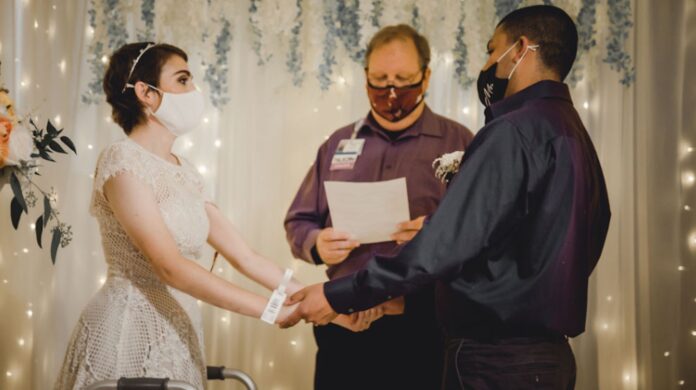
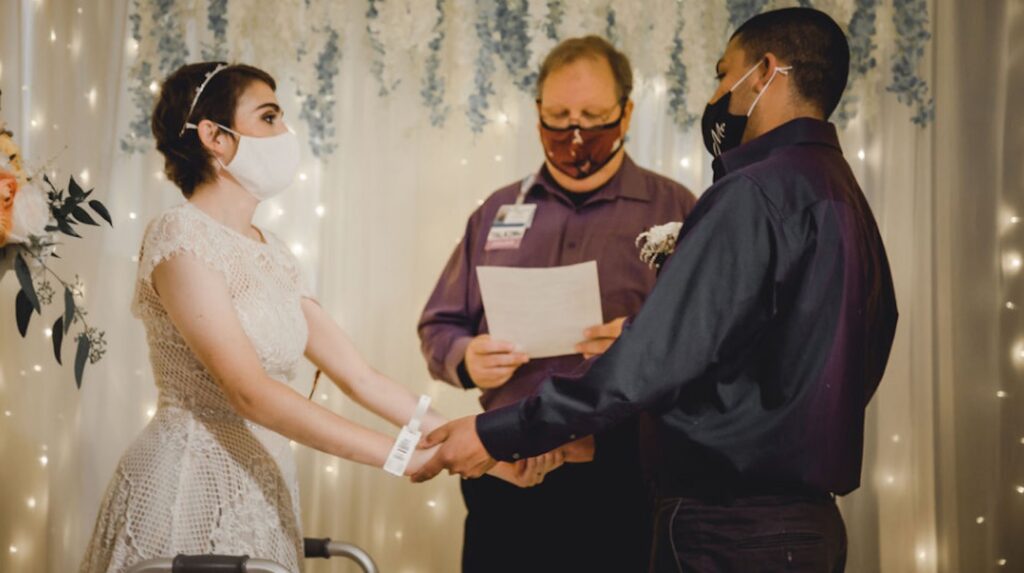
Planning a safe wedding for a young mom who’s battling an intense form of cancer would always be tough—but this oncology ward in Arizona did it during a pandemic.
As nurses at Banner Thunderbird Medical Center in Glendale recently admired 22-year-old cancer patient Samantha Preston’s engagement ring, an incredible idea suddenly grabbed everyone’s attention.
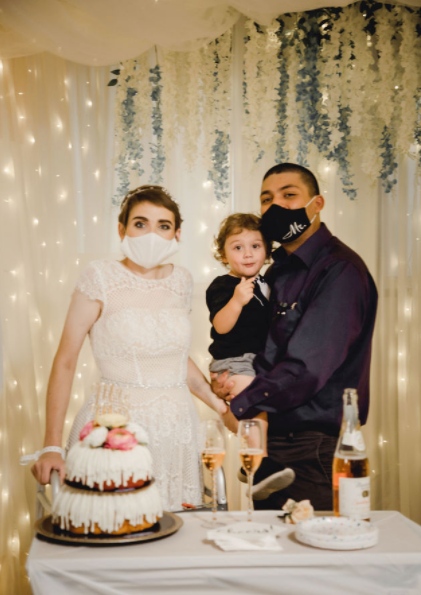
Preston’s medical team saw how much support she received from her fiancée Angel Aguilar during her extensive treatment for late-stage osteosarcoma, a type of bone cancer. They also knew how much love Preston felt for their toddler son, Odin, and wanted to help the family.
“I said, ‘You’re coming in for a long day of transfusions on Friday. Why don’t you let us throw the wedding here at the clinic?’” said Amy Mabry, nurse practitioner at the pediatric oncology center at Banner Thunderbird Medical Center. “She kind of got a sparkle in her eye, and she said, ‘Really?’ And I said, ‘Yeah, we’ll totally figure it out for you.”
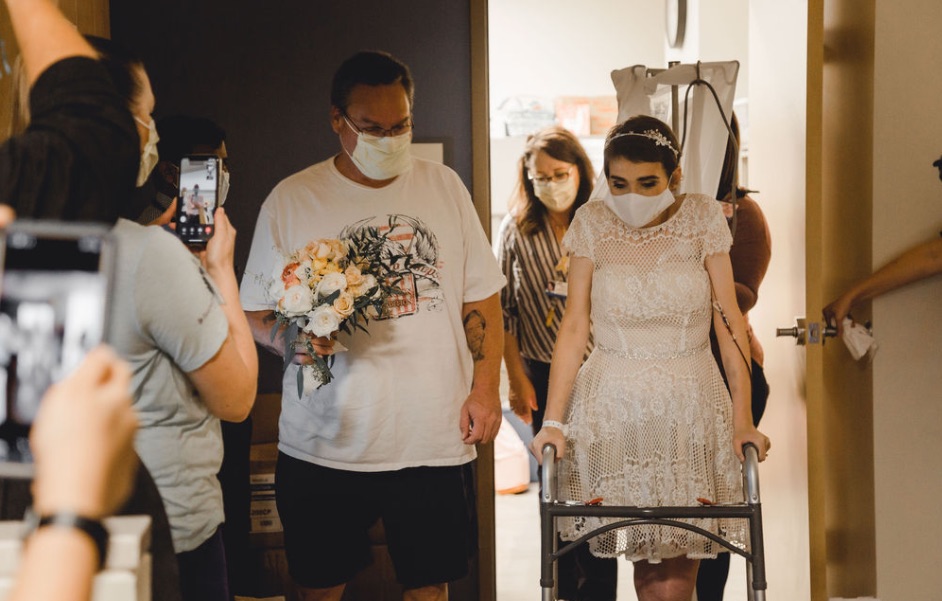
Preston’s medical team quickly turned into wedding planners. Social worker Kelley Hunt, child life specialist Courtney Smith and the pediatric oncology team worked together to plan an unforgettable ceremony in just three days.
“After getting her okay, it was time to pedal to the metal,” said Mabry. “We just wanted to make sure that as amazing as Sam is, she got to experience a special day for her, Angel, and their son Odin.”
The team received a lot of help from Smiles for Miles, a nonprofit group that helps children fighting cancer. The organization “was instrumental in helping us to get all the decorations and setting things up,” Mabry said.
An area at the hospital traditionally used as a gathering spot for families was quickly transformed into a beautiful venue for the couple to tie the knot. The team helped Preston get her makeup professionally done, and a local photographer captured every sweet moment between the family.
Banner Thunderbird Medical Center
“They just completely went all out with the decorations, and they had it all planned where they would cover up my (IV) pole, hiding the transfusion going on. It was just so magical!” said Preston. “And I told them if they wouldn’t have done what they did, I would have just gone out for dinner after getting the papers from the courthouse.”
Banner Thunderbird Medical Center
Smith said helping to plan the special day was an honor. “Being a part of Sam’s wedding made history for me and my team, as it’s not very often that pediatric patients—or adult patients under pediatric care, in Sam’s case—get married,” said Smith, whose team has helped to plan proms, quinceñeras, tea parties, and more. “This is a first for a wedding!”
Preston’s cancer treatment began in August 2019 at Banner Children’s at Desert in Mesa, where she spent considerable time receiving chemotherapy to treat her osteosarcoma.
She remains determined to stay upbeat in spite of her health challenges.
“I just always wanted to remember to overcome adversity with a positive attitude, because that’s what’s going to get you through it the easiest,” said Preston.
“You know, everybody has their problems, no matter what it is. Yes, I’m going through cancer, but there are other families now going through COVID. There are families who have been going through cancer or other issues for way longer than I have. And you just need to remember, always stay positive no matter what situation or obstacles you have to go through.”
SPREAD The Love By Sharing This Story On Social Media…
Quote of the Day: “Although a person’s life may be a land full of thorns and weeds, there is always a space in which the good seed can grow.” – Pope Francis
Born Jorge Mario Bergoglio 84-years old today in Argentina, he became leader of the Catholic church in 2013, and the first pope to be from the Americas, and first outside Europe since the 8th century.
Photo by: Faris Mohammed
With a new inspirational quote every day, atop the perfect photo—collected and archived on our Quote of the Day page—why not bookmark GNN.org for a daily uplift?
An Idaho man is acting as a real life Secret Santa this year, by gifting more than half a million dollars to local people who deserve a little extra kindness this year.
The man who’s giving upwards of $500,000 to others wishes to remain anonymous, so he’s been getting a little help from the team at East Idaho News to hand out his presents.
Here’s the story of the woman who was first on this Santa’s ‘nice’ list:
Grandmother Diana Boldman is 65 years old. Early each morning, she and her husband Cameron wake up to deliver newspapers across their home town of Idaho Falls. The route takes them across a large area of the city, and they do it in a van that already has nearly 240,000 miles on it.
Once she’s finished the paper route, Diana then goes to McDonald’s to put in a shift at her full-time job there. Her hope is to retire in a few years, but for now she has to work: Cameron is on disability and it’s up to Diana to provide for them.
When Idaho’s Secret Santa heard about this couple’s situation, he knew just the Christmas gifts to surprise them with.
(WATCH the video of Diana receiving her early Christmas parcel below.)
SHARE This Heart-Warming Story With Pals on Social Media…
Have you ever had a nightmare where you’re rushing to get to someplace vitally important only to realize you’re on a bus or train heading in the wrong direction and you’ll never make it in time? This scenario played out for one Belfast woman last week—only she wasn’t dreaming.
Jacqueline Mason was on her way to see her 79-year-old mom, Eileen McGrugan, who lives in an assisted care facility. Due to COVID-19 protocols, visits are limited to pre-scheduled half-hour time slots.
When Mason discovered she’d mistakenly gotten on the wrong bus and her 30-minute window was fast closing, she was understandably distraught. Mason tearfully explained to bus driver 57-year-old Alex “Alec” Bailey what had happened.
“I started crying, and I said, ‘I’m not too sure if I’m on the right bus,’” she told Sky News.
Rather than offer routine commiseration and keep to his schedule, Bailey decided to take action.
“When the woman said to me she hadn’t seen her mum in a long time, it just hit my heart,” Bailey told the BBC. “A lot of people have suffered this year and you’ve seen on the news, people not able to see their mother or their father in the homes and it just struck a chord with me… I just said to myself, I have to get this woman as close as I can to that home.”
BBC
With a nod of approval from the other passengers, Bailey detoured the bus and drove Mason to her destination, dropped her off, then calmly went back to his regular route as if nothing out of the ordinary had happened.
By pure coincidence, as Mason was arriving at the Bradley Manor nursing home, a news crew from Sky Ireland was onsite covering the rollout of coronavirus vaccinations for staff and residents there. Though she didn’t know his last name, Mason relayed her tale of the compassionate Route 11B Translink Metro bus driver who’d made it his mission to ensure she’d see her mom to reporters.
Even though Bailey spent the rest of the day wondering whether or not his passenger had gotten there in time, soon enough, he learned he needn’t have worried. Though “the driver in question” had yet to be named, the story made the evening news—and then it hit social media.
BBC
Gushing thanks to the passengers and praise for the man she knew only as “Alec,” Mason recounted the day’s events. Word of the “hero” bus driver quickly spread.
When Bailey’s daughter saw a clip of the story, she had a sneaking suspicion she knew just who’d been captaining that bus—her dad.
After confirming that he had in fact briefly commandeered the bus, Bailey asked his daughter how she’d found out. By then, it seems, Bailey was “internet famous.”
While Bailey wound up with unexpected accolades from Translink CEO Chris Conway and Stormont Transport Minister Nichola Mallon for “going above and beyond the call of duty”—as well as getting a lot of good-natured ribbing for being a “superhero” from his co-workers—at the end of the day, he was just happy to have helped out.
“The smile and the joy on her face just said it all and I was just so pleased,” he told BBC. “It was just a nice, magical moment. It was just the right thing to do.”
(WATCH the BBC video of this uplifting story below.)
SHARE This Bright Spot of Kindness With Friends on Social Media…
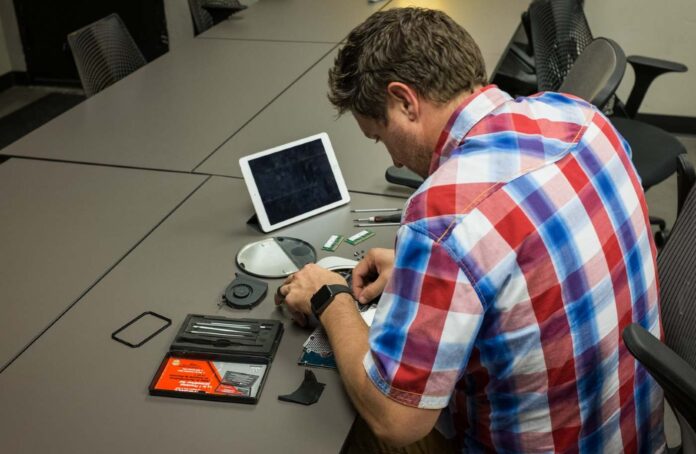
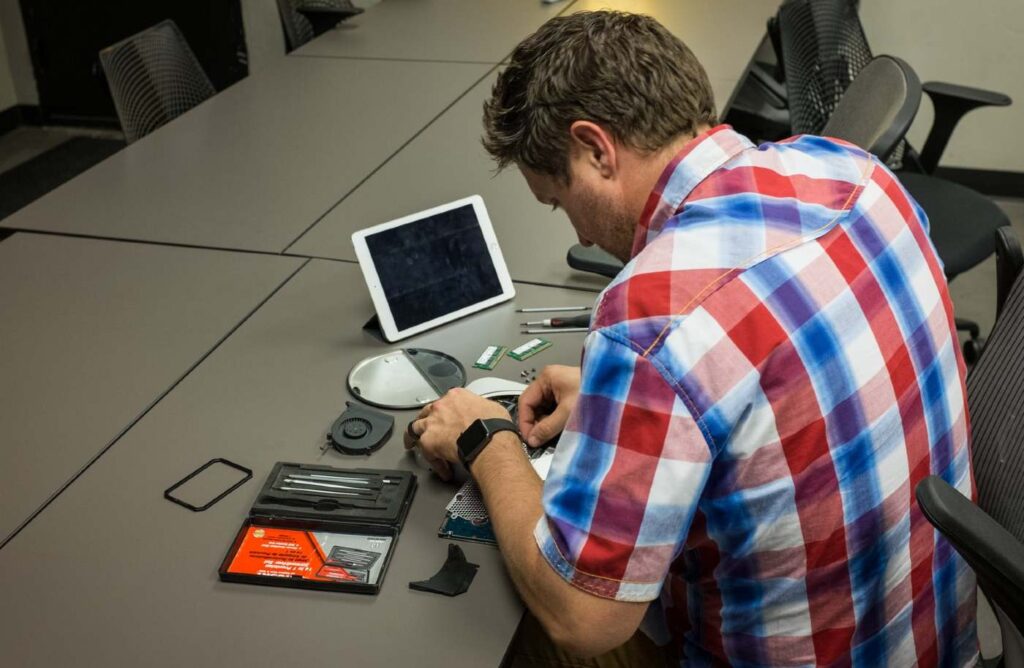
The European Parliament plans to boost sustainability by promoting reuse and repairs of phones, laptops, tablets, and other electronics—and by tackling practices that shorten the lifespan of such products.
NeonBrand
France is reported to begin rolling out ‘repairability tags’ on devices from January 2021, with some other European countries following suit after that.
The resolution on a more sustainable Single Market was adopted on November 25 with 395 in favor, 94 against, and 207 abstentions.
This means Members of the European Parliament (MEPs) have called on the European Commission to grant consumers a “right to repair” by making repairs more appealing, systematic, and cost-efficient, whether by extending guarantees, providing guarantees for replaced parts, or better access to information on repair and maintenance.
It means MEPs insist on increasing support for second-hand goods markets, call for measures to tackle practices that shorten the lifetime of a product, and endorse sustainable production.
In a statement, MEPs have also reiterated the need for a common charger system to reduce electronic waste and want products to be labeled according to their durability (e.g. a usage meter and clear information on the estimated lifespan of a product).
Remove obstacles that prevent repair, resale, and reuse
According to a survey, 77% of EU citizens would rather repair their devices than replace them; 79% think that manufacturers should be legally obliged to facilitate the repair of digital devices or the replacement of their individual parts.
To encourage sustainable business and consumer choices, MEPs—through this resolution—are saying they push for more sustainable public procurement as well as responsible marketing and advertising.
For example, when environmentally friendly claims are made in advertisements, common criteria should be applied to support such a claim—similar to obtaining ecolabel certifications.
The resolution also calls for the role of the EU ecolabel to be boosted so that it is used more by industry and to raise awareness among consumers.
Finally, the advisory text proposes new rules for waste management and the removal of legal obstacles that prevent repair, resale, and reuse. This will also benefit the secondary raw material market. From here, it’ll be up to the European Commission to issue actual proposals based on this report.
Source: European Parliament
Fix Up Your Social Media Feed By Sharing The Good News With Your Friends…
We may wish some memories could last a lifetime, but many physical and emotional factors can negatively impact our ability to retain information throughout life.
A new study published in the journal Psychological Science found that people who feel enthusiastic and cheerful—what psychologists call “positive affect”—are less likely to experience memory decline as they age. This result adds to a growing body of research on positive affect’s role in healthy aging.
A team of researchers analyzed data from 991 middle-aged and older U.S. adults who participated in a national study conducted at three time periods: between 1995 and 1996, 2004 and 2006, and 2013 and 2014.
In each assessment, participants reported on a range of positive emotions they had experienced during the past 30 days. In the final two assessments, participants also completed tests of memory performance. These tests consisted of recalling words immediately after their presentation and again 15 minutes later.
The researchers examined the association between positive affect and memory decline, accounting for age, gender, education, depression, negative affect, and extraversion.
“Our findings showed that memory declined with age,” said Claudia Haase, an associate professor at Northwestern University and senior author on the paper. “However, individuals with higher levels of positive affect had a less steep memory decline over the course of almost a decade,” added Emily Hittner, a PhD graduate of Northwestern University and the paper’s lead author.
Whether printed on wrapping paper, made into ornaments, or sewed into festive socks, the figure of a snowflake is one of the most identifiable shapes you’ll ever see.
Alexey Kljatov, CC license
But why is the shape so unanimous, when it’s often said that no two are alike? Today GNN looks at some merry mathematics and festive physics to get the stone cold facts about the famous six-pointed snowflake.
Many people think that snow crystals, as they should be referred, are just frozen droplets of water. These would be sleet, and snow crystals are actually formed in a completely different way, and change as they fall from the sky.
Furthermore, all three forms of water, liquid, vapor, and ice, must be present in a cloud for snow to fall.
At the heart of all things chemistry, there is first a discussion of charges, in this case a positive and a negative charge. Two hydrogen atoms bind to one side of an oxygen atom, giving that part a positive charge, while the other side left lacking the hydrogen atoms is negatively charged.
The negative side than attracts an entirely separate water molecule, which eventually grows, in a liquid state, to form a four-sided pyramid of six water molecules.
Wilson Bentley
In this stage of the snow crystal-forming process, it could very well be that two indeed look the same, and there is no actual law of nature that would prevent two crystals from looking the same (in the winter of 1988, a scientist at the National Center for Atmospheric Research, Nancy Knight, took a plane into the clouds over Wisconsin and did indeed find two identical snow crystals).
From snow piece to show piece
It’s after this stage, when it becomes ice however, that a snow crystal will shift into a hexagonal (six-sided) formation and the immediately identifiable and beautifully symmetrical shape comes into existence.
Marc Newberry
University of Manitoba researcher and mathematician Ranganathan Padmanabhan explains to his university press why a snow crystal is always depicted with six sides and six branches.
“Nature is the Mother of all symmetries,” he begins. “In fact, symmetry happens to be a central organizing principle in Nature’s design,” noting bee honeycomb before explaining that on a molecular level, a hexagon allows for the tightest packing of things into space, meaning that Nature is a thrifty sort.
As the snow crystal falls through the clouds and the sky, it collects water—liquid, vapor, and solid, which upon exposure to differing levels of humidity and temperature, begins to build up as it spins downward in a theoretically unending variation of trajectories and conditions, eventually forming the branches or arms of the snow crystal that essentially prohibit identicality among fallen flakes.
An interview with meteorologist David Epstein, published in the Boston Globe, explains how snow crystals can actually form pillars, needles, diamonds, and triangles under different weather conditions, but hexagonal formations which we all recognize have a very streamlined process.
Ranganathan Padmanabhan tastefully noted that “as Galileo once mentioned, mathematics happens to be the language chosen by God to express these basic facts of science,” adding that “group theory,” an important mode of fashioning descriptions, was developed to explain symmetry across physics, mathematics, and biology.
While they fall across the polar latitudes and higher altitudes, the beautiful snow crystals which blanket forests and houses in snow globe glory have another beautiful side to them—a beautiful symmetry, uniqueness, and mathematics.
PASS on the Knowledge and Share This Sparkling Story With Friends…

















 GNN is happy to announce that we’ve partnered with FabFitFun to promote their “Winter Box” and GNN users will receive $10 off the box using code ‘GNN10.’ And, perhaps the best part: $10 from each box sold using our code will be donated to support Stand Up To Cancer.