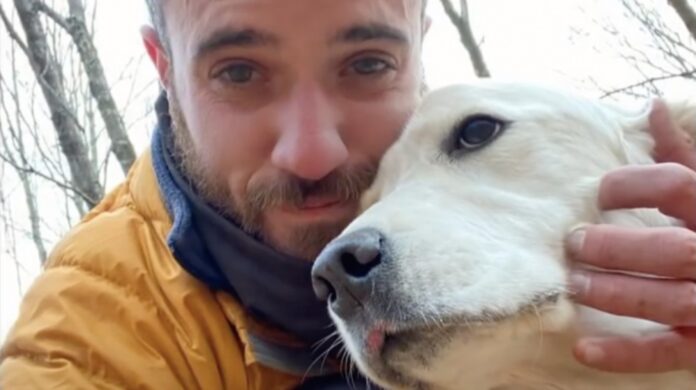
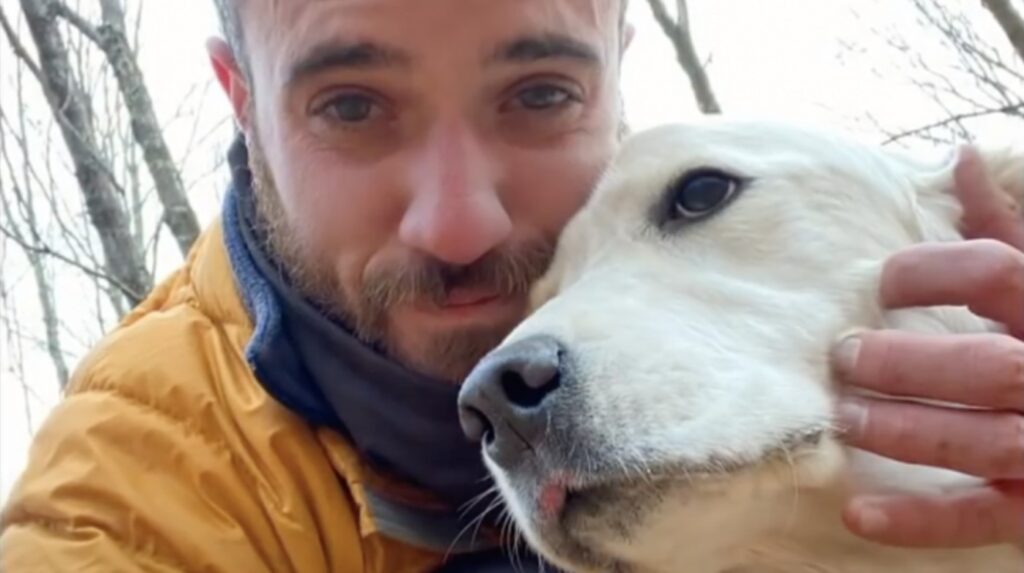
Sometimes a man can be a dog’s best friend, too—especially if that man can pilot a drone and a winter storm is approaching.
YouTube/ABC
When a pale-coated golden retriever pup named Meadow went missing in a wooded area near her home in upstate New York, Gary and Debbie Morgan, put up reward posters detailing their missing dog’s plight.
Even though he’d never met the couple, experienced drone pilot Brian James came to the rescue. Also a skilled hiking guide, Brian felt compelled to help search for the 16-month-old.
He knew that with wintry weather likely to hit at any moment, it would be easier to spot Meadow’s near-white fur before snow began to fall.
Looking in the area where Meadow was last seen, Brian sent his drone aloft, and scanned mile after mile of forested acreage searching for the lost pooch.
The drone’s camera eventually caught sight of her—a tiny dot of white—moving between the trees. Zooming in for a close-up, he confirmed it was Meadow.
Next, Brian quickly drove to the coordinates relayed by the drone and—after a few seconds of hesitation—the retriever ran into her rescuer’s embrace. Although she’d been missing for 10 days, Meadow was unharmed and in tail-wagging good spirits.
The Morgans, who said for them the experience felt akin to losing a child, were thrilled and relieved to be reunited with their beloved pet. Overcome with emotion, the couple fought tears as they recounted the rescue mission.
“At the last second, he saw a small white dot on the forest floor… ” Gary said in an interview with ABC World News Tonight. “[We] are so grateful for Brian for showing up when he did and being able to rescue her,” said Debbie.
But the hero of the story says you don’t need a drone or hiking savvy to save the day—all it takes is the desire to make a difference.
to the signature line— Yours in Breathless Anticipation,
to the final postscript— P.S. You are forever in my heart…
The art of letter writing has been all but forgotten in this current age of instant communication.
Between tweets, IMs, Instagram, Zoom, and the granddaddy of them all, email, the demands of our fast-paced world have rendered the quaint, antiquated, and frankly, slow form of missives dismissively known as “snail mail” all but obsolete.
But thanks to the concerted efforts of New Yorker staff writer Rachel Syme, the pendulum may have begun to swing back in the opposite direction.
Rachel Syme/Twitter
With much of the world in lockdown thanks to COVID-19, many have been forced to pivot in the way we conduct our daily affairs. Working from home and home-schooling may offer freedom from a daily commute and the perks of wearing P.J.s to a board meeting, but the isolation can be overwhelming.
To combat the disconnect and loneliness many of us are feeling now, Syme got the idea to resurrect the time-honored tradition of pen pals.
It all started when, after buying an old-school electric typewriter, Syme found herself using it not to write prose, but to compose letter upon letter to friends and loved ones.
Her subsequent PENPALOOZA initiative, which she set up using Secret Santa software courtesy of Elfster, is gaining some real traction. It already has more than 7,000 participants—and the list is growing.
“in early summer i asked if anyone would like to start writing snail mail to strangers; people seemed into it so i set up this exchange,” Syme tweeted this past August.
“it’s done through secret santa software (lol) because that is the only/best way to do such things at scale; so the way it works when you sign up is you get one person to write to first, and another person gets you…so two pen pals for one sign-up (more bang for your zero bucks).”
How does it work?
Everyone who signs up gets a pen pal. Once you’ve written and posted a letter, the program allows you to check it off as “sent” so the recipient knows to be on the lookout for incoming mail.
(While Elfster is technically a gift-giving site, your letter or even just a postcard are gift enough—although Syme says if you felt like including a trinket or something sweet with your mailing, it likely wouldn’t go amiss.)
Anna Sublet, an enthusiastic PENPALOOZA participant shared her experience with The Guardian. “When my first piece of mail arrived, the excitement I felt was beyond reason. The pure thrill of a package, holding pieces of a person—a bookmark, a sticker and words—was quite simply intoxicating. Across a two-month period, this connection had taken shape and taken flight across the globe,” she wrote.
Like Sublet, Syme believes hope is the key ingredient that’s led to PENPALOOZA’s success. “Even under the best of circumstances,” she said, “there’s a delay, a period where the letter is an object of hope, in transit between the present and the future.”
According to Sublet, PENPALOOZA is just the tip of the quill for letter aficionados. Since finding the program, she’s signed up for several other postal exchange sites.
Sublet has also taken out a subscription to The Letters Page. The brainchild of Author Jon McGregor, The Letters Page is a literary journal that accepts only handwritten submissions for publication.
“When I started The Letters Page, it was interesting to see how many people shared that nostalgia for letters and letter writing,” McGregor told the BBC. “The envelope it comes in bears the traces of the journey, while the letter itself—the handwriting, the coffee stains, the doodles, the choices of paper—all of these are part of the message.
Though McGregor admits that giving up the convenience of emails and IMs is counterintuitive for some aspects of today’s workplace and home life, letters truly connect us to our basic humanity.
“When you get an email, you just get the words and thats that… I think people are looking back to letters and letter writing as a general reawakening of things which are hand-made or unique in some way and have a personal touch.”
Hope, humanity, personal connection—all are things we sometimes lose sight of in the overwhelming realities of the coronavirus. But, if all it takes to remind us of those things is sitting down and penning a note to someone who means something to us—whether it’s someone we’ve only just met or someone we’ve known all our lives—sign us up and put a stamp on it.
SHARE This Awesome Initiative With Pals on Social Media…
A graduate student in physics is creating the most effective face mask, the N95, with little more than a wave of his hand.
Using a cotton candy machine, Mahesh Bandi of Okinawa Institute of Science and Technology Graduate University can create face masks more cheaply and faster than any other currently utilized industrial process.
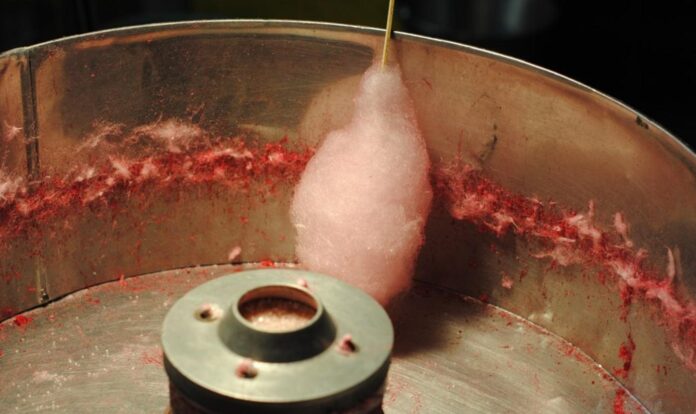
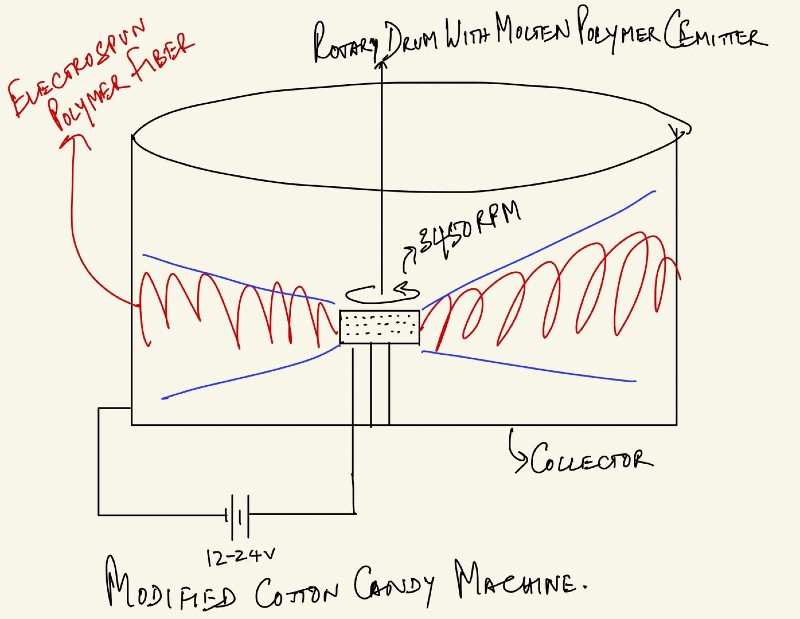
That’s because the unique but expensive electrocharged plastic foam filters that characterize an N95 can actually be made by taking lumps of regular plastic from objects like water bottles and shopping bags, heating them to a high temperature, and spinning them in a cotton candy machine until they form a mesh.
The mesh becomes electrically charged—the key aspect that allows them to filter 95% of particles—while it’s spinning around the metal drum of the machine, and can be made more electro-sticky after Bandi cuts the mesh into squares and places them on the vent of an air ionizer.
Bandi’s workings, OIST
Microscopic analysis and comparisons with certified N95 masks show Bandi’s filters are as effective as stopping foreign particles, including SARS-CoV-2 viruses, from being inhaled.
In the early days of the pandemic, medical experts made clear that cloth masks, homemade or otherwise, or standard surgical masks, were not a very effective method of protection, but that N95s, the masks worn by people who really need to keep their mouth and nose secure, such as asbestos workers, were a seriously effective tool.
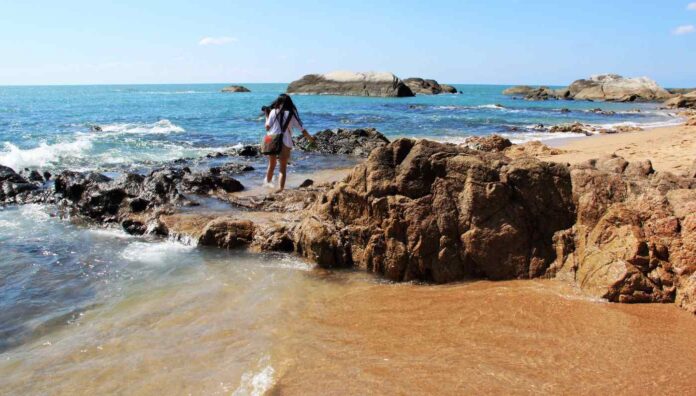
While once-pristine beaches around the tropics are becoming infamous for their plastic litter, the Chinese island province of Hainan is putting a new plan in place to keep its beaches clean.
Cities like Sanya and Haikou are ground zero for an ambitious new plastic pollution control plan that began in August when single-use plastic items were banned from sale in the area.
Plastic polymer food containers, forks, drink cups, knives, straws, plastic bags, packaging bags, and other items that are not biodegradable are no longer allowed to be sold at major establishments like supermarkets, hospitals, government and state-owned buildings like schools, and tourist attractions.
The ban plan was announced in February, when the Chinese government decided that Hainan, the smallest province in the country, would be the site of a new “national ecological civilization pilot zone,” and that the success or failure of the plastic ban would inform future policies across the country
As part of the pilot program, Hainan has been cultivating industrial-scale production methods of biodegradable plastic as part of the plan to supply the entire province with hundreds of thousands of tons of biodegradable plastics, of which at least 40,000 tons of bags, films, and tableware are already available for purchase.
According to one Chinese newspaper, local shopkeepers and residents understand that costs of doing business will go up due to the need to buy the more expensive reusable or biodegradable products, but that over time the benefit to nature and the environment will pay off.
This was not always the case in China, and the doctrine of “man must conquer nature” was quite popular in previous decades under sterner party rule.
By 2025 China expects to effectively control plastic pollution entering the ocean, entering landfills, and littering the beaches. As part of its five-year plan, it also hopes to establish a complete plastics management system, and employ biodegradable plastics or plastic substitutes across the country.
SHARE This Positive Trend in Plastics With Pals on Social Media…
Eight endangered giraffes trapped on a shrinking island in the middle of a flooding lake is peril enough, but the water was infested with crocodiles.
Instagram/Save Giraffes Now
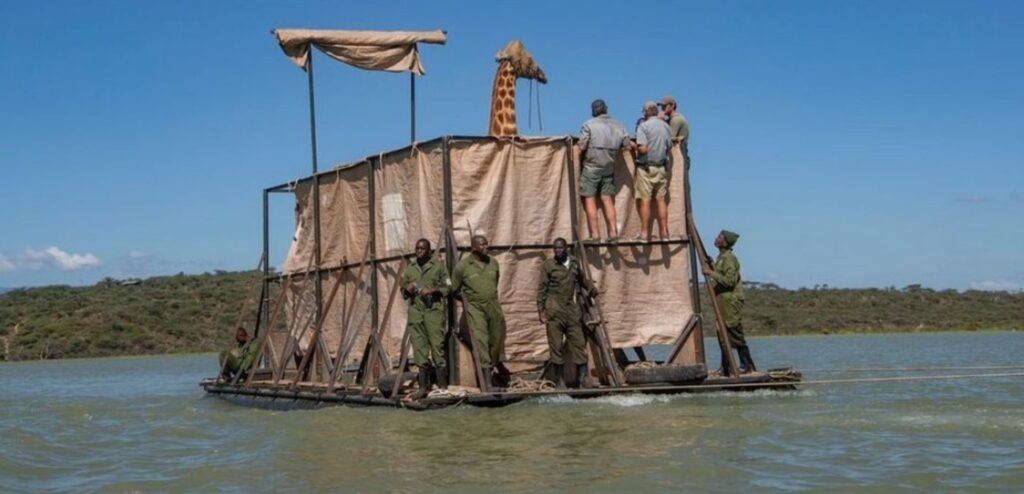
Racing into action were conservationists, government officials, and local community members of Ruko Community Wildlife Conservancy in Kenya to try and construct a “giraffe-raft” in order to ferry them across the lake to safety on higher ground.
Making it ever more urgent, the stranded giraffes were of the endangered Rothschild’s subspecies, numbering only 1,600 animals left in the wild.
Longicharo Island in Lake Baringo wasn’t always an island, but rather a peninsula that split apart after years of intense flooding. The giraffes arrived in 2011, brought by park rangers who believed it was a danger-free place. They kept them fed and healthy, traveling the river by boat.
Finally, with more flooding on the horizon, authorities agreed that, with the island continuing to shrink, the threat of losing the valuable animals was too great.
Operation Giraffe Raft
One of the tallest and widest of their species, building the giraffe-raft required imagination and planning. It would have to be a strong craft—balanced fore and aft.
Rothschild’s giraffes can stand up to 20 feet tall (5.8 meters) and weigh up to 2,500 pounds (1,133 kilograms). Furthermore, their high center of gravity meant that it would be particularly dangerous to keep them upright in a boat, especially if the sight of a crocodile got them spooked.
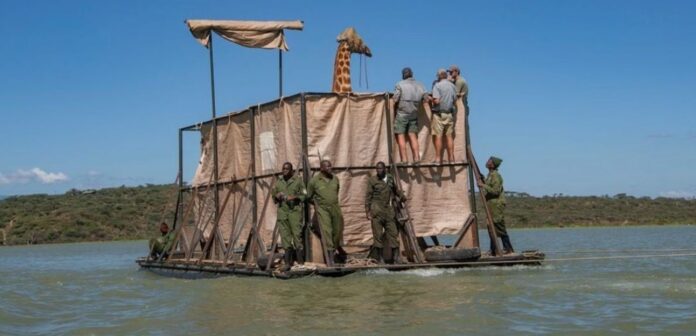
For several months, the rangers familiarized the giraffes with the rescue craft on land until recently when the team sedated Asiwa, an adult female, and covered her eyes to make the trip successfully.
Gizmodo had an email exchange with David O’Connor, President of Save Giraffes Now, the non-profit that participated in the daring rescue. He described the rectangular steel pen that was designed specifically for the occasion.
“The barge floats atop a series of empty drums, for buoyancy. Reinforced sides kept Asiwa from jumping out as the barge was gently maneuvered by boats,” he explained.
“Asiwa, has always been a priority for the team on the ground, as she was the most vulnerable,” reads the triumphant Instagram post by Save The Giraffes “It is a relief for all involved to have got her safely across to the mainland and we are sure she is enjoying the space in her new home!”
Asiwa is now on dry land and awaits the other giraffes that will join her on a special 4,400-acre reservation with high, secure fencing that should keep them safe from predators and poachers alike.
SHARE This Heartening Tall Tale With Friends on Social Media…
Quote of the Day: “The greatest weapon against stress is our ability to choose one thought over another.” – William James
Photo by: Emma Simpson
With a new inspirational quote every day, atop the perfect photo—collected and archived on our Quote of the Day page—why not bookmark GNN.org for a daily uplift?
Indigenous Amazon leader Nemonte Nenquimo just won the world’s foremost award for grassroots environmental activism for her organizing work to save Ecuador’s rainforests.
Her leadership earned her a prestigious Goldman Environmental Prize—known as the ‘Green Nobel’.
Nenquimo led an indigenous campaign and legal action that resulted in a court ruling protecting 500,000 acres of Waorani territory in the Amazon rainforest from oil companies. Nenquimo’s leadership and the lawsuit set a legal precedent for indigenous rights in Ecuador, and other tribes are following in her footsteps to protect additional tracts of rainforest from oil extraction.
The Waorani people, numbering around 5,000 today, are traditional hunter-gatherers in this pristine rainforest that overlaps with Yasuni National Park, which, according to the Smithsonian, “may have more species of life than anywhere else in the world.”
Since the 1960s, oil exploration, logging, and road building have already had a serious impact on Ecuador’s rainforests and her indigenous people and their culture. Oil companies have dumped waste into local rivers and contaminated land, leading to public health spikes in disease and miscarriage.
In 2018, Ecuador’s Minister of Hydrocarbons announced an auction of 16 new oil contracts located on the titled lands of indigenous nations—in direct violation of their rights.
The 33-year-old Nenquimo co-founded the Ceibo Alliance in order to fight back against the planned oil concessions. The mother of a 4-year-old daughter, she organized Waorani communities, held regionwide assemblies, and launched a digital campaign targeting potential investors with the slogan “Our Rainforest is Not for Sale.”
At the same time, Nenquimo proactively helped communities maintain their independence from oil company bribes by installing rainwater harvesting systems and solar panels, supported a woman-led organic cacao and chocolate production business, and secured training for Waorani youth to be filmmakers and document the activists, publishing powerful images for the campaign, including aerial drone footage of the Waorani rainforests.
Ultimately, she served as the lead plaintiff in a lawsuit against the government and in April 2019, Ecuador’s courts ruled in the Waorani’s favor—a ruling which was upheld in the court of appeals.
She deftly bridged the worlds of indigenous people and Western society, bringing together elders and youth, and uniting distinct indigenous tribes that were once divided—and continues to fight for the rights of indigenous communities today.
The Goldman Prize, founded in 1989, goes to six environmental heroes each year, awarded annually to activists from each of the world’s six inhabited continental regions.
John Goldman, President of the Goldman Environmental Foundation, praised the honorees for “taking a stand, risking their lives and livelihoods, and inspiring us with real, lasting environmental progress.”
There is a very special Hobbit hole up for sale in Oxford, England.
Project Northmoor
The University professor J.R.R. Tolkien moved his family to the house on 20 Northmoor Road in 1930—and within these walls he wrote The Hobbit and The Lord of the Rings.
Despite the adoration the author evokes in the hearts of readers around the world, there is no place devoted to Tolkien studies anywhere—a remarkable fact that Hollywood celebrities are seeking to rectify through a crowdfunding campaign.
It was in this house where Tolkien dreamed up The Hobbit as a bedtime story for his children. Soon, the late author’s devoted fans might be able to gather, discuss, and dream up fantasies of their own.
Launched by actors from the blockbuster Hobbit films including Ian McKellen (who played Gandalf) and Martin Freeman (who played Bilbo), along with Annie Lennox and Derek Jacobi, the organizers are envisioning a program of retreats, writing seminars, and other cultural events.
If the house is secured for Tolkien fans, it will be renovated so that guests can experience what it would have been like to visit the Oxford Professor in 1940. Upstairs, the bedrooms will reflect the cultures he invented, and the garden would be restored to a beauty of which the inventor of Sam Gamgee would be proud.
The goal is to raise £4.5 million ($6 million dollars) to purchase and transform the Northmoor home—and 9 percent has been donated on the campaign website, as of December 4.
As with every crowdfunding campaign there are perks and gifts for the ‘Fellowship of Funders’ at various levels, from special certificates mailed for a pledge of $25 to personal invitations for events if you can donate more.
WATCH their video below…
Join The ‘Fellowship of Funders’ – And Share This on Social Media…
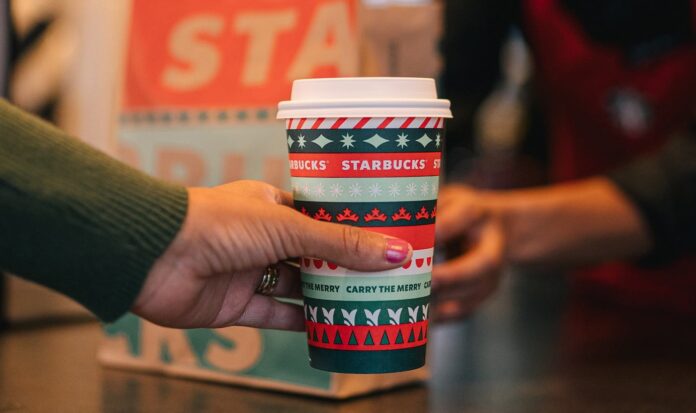
Starbucks announced this week that it will offer a free tall brewed coffee (hot or iced) to front-line responders at U.S. Starbucks stores throughout the month of December to show appreciation for those keeping our communities safe during COVID-19.
“We want to show our deep gratitude for those who support and protect us every day with a small gesture of kindness and a cup of coffee,” said Virginia Tenpenny, Starbucks vice president, Global Social Impact.
The offer is good through December 31 for any customer who identifies as a front-line responder, which Starbucks describes as: doctors, nurses, public health workers, pharmacists, dispatchers, fire fighters, paramedics, EMTs, law enforcement officers, dentists and dental hygienists, mental health workers (therapist, psychologist, social worker, counselor, etc.), hospital staff such as janitor/housekeeping/security, military on active duty, contact tracers, vaccine and pharmaceutical researchers, pilots, flight attendants, TSA, and medical researchers.
To further provide community support, the company also has plans to surprise 50,000 front-line responders with care packages and Starbucks gift cards this holiday season.
The new promotion is similar to a previous giveaway aimed at health care workers, when the company pledged to give them a free cup of coffee from late March until May, which amounted to over 2 million brews.
Since March, The Starbucks Foundation has donated more than $1 million to support front-line responders, including delivery of personal protective equipment, essential medical items, care packages and handwritten letters, and support for emergency assistance including mental health resources for first responders and health care workers.
In partnership with Operation Gratitude, the Foundation says it has distributed 300,000 care packages with letters—containing 1 pound of whole bean coffee, along with 110 pallets of K-Cup pod donations to hospitals and military units during the pandemic.
Need more positive stories and updates coming out of the COVID-19 challenge? For more uplifting coverage,click here.
SHARE With Everyone Who Can Benefit From Free Coffee on Social Media…
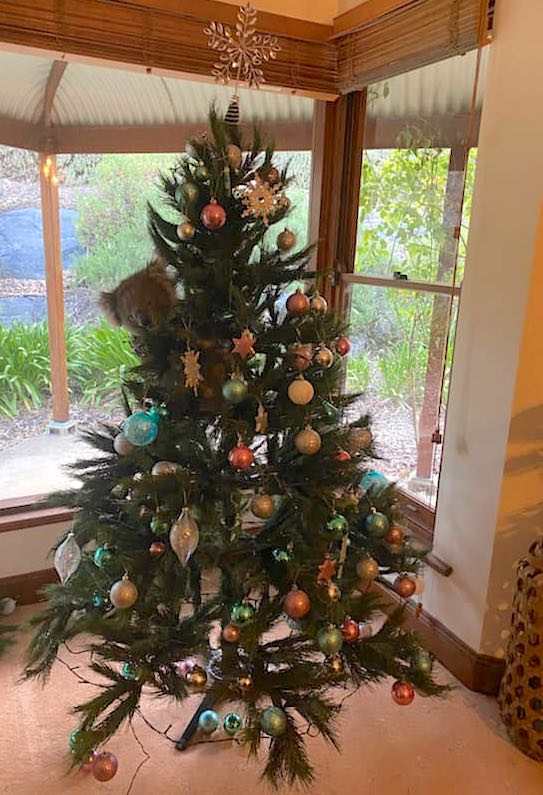
A woman near Adelaide had the best tree-topper of all time—at least for a day.
Amanda McCormick / 1300Koalaz, Facebook
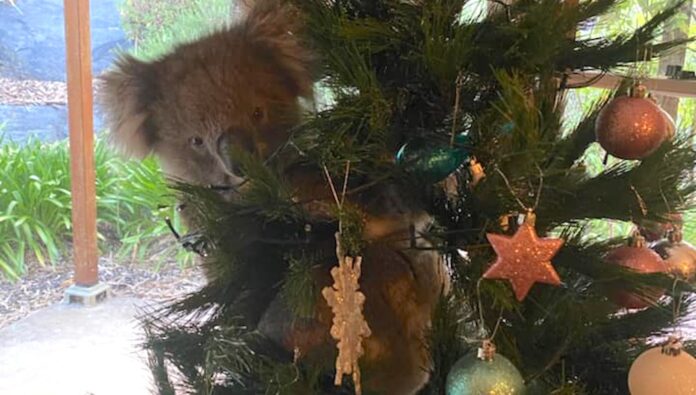
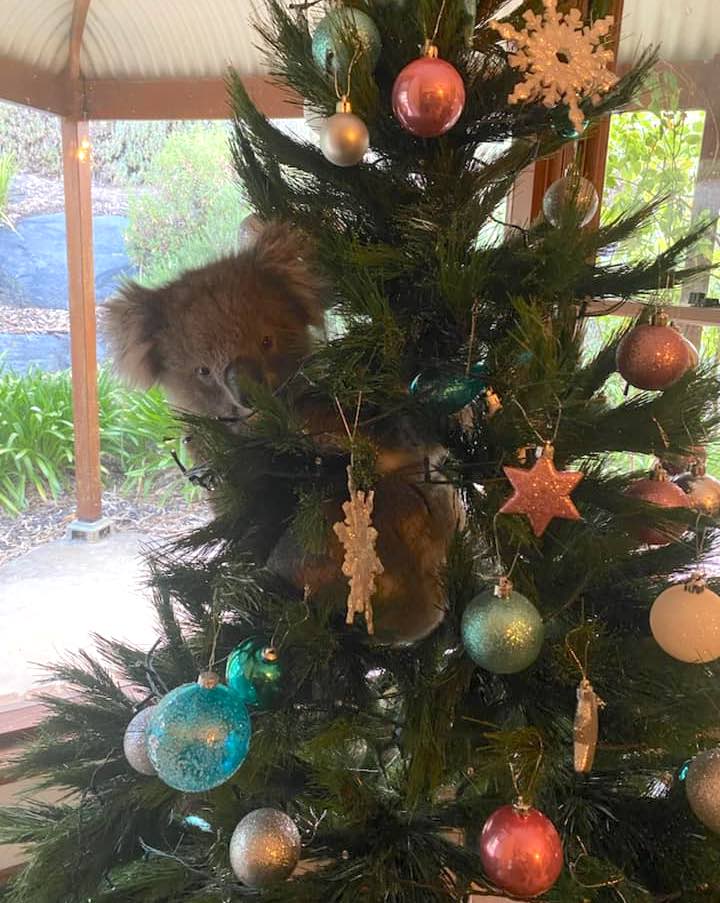
Amanda McCormick found that her Christmas tree had a new ornament after a live koala wandered into her home and snuggled up the branches of the white pine.
Lucky for the internet, she took pictures before calling a wildlife rescue group, 1300KOALAZ.
“Our hotline operator took a call,” the charity wrote on FB. “At first she thought she was the victim of a prank call.”
They merrily reported that the koala was “desperate to get in the Christmas spirit.”
Amanda, who lives in Coromandel Valley in southern Australia, is not alone. Dee Hearne-Hellon, the co-founder of 1300Koalaz, says koalas are occasionally known to sneak into houses.
Quote of the Day: “Get out there and improvise, and take chances, and don’t be a perfectionist—leave that to the classical musicians.” – Dave Brubeck (born 100 years ago)
Brubeck was the American jazz pianist and composer whose Dave Brubeck Quartet produced the first million-selling jazz single and LP.
Photo by: Steve Johnson
With a new inspirational quote every day, atop the perfect photo—collected and archived on our Quote of the Day page—why not bookmark GNN.org for a daily uplift?
The United Nations this week reclassified cannabis by removing it from the category of most dangerous and addictive drugs, which includes heroin.
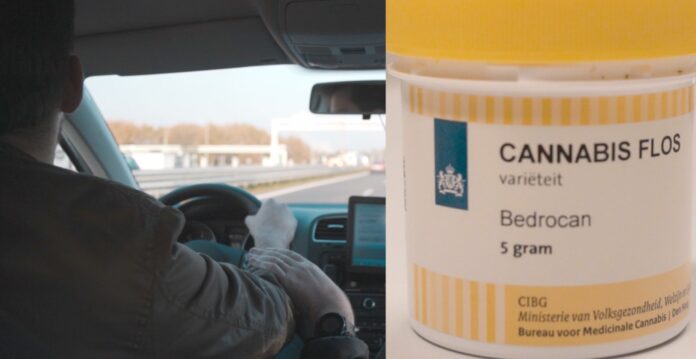
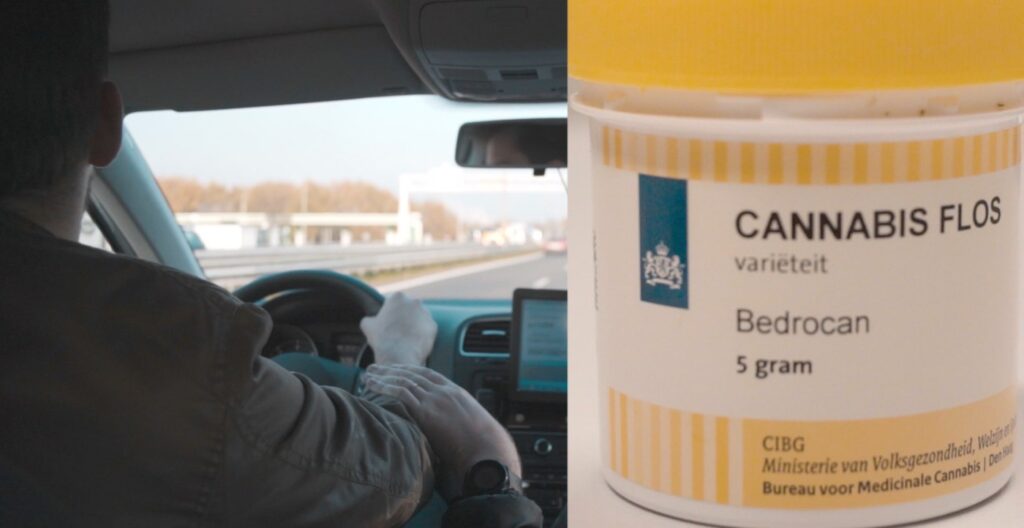
Meanwhile, a landmark study was published on cannabis and driving ability, which showed that cannabidiol (CBD), a cannabis component now widely used for medical purposes, does not impair driving.
“These findings indicate for the first time that CBD, when given without THC, does not affect a subject’s ability to drive,” said lead author Dr Thomas Arkell. “That’s great news for those using or considering treatment using CBD-based products.”
Led by the Lambert Initiative for Cannabinoid Therapeutics at the University of Sydney and conducted at Maastricht University in the Netherlands, the study’s results were published this week in the Journal of the American Medical Association.
There has been substantial growth in medical treatment using cannabis-related products in Australia and overseas. This includes increasing use of CBD-containing products for conditions such as epilepsy, anxiety, chronic pain and addictions. Many currently available products also contain a mixture of THC and CBD.
The research also measured the effects of driving with THC in one’s bloodstream—the intoxicating cannabis component tetrahydrocannabinol—and found that moderate amounts produced mild driving impairment that lasted up to four hours.
Sydney University
Participants inhaled vaporized cannabis containing various mixes of THC and CBD, or a placebo cannabis, then went for a 60-mile drive (100-km) under controlled conditions on public highways both 40 minutes and four hours later. Cannabis containing mainly CBD did not impair driving while cannabis containing THC, or a THC/CBD mixture, caused mild impairment measured at 40 minutes later but not after four hours.
“With cannabis laws changing globally, jurisdictions are grappling with the issue of cannabis-impaired driving. These results provide much needed insights (that) can help to guide road-safety policy,” said Dr Arkell. “These results should allow for evidence-based laws and regulation for people receiving medical cannabis.”
“The results should reassure people using CBD-only products that they are most likely safe to drive, while helping patients using THC-dominant products to understand the duration of impairment,” said Lambert Initiative Director, Professor Iain McGregor.
METHOD
The one-hour driving test was conducted on a public highway in a dual control car with driving instructor, using a well-established scientific test that measures standard deviation of vehicle position (SDLP), including lane weaving, swerving, and overcorrecting.
The amount of THC vaporized by participants was enough to cause strong feelings of intoxication.
While some previous studies have looked at the effects of cannabis on driving, most have focused on smoked cannabis containing only THC (not CBD) and have not precisely quantified the duration of impairment, said authors of the study on JAMA.
“This is the first study to illustrate the lack of CBD effects on driving and to also provide a clear indication of the duration of THC impairment.”
SHARE the DATA With Cannabis Fans on Social Media…
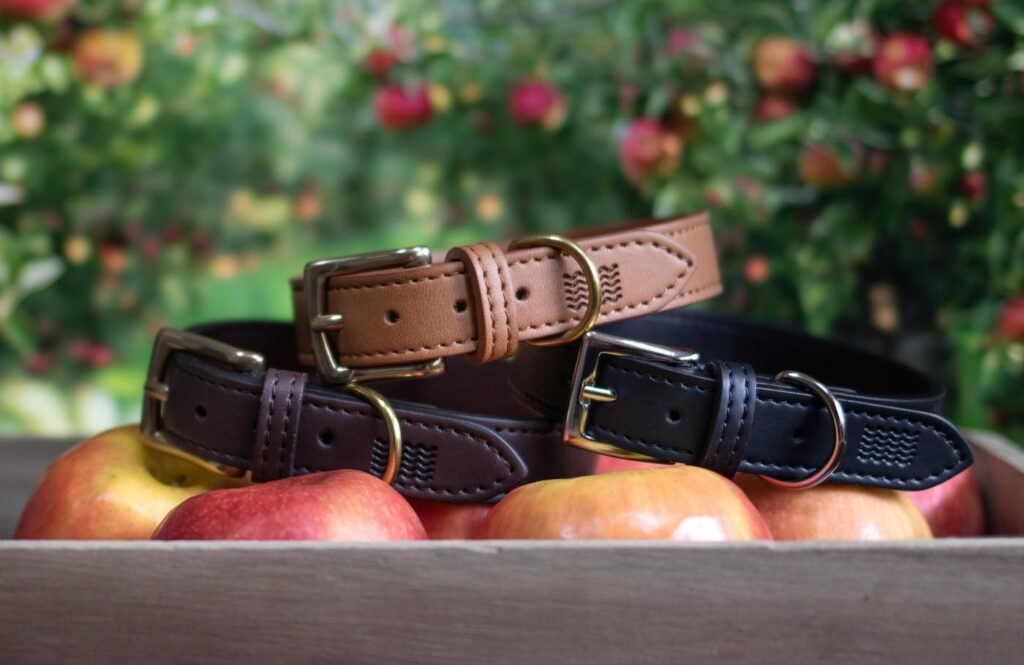
One company’s groundbreaking Apple Dog Accessories are stronger than leather, yet made from fruit.
As an alternative to the leather industry, Project Blu says it created a vegan-friendly pet collar line without compromising on quality.
Their collars, leashes, harnesses (and even poop-bag holders) are handmade in Italy from apple skins mixed with an organic polymer to create “an incredibly strong, waterproof material that is also kind to the planet.”
Through their Kickstarter campaign, they are offering, for a limited time, special early-bird pricesavailable now. The main features are:
Made from simply apple skins and an organic polymer (the apple skins derive from organic apples grown in the Italian Alps)
Super strong and safe
Handmade by Italian artisans
3 Classic Styles
Waterproof & stain resistant
Comfy feel and 100% cruelty free – PeTA approved vegan
And, with every sale made, the company plants a tree in partnership with Eden Reforestation Projects to help combat deforestation.
On a mission to remove pollution from the pet industry, Project Blu wants to revolutionize the pet product market offering products that are sustainable, affordable, and built to last.
The pet accessory business is based in Wales, with manufacturing facilities in Tuscany, Italy. They won an award for ‘Best Startup in Wales 2020’.
Kristian Tobin
“We pride ourselves in delivering high quality products while helping out the planet that we are lucky enough to live on,” says Founder Geryn Evans.
A market leader in Europe for sustainable pet products, the company boasts a leadership team that has been distributing pet merchandise for over 40 years.
The Kickstarter campaign is their worldwide launch, after needing to postpone their expansion into the US markets this year due to COVID.
Project Blu states their products are already in the production line to ensure prompt delivery times—though they will not begin mailing them until the campaign ends, for delivery in January. Check out their vegan-friendly pet line here on Kickstarter.
Reprinted with permission from World At Large, a news website of nature, politics, science, health, and travel.
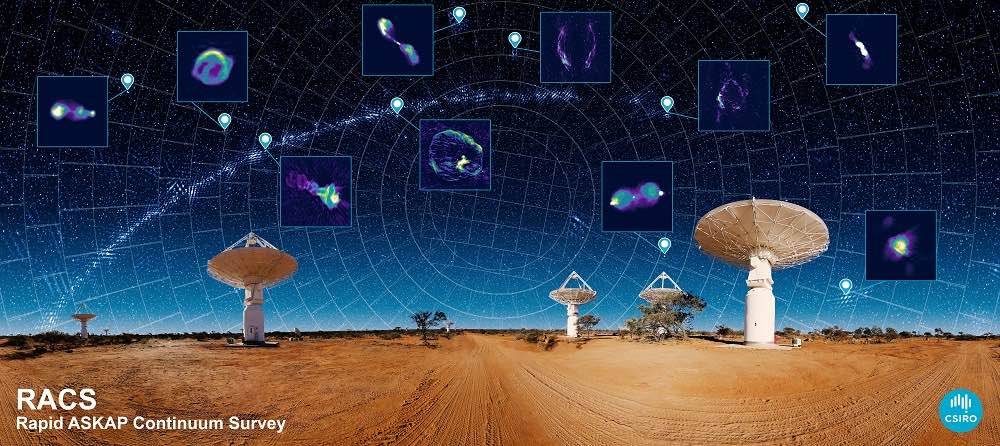
The world-leading CSIRO telescope in Australia has mapped the entire southern sky in stunning detail and record time, identifying 3 million never-before-seen galaxies all in just 300 hours.
Announced on December 1 by the Australian national science agency CSIRO, the achievement has quickly made headlines around the world for producing a new atlas of the universe.
Previous telescopic all-sky surveys of the cosmos have taken years, and required tens of thousands of images to assemble.
The telescope, known as the Australian Square Kilometre Array Pathfinder (ASKAP) is a collection of 36 radio dish antennae in the Western Outback spread out over 4,000 square meters that work in tandem to sew together high-resolution images to create panoramic photos of the universe.
High-resolution is different for ASKAP than for your iPhone, and the eventual 903 images it took to create the new atlas are made up of 70 billion pixels amounting to 26 terabytes of data according to CSIRO. This monumental load, which began as 13.5 “exabytes” was processed by a supercomputer called the “Galaxy” at the Pawsey Supercomputing Center.
CSIRO
“ASKAP is applying the very latest in science and technology to age-old questions about the mysteries of the Universe and equipping astronomers around the world with new breakthroughs to solve their challenges,” says CSIRO Chief Executive Dr. Larry Marshall.
3 million new galaxies is a lot of territory to explore, so presumably ASKAP is only just getting started.
“This census of the Universe will be used by astronomers around the world to explore the unknown and study everything from star formation to how galaxies and their supermassive black holes evolve and interact,” lead author and CSIRO astronomer Dr. David McConnell said in a statement.
He continued to suggest that potentially tens of millions of galaxies await discovery with this new telescope/supercomputer pairing in the future.
WATCH a time-lapse video of the array in action…
SHARE the News From Down Under With Science Geeks on Social Media…
The world’s largest humanitarian network has reported that hundreds of thousands of new volunteers have stepped up to work for free this year during the pandemic.
Mongolian Red Cross
Today is International Volunteers Day—first celebrated by the United Nations 35 years ago, so it is fitting that the International Federation of Red Cross and Red Crescent Societies (IFRC), formed in 1919, is capping off a century of service by welcoming the many kind-hearted new volunteers worldwide.
Some of the highest numbers for volunteering came from the American Red Cross with 78,000 new sign-ups. The Italian Red Cross welcomed nearly 60,000 new sign-ups as part of its ‘Time of Kindness’ initiative. The Netherlands logged 48,000 new volunteers recruited through their Ready2Help citizen aid network—and Kenya is training 35,000 new people.
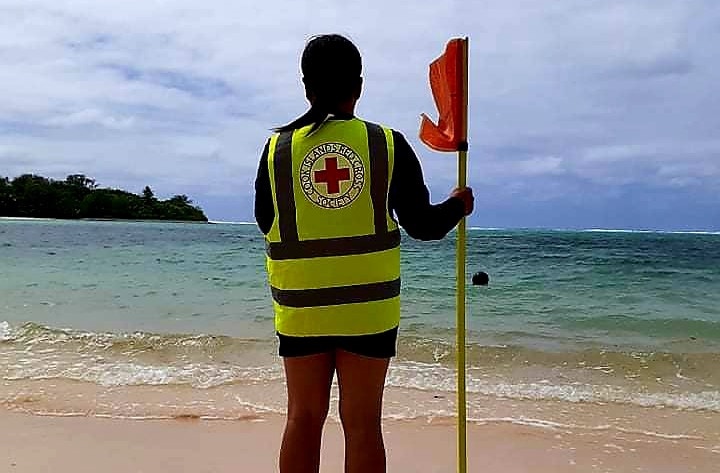
Significant increases were also reported by the Argentina, Kyrgyzstan, and even Tuvalu, an island country in the west-central Pacific with no recorded cases of COVID-19 welcomed over 130 new volunteers.
Collectively, they have reached tens of millions of people in nearly every country of the world, while also responding to hundreds of other disasters.
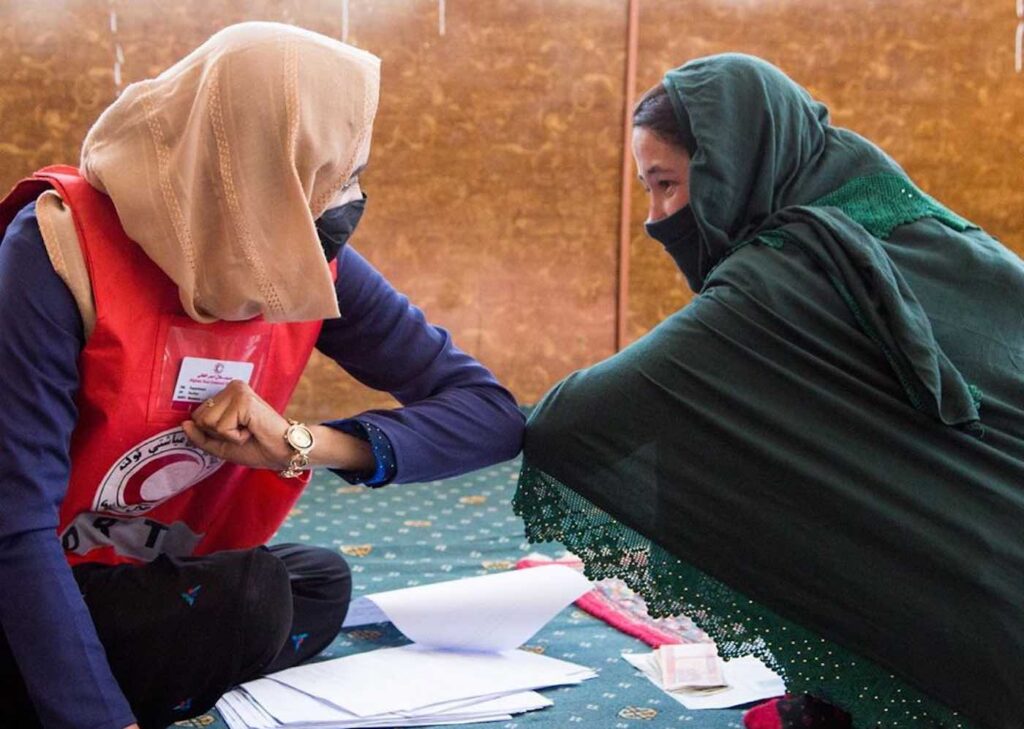
New and long-standing volunteers have dedicated their time to wide-ranging COVID-19 response activities, including:
delivering essential food and medical items;
transporting patients to health facilities;
supporting with testing and contact tracing;
providing psychosocial support to vulnerable and quarantined people;
distributing personal protective equipment (PPE);
and providing trusted and accurate health information to their communities.
“This year, in response to unprecedented humanitarian need, the IFRC has witnessed equally unprecedented humanity and kindness – with hundreds of thousands of people joining the Red Cross Red Crescent family for the first time, all the while contending with the terrible impacts of COVID-19 on their own lives,” said Francesco Rocca, President of the IFRC.
“Though the future can seem bleak and the world divided because of this virus, every individual action of solidarity, of peace, of lending a hand and supporting your community matters,” he added.
Sri Lanka Red Cross
In the first 6 months of the global COVID-19 response, the IFRC allocated over 120 million Swiss francs to support compassionate responses in 153 nations.
New volunteers came from all ages and backgrounds – teachers, parents, nurses, students, bankers, artists, potentially now unemployed or furloughed, young and old – and motivated by a common desire to serve their communities.
Tracy Kyomuhendo, a student in Kampala, joined the Uganda Red Cross in March when COVID-19 hit and a national lockdown halted her studies.
“I joined because I wanted to sensitize my community about the virus and help protect them – some people here didn’t even think coronavirus was real. Volunteering has helped me build my skills as a person and also achieve my dream of serving humanity. It’s now part of me! I feel more connected with my community than ever before.”
Quote of the Day: “Things do come out of the blue. They come out of the blue to remind us that things do come out of the blue, and that life could get crazy good at any second.” – Tama Kieves
Photo by: Sebastian Staines
With a new inspirational quote every day, atop the perfect photo—collected and archived on our Quote of the Day page—why not bookmark GNN.org for a daily uplift?
Look up at the night sky on winter solstice this year, and you’ll be able to catch a rare sight. On December 21, Jupiter and Saturn will appear closer to one another than they have in eight centuries.
Joe Yates
Alignments between the planets, known as a ‘conjunction’, is “rather rare,” Rice University astronomer Patrick Hartigan explained in a statement, “but this conjunction is exceptionally rare because of how close the planets will appear to one another.”
The last time these gas giants appeared so closely, at a visible separation of only 0.1 degrees, was in the Middle Ages: at predawn on March 4, 1226.
Of course, the appearance of the ‘Christmas Star’ or ‘Star of Bethlehem’—so named because the closeness of the planets creates a shining point of light—is a phenomenon only observed from Earth. In reality, Jupiter and Saturn remain millions of miles apart.
Where to see the ‘Christmas Star’
Saturn and Jupiter have been moving steadily closer to each other since summer 2020.
Taking the time to look for these planets over the coming nights is worth it. “You can watch [the planets] move which is super cool, because you’re actually seeing planets in orbit” Hartigan told USA Today, and watching for the pair coming together before solstice night will make identifying them that bit easier on the 21st.
Though visible around the world, the best place to see the conjunction is close to the equator, between dusk and just after nightfall, when the sky is dark enough for fainter Saturn to appear, but when it’s not so late that the planets have moved below the horizon for the evening.
Looking low on the western horizon, on winter solstice the two planets will appear to be separated by less than a fifth of the diameter of a full moon.
If you can access a telescope, several of the planets’ largest moons will also be visible in the same field of view that night.
If it’s cloudy where you are on December 21? Jupiter and Saturday will still appear extra near to each other for the week surrounding solstice. And if you miss the phenomenon completely? There’s always March 15, 2080. That when the next close conjunction of the planets is expected to occur.
SHARE The Out-of-This-World News With Pals on Social Media…
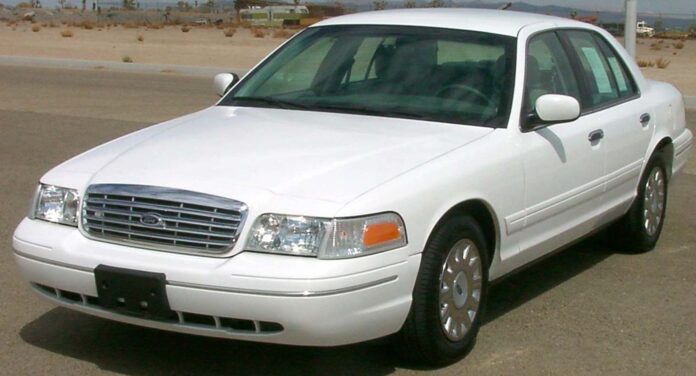
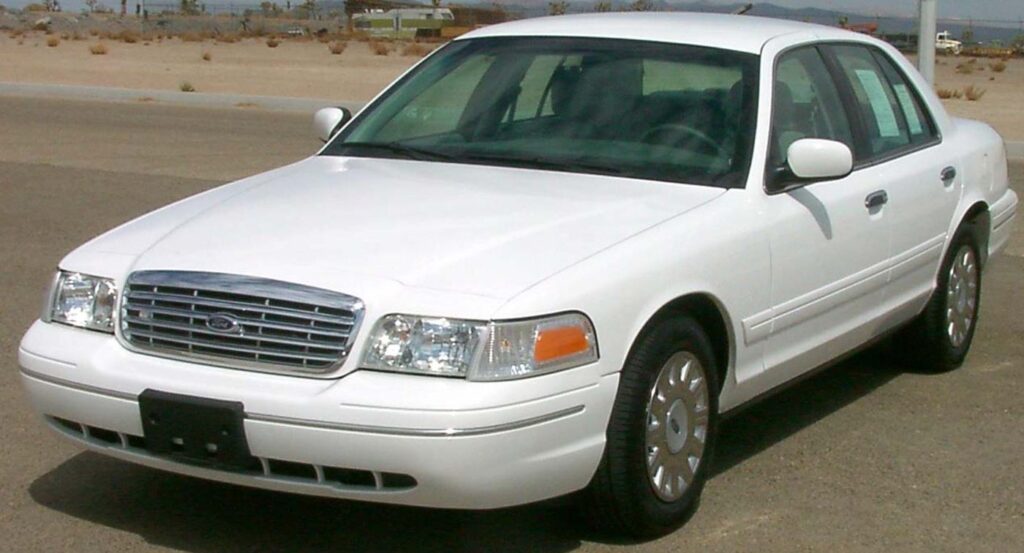
A Ford Crown Victoria similar to the one Schneider gifted.
It’s pretty much a foregone conclusion that any headline that begins with the words “Florida Man” is likely to wind up with a twisted punchline straight out of a Carl Hiaasen novel. The meme’s been floating around since 2013.
You know…
Florida Man Breaks INTO Jail to Hang With Friends
Florida Man Who Tried to “Run” to Bermuda in Inflatable Bubble Rescued by Coast Guard—Again
Florida Man Steals Neighbor’s Peacock, Gets Changed by Angry Birds
Florida Man Says He Danced on Patrol Car in Order to Escape Vampires
Florida Man Wearing Mop on Head “Terrifies” Neighbors With Demands for Eggs
And those are just the ones we can print in mixed company.
But now, thanks to a trio of guys in the Tampa Bay area, “Florida Man” may be getting a long-overdue makeover.
Florida Man Number One, Cory Schneider, when it was time to let go of the car his late grandmother had given him years before after he’d been in a wreck, he wanted to do something nice with it.
“1997 Ford Crown Victoria—white—around 100k miles, almost all driven by grandma,” he posted to Reddit. “Damn good physical appearance for a 24-year-old car. I want to help someone who needs it with a free vehicle.”
A Ford Crown Victoria similar to the one Schneider gifted.
He was swamped with requests. After sifting through them, Schneider decided to gift the car to Florida Man Number Two, a 31-year-old substitute teacher named Mark Selby who’d suffered a wreck of his own. Selby’s vehicle was totaled and he was living with his mom while recuperating from his injuries.
“When I first got the call, I felt like I was going to cry,” Selby said in an interview with the Tampa Bay Times.
Enter Florida Man Number Three, Marcel Gruber of St. Petersburg, who upon hearing of Schneider’s generous gesture, upped the ante by putting $400 bucks into the car’s glove compartment to pay for registration and incidentals.
The kicker? Selby’s dream is to one day build a home for abandoned children. He says getting this gift out of the blue at one of the worst times in his life has really turned things around for him and given him the encouragement he needs to keep moving toward that goal.
After years of decline, a critically endangered species of rock wallaby in Australia is finally growing in population following recent rainfall.
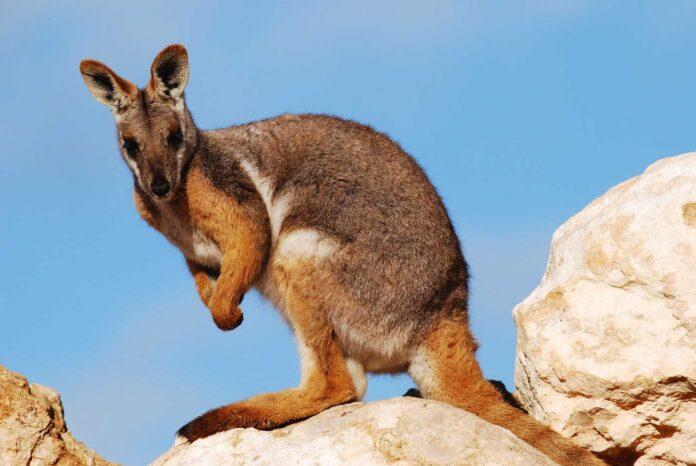
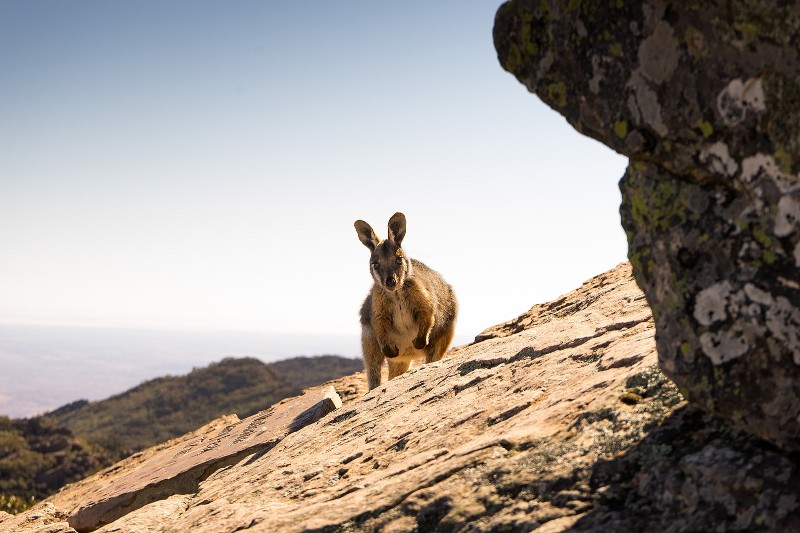
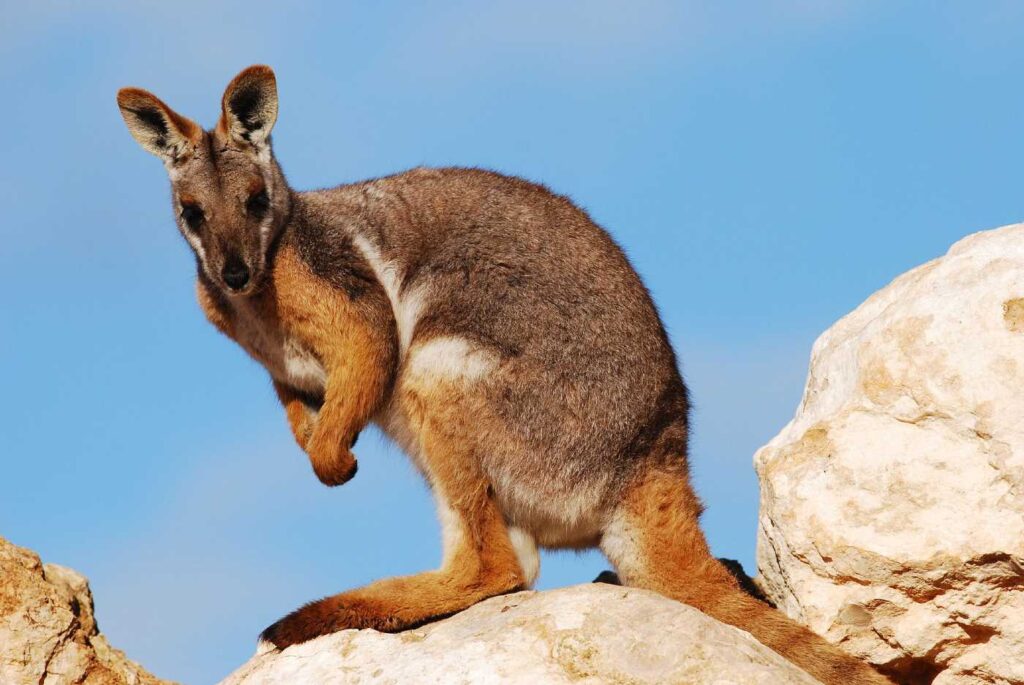
The beloved Wangarru, or yellow-footed rock wallaby as it’s commonly called, is found only in Mutawintji National Park and Nature Reserve in the Far West and outback-South Australia.
CC, Andrew Jenssen
In New South Wales’ longest ariel population survey program, the NSW government has been keeping tabs on the Wangarru for 40 years. Recently, drought and invasive predators like foxes and cats have reduced their numbers from 150 to just 60 individuals.
“But rain from March caused the ground cover to grow back and the wallabies have started breeding again, and this latest count in July we recorded 75 wallabies,” says project officer, Sarah Bell.
Dr. Bell works for the Save Our Species conservation action program facilitated by the International Union for the Conservation of Nature, which works to save endangered species the world over.
“We were getting quite concerned, because 60 in one population is such a small number of animals to represent a species distribution in NSW,” noted Dr. Bell.
“If you put the population count on top of rainfall data, it’s really quite amazing how closely it corresponds.”
Leroy Johnson is a Barkindji Aboriginal man, and the Park Manager of Mutawintji. For him, the Wangarru is a special animal. The Mutawintji Aboriginal Land Council has it on their logo, and Johnson told ABC news Australia that his people “take it very seriously to look after not only those animals, but the habitat they live in.”
He and his staff put out feeding and watering stations throughout the park to help the animals through the dry period.
“If the numbers are good then the land and the country is healthy too… we take pride in the fact that they’re there.”
CC, Peripitus
However attached the Barkindji are with the cute rock wallaby, another bad drought could easily wipe out the remaining population, so Dr. Bell is working with the Mutawintji Land Council on relocation projects to create subpopulations elsewhere in the state.
Natural disasters, drought, or a new disease can all decimate a delicate population, and the more places in NSW that Dr. Bell and Leroy Johnson can create stable populations, the better the chance that the Mutawindji Land Council can have them on their logos for years to come.
SHARE the Good News From Down Under With Pals on Social Media…
43 years is a long time to solve a puzzle, but when the result could reveal whether or not intelligent alien civilizations exist in the universe, it’s worth waiting.
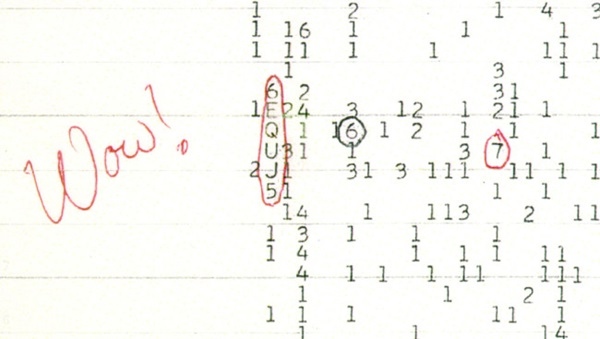
When Jerry Ehman, working at the radio telescope desk at Big Ears Observatory, Ohio, recorded an enormously complicated radio signal arriving from space, he famously scrawled “WOW! next to the reading on the computer printouts.
Big Ears Observatory
At the time it was hypothesized to have come from an advanced civilization, and now 43 years later a citizen scientist has plumbed the depths of the Gaia Star Catalogue and determined the most likely place, down to the star, the WOW! signal originated from.
PanSTARRS/DR1
Alberto Caballero claims that the signal made berth from a body in the habitable zone surrounding a Sun-like star called 2MASS 19281982-2640123, approximately 1,800 light years from Earth in the Sagittarius constellation.
This was based on data from the Gaia Archive, a massive database of positions, mass metrics, moving velocities, and brightness of 1.3 billion different stars assembled by the European Space Agency.
Caballero concludes that 2MASS is “therefore an ideal target to conduct observations in the search for potentially habitable exoplanets.”
Big Ears Observatory has looked over 100 times towards the region of space that produced the long complex radio signal to see if it ever repeated itself or broadcasted others, as the radio signal took up all 72 potential seconds of Big Ears’ capacity for measurement, but nothing like the Wow! signal has ever been recorded again.
Speaking a year after he retired, Jerry Ehman noted how much the totally absent-minded scribble came to define his career, as everytime Big Ears accomplished anything of note, journalists would call and ask about him and his Wow! moment.
“I just wish when I talked to journalists, there was really something more to say about it. I’d like to say, ‘Gee, that’s a signal from extraterrestrial intelligence,” Ehman told Big Ears Magazine in 1994. “I honestly can’t do that.”
The distance of the star from Earth means it’s too far to send any kind of reply. If scientists wanted to see if aliens existed around 2MASS, they would have had to send a radio signal greeting of their own under the auspicious of the Roman Emperor Hadrian for it to arrive there in present day.