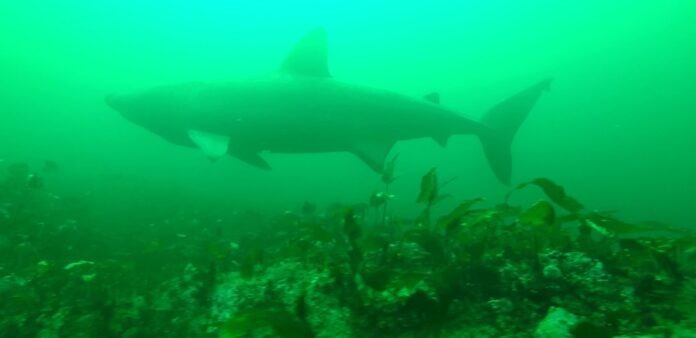
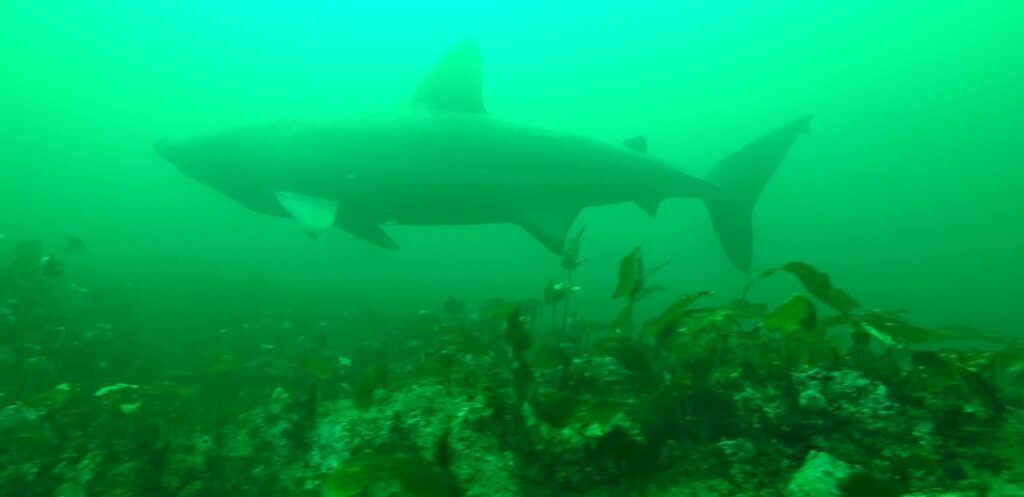
The first successful tracking of basking sharks has taken place—with a robotic underwater camera.
Credit: SWNS
A ‘SharkCam’ underwater vehicle (AUV) is one of the world’s ‘most advanced’ pieces of animal tracking technology. It was used in the Hebrides off Scotland’s west coast for the time last summer to observe and gather footage of basking sharks, the world’s second-largest fish after the whale shark.
Little is known about the underwater traits of the globally endangered species—filter feeders that eat plankton and grow to around eight metres in length—despite
basking sharks being prevalent in Scottish waters.
So the SharkCam recorded the behavior of three such sharks from a distance as they swam off the coast of Coll and Tiree.
Analysis of the footage revealed the sharks spending an unexpected amount of time swimming near the seabed, a behavior which has not often been reported.
Notably, the sharks were not seen to be feeding, which researchers believe adds weight to the theory that the species visits Scottish waters not to feed but to breed.
Credit: SWNS
Dr. Suzanne Henderson, NatureScot Marine Ecosystems manager, said, “While we weren’t lucky enough to capture courtship or mating behavior on camera this time, this innovative study has shed more light on the lives of these spectacular giant fish.
“The fact that the sharks spent much more time swimming just above the seabed than we previously thought, and with their mouths closed, is really interesting, particularly as the species is often seen as a pelagic or near-surface filter-feeding shark.
“It suggests we may have to rethink not only how many basking sharks are in Scottish waters, but why they are here, as it’s likely not only the plankton they come for.”
Dr Lyndsey Dodds, head of Marine Policy at WWF UK, which helped support the AUV study, said, “These missions have given us a wonderful new window into the mysterious underwater world of this huge fish, highlighting previously unseen behavior, close to the seabed.
“And the more we know about basking sharks, the better we can protect them.”
Amy Kukulya, WHOI research engineer and SharkCam principal investigator, noted, “Every time we deploy our tags and SharkCam, not only do we observe something unexpected, but we collect valuable insights that enable us to keep improving this revolutionary technology.
One Finnish town is literally helping green-minded citizens eat cake as they reward eco-friendly behavior with various rewards: including free public transport tickets, swims, and yes, cake.
A little north of Helsinki, the city of Lahti has developed an app tracking the carbon emissions of local residents based on whether they get around by car, public transport, bicycle, or on foot.
Residents who volunteer their information in the CitiCAP app get a carbon quota for the week.
If they have some of their allowance leftover, they get ‘virtual euros’ to spend on things like bus tickets, bike lights, access to public pools, or coffee and cake at a local cafe.
In a city of 120,000, so far 2,000 residents have downloaded the app.
The project’s research manager, Ville Uusitalo, told Euronews, “You can earn up to two euros (per week) if your travel emissions are really low, but this autumn, we intend to increase the price tenfold.”
Currently, about 44% of trips in Lahti are considered sustainable. The city, which is the EU’s 2021 Green Capital, plans to lessen its environmental impact even more over the next decade, so that by 2025 the city is carbon neutral. By 2030, the aim is that at least half of the journeys taken are done so by sustainable means rather than by car.
Changing Perspectives
City council worker Mirkka Ruohonen, told AFP that the app has helped changed her perspective in the seven months she’s been using it.
“I went for a hiking weekend and we did 15km of hiking, but I had to travel 100km by car,” she said. “After that I checked the app and I was like, ‘Was that a good thing?’ Maybe for me but not for the environment!”
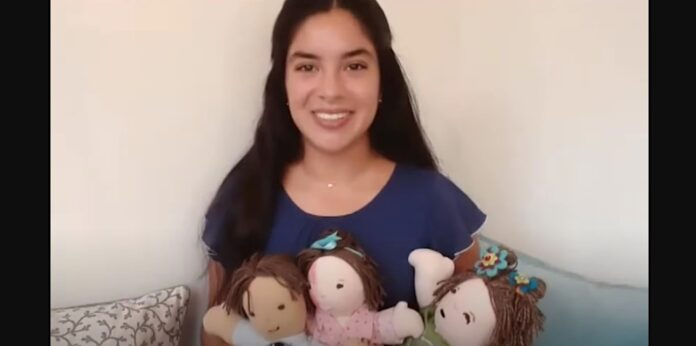
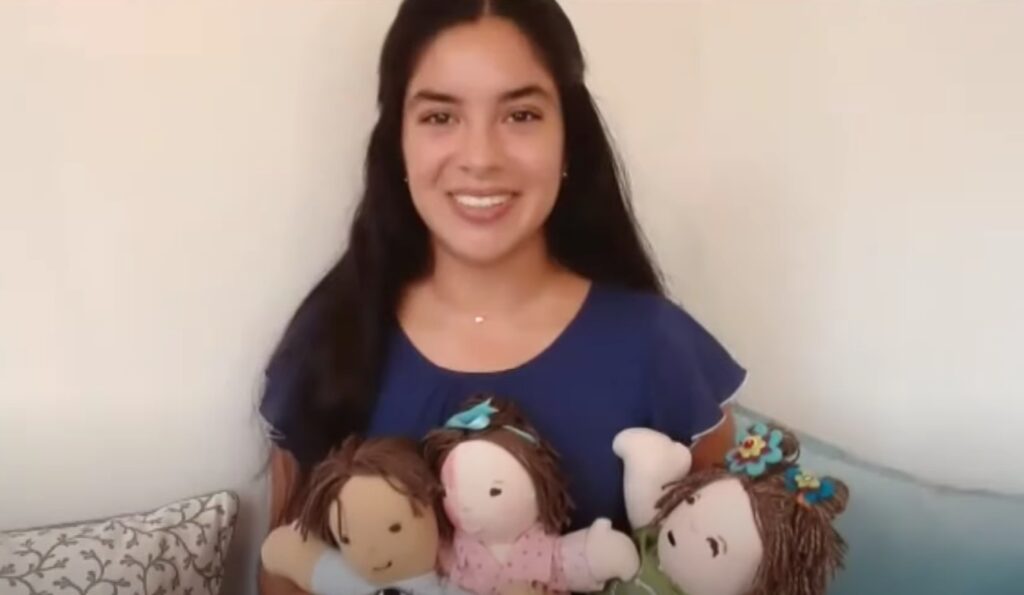
Most little girls love dolls. When 17-year-old Ariella Pacheco was growing up, she was no exception. Since kids tend to bond best with dolls that resemble them, the American Girl doll Pacheco chose for herself looked like it could have been her sister.
Credit: YouTube/CBS
“She looked like me and I felt there was a piece of me in her,” Pacheco, now a senior at Cathedral Catholic High School, told The San Diego Union-Tribune. “You see yourself in a doll and it’s really special to have that connection.”
Children find comfort and connection interacting with dolls that reflect their own physical image as well as their racial and cultural heritage, but until recently, finding diversity when shopping for them has been difficult.
While mass-market selections have become increasingly inclusive in recent years, some segments of the population continue to be excluded. Children whose rare medical conditions render their appearances different from the norm have little to no hope of finding their likeness at a toy store or even online.
Knowing just how important making that very personal connection could be for a child gave Pacheco an idea.
Inspired by Milwaukee doll designer Amy Jandrisevits, whose “A Doll Like Me” project makes custom-designed dolls for children with disabilities, Pacheco decided that for her annual service project for her school’s National Honor Society chapter, she’d design and sew unique dolls to donate to children with rare medical conditions.
To find the kids she hoped to create unique dolls for, Pacheco partnered with Fresh Start Surgical Gifts in Carlsbad, California, a charitable organization that provides surgical and medical treatment free of charge to children who need it.
Pacheco was sent pictures and profiles for a number of potential doll subjects from the ranks of Fresh Start’s clients. She eventually narrowed the field to four.
The dolls she designed feature one with a port-wine birthmark, another with surgical scars, one with jaw alignment issues, and one with facial and cranial anomalies.
Michelle Pius, Fresh Start’s chief development officer was “blown away” by the final product. “It was a very kind and big-hearted gesture on her part to make dolls that will help a child feel like they’re not alone,” she said.
Before getting started, Pacheco scoured YouTube for sewing and pattern-making tutorials, and read up on her subjects’ favorite pastimes and preferred color palettes. Her goal was to ensure the kids could see themselves in her creations, but she didn’t want the things that set them apart from their peers to be the dolls’ most obvious feature.
“The whole time I was trying to put as much love into it as I could and hoped they represented each child faithfully,” Pacheco said. “I really value the beauty in the little things. Each of these kids [is] so unique, so special… I hope through these dolls they can see themselves in a new light and really embrace their beauty.”
(WATCH the CBS video below… )
SHARE The Story Of One Teen’s Kindness With Your Friends on Social Media…
Quote of the Day: “Let there be spaces in your togetherness. Love one another but make not a bond of love: Let it be rather a moving sea between the shores of your souls.” – Kahlil Gibran
Photo: by Jeremy Wong Weddings
With a new inspirational quote every day, atop the perfect photo—collected and archived on our Quote of the Day page—why not bookmark GNN.org for a daily uplift?
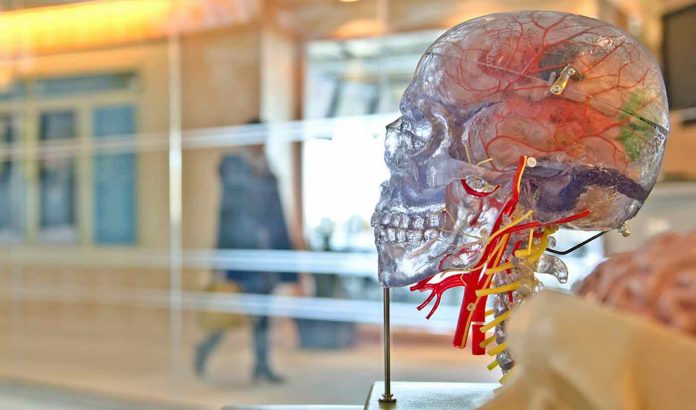
A drug that repairs damage to the brain and spinal cord has been created by British scientists offering hope for new therapies that address a range of devastating conditions—from Alzheimer’s to epilepsy to paralysis.
It restores lost connections between nerves—improving memory, coordination and movement. Results in mice and cells grown in the lab were described as “striking”.
The synthetic protein acts as a “molecular bridge”, re-establishing neuronal links destroyed by accident or illness. It worked in all animals models, including dementia.
The greatest impact was seen in spinal cord injury where motor function returned for at least seven to eight weeks. This was after just a single injection into the site.
Lead author Dr Radu Aricescu, a neuroscientist at the MRC Laboratory of Molecular Biology, Cambridge, said, “Damage in the brain or spinal cord often involves loss of neuronal connections in the first instance, which eventually leads to the death of neuronal cells.
“Prior to neuronal death, there is a window of opportunity when this process could be reversed in principle.
“We created a molecule that we believed would help repair or replace neuronal connections in a simple and efficient way.”
He added, “We were very much encouraged by how well it worked in cells and we started to look at mouse models of disease or injury where we see a loss of synapses and neuronal degeneration.”
In the early stages of Alzheimer’s, and other neuro-degenerative disorders, synapses—or brain connections—are lost. This eventually causes neurons to die.
The same happens with spinal cord damage, which interrupts the constant stream of electrical signals from the brain to the body. It can lead to paralysis below an injury.
The compound called CPTX mimics a natural protein known as Cerebellin-1 that links neurons that send signals with those that receive them.
These ‘transmitters’ and ‘receivers’ are found at special points of contact—the synapses. Cerebellin-1 and related proteins are known as ‘synaptic organizers.’ They are essential to help establish the vast communication network that underlies all nervous system functions.
Working with colleagues in Germany and Japan, Dr Aricescu’s team developed an artificial version described in Science.
Co author Professor Alexander Dityatev, of the German Center for Neurodegenerative Diseases, Bonn, who has been investigating synaptic proteins for years, said, “In our lab we studied the effect of CPTX on mice that exhibited certain symptoms of Alzheimer’s disease and found it improved the mice’s memory performance.”
The researchers also found CPTX increased the ability of synapses to change, vital to memory formation, which is lost in Alzheimer’s.
What is more, the protein acted specifically on synapses that promoted activity of the contacted cell. It also increased the density of ‘dendritic spines’, tiny bulges in the cell’s membrane that are essential for establishing synaptic connections.
The researchers likened the production of CPTX to ‘cutting and pasting’ information from the internet. In effect, they took structural elements from different ‘organizer molecules’ and this generated new ones with different binding properties.
Experiments found it had a remarkable ability to organize neuronal connections in cell cultures.
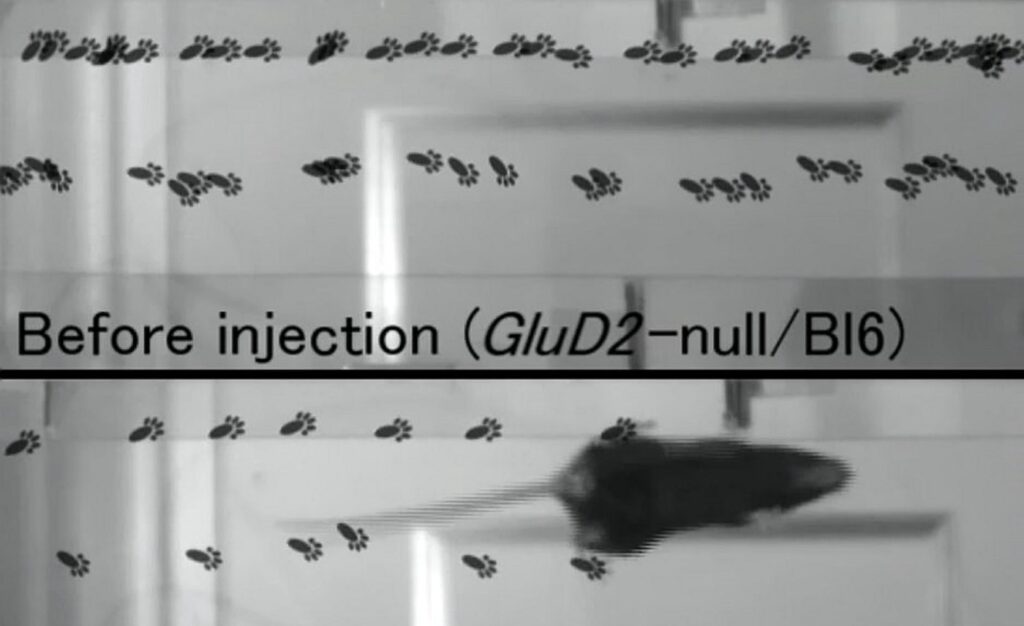
The researchers then tested its effect in mice genetically engineered to have poor muscle coordination, or cerebellar ataxia. It can occur in many diseases. Patients have problems with balance, gait and eye movements.
SWNS
They watched the lab rodents’ neuronal tissue repair itself after the molecule was injected into their brains. It also boosted motor performance.
Encouraged by the success, they then tried the treatment on other mouse models of neuronal loss and degeneration—including Alzheimer’s disease and spinal cord injury.
New and more stable versions of CPTX are now being made so it has a longer lasting effect. Its positive effects was observed for shorter periods in the other conditions – down to about a week for ataxia. The researchers are confident they can rectify this.
A lot more work is needed to find out if the ‘proof of principle’ findings are applicable to humans.
Dr Aricescu said: “There are many unknowns as to how synaptic organizers work in the brain and spinal cord, so we were very pleased with the results we saw.
“We demonstrate we can restore neural connections that send and receive messages, but the same principle could be used to remove connections.”
This would benefit patients with epilepsy, for instance. The chemical could serve as a prototype for a novel class of drugs to treat neurological damage.
Dr Aricescu added, “The work opens the way to many applications in neuronal repair and remodeling. It is only imagination that limits the potential for these tools.”
He said: “Our study suggests CPTX can even do better than some of its natural analogs in building and strengthening nerve connections. Thus, CPTX could be the prototype for a new class of drugs with clinical potential.
“Our approach could possibly lead to treatments that actually regenerate neurological functions
MOVE This Good News To Your Social Media Feeds to Inspire Hope… Featured photo by Jesse Orrico
This may look like just an ordinary stretch of newly-paved road, but it’s actually being hailed as the first mile of recycled plastic highway on a state road anywhere in the U.S.
Using more than 150,000 single-use plastic bottles, sustainable landscaping company TechniSoil partnered with state transit officials to repave the one-mile stretch of three-lane road in July.
According to CalTrans (California Department of Transportation), which already has slated the material for use throughout the state, the eco-friendly road formula has been shown to be 2-3 times more durable than traditional asphalt pavement.
Not only is the formula more durable, Technisoil officials say the procedure generates 90% less greenhouse gas emissions than the process currently used by Caltrans.
Typically, the department repaves state highways by tearing up the topmost 3 to 6 inches of asphalt so it can be ground up and mixed with bitumen—a sludge-like binding agent generated by oil refineries. Since this material can only be used as a base for the roadway, however, Caltrans is still forced to import roughly 42 truckloads of hot asphalt in order to finish the road.
By replacing the bitumen with a polymer-based binding agent made from melted plastic bottles, Technisoil’s procedure eliminates the need for imported asphalt and guarantees that the road is made out of 100% recycled plastic in a liquid polymer.
Following the historic completion of the pilot project in Butte County, Technisoil told Fast Company that they have already begun working on launching additional plastic road projects across California.
“We’re excited about introducing a new sustainable technology and helping pave the way for utilization of recycled plastics throughout the state,” said Caltrans District 3 Director Amarjeet S. Benipal.
“This process is better for the environment because it keeps plastic bottles out of landfills and helps reduce greenhouse gas emissions and reliance on fossil fuels.”
Motorists will be traveling later today on a section of Highway 162 that has been repaved using recycled asphalt pavement and liquid plastic made with plastic bottles. Read more at https://t.co/NswIs8f65x@CaltransHQpic.twitter.com/EasMSu5qcJ
— Caltrans District 3 (@CaltransDist3) July 30, 2020
Local efforts
Elsewhere in the country, Dow Chemical used plastic to pave two stretches of local roads in Freeport, Texas last year, using 1,686 pounds of recycled low-density polyethylene plastic. The company had been testing the plastic roads in Asia, but wants to do more in the US.
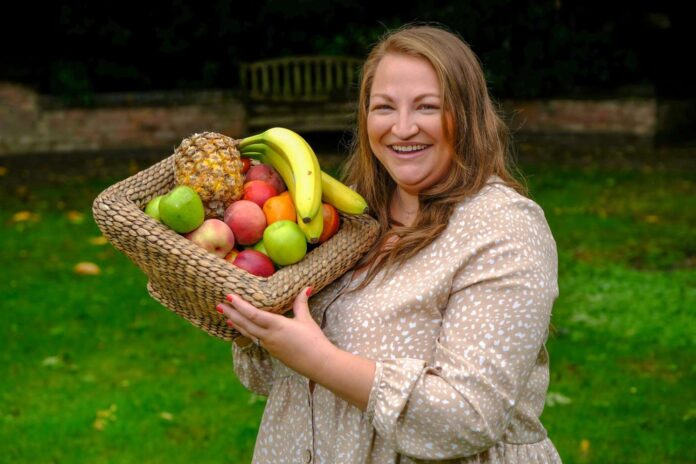
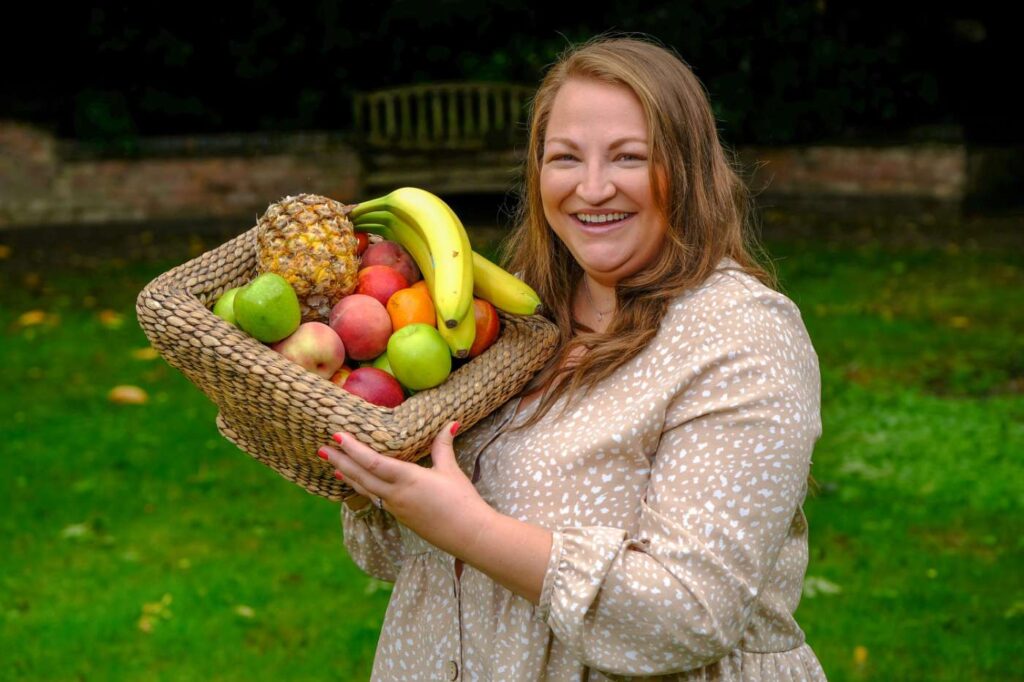
A British woman who has eaten only cheese, fries, and pasta for more than 20 years after developing a fear of fruit and vegetables has been largely cured by hypnotherapy.
Credit: SWNS
Before her treatment, Jenny Edgar would gag if she tried anything other than dry cereal, cheese, and biscuits, or her typical dinner of pasta or chips.
Even her Christmas dinner was mac and cheese washed down with a glass of water.
The 32-year-old health center receptionist, from Coventry in England, avoided eating out as any fruit, vegetables, or fish would leave her feeling ill.
After getting engaged, she decided to face her lifelong fear of nutritious food to lose weight before getting married next March.
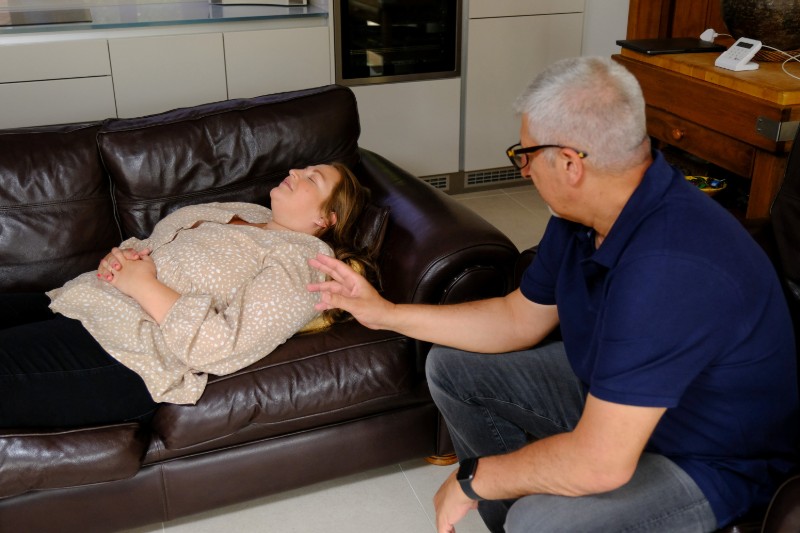
Incredibly, after six hypnotherapy sessions, Jenny can now dig into some of her most feared foods.
She said, “When I was a child I would eat raisins and grapes but hated vegetables.
“I really hated the texture on some fruits, like the fuzz on peaches or the juiciness of tomatoes, so just didn’t eat them.
“When I was in my teens, it wasn’t really a problem because I was quite slim but after going to college and having my son I really noticed the weight going on.
“One Sunday I went for dinner at my fiancé’s house and I had to take my own ready-meal of macaroni and cheese.
“It was very embarrassing and it was getting me down. I just thought to myself that if I don’t sort it out now then I never will.”
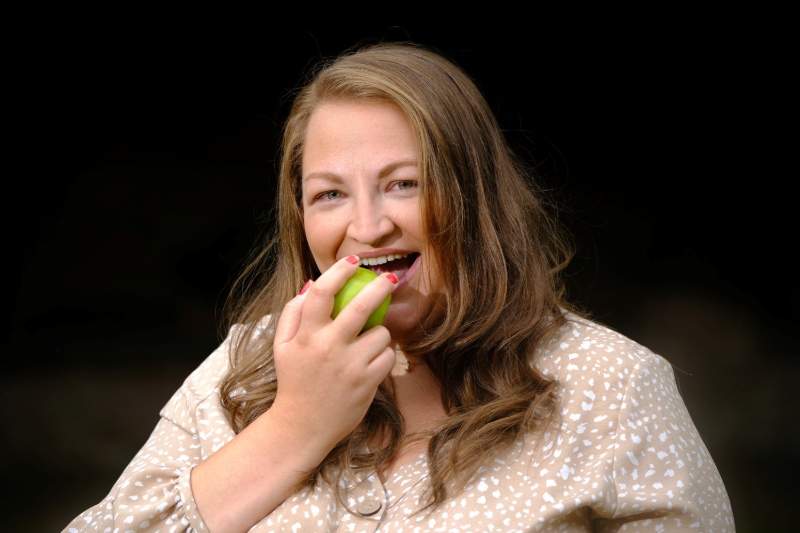
“After a few more sessions, Russell cooked up fresh fish and vegetables which tasted great.
“I was worried to try them at first but then after a few nibbles I was hooked.”
Credit: SWNS
Now Jenny is looking forward to expanding her cooking skills and is even planning on growing her own veg at home.
Hemmings explains that “food aversion can grow very strong, and can also unfortunately last a lifetime. Usually food textures have been limited or not experienced whilst growing up as the fussy eater limits their choice foods so a fresh tomato for instance can be overwhelming. Trying to cope with the seeds, flesh, juice and skin can be simply too much for a fussy eater to handle.
“By using a three-pronged approach of coaching, hypnotherapy cognitive behavioural therapy (CBT), I was able to re-wire Jenny’s responses so she no longer feared certain foods.
“She has made incredible progress and she motivated to enjoy a healthier, more balanced and exciting diet which will improve her and her family’s lifestyle.”
SHARE With Friends Who Need A Little Encouragement To Get Their 5 A Day…
It’s one of the longest-running music festivals and possibly the only one in Britain going ahead this holiday weekend, owing to the island being coronavirus-free since the end of April.
Internationally-known for its famous cow with creamy milk, Guernsey is an island where the last detected case of the COVID-19 virus was recorded more than 100 days ago, so no social-distancing measures will be required at this festival.
In the shadow of a 600-year-old castle on Guernsey, up to 3000 islanders are gathering for the 44th Vale Earth Fair—and the 12-hour music festival might be the biggest one yet.
With no visiting performers invited this year, the all-volunteer Vale Earth Fair Collective is taking the festival back to its roots. Where, in the past, headliners have included Roots Manuva, the Buzzcocks, or the Neville Staple band, this year the line-up will feature 70 all-local acts, just like the early festivals did.
With university students still home, plus teenagers sticking around who would normally be piling onto ferries headed into the UK’s major festival weekend, this homegrown edition may be one of the biggest Earth Fairs yet.
“Ticket sales haven’t been this good for years, and there’s really good vibes surrounding it, says Jade Kershaw of the Vale Earth Fair Collective. “We’re fantastically lucky that we can go ahead—and the island feels like it’s buzzing for it.”
Keeping the spirit of the very first festival in 1976 (when a full line-up of 12 local acts was secured in 2 days) this year’s Earth Fair, with six stages of local music, spoken word, live arts and entertainers, and as always, a children’s corner, is set to be a celebration of both Guernsey’s eclectic live music scene and the ‘Guernsey Together’ spirit which has bolstered islanders throughout the lockdown.
Sunday’s line-up includes Clameur de Haro, a rock group named after the island’s ancient, Norman custom of crying for justice, which is still occasionally invoked by islanders, and the Cor Damme Lars, a feisty folk 5-piece, named for the common Guernsey patois expression.
The Vale Castle, evoked in Victor Hugo’s Toilers of the Sea, proves a spectacular setting for a music festival. Musicians duck their heads into a former storage tunnel for the most unique backstage access, while in the ramparts, a former gun battery proves the perfect design for a Real Ale bar.
Beyond the music and the drinking, it’s the ethos: it’s the little festival with a big heart.
The all-volunteer collective eschews corporate sponsorship and gives all profits to charity. This year’s proceeds will benefit Burma Campaign UK, Free Tibet, and Safer Guernsey.
SHARE The LIVE Music With Friends Stuck on the Island of Social Media…
Quote of the Day: “Chains of habit are too light to be felt until they are too heavy to be broken.” – Warren Buffett (turns 90 today)
Photo: by Giallo
With a new inspirational quote every day, atop the perfect photo—collected and archived on our Quote of the Day page—why not bookmark GNN.org for a daily uplift?
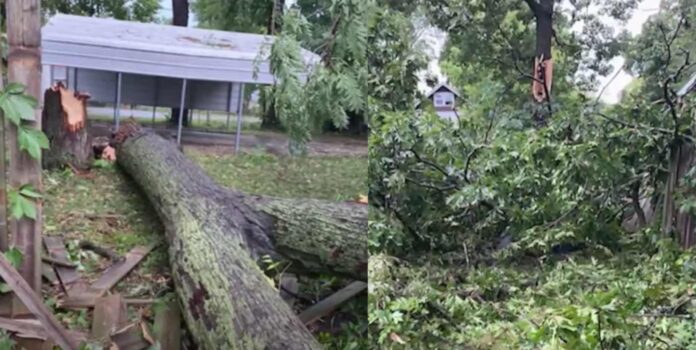
The Roosevelt High School football team came to the rescue last week for a paralyzed man and his family after a Derecho wind storm battered the neighborhood with 100mph winds.
Ray has been paralyzed for decades, cared for by his two sisters in Des Moines, Iowa. When four giant trees came crashing onto his property destroying a privacy fence, the ladies called some old friends to see if they could borrow a chainsaw.
‘You need more than a chainsaw,’ was the response.
Instead, Doug Applegate called in some Top Guns: 30 team members of the Rough Riders football squad.
The teens worked with chain saws and muscle, and less than three hours later, the yard was cleared of tree limbs—man more than 24 inches in diameter. The fence was also repaired and back in place.
“That’s just really what people in Iowa do, we help each other out,” Jackson Neary, a HS senior told KCCI News.
According to a new study, mortality rates from the most common lung cancer have fallen sharply in the United States in recent years, due primarily to recent advances in treatment.
The study was led by researchers at the National Cancer Institute (NCI), part of the National Institutes of Health.
“Reduced tobacco consumption in the U.S. has been associated with a progressive decrease in lung cancer deaths that started around 1990 in men and ten years later in women. Until now, however, we have not known whether newer treatments might contribute to some of the recent improvement,” said Douglas R. Lowy, M.D., NCI deputy director and co-author of this study.
“This analysis shows for the first time that nationwide mortality rates for the most common category of lung cancer, non-small cell lung cancer (NSCLC), are declining faster than its incidence, an advance that correlates with the U.S. Food and Drug Administration approval of several targeted therapies for this cancer in recent years.”
In the study, published August 12 in the New England Journal of Medicine, researchers looked at data for both NSCLC, which accounts for 76% of lung cancer in the U.S., and small-cell lung cancer (SCLC), which accounts for 13%. In the last decade, new treatments for NSCLC have become available, including those that target genetic changes seen in some NSCLC tumors as well as immune checkpoint inhibitors that help the immune system better attack the disease. In contrast, there have been limited treatment advancements for SCLC.
Using death records from a cancer registry program, the researchers were able to estimate lung cancer mortality trends for these specific lung cancer subtypes by linking the lung cancer death records for each patient back to the incidence data for these patients in the cancer database.
The researchers found that, in recent years, deaths from NSCLC decreased even faster than the decrease in NSCLC incidence and the decrease in deaths was associated with a substantial improvement in survival. Among men, for example, deaths from NSCLC decreased 3.2% annually from 2006 to 2013 and 6.3% annually from 2013 to 2016, whereas incidence decreased 1.9% annually during 2001 to 2008 and 3.1% annually from 2008 to 2016.
Two-year survival for men with NSCLC improved over this time, from 26% for patients diagnosed in 2001 to 35% for those diagnosed in 2014. Similar improvement was observed for women. In addition, improvements in two-year survival were seen for all races/ethnicities, despite concerns that the newer cancer treatments, many of which are expensive, might increase disparities.
The rapid decline in deaths reflects both declines in incidence (due in large part to reductions in smoking) and improvement in treatment, say the researchers.
The researchers note that the accelerating decline in NSCLC mortality that began in 2013 corresponds with the time when clinicians began routinely testing patients for genetic alterations targeted by newly approved drugs. In 2012, the National Comprehensive Cancer Network recommended that all patients with nonsquamous NSCLC undergo genetic testing. Subsequently, genetic testing for EGFR (epidermal growth factor receptor) mutations and ALK (anaplastic lymphoma kinase) gene rearrangements — which are targeted by the newer treatments — increased substantially.
The effect of immune checkpoint inhibitors on NSCLC survival is significant, which suggests that this improving trend in survival should continue beyond 2016.
“The survival benefit for patients with non-small cell lung cancer treated with targeted therapies has been demonstrated in clinical trials, but this study highlights the impact of these treatments at the population level,” said Nadia Howlader, Ph.D., of NCI’s Division of Cancer Control and Population Sciences, who led the study. “We can now see the impact of advances in lung cancer treatment on survival.”
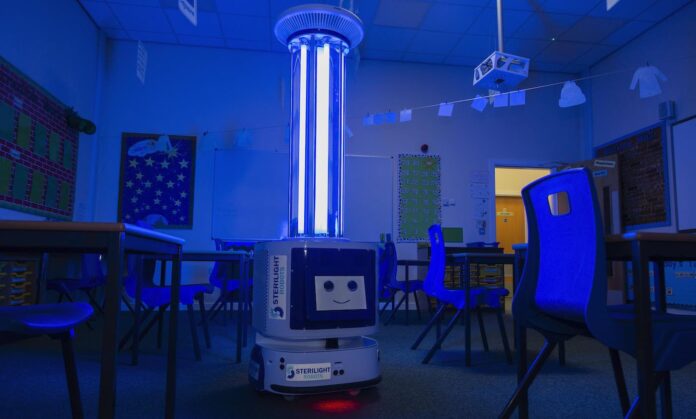
The Sterilight robot disinfecting a classroom - SWNS
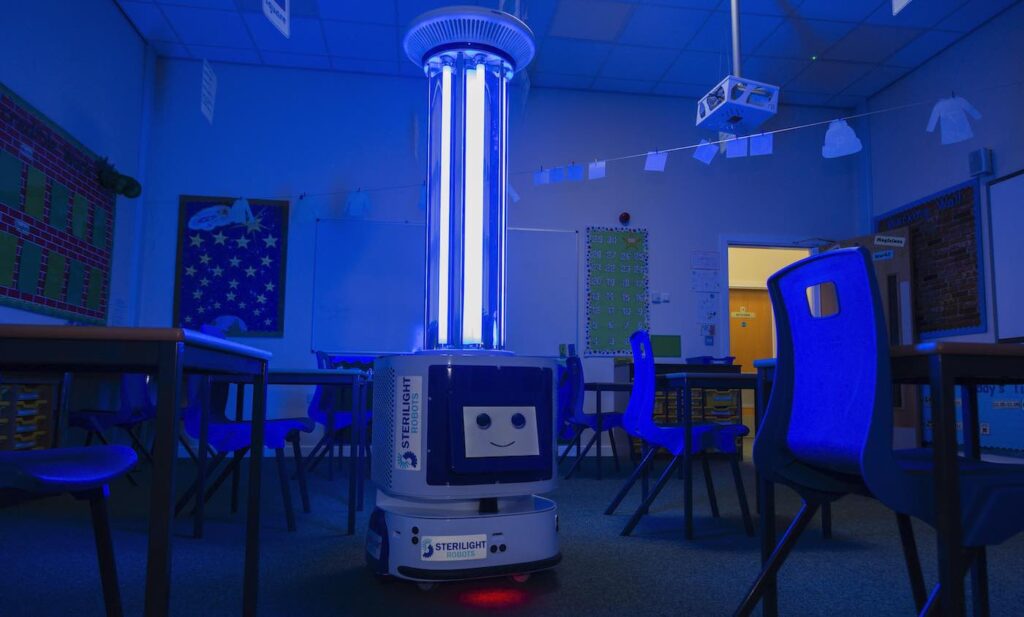
The Sterilight robot disinfecting a classroom – SWNS
A school has employed ROBOT cleaners to disinfect classrooms in a bid to make them Covid-19 safe for returning pupils and teachers.
The autonomous self-cleaning droids have been used in hospitals and airports before, but this is the first time the pioneering technology has been used in a school.
When the school is empty, the machine can patrol the classrooms and corridors, blasting out a powerful UV-C ray onto surfaces to break down the DNA-structure of any virus.
The robots headed into Three Towers Alternative Provision Academy, in Hindley, Wigan, Greater Manchester, this week, and spent two days blasting surfaces.
Co-inventor Gary Oualnan of Apollo Healthcare Technologies Ltd said, “Everything the light touches is sterilized.”
Whereby humans can inadvertently miss certain areas when cleaning, the Sterilight Robot completely takes care of that by using light instead of direct contact with liquid.
“Similar technology was used against SARS a decade ago and was used in hospitals,” said Oualnan. “We built on that to deal with coronavirus.”
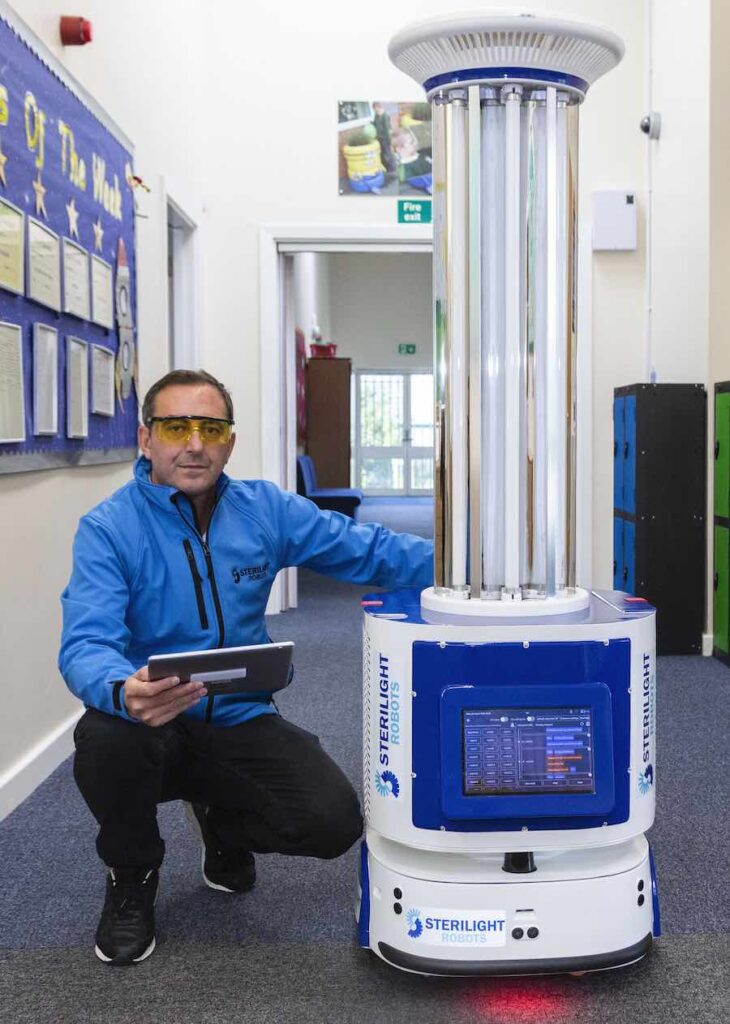
Users now only need to drive the robot around the room once, allowing it to scan the environment and create a digital map.
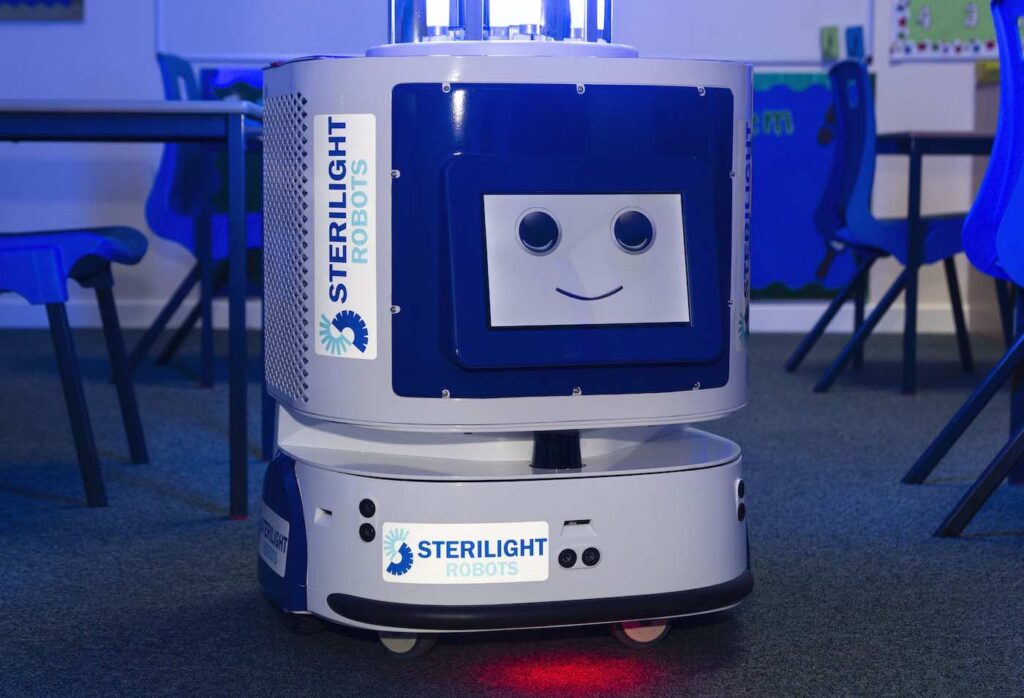
The Sterilight robot disinfecting a classroom – SWNS
Operators are able to map out the route customizing the direction and speed, before leaving the room to let Sterilight do her thing.
These robot cleaners are made to kill 99.9 percent of bacteria, and can sterilize a classroom in 10-15 minutes.
Based in West Yorkshire, Apollo Healthcare Technologies manufactures a variety of medical equipment for sales in the United Kingdom and Ireland—and, recently expanded into Australia and Hong Kong.
SPREAD Some Germs of Positivity By Sharing This On Social Media…
That’s the first line of the new song that we can all relate to.
“She’s at the fridge again!”
KD French, a gospel singer in Atlanta, Georgia, posted a video of herself singing all the voices from a full gospel choir doing a rendition of a new anthem about snacking during lockdown.
“At least, making this song kept me from the fridge for about an hour,” French wrote on YouTube.
The song describes the irresistible pull of her refrigerator—and all the goodies inside. Clearly striking a chord in the rest of us, the video has been racking up millions of views on Facebook and YouTube this week.
Quote of the Day: “Be vigilant. Guard your mind against negative thoughts.” – Buddha
Photo: by Jackson David
With a new inspirational quote every day, atop the perfect photo—collected and archived on our Quote of the Day page—why not bookmark GNN.org for a daily uplift?
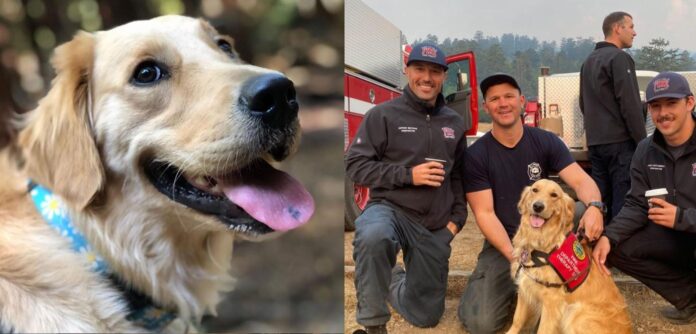
This sweet-natured golden retriever has one very important job. As a certified crisis response therapy dog, she’s tasked with helping exhausted firefighters get the kind of comfort only a four-legged friend can provide.
That’s especially important work right now, as hundreds across Marin County work extra long shifts to try and contain the Woodward Fire that’s currently blazing in Northern California.
“Kerith is boosting morale during the crew’s morning briefing,” Heidi Carmen, Kerith’s human caretaker, told CNN. “She brings levity and a sense of playfulness even though they know the task of the day will be challenging.”
Trained to be a guide dog, her super excitable nature made her not quite suited to her original task. Kerith went on to become a therapy dog in the emergency ward of a local hospital. But, explains Carmen to CNN, “her favorite people are firefighters.”
“She makes people feel loved, special and important. One firefighter told me ‘Kerith has the uncanny ability to make me feel like I am the most important person in the world.’”
WOOF Your Excitement For This Story By Sharing On Social Media…
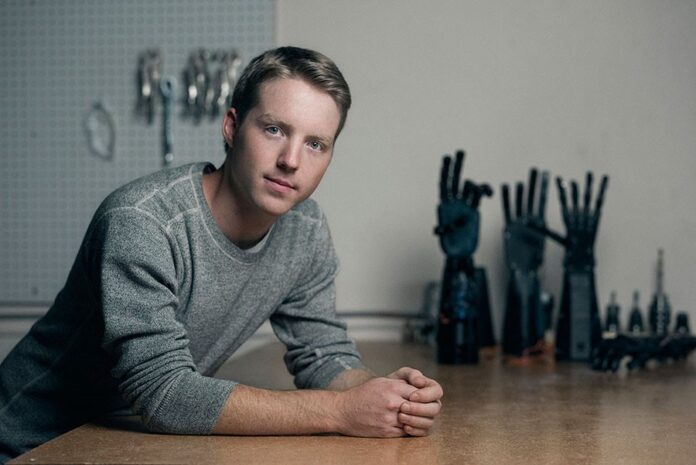
As a kid, Easton LaChappelle was always fascinated by robotics and how things worked, leading him to take his passion and learn more about prosthetics engineering.
Credit: Easton LaCappelle
That’s when he turned to YouTube to experiment and master everything from the core fundamentals of electronics to software interfaces and reading sensors.
Eventually, 25-year-old Easton used his newfound skills and created a working device, making it all the way to the White House Science Fair with then-President Obama.
During his science fair days, Colorado’s Easton encountered a young girl with a prosthetic arm that looked “archaic” and cost about $80,000. He remembers thinking, is “this really her best available option?”
He tells GNN, “That’s when I decided to dedicate my life to solving the affordability of prosthetic devices and creating technology that can impact someone’s life on a deep level.
There are over 40 million amputees worldwide, and only about 5% of them have access to prosthetic devices. It was just not acceptable to me and I wanted to do something about it.”
After developing a working prototype, Easton founded a company, Unlimited Tomorrow, which makes low-cost, machine-printed prosthetic limbs.
In under 30 days, the company was able to raise $1.568M to release its first product and provide millions of prosthetic devices to people worldwide at an affordable cost.
“We make a product called TrueLimb,” says Easton, “an affordable, 3D-printed prosthetic limb that uses a special remote-fitting process that is personalized to your skin tone, shape, and size for the perfect fit.”
“Because of YouTube,” he tells GNN, “I was able to turn my passion into a business that is having a positive impact on people’s lives.”
A pair of east coast scientists met and fell in love over an interest in researching mud, years before producing a paper that would change how the Eastern United States conducts river restoration.
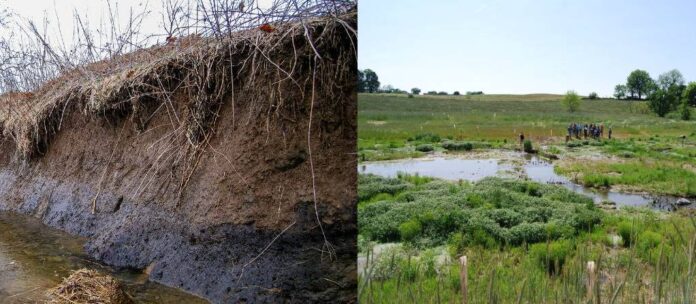
Big Spring Run immediately after restoration. Credit: Big Spring Run Project
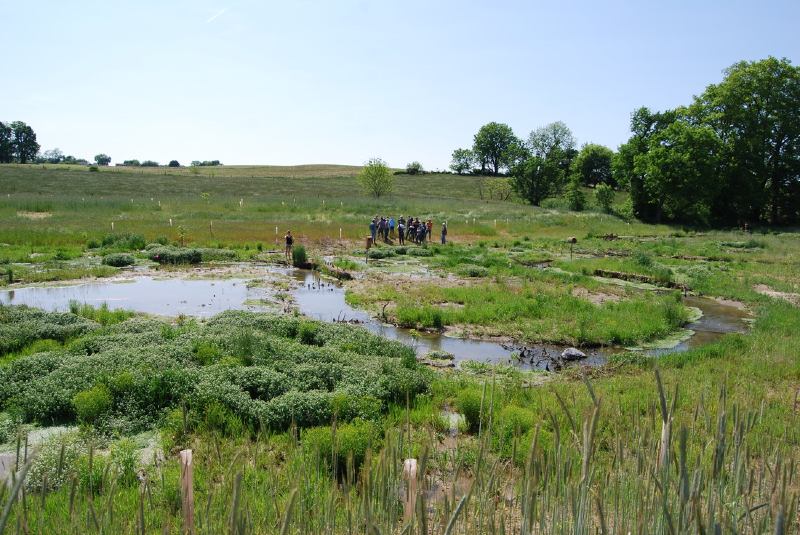
Though controversial among mud experts, their work has created flourishing stream and river ecosystems that resemble their pre-colonial states of low-banked, ecologically diverse, marshy waterways: a big change from the high-banked meandering streams covered in reeds that we often see today.
Dorothy Merritts and Robert Walter, two scientists who started working together as peers, ended up producing a ‘mud-breaking’ research paper as husband and wife.
Their work showed that almost all streams and rivers in the Eastern United States are actually victims of colonial-era tampering that buried resilient and complex river ecosystems under yards of silt.
While this discovery may seem like the lifework of eccentric scientific specialists, to be debated in the obscurest of journals and classrooms, the real-world implications could be enormous for riverine construction and flood insurance firms.
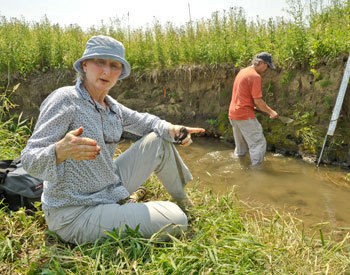
Dorothy Merritts, 62, is a geomorphologist at Franklin & Marshall College in Pennsylvania, who, after a long and adventurous career in the field, decided to shift focus in 2002 to concerns of silt erosion in rivers on local farmland.
On a research trip, her students produced a photo of a six-foot high bank of laminated layers of mud from the Little Conestoga River in PA.
Merritts would eventually show the photo to her future-husband Robert Walter, 69, also a geomorphologist at F&M, who was certain that the mud had been deposited in still water—originating because of a dam or lake, rather than through the flowing of a river.
Sure enough, after traveling to the Little Conestoga, they found the remains of an 18th-century milldam upstream—an artificial stopper in the river that would have channeled the water to power a grain mill.
“[Our] data, as well as historical maps and records, show instead that before European settlement, the streams were small anabranching channels within extensive vegetated wetlands that accumulated little sediment but stored substantial organic carbon,” explained Merritts and Walter in their 2008 paper which received over 750 citations and many critiques from fellow mud enthusiasts.
“Subsequently, 1 to 5 meters of slackwater sedimentation, behind tens of thousands of 17th- to 19th-century milldams, buried the presettlement wetlands with fine sediment.”
A billion dollar industry
Their discovery earned them a fair bit of criticism with other muddy-minded geologists who argued that the evidence gave them an inch and they took a mile. However, for private-sector business, and local government agencies, the discovery meant that they might be wasting millions on projects that would be done away if floods pushed tons of “legacy sediment” built up around the milldams, into newly dug rivers.
As state environmental agencies and private landowners began applying Merritts and Walter’s conclusions, the market would decide the outcome of the debates that had been set off in journals like Science and Nature, following their discovery. In 2011, one PA landowner, Joe Sweeney, hired a river-restoration firm to discover why trees he planted along a section of Big Spring Run that ran through his property couldn’t survive.
Walter and Merritts, along with their students, dug pits and determined that several yards of legacy sediment prevented the trees from reaching the groundwater. Together they decided to try and return Big Spring Run into what Walter and Merrits imagined it looked like before Europeans arrived on the continent.
After more than two years of planning and assistance from local and federal environmental agencies, 22,000 tons of mud were bulldozed off a four-square kilometer stretch of the river.
Underneath, the black, soaking wet soil of a past era revealed itself.
In just one year, Big Spring Run was a riverine paradise of bog turtles, geese, and trees centered around a low-banked river that slowly spills over a marshy area that contains triple the sequestered carbon than before, and that doesn’t have to regenerate after every severe storm.
Big Spring Run immediately after restoration. Credit: Big Spring Run Project
Subsequent examinations on the economic effectiveness of the Big Spring Run restoration found it was 16 times more cost effective than comparable strategies.
Walter and Merritts’ love for mud and for each other has rearranged perspectives of rivers around the country, and their methods have been applied in states outside the mid-Atlantic, where milldams were most common, like Kentucky.
A storm-chaser and photographer recently documented a fascinating natural event known as a “sprite” in stunning detail.
Credit: science out there/YouTube
He uploaded it onto his YouTube page, and now a viewer can see lighting bolts express themselves in a completely different way, while also learning how to photograph them.
A phenomenon that might have been more commonly seen by our ancestors, a sprite, as Michael from science out there describes, is a moment of extremely powerful lightning between the ground and the edge of space.
In his video, entitled ‘Bright Red Jellyfish Sprites’, Michael shares with his audience the images he captured of what look to be red water droplets running down a window, or a few jellyfish, or even ramen noodles, suspended for only an instant in the Colorado sky.
To capture a sprite, says Michael, one has to be in a place where there is both very low light pollution, and a view out towards, above, and beyond, the “anvil” of a powerful storm.
If someone finds themselves in this very fortunate situation and focuses their gaze, not below where white and blue lighting illuminates the clouds, but on the night sky above, they might see a flash of an image that looks like something out of the movie Independence Day, or other Sci-Fi classics.
“Usually sprites are quite dim, and few of them are visible to the eye, but to see them in spite of the glow of twilight meant something extraordinary must be going on,” Michael recounts in his video.
Did you know that the thousands of little florets in the middle of a sunflower actually grow with the mathematical precision of a Fibonacci sequence?
An evenly-growing spiral named after the Italian mathematician who described it, Fibonacci numbers form a sequence—often seen in nature—whereby each number is the sum of the two preceding ones.
The sunflower phenomenon is neatly illustrated in a video from the Instant Egghead YouTube series by Scientific American, which that today is celebrating its 175th birthday.
On this day in 1845, the magazine published its first issue, founded by inventor Rufus M. Porter who began reporting on what was happening at the U.S. Patent Office.
The oldest continuously-published monthly magazine in the US, it now reports on noteworthy advances in science and technology, and educates youth and adults alike with its YouTube channel and website.
Marking the milestone anniversary, the website is presenting a mix of Harry Houdini and M. C. Escher; is reinserting a regular poetry column; and making a deep dive into some of the most transformative, thrilling, dizzying discoveries of the past 175 years.
WATCH the sunflower unfold its mysteries below…
SEND A Bright Ray of Science To Your Social Media Page…
Quote of the Day: “Life is a series of natural and spontaneous changes. Don’t resist them—that only creates sorrow. Let reality be reality. Let things flow naturally forward” – Lao Tzu
Photo: by Erin O’Brien
With a new inspirational quote every day, atop the perfect photo—collected and archived on our Quote of the Day page—why not bookmark GNN.org for a daily uplift?