All News - Page 7 of 1725 - Good News Network
Home Blog Page 7

Norway’s Largest-Ever Trove of Viking Age Coins Is ‘Historic Find’ By Metal Detectors

One of the coins found in the hoard - credit, Innlandet Municipal Council
One of the coins found in the hoard – credit, Innlandet Municipal Council

More than 3,150 medieval coins dating back to the Viking Age were found in a field in Norway, the largest such discovery in the country’s history.

The search is ongoing, and archeologists expect there to be more in the vicinity.

Discovered in a field near the village of Rena, in Innlandet County, they offer a rare insight into the economy, the long-distance connections, and the flow of silver in Norway during a period marked by major political change, a statement from Innlandet County Municipality read. 

While coin hoards, and the metal detecting community who find them, aren’t rare in England, this kind of thing rarely happens in Norway, despite it being one of birthplaces of the Viking Age. Just once before has a coin hoard—basically a bank account for a time without banks—exceeded 3,000 units in Norway, and only 4 times has one been found with 1,000 or more.

Dating from the late 10th to early 11th centuries, they were mostly minted in England and Germany, although some were minted in Norway and Denmark. The reliefs point to minting during the reigns of the powerful Viking king Harald Hardrada, as well as Ethelred II of England and Cnut the Great.

“During Harald’s reign, royal coinage gradually replaced most of the foreign currency in circulation. This hoard appears to have been deposited at the very beginning of that transition,” said Professor Svein Gullbekk of the Coin Cabinet at the Museum of Cultural History.

MORE COIN HOARDS: Hoard of 1,000-yo Coins Unearthed in Farmer’s Field Nets Millions for Metal Detecting Friends–and Treasure for UK

Municipal authorities praised the two metal detectors, Rune Sætre and Vegard Sørlie, who had, according to the statement, completed ethical metal detecting courses organized to inform hobbyists how to best handle discoveries related to national archaeological heritage.

Sætre and Sørlie did everything correctly when they first found 19 silver coins in early April. “They have been highly cooperative and have played an active role in ensuring that the find has been secured and documented in the best possible way.”

ALSO CHECK OUT: Family Unearths Treasure of 1,500 Medieval Coins During Excavation for a New Swimming Pool

May-Tove Smiseth, an archaeologist and adviser on the Innlandet County Council, said the treasure has drummed up excitement in the local community.

“This is an extraordinary discovery of a kind one might experience only once in a career,” Smiseth said in a statement. “To be present when something like this comes to light is a truly remarkable experience, both professionally and personally.”

SHARE This Fantastic Discovery To Be Studied For Many Years To Come… 

“You just can’t beat the person who never gives up.” – Babe Ruth

Credit: Nghia Le

Quote of the Day: “You just can’t beat the person who never gives up.” – Babe Ruth

Photo by: Getty Images for Unsplash+

With a new inspirational quote every day, atop the perfect photo—collected and archived on our Quote of the Day page—why not bookmark GNN.org for a daily uplift?

Credit: Nghia Le

Good News in History, May 1

William Wilberforce, the leader of the British campaign to abolish the slave trade.

219 years ago today, the Slave Trade Act of 1807 entered into force in Great Britain, abolishing the British participation in the Transatlantic Slave Trade and pressed other nation states to abolish their own slave trades. Sometimes in history, the abandonment of a previous widespread practice occurs naturally after its practice diminishes, but the Slave Trade Act was passed at a time when slavery was still an incredibly lucrative business, demonstrating, at least partially, the resolve of the abolitionists in Britain who lobbied and campaigned for 18 years for a bill. READ more… (1807)

Toy Story Character Talks with Deaf Girl in Heartwarming ASL Moment That Went Viral

- credit, Jessica Moore, screengrab via TikTok
– credit, Jessica Moore, screengrab via TikTok

If you’ve ever wondered who’s underneath the costumes at Disneyland and what kind of person takes that job, one TikToker found the answer to that question is simple: sweethearts.

Jessica Moore shared an unforgettable reaction where Woody the cowboy from Toy Story realizes that her daughter was deaf, and begins to communicate in American Sign Language.

The now-viral moment has garnered over 1 million views after she posted it on her account. The interaction isn’t long—it can’t be with a line of children waiting to see Woody, but goodness knows it probably made both their days.

“My kids had so much fun. Our family saw Woody doing a meet-and-greet and waited our turn to get his picture,” Moore said about the day according to Storyful.

“I grabbed my phone as fast as I could and started recording the moment,” Jessika said, adding, “Woody made her day.”

WATCH the interaction below… 

@lifewithjessikaa My daughter (Aureliana) was SO excited to meet the characters at Disney but scared because she is deaf. Woody made her day. 🥹🤟🏽 #deaf #disney #disneylandcalifornia #woody ♬ original sound - lifewithjessikaa

SHARE This Unforgettable Moment With Your Friends…

Phone-Free Social Events Grew by 567% Led by the Generations Who Didn’t Have Them Until Adulthood

Members of Gen Z and Millennials are attending phone-free experiences 567% more often across the globe, signaling a major shift in how people want to gather.

In a world shaped by algorithms and constant visibility, Eventbrite data shows that the generations having grown up with limited to no social media and smartphone use, and which then lead the charge to its ubiquitous adoption, is now leading the world back—away from constant connectivity.

GNN has reported before on the rise of offline events, including the Offline Club, which is exploding across Europe, and phone-free US event organizer Kanso in the US.

Phone-free events grew 567% globally between 2024 and 2025, with attendance rising 121% and expanding from 5 to 12 countries, according to Eventbrite, which monitors event listings for terms like “phone-free” “analog” or “offline.”

These events now span the full calendar year, signaling a shift from temporary reset to sustained behavior. The momentum is most pronounced in the US and UK, though each market reflects a distinct pattern of growth.

The United Kingdom has emerged as the global leader for phone-free socializing, with events growing by 1,200% and attendance increasing by 1,441%.

Of course the previous amount will have been very small, and like a biotech startup whose new medical product’s approval sees an explosion in the stock price, the overall number of phone-free events will still be low in comparison to others.

ANALOG IDEAS: Engineer Revives the Pay Phone for Vermont Community to Make Free Calls in Their Cellular Dead Zone

On the other hand, there is a strong focus in the UK on countering loneliness and social isolation, and messaging regarding it can be found throughout English society.

In the United States, the offline or analog movement is defined by expansive participation. While event volume grew by 388%, attendance jumped by 913%.

The growth is already accelerating. In just the first three months of 2026, phone-free experiences have reached over a third of last year’s global event volume, signaling that this is no longer a fringe behavior, but a mainstream way of gathering.

SHARE The Great News On These Good Gatherings With Your Friends… 

Record Number of Humpbacks Observed Feeding in ‘Supergroup’ Near South Africa

humpback whales bubble net fishing in Alaska, 2007 - credit, NOAA
humpback whales bubble net fishing in Alaska, 2007 – credit, NOAA

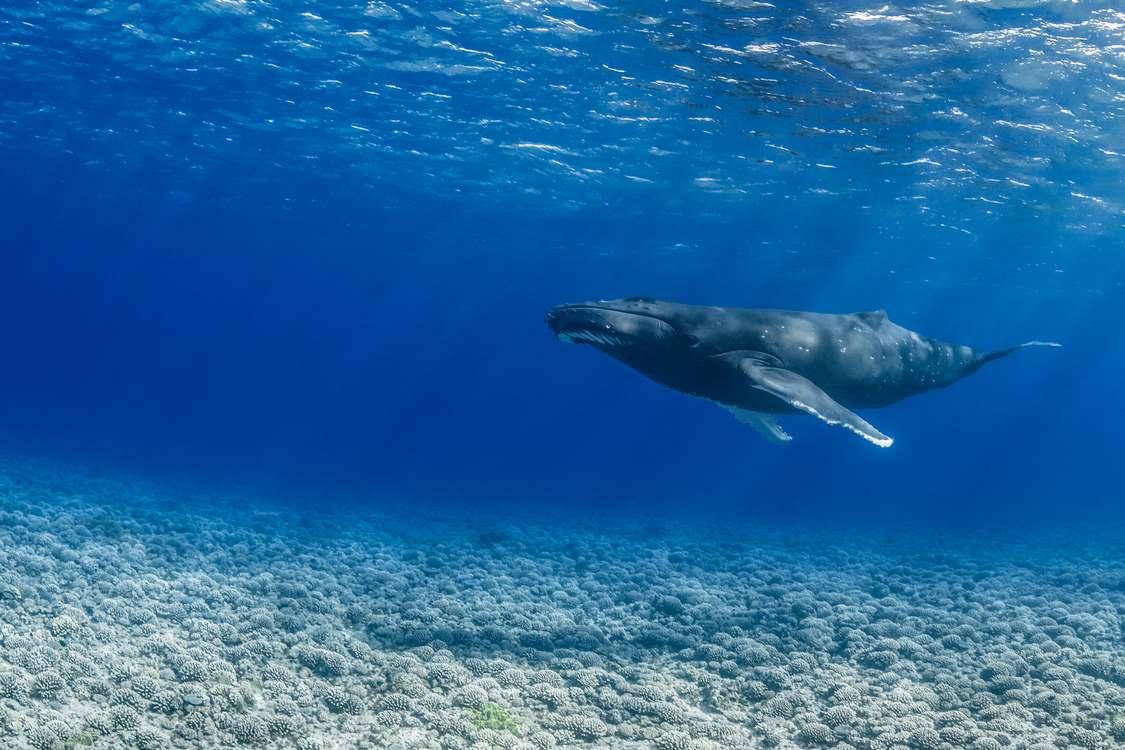
Two photographers recently set a world record for the number of individual baleen whales seen in a single group at 304.

It’s not just hard rockers that can form supergroups. Humpback whales seem to like it too, though scientists don’t know why.

What they do know, however, is that they will congregate in numbers as large as several dozen, even several hundred, and that when they do, the ocean quakes.

Renowned wildlife photographers Chris Fallows and his wife Monique described to the BBC that their breaching was like “bombs going off” and said that the constant blowhole spray stank up the ocean air for miles around.

A supergroup is defined as 20 or more whales swimming within 5 body lengths of each other. They often form during the austral summer off the coast of South Africa where the major ocean current known as the Benguela upwelling brings nutrients from the cold depths up to the surface to cause major plankton and krill proliferation.

This is feeding time and tide for the whales, who gorge themselves on the tiny animals, using a special keratin plate in their mouths called a baleen to filter the krill from the seawater which they then eject through their blowholes.

Humpback whales are one of the planet’s great conservation success stories from the perilous latter days of the whaling industry. Since then, they’ve breached 125,000 known individuals worldwide, and the population recorded by the Fallows contains many new whales never documented before.

Humpback supergroups began to be documented in 2011 off the west coast of South Africa.

Scientists documenting the phenomena at the time and since have several theories. First, they supposed it could be the result of changes in prey availability leading to a novel feeding strategy, or a historically unobserved strategy that became apparent as populations recovered from whaling.

They also thought it might be that increasing whale abundance elsewhere resulted in the exploration of alternative feeding strategies or areas, or even that supergroups had always existed, and just the probability of seeing them increased as a result of population recovery.

WHALE STORIES: Scientists Hail Record Number of Sightings in January as Auspicious for Endangered Right Whales

New research measuring concentrations of chlorophyll-A in ocean plankton published in 2021 seems to indicate the second of these hypotheses has the sturdiest legs.

Whatever the reason, Simon Elwen, a marine biologist at South Africa’s University of Stellenbosch says that now the average supergroup reaches hundreds of whales, and that the surprise isn’t seeing a supergroup, but not seeing a supergroup.

OTHER STORIES LIKE THIS: ‘Superpod’ of More Than 2,000 Dolphins Frolic off California Coast – (WATCH)

The Fallows found themselves in the midst of a right mess—hundreds and hundreds of whales breaching, splashing, blowing, and making a thunderous racket. They ended up photographing 472 whales, of which 304 were individuals according to the artificial intelligence powering the citizen science project Happywhale.

“We didn’t go out with the intention of breaking a record,” Mr. Fallows told the BBC. “There were just so many whales around us. Monique and I were laughing, because there was just so much going on that you didn’t even know what to photograph. It was like rapid fire.”

BLOW The News Over To Your Friends Social Media Feeds…

6 Year Old Saffie Has Her Vision Saved from Rare Form of Blindness Thanks to One-Time Gene Therapy

Saffie and her parents - credit, Great Ormond Street Hospital
Saffie and her parents – credit, Great Ormond Street Hospital

A 6-year-old girl in the UK is able to see normally again in the day and night thanks to a one-time gene therapy for a rare form of congenital blindness.

At this very tender age, Saffie Sandford from Stevenage was diagnosed with Leber’s Congenital Amaurosis, (LCA) a mutation in the RPE 65 gene which both her parents unknowingly had a copy of.

LCA typically affects children and manifests as the inability to see in low light, and the difficulty to see in daylight. Because infants and toddlers can’t sit for traditional eyesight tests, diagnosis can come late, even though its progression starts at birth. It continues worsening until blindness sets in at early adulthood.

Luckily for Saffie, Great Ormond Street Hospital (GOSH) Children’s Trust in London had been developing a novel gene therapy for this very condition by the time she arrived on referral from the Moorfields Eye Hospital in Herefordshire.

Called Luxturna, it provides a healthy copy of the RPE 65 gene directly into both eyes in a single dose. Saffie received the first one in April, 2025, and the second one in September.

“Having the treatment has been life-changing, it’s like someone waved a magic wand and restored her sight in the dark,” said Saffie’s mother, Lisa. “We’ve been able to take her trick or treating, and out to restaurants in the evening—something that was impossible before.”

“Her peripheral sight in the daylight has also improved. She’s now able to see hazards and has improved at school. She’s thriving and you wouldn’t know she had the condition just by looking at her.”

MORE BLINDNESS CURES: 100 Times Improvement in Sight Seen After Gene Therapy Trial for Disease That Deteriorates Vision in Childhood

GOSH recently published a study on the effects of Luxturna, which it developed in concert with Moorfields, administered in children as young as 15 months to as old as 12 years who had LCA. The encouraging findings showed that 7 out of 10 children showed clinically meaningful improvements in vision after receiving Luxturna.

That included personal parental anecdotes, but also results from a special new test that measures electrical signals sent to the brain from the retina—a harmless and new way of measuring vision in infants.

AND FOR HEARING TOO: 10 out of 10 Patients with Congenital Deafness Have Hearing Restored in Children’s Gene Therapy Trial

“For the first time, we’ve been able to show objectively that gene therapy can strengthen the visual pathways in babies and young children who are living with this rare eye condition,” said Rob Henderson, consultant ophthalmologist at GOSH.

“For many of the families we work with, even small improvements in their child’s ability to see the world around them make a profound difference.”

SHARE This Special Blindness Cure And The Charming Children Like Saffie Receiving It… 

“We spend nearly every moment of our lives lost in thought, and hostage to the character of those thoughts.” – Sam Harris

Credit: !ME (i_no_one)

Quote of the Day: “We spend nearly every moment of our lives lost in thought, and hostage to the character of those thoughts.” – Sam Harris

Photo by: !ME (i_no_one)

With a new inspirational quote every day, atop the perfect photo—collected and archived on our Quote of the Day page—why not bookmark GNN.org for a daily uplift?

Credit: !ME (i_no_one)

Good News in History, April 30

Hydrogen atomic orbitals at different energy levels. The more opaque areas are where one is most likely to find an electron at any given time - CC 4.0.

129 years ago today, J. J. Thomson announced his discovery of the electron as a subatomic particle, over 1,800 times smaller than a proton (in the atomic nucleus), at a lecture at the Royal Institution in London. It put to rest a long history of experimentation seeking to determine whether or not a “cathode ray” as the electron was first studied, was a ray or a wave. Thomson discovered that, in fact, it was neither. READ more about this groundbreaking discovery… (1897)

Chinese Pangolin Numbers Growing Steadily in the Wilds of Southern China for the First Time This Century

A Chinese tree pangolin in the Leipzig zoo - credit, released by author into the public domain
A Chinese tree pangolin in the Leipzig zoo – credit, released by author into the public domain

For the Chinese subspecies of the world’s most trafficked wild animal, the darkest days may be in the rearview mirror.

The Chinese tree pangolin, a Critically-Endangered species according to the IUCN, is steadily growing in population size 6 years after China placed the animal under first-class national protection measures.

In Guangdong Province, the wild population is estimated at 1,778, which if divided across its distribution areas, amounts to 0.33 pangolins per square kilometer. This is a marked improvement from earlier this century when the population plummeted to zero in areas of counties Meizhou, Huizhou, and Heyuan.

The pangolin is one of the last surviving groups of scaley mammals, and the 9 recognized species are located across tropical regions of Asia and Africa.

Comprehensive monitoring in Guangdong has been established by the Chinese Forests and Grasslands Administration, with 690 infrared cameras activated in 2020 across its remaining known locations.

Since then, reports China Daily, certain areas of habitat have improved, and the Administration also established the first research and breeding center for Chinese tree pangolins in the country in Guangzhou, the provincial capital.

There are now 35 distribution areas for the Chinese pangolin in the country, which are included in a national list of “key terrestrial habitats.”

OTHER POACHING DECLINES: Zero Rhinos Poached in India’s Stronghold for the Second Year on Record

Chinese traditional medicine has used the animal’s scales for millennia as a supposed treatment.

The country’s population of animals stood at around 64,000 individuals in 2000, but this fell more than 80% since then, mostly from poaching for this medicinal use. Like rhino horn and elephant ivory, Chinese traditional medicine has a lot to answer for over the declines in the pangolin.

GOOD NEWS FOR PANGOLINS: 30,000 Animals Rescued from Illegal Captivity in the Largest Wildlife Trafficking Raid in History

The Chinese authorities seem to be both well aware of this, and frank about the animal’s precarious existence.

Pangolin species across the world are poached for export into China and Vietnam, but the first step to protecting the group across the world is to protect the member you have at home, and though China has a spotty track record of preventing its native wildlife from becoming extinct, conservation authorities have at least gotten to this animal earlier than other species.

SHARE This Story With Your Friends Who Love This Scaly Little Guy… 

Key Discovery Could Be a ‘Valuable Starting Point’ To Saving Children from Deadly Disfiguring Condition

A sample of Treponema, which might be the culprit beyond the noma disease - credit, CDC
A sample of Treponema, which might be the culprit beyond the noma disease – credit, CDC

An “astonishing” find has led to a “valuable starting point” to developing a treatment for a disfiguring childhood disease.

If the reader knows the word “noma” for the famous Danish restaurant, well buckle up because it is also a flesh-eating bacterial disease that affects the mouth and face of children in the Sahel region of Africa.

Classified as a neglected tropical disease, noma is currently a mysterious ailment that can be treated with broad-spectrum antibiotics if caught early. However, the symptoms of the disease associated with infection is currently the only method of diagnosis.

It has a case mortality rate of 90% if left untreated, and even when it is, disfiguring scars often remain across the person’s mouth and face.

Recently, a team at the Liverpool School of Tropical Diseases set out to study the bacterial communities in the mouths of 19 noma patients living in Nigeria. Since antibiotics seem to treat the disease, their assumption was that it has a bacterial origin.

When analyzed with modern genetic profiling, the team at Liverpool found that bacterial species associated with healthy mouths were significantly decreased, while others were increased, but populations of a previously unknown member of the genus Treponema were found to be significantly above normal levels, a trait which stuck out like a badly trimmed hedge.

Angus O’Ferrall is the PhD student who prepared the data for Professor Adam Roberts, a senior author on the study, who described himself as being “astonished” at “a great reveal.”

The study team then reanalyzed previous samples of noma patients, and found the Treponema bacteria was present in those as well. They eventually began to call the seeming culprit Treponema A. 

Roberts spoke with the Guardian on just why it was a great find, and the potential for future treatments this discovery opens up.

NEGLECTED TROPICAL DISEASES: Highly Fatal Virus May Finally Be Treatable with First Vaccine–Clinical Trials Starting

“We don’t know if it [Treponema] can colonize a noma wound because of the architecture and the environment, or if it causes the noma wound.”

“But if we know that actually Treponema A, for example, is always or 99% associated with the development of noma at the gingivitis stage then we could detect and treat prophylactically with antibiotics to stop it progressing,” he said.

A HEALTHIER AFRICA: WHO Declares Kenya Free of This Deadly Tropical Parasite After Decades of Suffering

Additionally if it could be determined that noma was was caused specifically by this bacteria, or as a result of its colonization, than broad spectrum antibiotics, the kind which can most often lead to resistance from overuse, could stay on the shelves in favor of a medicine directed at Treponema A.

Professor Philippe Guérin, director of the Infectious Diseases Data Observatory, University of Oxford, agreed the study was “a valuable starting point.”

SHARE This Great Jumping Off Point Towards A Future Without This Horrifying Illness… 

Judicial Overhaul in India Decriminalizes Hundreds of Offenses That Previously Landed You in Prison

Credit: Planet Volumes for Unsplash+


Credit: Planet Volumes for Unsplash+

In one of India’s largest-ever legislative reviews, 717 offenses that might have come with a steep fine or even jail time have been decriminalized.

Called the Jan Vishwas (Amendment of Provisions) Act, the aim is for a shift away from excessive criminalization to help create a more relaxed business environment and easier living.

Reporting generally, prison sentences have been amended to fines, while steep fines have been amended to warnings.

For good or ill, when a government criminalizes anything, such as hawking goods on the street without a license, it instantly creates hundreds or thousands of criminals. This naturally comes with all the burden on society that criminals come with: bureaucratic burden on the prison and courts, severe disruption to family life, and societal baggage in the form of difficult-to-employ ex cons.

In some cases this will be unavoidable, such as property and violent crime, but non-violent, victimless crimes, of which in India there were many, can be argued to be a net-negative on society.

The Jan Vishwas Act changes 1,000 provisions in 79 of the most fundamental pieces of legislation in the country, such as the Reserve Bank of India Act, which established the country’s central bank, the Food Safety and Standards Act, Delhi Municipal Council Act, Motor Vehicles Act, and so on.

The idea was to make India a more competitive economy and to make compliance with regulations easier, more straightforward, and most importantly, non-criminal.

Additionally, the parliament (Lok Sabah) wanted to see a state of affairs where the severity of the punishment is commensurate with the severity of the offence, and an analytical committee examined stakeholder feedback, industry consultation, and comparison with similar legislatures to grade the various offenses in question.

MORE JUDICIAL IMPROVEMENTS: Town Enthusiastically Switches to Restorative Justice and Reoffending Almost Vanishes

According to the Financial Express, many of India’s central pieces of legislation haven’t been reviewed in 20 or even 30 years. Even when some had, often their penal component had not been.

The Jan Vishwas Act of 2023 began this process, when some 183 offenses were decriminalized. Then a joint parliamentary committee agreed to expend the effort.

PEOPLE OVER PENALTIES: US Newspapers Are Deleting Old Crime Stories, Offering Subjects the ‘Right to be Forgotten’

Key measures included the replacement of imprisonment with monetary penalties or warnings; graded enforcement mechanisms, including warnings for first-time offenders; and rationalization of fines and penalties in proportion to the nature of the offence.

The Act also provides for the appointment of adjudicating officers and appellate authorities whose job it is to facilitate speedy disposal of cases and reduce the litigation burden on courts.

MILLIONS Of Indians Can Breathe Easier Now After Years Of Over Policing, TELL Your Friends…

Boston Marathon Runners Praised for Stopping to Help Injured Competitor Cross Finish Line (WATCH)

Ajay Haridasse falls in Boston Marathon injured but gets helping hand from stranger’s kindness - Credit: Sasi Bejrakashem via SWNS
Ajay Haridasse falls in Boston Marathon but gets help from kind stranger Aaron Beggs – Credit: Sasi Bejrakashem via SWNS

Two runners at the Boston Marathon stopped mid-race to help a fellow competitor who had collapsed due to severe leg cramps.

Spectator Sasi Bejrakashem was watching the race on April 20th when she witnessed the emotional scene unfold near the closing stages.

She said she noticed a runner in a black top suddenly come to a halt and buckle over in pain with cramp in his muscles. While several athletes ran past, two competitors made the decision to stop and help.

The pair lifted the struggling runner between them, each taking one side, and supported him as they continued along the course together.

“It was overwhelming to witness,” said Bejrakashem, who was visiting from Bangkok. (Watch the full video from GNN’s YouTube channel, at the bottom of the story—and don’t forget to Like & Subscribe…)

“It felt like such a heartfelt moment and I got emotional watching it happen. Seeing them choose to stop and help another runner instead was truly powerful and inspiring.”

The Boston Herald spoke with the runner, first-timer Ajay Haridasse. He had just crossed the 26-mile marker when he described his legs going “limp.”

Struggling up, then falling again, his mind was battling his body on Bolyston street for all to see. “After falling down the fourth time, I was getting ready to crawl,” he told the Herald.

That’s when the two runners, Aaron Beggs in yellow and Robson Oliveira, the running in white, came to his aid.

It might seem to an observer like a routine show of sportsmanship, but these athletes have goals in mind. If he was forced to crawl the last 0.2 miles, Haridasse might not have qualified for next year’s race, Oliveira would have finished with a new personal best in the Boston Marathon.

MEANWHILE, IN LONDON: Sub-2-Hour Marathon Finally Breached in Official Race as Sabastian Sawe Makes History in London

Haridasse explained he felt humbled and honored that Oliveria and Beggs sacrificed their race times to help him. He looked up their bib numbers and found them on social media to extend his thanks.

“It was a split-second decision. When I entered the final stretch of the marathon, I was just a few meters away from achieving my personal best, but in the distance I saw [Haridasse] collapsing,” Oliveira wrote in a post on social media. “I knew I wouldn’t have the strength to help him on my own. In that moment, I thought, ‘God, if someone stops, I’ll stop too and help him.’”

MORE STORIES LIKE THIS: Chicago Marathon Runner Rescues Stray Kitten During the Race–Bystander Gives it a Home

Both men ended up in the medical tent, with Oliveira ending up worse than Haridasse, suffering from extreme dehydration. But both recovered quickly.

Haridasse, the 4th year student at Northwestern University is adamant he will run again next year.

WATCH another view—with spectators cheering on the kindness… 

SHARE This Always-Inspiring Marathon Moment With Your Friends… 

“Let the hurt send you looking for those who will accept you.” – Bryant McGill

Credit: Tyler Lagalo

Quote of the Day: “Let the hurt send you looking for those who will accept you.” – Bryant McGill

Photo by: Tyler Lagalo

With a new inspirational quote every day, atop the perfect photo—collected and archived on our Quote of the Day page—why not bookmark GNN.org for a daily uplift?

Credit: Tyler Lagalo

Good News in History, April 29

Arouca Bridge - credit CC 2.0. Luis Ascenso from Lisbon

5 years ago today, the world’s longest pedestrian footbridge opened for public use in recreation. The Arouca 516 spans the Paiva River in northern Portugal, and has a length of 1,693 feet. The bridge was designed by the Portuguese research institution Itecons and cost about €2.3 million to build. It takes about 10 minutes to cross if you’re taking in the views, and four, reports CNN, if you say your prayers and make a run of it. READ more about the bridge… (2021)

Success! Sumatran Orangutan Uses Rope Bridge to Cross Road for the First Time Connecting Habitats

- screengrab, Credit: Sumatran Orangutan Society
– screengrab, Credit: Sumatran Orangutan Society

A wild Sumatran orangutan has been seen crossing a road through the jungle with the help of a canopy rope bridge for the first time.

This landmark moment, recorded on a camera trap in the Pakpak Bharat district of North Sumatra, is a world-first for the species, and because of the incredible social skills and intelligence of these animals, is predicted to become normal behavior in the future.

While other primates, including gibbons, langurs, and macaques, have previously been observed using the canopy bridges to cross the public road, this event confirms that Critically-Endangered Sumatran orangutans can and will use canopy bridges to overcome forest fragmentation.

“Waiting for this moment to happen for over 2 years has been excruciating, but now that it has, we’re just overjoyed,” said Hellen Buckland, CEO of SOS.

Pakpak Bharat is located in a landscape known as West Toba, where a population of 350 wild orangutans try to continue their ancestral lifestyle in the face of an advancing human population.

Buckland told the BBC that orangutans are especially susceptible to genetic problems from overly concentrated genetics, and it was feared the road which now bisects West Toba would isolate two halves of this population, leading to these very problems. The other issue is obviously collisions with vehicles.

MORE ORANGUTAN WRITINGS: Orphaned Orangutan Returns to Wild Home After 4-Years Rehab in ‘Jungle School’ – LOOK

A solution simply had to be found, and the rope bridge seemed like the only hope. With the help of local partner Tangguh Hutan Khatulistiwa, and the government, several rope bridges were fastened to sturdy trees in areas the apes frequent.

As Buckland said, they had to wait ever so long to see an orangutan use them. In the meanwhile they saw a whole host of arboreal species take advantage of them, including plantain squirrels, giant black squirrels, Sumatran langurs, and the agile gibbon.

AND IN THE AMAZON: One Woman’s Ingenious Canopy Bridges Are Helping Monkeys Cross the Road Safely

Eventually though, their camera trap frame showed an unmistakable fuzzy orange color.

“This is absolutely fantastic news for Sumatran orangutans and we would really like to see these bridges go up across all orangutan landscapes, across Indonesia where roads are cutting through forests,” said Buckland. “It can really help the people and wildlife to live in coexistence.”

WATCH the moment below (paired with some truly beautiful music)… 

SHARE This Monkey Business With Your Friends Who Love Our Ape Cousins… 

Sub-2-Hour Marathon Finally Breached in Official Race as Sabastian Sawe Makes History in London

Kenya's Sabastian Sawe in 2025, - credit, Leonhard Lenz CC0
Kenya’s Sabastian Sawe in 2025, – credit, Leonhard Lenz CC0

The under-2-hour marathon mark has been broken officially for the first time—twice—by a pair of African runners at this year’s London Marathon.

Thousands cheered as Kenyan champion runner Sabastian Sawe passed the finishing line at 1:59:30, a long-awaited and practically fabled achievement that has captured the hearts of sport for decades.

Indeed, Sawe said as much when he spoke to the media afterwards. “What comes today is not for me alone, but for all of us today in London.”

He didn’t only run a marathon in under 2 hours, but also shattered the previous world record 26.2-mile run by 65 seconds.

Ethiopia’s Yomif Kejelcha, who was running his first London Marathon finished in 1:59:41, also breaking that 2-hour mark, while Jacob Kiplimo of Uganda came in third, finishing in 2:00:28, which while not clocking in at under 2 hours, was still faster than the previous world record marathon time held by Kenya’s Kelvin Kiptum.

So the podium included three world-record beaters, and two sub-2-hour marathons: a truly special moment for track and field.

It was a sunny, mild day on the mostly-flat London streets when Sawe, Kejelcha, and Kiplimo laced up their ultra-light, custom made running shoes—the perfect conditions. Sawe ran the second half of the marathon faster than the first at 59 minutes and 1 second.

“I think they help a lot,” Sawe said of the fans who showered him with applause, “because if it was not for them you don’t feel like you are so loved … with them calling, you feel so happy and strong.”

Runners have had their sights on the 2 hour mark for more than 20 years, and in 2019, Kenyan long distance runner Eliud Kipoche achieved it as part of an unofficial, specially-tailored running experiment called the “1:59 Challenge” that was done on perfect conditions with a cast of 41 rotating pacemakers.

MORE ATHLETIC EXCELLENCE:

Kipoche finished this non-official race in 1:59:40, but Sawe and Kejelcha have allowed the sport to say definitively: with no special treatment other than the sophistication of their shoes, a man can run 26.2 miles—a distance supposedly brought down to us from Ancient Greece—in under 2 hours.

What will the next sought-after achievement? Well, at the moment, the women’s race is about 15 minutes behind the men’s, so surely the next 20 years will features an interest in a sub-2-hour marathon time for a female.

A three-and-a-half minute mile might be another one to watch, with humanity currently 13 seconds and 13 milliseconds off that mark.

SHARE These Men On The Pinnacle Of Human Athletics With Your Friends… 

Celebrating with a Cake Topped with Fish, World’s Oldest Penguin Turns 38

Spneb the penguin celebrates her birthday - credit, Paradise Park / SWNS
Spneb the penguin celebrates her birthday – credit, Paradise Park / SWNS

A penguin believed to be the oldest in the world has celebrated her 38th Birthday with an impressive ice cake topped with fishy treats.

Spneb, who was named after the medication which saved her life, is said to be the oldest Humboldt penguin on the planet, according to global zoo records.

But Paradise Park Wildlife Sanctuary in Cornwall, the UK, said despite her advanced years, she has not lost her sparkle and is still as inquisitive as ever.

The sanctuary marked Spneb’s milestone on April 16th with a party and a special ice cake loaded with her favorite treats like Cornish sardines and sprats.

Her keepers presented the cake to the birthday girl in front of her fans, both those with flippers and those without.

Spneb’s keeper Becky Waite, said the penguin still enjoys a healthy appetite and a “nosey peek” out of her nest box, despite being the eldest in the colony.

PENGUIN PAPERS: True Story of Penguin’s Annual Return to See the Man Who Saved it From Oil Spill is Now a Feature Film (See Trailer)

“She happily supervises the youngsters like a feathery neighborhood watch,” Waite said. “Her companion, Prince, is 21 years old and should have been born a peacock, as he loves to show off.”

Spneb’s unusual name blends the names of the medications that helped her through a tough battle with fungal infection aspergillus back in 2007.

ANOTHER STORY LIKE THIS: World’s Oldest Gorilla, Known for Her Dignified Manner, Celebrates 69

After four months of treatment and a lot of determination, she made a strong recovery.

Though Humboldt penguins are native to the western coast of South America, they stay cool thanks to a bare patch on their faces that blushes red to release heat.

CELEBRATE Spneb’s Birthday On Social Media By Sharing This Story With Your Friends…

Motoring Madmen Drive Across Africa in Famously Unreliable Three-Wheeled Car (WATCH)

Sheila the Reliant Robbin, Ollie Jenks (left) and Seth Scott - credit, IG via hold.mygear
Sheila the Reliant Robbin, Ollie Jenks (left) and Seth Scott – credit, IG via hold.mygear

Two men recently completed an unimaginable voyage across the continent of Africa driving a Reliant Robin.

Their journey took over 90 days, during which they suffered countless breakdowns, swerved civil unrest and military operations, and witnessed all the beauty of the Colorful Continent.

For the uninitiated, the Reliant Robin was a quirky English car built with only a single front wheel. Designed to be inexpensive and for mainly driving to the store, the Reliant is famous for being the very last thing anyone would want to be reliant on.

Hold My Gear, the Instagram handle for the London-to-Cape Town adventure of “14,000 miles, 3 wheels, 0 common sense” was run by the utterly daft and tenacious duo of Ollie Jenks from the UK and Seth Scott from Canada, the latter proposing the idea to the former.

They would have to travel all those thousands of miles through jungle, deserts, and mountains, through unstable regions covered with the worst roads in the world, all while doing it in a car that can’t be turned sharply without flipping over.

Jenks and Scott bought Sheila, a silver Reliant Robin that was one of the very last to ever be built. It’s owner said it made him nervous driving more than 20 miles in one trip.

“No power steering, no air con, and it doesn’t do well up hills or down them. It is the most unsuitable car for probably any journey,” Jenks told the South China Morning Post.

Nevertheless, they set out across 22 countries from London to Cape Town. In Ghana, their transmission and gear box broke, and had to wait 5 days while Reliant Robin enthusiasts back in the UK found one and shipped it to them, an act of kindness that had to be repeated when their engine exploded later.

As for tires, springs and shocks, gauges—comforts and aesthetics of every description, the number of breakdowns were uncountable—as were the challenges they faced. They were driving through Benin when a military coup took place. In Cameroon they had to be given a military escort along with local buses, all of which eventually abandoned them after they kept breaking down.

SOMETHING LIKE THIS JUST HAPPENED: British Man Finishes His Run Across Africa: 385 Marathons in 352 days

Each day came with its own Instagram video, which make for brilliant, if vulgar, watching.

In day 53, they demonstrated how to handle bribe requests from rural Nigerian police officers by handing them some gas station confectionaries, while in day 89 of their attempt, they performed one of their hilarious jerry rigs—by diverting the windshield wiper fluid pump to spray water directly onto the radiator to cool it down in Namibia when their radiator went.

Their last stop was a showroom for high-end cars in South Africa, where Sheila was the star of the show in her battered body work. She’s now set to rest in peace at the London Transport Museum, where she will have a place of honor befitting the two world records she, along with her whacky drivers, achieved.

WATCH day 14, and then go watch the rest… 

SHARE This Ridiculous Rally Across Africa In A Three-Wheeled Car… 

“Love is a sacred reserve of energy.” – Pierre Teilhard de Chardin

Credit: Yumu / cdd20

Quote of the Day: “Love is a sacred reserve of energy.” – Pierre Teilhard de Chardin

 Photo by: Yumu / cdd20

With a new inspirational quote every day, atop the perfect photo—collected and archived on our Quote of the Day page—why not bookmark GNN.org for a daily uplift?

Credit: Yumu / cdd20