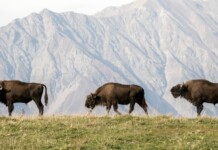











Quote of the Day: “Everyone is a genius at least once a year.” – Georg C. Lichtenberg
Image by: Daniel Clay
With a new inspirational quote every day, atop the perfect photo—collected and archived on our Quote of the Day page—why not bookmark GNN.org for a daily uplift?
126 years ago today,Tosca debuted in Rome. A mainstay on opera calendars around the world, Giacomo Puccini’s enduring tale of feminine resilience and defiance in the face of corruption has featured some of the best-known singers in the art. Puccini’s arias in Tosca are some of his finest, and The Three Tenors often featured E Lucevan le stelle (And the stars shone) in their concerts. The story was originally written by a successful French playwright and Puccini felt it was born to be sung. In May of 1887, he wrote to his publisher begging to get the rights to make it into an opera, writing “I see in this Tosca the opera I need, with no overblown proportions, no elaborate spectacle, nor will it call for the usual excessive amount of music.” HEAR Tosca’s arias performed by legendary singers… (1900)
Homicides in London have fallen to a decade low of 97 during the year just ended, a Metropolitan Police report revealed.
At a rate of 1.1 per 100,000 people, it’s lower than New York (2.8), Berlin (3.2) and Milan (1.6), according to the BBC. When measured in this way, it’s also the lowest homicide rate ever recorded in London.
Mayor Sadiq Khan and the Met Police Commissioner praised the results of a long-term effort to target criminal gangs and address climates that lead youth to commit violence.
“It’s the product of amazing police work as we attack with ever more precision the most dangerous men who carry weapons, who groom children into gangs, who prey on women,” said Commissioner Sir Mark Rowley, who added that preventative work also contributed to the fall in the homicide rate.
In 2019, Mayor Khan legislated the organization of London’s Violence Reduction Unit, a team of specialists working to help prevent young people falling into a life of crime, and address the issues that lead to just that.
“When we were set up more than six years ago, London’s homicide rate of young people was three times higher than it is today,” said VRU Director Lib Pec, in a comment to the BBC.
Although admitting petty crime, robberies, shoplifting, and phone theft were all far too high, Mayor Khan highlighted the implementation of CCTV cameras and live facial recognition software having created a database of known thieves as a first step to addressing these problems.
Additionally, the size of the police force in the West End, a particularly troubled part of the city, has been substantially increased.
“What we have to do is get sharper and more precise,” Sir Mark said. “That’s why we’re investing in data and technology, because it helps us find the most dangerous people, and if you get them off the streets it makes the biggest difference.”
SHARE This Story With People You Know Who Think London Is Dangerous…
Prototypes of the four proposed telescopes - Schmidt Science Institute
Prototypes of the four proposed telescopes – Schmidt Sciences
If you’re a billionaire looking to jump into philanthropy there are hundreds of different causes to support.
Fans of the seemingly always-cash-strapped NASA will certainly be cheering after news that a former Google CEO is going to foot the bill for a modern, updated replacement to the Hubble Space Telescope.
The 3-decade-old observatory which gave so many individuals among the Millennial and Generation X demographics their first views of the cosmos is still operational, but struggles over funding priorities and a new focus on physical exploration rather than photographic exploration will undoubtedly see it retired in the coming years.
Eric Schmidt, CEO of Google from 2001 to 2011, and the company’s executive chairman from 2011 to 2015, has announced together with his wife Wendy that their estate will philanthropically fund 4 telescopic observatories, one of which, called Lazuli, will be launched into space and bring capabilities that would outclass Hubble.
“For 20 years, Eric and I have pursued philanthropy to seek new frontiers, whether in the deep sea or in the profound connections that link people and our planet, committing our resources to novel research that reaches beyond what might be funded by governments or the private sector,” Wendy Schmidt said in a statement to Ars Technica.
“With the Schmidt Observatory System, we’re enabling multiple approaches to understanding the vast universe where we find ourselves stewards of a living planet.”
Ars speculated that the total investment could reach half-a-billion dollars, while detailing that the 4 separate telescopes were drawn from existing designs proposed to NASA by scientists.
Lazuli details – credit, Schmidt Sciences
“We sit on decades of technological developments since Hubble,” said Arpita Roy, lead of the Astrophysics & Space Institute at Schmidt Sciences, in an interview. “Lazuli is a very modern take on Hubble, with a larger mirror, swifter response, and different instruments.”
Lazuli would, if built and launched, orbit the Earth just like Hubble, but where the latter has a primary mirror of 2.4 meters in diameter, Lazuli’s would measure 3.1. It would image the universe in optical light, or the wavelengths that our own eyes can see, and is intended to launch as early as late 2028 and begin scientific operations in 2029.
Another number larger than Hubble’s would be Lazuli’s average distance of orbit around the Earth, (275,000 km to 77,000 km). The farther away from our planet, the less interference from heat and light seeps into the final data and images.
With more than 5 decades of telescope development to review, the President of Schmidt Sciences, Stuart Feldman, said the philanthropic organization will act alone to try and meet a 5-year deadline for design, construction, and launch, as well as to help better control costs.
Despite the spectacular end product, NASA and ESA’s efforts on the James Webb Space Telescope were famously slow and expensive, and it’s something that, along with considerations over shifting political priorities for the space agency, convinced the institute’s staff it would be better to take on the project themselves.
Feldman told Ars Technia he had “moderate-high confidence” of success.
“We are taking far more risks than NASA would be willing to do,” he acknowledged. “But we are doing things rigorously, and aiming for a very high probability of success.”
For most of human history, all observatories were projects of philanthropy. The pre-modern world’s most advanced astronomical instrument was located in Samarqand, and was basically the pet-project of the sultan Ulug Beg, born to extreme wealth, luxury, and a fascination with the stars.
SHARE This Great Home-Grown Philanthropy Soon To Launch Into Space…
On Australia’s Kangaroo Island, cat-proof fencing is protecting native species from predation following a devastating wildfire and allowing them to recover in numbers that are shocking biologists.
The third-largest island controlled by Australia, Kangaroo Island saw a large fire burn through much of its scrub habitat in 2020, and conservationists knew this would leave native animals extremely vulnerable to attack from feral cats.
As soon as a week after the fires receded, employees of the Australian Wildlife Conservancy got to work surveying the landscape to see how feasible it would be to build a fence around the burned areas.
Their work immediately saw them come into contact with the impact of the cats on the native Kangaroo Island dunnart, a mouse-sized marsupial with no natural defense against them.
Erecting the fence around the Western River Refuge, however, has seen the number of dunnarts increase between 90 and 100%, shocking the conservancy staff and the traditional Ngarrindjeri owners who run cultural tours on the island.
– credit, Brad Leue / Australian Wildlife Conservancy
“So the dunnart has fared a lot better than I think a lot of people thought [they would] … especially me, six years ago,” Australian Wildlife Conservancy principal ecologist Pat Hodgens told ABC News AU, adding that another shock came from the reappearance of native birds.
“The western whipbird and also the Bassian thrush … these birds are also really predated upon by feral cats. We didn’t have any of those birds living within the feral cat exclusion fence at the time of construction, but they’ve found their way back there.”
Australia has in the past had some of the highest rates of extinction of native species seen anywhere on Earth, but this has slowed dramatically over recent years, such that even mainstream media doom and gloomsters have had to admit that anything which could even remotely be called a ‘6th mass extinction’ isn’t happening by any stretch of the imagination.
Kangaroo Island, its cats, dunnarts, and shiny new fence, is something of a microcosm of the phenomenon. Animals native to isolated islands go extinct from invasive species, and if averaged year-over-year seem to indicate that the planet is losing species far faster than in previous periods of its history.
But small determined changes, such as eliminating invasive species and creating conservation areas have dramatically slowed even this very specific form of species loss.
SHARE This Uplifting Australian News With Your Friends…
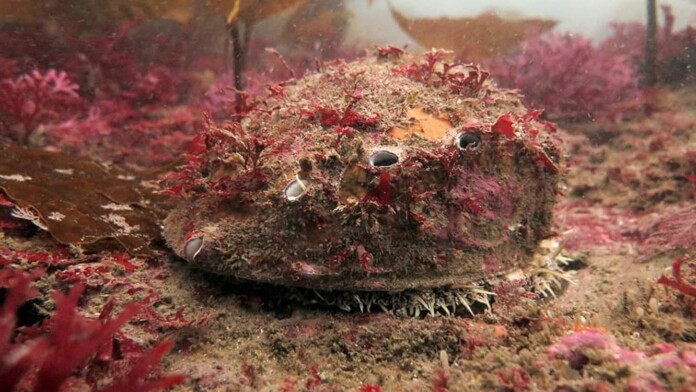
Each of these men had to walk a long hard road, paved with blood, sweat, and tears, to arrive at this moment, embracing each other as both patient-physician and colleague-colleague.
From his birth in a powerless, waterless village in Ethiopia 41 years ago, Mesfin Yana has often found himself at the mercy of the kindness of strangers; strangers like Jim Kauten, a cardiothoracic surgeon who first met Mesfin when he was wheeled into his Atlanta operating theater for open heart surgery.
This incredible tale of compassion and gratitude, documented by the Washington Post, reminds us all of the miracles that can come from just caring a little to help a young impoverished soul.
Msefin, according to the Post, was surrounded by love and wanted for nothing in his home country, but a cough that started just by slowing him down turned into rheumatic fever. Staggering into Mother Teresa’s Missionaries of Charity in Addis Ababa, the scrawny youngster met American doctor Rick Hodes.
Hodes, the Post reports, is credited with saving thousands of children with heart disease through his own generosity and a series of clever fundraising strategies to pay for surgery on the poorest among them.
Children’s Cross Connection International paid for Mesfin to fly to Atlanta to undergo open heart surgery at Piedmont Heart Institute. There, Dr. Kauten successfully repaired the boy’s mitral valve to improve his heart function, and recommended he stay with his host family nearby while he recovered.
His host happened to be a dentist, and seeing as how Mesfin would soon be back on his way to Ethiopia, recommended he take advantage of his surroundings and get his wisdom teeth pulled. This, after the young man returned to his family to tears of joy, actually developed into another heart problem called endocarditis, which Mesfin believed was certain to claim his life—even as he once again lay on Dr. Hodes’ physician’s table in Addis Ababa.
Both Christian men, Mesfin was happy to chalk his misfortune up to God’s will; Dr. Hodes was not. The American sent his patient back to Atlanta for a second surgery. God only knows who funded this time.
The diagnosis was that a valve repair wasn’t enough: it had to be replaced with a mechanical one, which meant he would have to live in the US where blood thinners and monitoring were readily available.
Mesfin Yana Dollar, his wife Lyreusalem, and their two kids – credit, Mesfin
It was at this time that he encountered the startling kindness of another stranger: Allen Dollar. Mesfin’s cardiologist, Dollar was also the adopted father to many children, and took Mesfin under his roof as well.
“I’m always grateful,” Mesfin told the Post. “I’m grateful for my family, for just being in the United States. It’s a resurrection for me. You know, I was once lost, dead, and I was resurrected and I’m living a new life.”
Resurrected, as he describes it, Mesfin Dollar threw himself into his studies, training to become a health care professional at Georgia State University. It’s there he met his wife Lyerusalem, with whom he has two children.
Mesfin would eventually move his family to Texas where he trained to become a perfusionist at the Texas Heart Institute before eventually getting a job at the Mayo Clinic in Minnesota, where he operates the heart-lungs machine for patients undergoing open-heart surgery in some of the most complex cardiac procedures.
One can imagine it didn’t take much for him to make room in his schedule to return to Ethiopia to do surgeries through the nonprofit Heart Attack Ethiopia. On the first surgery mission trip a couple of years ago, Mesfin surprised Dr. Jim Kauten, who was also there at the time.
“That was especially nice in my mind,” Kauten said. “For him to be able to pay back to his community services that he received in the United States, and he was able to pay it back in Ethiopia.”
As well as providing a key service in the operating theater, the native Amharic-speaker acts as the social glue between volunteer surgeons and patients, children like he once was, unable to understand or talk to his benefactors. His translations help put the patients at ease and stich both sides of the volunteer team together.
Mesfin has since relocated his family to the US, where they live together in what must be one of the most grateful family units in the country.
SHARE This Heartwarming Immigrant Story Of Christian Kindness With Your Friends…
Quote of the Day: “Measure what is measurable, and make measurable what is not so.” – Galileo Galilei
Image by: Jan Baborak
With a new inspirational quote every day, atop the perfect photo—collected and archived on our Quote of the Day page—why not bookmark GNN.org for a daily uplift?
5 years ago, the world’s oldest known cave painting of an animal, a pig 45,000 years old, is discovered in Leang Tedongnge cave on the island of Sulawesi, Indonesia. As GNN reported at the time, the painting is of a Sulawesi warty pig, a species hunted and depicted often in Sulawesi cave art from the Last Glacial Period. READ more about the image… (2021)
Both sides of the discovered arrowhead - credit, Marlize Lombard / SWNS
Both sides of the discovered arrowhead – credit, Marlize Lombard / SWNS
Scientists identified traces of a poison from the South African plant gifbol on Stone Age arrowheads dating back 60,000 years, making it the oldest known arrow poison discovered anywhere in the world.
The researchers say the find shows that people in southern Africa had already developed advanced knowledge of toxic substances and how they could be used for hunting long before anyone had anticipated.
Scientists from South Africa and Sweden made the discovery on 60,000-year-old quartz arrowheads from Umhlatuzana Rock Shelter in KwaZulu-Natal.
The research team identified chemical residues of poison from gifbol, a poisonous plant still used by traditional hunters in the region.
Stockholm University Professor Sven Isaksson, an expert in the analysis of organic residues in archaeological materials, conducted the chemical analysis.
“Being able to identify the world’s oldest arrow poison together has been a complex undertaking and is incredibly encouraging for continued research,” said. Isaksson, adding that it’s the result of years of collaboration.
Isaksson’s colleague, Professor Marlize Lombard of the Palaeo-Research Institute at the University of Johannesburg, South Africa, added that the residue “shows that our ancestors in southern Africa not only invented the bow and arrow much earlier than previously thought, but also understood how to use nature’s chemistry to increase hunting efficiency.”
In South America, hunters have long used the colorful warning of poison arrow frogs as a clue to their toxic secretions. In the Amazon Basin, denizens have rubbed their wooden arrow tips on the skin of the frogs to apply the same poison for who-knows-who-many centuries.
In contrast, the gifbol plant—also known as the “poisonous onion”—is renowned among local hunters for its highly toxic properties, but has no such bright colors to clue anyone in. The toxicity must have been established through trial and error or other observations.
A chemical analysis on the arrowhead, published in the journal Science Advances, revealed the presence of the alkaloids buphanidrine and epibuphanisine, both found in the gifbol. Similar substances were also found on 250-year-old arrowheads in Swedish museums, which were collected by travelers during the 18th Century.
The fact that the same plant poison was used in both historical and prehistoric times indicates a long continuity of knowledge and tradition, according to the research team.
“Finding traces of the same poison on both prehistoric and historical arrowheads was crucial,” said Isaksson. “By carefully studying the chemical structure of the substances and thus drawing conclusions about their properties, we were able to determine that these particular substances are stable enough to survive this long in the ground.”
“It’s also fascinating that people had such a deep and long-standing understanding of the use of plants.”
It implies early hunters also had both technical skills and advanced planning abilities—that they didn’t just hunt constantly hoping for the best, but instead took time to prepare their equipment to maximize their chances of success.
“Using arrow poison requires planning, patience, and an understanding of cause and effect,” said Professor Anders Högberg, of Linnaeus University. “It is a clear sign of advanced thinking in early humans.”
Perhaps we’re not giving ourselves enough credit. We know from skeletal findings that Homo sapiens have been alive in our current form and faculty for at least 330,000 years; that’s probably enough to learn which plants in our environment are poisonous, but somehow also doesn’t make this discovery any less amazing.
SHARE The Capability Of Our Hunting Ancestors With Your Friends…
A photographer has captured adorable photographs of fluffy seal pups.
Every year, hundreds of visitors flock to see the grey seal pups that are born at Donna Nook Nature Reserve, on the Lincolnshire coast each year.
Last year alone, 1,924 seal pups were born, which is up 274 from 2024.
Photos show the seals rolling around in the grass, with one seal giving a shocked expression to the camera.
“For the past few years, I have made regular trips to see the baby seal pups,” said photographer Vicky Outen. “They are incredibly endearing, each with its own distinct personality.
“Spending time in nature is always rewarding, and having the opportunity to observe them in their natural environment is particularly special.”
Charlotte makes a home among the trees after being released back into the wild - credit, the Orangutan Project
Charlotte makes a home among the trees after being released back into the wild – credit, the Orangutan Project
A female orangutan that was captured as a juvenile has been released back into the wild after four years of “jungle school.”
Found chained to the rafters of a wooden cabin on the Indonesian side of the island of Borneo, Charlotte was destined for a miserable life in captivity.
But the Borneo Orangutan Rescue Alliance (BORA), in collaboration with the forestry and environment ministry of Indonesia, rescued her from the cabin and transferred her into a rehabilitation center run by a member of BORA called the Orangutan Project.
Aptly-named the “Jungle School,” the OP’s facility provides a vital refuge to poached orangutans.
When they are separated from their habitat and/or social group, most wild animals lose out on the most important educational periods. Wild cats will learn from their mothers how to hunt prey to use just one example, and orangutans learn from their family how to do any number of things, like build nests, use tools, and behave oneself within the social hierarchy.
“Orangutans have one of the longest childhoods of any species on earth,” explained the OP in a blog post about Charlotte’s arrival in Jungle School.
“Babies are born knowing nothing; they learn everything from their mothers: what to eat, how to avoid predators, how to make nests for safe sleeping, even how to climb and swing through the trees. Their learning is complex and deep, and nothing can fully replace the bond between mother and baby.”
The blog post is a difficult read for those sensitive to stories of cruelty to animals. Charlotte, however, went from a terrified orphan to a joyful, courageous orangutan.
That occurred through the dedicated work of the OP’s carers at Jungle School, who despite being very much a member of Homo sapiens, show the orphaned orangutans how to climb trees, forage for termites, build nests, and everything else Charlotte’s mom would have shown her.
Charlotte the orangutan on the day she was rescued – credit, supplied the Orangutan ProjectCharlotte with her carer, the first human she came to trust – credit, supplied the Orangutan ProjectThe moment Charlotte returned the wild – credit, supplied the Orangutan Project
This went on between 2021 and 2025, when, having grown up and practiced her skills on a forested island free of predators, Charlotte was released into the Busang Ecosystem in East Borneo.
“Our team is confident that Charlotte will thrive in her new home, and settle into her wild life with ease,” write OP in another blog post.
“Her forest skills are excellent, and have only grown stronger during her time on the pre-release island. There’s even a good chance she may cross paths with some of her old Jungle School friends, like Mary, Jojo, Bonti, and Popi, who was also recently released into the same area.”
SHARE This Bittersweet Return To The Wild For A Brave, Healthy Orangutan…
Monument Valley National Park in Arizona – Credit: Getty Images For Unsplash+
Quote of the Day: “What makes the desert beautiful is that somewhere it hides a well.” – Antoine de Saint-Exupery
Image by: Getty Images for Unsplash+ (Monument Valley National Park, Arizona)
With a new inspirational quote every day, atop the perfect photo—collected and archived on our Quote of the Day page—why not bookmark GNN.org for a daily uplift?
Monument Valley National Park in Arizona – Credit: Getty Images For Unsplash+
A Bangladeshi pharma company will soon release a generic version of an expensive drug for cystic fibrosis that will allow hundreds of patients worldwide to access treatment.
The only pharmaceutical option available for cystic fibrosis has for years been a combination treatment called ETI (elexacaftor/tezacaftor/ivacaftor) priced between $300,000 and $370,000.
Drug discovery, testing, and complying with regulation costs a company $2.6 billion per drug on average in the United States. For context, it takes substantially less money to explore, develop, and run a world-class mining operation.
Vertex Pharmaceuticals, the American company which holds the patent for manufacturing ETI, has specifically said the price of the drug reflects an attempt by the company to recoup the losses it sustained while creating it.
Even if the company could or wanted to sell it at a loss, that would mean siphoning money from other drug development programs, of which the company currently has 10 ongoing for a variety of diseases.
Now, Bangladeshi pharma company Beximco will be offering a generic brand ETI for just $6,750 a year for adults, and around $2,000 per year for children, putting life-saving treatment within reach of thousands of patients.
Cystic fibrosis causes a buildup of mucus in the lungs that can lead to infection, and often death in children and young adults. Diagnoses often come with a warning to the parent to not become overly attached to their child.
The Guardian, reporting on the Vertex/ETI/cystic fibrosis beat, detailed that following the creation of a generic brand in Argentina, some physicians would run reduced dose treatment programs to ensure patients who could afford ETI treatment would get the most out of it. Some would even collect leftover doses to distribute to lower income patients.
Trikafta, the name-brand version of ETI produced by Vertex Pharma, is slowly becoming more available—for example in South Africa, where, following sizable patient campaigning, some insurance providers will cover its cost under certain plans.
Bangladesh, as a “least developed country,” is excluded from some international intellectual property laws, and a group of patient/advocate campaigners approached Beximco with the idea of creating a generic brand ETI, as it would be protected from legal repercussions.
Available from this spring, it will cost around 99.5% less than Trikafta.
“We were sitting there with our calculator, working out the exchange rate, and we were like—‘We can afford that. We could afford that!’—it’s a celebration from start to finish,” Carmen Leitch, a South African mother to 2 sons, one of whom has cystic fibrosis, told the Guardian.
SHARE This Incredible News For Suffering Patients And Their Families…
57 years ago today, Led Zeppelin‘s debut album was released. It was recorded over just 36 hours at Olympic Studios in Barnes, London, costing the band just £1,782. Most of the tracks were performed ‘live’ in the studio, with very few overdubs added. The groundbreaking heavy rock LP spent more than a year—71 weeks—on the UK album chart, and the blues-based quartet became one the most influential bands in rock history. WATCH the video of Babe I’m Gonna Leave You, a TV segment that was recorded before a small audience on Danmark Radio / Danish TV in Copenhagen. (1969)
Those brief, intense workouts you’ve heard about that boost fitness might also help fight certain types of cancer by releasing molecules into the bloodstream that can spur DNA repair and inhibit cancer growth signals.
When embarking on an exercise routine for the new year, take heart that new research reveals that just 10 minutes of intense exercise could help fight cancer, too.
Short bursts of energetic activity can trigger rapid molecular changes in the bloodstream, shutting down bowel cancer growth and speeding up DNA damage repair, a new study has shown.
Researchers at Newcastle University have found that exercise increases the concentration of several small molecules in the blood—many linked to reducing inflammation, improving blood vessel function, and metabolism.
When these exercise-induced molecules were applied to bowel cancer cells in the lab, the activity of more than 1,300 genes was altered, including those involved in DNA repair, energy production, and cancer cell growth.
The findings, published in the International Journal of Cancer, help explain one way exercise can protect against bowel cancer: by sending molecular signals in the bloodstream that influence the activity of genes that govern tumor growth and genome instability.
The study is another step forwards in the fight against bowel cancer and further strengthens the importance of staying active.
‘Opens door to new treatments’
“What’s remarkable is that exercise doesn’t just benefit healthy tissues, it sends powerful signals through the bloodstream that can directly influence thousands of genes in cancer cells,” said Dr. Sam Orange, Senior Lecturer in Clinical Exercise Physiology at Newcastle University, who led the study.
“It’s an exciting insight because it opens the door to find ways that mimic or augment the biological effects of exercise, potentially improving cancer treatment and, crucially, patient outcomes.
“In the future, these insights could lead to new therapies that imitate the beneficial effects of exercise on how cells repair damaged DNA and use fuel for energy.”
The Newcastle researchers found that exercise boosted the activity of genes that support mitochondrial energy metabolism, enabling cells to use oxygen more efficiently.
At the same time, genes linked to rapid cell growth were switched off, which could reduce the aggressiveness of cancer cells, and exercise-conditioned blood promoted DNA repair, activating a key repair gene called PNKP.
The study involved 30 volunteers, male and female aged 50–78, all overweight or obese (a risk factor of cancer) but otherwise healthy.
After completing a short, intense cycling test lasting approximately 10 minutes, researchers collected blood samples and analysed 249 proteins. As many as 13 proteins increased after exercise, including interleukin-6 (IL-6), which helps repair the DNA of damaged cells.
“These results suggest that exercise doesn’t just benefit healthy tissues, it may also create a more hostile environment for cancer cells to grow,” said Dr. Orange, a Clinical Exercise Physiologist at The Newcastle Hospitals NHS Foundation Trust.
“Even a single workout can make a difference. One bout of exercise, lasting just 10 minutes, sends powerful signals to the body.”
“It’s a reminder that every step, every session, counts when it comes to doing your best to protect your health.”
Bowel cancer is the 4th most common cancer in the UK, after breast, prostate and lung—and it’s estimated that physical activity reduces the risk by approximately 20%.
It can be done by going to the gym, playing sports or through active travel such as walking or biking to work, but also as part of household tasks or work like gardening or cleaning.
In the future, researchers plan to test whether repeated exercise sessions produce lasting changes and explore how these effects interact with standard cancer treatments like chemotherapy and radiotherapy.
SHARE THE HEALTH TIP By Posting The Research on Social Media…
David Sylvester gives a hug in Oklahoma City – Courtesy of ‘Big Dave’
[By David Sylvester]
My friend Kevin died at his desk on September 11, 2001, on the 99th floor of the North Tower of the World Trade Center.
I was in Philadelphia watching the Twin Towers fall on TV like everyone else, except I knew someone inside.
A lifelong positive presence, Kevin was someone who made me want to be better, and his loss left me adrift.
So nine months after the towers fell, I got on a bike and honored his life by pedaling 4,200 miles across a grieving country from Astoria, Oregon, to Kevin’s childhood home in Philadelphia.
Because the tragedy of that September day touched all of our lives in some way, something surprising occurred on that journey.
Everywhere I stopped, everyone wanted to talk, to connect, to feel safe, and above all, to hug.
Every citizen felt vulnerable, and I was biking right into their wounded hearts—and the nation’s conversations, connections, and hugs were revitalizing.
David Sylvester in Las Vegas #BigDaveHugsTheWorld
So that first ride in 2002 became a second in 2004—Cairo to Cape Town—and then a third in 2007—Istanbul to Beijing—and then more trips across Australia, Europe, and Israel, hugging all the while.
When I began this 25-year journey, I initially measured my accomplishments by distance, noting how many thousands of miles I biked or drove. Then I spoke about the number of people I hugged, noting that my record was 1,330 on July 31, 2017, in Las Vegas.
What began as an honor ride had evolved into legitimate research—a longitudinal study examining human connection across 42 countries and 50 states, where physical touch served as both methodology and measure—from Tajikistan to Turkey, Malawi to Mexico, Namibia to Northern Ireland.
David Sylvester in Xian, China #BigDaveHugsTheWorld
How far can an embrace take you?
The circumstance of my presence opened the door for people to become more forthcoming, open, honest, understanding, and communicative, and created a hugging and healing space for myself and others.
Their stories touched me, like in 2018 when I was flying to Anchorage and happened to be seated next to a man born in Alaska, but now living in Delaware. Returning to settle his father’s affairs, he was clearly hurting. So during our flight, 30,000 feet above our lives, I opened up about the wide range of emotions I went through after my father died.
Soon we were swapping dad stories, laughing, crying, and even holding hands. At baggage claim I gave him one of my hug coupon cards. We only met that one time, but ever since, he messages me a few times a year when he cleans out his wallet to say that my card is the only thing he keeps, along with his license and credit cards.
“It’s the purest thing I have,” he told me.
Then there was the South Dakota high school student I met in 2017, whose parents were struggling with addiction and, now, joblessness. She emailed me that her friend said, ‘We sure could use that guy who hugged people regardless of who they were right now,’ and ended her note with, “So years later I want to thank you for the love that you give.”
Then there’s the woman in Orlando I met in June 2016, just days after the Pulse Nightclub massacre. She saw me on a local morning show, offering hugs to anyone who needed them, and drove straight to the memorial where I would be.
She’d been following me since reading a 2008 piece I wrote for ESPN, and told me she’d always wanted a hug from me, but knew it would take something “extraordinary” for our paths to cross. She collapsed in my arms, and I can still feel her tears on my cheek.
David Sylvester in Kansas City #BigDaveHugsTheWorld
I remember being in a mosque in Belfast, Northern Ireland, and meeting a Muslim woman who loved my story and personal mission but couldn’t hug me. She wondered if her smile went toward my ‘hug tally’.
With a big smile, I clicked my clicker and said, “It does now!”
She lit up and told me to wait there. A few minutes later, she returned with five women and said, “Tell them your story.”
As I shared my story, the women began to smile, and she yelled, “Click it! Click it!! Click it!”
I now have thousands of these stories, not because I am anything special; I am just a regular dude who discovered that the only measurement that counts and enriches the quality of our lives is depth: the depth of commitment, connection, love, devotion, and respect.
I also learned that hugs aren’t one-sided acts; they are highly communal and communicative. As I looked deeper into the action that made all of this possible, I developed a seven-principle framework—EMBRACE:
E—Engage others with open hearts. Authenticity isn’t optional. People know when you’re being performative versus being present.
M—Make meaningful connections. There’s a difference between casual, polite contact and purposeful interaction. One potentially empowers and energizes, while the other falls short.
B—Bridge our differences. I focus on hugs, but it could be high-5s or handshakes. Physical touch transcends language, culture, race, and class. I’ve seen it a million times.
R—Respect for all people. You must be willing to meet people where they are and respect their boundaries. Connection isn’t about what you need—it’s about what they’re ready for.
A—Accept without judgment. When in crisis contexts—trauma, addiction, failure—people need grace, not evaluation. Your job isn’t to like them or fix them. Your job is to see them.
C—Create confidence in our shared worth. Everyone needs to know they matter, so being recognized, if only for a moment, can be the foundational spark of healing.
E—Engender hope through human touch. A hug isn’t just comfort. It’s proof that someone cares enough to stay. Hope isn’t just a feeling. It’s a force that moves us.
These principles aren’t theories from a textbook—they’re tried, tested, and proven lessons earned on the ground by engaging over one million people. And now they’re yours too.
It’s now 2026, twenty-five years after my friend’s death, along with 2,976 others—and so much of who we are and how we live has changed.
Here’s what I have learned during my experiment. We all have a larger capacity for everything than we believe, but, you can’t outrun grief or fill life’s painful voids with distance, quantity, substances, or geography.
I’ve pedaled over 25,000 miles across Africa, Asia, Australia, and North America, and spent over 3 years of my life on the road, but my friend is still gone, and his loss still hurts.
The only thing that heals is depth—stopping long enough to listen and being present long enough to be heard and connect.
With the EMBRACE principles, you’ll see that a hug is more than an extension of a handshake, and vulnerability isn’t a weakness but a gateway to something curative.
Kevin was my brother—not by blood, but by choice—and when you lose a brother like that, you either shut down and let the world harden you, or you open up.
The EMBRACE principles—and all the hugs—helped me reshape myself into a better man.
So, how far can an embrace take you? If you’re willing to stop running and go deep, a simple hug can take you pretty damn far.
Mark and Carol Benson renovated The Old Station in North Yorkshire - SWNS
Mark and Carol Benson renovated The Old Station in North Yorkshire – SWNS
A train-crazy couple have spent the last 30 years restoring a derelict railway station in England to its former glory.
Mark and Carol Benson spent tens of thousands to transform Ebbertson Station in North Yorkshire, after purchasing the property in 1996–four decades after the station closed in 1950.
Thanks to their three decades of hard work, tourists are able to once again visit the depot—now called The Old Station—and even stay in one of three former First Class train cars, or in the converted ticket office which is now a cottage.
The Bensons renovated the former station master’s house into their family home and, in their latest project, restored the platform canopy and waiting area, for which they were awarded a blue plaque marking its historic value.
“It has been a lot of hard work,” Carol told SWNS news agency. “We are very proud of what we have achieved.”
Ebbertson Station is said to be a very good example of the work of the celebrated architect William Bell’s mature wayside station design of that period.
Ebbertson Station when in use in the 1940s (via SWNS
The station in the village of Allerston near Scarborough sits on the 16 and a quarter mile Forge Valley Line which was opened by the North Eastern Railway Company in 1882.
The last passenger train on the line ran on June 3, seventy-five years ago.
It was then used as a private house until the Bensons purchased the piece of railway history 46 years later.
“We always had the idea of running a business that would enable me to continue working full time as a quantity surveyor until I could retire,” said Mark.
“Carol also didn’t want to return to working at a school as a nurse, so it worked out well.”
Mark and Carol Benson renovated The Old Station and train cars – SWNS
After renovating the ticket office, they converted the train cars to include kitchens, bedrooms and seating areas.
Rentable train cars for tourists – Courtesy of theoldstationallerston.co.ukCourtesy of theoldstationallerston.co.uk/
In 2021, they carefully knocked down the men’s bathroom and porters room to salvage the bricks, which they then used to renovate the former ticket office.
The couple transformed it into a vacation cottage using the bricks and added two bedrooms with en-suite shower rooms.
Kevin Nazemi interviewing President Clinton – CBS Mornings
It was a bold request for an 11 year old.
Kevin Nazemi wanted to interview the President of the United States.
Kevin didn’t seem to care about his age or that he recently immigrated to America from Iran and his English skills were still developing.
The boy, who lived in Missouri at the time, had a class project to create a news report and he couldn’t think of a better subject than the current president, Bill Clinton.
Kevin wrote a formal letter to the White House requesting an interview. Staffers sent him a coloring book in return—but it didn’t deter Kevin. He began calling the White House instead, making his persistence known in daily calls.
One of those phone calls eventually reached junior staffer Dave Anderson, who at least listened to Kevin’s rather outlandish request. Anderson was only 23 then—and all these years later, he still remembers the kid’s persistence.
“His tone was demanding,” Anderson told David Begnaud at CBS Mornings. “It never felt like, ‘Pretty please, can I get an interview with the president?’ It was much more, ‘When can I interview the president?’”
After a few weeks of daily calls, Anderson relayed the request to (an always affable) President Clinton, who actually agreed to the interview. Clinton was heading to Cleveland soon and could meet with Kevin there.
11-Year-old Kevin Nazemi interviewing President Clinton – CBS Mornings
The interview, which was only supposed to last eight minutes, ran on for a half hour. Clinton enjoyed the interaction. The kid asked good questions and Clinton gave him some good advice too. Kevin’s interview eventually became a 30-minute special on a local TV station which had partnered with his school on the class project.
Perhaps most importantly, the experience left a lasting impression and numerous lessons he would never forget.
Nothing is impossible. You can accomplish anything with enough persistence.
The precocious young man eventually studied at MIT and Harvard’s Business School. He founded four start-up companies, making good on the American dream that he chased down all the way from Iran. He also stayed in touch with Anderson, as the young White House staffer grew up and had two children of his own.
Then, out of the blue one day, Anderson received a letter explaining that Kevin had set up college funds for Anderson’s kids Noah and Maddie as a thank-you for believing in him.
Recently, they got to meet for the first time. He also reunited with President Clinton, who, not surprisingly, still remembered him 30 years later. (Watch the CBS Morning video at the bottom…)
Kevin’s reunion with President Clinton – CBS Mornings
And it all started with a bold request by an 11-year-old that launched the boy on a successful trajectory through the next three decades of his life.
“The opportunity that (Anderson and President Clinton) provided for me convinced me that you should set really, really big goals and be persistent towards them,” Kevin said on CBS.
“The generosity and the honesty in the experience of sitting down with Clinton showcased for me traits that I’ve tried to carry forward in my professional and personal life.”
And he’s been paying forward Anderson’s kindness ever since.
INSPIRE FRIENDS TO BE PERSISTENT By Sharing This on Social Media…
Quote of the Day: “Nature here was a series of wonders, and a fund of delight.” – Daniel Boone
Image by: Zetong Li
With a new inspirational quote every day, atop the perfect photo—collected and archived on our Quote of the Day page—why not bookmark GNN.org for a daily uplift?
Diego in 2009 - credit: CC 2.0. Peter Wilton, via Wikimedia
6 years ago today, Diego the Hood Island tortoise retired with honors to the Galapagos Islands, after decades of captivity at the San Diego Zoo where his libido was credited with saving his species. Like many animals of the Galapagos Archipelago, the giant tortoises on each island are species unto themselves. To that end, his siring of 900 tortoises will no doubt be one of the primary reasons the Hood Island species of giant tortoise survives. READ a bit more… (2020)