One of America’s largest airlines is also its most generous.
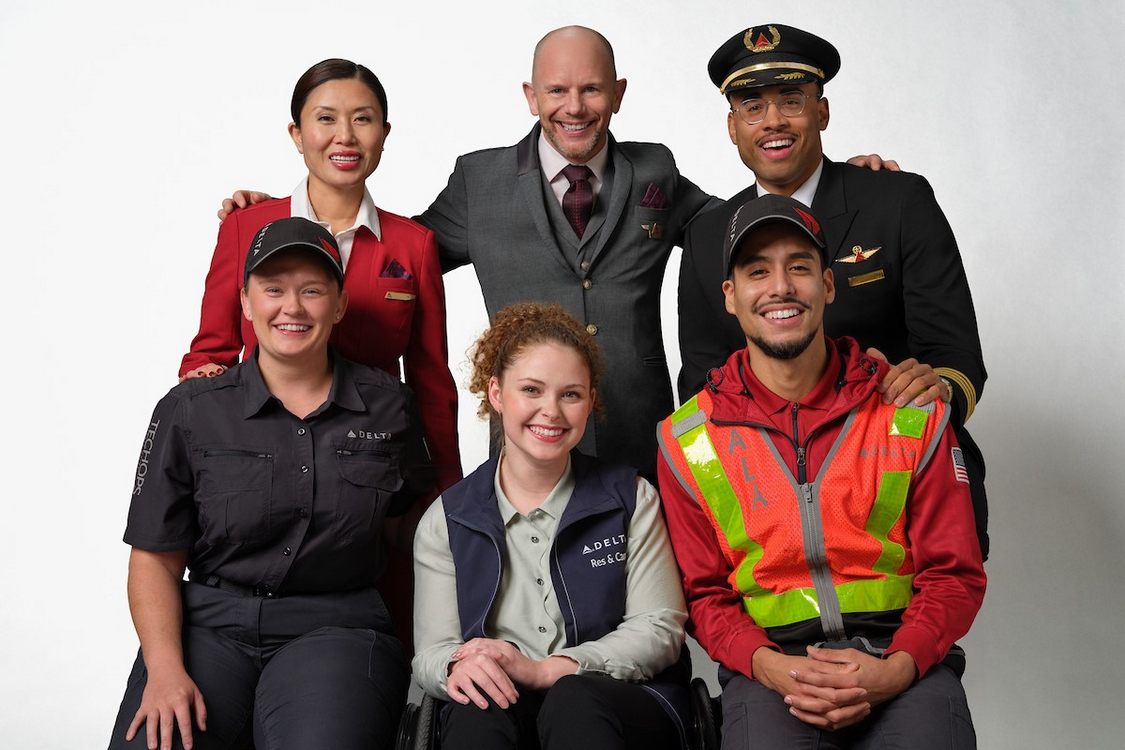
Delta Airlines will pay out around $1.3 billion in profit sharing payments, representing not only one of the largest payouts in the company’s history, but a larger sum than the whole industry together.
Celebrated on Valentine’s Day, Profit Sharing Day sees Delta employees receive a divided share equal to 10% of all company revenue up to the first $2.5 billion, rising to 20% for each dollar above $2.5 billion.
This year’s payout will be between 3 to 5 weeks’ salary depending on the employee.
“The passion and dedication of Delta people carried us through 2025 and will continue to propel us forward,” said Chief People Officer Allison Ausband. “Their unwavering focus on safety and care is what builds trust and a deep loyalty for customers, and continued success for Delta.”
Despite a year described in an earnings report as “challenging,” when the prolonged government shutdown cost the firm some $200 million in lost revenue, the profit sharing payout will be 8.9% of a possible 10%.
Delta consistently ranks as one of the best places to work according to Forbes and Fortune 500, and it’s easy to see why.
Profit sharing is not nearly as common today as it was in the 20th century. Today, it’s largely been replaced with 401(K) matching programs that help employees save for retirement. Amazon was one of the last holdouts of the old method of granting stock to employees, a policy it discontinued in 2018 in response to demands for higher hourly wages.
Delta is one of the few that’s hanging on, and with the latest payout will have shared some $5 billion in profits with its employees.
GIVE A Cheer For Delta And Their Profit Sharing On Social Media…
This year will invite many of us to gallop forward with blazing speed and boldness as the year of the horse arrives under the heavenly branch of fire.
It will be a time when reserved action and meekness will be replaced with aggressivity and passion, which invites some to show caution, and others to take a leap.
Every year, GNN generates a horoscope based on averages of several major Chinese horoscope providers and Feng Shui masters to help those who don’t follow this ancient practice make sense of it.
On February 17th, the Lunar New Year will welcome the 12-month Chinese zodiac of the horse under the heavenly branch of fire.
How do you know if you are a horse? The last 100 years of horses were born in 1930, 1942, 1954, 1966, 1978, 1990, 2002 and 2014. The last fire horses were born in 1966, and include boxer Mike Tyson, martial artist Jackie Chan, director J. J. Abrahams, Brazilian football legend Romario, Kiko the Crown Princess of Japan, chef Gordon Ramsay, singer Sinead O’Connor, and Wikipedia co-founder Jimmy Wales.
Being that the year begins on the 17th, if your birthday falls earlier, you’re a snake, not a horse.
Chinese astrology says that every 12th year is somewhat unlucky, as the star any individual person was born under arrives closest to the god Tai Sui. That closeness offends him, and so those born under the sign of the year to come are generally recommended to stay put, risk little, and tread lightly.
In this, horses will be particularly vulnerable to misfortune, and particularly as it relates to their character flaws. Horses, it might surprise no one to hear, don’t like being reigned in. They are confidant but also agreeable, yet can be impatient.
Astrologers are generally predicting a year full of ups and downs for horses, because fire, considered the foundation of matter in Chinese astrology, represents one of the least stable and most energetic of forces.
There will be times when the energy of the horse and that of fire call the individual to bold action, and others when prudence must be deployed to counterbalance the erratic nature of fire and the horse. Additionally, the horse star sits in the heavenly branch of fire by nature, meaning its natural tendencies will be even more amplified, the good and the bad.
Those born under the sign of the rat are also in for something resembling chaos, as their star sits directly opposite the god Tai Sui, another somewhat unlucky place.
Furthermore, the rat and the horse make for poor romantic matches, so each should keep a low profile in the presence of others this year.
Snakes the other natural fire branch sign, and one whose year has just passed, will have a very good year, as they benefit from the warmth and light of their fiery sign and stampeding neighbor the horse.
Tigers will be set for a good year if they can align themselves with the horse, one of their best romantic matches.
Several others, including the goat, dragon, and monkey, will also be in for years full of good fortune.
You may encounter contradictions when reading zodiacs, so perhaps the best advice is simply to be kind to others, learn a new skill, and lay off the vices for a time.
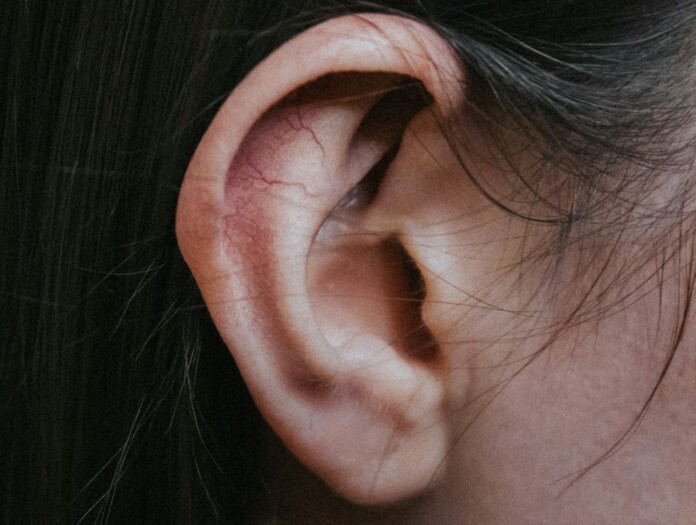
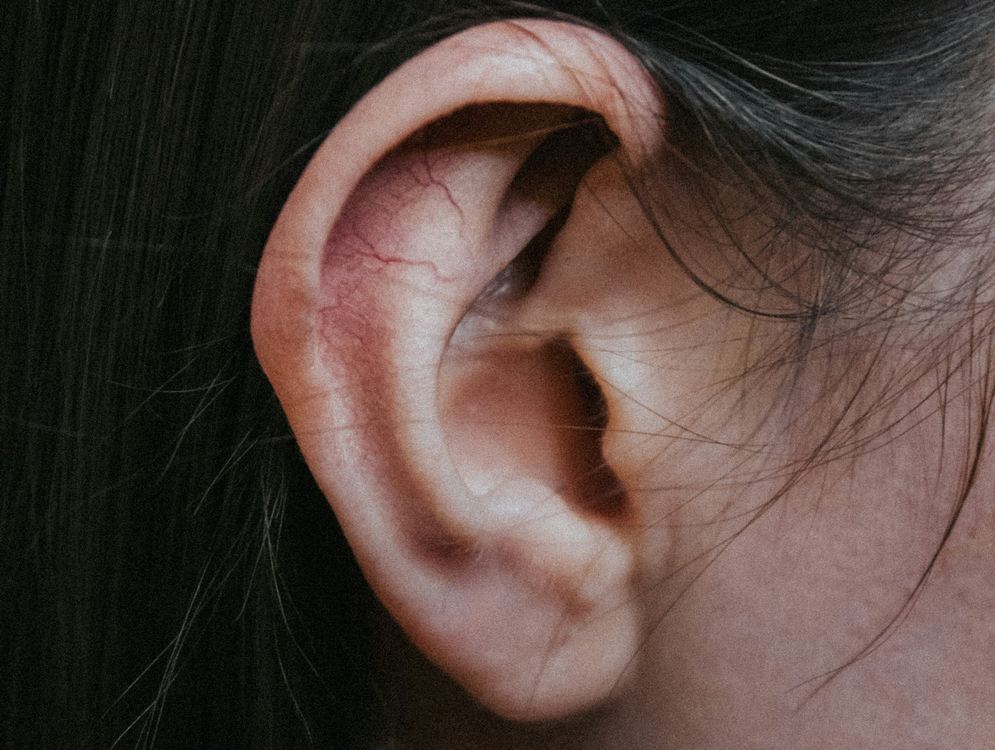
In a medical story that has to be seen to be believed, a Chinese woman whose ear was torn off in an industrial accident had it grafted onto her foot as a way of keeping it viable for later transfer back to her head.
And that’s exactly what happened, 5 months after doctors at a Shandong hospital determined that blood vessels and nerves at the sight of the injury were too damaged for immediate reattachment.
In a process called “heterotopic survival,” which involves grafting severed body parts onto different regions in order to ensure blood flow and tissue repair, the ear of 30-year-old Ms. Sun was attached to the top of her foot.
As it turns out, the tops of our feet and the sites of our ears share similar properties of skin thinness, stable blood circulation, and blood vessel size. After a brief fear of necrosis, the ear gradually regained its color.
Incredibly, Sun carried on for 5 months wearing a shoe several sizes too big to protect her ear until October came around and the woman’s surgical team determined it was time to undertake the complex procedure of reconnecting damaged blood vessels and nerves.
But all went well, and Sun is now recovering.
Experts told The Mirror that when immediate reattachment of severed tissue is not feasible, ensuring blood flow through heterotopic survival is critical for delicate structures like ears.
SHARE This Bizarre And Surprising Surgical Procedure With Your Friends…
Quote of the Day: “Cherish your human connections: your relationships with friends and family.” – Joseph Brodsky
Image by: Anastasia Skylar – Unsplash
With a new inspirational quote every day, atop the perfect photo—collected and archived on our Quote of the Day page—why not bookmark GNN.org for a daily uplift?
116 years ago today, the great jazz guitarist and composer Django Reinhardt was born. Regarded as one of the most influential musicians of the twentieth century, the Belgian-born Romani-French musician is known for playing with only two fingers. Reinhardt spent his youth in Romani encampments near Paris, where he played violin, banjo, and guitar. When he was 18 he was terribly burned in an accident that hospitalized him for 18 months and badly damaged the ring and pinky fingers of his left hand. Doctors believed he would never play guitar well again, but he regained his musical mastery by developing a radical method to play using his two remaining fingers. WATCH rare footage below of his lightening fast fingers… (1910)
In what is being called a major milestone in American cancer research and treatment, 5-year survival rates averaged across all cancers have never been higher, with 7-in-10 cancer patients living past 5 years post-diagnosis.
This average was pumped up by large survival rate increases in leukemia (20%), non-Hodgkin lymphoma (18%), and ovarian cancer (9%) over the last 20 years.
The 5-year survival average also stands at 92% for breast cancer in women, 95% for melanoma of the skin, and 98% for prostate cancer.
These numbers were chronicled in the 75th annual Cancer Statistics report by American Cancer Society (ACS). It shows how 5-year survival rates have increased on average 20% since 50 years ago.
The Cleveland Clinic states that most cancer recurrences happen within the first 5 years after diagnosis, so surviving this period is a strong indicator that the cancer is under control, and that while not “cured,” has a very low chance of coming back.
The 20% increase in patients living to the 5-year mark reflects advancements in early diagnosis through routine screening procedures, and advances in treatment like the introduction of immune checkpoint therapy, CAR T-cell therapy, and drugs like tyrosine kinase inhibitors which have greatly increased the survival rate of leukemia patients.
Even pancreatic cancer, long considered as sure as a court death sentence, has peaked over the last 20 years into a double-digit survival rate for the first time ever (13%). Another grim category, liver cancer, has risen from a 7% relative survival rate in the 1990s to 22% in 2023.
Survival rates for myeloma have doubled to 62%, and almost as much for lung cancer (15% – 28%).
Further still, later-state diagnoses are not as hopeless as they once were. According to the ACS, patients whose cancers had spread to “distant” organs averaged a 17% rate of 5-year survival in the mid-1990s, but now average 35% in the 2020s.
“The cancer death rate has declined by 34% since its peak in 1991, averting about 4.8 million cancer deaths as of 2023,” the statistics report suggested.
Quite the report card.
SHARE These Incredible Advancements With Your Friends On Social Media…
The Blue Moon Mark 1 - credit, Blue Origin, retrieved from the home page
From a return of humans to Lunar orbit, to Japan’s first crack at Mars, the trend of humans spending more and more time and money on and in space is set to continue in 2026.
Here are a few of the events to look forward to.
An artist interpretation of the Orion capsule – credit NASA
Artemis II and a return to the Moon
Since the conclusion of the Apollo program, NASA has long pondered when it will get another chance to send humans to the Moon. “No later than February, 2026,” Space.com reports, the Artemis II mission will send a team abroad the Orion capsule to Lunar orbit.
For a period of 10 days, the team will conduct tests of Orion’s capabilities and systems, including life-support, communications, and more, and validate the capsule as mission ready for Artemis III, the next crewed Lunar landing that will occur early in the 2030s.
GNN previously reported on the announcement that the Artemis crew had finished training preparations.
Mission Commander Reid Wiseman will be joined by NASA astronauts Christina Koch and Victor Glover, both of whom have spent over 100 days (over 300 in Koch’s case) on board the ISS. From the Canadian Space Agency there’s Jeremy Hansen, a first-timer, who admitted the chance to fly on Artemis II will be “an absolute privilege.”
The rocket and capsule have just been rolled out onto the launch pad at NASA’s Kennedy Space Center, signifying that the countdown is well and truly on for this historic, 50-year wait to return to the Moon.
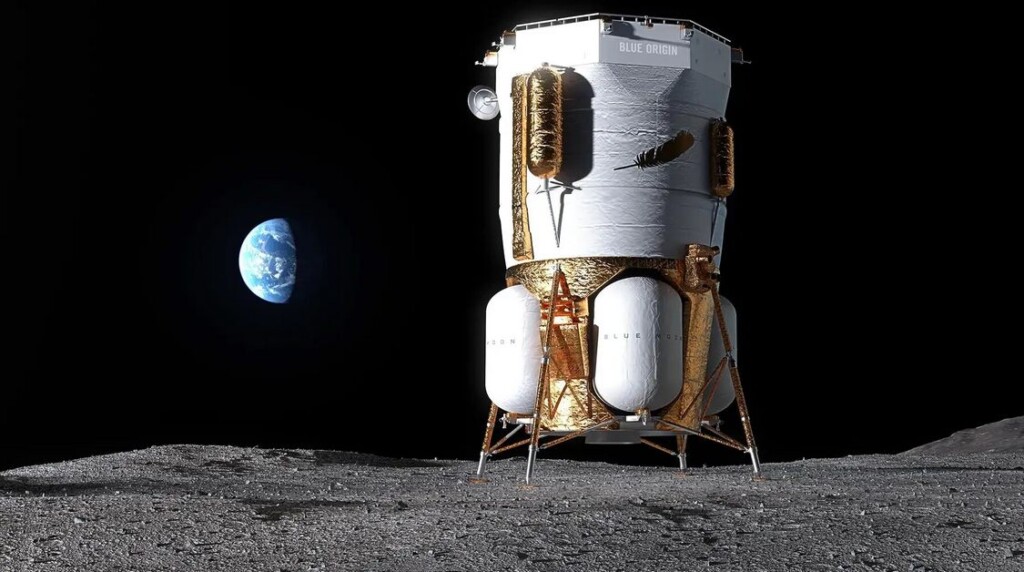
The Blue Moon Mark 1 – credit, Blue Origin, retrieved from the home page
Blue Moon lander’s launch
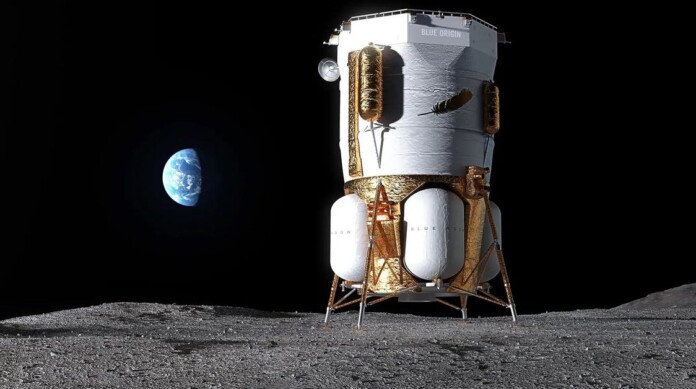
Also slated for a Q1 2026 launch is the very exciting debut of Blue Origin’s first attempt at a landing with the private firm’s Pathfinder 1 mission. Jeff Bezos’ spaceflight company will attempt a flight test and landing of its prototype Lunar lander called Blue Moon, developed as part of NASA’s Commercial Lunar Payload Services Program (CLPS).
CLPS offers grants and contracts for private space companies to develop and operate a suite of landers that could carry crucial supplies to future Artemis astronauts working on the Lunar surface. Blue Origin has mostly restricted itself to launching the wealthy into low-Earth orbit and satellite deliveries, so the Pathfinder mission represents a major shift in ambition from the company.
As a flight test for the prototype of the Blue Moon Mark 1 lander, the mission will demonstrate critical systems, including its BE-7 engine, cryogenic fluid power and propulsion systems, avionics, continuous downlink communications, and precision landing with an accuracy within 100 meters (330 ft).
Blue Origin plans to offer future Blue Moon Mark 1 missions to commercial, governmental, and institutional customers seeking Lunar payload delivery.
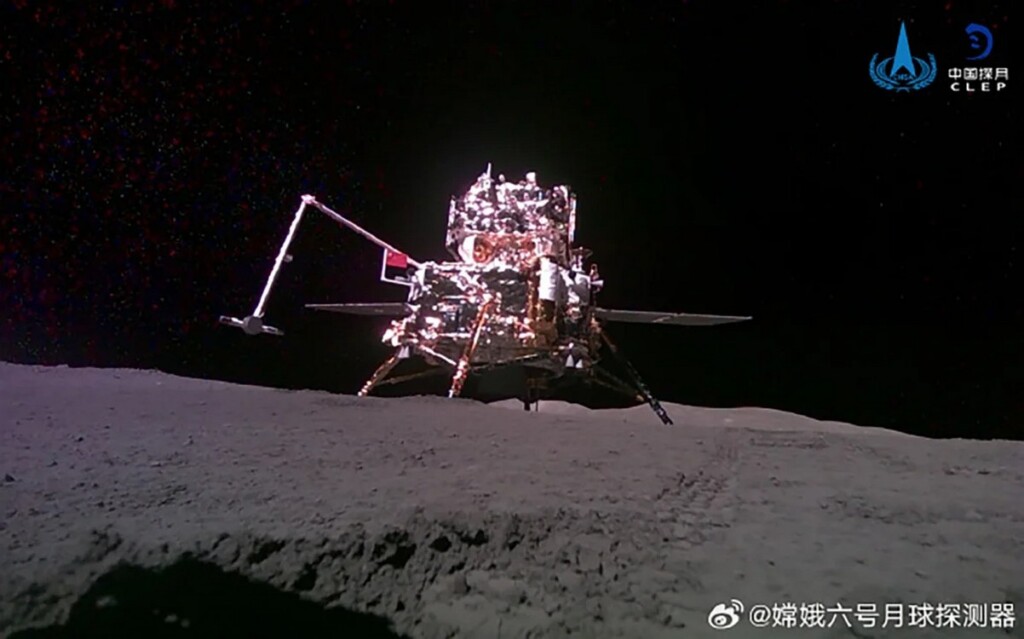
The Chang’e-6 probe on the Moon’s far side last year – credit, Chang’e-6 social media account
China’s asteroid sampling, 7th Moon mission
Whatever your opinions on China are, there’s no maneuvering around the fact that their space program has come on leaps and bounds, and now clearly shares the skies with us—just like we did with the dreaded Soviets, by the way, and like we still do with the Russian Federation.
This year China has 3 key missions that will light up East Asian summer skies, the first of which will be Chang’e-7. Named after the folkloric goddess of the Moon, Chang’e-7 will deploy an orbiter, lander, rover, and a small hopping probe to explore permanently shadowed craters, conduct surface surveys, and support international scientific instruments from Egypt, Bahrain, Switzerland, Russia, Thailand, Italy, and the US.
When the US will be celebrating the day of its 250th founding anniversary, the Tianwen-2 or “Heaven Question” sample-return mission will rendezvous with the asteroid Kamo’oalewa, a charismatic lump of debris around 330 feet in diameter. It orbits the Sun at an average of the same distance as the Earth orbits the Sun, and some have speculated it’s a piece of our very own Moon.
The samples collected by Tianwen-2 will return to Earth in 2027.
China will also be testing the believed-to-be unmanned launch of its Mengzhou spacecraft, which will become the standard in the coming years for transporting astronauts to and from the Chinese space station, Tiangong, and beyond.
Mengzhou will replace the Shenzhou spacecraft, which this year will fly its 23rd and 24th flight.
Mengzhou will feature a modular architecture with a re‑entry capsule and a service module, higher payload capacity and more internal volume, an ability to support deep‑space missions, including lunar orbit and potential lunar landing profiles, an improved safety systems, including a modern launch escape system and upgraded avionics, according to Editorialge.
A launch date hasn’t been confirmed, but is believed to be set for mid 2026.
The MMX space probe under assembly – credit, JAXA, licensed for press use
Japan aims for Mars
The MMX mission will be Japan’s debut in Martian exploration. However, while virtually all of NASA’s travels and travails at the Red Planet involve the planet itself, the Japanese space agency JAXA will aim to visit the Martian satellites, Phobos and Deimos.
The spacecraft will explore both moons and collect a sample from Phobos to bring back to Earth. The MMX probe will have to be an agile little thing, as it needs to descend to one Moon, take and store a sample, then ascend and fly to the other Moon for another landing/take-off before bringing the precious cargo back home.
Japan has had stellar success with sample-return missions, with its Hayabusa and Hayabusa2 missions successfully returning samples from the asteroids Itokawa and Ryugu.
Any sample from Phobos and Deimos might help science determine whether they are ejected chunks of Martian rock—potentially during an impact event, or whether they are asteroids themselves captured by Mars’ gravity. Of all the missions thusly listed, MMX may have the highest chance of being postponed to 2027, after a failed rocket test in December cast doubt over the 2026 flight schedules.
SHARE This Exciting 2026 Schedule With Your Space-Loving Friends…
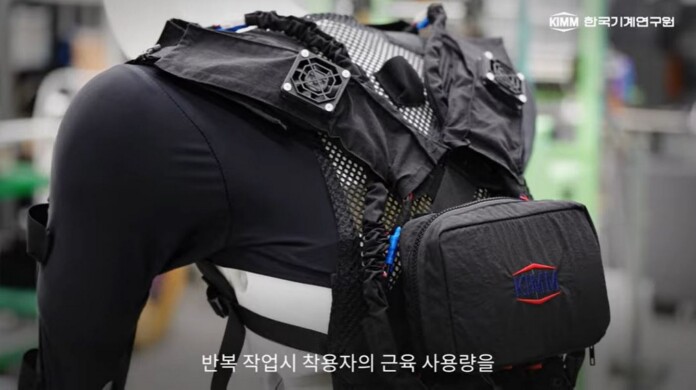
The soft exoskeleton- credit, screengrab via the Korea Institute of Machinery and Materials (KIMM)
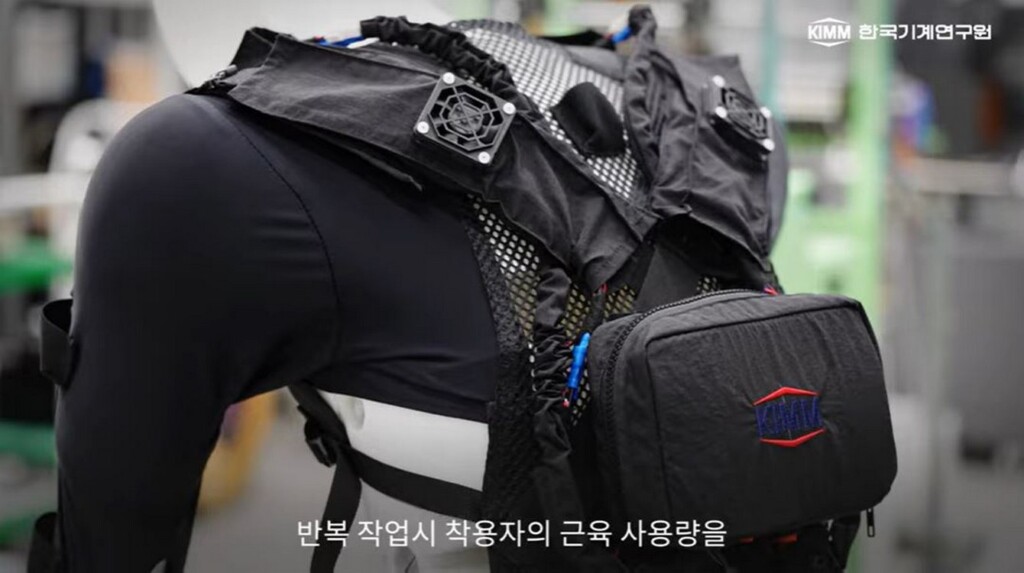
The soft exoskeleton- credit, screengrab via the Korea Institute of Machinery and Materials (KIMM)
South Korean engineers have developed a soft, shirt-like exoskeleton to give individuals with degenerative muscle conditions more mobility and independence.
Costing thousands less than hard, motor-driven exoskeletons, and weighing less than 2 pounds, it’s a game-changing innovation in the field of robotics.
Built by the Korea Institute of Machinery and Materials, it consists of a shirt that can be taken on and off just like one made of cotton, paired with a modest nylon harness to hold the electrical components.
One can think of it like a set of wearable muscles.
The fabric is woven using threads less than half the diameter of a human hair, but made of shape memory alloy. The contraction of the alloy to the shape it “remembers” mirrors the lifting an arm via the shoulder joint, and tests show it can take between 40% to 57% of the strain off the wearer’s musculature.
Myung Ha-yul is a 15-year-old student with Duchenne muscular dystrophy, a diagnosis he received in elementary school. Myung requires a caregiver to help with everyday activities, and doctors had previously warned him and his parents that even the combing of hair and brushing of teeth may become impossible as he ages.
Myung was part of a series of trials run by Seoul National University Hospital, and had great things to say about the exoskeleton shirt.
“It felt amazing because it was light and easy to wear, just like clothing,” he told South Korea’s JoongAng Daily. “I could lift my arms with much less effort.”
On its own power, the shirt’s fabric can lift up to 34 pounds, and with the help of a human arm, can restore the capacity for a lot of basic movement and activities.
“The biggest achievement is that patients can put it on and take it off like clothing, while receiving active muscle support that leads to real functional improvement,” said Lee Woo-hyung, a professor of rehabilitation medicine at the hospital.
The development was funded by the Child Cancer and Rare Disease Project, launched in May 2021 with a 300 billion won ($204 million) donation from the family of the late Samsung chairman Lee Kun-hee, JoongAng Daily reported through a translation.
SHARE This Impressive Feat Of Robotics Development With Your Friends…
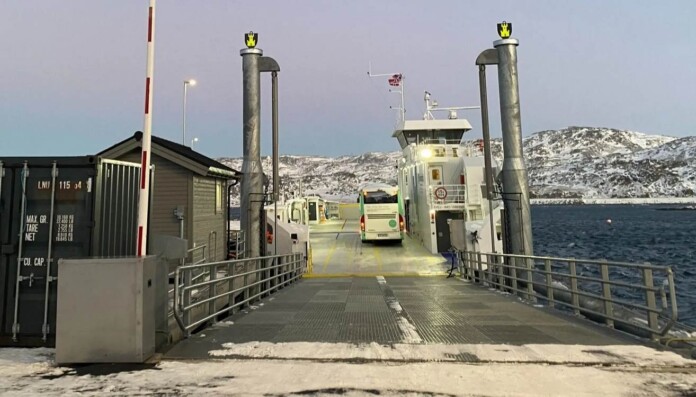
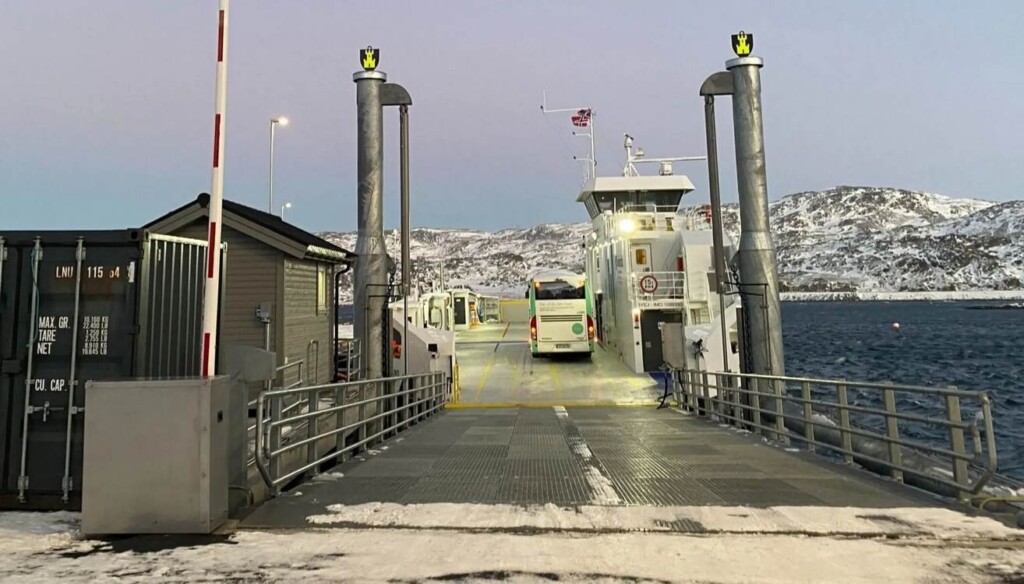
The M/F Vargsund - credit, Finnmark county administration
The M/F Vargsund – credit, Finnmark county administration
An all-electric passenger/car ferry in northern Norway has proven that brain-disabling cold can’t affect its service, despite running entirely on batteries.
Whatever technology was encased within the batteries of our parents’ cars that would see them suffer in the cold is not what powers the M/F Vargsund, which links the two islands of Kvaløya and Seiland in Norway’s Finnmark county.
It couldn’t have been a better acid test as the ferry shot off from the quay at Klokkarøy town on January 1st with its first ever passengers aboard—temperatures had fallen to -13°F, which for our Norwegian readers is -25°C.
While some car ferries operate as far north as M/F Vargsund, none do so powered by electricity.
“This is not just about new ferries. It’s about the future. About showing that green technology works – even in the far north, even in tough conditions,” operator Torghatten said in a statement on Friday after the ferry sailed in regular traffic for two weeks.
Stretching 50 meters prow to stern, she can hold 28 cars and 100 passengers. Torghatten is the country’s largest ferry operator, and as well as helping to reduce the company’s own carbon emissions, executives hope that it will set a standard of ambition and belief in the industry at large.
The firm’s most frequently-used ferry, connecting another pair of towns—Bognes and Lødingen—along the northern reaches of Norway, is also fully electric.
A total of 95.9% of all new cars registered in Norway in 2025 were electric vehicles, a result of the the calendar edging closer and closer to long-anticipated government edicts on internal-combustion engines.
SHARE This Superb Debut In The Harsh Conditions Of Norway’s Northern Coastline…
Sunset over Austrian hills in Neukirchen – Credit: Simon Berger
Quote of the Day: “The most authentic thing about us is our capacity to create, to overcome, to endure, to transform, to love, and to be greater than our suffering.” – Ben Okri
Image by: Simon Berger
With a new inspirational quote every day, atop the perfect photo—collected and archived on our Quote of the Day page—why not bookmark GNN.org for a daily uplift?
Sunset over Austrian hills in Neukirchen – Credit: Simon Berger
58 years ago today, the Phoenix Suns and the Milwaukee Bucks were awarded franchise licenses by the National Basketball Association, creating teams for the two cities and their millions of fans. The Suns are the NBA’s ultimate nearly men, having the second-highest franchise win percentage of any team never to win the championship, while the Bucks also had a contest among fans to choose a name; the Bucks were chosen over the much more popular ‘Robins’. READ some highlights of the two teams’ franchise history… (1968)
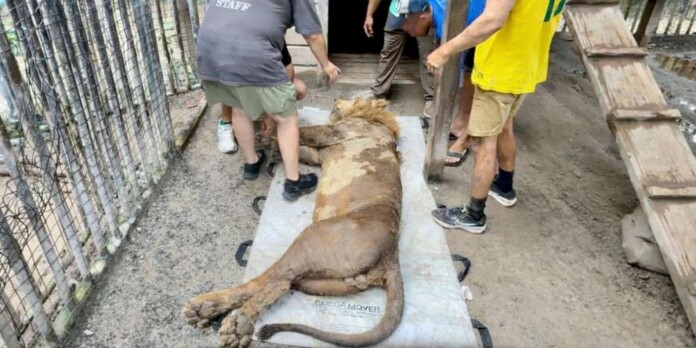
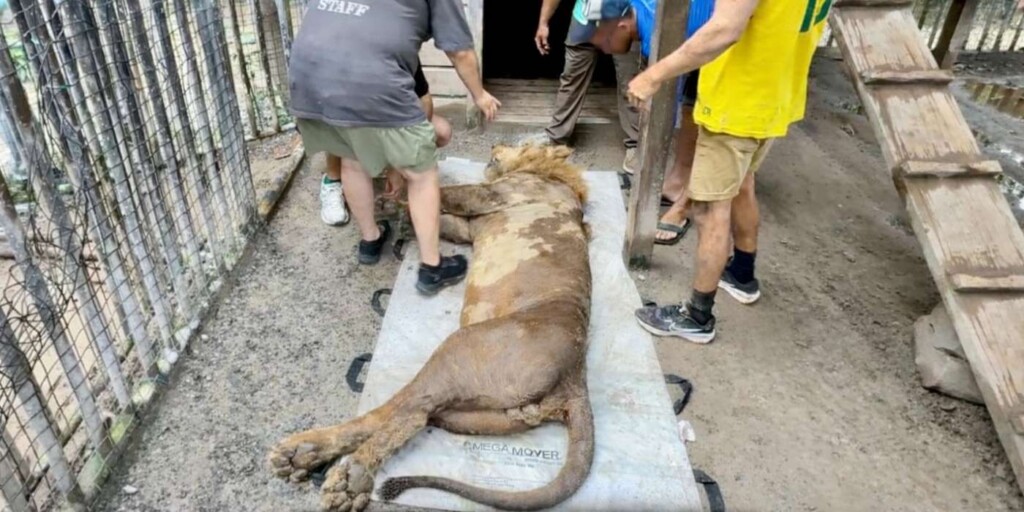
Cyrus the lion in preparation for transport - credit, Turpentine Creek Wildlife Refuge
Cyrus the lion in preparation for transport – credit, Turpentine Creek Wildlife Refuge
For the first time in Honduras’ history, eight large felines were relocated from the country to accredited wildlife sanctuaries in the United States.
As part of this historic operation, 5 tigers were transferred to Carolina Tiger Rescue, while 3 lions were entrusted to an Arkansas wildlife refuge, where they will begin the next chapter of their lives in permanent sanctuary.
Spanning multiple countries and modes of transport, the trio of lions were carried by ship, then by air, and finally across American highways, all under careful oversight and in full compliance with international and US regulations.
They had for years been cared for by a well-trained team at Little French Key Island in the Honduran Caribbean, and arrived at Turpentine Creek Wildlife Sanctuary (TCWS) on January 15th.
The lions, named Cyrus, Zephora, and Juancito, were transitioned into spacious, species-appropriate habitats designed specifically to meet their physical, behavioral, and psychological needs. These custom environments reflect TCWR’s long-standing commitment to providing rescued big cats with dignity, expert care, and lifelong protection, a spokesman for the refuge said.
“This mission represents everything sanctuary work stands for: international cooperation, compassion, and a future where rescued animals are given the lives they deserve,” said Scott Smith, TCWR vice-president who participated in the rescue. “After an unbelievable journey, these lions are finally home.”
This historic rescue was made possible through the leadership and long-term commitment of Leo Lahijani of Little French Key Resort, whose dedication to securing a better future for the animals in his care has been instrumental in moving the initiative forward.
“This rescue has been years in the making, driven by a deep responsibility to secure the best possible future for these animals,” said Mr. Lahijani.
“From the beginning, our focus was on improving outcomes and finding partners with the experience and integrity to provide lifelong care. Working alongside Turpentine Creek Wildlife Refuge and Carolina Tiger Rescue made it possible to move forward with confidence, knowing the lions and tigers would be placed in sanctuaries where their well-being, dignity, and long-term care come first.”
The relocation was carried out in collaboration with Honduran environmental authorities and international partners, including the Honduran Institute of Forest Conservation (ICF), CITES, veterinary professionals, and logistics teams who ensured the animals’ safety every step of the way.
Environmental officials in Honduras have described the operation as a national milestone, setting a precedent for responsible wildlife management and reinforcing the country’s commitment to conservation and the fight against illegal wildlife trade.
For Cyrus, Zephora, and Juancito, the result is simple and profound: safety, space, and a lifetime of care.
SHARE These Lions’ Long And Harrowing Journey To Arrive At Their New Home…
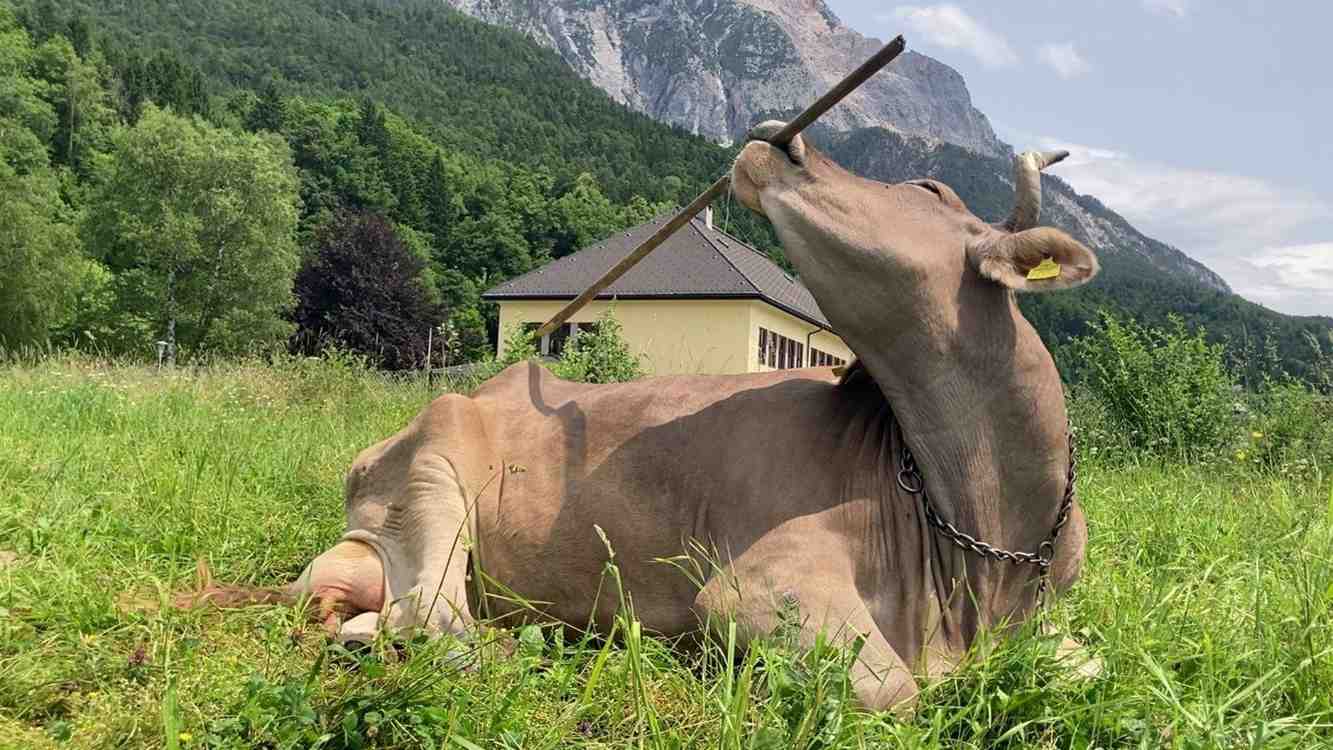
Veronika using a stick - credit - Antonio J. Osuna Mascaró / SWNS
Veronika using her brush tool – credit – Antonio J. Osuna Mascaró SWNS
A clever cow called Veronika is the first ever to be recorded using tools—a brush or stick to scratch her back.
The old Swiss Brown cow has astonished scientists in Austria with her broom, which she uses as a multi-purpose tool, an “extraordinarily” rare ability that outside of humans has only previously been documented convincingly in chimpanzees.
Veronika is not farmed for meat or milk but has been kept as a companion by organic farmer and baker Witgar Wiegele, who regards her as part of the family. He noticed over a decade ago that Veronika would occasionally pick up sticks and use them to scratch herself.
The behavior first came to scientific attention when it was recorded on video and shared with cognitive biologist Professor Alice Auersperg.
Dr. Auersperg has now conducted a study, published in the journal Current Biology, which is the first to describe tool-use in a cow.
“The findings highlight how assumptions about livestock intelligence may reflect gaps in observation rather than genuine cognitive limits.”
“When I saw the footage, it was immediately clear that this was not accidental. This was a meaningful example of tool use in a species that is rarely considered from a cognitive perspective,” she said.
Auersperg and her colleague Dr. Antonio Osuna-Mascaró went to meet Veronika and conduct systematic 70 tests. In a series of controlled trials, they presented a deck brush on the ground in a random orientation.
The researchers recorded which end Veronika selected and which body region she targeted. Across repeated sessions, they found that her choices were “consistent and functionally appropriate” for the body regions she targeted.
– credit Antonio J. Osuna Mascaró / SWNS
“Veronika uses each part of the broom in a different way,” said Dr. Osuna-Mascaró, “and she applies different techniques depending on the function of the tool and the body region.”
The researchers found that Veronika usually prefers the bristled end of a deck brush when scratching broad, firm areas such as her back. But when targeting softer and more sensitive regions of her lower body, she switches to the smooth stick end.
Further still, Veronika also adjusts how she handles the tool, and will change her method of use, not just the end of the brush, depending on her aim. Upper-body scratching involves wide, forceful movements, while her lower-body scratching is slower, more careful, and highly controlled, with occasionally precise whacks.
Tool-use is defined as the manipulation of an external object to achieve a goal through mechanical means. The Austrian research team found that Veronika’s behavior meets the definition and goes a step further, describing it as flexible, multi-purpose tool use, meaning that different features of the same object are used to achieve distinct functional outcomes.
“Because she is using the tool on her own body, this represents an egocentric form of tool use, which is generally considered less complex than tool use directed at external objects,” said Dr. Osuna-Mascaró, getting into the nitty-gritty. “At the same time, she faces clear physical constraints, as she must manipulate tools with her mouth.”
“What is striking is how she compensates for these limitations, anticipating the outcome of her actions and adjusting her grip and movements accordingly.”
He said the findings represent the first documented case of tool use in cattle and the first evidence of flexible, multi-purpose tool use in the species, something that expands the taxonomic range of animals known to possess this capacity.
The researchers note that Veronika’s life circumstances may have played an important role in the emergence of her behavior. Most cows do not reach her age, do not live in open and complex environments, and are rarely given the opportunity to interact with a variety of manipulable objects.
Her long lifespan, daily contact with humans, and access to a rich physical landscape likely created favorable conditions for “exploratory and innovative” behavior, according to the researchers.
The research team is now interested in understanding which environmental and social conditions allow such behaviors to emerge in livestock species, and how many similar cases may have gone unnoticed simply because no one was looking for them.
“Because we suspect this ability may be more widespread than currently documented, we invite readers who have observed cows or bulls using sticks or other handheld objects for purposeful actions to contact us,” said the authors.
WATCH the story below, well narrated by Dr. Osuna-Mascaró…
SHARE This Incredible Animal, And The Discovery She’s Given Us…
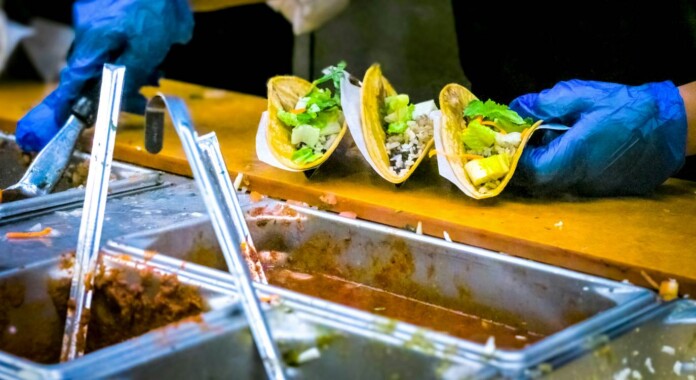
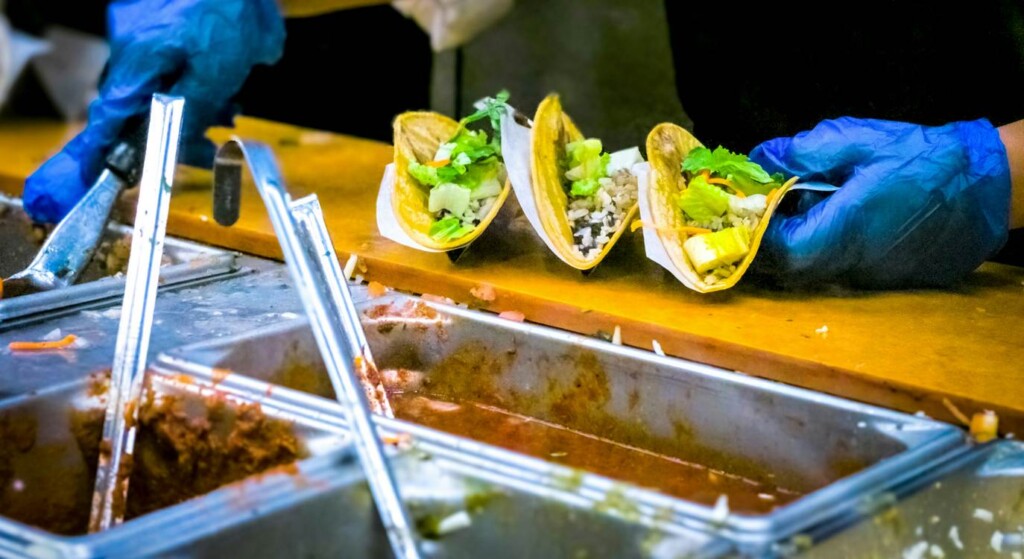
Whether you’re a student, an administrator, a farmer—or the journalists getting their teeth into the story of Kentucky schools’ movement to buy and serve local produce, the consensus is clear: the fajitas are great.
At Boyle County High School, locally-raised beef marinated in cumin is heaped onto corn tortillas with queso, guacamole, sharp red tomatoes, and vibrant lettuce.
It’s just one of many meals the teens at Boyle get to enjoy, and a far cry from the days of fruit cups, pan pizza, and skim milk, days which everyone involved are happy to see gone.
According to Lex 18 News, some 150 Kentucky farms sell their produce to around 90 state school districts thanks to a pandemic-era grant that supplied the state with $3.2 million for the purpose.
It’s clear from the attitude of Boyle County School District Food Service Director Cheyenne Barsotti that the move-to-local has affected far more than just the hungry teens’ excitement for lunch hour: it’s changed the whole way the school approaches food.
Barsotti’s cafeteria staff may just cook from scratch at times depending on what produce is available. As the kids devour and delight, trust in the kitchen increases, and the cooks feel safe trying out new recipes.
Several students told the NBC-affiliate that the fajitas were a 9.5 out of 10.
“I love it because I know that means they’re enjoying it,” Barsotti said. “We do prioritize those center-of-the-plate items, so items like beef that are going to feature as an entree, as a director, I prioritize that because I know the quality is noticeable when you buy the local product, and I think our kids notice that as well.”
Under the new direction of American health policy, the USDA Dietary Guidelines have featured, for the first time in their history, a focus on protein over carbs—and real food, that is to say, food which spoils and doesn’t come out of a box, over all others.
That in turn is reflected not only in the food purchased at schools like Boyle, but in the farmers who are signing up to supply them.
Circle G Farms, a diversified agricultural operation just 7 miles from Boyle, pasture raises cattle on feed grown on the farm, the manure from which fertilizes the entire operation.
“That’s the origin of Circle G Farms,” explained co-owner and operator Carly Guinn. “We try to utilize every division of our farm to its highest potential and keep it sustainable.”
Circle G has now been selling to schools like Boyle for several years, and even though that grant money has been halted, the program has enlivened so many that school districts are trying to maintain the new direction, the new attitudes, and the new menus, as much as possible.
WATCH the story below from LEX 18’s ‘Field Notes’ segment…
SHARE This Story With Those You Know Who Rage Against School Meals…
A plant-lover who snapped a photo of an interesting shrub he found on a trip to the Outback inadvertently proved that it wasn’t, in fact, extinct, something which scientists had presumed.
With 60 years having passed without a confirmed sighting of the plant, it was chalked up as a casualty.
It’s becoming more and more clear within university ecology departments that the citizen science platform iNaturalist can act as a catalyst for major new discoveries, and that it, and other platforms like it, are actually becoming crucial to the work of scientists.
To people like Thomas Mesaglio, a botanist at the Queensland Herbarium, who, constrained by the vastness and diversity of a place as big as Australia, can’t be everywhere at once, the platform allows diligent hikers and nature lovers to act as his eyes and ears.
Aaron Bean was just such a nature lover: banding birds on a sprawling outback station in a remote corner of northern Queensland. In the course of his work, he spotted a plant that looked interesting.
A professional horticulturalist, Aaron snapped a couple of photos and, when he got back phone reception, uploaded his finding to the vast citizen scientist database, iNaturalist.
Four million people across the globe have logged almost 300 million observations of more than five hundred thousand species to iNaturalist, making it one of the largest citizen science platforms in the world.
Once online, Aaron’s pictures found their way to a different Bean, Anthony Bean, an expert botanist from the Queensland Herbarium who immediately recognized the plant as something very special indeed: a presumed extinct plant not seen since the 1960s that he had described himself ten years earlier.
“It was very serendipitous,” says Mesaglio from the UNSW School of Biological, Earth and Environmental Sciences, who has written about the rediscovery for the Australian Journal of Botany.
“Aaron Bean is an avid iNaturalist user who opportunistically took some photos of a few plants that were interesting on the property.”
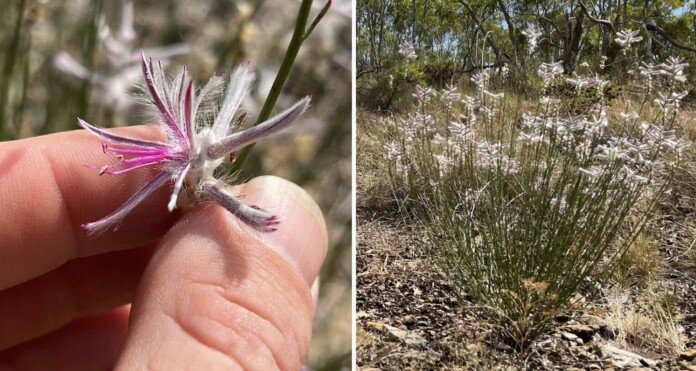
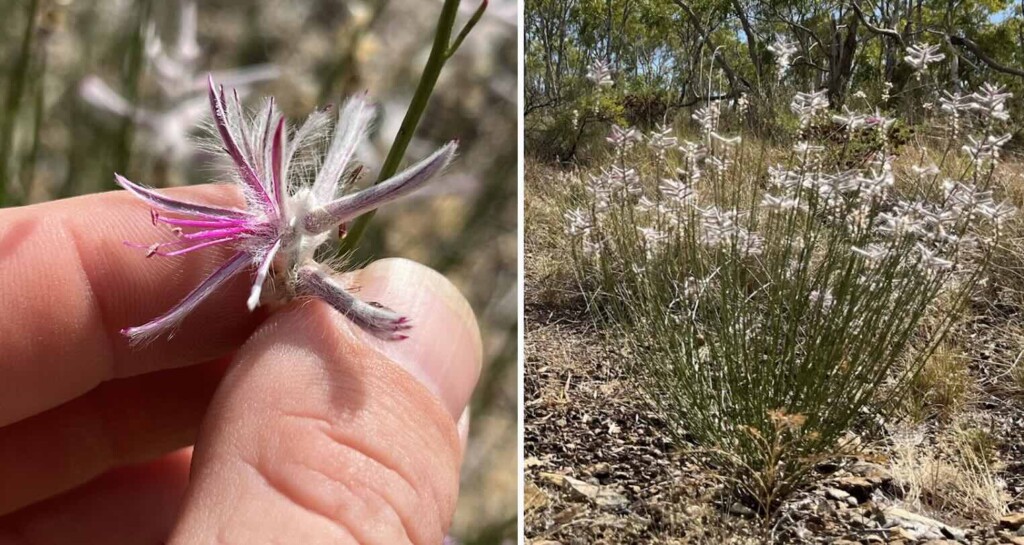
Ptilotus senarius is a small, slender shrub with pleasing purple-pink flowers that look a bit like an exploding firework with feathers.
It’s found only in a band of rough country near the Gulf of Carpentaria, and hadn’t been collected since 1967—presumed to be one of the 900 or so plant species that have gone extinct in the wild internationally since the 1750s.
But with Anthony and Aaron Beans’s keen eyes, and a land-owner willing to gather a specimen, Ptilotus senarius is now confirmed to still be hanging on, and actually recently moved onto the critically endangered species list where scientists and conservationists can help it.
“It’s one of these situations where everything had to fall into place and there was a bit of good fortune involved,” says Mesaglio.
It’s just the latest example of an emerging trend: citizen scientists taking pictures of plants and animals they come across, uploading them to databases like iNaturalist, only to learn they’ve stumbled upon something we thought was lost, or else is completely new to science.
Freehold land covers around a third of the Australian continent, and requires permission to legally cross.
“If you are the property owner or you’re someone who has permission from the owner to be there then suddenly it opens up this whole new world,” Mesaglio, who said he thinks it would be a good idea for these platforms to include professional instructions on how make a proper science-based observation.
For example, in New South Wales, the Land Libraries project run by the state government’s Biodiversity Conservation Trust provides equipment and training to landowners in how to document the biodiversity on their properties and upload it to citizen science platforms.
Mesaglio is supportive of these program and wants to see them expanded not just because it gives him digital access behind the fences of private properties, but because more people using these tools has a conservation benefit in and of itself.
“Engaging landholders themselves with science and the natural world and getting them more passionate about diversity makes them far more likely to be interested and invested in protecting that diversity,” Mesaglio says.
Even attributes like plant smell can give scientists vital clues about a plant’s identity, Mesaglio says.
“The more information you can provide and the more context you can provide, the more potential uses that that record will have in the future.”
In separate research, Mesaglio found iNaturalist had been cited in papers covering 128 countries and thousands of species, underscoring how important the resource has become.
With more finds uploaded every day, and the quality of the data improving, Mesaglio knows there are even more discoveries waiting to be found.
SHARE This Story Of A Committed Naturalist Helping Science Without Knowing It..
And Happy Birthday to the smart, and sporty actress Geena Davis, who turns 70 today. The actress, most known for her role in Thelma and Louise and A League of Their Own, won an Academy Award for Best Supporting Actress for The Accidental Tourist in 1988. The Mensa member who has campaigned for more and better women’s roles in children’s programming also fronts the Women’s Sports Foundation. Davis was one of 300 women who vied for a semifinals berth in the US Olympic archery team and placed 24th just two years after being introduced to the sport. In 2007 she was honored for much of this work in the media, receiving the Hollywood Hero award – WATCH that video, here. (1956)
Quote of the Day: “Things are not quite so simple always as black and white.” – Doris Lessing
Image by: Getty Images for Unsplash+
With a new inspirational quote every day, atop the perfect photo—collected and archived on our Quote of the Day page—why not bookmark GNN.org for a daily uplift?
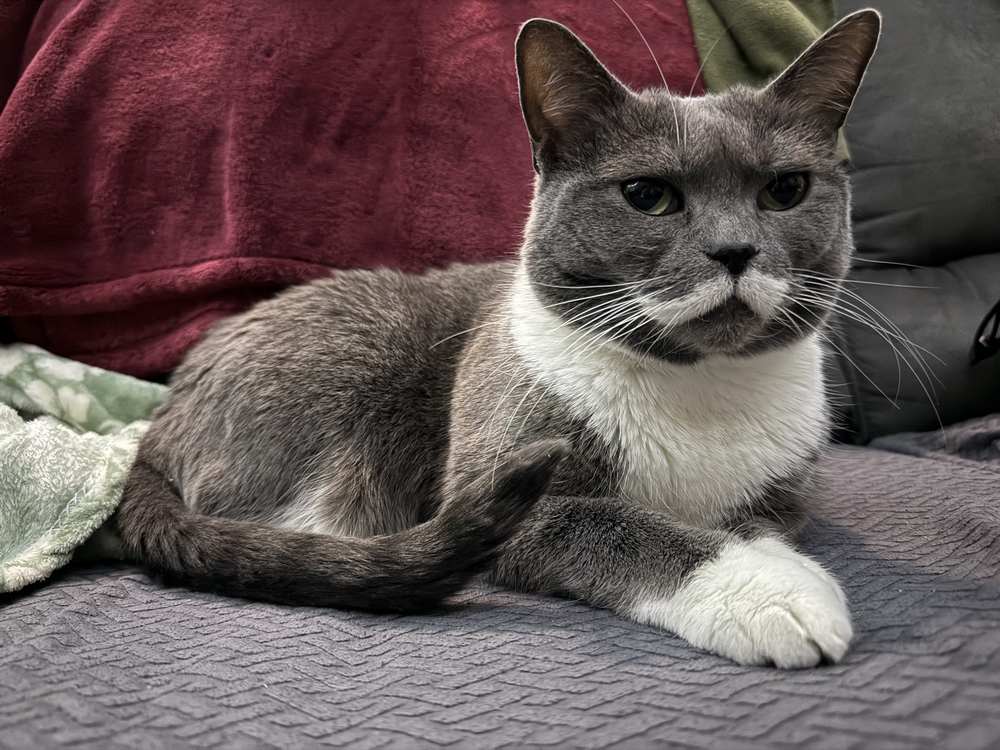
4 years after losing a beloved cat named Tinsel, a stroke of fortune found her reunited with owner Maggie DeGreenia whose cousin saw her on a local shelter’s website.
Tinsel disappeared in December, 2021, leading to weeks of searching, posting on Facebook groups, contacting shelters, and putting up missing posters.
But despite all her efforts, DeGreenia eventually had to accept her beloved pet was gone.
The 27-year-old Vermonter had lived with Tinsel since 2017, when she adopted her at a Lunenburg shelter. 4 years later, Tinsel accidentally got let out of DeGreenia’s house and vanished.
“We called local shelters for weeks, searched for her by car and by foot,” said DeGreenia, who admitted she eventually gave up, and merely hoped her baby would find a new, loving home.
Then one day, DeGreenia received a text from her cousin saying that she had seen Tinsel with her instantly-recognizable ‘moustache’ on a local shelter page.
– credit Maggie DeGreenia SWNS
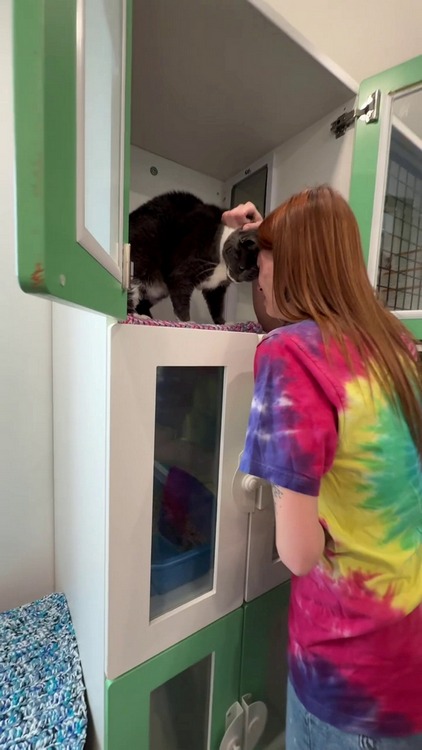
“She texted me ‘Hey important, I think I found Tinsel,” she told SWNS. “I was in disbelief when I saw the photo and immediately broke down in tears. I called the shelter, Riverside Rescue, as fast as I could, still in tears as I told them our story.”
Tinsel immediately recognized her owner during the shelter reunion, pressing her forehead against Maggie’s in a touching display of affection that she said “was the most incredible feeling.”
According to the shelter, Tinsel had been picked up by people who looked after her until December, then surrendered her.
SHARE This Woman’s Tear-Jerking Reunion And Tinsel’s Funny Moustache…
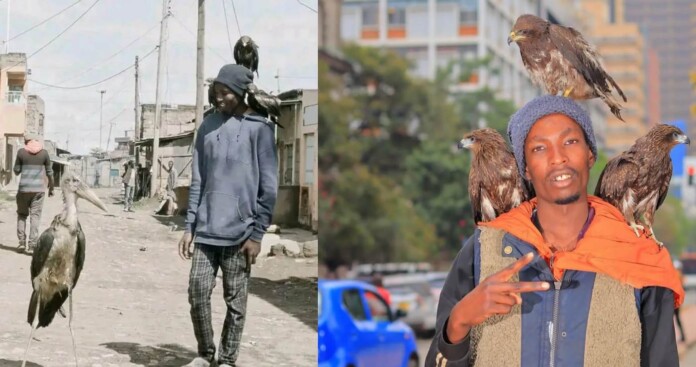
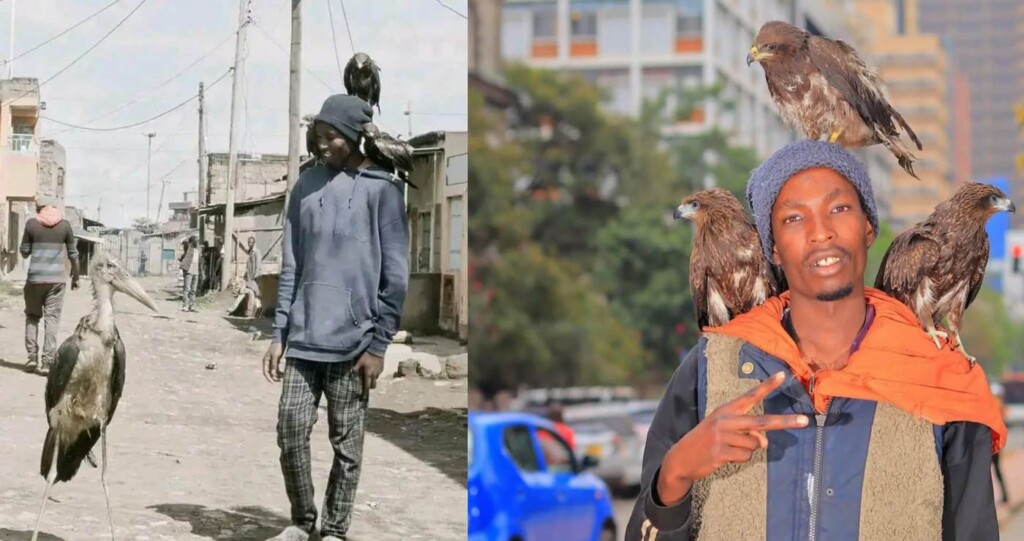
The “Nairobi Birdman” is filling gaps in Kenyan bird conservation on the streets of the country’s biggest city.
Seen around town with an injured kite perched on his head, it’s just one of dozens that Rodgers Oloo Magutha has nursed back to health.
These have included pigeons, storks, owls, and other wild birds that fall a-fowl of Nairobi’s powerlines, cars, windows, or other hazards that industrialized areas pose to winged wildlife.
Magutha himself is not from Nairobi, but grew up in poverty next to Kenya’s Lake Nakuru National Park. A haven for bird life, Magutha used to sneak into the park to watch birds, birthing a love of nature and wildlife in the young man that lasts to this day.
These quiet moments were rare in his difficult, homeless existence. He grew up without a family home, but as often as it was possible, he’d take care of birds he found that were hurt, hungry, or diseased.
“We used to stay with the birds on the streets,” Magutha told Africa News. “You see, I cannot put more than ten different species of birds in one place, so if I can find a place, where I can open a shelter, it can be very good because I will end up rescuing more birds and my dream and my passion will grow.”
Today, Magutha has reliable lodgings, and he’s used them to house birds which have in turn made him a local social media figure, known as the Nairobi Birdman. His Instagram account has a distinctly African flavor, such as when he’s dancing with a marabou stork, but he also drops educational bombs for young fans, such as how flamingos get their pink coloration.
His dream is to eventually open a proper avian rescue center; one that’s legal, safe, and equipped with the facilities needed to care for them.
Until then, he carries on with the help of donations, feeding the birds he saves as much as he is able to, and releasing them when or if they’re able to return to the wild.
WATCH the story below from Africa News…
SHARE This Man’s Passion For Birds With Your Friends On Social Media…
Iraqi Boys – Credit: Christian Briggs (CC license)
Iraqi Boys – Credit: Christian Briggs (CC license)
Iraq is steaming forward with its development after years of strife and war.
Just recently, the long-running UN Assistance Mission for Iraq ended its mandate after 22 years, and the UN’s humanitarian coordinator for the country told journalists that the country has transformed itself.
“For those who lived through the troubled early years of the transition, today Iraq is unrecognizable and remarkable,” the coordinator, Ghulam Isaczai, said in New York City.
Even before the American invasion and occupation, the subsequent chaos of the insurgent resistance, and the pillaging of ISIS, the Iraqi people had suffered a decade of crippling sanctions. Before that, Saddam Hussein’s decision to invade neighboring Kuwait over a slant-drilling violation saw the country endure wartime conditions again, having then only lately ended them after the debilitating 8 years of the Iran-Iraq War, which started a decade before the sanctions.
It’s fair enough to say that few alive today will remember a time when Iraq was prosperous and at peace.
Now, the nation’s poverty rate has fallen around 3% in the last 7 years, while more than 5 million internal refugees have returned to their homes now that security in most of the country has stabilized.
Iraq has enjoyed an upward trajectory on the UN’s Human Development Index, and in 2023 had a score of 6.95 out of 10, with a 72-year life expectancy at birth, and 12 expected years of schooling per child.
Recent elections saw voter turnout reach 56% and one-third of the parliamentary candidates were women.
Perhaps the most symbolically impressive of all these improvements is the sheer fact that as the UN Assistance Mission evolves into a 5-year UN Development Project partnership, Iraq will be the donor, rather than the aid recipient.
“That shows increasing partnership and ownership by the Government of Iraq to become a donor after being a recipient for many years of humanitarian and development aid,” said Mr. Isaczai.