Langton Hughes, whose book Not Without Laughter, entered the public domain on Jan 1st 2026
Langton Hughes, whose book Not Without Laughter, entered the public domain on Jan 1st 2026
January 1st isn’t just New Years Day; there’s another little holiday wrapped up inside.
It’s Public Domain Day: the moment when a year’s worth of literature, music, film, television, pop culture, poetry, and science enters the public domain and becomes free to use, reprint, and alter.
According to Standard eBooks, the public domain concept stretches back to the founding of our country, with the Framers desiring a loose and restricted intellectual property law in order to promote the advance of sciences and the arts.
As the United States began its march through the centuries, the period of intellectual copyright was elongated continuously through lobbying of businesses looking use the levers of power to stifle competition and thus innovation.
This process continued until it took 95 years for material to enter the public domain.
“2019 was the year in which new works were finally scheduled to enter the public domain,” Standard eBooks wrote. “And as that year drew closer, it became clear that these corporations wouldn’t try to extend copyright yet again—making it the first year in almost a hundred years in which a significant amount of art and literature once again entered the US public domain.”
This year it means anything published in 1930 will enter the public domain, which includes books by Franz Kafka, Langston Hughes, Jim Corbett, and Agatha Christie. It includes works like As I Lay Dying, How to Make Friends and Influence People, Vile Bodies, Ash Wednesday, and 4 Nancy Drew entries. They are available for free on Standard eBooks.
Beyond literature, according Public Domain Review, the papers of Albert Einstein, the 1930 film All Quiet on the Western Front, the discography of Charlie Parker, images and reproductions of works by the artist Barbara Hepworth, and the photographs of journalist Walker Evans, will all enter the public domain.
This is because the US, and many, many other countries including Russia and the UK, have a “life plus 70 years rule” which allows for copyright to last the duration of the holder’s life, plus 70 years beyond.
That means anyone who died in 1955 will see their copyright expire and their works enter the public domain.
CELEBRATE Public Domain Day By Picking Up A Free eBook Of These Authors…
Quote of the Day: “We must risk delight. We can do without pleasure but not delight.” – Jack Gilbert, poet
Image by: Alexander Dummer
With a new inspirational quote every day, atop the perfect photo—collected and archived on our Quote of the Day page—why not bookmark GNN.org for a daily uplift?
The American hostages return home from Iran on a 3-137 - public domain
45 years ago today, the newly-formed revolutionary government of Iran released all 52 American hostages to US personnel, just minutes after Ronald Reagan was sworn in as president. They were flown by an Algerian airliner to Algiers where they were formally transferred to Warren M. Christopher, the representative of the United States, as a symbolic gesture of appreciation for the Algerian government’s help in resolving the crisis. READ more about the crisis’ resolution… (1981)
In Toronto, one man and his glasses are making the city a friendlier place by wishing people a great week, or even just outrightly declaring to whoever he sees that they make the world a better place.
Minjae Cho is once just like thousands of other Torontonians: he took the bus and the subway, went to work, and was lonely.
Now, he’s one-in-a-million: a full-time influencer who’s received praise from the mayor, the head of the Toronto Transport Corp. (TTC), and has 36k Instagram followers. His methods are simple: being courageous in his kindness, wishing people well, spreading amiability, and brightening up Toronto one bus ride at a time.
“It started at a time when I was in a lonely disconnected part of my life where I wasn’t seeing that many people. I wanted to push myself to show up more openly in everyday life with social interactions, and to rebuild my social confidence,” Cho told CTV News Toronto.
“What I’m doing is harmless… I’m just saying, ‘Have a nice day.’ I’m not pranking people. Most people see my effort and my courage and respond positively.”
He captures all his interactions with Meta glasses—less intrusive than a phone camera—which often end in smiles, laughs, even hugs; even tears. He’s been told his outreach has helped people get through tough times, or even avoid making life-changing decisions for the worse.
The TTC drivers recognize him and are happy to have him on board.
“Everyone could use a little more joy in their life, including on their commute, and these posts certainly convey that sentiment,” TTC CEO Mandeep Lali said in a statement.
The videos on his Instagram account, under the handle Magnetic MJ, are introspectively interesting. You can so clearly taste the tension at times in the air when Cho is wishing someone a good day who seems reluctant to look up from their phone and acknowledge his existence. You almost feel relieved when they do look up, shake his hand and smile, and you get the feeling that if that very person were watching a video of Cho talking to someone else, they’d get the same feeling.
Mayor Olivia Chow felt that Cho is doing the work of thousands, saying when asked about his videos that if everyone did what he does to just one person, on one bus ride, once a week, the city would feel a lot more like a neighborhood.
The Changzhou Mummy in situ, provided as a courtesy of Wen Shaoqing to the Global Times
The Changzhou Mummy in situ, provided as a courtesy of Wen Shaoqing to the Global Times
A team of Chinese scientists recently conducted a DNA analysis and autopsy of a 13th century Song Dynasty nobleman who was embalmed not unlike an ancient Egyptian.
The quality of the preservation was such that, if the reader can bear the thought, his mortal remains emitted a pleasant fragrance 800 years after his entombment.
But getting up close and personal with the BO of a medieval Chinese nobleman was hardly the aim of the research team from Fudan University’s Human Phenome Institute. Rather the “paleo-radiological, paleo-pathological, paleo-genetic, and paleo-nutritional analysis” was done to get a clear picture of this man’s genetic profile, as well as his diet, cause of death, and more.
The other, anthropological work, was examining the mummification methods used to preserve the man, as he is known as the Changzhou Mummy, and is one of the most famous ever found in the country.
Whether in neolithic Peru, ancient Egypt, classical Greece, medieval Europe, or China at any point in history, those whose wealth afforded them the opportunity were often embalmed or mummified at passing.
From the bitumen-soaked linen wraps and canopic jars of Egyptian pharaohs, to Alexander of Macedon’s supposed suspension in honey, methods have varied over the years.
Born in the Song Dynasty, a shorter, yet ostensibly prosperous period in Chinese history, the Changzhou Mummy’s organs were left in situ, but were filled with mercury and cinnabar, as well as fragrant oils derived from frankincense, ambergris, and agarwood.
Even 800 years after his death, these were still the defining scents of his remains.
“We have found that mercury and cinnabar were directly introduced into the intestinal cavity of the corpse through an enema,” said Wang Bangyan, a postdoctoral researcher at the Human Phenome Institute.
This was, according to Wang, a distinctly Asian take on embalming methods. By the time of the Song Dynasty (CE 960 to 1279) the overland trade routes known as the Silk Roads had become the lesser of the two major Old World trade arteries. The Maritime Silk Road, which attached the Indo-Pacific and Australasia to the Arab-dominated west, allowed for much larger cargoes, faster transit, and greater profits.
It also introduced much of the world to the spices native to countries like Sri Lanka and Indonesia, including those which were used in the embalming of the Changzhou Mummy.
Further analysis into the man found that he carried much of the dietary and hereditary risk factors for modern-day atherosclerosis, and in the paper published in the aftermath of the mummy’s examination, the authors explained that this runs contrary to the idea of atherosclerosis as an Industrial-era disease.
“Uncovering unrecognized genetic polymorphisms of [atherosclerosis] among ancient individuals, improves our understanding of the role of genetic factors in the development and evolution of atherosclerosis,” the authors write.
Along with this, the examination provided some of the best information about how mummification was done in China. Many previous mummies have been found, but mostly in the soil of the North China Plain, the humidity within which has a disagreeable affect on the medieval Chinese embalmer’s’ good work.
SHARE The Wealth Of Information From This Once-Of-A-Kind Discovery…
You won’t find a more literate bunch of 4th graders anywhere in the nation than if you go and stand in a Mississippi elementary school.
Over the last few years, the Magnolia state has risen from 49th in the country for 4th grade reading level to number 1 in both reading and math at the 4th grade level after adjusting for poverty and other socio-economic factors.
The state’s 4th graders “exceeded the national reading average” for the first time in 2024, according to the International Business Times, while its 8th graders are ranked in the top 10 for reading and math, and the total educational attainment averaged across all grades ranks 16th in the country, the highest rank Mississippi has ever achieved.
Proving that method can trump money, the southern state has achieved all this despite being one of the very poorest in the country with some of the lowest per-student education budgets.
In a review from The Week, the triumph seems to be rooted in two strong policy shifts: holding individual schools accountable for student performance, and changing how reading is taught in school.
Regarding the former, it’s something many more affluent states have shied away from: giving schools an A through F grade just like the school might give its students based on how well the students therein are performing.
Regarding the latter, the key shift is towards mandating a style of literacy education that reflects advancements in the understanding of childhood neurosciences, specifically regarding phonics.
The previous, and still largely popular literacy instruction method was called “balanced literacy” involves allowing the child the freedom to gravitate toward reading books they’re interested in. Mississippi’s “science of reading” method involves pairing reading time with precise and targeted instruction regarding the sounds that letter combinations make in the English language.
Science of reading proponents state that without these precise instructions, children may struggle to grasp certain phonics, which in turn slows their reading speed and frustrates them overall in trying to get through and finish books.
Additionally, Mississippi educational authorities have made science of reading-based instruction a non-negotiable aspect of curriculum planning, and appoint literacy and math coaches to help teachers hone their skills and address challenges related to specific circumstances.
These 3 changes have revolutionized Mississippi’s childhood education, even without more money being spent.
One of the many benefits of living in a federalized country is that, because each state has strong jurisdiction and legislative control over internal affairs, each state is free to try new ideas which will bring success, failure, or indifference that can help inform other states in deciding their own policies.
Mississippi’s educational transformation may come to prove just as valuable to the students in other states as it obviously has to the students within its own schools.
SHARE This Incredible Reversal Of Fortunes In Teaching Children To Read…
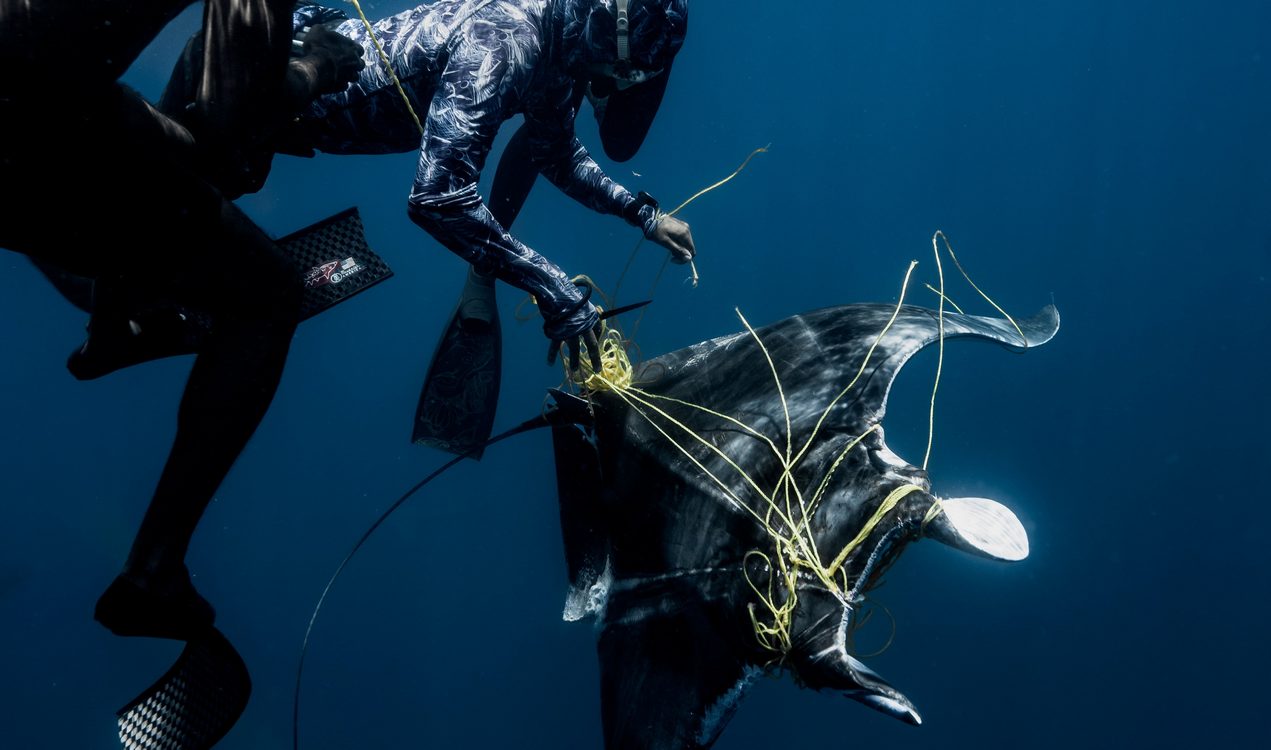
Underwater photographers and free divers recently rescued a mobula ray tangled in a rope while being circled by sharks.
After swimming away, the injured ray unexpectedly returned, circling the divers in what they described as a “thank you” moment.
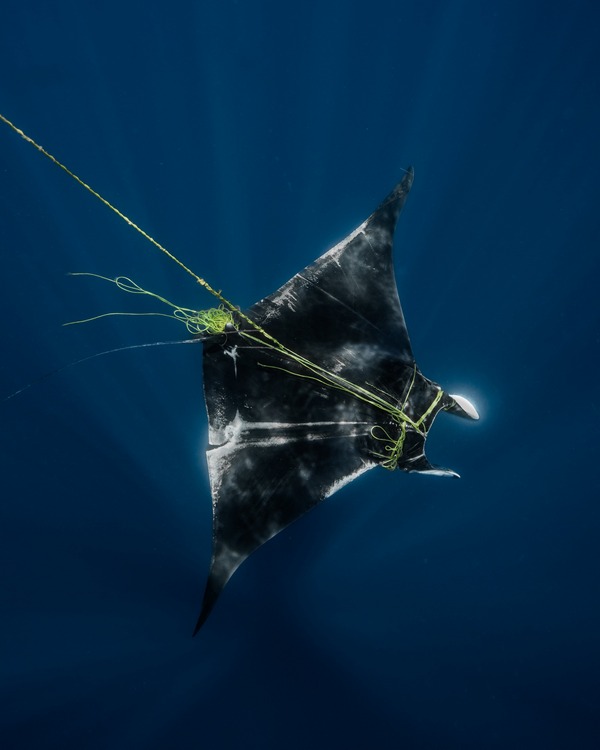
The mobula ray was trapped more than 30 feet below the surface, completely wrapped in rope from a shark fisherman’s buoy.
Mobulae, also known as flying rays, devil rays, or eagle rays, are smaller than their cousins the giant manta rays, and also far more diverse, with around 12 different extant species and several extinct ones.
Working in shifts, the team carefully cut away the line and freed the distressed animal while documenting the entire rescue off Baja California, Mexico.
Underwater photographer Andre Smits was part of the ocean safari group who spotted the ray and helped with the rescue.
“We went to one of the shark fishermen’s buoys because we didn’t find any wildlife to interact with that day,” Smits told England’s Southwest News Service. “Our guide jumped in to check the line, popped his head up right away, and said, ‘guys, I need your help. There’s something stuck in the line.'”
credit – Andre Smits, via SWNS
The rescue required careful coordination among seven divers, not helped by the three, 8-foot-long silky sharks circling the action not far from them.
A free-diving trainer that was part of the group descended to cut the rope below the ray, allowing the team to pull the animal closer to the surface.
“It was completely entangled. The rope was going around almost every part of the ray,” Smits, based in Eindhoven, Netherlands, said. “The animal was in freak mode, starting to swim around to try to get free, but then it understood that it was stuck.”
The team worked together to hold the distressed ray while carefully cutting away the entangling rope with knives, a key piece in every diver’s toolkit.
Smits explained that the buoy line, being artificial material, could be like a knife in its own right if one of their team was holding too tightly at the moment the animal tried to flee. With the sharks in their periphery, blood in the water was the last thing any of them wanted, which meant that their rescue efforts had to take place extremely carefully.
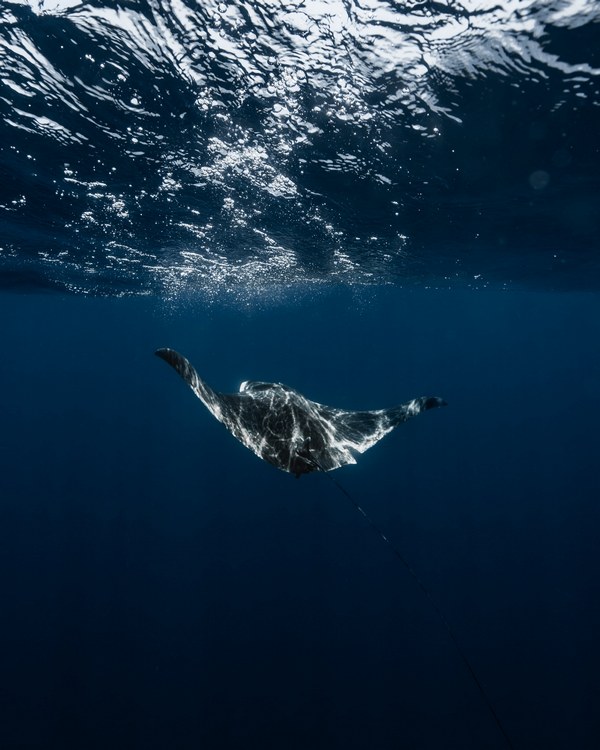
The ray was injured but survived.
credit – Andre Smits, via SWNS
“The beautiful thing was we cut her free, we released her, and she swam away about 30 meters and then it felt like she decided to come back,” Smits said.
“She really swam back to us and did a ‘thank you’ circle. She came right between us to our faces, almost giving us a grateful hug.”
SHARE This Close Encounter With Such Beautiful Ocean Life…
Quote of the Day: “He is richest who is content with the least (as nature is content with its wealth).” – Socrates
Image by: Gary Fultz
With a new inspirational quote every day, atop the perfect photo—collected and archived on our Quote of the Day page—why not bookmark GNN.org for a daily uplift?
Interior of the Church of San Agustin, Manila - CC 4.0. BY-SA Diego Delso
419 years ago today, the church of San Agustin in Manila was completed. The seat of the archdiocese of the city, it is the oldest house of worship still standing in the country, and together with four others from the Spanish colonial period, has been inscribed on the UNESCO World Heritage Site list. Surviving independence and WWII, San Agustin is patterned after some of the magnificent temples built by the Augustinians in Mexico. READ more about this famous house… (1607)
A 66-year-old man who had been missing in the rugged backcountry of New Zealand for over two weeks has now been found, even though rescue officials called off the search three days ago.
Graham Garnett was discovered alive yesterday sheltering in a hut in the Kahurangi National Park by a crew of contractors who were working in the area.
He’d gone hiking in the Baton/Ellis River area of the park and did not return as expected on December 30.
An operation got underway involving Land Search and Rescue New Zealand and specialist teams from the New Zealand Defense Force, the Rescue Coordination Centre, along with many volunteers and supporters. But no progress was made.
On January 15, the operations team made the difficult decision to call off the search, until any new information might came to light.
“This is an amazing result,” said a statement by the Nelson, Marlborough, West Coast Police. “We are so pleased for Graham and his loved ones.”
Kahurangi National Park on the South Island of New Zealand covers 2,005 square-miles (5,193 km2) of mountains, rivers, gorges.
Goodfellow’s tree kangaroo joey - SWNS / Chester Zoo
Goodfellow’s tree kangaroo joey – SWNS / Chester Zoo
Amazing “pouch cam” images provide a rare glimpse into the hidden world of an endangered baby kangaroo after he was born the size of a jellybean at a UK zoo.
Experts say the special arrival marks a major conservation milestone for one of the world’s most threatened marsupials—the endangered Goodfellow’s tree kangaroo.
Keepers at the Chester Zoo monitored the pouch-cam between October and December watching the joey’s development inside the kangaroo’s pouch, allowing them to identify it as a healthy male.
The joey arrived to its parents Kitawa and Kayjo, thanks to an international conservation breeding program aimed at ensuring the future survival of the species.
The zoo says the pouch footage (which may be too graphic for some) and the team’s findings are expected to provide valuable insight for similar initiatives worldwide.
“When people think of kangaroos, they rarely imagine small, fluffy animals living high in the treetops,” said Matthew Lloyd, the tree kangaroo expert at the zoo.
“With so little known about tree kangaroos, Kitawa’s joey is a particularly special arrival, and represents a major step forward in understanding and protecting this remarkable species.”
Goodfellow’s tree kangaroo with baby joey – SWNS / Chester Zoo
“Being able to carefully track this joey’s development inside the pouch using tiny cameras wasn’t possible only a few years ago, and it’s already helped us learn more crucial information about the early stages of life inside the pouch—knowledge that can now support, and hopefully speed up, our conservation breeding efforts globally.”
Baby Goodfellow’s tree kangaroo via pouch cam – SWNS / Chester Zoo
The zoo further captured the first few months of the joey, which now weighs 4 pounds (1.85kg), using tiny endoscopic cameras, offering a rare and fascinating insight into the species.
It’s just the second time experts have bred the species at the Chester Zoo, with only two zoos in the UK currently caring for the rare animals.
Scientists helped pinpoint the best time for the two kangaroos to be paired by using hormone monitoring, carried out in the zoo’s on-site science laboratory,
the only facility of its kind at a zoo in Europe.
“Every birth like this is incredibly important,” said David White, team manager at Chester Zoo. “It’s been a real team effort. Everything we’ve learned so far will help conservationists around the world.”
What Makes Tree Kangaroos Special
Goodfellow’s tree kangaroo (Dendrolagus goodfellowi) is native to the forests of Papua New Guinea, an island nation north of Australia
Goodfellow’s tree kangaroo – SWNS / Chester Zoo
Unlike many other kangaroo species, they are mostly solitary animals, spending much of their time resting or sleeping in trees for up to 16 hours a day—but they often sleep head-down, a position that helps rain run off their fur.
Their joeys weigh just 2–3 grams at birth (about the size of a jellybean). The
newborns make a remarkable climb from the mother’s belly into the pouch shortly after birth—and remain there, suckling and developing, for around seven months before venturing out.
Forest loss and degradation caused by human activity, and a slow reproduction rate, makes populations particularly vulnerable to decline.
Only around 20-25 zoos are caring for or breeding Goodfellow’s tree kangaroos worldwide, usually a single pair, to maintain genetic diversity in a global effort to help the adorable species endure.
“We don’t have a name for the little one just yet, but our choice will be influenced by communities in Papua New Guinea who live alongside tree kangaroos and are now part of efforts to protect their forest homes.”
SHARE THE INCREDIBLE SPECIES With Animal Lovers on Social Media…
Charlie Dalin celebrates victory with champagne – Facebook
Charlie Dalin celebrates victory with champagne – Facebook
After all he’d been through, battling three-story waves didn’t seem that daunting.
French sailor Charlie Dalin started feeling intense abdominal pains in 2023 and was diagnosed with a six-inch tumor on his small intestine. And it was cancerous.
He’d been planning to race in the Vendée Globe, a famously dangerous 24,000-mile race to circumnavigate the world through boundary waters off southern Africa, Australia, and Antarctica—some of the most treacherous environments on Earth.
Held every four years, the race is nicknamed the “Everest of the Seas” and only a fraction of the participants finish. One entrant disappeared completely.
Surely, Dalin would have to withdraw, right? He couldn’t do this race with cancer, could he?
One highly-regarded doctor told Dalin he could probably still compete if he maintained a strict regimen of daily immunotherapy pills.
“I decided to handle it the way I would when I have a problem on board,” Dalin said in an interview with The Washington Post. “I don’t talk about it when the problem arises. I talk about it when it’s repaired.”
He started exercising and entered a few events as a tune-up for the Vendée Globe. He fought fatigue across the Atlantic in a pair of races between New York City and France. He persevered through the pain and believed he could still enter The Vendée Globe in November 2024.
The only thing left to do was go for it. (Watch the victory video at the bottom…)
Sailors must compete “solo, nonstop, and without assistance” for the duration of the race. Often there are only about 40 competitors willing to brave the frigid temperatures and towering waves in pursuit of glory. Dalin was one of them.
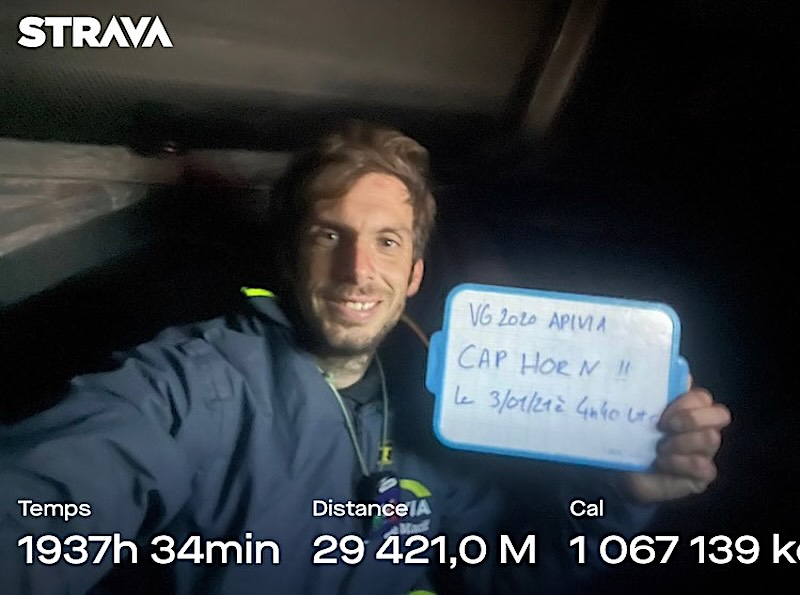
He left France and navigated around the treacherous Cape of Good Hope at the southern tip of Africa, keeping pace with the competition while staying consistent with his daily medicines.
But near the southern coast of Australia, Dalin faced a critical decision. A massive storm had developed, forcing him to choose a safer and slower route north, or a faster, and potentially perilous route south.
He’d consistently stared down danger and cancer over the last year, so naturally, Dalin went south.
His boat was bombarded by ferocious swells and gale-force winds over the next several days, but he persevered. And when the seas calmed, he was in the lead—on a record-breaking pace.
Near Antarctica, he lost the lead. Near Brazil, he regained it. After more than two months at sea, Dalin became the Vendée Globe champion, crossing the finish line in January 2025 with a time of 64 days, 19 hours—a new race record.
His tumor had grown during the race, but he soon underwent surgery to have it removed.
As a cherry on top, he was named the 2025 Rolex World Sailor of the Year in November and won the 2025 Magnus Olsson Prize in December, which is awarded to sailors who embody excellence, sportsmanship and innovation.
Dalin doesn’t know what the future holds, but he’s working hard to steer his life and his health back to normal—and he’s keenly aware that sometimes life’s sweetest victories lie just beyond the rough seas and dark skies.
“I am the happiest man in the world today, that’s for sure,” Dalin said after winning the Vendée Globe. “These are crazy emotions I’ve never felt before. Crossing the line with the dawn light shining on perfectly smooth water, the boat gliding along. It was simply fabulous. An explosion of emotions in my head (and) immense joy. It is, by far, the most beautiful finish of my entire career.”
KEEP CHARLIE’S STORY SAILING ACROSS THE INTERNET By Sharing This to Your Social Media Feed…
FREE WILL ASTROLOGY – Week of January 17, 2026
Copyright by Rob Brezsny, FreeWillAstrology.com
CAPRICORN (Dec. 22-Jan. 19):
Sandcastles are good reminders of how temporary everything is. We build them on the damp edge of the shore after the tide recedes, and then they crumble when the sea rolls back a few hours later. Let’s make the sandcastle your power symbol for the months ahead. In doing so, I don’t mean to imply that your certainties will be demolished. Rather, it’s my way of urging you to enjoy and capitalize on the ever-changing nature of all things. In fact, I believe that knack should be one of your specialties in the coming months. As the Buddhist monk Thich Nhat Hanh told us, we should be grateful for impermanence, because it keeps every possibility alive.
AQUARIUS (Jan. 20-Feb. 18):
During World War II, the United States faced a natural rubber shortage and funded research into synthetic substitutes. The effort was partly successful, but there were also failed experiments. Among these was a substance that later became a popular toy named Silly Putty. It sold millions of units and made its marketer wealthy. I suspect a metaphorically similar breakthrough is looming for you, Aquarius: an unplanned discovery that holds unforeseen value. You may soon have your own “Silly Putty moment”—an invention, idea, or situation that is technically a detour from your original goal but still delivers a gift. So keep your curiosity loose and your judgment soft. Don’t dismiss the byproducts of your efforts. Some diversions may reveal themselves to be the magic you didn’t realize you needed.
PISCES (Feb. 19-March 20):
I suggest you try an “as-if” exercise, Pisces. Here’s what I propose: Enjoy a five-day period visualizing what your life would be like if you stopped saving yourself for a mythical future—including both the positive and negative aspects. Instead, envision yourself spending the coming months doing exactly what you yearn to do most, gleefully and intensely pursuing your sweetest dreams and prime mission. During this sabbatical, you will refrain from invoking excuses about why you can’t follow your bliss. You will assume that you are attuned with the heart of creation. You will act as if you are a joy specialist who adores your life.
ARIES (March 21-April 19):
Japanese Zen master Hakuin (1686–1769) painted with astonishing vigor well into his eighties. When asked his secret, he said he treated each brushstroke as if it were his first. He approached the ink and paper with a beginner’s inspired innocence. I propose that you adopt a version of Hakuin’s practice. Dive into your familiar routines with virgin eyes. Allow your expertise to be influenced by surprise. As for the mastery you have earned, may I suggest you use it as a launching pad for enthusiastic amateurism? Being skilled is wonderful. Being skilled and willing to experiment like a newcomer? That’s the high art of perpetual combustion, an Aries specialty.
TAURUS (April 20-May 20):
In 1971, NASA’s Apollo 15 mission delivered a new asset to the moon: the Lunar Roving Vehicle. This battery-powered “moon buggy” enabled astronauts to explore farther from their landing site than ever before. They gathered a record haul of rock and soil samples and a deeper understanding of the lunar surface. I think you Bulls would be wise to get your own equivalent of that moon buggy. The apt metaphor here is enhancing your ability to extend your reach and explore beyond the familiar. In the coming weeks, I hope you will seek access to tools, allies, and freedoms that expand your range. Use them to push into new territory and scout around for intriguing valuables.
GEMINI (May 21-June 20):
Are you ready to unveil the half-hidden, half-beautiful truths you have been keeping tucked away? I think you are. You might shake, sweat, and second-guess yourself right up until the moment the pivotal moment arrives. But then, I predict, you will zone in on how best to carry out your sublime assignment. The perilous blessings or radiant burdens you’ve been hoarding like secret treasures will finally spill out of you in just the right ways.
CANCER (June 21-July 22):
A hermit crab finds a new shell not because the old one was bad, but because the creature grew. A similar urge stirs in you now: an instinct to relocate your sensitivity and tenderness into roomier housing. You don’t have to abandon your favorite people or situations. Just ripen and update your containers so your emotional intelligence can flourish even more. Maybe revise your work rhythms. Dream up new bedtime stories. Be braver in declaring your needs. Your ongoing transformations could be a bit bumpy, but mostly healing and cherished. Give them the spaciousness they require.
LEO (July 23-Aug. 22):
Poet Jack Gilbert wrote, “We must risk delight. We can do without pleasure but not delight.” Here’s what I think he meant: Pleasure is easy to access, available in many transactions. But delight requires courage. We must be undefended enough to be astonished and elated. Here’s the potential glitch for you Leos: You sometimes feel inclined to perform your joy; you make your happiness into entertainment for others to be inspired by. But true delight is riskier and more real. It comes when you forget to curate yourself because you’re too enchanted to remember you’re being watched. Your next assignment: Conjure up three moments of private delight that no one but you will see.
VIRGO (Aug. 23-Sept. 22):
Many of you are renowned for your precision, but that’s just half the story. The more complete truth is that when you are most robust, you’re a connoisseur of refinement. Your careful edits can transmute muddles into medicines. Your subtle fixes may catalyze major corrections. Here’s my bold declaration: You are now at the height of your Virgo powers. I hope you wield them with utter flair and finesse. Make everything you touch better than it was before you touched it.
LIBRA (Sept. 23-Oct. 22):
Some astrologers work without ever glancing at the night sky. Their bond with the planets lives mostly through abstract ideas. To balance that approach, Daniel Giamario developed a more hands-on approach to astrology. In his retreats, students trek into wild country, far from city lights, and spend the dark hours watching the dance of the heavenly bodies. He teaches that cosmic energies can be sensed through our beautiful bodies as much as they can be understood by our fine minds. In the weeks ahead, I invite you to infuse all your explorations with that spirit. Learn through direct encounters, not just through concepts and recycled reports.
SCORPIO (Oct. 23-Nov. 21):
English is my first language. I love how its wild, hybrid, restless qualities enable me to express myself. I never grow weary of exploring its limits and discovering new ways to use it with flair and care. But I am also very grateful that my horoscopes are translated into Italian, French, Japanese, and Spanish. I am supremely blessed to have editors who turn my idiosyncratic prose into language that non-English speakers can enjoy. It’s one of the great gifts that life has given me. In the coming months, Scorpio, I will be wishing and expecting a similar bonus for you: help and support in expanding your ability to reach further in your self-expression.
SAGITTARIUS (Nov. 22-Dec. 21):
Your intrepid spirit is most likely to find exciting adventures if it’s exquisitely prepared. While I love your daring spontaneity and experimental expansiveness, I hope that in the coming weeks, you will work hard to support them with good planning and rigorous foresight. Be imaginative and disciplined, wild and calculating, irrepressible and solidly responsible. If you heed my advice, you could break your previous records for making marvelous discoveries in the frontiers. PS: Treat wonder like a muscle. Flex it daily—with gratitude.
WANT MORE? Listen to Rob’s EXPANDED AUDIO HOROSCOPES, 4-5 minute meditations on the current state of your destiny — or subscribe to his unique daily text message service at: RealAstrology.com
Quote of the Day: “If men could only know each other, they would neither idolize nor hate.” – Elbert Hubbard
Image by: Lluis Bazan
With a new inspirational quote every day, atop the perfect photo—collected and archived on our Quote of the Day page—why not bookmark GNN.org for a daily uplift?
83 years ago today, the Metropolitan Opera House in New York City hosted its first-ever jazz concert. A star-studded lineup of performers was acquired from around the country to bring the once-discriminated musical genre to the highest echelons of American society, including Louis Armstrong, Billie Holiday, Lionel Hampton, Jack Teagarden, Mildred Bailey, and Benny Goodman. Sponsored by the National Women’s Council of the Navy League of the United States, New York City papers described the musicians as performing like “sober monarchs,” who were “too sedate” and “perhaps… awed by the fact they were playing in the tradition-filled Met.” READ what else the papers said… (1944)
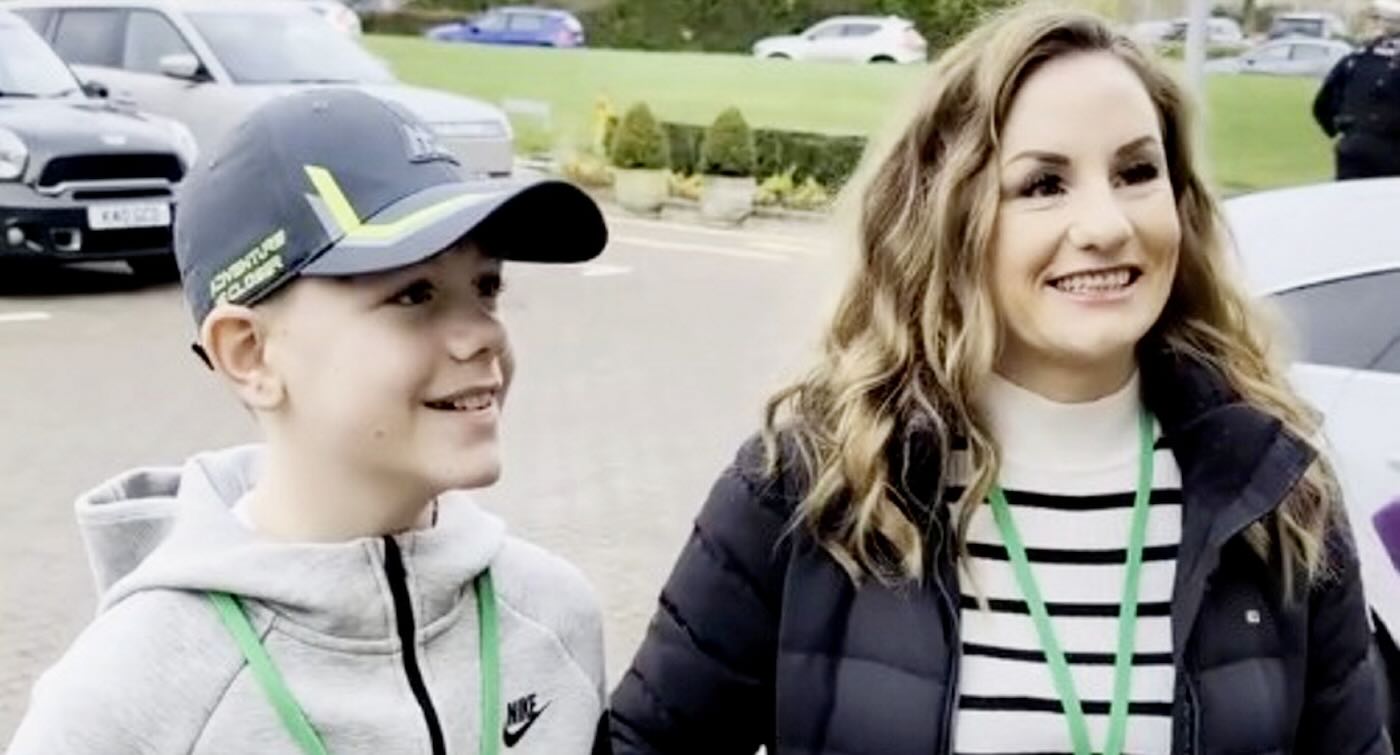
Zac Howells with his ‘Chief Constable’s Commendation’ and his mother – SWNS
This is the inspiring moment a hero 12-year-old saved his mother’s life by grabbing the wheel then calling for emergency services after she collapsed while driving in the neighboring country of England.
Quick-thinking Zac Howells managed to take control of Nicola’s car and steer it to safety—after she passed out behind the wheel while traveling at 60mph.
The 37-year-old lost consciousness, yet her foot remaining on the accelerator before Zac managed to slow the car down before hitting a barrier.
Once the vehicle had stopped on the A40 near Ross-on-Wye in Herefordshire, he switched off the engine and used the phone to call emergency services.
West Mercia Police has released an audio file of the call that shows Zac staying completely calm while directing call-handlers to their location—even though it was in Wales, across the border.
Zac can be heard saying, “I’m driving on a motorway and my mom just fainted so I had to crash the car to stop.
“Her foot went down on the pedal and it started accelerating, so I had to crash into the barrier. I’m really scared.”
SWNS
Then, when Nicola regained consciousness, Zac told her, “It’s alright. Calm down, it’s fine. Hold my hand.
“Mum…” he said, continuing to soothe her… “Breathe.”
“I just drove the car. It’s really easy.” (Hear the call in the video below…)
Nicola repeatedly apologies as Zac continues to reassure her. “It’s fine, I’m worried about you—not me… I knew we were going to be fine.”
This week, Zac was commended for his bravery when the police department awarded him a Chief Constable’s Commendation.
He visited the force’s HQ in Worcester, meeting the call-handlers and officers who responded to the incident in December.
Nicola, from Wales, told the BBC she was “just so proud of him” and “so appreciative” of the effort that everyone made to create a “fuss” over Zac.
Nicola and Zac had been traveling from Wales to the Birmingham Christmas market when the drama unfolded.
During the award ceremony, Chief Constable Richard Cooper said:
“I am delighted to present Zac with this award today following what must have been an extremely frightening experience for such a young boy.
“For a 12-year-old to react in such a calm and mature manner is magnificent, and I would like to express my gratitude for his actions that day.
“His display of bravery certainly extinguished any danger to them both—but also that of other members of the public who were on the road that day.”
HAIL THE YOUNG HERO – Share His Call on Social Media…
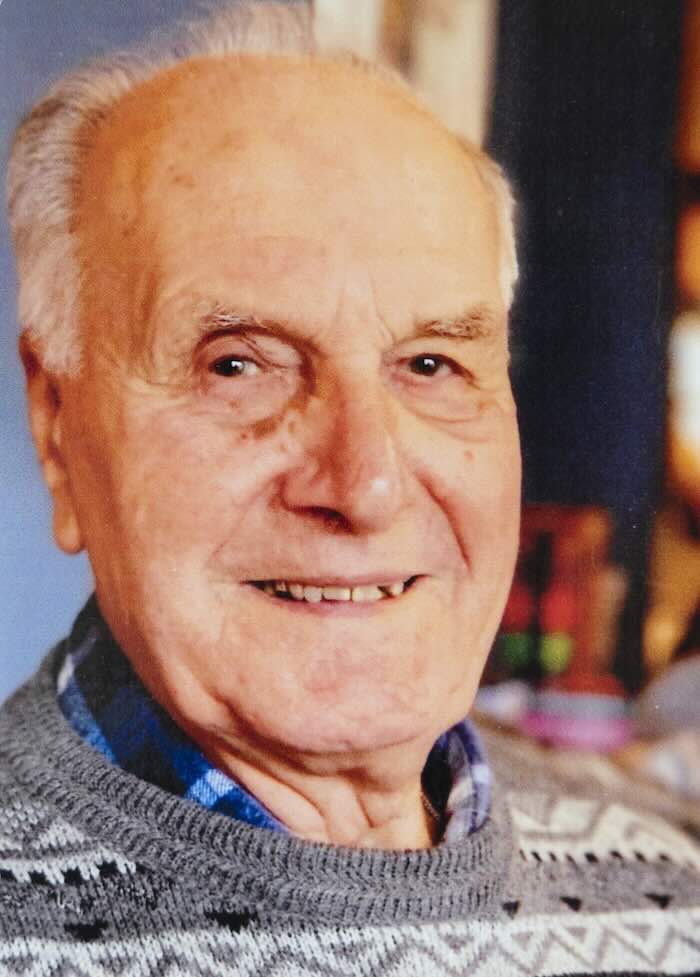
One of the last D-Day heroes has fulfilled his final wish, after being granted a medal recognizing his role in the historic invasion of June 6, 1944.
Don Butt was presented with the medal last week, more than 80 years since he lived through the horrors of the Normandy landings in France.
The 100-year-old said the medal would ‘complete his life’ prompting a race against time to get the French authorities to approve it before he died.
And in an emotional meeting, Don was handed the insignia by the Royal Marines in what his family said was a ‘dream come true’ for him.
Don signed up to the Marines when he was 17 and just a year later was part of the landing crew in the first wave at Juno Beach.
Don was in the direct firing line and watched friends and colleagues killed in front of him. He recalls being in the water and clinging to ropes with bombs and bullets flying all around him to enable waves of troops ashore.
For decades he didn’t speak about the day and has only recently opened up to family and friends, after living with the mistaken belief that he was “too young” to be entitled to a medal.
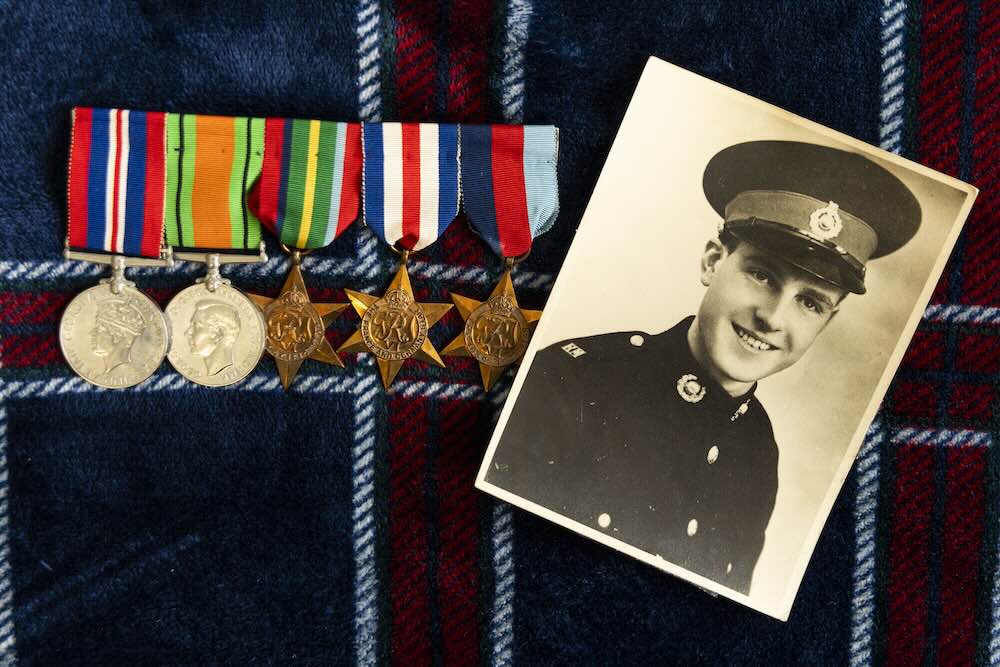
D-Day soldier Don Butt’s war medals –SWNS
After sharing his story with a fellow marine, efforts were made on his behalf to get him the Légion d’honneur from the French authorities.
It was confirmed that his age ‘doesn’t matter’ but an initial application for his medal, submitted in 2024, was rejected for reasons that were not disclosed.
Following advice from the Ministry of Defense, a second application was submitted last year—and the French authorities were praised by The Royal Marines Historical Society for speeding up the process when the omission became clear.
“The medal means everything to dad,” said his daughter Karen Cetin of Somerset. “He always said it was something he would love to have.”
“We were in a bit of a race against time. He is 100 and it was very important to him—and to us—that he was recognized before it was too late.
“As a family we are all so proud of his achievements and think he fully deserves it.”
Don Butt with his sister and friend –SWNS
The awarding of the medal was accompanied by a letter from Hélène Duchêne, the Ambassador of France to the United Kingdom:
I have the pleasure of informing you that the President of the Republic has appointed you to the rank of Chevalier in the Ordre national de la Légion d’Honneur by decree of 13 June 2025.
I offer you my warmest congratulations for this high honor, which recognizes your military engagement and steadfast involvement in the Liberation of France during the Second World War.
As we contemplate this Europe of peace, we must never forget the heroes like you who came from Britain and Commonwealth to begin the liberation of Europe by liberating France. We owe our freedom and security to your dedication, because you were ready to risk your life.
Speaking from his care home about his new medal, Don said: “It’s the last one missing from my medals. It is my final ambition—my final wish—to get that medal.
“It would make all the places I’ve been, and what I’ve done, complete.
“I’ve just had my 100th birthday which was wonderful. My worries have all gone. I can not thank everyone enough for trying.”
He previously acknowledged he never applied for one after leaving the marines and hadn’t thought about it until he shared his story with a fellow former marine who “got the ball rolling. “He was able to get my records and help me apply.”
Don, a father-of-four, who has great-great-grandchildren and was married for 66 years, had previously said he was just 17-and-a-half when he first went into the marines.
“We were on the landing craft that took over French and Canadians on D-Day. I couldn’t go fully onto the beach. That was the officer’s orders. He said ‘you must not go up the beach—you are too young.’
“Our job was to land the troops, come back and then go back again. We went back to the ship and then went back three times to land troops in Cherbourg.
“I can still see all the D-Day landing troops going in. The sea was very rough and we were surrounded by all the carnage of war.
“There were shots going off everywhere, shells, bombs. I remember all that. I was very frightened, of course, but after a few minutes you sort of settle down and get used to it in a strange way.
“I had my friends with me and when you feel you’ve got your mate with you, you feel more secure.
“We were lucky overall. We only lost one man from our regiment. But I can remember it vividly—there were just so many ships.”
In total he clocked up a staggering 42,000 miles at sea during the war.
Daughter Karen said he only started talking about his war time exploits very recently.
“I am really glad he has started to talk about it. It’s a horrible thing to deal with and never talk about. I am so pleased he opened up and got it off his chest. He is just a modest man and I think only last year he realized how proud of himself he should be.”
John Rawlinson, of the Royal Marines Historical Society, who helped Don with his application said: “We are delighted that Don has received his medal, as a young man he was one of the generation who were willing to give all for their country and their friends and families.
“The Royal Marines and the wider Commando community are proud he is one of their family—once a marine, always a marine.”
CONSIDER SHARING THE STORY With WWII Fans On Social Media…
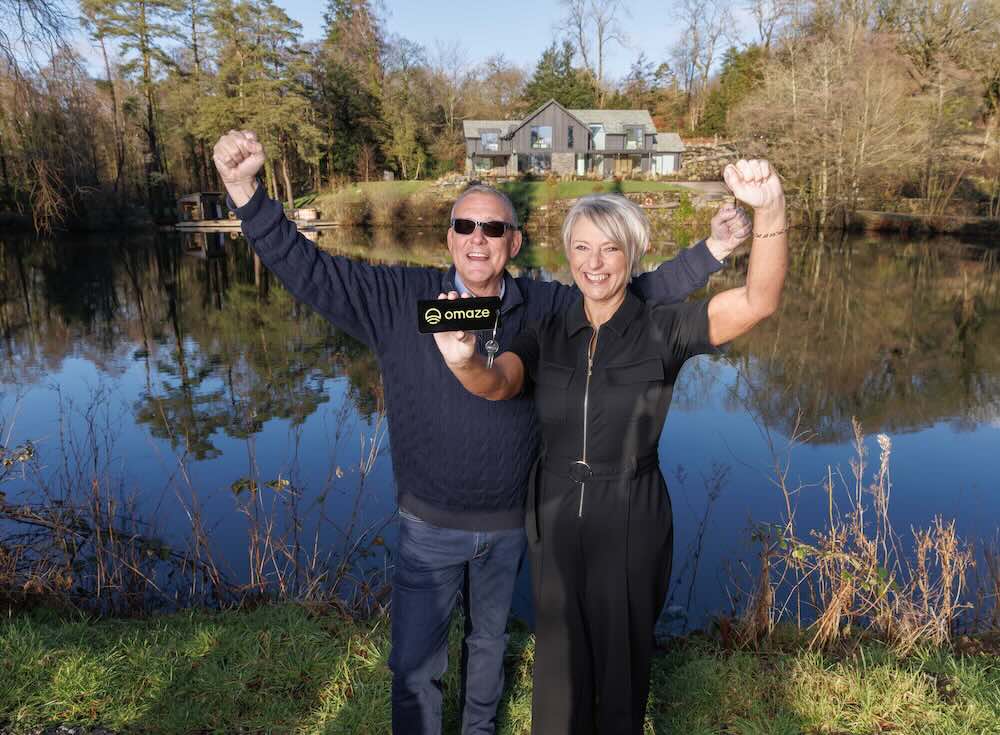
A wife who ignored her spouse’s suggestion to stop entering contests has won a mansion worth nearly $5 million, saying, “This is precisely why I never listen to my husband”.
Nicola Dickinson became an instant multi-millionaire after winning the spectacular home in England’s Lake District—which comes mortgage-free and fully furnished, with its own private lake.
She bought her winning entry for just £25 ($33) as part a drawing from Omaze, a group that arranges contests, giving away fantastic prizes, as a means to raising money for charity.
After the win, Mrs. Dickinson revealed that her husband of 38 years repeatedly told her she would “never win in a million years”—advice she’s now very glad she “ignored”.
“I’ve been entering for four years and Martyn has been moaning at me to stop. I liked that even if I didn’t win, I was supporting amazing charities.
“But winning has shown this is precisely why I never listen to him, and thank goodness I didn’t—we’re multi-millionaires now!”
Couple outside of home they won in OMAZE drawing – SWNS
The day Omaze contacted Nicola, she was at home in Swindon, Wiltshire, talking to her husband about potentially downsizing.
“The day we found out I’d won, I was at home, looking after my granddaughter and doing a spot of boring housework. When I got the call from Omaze, I honestly didn’t think it was real. I put the phone down and said to my husband, ‘That was Omaze, apparently I’ve won something, but it can’t be real.’
“Then they called back and said they were outside. I was thinking best case scenario I may have won £1,000, but the next thing I know, Omaze is telling me I’ve won a £4.5 million house. We celebrated with lots of bubbles over the weekend. Dry January never stood a chance.”
SWNS / OMAZE
“We’d actually been talking that very morning about downsizing soon to try and keep on top of our spending, but now we’ve upsized—massively. It’s a funny old world.”
She was also given £250,000 in cash to help her settle in—and can choose to either live in the house, rent it out for supplementary income, or sell it whenever she wishes to become a cash multi-millionaire.
“Martyn was joking that he’s a little disappointed he didn’t win the Porsche 911, but I’ve reminded him that if he plays his cards right, I can afford to buy him one now, so he shouldn’t be too upset!
“My husband was actually worrying that morning that we’d spent too much on the card at Christmas – if I’d have known I was going to win an Omaze house, I’d have spent twice as much!”
As to what the impact will be on her family, she said: “We’ve worked hard our whole lives, not just for ourselves but for our family, and this win really does change everything for all of us.
“We’re looking forward to further supporting our children and grandchildren, to help give them the best possible start in life; the win feels like a generational legacy for our family.
“We don’t know exactly what we’re going to do long-term, but what we do know is that, definitely, we’re going to come up and enjoy it together, spend time here with family and friends whilst making memories we never imagined we’d be able to.
“This win has taken so much pressure off us financially. It gives us security, stability, and peace of mind in a way we’d never even dreamed of. I turn 60 in May, and for the first time, we can actually think about slowing down and enjoying life together.”
SWNS / OMAZE
A woodland driveway leads to Nicola’s tranquil property which features five bedrooms, floor-to-ceiling windows, solar panels, a floating staircase, a huge open floor plan, and panoramic views of the lake and surrounding countryside, with a waterside wooden jetty that includes a sauna, hot tub, and outdoor shower.
As well as making Nicola a multi-millionaire, Omaze partnered with the RSPCA, the UK’s leading animal welfare charity.
The £1M funneled from the Omaze Community will help support the RSPCA’s rehabilitation work, providing neglected and abused animals with the specialist care they need.
“Omaze offers people the chance to win extraordinary prizes—while also raising vital funds for charities doing extraordinary work… We’ve now raised over £100 million for good causes across the UK.”
Drawings for other Omaze homes in the UK are ongoing at omaze.co.uk.
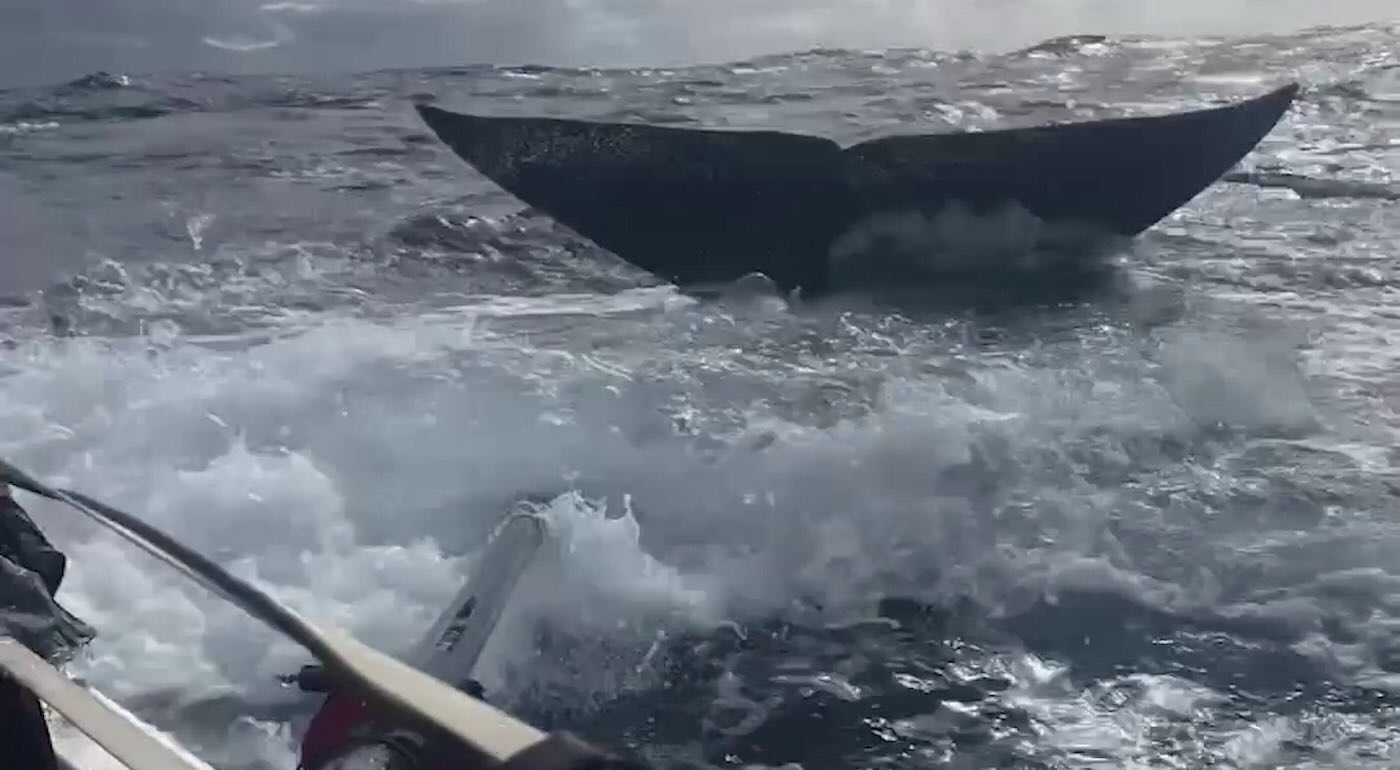
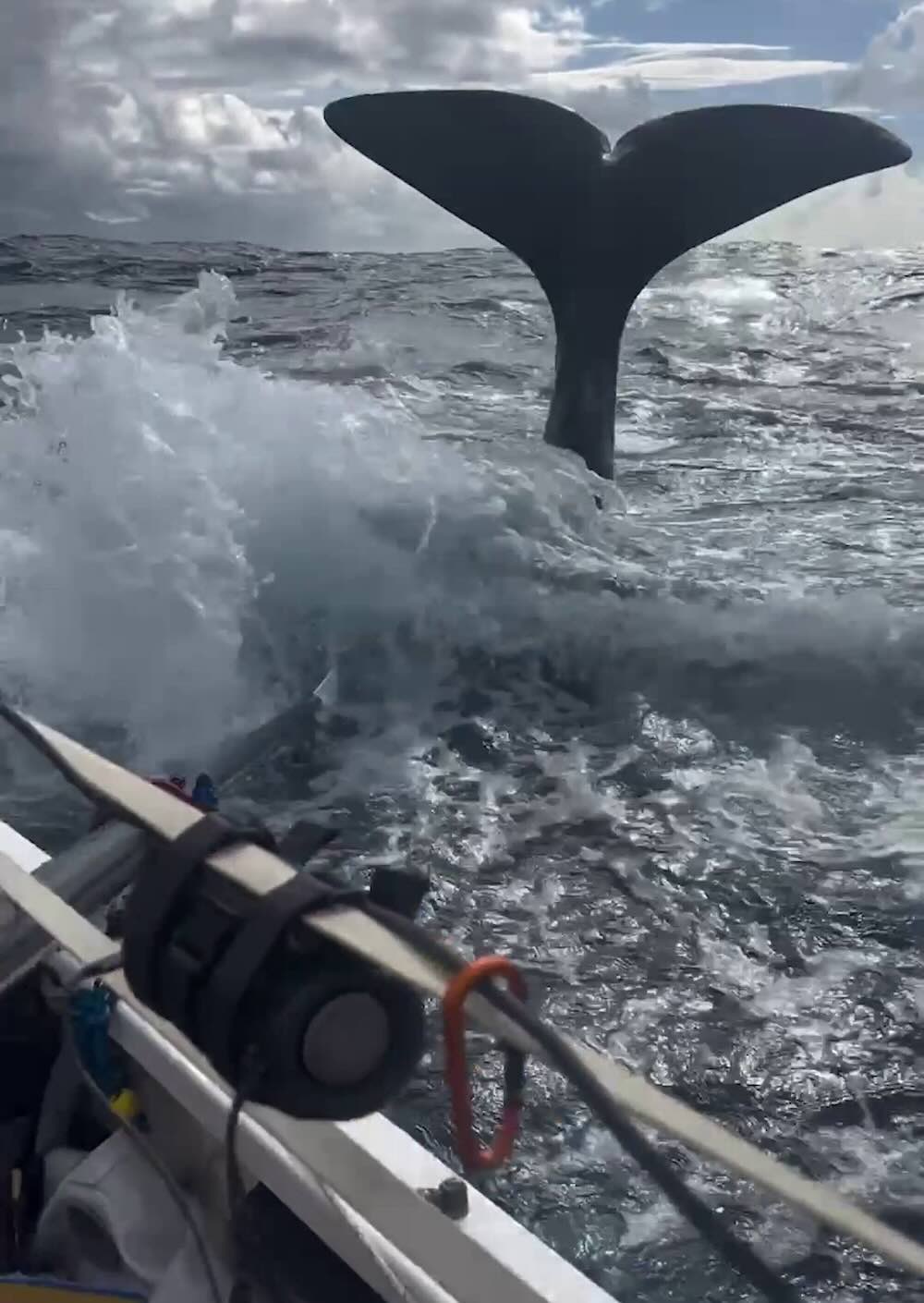
Incredible footage shows a team of rowers coming face to face with a whale in the middle of the Atlantic Ocean.
The 4-man team encountered the animal midway through their 3,000-mile (4,800km) adventure to raise money for charity.
SWNS news reported that the men were suddenly surrounded by a pod of four or five whales surfacing and diving alongside their boat.
The video shows one of the mammals breaching right next to the side of their boat—and the ‘Get Busy Rowing’ team feared their vessel could be struck.
Three of the rowers, Will Towning, Greg Collins, and Chris Betts, are from England, and the fourth member, Elliot Collins, lives in Connecticut.
“It was the most surreal moment of my life,” Elliot exclaimed.
“It was unbelievable,” said one of the members. “All I just heard was ‘whale, whale, whale, whale’, and then I got out of the cabin just in time to see it.”
The team are competing in the World’s Toughest Row, which is a transatlantic unassisted rowing race from the Canary Islands (off the coast of Africa) to Antigua in the Caribbean.
So far, the team has raised nearly £12,000 ($15,000) for the Matt Hampson Foundation, which inspires and supports young people seriously injured while playing sports. Their Get Busy Living center in rural Leicestershire was opened in 2018 by ex-rugby player Matt Hampson, who himself experienced a life-changing injury in 2005.
SHARE THE EXCITEMENT With Boaters On Social Media…
Quote of the Day: “The farther back you can look, the farther forward you are likely to see.” – Winston Churchill
Image by: Petr Slováček for Unsplash+
With a new inspirational quote every day, atop the perfect photo—collected and archived on our Quote of the Day page—why not bookmark GNN.org for a daily uplift?