










All News - Page 86 of 1689 - Good News Network
Home Blog Page 86

Strange Wood Found on Beach by Fisherman Turns Out to Be Polynesian Canoe of Great Significance

Piece of carved waka found in creek – Credit: Vincent Dix

On New Zealand’s Chatham Islands, the complete remains of a wooden boat used by the islands’ indigenous Polynesians—perhaps even to arrive there, have been found.

This monumental and unprecedented discovery will yield fascinating insights about the settlement of the island, the dates it would have occurred, and maybe even about other islands in the Pacific.

Starting 3,000 years ago, but particularly in the 13th century CE, Polynesians struck out across the Pacific and settled a huge number of the islands in the vast ocean. They sailed by the stars and other open ocean indicators like birds on large boats called ‘wakas.’

The Chatham Islands’ original inhabitants are the Moriori, and it was a father and son who first found the splinters of wood on the main island of Rekohu that led to the discovery, which one archaeologist said will go down as one of the most important finds in Polynesian history.

“My son and I were just loading the boat up and taking the dogs for a run up the beach… just after a big rain,” Vincent Dix, a local fisherman, tells Radio New Zealand. Then, he says, his son Nikau saw pieces of timber in the river. The wood sported strange holes, and it appeared to be well preserved. Taking some of the pieces home, they began to see if they could fit some of them together.

A waka is a rare but not unheard of discovery in Polynesian archaeology, however they tend to be found in fragments, with no other material from the sails or rigging left over.

Another storm came and went, and the two men returned to the site where the remains of the whole boat had been unearthed. They immediately called the relevant authorities who came and secured the site.

ALSO CHECK OUT: Landmark Genetics Study Shows Easter Island Population Collapse Never Happened

“Before we started this project, the holy grail would have been to find some of the sail, or some of the twine that held things together, or some of the rope or the corking,” Justin Maxwell, the archaeologist leading the investigation, told the Guardian. “We found all of that. It’s completely blown our minds.”

In a statement, the Ministry for Culture and Heritage of New Zealand explained that pieces were individually recovered and placed into holding units to preserve the old wood.

MORE POLYNESIAN ARCHAEOLOGY: Archaeologists Uncover Ancient City in Kingdom of Tonga That Rewrites History: ‘First City of the Pacific’

“The local community were instrumental in leading the on-island support during the excavation,” the statement read. “Community interns and volunteers travelled across the island to the site, providing precious cultural advice, supplying meals and taking up the opportunity to add new skills to their impressive resumes.”

At the time of publishing, no estimated dating of the wood has been carried out, but the Smithsonian Magazine reports that some pieces clearly came from mainland New Zealand, suggesting a journey was made between the two, a distance of hundreds of miles.

One major aspect of this waka is that it was built with individual boards rather than out of a single tree, as others found in the past have suggested was the norm. Maxwell said this is going to help them learn so much about Polynesian waka technology.

SHARE This Discovery And What It Means To The People Of The Island… 

GNN’s Award-Winning Short Film ‘Water Ways’ Shines Light on Sustainability Success of Niagara Cares

Screenshot

At Good News Network, we believe in celebrating stories that inspire action, and our latest project is no exception. Water Ways, our award-winning short film created in collaboration with Niagara Cares, is making waves by spotlighting the critical importance of water stewardship.

This beautifully crafted documentary takes viewers on a journey through the efforts being made to protect and restore one of our planet’s most vital resources—water.

From the first frame, Water Ways showcases the power of collaboration in creating a more sustainable future. Through breathtaking visuals and heartfelt storytelling, the film highlights real-world solutions that are helping communities thrive while safeguarding freshwater ecosystems. (Watch the film below…)

At the heart of it all is Niagara Cares, the philanthropic arm of Niagara Bottling, whose dedication to responsible water use is driving real change.

Protecting Rivers And Planting Trees

Niagara Bottling, a family-run beverage company hydrating America since 1963, has long been committed to sustainability. Through Niagara Cares, they’ve partnered with leading conservation organizations like the Arbor Day Foundation, the National Forest Foundation, and Colorado Water Trust to plant nearly 200,000 trees, restore watersheds, and support healthy water ecosystems in the West and Southwest regions of the United States.

Their mission is clear: protect and revitalize the natural ecosystems that feed the Colorado River and Rio Grande—two lifelines that supply fresh water to millions of people. These regions face increasing environmental challenges, from droughts to wildfires, making their restoration efforts more urgent than ever.

By planting trees to filter runoff, restoring streams to replenish drought-prone areas, and mobilizing volunteers for hands-on conservation work, Niagara Cares is making a measurable impact on the future of these waterways.

“At Niagara, we are dedicated to protecting water as a vital resource and creating healthy, hydrated communities,” said Ann Canela, Director of Corporate Giving at Niagara Bottling. “These rivers are essential to multiple states in the West and Southwest, and through our partnerships, we’re taking meaningful steps toward improving river flow and creating a greener, more biodiverse future.”

More Than a Film—A Movement

What makes Water Ways truly special is its focus on the people behind the progress. From dedicated Niagara volunteers to environmental experts on the frontlines of conservation, the film is a testament to the power of community action. Their passion and commitment remind us that even small efforts can lead to profound change.

Beyond the documentary, we explore their mission in greater depth in the latest episode of our Good News Gurus podcast, Hydrating Hope, sharing the stories of their partners and the innovative ways they’re addressing water sustainability.

The journey toward a more sustainable world starts with awareness, and we invite you to be part of it. See firsthand how small actions can lead to a ripple effect of positive change.

Watch Water Ways below—and listen to Hydrating Hope—to join the movement protecting our vital resources.

MAKE A SPLASH By Sharing The Award-Winning Water Success On Social Media…

“St. Patrick’s Day is all about being Irish and celebrating life as only the Irish know how.” – Anthony T. Hincks

Temple Bar in Dublin, Ireland – Credit: Marco ten Donkelaar

Quote of the Day: “St. Patrick’s Day is all about being Irish and celebrating life as only the Irish know how.” – Anthony T. Hincks Happy St. Patrick’s Day!

Photo by: Marco ten Donkelaar (The Temple Bar in Dublin, Ireland)

With a new inspirational quote every day, atop the perfect photo—collected and archived on our Quote of the Day page—why not bookmark GNN.org for a daily uplift?

Temple Bar in Dublin, Ireland – Credit: Marco ten Donkelaar

Good News in History, March 17

Isadora Duncan in classical Greek attire which she frequented.

125 years ago today, Isadora Duncan, the first modern dancer, made her debut as a solo interpretive dancer in London to crowds who marveled at her daring. Here, writes the Daily Telegraph at the turn of the millennium, was a very young woman, barefoot and underdressed, performing alone and without scenery—not some romantic fairy-tale of virtuous suffering, but a disconcertingly direct and spontaneous expression of her feelings about the music she was dancing to. She used Chopin’s piano preludes and Mendelssohn’s Spring Song. Her movements were extremely simple, improvisatory, and while the first instinct was to find it hyper erotic, almost everyone knew it was more than that. READ about the unexpected history of dance following this landmark performance… (1900)

8-Year-old Boy Who Taught Himself to Paint was Invited to Hold an Exhibition–And Counted His First Sales

Kevin Kovacs, 8, from Somerset, holds his first solo art exhibition –SWNS

An eight-year-old artist was invited to present his watercolors in a local exhibition—where he has now sold his first paintings.

Kevin Kovacs is self-taught and started drawing when he was a toddler. He was invited to put together his own solo art exhibit at the Tacchi-Morris Arts Centre in Taunton, England, after his mother started sharing his creations on social media.

The young artist from Somerset even set his own prices for the artwork, which will be displayed until April 29.

“I am happy that people can see my art on the walls—and I hope for another exhibition in London.”

Kevin has been exposed to creativity and art his whole life, as both his mom and dad are keen photographers.

“My husband photographs nature, wildlife, and landscapes, so Kevin was around cameras all the time and we loved to draw with him when he was a toddler.

“We bought him all kinds of mediums—paints, watercolors, and all kinds of art supplies—and I could see he was enjoying it when he was around two.”

When Kevin turned five he started sketching, and he took inspiration from all the trips with his family to coastal towns around South West England, his mother Natalia told the SWNS news agency.

Kevin’s painting of Watchet in Somerset, which is one of his favorite subjects – SWNS

He loved sketching buildings and whenever they would be sitting down in one of the villages he would be drawing. Afterward, Kevin would use Natalia’s phone to take photos of his surroundings and begin drawing the images he’d captured.

He then began using color when Natalia showed him winning artwork from competitions around the world. There was one winning piece from India that was very colorful—and that was the point he started adding color.

ANOTHER SELF-STARTER: 11-Year-old Boy Determined to Be a Farmer: Rents His Own Land, Breeds Sheep, and Spins Wool (LOOK)

Once people started to take an interest in Kevin’s work, Natalia decided to create an Instagram page for her son, so she could post all of his art in one place: “People were asking me all the time about his art.”

Kevin Kovacs with paintings in his exhibition – SWNS

A volunteer from the Tacchi-Morris Arts Centre then reached out, showing an interest in hosting an exhibition of Kevin’s work, and he ‘happily’ agreed.

LOOK: Woman Lets Her Baby Scribble on the Walls–Now He’s A Talented Young Artist

“He is obviously very happy. We went on the first day the exhibition opened and a couple of people wanted to buy his art.

“He’s a natural. You can see he’s now really into boats, and he tells me it comes very easily to him.

“I remember being told by other artists boats are very hard to do – but for him, it’s easy!”

INSPIRE THE NEXT WINSLOW HOMER By Sharing This With Families on Social Media…

New Method Can Recycle All Parts of a Modern Solar Cell with Water: ‘We Can Recycle Everything’

Xun Xiao and Niansheng Xu watch solar cell dissolving in water – Credit: Thor Balkhed

Solar is one of the best solutions to the growing demand for renewable green energy. However, while conventional solar panels contribute to clean energy production, their disposal presents several environmental challenges.

Now, a groundbreaking innovation may change that: researchers have developed a method to fully recycle modern solar panels using water as the main solvent, which would make it a truly sustainable energy.

The method from scientists at Linköping University in Sweden can recycle all parts of a modern solar cell repeatedly without environmentally hazardous solvents—and the recycled solar cell has the same efficiency as the original one.

The method works with one of the most promising technologies for next-generation solar cells: perovskite.

Perovskite solar cells are not only relatively inexpensive and easy to manufacture but also lightweight, flexible, and transparent. Thanks to these properties, they can be placed on many different surfaces, like windows. Also, they can convert up to 25 percent of the solar energy into electricity—comparable to today’s silicon solar cells.

However, silicon panels are at the end of their life cycle, which has created a landfill problem.

“There is currently no efficient technology to deal with the waste of silicon panels. That’s why old solar panels end up in the landfill,” says Xun Xiao, in the Department of Physics, Chemistry and Biology at Linköping University.

“We need to take recycling into consideration when developing emerging solar cell technologies,” said Feng Gao, a professor of optoelectronics at the same Swedish college.

“There are many companies that want to get perovskite solar cells on the market right now, but we’d like to avoid another landfill,” adds Niansheng Xu, postdoc at LiU. “In this project, we’ve developed a method where all parts can be reused in a new perovskite solar cell without compromising performance in the new one.”

SOLAR-ICIOUS! Another Study Shows Incredible Results of Pairing Solar Panels With Agriculture: ‘Getting more from the land’

Given that perovskite solar cells currently have a shorter life span than silicon solar cells, it is important that perovskite solar cell recycling is efficient and environmentally friendly. They also contain a small amount of lead, necessary for high efficiency, so this also must be addressed in a functioning recycling process.

Water as the solvent

There are already methods for dismantling perovskite solar cells. This mostly involves using a substance called dimethylformamide, a common ingredient in paint solvents. It is toxic, environmentally hazardous, and potentially carcinogenic. What the LiU team has done instead is develop a technology where water can be used as a solvent in dismantling the degraded perovskites.

And more importantly, high-quality perovskites can be recycled from the water solution used.

“We can recycle everything—covering glasses, electrodes, perovskite layers, and also the charge transport layer,” said Xun Xiao.

The next step for the researchers is to develop the method for larger scale use in an industrial process.

SOLAR FOR SNOWY REGIONS: Ingenious Snow-Proof Solar Panels Can Work in All Weather: ‘Game-Changing Tech’

Researchers have published their study in the journal Nature, and have applied for patents on their technology.

SHARE THE HOPE-FILLED SCIENCE With Clean Energy Fans on Social Media…

Natural Compound in Grapes and Berries May Aid in Fertility, Resveratrol Study Shows

By Annemarie Grudën
By Annemarie Grudën

New research indicates that a natural compound found in the skin of grapes, blueberries and raspberries has the potential to improve female fertility, by improving the quantity and quality of egg cells.

The systematic review into resveratrol, which is a polyphenolic compound known for its anti-aging, anti-inflammatory, and antioxidant properties, is published in the International Journal of Molecular Sciences.

Researchers from Anglia Ruskin University (ARU), alongside colleagues from Italy, South Korea, and a Queen Elizabeth Hospital Foundation Trust, examined all previously published research on resveratrol’s effect on female reproductive health.

By collating and reviewing results from 24 in vitro and in vivo studies involving a total of 9,563 human participants, they found evidence to suggest resveratrol can improve the quantity and quality of egg cells, which are called oocytes.

Two of the studies specifically assessed the quality of matured oocytes and both reported an improvement among the women who took resveratrol. Four studies investigated resveratrol in connection with the quantity of matured oocytes, and two reported a notable increase in the number of egg cells, while the other two found no increase.

A possible explanation is that resveratrol reduces oxidative stress, helping to protect mitochondrial DNA from damage and enhance telomerase activity, to reduce cellular aging. Resveratrol also activates the molecule sirtuin 1 (SIRT1), which is typically reduced in aged oocytes, therefore the resveratrol may be slowing cell aging and extending ovarian lifespan.

WHEN YOU’RE PREGNANT: Playing Classical Music to Babies in the Womb Can Stimulate Development, Affect Heart Rate and Nervous system

The review also found evidence that resveratrol could potentially treat infertility associated with endometriosis, and have positive effects on polycystic ovary syndrome and obesity-related infertility, by inhibiting pathways involved in androgen production and reducing inflammation and oxidative stress.

“Our systematic review on resveratrol and female fertility is a comprehensive overview of all current research, and it highlights the compound’s potential to improve reproductive outcomes and possibly pave the way for new, less invasive treatments, using natural substances,” said Lee Smith, Professor of Public Health at ARU and senior author of the paper.

Resveratrol is generally considered safe when consumed in moderate amounts through diet and through supplements, in doses up to five grams per day for a month, but the safety of higher doses, particularly over long periods, remains untested.

There were mixed results from studies that looked at pregnancy rates among those taking resveratrol. Of the five studies, two reported an increase, two found no difference, and one indicated a decrease.

ALSO: Probiotics Improve Nausea and Vomiting in Pregnancy, Study Shows

Although Prof. Smith characterized them as “promising results”, the team’s findings are based on a limited number of human studies, so they’re calling for further clinical trials to gather more robust data on dosage and side effects.

SHARE THIS PROMISING TIP With Families-to-be On Social Media…

‘Hero’ Delivery Driver Saves Woman’s Life After A ‘Feeling’ Made him go Back to Her Window to Look Again

ASDA delivery driver Leandro Pinto Dantas – SWNS
Leandro Pinto Dantas delivery driver – Credit: Asda / SWNS

A British grocery store delivery driver saved a woman’s life after she didn’t answer the door and he got the feeling that “something was wrong”.

Leandro Pinto Dantas sensed there was a problem and decided to go back for another look in the window—and only then spotted her lying unconscious on the floor.

It was around 9:00pm in the coastal town of Poole in southern England when the driver for an Asda store arrived at his next delivery.

“Everything seemed normal,” said the 36-year-old. “The light was on and the TV was on. I knocked on the door but didn’t get an answer, so I called the contact number we had for the delivery but got no reply.

“I thought at first they must have gone out, so I looked in the window, but no one was coming.

He turned to go, but “something didn’t feel right.

“I believe God made me go back to the window. I pushed some branches away, so I could get a better look, and that’s when I saw the lady face down on the floor.”

He quickly called for an ambulance and paramedics were soon on the scene and gave the diabetic woman some glucose to raise her blood sugar.

ANOTHER INTUITIVE SAVE: Hero Post Office Worker Saves Senior From Sending Thousands of Dollars to a Scammer

Leandro wasn’t even scheduled to work that night, but he swapped shifts with another driver at the last minute.

“I think it was fate that I was called there that day,” Leandro told SWNS news agency. “I’m just happy that I was there and saved her.”

While she was being examined by emergency workers, Leandro put the lady’s groceries away. And a few days later he visited her home to see how she was doing and brought her some flowers.

The woman, in her 60s, was taken to the hospital with low blood pressure, but was discharged the next day. She was so grateful to Leandro that she wrote a letter to the local newspaper, the Bournemouth Daily Echo, to thank him.

“Leandro is such a wonderful chap,” she said. “I can’t thank him enough.

“He did a marvelous job… certainly going above and beyond what I would expect supermarket delivery drivers to do. He even came round later with flowers for me.”

STRANGER KINDNESS: When Tearful Man Sees Bald Lady Alone in Car, He Returns to Buy Her Flowers (Watch)

The delivery driver has now been nominated for an Asda ‘Service Superstar’ award.

“We are so very proud of the way he handled the delivery,” said Heidi Mallinson, the store’s online trading manager. “And his instinct that something was amiss.”

“He truly is a hero and went totally above and beyond, which in turn probably saved the customer’s life.”

TELL FRIENDS TO LISTEN TO THEIR INSTINCTS By Sharing This Story on Social Media…

Merely Watching Scenes of Nature Can Reduce Pain, Says New Study

credit - Paul Goldstein © SWNS
credit – Paul Goldstein © SWNS

A new neuroimaging report says merely looking at nature can help ease how people experience pain by reducing the brain activity linked to pain perception.

It is well known to reduce feelings of anxiety and depression as well, and the report serves as a reminder of how much good the great outdoors can do for the heavily-medicated US population.

Published in the journal Nature Communications and led by a team from the University of Vienna and University of Exeter, the research offers a “promising foundation for new types of non-pharmacological pain treatments”.

“This study highlights how virtual encounters can bring the healing potential of nature to people when they can’t get outside,” Dr. Alex Smalley, a coauthor from the University of Exeter, explained at the release of the study.

“But we hope our results also serve as renewed evidence for the importance of protecting healthy and functioning natural environments, encouraging people to spend time in nature for the benefit of both the planet and people.”

“The fact that this pain-relieving effect can be achieved through a virtual nature exposure which is easy to administer has important practical implications for non-drug treatments, and opens new avenues for research to better understand how nature impacts our minds.”

Loch Lubnaig off the A84 north of Callander – credit SWNS

In the study, researchers monitored the brain activity of 49 participants in Austria, using an fMRI scanner, as they received pain delivered through a series of small electric shocks.

When they were watching videos of a natural scene compared to a city or an indoor office, participants not only reported feeling less pain, but scans showed the specific brain responses associated with processing pain changed too.

The study used advanced machine-learning to analyse the brain networks which are related to pain processing.

The team discovered that the raw sensory signals the brain receives when something hurts were reduced when watching a carefully designed, high quality, 5-minute, virtual nature scene. What’s more, when shown the five-minute video of the urban scene, it was also rated as a highly beautiful space, as it included (like the nature scene) a body of water disturbed by wind ripples, only surrounded by man-made elements like walls, chairs, and pathways rather than trees and hills.

This finding suggests that beauty or orderliness (the third, indoor scene was a perfectly ordered office space with the soundtrack of a fan and far away traffic) wasn’t a key factor in the pain reduction effect observed.

The study confirmed previous findings that suggest nature can reduce subjective reports of pain, and also marks the first clear demonstration of how natural environments influence the brain, helping to buffer against unpleasant experiences.

“Numerous studies have shown that people consistently report feeling less pain when exposed to nature,” said University of Vienna PhD student Max Steininger, the lead author of the study. “Yet until now, the underlying reasons for this effect were unclear.

HOW NATURE CAN HEAL: ‘Nature Prescriptions’ Improve Both Physical and Mental Health –28 Studies to Date

“Our study is the first to provide evidence from brain scans that this isn’t just a placebo effect—driven by people’s beliefs and expectations that nature is good for them—instead, the brain is reacting less to information about where the pain is coming from and how intense it feels.”

“Our findings suggest that the pain-relieving effect of nature is genuine.”

LETTING NATURE INTO OUR LIVES: Vertical Greening Brings Nature to Urban ‘Heat Islands’ Quickly and Easily (LOOK)

The paper also helps shed light on a longstanding mystery of the healing potential of natural settings.

Over forty years ago, a seminal study from pioneering American researcher, Roger Ulrich, showed how hospital patients used fewer painkillers and recovered faster when their windows overlooked a green space instead of a brick wall.

MORE STORIES LIKE THIS: Stressed? This Study Says You Simply Need a 20-Minute ‘Nature Pill’

Yet following decades of research, the mechanisms underlying this effect remained unknown.

The new findings provide the first “robust” explanation of why Ulrich’s patients might have experienced less pain, and demonstrate how virtual nature encounters could bring these benefits to anyone, anywhere—providing a non-invasive, accessible pathway to pain management.

SHARE This Remarkable Finding With Your Friends On Social Media… 

“When you can’t control what’s happening, challenge yourself to control the way you respond to it. That’s where your power is.” – Lisa Nichols

Federica Giacomazzi for Unsplash+

Quote of the Day: “When you can’t control what’s happening, challenge yourself to control the way you respond to it. That’s where your power is.” – Lisa Nichols

Photo by: Federica Giacomazzi for Unsplash+

With a new inspirational quote every day, atop the perfect photo—collected and archived on our Quote of the Day page—why not bookmark GNN.org for a daily uplift?

Federica Giacomazzi for Unsplash+

Good News in History, March 16

Dr Robert Goddard w ‘Nell’ and teaching at Clark University in Worcester (1914-1924)

99 years ago today, Dr. Robert Goddard launched the world’s first liquid-fueled rocket, after building it himself. The New England physics professor, engineer, and inventor is credited with ushering in the era of space flight, but after he asserted in 1920 that rockets could be used to send payloads to the Moon, he was thought to be absurd and mocked by the press, which called him “Moon Man.” LEARN more… (1926)

Lowe’s Invests $9M to Address Skilled Trades Shortage as Wages Rise Amid Worker Shortage

By Ben Iwara for Unsplash+
By Ben Iwara via Unsplash+

$9 million in grants from Lowe’s is going to support 15 nonprofits dedicated to training the next generation of tradespeople to meet the growing demand for workers—fueled by rising wages and expanding job opportunities.

The grants support training programs focusing on carpentry and construction, HVAC, electrical, plumbing and appliance repair.

From Alaska to Mississippi, each organization is helping prepare new tradespeople to fill the dearth in the US workforce.

In construction alone, average hourly earnings have risen 4.4% over the past 12 months, according to Associated Builders and Contractors.

“We listen closely to contractors and know that many candidates don’t have the necessary skills to fill the wide range of open trades positions,” said Janice Dupré, a Lowe’s executive vice president and chair of the Lowe’s Foundation in a press release.

“Through modern training methods, these nonprofits are unlocking the workforce’s potential while building an economy that rewards skills, not just titles or four-year degrees.”

The Boys & Girls Clubs of America is one of the 15 nonprofits and will enhance their job readiness programs for youth ages 16-24 at three club locations—Hobe Sound, Florida, Madison, Wisconsin, and Seattle.

CHECK OUT THIS TRAINING: Gen Z Stonemason Restores Iconic European Landmarks Damaged in WWII –And Shares Amazing Videos (WATCH)

“This funding will directly bolster their efforts to equip young people with the skills needed to enter the workforce, particularly in the skilled trades,” said Jennifer Bateman, Senior Vice President of Youth Development from Boys & Girls Clubs of America. “It’s an investment in their future and the future of our community.”

The National Association of Home Builders says the grants are playing “a pivotal role in helping to strengthen the residential construction workforce”.

The Lowe’s Foundation Gable Grants have invested over $34 Million since 2023, backing scalable training programs in dozens of states.

CONSTRUCT MORE OF THESE: Thousands of Circular Homes Are Surviving Hurricanes Across the US Thanks to North Carolina Company

The other 14 nonprofits include ReBuild Detroit, the Trade Institute of Pittsburgh, Uncommon Construction (in New Orleans), Hope Renovations (in Raleigh-Durham NC, the Latino Academy of Workforce Development (in Madison, Wisconsin), Next Step of West Michigan (in Grand Rapids), Nontraditional Employment for Women (in New York), the North Alabama Homebuilding Academy (in Huntsville), Alaska Works (in Anchorage), Moore Community House (in Biloxi, Mississippi).

PASS THE OPPORTUNITY to Youth Looking for Careers By Sharing On Social Media…

Gen Z Stonemason Restores Iconic European Landmarks Damaged in WWII –And Shares Amazing Videos (WATCH)

22-year-old stonemason Charlie Gee (photos via SWNS)

Meet the Gen Z stonemason who restores historical landmarks in Europe damaged during World War II.

Charlie Gee has followed in the footsteps of his father who is also a stonemason.

The 22-year-old specializes in cathedral masonry and has worked on iconic buildings, including the Cologne Cathedral in Germany and the Palace of Justice in Brussels, Belgium.

At the Cologne Cathedral, Charlie oversaw the completion of restoration on the final eight pinnacles atop one of the church’s spires.

He says it’s an “honor and privilege” to work on the historical sites, some of which date back as far as the 13th century.

“I feel incredibly lucky to be able to work on a building that is hopefully going to be there for centuries,” said the Englishman from Bath.

“Cologne Cathedral specifically has been on my bucket list and it’s been a great one to tick off. I was only there for two months but I hope to be returning for a longer period of work soon.

“It’s truly incredible,” Charlie told SWNS news agency. “I really feel the fact that I’m working on a piece of history when I’m at a cathedral like that.”

Gen Z stonemason Charlie Gee (via SWNS)

Watching his father Matthew Gee restore historic landmarks inspired him to follow in his footsteps and become a stonemason.

“When I was five years old, we actually moved from Bath to Tuscany for six years for my dad’s work.

“Living in Italy and seeing my dad work on churches out there inspired me to get involved in the same trade.”

The youth began his studies at Weymouth College at age 15 where he did a three-year stonemasonry course.

After that, he was accepted for a four-year apprenticeship at York Minster where apprentices work alongside masters while taking part-time classes at York College.

“It was a big deal for me. York Minster has the best cathedral stonemasonry training—as opposed to commercial stonemasonry—in England, and it’s really competitive to get an apprenticeship.

WOW! Lost Altar Discovered on the Site Where Jesus was Crucified: It’s ‘Sensational’ and was Sitting in Plain Sight

“The difference between commercial and cathedral stonemasonry is that commercial stonemasons use a lot more power tools and usually want to get the job done as quickly as possible.

“You can see in my videos that I’m always using a mallet and chisel, which is a lot more traditional.” (Watch below…)

Finishing his apprenticeship in late 2023, he has been self-employed ever since. Thanks to his training, he gained access to a global network of cathedrals seeking stonemasons.

ALSO CHECK OUT: Masterpieces Saved from Notre Dame Fire Now Restored and Back on View: It’s ‘Miraculous’

SWNS

He has also worked on the Cathedral of Santa Maria del Fiore in Florence, Italy, and the Cathedral and Metropolitical Church of Saint Peter in York—also known as York Minster.

LOOK: Tuscany’s New Airport Terminal Will Have a Vineyard on the Roof, Obviously

Stonemasons all have a mark which they leave on stones they’ve crafted and Charlie’s is his initials CG. “It’s so special to think your mark is on such an important landmark.

“I hope to bring my future kids one day and be able to point up and tell them that’s my work up there—just like I had with my dad growing up.”

Charlie hopes his videos can get younger people interested in the trade again, like his sister is now. Check out his in-spire-ing work on Instagram and on his YouTube channel.

“There doesn’t seem to be much interest from the younger generation in stonemasonry. I can understand why, because it’s a lot of hard work and training, and each job takes a lot of time and care.

“But I hope that if people see how amazing it is to be working on these sites, they’re more likely to consider it.” (WATCH his videos below via SWNS…)

SHARE THE CAREER IDEA With Young People On Social Media…

Number of Monarch Butterflies Wintering in Mexico is Way Up–Doubling the Forest Acreage Over Last Year

Monarch butterflies in Michoacán, Mexico forest by Alex Guillaume

The number of monarch butterflies overwintering this year in Mexico has nearly doubled, according to the annual census released last week by the World Wildlife Fund in Mexico and their partners.

During the last few months in 2025, the population of eastern monarchs occupied 4.42 acres of central Mexico’s forests—up from 2.22 acres during the previous winter.

The encouraging survey was conducted with help from Mexico’s National Commission of Protected Natural Areas and local communities, and it serves as an important indicator of the health of a monarch population that has been clawing its way back from dangerously low levels this century.

“It’s now time to turn this year’s increase into a lasting trend with an all-hands approach where governments, landowners, conservationists, and citizens continue to safeguard critical habitats along the monarch’s North American migratory route,” said Jorge Rickards, director general of WWF Mexico, who recognized the key role of local communities and the government of Mexico in conserving the forest that provides an annual respite to this iconic species.

Scientists attribute much of this year’s population growth to better weather conditions in 2024—with less severe drought than in previous years along their migration route from the U.S. and Canada to Mexico.

Forest protections are also improving

A second report shows that forest degradation in the Monarch Butterfly Biosphere Reserve where they overwinter has improved by 10%. Between April 2023 and February 2024, nine acres of forest were damaged, down from 10 acres reported the previous year. The causes of habitat degradation were either illegal logging (6 acres); natural causes or drought (2.5 acres); or the removal of trees to prevent disease spread (.5 acre).

“If we want these butterflies to recover, they need more habitat restoration and better protection from pesticides,” said Emma Pelton, the western monarch lead for the Xerces Society. “They were proposed to be listed as threatened under the Endangered Species Act last December, and this listing urgently needs to be finalized.”

The numbers of these hardy yet delicate flyers have jumped and dipped—both up and down—in the last three decades. For instance, the Western migration of monarchs in California bounced back in a big way in 2021, 2022 and 2023, but are dipping again this year.

Come to the rescue: plant the only food monarch babies eat

There are many ways you can help this species thrive in North America, but one of the best is to plant milkweed. The milkweed plant is essential to the monarch: It is the only plant on which they lay their eggs and the only source of food for baby monarch caterpillars. As spring arrives, the butterflies start their migration back north, seeking out milkweed to lay their eggs. They also need nectar plants to eat themselves.

Your small action can make a big difference, but different species of milkweed grow better in different parts of the country. Use this milkweed map to find the one that thrives in your region of the United States.

GET INVOLVED: Help the Monarch Population by Raising Them Yourself

Every year, monarch butterflies make an extraordinary journey: at summer’s end, they migrate from southern Canada and the northern United States to mountain forests in Mexico, with some traveling nearly 3,000 miles. After winter, these same butterflies fly an additional 600 miles north to the United States. There they lay eggs on milkweed plants, completing their unique eight-month life cycle.

CHECK OUT: Listen to Millions of Monarch Butterflies Make One of the Rarest Sounds on Earth: ‘Just like a waterfall’

The next three to five generations, each living only three to five weeks, continue the migration northward. Eventually, they reach breeding sites in the northern United States and southern Canada, completing the annual migration cycle.

SHARE THE GOOD NEWS FOR MONARCHS On Social Media to Get People Involved…

Your Weekly Horoscope from ‘Free Will Astrology’ by Rob Brezsny

Our partner Rob Brezsny, who has a new book out, Astrology Is Real: Revelations from My Life as an Oracle, provides his weekly wisdom to enlighten our thinking and motivate our mood. Rob’s Free Will Astrology, is a syndicated weekly column appearing in over a hundred publications. He is also the author of Pronoia Is the Antidote for Paranoia: How All of Creation Is Conspiring To Shower You with Blessings. (A free preview of the book is available here.)

Here is your weekly horoscope…

FREE WILL ASTROLOGY – Week of March 15, 2025
Copyright by Rob Brezsny, FreeWillAstrology.com

PISCES (Feb. 19-March 20):
I’m not exactly sure where you are going, Pisces, but I’m certain you are headed in the right direction. Your instincts for self-love are at a peak. Your ability to see your best possible future is lucid and strong. Your commitment to gracefully serving all that gracefully serves you is passionate and rigorous. I will congratulate you in advance for locating the exact, robust resources you need, not mediocre resources that are only half-interesting.

ARIES (March 21-April 19):
What can you do to show how much you care about everyone and everything that deserves your love? Now is a fantastic time to unleash a flood of gratitude and appreciation that takes very practical forms. Don’t just beam warm and fuzzy feelings toward your favorite people and animals, in other words. Offer tangible blessings that will actually enhance their lives. Find your own personally meaningful ways to nourish all that nourishes you.

TAURUS (April 20-May 20):
Ancient Egyptians loved the color blue. The mineral azurite and the semiprecious stones turquoise and lapis lazuli satisfied their fascination to some degree, but were rare and difficult to work with. So the Egyptians decided to fabricate their own pigment. After extensive experimentation, using copper, silica, and lime, they succeeded. The hue they made is known as Egyptian blue. I heartily endorse a comparable process for you in the coming weeks, Taurus. Identify the experience, substance, or feeling you really, really want more of, and then resolve to get as much of it as you really, really want.

GEMINI (May 21-June 20):
Dandelions germinate quickly and grow fast. Because of their deep taproots, they are hardy. Once they establish their presence in a place, they persist. Dandelions are adaptable, too, able to grow anywhere their seeds land, even from cracks in concrete. Their efficient dispersal is legendary. They produce large quantities of lightweight seeds that are easily carried by the wind. Bees love dandelions in the spring when there are few other flowers yet to provide them with nectar. I propose we make the dandelion your symbol of power in the coming weeks, Gemini. Be like them! (PS: They are also beautiful in an unostentatious way.)

CANCER (June 21-July 22):
About 36,000 years ago, humans created remarkable drawings and paintings in the Cave of Altamira, located in what we now call Spain. When an early discoverer of the art published his findings in 1880, he was met with derision. Experts accused him of forgery, saying such beautiful and technically proficient works could not have been made by ancient people, who just weren’t that smart. Eventually, though, the art was proved to be genuine. I propose we meditate on this as a metaphor for your life. It’s possible that your abilities may be underestimated, even by you. Hidden potentials and unexpressed capacities may be close to ripening, but they will need your full confidence and boldness. Don’t let skepticism, either from your inner critic or others, hold you back.

LEO (July 23-Aug. 22):
In 1977, NASA launched two Voyager probes to study our solar system’s outer planets. Their original mission was designed to last a few years. But in 2025, they still continue to send back useful information from the great beyond, far past Uranus and Neptune, and into interstellar space. I suspect that now is also a good time for you Leos to seek valuable information from adventures you began years ago. Even if those past experiences have not yielded relevant revelations recently, they may soon do so. Be alert for ways to harvest new riches from old memories.

VIRGO (Aug. 23-Sept. 22):
About 3,775 years ago, a Babylonian man named Nanni wrote a crabby letter to Ea-nasir, a merchant who had sold him substandard copper ingots. Nanni was also upset that his servant was treated rudely. It is the oldest customer complaint in history. With this as our touchstone, I remind you that maintaining high standards is always crucial for your long-term success. Others may be tempted to cut corners, but your natural integrity is one of your superpowers. Please redouble your commitment to providing highest value, Virgo. And ask for it from others, too.

LIBRA (Sept. 23-Oct. 22):
Blogger Yukiko Kisaki writes about the Japanese concept of ma. She says it’s “the emptiness full of possibilities, like a promise yet to be fulfilled. It’s the purposeful pauses in a speech that make words stand out; the quiet time we all need to make our busy lives meaningful; the silence between the notes that make the music.” According to my analysis, Libra, you will be wise to make ma a central theme in the coming weeks. I invite you to research the power of pauses. Rather than filling up every gap, allow space for pregnant blankness. Trust that in being open to vacancy, you will make room for unexpected riches.

SCORPIO (Oct. 23-Nov. 21):
The literal meaning of the Japanese word yohen is “kiln mutation.” It refers to a type of glaze that undergoes unpredictable variations in color when baked in a kiln. The finished pottery that emerges displays patterns and hues that are blends of the artist’s intention and accidental effects created by the heat. I would love to see you carry out metaphorical versions of yohen in the coming weeks, Scorpio. Suggested meditations: 1. Collaborate to create beauty with energies that aren’t entirely manageable. 2. Undertake projects that require both careful preparation and a willingness to adapt to shifting conditions. 3. Engage with opportunities that will have the best outcomes if you relinquish some control.

SAGITTARIUS (Nov. 22-Dec. 21):
A big party is underway in your astrological House of Self-Understanding and Self-Definition. The near future will be a favorable time to discover yourself in greater depth and bring your identity into clearer focus. I see this mostly as a task for you to carry out in intimate conversation with yourself. It’s also fine to solicit the feedback of allies who have insight into your nature, but I urge you to rely heavily on your private investigations. How can you deepen your knowledge of the reasons you are here on earth? Can you learn more about your dormant potentials? Who are you, exactly?

CAPRICORN (Dec. 22-Jan. 19):
Ethiopian marathon runner Abebe Bikila was selected by his country to compete in the 1960 Rome Olympics. But the honor was offered shortly before the games began, and he had to scramble to get there in time. When he arrived for the main event, he couldn’t find any running shoes in local stores that fit comfortably. So he decided to go barefoot for the 26.2-mile race. Success! He won, setting a new world-record time. I propose we make him your role model, Capricorn. May he inspire you to respond to an apparent scarcity or deficiency by calling on earthy alternatives. May you adjust to a problem by deepening your reliance on your natural self.

AQUARIUS (Jan. 20-Feb. 18):
After being part of two journeys to Antarctica, Aquarian explorer Ernest Shackleton (1874–1922) assembled a team to try what no one had ever done: crossing the entire continent on foot with pack dogs and motorized sledges. But the proposed 1,800-mile expedition failed soon after it began. That’s when Shackleton did what he is most famous for. His leadership during the harrowing struggle to survive became legendary. I don’t think you will face anything remotely resembling his challenges in the coming weeks. But I suspect that your response to tests and trials will define your success. As you encounter obstacles, you will treat them as opportunities to showcase your resourcefulness and adaptability. You will inspire others to summon resiliency, and you will bring out their best as together you engage in creative problem-solving. Trials will become triumphs.

WANT MORE? Listen to Rob’s EXPANDED AUDIO HOROSCOPES, 4-5 minute meditations on the current state of your destiny — or subscribe to his unique daily text message service at: RealAstrology.com

(Zodiac images by Numerologysign.com, CC license)

SHARE The Wisdom With Friends Who Are Stars in Your Life on Social Media…

“I have learned to pay attention to right now. The precise moment I am in is always the only safe place for me.” – Julia Cameron

Credit: Ray Hennessy

Quote of the Day: “I have learned to pay attention to right now. The precise moment I am in is always the only safe place for me.” – Julia Cameron

Photo by: Ray Hennessy (Yellow warbler)

With a new inspirational quote every day, atop the perfect photo—collected and archived on our Quote of the Day page—why not bookmark GNN.org for a daily uplift?

Credit: Ray Hennessy

Good News in History, March 15

2012 photo by Glenn Francis of PacificProDigital.com

Happy 50th Birthday to singer–songwriter, record producer, actor, fashion entrepreneur, and NASA enthusiast Will.i.am (pronounced Will I am).

Legally named William James Adams Jr., he was best known as a rapper in the group Black Eyed Peas, which has released nine studio albums. He also became a coach on The Voice UK, and a prolific producer, recording artists like Michael Jackson, Justin Bieber, Miley Cyrus, U2, Rihanna, Usher, Lady Gaga, and Justin Timberlake. WATCH a Bio and Learn About His Humble Roots And Stargazing Heights… (1975)

‘Big Brothers Big Sisters’ Returns to New Orleans After 20 Years Being Closed By Hurricane Katrina

Credit: LaShawn Dobbs

Twenty years after Hurricane Katrina, another rebuilding effort is underway in New Orleans.

The Big Brothers Big Sisters mentorship organization is relaunching in the Big Easy for the first time since they were forced to close in the wake Hurricane Katrina.

Kalli Christ has been the CEO of BBBS in the wider area of Acadiana & Greater New Orleans since 2017. She says there are thousands of local kids who could benefit from a mentor.

And, in an encouraging development, there seems to be an emerging interest in people willing to volunteer.

New data from Big Brothers Big Sisters shows that there is a 7% increase in black males who are volunteering—a critical demographic for the organization.

Since the New Orleans relaunch, the group has already made 15 matches.

Mentorship typically occurs in one of two ways. The first option is school-based, in which a mentor visits their “little brother” or “little sister” in school and meets with them weekly.

The other option is a community-based experience in which the child and mentor participate in an activity together for two to three hours a month.

“Spending time together over pizza, 15 minutes over a cup of coffee or 30 minutes of playing football,” Christ told WGNO news. “This makes an incredible impact on young people by providing guidance, fostering hope, and inspiring resilience in that person.”

GRATEFUL! Big Brothers Big Sisters Receives $122 Million Donation From Mackenzie Scott

Nationally, the program serves approximately 400,000 kids, with about 55% of them living below the poverty line. But, there are 30,000 children on the waiting list across the country, so volunteers are needed.

Recently, The TODAY show helped to reconnect a Big Brother with his ‘Little’, after 18 years. Their reporter Trymaine Lee first met Jonathan Harris in 2006 when Lee volunteered to be a Big Brother. Harris was just 10 years old. The two met frequently to hang out, talk, and sometimes just throw a football.

After Hurricane Katrina, the organization struggled to maintain its staff and volunteers, with the turmoil affecting the city, and eventually had to close its doors.

Harris and Lee drifted apart over the years but, in the end, their mentorship experience proved impactful for both parties. Lee credits the program for helping him envision marriage and family life—and he now has a daughter of his own..

“People think it’s all about the youngsters,” Harris said in the video below. “But he poured into me as much as I poured into him.

“And after all these years, to see this grown man from that little boy, it just touches my heart.”

INSPIRING: Young Man Rebuilding His Life Receives Guidance and Friendship From the Very Cop Who Arrested Him

It’s a shining example to inspire new ‘Big Brothers’ to pair up with New Orleans youth—and make new memories 20 years in the making. Find out more about volunteering on their website.

ALERT VOLUNTEERS IN NEW ORLEANS By Sharing This on Social Media…

Mesmerizing Ocean Currents From NASA Being Compared to Van Gogh Art – LOOK

Earth ocean currents around Florida look like Van Gogh painting – NASA's Scientific Visualization Studio (via SWNS)
Earth ocean currents around Florida look like Van Gogh painting – NASA’s Scientific Visualization Studio (via SWNS)

A mesmerizing new visualization of ocean currents has been compared to the paintings of Van Gogh.

NASA used the space agency’s ocean model, ‘Perpetual Ocean 2’, to release a video.

‘Estimating the Circulation and Climate of the Ocean’ (ECCO) is a sequel to the popular first version from 2011—and the new visualization now shows currents not just at the water’s surface.

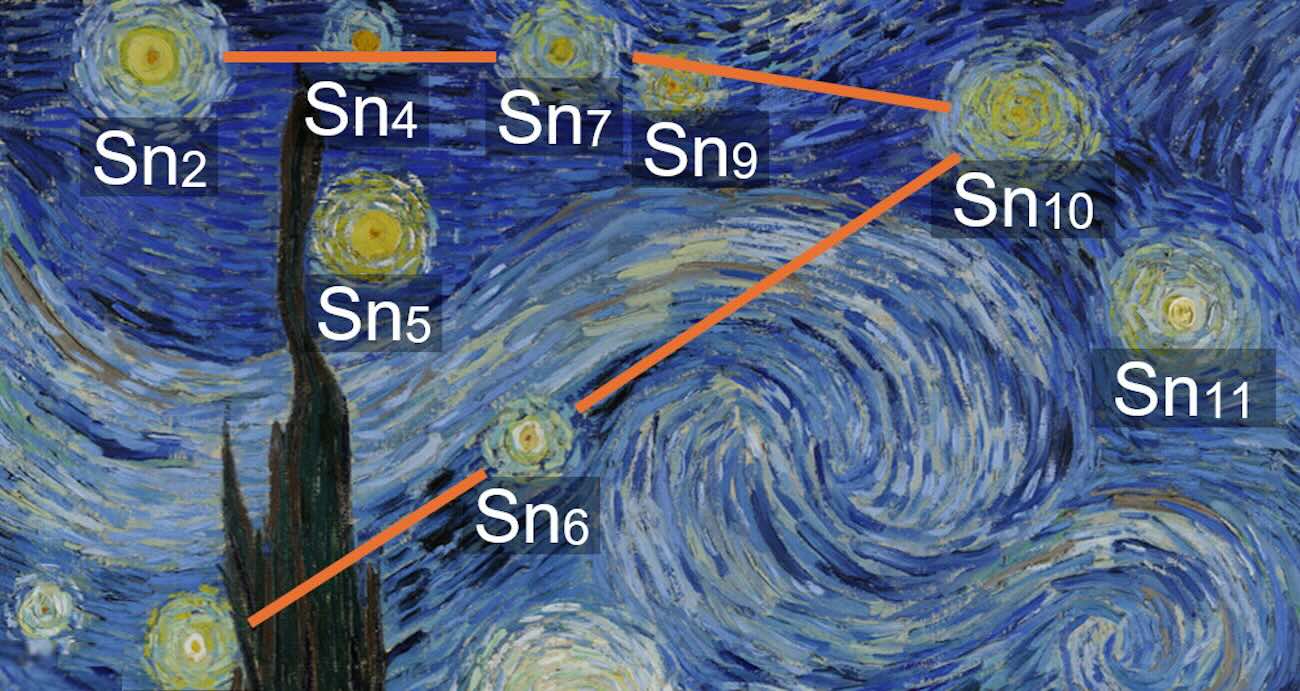
‘Perpetual Ocean 2’ quickly went viral, with many comparing the current swirls to Vincent van Gogh’s iconic painting Starry Night from 1889.

The ECCO ocean circulation model incorporates observations from spacecraft, buoys, and other on site measurements to keep the model accurate. The data used here is from ECCO-2 and covers the years 2021-2023.

“In 2011, we used ECCO2 to create a visualization called Perpetual Ocean. Perpetual Ocean continues to be extremely popular, but it only shows ocean currents on the surface,” said a statement from NASA Goddard.

Starry night, Swirly ocean

“In this new visualization, we use the ocean’s 3D velocity field to visualize some of the strongest ocean currents. We release virtual particles in the ocean and allow them to move with the ocean’s three dimensional velocity field.”

Earth ocean currents look like Van Gogh – NASA’s Scientific Visualization Studio (via SWNS)

“Each particle has a trail to better see its direction of movement. The particles initialized above 600 meters in depth have a trail length of 3 days, those initialized deeper than 600 meters have a trail length of 6 days.”

FUN LOOK INTO SPACE: 
NASA Visualizes What it Would Be Like to Plunge into a Black Hole – WATCH
A Formation That Looks Like a Grizzly Bear Spotted on Mars by NASA Camera

“The particle trails help identify the strongest currents in the world that are squeezed in narrow belts on the western side of each ocean basin.”

See the videos from NASA at their website, here.

SHARE NATURE’S BEAUTY With Friends On Social Media…
Over-the-Counter Ibuprofen Can Speed Up Recovery From Concussion By 20%, Shows Study

High school football by Katrina Berban

Over-the-counter painkillers such as ibuprofen speed up the recovery from concussion, according to a new study.

Concussion injury patients who took the pain reliever pills recovered 20% faster than those who did not take them, said scientists from the University of Washington in Seattle.

“These results are exciting as there are limited treatment options for concussion, and over-the-counter pain relievers are readily available and inexpensive,” said study author Dr. Kyle Arnold.

The study involved athletes and military cadets who had been diagnosed with concussions.

Out of 1,660 patients, 813 took over-the-counter pain relievers after their concussion—including acetaminophen, ibuprofen, or other non-steroidal anti-inflammatory drugs—while 848 didn’t take any pain relievers.

Researchers looked at the amount of time it took the athletes to be cleared to return to activities with no restrictions—at both 50% recovery and 90% recovery, meaning when 50% of the athletes in the study recovered, and then later when 90% were recovered.

People who took the pain relievers were 20% more likely to return to unrestricted activities faster than those who didn’t take painkillers.

Those who took the medications were cleared at 50% recovery an average of two days faster, and at 90% recovery an average of seven days faster than those who took no medication.

RELATED: Frequent Aspirin Use is Linked to Lower Risk of Ovarian Cancer in Women Most Likely to Develop the Disease

People who took painkillers were also about 15% more likely to return to having no symptoms more quickly than those who didn’t take them.

Of those who were 50% recovered, the people taking over-the-counter painkillers achieved zero symptoms one day sooner than those not taking the medications.

At 90% recovery, they had no symptoms three days sooner.

Those who took painkillers also had better scores on tests of how severe their symptoms were overall and how severe their headaches were.

The research team found another benefit: the earlier that people took painkillers after the injury, the faster they recovered.

ALSO CHECK OUT: First Study of Its Kind Shows Aspirin May Reduce the Harms of Air Pollution By Half

At 50% recovery, those who started using painkillers on the first day of their injury returned to their work and had resolution of symptoms around eight days faster than those who started taking them after five or more days.

Also, they found no difference in performance between the pain relievers, whether acetaminophen, ibuprofen, or others.

“These preliminary results may help inform potential treatment options for people recovering from concussions,” said Dr. Arnold, who added that additional studies were needed to provide more definitive recommendations.

DID YOU KNOW? Michael Bloomberg Donates $1 Billion to Provide Free Tuition for Future Doctors at Johns Hopkins

The findings are due to be presented at the American Academy of Neurology’s annual meeting in San Diego, California April 5–9.

SEND THE TIP TO ATHLETES EVERYWHERE By Sharing On Social Media…