












All News - Page 9 of 1718 - Good News Network
Home Blog Page 9

Good News in History, March 25

- credit, CC 3.0. Eva Rinaldi

Happy Birthday to Sir Elton John, who turns 79 years old today. Growing up in London, the singer-songwriter learned to play piano at age three. In his 5-decade career, Elton John has sold more than 300 million records, making him one of the best-selling musical artists in the world. WATCH a 70th birthday video tribute… (1947)

Seniors Who Eat More Meat Are Less Likely to Develop Dementia Study Find

By Leonardo Carvalho

Researchers in Sweden recently found that seniors were able to offset a genetic risk for Alzheimer’s disease by consuming more meat.

The study authors say that their findings suggest that conventional dietary advice may be unfavorable to a subgroup of the population who carry the APOE gene.

Now infamous, APOE is a gene that confers a greater risk of Alzheimer’s disease. In Sweden, around 30% of the population are carriers of the gene combinations APOE 3/4 or APOE 4/4, and among Swedish Alzheimer’s patients, 70% carry one of these two combinations.

When the Swedish Food Agency presented an overview of research on the link between diet and dementia last year, more research was requested to assess a possible link between meat consumption and the development of dementia.

“This study tested the hypothesis that people with APOE 3/4 and 4/4 would have a reduced risk of cognitive decline and dementia with higher meat intake, based on the fact that APOE4 is the evolutionarily oldest variant of the APOE gene and may have arisen during a period when our evolutionary ancestors ate a more animal-based diet,” lead author Dr. Jakob Norgren at the Karolinska Institute in Solna said in a press release about the study.

The research, published in JAMA Network Open, followed more than 2,100 Swedes for up to 15 years, all of whom were aged 60 or older and had no diagnosis of dementia at the start of the study period. The association between self-reported diet and cognitive health measures was analyzed, adjusting for age, sex, education, and lifestyle factors.

Among those who ate less meat, the group with APOE 3/4 and 4/4 had more than twice the risk of dementia than people without the gene variants.

However, the increased risk of cognitive decline and dementia in the risk groups was not seen in the top 20% of participants who consumed the most meat (included red meat).

Their average consumption was estimated at around 870 grams of meat per week, standardized to a daily energy intake of 2,000 calories.

Additionally, the 20% of participants who ate the second most meat per week on average had similar, albeit less robust scores for dementia, cognition, and memory, suggesting that at least at this higher level, there was a dose-dependent response: a strong suggestion that the results were more than just an observational coincidence.

“Those who ate more meat overall had significantly slower cognitive decline and a lower risk of dementia, but only if they had the APOE 3/4 or 4/4 gene variants,” said Dr. Norgren. “For those who are aware that they belong to this genetic risk group, the findings offer hope; the risk may be modifiable through lifestyle changes.”

The study also found that the type of meat consumed is important.

“A lower proportion of processed meat in total meat consumption was associated with a lower risk of dementia regardless of APOE genotype,” said study co-author Dr. Sara Garcia-Ptacek said.

The research team also found a “significant” reduction in the chances of an early death in carriers of APOE 3/4 and 4/4 who ate higher quantities of unprocessed meat.

ALSO CHECK OUT: Simple Amino Acid Identified as Perhaps the Difference Between Life and Death from Illness

The researchers pointed out that the research was observational, and needs to be followed up with intervention studies that can better demonstrate causal relationships.

“Clinical trials are now needed to develop dietary recommendations tailored to APOE genotype,” said Dr. Norgren.

“Since the prevalence of APOE4 is about twice as high in the Nordic countries as in the Mediterranean countries, we are particularly well suited to conduct research on tailored dietary recommendations for this risk group.”

FOR MEAT LOVERS: Cruelty-free Way of Making Duck Foie Gras Devised by Scientist: ‘It was always a dream’

Dietary research is difficult to conduct. It’s difficult for people to remember how much of what they ate day in and day out, but keeping them isolated in a metabolic ward for 15 years would obviously be impossible.

Almost all dietary research ever conducted involved gathering observations—not the “gold standard” of scientific research. That includes almost all research that has shown that higher consumption of meat is linked with increased risk factors for various diseases like cancer, cardiovascular disease, and others.

REDUCING YOUR DEMENTIA RISK: 43-year-long Study Found Coffee Was Associated with 18% Lower Risk of Dementia

Whatever those studies might have shown with these relationships, it’s 100% the case that the process of aging is both characterized by and driven by loss of muscle mass and the resulting increase in morbidity. The maintenance of muscle mass in old age is found to reduce morbidity and slow the aging process. High protein diets, such as 1 gram protein per kilogram of bodyweight, support muscle maintenance in old age.

Dementia is also part of the aging process, and so maintaining lean muscle mass—for which a protein-rich diet is a must—may indeed be more than just a correlative finding, which it currently is. More meat, it might be argued, equals more muscle mass, equals slower aging, equals reduced risk of dementia.

SHARE This Important Dietary Research With Friends At Risk Of Dementia… 

‘Call a Boomer’ Payphone Instantly Connects Youth with Seniors to Tackle Loneliness Across Generations

A Boomer uses the phone to call a Zoomer - credit, Volunteers of America
A Boomer uses the phone to call a Zoomer – credit, Volunteers of America

The new payphone outside a coffee shop on a Boston University campus is a strange sight: with its canary yellow box and the sticker pasted across the top reading “Call a Boomer.”

But what passersby can’t see and don’t know is that over 2,000 miles away in Reno, Nevada, another payphone box sits in a common area at a senior housing community.

Its sticker, in contrast, says “Call a Zoomer.”

The experiment, created by Matter Neuroscience, was designed to bridge generational divides and address loneliness in the two groups experiencing the highest levels of social isolation: young adults and seniors.

If a Zoomer picks up the phone outside of Pavement Coffee House, it automatically calls the phone in the recreation area at the Volunteers of America affordable senior housing community.

If a Boomer in the recreation area picks up the phone, it automatically dials the box on the street outside the coffee shop. Two phones, two generations, instant connection.

Matter styles itself as an emotional fitness club, “backed by science and supported by community.” The purchasing of two old payphones on Facebook Marketplace was just the most recent kind of experiment the ‘club’ has undertaken, which also included the same experiment, but with “call a democrat/republican” stickers on them.

In a video that garnered 18 million views on the page’s Instagram, April the Boomer picks up the phone and connects with Charlotte the Zoomer.

She asks if the Zoomer has any life advice to share—a reverse of traditional roles one might think. The generational g-force of that reversal only deepened when Charlotte replied that she thinks people should just get off their phones and spend more time outside to meet people like them.

If stereotyping is a fault in our stars, the example of April and Charlotte perhaps goes to show how much each generation has to learn and share with one another.

It also goes to show what a bloody good idea Matter Neuroscience had.

LISTEN to the conversation, and watch Matter explain their experiment… 

SHARE This Inspiring Cross-Generational Connection With Your Friends… 
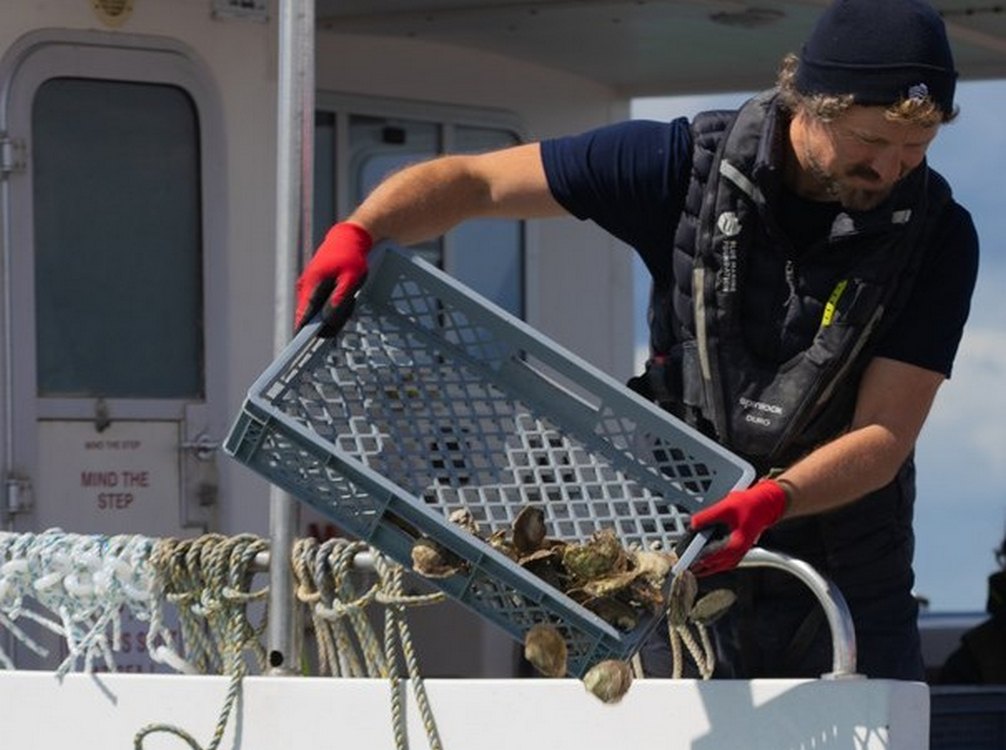
Volunteers Plant ‘Mega Hedge’ 15 Miles Across England, Connecting Wildlife in Two National Parks

Hedgelayers taking part in hedgelaying challenge at the start of Hedgefest - credit, CPRE, released
Hedgelayers taking part in hedgelaying challenge at the start of Hedgefest – credit, CPRE, released

From England’s South Downs National Park, one can trace a series of traditional hedgerows off into the distance farther than it’s possible to see.

This mega hedge runs all the way across the county of Hampshire, to New Forest National Park, some 15 miles in length.

The Hampshire Hedge, as it’s called, has been three years in the making, as volunteers and experts at making traditional hedges have come together to build an unbroken line of hedgerows connecting the two parks and their wildlife.

Far more than just a fence or barrier, it’s been shown that hedgerows are vital habitat corridors, even as slim as they are. From mice to hedgehogs, insects and birds, they offer a narrow sanctuary to 2,000 species over the course of a year, all of which them the hedges like a natural highway.

The Hampshire Hedge project was put together by the Campaign to Protect Rural England’s (CPRE) “Hedgerows Heroes” program, and was supported by various conservation nonprofits and the UK’s National Lottery Heritage Fund.

“Hedgerows are a defining feature of Test Valley’s landscape and play a vital role in supporting wildlife, tackling climate change and keeping our countryside thriving,” Alison Johnston, a councilwoman responsible for countryside affairs at Test Valley Borough Council, were the hedgerow is located.

Now almost entirely completed, the third-year of hedge laying was celebrated at Broadlands estate at a party called “Hedgefest” that also celebrated CPRE’s 100th anniversary as an organization.

MORE STORIES LIKE THIS: Conservationists Hail Recovery of 150 Struggling Species Thanks to Projects by Natural England

“It was fantastic to see so many people come together at Hedgefest to share skills, celebrate progress and show what partnership working can achieve.”

Like a highway connecting the two national parks, it should go a long way towards promoting habitat connectivity, a challenging goal when considering the population density in southern England.

QUAINT LANDSCAPES: Retired Banker Devotes His Millionaire Fortune to Restoring Protective Sand Dunes on Island Beaches

“The CPRE’s project of joining the two National Parks, the New Forest and the South Downs with these hedgerows is just such an inspiring idea,” said Vanessa Rowlands, Chair of the South Downs National Park Authority.

“We’ve always wanted to have a closer link with the New Forest, and we can do it physically and environmentally for the wildlife. So we’re really excited about it!”

SHARE This Story Of One Hell Of A Hedge With Your Friends… 
Global Terrorism Falls to 15-year Low Driven by Reductions in 81 Countries

The annual Global Terrorism Index published by the Institute for Economics and Peace has reported that global terrorist attacks fell 22% last year, and deaths from said attacks fell 28%.

They both fall to numbers not seen since 2007.

2025 registered the single biggest annual reduction in attacks and incidents since 2020-2021. The trend reflects the stabilization of several key geographical areas, and reductions in attacks and deaths in 81 countries worldwide.

Terrorism, defined more narrowly as stateless, transnational perpetrators of violence for political or religious ends, is now concentrated in Africa’s Sahel, and Sub-Saharan region.

The report follows a year (2025) in which several areas that had previously been affected by terrorism saw significant strides towards peace and stability.

Turkey improved by 4 places, and many places in the last decade; a result of the end of a 40-year conflict between the government in Ankara and the Communist Kurdish guerilla movement, the PKK. The group’s founder and leader Abdullah Öcalan ordered the organization to dissolve, admitting it had come as far as possible by means of violence.

Afghanistan continues its improvement from last year’s report when it dropped out of the top 10 worst-affected countries for the first time since the American occupation began in 2002.

Iraq improved 3 positions, coinciding with an ongoing socio-economic improvement in the country after 4 decades of war which the UN’s chief coordinator in the country described as “unrecognizable and remarkable.”

Tunisia, which has suffered from an ongoing terrorist insurgency in the country’s southwestern mountains, majorly improved, with an incidence rating similar to the Netherlands, Austria, and Canada.

Libya, once a failed state, continues its efforts at stabilization, and improved another 4 positions, level with Italy—an outstanding achievement.

Algeria, Oman, Bangladesh, and Jordan all improved substantially. The Ivory Coast improved 11 positions, and is now safer from a terrorist point of view than almost any Western country.

MORE REDUCTIONS IN VIOLENCE: Croatia Declared Landmine-free After More Than 2 Decades of Demining Efforts

70% of all deaths resulting from terrorist attacks occurred in just 5 countries: Burkina Faso, Nigeria, Niger, DR Congo, and Pakistan. Even still, Burkina Faso and Niger experienced 900 fewer deaths from terrorism compared with last year.

Regarding Pakistan, terrorism there is half driven by conflict with the Balochistan Liberation Army (BLA), a militant group of ethnic Balochs in the country’s southwestern desert regions.

MORE FROM THE FRONT LINES: Timbuktu’s Medieval Manuscripts Return Home After a Decade Away Safe from Insurgents

The conflict is more reminiscent of the UK’s struggle against the Irish Republican Army than the US’s hunt for al-Qaeda. The BLA have a clear political objective of breaking their region away from Islamabad, and wage terrorist warfare in attempt to achieve it. The BLA have never attacked targets outside Pakistan.

2025 was also notable for only one attack that resulted in more than 100 deaths, a major reduction in what the report labeled “large-scale” terrorist attacks.

SHARE This Positive Trendline Down In Violence With Your Friends… 

“Love takes up where knowledge leaves off.” – Thomas Aquinas

Credit: Aaron Burden

Quote of the Day: “Love takes up where knowledge leaves off.” – Thomas Aquinas

Photo by: Aaron Burden

With a new inspirational quote every day, atop the perfect photo—collected and archived on our Quote of the Day page—why not bookmark GNN.org for a daily uplift?

Credit: Aaron Burden

Good News in History, March 24

Peyton Manning in 2013 during a Pro Bowl game - credit military photo

Happy 50th Birthday to Peyton Manning, one of the greatest quarterbacks in NFL history. Nicknamed “the Sheriff” he spent 14 seasons with the Indianapolis Colts and 4 with the Denver Broncos, recording 11 playoff appearances, 8 division titles, 3 AFC Championship Games, 2 Super Bowl appearances, and 1 championship title in Super Bowl XLI with the Colts, and another Super Bowl appearance (and victory) with the Broncos in his final season as a professional. At the time, he became the first starting quarterback to win the Super Bowl for more than one franchise. READ more about Manning… (1976)

Intrepid Teens Channel Donations of Old School Uniforms to 1,400 Families, Saving Them $140K

Ethan and Desmond Hua - credit, Hope Uniforms Program website
Ethan and Desmond Hua – credit, Hope Uniforms Program website

Two San Francisco area teens are providing a valuable service for low-income families in their community by collecting and redistributing donated school uniforms.

The brothers’ work also keeps the clothes out of landfills, where they break down over hundreds of years while releasing methane, a potent, yet short-lived greenhouse gas.

Anyone who’s had to shop for them year-in-year-out will know: children grow like weeds.

A uniform good at the start of school may not even fit them by Spring Break, and for families who live at the hand-to-mouth income level, it’s not always an option to simply continue buying replacements.

Desmond and Ethan Hua got the idea for their nonprofit redistribution service after seeing a boy arrive at Bayside Academy in Sat Mateo wearing shorts on a cold day. Asking their peer why it was he was freezing his knees off, he responded that he didn’t have another pair of pants to last him until laundry day

Understanding as well what a thousand wasted school uniform will do to the country’s emissions footprint, the boys launched HOPE: Help Our Mother Earth, in which they sought to eliminate textile waste by identifying textile want.

“We take in gently used school uniforms from families who no longer need them, and we redistribute them back to families in the community,” Ethan told CBS News San Francisco. 

In the family garage, organized plastic chests cover the ground, each one stacked full of neatly folded uniforms for all sizes. The Hua brothers receive requests from students’ families, fulfill the requests if possible from the items they have in stock, and then leave them in collection bins at school offices.

TEEN DIFFERENCE MAKERS: Inspired by Asthma Attack, New Delhi Teens Recycle 2 Million Pounds of Waste Across 14 Indian Cities

Those collection bins are also where families can leave uniforms that don’t fit their children any more, and can be found across 9 public schools in the San Mateo-Foster City School District that participate in the program.

“It started with our school, and then now the whole program is across our district,” said Bayside Academy principal Maria Demattei. “We are thrilled that we can contribute to that, to our Mother Earth.”

OTHER INITIATIVES LIKE THIS: High School Students Repair Cars and Give Them to Single Moms: ‘You’re Really Making a Change in the World’

The Hua brothers estimate they’ve saved $140,000 in uniform costs for over 1,400 families, and around 30 tons of methane that would have been emitted if those uniforms had been binned.

“HOPE has saved roughly 13,000 articles of school uniforms getting sent to landfill thrown away by families,” said Ethan, who recently collected the Dr. Cora Clemons Emerging Young Samaritan Award from a local foundation.

WATCH the story here from CBS News… 

SHARE These Two Teens Initiative That’s Making A Huge Difference In Their Community… 

Message in a Bottle Discovery on Tasmanian Beach Leads to 25-year Intercontinental Friendship

Diane Charles in 2001 (left) and Erika Boyera in 1997 (right) - credit, family photos
Diane Charles in 2001 (left) and Erika Boyera in 1997 (right) – credit, family photos

Not exactly news, but a beautiful story comes now from the sandy shores of Tasmania, where 25 years ago, the waves brought a life-long friend to resident Diane Charles.

Rising early, she tells ABC News AU, was her habit back then—to enjoy the peace of the sea and salute other early risers. One such morning in January, Charles discovered something bobbing up and down in the surf.

It was that most famous of curiosities: a bottle, sealed tightly with a message inside.

We’re talking 25 years ago, so when Charles opened it up to find the note written in Spanish, she couldn’t just type it in to Google Translate; and it wasn’t as if there were a big immigrant community in Tasmania either.

The captivating discovery became all the more captivating—because it was a mystery. With the help of her brother who had a Spanish dictionary, she tried to piece together the gist of the letter by picking out individual words, but it was poetic, and they eventually sought a scholar.

“Life has taught me all is possible, receive love and success second to this,” was the literal translation. In the top left corner, however, there was something far more interesting, a name and a fax number.

In 1997, some years before Charles’ fateful discovery on the beach, Erika Boyero from Colombia was bartending aboard a cruise ship sailing around Scandinavia. Oppressed by boredom, she filled several empty alcohol bottles with letters and threw them overboard.

Four years later, one made it to Tasmania, and when Charles sent a letter via fax, Boyero was back at home in Colombia.

“Hey, you received a fax from Australia,” said her father. “I said, ‘What? I don’t know anyone in Australia.'”

Then she remembered the bottles.

MESSAGES IN BOTTLES: Bahama Boy’s Message in a Bottle Floats 4,000 Miles to Be Read Almost Exactly a Year Later in Portugal

“You don’t really think that can happen,” she told ABC News AU. “There are so many millions of people in the world … and when destiny, in this way, shows a person you have to meet in this life, for this reason … it is beautiful.”

That fax led to a 25-year friendship, with the women calling and writing each other routinely to catch up or celebrate milestones like the birth of children or moving house. It ultimately culminated in a visit for the first time this March, when Boyero was on a trip to Kuala Lumpur, and for the first time in her life, the distance to Tasmania seemed small.

SENDING OUT AN SOS: NASA to Send ‘Message in a Bottle’ Into Space Designed to Communicate With Extraterrestrials

Waiting at the airport, Charles felt a bizarre form of anticipation unlike anything she had experienced, but when Boyero appeared through the exit doors, it was like seeing a “long lost friend.”

The first item on the itinerary was a walk on Tatlows beach, where Charles discovered Boyero’s letter, and then a visit to the local Stanley Discovery Museum, where her message had become part of an exhibition.

SHARE This Beautiful Story Of Coincidence And Friendship With Your Friends…

43-year-long Study Found Coffee Was Associated with 18% Lower Risk of Dementia

After documenting the consumption of tea and coffee by healthcare professionals for a staggering 43 years, the resulting data seems to support what many other studies have found: that coffee is associated with better neurological health.

The strongest effects were seen in participants who drank 2-3 cups of caffeinated coffee or 1-2 cups of tea per day. Exceeding this range didn’t seem to extend the benefits any further, but also didn’t register as a detriment to health.

131,821 participants from the Nurses’ Health Study (NHS) and Health Professionals Follow-Up Study (HPFS) were included in the analysis, which leveraged this world-class data set going back 43 years.

The professional participants were subjected to repeated evaluations of diet, dementia diagnoses, subjective cognitive concerns, and objective cognitive performance, which were tabulated and stored for scientists’ later use. Over the course of the dataset, 11,033 developed dementia.

Individuals who consumed higher amounts of caffeinated coffee had an 18% lower risk of developing dementia compared with those who rarely or never drank it. They also reported lower rates of subjective cognitive decline (7.8% versus 9.5%) and performed better on certain objective cognitive tests, meaning their minds stayed sharper at older ages.

“When searching for possible dementia prevention tools, we thought something as prevalent as coffee may be a promising dietary intervention—and our unique access to high quality data through studies that has been going on for more than 40 years allowed us to follow through on that idea,” said senior author Daniel Wang, MD at Mass General Brigham.

Similar patterns were observed among tea drinkers, while decaffeinated coffee did not show the same associations. This suggests that caffeine may be an important factor behind the observed brain-related benefits, although more research is needed to confirm the underlying mechanisms.

MORE COFFEE NEWS: 

Typically, an 18% association is nothing to write home about. In observational science, effects of 50% or higher are generally needed before scientists will feel comfortable saying they’ve discovered anything definitively.

However, when the sample size and incredible duration of the study are taken into account, such a relatively small association may seem more likely to suggest underlying truth. It helps that many other studies have associated coffee with better health and disease outcomes.

Preventing dementia early is especially important because current treatments are limited and generally provide only modest benefits after symptoms begin.

MORE COFFEE NEWS:

Coffee and tea contain compounds such as polyphenols and caffeine, which are thought to support brain health. These substances may help reduce inflammation and limit cellular damage, both of which are linked to cognitive decline.

“We also compared people with different genetic predispositions to developing dementia and saw the same results—meaning coffee or caffeine is likely equally beneficial for people with high and low genetic risk of developing dementia,” said lead author Yu Zhang, PhD at Harvard Chan Medical School.

TOAST This Brilliant Study Result With Your Friends… 

Nashville Public Library Offers Free Digitization of Photos, VHS Tapes–Book Your Appointment Now

Hunter Scott via Unsplash

The memory of entire lives, generations even, were recorded on technology that is rapidly becoming difficult to access, difficult to preserve, or just plain inconvenient to have around.

As VHS tapes, Beta Max, slides and audio film, photos, or negatives, and the personal memories they contain risk being lost to history, so the Nashville Public Library system has introduced the “Memory Lab,” where these media can be digitized, stored without risk of physical damage, and easily shared.

“Memory Lab is more than just technology—it’s a creative space where anyone can reconnect with their history and capture moments that otherwise might have been lost forever,” said the public library in a statement.

Anyone can reserve an appointment to turn to digitize their physical media in the lab, which is equipped with a VHS-to-digital convertor and a state-of-the-art, multifunctional scanner.

Reservations, which span from 15 minutes to 4 hours, are available for free at the Donelson Branch Library, located at 2714 Old Lebanon Pike, Nashville, and interested parties will receive a confirmation email with instructions once a reservation has been made.

A statement from the library says that commercial digitization services might charge $30 per tape and $1 per image, which for a whole photo album or home movie collection could really add up.

MORE STORIES LIKE THIS: ‘World’s Largest’ Time Capsule Opens 50 Years Later –The Vision of One Man in Nebraska

The Nashville Public Library and its Memory Lab are also part of a growing national trend at public libraries (DC, Los Angeles, Brooklyn, and others) working to bridge the digital divide, and places them among a handful of libraries in the state offering free media digitization, including in Rutherford and Williamson counties.

“We are pleased about the launch of Memory Lab, but the most rewarding part is yet to come—all of the stories, memories, and history that will be given new life and preserved for the next generation.”

SHARE This Great, Free Opportunity To Preserve Old Home Movies And Such…

“As the twig is bent— the tree inclines.” – Virgil

Credit: Guillaume de Germain

Quote of the Day: “As the twig is bent the tree inclines.” – Virgil

Photo by: Guillaume de Germain

With a new inspirational quote every day, atop the perfect photo—collected and archived on our Quote of the Day page—why not bookmark GNN.org for a daily uplift?

Credit: Guillaume de Germain

Good News in History, March 23

251 years ago today, American Founding Father Patrick Henry spoke to Virginia legislators, where he famously proposed that their colony should join the revolution against King George and fight for independence. “I know not what course others may take, but as for me, give me liberty, or give me death!” READ other anecdotes from the moment… (1775)

19-Year-old Abandoned at Birth Without Legs Leads USA to Sled Hockey Gold at Paralympics

Kayden Beasley (right), courtesy of Beasley Family and Carolina Hurricanes – © USA Hockey

Kayden Beasley’s life began without lower leg bones in a Chinese orphanage—but his journey carried him off to a loving family in a tiny North Carolina town, and eventually to the 2026 Paralympics in Italy.

Along the way, he’s broken every barrier and overpowered the obstacles in front of him to help bring a Gold Medal in sled hockey to the United States.

Kayden was born as a congenital double amputee above the knee, but at age 3, was adopted by Anthony and Amy Beasley on Christmas Day, and brought up in a loving home 30 miles from Raleigh with another son adopted from China three years earlier.

“It’s all I’ve ever known,” Kayden said of his loving North Carolina family in an article by the Raleigh News & Observer. “(My adoption) is a part of the journey, but not all of it.”

When he was 13, someone at his doctor’s office told him about the Carolina Hurricanes sled hockey club—an adaptive version of ice hockey, featuring sled-like mechanisms that allow people with disabilities to partake in the sport.

Kayden’s first experience with it proved to be a resounding success.

“He’s a natural, and he’s never looked back,” said Brian Jacoby, Founder and Co-Director of the Carolina Hurricanes Sled Hockey. “His first international tournament, I think in the second game, he was named player of the game.”

Before long, a new-found purpose and passion overtook Kayden’s life, sending him skating past any perceived limitations. He was invited to a Team USA development camp for sled hockey and eventually made the team.

Then, he competed in the 2025 World Para Ice Hockey Championship, where he had two goals and five assists in five games, helping to lead Team USA to a gold medal.

This month he skated in the Milano Cortina 2026 Winter Paralympics in Italy, just weeks after the USA men’s and women’s teams both won gold in the same city’s Winter Olympics.

At 19 years old, Kayden is still the third youngest member of the team, but he played in all five games for Team USA, scoring three goals and adding an assist as the Americans earned yet another gold medal.

(Watch the clutch goal below…)

“Happy, proud, excited; I am not sure what describes my emotions the best,” Hurricanes Director of Youth Hockey and Community Outreach Shane Willis said in an NHL article.

“Hurricanes Sled Hockey is home to a USA Hockey Gold medal, and I can’t wait to see it grow—and have more young players look up to Kayden.”

HEARTWARMING ADOPTION: Doctor Adopts 4-yo Patient Who had No Family When he Arrived for Heart Surgery–And Found Homes for his 5 Siblings Too

The young Beasley’s life began seemingly surrounded by barriers and obstacles. But thanks to a family’s love and the purpose provided by a sport, he’s sped past them all, delivering a gold medal to his country, and some inspiration to anyone who hears his story.

SEND HIS STORY SKATING Across the Internet–Share it To Social Media…

Wag-atha Christie Dog May Have Resolved Victorian Murder Digging Up Poison Bottle From 160 Years Ago

Blue Victorian poison bottle found in English garden in Clyst Honiton – SWNS

A family’s dog may have solved a notorious 160-year-old murder, after he dug up a bottle of poison buried in the garden.

The Labrador unearthed a blue vial under his lawn in Devon, England, that his owner, Paul Phillips, thought was a pipe—until he saw the words ‘Not To Be Taken’ embossed on glass.

The 49-year-old did some digging and discovered a woman named Mary Ann Ashford had lived two doors down and killed her husband William in 1865. She put poison into his tea so she could take his money and be with her young lover.

Now, in the modern-day town of Clyst Honiton, he’s pretty sure his dog has uncovered the evidence.

“My dog, Stanley, has been digging in the same spot in our garden,” Paul told SWNS news agency. “We kept patching it up—and even at one point had to put a paving slab over it—but he was insistent there was something there he wanted.

“It was a bright blue bottle in perfect, mint condition and had the words, ‘Not To Be Taken’ on the glass.”

Stanley the Labrador dug up a Victorian poison bottle – SWNS

After doing some research, he learned that such bottles were used in the mid-19th century for poisons, and then he remembered learning something about a murder and hanging in the village over a century ago.

“So I went back online and found the old newspaper article about William and Mary Ann Ashford living in Clyst Honiton. She was having an affair with a guy that worked at the local bakery. I think our property used to be a big cider barn.

“The fact that there was a murder due to poisoning in the next door down from us…you have to put two and two together!”

Paul also learned that his bit of local history became part of a national political question about the death penalty.

After tests showed that Mary Ashford had traces of arsenic and strychnine on her clothes, the local Victorian killer was sentenced to be executed for the “murder by arsenic poisoning of her husband of 20 years”—but the hanging almost went wrong.

Reportedly, with a crowd of 20,000 people watching, it took Mary minutes to die.

Paul said the incident galvanized opinion at the time against public hangings, and was key to ending them across the country.

Antique Victorian blue poison bottle treasure – SWNS

“It is fascinating that we have found a bit of history in my garden from a woman that was instrumental in the end of corporal punishment 160 years ago,” he beamed.

“My family and friends are totally engrossed with the story.”

Since the discovery, Stanley has not been digging in that spot at all anymore.

MORE MYSTERIES SOLVED:
Woman Finds Message on Toilet Paper Roll Written 35 Years Ago by Little Girl
Paul McCartney ‘Gets Back!’ His Hofner Bass, 50 Years After Theft from Van

And Paul hopes a local historian steps up to help the family find out more information about the unique story.

SHARE THE WAG-ATHA CHRISTIE TALE With Dog Families on Social Media…

If ‘Free Pianos’ Show Up in Your Feed, Don’t Be Duped: Industry Pioneers Warn Against Them

Credit: Tobin Harris
Hannah Beckett and McKinley Coda of ProPTN and Piano Buyer – with ‘Friends don’t let friends get free pianos’ tee shirt

If you’re on Craigslist or Facebook Marketplace, chances are you’ve seen a listing for a “free piano.” This may seem like the bargain of a lifetime; however, it’s quite the opposite.

“An expired piano is not a gift, it is a liability,” according to piano technician Hannah Beckett, who is providing a valuable update in the way we buy and repair our 88-keyed friends.

Like anything made of organic materials, pianos don’t last forever, and roughly 95% of the pianos that are being given away for free are expired instruments that have been kept far past a healthy lifespan.

When factoring in the costs of moving, tuning, and maintenance, the pianos essentially become expensive paperweights—or, worst case scenario, they can bring termites, mouse nests, or mold into your home.

That’s why the pioneering Ms. Beckett has been working tirelessly to revolutionize the industry, publishing several articles on the horrors of free pianos, saving technicians and musicians alike from the wreckage of expired instruments.

She first became aware of these issues 12 years ago when she was working as a music teacher in Wilmington, North Carolina. When one of her student’s piano pedals began squeaking, she rolled up her sleeves and dove into the repair.

“Even though I’d been playing piano my whole life, I had no idea of the complexity involved in making these instruments work,” Beckett told Good News Network. “It’s a common issue among pianists today; while other musicians are able to do basic maintenance on their instruments, pianists have very little understanding of how pianos actually work.

“I found out the hard way that when they’re not working correctly, it’s the musician who suffers.”

Hannah Beckett (left) and McKinley Coda repairing a piano

She’s been hooked on piano technology ever since. Now she can differentiate between a student’s mistakes and the piano’s mistakes—and spreads keen advice about refusing free pianos as the director/editor of Piano Buyer, an online resource for consumers seeking guidance on the ins and outs of pianos.

Fighting a male-domineering—and faltering—industry

Old uprights are not the only dinosaurs Ms. Beckett has been staring down. As a female in a male-dominated industry, Hannah has ushered in a better way of keeping pianos in tune.

Learning piano technology was a difficult path. Educational opportunities historically were not welcoming toward women, and reliable resources on such an esoteric craft can be expensive and hard to come by. Fortunately, Beckett landed some generous mentors—but even with individualized oversight, the learning curve is steep. Apprentices must hone their physical tuning technique, develop an advanced sense of hearing, and invest gobs of money into a specialized tool kit.

To make matters worse, the ‘90s tech boom led to a generational gap in the industry; the traditional father-son business model was failing because the majority of piano technicians who’d been actively working and garnering valuable expertise were now either passing away or retiring. Consequently, technicians have been scrambling to collect, document, and record all of their experience for future generations.

Hannah Beckett, Director/Editor of Piano Buyer and founder of ProPTN

“The piano industry still operates like it’s stuck in the ‘80s. The older generation saw information as something to be guarded, to minimize competition,” explained Beckett. “Now we’re in a position where we don’t have enough educated technicians!”

Beckett spent years trying to create quality, accessible educational materials for new piano tech students, only to be met by industry sexism and pushback. And with that, she took matters into her own hands.

She became the mastermind behind the Professional Piano Technician’s Network (ProPTN), an online platform that became a marketplace for technicians to buy new and used tools, find peer-reviewed articles on repairs and business, and self-paced courses teaching the concepts and skill sets that have been notoriously difficult to learn about.

She and fellow piano technician McKinley Coda also produce a podcast that interviews professionals from across the industry, while a Discord forum serves as a help line for beginning techs who may need advice from the more experienced. ProPTN is the only platform of its kind run entirely by women, and its diverse, rapidly growing user base is evidence of its success.

Other piano tech courses typically cost hundreds if not thousands of dollars—but the ProPTN subscription costs just $65 a year.

“After spending way too much time and energy fighting a system with built-in restrictions, I decided to channel my efforts into building a new system with no glass ceiling,” said Beckett, who also tunes, repairs, and maintains pianos in Northern Virginia via the Aurelia Piano Co.

“While it has also been a ton of work, the rewards of helping a new generation experience a better educational environment than the one I navigated far exceed the fatigue of building from the ground up.”

With both of Beckett’s companies combined, industry professionals and musicians alike are becoming increasingly aware of the “free piano” problem.

Credit: Tobin Harris

Inexperienced technicians may continue trying to service expired pianos—despite how they hinder the progress and performance of pianists themselves—by focusing on how they may be able to service an instrument versus whether they should.

But heeding Beckett’s advice will result in performers being paired with better instruments; technicians becoming better trained at keeping instruments healthy; and the music world becoming more in tune every day.

SHARE THE INSIGHTS With Piano Players and Enthusiasts on Social Media…

Teens Recycle Old Pickleballs and Tennis Balls to Avert Millions From Landfills –And You Can Help

Teens form Another Bounce to collect tennis and pickleballs for recycling

While most teenagers are focused on homework and weekend plans, twelve high school students from the Pacific Palisades community are confronting a global environmental issue hiding in plain sight: the estimated 500 million non-biodegradable tennis and pickleballs discarded into landfills each year.

They launched Another Bounce with an ambitious goal of setting a World Record for the most balls collected for recycling from racquet sports—a campaign that will culminate in an Earth Day collection event on April 19.

The group has partnered with Ridwell in Los Angeles, which shreds, washes, and pelletizes the balls, which are then shipped to their partner Merlin Plastics.

The recycled plastic is then used to create a variety of products: The pelletized post-consumer resin (PCR) ends up in various commercial and industrial products like nursery plant pots, carpeting, plastic packaging, and more.

They also supply balls to a group in Florida called Bounce Back Pickle which breaks down the plastic to create new pickle balls—avoiding the landfill waste that can take over 400 years to decompose.

Ultimately, their youthful mission is to vigorously advocate for a circular model for tennis and pickle balls—like computer manufactures have designed in partnership with electronics stores—meaning, ball companies should create their own take back programs to ensure products are responsibly recycled at the end of their life.

Another Bounce

Simple ways you can help

The students have joined the California nonprofit Habits of Waste as the new ‘Junior Board’, and launched a public email campaign calling on major ball manufacturers (Penn, Wilson, Franklin, Dunlop, and Selkirk) to implement circular business models, including national take-back programs

“Youth leadership is one of the most powerful forces for change,” said the founder of Habits of Waste, Sheila Morovati, who landed in GNN’s headlines in 2018 for setting her own Guinness World Record for collecting over a million gently-used crayons to donate to 700 teachers.

Sheila’s son Leo, a varsity tennis player, is on the Board, along with Ford Casady, who’s currently ranked the #1 Junior Pickleball Player nationally (U18), and his brother Boone, who rounds out their #1 US Junior Doubles Team (18U).

After witnessing bins overflowing with discarded balls at courts across Southern California, the team of student athletes decided they would no longer sit on the sidelines.

Another Bounce

“We play the sport, we see the waste, and we aren’t waiting for adults to fix it,” said the 12 members who first came together while helping rebuild their community following the devastating Palisades Fire.

Beyond collecting balls within a 30-mile radius of Pacific Palisades—and nationally through shipped donations—the students are speaking at City Council meetings in Beverly Hills, Burbank, Santa Monica, Malibu, Los Angeles, to advocate for ordinances requiring parks, schools, and private clubs to recycle tennis and pickleballs.

They now have a warehouse in Santa Monica where people can ship balls if they want to help out nationally. (The address is: Habits of Waste Donation, 3000 31st St., Suite C
Santa Monica, CA 90405)

“It’s all very exciting,” Sheila told GNN in an email.

TEEN TITAN OF RECYCLING: Schoolboy With ‘Can-Do’ Attitude Has Recycled a Million Cans and Donated the Proceeds to Charity

A Guinness Record in their future?

Based on her research, the Guinness Record they must beat for the most tennis balls recycled is 1000, but there doesn’t seem to be any record for pickle balls yet.

Another Bounce recycling collection for tennis balls

“I will say that the kids are determined to set a substantial record so that they hold it for some time to come. Ultimately, the point of a world record is to raise awareness for issues, like ball waste, that people overlook everyday.”

Follow the group on Instagram @anotherbounce

MORE RECYCLING HEROES:
Engineering Student Turns Red Solo Cups into Stylish Sweaters That Don’t Shed Microplastics
China’s Dying EV Batteries and Solar Cells Are Powering a Circular Economy Worth $38 Billion per Year

AND SHARE THE RECYCLING IDEA By Posting This for Pickleball Players on Social Media…

“Luck is believing you’re lucky.” – Tennessee Williams

Credit: Lauren Lopes

Quote of the Day: “Luck is believing you’re lucky.” – Tennessee Williams

Photo by: Aaron Burden (spring crocus)

With a new inspirational quote every day, atop the perfect photo—collected and archived on our Quote of the Day page—why not bookmark GNN.org for a daily uplift?

Credit: Lauren Lopes

Good News in History, March 22

credit - Paul Wasneski, Chicano Park

56 years ago today, native Mexican or “Chicino” residents in San Diego, California occupied a site under the Coronado Bridge, leading to the creation of Chicano Park. Home to the country’s largest collection of outdoor murals, as well as various sculptures, earthworks, and an architectural piece dedicated to the cultural heritage of the community. The park was designated an official historic site. READ what you can find there… (1970)

Boy Selling Towel That Stays Cool for 2 Hours Wins $200,000 in Prize Money

Harrison Nott at 15 inundated with orders for his CoolTowel - SWNS
Harrison Nott at 15 inundated with orders for his CoolTowel – SWNS

A teenage boy who is marketing a towel that stays cold for two hours has bested 15,000 other inventors to win a £150,000 cash prize ($200k) in an international competition.

16-year-old Harrison Nott is juggling his normal schoolwork while running his CoolTowel company, which earned £100k in revenues last year.

He became an entrepreneur in 2023, founding CoolTowel in his bedroom. He’s gradually scaled up his business, sending out more than 30,000 orders.

Reportedly, the towel is made of a three-layer polyester material that holds onto moisture. The directions say it “delivers cooling relief by wetting, wringing, and snapping the towel”.

Harrison, from Essex, England, was soon selling his wares via TikTok and a Shopify website—hitting £15,000 during his best day, last summer.

Now, after recent headlines, he’s coping with a quickly ballooning business.

“I’ve been very, very busy,” Harrison admits. “It’s gone from a relatively small side hustle run from my bedroom to a big business.

“I’ve had to grow up very fast. My school has been very helpful; I’m on a part-time timetable now to accommodate the needs of my business.”

In November, Harrison attended an Alibaba.com CoCreate Pitch event in London after applying with “15,000 other young entrepreneurs from around the world”.

Founder Harrison Nott wins CoCreate Pitch competition with his CoolTowel -SWNS / Ali Baba.com

He was one of just 30 chosen to pitch their business to judges at the event. And though ten others won $20k investments, Harrison was the only one to take home the grand prize of $200k, after wowing judges with his pitch.

One of the competition judges, ex-England footballer Rio Ferdinand, was so impressed with young Harrison that he exchanged numbers with him—and the boy hopes he becomes an investor, to help him take his business to the next level.

“I felt like a celebrity. It felt like a dream… ” (Watch one of his TikTok promotion videos below…)

@cooltoweltiktok

❄️🛍️ You NEED this CoolTowel! Its perfect for hot days, sport , menopause pets and more! Hurry! ❄️🛍️ #cooltowel #Coldsweattowel #Cooldown #Overheating #Hot #Viral #Getyours #tiktokshop #fyp

♬ original sound - CoolTowel

Harrison says he’s been lucky to have the inspiration of his dad, 42-year-old Matthew Nott, to guide him in his business.

HE’S A ROLE MODEL: Schoolboy With ‘Can-Do’ Attitude Has Recycled a Million Cans and Donated the Proceeds to Charity

“I’ve seen my dad running a business my whole life and I’ve always wanted to run my own, and have the financial control to do things for myself.

“I started my first business at eight, reselling items on eBay. I’ve started loads of different start-ups, most of them failing and losing money.

“They’ve given me the skills I needed to start a new one.

With a passion for fitness and playing squash, Harrison was frustrated by the lack of high-quality cooling towels in the UK, and that discontent drove him toward his goal.

He trademarked his brand with the help of his business teacher—and became a company. Determined to give back to his community, Harrison donates CoolTowel products to charities that support individuals with illnesses.

“It’s about building up a solid brand that people trust.”

Founder Harrison Nott in pitch competition with his CoolTowel – SWNS / Alibaba.com

Going forward, he hopes to be able to teach other people how to build up their own successful business.

TEEN GENIUSTeens Invent Device that Removes Microplastics with Ultrasound Waves, Winning $50k

“I want to help people be their best self and launch their business if they want to, or get that skill they want to learn,” said Harrison, who has sponsored his own ‘sports day’ at this school, and presented an assembly about his business model.

“I’ve made a lot of mistakes but now I’ve got the formula.”

He plans to take A-level Business Studies, and his dad Matthew admires his commitment to bettering himself—in whatever he does.

“He’s a chip off the old block. When he fails at something, he doesn’t just say, ‘Oh I tried’. He works out where he went wrong.

TURNING WATER INTO WINE: Couple Makes Award-Winning Gin and Vodka After Starting Distillery in a Shed During Lockdown

“That is so important in life.”

INSPIRE AN ENTREPRENEUR By Sharing This on Social Media…