All News - Page 9 of 1688 - Good News Network
Home Blog Page 9

Your Weekly Horoscope – ‘Free Will Astrology’ by Rob Brezsny

Our partner Rob Brezsny, who has a new book out, Astrology Is Real: Revelations from My Life as an Oracle, provides his weekly wisdom to enlighten our thinking and motivate our mood. Rob’s Free Will Astrology, is a syndicated weekly column appearing in over a hundred publications. He is also the author of Pronoia Is the Antidote for Paranoia: How All of Creation Is Conspiring To Shower You with Blessings. (A free preview of the book is available here.)

Here is your weekly horoscope…
FREE WILL ASTROLOGY – Week of November 22, 2025
Copyright by Rob Brezsny, FreeWillAstrology.com
SAGITTARIUS (Nov. 22-Dec. 21):
A day on Venus (one rotation on its axis) lasts about 243 Earth days. However, a year on Venus (one orbit around the sun) takes only about 225 Earth days. So a Venusian day is longer than its year. If you lived on Venus, the sun wouldn’t even set before your next Venusian birthday arrived. Here’s another weird fact: Contrary to what happens on every other planet in the solar system, on Venus the sun rises in the west and sets in the east. Moral of the story: Even planets refuse to conform and make their own rules. If celestial bodies can be so gloriously contrary to convention, so can you. In accordance with current astrological omens, I encourage you to exuberantly explore this creative freedom in the coming weeks.

CAPRICORN (Dec. 22-Jan. 19):
Let’s revisit the ancient Greeks’ understanding that we are all born with a daimon: a guiding spirit who whispers help and counsel, especially if we stay alert for its assistance. Typically, the messages are subtle, even half-disguised. Our daimons don’t usually shout. But I predict that will change for you in the coming weeks, especially if you cultivate listening as a superpower. Your personal daimon will be extra talkative and forthcoming. So be vigilant for unexpected support, Capricorn. Expect epiphanies and breakthrough revelations. Pay attention to the book that falls open to a page that has an oracular hint just for you. Take notice of a song that repeats or a sudden urge to change direction on your walk.

AQUARIUS (Jan. 20-Feb. 18):
Awe should be one of your featured emotions in the coming weeks. I hope you will also seek out and cultivate reverence, deep respect, excited wonder, and an attraction to sublime surprises. Why do I recommend such seemingly impractical measures? Because you’re close to breaking through into a heightened capacity for generosity of spirit and a sweet lust for life. Being alert for amazement and attuned to transcendent experiences could change your life for the better forever. I love your ego—it’s a crucial aspect of your make-up—but now is a time to exalt and uplift your soul.

PISCES (Feb. 19-March 20):
What if your anxiety is actually misinterpreted excitement? What if the difference between worry and exhilaration is the story you tell yourself about the electricity streaming through you? Maybe your body is revving up for something interesting and important, but your mind mislabels the sensation. Try this experiment: Next time your heart races and your mind spins, tell yourself “I’m excited” instead of “I’m anxious.” See if your mood shape-shifts.

ARIES (March 21-April 19):
In the coming weeks, I invite you to commune intimately with your holy anger. Not petulant tantrums, not the ego’s defensive rage, but the fierce love that refuses to tolerate injustice. You will be wise to draw on the righteous “No!” that draws boundaries and defends the vulnerable. I hope you will call on protective fury on behalf of those who need help. Here’s a reminder of what I’m sure you know: Calmness in the face of cruelty isn’t enlightenment but complicity. Your anger, when it safeguards and serves love rather than destroys, is a spiritual practice.

TAURUS (April 20-May 20):
The Korean concept of jeong is the emotional bond that forms between people, places, or things through shared experiences over time. It’s deeper than love and more complex than attachment: the accumulated weight of history together. You can have jeong for a person you don’t even like anymore, for a city that broke your heart, for a coffee mug you’ve used every morning for years. As the scar tissue of togetherness, it can be beautiful and poignant. Now is an especially good time for you to appreciate and honor your jeong. Celebrate and learn from the soulful mysteries your history has bequeathed you.

GEMINI (May 21-June 20):
Over 100 trillion bacteria live in your intestines. They have a powerful impact. They produce neurotransmitters, influence your mood, train your immune system, and communicate with your brain via the vagus nerve. Other life forms are part of the team within you, too, including fungi, viruses, and archaea. So in a real sense, you are not merely a human who contains small organisms. You are an ecosystem of species making collective decisions. Your “gut feelings” are collaborations. I bring this all to your attention because the coming weeks will be a highly favorable time to enhance the health of your gut biome.

CANCER (June 21-July 22):
Why, yes, I myself am born under the sign of Cancer the Crab, just as you are. So as I offer you my ongoing observations and counsel, I am also giving myself blessings. In the coming weeks, we will benefit from going through a phase of consolidation and integration. The creative flourishes we have unveiled recently need to be refined and activated on deeper levels. This necessary deepening may initially feel more like work than play, and not as much fun as the rapid progress we have been enjoying. But with a slight tweak of our attitude, we can thoroughly thrive during this upcoming phase.

LEO (July 23-Aug. 22):
I suggest that in the coming weeks you care more about getting things done than pursuing impossible magnificence. The simple labor of love you actually finish is worth more than the masterpiece you never start. The healthy but makeshift meal you throw together feeds you well, whereas the theoretical but abandoned feast does not. Even more than usual, Leo, the perfect will be the enemy of the good. Here are quotes to inspire you. 1. “Perfectionism is self-abuse of the highest order.” —Anne Wilson Schaef; 2. “Striving for excellence motivates you; striving for perfection is demoralizing.” —Harriet Braiker; 3. “Perfection is not attainable, but if we chase perfection, we can catch excellence.” —Vince Lombardi.

VIRGO (Aug. 23-Sept. 22):
Now is an excellent time to practice the art of forgetting. I hope you formulate an intention to release the grievances and grudges that are overdue for dissolution. They not only don’t serve you but actually diminish you. Here’s a fact about your brain: It remembers everything unless you actively practice forgetting. So here’s my plan: Meditate on the truth that forgiveness is not a feeling; it’s a decision to stop rehearsing the resentment, to quit telling yourself the story that keeps the wound fresh. The lesson you’re ready to learn: Some memories are worth evicting. Not all the past is worth preserving. Selective amnesia can be a survival skill.

LIBRA (Sept. 23-Oct. 22):
A Navajo blessing says, “May you walk in beauty.” Not just see beauty or create it, but walk in it, inhabit it, and move through the world as if beauty is your gravity. When you’re at the height of your lyrical powers, Libra, you do this naturally. You are especially receptive to the aesthetic soul of things. You can draw out the harmony beneath surface friction and improvise grace in the midst of chaos. I’m happy to tell you that you are currently at the height of these lyrical powers. I hope you’ll be bold in expressing them. Even if others aren’t consciously aware and appreciative of what you’re doing, beautify every situation you’re in.

SCORPIO (Oct. 23-Nov. 21):
Your theme for the coming weeks is the fertile power of small things: the transformations that happen in the margins and subtle gestures. A kind word that shifts someone’s day, for instance. Or a refusal to participate in casual cruelty. Or a choice to see value in what you’re supposed to ignore. So I hope you will meditate on this healing theme: Change doesn’t always announce itself with drama and manifestos. The most heroic act might be to pay tender attention and refuse to be numbed. Find power in understated insurrections.

WANT MORE? Listen to Rob’s EXPANDED AUDIO HOROSCOPES, 4-5 minute meditations on the current state of your destiny — or subscribe to his unique daily text message service at: RealAstrology.com

(Zodiac images by Numerologysign.com, CC license)

SHARE The Wisdom With Friends Who Are Stars in Your Life on Social Media…

“An art book is a museum without walls.” – Andre Malraux

Quote of the Day: “An art book is a museum without walls.” – Andre Malraux

Photo by: unknown

With a new inspirational quote every day, atop the perfect photo—collected and archived on our Quote of the Day page—why not bookmark GNN.org for a daily uplift?

Good News in History, November 22

30 years ago today, Toy Story, the world’s first computer-animated film was released to critical acclaim. Made out of a small studio called Pixar which released some of the most beloved children’s films in American history, the story revolves around the life and times of a boy’s favorite cowboy action figure named Woody, who’s position at the top of the toy hierarchy is disrupted by the arrival of the Space Ranger Buzz Lightyear. READ more about this classic tale… (1995)

Good Samaritans Stop Theft of a Purse from A Woman Who Wasn’t Even There

Lavonne Schaafsma (Courtesy photo)

From NPR’s Unsung Heroes column comes the story of a woman whose purse was saved from a thief by two women she didn’t know—and she wasn’t even there.

She had left her purse by accident on a bench, and it was the mere optics of the situation that drove two Samaritans to become Good Samaritans.

Lavonne Schaafsma was visiting Chicago from Michigan. As part of her trip, she budgeted two hours for strolling and sitting in Millennium Park, people watching. Then, as she arrived at her car, anxiety attacked.

Reaching for her keys, she realized there was nothing to reach for—there was no bag on her shoulder at all. As would come to surprise no one, her purse contained a myriad of important personal effects: credit cards, ID, cash, medication, car keys, hotel key, etc.

In an anxious daze, Schaafsma attempted to retrace her steps and found herself in front of a Millennium Park gift shop, and on a lark decided to ask the cashier if anyone had turned her purse in.

Once inside, she pitched her ridiculous question and the cashier’s wide eyes nodded along with her head in the affirmative, before saying “Wow, do I have a story for you.”

40 minutes before, the cashier had been presented with a black purse by two women who seemed equally anxious. They explained someone had left the bag on a nearby bench and might come back looking for it.

The women had spotted it and noticed a man was rifling through it. That made the two suspicious enough to confront this stranger on behalf of another stranger. Flustered, the man mumbled something about how his wife had lost the bag. Matching a lie with a lie, the women said it was theirs and actually seized it from the man by force.

THIEF-HALTING IN HEELS: 42-Year-old Woman With Black Belt Sends a Would-Be Robber Packing–Wearing Her New Heels

Violence becomes few among us, and the women hurried inside the gift shop, feeling “shaken.” They waited for some time for anyone to ask about the purse before leaving it with the security guard.

Five minutes later, Schaafsma walked in.

“These women who I don’t know saved me hours and hours of work canceling credit cards. They rescued me from massive anxiety,” Schaafsma told NPR. “I never got to thank them for their courage and noticing something was off and intervening on behalf of a stranger who wasn’t even present.”

GOOD SAMARITANS: Polish Officers Looking for Teen Hero Who Saved Woman from Bus Stop Attacker

The episode has left the Michigan native contemplative: would she do the same in their position?

“What act of kindness am I willing to do on behalf of someone I don’t know?”

SHARE This Classic Good Samaritan Story With Your Friends… 

2,000 Year-old Razor That Shaved Ancient Romans Is Unearthed and Up for Auction

The razor - Hansons / Auctioneers SWNS
The razor – Hansons / Auctioneers SWNS

A 2,000-year-old razor used to keep Romans looking sharp is set to go up for auction in England, where the catalogue included a fascinating history on the Romans’ grooming habits.

The 3.5 inch-long (9 cm) iron blade had a hole for the shaver to put their finger in so they could drag it across their face to remove stubble, or attach it to their belt for easy access when a client was on the barber’s chair.

“I’m not sure how close a shave you would get, but imagine if it could talk,” said Charles Hanson, the auctioneer that will be handling the sale. “Think of all the ancient chins it was used on and the stories their owners could tell. It truly is a remarkable piece of ancient history.”

For wealthy Romans, being clean shaven was considered part of a collection of civilized urban manners called urbanitas. While some Romans are depicted in marble with beards, many more are clean shaven—a testament to the popularity of this trend.

The early emperors Augustus, Tiberius, Trajan, Nero, Vespasian, Nerva, and Domitian, were all depicted without beards; as were other famous, Republican-era figures like Julius Caesar, Pompey, Sulla, Gaius Marius, Scipio Africanus, Cato the Elder and Younger, Crassus, Marcus Antonius, Cicero, Cassius, and many, many more.

Virtually every famous Roman depicted on a coin or with a bust to live before Emperor Hadrian was clean shaven. After Hadrian, many emperors who followed sported a beard, including Antoninus Pious, Marcus Aurelius, and Commodus.

Will Hayward, Hansons Auctioneers coin and historica expert with the 2nd-4th century Roman razor, with a bronze/copper alloy body and sharpened iron blade slotted into the decorated body – credit, Hansons Auctioneers / SWNS

But for the assassination-wary Roman elite, putting yourself in the hands of a razor-wielding stranger was perilous in the extreme, even before the average tenure of an emperor dropped into the single digits of months.

“Dionysus was so afraid of trusting a barber he made his daughters learn how to shave him,” said Hansons Auctioneers historical consultant, Simon Bartley. “Emperor Domitian banned razors from being drawn in the middle of a dense crowd, and barbers from practicing in public places.”

MORE ROMAN HISTORY: Huge 2,000-Year-old Roman Leather Shoe Discovered Exquisitely Preserved–Worn by a Soldier

“Roman razors were known as novacilae, and this is a stunning example in beautiful condition which isn’t often seen outside a private collection.”

The first shaving of the beard, usually done at the age of 21, marked a solemn ceremony called depositio barbae signifying the transition from adolescence into manhood. Prior to this, downy facial hair was allowed to grow unshaven until something resembling a beard appeared.

ALSO CHECK OUT: Scientists Create a Google Maps of the Roman Empire–Plan Your Trip Along Their Famous Roads

Sometimes celebrated with small ceremonies, the freshly shaved hair was then offered to the gods, an act recorded in Nero’s autobiography.

Such razor blades were the precursor to a scissor-like contraption called a forfex, consisting of two blades connected in a horseshoe-shape of iron, an early example of the implement we know today.

SHARE This History Lesson On Roman Grooming With Your Friends… 

Windows Broken Into Become Earrings in One Woman’s Quest to Keep Glass Out of Landfills

Sydney Jones in front of her Odd Commodity stall - credit, oddcommodityshop.com
Sydney Jones in front of her Odd Commodity stall – credit, oddcommodityshop.com

Car break-ins in the Bay Area are down, but not out. From each one of these ugly surprises, local artisan Sydney Jones creates a surprising amount of beauty.

Using a kitchen-top kiln, she takes advantage of safety glass’ crystalline structure to quickly turn the broken pieces into floral-themed earrings of jade green.

It not only helps divert long-lived glass from piling up in landfills, but diverts a little bit of the anger over the break-in too.

“I was actually overwhelmed by the community response to the reuse of glass. I never would have thought it would be reclaimed glass that people would get excited about,” Jones told CBS News Bay Area.

She recycles glass in several ways through her small shop in Oakland called Odd Commodities (missed the opportunity to call it ‘Oddity’ Commodities there Sydney) but the most popular is her “Street Revival collection,” a simple selection of four patterns of molten safety class from car windows.

“I was actually overwhelmed by the community response to the reuse of glass. I never would have thought it would be reclaimed glass that people would get excited about.”

AMERICAN ARTISANS:

She typically collects the glass herself with a broom and dustpan. Neighbors or fans of hers reach out when there’s been a break-in somewhere in the neighborhood, and she quickly arrives to sweep up.

The most common glass recycling in the US involves extreme heat, and is therefore more likely to be carbon intensive and expensive—prohibitively so. It’s not uncommon for trash collection companies to simply resort to landfills rather than investing in the expensive recycling method.

Jones’ customers are pleased they can reduce this impact, even in their own small way.

WATCH the story below from CBS News… 

SHARE This Woman’s Efforts To Make Beauty Out Of Ugliness… 

Canadian Burger Joint Gets Cash Apology When Alabama Man Mistook it for His Local Restaurant

Submitted by Darcy Clarke

A couple from Nova Scotia was left with their jaws on the floor after they received $40 and an apology letter all the way from Alabama.

The letter was penned by a man who searched for his local Bentley’s Burgers and mistakenly found theirs, ordering a doomed pair of burgers for pick-up from over 1,000 miles away.

Realizing his mistake, and rather than sending a quick email, he chose a more old fashioned apology: a handwritten letter explaining his mistake, and the cost of the burger magnified by 2 to make up for what was wasted.

Darcy and Laura Clarke who run a food truck of the same name in West Chezzetcook, Nova Scotia, said they were “gobsmacked.”

“My jaw hit the floor,” Darcy told As It Happens host Nil Koksal. “Hope for humanity yet.”

Darcy was the one who took the Alabaman’s order, and noticed immediately something was unusual.

“I noticed there was a southern accent to it,” he said. “No big deal because we get tours coming through all the time. I took the order and just went on about our day.”

Darcy and Laura Clarke – Submitted by Darcy Clarke

That was on Oct. 1st, and after an hour it was clear no one was coming: Darcy’s hunch had been right. The staff gave the order away to another customer for free and didn’t think much of it.

ALSO CHECK OUT: McDonald’s Cashier Pays for Man After His Card Declined: ‘Never Lose Your Giving Heart’

Next week a letter arrived in the mail dated Oct. 2nd.

“I was unable to pick up the food because I live in Alabama,” it read. “Obviously I called the wrong restaurant. I hope that the amount enclosed is enough to cover the cost of my embarrassing mistake.”

HEART-MELTING LETTERS: Man Returns Library Book He Needed for Fixing an Old Mercedes 47 Years Overdue with an Apology Letter

There is no affiliation between the Clarke’s restaurant, which they opened 3 years ago and named after their dog, and the one in Alabama, it was just a funny coincidence. They shared the picture of the letter on their Bentley’s Burgers and Fries Facebook page where it’s been seen over 80,000 times, with most comments hoping that the good lord provides for the letter writer, or that he demonstrated how much good there still is in the world.

We’re right there with you folks.

In an update on that Facebook page, the Clarke’s shared a photo of a Christmas present they had prepared to send back to the mailing address, including Bentley’s fries seasoning and other swag to keep the kindness alive.

SHARE This Mix-Up’s Marvelous Outcome With Your Friends On Social Media…
“The dog that trots about finds a bone.” – Golda Meir

Quote of the Day: “The dog that trots about finds a bone.” (So, don’t hesitate to go searching!) – Golda Meir

Photo by: Faber Leonardo

With a new inspirational quote every day, atop the perfect photo—collected and archived on our Quote of the Day page—why not bookmark GNN.org for a daily uplift?

Credit: Faber Leonardo

Good News in History, November 21

51 years ago today, Congress voted in a two-thirds majority to override President Gerald Ford’s attempted veto of the Freedom of Information Act, after he was influenced to try the veto by Dick Cheney and Donald Rumsfeld. That decision gave the country the FOIA which it still maintains today, out of which have come dozens of the most high-profile news stories and political scandals in modern American history. READ some of the stories this law has made possible to report… (1974)

Community Rallies to Protect Local Cobbler Until Supermarket Cancels Plans to Expand

Alan Macdonald, of Bishop Cleeve - credit, Tom Wren / SWNS
Alan Macdonald, of Bishop Cleeve – credit, Tom Wren / SWNS

When a corporate shoe repair chain wanted to open a location in a Gloucestershire, town, locals rallied in a signature-gathering campaign to protect their local cobbler.

An example of small-town sanctity, the petition to reject the corporate newcomer was promoted on social media and collected a total of 1,000 signatures from people in the area, including the local Parliament member.

A UK grocery chain Tesco had submitted a planning application to open a new Timpson store, which is a UK chain that for 160 years has offered dry cleaning, watch repair, key duplication, photo printing, engraving, portraiture—and shoe repair—all at one location.

Alan Macdonald has run Macdonald’s Traditional Cobbler for 30 years, and lamented that the new Timpson store would be placed across the street and make it “difficult” for his business to continue.

Villagers in the town of Bishop Cleeve launched a petition to block the supermarket’s planning application according to Macdonald’s worries for his cobbler shop.

Resident Gemma Surman decided to start a petition asking the supermarket to withdraw the planning application. When the application was due to be discussed at a parish council meeting, Tesco confirmed it would not be progressing without specifying if this was due to the petition.

Macdonald said that even beyond just his own concerns, the planning application got some 80 objections from locals.

Alan Macdonald inside his cobbler shop – credit, Tom Wren / SWNS

“It is a weight off my mind. I don’t make a massive amount of money here,” said Macdonald in his Gloucestershire twang with a dash of Glaswegian. “Even a small amount of my income that disappears would make it very difficult to survive.”

Alan’s grandfather opened a cobbler business in 1930s in Mary Hill Road in Glasgow and before passing away in his 70s and leaving his son, Alan’s father, to take over. He remembers helping his father as a youngster in the shop.

MORE SMALL TOWN STORIES: 

When his dad’s business fell over he decided to join the family trade in 1995 and open a shop in Bishop Cleeve. Like Timpson’s, Macdonald offers watch repair and key duplication.

Macdonald Traditional Cobbler – credit, Tom Wren / SWNS

“I’ve become part of the community now and it’s a lovely place to live in. People are so supportive,” he said. “All I can say [to the community] is thank you so so much, and it means that I can never retire!”

WATCH the story below from SWNS…

SHARE This Small Town Rallying To Protect Its Own… 

Would Your Helmet Actually Protect You? VA Tech’s ‘Helmet Lab’ Is Testing Every Sport

VA Tech Helmet Lab staff testing a hockey helmet - credit, VA Tech Helmet Lab
VA Tech Helmet Lab staff testing a hockey helmet – credit, VA Tech Helmet Lab

In 2011, Steve Rowson and his fellow engineering students at Virginia Tech were asked by the Hokies equipment manager if they could test commercially-available football helmets to see which was the safest.

Obliging the man, they ran a series of impact assessments, and found a broad spectrum of differences between them.

At that moment, the institute’s “Helmet Lab” was born, and Rowson would go on to become its director. Now, he’s training the next generation of students producing the VA Tech Helmet Rating with the aim of providing consumers the unbiased information needed to make informed decisions when purchasing helmets.

Now they test all kinds of helmets: cycling helmets, football helmets, snowsport helmets, construction site hard hats, baseball helmets, hockey helmets, and equestrian helmets.

“If you think about what we first started doing, it wasn’t an original thought. You can look back to the 1970s and see the suggestion of someone saying, ‘well, we should stick sensors inside football players’ helmets so we can study head impacts,'” Rowson told CNN’s Tech for Good series, interviewing him on the Helmet Lab’s origin story.

The project became popular with just about everybody. Manufacturers were keen to get the (could one say coveted?) 5-star Helmet Lab safety rating to increase sales, parents and athletes were keen to get the most protection for their dollar, and students had the opportunity to work and study a variety of scientific disciplines in a field with extremely practical implications: the reduction in brain trauma in sports and society at large.

It’s not as obvious as throwing a crash test dummy against a wall. The Helmet Lab pays close attention to the circumstances particular to each sport. In some cases, that means the head smacking into something, while in other cases it’s something smacking into the head.

VA TECH SCIENCE: More Efficient Way to Defrost Cars Using Electricity to “Zap” Ice Without Heat

A child riding a bike will on average hit the ground at different points on the helmet compared to an adult cyclist, in an example of this difference.

Surfaces and material matter too. A football player will need protection from helmet-to-helmet hits, while a hockey player needs both protection from hitting the ice and getting whacked with a wooden stick. Ice has a different impact potential than blacktop, which will be different to snow in the case of skiing helmets, which will be different to sand in the case of horse riding.

All of this is taken into account when creating generating an official Helmet Lab rating.

The various testing machines measure linear and rotational force transmitted by the impact through the helmet and into the head. Lower levels of force detected by sensors mean less of the effects of the impact are making it through the helmet’s protective features, and result in a higher star rating.

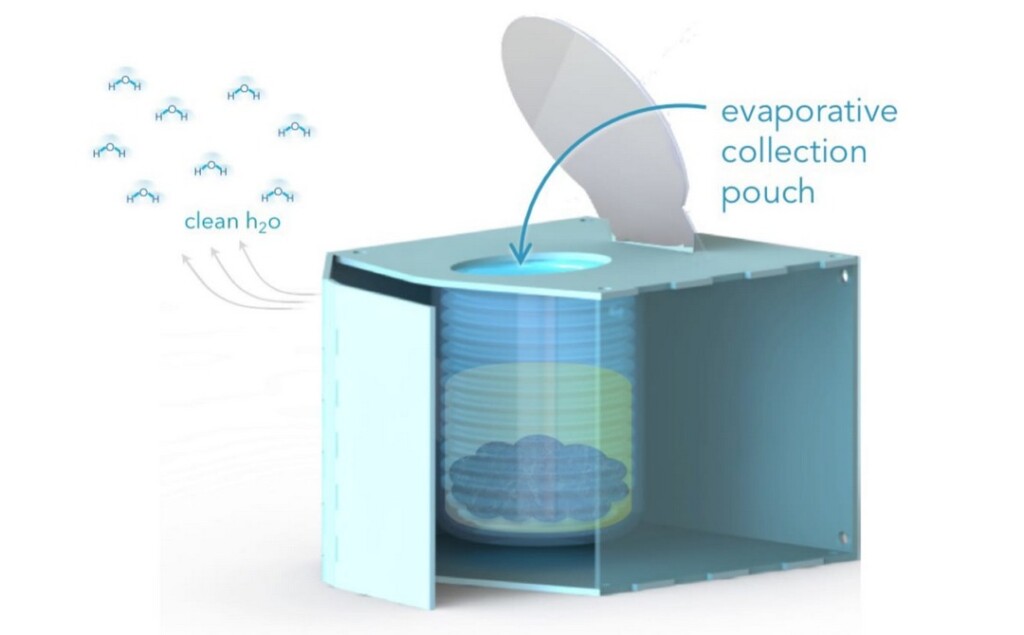
SUPER USEFUL SCIENCE: Scientists Perfecting New Way to Turn Desert Air into Water at Much Higher Yields

“People care when you’re buying a helmet, how much protection it offers,” Rowson said. “So, when we started publicizing that information, it was like a light bulb to manufacturers: ‘safety sells’ … and we’ve seen that across just about every single area we’ve evaluated helmets in.”

WATCH the CNN segment below… 

SHARE This Important Public Safety Science Work At VA Tech… 

Timbuktu’s Medieval Manuscripts Return Home After a Decade Away Safe from Insurgents

Stacks of Timbuktu manuscripts at the Ahmed Baba Institute - credit, UNESCO Bureau of Mali, CC 4.0. INT
Stacks of Timbuktu manuscripts at the Ahmed Baba Institute – credit, UNESCO Bureau of Mali, CC 4.0. INT

Thousands of ancient Arabic texts have returned to their rightful place in the legendary Saharan trade city of Timbuktu after years of safe-keeping further south.

Having undergone extensive digitization, fear that the content of the manuscripts may not survive the centuries due to security concerns or funding have abated somewhat.

Mali was once the center for the richest kingdom arguably in history, and that wealth afford scholars the leisure time for tens of thousands of hours of study, much of which was written down and preserved in the dry desert air.

Kept within the antique centers of learning in Timbuktu, their existence was threatened by Islamic insurgents that spread through North Africa and the Sahel in the wake of the overthrow of Moammar Ghaddafi in Libya back in 2011.

A year later, the insurgency swept into Timbuktu, but by then residents had smuggled out some 300,000 manuscripts south to the capital of Bamako. Most have now been brought home.

Their finely preserved pages, some glittering with gold leaf, catalog a wealth of medieval knowledge that occasionally outshines parallels to what had been collected in Europe at the time. Historical chronicles of West African empires sit next to medical treatises, astronomical works, even a surgical manual that records an instance where doctors in Timbuktu operated on a man’s cataracts.

“The same manuscript also says that a doctor from Timbuktu saved the French [prince],” said Sane Chirfi Alpha, the founding member of SAVAMA DCI, a local nonprofit organization dedicated to the safeguarding, preservation, and promotion of the ancient Timbuktu manuscripts, and was largely responsible for extracting them before the insurgent group Ansar Dine sacked the city.

“The crown prince was sick, and French doctors could not cure him. It was the doctor from Timbuktu who cured him.”

In addition, many of the texts reveal what was on the minds of scholars and the man-on-the-street at the time. Legal debates, such as whether it was moral to smoke tobacco, or whether dowries should be lowered to permit poorer men to marry, can also be found upon their pages.

The Ahmed Baba Institute in Timbuktu not only helps care and house the manuscripts, but continues coursework on their contents.

OTHER AFRICAN NEWS: ‘Camel Milk Revolution’ Is Improving Nutrition in Somalia and Creating Jobs

“When a student finishes studying with a scholar, that scholar gives him a certificate saying he has taught him a subject, which the student has mastered,” explained Dr. Mohamed Diagayaté, general director of the Ahmed Baba Institute, to Africa News.

“The certificate also says that the student learned it from a certain scholar, and that this scholar learned it from another scholar, going right back to the person who wrote the original document.”

AFRICAN HISTORY MAINTAINED: Traditional Maasai Warrior Transforms Training Camp to Prepare Young Men for 21st Century Leadership

In addition to the scholars, specialists in the care, handling, archiving, and digitization of the manuscripts are trained at the institute. It’s a popular pursuit for youth in the area. Security is still an ongoing concern, and researchers—especially from the wider world, are hesitant to make the long drive out into the desert to visit the institute, stunting the conservation work that could be done.

But their return home after more than a decade away is surely a sign that the wisdom of the past has a brighter future ahead.

WATCH the story from Africa News… 

SHARE This Story With Your Friends Who Love History… 

Seal Flops onto Photographer’s Boat to Escape Hunting Orca Pod–She Captured it All on Camera

Seal in Florida – Credit: Robert Woeger via Unsplash

An experienced wildlife photographer with a penchant for marine mammals like whales recently bore witness to a lone seal miraculously surviving a hunt by 8 killer whales.

Far more than just bearing witness, it was more or less the photographer’s presence that allowed for it to happen, as the seal escaped the jaws of the hunters by clambering up onto the boat.

Shared with AP, Charvet Drucker told her story of the encounter that began last week on a whale-watching boat. About 40 miles northwest of Seattle in the Salish Sea, she spotted a pod of orcas, also called killer whales, and observed behavior that suggested they were hunting.

Quickly attaching her telescopic lens, the orcas splashed into action, attempting to secure a meal out of an adult seal that was thrown into the air among the scrum of black and white bodies. Her shutter rang out in her ears as Drucker observed what she thought were the seal’s last moments of life.

Suddenly, the pod altered their course and headed straight for the boat, and she realized they were still hunting the seal. Following marine life regulations, the skipper killed the engines as the pod approached so as not to risk hurting them.

That’s when the seal flopped out of the water and onto the flat panel at the back of the boat like it would a piece of ice in the sea.

“You poor thing,” Drucker can be heard saying, as the seal looks up at her. “You’re good, just stay, buddy.”

In the wild, orcas have ways of dislodging seals from tiny icebergs, and they went straight into their playbook even though the safe haven was a boat not an iceberg. They began to move close to the boat and execute a series of staggered dives that create subsurface waves which can rock a seal off its perch.

UP CLOSE AND PERSONAL: Beached Whale Faced 6 Hours of Lethal Sun and Dryness, Locals Form Bucket Brigade to Save it

First documented in 1980, the orca’s strategy worked, but none among them were fast enough to catch the seal during the brief moments that it fell back into the water. After 15 minutes or so the orcas left.

It’s not the first time Drucker has witnessed this behavior, and usually she accepts the natural order of prey-predator interaction and is happy when the orcas get to eat.

MORE WHALEWATCHING STORIES: Onlookers ‘in Awe’ After Orca Pod Leaps Out of Water Just Meters From the Beach – WATCH

“I’m definitely Team Orca, all day, every day. But once that seal was on the boat, I kind of turned (into) Team Seal,” she said in an interview with AP last Thursday.

Apparently, orcas near Washington that feed on seals are migratory, or “transient” orcas, and tend to be better fed than “resident” orcas that seem to specialize in eating salmon.

WATCH the interview and slideshow below…

SHARE This Woman’s Incredible View Of These Hunting Orcas…

“A leader is one who knows the way, goes the way, and shows the way.” – John C. Maxwell

Getty Images for Unsplash+

Quote of the Day: “A leader is one who knows the way, goes the way, and shows the way.” – John C. Maxwell

Photo by: Getty Images for Unsplash+ (cropped)

With a new inspirational quote every day, atop the perfect photo—collected and archived on our Quote of the Day page—why not bookmark GNN.org for a daily uplift?

Getty Images for Unsplash+

Good News in History, November 20

100 years ago today, Robert F. Kennedy was born. The US Senator from New York became Attorney General during his brother John Kennedy’s years in the White House—and would eventually launch his own race for president after JFK’s assassination. READ more… (1925)

‘Offline’ Trend Sees Thousands Attending Phone-Free Concerts, Dates, and Events Where You Can ‘Find Your People’

Samantha Gades - Unsplash
Samantha Gades – Unsplash

One of the realities of social media addiction is the self-awareness of the addicted. A recent survey from the British Standards Institution found that 68% of teen respondents said they feel worse when they spend too much time on social media, and 47% would remove them from existence if they could.

So it’s not surprising that hundreds of thousands of people are now attending ‘IRL’ events (in real life) where phones are either banned or limited.

Several new services are now curating “offline experiences” for social gatherings and dating, and the number of these events that are landing on the calendars of Americans and Europeans is a testament to the deep desire for human-to-human contact.

GNN has reported on the offline movement before. The Offline Club of Europe has over half-a-million Instagram followers (an ironic yardstick of success), and chapters across the continent gather at venues where one’s smartphone is locked in a box at the start of the event.

Once inside, reading, chatting, sharing a drink, playing a board game—in short, everything we used to do to socialize—are preferred over looking down at your phone.

In addition to the Offline Club, companies like Kanso, Sofar Sounds, and the app 222, are making a business out of disconnecting humans from their social media feeds that overflow with targeted ads and AI-generated drivel.

Each one has found itself a niche, but all are returning us to the social activities that our parents used to do before phones. Kanso, which is not an app but rather an event planner, has hosted a few curated, phone-free events at different venues in large cities, mostly NYC, San Francisco, or London.

They recently conducted their first phone-free live music event in San Diego called Kanso Unplugged.

After Kanso’s first-ever event in New York City, Founder Randy Ginsberg wrote in an article explaining the concept: “Immediately after the event, I had people come up to me saying it was the best experience they’ve had in New York.”

A Kanso-organized concert in San Diego – Credit, courtesy of Randy Ginsberg

“Guests stayed well past the allotted event duration, and many went on to form real friendships after meeting there. One guy even met an investor who wired money into his startup the very next day.”

Participants’ phones are placed in a small locker, which they can access at the end of the event.

222 is a free app (only for iPhones currently) that sends out invites to groups of people that take place in public settings, encouraging its users to “choose chance”. There are no profiles, no sliding into DMs, no swiping, and no scrolling. The app will find other “vetted” users who are most likely to share interests, and invites them all to these public events where they can mingle freely.

It is highly rated by 3,600 users on Apple  (4.7 out of 5 stars), where it was lauded as a “MUST try,” and a versatile event organizer that offers the chance for a fun night out even if it doesn’t lead to romance.

Sofar Sounds is a pop-up concert business that connects artists and audiences through unique and intimate experiences in 400 cities around the world. The events aren’t offline or phone-free per se, but they ask that participants refrain from using their phones during the show.

ALSO CHECK OUT: Popular Hiking App Releases 27,000 Trail Maps to Download for Free, Increasing Hiker Safety

Sofar sends out the address of the venue less than 24 hours before the start time, which can be anywhere—in apartments all over the world, in parks, art galleries, on rooftops, and even in one of Richard Branson‘s homes.

“We didn’t expect that it would resonate with others to the extent that it did,” said cofounder Rafe Offer in an interview with Business Insider. “People started calling us from other cities saying they wanted to host events there too, and it entered into a movement. We had one at the top of a ski jump in Oslo overlooking the city.”

Spaces are often very tight to allow for unplugged instruments, and phone-use is requested to be postponed until after the show, to allow full attention on enjoying the music.

ANALOG IDEAS: Engineer Revives the Pay Phone for Vermont Community to Make Free Calls in Their Cellular Dead Zone

There are likely more options for engaging with the world and humanity offline; these are just a few that are exploding in popularity. So, if you recoiled a few years ago at Mark Zuckerberg’s notion that we’d all ‘own our own houses’ in a Metaverse that is only seen while wearing goofy and expensive VR goggles—or if you experience revulsion at the news that people are making friends and having relationships with AI chatbots, you’re not alone.

The rapid growth of services like 222 and Kanso proves that regardless of how digitized the world has become, there are many for whom analog is, and always will be, the preferred medium of connection.

SHARE This List Of Great Apps And Services To Those Looking To Get Offline… 

More Efficient Way to Defrost Cars Using Electricity to “Zap” Ice Without Heat

Associate Professor Jonathan Boreyko - credit, Alex Parrish / Virginia Tech / SWNS
Associate Professor Jonathan Boreyko – credit, Alex Parrish / Virginia Tech / SWNS

There are large swaths of America where in order to have a safe drive into work, one has to start their car even before their coffee machine.

Heating up a car and running the defrosters is a hugely energy intensive process, but researchers at Virginia Polytechnical Institute believe they’ve found a new and improved method for defrosting.

Mechanical engineering Professor Jonathan Boreyko’s philosophy is to combat ice by exploiting its own physics instead of using heat, which is energy-intensive, or chemicals, which pollute the environment.

The team’s previous work leveraged the small amount of voltage that naturally exists within frost to polarize a nearby water film, creating an electric field that could detach microscopic ice crystals.

By increasing the voltage the team developed a new method called “electrostatic defrosting” (EDF).

As ice crystals grow, the water molecules arrange into a tidy ice lattice. But Boreyko explained that sometimes a water molecule lands a little off-pattern—maybe it has an extra hydrogen, for example.

“Think of it as if you’re putting together a big jigsaw puzzle too quickly, so that a piece gets jammed in the wrong spot or is missing entirely,” said the professor in a press release from VA Tech. “These tiny errors create what scientists call ionic defects: places in the frost where there is a bit too much positive or negative charge.”

The team hypothesized that when applying a positive voltage to an electrode plate held above the frost, the negative ionic defects would become attracted and “migrate” to the top of the frost sheet, while the positive ionic defects would be repelled and migrate toward the base of the frost.

In other words, the frost would become highly polarized and exhibit a strong attractive force to the electrode. If that attractive force is strong enough, frost crystals could fracture off and jump into the electrode, but even without any applied voltage, the overhanging copper plate removed 15% of the frost.

IMPROVING EVERYDAY TOOLS: Innovative Tapeless Zipper Saves Tons of Fabric While Creating a Better Fit on Your Clothes

When the team turned on 120 volts of power, 40% of the frost was removed. At 550 volts, 50% was removed. At higher voltages, less ice was removed, until a strange contradiction in their theoretical model was corrected.

The research is continuing with the eventual goal of 100% ice removal.

Part of the research will include the removal of frost on multiple types of surfaces, expanding the potential applications across both industrial and consumer use.

MORE VA TECH RESEARCH: Plastic Waste Can Now be Turned into Soap Thanks to Eureka Moment from Virginia Tech

“This concept of electric de-icing is still in a very early stage,” said Boreyko. “Beyond this first paper, our goal is to improve EDF by reducing charge leakage and attempt higher voltages and electrode placements, among various other emerging strategies.”

“We hope that in the near future, EDF will prove to be a cost-effective, chemical-free, and low-energy approach to de-icing.”

SHARE This Innovation To Grace The Machines Of The Future… 

Rock Band Opens $35,000 in Bar Tabs for Their Fans After Melbourne Gig Was Canceled for Safety

Amyl and the Sniffers in 2022 - credit, kingArthur_aus via Flickr, CC 2.0.
Amyl and the Sniffers in 2022 – credit, kingArthur_aus via Flickr, CC 2.0.

An Australian punk rock band picked up the bar tabs for hundreds of people after a gig in Melbourne was shut down at the last minute due to security concerns.

Amyl and the Sniffers are up for a Grammy this year, a year that also saw them open for fellow countrymen rockers AC/DC for a section of their tour.

Just minutes before the headline act took the stage in Federation Square, the event organizer learned that rowdy fans had breached the heavy-duty barricades in multiple around the standing area, where a full capacity crowd of all-ages had been reached by 7:40 p.m.

If the Sniffers’ guitars rang out over the city, there was “a very real risk of crowd crushes,” according to the organizer’s CEO Katrina Sedgwick. With children of all ages scattered throughout the crowd, it was a risk that could not be taken, and the concert was canceled.

“You simply cannot imagine the tantrum I am having,” said the band’s lead singer Amy Taylor, who nevertheless understood why it had to be called off. “So, so, so sorry, we’re really sad,” she said in an Instagram video.

But that wasn’t going to be the end of the night if Taylor and her bandmates could help it, and Channel 9 News in Australia reported that they returned to Instagram shortly after to announce that they had loaded $5,000 onto bar tabs in seven different downtown pubs where any of their fans could go and have a drink while in the city.

“We’re not doggin’ you, it’s because a bunch of people rushed the barriers and so it wasn’t safe, and especially because it was all ages, we just can’t have that,” said Taylor in the Instagram post which also contained a not insignificant amount of frustrated profanity.

The punk rock act has gained rapidly in popularity in the last 5 years, and was nominated for a Grammy for Best Rock Performance for their 2024 single “U Should Not Be Doing That.”

SHARE This Band’s Generous Round For Their Fans With Your Friends… 

Mountain Goat-Inspired Robot Offers a New World of Mobility to the Wheelchair-Bound–WATCH

Toyota - released
Toyota – released

Toyota recently unveiled a four-legged mobility robot that can go where wheels cannot, and specializes in tasks that are difficult in a wheelchair such as climbing up stairs and positioning passengers to get into cars.

Debuted by the carmaker at the 2025 Japan Mobility Show, it consists of an ergonomic seat mounted on four mechanical legs that are designed to mimic some of the surest-footed animals on Earth like the mountain goat.

Called the Walk Me, it’s compact, adaptable, and represents a huge advancement for the company’s assisted mobility division.

Each leg can bend in multiple ways, lift, and move independently of the others to ensure that stability is maintained while walking over uneven ground or obstacles. They’re also covered with a soft and friendly-looking material to hide the mechanical components.

The system’s real showpiece is climbing stairs. One of the legs will test the step’s height, and determine how far the other legs have to push up to reach it. A suite of sensors and a LiDAR system continuously scan the surround for obstacles or potential banana skins like a child’s toy car.

Toyota – released

Distribution of force and weight between the legs feed into a calculation on the seat position, which is adjusted automatically to ensure the user isn’t tipped off in any direction. Sensors in the front apply a braking system if something moves quickly across its path.

Reporting by tech outlets reveals that a battery capable of operating for a whole 12-hour day is hidden beneath the seat, while voice-activated commands such as “kitchen” or “faster” can guide the legs directly, as can a set of handles positioned alongside the seat that contain manual controls.

MOBILITY ROBOTICS:

When it’s time to dismount the chair, the folding system retracts the legs similar to how a goat or other ungulate lays down, and in 30 seconds the unit becomes small enough to put into the back of all but the smallest cars

Two-footed human locomotion has been described as the continual avoidance of falling. The vast majority of animals that move about on legs use four—it’s just much easier and more balanced. With the Walk Me, Toyota have used Natural Selection as an inspiration to create a brilliant answer to Japan’s narrow streets, hilly terrain, and reliance on public transit—areas a wheelchair struggles to navigate.

WATCH a video below… 

SHARE This Brilliant Future Of Mobility With Your Friends In A Wheelchair… 

“All nature wears one universal grin.” – Henry Fielding

Credit: Andrey Tikhonovskiy

Quote of the Day: “All nature wears one universal grin.” – Henry Fielding

Photo by: Andrey Tikhonovskiy

With a new inspirational quote every day, atop the perfect photo—collected and archived on our Quote of the Day page—why not bookmark GNN.org for a daily uplift?

Credit: Andrey Tikhonovskiy