

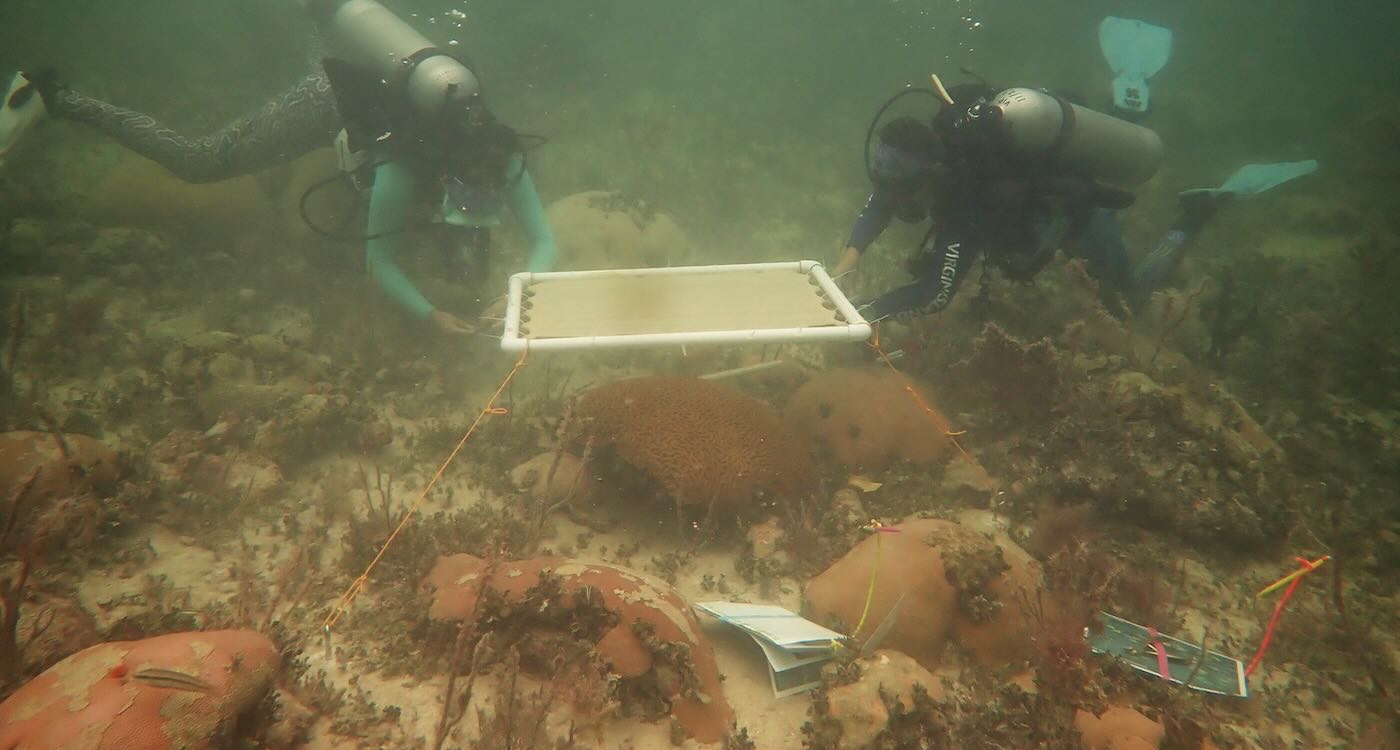













808 years ago today, the Charter of the Forest was signed in England by King Henry III. This law document is sometimes described as the sister of the Magna Carta, and granted rights of free men to use the forests of England once reserved for King William I and his descendants. Many today learn from Robin Hood productions that the “kingswood” was a place where people couldn’t hunt or gather. The Charter of the Forest changed that and remained in force for centuries. HEAR what legal scholars have to say… (1217)
Poland Secures Return of Gorgeous Artwork from Danish Auction Stolen During World War II
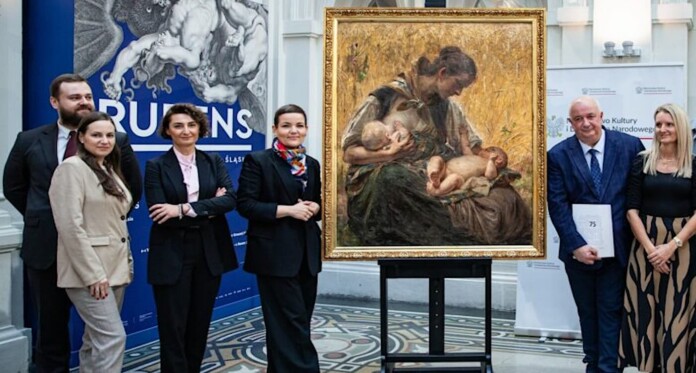
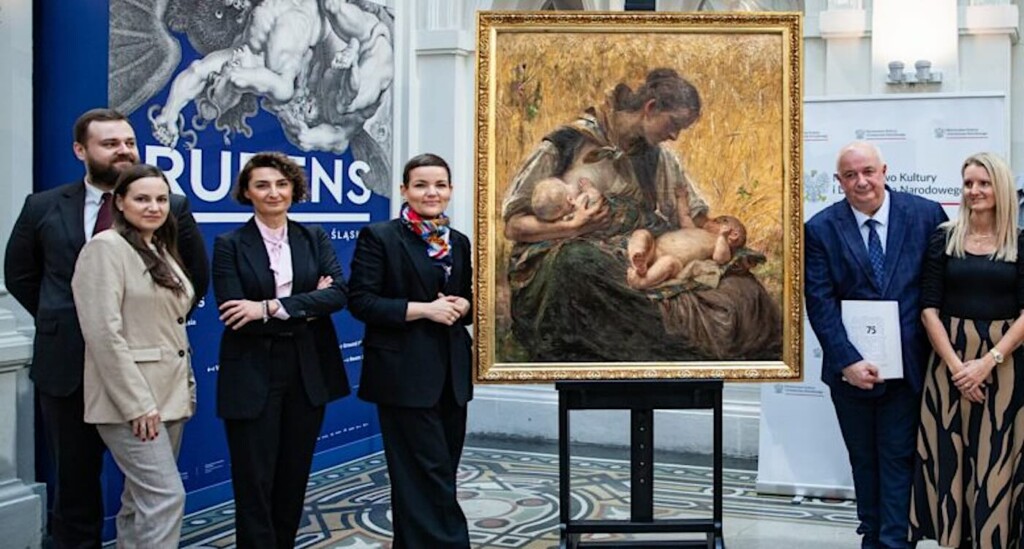
A gorgeous 20th century painting has been donated to Polish cultural authorities following its reappearance after 70 years.
Recorded as being housed in a girl’s school in the city that would become Wroclaw after World War II, it never resurfaced following the end of the conflict until last year when it appeared at auction in Denmark.
Entitled Summer, it depicts a rustic yet beautiful woman breastfeeding one infant while cradling another amidst a golden sea of corn or wheat.
A lynchpin to the story is that a region that was once part of Germany, called Lower Silesia, was given over to Poland after the war. The agreement included all state-owned cultural and historical works, but many were either looted or destroyed during the conflagration of Europe.
Summer was painted by Danish artist Bertha Wegmann in 1906, likely during a visit to Lower Silesia. It was purchased by the Silesian Artists’ Association, which donated it to the Silesian Museum of Fine Arts in the city of Breslau (now known as Wroclaw, and part of Poland), which in turn loaned it to the prestigious Viktoria School for Girls.
Reported as missing in 1947, it became one of over 100,000 items currently missing from Poland.
„Lato” wraca do Wrocławia. Zaginiony obraz Berthy Wegmann od dziś ponownie w @NM_Wroclaw.
— Ministerstwo Kultury i Dziedzictwa Narodowego (@kultura_gov_pl) October 24, 2025
Obraz „Lato”, namalowany przez duńską artystkę Berthę Wegmann na początku XX w., wrócił do Wrocławia. W 1906 r. dzieło zostało kupione przez Śląskie Towarzystwo Artystyczne i przekazane do… pic.twitter.com/R9dXd8739O
Though it was well-documented by name and description, no photograph of it was registered by the school and so when works by Wegmann that may have been similar, or indeed the very work in question, appeared at UK and Israeli auctions in the past, Poland’s culture ministry was unable to make a full claim for its repatriation.
MORE STOLEN ART RETURNING HOME:
- US Returns 600 Stolen Ancient Artifacts Worth $80 Million to Italy ‘Where it belongs’
- Modern Art Cache Stolen by Nazis Found in Munich
- FBI Recovers Paintings Missing for 40 Years from New Mexico Art Museum
Then last year, an international art database center Art Loss Register notified Poland that a Wegmann work was up for auction in Denmark entitled Young Woman Breastfeeding Her Twin Infants in a Cornfield. The back of the frame bore a label in the Polish language, and the ministry submitted its documentation to the auctioneers with a request that it be returned.
The painting had been inherited by a young Danish couple with no idea of its origin or value, and so they decided quite generously to give it to the Polish authorities who have prepared it for display at the Wroclaw National Museum.
Polish culture minister Marta Cienkowska expressed “special thanks to the family of the painting’s previous owners, thanks to whose kindness and understanding it was returned to us today”.
Since 2008, a total of 805 works lost during wartimes have been recovered by the ministry.
SHARE This Historical Injustice Put Right By Modern Morals…
Residents Need Patience and ‘a Rake’ to Enjoy the 200 Million Migrating Crabs on Christmas Island


Every November, the 1,200 denizens of Australia’s Christmas Island break out the rake and leaf blower and head out to their yards, driveways, and sidewalks.
It’s not dead oak and beech leaves on their minds, however, but another red-tinted carpet—100 million crimson-colored crabs.
Outnumbering their human neighbors 100,000 to 1, the Gecarcoidea natalis or Christmas Island red crab produces of the our planet’s most spectacular migrations: a 100 million-man march of epic proportions.
For the locals, it takes a bit of patience and a bit of perspective to get through the late October-November breeding period, when the crabs emerge from their forest burrows and travel to the island’s beaches.
“Some people might think they’re a nuisance, but most of us think they’re a bit of a privilege to experience. They’re indiscriminate. So whatever they need to get over to get to the shore, they will go over it,” said Christmas Island National Park acting manager Alexia Jankowski, who told AP that despite being just 52 square miles, the island is estimated to contain 200 million of these crabs.
With the summer rains in the Southern Hemisphere acting as the starting pistol last weekend, the islanders buckled up for disruptions in their day-to-day lives that have to be seen to be believed.

“Some people, if they need to drive their car out of the driveway in the morning, they’ve got to rake themselves out or they’re not going to be able to leave the house without injuring crabs,” Jankowski said.
During crustacean rush hour taking place in the early morning and early evening when the heat of the Indian Ocean sun is more manageable, road closures, home and garden invasions, and other such disruptions become common place.
The tough exoskeleton of the crabs can actually puncture car tires, so automotive prudence and neighborly compassion pay off for the humans who share the island. Park rangers help funnel the crabs to choke points or B-roads that can be blocked from traffic, while 5-meter high “crab bridges” allow the migrants to scale over the larger thoroughfares and descend safely to the other side.
Some residents will put on specially-designed “crab plows” which present as rubber half-moons in front of every wheel that gently push the migrants out of the way.
OTHER STUNNING GATHERINGS: Record Number of 736,000 Sandhill Cranes Flock to Nebraska in Spring Migration–with No Bird Flu
Once on the shores, male crabs dig burrows where females will lay their eggs. Hatching on November 14-15, the larvae ride the surf and tides before returning to the island as miniature crabs called ‘megalopae’ in late December, just in time for Christmas.

By then, Christmas Islanders again seek to harmonize with their neighbors—using leaf blowers to push the returning baby crabs, each the size of a sunflower seed and too delicate for the rakes, safely across the roads, beaches, and trails.
MORE STORIES LIKE THIS: Watch Sheep Fill the Streets of Madrid On Annual Migration of Shepherds
With a little compassion and appreciation for the wonder of nature they get to witness year-in, year-out, the residents of Christmas Island have forged a lasting friendship with the inedible crabs.
This isn’t the only community that has to deal with hatchlings passing through their homes and gardens.
Some years ago, a Connecticut dry cleaners realized their store was smack dab in the middle of a turtle migration route, and now every year from May through September, job responsibilities shift from cleaning and pressing clothes to cleaning and pressing clothes and picking up turtles.
WATCH some footage below…
SHARE This Wild Way To Enjoy Fall With Your Friends On Social Media…
After More Than Three Centuries, a Geometry Problem That Originated with a Royal Bet Is Solved
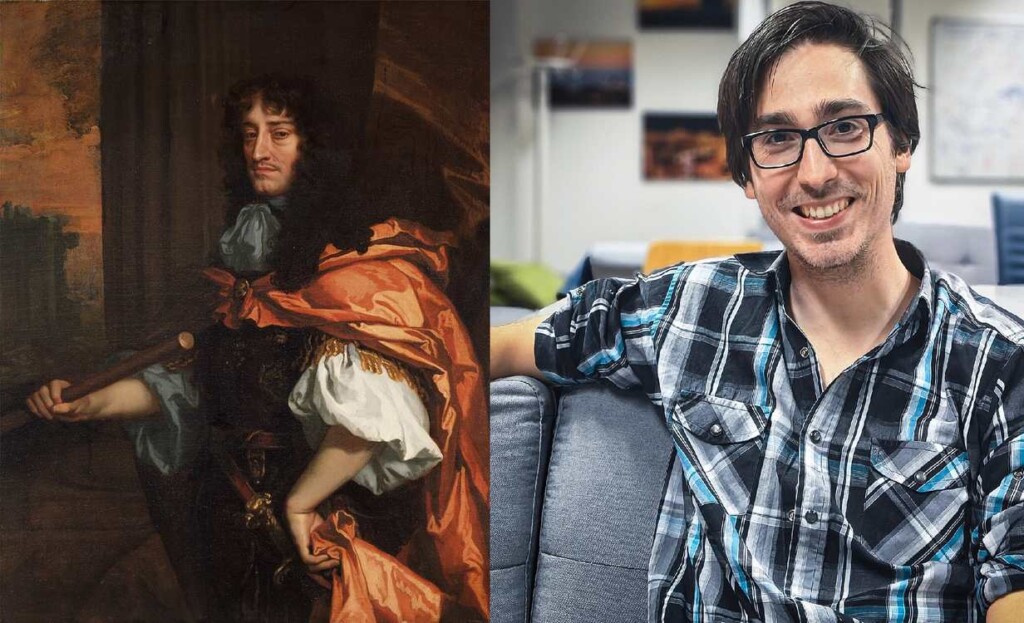
A pair of European mathematicians have proven a 300-year-old inference on shapes wrong, and won a bet on behalf of a long-dead Englishmen who got into a famous argument with his prince.
The story begins with an experiment: take two gaming dice, put one on top of the other, now think if you could position one in such a way that the other could pass through it without touching the sides.
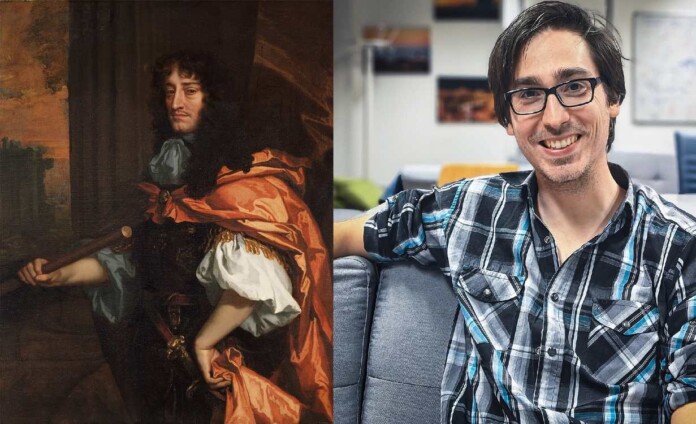
If your suggestion is that no such thing could be possible, than you took the losing side of a bet made 300 years ago between Prince Rupert of the Rhine—a nephew of Charles I of England, and the mathematician John Wallis.
Rupert, who had studied glassmaking and metallurgy, proved to Wallis that if you tilted a cube on its side and bored a hole towards its inner diagonal, you could slide the second cube through even if they were the same size, though historians aren’t sure if he actually drilled a hole through a gambling die.
Wallis later produced this theorem with a proper equation, which would come to be known as the Rupert tunnel, or the Rupert property. In 1968, scientists reproduced this concept with much more complex shapes than a cube: such as a tetrahedron and octahedron, or for Dungeons & Dragons players, the 10 and 8-sided dice.
In 2017, a team of mathematicians proved that even more complex shapes, the dodecahedron (a D12) and the icosahedron, the shape that makes up both the soccer ball and the D20, have the Rupert property—which to reiterate means that there exists a way of tilting one of two equally-sized shapes in such a way that would allow a second to pass through a hole created through the first.
Quanta Magazine’s Erica Klarreich reports that some shapes have incredibly tight fits, with one kind of tetrahedron for example passing through a space 0.000002% the size of the shape. Tight or not, every shape tested has been able to pass through.
But now, in a discovery that will have Rupert’s bones rattling in their coffin, modern mathematicians have produced a shape without the Rupert property.
Jakob Steininger, a mathematician at Austria’s federal statistics organization, and Sergey Yurkevich a researcher at A&R Tech, an Austrian transportation systems company, recently unveiled the “Noperthedron,” a made-up word that blends “Rupert” with “Nope.”
This 180-sided object cannot fit through another like it, no matter where you bore the hole or how you tilt it.
Tom Murphy, a software engineer at Google who has explored the question extensively, told Klarreich that he has created hundreds of millions of shapes through computer programs which have found Rupert tunnels through almost all of them. “Nopert” candidates are extremely rare, she writes, and the question of whether they’re true Noperts or whether the computer program can’t run tests on every possible position that exists to place a shape, is actually—even in this age of quantum computers and AI—difficult to tell.
ALSO CHECK OUT: Mathematicians Discover Elusive ‘Einstein’ Shape: ‘The Miracle that Disrupts Order’
Enter Steininger and Yurkevich, two childhood friends entering their third decades of life who saw a video of a cube passing through a cube in 2021 and were instantly interested in the problem.
The scope of their innovations will not be regaled here, but remains on Quanta Magazine for those who want to read more. The easiest way to find out whether shapes possess the Rupert property is to hold them both under a light. Tilt one shape until its shadow casts over the broadest possible space, and then try to fit the other shadow inside.
MATHEMATICIANS PROVING THINGS: Teens Say They Have New Proof for 2,000-Year-Old Mathematical Theorem, a Method Scholars Thought Impossible
This was the basis for the calculations in the computer simulations of Steininger and Yurkevich’s eventual breakthrough. They developed a pair of theorems—one global, and one local—which would isolate each point of the shadow and help the program compartmentalize possible violations to the Rupert property. Eventually, the pair designed a shape that looks a little like a flower vase, which according to both the global and local theorem, could not fit through itself.
Consisting of 150 triangles and two, regular 15-sided polygons, the shape is a true Nopert—the first of its kind ever to be discovered and confirmed. It took 18 million examination blocks for the program to rule out every possible position that the shapes might take.
BEAUTIFUL CHALLENGES SOLVED: Father-Daughter Duo Won the Race to Decode an Extraterrestrial Message–Sent from Mars to Test Humanity
Having overruled the age-old judgement, the pair, who solved it in their spare time, say they will keep on the lookout for other problems.
“We’re just humble mathematicians—we love working on such problems,” Steininger said. “We’ll keep doing that.”
WATCH 26 Rupert shapes in action below…
SHARE These Geniuses And Their Resolution To A 300 Year Old Quandary…
November’s Full Beaver Supermoon Peaks Today—and it Will Be the Year’s Biggest
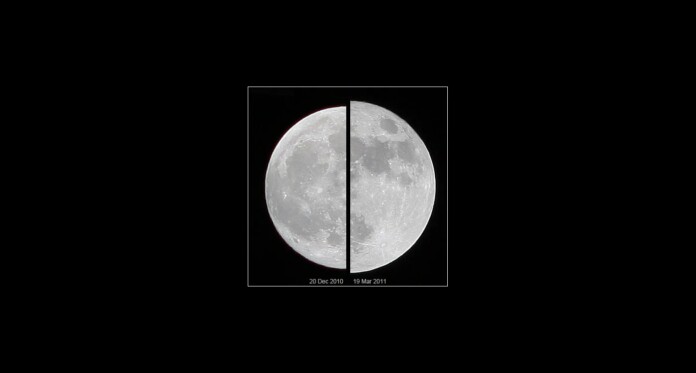
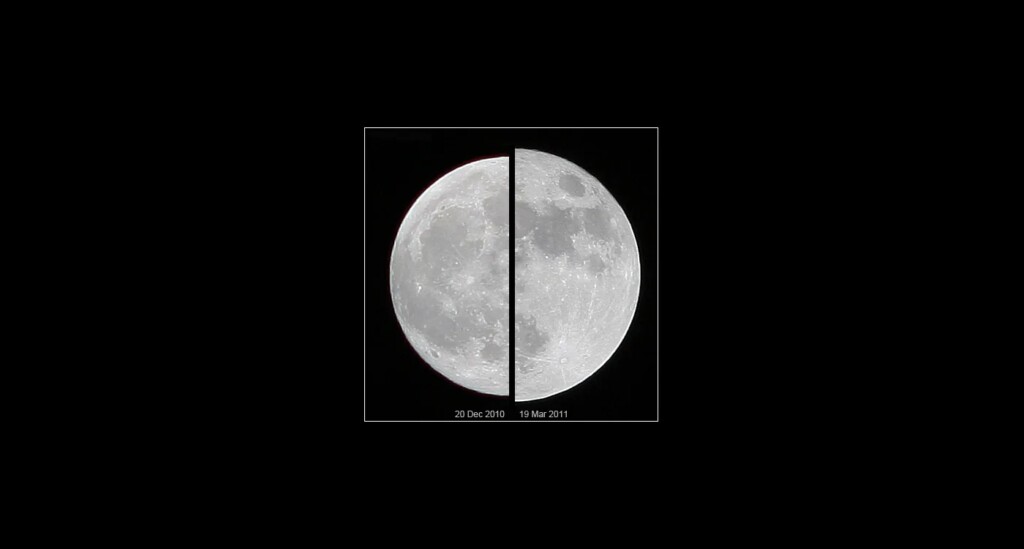
Stargazers and Luna-lovers are being spoiled this autumn. Having already enjoyed a late Harvest Moon spectacle in October, they can now follow that up with a second supermoon that will be the largest of 2025.
A supermoon is a colloquial term for when the Moon reaches perigee, the closest point to Earth during it’s orbital rotation. This makes the Moon noticeably larger.
Annoyingly, the Moon will reach peak brightness after Sunrise—at 8:19 am Eastern Time (13:19 GMT), but tonight (and yesterday night if you happened to see it) it will also be very bright and a few hairs short of full.
Incredibly, this is the second of three consecutive supermoons this year.
Supermoons tend not to be so super-sized, unless you’re experiencing the optical illusion of viewing the Moon when it’s close to the horizon. Instead, the word ‘super’ more accurately describes its brightness. Compared to a full moon of average size, a supermoon is 16% brighter, but compared to a “micromoon,” when the Moon is full and at apogee—the farthest point of orbit from the Earth—a supermoon is 30% brighter.
According to the Old Farmer’s Almanac, the term Beaver Moon comes from fur trappers who used it to mark the time that beavers begin to take shelter in their lodges, having laid up sufficient food stores for the long winter ahead.
The Dakota and Lakota call it the Deer Rutting Moon, while the Tlingit refer to it as the Digging Moon, as animals begin digging for food beneath frosted ground.
SHARE This Great Reason To Go For A Nighttime Walk Tonight With Your Friends…
“Love will find a way through paths where wolves fear to prey.” – Lord Byron

Quote of the Day: “Love will find a way through paths where wolves fear to prey.” – Lord Byron
Photo by: Bernd 📷 Dittrich (cropped)
With a new inspirational quote every day, atop the perfect photo—collected and archived on our Quote of the Day page—why not bookmark GNN.org for a daily uplift?

Good News in History, November 5

70 years ago, the Vienna State Opera reopened having been destroyed during World War II. Few cities have contributed more to classical music than the capital of Austria, and the State Opera hall has sourced many musicians to the Vienna Philharmonic orchestra, and hosted Gustav Mahler as its artistic director for many years. READ more about its design, destruction, and rebirth… (1955)
UPDATE Long-Term Follow-up in Babies Born with ‘Bubble Boy Disease’ Still Seem Cured


Between 2012 and 2017, 62 babies and toddlers were treated with a genetic therapy for severe combined immunodeficiency, known colloquially as the “Bubble Boy disease.”
In 2021, GNN reported on the results of the trial—that by 2019, 95%, or all but two of the young patients, showed complete immune system reconstruction. Now, the long-term follow-up results are in—still 95% effective.

“The durability of immune function, the consistency over time and the continued safety profile are all incredibly encouraging,” said the study’s senior author, Donald Kohn, MD, a pediatric transplant physician at Univ. of California LA, where the trial was conducted.
Severe combined immunodeficiency due to adenosine deaminase deficiency, or ADA-SCID, is caused by mutations in the ADA gene, which creates an enzyme essential for immune function. For children with the condition, day-to-day activities like going to school or playing with friends can lead to dangerous, life-threatening infections. If untreated, ADA-SCID can be fatal within the first two years of life.
In 1984, SCID become suddenly well-known in America because of “the boy in the bubble,” David Vetter, who received a special spacesuit from NASA to allow him to leave his total medical isolation. Despite this, Vetter passed away from an infection at age 12.
The gene therapy method involves first collecting some of the child’s blood-forming stem cells in their bone marrow, which have the potential to create all types of blood and immune cells.
Next, using an approach developed by the research team at UCLA with help from the UK’s Great Ormond Street Hospital and University College London, a new copy of the ADA gene is delivered into the stem cells by a modified lentivirus, or “viral vector.” The corrected cells are then returned to the child’s body, where they are intended to produce a continual supply of healthy immune cells capable of fighting infection.
“Between all three clinical trials, 50 patients were treated, and the overall results were very encouraging,” said Kohn back in 2021. “All the patients are alive and well, and in more than 95% of them, the therapy appears to have corrected their underlying immune system problems.”
This brand new study, also published in the New England Journal of Medicine, represents the largest and longest follow-up of a gene therapy of this kind to date, with 474 total patient-years of follow-up data—including five patients who received the therapy a decade ago.
For the 59 patients successfully treated, immune function has remained stable beyond the initial recovery period, with no treatment-limiting complications reported.
With support from the California Institute for Regenerative Medicine, the UCLA team is now working to complete the steps necessary to apply for FDA approval.
MORE INFANTILE DISEASES CURED: CRISPR Used to Remove Extra Chromosomes in Lab Model of Down Syndrome and Restore Cell Function
“Our goal is to have this therapy FDA-approved within two to three years,” Kohn said. “The clinical data strongly supports approval—now we need to demonstrate that we can manufacture the treatment under commercial pharmaceutical standards.”

When GNN originally reported on the 2021 study, a slide of photos was released of 6 of the children treated, taken at various times between 2012 and 2017. Accompanying the new study are slides of the same children, not necessarily all grown up, but grown up, and living their best healthy lives.
11-year-old Eliana Nachem of Fredericksburg, Virginia, is starting sixth grade with dreams of becoming an artist. It’s a remarkably ordinary life that once seemed impossible.
LIFE BEYOND TREATMENT: New Base Editing Gene Therapy Cures its First Patient: A Sickle-Cell Sufferer Now in the ‘Gym Every Day’
After Eliana was diagnosed with ADA-SCID at 3 months old in 2014, she lived in complete medical isolation. No pets, no contact with the outside world, with HEPA air filters running constantly and all food and toys sterilized.
“We had to get rid of our dog and cat, she couldn’t go outside, and I had to stop breastfeeding,” her mother, Caroline, recalled. “Formula had to be consumed within an hour or thrown out. Everything that might harbor germs was dangerous to her.”
In September 2014, at 10 months old, Eliana received her corrected cells at UCLA. Caroline and Jeff described watching the infusion as their daughter’s “rebirth”—her own genetically modified cells carrying the promise of a normal life.
CHILDREN BEING CURED: Infant With Incurable Disease is First to Successfully Receive Personalized Gene Therapy Treatment
A decade later, that promise has been fulfilled. Despite some early complications during her immune system’s recovery, Eliana has thrived, attending public school, playing basketball and living the unrestricted childhood her parents once could only dream of.
“Now the biggest thing I have to worry about is her entering middle school and bossing me around,” Caroline said with a laugh. “I am eternally grateful to every single scientist, doctor, lab worker, nurse, hospital security guard—all the people who had anything to do with this gene therapy coming into existence and saving her.”
SHARE This Incredible Cure Ready For FDA Approval To Save Infants Around The Country…
Winner of Weather Photographer of the Year Contest Shows There’s No End to a Rainbow (LOOK)


The Royal Meteorological Society has announced the winners of this year’s Weather Photographer of the Year Competition.
Sponsored by the financial services and banking firm Standard Chartered, the competition is now in its 10th year.
Chosen from over 4,000 images received from both amateur and professional photographers from 84 countries—the judges’ winners were chosen by an international panel of experts from the fields of weather and climate, photography, and journalism.
“A huge congratulations to all our winners and runners-up—the standard of the photographs submitted this year were incredibly high,” stated Professor Liz Bentley, Chief Executive of the Royal Meteorological Society. “The images showcase the weather and climate in its pure beauty and intensity extremely well.”
The grand prize winner went to a pair of photographers from China, and their winner of a complete circular rainbow.
“It was drizzling on Lugu Lake [In China’s Yunnan Province]. I flew my drone to a height of 500 meters, passed through the rain curtain, with my lens facing away from the Sun, and captured a complete circular rainbow,” says engineer and astronomy photographer Geshuang Chen.
Rainbows are a familiar sight, but full-circle rainbows are much less common. From the ground, the lower half of the circle is usually hidden below the horizon. From high above with the Sun behind and rainfall ahead, it’s possible to see the entire circle.
Rainbows form when sunlight enters raindrops and is bent (refracted), then reflected off the inside of the droplet, and bent again as it exits. The result is a spectrum of colors forming a circle around the antisolar point: the spot directly opposite the Sun from the viewer’s perspective. Since each observer’s position creates a slightly different angle of light, every rainbow is unique to the person seeing it.
That makes this image particularly special: not just a rare view of a complete rainbow, but a moment of perfect alignment, with the small island framed precisely at its center.

The runner-up in the main category was won by Jadwiga Piasecka, who took this image from a sheltered place out of reach of Storm Eunice in Newhaven, on the south coast of the UK, where winds were gusting at over 80 miles per hour.
“From my vantage point, I watched enormous waves battling against the sea wall, sending dramatic sprays of water high into the air… highlighting just how immense the storm’s fury truly was.”
“I’ve loved big waves and storms since I was a kid—the power and energy of the sea have always fascinated me. So, when Storm Eunice rolled in, I knew I couldn’t miss the opportunity to witness it firsthand,” she wrote.

While driving near Vodňany in South Bohemia, Czechia, photographer Lukáš Gallo saw a stunning set of Kelvin-Helmholtz wave clouds appear overhead. He quickly pulled over, grabbed his camera, and captured the momentary display from a roadside field that won third place and the public vote.
“I didn’t plan this; it was all of a sudden. But I think that’s the best kind of photograph,” he says.
These rare ‘wave,’ or fluctus, clouds are formed when there’s a sharp difference in wind speed or direction between two layers of air, similar to the way wind can whip up waves on the surface of the sea. The result is a spectacular series of cloud curls that look like breaking ocean waves, as well as a clear visual warning of turbulence.
Set against a peaceful rural landscape with round hay bales dotting green fields, the dramatic waves seem even more extraordinary, like nature briefly showing off above an everyday scene.
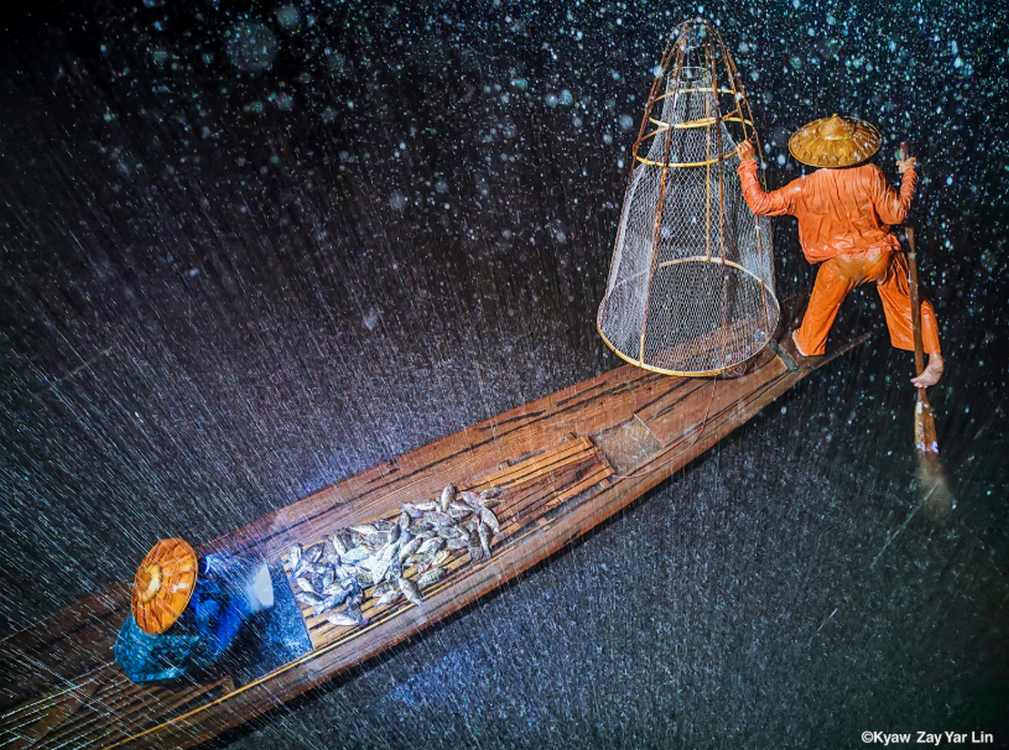
The mobile category was won by a photographer traveling to Inle Lake in Myanmar
This photo captures the urgent feeling of being caught in a sudden downpour. Two fishermen work quickly: one paddling through the dark water, the other bailing it out of the boat. Their bright orange and blue clothes stand out vividly, just like the heavy raindrops streaking across the frame.
The motion blur of both the fishermen and the rain make the viewer feel part of the action, caught in the sudden intensity of a tropical storm. Raindrops fall in sheets and splash against the murky lake below as water fills the boat’s base.
SHARE These Brilliant Shots With Your Friends On Love Nature Photography…
Bionic Arms Enable Mushrooms to Create Music Using Their Own Energy (LISTEN)


An English musical project helps plants and fungi branch out from their quiet natures and express their creativity thanks to a set of bionic arms.
Translating their bioelectrical signals into movements of the arms, the mushrooms begin to jam out on keyboards and drum machines, allowing the listener to see and hear them in a different light—a neon light.
Bionic and the Wires have been up to this for sometime, showing how the electrical signals coursing through the flesh of plants and fungi carry enough data and diversity to translate into multiple different expressions.
According to their website, the band is made up of Andy Kidd “on synth” and John Ross “on plants.”
Ross is the visionary force behind Bionic and the Wires. A multi-disciplinary artist, technologist, and environmental thinker, Jon’s work challenges human-centric views of creativity by granting non-human lifeforms additional and useful tools to express themselves in a different way.
His practice spans sculpture, performance, and electronics—always driven by a desire to reveal the hidden intelligence of nature.
Kidd also translates the bioelectrical output of the non-human bandmates into synth sounds, creating a soundscape of electronica music unimagined by the human mind.
LETTING MUSHROOMS STRETCH OUT:
- Research Suggests Mushrooms Talk to Each Other With a Vocabulary of 50 ‘Words’
- Watch This Mushroom Propel a Robot Across the Ground—We’re Not Joking
While the group was first focused mainly on music, their experiments have expanded to include mushrooms giving spoken word performances by coding each individual electrical signal into a different word spoken through a speech app, and mushrooms substituting the drum sticks in the bionic arms for paintbrushes, which they then use to create paintings.
The mushroom below is of the Leccinum genus, and it’s immediately clear its taste in music is better than its… well, taste.
WATCH some performances below…
SHARE This Creative Output From An Unlikely Source With Your Friends…
Miracle Recovery for World’s Rarest and Strangest Deer – Just 39 Became 8,200


Tramping through coastal marshlands in eastern China, a strange looking deer roams freely in herds of hundreds; a remarkable recovery from where they had been just a few decades ago.
Described in ancient China as a beast with the antlers of a deer, hooves of an ox, face of a horse, and tail of a donkey, Père David’s deer was at one time the rarest of its kind on Earth.
Hunted to extinction in the wild 125 years ago, captive animals clung to life in a far away land, until in 1985, their descendants could return to a wiser China where a more eco-conscious population welcomed them home to the quiet marshlands.
In the early 20th century, the British nobleman and politician Herbrand Russell, 11th Duke of Bedford, acquired a few Père David’s deer from the Berlin Zoo and built up a large herd on his estate at Woburn Abbey.
In 1985 the duke’s great-grandson Robin Russell, 14th Duke of Bedford, donated 39 Père David’s deer to the Chinese government for a reintroduction program. They were placed in a park/reserve that once belonged exclusively for canned hunts conducted by the emperors in Beijing—the killing field had become a sanctuary.
A second re-introduction into China was conducted in 1986 where 36 Père David’s deer were chosen from five UK zoological gardens. From less than 100, these original animals have multiplied into 8,200 and seem—as if by a miracle—not be be suffering from low genetic diversity. They enjoy a 17% annual growth rate in the population.
Today, all of the deer that roam China are descended from Russel’s herd, and across China’s many elk sanctuaries like Tianezhou and Dafeng, dozens of square miles of pristine habitat are protected for this incredible animal. Plans are underway to reintroduce the deer to much more wild areas, where they will have to learn to avoid predators and battle the elements once again.
ALSO CHECK OUT: Kazakhstan Efforts to Restore Last Wild Equine Species Receive Huge Boost of 150 Horses
A Chinese-language moniker for the Père David’s deer translates to “the four dislikes” referring to the component appearance mentioned above. As is so often the case in Chinese society, this strangeness is paired with a legend.
The following was taken from Wikipedia,
According to Chinese legend, when the tyrant King Zhou of Shang ruled the land more than 3,000 years ago, a horse, a donkey, an ox and a deer went into a cave in the forest to meditate and on the day the King executed his minister Bigan, the animals awoke from their meditation and turned into humans.
MORE HANDSOME STAGS: Wild and Wonderful Saiga is No Longer Endangered with a Million Roaming Now in Central Asia
They entered society, learned of the King’s heinous acts and wanted to take recourse against the King, who was powerful. So they transformed themselves into one creature that combined the speed of the horse, the strength of the ox, the donkey’s keen sense of direction and the nimble agility of the deer.
This new animal then galloped to the Kunlun Mountains to seek the advice of the Primeval Lord of Heaven. The Lord was astonished at the sight of a creature that had antlers of a deer, hooves of an ox, face of a horse and tail of a donkey.
“It’s unlike any of four creatures!” he exclaimed. Upon learning of the animal’s quest, Lord gave his blessing and dispatched the creature to his disciple the sage Jiang Ziya, who was battling the King. Jiang Ziya rode the creature to victory over the King and helped found the Zhou dynasty.
SHARE This Conservation Success Story For The Ages…
“More wonderful than the lore of old men and the lore of books is the secret lore of ocean.” – H. P. Lovecraft

Quote of the Day: “More wonderful than the lore of old men and the lore of books is the secret lore of ocean.” – H. P. Lovecraft
Photo by: Shifaaz shamoon (cropped)
With a new inspirational quote every day, atop the perfect photo—collected and archived on our Quote of the Day page—why not bookmark GNN.org for a daily uplift?

Good News in History, November 4

101 years ago today, “Silent” Calvin Coolidge was elected to serve as the 30th President of the United States. Undoubtedly the greatest domestic/peacetime President in the 20th century, Coolidge embodied not only the Founders’ vision of the Executive, but many of the most quintessentially American qualities we struggle to find today in our political caste. LEARN more about our 30th President… (1924)
Woman Tracks Down Long-Lost Dad Using Newspaper Ad–and Discovers 11 Siblings


Thanks to a good old newspaper back page ad, an English woman has found a whole new side to life—her father’s, whom she had never met.
It started when Louise Walters was 8 years old and found out the man she thought was her father, wasn’t.
Louise’s mom, Angie Ishmael was in a relationship and living together with another man in Brighton back in 1969 for around a year before finding out she was pregnant.
During Louise’s childhood and adolescence, her mother would say that her real father was irresponsible, and probably in prison or dead. One of those two prognostications turned out to be wildly accurate.
But Walters always wanted to know who her father was, and so in 2010, she placed an ad in the Lost Touch column of the Brighton Argus which read: “I am trying to trace a Gary Pavella who lived in Kemp Town in the late 1960s.”
“It’s really hard not knowing who your dad is,” Walters told England’s Southwest News Service. “It’s like there’s a piece missing. It was amazing to hear his voice for the first time on the phone.”
Ishmael had known Louise’ dad as Gary, and remembered he ran a barber shop, called Pavella’s. Despite her mother’s low opinion of Gary, they placed the ad together in 2010. Three years later, Ishmael got a call from a woman called Marie-Ann who said she was Louise’s half-sister.
“Mom phoned and said ‘I think we’ve found your dad,'” Walters remembers.
It happened during that year a Mr. Graham Peveller, now 81 years old found the ad when he was Googling his old name. He had always wondered about Louise, and so decided to send an intermediary to get in touch to reunite the father and daughter after more than 4 decades of separation.
MORE LOST FATHER STORIES: Woman Looking for Birth Parents Learns That Dad Was a ‘Friend’ on Facebook
The reunion led her to discover or acquaint herself with 11 new half-siblings from all across the world—a testament to her mother’s declaration of her former lover’s irresponsibility.
Including Walters, Graham Peveller fathered 12 children by 7 women, so Louise now has 11 siblings, to add to the two step-sisters she grew up with. Despite the ill-repute, Walters said that hearing her real father say “I love you,” was very moving.
“I felt complete,” she recalled. “We just hit it off straight away. I feel like I’ve known him forever.”
ANOTHER STORY LIKE THIS: Woman Hires Private Detective and Finds 2 Long-Lost Sisters After 44 Years and the Death of Adoptive Parents
From her home in England’s Nottinghamshire, she’s made the effort to acquaint herself with as many of her half-siblings as she can. These include 54-year-old Marie Ann who first contacted her, as well as Zoe, 43, and Jenny in her 20s.
She has half-brothers too: Jamie, Emil, Leslie, and Diamond, in their 20s.
One lives in Sweden, another’s a monk in Thailand, and one passed away. Louise is closest to Leslie, Zoe, and Marie-Ann, who she visits and speaks to regularly.
MORE FAMILIAL DISCOVERIES: Sisters Who Found Each Other Through DNA Discover They Had Mysteriously Named Their Kids After Each Other
“We’re all different and have had very different lives, but we’re all very kind and welcoming,” Walters said. “We all have a certain look about us: we have very similar shaped faces.”
“I have a lot of children and I love them all,” Mr. Peveller said. “No matter how long it is that we’re apart my feelings don’t change, I always think of them.”
SHARE This Woman’s Wild Reunion With Her Family’s Foreign Legion…
Greatest Spectroscope Ever Built Can Tell What 2,400 Cosmic Objects Are Made of Every 20 Mins.


The world’s largest spectroscopic telescope has just recorded the first observations from its new perch high in the mountains of Chile.
Capable of revealing new information about any cosmic object or phenomena an astronomer cares to study, the telescope will feature in 25 important science programs over the next 5 years that involve 700 different scientists from all around the world.
Called the 4-meter Multi-Object Spectroscopic Telescope (4MOST), it’s the newest instrument at the European Southern Observatory (ESO) in Paranal, Chile. Experts from University College London played a key role in its installation and operation.
One of the most important methods of examining space is spectroscopy, or the study of light spectra. It’s an observational science which can tell astronomers what distant objects are actually made of by examining the wavelengths of light and the colors which appear through them.
Different color ratios can tell physicists whether a distant object is made of gases, solids, or liquids, whether those gases include those which make up an atmosphere, whether those solids could be iced water, metals, or carbon-bearing silicates: any of which might suggest it’s an interesting body to study for closely.
But 4MOST is unlike any spectroscope ever built. It can unravel the light of 2,400 celestial objects simultaneously into 18,000 color components.
By analyzing these thousands of colors from thousands of objects every 10–20 minutes, 4MOST will build a catalogue of temperatures, chemical compositions, velocities, and other physical parameters of tens of millions of objects spread across the entire southern sky, which will be available to any curious astronomer looking for data to explore any number of hypotheses for decades to come.
“It’s fantastic to see the first light data arriving from 4MOST,” said UCL physics professor Richard Ellis, who will be using the instrument to study supernova explosions. “Our team will be undertaking follow-up spectroscopy of various transient events located by the newly-completed Vera Rubin imaging telescope in Chile.”
UCL was accompanying the Leibniz Institute for Astrophysics at Potsdam, which was the lead institute in the development of 4MOST. Lead Investigator from the Leibniz Institute Roelof de Jong spoke with UCL press on his emotions at the instrument’s first spectra.

“It is incredible to see the first spectra from our new instrument. The data looks fantastic from the start and bodes well for all the different science projects we want to execute,” de Jong said.
MORE OF ESO’S INSTRUMENTS: Vera Rubin Observatory Debuts Stunning Celestial Photos to Rival the James Webb Space Telescope–LOOK
“That we can catch the light that has traveled sometimes for billions of light years into a glass fiber the size of a hair is mindboggling. An incredible feat only made possible by an incredible development team. Can’t wait till having the system operating every night.”
Those glass fibers, of which there are more than 2,400 at the heart of the telescope, enables 4MOST to execute many science programs simultaneously. For example, a few fibers can be used to study rare objects, while at the same time another program can use most other fibers to make large statistical samples of stars or galaxies.
An image released by the ESO of 4MOST’s first observations show the sky around the Sculptor Galaxy NGC 253, in which each colored dot represents the focus of one of the 2,400 fibers. The rainbow colored charts to the left and right show the wavelengths coming off these objects; each color representing different material elements.
SHARE This Exciting New Instrument For Studying The Stars On Social Media…
Farmworkers Are Heroes After Rescuing 20 Children from Burning School Bus in California


Two California farmers were honored recently for being the first ones to help save over 20 students aboard a school bus that caught fire.
Long before the Madera Country Fire Department arrived on scene, Angel Zarco and Carlos Perea were there, and in fact, the pair noticed the smoke billowing from the back of the bus even before the driver.
They quickly alerted the driver and helped evacuate all the students on board before hightailing it to a safe distance as the school bus began to burn.
At a meeting of the Madera County Board of Supervisors, the men were proclaimed as heroes of the community, who acted to the “very highest standards.”
“We were just making sure the kids were far away enough so that they wouldn’t get hurt,” Zarco said. “The bus caught fire right away, probably within like two minutes, three minutes. It all happened right away.”
California Fire Division Chief Larry Pendarvis said simply that buses can be replaced, but lives cannot.
MORE SCHOOL BUS RESCUES: School Bus Catches on Fire, Driver Gets All the Kids Out–and Herself–Before it Explodes Behind Her
“We can’t thank you enough for assisting prior to our resources arriving,” he said live on ABC30 Action News.
Perea said he believes the Good Lord had put them at that intersection that morning to save those kids, and that seeing his daughter among the onlookers at the board meeting when he was honored by their community was one of the best feelings he could imagine.
WATCH the story from ABC30…
SHARE These Two Heroes From The Fields Of Madera CA With Your Friends…
World’s Largest Sailboat Moves Cargo Across Atlantic on Maiden Sustainable Voyage


A French shipbuilder has brought back the sail and schooner to decarbonize low to mid volume shipping.
Only historians can say how eager the world’s merchants marine were to replace frigates with steamships when the technology became available.
Now after more than 200 years of industrialization, new priorities will dictate to some firms that it’s time to reverse that switch, which the famous sailor Joshua Slocum lamented as taking the poetry off the high seas.

The 450-foot-long Neoliner Origin was christened on October 13th when she made her maiden voyage from Nantes, on the coast of Brittany, to Baltimore, carrying a cargo of luxury goods and Renault cars that emitted 80% less carbon emissions.
She made a headline speed of 11 knots which she achieved by leveraging the timeless and need-no-explanations technology of sailing, but with the modern tweak of retractable carbon-fiber masts that rise 213 feet into the air.
With 5,300 tons in the hold, she is simply the world’s largest sailing ship; and the team from the French Merchant Navy which took the gamble on going back to sailing power has been backed by the world’s largest luxury goods conglomerate LVMH, as well as the French spirits brand Cointreau, that’s doing everything it can to zero out its carbon emissions.
“Until now, sailing ships could only transport modest volumes. Neoline is changing the game: entire containers can now be transported by sail, offering a concrete and scalable alternative to cargo ships powered by heavy fuel oil,” says company president Jean Zanuttini.
OTHER WIND-POWERED CARGO: Greening Our Shipping: Wind-Powered Cargo Ships Can Change Future of Freight Cutting Emissions By 90%
Zanuttini told Reuters that there’s a lovely degree of independence garnered by using the trade winds, in that pilots don’t need to wait or rely on port and harbor infrastructure for refueling. If the refueling apparatus is in use, or broken, or there’s no fuel available, it’s no concern for a Neoliner, which can just unreef the sails.
While other low-carbon container shipping methods rely on certain fuel blends unavailable in art port in certain countries, a Neoliner not only eliminates more CO2-equivalent emissions but it does so without needing these chemical innovations, making it ideal for container shipping to and from low and middle-income countries as well.
GOOD NEWS FROM SHIPPING: Pioneering Zero-Emissions Hydrogen Fuel-Cell-Powered Ship Successfully Tested in Japan
While the Origin did sustain damage to the aft sail in a storm on the crossing, it was able to carry on with just one sail and a backup motor; what’s known in the industry as “hybrid sailing” and which is also being proposed by Neoline and other firms to be a quick and effective way to reduce the carbon footprint of container shipping, which is responsible for an estimated 2% of total greenhouse gas emissions worldwide.
WATCH a report from Reuters…
SHARE The Story About The World’s Largest Sailboat With Your Friends…
“Autumn carries more gold in its pocket than all the other seasons.” – Jim Bishop

Quote of the Day: “Autumn carries more gold in its pocket than all the other seasons.” – Jim Bishop
Photo by: Joshua Woroniecki
With a new inspirational quote every day, atop the perfect photo—collected and archived on our Quote of the Day page—why not bookmark GNN.org for a daily uplift?

Good News in History, November 3

69 years ago today, The Wizard of Oz was televised for the first time, and was so successful—with 53% of US television viewers tuning in—that it was destined to become an annual event in American homes. CBS ran it again three years later during the holidays and gained an even larger television audience. READ more about this famous production… (1956)
Evidence of Rhino Living in Frigid Arctic Circle 23 Million Years Ago Discovered in New Fossil

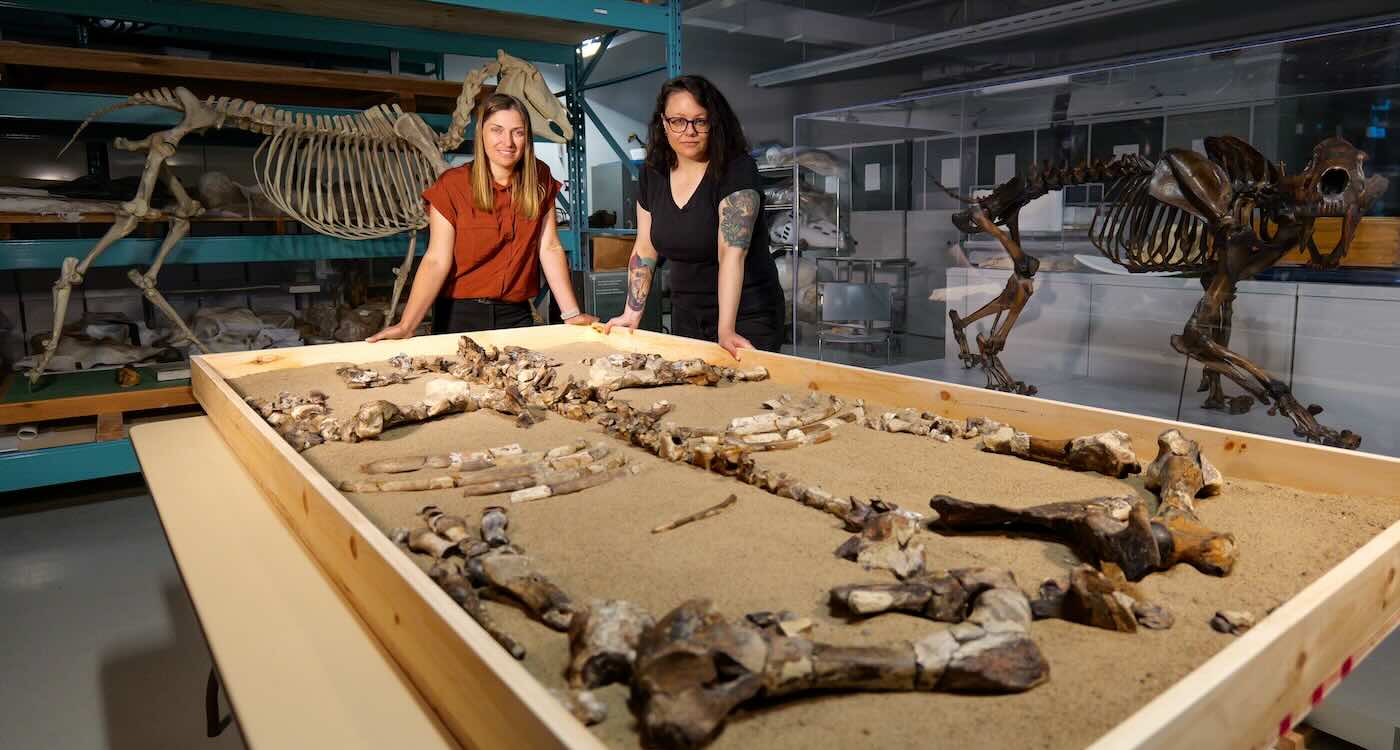
An extinct species of rhino that lived inside the Arctic Circle 23 million years ago has been discovered.
The nearly complete fossilized skeleton was recovered from the fossil-rich lake deposits in Haughton Crater on Devon Island, in the Canadian High Arctic.
It is the most northerly rhinoceros species known.
Rhinos have an evolutionary history that spanned over 40 million years, encompassing every continent except South America and Antarctica.
The new species of ‘Arctic rhino’ lived about 23 million years ago during the Early Miocene period.
“The addition of this Arctic species to the rhino family tree now offers new insights to our understanding of their evolutionary history,” said study author Dr. Danielle Fraser, head of paleo-biology at the Canadian Museum of Nature (CMN).
“Today there are only five species of rhinos in Africa and Asia, but in the past they were found in Europe and North America, with more than 50 species known from the fossil record.”

“More broadly, this study reinforces that the Arctic continues to offer up new knowledge and discoveries that expand on our understanding of mammal diversification over time.”
Scientists described the updated family tree for rhinocerotids in the journal Nature Ecology and Evolution, providing evidence that the new Arctic species migrated to North America across a “land bridge” that may have been a passage for terrestrial-mammal dispersal millions of years later than suggested by previous evidence.
The research shows Epiatheracerium itjilik was “relatively small and slight”, similar in size to the modern Indian rhinoceros but lacking a horn.
In the name, the researchers wanted to honor the rhino’s High Arctic home, so they consulted with Jarloo Kiguktak, an Inuit Elder and former mayor of Grise Fiord, the most northerly Inuit community in Canada.
Most of the rhino’s bones were collected at the Haughton Crater site by Dr. Mary Dawson from the Carnegie Museum of Natural History in Pittsburgh, a trailblazer in Arctic paleontology.
“What’s remarkable about the Arctic rhino is that the fossil bones are in excellent condition,” said a senior researcher. “About 75% of the skeleton was discovered, which is incredibly complete for a fossil.”
Amazing New Fossils:
• Frozen in Time: 32,000-Year-old Woolly Rhino Found with Skin, Fur, and Organs Intact
• Prehistoric Saber-Tooth Cub First to Be Found Mummified in Ice, it Still Has Hair (LOOK)
The team’s analysis offers new insights into how rhinos dispersed over millions of years between North America and Europe, via Greenland, using the North Atlantic Land Bridge. Previous studies suggested the land bridge may have only functioned as a dispersal corridor until around 56 million years ago.
But the new analysis with Epiceratherium itjilik and its related species suggests that dispersals occurred from Europe to North America much more recently, potentially during the late Miocene period.
AMAZING:Paleontologists Hunted for Giant Bird Skull for Over a Century–Finally, a Complete ‘Thunderbird’
The fossil of Epiceratherium itjilik is housed and curated in the fossil collections of the Canadian Museum of Nature in Ottawa.
SHARE WITH RHINO LOVERS On Social Media…