














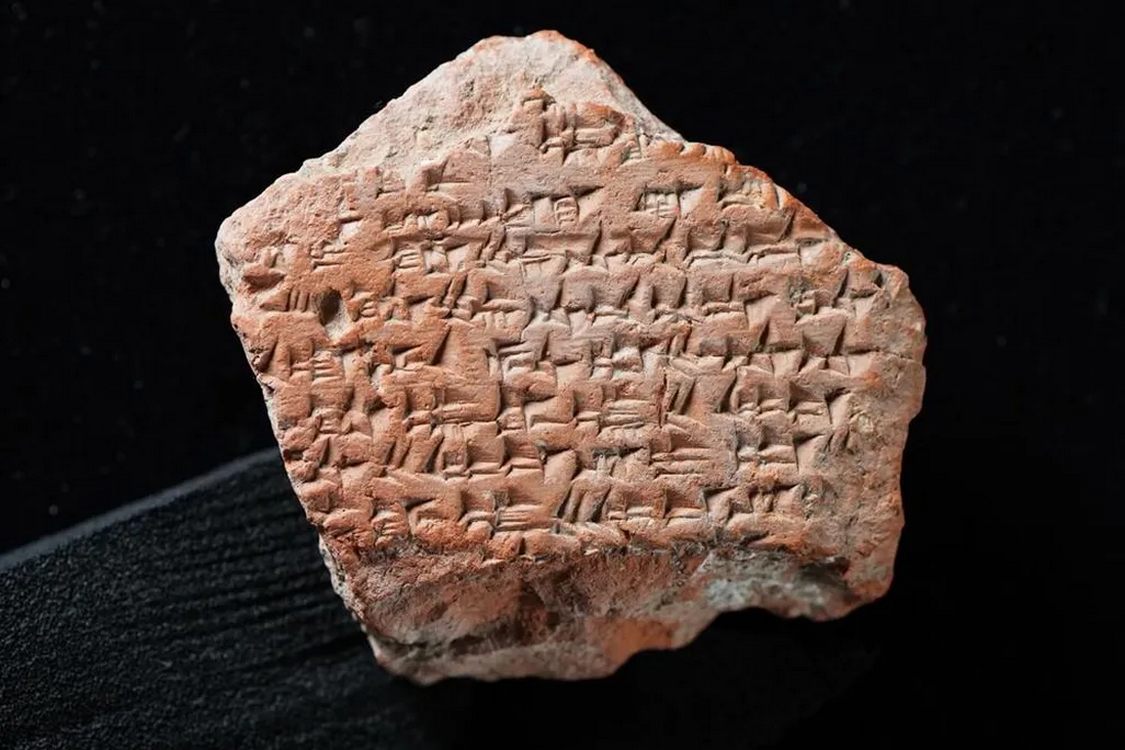
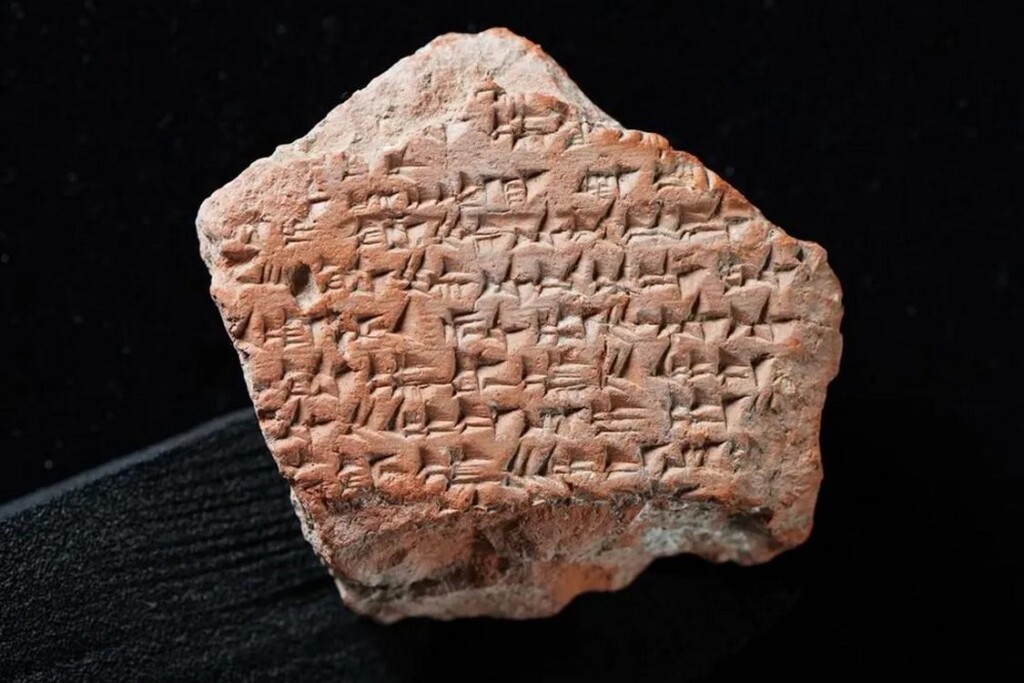
Look, the order fixed for eternity which the Sun God and the God of the Tempest have created for the country of Egypt and the country of Hatti, (that is) peace and fraternity without leaving place among them to any enmity.
These words, translated from Akkadian into Turkish, and from Turkish to English, are found in article 14 of the Peace of Kadesh—and on a clay tablet uncovered last year from an ancient archeological site in Turkiye.
The Peace of Kadesh is the world’s oldest peace treaty, and the tablet fragment contains articles 12-20, detailing how peace between two ancient civilizations would be determined.
Around 1,300 BCE, the armies of the pharaoh Ramses II clashed with those of the powerful Hittite king Muwatallis II. Tens of thousands of soldiers were involved, and it may have been the largest chariot battle in world history. But it ended as a stalemate.
Some years later, Muwatallis’ successor concluded a peace agreement with Ramses, and it is preserved today through 3 copies inscribed in Akkadian cuneiform and one in Egyptian hieroglyphs on the walls in the Temple of Karnak. As such, it is the only ancient Near Eastern treaty for which the versions of both sides have survived, enabling the two to be compared directly.
The lofty language is worthy of the highest ideals of the United Nations, who received a copper-imitation of one of the 3 original tablets as a gift from Turkiye in 1970.
“Found in 1906, in central Anatolia, Turkiye, on the site of the old Hittite capital, Hattusa… the treaty pledges eternal friendship, lasting peace, territorial integrity, nonaggression, extradition, and mutual help,” the UN writes.
The treaty also includes a sort of defensive alliance, against domestic insurrections and foreign invasions. The extradition process was straightforward—those fleeing one country to take refuge in another should be detained and returned, without any criminal punishment dished out, such as their homes being destroyed, their wives being seized, or their tongues cut out—an amnesty that certain areas of the Earth today would relish.
MORE ANCIENT NEAR EAST:
- Iraq Embarks on Preservation Work for the Ziggurat of Ur Using Bricks of Identical Material to 5,000-yo Original
- 4,100-year-old ‘Stunning’ Tomb of a Conjurer-Dentist Who Treated Pharaohs Discovered in Egypt
- 4,000-year-old Tablet Describes Ancient ‘Lunchables’ of Cheese and Meat Carried in a Box
The tablet was found during ongoing excavations at the Hittite royal palace at Buyukkale.
“Scientific examinations have determined that a fragment of a cuneiform tablet found during excavations at Buyukkale, in Hattusa, Corum, belongs to one of the copies of the Kadesh Peace Treaty,” Mehmet Nuri Ersoy, Turkey’s culture and tourism minister, announced on social media.
Archeologists studied the artifact’s inscription for about a year before announcing the find, and now hope that further excavation will uncover the other segments of this copy of the treaty, as only 3 currently exist.
SHARE This Critical Artifact To Ancient Near Eastern History On Social Media…