













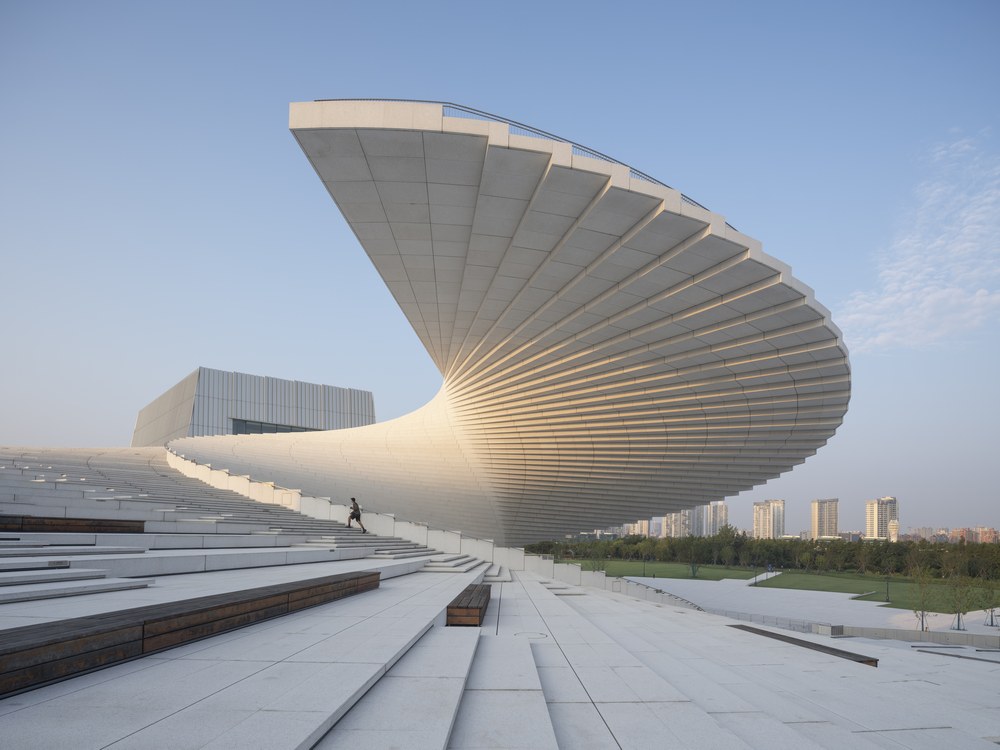
Despite its curtain raising rather late in the year, Shanghai’s new opera house has elbowed its way to the front row of international architectural debuts—thanks to a gravity-defying grand staircase.
Rising above the banks of the Huangpu River, commission for the Grand Opera House was awarded 10 years ago to Norwegian architecture firm Snøhetta.
The team from Snøhetta reasoned that despite being architectural and design marvels in many cases, opera houses naturally contain many “thresholds” that limit the ability of people to appreciate and interact with a building. Their hope was to remove these thresholds when possible and create greater harmony with the civic environment in which the hall is set.
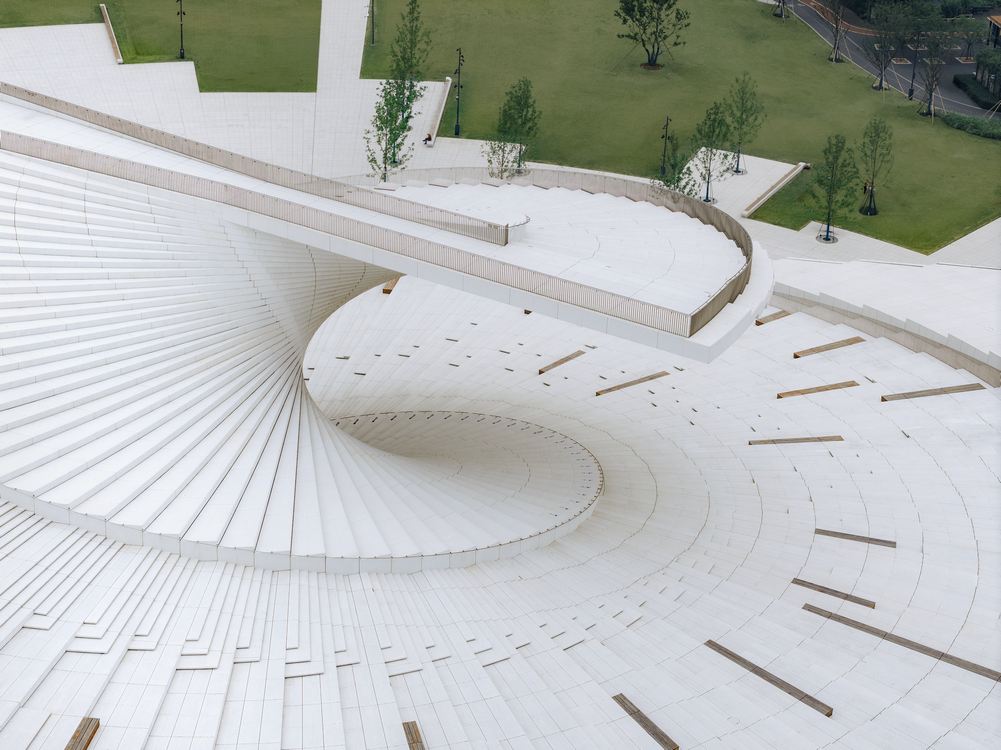
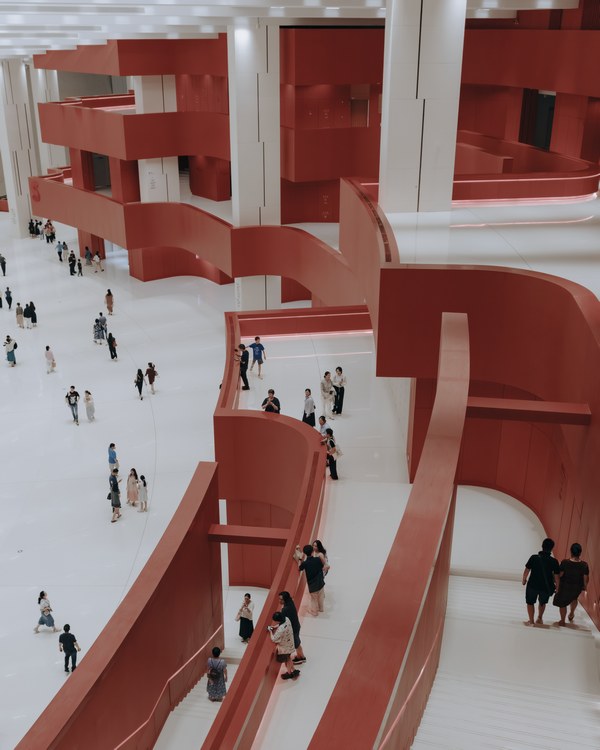
Nothing could epitomize this more than the head-turning spiral staircase on the building’s exterior, drawing visitors towards the heart of its crescent floorplan. It positions itself right along the network of riverside thoroughfares, and allows anyone, ticket holders or otherwise, to climb its Chinese fan-inspired heights up to an observation platform with clear line of sight to the marvelous central business district.
Symphonies are divided into movements, and movement acts as both an architectural and social connector at the opera house, a statement from the firm details, and shapes the ways people approach, enter, and move through the building.
The 1.6 million-square-foot (146,786-square-meter) opera house will accommodate a broad spectrum of performances, from traditional opera and classical music to experimental productions conceived for new and diverse audiences.
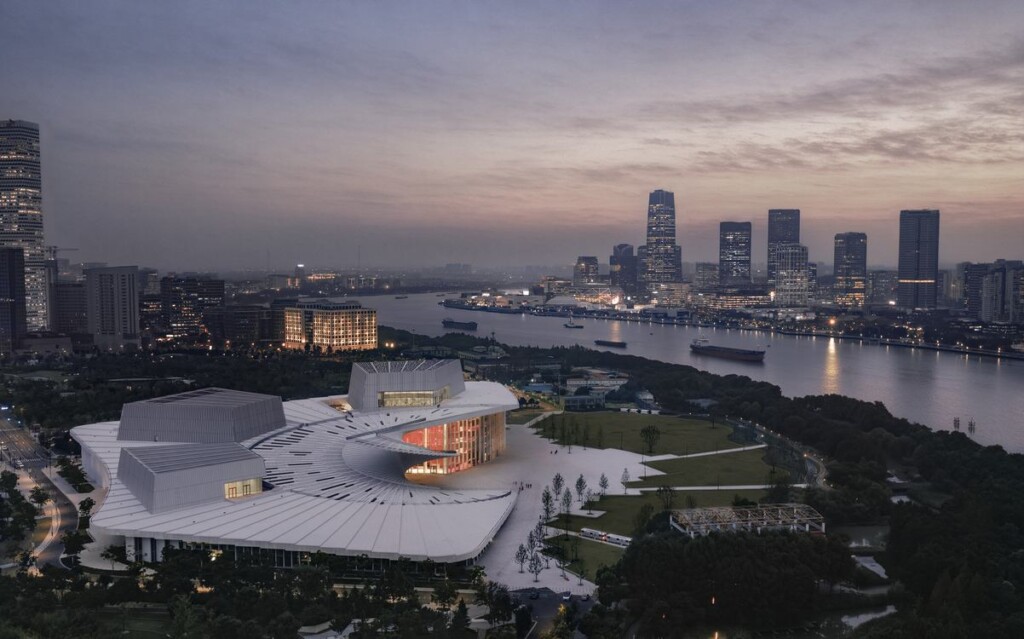
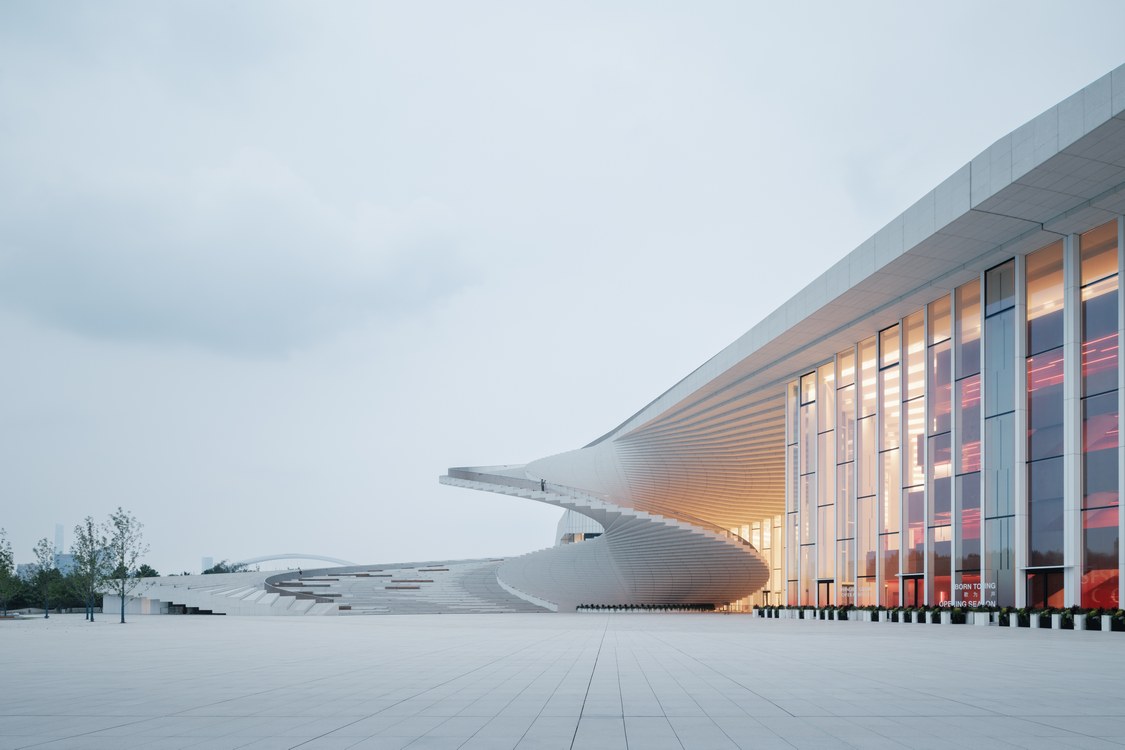
With 3 auditoriums and a total seating capacity of 4,200, it brings performance, rehearsal, production, education, exhibition, and hospitality together under one roof.
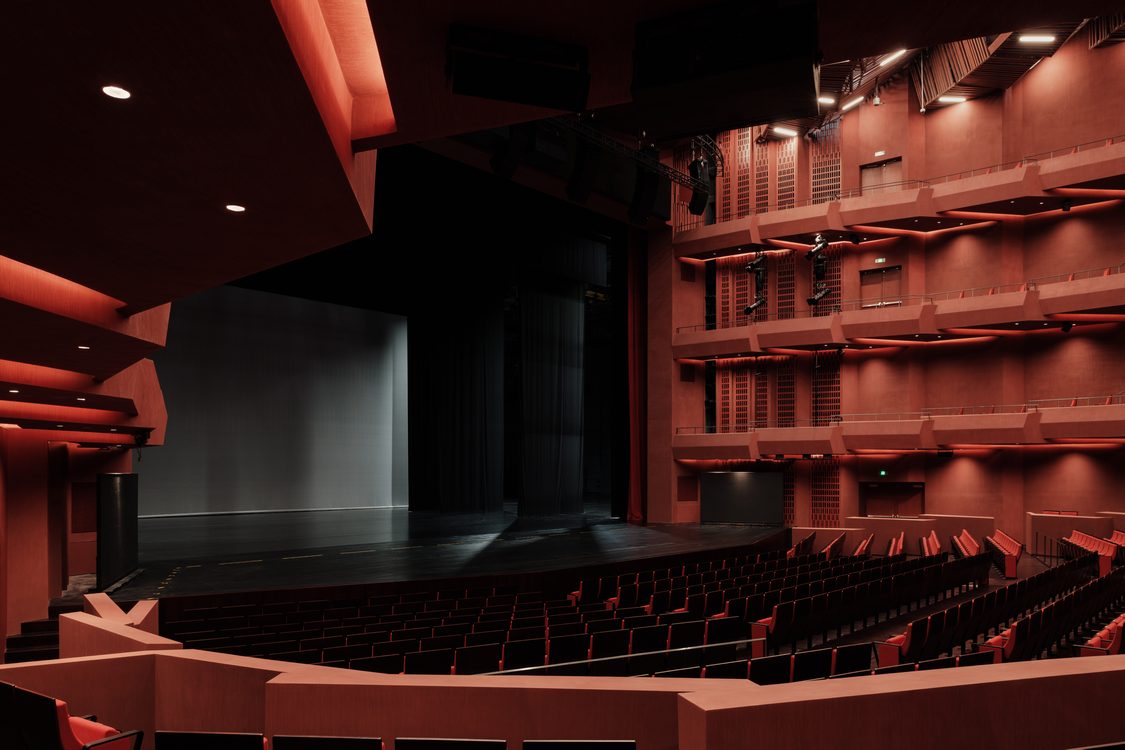
The Harmony auditorium is awash in red and contains 5 levels and 3 terraces with seating for 2,000 people. The hall functions as a finely tuned instrument, combining state-of-the-art theatre systems with carefully calibrated acoustics thanks to design partner Nagata Acoustics.
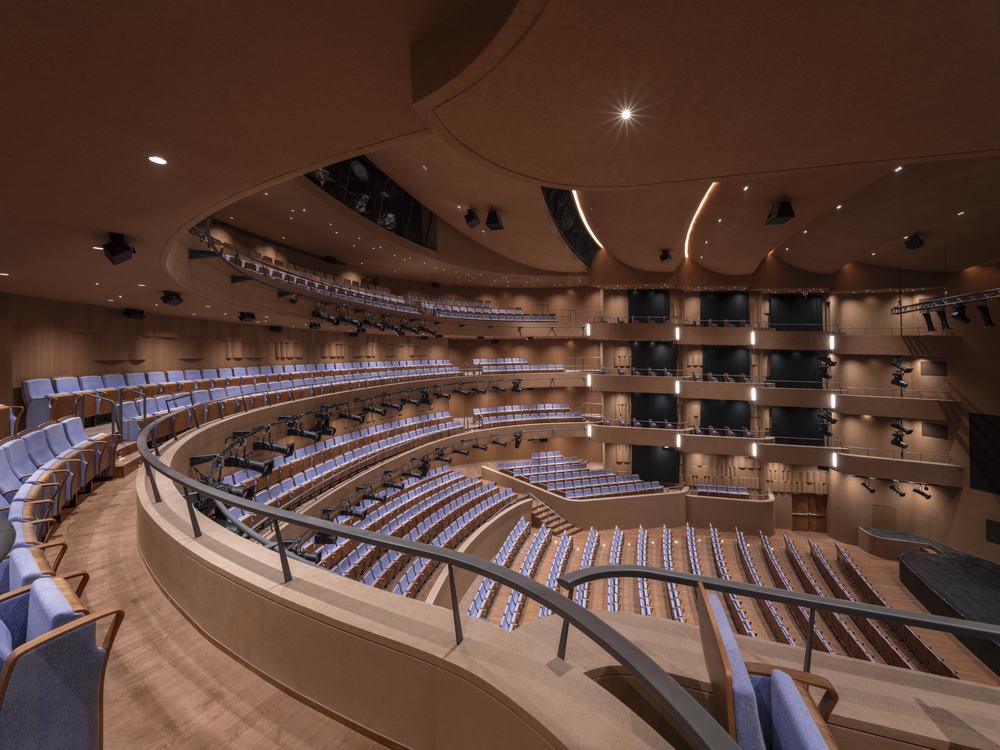
The second auditorium, called the Soar Theater, accommodates 1,200 seats and offers a more intimate setting for smaller-scale production. It is particularly suited to baroque and classical opera, operetta, regional production, and theatre. It’s likely to host many of the traditional Chinese operas called Xiqu.
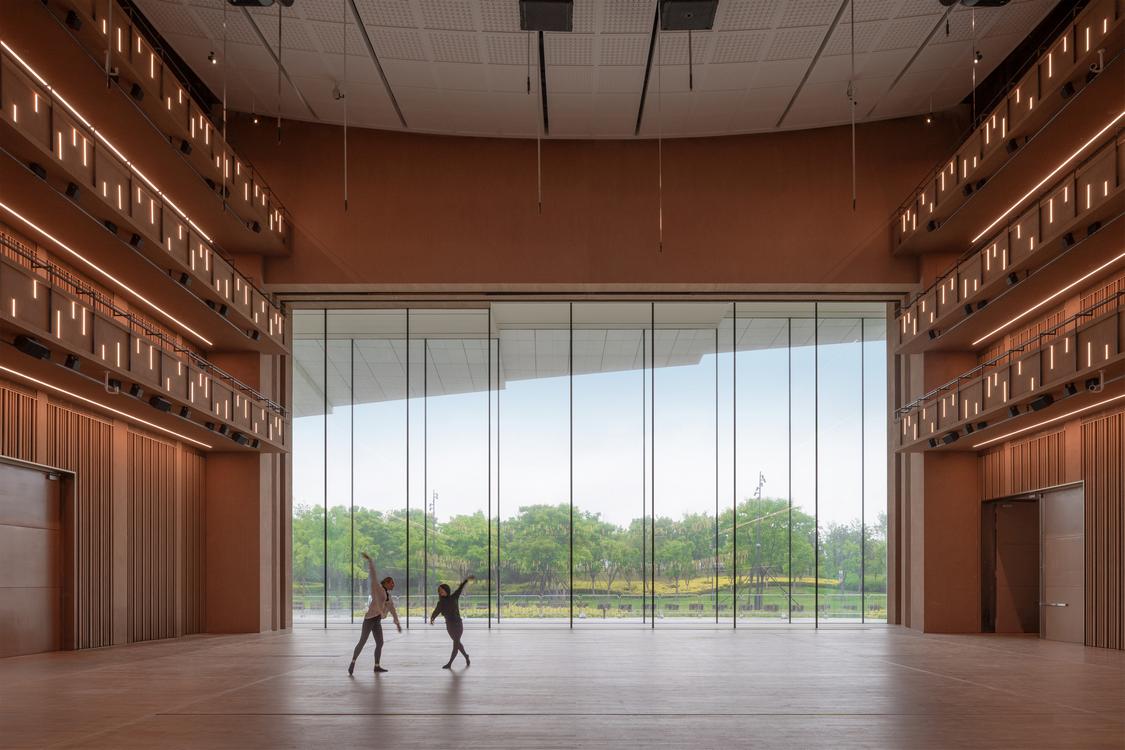
The 1,000-seat third auditorium, called the Open Stage, supports experimental and flexible performance formats through adaptable stage and seating configurations. It can host traditional and non-traditional production with a stage backlit by floor to ceiling windows that look out upon the river and city beyond whilst flooding the hall with natural light.
The opening was last weekend, with a performance of the immortal Italian classic Tosca, ironically the most famous opera of Giacomo Puccini that isn’t set in China.
This weekend features Verdi’s Aida, and it’s just 3 weeks before Americans will make their debut there, with the American Ballet Company bringing out Swan Lake just in time to get excited for winter.
SHARE This New Architectural Marvel With Your Friends Who Love Architecture…