All News - Page 2 of 1694 - Good News Network
Home Blog Page 2

Mom and Baby Beat 1-in-a-Million Odds to Survive the ‘Rarest of Pregnancies’

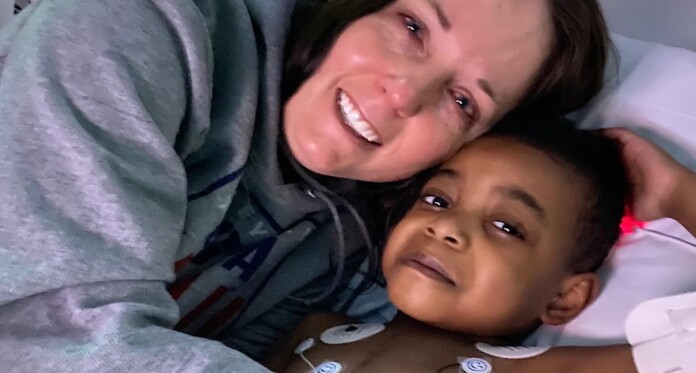
This photo provided by the family shows, from left, Kaila, Suze, Ryu and Andrew Lopez at Cedars-Sinai hospital in Los Angeles in August 2025 - family photo
This photo provided by the family shows, from left, Kaila, Suze, Ryu and Andrew Lopez at Cedars-Sinai hospital in Los Angeles in August 2025 – family photo

A Los Angeles woman recently celebrated the first Christmas with her baby boy, Ryu, born to truly remarkable circumstances.

Ryu developed outside his mother’s womb, and remained hidden for months behind an ovarian cyst that grew to be the size of a basketball. It was so unbelievable, the surgical/OBGYN team that delivered Ryu documented it for a case study in a medical journal.

The manner in which Ryu came into being represents a circumstance that’s “far, far less than 1 in a million,” said Dr. John Ozimek, medical director of labor and delivery at Cedars-Sinai in Los Angeles, where Ryu was born. “I mean, this is really insane.”

Now 41, Suze Lopez has always had an irregular cycle, so missed periods—even consecutive ones—are a normal occurrence. It was almost 20 years ago that she was diagnoses with a pair of ovarian cysts, one of which was removed immediately, and one of which was not.

So in early 2025 when Lopez noted her abdomen swelling, her first thought was the cyst. She never felt kicking, and never had morning sickness—and indeed her instinct was at least partly correct.

The pressure and pain in her abdomen grew as days passed, and she was certain that, even if it risked her ability to conceive again, it was time to remove the other cyst which unbeknownst to her had grown to weigh a mind-boggling 22 pounds.

She needed a CT scan to prepare for surgery, which required a pregnancy test for the radiation, and to her utter surprise the test came back positive. Lopez was delighted, but the pain and discomfort grew and soon she had to be hospitalized at Cedars-Sinai where her medical team found a near fully-developed fetus in an amniotic sack lodged against her pelvis.

The term for where the fetus develops is “implants” and the term for a fetus that implants outside of the womb is an “ectopic pregnancy.” Almost all of these go on to rupture and hemorrhage. As such, fetal mortality can be as high as 90% in such cases and birth defects are seen in about 1 in 5 surviving babies, SF Gate reports.

THE MIRACLE OF LIFE: British Woman Gives Birth After Receiving Transplant Womb from Sister and Pro Bono Surgery at Hospital

However, because fetal Ryu implanted against the pelvic wall and not against the liver, it was far more manageable, and the reason why Lopez didn’t have more pain earlier.

Lopez and her boy beat the odds, despite a mammoth surgical procedure that both delivered Ryu at 8 pounds and removed the ovarian cyst—together weighing as much as an adult bobcat. During the procedure, Lopez lost half her blood, and had to be continually given transfusions.

MORE REMARKABLE BIRTHS: Guinness Record Holder for Most Premature Baby is Thriving at 1-Year Old–and All Giggles After ‘Zero Odds’ to Live

“The whole time, I might have seemed calm on the outside, but I was doing nothing but praying on the inside,” Andrew Lopez, Suze’s husband, told SF Gate. “It was just something that scared me half to death, knowing that at any point I could lose my wife or my child.”

Instead, they both survived without any maleffects. Ryu “completes” their family, said his mother, and recently celebrated his first Christmas alongside his older sister Kaila.

SHARE This Pregnancy Saga With Your friends Who Thought Theirs’s Was Stressful…

‘Great Iowa Treasure Hunt’ Reunites Rightful Owners with Lost Assets, Returns $33 Million Last Year

Fachrizal Maulana - via Unsplash
Fachrizal Maulana – via Unsplash

If government is supposed to be a bureaucracy that operates on behalf of the citizens, one couldn’t hope to find a better example than a yearly tradition at the state treasury of Iowa known as the “Great Iowa Treasure Hunt.”

That makes it sound like there’s a big state tax refund buried in a field somewhere. Instead, the hunt is a program wherein employees at the treasury work to identify misplaced or lost assets and post them to a sort-of financial lost and found for Iowa citizens.

Where do the assets come from? The program works with businesses in the event that they lose contact with the owners of accounts if they’re registered in Iowa. The treasury then safeguards the assets for a period of time.

But rather than seek out the owner or their descendants, they got the idea to invite the whole of the state population to occasionally check the records and see if they have any unclaimed assets waiting for them.

One example of this came 2 years ago, when the Great Iowa Treasure Hunt reunited an Iowa woman with $4.5 million in McDonald’s common stock and paid dividends that had accumulated without her knowledge after she invested $15,000 decades earlier.

Last year, the Great Iowa Treasure Hunt returned $33.6 million in unclaimed property to individuals and businesses that had lost track of them, or hadn’t known of their existence. It’s the highest amount on record, and several million more than the previous year. That $33.5 million was paid out across 53,000 claims.

MORE GREAT STATE PROGRAMS: 6 Million Pounds of Compost Given to NYC Gardeners in 2025 in Ongoing Organic Waste Collection Effort

According to the State Treasurer’s Office, there is currently more than $648 million worth of property waiting to be claimed, and since its inception, the treasure hunt has reunited property worth $408 million to its rightful owners.

According to the Des Moines Register, 1 in 7 Iowans have something waiting for them at the Great Iowa Treasure Hunt. Searching for it is quick, easy, and free.

SHARE This Unique Government Service With The Iowan In Your Life… 

“Dear Lord, I’m so grateful I’m still loved.” – Vivien Leigh

Credit: Getty Images For Unsplash+

Quote of the Day: “Dear Lord, I’m so grateful I’m still loved.” – Vivien Leigh

Image by: Getty Images for Unsplash+

With a new inspirational quote every day, atop the perfect photo—collected and archived on our Quote of the Day page—why not bookmark GNN.org for a daily uplift?

Credit: Getty Images For Unsplash+


Good News in History, January 9

Frostwork and Cave Popcorn from Wind Cave - credit, NP

123 years ago today, Wind Cave National Park was established by Congress as the 6th US National Park. It was the first cave to receive government protection of any kind in the modern era. The cave is recognized as the densest cave system in the world, with the greatest passage volume per cubic mile. Wind Cave is the seventh longest cave in the world, with 154.2 miles (248.16 km) of explored cave passageways (as of 2021), and the third longest cave in the United States. READ more… (1903)

Gorgeous Bridge Allows for Walking and Biking Between US and Canada Set to Open in 2026

Progress on Canada-US bridge near Detroit on Nov 25 - Credit: Gordie Howe International Bridge.com
Bridge site progress, Nov. 25 – credit, Gordie Howe International Bridge.com

20 years in the making, the Gordie Howe International Bridge is set to open in early 2026, providing the first new link between the US and Canada in many years.

The impressive bridge with its graceful bending approaches is reminiscent of the signature ambidexterity of its namesake Howe, often considered the most complete hockey player to ever live, who could shoot both left and right-handed.

The bridge also enters a very narrow company of riverine crossing points that are open to cyclists and pedestrians.

“People didn’t want us to lose a unique opportunity to design a new international crossing without considering the incorporation of a multiuse path for pedestrians and cyclists,” said Heather Grondin, chief relations officer for the Gordie Howe International Bridge.

Linking the cities of Windsor, Ontario, with Detroit, GNN last reported on the bridge in 2024, when the span was missing exactly the length of a regulation NHL hockey rink—pertinent.

It will have the longest steel and concrete composite deck for any cable-stayed bridge in the world, Engineering News Record reported at the time, and will feature 6 lanes of traffic, three in each direction, with overflow parking zones located in the ports of entry to ease congestion across the bridge.

Congestion was a big consideration when designing the project, as the Ambassador Bridge and the Detroit-Windsor Tunnel have been afflicted by routine slowdowns for years.

The bridge in its current state – credit, Gordie Howe International Bridge.com
Members of the Iron Workers trade union who worked on the project – credit, Gordie Howe International Bridge.com
A view of the pedestrian and bike lanes – credit, Gordie Howe International Bridge.com

“This bridge, along with the adjacent infrastructure, will connect directly from Interstate 75 to the Ontario highway system, known as Highway 401, without trucks or cars having to stop at traffic lights along the way,” Grondin told Bridge Detroit.

The roughly $4.4 billion bridge was financed by Canada, and as such the northern neighbor will reap the toll revenue, while providing the maintenance for the next 36 years.

GREAT NEW BRIDGES:

For as much as bridge tourism is a thing in Michigan and the United States, the Gordie Howe Bridge will join the Peace and Rainbow bridges in Niagara Falls, and the Thousand Islands Bridge in New York that feature pedestrian and cycling routes along the flanks of the span.

The US-side port of entry – credit, Gordie Howe International Bridge.com
The Canadian port of entry- credit, Gordie Howe International Bridge.com

And it’s far from merely being there to provide visitors with a chance to snap a photo from the middle: each side connects with wider trail systems along the banks of the Detroit River, where waterfront redevelopment has included several charming parks to pass through.

The bridge won’t only connect Detroit and Windsor, Interstate 75 and its Canadian equivalent, and the United States and Canada, but also two hockey-loving nations who shared in a great man’s sporting capacities: one by the nation of his birth, and the other by the city in which he dominated for so long as a forward for the Red Wings.

SHARE This Beautiful New Bridge Across Two Great Nations… 

Naughty Golden Retriever Rescued After Falling Through Frozen Pond–No Bones for a Month

Misquamicut Fire Department - credit, released
Misquamicut Fire Department – credit, released

For a pair of Maine dog owners, 2026 started with a dreadful scare after their naughty golden retriever ran out onto a frozen pond and broke through the ice.

Without any means of rescuing their pooch or resisting the deathly chill of the frozen water, the owners called 911 and hoped that firefighters could arrive in time.

Bedecked in vibrant orange wetsuits, the emergency services got to work in the icy pond, with one rescuer gently sliding across the ice and eventually paddling out to meet the dog who had done a great job keeping its head above water.

In water that cold, warm-blooded animals not adapted to life in the Arctic or far north/south have mere minutes before the low temperatures bring on hypothermia, an inability to command and control the muscles in the extremities, and therefore the ability to continue to tread water.

But the goldie looked sharp and ready, phone camera footage revealed, when the rescuer arrived at the middle point of the pond.

Securing it around the neck, the fireman gave the signal to pull in the rope attached to him, and the pair made it back to shore safely.

DOG RESCUES: Dog Rescued from Boston Tunnel During Rush Hour After Playing ‘Will I Won’t I’ with Police – WATCH

Rescuers and dog were examined for signs of hypothermia, but there were none to be found, and all got to retire to warmer environs; the pooch to a pair of presumably relieved yet disappointed owners. No kitchen scraps for Fido tonight.

WATCH the rescue below… 

SHARE This Daring Rescue From A Doggy Disaster With Your Friends… 

Montana Program Makes Youth Offenders Talk with Their Victims and Recidivism Plummets

CRYJ juvenile criminal justice center in Montana - submitted by CRYJ
CRYJ juvenile criminal justice center in Montana – submitted by CRYJ

In Montana, a focus on restorative justice is reducing juvenile recidivism through a nonprofit program that engages them, rather than punishes them.

The nonprofit believes that it’s actually far more challenging for juvenile offenders to look their victims in the eye and explain why they behaved antisocially than it is to simply serve a suspension from school, where they’re distanced from friends and mentors, and often fall behind in their education.

The Center for Restorative Youth Justice (CRYJ), is not a new organization, but their influence in Montana is growing. From a background of success in the city of Kalispell, their programs eventually expanded to include Missoula County, and via another group, neighboring Flathead County as well.

By 2023, the number of Kalispell youth receiving out-of-school suspensions decreased, CRYJ recorded, to just 82 individuals compared to over 200 five years earlier. The recidivism rate dropped to just 10%, compared to 23% in the nearby Flathead County.

At its most elemental, CRYJ receives referrals from Youth Court probation officers, school administrators, or school resource officers made on behalf of a juvenile offender who’s broken the law.

CRYJ then has a conference with the youth and their parent or guardian, and creates a tailormade program of restorative justice. This can involve peer group discussion, victim-offender meetings, and other situations where the youth is given the forum to reestablish a relationship with the community, rather than something like a school suspension.

CRYJ believes that by limiting the overuse of exclusionary discipline and emphasizing a community-driven approach, it can help at-risk youth avoid falling behind in school which often compounds the problems that caused them to offend in the first place.

Restorative justice work can look like a light touch, says one organizer, but that’s not really the case – submitted, CRYJ

“We spend a lot of time separating people after there’s been harm, but often the deepest healing and learning and moving forward can happen … when we can actually come together and talk about what happened and how to make things right.”

Those were the thoughts of Emma Schmeltzer, co-director of CRYJ’s Missoula program, who along with her colleague Kaya Juda-Nelson and University of Montana master’s student Tara Cook, receive referrals for students and organize meetings one-on-one or in groups to identify the offense and the best way to reestablish that student’s place in society after something like drug or alcohol use, bullying, assault, or theft.

KEEPING KIDS OUT OF JAIL: Jobs, Not Jail: A Judge Was Sick of Sending Kids to Prison, So He Found a Better Way

Schmeltzer and Juda-Nelson spoke with the Montana Free Press about their work in Missoula which began this year, with the latter saying that while it might sound like a lighter touch than Youth Court and probation, it doesn’t let the kids off easy.

“I think that asking a kid to sit down and actually talk about what happened and work through it and express that vulnerability and really have to have an honest conversation about what was going on for them and why they engaged in whatever behavior or incident they engaged in, I think that is often much more challenging, for a teenager especially,” she said.

Montana Free Press reported that in the 2024/25 scholastic year, CRYJ received referrals for 118 youths at a program cost of $430 per person, while in nearby Flathead County, the 40 youths eventually detained and sent to Youth Court during the same period cost the taxpayers $6,815 per person.

MORE RESTORATIVE JUSTICE WORK: 24 Prison Inmates Get College Degrees, Graduate Together Thanks to UC Program: ‘I literally feel free’

A similar, unaffiliated organization called the Center for Youth Justice at Georgetown University, is applying the Kalispell program template from CRYJ in Flathead County, to more of the same success.

Called “Diversion in Action,” organizers stress another benefit of the restorative justice model: it lightens the workload for county attorneys—who have less cases coming across their desks; for school resource officers—who can spend more time keeping the school safe rather than doing paperwork for citations; for school administrators—who can hand off behavioral issues to those who are actually trained to handle them.

SHARE This Great Work Going On In Montana Schools With Your Friends… 

Determined Engineering Student Builds Prototype Modular Home to Help Homelessness

Ribal Zebian and his modular home on stage at a demonstration - credit, supplied by Mr Zebian
Ribal Zebian and his modular home on stage at a demonstration – credit, supplied by Mr Zebian

A driven Ontario teen is determined to end homelessness in his city, and has designed a modular tiny home system to tackle the problem.

Ribal Zebian is only 18, but he’s wasted no time in finding his purpose. At 17, his passion for engineering had seen him build a child-scale model of a Mercedes G-class out of wood and electrics and donate it to a museum.

Now he’s working on something a little more practical: precision fiberglass molding that can create small, insulated shelters to support London Ontario’s 1,800 homeless residents.

Zebian isn’t only focused on the present, “I’m concerned about the people in the future that will end up facing that problem, right, because house prices are increasing and increasing and increasing,” he told CTV News.

The fiberglass panels, molded with utility cavities, can be quickly duplicated to form modular structures of larger or smaller area. The ceiling uses insulated cores of PET plastic that support the roof structure and should resist all weather all year.

Beginning in May, Zebian, who attends Western University, will attempt to live in the modular home for 12 months.

OTHER SHELTER SOLUTIONS: Sixth Tiny Home Village is Ending Homelessness for Veterans Across the US: ‘This place saved me’

Like this, he told CTV, he can see every defect and flaw, and experience the shelter in every kind of climate to understand exactly how it can be perfected. He thoroughly believes it can be mass produced and utilized to help alleviate homelessness.

“Are tiny homes the entire answer? No, but it’s a part of the solution,” said London affordable housing advocate Gary Brown, again to CTV. “I’ve seen quite a few going up in other cities, and it’s something London itself is kind of lagging behind a little bit.”

SHARE This Young Man’s Drive And Ambition To End Homelessness In His Community… 

“What love we’ve given, we’ll have forever.” – Leo Buscaglia

Quote of the Day: “What love we’ve given, we’ll have forever.” – Leo Buscaglia

Image by: Dan Musat

With a new inspirational quote every day, atop the perfect photo—collected and archived on our Quote of the Day page—why not bookmark GNN.org for a daily uplift?

Good News in History, January 8

60 years ago today, The Beatles reached No.1 on the US album chart with the groundbreaking Rubber Soul. Their 7th chart-topping LP, it stayed on the Billboard list for 56 weeks, with album sales that were unprecedented. At the same time, their single “We Can Work It Out” became the group’s 11th US. CHECK OUT the iconic track list… (1966)

New York City Had the Lowest Number of Shootings in its History Last Year

credit - Campbell Jensen


credit – Campbell Jensen

Of all the challenges Zohran Mamdani will face taking charge of the biggest city in the US, shootings isn’t one of them, as the Big Apple recorded fewer in 2025 than any year on record.

“In 2025, New York City recorded 688 shooting incidents, the lowest number in the city’s history. That didn’t just break the previous record set in 2018, it shattered it, with 66 fewer shootings than that benchmark year,” Police Commissioner Jessica Tisch said at a Tuesday morning news conference.

“In the month of December, shootings fell 43%, with just 35 shooting incidents citywide. That is the lowest number of shootings ever in any month of year, beating the previous record of 36 shooting incidents set in February of 2018. We see the headlines and we hear the pundits talk about crime being out of control in our city. These numbers tell a very different story.”

“Make no mistake about it. These reductions are the product of our precision policing strategy,” Tisch said. “Putting an unprecedented number of cops on the streets, and in the neighborhoods driving violence, including thousands of additional officers on foot posts and conducting targeted takedowns of the most violent gangs in our city.”

Crime in general fell, though nothing as dramatic as what was seen in the number of shootings. Incidents of theft fell 4%, of burglary by 5%, and of armed robbery by 10%.

SHARE These Great Reasons To Be Positive About The Big Apple… 

100 Miles of Derelict Fencing Removed by Rewilders Across the Great Plains in Montana

Volunteers, staff, and contractors removing derelict fencing - credit, American Prairie
Volunteers, staff, and contractors removing derelict fencing – credit, American Prairie

The largest private land conservation project in America passed a milestone of rewilding the Great Plains last year.

The nonprofit American Prairie recently celebrated the new year with a report that it had successfully removed the 100th mile of derelict barbed wire fencing on its land holdings.

All rolled up, the thorny barrier amounted to 500,000 pounds of scrap metal, and with its removal, the prairie’s megafauna are free to move about as their hearts desire.

American Prairie Reserve has for years been buying and leasing land between the Charles M. Russel National Wildlife Refuge and Upper Missouri Breaks National Monument in Montana to create America’s largest assemblage of wild prairie for the purposes of conservation and recreation.

Stitching together grasslands, water features, ranchland, rolling hills, and woodland, the reserve has accumulated 603,657 acres, which comprises 167,070 deeded acres and 436,587 leased public acres. Their goal is ultimately to protect and some cases rewild 2.3 million acres—far harder to achieve for citizens than government lawmakers.

Yet in the over 20 years that American Prairie has been working, they’ve expanded their reserve to such an extent that if it were declared a National Park, it would rank among the nation’s 10 largest across the Lower 48.

The work of removing the derelict fencing is part of returning this patchwork landscape to a semi-wild and in some cases totally wild state. With free-roaming animals like mule deer, elk, and pronghorn, the idea is to completely free them to move about as they please, as if it were the year 8,000 BCE.

But no “Prairie Reserve” could be complete without the bison, and the nonprofit’s bison herd has grown over the last 20 years from just 16 animals to 940 by the end of 2025, roaming across 48,000 acres.

The Anchor ranchland, Montana – credit, American Prairie Reserve, released

In these acres, to comply with state and federal law, the barbed wire fencing has been replaced with wildlife-friendly fencing designed to allow as many species as possible to pass through it while at the same time giving a shock to any itchy bison.

RETURNING THE LAND TO THE BEASTS: Abandoned Ohio Golf Course Being Rewilded into Public Land with Native Fish and Wildlife Returning

As a species, it’s extremely rare bison ever test a fence, but when shedding their winter coats, they will rub up against the barbed wire and risk damaging the fence. The new electric fences of each property are divided into zones and powered by solar panels. Each zone is 10-12 miles of fence powered by one 150-watt solar panel and a 12-joule charger, and a 12-volt battery that stores backup power used at night and on cloudy days.

Wildlife movement, property boundaries, public property uses, and grazing management all have to be considered when deciding to keep or alter fencing, and that includes the reserve’s vibrant bird life.

MORE ON THIS INCREDIBLE PROJECT: Land Was Owned by Billionaires Who Didn’t Allow Access to National Monument – Now it’s Open

One of the design modifications is the addition of fence markers in high traffic bird areas. The American Prairie field team tracks bird-fence collisions and adds markers as needed in collision-prone areas. Research has shown that the markers reduce bird-fence collisions by 70%.

By some estimates, the Great North American Prairie has shrunk by over 90%. American Prairie, which is funded entirely through donations, philanthropy, and the now multiple opportunities for recreation, including stargazing, hunting, and all manner of excursions, aims not to let that number go up so much as 1 percent more, and they’re doing about as good a job as anyone could have ever imagined.

ZooTampa Released 26 Rehabilitated Manatees Back into Florida Waters in 2025–the Most on Record

Mudonna the manatee on route to the wild - credit, ZooTampa
Mudonna the manatee on route to the wild – credit, ZooTampa

2025 was a big year for one of Florida’s premier manatee rescue organizations.

ZooTampa released 26 rehabilitated manatees back into Florida waters in 2025—the highest number in its long history.

The accomplishment, the zoo stated, underscores its pivotal role in conserving this iconic species and its role within the manatee rescue network in the state.

These graceful marine mammals are a Florida icon, but nevertheless vulnerable to being struck by boats, and displacement from habitat loss. Every year, dozens of wounded manatees are rescued by organizations like ZooTampa.

The zoo’s David Straz Jr. Manatee Critical Care Center, the largest nonprofit facility of its kind in the US, has cared for over 615 manatees since 1991, with the majority successfully returned to their natural habitat.

The manatee rescue, rehabilitation, and release program costs the zoo $2 million a year, and consists of an expert team of veterinarians, including two US Fish and Wildlife Service-certified manatee critical care veterinarians, and animal care professionals.

ALSO CHECK OUT: 1,000 Manatees Converge on Florida State Park to Keep Warm in Record-Breaking Sighting

The program could never be more needed, as it’s estimated that of the over 620 manatees died in across Florida waters in 2025, 97 were from boat strikes.

In spring 2026, ZooTampa will unveil the Straz Family Manatee Rescue, a state-of-the-art facility that will offer visitors immersive, eye-level underwater views of manatees, providing a unique opportunity to witness the zoo’s life-saving efforts firsthand.

MORE MANATEE NEWS: Struggling Manatee Was Close to Dying but Florida Deputy Held it Afloat for 2 Hours

Visitors can see life-saving care in real time in the soon-to-be-five critical care pools where the floors raise up to bring manatees out of the water for their medical treatments. They can also watch manatees in two naturalistic rehabilitation pools as they continue to get ready to be released back into the wild.

SHARE This Great Organization And Its Work Saving These Sea Cows… 

German Households Pass €10 Trillion in Savings After Disciplined Decade of Highest Savings Rates

DZ Bank branch in Munich - credit Fred Romero CC 2.0.
DZ Bank branch in Munich – credit Fred Romero CC 2.0.

Having maintained the highest household savings rate among European countries for 10 years, German citizens have together squirreled away $11 trillion in personal wealth.

This gargantuan rainy day fund was the result of a 20-21% average savings rate maintained by the country between 2014 and 2024. It ranked among the highest savings rates of any developed country during that time.

The country reached €10 trillion in savings according to an estimate by DZ Bank, which calculated an increase in money savings and liquid assets of 6%, or around €600 billion in 2025.

DW news reports that compared to other EU countries, German citizens are more leery of equities on average, and that the increase in liquid savings cannot therefore be explained merely by increases in stock market valuations seen on the Frankfurt exchange last year.

DZ Bank economist Michael Stappel said the upward trend is likely to continue in 2026, even if market gains ease.

A high savings rate is not necessarily a sign of hard or uncertain economic times. It also represents a low time preference. Economic theory states that if a society is comfortable delaying gratification—that is, to save the fruit of one’s labor for a later time—that society will inevitably prosper.

Low time preference is linked to societal stability and growth. It requires personal discipline, for example, and having children, buying a house, starting a business, or creating a piece of art like a novel or a music album—things we universally recognize as the best sorts of objectives—all require the ability to give up present consumption for future reward.

In a financial sense, low time preference and high savings rates create greater resources for investment.

In a banking environment where savings rates are high, it’s a key sign for investors and entrepreneurs that there are resources available for long-term projects, the kind of projects that help transform societies from poor to wealthy and industrialized.

GERMAN NEWS: Waste from Copper Plant Is Heating a German Waterfront Without Emitting CO2

They might allow a business to plan to build a new factor, for example, and reasonably suspect that the investment environment will be positive for the 10-12 years needed to finish the project. With its massive growth rate, it’s no surprise that China has seen periods where the personal savings rate has been over 70%—the highest in the world.

Contrarily, societies where the savings rates are very low represent less stable environments with more uncertainty and more hand to mouth existences. A low rate of personal savings sends a signal to investors and entrepreneurs that it isn’t clear projects undertaken in the present will be able to be completed in the future.

ALSO CHECK OUT: Gen Z is Turning Out to be More Financially Strategic Than Their Stereotype Portends

20th century economist Ludwig Von Mises wrote that this is akin to a master builder who doesn’t know how many bricks he has at the time he starts building a house.

German manufacturing and financial prosperity is the backbone on which the euro stands erect, and the fact that Germans are able to continue this financial discipline year after year is a testament to how solid that foundation is.

SHARE This Impressive Decade Of Household Savings With Your Friends… 

“A good dinner and feasting reconciles everybody.” – Samuel Pepys

Credit: Didriks

Quote of the Day: “A good dinner and feasting reconciles everybody.” – Samuel Pepys

Image by: Didriks

With a new inspirational quote every day, atop the perfect photo—collected and archived on our Quote of the Day page—why not bookmark GNN.org for a daily uplift?

Credit: Didriks

Good News in History, January 7

The flag of Pol Pot's Democratic Kampuchea - public domain

47 years ago today, the Vietnamese army coalition FUNSK, or the Salvation Front, succeeded in storming Phenom Phen, Cambodia, ousting Pol Pot, and halting the Cambodian Genocide. The conflict began less than a decade after the Fall of Saigon, but the Vietnamese forces were still strong enough to reverse attacks on their southeast by the Khmer Rouge, invade the country, and topple its government. They succeeded in just two weeks, proving yet again their remarkable prowess on the field of battle. READ more of why this is good news… (1979)

Birds-of-Paradise Flashy Feathers also Glow in Biofluorescence, Surprise Discovery Demonstrates

credit - Rene Martin / American Museum of Natural History
credit – Rene Martin / American Museum of Natural History

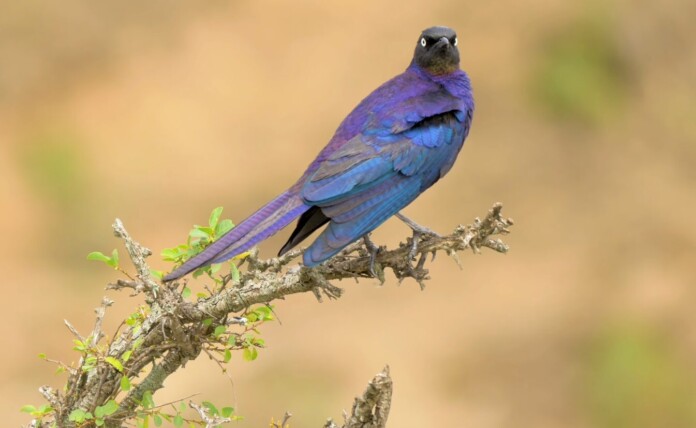
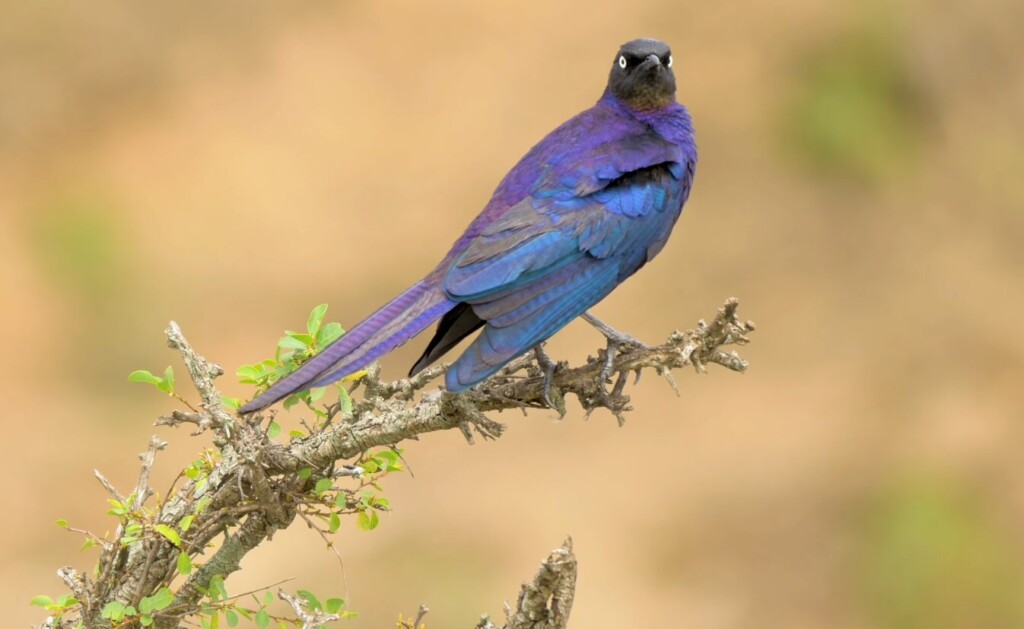
Birds-of-paradise have long dazzled us with their incredibly vibrant and varied plumage, but researchers studying the group have recently made an even more incredible discovery.

Plumage on 37 of 45 birds-of-paradise species emit biofluorescence meaning molecules inside the feathers absorb UV light and release it as a yellow-green glow.

From long spindly plumes, to bright crowns and fluffy patches on the breast and shoulders, or even feathers so black they absorb light similar to a black hole, birds-of-paradise, found throughout the islands of Australasia, are among the most demonstrative show birds in the world.

Why, then, would their plumage need even more razmataz? That’s what ornithologists are wondering after a team of ichthyologists (fish scientists) revealed that the majority of birds-of-paradise emit biofluorescence from one or sometimes two or three parts of the body.

The ichthyologists were studying biofluorescence in fish, and while sequestered among the collections in the American Museum of Natural History, they got to wondering what other animals displayed this trait.

Using a UV light in a dark room, drawer after drawer of collected specimens of birds-of-paradise shone just like glow-in-the-dark stars under the scientists’ inspection.

Red bird-of-paradise, a species found to glow more than others – credit, JJ Harrison via Wikimedia CC BY-SA 4.0

“It could just be that the biofluorescent portions are helping enhance those displays even more,” hypothesizes lead study author Rene Martin, a fish biologist at the University of Nebraska-Lincoln.

Further fascinating discoveries followed the first fascinating feathered discovery—that birds-of-paradise had the biofluorescent trait in their mouths as well, and that the 8 species of birds that were noted to be monogamous had much more muted biofluorescence than those other species that paired up every year.

Birds have one more photoreceptor in their eyes than humans do. This allows them to see more colors than us. Study co-author Emily Carr, a PhD student at the American Museum of Natural History, told the Audubon Society that birds-of-paradise also have a small drop of oil in their eyes that filter out certain wavelengths of light that might allow them to see the biofluorescence even more strongly.

BRILLIANT BIRDS: Hummingbird Chicks Observed for the First Time Pretending to be Caterpillars to Avoid Being Eaten

As to why the feathers glow at all, scientists are guessing it has to do with aiding the well-documented mating displays of various species, or even to establish some sort of social dominance.

“To me, the interesting part is that it’s so widespread throughout the group,” Edwin Scholes, who founded the Birds-of-Paradise Project at Cornell Laboratory of Ornithology and was not involved in the study, told Audubon. “It’s not just all tail feathers or all flank feathers or anything specific—it’s pretty much all over the board.”

WATCH The BBC’s Classic Planet Earth footage of the birds-of-paradise… 

SHARE This Impressive Plumage And Its More Impressive Secret On Social Media…
If You Can’t Beat ‘Em, Eat ‘Em: Ecologists Combat Invasive Lionfish with Local Cuisine

Pterois miles, or lionfish, in the Cyclades - credit, Paolo Gamba, CC BY-2.0.
Pterois miles, or lionfish, in the Cyclades – credit, Paolo Gamba, CC BY-2.0.

In parts of the Mediterranean, invasive lionfish have devastated local marine biodiversity, but an allegiance between fishermen and chefs may mean the invader has met its match.

On the island of Cyprus, the strategy is now clear: if we can’t beat it, let’s eat it.

Native to the Indo-Pacific the lionfish has been introduced to various parts of the world’s seas through the aquarium industry. Once set, it multiples and consumes everything around it, as it has no native predators in the Mediterranean.

Moray eels, bluespotted cornetfish, barracuda, bobit worms, and large groupers have all been documented preying on the species in its native habitat, but few if any of these live in the Caribbean, Mediterranean, and Western Atlantic where the lionfish is invasive.

These creatures can prey on the animal because they’ve developed methods to either resist or avoid the toxic spines that line the fish’s body, a hazard that its latest predator, Homo sapiens, has to pay attention to.

“First of all it has to be cleaned, it is very dangerous,” Stephanos Mentonis, who runs a popular fish tavern in Larnaca, Cyprus, told Euro News. “You have to cut the spines off… if you get pricked, you will not die but it you be [sic] in terrible pain.”

Mentonis is just one of a number of Cypriots who are beginning to see the best cure for lionfish as a little oil, maybe some oregano, lemon, and medium heat. That number extends to the very commissioner of the European Union Fisheries, Costas Kadis. He noted a social media campaign #TasteTheOcean, which ran first in 2021, that saw a number of Cypriot restaurants introduce lionfish to their menus, and fishmongers introduce it to their markets.

“By incorporating invasive species such as lionfish into our diet, we can turn this challenge into an opportunity for the fisheries sector and at the same time help limit the environmental threat caused by these species,” Kadis says.

The animal is priced competitively with regional favorites like bream and sea bass, costing half as much by weight as the latter, for example, while its meat is fluffy, tender, and slowly becoming more and more popular.

OTHER STORIES LIKE THIS: 

Previous efforts have seen paid scuba divers go cull lionfish around reefs and wrecks in the deeps, but this by-hand work is seen only as a stopgap to help local species recover, as a single female lionfish can lay 2 million eggs per year.

The economics of the food supply chain and fishing industries could prove to be the fatal sting for the poisonous invader.

SHARE This Story Of Overfishing For Good With Your Friends… 

France Bans Forever Chemicals in Cosmetics, Fashion, and Ski Wax

Christin Hume - Unsplash
Christin Hume – Unsplash

Being that many of the so-called “forever chemicals” are involved in making products water-resistant, a French ban on their use in the textile, fashion, and cosmetics industries should serve to greatly reduce the nation’s population to their exposure.

There are hundreds of forever chemicals often called per or poly fluoroalkyl substances (PFAS) like perfluorooctanoic acid (PFOA) and perfluorooctane sulfonic acid (PFOS). They are used in the manufacturing of non-stick pans, waterproof clothing, waterproof treatments, ski wax, fire-fighting equipment, and much more.

Their exposure has been linked to numerous health conditions, from cancer to birth defects, and their presence has been recorded in most human organs, and in every Earthbound environment assayed for them, including the summit of Everest.

The French lower-house, the National Assembly, adopted the bill put forward by the Green Party with 231 votes to 51 in February of last year, following a green light from the Senate. 14 of the deputies tested their hair and presented the results on the floor as a demonstration—all of the samples contained forever chemicals.

Signed by President Emmanuel Macron, it entered into effect at the start of the year, and comes with a provision that will see the government routinely testing for PFAS in civic water supplies.

The legislation bans the chemicals’ use in clothing, cosmetics, ski wax, but fell short of including non-stick pan coatings. “Essential” emergency equipment was also exempt from the ban.

OTHER ACTIONS: Maine is First U.S. State to Ban PFAS “Forever Chemicals” in All Products—and Huge Companies Are Getting On Board

A ban in Denmark along similar lines will come into effect in July.

Many of the known PFAS were banned in a UN treaty signed during the Stockholm Convention of 2001. 150 Member States ratified the treaty, but certain notable producers declined to do so. The European Union has been studying a possible ban on the use of PFAS in consumer products.

SHARE This Step Towards A Safer Consumer World With Your Friends… 

First Nation Innovates Prefabricated Housing System from Locally-Sourced Wood

A rendering of Timber House from the Nak'adzli Development Corporation - credit, released
A rendering of Timber House from the Nak’adzli Development Corporation – credit, released

Prefabricated housing holds the potential to erect both economic opportunities and affordable housing in Canada’s far northwest, tribal leaders believe.

Using low-quality timber sourced locally, the Nak’adzli Whuton, a first nation located near Fort St. James in British Columbia, are creating mass timber panels that can be quickly assembled into a standard building.

The Nak’adzli Whuton Development Corporation teamed up with the University of Northern British Columbia’s Wood Innovation Research Lab, and Deadwood Innovations, a lumber industry player looking to turn low-quality, low-impact wood into high-quality beams and panels. This includes inputs like aspen trees, which grow in colonies and don’t need to be replanted, but which wouldn’t typically be used in logging.

Mass timber is a wood engineering technique that involves gluing, heating, and compressing multiple small boards of wood together to create stronger, larger forms. They’ve proven to be a transformative innovation in timber construction, and it creates the chance for a secondary industry to be spawned from tribal forestry.

“This house means security not only in housing, but in economics and community longevity,” said Nak’azdli Whuten member Elky Taylor.

“We have limited economics in Fort St. James and to create a secondary industry with our timber is something that’s been a long time coming and we’re hoping to see success in this pilot project.”

The house is an upright timber construction featuring an open concept living room/kitchen on the ground floor, and three bedrooms in a loft arrangement on the second floor. Project team leaders spoke with CBC News and said that a 3 bedroom 2 bathroom home could be fully assembled in just 10 days.

Additionally, because all the housing panels are assembled in a factory setting, each can be subject to more rigorous quality control, eliminating the chance for defects to arise in the construction on site, and having to either compensate, or improvise.

“You can build the panels through the winter months, and then in the summer you can erect the houses a lot quicker,” said John-Paul Wenger, CEO of Nak’azdli Whuten Development Corp.

FIRST NATIONS GETTING CREATIVE: First of its Kind Medical School in Cherokee Nation Graduates First Class of Doctors

“The idea would be instead of producing two or three houses, we could maybe do 10 houses in this area with our construction crew and local contractors.”

The floor plan for the homes can of course be quickly and easily changed to fit the needs of the community or resident since the building is done so fast.

MORE TIMBER TALES: Wood Scraps Turned into Bulletproof, Fire-Resistant Superwood That’s ‘Stronger Than Steel’

Fort St. James is one of several northern BC towns that have shared the downturn in the provincial timber industry. As much as the town, like pretty much everywhere else in the Western world, needs more housing at a lower price, the partnership between the Nak’azdli Whuten, Deadwood, and UNBC is as much about creating skillsets that will help ensure the local community can provide value on a national scale.

WATCH the story below from CBC News… 

SHARE This Great Story With Your Friends On Social Media…