All News - Page 238 of 1716 - Good News Network
Home Blog Page 238

First Advanced Parkinson’s Patient to Walk Again with New Spinal Implant, ‘It’s Incredible’

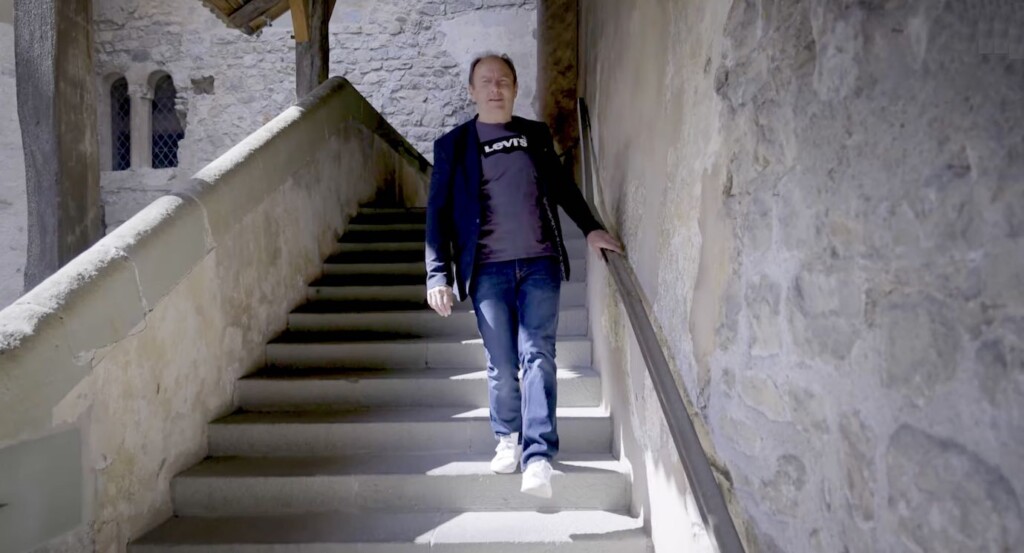
Marc walks AGAIN with Swiss device – Jocelyne Bloch / CHUV Lausanne University

A Frenchman who received a new spinal implant has regained significant motor functions including the ability to walk unaided for miles after losing all such faculties to advanced-stage Parkinson’s Disease.

In the latter stages of the moto-neuron disorder, patients lose the ability to correctly use their muscles, and at some points movement can shut off entirely and they can crumple to the floor.

63-year-old Marc from Bordeaux, France was diagnosed with the condition 20 years ago, and it got so bad that there had to be someone holding his arms at all times in case his walking gait just froze.

He was the subject of the experimental spinal implant technology developed through a collaboration between the Swiss Federal Institute of Technology in Lausanne and the Lausanne University Hospital that has also restored some mobility to a man with a spinal cord injury that left him paralyzed.

When you see images of people with spinal cord injuries walking again with the help of implants, there’s normally a computer attached to their back, or they’re in a laboratory setting.

But watching Marc walk with his new implants, it’s like the real thing. The implants still needs another 5 years of work, and the study published on Marc’s experience is seen as a major ‘stepping stone.’

“I practically could not walk anymore without falling frequently, several times a day. In some situations, such as entering a lift, I’d trample on the spot, as though I was frozen there, you might say,” Marc told the press. “Right now, I’m not even afraid of the stairs anymore. Every Sunday I go to the lake, and I walk around 6 kilometers [3.7 miles]. It’s incredible.”

The scientists had to make a map of Marc’s spinal cord and discover the locations responsible for signaling the legs to move. Electrodes were then implanted at these locations, allowing stimulation to be delivered directly into the spine.

MORE PARKINSON’S NEWS: Tai Chi Can Curb Parkinson’s Disease Symptoms for Years and Lower Needed Drug Doses–Study

Two sensors are worn by the patient, in this case Marc, on the posterior leg muscles. When walking is initiated, the sensors continually send information to a stimulator under the skin on Marc’s abdomen where it continually sends electricity to the electrodes on his spine to correct abnormal signals that would cause him to tremble or lose coordination.

To coordinate the stimulator, Marc had to do a lot of walking around in a lab while the team monitored him with motion detection cameras and computer modeling.

MORE PARALYSIS REVERSED: First Time Someone With Cut Spinal Cord is Able to Walk Freely, Thanks to New Swiss Technology

“At no point is [the patient] controlled by the machine,” Professor Eduardo Martin Moraud, of Lausanne University hospital, told the Guardian. “It’s just enhancing his capacity to walk.”

The team says it’s committed to testing this same intervention in 6 more patients to get a really good feel for the potential for it to be available one day to the public at large.

WATCH Marc find his feet again… 

SHARE Marc’s Incredible Recovery Through This Amazing Technology On Social Media… 

The Hubble and Webb Telescopes Join to Create Unprecedented Photo of Universe

This panchromatic view of galaxy cluster MACS0416 was created by combining infrared observations from NASA’s James Webb Space Telescope with visible-light data from NASA’s Hubble Space Telescope. credit NASA, ESA, CSA, STScI, J. Diego (Instituto de Física de Cantabria, Spain), J. D’Silva (U. Western Australia), A. Koekemoer (STScI), J. Summers & R. Windhorst (ASU), and H. Yan (U. Missouri).

In a tour de force of techno-stargazing, NASA trained both the Hubble and James Webb space telescopes on the same patch of galaxies to create an unprecedented view of the universe.

The resulting panchromatic image combines visible and infrared light of the galaxy cluster MACS0416—4.3 billion light-years from Earth.

It includes a bounty of galaxies outside the cluster and a sprinkling of sources that vary over time, likely due to gravitational lensing, the distortion and amplification of light from distant background sources.

To make the image, in general the shortest wavelengths of light were color-coded blue, the longest wavelengths red, and intermediate wavelengths green. The broad range of wavelengths, from 0.4 to 5 microns, yields a particularly vivid landscape of galaxies, NASA explains on its website.

Those colors give clues to galaxy distances. The bluest galaxies are relatively nearby and often show intense star formation, as best detected by Hubble, while the redder galaxies tend to be more distant as detected by Webb. Some galaxies also appear very red because they contain copious amounts of cosmic dust that tends to absorb bluer colors of starlight.

MORE STORIES LIKE THIS: X-rays and Webb Telescope Provide Dazzling Views of Space Invisible to the Unaided Eye

MACS0416 is actually two galaxy clusters that are slowly colliding, and one day when our bones have long turned to dust they will merge to become a single entity. Studying it with both telescopes therefore is like a two-for-one deal, and of particular interest to the team snapping this photo were “transients,” or objects that vary significantly in light signal over the observation period.

This side-by-side comparison of galaxy cluster MACS0416 as seen by the Hubble Space Telescope in optical light (left) and the James Webb Space Telescope in infrared light (right) NASA, ESA, CSA, STScI

They identified 14 such transients across the field of view. Twelve of those transients were located in three galaxies that are highly magnified by gravitational lensing, and are likely to be individual stars or multiple-star systems that are briefly very highly magnified. The remaining two transients are within more moderately magnified background galaxies and are likely to be supernovae.

“We’re calling MACS0416 the Christmas Tree Galaxy Cluster, both because it’s so colorful and because of these flickering lights we find within it. We can see transients everywhere,” said Haojing Yan of the University of Missouri in Columbia, lead author of one paper describing the scientific results.

PREVIOUS WEBB RESULTS: NASA Celebrates ‘One Year of Science’ From Webb Telescope with Jaw-Dropping Image

One transient in particular was named “Mothra” after a giant monster from the Godzilla universe. In the photo it is gravitationally lensed about 4,000 times, suggesting to the team that there is likely another object in the foreground they can’t see.

SHARE This Triumphant Image With Your Friends In Need Of A Desktop Background…

“I must kill off memory. . . and I must learn to live anew.” – Anna Akhmatova

Quote of the Day: “I must kill off memory. . . and I must learn to live anew.” – Anna Akhmatova 

Photo by: Clay Banks

With a new inspirational quote every day, atop the perfect photo—collected and archived on our Quotes page—why not bookmark GNN.org for a daily uplift?

Bison Herd New to Park Uncover Ancient Petroglyphs With Their Hooves Fulfilling Indigenous Prophecy

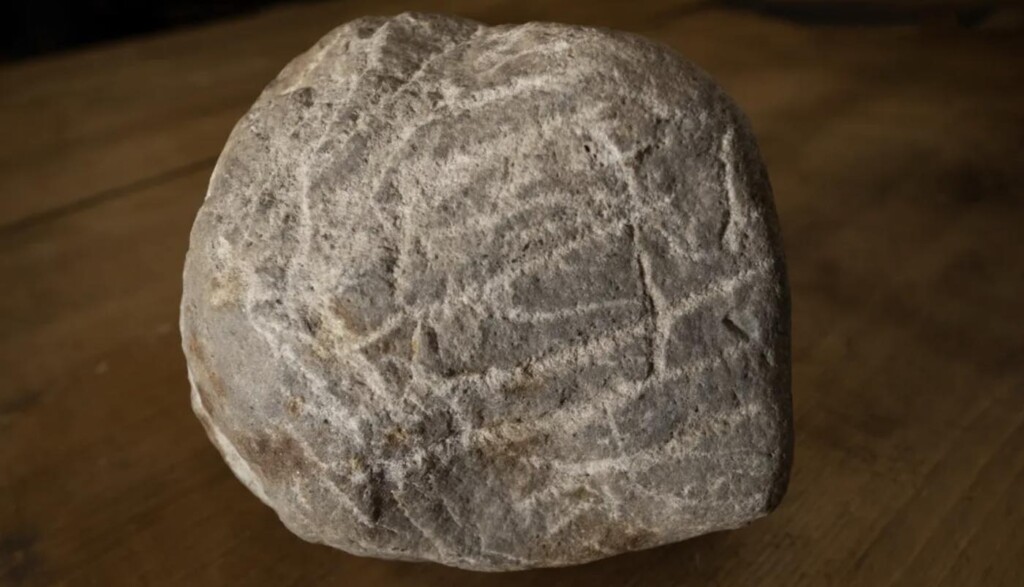
Bison herd hooves uncover ancient petroglyphs – Wanuskewin Heritage Park

In a remarkable and inspiring occurrence, the reintroduction of plains bison to ancestral First Nations lands in Canada saw the beasts unearth important petroglyphs, and in doing so fulfill a prophecy held by the elders of the Dakota Tribe.

It states that when the bison, extinct in the area for over 100 years finally return to them, the tribe’s fortunes would change for the better.

In 2019, a $40 million project on the Wanuskewin Heritage Park, part of the national parks system of Canada and which protects sacred land to several tribes, organized the reintroduction of bison by taking six female calves from Grasslands National Park in southern Saskatchewan, and a male bull and four females with ancestry to Yellowstone.

The first sign that fortunes for the Dakota were improving came just 8 months after that, when the bisons’ hooves uncovered something that 40 years of human archaeology couldn’t.

With a lack of organic material, the two petroglyphs carved into a pair of boulders were dated to between 300 and 1,800 years ago, a span of time when the Dakota, Nakota, Assiniboines, Ojibwa, Cree, and Blackfoot all inhabited the area of Wanuskewin at various periods.

Archaeologist Ernie Walker told Diane Selkirk of Smithsonian Magazine that he was walking toward some bison who were enjoying a grassless area of dust called a wallow when he spotted a rock protruding awkwardly from the ground.

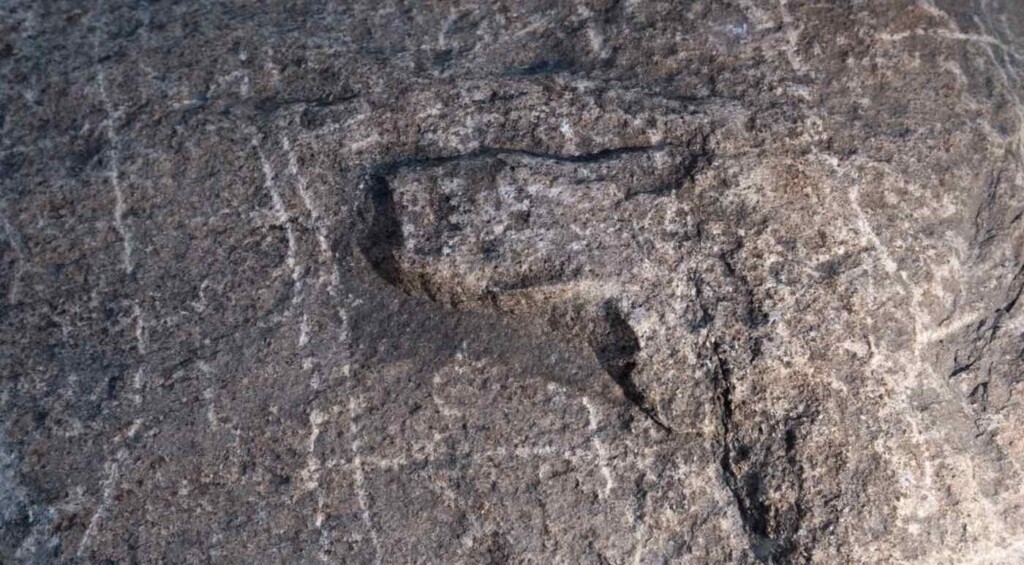
Newly discovered ancient petroglyphs – Wanuskewin Heritage Park

Noticing a part of the rock had a deep groove cut into it, he began to remove dirt and dig the rock out a bit, revealing the crisscrossing lines of a “ribstone,” a ceremonial petroglyph carved to appear like the bison’s ribcage.

“We’d found the detritus of everyday living: broken stone tools… and things like that,” Walker says. “But [we] didn’t find ideas. [We] didn’t find emotions. The petroglyphs brought that. They’re that other dimension… They’re a glimpse into somebody’s hopes and dreams.”

MORE IMPORTANT DISCOVERIES LIKE THIS: Cherokee Nation First U.S. Tribe to be Invited to Preserve Their Heirloom Species in Global Seed Vault

In total, the ensuing excavations found 4 petroglyphs, the 550-pound ribstone, a 1,200-pound boulder, and two smaller specimens. They even found the stone knife nearby that made the carvings.

“We have been so fortunate over the years to have had these wondrous stories emerge that we are able to share with the community,” Darlene Brander, CEO of Wanuskewin Heritage Park, said in a statement. “Today it is our duty to share this story as our call to reconciliation by shining a light on the distinct and beautiful cultures of the Northern Plains People.”

credit – Wanuskewin Heritage Park

The petroglyphs were the first ever found on the 600-acre site, and the placement was particular. 380 yards straight on from the boulders was a notable area for native hunters: a buffalo jump—where herd animals could be spooked into running right off the edge of a cliff.

“The elders used to tell us when the bison come back, that’s when there’ll be a good change in our history,” said Wahpeton Dakota elder Cy Standing. “We’ve been down a long time. But it feels like we are starting the way up.”

MORE GOOD NEWS FROM INDIAN COUNTRY: Spirit Mountain, Which is Sacred to Tribes, is Designated a New National Monument

While the Dakota believe large rocks are sacred are should be left where they are, the elders agreed that sharing the ribstone and the others with the world would be acceptable. Wanuskewin is a pending UNESCO World Heritage Site, and such objects are important parts of telling the story of the sacred place.

In an interesting deviation from petroglyph carving around the world, the Wanuskewin boulders are carved in the so-called hoofprint tradition, which involved carving recognizable features of an animal rather than the animal itself. In this case, the lines are supposed to represent a ribcage; a design that would have been easy to see for the bison hunters on the plains.

SHARE This Interesting Story Of Connection, Spiritualism, And Discovery On Social Media…

World-First Video of Dolphins Stealing From Crab Pots Leaves Scientists Fascinated

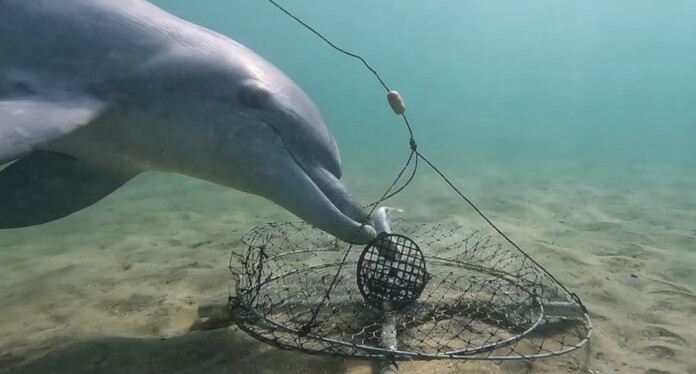
Dolphins raiding crab pots - Supplied by Dolphin Discovery Centre
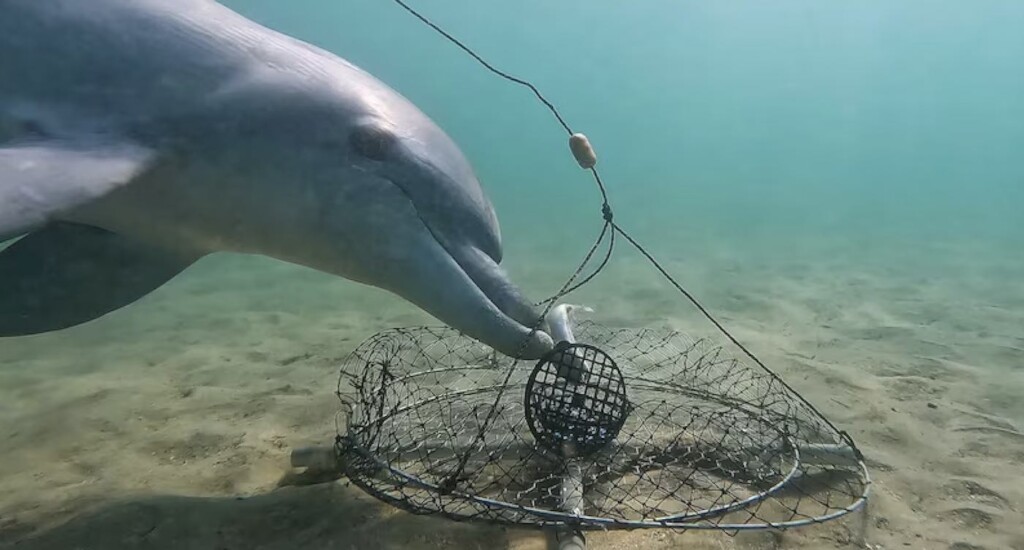
Dolphins raiding crab pots – Supplied by Dolphin Discovery Centre

In a bit of never-before-seen film, a dolphin was recorded off the coast of Australia robbing the bait from a crab trap.

The behavior was captured by a camera mounted on the trap by the Dolphin Discovery Centre in Bunbury, Western Australia.

In the footage, the dolphins can be seen using their eyes, bodies, teeth, and beak—officially called a rostrum—to pilfer the crabbers’ pots.

“The footage was certainly surprising—we knew something was happening,” said Dolphin Discovery Centre volunteer and filmmaker Axel Grossman. “But we had no clue that the dolphins were acting to such an extent, through so much effort, learning and physical and mental problem solving [to steal the food].”

ABC News AU talked to a 40-year crabber from the Bunbury area who said that this phenomenon isn’t new, but also isn’t exactly old.

MORE ANIMAL INTELLIGENCE: Houston Elephants Do Yoga 7-days a Week to Stay Flexible and Healthy

“In the last 20-odd years, it happens all the time. If you see some dolphins around you can guarantee you’re going to get your crab nets raided,” crabber Russell Dawson said.

Mr. Dawson is getting around the clever cetaceans by replacing the fishy bait with a box filled with bait that’s locked shut with narrow steel cables. Small holes will allow the crabs to detect and get a pinch of the bait inside where the larger rostrums of the dolphins cannot.

MORE DOLPHIN STORIES: Dolphins Self-Treat Their Own Skin By Lining Up to Rub on Specific Coral

Experts at the centre said they look forward to investigating this new human-dolphin relationship. The intelligent dolphins are capable of adapting rapidly to changes in their environment, and the more interactions like this with anthropogenic elements in their environment, the better, the experts say, they can understand how we can structure our marine activity to accommodate and safeguard the animals.

SHARE These Clever Underwater Thieves With Your Friends… 

Tobacco, E-Cigarette Use Declines Among High Schoolers, Report Shows

Photo by Sebastian Radu

According to a national survey by the FDA and CDC, tobacco use among high schoolers is falling, including the use of E-cigarettes.

The last vestiges of smoking seen as what the cool kids do may finally be falling away from American society, with the survey reporting that smoking rates among high school-aged teens fell around 25% between 2022 and 2023.

Overall, 12.6% of high schoolers said they currently use tobacco products, down from over 21% in 2009-2010.

E-cigarettes followed suit with a greater than 25% fall in use among high schoolers to just 10% of those surveyed.

In the survey, 22,069 students from 179 schools participated, with an overall response rate of 30.5%, however, a potential drawback was that it was a self-administered questionnaire, and teenagers are not famous for their honesty when questioned about illegal behavior.

MORE POSITIVE TRENDS: Young Driver Fatality Rates Have Fallen Sharply in the US, Helped by Education, Restrictions

Nicotine use in adolescent brains increases the risk, the CDC says, of lifelong addiction, making efforts to curb tobacco use among high schoolers especially important to reducing addiction across society.

Use among middle schoolers slightly increased, particularly with vapes and E-cigarettes.

SHARE This Positive Health Trend Among Our Youth With Your Friends… 

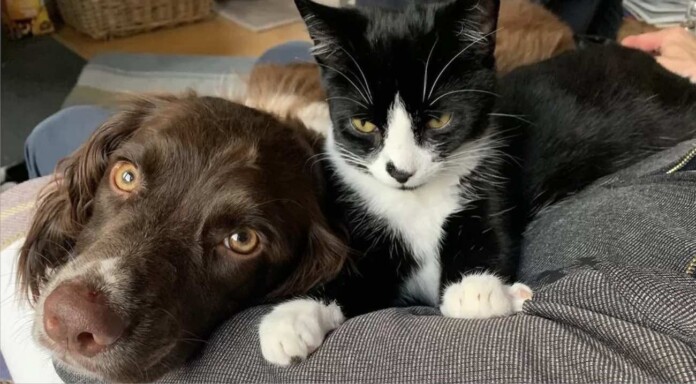
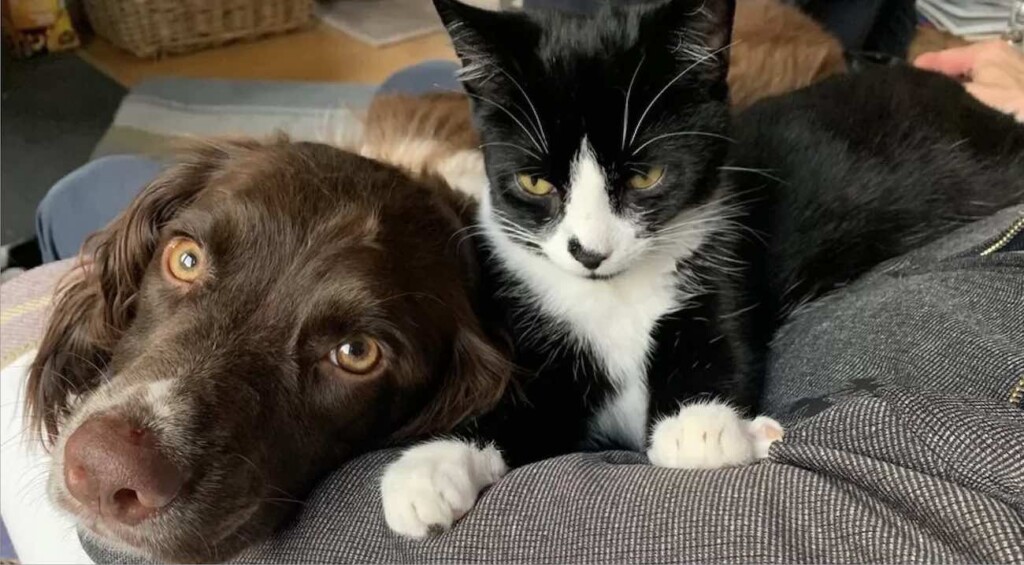
Determined Hound Leads Owner to a Cat Stuck Down 100-foot Mine Shaft for 6 Days

Released by Michele Rose

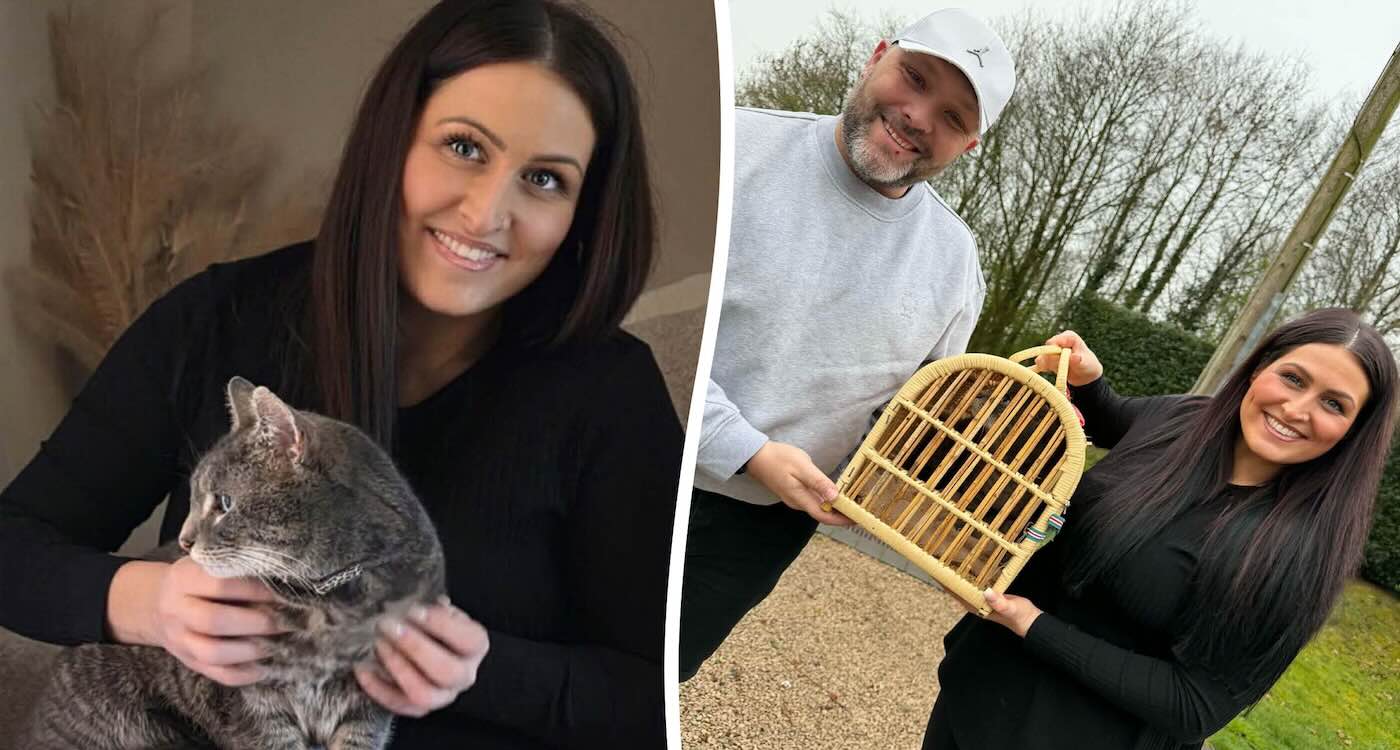
A dog’s keen nose led a resident of Cornwall to a mineshaft, where 100 feet down, her cat Mowgli was lost and alone for 6 days.

Mowgli’s owner Michele Rose told the BBC she had “almost given up hope” of finding her missing pet, but “superstar” Daisy was persistent in getting Rose to follow her.

Rose adopted both Mowgli and another kitten named Baloo last December and gradually introduced them to Daisy, who become matriarchal and very protective of the kittens. When Mowgli went missing, it must have been hard on the pooch.

The BBC report doesn’t say what attempts were made to find the missing cat, or what she and her dog were doing near the old Prince of Wales mine works in Cornwall, but it was there after 6 days that Daisy started going “berserk.”

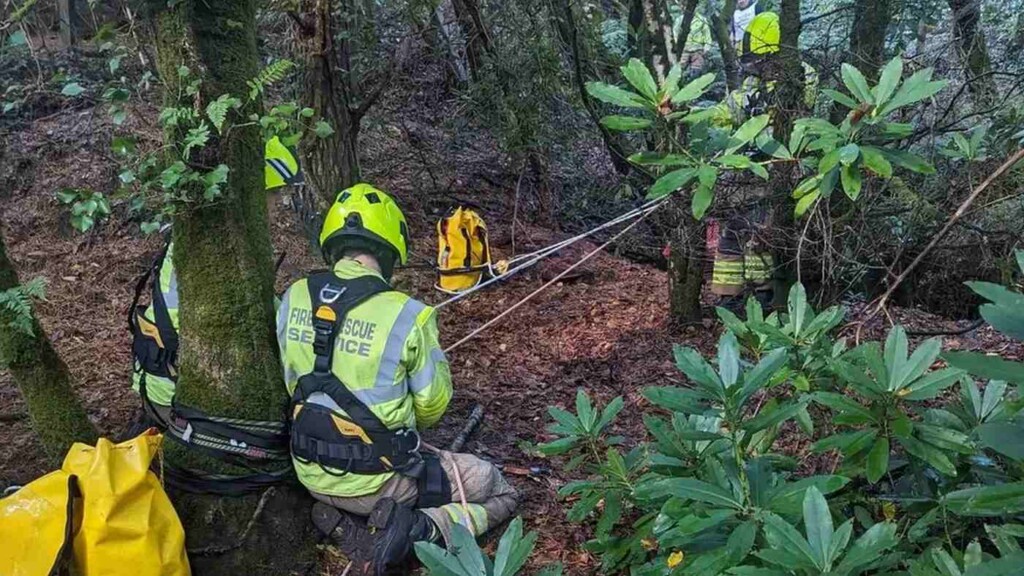
Leading Rose to an old opening in the mines, she realized what Daisy was showing her, and she immediately called Cornwall Fire and Rescue service, but it was too dark that day to do anything.

RSPCA – released

The next morning, RSPCA animal rescue officer Stephen Findlow came out to the mines and spotted Mowgli who was 100 feet down and remarkably uninjured.

MORE RESCUE STORIES LIKE THIS: 

Pulling Mowgli to safety, the kitten was greeted by its compatriots and a relieved owner.

“Without Daisy doing that Mowgli could still be down there, that’s for sure,” Ms. Rose said. “She was persistent in making me follow her, it was amazing.”

SHARE This Super Sniffer And Her Best Feline Friend In This Incredible Rescue Story…

“Often a sweetness comes as if on loan, staying just long enough to make sense of what it means to be alive.” – Stephen Dunn

Quote of the Day: “Often a sweetness comes as if on loan, staying just long enough to make sense of what it means to be alive.” – Stephen Dunn

Photo by: Filipp Romanovski

With a new inspirational quote every day, atop the perfect photo—collected and archived on our Quotes page—why not bookmark GNN.org for a daily uplift?

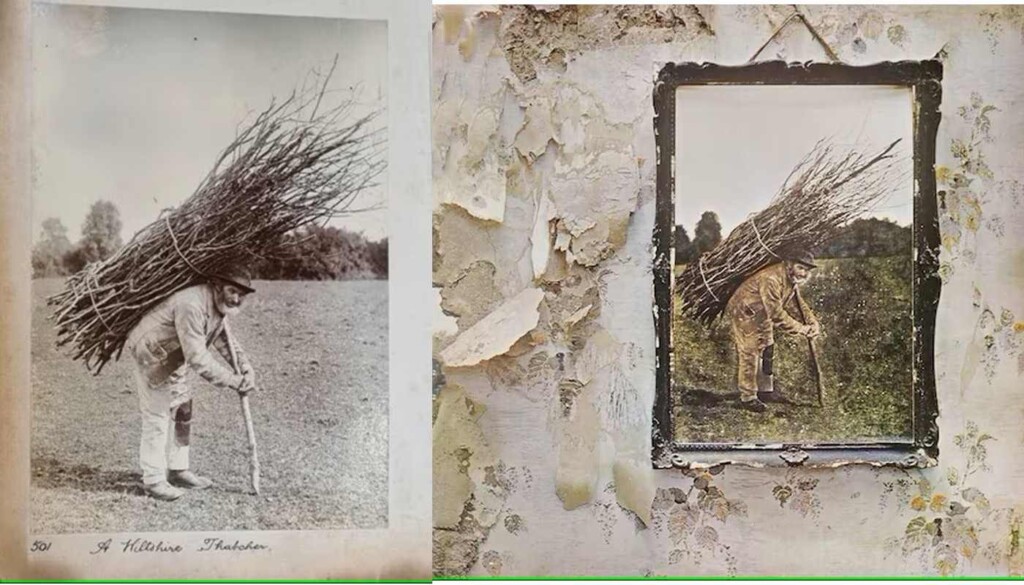
‘Stickman’ on Led Zeppelin IV Accidentally Identified as Lot Long, a Thatcher from Wiltshire

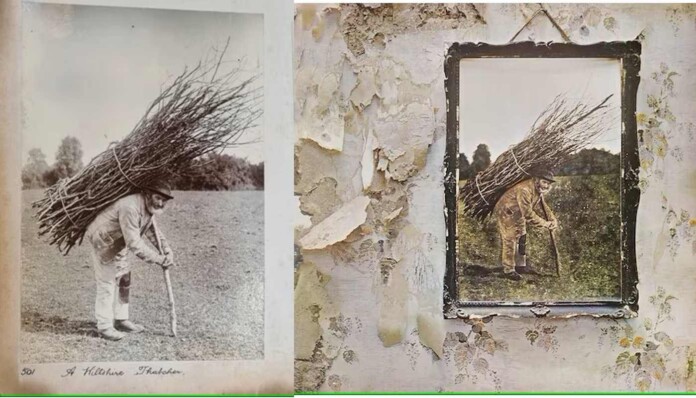
The Wiltshire Thatcher and IV cover - pub domain and fair use
The Wiltshire Thatcher and IV cover – pub domain and fair use

4 days on from the anniversary of its release, the identity of the man on the cover of Led Zeppelin’s IV was revealed recently by a rural English history researcher.

Lot Long was his name, and he was a roof thatcher born in 1823, and died a widower in 1893, years after getting his picture taken by the first head of the School of Photography at the University of Westminster.

Brian Edwards, a researcher from the University of West England was flipping through antique photo collections as part of a project when he came across one of a bearded man stooping over the weight of a burden of sticks slung over his back.

“I instantly recognized the man with the sticks—he’s often called the stick man,” Mr. Edwards told the BBC. “It was quite a revelation.”

The late Victorian Era color photograph was labeled “The Wiltshire Thatcher,” and Edwards says it’s an authentic original.

“Part of (Farmer’s) signatures matches some of the handwriting in the album,” Mr. Edwards said. “The black and white photograph has a thumbprint in the corner. It looks like it’s the original.”

YOU MAY ALSO LIKE: Plumber Has Landed Record Deal After Music Mogul Heard Him Singing –While He Fitted His Bathroom

IV went on to become one of the most successful selling albums of all time, led by the iconic (and some say stolen) Stairway to Heaven. ABC News AU, reporting on the discovery, says that the selection of the photo was part of a scheme to deliberately play down the album, with Robert Plant finding the image of the Stickman in a shop in Reading, and pairing it to a scene of urban decay without any words.

The Wiltshire Museum, which obtained the photograph, now plans to showcase it next year as part of an exhibition called The Wiltshire Thatcher: A Photographic Journey through Victorian Wessex.

SHARE This Fun Revelation With Any Rockers You Know… 

Instead of Corn and Soy Farming, Use Lab-Grown Oil to Help the Planet, Scientist Says

teven Davis, UCI professor of Earth system science - Steve Zylius UCI
Steven Davis, UCI professor of Earth system science – Steve Zylius UCI

Lab-grown meat has been all over the news over the last 3 years, but one scientist at UC Irvine believes food scientists are missing the point—it’s monocropping soy, corn, and palm for the purposes of making cooking oils that have the hardest climate impact.

By synthesizing cooking fats, which is already done at a global industrial scale in soap production, humanity can return millions of acres of farmland to nature, save billions of gallons of water, avoid mass contamination of the environment with pesticides and nitrogen runoff that chokes sea life, and switch to growing more nutritious crops with the leftover acreage.

In a study published last week in Nature Sustainability, the UCI-led team of scientists assessed the potential for widescale synthetic production of dietary fats through chemical and biological processes.

The raw materials for this method are the same as those used by plants: hydrogen in water and carbon dioxide in the air.

“Large-scale synthesis of edible molecules through chemical and biological means without agricultural feedstocks is a very real possibility,” said lead author Steven Davis, UCI professor of Earth system science.

“Such ‘food without the farm’ could avoid enormous quantities of climate-warming emissions while also safeguarding biodiverse lands that might otherwise be cleared for farms.”

Davis and his co-authors highlight other environmental and societal benefits of farm-free food in the paper, including a reduction in water use and watershed pollution, local control over food production, diminished risk of weather-related food shortages, and less need for low-paying and physically demanding agricultural labor.

Another plus, according to Davis, would be the possibility of returning existing farmlands to a natural state, which could enhance biodiversity and build up natural carbon sinks. There were once 170 million acres of prairie in North America, and all but 1% of that is now agricultural land, according to the National Park Service. Tapping into the carbon storage potential of grasslands (which is higher than forests) could offset all of America’s emissions while restoring habitat for thousands of native species of flora and fauna.

“I like the idea of not depending on photosynthesis for everything we eat,” Davis told the UCI press. “At whatever scale, synthesizing food will alleviate competition between natural ecosystems and agriculture, thereby avoiding the many environmental costs of farming.”

Davis highlighted the practice of razing tropical rainforests to create space for palm oil plantations. Cookies, crackers, snack chips, and a lot of other middle-of-the-store products are made with dietary fats coming from this source. He asked if anybody would notice if the oil used to bake their cookies came from a food refinery up the road instead of a plantation in Indonesia.

MORE FOOD INDUSTRY RESEARCH: Scientists Find Methane is Actually Offsetting 30% of its Own Heating Effect on Planet

“Processed foods are thus a likely use for synthetic fats. Folks may be less concerned about what kind of fat is in a store-bought cookie or pie crust because they don’t know what’s in there right now,” he added.

The authors of the paper said they focused much of their attention on fats because they are the “simplest nutrients to synthesize thermochemically,” pointing to established large-scale soap-making and polymer chemistry techniques.

MORE GOOD CLIMATE SOLUTIONS: Researchers Harness Sunlight to Produce Both Power and Food—Using Light to Improve Each Harvest

The researchers estimated that agriculturally derived fats correspond to roughly 1 to 3 grams of emitted carbon dioxide per thousand calories, whereas molecularly identical fats synthesized from natural gas feedstock using available electricity would produce less than a gram of CO2 equivalent emissions, and nearly zero emissions if using carbon capture from the air and non-emitting sources of electricity.

“The beauty of the fats is that you can synthesize them with processes that don’t involve biology. It’s all chemistry, and because of that, you can operate at higher pressures and temperatures that allow excellent efficiency,” Davis said. “You could therefore build big reactors to do this at large scales.”

SHARE This Important Idea With Your Friends On Social Media-Get tThe Word Out…

12-year-old Develops Fire Detection System That Wins Her $25,000 and Top Junior Scientist Award

Shanya Gill / Society for Science

A 12-year-old girl from Miller Middle School in San Jose has won $25,000 in a science fair for her invention of a new fire detection system that’s faster, cheaper, and more reliable than smoke detectors.

The Thermo Fischer Junior Innovator’s Challenge claims to be the nation’s premier STEM contest for middle schoolers, and Shanya Gill won over second and third-place inventions of a smartphone app that can detect certain cancers and an experimental method of generating electricity through plant cells.

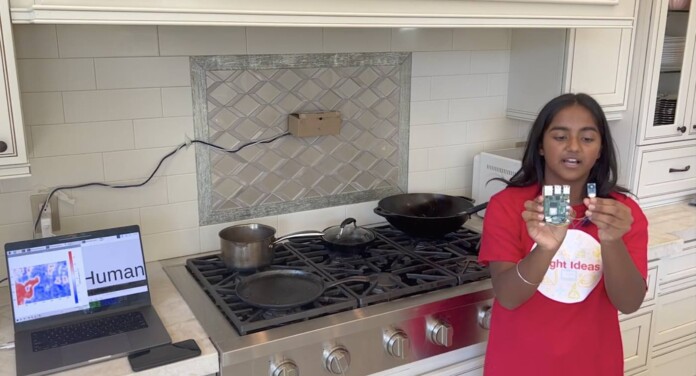
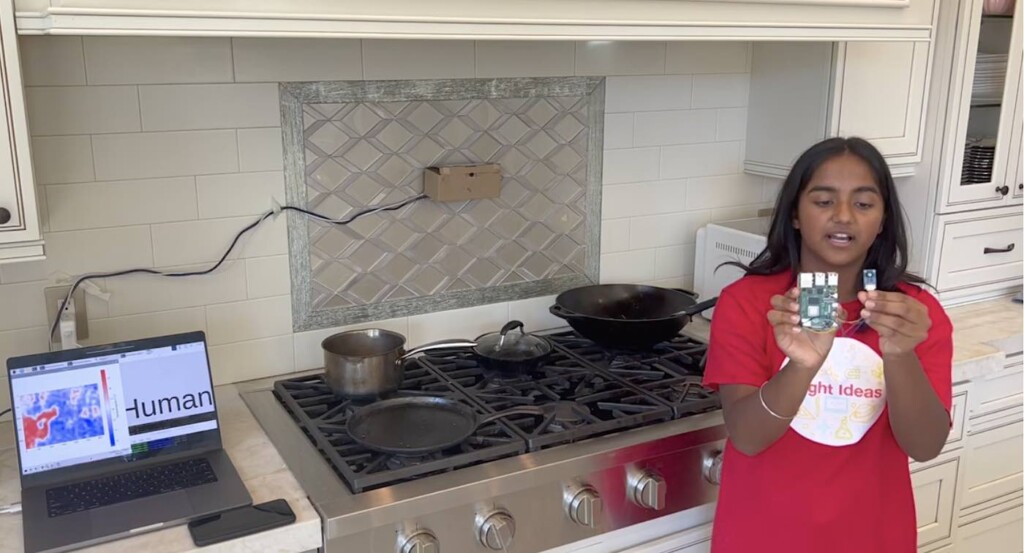
In the summer of 2022, a fire destroyed a restaurant behind Shanya’s house. That incident inspired her to create a fire-detection system that involved connecting an affordable thermal camera to a compact computer.

It wasn’t that the restaurant didn’t have smoke detectors, but as Shanya explains, that requires there to be a significant amount of smoke first, which can sometimes mean a fire has already started and gotten out of control.

She programmed her system to differentiate between people–which were identified as warm objects moving horizontally–and heat sources, such as an active gas burner, which were identified as hot objects that remained stationary.

The system can send a text message when it detects a heat source but no human presence for a continuous 10-minute period. Shanya’s system accurately detected human presence 98% of the time and heat sources 97% of the time.

OTHER SCIENCE FAIR STARS: 17-Year-old Wins $150,000 in Science Talent Search for Remarkable Way to Diagnose Pediatric Heart Disease

Shanya determined that the best place for the detector would be on the wall above the stove but under the stove range—this allowed its sensors clear access to the most likely locations where a fire might start in a kitchen.

After her victory, the 12-year-old has said she wants to refine the device by combining it with a smartphone app that will allow users to quickly switch over to a camera after receiving a text message so they can see if the alert is correct, as well as a higher resolution sensor, incorporating smarter algorithms, and designing the product for mass production.

OTHER SCIENCE FAIR STARS: 14-year-old Invents Soap for Treating Skin Cancer and Wins Top Honor as America’s Top Young Scientist

The Thermo Fisher JIC, a program of the Society for Science, reaches 65,000 middle schoolers nationwide and inspires them to follow their personal STEM passions to exciting college and career paths. The 30 finalists are counted among the nation’s brightest students, with several, including Shanya, collectively accepting more than $100,000 at tonight’s award ceremony at The Kennedy Center in Washington, D.C.

WATCH Shanya explain her invention… 

SHARE This Genius Young Woman With Your Friends On Social Media… 

Missing Pig Named Kevin Bacon Reunited with Owners After Help from Kevin Bacon

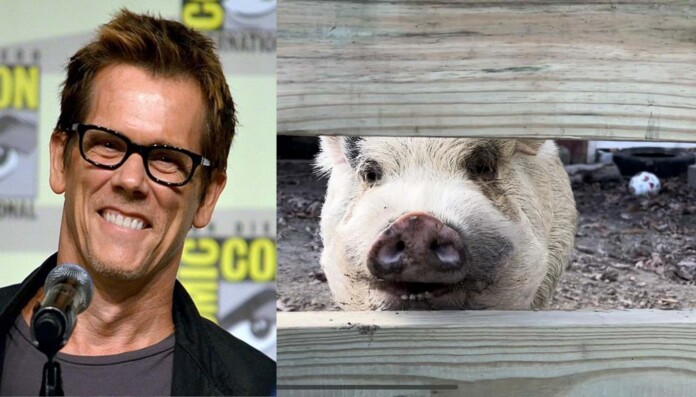
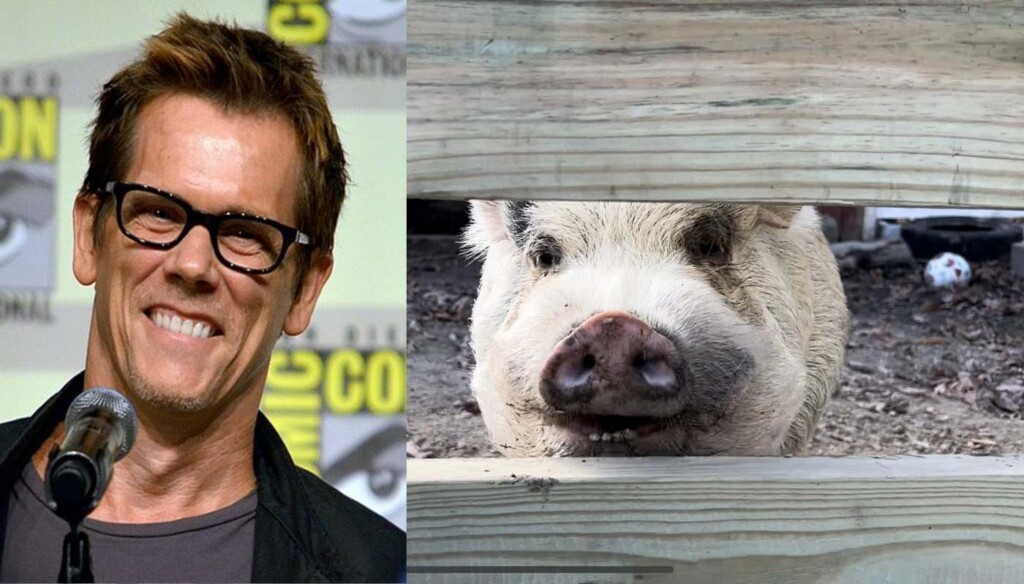
(left) Kevin Bacon in 2012 CC 2.0. Genevieve (right) Kevin Bacon the Pig - Kevin's Home Adventures
(left) Kevin Bacon in 2012 CC 2.0. Genevieve (right) Kevin Bacon the Pig – Kevin’s Home Adventures

Actor Kevin Bacon found himself back in the news after a footloose runaway pig bearing his name was caught in an elaborate ruse.

Always a good sport, Kevin Bacon (the human) saw his name in the limelight, but after realizing it was not about him, decided to use his social media followers to help out—and roll around in the mud a little.

He alerted his fanbase that people in Pennsylvania should be on the lookout for the missing hog and aware of the attempts of its owner Chelsea Rumbaugh, to recapture him.

Chelsea lives in Cumberland Township and brought the pig home on October 13th. Following two brief breakouts, Kevin Bacon ran away after burrowing under the fence of his holding pen. Thus began a 2-week saunter around the rural area.

Chelsea set up a Facebook page called ‘Bring Kevin Bacon Home’ which kept up a running thread of locations and news about the pig to help coordinate rescue efforts. She asked neighbors and friends to share the page, which eventually landed it in the feed of a certain Mr. Kevin Bacon.

The famous actor/musician then shared the Facebook page on his Threads feed, captioning it with, Bring Kevin Bacon Home!

Over the course of his adventure, pig Kevin had grown accustomed to eating food from humans, which eventually led to his downfall in the form of a sticky bun laced with harmless Benadryl, which for animals is a sedative.

YOU MAY ALSO LIKE: After Her Book Launch Flops, Stephen King, Neil Gaiman and Margaret Atwood Swoop in With Support for Debut Author

Chelsea’s rambling pig came home and even walked freely into his pen, which she had since reinforced with concrete to stop any tunneling.

The story of Kevin Bacon and Kevin Bacon went viral, and she realized that she could use the fame to advance her goal of turning her farm into an emotional support center.

“We have plans for our property to be an open-to-the-public farm and offer services for children and adults who struggle with PTSD, anxiety, and depression, and Kevin is going to be here for all of that, too,” said Rumbaugh, according to Unilad.

MORE CELEBRITY ENCOUNTERS: Guy on Pub Crawl Dressed as Gandalf Bumps into ‘Real’ Ian McKellen For Best Birthday Surprise Ever

The Facebook page has since been converted into Kevin’s Home Adventures and hosts all Kevin content all day.

SHARE This Hillarious Bacon-Related Story With Your Friends… 

“What art offers is space—a certain breathing room for the spirit.” – John Updike

Quote of the Day: “What art offers is space—a certain breathing room for the spirit.” – John Updike

Photo by: (c) GWC

With a new inspirational quote every day, atop the perfect photo—collected and archived on our Quotes page—why not bookmark GNN.org for a daily uplift?

Bill Gates Backs Novel Merry-Go-Round Wind Turbine: Half the Cost and Better for Landscape Than Giant Towers

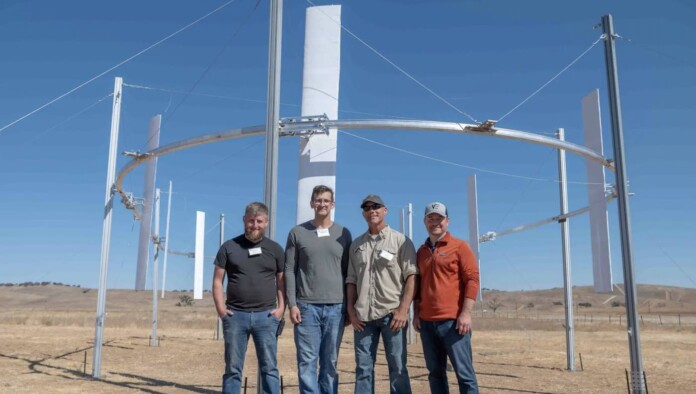
alternative wind turbine by Airloom Energy
Airloom Energy
alternative wind turbine by Airloom Energy
Airloom Energy

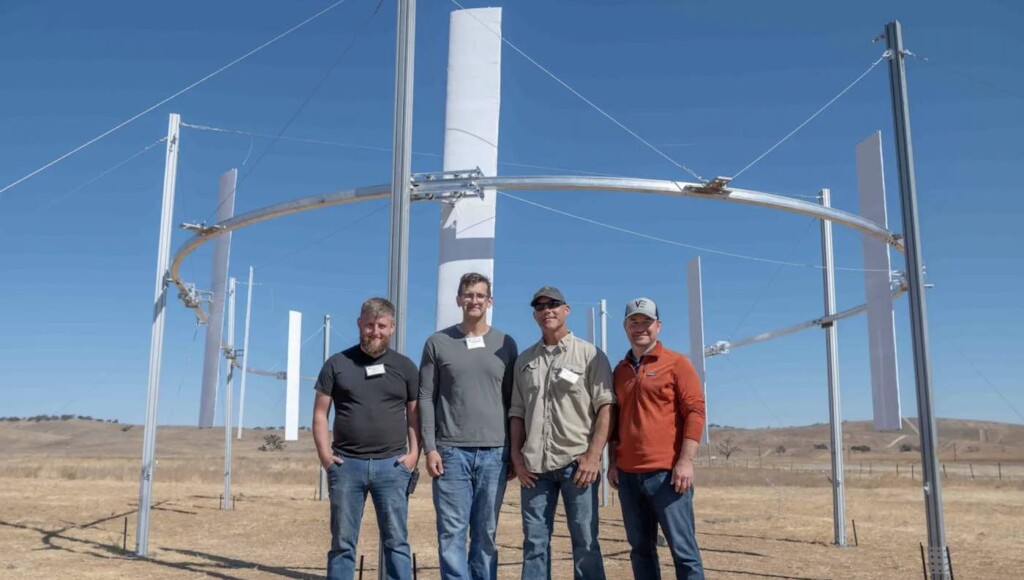
Bill Gates has backed a novel wind power system by investing in Airloom Energy, a company that has developed a carousel-style wind turbine.

The Microsoft billionaire’s Breakthrough Energy Ventures led the round that provided $4 million in seed funding to scale up the innovation, touted to slash the cost of wind energy production in half.

The unique utility-scale wind power device is said to produce the same amount of power as a conventional horizontal-axis wind turbine (HAWT) at a small fraction of the mass and cost.

Standard wind turbines can approach a height of 500 feet, with 180-foot blades rotating on a 300-foot tower.

In contrast, the typical Airloom utilizes the same physics but runs 30-foot blades along a lightweight track only 80 feet high.

Founded in 2020, the Wyoming-based manufacturer is currently operating a 50-kilowatt test device. Future systems are expected to be up to 1,300 feet long (400 meters) and produce hundreds of megawatts for utility-scale wind farms that produces the same amount of power as a HAWT at a small fraction of the mass and cost.

WIND SOLUTION: Repurposing Old Wind Turbines–Company Devises Ingenious Method

“Cost and environmental advantages extend over the Airloom’s entire lifecycle,” said the company in a media release. “It uses readily sourced materials to ensure rapid manufacturing, and an entire 2.5 MW Airloom could be transported in one standard tractor trailer.

Test system – Airloom Energy

“It can be configured high or low, short or long, to optimize siting and viewplane, and does not require large concrete foundations in commissioning.”

Carmichael Roberts, of Breakthrough Energy Ventures, add: “For decades, the wind industry has lowered the cost of energy production by scaling ever larger turbines.

“Although this has been extremely successful in driving down overall costs, the approach now faces challenges in terms of both siting and cost of materials.

“Airloom’s unique approach can solve both these problems, opening new market opportunities for wind energy that will further drive down costs.”

WOW, GOOD NEWS: Not a Single Collision for Seabird Populations in Offshore Wind Farm Says $3M Radar Study

The decrease in overall weight and materials also means greatly reduced landfill impacts at the end of its use.

Learn more about Airloom and watch a video, visit their website.

SHARE the Innovation With Renewable Energy Fans on Social Media…

Man Transforms an Old Farmhouse into a Barbie Dreamhouse Fulfilling a Childhood Dream-LOOK

Pink couch in Jonny Carmack's Barbie Dreamhouse – SWNS
Pink couch in Jonny Carmack’s Barbie Dreamhouse – SWNS

A man has transformed his old Connecticut farmhouse into a ‘Barbie Dreamhouse’, fueled by his childhood love of the Mattel brand’s style.

Jonny Carmack bought the three-bedroom fixer-upper in 2020, escaping New York City during the pandemic.

It was his first home, and the 31-year-old had a lot of work ahead of him, dealing with crumbling, moldy walls.

He spent $20,000 on the Danbury residence transforming it with vivid colors and 1980s furniture found at estate sales and vintage dealers.

Since buying the 1800s farmhouse and moving in with his partner Mitchell Pozo, Jonny has added $100k in value to the property that originally cost $256,000.

“I remember being young and knowing I wanted to live in a doll house one day,” said the small business owner.

He grew up in a blue-collar family that frowned on boys playing with Barbie dolls.

SWNS

“When I bought the house I knew I wanted to use it as a landing pad for my creativity, but I was still a bit nervous as I didn’t know how my family and friends would react.”

Whimsical interior design by Jonny Carmack – SWNS

Some of Jonny’s second-hand items included a $50 Murano light, a $1,000 bedroom set, and the blue couch he bought for $1,000.

The dining room of Jonny Carmack’s Barbie Dreamhouse – SWNS

Each room has changed five or six times in the course of a few years, as Jonny collaborates with his partner Mitchell, a visual merchandiser.

“Me and Mitchell share the same brain.

“He is super creative like me, and loves color, so we brainstorm a lot.”

LOOK: Inspired Mom Spent Half a Decade Turning her Home Into a Shrine to the 1970s

Jonny said his conservative family isn’t so sure about his interior design skills but his friends love the unique style.

The pink hallway – SWNS

“My friends love it—and this summer we watched the Barbie movie here! It was super fun.”

SHARE the Dream House With Barbie Fans on Social Media…

Doritos ‘Crunch Cancellation’ Software for Gamers Removes Munching Sounds From Headsets–and it’s Free

eating doritos while gaming-released Doritos
Doritos

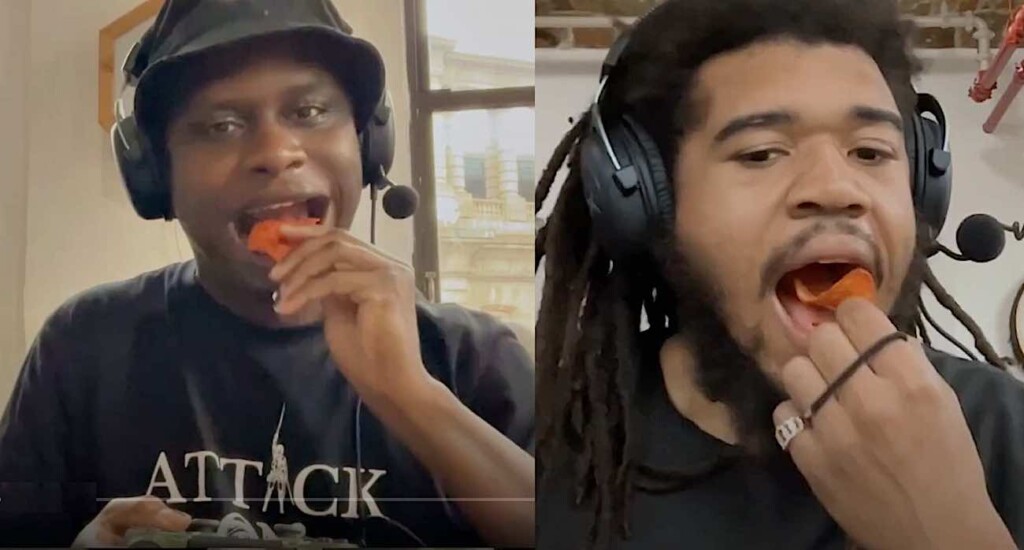
New ‘crunch cancellation’ software has been developed to remove the sound of munching while wearing a headset.

Created by software developer Dylan Fashbaugh, the AI-powered tech listens out for the sound of someone’s voice and separates it from the crunch of a snack– meaning people can chomp without making a sound.

In development over the last year, ‘Doritos Silent’ was the culmination of an analysis of more than 5,000 crunch sounds.

Once installed, you simply turn it on, and it can work in conjunction with any software that supports voice chat.

It follows a study of 2,000 adults which found 46 percent dislike the sound of other people eating and 41 percent feel self-conscious of making too much noise because others find it distracting.

Of the 2,000 gamers surveyed by OnePoll, 29 percent believe it impacts their performance, yet, eating and gaming go hand in hand for the vast majority of players.

CHECK OUT: Playing Video Games Improves These Aspects of Daily Life Say Gamers in New Poll

The technology would also allow those working from home to crunch through chips while dialing into a call.

“As a gamer myself, I can testify that nothing throws me off my game more than the sound of someone else tucking into a snack,” said developer Dylan, from Smooth Technology. “Trialling thousands of crunch sounds, we carefully trained the software to remove the sounds.”

A spokesperson from Doritos said: “It’s been hard to keep this one quiet … but we are finally able to reveal the launch of our ‘Crunch Cancellation’ technology.

PC users can now download the software from the brand’s website and use it free of charge.

“We know that the nation loves the satisfying crunch of our tortilla chips, but listening to someone else enjoy them can be off-putting.

“That’s why we set out to develop the first-ever AI-augmented ‘silent’ snack, and after months of expert development, PC gamers across the country can finally crunch down a microphone without making a sound.”

HEAR how the crunch-cancellation software sounds…

SHARE The Innovation With Hungry Gamers on Social Media!

Your Weekly Horoscope: A ‘Free Will Astrology’ From Rob Brezsny

Our partner Rob Brezsny, who has a new book out, Astrology Is Real: Revelations from My Life as an Oracle, provides his weekly wisdom to enlighten our thinking and motivate our mood. Rob’s Free Will Astrology, is a syndicated weekly column appearing in over a hundred publications. He is also the author of Pronoia Is the Antidote for Paranoia: How All of Creation Is Conspiring To Shower You with Blessings. (A free preview of the book is available here.)

Here is your weekly horoscope…
FREE WILL ASTROLOGY – Week of November 11, 2023
Copyright by Rob Brezsny, FreeWillAstrology.com

SCORPIO (Oct. 23-Nov. 21):
In my horoscopes for Scorpios, I tend to write complex messages. My ideas are especially thick and rich and lush. Why? Because I imagine you as being complex, thick, rich, and lush. Your destiny is labyrinthine and mysterious and intriguing, and I aspire to reflect its intricate, tricky beauty. But this time, in accordance with current astrological omens, I will offer you my simplest, most straightforward oracle ever. I borrowed it from author Mary Anne Hershey: “Live with intention. Walk to the edge. Listen hard. Play with abandon. Choose with no regret. Continue to learn. Appreciate your friends. Do what you love.”

SAGITTARIUS (Nov. 22-Dec. 21):
In her poem “Requiem,” Anna Akhmatova says, “I must kill off memory . . . and I must learn to live anew.” I think most of us can benefit from periodically engaging in this brave and robust exercise. It’s not a feat to be taken lightly—not to be done more than once or twice a year. But guess what: The coming weeks will be a time when such a ritual might be wise for you. Are you ready to purge old business and prepare the way for a fresh start? Here are your words of power: forgiveness, clearing, cleaning, release, absolution, liberation.

CAPRICORN (Dec. 22-Jan. 19):
We need stories almost as much as we need to breathe, eat, sleep, and move. It’s impossible to live without them. The best stories nourish our souls, stimulate our imagination, and make life exciting. That’s not to say that all stories are healthy for us. We sometimes cling to narratives that make us miserable and sap our energy. I think we have a sacred duty to de-emphasize and even jettison those stories—even as we honor and relish the rich stories that empower and inspire us. I bring these thoughts to your attention, Capricorn, because you’re in a phase of your cycle when you will especially thrive by disposing of the bad old stories and celebrating the good ones.
AQUARIUS (Jan. 20-Feb. 18):
I could be wrong, but I don’t think so: You are smarter and wiser than you realize about the pressing issues that are now vying for your attention. You know more than you know you know. I suspect this will soon become apparent, as streams of fresh insights rise up from the depths of your psyche and guide your conscious awareness toward clarity. It’s OK to squeal with glee every time a healing intuition shows up. You have earned this welcome phase of lucid certainty.
PISCES (Feb. 19-March 20):
In Indigenous cultures throughout history, shamans have claimed they have the power to converse with and even temporarily become hawks, coyotes, snakes, and other creatures. Why do they do that? It’s a long story, but one answer is that they believe animals have intelligences that are different from what humans have. The shamans aspire to learn from those alternate ways of seeing and comprehending the world. Many of us who live in Western culture dismiss this venerable practice, although I’ve known animal lovers who sympathize with it. If you are game for a fun experiment, Pisces, I invite you to try your own version. Choose an animal (we highly recommend this tool) to learn from. Study and commune with it. Ask it to reveal intuitions that surprise and enrich you.
ARIES (March 21-April 19):
Your victories-in-progress are subtle. They may not be totally visible to you yet. Let me describe them so you can feel properly confident about what you are in the process of accomplishing. 1. A sustained surge of hard-earned personal growth is rendering one of your problems mostly irrelevant. 2. You have been redefining what rewards are meaningful to you, and that’s motivating you to infuse your ambitions with more soulfulness. 3. You are losing interest in a manipulative game that doesn’t serve you as well as it should. 4. You are cultivating more appreciation for fascinating and useful problems.
TAURUS (April 20-May 20):
Taurus physicist Richard Feynman was a smart and accomplished person who won a Nobel Prize. He articulated a perspective that will be healthy for you to experiment with in the coming weeks. He said, “I can live with doubt and uncertainty and not knowing. I think it’s much more interesting not knowing than to have answers which might be wrong. I have approximate answers and possible beliefs and different degrees of certainty about different things, but I’m not absolutely sure of anything, and there are many things I don’t know anything about.” Give Mr. Feynman’s approach a try, dear Taurus. Now is an excellent time to explore the perks of questioning everything. I bet you’ll be pleased with how free and easy it makes you feel.
GEMINI (May 21-June 20):
To earn money, I have worked as a janitor, dishwasher, olive picker, ditch-digger, newspaper deliverer, and 23 other jobs involving hard labor. In addition, I have done eight artistic jobs better suited to my sensitive temperament and creative talents. Am I regretful or resentful about the thousands of hours I toiled at tasks I didn’t enjoy? A little. But mostly I’m thankful for them. They taught me how to interact harmoniously with a wide array of people. They helped forge my robust social conscience. And they motivated me to eventually figure out how to get jobs I really loved. Now I invite you to take an inventory of your own work life, Gemini. It’s an excellent time to evaluate where you’ve been and where you want to go in the future.
CANCER (June 21-July 22):
There are so many kinds of sweetness. Zesty spicy sweetness. Tender balmy fragrant sweetness. Sour or bitter sweetness. Musky piquant sweetness. Luscious succulent sweetness. One of my favorite types of sweetness is described by Cancerian poet Stephen Dunn. He wrote, “Often a sweetness comes as if on loan, stays just long enough to make sense of what it means to be alive, then returns to its dark source. As for me, I don’t care where it’s been, or what bitter road it’s traveled to come so far, to taste so good.” My analysis of the astrological omens suggests to me that you are about to commune with at least three of these sweetnesses, Cancerian. Maybe most of them.

LEO (July 23-Aug. 22):
Author Dan Savage advocates regular indulgence in sloth. He notes that few of us can “get through 24 hours without a little downtime. Human beings need to stare off into space, look out the window, daydream, and spend time every day being indolent and useless.” I concur, and I hope you will indulge in more downtime than usual during the coming weeks. For the sake of your long-term mental and physical health, you need to relax extra deep and strong now—to recharge your battery with delicious and delightful abandon.

VIRGO (Aug. 23-Sept. 22):
According to my deep and thorough analysis of your astrological rhythms, your mouth will soon be a wonder of nature. The words emerging from your lips will be extra colorful, precise, and persuasive. Your taste buds will have an enhanced vividness as they commune with the joys of food and drink. And I suspect your tongue and lips will exult in an upgrade of aptitude and pleasure while plying the arts of sex and intimate love. Congratulations, Mouthy Maestro!

LIBRA (Sept. 23-Oct. 22):
In addition to being a masterful composer, Wolfgang Amadeus Mozart (1756–1791) played the piano, violin, harp, bassoon, clarinet, horn, flute, oboe, and trumpet. His experience led him to believe that musicians best express their skills when they play fast. It’s more challenging to be excellent when playing slowly, he thought. But I will invite you to adopt the reverse attitude and approach in the coming weeks, Libra. According to my astrological analysis, you will be most successful if you work gradually and incrementally, with careful diligence and measured craftiness.

WANT MORE? Listen to Rob’s EXPANDED AUDIO HOROSCOPES, 4-5 minute meditations on the current state of your destiny — or subscribe to his unique daily text message service at: RealAstrology.com

(Zodiac images by Numerologysign.com, CC license)

SHARE The Wisdom With Friends Who Are Stars in Your Life on Social Media…

“Our debt to the heroic men and valiant women in the service of our country can never be repaid. They have earned our undying gratitude.” – Harry Truman

Quote of the Day: “Our debt to the heroic men and valiant women in the service of our country can never be repaid. They have earned our undying gratitude.” – Harry Truman (It’s Veterans Day!)

Photo by: Clay Banks

With a new inspirational quote every day, atop the perfect photo—collected and archived on our Quotes page—why not bookmark GNN.org for a daily uplift?

Native American Headdress Set to be Returned to Blackfoot Homeland After Century in UK Museum

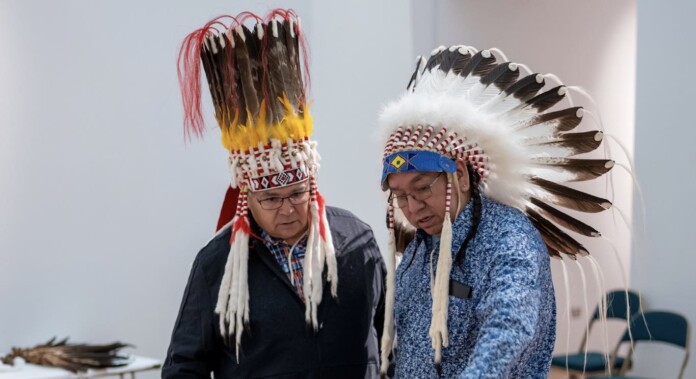
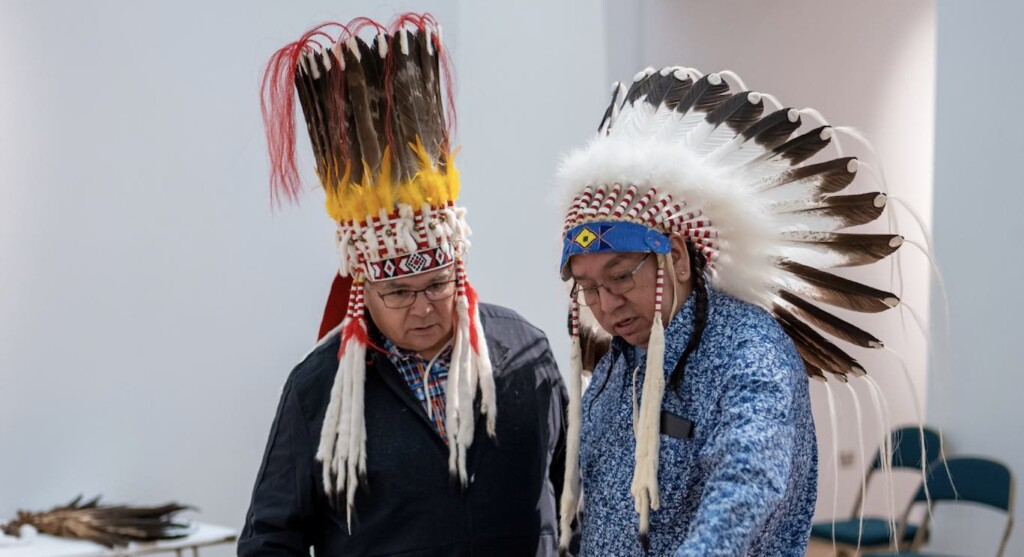
Elders from Blackfoot Tribal Council of the Siksika Nation – SWNS

A sacred Native American headdress is set to be returned to its original owners, after being displayed in a UK museum for more than a century.

Exhibited by the Royal Albert Memorial Museum in Exeter since 1920, the origins of the stunning ceremonial headdress traces back to the Blackfoot Nation of Alberta, Canada.

Known as a ‘bird bundle’, it features eagle feathers, blue indigo bunting feathers, red-tailed hawk feathers, buffalo horns, porcupine quills and brass bells.

The item was identified as a ‘sacred ceremonial item’ in 2013 by elders from the Sikiska tribe of the Blackfoot Nation, and last year a delegation from the community visited the museum in Devon to discuss reclaiming the item.

Exeter City Councillors decided on November 8 to return the item, which traditionally is worn by a holy woman of the Holy Buffalo Woman Society known as Motokiks.

The headdress was acquired originally by Edgar Dewdney, Lieutenant Governor of the Northwest Territories and a Canadian MP, who worked as a Canadian rail surveyor and became ‘Indian Commissioner’ in the country in 1892. Reports say it remains a mystery how he specifically acquired the item.

LOOK: British Museum Sends Totem Pole Back to its Indigenous Home in Canada

The report to the Executive Council said: “The debate on repatriation is a fast-moving one, and agreeing to the return will demonstrate that Exeter City Council through the Royal Albert Memorial Museum is prepared to lead sectoral change and to demonstrate trust and respect to international communities.”

Siksika Chief Ouray Crowfoot stressed the sacred significance of the headdresss and says the item will be used by the Holy Buffalo Women Society ‘as originally intended’, rather than as an artifact.

“Bringing these items back home to Siksika is a historic event,” he said. “Now the tides are turning and these items are finding their way back home.”

ALSO CHECK OUT: Rare 170-Year-Old Cree Jacket Turns Up at Vintage Shop in UK–and They Want to Reunite It With Its Community

He said the elders were building strong relationships with curators at several museums as well as private collectors.

The city believes it’s likely that representatives of the Siksika Nation will travel to the UK to collect the headdress.

“To me, it is not as important how these items left Siksika,” said Chief Crowfoot, “What is important is how we bring them back home.”

POPULAR:Little Known Ancient Site in Ohio Crowned by UNESCO–for Incredible Alignment with Moon and Sun

DON’T FORGET to Share the Inspiring News on Social Media…
Good Cardiovascular Habits Can Knock 6 Years off Your Biological Age: New Study

Linda Knicely

Good cardiovascular health can knock six years off your biological age, says a team from Columbia University Medical Center in New York City

The researchers tested the American Heart Association’s Essential 8 checklist and the effects of sticking to it.

To take care of the heart and blood vessels, which are linked to many diseases, adopt the Essential 8 habits: healthy sleep, not smoking, regular physical activity, healthy diet, healthy body weight, and healthy blood glucose, cholesterol and blood pressure.

The study, presented at the American Heart Association’s Scientific Sessions 2023 in Philadelphia, examined 6,500 adults from varying backgrounds and found that sticking to the Essential 8 could significantly extend life and reduce the risk of cardiovascular and other age-related diseases.

On average, participants with the highest Life’s Essential 8 score tested six years younger biologically than their actual age.

“Reduced biologic aging is not just associated with lower risk of chronic disease such as heart disease, it is also associated with longer life and lower risk of death,” said study senior author Dr. Nour Makarem.

SIMPLE DECISION: Increasing Steps by 3,000 Per Day Can Lower Blood Pressure in Older Adults

“We found that higher cardiovascular health is associated with decelerated biological aging, as measured by phenotypic (biological) age. We also found a dose-dependent association – as heart health goes up, biological aging goes down.

“Greater adherence to all Life’s Essential 8 metrics and improving your cardiovascular health can slow down your body’s aging process and have a lot of benefits down the line.”

Results showed that this worked both ways, and those with poor cardiovascular health aged faster.

The average actual age of those with high cardiovascular health was 41, yet their average biological age was 36; and the average actual age of those who had low cardiovascular health was 53, though their average biological age was 57.

CHECK OUT: 5 Key Sleeping Habits That Can Add Years to Your Life Identified by Scientists

They came to this conclusion using participant’s actual age plus the results of nine blood markers for metabolism, inflammation and organ function.

Former president of the American Heart Association Dr Donald Lloyd-Jones said, “These findings help us understand the link between chronological age and biological age and how following healthy lifestyle habits can help us live longer.

Researchers will study the impact of cardiovascular health on aging over time.

“Everyone wants to live longer, yet more importantly, we want to live healthier longer so we can really enjoy and have good quality of life for( as many years as possible.”

SHAR# These Heart-Health TIPS on Social Media!