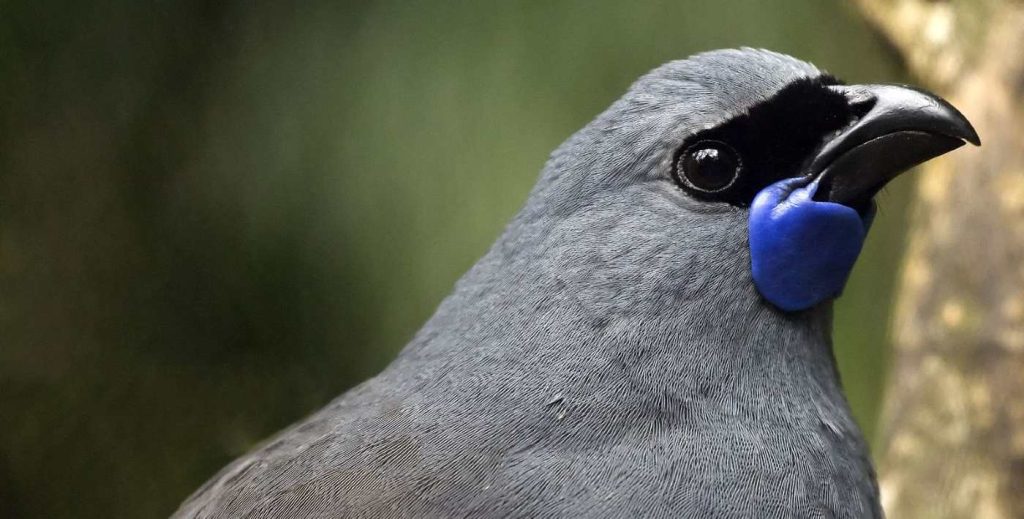











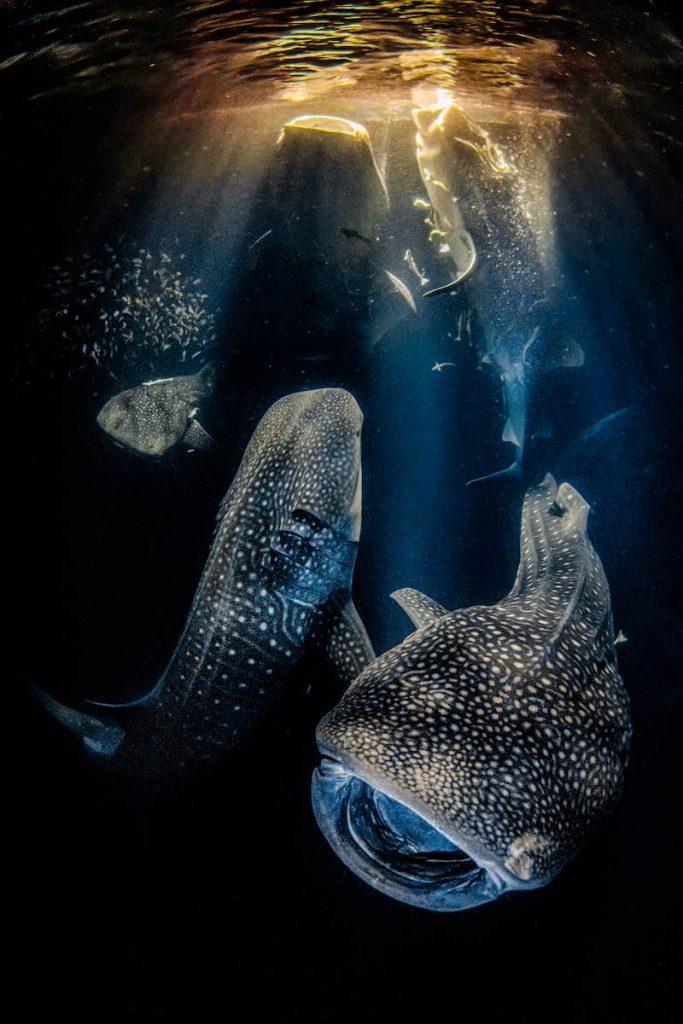
Quote of the Day: “The cave you fear to enter holds the treasure you seek.” – Joseph Campbell
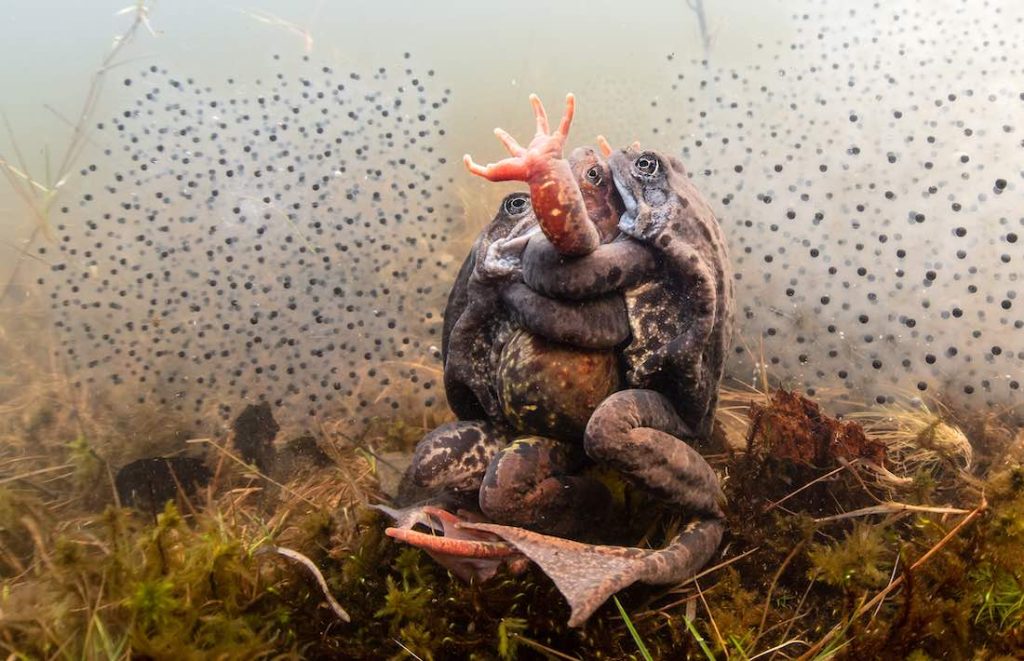
Photo: by Nicolas Häns
With a new inspirational quote every day, atop the perfect photo—collected and archived on our Quotes page—why not bookmark GNN.org for a daily uplift?
Michelle Valberg / for Raincoast Conservation Foundation
Indigenous humans living along the west coast in British Columbia have been culturally connected to grizzly bears for millennia, sharing the same dense forests of Canada.
Michelle Valberg / for Raincoast Conservation Foundation
Now research reveals the grizzlies here belong to three distinct genetic groups—and they align strikingly well with the three local Indigenous language families.
From a collaboration of First Nations with scientists at the University of Victoria and the Raincoast Conservation Foundation a newly identified link emerged in this relationships between grizzlies and the Tsimshian, Northern Wakashan, and Salishan Nuxalk peoples.
The explanation the partnership favors is that the landscape has shaped bears and humans in similar ways.
How exactly the three areas differ—likely in constraints and opportunities for foods and movement—remains a mystery. However, we do know that bears and people have long shared resources and space on this landscape, emphasizing the potential for a parallel response to variation in these resources that reflects this long-term relationship.
The striking finding was as unexpected as it was surprising.
“The study was originally motivated towards understanding if genetic discontinuity might exist across the landscape, an important consideration in management,” offered Lauren Henson, Raincoast Fellow and PhD student at UVic.
Henson used bear hair samples that researchers had collected over the course of 11 years, according to Science.org, which reported that the group collected samples from 147 bears over 23,500 square kilometers—an area roughly the size of Vermont.
“Grizzly bears sampled within an area represented by a given language family were significantly similar to those sampled within that language family and significantly divergent to those sampled outside the language family. This spatial co-occurrence suggests that grizzly bear and human groups have been shaped by the landscape in similar ways, creating a convergence of grizzly bear genetic and human linguistic diversity.”
Michelle Valberg for Raincoast Conservation Foundation
But, don’t assume that “shaped by the landscape” refers to rivers, or obvious physical barriers that would keep them apart—because there were none. The genetic groupings didn’t fall in areas bordered by waterways or rugged peaks.
Henson infers that the bears remain genetically distinct not because travel is restricted, but because the region is so bountiful (with an unending supply of salmon, for instance) that they never needed to stray to meet their needs.
Most important to modern conservationists, the geographic configuration of the genetic groups does not align with how grizzlies are currently spatially managed by the local provincial government.
For William Housty, of the Heiltsuk Integrated Resource Management Department and co-author, results like these highlight the importance of locally-led monitoring for management.
“Our investments in research across our territories allow us to make informed management decisions that draw not only from our own knowledge, but also new scientific evidence like this,” said Housty.
Send the Fascinating News to Your Tribe on Social Media…

FREE WILL ASTROLOGY – Week beginning November 5, 2021
Copyright by Rob Brezsny, FreeWillAstrology.com
SCORPIO (Oct. 23-Nov. 21):
To encourage young people to come to its shows, the English National Opera has offered a lot of cheap tickets. Here’s another incentive: Actors sing in English, not Italian or French or German. Maybe most enticing for audiences is that they are encouraged to boo the villains. The intention is to make attendees feel relaxed and free to express themselves. I’d love to give you Scorpios permission to boo the bad guys in your life during the coming weeks. In fact, I would love it if you were extra eloquent and energetic about showing your true feelings. In my view, this is prime time for you to show the world exactly who you are.
SAGITTARIUS (Nov. 22-Dec. 21):
“If we’re not careful, we are apt to grant ultimate value to something we’ve just made up in our heads,” said Zen priest Kosho Uchiyama. In my opinion, that’s a problem all of us should always be alert for. As I survey my own past, I’m embarrassed and amused as I remember the countless times I committed this faux pas. For instance, during one six-month period, I devoted myself to courting a woman who had zero interest in a romantic relationship with me. I bring this to your attention, Sagittarius, because I’m concerned that right now, you’re more susceptible than usual to making this mistake. But since I’ve warned you, maybe you’ll avoid it!
CAPRICORN (Dec. 22-Jan. 19):
Capricorn author Asha Sanaker writes, “There is a running joke about us Capricorns that we age backwards. Having been born as burdened, cranky old people, we become lighter and more joyful as we age because we have gained so much practice in wielding responsibility. And in this way we learn, over time, about what are our proper burdens to carry—and what are not. We develop clear boundaries around how to hold our obligations with grace.” Sanaker’s thoughts will serve as an excellent meditation for you in the coming weeks. You’re entering into a ripe new phase of embodying the skills she articulates.
AQUARIUS (Jan. 20-Feb. 18):
As author Denise Linn reminded us, “The way you treat yourself sends a very clear message to others about how they should treat you.” With that advice as your inspiration, I will ask you to deepen your devotion to self-care in the coming weeks. I will encourage you to shower yourself with more tenderness and generosity than you have ever done in your life. I will also urge you to make sure these efforts are apparent to everyone in your life. I am hoping for you to accomplish a permanent upgrade in your love for yourself, which should lead to a similar upgrade in the kindness you receive from others.
PISCES (Feb. 19-March 20):
You have at your disposal a prodigiously potent creative tool: your imagination. If there’s a specific experience or object you want to bring into your world, the first thing you do is visualize it. The practical actions you take to live the life you want to live always refer back to the scenes in your mind’s eye. And so every goal you fulfill, every quest you carry out, every liberation you achieve, begins as an inner vision. Your imagination is the engine of your destiny. It’s the catalyst with which you design your future. I bring these ideas to your attention, dear Pisces, because November is Celebrate Your Imagination month.
ARIES (March 21-April 19):
Are you still hoping to heal from psychological wounds that you rarely speak about? May I suggest that you consider speaking about them in the coming weeks? Not to just anyone and everyone, of course, but rather to allies who might be able to help you generate at least a partial remedy. The moment is ripe, in my opinion: Now is a favorable time for you to become more actively involved in seeking cures, fixes, and solace. Life will be more responsive than usual to such efforts.
TAURUS (April 20-May 20):
“The delights of self-discovery are always available,” writes author Gail Sheehy. I will add that those delights will be especially available for you in the next few weeks. In my view, you’re in a phase of super-learning about yourself. You will attract help and support if you make it your quest to explore mysteries that have eluded your understanding. Have fun surprising and entertaining yourself, Taurus Make it your goal to catch a new glimpse of your hidden depths every day.
GEMINI (May 21-June 20):
Gemini novelist and philosopher Muriel Barbery says, “I find this a fascinating phenomenon: the ability we have to manipulate ourselves so that the foundation of our beliefs is never shaken.” In the coming weeks, I hope you will overcome any tendency you have to manipulate yourself in such a way. In my view, it’s crucial for your mental and spiritual health that you at least question your belief system—and perhaps even risk shaking its foundation. Don’t worry: Even if doing so ushers in a period of uncertainty, you’ll be much stronger for it in the long run. New, more robust and complete beliefs are on the way.
CANCER (June 21-July 22):
In her book Mathilda, Frankenstein novelist Mary Shelley (1797–1851) has the main character ask, “What had I to love?” And the answer? “Oh, many things: there was the moonshine, and the bright stars; the breezes and the refreshing rains; there was the whole earth and the sky that covers it.” I bring this to your attention in the hope of inspiring you to make your own tally of all the wonders you love. I trust your inventory will be at least ten times as long as Mathilda’s. Now is a favorable time for you to gather all the healing that can come from feeling waves of gratitude, even adoration, for the people, animals, experiences, situations, and places that rouse your interest and affection and devotion.
LEO (July 23-Aug. 22):
Our memories are always changing. Whenever we call up a specific remembrance, it’s different from the last time we visited that same remembrance—colored by all the new memories we have accumulated in the meantime. Over time, an event we recall from when we were ten years old has gone through a great deal of shape-shifting in our memory—so much so that it may have little resemblance to the first time we remembered it. Is this a thing to be mourned or celebrated? Maybe some of both. Right now, though, it’s to be celebrated. You have extra power to declare your independence from any memories that don’t make you feel good. Why hold onto them if you can’t even be sure they’re accurate?
VIRGO (Aug. 23-Sept. 22):
In 1962, astronaut John Glenn became the first American to orbit the Earth in a spacecraft. His flight happened to be the first time that NASA, the agency in charge of spaceflight, had ever used electronic computers. Glenn, who was also an engineer, wanted the very best person to verify the calculations, and that was Virgo mathematician Katherine Johnson. In fact, Glenn said he wouldn’t fly without her involvement. I bring this to your attention, Virgo, because I believe the coming months will be a favorable time for you to garner the respect and rewards that Katherine Johnson got from John Glenn. Make sure everyone who needs to know does indeed know about your special aptitudes and skills.
LIBRA (Sept. 23-Oct. 22):
According to an Apache proverb, “It is better to have less thunder in the mouth and more lightning in the hand.” If you act on that counsel in the coming weeks, you will succeed in doing what needs to be done. There is only one potential downfall you could be susceptible to, in my view, and that is talking and thinking too much about the matter you want to accomplish before you actually take action to accomplish it. All the power you need will arise as you resolutely wield the lightning in your hands.
WANT MORE? Listen to Rob’s EXPANDED AUDIO HOROSCOPES, 4-5 minute meditations on the current state of your destiny — or subscribe to his unique daily text message service at: RealAstrology.com
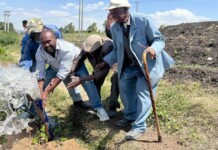
What once was brown now has turned green, thanks to a special collaboration between the Dutch Lottery, the UN, and a group of humanitarian Lutherans.
In 2014, Minawao began hosting at least 60,000 refugees in Cameroon who fled violence linked to the Boko Haram insurgency in neighboring Nigeria. An arid region already dusty brown, the refugees’ arrival accelerated the desertification process as they cut down all the surrounding trees for firewood and cooking.
But, in a few years, the Lutheran World Federation (LWF) and the United Nations Refugee Agency (UNHCR) were able to empower the refugees to transform the region into a thriving young forest.
In this very harsh climate, rivers dry up during the summer months and planting and harvesting is difficult. Already, 95% of the people living in this far north region cooked and heated with firewood—additionally, the refugee camp grew to become its own city needing its own supplies.
Before the Nigerians arrived, the local population had enough firewood and “you couldn’t see anyone within 100 meters”. After their arrival, the environment was destroyed and became “treeless for miles,” said Boubakar Ousmary, who governs the canton bordering the camp.
The price of wood rose considerably, causing community conflicts. Faced with this ecological and human disaster, UNHCR and LWF launched its unique program in 2017 that would reverse deforestation and tackle the problem from two ends, including the promotion of renewable energies.
Now the communities are working together, to restore and protect the environment.
Minawao camp project-by Lutheran World Federation / N. Toukap Justin
“Everywhere we look is green now,” says Luka Isaac, president of the Nigerian refugees in Minawao. “The trees have grown, we have shade and we will have enough trees to make our environment beautiful and healthy. Before, the air was very dusty. Now the air we breathe is very good.”
LWF grows fruit trees in nurseries, with the help of refugee volunteers, then distributes the saplings to the camp administrators, schools, mosques, churches, and households.
Refugees received training on how to use “cocoon technology”, developed by Land Life Company, to give seedlings the best chance of survival in the harsh environment. It involves burying a doughnut-shaped water tank made from recycled cartons that surrounds the plant’s roots and feeds it using a string that connects to the young shoot.
Now, four years later, 360,000 seedlings have been grown in the nursery on the outskirts of the camp—and planted throughout 294 acres (119 hectares). And, they are recording 90% survival rates.
Fruit trees, acacias, cashews, or moringas will provide fruit, medicine and much more. A five-year planting and harvest cycle ensures material for firewood, as well as vines for the construction of roofs. After three years, some trees are big enough to be pruned for firewood.
The trees also break the wind, reduce erosion, and provide shade—enough for families to grow crops, something that was not possible previously.
“The trees bring us a lot,” Nigerian refugee Lydia Yacoubou told UNHCR. “First, they provide the shade necessary to grow food. Then, the dead leaves and branches can be turned into a fertilizer for cultivating. Finally, the forest attracts and retains water. Rainfall has even increased.”
At the same time, the project is providing new livelihoods, while cutting carbon emissions from the burning of wood.
Alternative energy empowers women and girls
To make sure the new forest is not cut down immediately, the production of energy-efficient stoves was launched, along with two centers for ‘ecological charcoal’ production.
The households in the camp send their waste from crops to the charcoal center where it is sorted, dried, carbonized, and compacted into briquettes by trained refugees, which are then used in specially adapted cook stoves. LWF says it has trained more than 5,500 households in the production of ecological charcoal and has distributed a whopping 11,500 energy-efficient stoves.
300 people are employed in the production of charcoal and stoves, the majority of them women. Having their own income has empowered them and improved their positions in the families. Since charcoal became the main source for fuel, young girls have more time available to study for school.
Fibi Ibrahim, a refugee and mother of five who has lived in Minawao since 2016, is one of the workers.
“The money I make selling charcoal briquettes allows me to buy soap, seasoning, and meat to supplement the family’s rations,” says Fibi. “I hope that soon, when I have saved enough money, I can start my own shop in the camp and fully meet the needs my household.”
Funded by a $2.7 million donation from the Dutch Postcode Lottery, the Cameroon program is part of the Great Green Wall initiative that aims to grow an 8,000-kilometre swath of vegetation and trees to combat desertification and drought along the border of the Sahara.
Seen from the sky, the evolution of the site in a few years is striking. Video footage shot in 2018 showed vast stretches of sand surrounding buildings and shelters. Now the land is covered with vegetation.
Watch the video from Reuters below…
GROW This Good News By Planting it on Social Media…
After hurricane-force winds hit New England last week, one-half million homes were without power.
Many people turned to generators to supply electricity, and one such instance almost turned deadly, were it not for the actions of a 9-year-old hero.
In Brockton, Massachusetts, Jayline Barbosa Brandao heard her father screaming and saw her mother unconscious, passed out from breathing too much carbon monoxide coming from the generator.
Soon, her father was overtaken, too, as the odorless gas continued to fill the home.
Jayline jumped into action, trying to use her father’s phone to call for help—but it was locked.
Staying calm, she told a Boston WFXT-TV reporter what happened next.
“I unlocked it by using my dad’s face.”
She then dialed 911—and she even called neighbors.
“I unlocked it by using my dad’s face” 9-year-old hero Jayline Brandao of Brockton knew her mom & dad were in trouble. Fatal levels of carbon monoxide filled her family’s home, she unlocked her dads phone, dialed 911 & even called neighbors! Her amazing story ➡️6pm➡️@boston25pic.twitter.com/S6yfAR7D8K
Quote of the Day: “My happiness grows in direct proportion to my acceptance, and in inverse proportion to my expectations.” – Michael J. Fox
Photo: by McFotoSFO
With a new inspirational quote every day, atop the perfect photo—collected and archived on our Quotes page—why not bookmark GNN.org for a daily uplift?
One of Britain’s last surviving D-Day heroes returned home from France after completing his ‘final mission’—and got straight back out collecting for the 68th consecutive year.
96-year-old Harry Billinge has completed what he described as his ‘last duty’ to pay tribute to his fallen friends who died on the Gold Beach during the landings in 1944.
He traveled back across the Channel to support a tribute recording the names of all 22,442 service personnel who died under British command on D-Day and the Battle of Normandy.
And after collecting at least £50K ($67k) towards the construction of the memorial, he said he was incredibly moved to see the names of his fallen friends carved in stone during the unveiling last month.
But instead of coming home to St Austell, Cornwall, to put his feet up—Harry has already been out collecting again to help maintain it and build an education center on the site.
He has now spent an incredible 68 years raising money for military charities—and said his new-found ‘celebrity status’ meant people were queuing this week to put money in his tin.
SWNS
Harry was a former chair of the Cornwall branch of the Normandy Veterans Association, President of the Royal Engineers Association, and collected for the Royal British Legion Poppy Appeal for 64 years.
“It was very, very moving for me, and it still moves me now. I had a wonderful time because everyone there knows me now in Normandy.”
Harry was just 18 in 1944, serving with the 59th Independent Squadron of the Royal Engineers when he was part of the first wave on Gold Beach.
SWNS
At the memorial—which cost nearly £30 million ($40 million) and was funded by the British government and private benefactors—Harry recounted how overwhelmed he was to see the name of his friend, a brother in arms who died on Gold Beach that day.
“I found a couple of my mate’s graves there, namely a man called Leeds, he had a three-week-old baby at the time when he died.
“He died in my arms.
“My generation saved the world”.
“Everything I’ve done has been for the memorial… I’m not a proud man,” he said, “pride is a deadly sin, but I am very happy that I was able to collect money and do my bit.”
A tiny English village is to become the center of a ”revolution” in the global energy industry and be connected to Morocco—with the world’s longest undersea cable.
The scheme will see Alverdiscott in Devon, population 286, at the end of a line attaching it to North Africa.
The Xlinks Morocco-UK Power Project says it will import enough sun and wind-generated energy to the UK to supply seven million homes by 2030.
The plan would see 3,800km (2,361 miles) of subsea cabling connect Morocco’s renewable energy-rich Guelmim Oued Noun region with little Alverdiscott, near Barnstaple.
An agreement has already been reached with the National Grid for voltage source convertor stations to be set up in the English village, which has a population of 286.
The man behind the huge project is former Tesco groocery store chain boss Sir David Lewis.
The new electricity generation facility, entirely powered by solar and wind energy combined with a battery storage facility, would cover about 1,500 square kilometers (579 square miles) in Morocco and then be connected to Britain via four HVDC (high voltage direct current) sub-sea cables.
These would plug into Alverdiscott which would host two 1.8GW connections.
Convertor stations in Morocco will change the high voltage alternating current (HVAC) power at the generation site to HVDC (High Voltage Direct Current).
Solar panels in Morocco -SWNS
This is then sent through the subsea cable to the converter station in North Devon which changes it back to high voltage power, ready to be injected into the British transmission network.
In total, four cables will form the twin 1.8GW HVDC subsea cable systems.
They will follow the shallow water route from Morocco to Alverdiscott, passing Spain, Portugal, and France.
A technical feasibility study has already been completed to validate the reliability and cost of the project.
The former Tesco boss is also raising £800 million ($1,080 million) to build three UK production facilities to tap into growing demand for the electric cables used for offshore wind farms and undersea interconnectors.
A spokesman for Xlinks said, “This ‘first of a kind’ project will generate 10.5GW of zero carbon electricity from the sun and wind to deliver 3.6GW of reliable energy for an average of 20+ hours a day.
Once complete, the project will be capable of supplying 8% of Great Britain’s electricity needs.
“Alongside the consistent output from its solar panels and wind turbines, an onsite 20GWh/5GW battery facility provides sufficient storage to reliably deliver each and every day, a dedicated, near-constant source of flexible and predictable clean energy for Britain, designed to complement the renewable energy already generated across the UK.” That’s exciting news indeed.
POWER the Good Green News Over to Those Social Feeds…
Meditation training does reduce long-term stress; that’s what scientists in Germany have discovered by analyzing hair.
The amount of cortisol in hair provides information about how much a person is burdened by persistent stress. Earlier positive training effects at Max Planck Institute for Human Cognitive and Brain Sciences (MPI CBS) had been shown in acutely stressful situations or on individual days—or were based on study participants’ self-reports. The current study thus provides the first objective evidence that mental training reduces physical signs of long periods of stress.
According to a study, 23 percent of people in Germany frequently suffer from stress. This condition not only puts a strain on the well-being of those affected, but it is also linked to a number of physiological diseases, including diabetes, cardiovascular diseases, and psychological disorders such as depression, one of the world’s leading causes of disease burden.
Therefore, effective methods are being sought to reduce everyday stress in the long term.
One promising option is mindfulness training, in which participants train their cognitive and social skills, including attention, gratitude, and compassion, through various meditation and behavioral exercises.
Various studies have already shown that even healthy people feel less stressed after a typical eight-week training programme. Until now, however, it has been unclear how much the training actually contributes to reducing the constant burden of everyday stress.
The problem with many previous studies on chronic stress is that the study participants were usually asked to self-assess their stress levels after the training. However, this self-reporting by means of questionnaires could have distorted the effects and made the results appear more positive than they actually were.
The reason for such a bias: The participants knew they were training their mindfulness, and a reduction in stress levels was a desired effect of this training. This awareness alone has an impact on subsequent information.
“If you are asked whether you are stressed after a training session that is declared as stress-reducing, even addressing this question can distort the statements,” explains Lara Puhlmann, doctoral student at MPI CBS and first author of the study.
Factors such as social desirability and placebo effects played a role here. Unlike pharmacological studies, for example, in which the study participants do not know whether they have actually received the active substance or not, so-called blinded studies are not possible in mental training. “The participants know that they are ingesting the ‘antidote’,” says Puhlmann. “In mindfulness research, we are therefore increasingly using more objective, i.e. physiological, methods to measure the stress-reducing effect more precisely.”
The answer in hair
The concentration of cortisol in hair is considered a suitable measure of exposure to prolonged stress. Cortisol is a hormone that is released when we are confronted with an overwhelming challenge, for example. In that particular situation, it helps put our body on alert and mobilize energy to overcome the challenge.
The longer the stress lasts, the longer an increased concentration of cortisol circulates around our body—and the more it accumulates in our hair. On average, hair grows one centimeter per month. To measure the study participants’ stress levels during the 9-month training, the researchers, in cooperation with the working group of Clemens Kirschbaum at the University of Dresden, analyzed the amount of cortisol every three months in the first three centimetres of hair, starting at the scalp.
The mental training itself was developed as part of a large-scale longitudinal study on the effects of mental training. This 9-month mental training programme consisted of three 3-month sessions, each designed to train a specific skill area using Western and Far Eastern mental exercises.
The focus was either on the factors of attention and mindfulness, on socio-affective skills such as compassion and gratitude, or on so-called socio-cognitive skills, in particular the ability to take perspective on one’s own and others’ thoughts. Three groups of about 80 participants each completed the training modules in different order. The training lasted up to nine months, 30 minutes a day, six days a week, and the corresponding paper was published in Psychosomatic Medicine.
Less stress, less cortisol
And it really showed: After six months of training, the amount of cortisol in the subjects’ hair had decreased significantly, on average by 25 percent. In the first three months, slight effects were seen at first, which increased over the following three months. In the last third, the concentration remained at a low level. The researchers therefore assume that only sufficiently long training leads to the desired stress-reducing effects. The effect did not seem to depend on the content of the training. It is therefore possible that several of the mental approaches studied are similarly effective in improving the way people deal with chronic everyday stress.
In an earlier study from the ReSource project with the same sample, the researchers had investigated the effects of training on dealing with acute stressful situations. In this study, the participants were placed in a stressful job interview and had to solve difficult maths problems under observation. The results showed that people who had undergone socio-cognitive or socio-affective training released up to 51 percent less cortisol under stress than those who had not been trained. In this case, they did not measure the amount of cortisol in the subjects’ hair, but instead acute cortisol surges in their saliva.
Overall, the researchers conclude that training can improve the handling of acute particularly stressful social situations as well as chronic everyday stress. “We assume that different training aspects are particularly helpful for these different forms of stress,” says Veronika Engert, head of the research group “Social Stress and Family Health” at MPI CBS.
“There are many diseases worldwide, including depression, that are directly or indirectly related to long-term stress,” explains Puhlmann. “We need to work on counteracting the effects of chronic stress in a preventive way. Our study uses physiological measurements to prove that meditation-based training interventions can alleviate general stress levels even in healthy individuals.”
It’s official: 131 gold coins found in a field in Norfolk, England represent the largest Anglo-Saxon gold coin hoard ever discovered, a find which is being described as one of “international importance.”
With the first coin found in 1991, and the rest found in 2014, the hoard was long undergoing “Treasure Review” by the appropriate antiquities authority. A stamped pendant, gold ingot, and two unidentified pieces accompanied the coins, which shed golden light on not only the wealth enjoyed by pre-Viking East Anglian society, but the reach and value of their trade routes, and the development of widespread minting in Europe.
Dated to around 610 CE, it’s thought they were buried together in a funeral barrow, and scattered across a field through centuries of plowing. Ten of the coins arrived in England from the Byzantine Empire, or at least someone who had trade with them, while the other 120 were made in France during the Merovingian Dynasty.
“It may well be that the hoard was assembled by someone traveling through Frankia in the course of trade,” writes numismatist Dr. Adrian Marsden, who told the BBC, “all the coins were minted on the continent, as we didn’t have gold coins of our own then.”
Indeed, Anglo-Saxon hoards of multiple thousands have been found containing silver coins, but as the yellow metal is extremely rare in English earth, the find is of unique importance. The marks of 54 separate “moneyers” or mints, were found on the coins by Marsden.
The Norfolk hoard gained some fame in 2017 when one of the two amateur detectorists who found it was handed a 16-month jail term after it was found he had sold ten of the coins to an antique dealer.
Norfolk Identification and Recording Service
Today, having been declared officially as treasure, the Norwich Castle and Museum hopes to acquire it for their collection.
Norwich Castle and Art Gallery curator Tim Pestell described the hoard as a globally important find that “reflects the wealth and continental connections enjoyed by the early Kingdom of East Anglia.”
SEND This Treasure to All Your Gold Seeking Friends on Social Media…
Every Friday morning in Barcelona, a special kind of bus collects kids on their way to school in the Eixample district.
Dubbed the “Bicibus” or Bike Bus, it’s more like a caravan or an escort, one which started when five families decided to ride their bikes to school to advocate for bike lanes and safer, quieter roads. More and more families joined in until it became a weekly event.
“It all started with a group of five families, a lot of determination and a deep sense of the greater good,” Mireia Boix, a parent of a 5-year-old son who takes the Bicibus, told NPR in an email.
Three “stops” along the way allow kids and their parents to join the Bicibus, and all modes of pedal-powered transport are welcomed, whether that’s a scooter or roller blades.
The parents are hoping their ever-growing convoy of kids will lead the authorities to construct a school-friendly bike lane away from the main traffic flow. The route the Bicibus takes every Friday goes down Entença Street, a busy thoroughfare where three schools are located. The ride takes 25 minutes from start to finish, but 20,000 cars pass along Entença every day, and as the Bicibus grew, it acquired its own police escort.
It’s a relief, Boix details, to know that her son has a safe way to get to school, as plying the road as a solo cyclist is more dangerous than going by bus or car.
“Bicycles are a means of transportation and if a 5-year-old can ride a bike to school it means that every one else could. If the population uses their bikes, there will be a healthier, quieter and overall better city to live in,” Boix said.
Social media is filled with pictures and videos of the petit peloton, and some of the kids even sport Bicibus jerseys.
Something special is happening in Barcelona. It started last month when some parents organized a bike ride to school for just five kids. Now entire neighborhoods are joining. They call it Bicibús – or Bike Bus. pic.twitter.com/qIxsQEervG
Quote of the Day: “Champions have the courage to keep turning the pages because they know a better chapter lies ahead.” – Paula White
Photo: by Kourosh Qaffari
With a new inspirational quote every day, atop the perfect photo—collected and archived on our Quotes page—why not bookmark GNN.org for a daily uplift?
In an attempt to diffuse religious tensions in the country, the Bangladeshi parliament plans to amend the constitution so they can return to a secular framework, removing Islam as the state religion.
Fatih Yürür
Originally designed to be a secular nation, not tied to any one holy book, the Constitution of Bangladesh was meant to establish a state based on a melting pot of liberal culture with Bengali-distinct linguistic traditions.
That goal was undermined, as is so often the case in fledgling states, through a military junta by Ziaur Rahman. Islam was then introduced as the state religion to dominate Hindus, Buddhists, and Christians using military dictatorships, established first in 1975.
But the current government is ready to turn (back) the page.
“Bangladesh is a secular country; people of all religions shall live together in Bangladesh,” said Prime Minister Sheikh Hasina, who controls 280 of 300 seats in parliament.
She added, “Religion may be personal, but festival is universal. And people in Bangladesh have always celebrated such festivals together.”
Hasina, who brought down the last military regime (which had killed her father), has survived 19 assassination attempts. Now, the longest serving prime minister of the South Asian country, her latest action is expected to face little resistance beyond street agitations.
The decision to secularize the nation is not only a response to attacks on Hindus, but is meant to return equilibrium to religious freedoms for residents in the country—the right to choose to attend any church or mosque or temple with equal dignity for all.
SHARE This Historic Declaration With Friends on Social Media…
In a negotiation, how tough should your first offer be? New research shows the first offer can have a significant impact on the eventual outcome, and if you try to drive too hard a bargain, it could backfire.
Whether you’re buying a house, a car, or second-hand furniture, it’s likely you will need to negotiate the price, so being able to negotiate effectively could save you significant cash.
Behavioral economist Professor Lionel Page from the University of Technology Sydney (UTS) said opening offers in real-world negotiations are sometimes intended to signal the “toughness” of the buyer—but whether this strategy actually works was not known.
“This experiment allowed us to study whether and how the level of the opening offer influences the beliefs of buyers and sellers, their actions and the final bargaining outcome,” said Professor Page.
The researchers conducted the experiment using a bargaining game where players exchanged offers for a split of $10. The aim was to mimic the start of a typical negotiation process.
They found that the success or failure of a negotiation depended not only on the final offer on the table but also on the emerging dynamics of the bargaining process.
“The intermediary offers made during a negotiation can be interpreted as suggesting either kind and compromising intentions, or unkind and uncompromising ones,” said Professor Page.
“And the perception of these intentions can, in turn, influence the final outcome. Low offers are perceived as disrespectful, so players react negatively and can be spiteful in their counter-offers.
“In a substantial number of cases, the responder chose a ”punishing” counter-offer that was lower than what he believed was the buyer’s minimum acceptable amount,” he said.
This means it is not the best strategy to always be as tough as possible in a negotiation.
Previously there has been two conflicting views on first offers in negotiations, said Professor Page.
One view is that a low opening offer works as an “anchor” that moves the final offer in the direction of the first offer.
The second is that a more reasonable initial offer achieves a better outcome because it doesn’t sour the atmosphere and endanger the agreement.
Professor Page said their study—published in Theory and Decision—showed support for both these ideas.
“We found that there is a small window where an offer is lower than an equal split, but not so low that it triggers negative emotions. It was viewed as ‘fair game’ to start the negotiation at this point.”
So in summary to strike a good bargain your opening offer needs to be not too hard, or you risk a spiteful counter-offer, but not too soft either, or you might be taken for a ride.
At COP26, many of the parties to the Paris Climate Agreement have doubled-down on their commitments to reducing forest-loss and emissions.
Three days into the 2021 United Nations Climate Change Conference, and fortunately most of the major stories of real note are positive ones. So far there have been commitments to conservation and indigenous people’s rights that deserve mention—including an expansion of the Galapagos Marine Reserve.
Let’s take a look at the good news so far in more detail.
Green energy and financing
South Africa, a major carbon emitter, has signed a financing deal with some G7 countries worth $8.5 billion to help end its reliance on coal, as it’s the 12th largest consumer in the world.
40 parties including the US, India, Australia, Turkey, the EU, and China have signed onto a UK-led initiative to increase worldwide access to affordable renewable energy by 2030.
UK Chancellor of the Exchequer Rishi Sunak said that by 2023 the island nation will be the first to force all publicly traded companies to release plans on how they intend to achieve net zero.
Japan, a major coal and oil consumer, has announced an additional $10 billion in climate financing over the next few years.
450 global firms will form the Glasgow Financial Alliance for Net Zero, and announce membership on Wednesday, while the managers of 40% of the world’s total investable assets have signed up to 2050 net-zero goals including limiting global warming to 1.5C.
A Lake Michigan-sized area of ocean, connecting the Galapagos and the Cocos Islands off Costa Rica, has been added to the Galapagos Marine Reserve, totaling 23,000 square miles, about 8-times the size of Yellowstone, and protecting a “marine superhighway” of transiting sharks, rays, tuna, turtles, and whales.
World leaders who control roughly 85% of the world’s forests have pledged to end forest-loss in this decade, for which they have apportioned $19.2 billion in private and public money.
$1.7 billion has been apportioned by the UK, US, Germany, Norway, and the Netherlands to give directly to indigenous peoples to aid in their substantial contribution to forest and land conservation.
President Biden joined 100 nations in the signing of a plan to cut methane emissions by 30%, which will be accomplished through the scaling back of fossil fuel production. Though CO2 is the principle warming agent, methane, which is more potent but lasts only 12 years in the atmosphere, is being considered as a way to buy time for CO2, which can stay in the atmosphere for up to 1,000 years, to be reduced or captured.
Right at the start of the conference India, which has up until this point been without a major emissions reduction target, committed to zeroing national emissions by 2070. Experts speaking with The Guardian said that “this demonstrates real leadership from a country whose emissions per capita are about one-third of the global average.”
The COP has routinely disappointed activists and green politicians in the past, but there’s a sense from the pledges undertaken that this year has generally gotten off to a solid start.
If you’re like me, you never learned how to spell “sous chef” in school. Sean Sherman, on the other hand, has an altogether different meaning for the words.
Known on social media as The Sioux Chef, Sherman, who grew up on the Pine Ridge Indian Reservation and is a member of the Oglala Lakota, is reconnecting the denizens of North America with native flavors and ingredients, and working to inspire a generation of indigenous chefs to reclaim their culinary past.
Pine Ridge in South Dakota contains some of the poorest communities in the country, and its out of that environment that Sherman got his first job in the restaurant industry as a dishwasher at a local steakhouse.
As he fostered a love of cooking, which saw him move to Minneapolis to study Japanese and French cuisines, Sherman realized he didn’t know indigenous recipes.
“What were my Lakota ancestors eating and storing away? How were they getting oils and salts and fats and sugars and things like that?” Sherman remembered asking himself in an interview on PBS News Hour. “So it took me quite a few years of just researching, but it really became a passion.”
These years of researching, talking to tribal elders, and consulting written material produced The Sioux Chef’s Indigenous Kitchen, which in 2018 won Sherman the coveted James Beard Award for Best American Cookbook.
“Part of our challenge to ourselves was to cut out colonial ingredients, so we stopped using dairy, wheat flour, cane sugar,” he said.
Following the book, Sherman opened his restaurant Owamni in Minneapolis, and created the North American Traditional Indigenous Food Systems (NATIFS), a professional Indigenous kitchen and training center that seeks to create an educational space for native chefs to hone and develop their skills, and reconnect with their cooking heritage.
He cooks with ingredients like hyssop, a shrub similar to thyme or marjoram, cedar, dandelion, mushrooms, native squashes, corn ash, sunchokes, sassafras leaves, bergamot, wild rice, and berries.
His choices of meats mirror those hunted by his ancestors—bison and deer species, river fish, and game birds.
“But we’re at a point now where we can reclaim it and evolve it for the next generation. To be able to share culture through food will be really healing.”
An international team of researchers has announced the naming of a new species of human ancestor, Homo bodoensis. This species lived in Africa during the Middle Pleistocene, around half a million years ago, and was the direct ancestor of modern humans.
The Middle Pleistocene (now renamed Chibanian and dated to 774,000-129,000 years ago) is important because it saw the rise of our own species (Homo sapiens) in Africa, our closest relatives, and the Neanderthals (Homo neanderthalensis) in Europe.
However, human evolution during this age is poorly understood, a problem which paleoanthropologists call “the muddle in the middle.” The announcement of Homo bodoensis hopes to bring some clarity to this puzzling, but important chapter in human evolution.
The new name is based on a reassessment of existing fossils from Africa and Eurasia from this time period. Traditionally, these fossils have been variably assigned to either Homo heidelbergensis or Homo rhodesiensis, both of which carried multiple, often contradictory definitions.
“Talking about human evolution during this time period became impossible due to the lack of proper terminology that acknowledges human geographic variation” according to Roksandic, lead author on the study.
Recently, DNA evidence has shown that some fossils in Europe called H. heidelbergensis were actually early Neanderthals, making the name redundant. For the same reason, the name needs to be abandoned when describing fossil humans from east Asia according to co-author, Xiu-Jie Wu (Institute of Vertebrate Paleontology and Paleoanthropology, Beijing, China).
Further muddling the narrative, African fossils dated to this period have been called at times both H. heidelbergensis and H. rhodesiensis. H. rhodesiensis is poorly defined and the name has never been widely accepted. This is partly due to its association with Cecil Rhodes and the horrendous crimes carried out during colonial rule in Africa—an unacceptable honor in light of the important work being done toward decolonizing science.
The name “bodoensis” derives from a skull found in Bodo D’ar, Ethiopia, and the new species is understood to be a direct human ancestor. Under the new classification, H. bodoensis will describe most Middle Pleistocene humans from Africa and some from Southeast Europe, while many from the latter continent will be reclassified as Neanderthals,
The co-first author Predrag Radovic (Faculty of Philosophy, University of Belgrade, Serbia) says of the research, published in Evolutionary Anthropology, “Terms need to be clear in science, to facilitate communication. They should not be treated as absolute when they contradict the fossil record.”
The introduction of H. bodoensis is aimed at “cutting the Gordian knot and allowing us to communicate clearly about this important period in human evolution,” according to one of the co-authors Christopher Bae (Department of Anthropology, University of Hawai’i at Manoa).
Lead author Dr. Mirjana Roksandic at the University of Winnipeg agrees, saying, “Naming a new species is a big deal, as the International Commission on Zoological Nomenclature allows name changes only under very strictly defined rules. We are confident that this one will stick around for a long time, a new taxon name will live only if other researchers use it.”
Quote of the Day: “It’s not that some people have willpower and some don’t… It’s that some people are ready to change and others are not.” – James Gordon
Photo: by Ricardo Rocha
With a new inspirational quote every day, atop the perfect photo—collected and archived on our Quotes page—why not bookmark GNN.org for a daily uplift?
Seals are one of the very few mammals to change the tone of their voices, allowing them to mimic humans like a parrot, scientists have found.
The sea creatures change the pitch of their calls depending on the sounds of their surroundings, according to a new study.
Seals can be taught to copy human speech like parrots, barking catchphrases in gruff accents like “come over here.”
But while vocal learning, the ability to mimic sounds, is a rare trait among mammals, only a few species can adjust their voice’s pitch to sound higher or lower.
Now scientists at the Max Planck Institute for Psycholinguistics have found seal pups are on the short list of animals with volume control.
Senior author Dr Andrea Ravignani said, “By looking at one of the few other mammals who may be capable of learning sounds, we can better understand how we, humans, acquire speech, and ultimately why we are such chatty animals.”
Eight harbor seal pups aged one to three weeks old who were being held in a Dutch rehabilitation center before being released back into the wild were studied by the researchers.
They recorded noises from the nearby Wadden Sea before playing them back to the pups at volumes ranging from no sound to 65 decibels, but keeping the same tone height as the animal’s calls.
They then recorded the pup’s spontaneous calls to see whether they changed their tone of voice to match the sea sounds.
“This is astonishing, as few other mammals seem capable of that.”
Pups did not however produce more or longer calls when exposed to different levels of sea sounds.
Dr Ravignani said of the findings, published in the Philosophical Transactions of the Royal Society B: Biological Sciences, “To date, humans seem to be the only mammals with direct neural connections between the cortex—the outer layer of the brain, and the larynx—what we use to produce tone of voice’.
A study has managed to reverse the symptoms of Alzheimer’s disease in mice by administering drugs currently used to treat hypertension and inflammation in humans.
In this study, scientists at IRB Barcelona led by Dr. Aloy have characterized three stages of Alzheimer’s disease, namely initial, intermediate, and advanced.
For each of these stages, they have analyzed the behavior of the animals, studied the effects on the brain (specifically the hippocampus at the tissue level), and performed a molecular analysis to measure gene expression and protein levels.
The approach adopted has allowed them to describe the development of the disease at a level of detail hitherto unknown and also compare it with healthy aging.
“What we have observed is that, although Alzheimer’s disease shares some features of accelerated ageing, it is also affected by totally different ageing processes,” says Dr. Aloy. “This disease is caused by the abnormal accumulation of certain proteins, and we have seen that, in some cases, this is not caused by overproduction but by an error in their removal,” he adds.
Chemical Checker: detection of the most promising molecules
Having characterized the disease, the scientists used the Chemical Checker, a computational tool developed by the same research group to find drugs already on the market with the capacity to reverse the effects at the cellular level.
This tool has allowed them to identify a series of possible candidates, which were tested in various mouse models of Alzheimer’s disease.
Four drugs—two non-steroidal anti-inflammatories, dexketoprofen and etodolac, along with two anti-hypertensives, penbutolol and bendroflumethiazide, proved effective at reversing the disease and neutralizing symptoms in these mice. They published the study in Genome Medicine.
“Epidemiological studies already indicated that people who regularly take antiinflammatories show a lower incidence of Alzheimer’s disease, but this had not been correlated with a specific medication or mechanism.
“The results that we are publishing are most promising, and we hope that further research can be done on them because they could give rise to a paradigm shift in the treatment of this disease,” says Dr. Aloy.
Early diagnosis of the disease
In addition to paving new avenues of research for the treatment of Alzheimer’s disease, the characterization of the distinct stages of this condition published in this study favors early diagnosis.
Diagnosing Alzheimer’s disease at an early stage, when damage to the brain is still minimal, is one of the main research focuses to tackle this condition and to reduce symptoms.