nuts public domain towfiqu-barbhuiya-4N0dLUmdLAY-unsplash
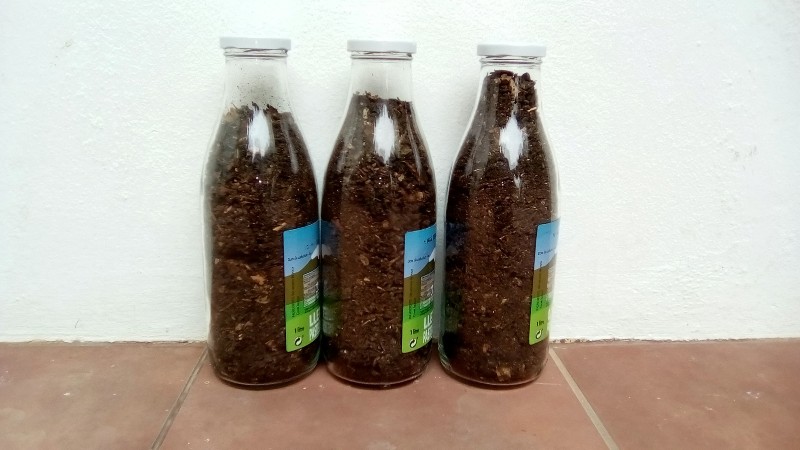
Nuts are a good source of magnesium; Owfiqu Barbhuiya
A simple mineral we all learned about in high school PE class could be the active ingredient in a new method of cancer treatment and prevention. In this way, magnesium has gone from being something to help us play sports longer to something that lets us play life longer.
That’s because magnesium acts like a bridge between killer T cells, a critical immune system weapon, and cancerous cells by binding to a protein on the T cell’s exterior called LFA-1, which allows them to then hone in on cancer cells which in turn have many ways to disguise themselves ordinarily.
Cell-surface binding and receptor proteins are areas of key interactions in studying physiological effects, and the COVID-19 pandemic taught many people how important these interactions, sometimes called docking, can be to our health.
The research came from a recent paper published in Cell, which found that killer T cells were only able to eliminate cancerous or infected cells in rats if their LFA-1 proteins had bound with free available magnesium.
In light of their discoveries, the research team from Switzerland looked at past studies of cancer immunotherapies and found that low-magnesium concentrations were strongly linked to a more rapid progression of disease. In addition, they found that influenza and other viruses spread faster in mice that were fed a magnesium deficient diet.
“In light of our experimental data and the retrospective analyses we performed on two clinical trials, magnesium deficiency is very likely to be responsible for at least a proportion of the insufficient efficacy seen in cancer patients receiving immune therapy,” Dr. Christoph Hess, Ph.D., from the University of Basel told Medical News Today.
Building on this work, Dr. Hess is now seeing if magnesium-rich lipid molecules, coated in antibodies and injected into tumors, can prevent or reverse growth in the tumor microenvironment. Also they will investigate if magnesium supplementation improves outcomes of trials using other methods of immuno-therapy.
Both of these affects have been observed in mouse models.
Magnesium, which is most richly-found in nuts, is a critical macromineral, meaning that we must consume it from our diet and cannot live in a healthy state without it.
SEND This Hopeful News to Friends Who’d Love to Know It…
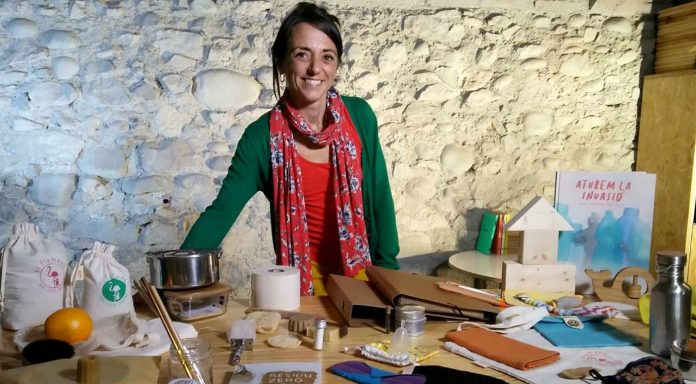
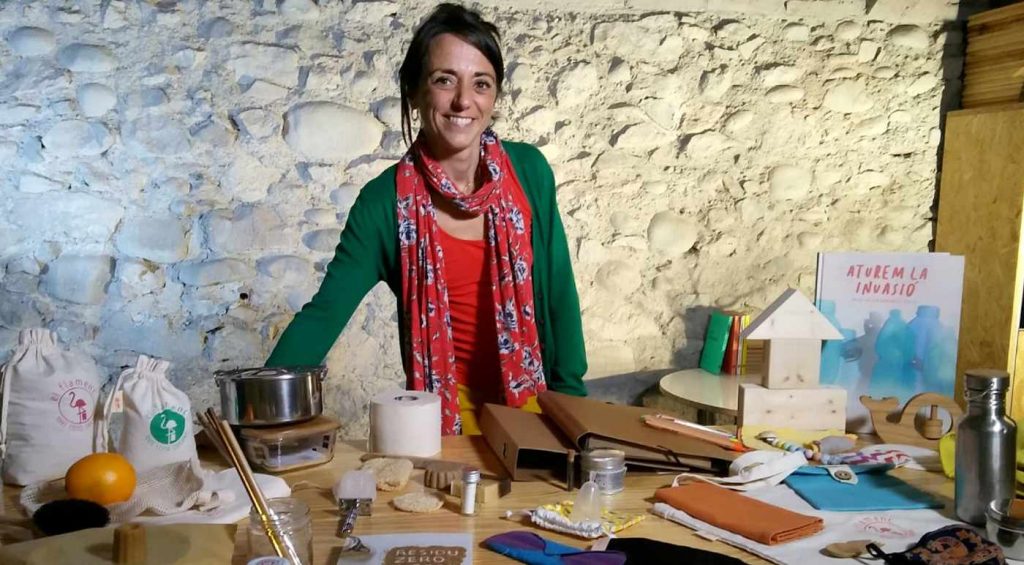
Meet the eco-family who goes weeks without throwing a single piece of trash thanks to epic amount of recycling and savvy shopping.
41-year-old Esther Peñarrubia encourages her two kids to make crafts and drawings from old bits of packaging so that nothing ends up in landfill.
Over the past two weeks, Esther has only been forced to discard a balloon from a party, the backing from a sheet of stickers, an old T-shirt she used to clean shoes, and a broken toy.
She began minimizing her family’s wastage when she moved house and decided that she would leave all single-use items behind.
The mom-of-two, who lives in Girona in Catalonia, shunned cling film and tin foil, and decided to buy everything she needed in bulk or from second-hand shops.
She said: “There are already reusable items that we would have to buy once, so it would be a waste of time and money buying the single-use ones.
“It’s cheaper and you know that the item will continue being used instead of being set aside – so it’s just perfect!
“Each of us play a big role in taking care of the environment.
“It’s enjoyable to try to help rather than just keep complaining about the current situation.
SWNS
“Moreover, you don’t take out your rubbish quite so often, because you don’t generate it! “
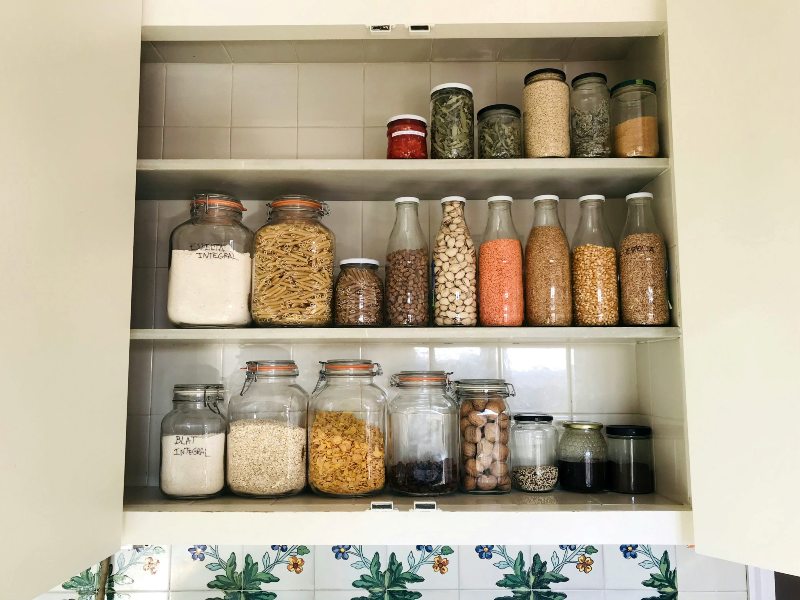
Any kitchen leftovers go into the compost bin, and glass containers are washed up and repurposed for something else.
This means that the family only send a piece of rubbish to landfill every two weeks on average.
She tries not to buy any plastic at all, but when she does, like in the five-litre bottle of olive oil that lasts a few months, it gets thoroughly washed and recycled.
Her five and seven-year-old children know to draw and make crafts from scrap paper packaging, before that too is recycled.
After watching a TED talk in November 2015, Esther realised that her lifestyle was called ‘zero waste’.
For cleaning products, like washing up liquid and detergent, she walks or cycles to a bulk supplier once every two months to buy up to 4kg worth.
She buys fruits, vegetables and bread from local suppliers in bulk on a weekly basis.
The family also grow their own tomatoes, lettuce, broccoli, and herbs in the kitchen garden, and have orange and mandarin trees outdoors.
Esther has also found herself in a community of friends who trade items with each other that they need, like furniture or plates, communicating in WhatsApp group chats.
When her children were young, Esther would use reusable cloth nappies instead of disposable ones.
While this would result in her putting on a wash three times a week, she would rather that than them go to landfill.
She said, “We tried to use the minimum possible and inherited some toys and baby equipment from friends and relatives.
“If we really had to purchase anything, first we tried at the second-hand market or on free apps.”
Now, Christmas and birthday presents are wrapped in a reusable cloth rather than wrapping paper.
SWNS
Mom Esther said, “They know that if a new toy enters our home, another should go to another family’s house, so we try not to accumulate a lot of stuff.
“We avoid toys or other material made out of plastic and choose cardboard, wood or metal, instead.
“We haven’t got a TV at home, so at Christmas time they aren’t exposed to toy adverts on a daily basis.
“When they ask for a new toy, we explain to them that depending on the material we would think about it, and if it’s plastic they understand that we won’t like it.”
They also tend to organize family activities as gifts, like a cinema trip, or buy them second hand items.
To help educate her kids, Esther takes them out on nature walks to the forest where they pick up rubbish as they go.
“They use their little gloves and enjoy this activity, because they know it’s better for the environment,” she said.
They also take books out at the library on climate change and plastic that they read all together.
Esther thinks the challenging part of her life is convincing others that it is achievable, as people often assume the swapping to reusable products is expensive.
She said: “If you think and organize your buying habits, consume less things and from better quality, choose reusable alternatives, buy everything you can in bulk and from the second-hand market—then it’s not more expensive and you can save money.”
Esther, who has a PhD in agricultural engineering, finds that it is often simpler than people think.
Quote of the Day: “Everyone’s life work: to construct an identity bit by bit, to walk a path step by step, to live a life worthy of something higher, more fulfilling, and maybe even everlasting.” – Donald Van de Mark
Photo: Public domain
With a new inspirational quote every day, atop the perfect photo—collected and archived on our Quotes page—why not bookmark GNN.org for a daily uplift?
Teens today are looking to forge their own success and happiness in their future careers.
A recent survey of 2,000 American high school students found that although a third of respondents have no post-graduation plans, 82% agree the most important thing to them is to do something they’re passionate about, regardless of what career they choose.
Seven in 10 (69%) said it’s important to have a job immediately after graduating, while others consider higher education more polarizing. Over half of students surveyed (55%) believe college isn’t a requirement for a successful career, compared to 45% who think it’s mandatory.
For students who haven’t considered any alternatives to higher education, half (51%) explained they didn’t know enough about other options, such as career paths in the skilled trades—hinting that students aren’t being exposed to those options in school.
Commissioned by Wolverine and conducted by OnePoll, the poll revealed two-thirds saw how important essential workers and skilled trade careers were and continue to be during the pandemic, prompting 45% of students to show more interest in pursuing essential jobs.
But getting there may be no easy feat for these students. A third of American high-schoolers want to learn how to pursue their goals (34%), money to pay for their education (33%) and how to deal with parental pressure (31%).
The results also found students feel more pressure to pursue traditional higher education after high school than alternatives—a third (35%) have felt pressured to attend a traditional four-year college. Still, only 18% have felt the same pressure for vocational schools.
Three out of five (62%) said the pressure comes from their parents. Students also said they feel the heat about school from society (47%) and their high school’s faculty (45%).
Meanwhile, nearly three-quarters (72%) believe looking at alternative options to a traditional four-year college is important. However, 30% have considered vocational schools, with 46% contemplating community college and 41% are thinking about having a job immediately after graduation.
“Those choosing to pursue a path in the skilled trades should always be celebrated and supported,” said Tom Kennedy, global president for Wolverine. “As the demand for skilled workers continues to grow, it’s more important than ever to understand student attitudes toward the future of work and help them to see the skilled trades as a valued and rewarding career path.”
Half (51%) said they’re familiar with skilled trade careers at some level, with 70% saying they’ve been taught a practical skill by someone they know outside of school.
Students said they often learned practical skills from their parents (61%), extended family members (47%) or friends (43%). These skills include auto repair (26%), construction (23%) and electrics (20%).
However, two in three students said their schools offer vocational classes that teach them practical skills and essential careers. Meanwhile, 65% favor their vocational courses over their core curriculum.
Overall, 79% of high schoolers believe high schools should teach vocational skills.
For many respondents, it appeals to their learning abilities. Nearly half of students said they were either hands-on learners (42%) or visual learners (45%).
Students expressed the popular skills they want to learn in vocational classes are auto mechanics (33%), electrics (32%) and welding (32%).
“It’s essential that we continue to give high school students practical, hands-on opportunities—inside and out of the classroom—to nurture their interests and help them learn more about the array of career options available to them in the skilled trades,” continued Kennedy.
TOP 10 SKILLS STUDENTS THINK SHOULD BE TAUGHT IN SCHOOL
Culinary arts – 49%
Cosmetology – 40%
Practical nursing (LPNs) – 35%
Auto mechanics – 33%
Electrics – 32%
Welding and machining technology – 32%
Auto body and collision repair – 26%
Landscape design – 26%
Construction trades – 25%
Metalworking – 23%
ADD Some Skill to Those New Feeds and Share This Story…
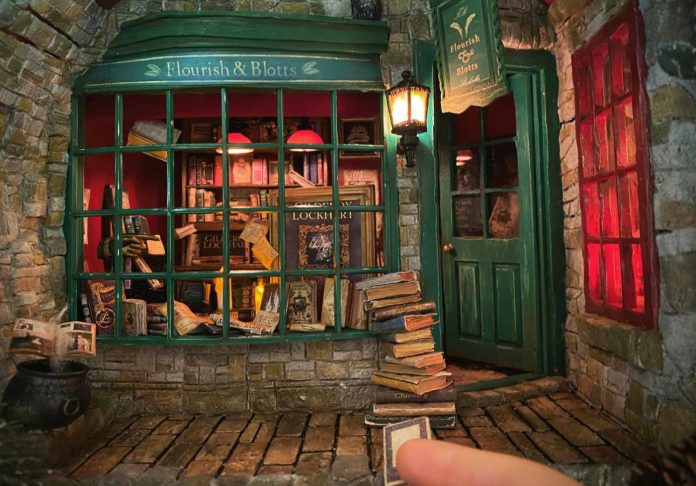
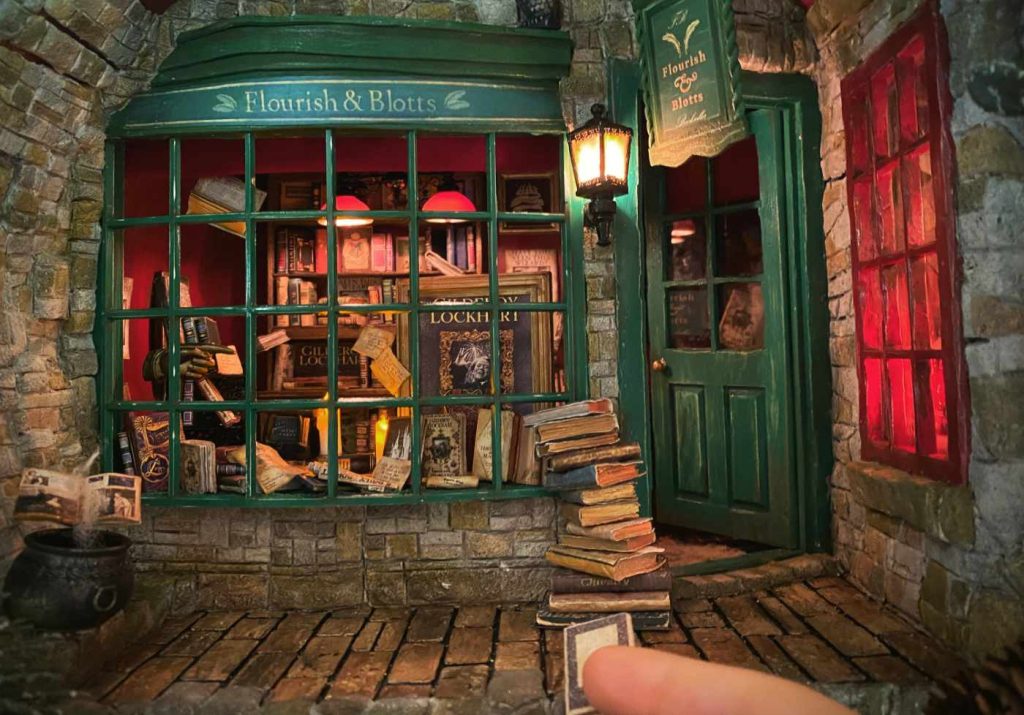
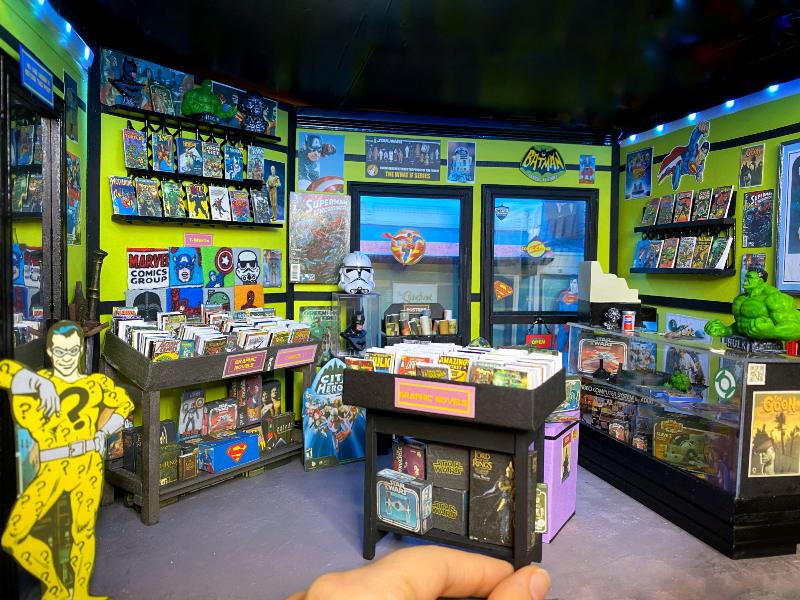
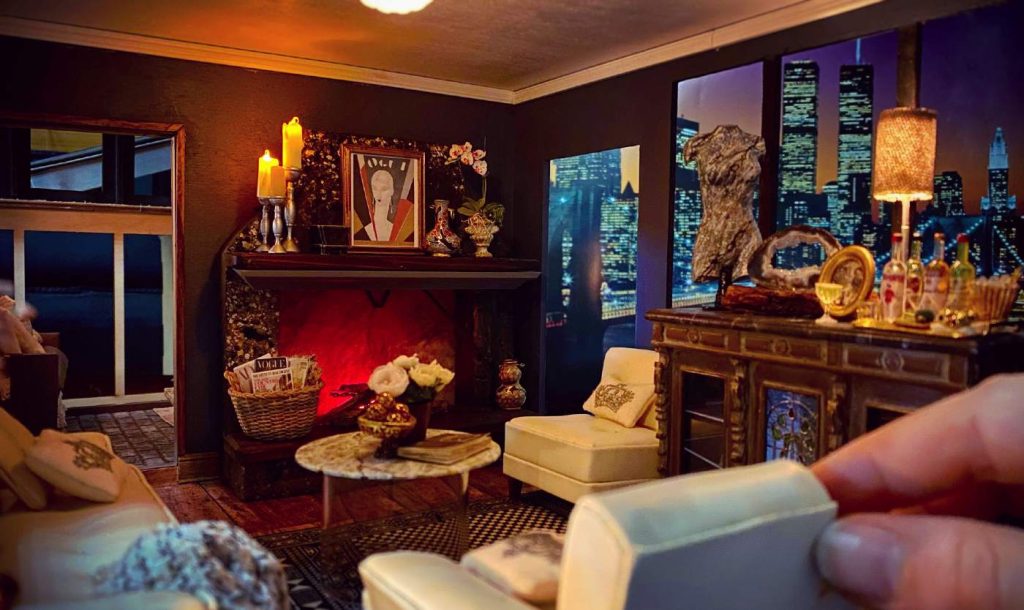
Bridget McCarty creates miniature film sets—but they’re so detailed you wouldn’t even know they were fake.
Her works include iconic scenes from Jurassic Park, Friends, and Harry Potter and can take up to a month each to build, but the outcomes are astounding.
Bridget, from Los Angeles, California, says it started as a hobby—but it became her full-time job when people started queueing up demanding to buy her pieces.
She said, “Creating miniatures can really take you away to another world. My ideas can be found everywhere—from my favorite TV shows to theme parks.
Bridget told how she was inspired by her grandmother, who used to collect miniature items whenever she traveled and would store them on shelves.
But as a child Bridget was never allowed to touch the delicate items, which made her more and more curious.
But when she started visiting conventions and set up a small online shop, people were fascinated, and demand for her tiny scenes meant it soon became a full-time job.
SWNS
Bridget, who is also trained in animation art, said, “Other artists bought a lot of my pieces and motivated me to keep it up.”
SWNS
Her pieces are doll-house sized rooms made room wooden boxes—with dimensions of 50cm or less—and typically depict film sets.
SWNS
She creates the incredible sets from “anything you can imagine” after fitting tiny electrical wiring to light the rooms up.
“Tender set to be launched for one of the most unique opportunities in UK hospitality,” reads the Borough of Barrow at Furness website, which is looking for a new landlord to manage a pub on Piel Island, as well as to claim an ancient, beer-soaked royal throne carved from oak.
The claimant should also be ready to be soaked himself, according to a bizarre tradition, and take up the title of King, and to oversee every degree of comings and goings on the small island on the northwest coast of England.
“Tradition holds that each new landlord is crowned ‘King of Piel’ in a ceremony of uncertain origin,” the Barrow council described in a statement.
Tony Callister, another member of the council, said in an interview that the custom would continue. “The person coming in gets the title of King of Piel, which is nice to have, and there’s no reason for that to change.”
The job requires all 50 acres of island grounds to be tended to, for the Ship Inn pub and kitchens to be managed, and for all guests to be made welcome. Furthermore, potential kings should be prepared for loneliness, as there is only one other permanent resident, and the winter months see few visitors, but many storms.
There are, however, many seals on the island, as well as a derelict 14th-century castle that a Scottish man at the head of a mercenary army once used as a base from which to launch a failed usurpation of the English throne. The castle was originally made by monks, perhaps as a defense, or to store smuggled goods. It’s the failed bid for the throne which historians believe spawned the tradition of proclaiming the Ship Inn landlord King of Piel.
Murky waters
The Ship Inn maintains a website, as well as the following description of the history of the Inn, which is murky and uncertain.
“The origins of the Ship Inn are obscure although it is said to be over 300 years old. In 1746 a lease for agricultural land situated within the castle ditch was granted to an Edward Postlethwaite who is described as an innkeeper from the “Pile of Fowdrey.” A description from 1813 paints a vivid picture of the life of the innkeeper at that time.
“‘There is a public-house on the island, the only habitation, tenanted by an old Scotchman, who has been lord of this domain for many years, and goes through the duties of guide and expositor among the ruins of the castle with admirable fluency. The custom of seamen from the roadstead, and the donations of occasional visitors in the summer time support him in a state of which he has no right, he thinks, to complain: but he acknowledged that when there were no vessels in the roadstead he found his situation rather too lonesome, and apt to drive him to his beer-barrel for company.'”
A number of changes and improvements are due to take place on the island from 2022 onwards, including replacing the existing toilet block and considering alternative energy generation as part of the Low Carbon Barrow project, the job application details.
“There’s something incredibly special about Piel Island, it’s certainly a location that is held close to the hearts of so many people across Barrow and the wider area,” former-King Cllr Thomson said.
Barrow hopes to have a new king by the start of April 2022, but to accept so mighty a position requires a ten-year lease.
(WATCH The Previous King Steve Chattaway Don His Golden Crown.)
(LEARN more about the island in the BBC video below.)
SHARE This Opportunity With Friends Who’d Love to See It…
The Lunar New Year, also known as the Chinese New Year, or the Spring Festival, is one of mankind’s great celebratory spectacles. Typified by celebrations of animals from the Chinese zodiac, gift-giving, wild work parties, and a staggering amount of fireworks, it’s a time of joy, and the longest period off work for Chinese employees.
In folklore, many traditions are focused on the story of villagers driving away a demon called “Nian” or “year” by wearing bright red colors, making loud noises and producing bright lights.
One of the foremost traditions is that of the “red packet,” which is a small red envelope filled with money given to family, friends, coworkers, and others to bring good fortune.
Food is also important, as it is in any festival. Jiaozi are the half-moon-shaped dumplings traditionally eaten on the Spring Festival to bring wealth into the new year, and are the most famous of festival dishes. Fish is also eaten, to bring about abundance, and noodles for longevity.
It is the single largest movement of humans on Earth, with hundreds and hundreds of millions of Chinese taking trains, planes, cars, and buses out to wherever their families are to be found.
The most basic explanation for how to find the Spring Festival on a western calendar is that the date of the Chinese New Year transpires on the second new moon following the December solstice. Each year corresponds with an animal in part of a twelve-year cycle, beginning with the rat and ending with the pig.
We are now entering the Year of the Tiger, the third animal in the cycle. The tiger in Chinese Mythology was called upon by the Jade Emperor, the ruler of Heaven, to exorcise demons, and thus many horoscopes are reading that this year is one for courage, bravery, and for banishing demons.
Tiger by Eyesplash, CC license on background by angela roma
This is also the date chosen by conservationists 12 years ago as a deadline for an attempt to double the number of tigers on Earth corresponding to their big year in 2022. While they couldn’t achieve a doubling, the tiger countries of Asia have gained more than 500 individuals over that period.
From the trenches
This reporter lived in China for a period of five months which included the Spring Festival, and saw its undertaking inside a major metropolis first-hand.
In much of China, society is well-ordered. The Lunar New Year changes that, and is one of those events so deeply-rooted in each individual member of the culture that its expression completely halts the functions of ordinary society as easily as a zipper separates the two halves of a coat.
The Chinese invented the zipper; they also invented fireworks, and if the New Year’s Eve fireworks display in New York City or Washington D.C. is impressive, it is only because the spectator has never visited one of the great cities of China. The explosions, crackling, whistling, and sparkling has no obvious break, rather it drums on as thoroughly as the fastest power tools, renewing itself upon every deflectable surface in sonic vigor.
The streets are closed by shopkeepers, who by shuffling out traffic cones claim the piece of road in front of their stores for their use as a personal launching pad for rockets and firecrackers. Anyone foolish enough to be driving around at night, for example, the police, are brusquely shuffled into the oncoming lane by the shopkeepers’ vigorous gesticulating.
This reverence for the effect of fireworks, which is said to ward off evil spirits with their lights and noise, was once widespread, and little notice of any holiday or occasion was needed to send a neighborhood or entire city into a fireworks-lighting frenzy. However the widespread fires and damages that often resulted from these spontaneous celebrations brought the government to limit their use to public holidays.
Before most employees get 7-14 days off work, it’s traditional for the boss of a company to throw a massive corporate party. Typically these events will consist of a lavish quantity of food and beer, as well as karaoke and games.
Afterward, the a long holiday is enjoyed, then the Chinese return to work until the next opportunity to break out the fireworks on Tomb Sweeping Day in early April.
ROAR a Little Festivity Into Those Feeds; Share This Piece…
Quote of the Day: “Life is the gift each of us has been given…our own and no one else’s. It is precious beyond all counting—the greatest value we can have. Rise up and live it.” – Terry Goodkind
Photo: by Aziz Acharki
With a new inspirational quote every day, atop the perfect photo—collected and archived on our Quotes page—why not bookmark GNN.org for a daily uplift?
While many say the eyes are the windows of the soul, a Greek music professor sees them as windows of soul music… or rock, or electronica, or jazz.
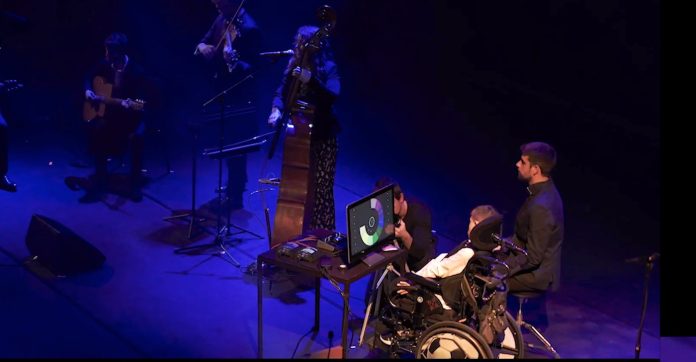
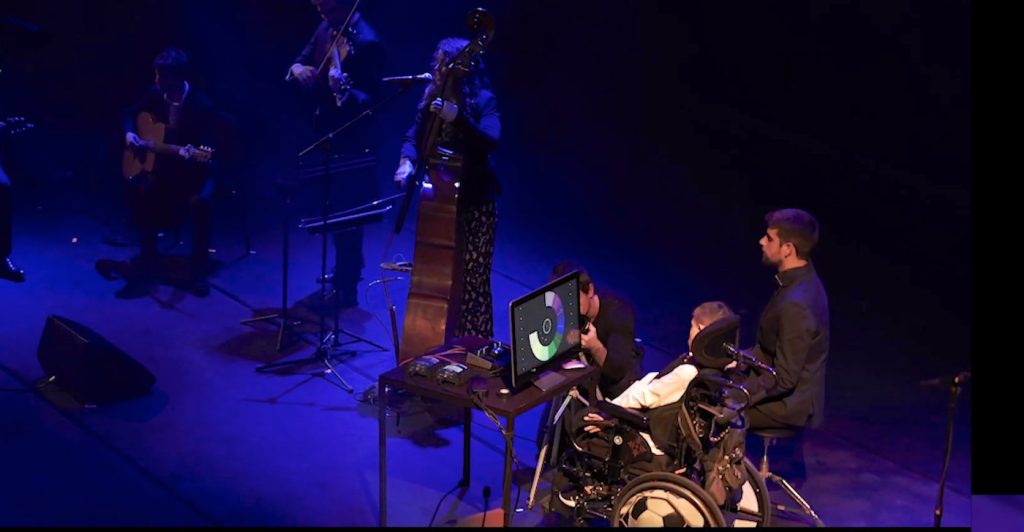
Zacharias Vamvakousis is the creative mastermind behind EyeHarp, and while he missed the opportunity to call it “EyeTunes,” his new digital musical instrument is allowing hundreds of quadriplegics to create music using only their eyes.
With a Ph.D. in music technology, and possessing expert computers skills, Vamvakousis made the field of disabled musicianship a specialty after a friend suffered a motorcycle accident which impaired his ability to play the guitar.
EyeHarp is currently in its fifth iteration, and Vamvakousis launched the EyeHarp Foundation in 2019 to try and get his instrument out to more people.
Notes appear on screen in a color-coded wheel set to pentatonic or heptatonic scales, and are selected for sonification by the user’s gaze. The same note as the one previously selected will remain on the screen for fast power riffing, or another can be chosen.
To help students learn, a visual aid in the form of a circle will drag across the screen to direct the gaze at the next correct note, but can be turned off so that disabled people can go through the rigors of practice that anyone trying to learn an instrument have to suffer.
A little like the Guitar Hero video game, EyeHarp comes with accuracy scores and other gamifying metrics, as well as an option to silence errors.
“Playing music is a process that requires studying and having music classes,” Vamvakousis tells the Christian Science Monitor. “So if we want it to reach many people, we have to reach first the music teachers.”
650 people are currently using EyeHarp, including Joel Bueno, a Spanish guy with cerebral palsy and the focus of the Christian Science Monitor feature, who wanted to play music with his older brother.
EyeHarp is a very important instrument for my life because I always wanted to play music,” says Bueno. “It is an innovative instrument; great, and very fresh.”
“We knew certain activities like playing soccer or music would be impossible for Joel,” says Ms. Bueno. “When EyeHarp appeared, we felt, my God, if we can do this we can do anything.”
(WATCH the video for this story below.)
ADD Hope and Beauty to Those News Feeds; Share This Story…
Exercising as hard as you can is the best way to alleviate symptoms of chronic anxiety without drugs or therapy, according to a new study.
Circuit training—mixing both strength and cardio exercises—eases feelings of anxiety by decreasing muscle tension and boosting endorphins, say scientists.
Every participant in the Swedish study showed improvement regardless of intensity.
But the chance of improvement in terms of anxiety symptoms increased more in the people who worked out harder.
Most participants in the treatment groups went from a baseline level of moderate-to-high anxiety to a low anxiety level after the 12-week circuit training.
Researchers studied 286 people, average age 39 years old, with chronic anxiety and compared their results with a group who received advice on physical activity according to public health recommendations.
For those who exercised at relatively low intensity, the chance of improvement in terms of anxiety symptoms rose by a factor of 3.62.
The corresponding factor for those who exercised at higher intensity was 4.88.
Both treatment groups had 60-minute training sessions three times a week, under a physical therapist’s guidance.
The sessions included both cardio and strength training. A warmup was followed by circle training around 12 stations for 45 minutes, and sessions ended with cool-down and stretching.
Members of the group that exercised at a moderate level were intended to reach some 60 per cent of their maximum heart rate—a degree of exertion rated as light or moderate.
In the group that trained more intensively, the aim was to attain 75 percent of maximum heart rate, and this degree of exertion was perceived as high.
Malin Henriksson, a doctoral student at the University of Gothenberg in Sweden, said, “There was a significant intensity trend for improvement—that is, the more intensely they exercised, the more their anxiety symptoms improved.”
Professor Maria Åberg added, “Doctors in primary care need treatments that are individualized, have few side effects, and are easy to prescribe.
“The model involving 12 weeks of physical training, regardless of intensity, represents an effective treatment that should be made available in primary health care more often for people with anxiety issues.”
Your morning coffee could be used to make a pair of sneakers, a Finnish startup reveals. Rens makes new kicks from old coffee, cutting back on waste in terms of space in landfills and methane emissions.
5,000 backers pledged over $500,000 to see the sneaker come to life, which uses up 21 cups of coffee and 6 recycled plastic bottles in each pair of shoes.
Rens come in 9 different colors, and are waterproof and super comfy. Furthermore, the shoes absorb odors, and they are designed to be slipped off and on easily.
Jesse Tran, the co-founder of Rens, wanted to do something to help reduce peoples’ carbon ‘footprint,’ while offering an everyday shoe that is functional and fashion-forward.
“As environmental awareness increases, so too does knowledge of the circular economy. Shoes made from recycled coffee grounds may seem novel to some, but we wholeheartedly believe that this is just the beginning of a revolution in garment technology and manufacturing,” said Tran.
Novel to some indeed, as 250,000 water bottles and 750,000 cups of coffee have been turned into these shoes so far. The coffee grounds are combined in a low-heat environment with recycled plastic to create a coffee yarn to spin into the shoes upper section, while recycled plastic accounts for the other components, and a milky tree sap that biodegrades creates the outer sole.
While the price is pretty steep at $119 on Amazon, they offer free shipping everywhere, a 1-year guarantee on their waterproofing technology, and a 30-day money back guarantee as well.
GNN also reported on a shoe made from sustainable material that also acts as a fast-growing pod for an apple tree. The shoe’s canvass is made containing enzymes that attract microorganisms to break down the shoe faster than normal, so even if one doesn’t plant them in the ground, they’ll still breakdown in a landfill where most shoes will not.
WALK This Apparel Straight Over to Your Besties; Share This Story…
An international team of researchers has discovered that a cell type in the central nervous system known as oligodendrocytes might have a different role in the development of multiple sclerosis (MS) than previously thought.
The findings could open for new therapeutical approaches to MS.
MS is driven by immune cells attacking oligodendrocytes and the myelin they produce, which is an insulating layer ensheathing nerve cells.
These attacks disrupt information flow in the brain and spinal cord and causes nerve damage that triggers symptoms associated with MS such as tremors and loss of gait.
Understanding which mechanisms influence the risk of MS is central to finding effective therapies. Previous genetic studies have found regions in the human genome that contain mutations (single nucleotide polymorphisms) associated with increased risk of MS.Many of these regions are localized near genes that are active in immune cells.
Open configuration of the genome
In this study, the researchers show in mice and human brain samples that oligodendrocytes and their progenitors have an open configuration of the genome near immune genes and at MS-risk associated regions.
This suggests that the MS risk mutations may have a role in the activation of nearby genes in oligodendrocytes and their progenitors, meaning they could play a more important part than previously thought in the development of MS.
“Our findings suggest that the risk for multiple sclerosis might manifest by misfunction not only of immune cells, but also of oligodendrocytes and their precursor cells,” says Gonçalo Castelo-Branco, professor at the Department of Medical Biochemistry and Biophysics, Karolinska Institutet, who conducted the study—published in Neuron—with co-first authors Mandy Meijer, a PhD student, and Eneritz Agirre, a researcher.
“These findings indicate that these cells can also be targeted for therapeutical approaches for MS, to prevent misfunction that might be caused by these mutations.”
Quote of the Day: “It is not life that matters, but the courage, fortitude and determination you bring to it.” – Muhammad Ali Jinnah (the founder of Pakistan)
Photo: by Marcelo Novais
With a new inspirational quote every day, atop the perfect photo—collected and archived on our Quotes page—why not bookmark GNN.org for a daily uplift?
When France hosts the 2024 Olympics, the plan is for Notre-Dame Cathedral to be restored to its former glory in time for the event.
A team of 35 architects, masters in historical restoration, and international NGOs armed with a billion euro in donations from around the world—including 30 million from U.S donors—are busy helping the Parisian monument rise from the ashes.
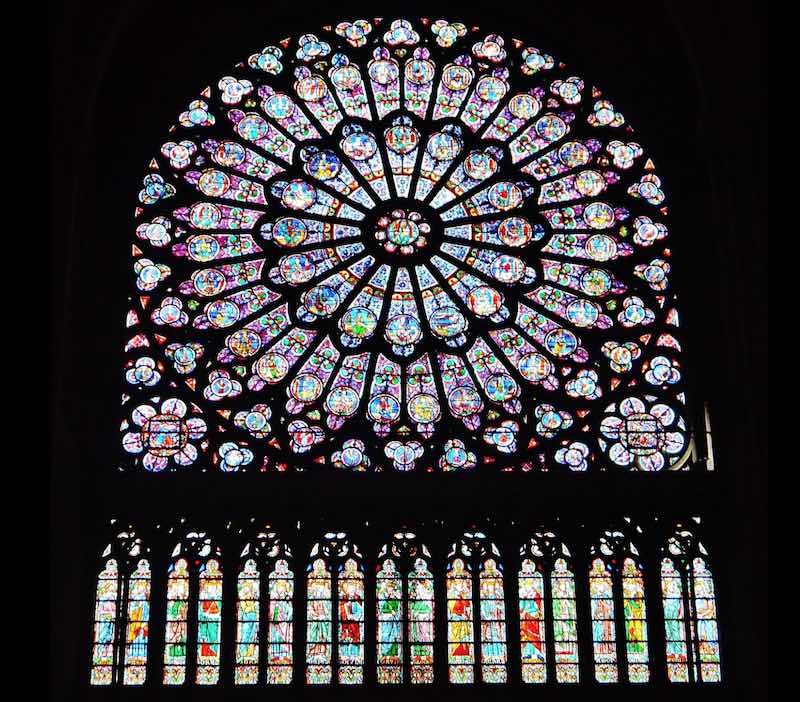
North rose stained glass windows/ Zairon; CC license
It’s been three years since fires engulfed the famous cathedral, yet even as the flames rose that night, there were signs that utter destruction could be averted. The firemen trained their hoses with tact, avoiding the enormous stained glass windows Notre Dame is known for.
Furthermore, in the days after the 800-ton spire collapsed, it was discovered that something of a miracle had occurred. While the modern altar had been crushed, the iconic Virgin of Paris, a 14th-century stone statue, stood but several feet away entirely unharmed—albeit quite covered in dust.
Luckier still, the twelve copper apostles lining the staircase to the spire’s summit had been removed four days before the fire for maintenance. The Chapel of St. Ferdinand, apart from suffering an increase in humidity, was entirely spared.
All in all, the Cathedral lost its spire, vaults, and lead ceiling, the last being a particular danger as it poured molten lead all over the architecture, but the walls survived, the treasures and art survived, and the enormous façade survived, giving more than enough for restorationists to work with in a grand revival in time for the Olympics.
When it was being built in the late 12th-to-early 13th century, Notre Dame was a real stunner, and brought many new styles to cathedral building, such as flying buttresses and pointed arches. The buttresses allowed for soaring windows and high walls. National Geographic reports that jealous Italian architects dubbed the style “Gothic,” which to be more specific means, “Visagothic”—in other words, “barbaric,” but that didn’t stop the style from spreading to Germany, Austria, Great Britain, and east as far as Ukraine.
The timber framework was clad in triangular oak trusses from ancient woodlands, the kind that barely exist anymore in France. A forestry expert named Philippe Gourmain manages forests all over the country, and Nat Geo reports that “by 11 p.m. he was on the phone with a friend at the National Forest Office, hatching a plan to collect the needed wood through donations.”
An NGO named Carpenters Without Borders are perfecting the method of constructing these trusses in the Medieval way—working with the heart of each tree in each creation. In September 2020, the non-profit reconstructed one of these trusses in front of the cathedral as a demonstration of what was to come.
In terms of the stone, the heat of the fire at 1,400°F (760°C) was enough to peel as much as four inches off some and turn it into powder.
In some of the wall stones, this caused them to crack, but experts are finding ways to repair these by injecting a paste of lime and other minerals. Those which are too damaged are up for replacement, and architects are looking to find the location of the quarries that birthed Notre Dame’s original stone, long since swallowed up by the city’s sprawl.
Many stones have remained entirely unharmed, however they are fitted in walls that were revealed to be dangerously wobbly; perhaps vulnerable to toppling in just a 56-mph wind. To prevent a secondary calamity, engineers installed huge wooden support beams to hold the walls in place until a new roof is finished.
Even the lead roof will be replaced, and will join the timber roofbeams and spire with modern fire proofing and extinguishing equipment.
The night of the blaze, President Emmanuel Macron called Notre Dame “our history, our literature, our imagination,” and vowed to rebuild it before the 2024 Olympics, a goal which galvanized progress—setting an end date reminiscent of U.S. President John F. Kennedy’s 1961 pledge to put a man on the moon by the end of the decade.
And with a budget most restoration architects could only dream of having, the cathedral should reopen with a sparkling finish, with every new, old, and ancient square inch cleaned to a shine.
(WATCH the new video below from CBS Sunday Morning—and see all the photos at National Geographic… Editor’s Note: Viewers outside the U.S. can watch the CBS video here.)
Build Up Some Positivity By Sharing The Good Parisian News…
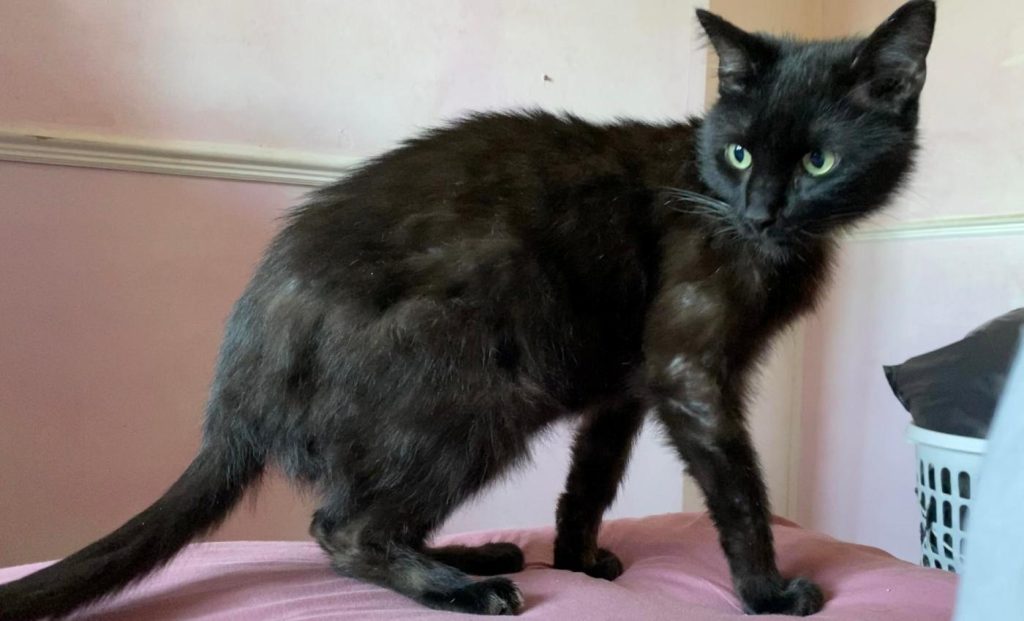
A family has been reunited with their cat that went missing eight months ago, after they recognized the feline’s distinct meow during a phone call to the vet.
40-year-old Rachael Lawrence had been on the phone to Vets4Pets regarding another cat, Torvi, who had recently had an operation when she heard a meow in the background.
The mom of three instantly knew the meow and asked about it, but was told the call belonged to a stray cat that had been brought in a week ago.
Rachael ended the call but couldn’t stop thinking about the meow and wondered if it could have belonged to her cat, Barnaby, who had gone missing eight months ago.
She called back to ask if the stray cat was black with a distinctive white blotch of fur on his back foot, but couldn’t believe it when the vet told her the description matched.
Rachael immediately rushed to the vet with photos to confirm the match.
SWNS
Rachael, who lives in Braintree, Essex, said, “I couldn’t believe what was happening. I just cried when I saw him, full on… I was sobbing, just absolutely howling. I just couldn’t believe it.
She video-called her kids and said “Look who I’ve got!”
A happy ending
During the lockdowns in 2020, Rachael had paid for an independent company to come to her home and chip Barnaby should he ever go missing.
She paid for the service and registered the chip details online, but it wasn’t until Barnaby went missing that she discovered the chip had not worked.
On being reunited with her beloved pet, Rachael asked the vet to chip Barnaby there and then.
Now all is safe and well, and the family cat is back home and enjoying lots of attention so he can return to his healthy previous self.
Rachael says, “He’s now eating really, really well so we just need to get him back to full health. I’m so happy and the kids are thrilled to have him home.
song sparrow cc license wikimedia commons Becky Matsubara from El Sobrante, California
Becky Matsubara, CC license
The tweets of a little song sparrow and its ‘bird brain’ are a lot more complex and akin to human language than anyone realized. A new study finds that male sparrows deliberately shuffle and mix their song repertoire possibly as a way to keep it interesting for their female audience.
The research, from the lab of Stephen Nowicki, Duke University professor of biology and member of the Duke Institute for Brain Sciences, and colleagues at the University of Miami, shows that singing males keep track of the order of their songs and how often each one is sung for up to 30 minutes so they can curate both their current playlist and the next one.
Song sparrows are a common songbird throughout North America, but only males sing. They use their song to defend their turf and court mates.
When wooing, song sparrows belt up to 12 different two-second songs, a repertoire that can take nearly 30 minutes to get through, since they repeat the same song several times before going on to the next track. In addition to varying the number of repeats, males also shuffle the order of their tunes each time they sing their discography. However, a big unknown had been whether males change up their song order and repeats by accident or by design.
To get some data on whether or not the birds intentionally shuffle and mix their tunes, Nowicki’s long-time collaborator William Searcy, the Maytag Professor of Ornithology in Biology at the University of Miami, loaded up the recording gear, trekked out to the backwoods of northwest Pennsylvania, set up mics pointed to the trees and patiently waited for five hours a day.
Nowicki says that fieldwork like this isn’t for everyone, “I would never use the word boring, because it’s relaxing if you like being out in the field and it’s a nice day and you’ve got your parabolic microphone and you’re pointing it at a song sparrow for hours. Some people would find that boring. I and certainly Bill would find that meditatively relaxing. The only thing that happens is sometimes your arm gets tired.”
After recording the full suite of songs from more than 30 birds, the team pored over visual spectrographs of the trills and analyzed how often each song was sung and in what order. The first clue that males keep tabs on their tweets to avoid repetition was that much like a Spotify playlist, males generally sing through their full repertoire before repeating a song.
The researchers also found that the more a sparrow sang a given song, the longer he took to get back to that song, possibly to build up hype and novelty once that song was played again. For example, if a male sang Song A 10 times in a row, he’d sing even more renditions of his other songs before returning to Song A again. Alternatively, if Song A was only warbled three times during a set, then a male song sparrow might recite a shorter rendition of the rest of his repertoire in order to return to the still novel and underplayed Song A.
Taken together, these findings demonstrate that song sparrows possess an extremely rare talent with an equally uncommon name: “long-distance dependencies.” It means that what a male song sparrow sings in the moment depends on what he sang as much as 30 minutes ago. That’s a 360 times larger memory capacity than the previous record holder, the canary, who can only juggle about five seconds worth of song information in this way.
While impressive, the implications from this work for humans are less clear. It does suggest that the order of words in human language, which is similarly impacted by long-distance dependencies may not be as unique as once thought.
It remains to be seen whether better shuffling ability gives males an advantage at finding love. Perhaps females maintain interest in a mate who mixes it up more, and are less likely to sneak off with another male. As with daytime talk shows, paternity tests are a good proxy for monogamy in birds, so counting how many chicks are sired by a female’s nest mate versus another bird in the neighborhood may be a future project for Nowicki’s team.
For now, Nowicki emphasizes it’s just speculation whether these shuffling song sparrows give Spotify a run for their money to keep a female’s interest, but does highlight our similar approach at the gym.
“You’ve got your playlist for running and the reason you’ve got that is because running is kind of boring. You know that these 10 songs are going to keep you motivated, but if you are going to run for 20 songs long, why not shuffle it so the next time you don’t hear the same songs in the same order?”
(LISTEN to the American Bird Conservancy recording of a song sparrow below.)
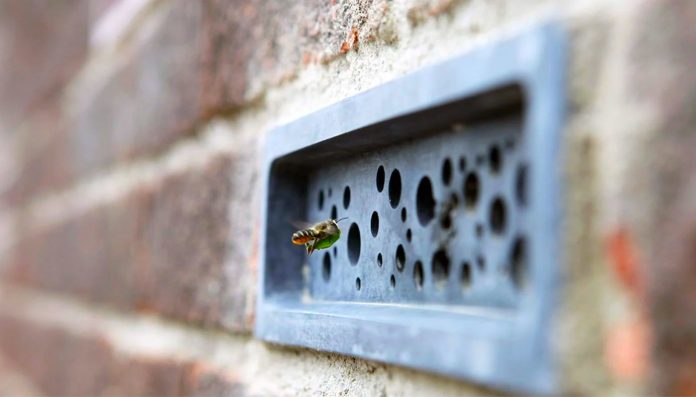
Since 250 of the 270 bee species in Britain are solitary buzzers, the city of Brighton and Hove is establishing mandates to use “bee bricks” in construction of all buildings above 5 meters to help encourage these solitary species to nest in them.
Bee bricks are what appear to be blocks of Swiss cheese but which are actually a normal building bricks created with small cavities into which bees typically nest. Old brick buildings and crumbing walls have been observed as excellent habitat for bees, and so Brighton and Hove are trying to deploy this simple invention to offer more room on the metaphorical bed for the pollinating insects.
They have also mandated “swift bricks,” which offer the same comforts of home, only for nesting swifts—tiny birds that spend a few months in the UK and then migrate to Africa. The Royal Society for the Protection of Birds is consulting with the government to identify which height on which buildings are ideal for the swift bricks.
“Bee bricks are just one of quite a number of measures that really should be in place to address biodiversity concerns that have arisen through years of neglect of the natural environment,” said Robert Nemeth, the town councilor behind the initiative, first introduced in 2019.
Not everyone agrees that these bee bricks are a good idea. Some point to a lack of evidence that the holes are large enough for a bee nest, that they have a population impact, or that the holes have to be cleaned to prevent harmful mites from residing there.
However there are studies that find bees will build nests inside these holes and cap the entry ways to hibernate. Some scientists add that the mites will disappear after one or two seasons and that they don’t need to be cleaned.
Green&Blue is an example of an eco-focused construction firm that currently offer bee bricks in the standard portfolio of building materials, as the differences in cost between normal bricks and bee/swift bricks are negligible.
Lars Chittka, a professor in sensory and behavioral ecology at Queen Mary University, told The Guardian that bees “naturally possess hygienic behavior that would allow them to mitigate the risks at least to some extent, or that they would assess the holes’ states before using them, which should to some extent counterbalance the risks that come with such long-term nesting opportunities.”
BUZZ This Hopeful New Policy Over to Other Bee Fans…
Quote of the Day: “We are often sad and suffer a lot when things change, but change and impermanence have a positive side. Thanks to impermanence, everything is possible.” – Thich Nhat Hanh (died at age 95 this week)
Photo: by Jan-Willem
With a new inspirational quote every day, atop the perfect photo—collected and archived on our Quotes page—why not bookmark GNN.org for a daily uplift?
Research at the University of Cambridge has found that breast milk cells, which were once thought to be dead or dying, are in fact alive and well.
And these live cells in human breast milk could help scientists discover breakthrough treatments for breast cancer.
The cells have given scientists clues about early indicators of the deadly disease, and will also help researchers understand how breast tissues change when women breastfeed.
Dr. Alecia-Jane Twigger, lead author of the new study said, “Breast tissue is dynamic, changing over time during puberty, pregnancy, breastfeeding, and aging.
“These living cells provide researchers with insight into a potential early indicator of future breast cancer development.”
For the study, the researchers collected milk samples from breastfeeding women and breast tissue from non-breastfeeding women.
Once they worked out the differences between the two types of cells, they learned that less than one-quarter cup (50ml), on average, contains hundreds of thousands of cells for researchers to study.
“The first time Alecia told me that she found live cells in milk I was surprised and excited about the possibilities,” said Dr Walid Khaled, of the University’s Stem Cell Institute, who was also involved in the study.
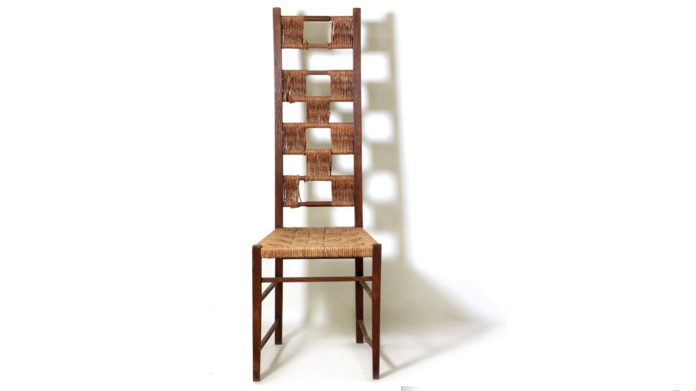
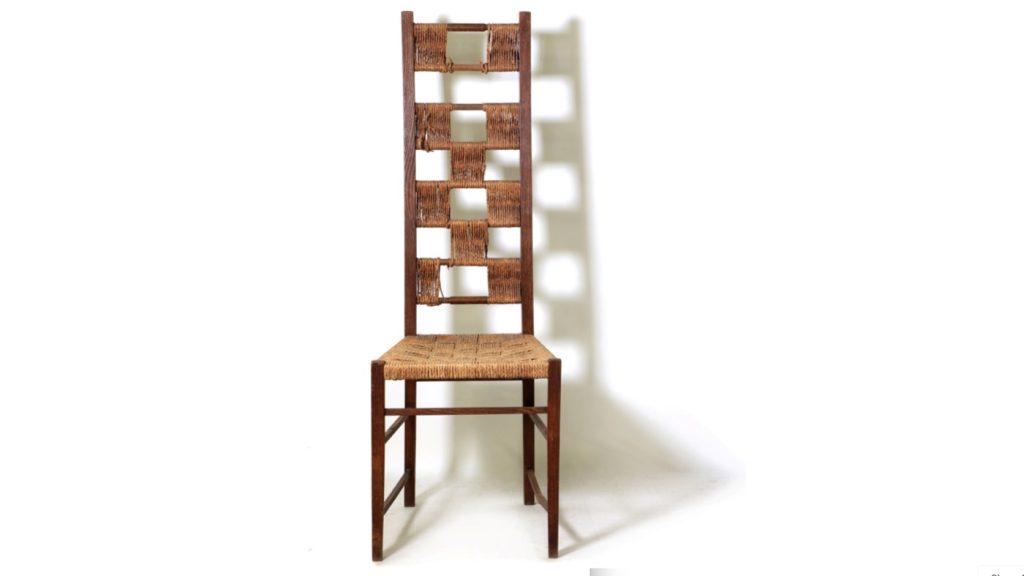
A rare wooden chair bought in a junk shop in England for £5 has sold at auction for over £16,000.
The checkerboard design turned out to be an ”important example” of Vienna Secession furniture designed by Koloman Moser, an Austrian artist who was a considerable influence on 20th-century graphic art before he died in 1918.
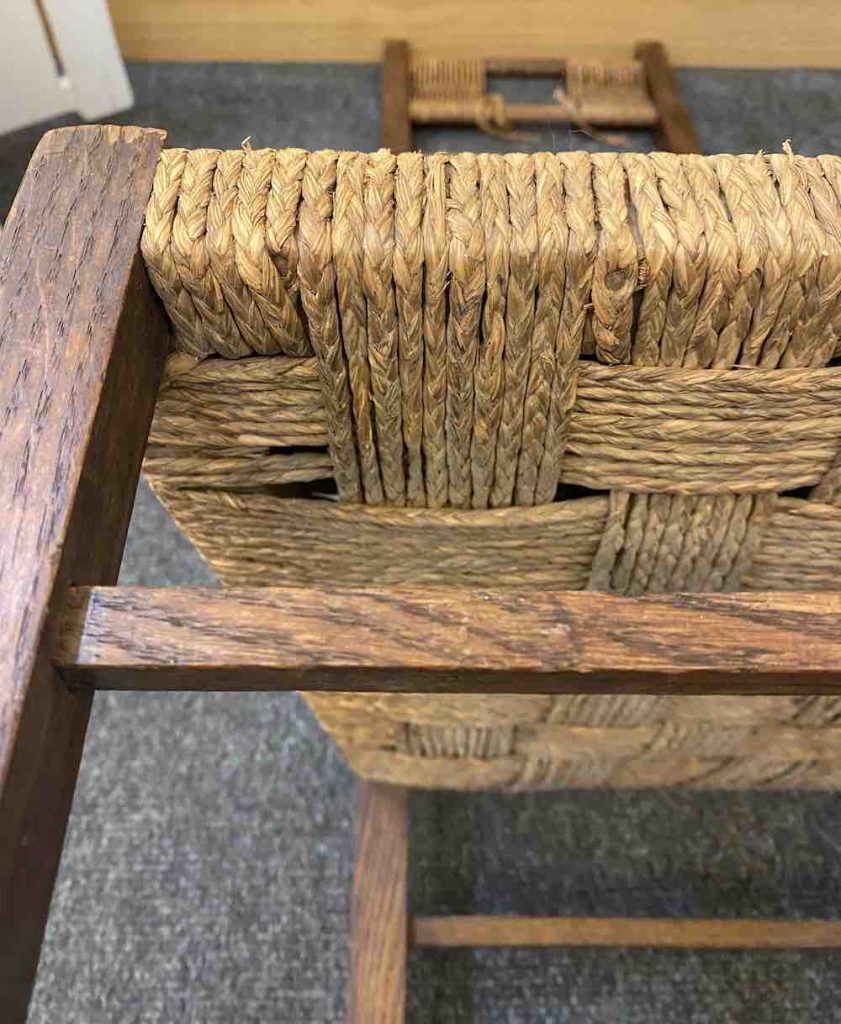
The elm and wicker highback chair, was sold in Brighton to a woman who contacted an appraiser and was stunned to discover its century-old roots in the avant-garde art school in Vienna, Austria.
Sworders auction house called it a modern reinterpretation of a traditional 18th century ladder-back chair designed in 1902.
Moser, who taught at the Vienna School of Applied Arts, also designed a wide array of graphic works, from postage stamps to magazine vignettes, fashion, stained glass windows, porcelains and ceramics, blown glass, tableware, silver, and jewelry, as well as furniture.