Michael J. Fox became globally famous after starring as Marty McFly in Back to the Future in 1985. Six years later, aged 29, he was diagnosed with Parkinson’s disease.
Since then, Fox—who is now 60 years old—has helped raise over $1.5 billion to help find a cure for the progressive nervous system disorder.
As the world’s largest nonprofit funder of Parkinson’s research, The Michael J. Fox Foundation is dedicated to accelerating a cure for Parkinson’s disease and improved therapies for those living with the condition—which affects an estimated seven to ten million people worldwide.
The Canadian actor told Variety that these therapies have already helped huge numbers of people, including himself. He said, “I enjoy life more. I’m more comfortable in my skin than I was 20 years ago. I can sit down and be calm. I couldn’t do that 25 years ago. That’s the medications, the drug cocktails and therapies that we’ve been a part of.”
At Saturday night’s fundraising gala on October 23, hosted by Denis Leary at New York City’s Jazz at the Lincoln Center, Fox performed alongside Sting. And there were many more famous faces—from actress Julianne Moore to director Spike Lee—in attendance at the A Funny Thing Happened on the Way to Cure Parkinson’s gala.
The Michael J. Fox Foundation pursues its goals through a highly targeted research program coupled with active global engagement of scientists, Parkinson’s patients, business leaders, clinical trial participants, donors, and volunteers.
Funding over $1.5 billion in research so far, the non-profit has fundamentally altered the trajectory of progress toward a cure.
Fox recently told Variety of his hope that biomarkers will be the next big stop towards treating and perhaps even preventing the disease.
“If we can find ways to identify the condition before it’s evident, if we could take a piece of hair and find it, then we could treat it prophylactically and then maybe you don’t get it,” he explained.
One thing Fox is sure of: He says he won’t stop fighting until there’s a cure.
SHARE Michael J. Fox’s Story of Real Philanthropy With Friends…
Johns Hopkins Medicine has been awarded a federal grant to explore the potential impacts of psilocybin on tobacco addiction—making it the first time in fifty years such funding has been given towards researching the therapeutic effects of a classic psychedelic.
The grant, totaling nearly $4 million, is funded by National Institute of Health’s National Institute on Drug Abuse.
Johns Hopkins Medicine will lead the multisite, three-year study in collaboration with University of Alabama at Birmingham and New York University. The study will be conducted simultaneously at the three institutions to diversify the pool of participants and increase confidence that results apply to a wide range of people who smoke.
“The historical importance of this grant is monumental,” says principal investigator Matthew Johnson, Ph.D., Susan Hill Ward Professor in Psychedelics and Consciousness in the Department of Psychiatry and Behavioral Sciences at the Johns Hopkins University School of Medicine.
“We knew it was only a matter of time before the NIH would fund this work because the data are so compelling, and because this work has demonstrated to be safe. Psilocybin does have very real risks, but these risks are squarely mitigated in controlled settings through screening, preparation, monitoring, and follow-up care.”
Over the last 20 years, there has been a growing renaissance of research with classic psychedelics, which are the pharmacological class of compounds that includes psilocybin and LSD.
These studies have been largely funded by philanthropy, resulting in impressive clinical findings for cancer-related existential distress, major depressive disorder, and substance use disorders.
Johnson initiated this line of research testing psilocybin for tobacco smoking cessation 13 years ago. A pilot study published in 2014 showed very high abstinence rates, much larger than those seen with traditional smoking cessation medications and therapies.
The current double-blind randomized trial involves psilocybin sessions as well as cognitive behavioral therapy—a type of talk therapy (psychotherapy) focused on pinpointing negative patterns of thought that can lead to behavioral and mental health problems.
The researchers suggest psilocybin might help break the addictive pattern of thoughts and behaviors that has become ingrained after years of smoking, thus helping people to quit the habit.
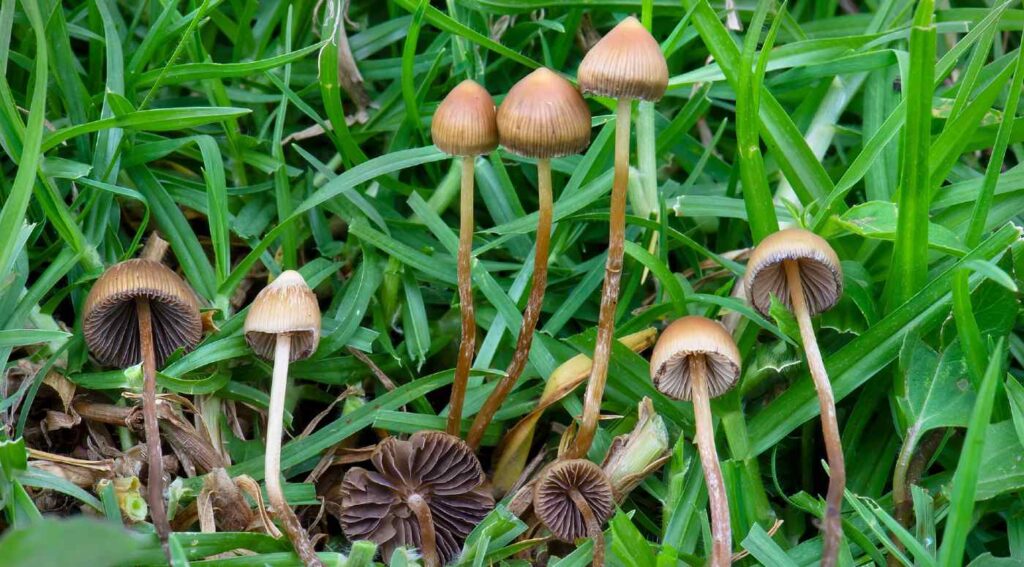
Psilocybin, a compound found in so-called magic mushrooms, produces visual and auditory illusions and profound changes in consciousness. Combined with preparation and structured support, psilocybin has shown promise for treating a range of addictions and mental health disorders.
If it could, where do you think a pet dog would take itself on a walk? Perhaps it’d make a beeline for the local butcher’s shop for a special treat, or maybe it’d head straight over to the park to chase squirrels.
Well, for one pup in Winnipeg who made her great escape from the family home—she went right to the local pet spa.
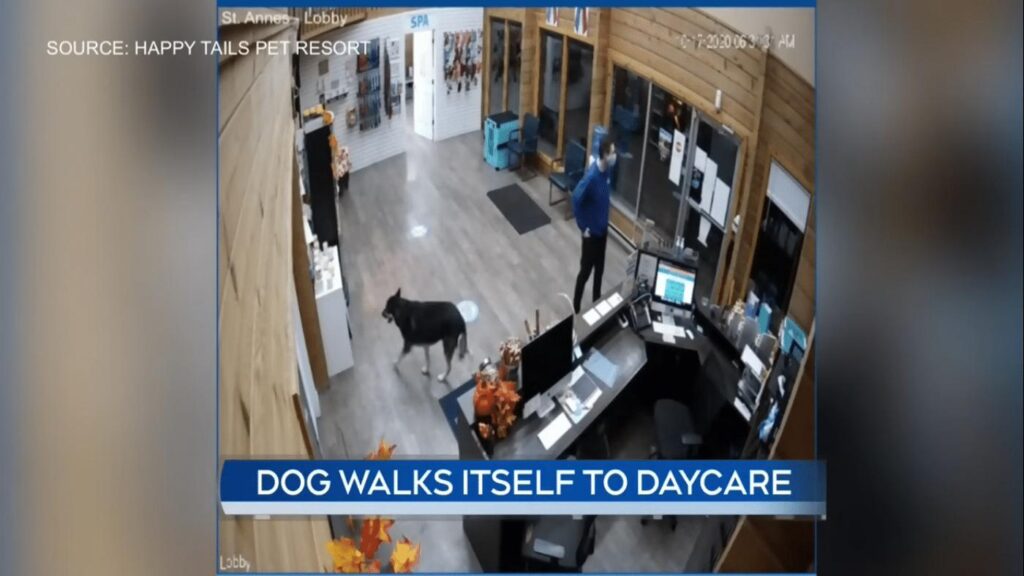
Before the pandemic, 5-year-old border-cross Gem used to visit Happy Tails Pet Resort & Spa three or four times a week. Then lockdown hit Manitoba, and her visits went down to four times a month.
So she seemingly decided to take matters into her own hands, left her fenced-in backyard before 6:30am on a Saturday morning, and went on over to the popular parlor.
Once Gem’s human family got the call from the spa to say she was thankfully safe and sound, they knew just what to do—they let her spend the day at her very favorite place.
(WATCH the fun video for this story from CTV below.)
U.S._Department_of_Energy_-_Science_-_115_057_004_(17974887118) National Ignition Facility target chamber public domain wikimedia commons (1)
Hohlraum, U.S. Department of Energy
Nuclear fusion promises unlimited renewable energy, but technological and physical challenges have not allowed humans to harness the power of the sun just yet.
Now using super-powerful lasers, there’s a chance fusion reactors could power our cities without many of the Marvel Universe-style science requirements—such as heating plasma to above 100 million Kelvin, or building multi-billion dollar facilities—that currently characterize many of the attempts to create the final innovation in energy.
Innovation requires competing ideas, and while governments and firms are unloading billions into “magnetic containment fusion” as described above, another potential method for achieving fusion has been made possible thanks to developments in the field of lasers.
In that case, when a laser beam is fired into the center of a hydrogen molecule, the hydrogen is driven into a tiny fuel pellet containing the stable eleventh isotope of a common metal called boron, known as B11. Tiny explosions looking to expand outward are instead confined inward, by the potency of the laser. The process, known as inertial confinement fusion (ICF), has several major advantages—such as readily available, non-radioactive fuel, and low infrastructure costs and footprint.
This method, called hydrogen-boron 11 fusion, or HB11, was hypothesized during the 1970s, but only became feasible when Donna Strickland and Gerard Mourou demonstrated “Chirped Pulse Amplification,” for which they won the Nobel Prize in Physics in 2018. This allowed lasers to reach 10 petawatts of power, which correlates to 10 quadrillion watts.
All that ICF needs is this kind of energy for 20 quadrillionths of a second, followed by a slightly longer laser pulse of a few nanoseconds, to trigger the total reaction needed to generate electricity, as the-recently discovered power of the “Avalanche Effect,” where reacting atomic nuclei create reactions in nearby atomic nuclei, means the laser needs to create only the first reaction.
However, unlike traditional nuclear fusion using magnetic containment, the alpha radiation created from the HB11 can be converted directly into electricity, whereas other methods of fusion use heat to power a steam turbine, requiring extra infrastructure.
How it stacks up
National Ignition Facility, U.S. Department of Energy
Taking the name of the fuel driving this process, HB11 Energy is looking to capitalize on the next decade of developments in laser technology to give a more compact, low-cost nuclear fusion option for the future of energy.
Their board includes a German-Australian theoretical physicist, Professor Heinrich Hora, now in his eighties, who masterminded the first-ever theory of ICF half a century ago. Hora and HB11 believe that the comically-large and expensive ITER project in France, costing tens of billions and involving government scientists from 35 nations, is an example of how not to do nuclear fusion.
GNN has reported on several methods of fusion nearing the commercialization phase, such as the General Fusion demonstration plant in the UK, which uses a plasma injector instead of magnets, and which costs a twentieth of what ITER—which is nowhere near commercial-scale yet—has spent.
The MIT-backed Commonwealth Fusion Systems has proven superconducting magnets are capable of sustaining a plasma—the superheated gas formed when particles overcome their magnetic resistance to each other and fuse—long enough to create more energy than it uses.
Within a decade, some places on Earth will be powered by commercial nuclear fusion, which when perfected represents the last development in energy. The more firms get involved in this effort, the faster the plants will scale up, the cheaper and more efficient methods and materials will become, and the more people will have access to it.
It may seem like science-fiction, as a nuclear fusion reactor is basically a mini-sun, but when it’s finally deployed on electric grids, humanity can leave uranium, coal, oil, and gas in the ground. We won’t need to drill for geothermal energy, or line our hills with unrecyclable wind turbines. It won’t matter if the sun isn’t shining or the wind isn’t blowing, and Fukushima will fade into a historical footnote, rather than stand as an urgent and relevant warning.
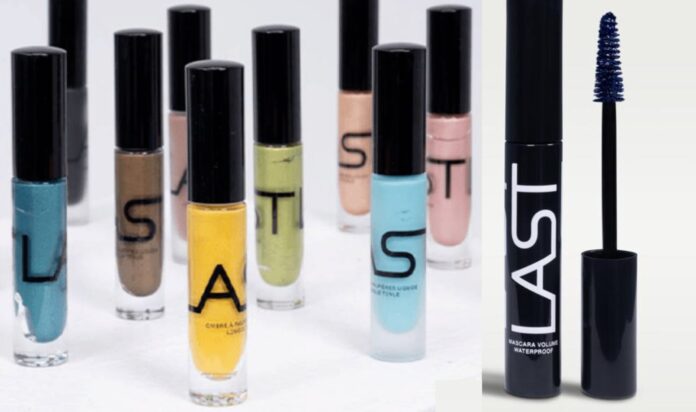
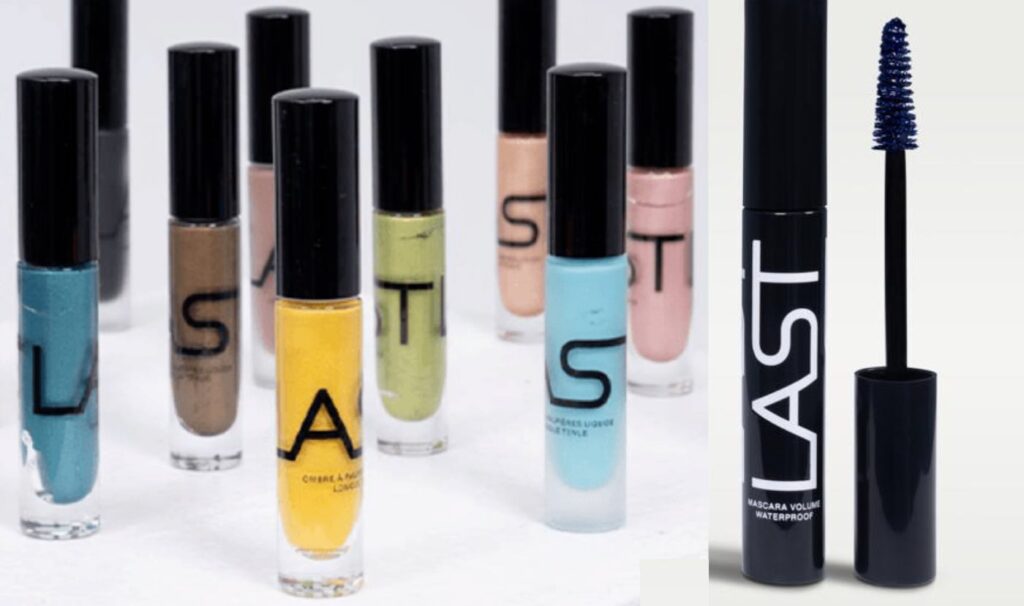
Long-wear makeup represents a quarter of the cosmetics market and is valued at around $12 billion. Its vital ingredient, isododecane, can be synthesized from plants—albeit at around 100x the cost when compared with crude oils.
Fortunately for Marc Delcourt of Global Bioenergies, a company looking to utilize isododecane for greener jet fuel, L’Oréal—the largest cosmetics manufacturer in the world—also had a need for the chemical for their own efforts to reduce fossil fuel use in the makeup industry.
“Cosmetics will lead the environmental transition because it’s the first oil-based sector that will completely get rid of oil,” Delcourt told Bloomberg. “For us, it’s the starting point, for years, people had to choose between products that were of natural origin and products that perform well.”
The products are 90% plant-based and made with vegetable waxes and olive oil derivatives along with isododecane; they come in recycled plastic and cardboard packaging, and in glass and aluminum cases.
While Delcourt still has dreams of green aviation, he plans to expand his production of plant-based isododecane to several dozen tons per year—with the aim of selling it mostly to cosmetic companies.
“Today, choosing naturally sourced products is a radical act of support for the environment,” Delcourt stated, during the launch announcement of the lipstick line. “Our process has found its first application in the cosmetics industry, and its contribution to the environmental transition will only grow in future as it impacts entire segments of the materials and fuels industries.”
Quote of the Day: “The meaning of life is to find your gift. The purpose of life is to give it away.” – Pablo Picasso (born 140 years ago)
Photo: by Benjamin Davies
With a new inspirational quote every day, atop the perfect photo—collected and archived on our Quotes page—why not bookmark GNN.org for a daily uplift?
Written by Matthew Bennett and Sally Christine Reynolds at Bournemouth University. This article is republished from The Conversation under a Creative Commons license. The research was published in Science Bulletin.
Fossilized footprints, and more rarely, hand prints, can be found around the world; left as people went about their daily business, preserved by freak acts of geological preservation.
In new research our international team have discovered ancient hand and footprints high on the Tibetan plateau made by children.
The team argues that these traces represent the earliest example of parietal art. Parietal art is paintings, drawings, and engravings on rock surfaces—the sort of thing you would find in a cave, although the Tibetan traces are not in a cave.
The limestone on which the traces were imprinted dates to between around 169,000 and 226,000 BC. This would make the site the earliest currently known example of this type of art in the world. It would provide the earliest evidence for humans and other members of the Homo genus (hominins) on the high Tibetan plateau.
This discovery also adds to the research that identifies children as some of the earliest artists.
Hand shapes are commonly found in prehistoric caves. Usually the hand is used as a stencil, with pigment spread around the edge of the hand. The caves at Sulawesi, Indonesia or at El Castillo in Spain have some fine examples and were the oldest known to date.
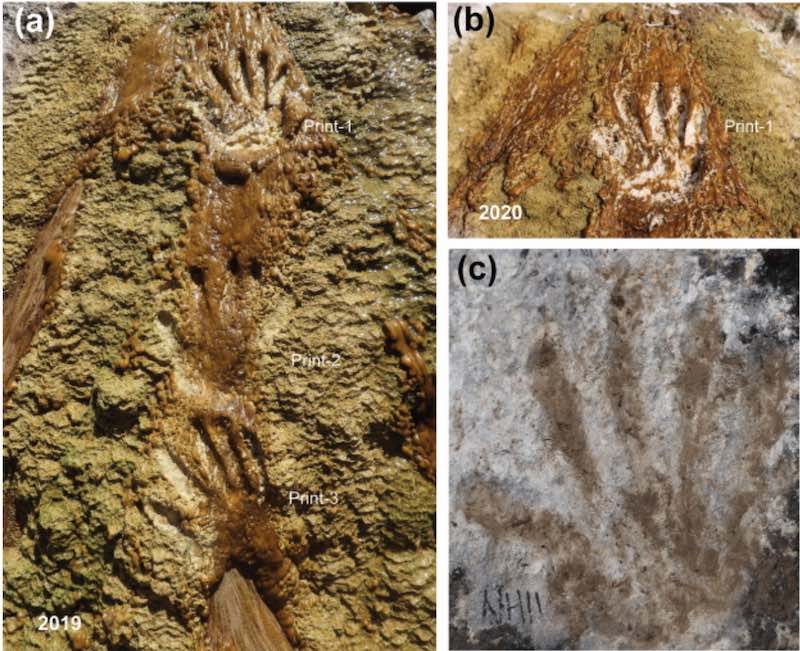
At Quesang, high on the Tibetan plateau, our team led by David Zhang from Guangzhou University found hand and footprints preserved in travertine from a hot spring. Travertine is freshwater limestone, often used as bathroom tiles, and in this case deposited from hot waters fed by geothermal heat.
The limescale that accumulates in your kettle provides an analogy for this. When soft, the travertine takes an impression, but then hardens to rock.
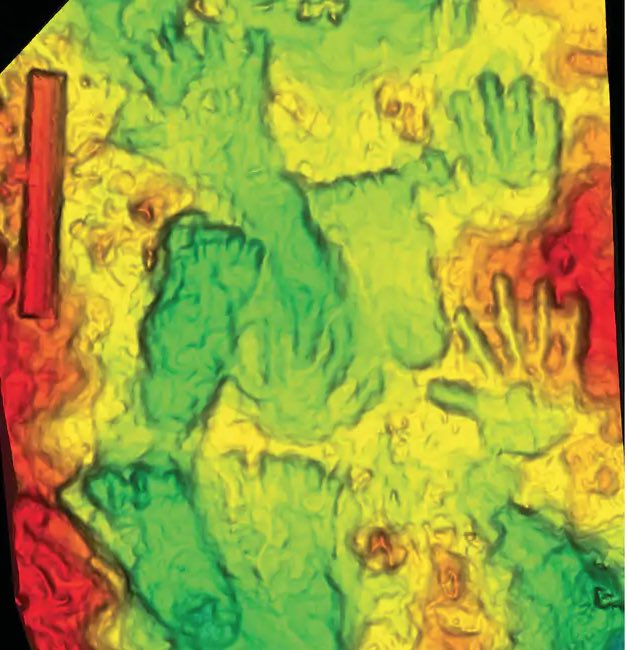
Five hand prints and five footprints appear to have been carefully placed, probably by two children judging by the size of the traces. The prints were not left during normal walking and appear to have been deliberately placed. The child making the footprints was probably around seven years old and the other, who made the hand prints, slightly older, at 12 years of age. The age estimates are based on the size of the traces with reference to modern growth curves.
Were the children casually playing in the mud while other members of the group took the waters at the hot spring? We do not know, but the team argues that what they left is a work of art, or prehistoric graffiti if you prefer.
The team dated the travertine using a radiometric method based on the decay of uranium found in the limestone. The age is surprising, with the deposit dating to between around 169,000 and 226,000 years ago. This goes back to the middle Pleistocene (mid-Ice Age) and provides evidence for the earliest humans (or their direct ancestors) occupation on the Tibetan plateau.
This is quite incredible when you think of the high altitude involved; Quesang has an elevation of over 4,200 meters and would have been cold even during an interglacial period. The age also makes this the oldest example of parietal art in the world.
Were the children members of our own species, Homo sapiens, or members of another extinct archaic human species? There is nothing in the tracks to resolve this question. They may have been an enigmatic group of archaic humans referred to as the Denisovans, given other recent skeletal finds of this species on the plateau.
Bournemouth University study
Should we consider this panel of prints as art? Well, that depends on one’s definition, but the marks were deliberately made, and have a clear composition. Whatever these humble traces represent, they clearly evoke images of children at high elevations, enjoying a spot of creative play.
It’s no secret crows are smart. They’re notorious for frustrating attempts to keep them from tearing into garbage cans; more telling, however, is that they are one of the few animals known to make tools.
But would you believe doing it actually makes them happy?
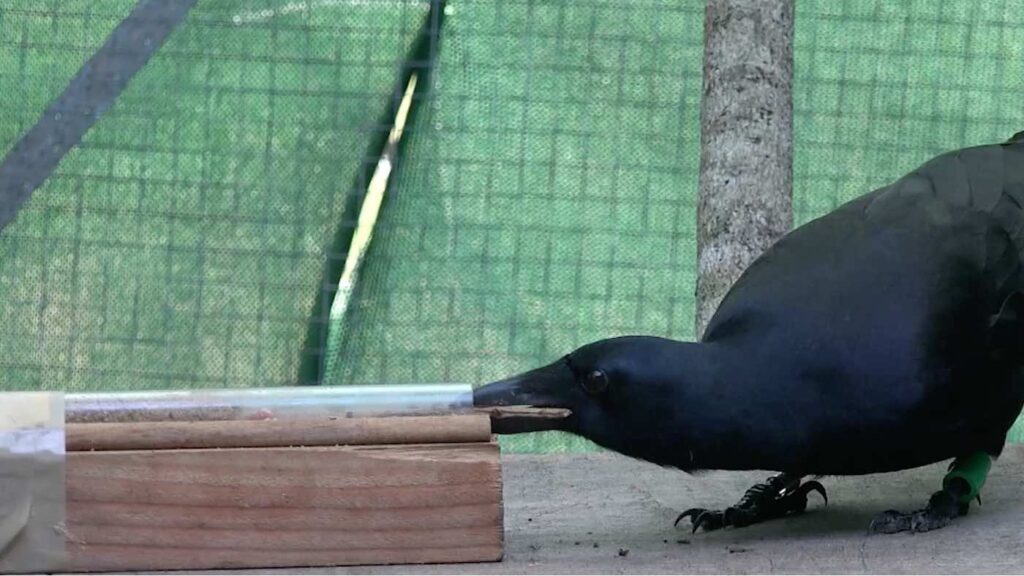
That’s the finding of a recent paper, co-authored by Dakota McCoy, a graduate student working in the lab of David Haig, George Putnam Professor of Biology, who found that crows behaved more optimistically after using tools. The study is described in an Aug. 19 paper in Current Biology.
“What this suggests is that, just the same way we enjoy something like solving a crossword, they actually enjoyed simply using a tool,” McCoy said. “I think it suggests there’s a lot more going on in that little head than we think. They get satisfaction out of doing things they’re good at, have trained for their whole lives, and that they use frequently.”
While tool use in the animal kingdom is not unheard of — chimps use sticks to “fish” for termites and other animals use rocks to smash open nuts or shells — New Caledonian crows stand out for manufacturing multiple complex tools and regularly refining their designs.
But how can making and using tools make an animal feel good? A clue, McCoy said, lies in looking at how complex actions make humans feel.
“I think we tend to under-anthropomorphize animals, especially really intelligent animals,” she said. “It’s not that they are machines, and we are feeling beings. Clearly, animals also have emotional reactions and moods.”
And, one of those emotions is the pleasure of accomplishment.
“One potential answer for why tool use evolved is because crows are used to picking up objects and caching them,” she said. “They actually love, when you’re experimenting with them, to pick up your equipment and cache it way up high where you can’t get it.”
Once crows started using tools, she said, the fact that it made them feel good encouraged them to keep at it, refining and developing the behavior further.
“Maybe crows are just like humans and other primates in that, when they’re doing these complicated actions, they’re reinforced not just by getting a prize out of it, but because they actually enjoy the process itself,” she said.
To understand how crows felt about using tools, McCoy and colleagues devised an experiment to test how optimistic the birds were feeling.
“We do have subtle ways to test mood, and the classic paradigm is a glass half filled with water,” she said. “Someone who is feeling pessimistic will interpret it as half empty, while an optimistic person will see it as half full.”
For the crows, researchers conceived a similar test.
In the lab, crows were trained using a small box. When placed on the left side of a table, the box always contained a large reward — three pieces of meat. On the right side, it contained just a scrap of meat, a far smaller reward.
Once the crows understood the difference, researchers placed the box in the middle of the table. If the birds quickly came to investigate that ambiguous box, it suggested they were optimistic that they would find a large reward. If they waited or didn’t visit the box at all, it suggested they were more pessimistic.
To test how they felt about tool use, the crows were then put through a series of tests over a number of days — one in which they had to use a tool to extract a piece of meat from a box and another in which the meat was readily available.
“But we thought that it might not be that tool use puts them in a good mood, it could be just that they had to work harder,” McCoy said. “So we [added] two more conditions. In one the meat was right on the table so there was no effort involved, and in another “effortful” condition, they had to fly around to the four corners of the room to retrieve each piece of meat.”
The results, she said, showed that, following tool use, the birds were much quicker to approach the ambiguous box, and much less enthusiastic after the effortful test compared to the easy test.
“They enjoyed the easy condition, that was no surprise,” McCoy said. “But the surprise was that, clearly, they don’t just like tool use because it’s difficult. We controlled for difficulty and that wasn’t what was motivating their interest — there is something specific about tool use they’re enjoying.”
While it’s impossible to say for certain exactly what the birds were feeling, McCoy said her study is far from the first to attempt to gauge what effects animals’ moods.
“Many people have done studies about what kind of mood animals are in … but the research to date has almost exclusively been on captive animals, and what kind of circumstantial changes can improve their mood,” she said. “Many people have shown that animals’ mood improves if you do something like give them a larger cage, but this study shows that animals also have a better mood if you give them complex, fun tasks to do.”
McCoy, who is a student in the Graduate School of Arts and Sciences, said that she hopes to see the findings of the study applied to improving the lives of animals in captivity.
(WATCH the Harvard video below – article originally published in Harvard Gazette)
“Our findings suggest that one way to improve the welfare of captive animals is to give them complex, species-specific enrichment where they’re using skills they have … to achieve goals instead of just receiving passive enrichment,” she said. “We’re far from a world where we don’t have animals in captivity … but they could live a much more enriching life if they’re housed socially and given fun tasks to solve.”
SHARE the Fascinating Study With Your Flock on Social Media…
Whatever happened to the Yukon to Yellowstone (Y2Y) wildlife corridor dream that was splashed across headlines years ago?
Conservationists’ dreams of a wildlife corridor stretching from the Yukon to Yellowstone (Y2Y) where “charismatic megafauna” like bears, wolves, and caribou can roam freely and have enough continuous undisturbed habitat to thrive is slowly becoming a reality thanks to the dogged determination of thousands of concerned individuals and over 450 partner groups behind them.
Since the project’s inception in 1993, green groups, indigenous groups and government agencies have worked together to preserve more than a half million square miles of the intermountain west for this project, with hopes of adding much more.
In August 2021, they further advanced the corridor in Montana securing a key habitat connection for grizzly bears after the Y2Y initiative purchased 80 acres (32 hectares) near the confluence of the Bull River and Clark Fork River.
The core of Y2Y is within the Rocky Mountains in Canada in British Columbia, but it expands into the Greater Yellowstone Ecosystem, and the Columbia Mountains of eastern B.C., as well.
Unlike other animal crossings, Y2Y is a large area across mountain ranges without a hard boundary. Since natural ecosystems are entirely interconnected, conservationists have drawn soft, flexible boundaries in conjunction with evolving patterns of seasonal movements by wildlife.
These untouched areas serve as safe highways for the diverse range of species to feed, breed and migrate without outside interference.
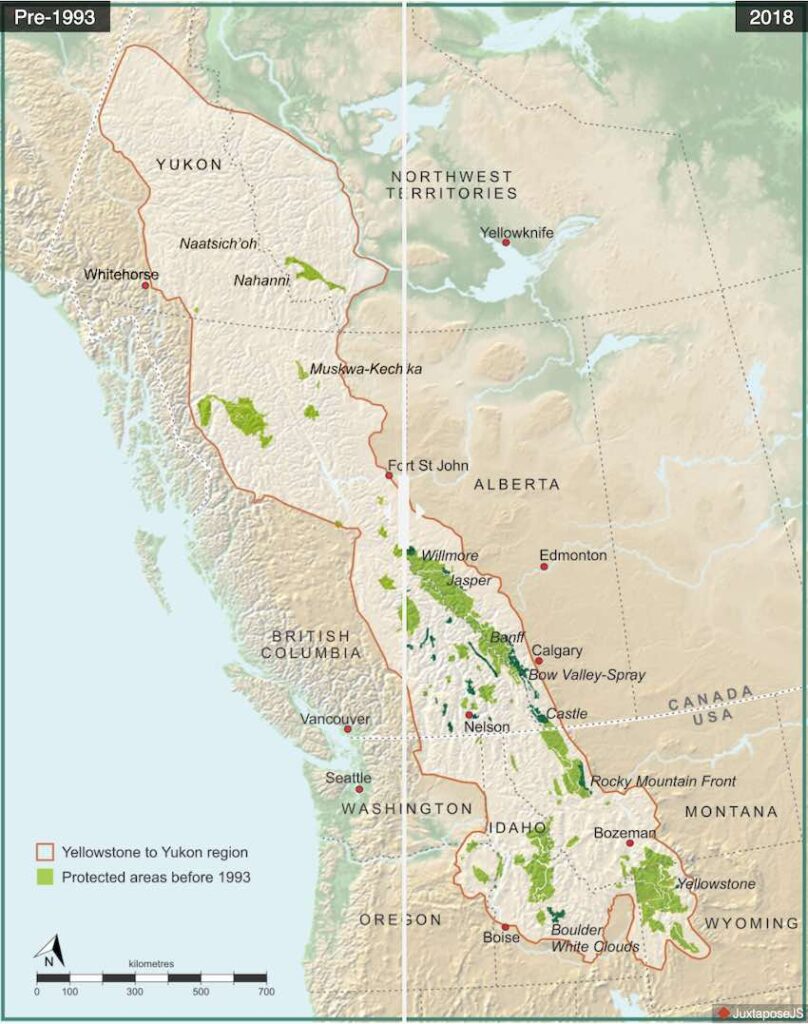
The green area below shows preserved land before 1993, while the large 2000-mile swath encircled shows the Y2Y corridor in 2018.
Y2Y.net
In other sections of the Y2Y region where development has been more commonplace, partner groups have worked to create wildlife-friendly infrastructure to facilitate crossings of roads and other man-made obstructions. They have also set up tracking mechanisms for some species to monitor their success.
“In 2020 alone, thanks to the generosity of our donors and funders, we spent more than $3.49 million—driven by 26 staff, but working with our many partners—to advance conservation in the Yellowstone to Yukon region, including 13 wildlife overpasses and underpasses underway that will support connectivity across roads,” says a Y2Y annual assessment.
Banff National Park overpass wildlife crossing-by Allie Banting for Parks Canada-2014
Meanwhile, other partners have been focused on acquiring real estate parcels that can be left in a natural state or converted back from development to be included in the animal-friendly network of corridors.
In the Y2Y region, conservationists and scientists have focused on the preservation of grizzly bears—an “umbrella” species. Since grizzly bears roam such an expansive area of land in search of food and mates, they play a central role in maintaining the healthy functioning of an ecosystem. Given the population declines and genetic diversity loss of the region, conservationists have especially pushed for wildlife corridors to alleviate the habitat loss and fragmentation among grizzly bears.
Bighorn sheep populations have declined since mountains underwent development. – Philipp Haupt, CC license
Achieving the Y2Y vision has not come easy. Much of the region stretches across private lands. To accommodate both humans and wildlife, conservationists have worked with private landowners to ensure safe passage for wildlife without interrupting human lifestyles.
Many oil, gas and mining projects also require access roads, which often cut through natural landscapes and degrade wildlife habitat.
While the Y2Y mission has come far in preserving the natural environments from Yellowstone to Yukon, the initiative calls for further collaboration from diverse communities.
Whether it’s volunteering from local groups or partnerships with larger organizations, Y2Y aims to continue its vision of harmonizing a wild and wooly 2,000-mile swath of the North American West.
HELP This Good News Travel Widely –Share it on Social Media…
With editorial help from EarthTalk® and Emagazine.com, produced by Roddy Scheer & Doug Moss for the 501(c)3 nonprofit EarthTalk. To donate, visit Earthtalk.org. Send questions to [email protected].
After Chris Person lost his wallet outside a Publix store, he searched the area multiple times. After his 72-year-old mother scoured the parking lot and looked at surveillance footage with the store manager, but came up empty, he’d completely given up hope.
The wallet contained his drivers license, Covid vaccination card, credit cards, plenty of cash, and even a gift card that could easily be redeemed by anyone.
The next day three strangers showed up to his home in Palmetto Bay, Florida.
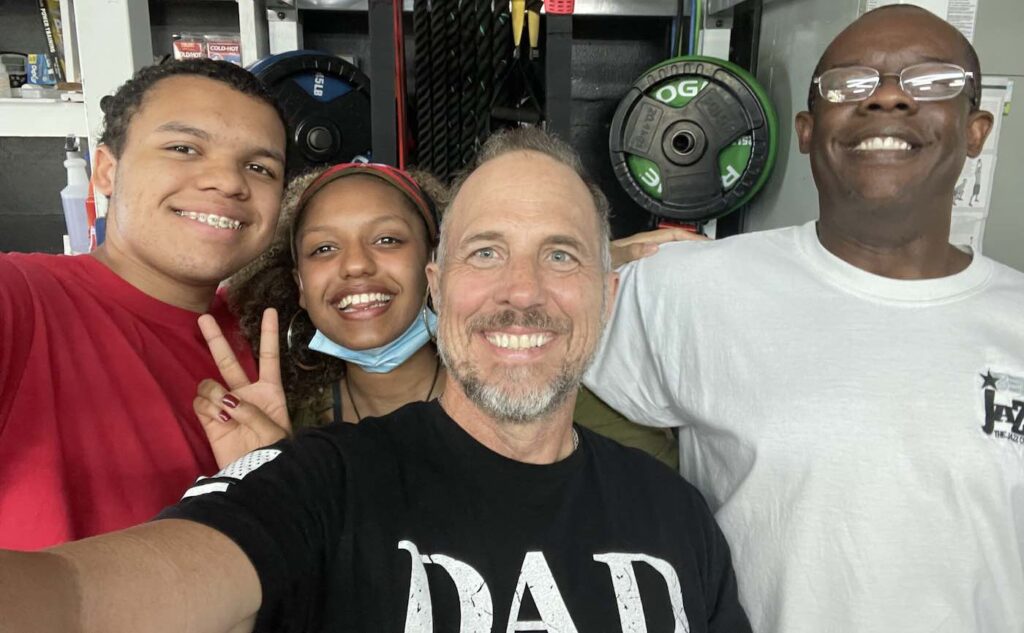
15-year-old Lucas Perry had found the wallet in the parking lot, which had fallen out of Chris’s pocket, and with his father and sister decided to drive to Chris’s address to personally hand deliver it.
Chris became impressed with the values that Eduardo Perry had obviously instilled in his children. Especially because every dollar of the more than $100 in cash was still in the wallet.
“They all refused my offer to keep the money that was inside it, they only wanted to do the right thing—and they did,” Chris told GNN. “Eduardo was adamant about teaching his children the impact of a selfless, honest act, but I have a strong feeling these two teens would have done it anyway.”
Chris was also impressed by the respectful attitude of Lucas and his 17-year-old sister Maya.
While they talked about everything from Jimi Hendrix to Lucas’ artwork, the two teens “never even looked down at their phones”.
“We found we had so many commonalities between us—especially a love of classic rock,”
“I’m fortunate to know this wonderful, gifted, and talented family—I know that because we spent a good amount of time listening to Maya play my guitar and sing Let it Be with her beautiful sweet voice.”
The following weekend Chris and his wife got a new TV and decided they didn’t need their souped-up surround sound system anymore. Chris remembered Eduardo is very much into quality audio, so he called him up and asked if he wanted it—and he was thrilled by the offer.
“So, interestingly, one Sunday they are dropping off my wallet at my house, and the next Sunday they are back at my house to pick up a surround sound system,” Chris exclaimed. “I can’t wait to see what the future holds.”
“I made three new friends today. What an amazing experience!”
Quote of the Day: “It does not matter how slowly you go so long as you do not stop.” – Andy Warhol
Photo: by Andre Ouellet
With a new inspirational quote every day, atop the perfect photo—collected and archived on our Quotes page—why not bookmark GNN.org for a daily uplift?
Replacing petroleum-based aviation fuel with a sustainable alternative derived from a type of mustard plant can reduce carbon emissions by up to 68%, according to new research from a University of Georgia scientist.
By Forest and Kim Starr, CC license
Puneet Dwivedi led a team that studied the break-even price and lifetime carbon emissions of a sustainable aviation fuel derived from Brassica carinata, a non-edible oilseed crop.
“If we can provide suitable economic incentives along the supply chain, we could potentially produce carinata-based SAF (sustainable aviation fuel),” said Dwivedi, associate professor in the Warnell School of Forestry and Natural Resources.
It is estimated that the aviation industry emits 2.5% of all carbon dioxide emissions nationwide and is responsible for 3.5% of global warming. Carinata-based fuel could help reduce the carbon footprint of the aviation sector while creating economic opportunities across the southern U.S., where the plant would grow well, says Dwivedi.
Dwivedi’s findings come at an opportune time. In September, President Joe Biden proposed a sustainable fuel tax credit which would bring federal agencies together to scale up the production of SAF nationwide.
The proposed tax credit requires a 50% reduction in life cycle carbon emissions—a standard that carinata exceeds, according to the team’s findings, published in GCB Bioenergy.
The price for producing SAF from oil derived from carinata ranged from $0.12 per liter on the low end to $1.28 per liter, based on existing economic and market incentives. The price for petroleum-based aviation fuel was $0.50 per liter—higher than carinata-based SAF when current economic incentives were included in the analysis.
Dwivedi is part of the Southeast Partnership for Advanced Renewables from Carinata, or SPARC, a $15 million project funded by the U.S. Department of Agriculture’s National Institute of Food and Agriculture. Through SPARC, researchers have spent the past four years investigating how to grow carinata in the Southeast, exploring questions related to optimum genetics and best practices for the highest crop and oil yield. With those answers in place, Dwivedi is confident.
“In the South, we can grow carinata as a winter crop,” he said in a UG news report. “Since carinata is grown in the ‘off’ season it does not compete with other food crops, and it does not trigger food versus fuel issues. Additionally, growing carinata provides all the cover-crop benefits related to water quality, soil health, biodiversity, and pollination.”
The missing piece of the puzzle, according to Dwivedi, is the lack of local infrastructure for crushing the seed and processing the oil into SAF. His current research focuses on modeling the economic and environmental feasibility of producing and consuming carinata-based SAF across Georgia, Alabama and Florida by taking a supply-chain perspective.
“Our results would be especially relevant to the state of Georgia, which is the sixth-largest consumer of conventional aviation fuel in the country, hosts the busiest airport in the world, and is home to Delta, a leading global airline company,” he added. “Carinata has the potential to be a win-win situation for our rural areas, the aviation industry, and most importantly, climate change.”
FLY This Progress to Green Friends on Social Media…
Can’t get motivated to rake those leaves off your lawn? Now you have the ultimate excuse to avoid that chore: you’d be saving the environment, as well as making your lawn more healthy.
The National Wildlife Federation says leaving leaves where they fall helps critters in your yard and contributes to a healthy ecosystem.
If you are mostly concerned about lawn health, the best thing to do is just run a mulching lawn mower right over the leaves. The smaller bits act as fertilizer. If you don’t like how that looks, attach a bagger to your mower and dump the leaf mulch on your garden beds. It looks amazing and will fertilize the beds.
Toads, turtles, and other animals eat the fallen leaves and birds use them to build nests. Caterpillars ride out the winter beneath the moist blankets to emerge as butterflies or moths in the spring.
Letting your leaves fall where they may also reduces greenhouse gases in the atmosphere. The EPA estimates 33 million tons are dumped into landfills every autumn, accounting for 13% of America’s solid waste.
Buried underground without oxygen to help them decompose naturally, leaves will turn into methane gas that slowly leaks into the air.
You can also keep leaves out of the landfill by composting them at home in a composter or pit.
Another benefit: if you avoid raking in the fall, you can avoid even more yard work in the spring, say some landscapers. That’s because leaves become a natural fertilizer when using a mulching mower to break them down—and those nutrients may cut down on pesky weeds.
(WATCH a video below…)
Plant Some Positivity: Click To Share (Photo by trpnblies7, CC)
FREE WILL ASTROLOGY – Week beginning October 22, 2021
Copyright by Rob Brezsny, FreeWillAstrology.com
SCORPIO (Oct. 23-Nov. 21):
Nobel Prize-winning poet Odysseus Elytis was speaking like a consummate Scorpio when he said, “What I love is always being born. What I love is beginning always.” Like most Scorpios, he knew an essential secret about how to ensure he could enjoy that intense rhythm: He had to be skilled in the art of metaphorical death. How else could he be born again and again? Every time he rose up anew into the world like a beginner, it was because he had shed old ideas, past obsessions, and worn-out tricks. I trust you’ve been attending to this transformative work in the past few weeks, Scorpio. Ready to be born again? Ready to begin anew? To achieve maximum renaissance, get rid of a few more things.
SAGITTARIUS (Nov. 22-Dec. 21):
“I haven’t had enough sleep for years,” author Franz Kafka (1883–1924) confessed to a friend in 1913. I think it showed in his work, which was brilliant but gaunt and haunted. He wrote the kinds of stories that would be written by a person who was not only sleep-deprived but dream-deprived. The anxiety he might have purged from his system through sleep instead spilled out into the writing he did in waking life. Anyway, I’m hoping you will make Kafka your anti-role model as you catch up on all the sleep you’ve missed out on. The coming weeks will be a fantastic time to fall in love with the odd, unpredictable, regenerative stories that well up from your subconscious depths while you’re lying in bed at night.
CAPRICORN (Dec. 22-Jan. 19):
“The reason life works at all is that not everyone in your tribe is nuts on the same day,” writes author Anne Lamott. I will add that on rare occasions, virtually everyone in your tribe is functioning at high levels of competency and confidence and compassion. According to my analysis, now is one of those times. That’s why I encourage you to take extraordinary measures to marshal your tribe’s creative, constructive efforts. I really believe that together you can collaborate to generate wonders and marvels that aren’t normally achievable. Group synergy is potentially at a peak—and will be fully activated if you help lead the way.
AQUARIUS (Jan. 20-Feb. 18):
I believe your plan for the rest of 2021 should borrow from the mini-manifesto that Aquarian author Virginia Woolf formulated at age 51: “I will go on adventuring, changing, opening my mind and my eyes, refusing to be stamped and stereotyped. The thing is to free one’s self: to let it find its dimensions, not be impeded.” Does that sound like fun, Aquarius? It should be—although it may require you to overcome temptations to retreat into excess comfort and inertia.
PISCES (Feb. 19-March 20):
“Anyone who isn’t embarrassed of who they were last year probably isn’t learning enough,” writes author and philosopher Alain de Botton. That’s way too extreme a statement for my taste. But I agree with the gist of his comment. If we are not constantly outgrowing who we are, we are not sufficiently alert and alive. Luckily for you, Pisces, you are now in a phase of rapid ripening. At least you should be. The cosmos is conspiring to help you learn how to become a more vibrant and authentic version of yourself. Please cooperate! Seek all available updates.
ARIES (March 21-April 19):
Even the wisest among us are susceptible to being fascinated by our emotional pain. Even those of us who do a lot of inner work may be captivated and entranced by frustrations and vexations and irritants. Our knotty problems make us interesting, even attractive! They shape our self-image. No wonder we sometimes are “intensely, even passionately, attached to suffering,” in the words of author Fyodor Dostoevsky. That’s the bad news. The good news, Aries, is that in the coming weeks, you will have extra power to divest yourself of sadness and distress and anxiety that you no longer need. I recommend you choose a few outmoded sources of unhappiness and enact a ritual to purge them.
TAURUS (April 20-May 20):
In Norway, you don’t call your romantic partner “boyfriend” or “girlfriend.” You say kjaereste, which is translated as “dearest.” In Sweden, you refer to your lover as älskling, meaning “my beloved one.” How about Finland? One term the Finns use for the person they love is kulta, which means gold. I hope you’ll be inspired by these words to experiment with new nicknames and titles for the allies you care for. It’s a favorable time to reinvent the images you project onto each other. I hope you will refine your assumptions about each other and upgrade your hopes for each other. Be playful and have fun as you enhance your empathy.
GEMINI (May 21-June 20):
The band Creedence Clearwater Revival, led by Gemini musician John Fogerty, achieved tremendous success with their rollicking sound and socially conscious lyrics. They sold 33 million records worldwide. During 1970, they were the best-selling band on the planet, exceeding even the Beatles. And yet, the band endured for just four years. I foresee the possibility of a comparable phenomenon in your life during the coming months. Something that may not last forever will ultimately generate potent, long-term benefits. What might it be? Meditate on the possibility. Be alert for its coming. Create the conditions necessary for it to thrive.
CANCER (June 21-July 22):
Cancerian philosopher Jean-Jacques Rousseau wrote, “I am unlike anyone I have ever met. I will even venture to say that I am like no one in the whole world. I may be no better, but at least I am different.” I urge you to make that your own affirmation in the coming weeks. It’s high time to boldly claim how utterly unique you are—to be full of reasonable pride about the fact that you have special qualities that no one in history has ever had. Bonus: The cosmos is also granting you permission to brag more than usual about your humility and sensitivity, as well as about your other fine qualities.
LEO (July 23-Aug. 22):
Nigerian poet Ijeoma Umebinyuo writes, “I will always want myself. Always. Darling, I wrote myself a love poem two nights ago. I am a woman who grows flowers between her teeth. I dance myself out of pain. This wanting of myself gets stronger with age. I host myself to myself. I am whole.” I recommend you adopt Umebinyuo’s attitude as you upgrade your relationship with yourself during the coming weeks. It’s time for you to pledge to give yourself everything you wish a lover would offer you. You’re ready to claim more of your birthright as an ingenious, diligent self-nurturer.
VIRGO (Aug. 23-Sept. 22):
As author David Brooks reminds us, “Exposure to genius has the power to expand your consciousness. If you spend a lot of time with genius, your mind will end up bigger and broader than if you spend your time only with run-of-the-mill stuff.” I hope this strategy will be at the top of your priority list during the next four weeks. You will have abundant opportunities to put a lot of “excellent stuff into your brain,” as Brooks suggests. Uncoincidentally, you are also likely to be a rich source of inspiration and illumination yourself. I suspect people will recognize—even more than they usually do—that being around you will make them smarter. I suggest you help them realize that fact.
LIBRA (Sept. 23-Oct. 22):
Self-help author James Clear describes a scenario I urge you to keep in mind. He speaks of “a stonecutter hammering away at his rock, perhaps a hundred times without as much as a crack showing in it. Yet at the hundred and first blow, it will split in two.” Clear adds that “it was not that last blow that did it—but all that had gone before.” You’ll thrive by cultivating that same patience and determination in the coming weeks, Libra. Proceed with dogged certainty that your sustained small efforts will eventually yield potent results.
WANT MORE? Listen to Rob’s EXPANDED AUDIO HOROSCOPES, 4-5 minute meditations on the current state of your destiny — or subscribe to his unique daily text message service at: RealAstrology.com
Nighttime divers on the Musi River in Indonesia are beginning to fish out fistfuls of gold, gems, and other treasures from the mud—and it might be the site of a fabled kingdom known in the 8th century as the ‘Island of Gold’.
WreckWatch Magazine
Dr. Sean Kingsley, a British maritime archaeologist, suspects the finds, such as a ruby-studded life-size golden Buddha worth millions, represent the gradual-rediscovery of a lost merchant palace city from the kingdom of Svirijaya, which ruled the trade routes in large parts of Indonesia for 400 years.
Situated around the town of Palembang, sometimes called “Venice of the East,” the palace city would have sat on a major artery of the maritime version of the Silk Road, and like its terrestrial counterparts in the cities of Qashqar, or Tashkent, would have bustled in its heyday with people of every faith and skin color.
Earlier diving expeditions conducted by Australian archaeologists have recovered pristine collections of ceramics preserved in the mud of the river, representing a staggering number of cultures—including every major Medieval power in Asia, and even the Dutch, British and Portuguese.
But now the treasures coming from the Musi River have a more legendary quality: Dr. Kingsley picks up the narrative when he spoke with Dalya Alberge at The Guardian about his upcoming presentation on the lost city in Wreckwatch Magazine.
“From the shallows have surfaced glittering gold and jewels befitting this richest of kingdoms – everything from tools of trade and weapons of war to relics of religion. From the lost temples and places of worship have appeared bronze and gold Buddhist figurines, bronze temple door-knockers bearing the demonic face of Kala, in Hindu legend the mythical head of Rahu who churned the oceans to make an elixir of immortality. Bronze monks’ bells and gold ceremonial rings are studded with rubies and adorned with four-pronged golden vajra scepters, the Hindu symbol for the thunderbolt, the deity’s weapon of choice.”
“Exquisite gold sword handles would have graced the sides of royal courtesans, while bronze mirrors and hundreds of gold rings, many stamped with enigmatic letters, figures and symbols, earrings and gold necklace beads resurrect the splendor of a merchant aristocracy going about its daily dealings, stamping shipping manifests, in the palace complex.”
The image is of a city on wooden silts yet covered in golden decorations, floating on the river like a solid gold water lily. All around would have been hundreds of boats piled with luxury goods of every description, piloted by traders as from as far west as Turkey, and as far north as Korea. It would have been as stunning a sight to see as the great tent cities of the Mongol Empire.
Its disappearance isn’t detailed in any histories, or known by archaeology. The prevalence of volcanic activity in Indonesia could offer a Pompeii-like explanation, while it’s also possible that riverine activity could have swallowed the city up during a flood or mud slide.
Quote of the Day: “Your own self-realization is the greatest service you can render the world.” – Ramana Maharshi
Photo: by Pen Tsai
With a new inspirational quote every day, atop the perfect photo—collected and archived on our Quotes page—why not bookmark GNN.org for a daily uplift?
A 4-year-old boy in New Zealand recently dialed the national emergency services number by accident. When the police answered his call? He invited them to see his favorite toys. Naturally, they took him up on his offer.
Southern District Police posted audio from the call on their Facebook page, stating, “While we don’t encourage children to call 111 to show us their toys, this was too cute not to share.”
“Hi,” the boy says on the phone to the police operator.
“Police lady,” he says, “Can I tell you something?”
After some back and forth, the little one says, “I’ve got some toys for you… Come over and see them!”
Given the picture at the bottom of the post, showing the boy hanging out on the bonnet of a police car—hands waving happily in the air—we’d say the spontaneous show-and-tell went more than well.
NZ Police
“Constable Kurt from Southern District Police responded by arriving at the child’s house and was,” the police said, “shown an array of toys.”
The solar energy arm of petro-giant BP has brought together $285 million in private equity to fund a gargantuan solar energy project in Colorado that will power the world’s first carbon-neutral steel mill.
The Bighorn solar project array will feature three-quarters of a million panels generating 300 megawatts, negating 433,000 metric tons of carbon dioxide emissions per year—the equivalent of removing 92,100 fuel-burning cars from the road.
The 1,800 acre project in Pueblo will be the largest single-customer solar energy plant in the world.
Steel is vital to the world economy. It is also the third-largest contributor on the global greenhouse gas budget, and producing steel domestically removes the carbon-emissions of transit over the ocean from big steel producers or iron miners like China or South Africa.
“This project proves that even hard-to-abate sectors like steel can be decarbonized when companies come together with innovative solutions,” said Kevin Smith, CEO of Lightsource BP, Americas—the firm which will build and own the array. “It’s a great example of partners tackling complex issues that U.S. industry is facing today while, at the same time, preserving jobs in the manufacturing sector.”
This is not the first movement towards decarbonizing the steel industry: a Swedish venture firm is already trying to create a scaled economy for “green steel” which they produce without adding brown coal.
“Bighorn Solar shows us what the future of American energy can look like. Renewable energy can create a more sustainable, competitive business,” said Dave Lawler, chairman and president of BP Americas. “Projects like this can make companies more resilient and protect jobs through the energy transition.”
Many of the world’s largest oil producers, including Eni Spa, BP, and Shell are now turning collective billions of investment capital into renewable energy projects to aid in energy transition, achieve carbon neutrality, and help meet government mandates on emissions reductions.
POWER UP Hope—Share This Energy Story in Your News Feeds…
By bluXgraphics (motorcycle design Japan)=Midorikawa
By bluXgraphics (motorcycle design Japan)=Midorikawa
In Istanbul, a city of 15 million people that’s famous for its relaxed attitude towards stray cats, groups of volunteers build elaborate houses for their feline neighbors.
There, cats can find donated food and toys, cushions and boxes to keep them out of harsh weather, and even a new owner if they’re lucky.
It all started back in 2008, when, according to one source, an interior architect named Didem Gokgoz regularly passed through a park on her way to work in the district of Sisli—in which there were always stray cats trying to find places to keep warm in winter.
Attempting to help the felines, she placed several plastic boxes they could shelter in around Mistik Park, but officials removed them because they were seen as an eyesore.
Gradually, Gokgoz came to know the people who would feed the stray cats, and formed a plan to build more refined and pleasant shelters anchored to the ground with chains. Gokgoz invited the mayor to a meeting, and the idea was discussed in circumstances that perhaps drove home the need for some sort of action.
“There were three of us in the pouring rain: Me, my lawyer friend, and Mr. Mustafa Sarigul [then the Sisli mayor],” Gokgoz reported to Tol, a solutions-focused journalism outlet in Istanbul.
“We showed him our designs, explained how it would work and everything. Mr. Sarigul listened carefully and said, ‘OK, do it; if we think it works, we will support it.'”
Estimated at 125,000, the stray cat population of Istanbul is a more appreciated component of the metropolis. A 2016 documentary called Cat was a hit with international audiences, and revealed an interesting relationship between the city’s furry residents and their human neighbors.
After getting Mr. Sarigul’s word that new houses would not be removed, Gokgoz, who now runs the nonprofit cat supplier Podo, installed two houses in Mistik Park with her friends.
The Mistik Park houses, whimsical and colorful, were a turning point, which after being covered by local news saw replication in parks around the city’s 39 districts. (See two of the designs on Tol.)
Gokgoz was flooded with requests to build houses: for two universities, cafes, and even the Industrial Development Bank of Turkey. After that came the requests to build cat houses in places further afield: the cities of Alanya, Izmir, and Gaziantep.
“It became something normal; individuals make requests for cat houses,” she said. “That was our main goal, and we’ve reached it. Today, everybody accepts that cats must have their own life spaces in the city.”
The cats too, responded to the real estate boom, and moved to them in droves.
This allows volunteers, who often organize via WhatsApp groups, to keep a closer eye on the cats’ lives, ensuring that strays who wander into the community are spayed and neutered, and that any signs of disease can be dealt with swiftly.
SHARE the Good News From Turkey With Your Feline-Loving Chums…
An Oxford University study has shown that the new drug NUC-7738—a novel chemotherapy drug, derived from a fungus—has up to 40 times greater potency for killing cancer cells than its parent compound, with limited toxic side effects.
The naturally-occurring nucleoside analogue known as Cordycepin (a.k.a 3’-deoxyadenosine) is found in the Himalayan fungus Cordyceps sinensis and has been used in traditional Chinese medicine for hundreds of years to treat cancers and other inflammatory diseases.
However, it breaks down quickly in the blood stream, so a minimal amount of cancer-destroying drug is delivered to the tumor.
In order to improve its potency and clinically assess its applications as a cancer drug, biopharmaceutical company NuCana has developed Cordycepin into a clinical therapy, using their novel ProTide technology, to create a chemotherapy drug with dramatically improved efficacy.
Once inside the body, Cordycepin requires transport into cancer cells by a nucleoside transporter (hENT1), it must be converted to the active anti-cancer metabolite, known as 3’-dATP, by a phosphorylating enzyme (ADK), and it is rapidly broken down in the blood by an enzyme called ADA.
Together, these resistance mechanisms associated with transport, activation, and breakdown result in insufficient delivery of anti-cancer metabolite to the tumor.
NuCana have utilized novel ProTide technology to design a therapy that can bypass these resistance mechanisms and generate high levels of the active anti-cancer metabolite, 3’-dATP, inside cancer cells.
ProTide technology is a novel approach for delivering chemotherapy drugs into cancer cells. It works by attaching small chemical groups to nucleoside analogues like Cordycepin, which are then later metabolized once it has reached the patient’s cancer cells, releasing the activated drug. This technology has already been successfully used in the FDA approved antiviral drugs Remsidivir and Sofusbuvir to treat different viral infections such as Hepatitis C, Ebola, and COVID-19.
The results of the study, published in Clinical Cancer Research, suggest that by overcoming key cancer resistance mechanisms, NUC-7738 has greater cytotoxic activity than Cordycepin against a range of cancer cells.
Oxford researchers and their collaborators in Edinburgh and Newcastle are now assessing NUC-7738 in the Phase 1 clinical trial NuTide:701, which tests the drug in patients with advanced solid tumors that were resistant to conventional treatment.
Early results from the trial have shown that NUC-7738 is well tolerated by patients and shows encouraging signs of anti-cancer activity.
Further Phase 2 clinical trials of this drug are now being planned in partnership with NuCana, to add to growing number of ProTide technology cancer drugs that are being developed to treat cancer. That’s hopeful news indeed.