











All News - Page 479 of 1735 - Good News Network
Home Blog Page 479

That Song Stuck in Your Head is Helping the Brain With Long-Term Memory

If you have watched TV since the 1990s, the sitcom theme song I’ll Be There for You has likely been stuck in your head at one point or another.

New research from UC Davis suggests these experiences are more than a passing nuisance—they play an important role in helping memories form, not only for the song, but also related life events like hanging out with friends—or watching other people hang with their friends on the ’90s television show, Friends.

“Scientists have known for some time that music evokes autobiographical memories, and that those are among the emotional experiences with music that people cherish most,” said Petr Janata, UC Davis professor of psychology and co-author on a new study.

“What hasn’t been understood to date is how those memories form in the first place and how they become so durable, such that just hearing a bit of a song can trigger vivid remembering,” said Janata.

The paper, “Spontaneous Mental Replay of Music Improves Memory for Incidentally Associated Event Knowledge,” was published online in the Journal of Experimental Psychology.

This new research offers an initial glimpse into these mechanisms and, somewhat surprisingly, finds that the songs that get stuck in your head help that process of strengthening memories as they first form, the authors said.

Thus, this is the first research to link two of the most common phenomena people experience with music—earworms (having a song stuck in your head) and music-evoked remembering.

For their latest study, the researchers worked with 25 to 31 different people in each of three experiments, over three different days, spaced weeks apart.

Subjects first listened to unfamiliar music, and then, a week later, listened to the music again, this time paired with likewise unfamiliar movie clips. In one instance, movies were played without music.

The research subjects, all UC Davis undergraduate and graduate students, were subsequently asked to remember as many details as they could from each movie as the music played. They were also quizzed about their recollection of the associated tunes and how often they experienced each of the tunes as an earworm. None of them had formal music training.

The more the tune played, the more accurate the memory.

MORE: Positive Outlook Predicts Less Memory Decline, Says New Research

The results: the more often a tune played in a person’s head, the more accurate the memory for the tune became and, critically, the more details the person remembered from the specific section of the movie with which the tune was paired.

With only one week between when they saw the movie, and when they were asked to remember as many details from the movie as they could while listening to the movie soundtrack, the effect of repeatedly experiencing a tune from the soundtrack as an earworm resulted in near-perfect retention of the movie details.

These people’s memories, in fact, were as good as when they had first seen the movie. Additionally, most subjects were able to report what they were typically doing when their earworms occurred, and none of them mentioned the associated movies coming to mind at those times.

“Our paper shows that even if you are playing that song in your mind and not pulling up details of memories explicitly, that is still going to help solidify those memories,” Janata said.

“We typically think of earworms as random nuisance beyond our control, but our results show that earworms are a naturally occurring memory process that helps preserve recent experiences in long-term memory,” Kubit said.

RELATED: 8 in 10 Americans Say Positive Memories Have Been a ‘Lifeline’ During the Pandemic

Future help for memory loss?

The authors said they hope the research, which is ongoing, could eventually lead to the development of nonpharmaceutical, music-based interventions to help people suffering from dementia and other neurological disorders to better remember events, people and daily tasks.

Source: University of California – Davis

PLAY This Fascinating Research in Your Friends’ News Feeds…

This Self-Healing Cement Automatically Fills Any Cracks That Form, To Save Energy and Money

Worcester Polytechnic Institute

How much easier would our lives be if, like our bodies, our possessions could regenerate their own material to fix any damages they sustained?

Well, thanks to some very clever folks in England, concrete could be made self-regenerating by the addition of a simple enzyme found in our blood—repairing cracks in the sidewalk, roads, or buildings—saving tons of CO2, as well as millions in dollars, labor hours, and traffic slowdowns.

Recent estimates put the global concrete supply chain at 8% of the world’s greenhouse gas emissions, more than three-times that generated from the airline industry. One of the most prevalent human materials also requires the largest supporting infrastructure, from mining, to mixing, to moving, to laying and repairing, it’s a massive effort.

Worcester Polytechnic Institute led a project into looking at concrete that repairs itself, which has been hypothesized as possible since the mid-’90s, and which was recently confirmed as possible with bacteria in 2015.

MORE: The House That Hemp Built: Moldproof, Fireproof and Eco-Friendly

Like earlier researchers, the team at Worcester, led by Nima Rahbar, used an enzyme found in red blood cells called “carbonic anhydrase,” at the suggestion of a biochemist collaborator of theirs.

Worcester Polytechnic Institute

The anhydrase is responsible for moving CO2 from our cells to our blood vessels as quick as our breathing, and when added to concrete powder, it actually uses CO2 from the air to create calcium carbonate crystals. A millimeter crack can be filled in after just several hours, preventing larger cracks from forming. Anhydrase was among the reasons the bacteria was able to repair concrete.

Another method is adding carbonic anhydrase to water and calcium together in a spray and applying it to a concrete crack. If CO2 is then blown over the crack, like Wolverine from X-Men it will seal itself in just minutes, while if it simply uses the CO2 in the air it will take longer.

Astute readers will recognize that this technology also sucks some CO2 out of the environment, which along with extending the lifespan of the concrete four-fold, allows it to become a carbon jailer as well.

RELATED: Ancient Roman Concrete Reveals Secret to Cutting Carbon Emissions

A peer-reviewed study demonstrated the technology’s effectiveness, which Rahbar hopes will lead a startup somewhere to develop a commercial version to bring to market.

“This is not going to cost much,” Rahbar told Fast Company. “But overall, the system requires some incentive.”

BUILD Positivity in Your Friends’ Lives—Share the Results of This Research…

Eco-Warrior Makes Toys, Mosquito Repellent, and More With Recycled Cigarette Butts – The Most Littered Item

YouTube/TN Video
YouTube/TN Video

An eco-warrior has made an impressive amount of money by making toys, keyrings, mosquito repellents, and organic compost from old cigarette butts.

26-year-old Naman Gupta was inspired when he saw a huge pile of cigarettes left after a party, and wondered how many were dumped across the world on a daily basis.

So now he runs a company which installs bins in cities to collect butts, which are then recycled and made into anything from cushions to key rings.

Best of all, he says his company has made over one million dollars since 2016, and he has recycled 300,000,000 cigarette butts—the equivalent of 100,000kg.

Naman, from Uttar Pradesh in India, said: “There was a misconception that it must be made out of cotton, so not everybody notices the problem that it is actually plastic.

“There were no laws or companies who were recycling or managing this kind of waste, it was a completely new concept in India.

“I am passionate, it’s not just about the money, we are doing it to service society and tackle the problem society has and provide the solution.”

Naman was in his third year at Delhi University studying commerce when he decided he wanted to start the first cigarette recycling company in India—CODE Effort.

The then 21-year-old found cigarettes are the most littered object in the world, and the plastic in the filter takes up to 12 years to degrade.

It also forms microplastics in the process, which can inhibit plant growth in soil, and are highly toxic to aquatic life.

Company founder Naman receives up to 6,000kgs of cigarettes every month, which are deposited into waste receptacles called VBins outside street vendors and paan shops.

The vendors receive a fee per kilo of butts they collect.

His factory workers split the butts into three parts—the filter, paper, and leftover tobacco.

The filter—made of a plastic called cellulose acetate—is shredded, chemically treated for 24 hours, and then made into stuffing for cushions, soft toys, and squishy keyrings.

The paper and tobacco are turned into compost which is sold to farmers and growers, or domestic mosquito repellents.

The waste water produced in the process is also re-used, and fabrics used to make the plushies are sourced from local suppliers.

CODE Effort, which stands for Conserving Our Depleting Environment, is currently looking into using cigarette filters to create air purifiers to tackle air pollution.

MORE: Nigerian Homes Built From Thousands of Plastic Bottles –12x Stronger Than Brick And Earthquake Strong

Smoking in India is such a taboo that he doesn’t always receive support, even with an environmentally-friendly initiative.

Naman said: “There were a lot of critics—the problem of waste as a whole is an underrated topic, not everyone is very keen in discussing climate change and waste management.

“I believe and have faith in God that if you are serving society he will help us overcome all the hurdles and take us to success.”

RELATED: She Spent Her Vacation Picking Up Trash Across the U.S., and Strangers Chipped in With Help and Gas

The entrepreneur hopes to encourage people to curb their consumption of cigarettes as well as dispose of them wisely.

He said: “Our business model is on a mission to eradicate cigarette waste in our society in an environmentally-friendly manner.

READ: New Shipping Material Made From Popcorn Can Replace Styrofoam ‘Peanuts’

“Personally I don’t mind if somebody is smoking, that is their choice, but if they are disposing of it inappropriately then I am a bit concerned and I want to change their habit slowly.

“I want to encourage people to quit smoking and switch to better habits because then the problem of cigarette butts will automatically solved.”

(WATCH the TN Video story about Naman’s work below.)

PICK UP the Good News and Share It With Pals on Social Media…
Circus Turns Over Last Four Performing Bears to Animal Sanctuary That Has Holistic Natural Environment

The career in the limelight is over for a quartet of performing bears after a Vietnam circus agreed to hand them over to a sanctuary.

Animals Asia

Animals Asia had already campaigned for the release of two show bears, Sugar and Spice, named for their fiery personalities, and now the last 4 Asiatic black bears from the same circus—Ginger, Chili, Pepper, and Saffron—have arrived at their sanctuary to reunite the “Spice Girls” in a holistic, wild environment where they can return to their natural state.

It’s being described as a change in attitudes in Vietnam, where animal rights aren’t typically prevalent. The Spice Girls were all voluntarily turned over as the circus admits that it is unethical to continue using bears for performance.

The bears arrived at the organization’s sanctuary in Tam Dao on Tuesday, June 15th. On their arrival, an expert team of vets and bear experts greeted them and did their preliminary health checks.

MORE: Last Performing Circus Elephant of Chile is Rescued and Moved to New Sanctuary to Live Out Her Golden Years

“For the first time in years, these four beautiful bears will have access to wide, open spaces and feel lush, fresh grass beneath their paws,” said Heidi Quine, Bear and Vet Team Director at the Animals Asia’s Vietnam sanctuary. “They will be able to express natural behaviors like climbing, foraging for food, digging in the dirt, and playing with their new friends.”

Animals Asia has been lobbying for the end of performing animals in zoos and circuses in Vietnam since 2014. Their campaign informed a decision from the Ministry of Culture that instructed circuses on ending the use of animals in performances. 15 of which have already done so, while many more are phasing them out, swelling the numbers of bears in the sanctuary to 186.

RELATED: Denmark Buys Country’s Last Remaining Circus Elephants for $1.6 Million So They Can Retire

“This is a direct result of our tenacious yet collaborative approach to working with authorities and communities,” said Tuan Bendixsen, Animals Asia’s Vietnam Director. “As we have seen time and time again, the only cure for so many of the things we want to change in the world, is kindness.”

(WATCH the video of the rescue below…)

Be Sure And Share The Inspiring Story With Your Friends On Social Media…

“The desire to reach for the stars is ambitious. The desire to reach hearts is wise.” – Maya Angelou

Credit: Bas Glaap

Quote of the Day: “The desire to reach for the stars is ambitious. The desire to reach hearts is wise.” – Maya Angelou

Photo: by Bas Glaap

With a new inspirational quote every day, atop the perfect photo—collected and archived on our Quote of the Day page—why not bookmark GNN.org for a daily uplift?


Instead of Skipping Graduation to Work at Waffle House, His Boss and Co-Workers Cooked up Miracles to Get Him There

Cedric Hampton

As we all know, the best-laid plans of mice and men often go awry—and sometimes those of high school seniors do as well.

Timothy Harrison of Center Point, Alabama planned to attend his high school graduation. He’d even cleared it with his boss to take time off. But when the day of the ceremony dawned, Harrison found himself stranded.

The event was being held an hour away from home. With his family members working and no one able to drive him there, much to the surprise of his manager, Cedric Hampton, Harrison showed up for his regular 7 a.m. shift at the local Waffle House.

Once Hampton heard the details of Harrison’s dilemma—not only didn’t he have a way to get to the graduation, but he’d missed out on picking up his ticket, cap, and gown—the quick-thinking manager immediately marshaled his Waffle House troops for action.

“I could see in his eyes that he really wanted to go, and I was going to get him there no matter what,” Hampton told The Washington Post. “No kid should miss their high school graduation.”

After being ferried to school to retrieve his cap and gown, back at the Waffle House, the elated senior was outfitted in a brand-new ensemble picked up and paid for by his coworkers (with a little help from some generous restaurant patrons).

“We decided we were going to step in and take care of everything for him so he could really celebrate this day. A couple customers contributed as well,” Hampton told the Post. “Within a few hours, we were able to get everything taken care of.”

Harrison was now properly attired, but they still had to get him to the three o’clock ceremony on time. It was a close call, but thanks to Hampton, the soon-to-be graduate just made it. While his co-workers weren’t able to accompany the young man inside, they couldn’t have been prouder of him.

“When I sat down in that auditorium it was the best moment of my life,” Harrison told WBRC News. “This is a memory I will cherish forever… I’m going to tell my kids about this.”

MORE: Teacher Swaps Shoes With Student To Save Him From Missing His Graduation Ceremony

Harrison, who’s only been at his job a little over a month, nonetheless now considers his Waffle House posse like kin and credits his “work-family” patriarch Hampton for stepping in, stepping up, and being willing to go the extra mile for him.

“The old saying goes it takes a village to raise a baby,” Hampton told WBRC. “I’m just happy to be a part of that village.”

Once word of the day’s events made the local news, Harrison’s village got a whole lot bigger. Since the WBRC story aired, he was offered a full scholarship at Birmingham’s Lawson State Community College.

RELATED: ‘Humble Bus Driver’ Uses Lockdown and Constant Nudges From Students to Finally Get College Degree

It was only fitting that when Harrison recently toured the college campus, Hampton was by his side. “I am his full-time mentor,” Hampton told the Post. “I feel really good about what’s about to happen next for him, and I’ll always be there along the way.”

Life may not offer any guarantees, but at least Timothy Harrison knows that should his best-laid plans ever go awry again, he’s got a village in his corner to help him get things back on track—and it doesn’t get any better than that.

SHARE This Sweet Story With Friends on Social Media…
Giant Rhinoceros Skeleton Found in China – One of the Largest Land Mammals Ever (Look)

Tao Deng
Tao Deng

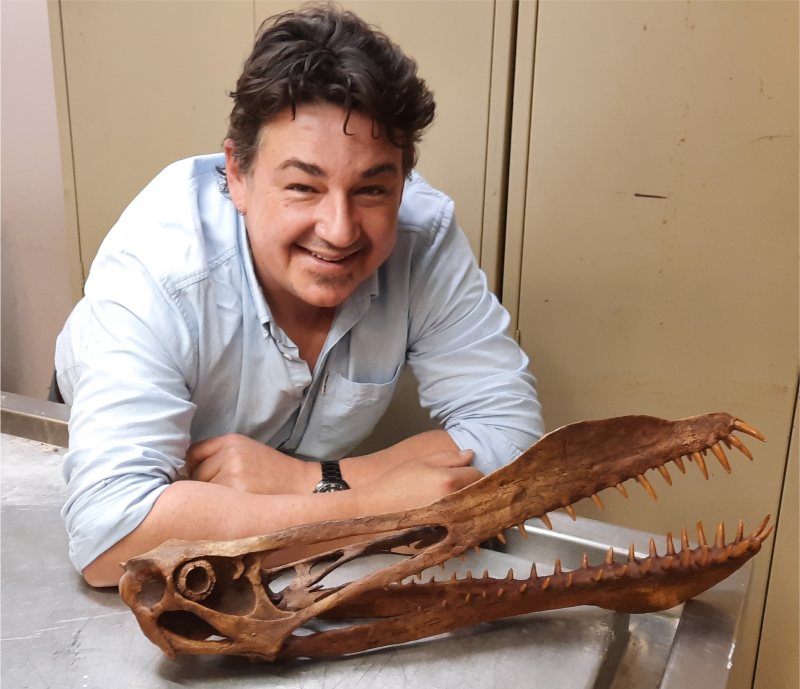
In the land of endless fossils—aka North China—a new species of giant rhinoceros has been discovered in Gansu Province that ranks among the largest terrestrial mammals to ever walk the Earth.

Belonging to an extinct genus called Paraceratherium, which means “near the hornless beast,” the new species displays some different characteristics and carries with it a potential migratory pattern that may help to explain modern mammalian distribution.

The giant rhino is known to be one of the largest land mammals that ever lived. It has primarily been found in Asia, but its evolutionary relationships remain unclear.

Tao Deng and colleagues recovered skeletal remains of a new species of giant rhino dubbed Paraceratherium linxiaense, named for the Linxia Basin in northwestern China where it was found.

“The fossils were prepared [for study] by three professional technicians under [our] supervision from December 2016 to February 2017,” Dr. Deng told GNN. “When the perfect specimens appeared in our sight, their huge size and good completeness [gave us] a great surprise.”

Deng and his colleagues had been working in the Linxia Basin since the 1980s, but have only found fragments of giant rhino remains.

Tao Deng

At the shoulder, paraceratherium would have stood 15.7 feet tall, weighing from 15 up to 20 tons, more than the largest African elephant ever recorded.

It had a long neck, contributing to its 23 feet in length, that would have supported a skull that itself was as long as a large child.

MORE: Ancient Chicken Laid An Egg That Lasted 1,000 Years Without Being Broken

Skulls reveal the creature had a trunk, and two tusk-like incisors, but likely no horn despite the fact that genetics have placed it in the rhinoceros family.

Despite its heft, paraceratherium lasted only about 11 million years, far less than other rhinoceros progenitors like Elasmotherium.

The authors’ analyses place this species in a group with another closely related giant rhino species called paraceratherium lepidum, which together have a close relationship with the giant rhinos of Pakistan.

These findings raise the possibility that the giant rhino could have passed through the Tibetan region before it became the elevated plateau it is today.

DagdaMor, CC license

From there, it may have reached the Indian-Pakistani subcontinent in the Oligocene epoch (between 28 and 23 million years ago), where other giant rhino specimens have been found, and where modern rhinos until recently still lived.

RELATED: Astounding Fossil Discovery in California After Man Looks Closely at Petrified Tree And Finds Bones of Great Beasts

This overland route could inform paleontologists of other potential mammal discoveries that, like paraceratherium, passed over the Asian continent during the Oligocene.

SHARE This Giant Discovery With Friends on Social Media…
‘Miraculous’ Mosquito Hack Cuts Dengue Disease Rate by 77%

Jimmy Chan

Just as mosquitoes and the diseases they carry plague tropical societies, the harnessing of the mosquito society’s own plague, Wolbachia bacteria, is helping Indonesia combat Dengue fever.

Scientists creating an epidemic of wolbachia among mosquitoes in Indonesia dropped rates of infection of Dengue by 77%, opening up new doors in the potential control of mosquito-borne epidemics.

Sometimes called “break-bone fever” due to the intense joint and muscle pain resulting from infection, Dengue, principally spread through the West Nile mosquito aedes aegypti,  can put a human out of action for a month.

Spread throughout the world along trade routes out of Asia since the 2nd century BCE, there are now between 100 to 400 million infections worldwide every year.

MORE: Breakthrough For Kenyan Scientists Who Discover Natural Microbe That Completely Stops Malaria in Mosquitoes

The city of Yogyakarta in Indonesia was the site of a trial by the World Mosquito Program to see if perhaps Dengue could be controlled by using a species of bacteria often found lodged within a. aegypti. Wolbachia is perhaps the most common reproductive parasite that exists in the biosphere, and between 25% and 70% of all insect species carry it.

World Mosquito Programme

The logic is that this “miraculous” bacteria lives in the mosquito exactly where Dengue is trying to go, while also competing for resources like food. The theory is that wolbachia would out-compete and prevent Dengue from replicating.

It wasn’t a long shot as wolbachia was also used to prevent the spread of Zika virus in Brazil in 2016.

RELATED: Landmark Malaria Vaccine is 77% Effective, Tackling One of World’s Biggest Killers of Young Children

Five million mosquito eggs were infected with wolbachia, and were left in buckets of water around the city over the course of 9 months to build up a consistent population of infected mozzies.

The results were vaccine-level successes, with spread of all four varieties of Dengue reduced by 77%, and the hospitalization rate by 86%, in 12 geographical zones of Yogyakarta where they were deployed compared to 12 other zones in which they were not.

Director of Impact Assessment at the World Mosquito Program described the results as “groundbreaking,” adding “we think it can have an even greater impact when it is deployed at scale in large cities around the world, where dengue is a huge public health problem.”

BUZZ This Hopeful Development Over to Pals—Share This Story…

Ryan Reynolds and ‘It’s Always Sunny’ Star Buy Bad English Football Team to Turn it Around – Now an FX Series

Twitter/@VancityReynolds

What’s better than two likeable, excitable, Hollywood stars handing out perhaps far too much money to get into a business enterprise they know nothing about?

As Hollywood duo Ryan Reynolds and Rob McElhenney embark on their new journey as owners of an English football club, someone clearly thought the same, because the venture is now the focus of a new FX documentary. 

Josh St. Clair, writing for Men’s Health, documents the exchange that launched this bizarre venture—with DMs being exchanged between the two stars on Instagram for months without them ever meeting.

“The text buddies wondered whether they should buy a European football club. Then, Reynolds and McElhenney went ahead and actually bought a European football club. What do they know about running a football club? Reynolds: “We don’t know anything about running a football club.”

But, truly, this is a win – win – win for the town, the club, and television viewers. But first some backstory.

Despite sitting in the 5th tier of the English Football League, Wrexham A.F.C. in Wales has a proud footballing history. Founded in the mid 1800s, the ‘Red Dragons’ are one of the oldest clubs in the country, and have produced several prodigious players including Hall of Fame striker, Welsh icon, and 5-time title winner with Liverpool, Ian Rush.

For Americans, the 5th tier might be comparable to single-A baseball, but a step below that. With a pyramid of 8 levels, the bottom three tiers are sometimes occupied by official football squads of military units, or community-led clubs that literally train in backyards.

LOOK: Ryan Reynolds Schemes With Dumped Teen After She Posts Hilarious Prom Photos

It would be a big test for the newly formed ‘RR McReynolds Company LLC’ to turn the Wrexham ship around, but far from being led by Deadpool and ‘Mac’ from It’s Always Sunny in Philadelphia, Reynolds and McElhenny are taking the project very seriously.

From farce to football

After losing $1.1 million (£740,000) during the 2019/20 season, and after their aging stadium seating was declared unsafe, the club was in a bad way at the start of the COVID season of 2020/21. With fans unable to attend games, the principal methods of income for lower-league football teams was gone.

Reynolds and McElhenney , who will be referred to by their business moniker, “McReynolds,” got straight to work with ambitious plans, starting with the decision not to renew the contract of the first team staff and head coach Dean Keates, after he failed to reach the playoffs this season, a single-elimination that determines which clubs get “promoted” to the next highest tier.

“We are committed to returning the club to the EFL (English Football League, aka the top four divisions) at the earliest opportunity and feel that a change of manager will provide us with the best chance of achieving that objective,” the owners stated, sounding much more like real owners than Yanks unfamiliar with the concept of “points” and “promotions.”

MORE: Leonardo DiCaprio Announces a $43 Million Pledge to Save the Galápagos Islands

In an epoch of the ‘Beautiful Game’ where every season features rumors of a massive Chinese or Saudi takeover of a club somewhere in Europe, the local Wrexham supporters must have been shocked that the Hollywood duo were taking control of their club, but delighted to hear that a reported $2 million would be invested as a means of getting the club back into the EFL.

The $2 million will go towards refurbishing their 5,000-seat main stand in their home field of Racecourse Ground, developing a new 22-acre training facility, and signing new players.

McReynolds also appointed Les Reed, a former technical director of the English Football Association, as an advisor to football strategy and operations.

“We have recruited Les Reed as an adviser to create a football strategy for the club that will deliver the sustainable model we committed to create,” McReynolds said in a statement. “The search for a new manager/head coach is a fundamental part of the strategy and is our immediate priority.”

RELATED: Shaq Helps Pay For Stranger’s Engagement Ring: ‘I’m just trying to make people smile’

The pair then hired on a trio of Wrexham Supporter’s Trust members as Vice Presidents, to ensure any decisions made reflect the fans’ preferences, and to create a strong attachment to community.

“The resources, both physical and human, will be provided where possible to help achieve our goal of achieving promotion at the earliest possible opportunity,” they said.

“Our goal is to grow the team, return it to the EFL in front of increased attendances at an improved stadium, while making a positive difference to the wider community in Wrexham.

The new docu-series Welcome to Wrexham has no present release date, but the Hollywood bros made an amusing promotional trailer with powerful ending… [WARNING: May contain language that you find offensive.]

PASS on the Good News to Friends, Share This Story…

10 Ornamental Flowers You Can Cook With or Eat in Salads

Marigold, Augustine Fou

Beautiful to look at, flowers are a welcome addition to almost any environment, including the kitchen or restaurant. Avant-garde cuisine often features edible flowers, but you don’t have to have a Michelin star to join in—you only need to know which species are edible.

Some flowers we commonly plant are poisonous, or have poisonous components, while others can act like little multivitamins.

There are hundreds of flower species and varieties that can be added to salads, drinks, desserts, or other dishes, some of which you may already have in your yard. Furthermore their flavor is as varied as their colors and shapes, and no matter what taste you’re looking for, there’s probably a flower that possesses it.

Alliums (chives, leek, and garlic)

Chive, Hanne Hoogendam

For many gardeners, these species are already there and planted for their stalks and roots, but the flowers of this family have a mild taste that compliments other parts of the plant well.

Pickled chive flowers make a great addition to peppery cocktails like a Bloody Mary or Martini.

Marigolds, Calendula

Marigolds, Silvia Corradin

Beautiful in beds, pots, verges, or as a companion plant in a vegetable garden, marigolds (but not African marigolds) also have a zingy, lemony taste to them, and thus make perfect additions to desserts like cheesecake or fruit tarts.

Furthermore their yellow leaves contain a natural dye that’s known as “poor man’s saffron” and can be used to make yellow dishes, or even dye natural fibers.

The flowers from pot marigolds, a species known as calendula, not only add a touch of piquancy to a dish, but are good for wound healing as well.

Honeysuckles

Honeysuckle, Annie Spratt

Owing to their name, honeysuckles have a sweet nectary taste. As a kid growing up in Virginia, we would pick the flowers, nibble off the base and suck out the nectar like a straw.

You can also cook with them and their sweet taste compliments sweet dishes, or can be used to freshen up/take the edge off spicy or rich dishes. They can also be used to make jam.

Nasturtiums

Nasturtium, Nareeta Martin

The flowers from the watercress family can be eaten and have a very similar taste to watercress itself.

The peppery flowers are a colorful way to introduce flavor to bland salads, or can be used as a pepper substitute if someone is sensitive to peppercorns.

“Weeds” (Mint, Chamomile, Dandelions)

Dandelion field by Vadim Indeikin, CC license

These prolific lawn denizens are very versatile plants, and can be eaten in many different ways. The flowers of all three can be eaten, and since they can often be found in the same meadow, instantly add color, flavor, diversity, and style to any salad.

Mint and chamomile leaves are sold around the world in teas, while dandelion leaves, though often quite bitter, are much healthier even than spinach.

Tulips

Tulip, Krystina Rogers

Tulip flowers’ curved petals, as one homesteading blogger wrote, are perfect for freezing to use as temporary ice cream or yogurt scoops.

Their sweet lettuce flavor makes them great in spring salads as well.

Perfumeries (Lavender, Roses)

Rose, GNN

While these flowers are often used to create scented soaps or perfumes, they can also be eaten, or cooked into a broth to flavor different dishes.

MORE: 8 in 10 Youth Think Gardening is Cool, and Half Would Rather Visit a Garden Center Than a Nightclub

Rosewater is common in Middle Eastern cooking, while lavender is sometimes used as an ice-cream flavor agent—only be careful with lavender flowers since their flavor is really intense and can make your food taste like laundry detergent if you over do it.

Pansies

Pansy, Mostafa Meraji

As the quintessential ornamental plant for professional centers and office blocks, most of us have seen pansies in every imaginable color.

RELATED: 8 Cheap Gardening Hacks For Plants – Using Wine and Plastic Bottles, Orange Peels and Coffee Grounds

This color can be added to a salad no problem, and their mild lettuce taste wont get in the way of key ingredients.

Hostas

Christin Noelle

Not only do hostas own beautiful waxy leaves, but most parts of this popular ornamental plant are edible, including their bunches of light blue and white flowers.

They are great, says Rural Sprout’s blogger, in a stir fry, and actually the entire hostas plant has the potential to be a productive foodstuff.

Borage

Kurt Liebhauser

The fuzzy leaves of this plant sit under blue, cucumbery, edible flowers. As such the refresh-factor is high, and can be added to salads, or desserts.

One cool idea is to freeze them inside ice cubes to be added into drinks later.

Grow the Good News in Your Friends News Feeds, Share This Story…

“In the end, these things matter most: How well did you love? How fully did you live? How deeply did you let go?” – Jack Kornfield

Quote of the Day: “In the end, these things matter most: How well did you love? How fully did you live? How deeply did you let go?” – Jack Kornfield, Buddha’s Little Instruction Book

Photo: by Robert V. Ruggiero

With a new inspirational quote every day, atop the perfect photo—collected and archived on our Quote of the Day page—why not bookmark GNN.org for a daily uplift?

2 Days After Her Wedding, Bride Donates Kidney to Groom’s Ex-Wife

Mylaen Merthe
Mylaen Merthe

When a woman marries, she’s generally showered with gifts. But one big-hearted bride recently decided it was better to give than to receive. In fact she gave the biggest gift of all—the gift of life.

Just two days after she’d taken her vows, Debby Neal-Strickland in Florida swapped her wedding dress for a hospital gown in order to donate a desperately needed kidney. The lucky recipient? Her brand-new husband’s former wife.

Debby and Jim Strickland have been a devoted couple for a decade. Throughout their courtship, Jim maintained a cordial relationship with his ex, Mylaen Merthe, raising their two kids amicably, and while Debby and Mylaen weren’t particularly close, they got along fine.

And that’s likely how the relationship would have remained until fate dictated otherwise.

Mylaen, who’d long suffered from kidney disease, took a turn for the worse at just about the same time she’d learned her daughter was pregnant with her first grandchild. Her kidneys were functioning at just 8% of normal capacity. Without a transplant, her odds of survival decreased every day.

MORE: Mother of NHL Hockey Star Donates Kidney to Ice Rink Manager Who Kept Her Kids Out of Trouble

The hunt for a donor match was on. Mylaen’s brother wasn’t a viable candidate—but miraculously, Debby was.

For Debby, the thought of a child growing up not knowing its grandmother—of a daughter dealing with grief when she should be concentrating on the joys of new motherhood—wasn’t something she was willing to let happen if she could do anything to stop it.

Having lost a brother to cystic fibrosis while waiting for a lung transplant, she knew time was of the essence. With a green light on the tissue sample and blood tests, Debby willingly scheduled the life-saving surgery for just 48 hours after her nuptials.

“It was the most amazing day of my life, until two days later. That was also the most amazing day of my life,” Debby told Fox News.

Since the successful procedure, Mylaen and Debby have bonded and now refer to one another as “kidney sisters.” Mylaen is watching her new grandson Jackson grow up from the home she currently shares with her daughter and son-in-law, even as Debby and Jim’s family of six foster children and grandkids has expanded to include Mylaen and her brood in its loving embrace.

RELATED: ‘She’s Our Miracle’: This Minnesota Teacher Donated a Kidney to the School’s Custodian

And all thanks to a “gesture from the heart.”

“This is what the world is about. Family. We need to stick together,” Mylaen told FOX. “She saved my life.”

SHARE This Story of True Kindness With Others on Social Media…

If You Want to Master a New Skill Take Plenty of Breaks While Practicing

Rodnae Productions

In a study of healthy volunteers, researchers have mapped out the brain activity that flows when we learn a new skill, such as playing a new song on the piano, and discovered why taking short breaks from practice is a key to learning.

The National Institute of Health researchers found that during rest the volunteers’ brains rapidly and repeatedly replayed faster versions of the activity seen while they practiced typing a code. The more a volunteer replayed the activity the better they performed during subsequent practice sessions, suggesting rest strengthened memories.

“Our results support the idea that wakeful rest plays just as important a role as practice in learning a new skill. It appears to be the period when our brains compress and consolidate memories of what we just practiced,” said Leonardo G. Cohen, senior author of the study. “Understanding this role of neural replay may not only help shape how we learn new skills but also how we help patients recover skills lost after neurological injury like stroke.”

The study was conducted at the NIH Clinical Center. Dr. Cohen’s team used a highly sensitive scanning technique, called magnetoencephalography, to record the brain waves of 33 healthy, right-handed volunteers as they learned to type a five-digit test code with their left hands.

The subjects sat in a chair and under the scanner’s long, cone-shaped cap. An experiment began when a subject was shown the code “41234” on a screen and asked to type it out as many times as possible for 10 seconds and then take a 10 second break. Subjects were asked to repeat this cycle of alternating practice and rest sessions a total of 35 times.

During the first few trials, the speed at which subjects correctly typed the code improved dramatically and then leveled off around the 11th cycle. In a previous study, led by former NIH postdoctoral fellow Marlene Bönstrup, Dr. Cohen’s team showed that most of these gains happened during short rests, and not when the subjects were typing.

CHECK OUT: Positive Outlook Predicts Less Memory Decline, Says New Research

Moreover, the gains were greater than those made after a night’s sleep and were correlated with a decrease in the size of brain waves, called beta rhythms. In this new report, the researchers searched for something different in the subjects’ brain waves.

“We wanted to explore the mechanisms behind memory strengthening seen during wakeful rest. Several forms of memory appear to rely on the replaying of neural activity, so we decided to test this idea out for procedural skill learning,” said Ethan R. Buch, a staff scientist on Dr. Cohen’s team and leader of the study.

To do this, Leonardo Claudino, a former postdoctoral fellow in Dr. Cohen’s lab, helped Dr. Buch develop a computer program which allowed the team to decipher the brain wave activity associated with typing each number in the test code.

The program helped them discover that a much faster version—about 20 times faster—of the brain activity seen during typing was replayed during the rest periods. Over the course of the first eleven practice trials, these compressed versions of the activity were replayed many times—about 25 times—per rest period. This was two to three times more often than the activity seen during later rest periods or after the experiments had ended, the study, published in Cell Reports explains.

MORE: Kids Have Been Reading Longer, More Difficult Books in Lockdown, and It’s Boosting Moods

Interestingly, they found that the frequency of replay during rest predicted memory strengthening. In other words, the subjects whose brains replayed the typing activity more often showed greater jumps in performance after each trial than those who replayed it less often.

“During the early part of the learning curve we saw that wakeful rest replay was compressed in time, frequent, and a good predictor of variability in learning a new skill across individuals,” said Dr. Buch. “This suggests that during wakeful rest the brain binds together the memories required to learn a new skill.”

RELATED: Study Arts and Science Together Like Da Vinci Did, And You’ll Get Best Outcome, Researchers Say

As expected, the team discovered that the replay activity often happened in the sensorimotor regions of the brain, which are responsible for controlling movements. However, they also saw activity in other brain regions, namely the hippocampus and entorhinal cortex.

“We were a bit surprised by these last results. Traditionally, it was thought that the hippocampus and entorhinal cortex may not play such a substantive role in procedural memory.

In contrast, our results suggest that these regions are rapidly chattering with the sensorimotor cortex when learning these types of skills,” said Dr. Cohen. “Overall, our results support the idea that manipulating replay activity during waking rest may be a powerful tool that researchers can use to help individuals learn new skills faster and possibly facilitate rehabilitation from stroke.”

Source: NIH/National Institute of Neurological Disorders and Stroke

HELP Your Friends Learn Some Good News—Share This Story…

Scientists Design Junk Food Game to Help People Eat Less, Lose Weight – Study Shows it Works

Andres Ayrton

Using a brain-training app helps people eat less junk food and lose weight, new research suggests.

The Food Trainer (FoodT app) trains people to tap on images of healthy foods—but to stop when they see unhealthy snacks, creating an association between these foods and stopping.

The new study, by the universities of Exeter and Helsinki, found that playing the game about once a day for a month led to an average one-point reduction of junk food consumption on an eight-point scale (the scale ranges from four or more items per day, to one or zero items per month).

Overall, people who used the app more also reported larger changes in their food intake.

About half of the study’s 1,234 participants followed the recommendation and played the game at least 10 times.

Across all participants, an average weight loss of half a kilogram (just over a pound) and a small increase in healthy food eaten was seen.

“As an example, someone who ate each junk food two to four times a week reduced this to once a week after using the app regularly for a month,” said Professor Natalia Lawrence, of the University of Exeter.

“Overall, the findings are really encouraging. The app is free and it only takes about four minutes per day—so it’s something people realistically can do—and our results suggest it is effective. “There’s some evidence that the benefits were stronger for people who were more overweight.

“We would expect to see this, because the app targets mechanisms that lead people to become overweight, such as the strong urges to approach and consume tempting junk foods.”

Dr Matthias Aulbach, of the University of Helsinki, added: “For anyone with unhealthy eating habits—perhaps developed during lockdown—FoodT might be helpful.”

RELATED: Americans Who Drink This Much Water a Day Were More Likely to Report Feeling ‘Very Happy’

The study, published in Appetite Journal, used FoodT usage data, and the app also periodically asks questions about how often users eat certain foods, along with other information such as their age and weight.

The findings suggest that using the app regularly was linked with bigger changes in eating habits.

MORE: Researchers Discover Intermittent Fasting is Effective at Promoting Long-Term Memory in Mice

“If you’re trying to teach the brain something new, it’s a good idea to space out the learning over multiple sessions,” said Dr Aulbach.

“It may be helpful to do the training in different contexts—not just at home but at work and elsewhere, so the associations you learn don’t just relate to one location.

“From our results it seems important that you do the training regularly and don’t just stop. So keep it interesting and relevant for yourself so you won’t get bored with it: personalize the app as far as possible and pick the foods that you find really hard to resist.”

CHECK OUT: Next Time You’re Feeling Particularly Stressed or Anxious, This Study Says You Should Play Tetris

The researchers stress that their findings should be interpreted cautiously, because there was no control (comparison) group and other factors (such as the possibility that people who did more training were also separately more motivated to lose weight) could play a part in the results.

Leaving a review on Google Play, one app user wrote: “Really useful. Seems to work on different levels whether it’s the green/red circle association of stop/go which psychologically makes you more aware, I’m not sure—but my cravings have reduced dramatically and I no longer eat in the evening mindlessly.”

Source: University of Exeter

This Single Tree Could Restore Degraded Land, Create a Biofuel Revolution, Power Cars, and Feed Families

FORDIA Research Forest in Parungpanjang, Bogor Regency, Indonesia/Yusuf Bahtimi

Growing across much of Asia, it’s known by many names: including Indian Beech, pongamia, Karum tree, kranji, and malapari.

Pongamia pinnata is a member of the pea family that is being considered by Indonesian forestry experts for potential landscape restoration and the future of bioenergy.

A number of big challenges are bearing down on the Indonesian archipelago of more than 17,000 islands, and the government has to find ways in which it can restore 14 million hectares of degraded land to keep its promise to the UN, while also developing a green energy sector worth 23% of total grid contributions in just 5 years.

The country’s natural gas and oil reserves are projected to dry up by 2030, even while energy demand—currently served by fossil fuels—is increasing.

Enter the pongamia tree: growing well on degraded or marginal land in both wet and dry climates, it can be found from India to the west, right the way across to Fiji in the Pacific. For centuries, its orange/brown seeds have been pressed into oil for leather tanning, soap making, wound healing, and more.

Indonesia’s Ministry of Forestry and Environment’s Research is looking into pongamia for mass tree planting as they believe this special oil can be used to power a biomass energy revolution, as well as offering a new crop for local communities to thrive off of economically, and even use as food.

The trick with trying to plant all these trees in rural areas is they have to provide multiple benefits, for multiple parties, across multiple periods of time. Trees that grow fast may not live long enough to affect long term change within the soil, while trees that grow long and strong may be chopped down by citizens because they don’t produce anything.

Trees that produce forest products may not support a functioning ecosystem among them, or may not restore the land at all, but that is vital if 14 million hectares are to be renewed by the time of the Paris Climate Accord targets.

One more Tree of Life

The coconut and the baobab both have the honor of being referred to as the ‘tree of life’ by certain Indigenous groups, and the pongamia could certainly be accorded that honor as well.

One of the fastest growing trees in the Indonesian Archipelago, it can thrive in arid and wet land, from sea level to 1,200 meters above it. Degraded soil, like the kind which can be found on the boundaries of agricultural land, suit the pongamia just fine, and it improves the quality of the soil as it’s a nitrogen fixer.

Modern extraction methods confirmed the oil’s potential as a biofuel crop, with one study finding 44% more oil per seed extracted than traditional methods. When combined with 5% gasoline, it can power diesel engines in vehicles without compromising performance. This is key as many of the more remote Indonesian islands are powered by diesel generators.

MORE: For the First Time in 170 Years, Asia’s Longest-Missing Bird is Seen in Indonesia

The Center for International Forestry Research (CIFOR) is accompanying the Indonesian Forestry Ministry on their research into pongamia, and one of their scientists, Budi Leksono, recounts that the trees can even be used for food, as when the seeds are pre-treated and dried they can be turned into a nutritious flour.

“I haven’t tried it myself yet,” Leksono told Forest News. “but in the trials, everyone said it was delicious!”

CIFOR is working to see if pongamia plantations are suitable for abandoned mining land and degraded peatlands, the latter being one of the most carbon-rich soils on the planet, and ideal for capturing CO2 from the atmosphere. Recently this was done in Central Kalimantan Province on Borneo.

RELATED: 4 Major Asian Nations Cancel 80% of Planned Coal Power Projects After Fossil Fuel Market Crashes in 2020

“We planted the trees a year ago, and so far they are growing faster than other similar species,” said Leksono. “This suggests they may be particularly tolerant to harsh conditions, and would then be especially promising for restoration and rehabilitation of degraded land.”

Lastly, another partner organization, the South Korean Forest Service, is seeing if Pongamia can be grown alongside other agri-forestry staples like coffee. The first step is seeing how the roots grow and where, to see if others can co-exist peacefully.

CHECK OUT: The World’s Oldest Known Cave Painting Has Been Discovered in Indonesia

It’s a case study that sometimes a nation has to look to their past to solve the problems of the future.

GROW the Hope, Share This Story on Social Media…

Bees Have a New, Lifesaving ‘Vaccine’ to Make Them Immune to Pesti-Side Effects

There’s been a lot of talk about vaccines these days, but not for bees. But a Cornell student has figured that since our most important pollinators are regularly exposed to lethal pesticides, there ought to be talk about a bee vaccine.

James Webb did more than talk though, he invented one—a pollen-sized microparticle containing a compound that neutralized one of the most commonly used and toxic pesticide bees encounter. Once fed to bees, they demonstrated hugely increased survival rates after being exposed to the pesticide compound malathion.

Beemunnity is a marketable supplement/vaccine for beekeepers that was demonstrated in a study—published in Nature journal—to prevent 100% of bee deaths from malathion (whereas the survival rate of bees exposed to malathion in the control group was 0%).

The enzyme it contains enters the digestive system and breaks down the malathion before it reaches the bee’s brain.

MORE: Orchids Make Fake Pollen to Tempt the Bees – But Scientists Discover it’s as Valuable as the Real Thing

The first product was only effective for one major chemical used in agriculture pesticides, but Webb is trying to develop others, as well as have one for wild bee species ready by the end of the year. For example, the same pollen-inspired microparticle technology can be filled with a special oil that soaks up other pesticides like a sponge. The bee leaves the particle behind when it goes to the bathroom, but the pesticides don’t return to the environment.

“So far we have not found one pesticide which cannot be captured by the technology,” Webb writes.

“I always thought there was a lot of research going into seeing if bees were dying, and the extent to which bees were dying, but not really many solutions,” Webb told Adele Peters of Fast Company.

RELATED: These Homegrown Mushroom Hives Could Save Ireland’s Bees

Webb acknowledges this is a last resort, but that until industrial agriculture can get pesticides out of their operations, his products will help beekeepers and enthusiasts alike to protect their bees.

Buzz the Good News Over to Friends on Social Media…

“I don’t think of all the misery, but of the beauty that still remains.” – Anne Frank

Quote of the Day: “I don’t think of all the misery, but of the beauty that still remains.” – Anne Frank, The Diary of a Young Girl

Photo: Siberian iris by GWC

With a new inspirational quote every day, atop the perfect photo—collected and archived on our Quote of the Day page—why not bookmark GNN.org for a daily uplift?


Diver Emerges Unscathed From the Mouth of Humpback Whale: ‘I was completely inside’

Packard Family
Packard family

In the Bible, God’s unwilling messenger Jonah is cast into the sea and swallowed up by the Leviathan, where he spends three days and three nights rethinking the error of his ways before being tossed on Nineveh’s shore to complete his appointed mission.

On Friday, June 11th, 56-year-old Wellfleet, Massachusett’s resident Michael Packard wasn’t fleeing the wrath of the Lord when he dove into the waters of Provincetown’s Herring Cove Beach. He was diving for lobster.

But in a straight out of Jaws scenario, like Jonah before him, in one fell swoop, Packard found himself seemingly in ‘the belly of the beast’—a humpback whale’s mouth.

“All of a sudden, I felt this huge shove and the next thing I knew it was completely black,” Packard told the Cape Cod Times. “I could sense I was moving, and I could feel the whale squeezing with the muscles in his mouth.”

Packard’s first terrifying thought as he struggled in the darkess was that he’d been scarfed down by great white shark. While it didn’t take him long to realize the gullet in which he was uncomfortably lodged belonged to a whale rather than a toothy shark, his prospects for survival still didn’t look good.

Christopher Michel, CC license

As panicked as Packard was, the whale was more than a little distressed as well. A humpback’s usual diet consists of fish, krill, and other small marine animals. Cumbersome humans are definitely not on their preferred menu.

According to marine biologists, the most likely explanation for the feeding faux pas was the medium-sized humpback, dining on a school of sand lances on the ocean floor whilst moving with great momentum, unintentionally vacuumed up the stunned commercial diver along with his morning meal.

“They can basically open their mouth through 90° and kind of unlock their jaw and have it drop down,” New England Aquarium’s lead whale researcher Peter Corkeron said in an interview NBC News-10 Boston.

“The water off the Cape is pretty murky,” Corkeron added, “and when whales are doing these feeds, they’re moving really fast… This [was] just an accident. I imagine the whale had this, ‘Oh my goodness!’ moment and probably got rid of him as quickly as it could.”

MORE: Watch Quick-Thinking Kayakers Save Pair of Rare Eagles Drowning in the Danube River

Thrashing its head, the whale made for the surface in a major hurry, where it speedily spat the gobsmacked Packard back into the briny water. The entire episode took under a minute, but it was enough for Packard to see his life flash before his eyes.

“I was completely inside; it was completely black,” Packard told Cape Cod News. “I thought to myself, ‘there’s no way I’m getting out of here. I’m done, I’m dead.’ All I could think of was my boys—they’re 12 and 15 years old.”

CHECK OUT: Brave 7-Year-old Boy Swims an Hour to Rescue His Dad and Little Sister

Although he suffered a dislocated knee and a great deal of soft tissue damage, for a lobsterman who’d been recently ingested and disgorged by a 25-ton marine mammal, Packard survived the encounter remarkably intact—and thankful to be alive.

While it’s a story that’s likely to take on biblical proportions in the retelling, at least for everyone concerned—man and Leviathan—this is one whale of a tale that’s got a happy ending.

MAKE A SPLASH in Friends’ News Feeds—Share This Story…

80-Year-old Bonsai Master Creates Incredible Tiny Forests As a Rebel in the Ancient Art – LOOK

Omiya Bonsai Art Museum

Bonsai is the Japanese art of growing ornamental, artificially dwarfed trees.

Masahiko Kimura began creating his first bonsai designs in his mid-teens.

Featuring dead wood sculpted by tools of his own design, they broke traditional rules dating back centuries.

Perhaps Kimura’s rebellious rule breaking shouldn’t be too surprising: His first dream? To be a rock and roll star.

Over the decades, Kimura’s unique style has gone on to become accepted and even revered—with fans nicknaming him “The Magician.”

These days Kimura—who is now in his 80s—is one of the country’s rare bonsai masters, and he has apprentices all over the globe.

(WATCH the video to tour Kimura’s bonsai garden below.)

(MEET Kimura in this interview with the great bonsai master.)

GROW the Good News—Share This Story…

Scientists Discover a New Brown Species They Named the ‘Chocolate Frog’ – And it’s Adorable

Queensland Museum Network

In the “nasty” swamps of New Guinea, a frog specialist has discovered a new species which he decided to call the “chocolate frog.”

Far from the fugitive confectionaries containing famous witch or wizard trading cards from the Harry Potter series, the real thing is a close relative of the Australian green tree frog, only coated in a chocolate brown skin.

Steve Richard’s home of South Australia can be a paradise, but the same can’t necessarily be said for the environment he decided to work in. New Guinea is covered in dense jungle and mangrove swamp. It’s one of the least-explored jungles on Earth, and filled with poisonous plants and animals.

Nevertheless, despite nightmarish conditions, Richards has discovered 200 frog species in its depths.

The chocolate frog, or Litoria mira, was found by Richards and his team in 2016, but analysis had to be given time to stack up before it was confirmed that, rather than being a population that migrated to New Guinea somehow, L. mira was its very own species.

Part of the difficulty is that Australian green tree frogs have been known to both exist in New Guinea and turn brown. But subtle difficulties helped the herpetologists make the call, including small patches of lavender skin around the eyes, and the fact that the chocolate frog was a bit smaller.

Queensland Museum Network

Profiled by The GuardianRichard’s explains that he accidentally disturbed an overhanging nest of giant hornets during the course of collecting the frog specimens, and had to sprint in order to escape the insects’ wrath.

MORE: New Species, Devil-eyed Frog, and Satyr Butterfly Not Seen For a Century Found in Forests 30 Miles From the Capital

“…It took so long to find this frog,” he told the British newspaper. “It’s swampy, it’s spiky, there are lots of malaria-carrying mozzies, it floods, there are crocodiles and not many roads. It’s a really unpleasant place to work.”

HOP the Good News Over to Pals by Sharing This story on Social Media…