













38 years ago today, Star Trek: The Next Generation debuted on syndicated TV. Spanning 178 episodes over seven seasons, it starred English actor Patrick Stewart as Captain Jean-Luc Picard of the Starship Enterprise. It received many accolades, including 19 Emmy Awards, two Hugo Awards, five Saturn Awards, and a Peabody Award. READ more about how the show got started… (1987)
Zero-Emissions Ferryboat to Glide Commuters Up and Down Historic River in European Capital

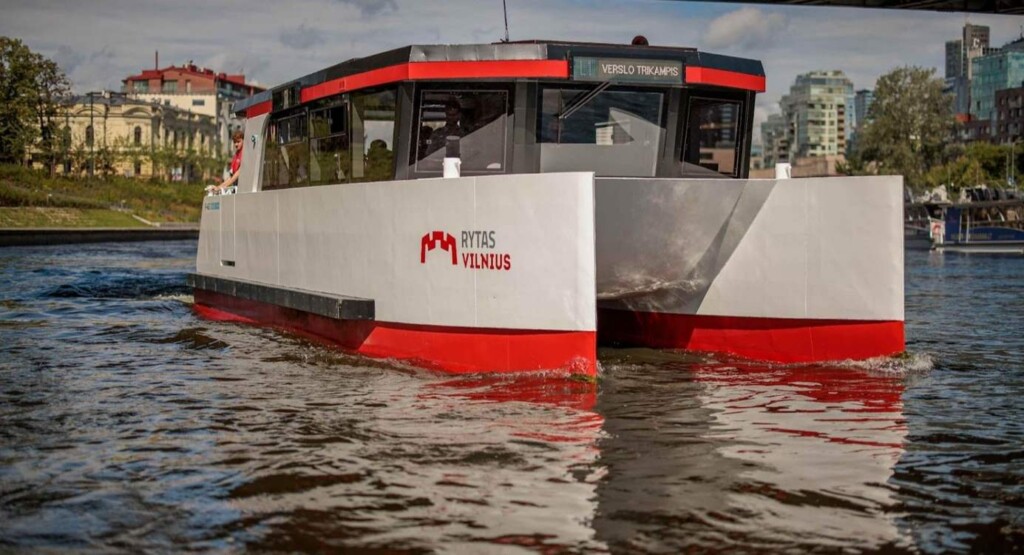
Lithuania’s capital Vilnius recently debuted a new electric ferryboat for transit up and down the River Neris.
Called the Lašiša, it joins a trend of electric ferryboats on the famous rivers and bays of Europe such as the Elbe or the Copenhagen harbor.
Tickets can be bought online and through an app for just €3, or €4 on board. It transits between the business and residential districts, while stopping at major cultural and historic landmarks.
Vilnius was named the European Green Capital of 2025, and it scrambled to a tight deadline to get the zero-emissions boat online by July 25th.
“So we are very thankful for the boat company that built the boats. And it obviously was a big responsibility for the city and for the citizens to say that we would have made a boat in six or seven months,” Loreta Levulytė-Staškevičienė said, who holds the position of CEO of JUDU, the public transport and mobility services company for Vilnius.
The compact ferry holds 32 people, and cuts through the water as opposed to aquaplaning atop it, which saves energy. 80% of the boat is covered in solar panels, and it offers free Wi-Fi to passengers.
Euro News reports that for some residents it’s a welcome new way to getting around the city.
EUROPE’S GREEN WATER: World’s First Non-Polluting Ferry Sets Sail From Marseille, France
“If you live in the center, in this area, and you work here, I guess, yes (electric boats would be a good thing). Especially, maybe a woman would like it, like a romantic way to go to work, or to clear your mind after work. I think it will be very cool,” said Polina Ruginiene, a Vilnius resident.
According to a press release, the boat’s absolute top speed is 7.5 km per hour, but may also travel around 5 km per hour in certain areas to reduce wake. This isn’t much faster than a human power walking and was a point of contention between JUDU and the outgoing transportation minister who felt JUDU wasn’t being honest about the slowness.
READ ALSO: Electric Ferry Boat Makes Historic First Crossing from Europe to Africa Cutting Energy Use by 80%
“The speed of the boat is higher than that of similar types of water vehicles in other European cities,” Vilnius’s transport department wrote in a statement.
The city plans to purchase two more boats currently being built in their northern neighbor of Latvia.
What Do YOU Think Of The Green Ferryboat Idea? Join The Convo On Social Media…
Innovative New ‘Sponge’ Park Helped Save Historic Atlanta Neighborhood from Flooding


$40 million may seem like a lot of money to the average person, but it’s just a fraction of what municipalities were spending to cleanup and shore-up their cities and towns following Hurricane Helene.
For Vine City, Atlanta, $40 million was the cost of a solution to flooding problems that long predate Helene. It bought the historic neighborhood a big, beautiful new park that works like a sponge.
GNN has reported on the “sponge city” concept before, whereby parks and urban developers use greenery and water features to help absorb rain and floodwater to slow its entry into the drainage system.
It’s been picked up by the Netherlands and China, and now too, in Atlanta with Rodney Cook Sr. Park.
Atlanta City Council member Byron Amos, who was born and raised in Vine City, remembers several flooding events that left residents’ basements submerged and cars soaked through.
Amos worked with the Trust for Public Land to adopt the sponge city concept for Vine City.
“When water is rerouted through the neighborhood to this site, the pond fills up, and the rain gardens, other green infrastructure throughout the park houses water to be collected and basically take the load off the city’s stormwater system,” said Jay Wozniak with the trust.
Despite being 300 miles inland, Helene reached out her stormy fingers even as far as Atlanta, and suddenly, Amos and Woziank’s solution would be put to the test.
GOOD LANDSCAPING: ‘Living Breakwater’ Makes Room for Oysters and Tidal Pools In Award Winning Design off Staten Island
“People were calling, ‘The park is flooding! The park is flooding!’ and my response was, ‘It’s doing its job,” Amos told CBS News.
Indeed, Rodney Cook Park filled up with 9 million gallons of water, but nearby residents’ homes stayed dry. Within 72 hours, Wozniak said, no one even knew a storm had taken place.
GOOD DESIGN: Arizona Suburb Turned into Mediterranean-style Walking Town Where Temperatures Stay Low
In addition to being a piece of the stormwater system, the park is also a beautiful gathering space filled with water features, a multi-sport composite court, plenty of green spaces, and fitness equipment.
Built for the trust by HDR, it collected no less than 10 major architecture, design, and landscape engineering awards.
WATCH the story below from CBS…
SHARE This Fantastic New Park Safeguarding The Historic Vine City…
100,000 New Jobs Will Clean Up the Coastline and Protect Species from Plastic, Overdevelopment

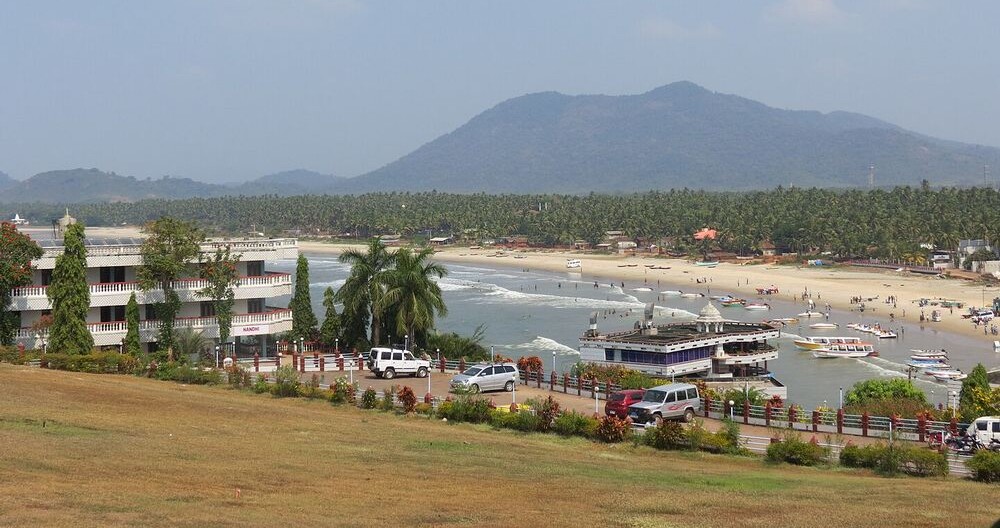
Among all the world’s coastlines, those stretching across central and southern India are among the most vulnerable to erosion.
In the states of Tamil Nadu and Karnataka, a program funded by the World Bank aims to create 100,000 jobs that will help protect these sensitive and biodiverse areas for the posterity of fishermen, urbanites, and animals alike.
It’s estimated that 250 million people depend on coastal areas for their homes and livelihoods in sectors like fisheries, transport, and tourism. The 6,200-miles of lower Indian coastline also provide habitats for 18,000 known species of flora and fauna, from environmentally protective mangroves to charismatic animals like the dugong.
However, marine ecosystems are at risk by the combined effect of coastal erosion, pollution, intensive fishing, degradation of mangrove forests, and urban expansion.
The World Bank’s $212 million Strengthening Coastal Resilience and the Economy (SHORE) Project in India will provide the necessary resources to help states implement their coastal zone management plans in a way that matches demand for economic expansion with the needs of smaller communities and wildlife.
“This Project will help states tap into private sector sources to mitigate the impacts of plastic pollution and to foster eco-tourism in selected areas,” said Paul Procee, the World Bank’s Acting Country Director for India. “For example, private sector intervention can help to strengthen plastic waste value chains and establish environment-friendly beaches while also creating economic opportunities for coastal communities.”
The employment goal of the project is to create training for 70,000 jobs in sectors like tourism, waste management, fishing, and more.
A BETTER INDIA:
- Joy and Relief as Lotus Flowers Bloom Again in Kashmiri Lake After Three Decades
- New Bamboo Plantations Are Healing Villages Choked by Toxic Ash from Coal Plants in India
- City in India Ranks the Cleanest 8 Years in a Row: ‘It Feels as Though You Aren’t in India’
The project will help to conserve 72,000 acres of seascapes in Tamil Nadu and Karnataka through planting of mangroves, restoration of sand dunes in combination with green and grey infrastructure such as breakwaters where necessary. It will help in coral protection and species such as dugongs, turtles, and birds.
“In 2019, Tamil Nadu was the first state in India to ban single-use plastics,” said Dinesh Aryal, Chabungbam Singh, and Avanish Kant, the Task Team Leaders for the Program. “This project will enhance measures in Tamil Nadu and Karnataka through public awareness campaigns on recycling and plastics leakage, as well as bridging the gap between urban local bodies and the private sector for solid waste management in cities. Reducing plastic pollution will benefit 120,000 people.”
In 2025, Karnataka ranked fifth, and Tamil Nadu first, in a comparison of the five largest plastic waste producers among Indian states.
SHARE This Positive Development News With Your Friends On Socials…
Police Dog Enjoys Meaty Reward for Finding Missing Massachusetts Man: ‘Can’t hide his smile’
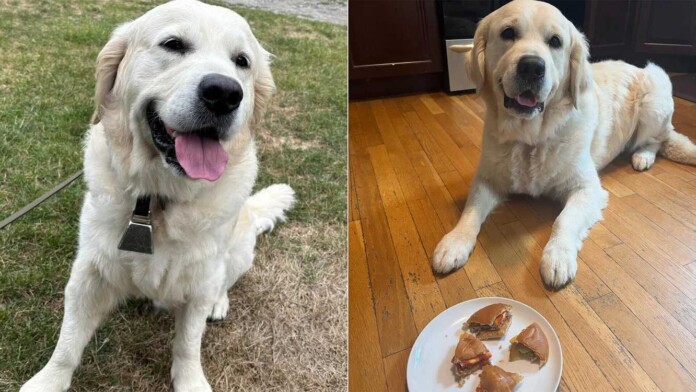
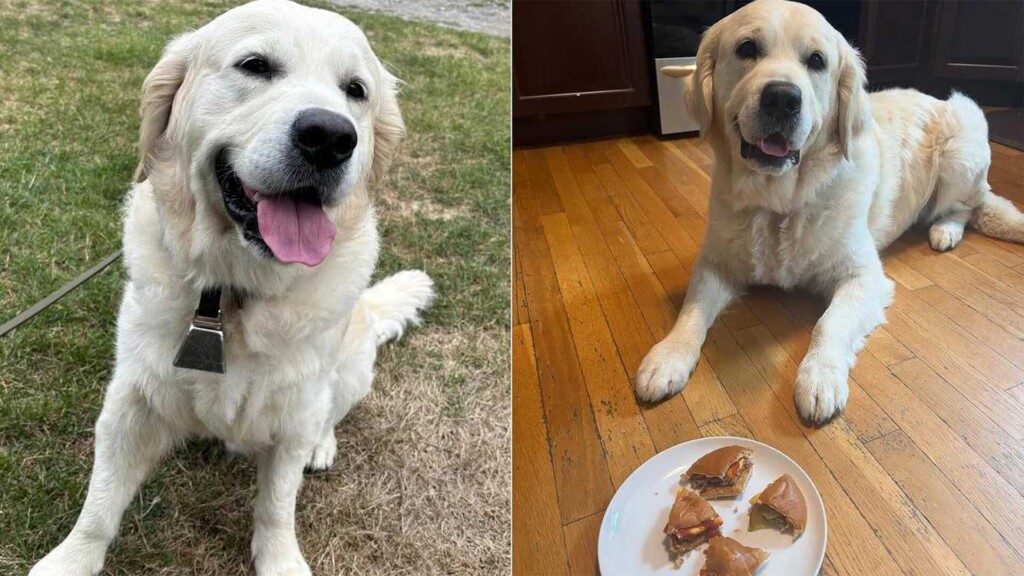
A Massachusetts community was delighting in the smile of their neighborhood community resource dog after he got a meaty reward for his good deed.
In the town of Avon, a known dementia patient went missing, and Cruiser the golden retriever cruised right to his location, tracking and locating him in the woods behind a school.
“Cruiser can’t hide his smile today,” Police Chief Bill McGrath said in a Facebook post.
“Got to play my favorite game of find the missing person. I won today when I located a 78 year old man suffering from dementia. No one worry, Sgt Morris got me my hamburger reward,” the post read.
Cruiser has 1,600 followers on Facebook where the department regularly posts pictures of what their golden boy has gotten up to over the week.
Cruiser arrived at the Wrentham Police Department in 2020 from Golden Opportunities for Independence which breeds golden retrievers for lives as service and police dogs. Beginning training as a puppy, they learn all the basic skills of being a service dog such as picking up dropped keys and phones, forming barriers around those suffering from anxiety, or staying close to their handler in an emergency.
SERVICE DOGS: Hero Service Dog Senses Owner’s Irregular Heartbeat–Saving the Veteran From a Catastrophic Stroke
“I’ll get a police chief to call and say, Pauline, you have no idea what this dog has done for our community, for our police department, for our officers,” said founder Pauline Hoegler in an interview with WBZ TV
Missing people are as much a specialty of Cruiser as hamburgers are his favorite meal. He was also pictured chowing down on a burger in March after locating two runaway children in the woods.
SHARE In Cruiser’s Joy After A Pawd Day’s Work…
Your Weekly Horoscope – ‘Free Will Astrology’ by Rob Brezsny

Our partner Rob Brezsny, who has a new book out, Astrology Is Real: Revelations from My Life as an Oracle, provides his weekly wisdom to enlighten our thinking and motivate our mood. Rob’s Free Will Astrology, is a syndicated weekly column appearing in over a hundred publications. He is also the author of Pronoia Is the Antidote for Paranoia: How All of Creation Is Conspiring To Shower You with Blessings. (A free preview of the book is available here.)
Here is your weekly horoscope…

FREE WILL ASTROLOGY – Week of September 27, 2025
Copyright by Rob Brezsny, FreeWillAstrology.com

LIBRA (Sept. 23-Oct. 22):
The ancient Mesopotamians believed each person had a personal god called an ilu who acted as a protector, guide, and intercessor with the greater gods. You’re in a phase when your own ilu is extra active and ready to undergo an evolutionary transformation. So assume that you will be able to call on potent help, Libra. Be alert for how your instincts and intuitions are becoming more acute and specific. If you feel an odd nudge or a dream insists on being remembered, take it seriously. You’re being steered toward deeper nourishment.

SCORPIO (Oct. 23-Nov. 21):
In Venice, Italy, floods periodically damage books at libraries and bookstores. Trained volunteers restore them with meticulous, hands-on methods. They use absorbent paper and towels to separate and dry the pages, working page by page. I offer this vignette as a useful metaphor, Scorpio. Why? Because I suspect that a rich part of your story needs repair. It’s at risk of becoming irrelevant, even irretrievable. Your assignment is to nurse it back to full health and coherence. Give it your tender attention as you rehabilitate its meaning. Rediscover and revive its lessons and wisdom.

SAGITTARIUS (Nov. 22-Dec. 21):
In classical Indian music, a raga is not a fixed composition but a flexible framework. It’s defined by a specific scale, characteristic melodic phrases, and a traditional time of day for performance. Musicians improvise and express emotion within that expansive set of constraints. Unlike Western compositions, which are written out and repeated verbatim, a raga has different notes each time it’s played. I think this beautiful art form can be inspirational for you, Sagittarius. Choose the right time and tone for what you’re creating. Dedicate yourself to a high-minded intention and then play around with flair and delight. Define three non-negotiable elements and let everything else breathe.

CAPRICORN (Dec. 22-Jan. 19):
In medieval European monasteries, scribes left blank pages in certain texts. This was not done by accident, but to allow for future revelations. Later readers and scribes might fill these spaces with additional text, marginalia, and personal notes. Books were seen as living documents. I recommend a metaphorical version of this practice to you, Capricorn. You will thrive by keeping spaces empty and allowing for the unknown to ripen. You may sometimes feel an urge to define, control, and fortify, but acting on that impulse could interfere with the gifts that life wants to bring you. Honor what is as-yet unwritten.

AQUARIUS (Jan. 20-Feb. 18):
In West African Vodún cosmology, the deity named Lêgba guards the crossroads. He is the mediator and gatekeeper between the human world and spirit realm. He speaks all languages and serves as the first point of contact for communication with other spirits. In the weeks ahead, Aquarius, you may find yourself in Lêgba’s domain: between past and future, fact and fantasy, solitude and communion. You may also become a channel for others, intuiting or translating what they can’t articulate. I won’t be surprised if you know things your rational mind doesn’t fully understand. I bet a long-locked door will swing open and a long-denied connection will finally coalesce. You’re not just passing through the crossroads. You are the crossroads.

PISCES (Feb. 19-March 20):
In 1977, NASA launched two Voyager spacecraft into the abyss. Both carried a message in the form of a golden record to any extraterrestrial who might find it. There were greetings in 55 languages, natural sounds like whale songs and thunderstorms, music by Chuck Berry and others, plus over 100 images and diagrams explaining how to find Earth. It was science as a love letter, realism with a dash of audacity. I invite you to craft your own version of a golden record, Pisces. Distill a message that says who you are and what you are seeking: clear enough to be decoded by strangers, warm enough to be welcomed by friends you haven’t met. Put it where the desired audience can hear it: portfolio, outreach note, manifesto, demo. Send signals that will make the right replies inevitable.

ARIES (March 21-April 19):
In Tonglen, a Tibetan Buddhist meditation, you visualize yourself breathing in the suffering, pain, or negativity of other people, then imagine breathing out relief, healing, or compassion toward them. The practice can also be done on your own behalf. The goal is to transform tension and stress into courage, vitality, and healing. I recommend this practice, Aries. Can you turn your scars into interesting tattoos? Can you find mysterious opportunities lurking in the dilemmas? Can you provide grace for others as you feed your own fire?

TAURUS (April 20-May 20):
In a YouTube video, I watched Korean artisans make hanji paper in the same way their predecessors have for 1,300 years. It was complicated and meditative. They peeled off the inner bark of mulberry trees, then soaked it, cooked it, and pounded it into pulp. After mixing the mash with the aibika plant, they spread it out on screens and let it dry. I learned that this gorgeous, luminous paper can endure for a thousand years. I hope you draw inspiration from this process, Taurus. Experiment with softening what has felt unyielding. Treat what’s tough or inflexible with steady, artful effort. Be imaginative and persistent as you shape raw materials into beautiful things you can use for a long time.

GEMINI (May 21-June 20):
Legendary jazz musician Sun Ra was a Gemini who claimed to be from the planet Saturn. He aspired to live in a state of “cosmic discipline”—not just in his musical training but in his devotion to self-improvement, aesthetic exploration, and a connection to transcendent realities. He fused outrageous style with sacred order, chaos with clarity. I invite you to draw inspiration from him. Put your personal flair in service to noble ideas. Align your exuberant self-expression with your higher purpose. Show off if it helps wake people up.

CANCER (June 21-July 22):
In Inuit tradition, qarrtsiluni means “waiting in the darkness for something to burst forth.” It refers to the sacred pause before creativity erupts, before the quest begins, before the light returns. This is an apt description of your current state, Cancerian. Tend your inner stillness like a fire about to ignite. Don’t rush it. Honor the hush. The energies you store up will find their proper shape in a few weeks. Trust that the silence is not absence but incubation. Luminosity will bloom from this pregnant pause.

LEO (July 23-Aug. 22):
You’re feeling the stirrings of a desire that’s at least half-wild. A surprising vision or opportunity has begun to roar softly within you. But here’s key advice: Don’t chase it recklessly. Practice strategic boldness. Choose where and how you shine. Your radiance is potent, but it will be most effective when offered deliberately, with conscious artistry. You’re being asked to embody the kind of leadership that inspires, not dominates. Be the sun that warms but doesn’t scorch! PS: People are observing you to learn how to shine.

VIRGO (Aug. 23-Sept. 22):
If humans ever perfect time-travel, I’m going to the Library of Alexandria in ancient Egypt. It was crammed with papyrus scrolls by authors from all over the world. It was also a gathering point for smart people who loved to compare notes across disciplines. Poets argued amiably with mathematicians. Astronomers discussed inspirations with physicians. Breakthroughs flowed feely because ideas were allowed to migrate, hybridize, and be challenged without rancor. Consider emulating that rich mélange, Virgo. Convene unlike minds, cross-pollinate, and entertain unprecedented questions. The influences you need next will arrive via unexpected connections.
WANT MORE? Listen to Rob’s EXPANDED AUDIO HOROSCOPES, 4-5 minute meditations on the current state of your destiny — or subscribe to his unique daily text message service at: RealAstrology.com
(Zodiac images by Numerologysign.com, CC license)
SHARE The Wisdom With Friends Who Are Stars in Your Life on Social Media…
“Love is my religion – I could die for it.” – John Keats

Quote of the Day: “Love is my religion – I could die for it.” – John Keats
Photo by: JL
With a new inspirational quote every day, atop the perfect photo—collected and archived on our Quote of the Day page—why not bookmark GNN.org for a daily uplift?

Good News in History September 27

Happy 49th Birthday to Il Capitano—Francesco Totti. The most iconic Italian football forward of the 21st century, Totti spent a 25-year professional career in the red and orange on the AS Roma team—and is remembered as one of the greatest players of his generation. In 619 appearances for Roma he scored 250 goals, the second most of any player in the history of Italian football, and won a single Serie A title, two Coppa Italia titles, and two Supercoppa Italiana titles. For Italy, he was crowned a world champion in the 2006 FIFA World Cup after playing a pivotal attacking role in all seven games. READ more about Roma’s greatest player… (1976)
Land Was Owned by Billionaires Who Didn’t Allow Access to National Monument – Now it’s Open


The largest private land conservation project in America recently took a huge step forward to its ultimate goal by acquiring a controversial, 22,000-acre property from recalcitrant owners.
The private ranchland blocked a 3.8-mile access road to a large National Monument in Montana, but its acquisition by the American Prairie Reserve will soon give residents in northwestern Montana and Idaho a straight shot to the Monument’s interior.
American Prairie Reserve has for years been buying and leasing land between the Charles M. Russel Nat. Wildlife Refuge and Upper Missouri Breaks Nat. Monument in Montana to create America’s largest assemblage of wild prairie for the purposes of conservation and recreation.
Stitching together grasslands, water features, ranchland, rolling hills, and woodland, the Reserve has accumulated 603,657 acres, which comprises 167,070 deeded acres and 436,587 leased public acres. Their goal is ultimately to protect and some cases rewild 2.3 million acres—far harder to achieve for citizens than government lawmakers.
Its most recent acquisition was Anchor Ranch west of the Fort Belknap Indian Reservation in central Montana. Located 69 miles southwest of Havre, 22,000 of the acres were private property, whose wealthy American owners leased 45,000 acres nearby for grazing. Together they makeup the 2nd largest land purchase in the organization’s 24 years of history.
“This is a once-in-a-generation opportunity to secure an important piece of ecologically and culturally significant land,” said American Prairie CEO Alison Fox. “But this acquisition is equally important as a way to return public access to the people so they can explore, hunt, and recreate on land that’s been off-limits for many years.”
The previous owners were so reluctant to allow people through their lands to access the Missouri Breaks NM that it spawned lawsuits. Though hunting, fishing, and other activities in the 67,000-acre parcel are not yet permitted, the road to the monument is officially opened.
“We believe that public lands should be in public hands, and are proud to be able to provide more permanent access to this special area of the Breaks,” said Fox. “While we will take some time to develop a comprehensive public access plan for this new property, the previously private stretch of Bullwhacker Road is now officially open to the public.”
Sportsmen and outdoorsmen advocacy groups applauded the purchase and the decision.
SIMILAR LAND AGREEMENTS: Elk Can Migrate Through Private Colorado Ranch After First-of-its-Kind Deal with Conservation Group
The family that leased a 5,400-acre plot for grazing rights under the previous owners will be able to renew those leases, as these agreements generate much-needed revenue to the 501(c)3 so that it can continue its mission of land acquisition. Indeed some 80% of the over 600,000 acres managed by American Prairie are open to grazing, reasoning that with American bison still so few in number compared to previous centuries, large grazers are needed on the landscape to maintain ecosystem integrity.
While much of American Prairie’s habitat base is leased to local livestock producers, nearly all of the 167,070 private acres it manages is open to the public. The nonprofit is one of the largest landowners participating in Montana Fish, Wildlife & Parks’ Block Management program for hunters with more than 80,000 acres enrolled.
MORE AMERICAN PRAIRIE: Bison Get 22,000 Acres of Additional Prairie Land to Roam Free – Watch The Spectacular Moment They Were Reintroduced After 150 Years
As the organization grows, so do the facilities and recreational opportunities it provides, garnering interest and visitation from people from all over the country. In 2024, American Prairie set a new visitation record for the seventh year in a row with more than 6,600 overnight visitors to its huts and campgrounds, and over 5,000 visitors at its National Discovery Center in Lewistown, Montana.
GNN has previously reported on the organization’s activities, when in 2020, it acquired Blue Sky Ranch for the purpose of providing vital habitat to a large resident elk heard—currently now managed for bow and firearm hunting.
SHARE These New 100,000 Acres Opened To Public Access…
Bite-Proof Wetsuit Fabric Almost Entirely Prevents Shark Bite Flesh Wounds
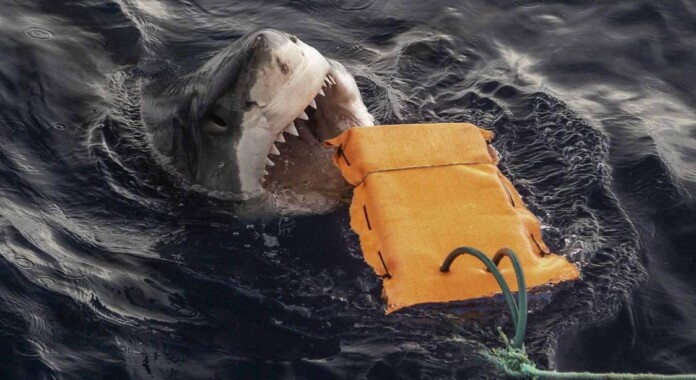
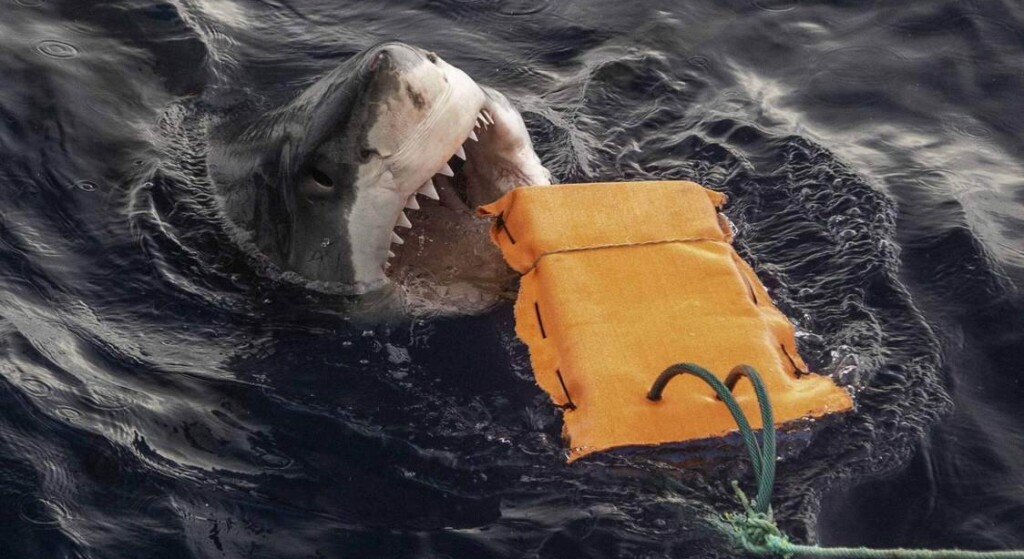
Australian shark experts have tested four bite-resistant materials to assess their ability to reduce injuries and blood loss, and found that
While internal and crushing injuries may still occur, bite-resistant wetsuits can now be added to the ‘toolkit’ of measures available to reduce shark-bite risk and resulting injuries, say researchers from Flinders University’s Southern Shark Ecology Group.
Shark bites on humans are uncommon but can severely impact local coastal communities and businesses, especially where water-based tourism and recreation are common, often prompting pressure for better protection strategies for bathers.
Funded by the New South Wales Department of Primary Industries and Regional Development Shark Management Program, the study tested the efficacy of four bite-resistant wetsuit materials (Aqua Armour, Shark Stop, ActionTX-S, and Brewster material) to reduce lacerations incurred from white and tiger shark bites.
Traditional chainmail suits were protective but too inflexible and heavy for activities like surfing or diving, so the team looked towards new materials that offer a mix of heavy and lightweight fibers and tested them in shark territory.
Visiting Neptune and Norfolk Island, to find white sharks and tiger sharks respectively, they conducted 19 boat trips provoking shark bites and testing the materials. After baiting the water with fish guts, the team would quickly substitute in a wooden board over which a gel that replicates the density of human muscle was applied.
On top of the gel was the wetsuit material, and by jerking it back and forth, managed to convince the sharks to chomp down. Once the animals realized they’d been had and swam away, the researchers would pull the wood up and examine the gel to see how much shredding the sharks’ teeth did.
Dr. Tom Clarke and Professor Charlie Huveneers led a team in assessing each material’s potential in reducing injuries from these sharks by quantifying the amount of bite damage across four categories of increasing severity (ranging from ‘superficial’ to ‘critical’) and comparing it to damage on standard neoprene.
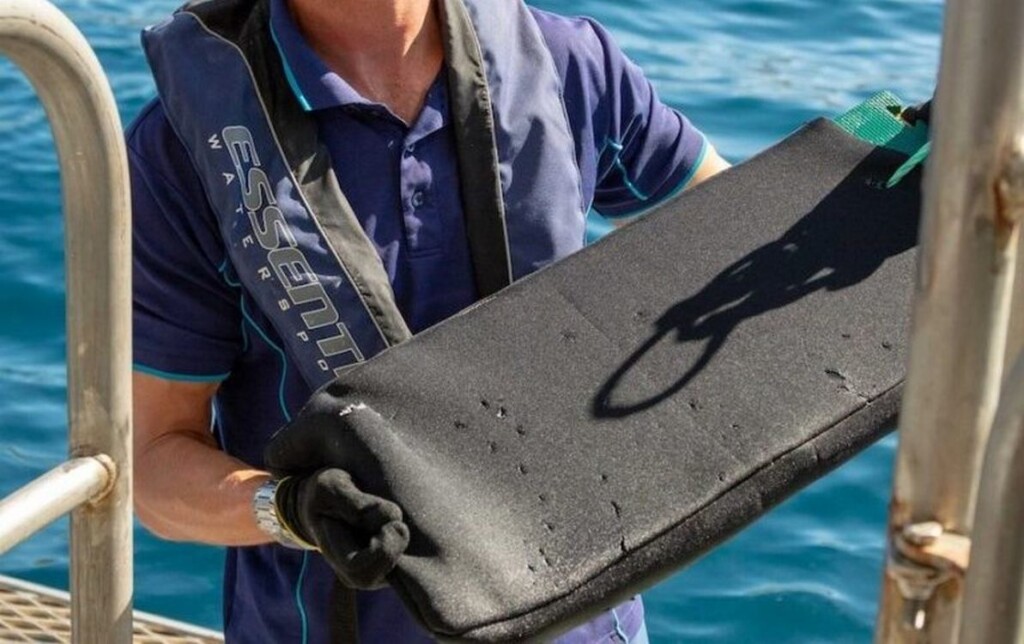
“While there were small differences between the four tested materials, they all reduced the amount of substantial and critical damage, which would typically be associated with severe hemorrhaging and tissue or limb loss,” says Dr. Clarke, from the College of Science and Engineering at Flinders University.
Clarke and Huveneers measured the materials 152 times and found that the tiger shark bites never created a critical wound, and while the white sharks sometimes did, it was still substantially better than normal neoprene, which they also tested.
PREVENTING SHARK ATTACKS:
- Shark Attack App Uses AI to Forecast and Detect Risk for Swimmers at 89% Accuracy
- Queensland Surfers Could Soon be Protected from Shark Attacks With Fleet of Early Warning Drones
- Device Can Repel Sharks By Creating an Electric Field Around Wearer
White and tiger sharks are responsible for the most unprovoked bites and are two of the top three species with the highest rate of fatal bites. Interactions between humans and sharks continue to rise in frequency globally, with expanding coastal populations and rising popularity of marine activities.
“Our study showed that bite-resistant materials incorporated into wetsuits can reduce damage from large white and tiger sharks (up to 3 meters) compared to standard neoprene wetsuit, even from moderate and severe bites,” says Dr. Clarke.
“While these suits don’t eliminate all the risk (e.g. internal injuries may still occur), our results indicate that they can reduce blood loss and trauma from major lacerations and punctures, potentially saving lives,” said Professor Huveneers, who leads the Southern Shark Ecology Group.
“Our findings will allow for informed decisions to be made about the use of bite-resistant wetsuit materials for occupational activities, as well as enabling the public to make appropriate decisions about the suitability of using these products.”
WATCH one of the sharks kindly testing the material…
SHARE This Important Science For Surfers With Your Friends Who Like The Sea…
In Prisons Across Ohio, Inmates Find Meaning by Saving Orphaned and Injured Animals
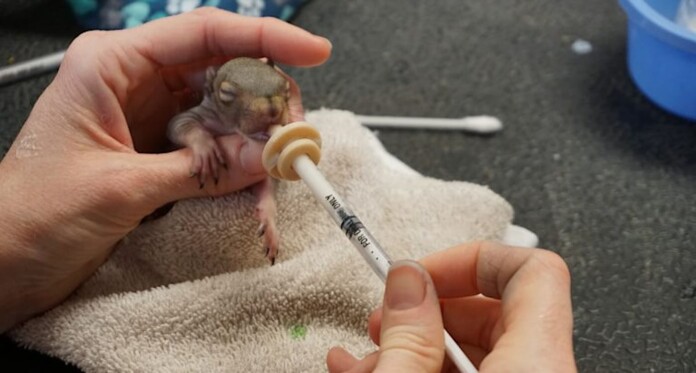
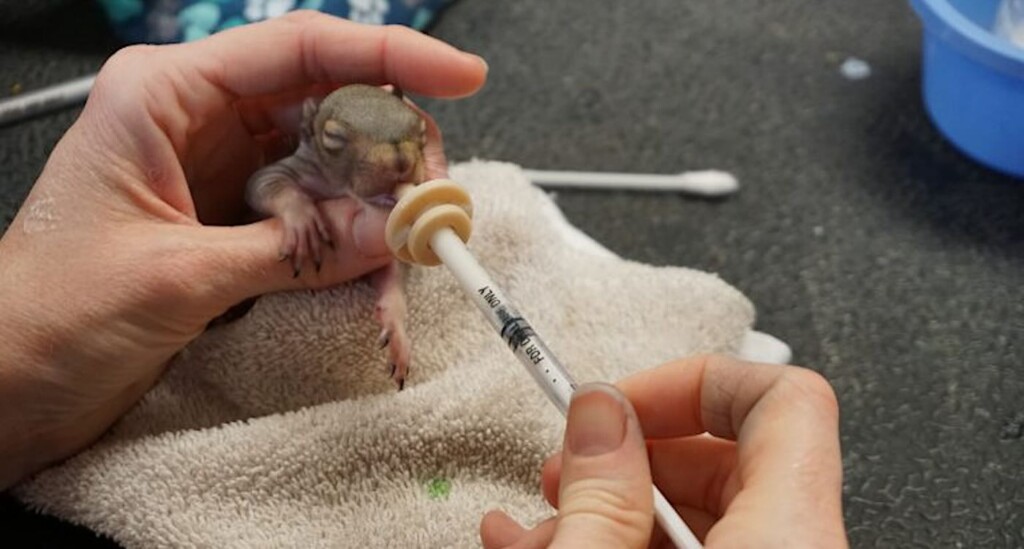
In Ohio, across multiple state correctional facilities, inmates are rehabilitating themselves by rehabilitating others: specifically the most fragile and vulnerable of others: injured or orphaned animals.
Tiny birds—victims of a fall from the nest, baby rabbits orphaned by the wheels of a Ford, or little opossums lost when their mother took off at the first sign of danger—they all need a helping hand and careful attention if they’re going to make it back to the woods or the fields.
At Marion and Richland Correctional Institutions, and the Ohio Reformatory for Women, the Ohio Wildlife Center trains interested inmates on how to feed and care for wounded or abandoned wild animals.
Housed in special aviaries or even inside cages within prisoners’ cells, it gives them someone to care for, and in doing so, perhaps it helps them care for themselves.
Between January and June at Marion, 284 animals were brought in for care, and Scott Fuqua a correctional officer and the program coordinator, says wants that to be 1,000 by years end; such is the impact it has had for the facility.
“The effect that this program has on the offenders here is quite remarkable,” Fuqua told Smithsonian‘s Olivia Young. “The men who participate in this program get a chance to care for something other than themselves, and you can see the changes in their behavior. They tend to stay out of trouble, away from substance abuse, and have an increased interest to learn more about the animals they care for.”
That might include even someone like Tierre M., who is well into his third decade of a potential life-sentence for murder. Tierre knows how to care for dozens of different species and situations.
“Some of these birds coming in, it crushes you to see them,” he told Young, who visited the Marion Correctional Institute’s makeshift wildlife rehabilitation center. “Then, to see [one] getting stronger and the strength coming back in it, the life coming back in it, it’s awesome.”
He was one of the first men who began the program after it started over 25 years ago, when the Ohio Wildlife Center, based in Columbus under the direction of its late founder, began expanding the wildlife treatment and rehab volunteer centers into the state’s criminal justice facilities.
Its first stop was more believable, perhaps, than a medium or maximum security prison. In 1994, some of those incarcerated at the Ohio Reformatory for Women began receiving training for how to care for wildlife, and have since helped rehabilitate thousands of orphaned animals under the guidance of the Ohio Wildlife Center.
ALSO CHECK OUT: Prisons Across the World Are Shaving Days Off Sentences for Every Book Read by Their Inmates
“It is important to our women that their time spent with us is transformative, and that it truly does help rehabilitate them,” said Clara Golden-Kent, public information officer for the Ohio Department of Rehabilitation and Correction. “That is the beauty of this program– the animals and the inmates are both being rehabilitated.”
“I grew up with animals, and animals have always been a part of my life,” inmate Amanda Sawyer said in 2019. “The program helps us and it helps the animals, so I really look forward to it.”
The Ohio Wildlife Center’s hospital treated some 9,000 animals from almost 200 species throughout the year so far, and many of them will require additional rehab before a release. This work is handled by volunteers, 70% of that is done in the prisons.
MORE CORRECTIONAL PROGRAMS TO TALK ABOUT: Formerly-Incarcerated Artisans Craft Tables Designed by Women in Prison, to Benefit Them When They Get Out
Over 60 inmates at 5 state correctional institutions have so far participated in the project, 52 of them at Marion, the only facility to take birds. These men suddenly have something to protect: their right to continue to see the injured animals and helping them. For one of the project’s bannermen, “Willie,” bad behavior would not only mean losing the access to the program, but losing his pet cockatiel, who joins him on his morning feeding routines.
SHARE This Inspiring Path To Redemption With Your Friends On Social Media…
Soccer Team from George Clooney’s Holiday Town Donates Tournament Winnings to Flood Relief


The world-renowned beauty of Italy’s Lake Como has been turned into a disaster area after a rainstorm pummeled the eponymous city and surrounding towns.
With tens of millions in property damage, the local soccer team—currently experiencing a fairytale season—announced ahead of their match on Wednesday night in the Italian Cup that all proceeds would be donated to flood relief.
Manager Cesc Fabregas made the announcement on Instagram Tuesday, while the team was preparing for a match against Sassuolo.
“My thoughts are with everyone in Como today. Seeing our beautiful lake flood and the damage it has brought is heartbreaking,” he added.
“Como is more than just a city to me, it is home, it is family, it is community. To all the people, families and businesses affected, please know you are not alone.”
In Europe, soccer teams move up and down divisions every season based on performance, with the worst teams dropping down a division, and the best teams being promoted to the division above.
After spending 2003-04 in Serie A, Italy’s top-flight competition, Como had a precipitous fall to the point that it had to be liquidated in 2005 after declaring bankruptcy. Almost two decades would go by before the team from George Clooney’s holiday town made it back to Serie A.
MORE STORIES LIKE THIS: ‘It’s Been Amazing’ the Outpouring of Support From Pilots, Business, Celebrities and Government After Hurricane
They did so in no small part thanks to Fabregas’ exceptional coaching, earning promotion in 2024, and with it an enormous increase in revenues stemming from their games being broadcast internationally rather than only in Italy.
That new found wealth hasn’t spoiled the ownership, however, who have opted to hand over the match day revenues to their community as it struggles to clean up the piazzas and roads from landslide debris and flooding.
SHARE This Lovely Display Of Community Connection From The Home Team…

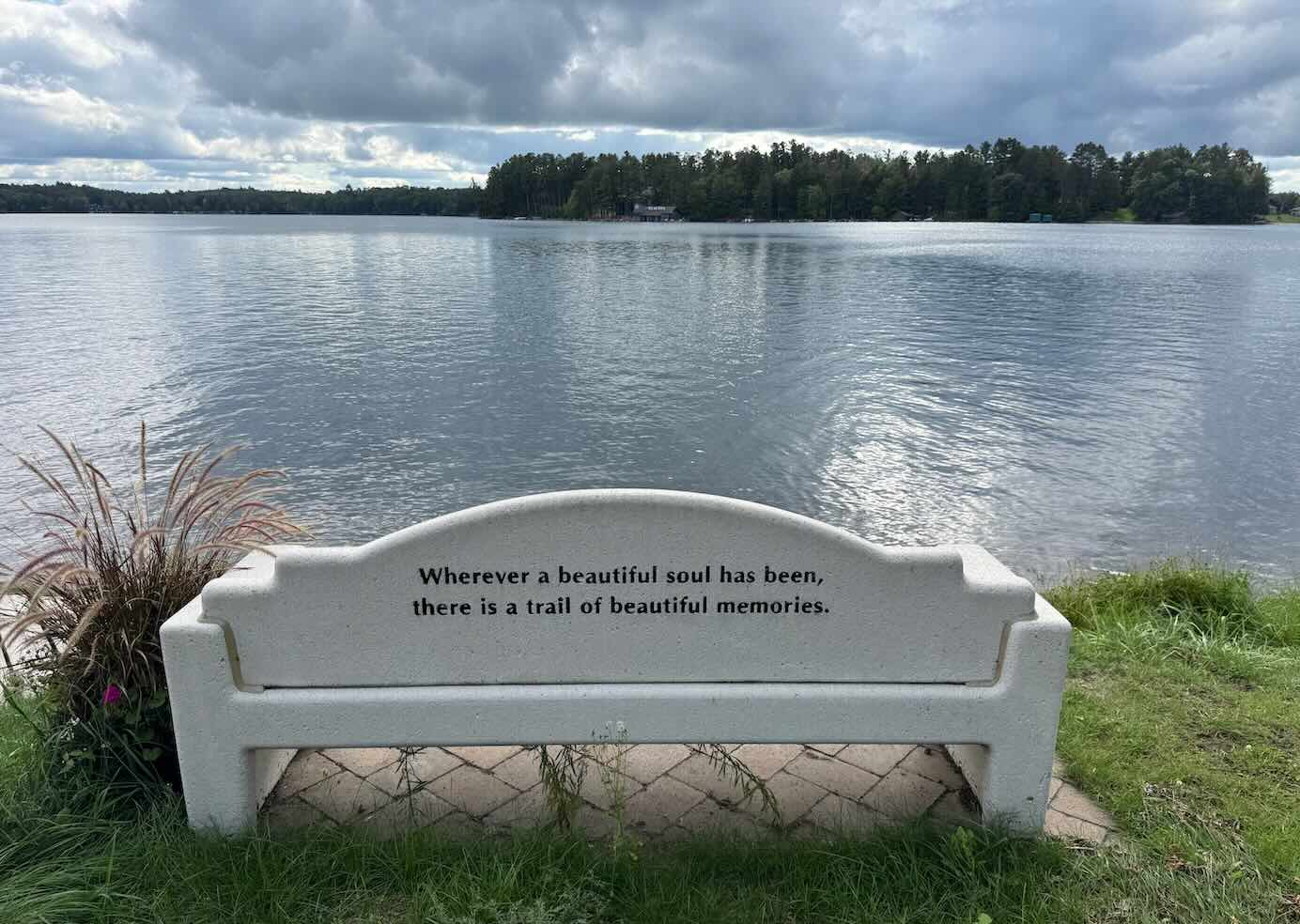
Quote of the Day: “Wherever a beautiful soul has been, there is a trail of beautiful memories.”
Photo by: JL (A random bench in Minocqua, Wisconsin)
With a new inspirational quote every day, atop the perfect photo—collected and archived on our Quote of the Day page—why not bookmark GNN.org for a daily uplift?
Good News in History September 26

Happy 80th Birthday to singer-songwriter Bryan Ferry whose “elegant, seductive croon” and Mod stylings influenced a generation of glam art rock in the 70s. He was the lead singer and songwriter for Roxy Music, achieving three No.1 albums and 10 singles that reached the top 10 in the UK, including, Street Life, Love Is the Drug, Dance Away, Angel Eyes, Jealous Guy, Avalon, and More Than This... WATCH a great retrospective video…
Scientists Just Made CRISPR 3x More Effective at Treating Genetic Diseases


University scientists in Chicago have developed a new nanostructure that triples CRISPR’s ability to enter cells, potentially unlocking even more power to treat genetic diseases.
With the power to rewrite the genetic code that underlies countless diseases, CRISPR holds immense promise to revolutionize medicine.
Now, Northwestern University chemists have unveiled a new type of nanostructure that dramatically improves CRISPR delivery and potentially extends its scope of utility.
CRISPR machinery cannot enter cells by itself. It always needs a delivery vehicle. Called ‘lipid nanoparticle spherical nucleic acids’ (LNP-SNAs), these tiny structures carry the full set of CRISPR editing tools—like Cas9 enzymes.
They’re wrapped in a dense, protective shell of DNA that dictates which organs and tissues the nanoparticles travel to and makes it easier for them to enter cells.
In lab tests across various human and animal cell types, the LNP-SNAs entered cells up to three times more effectively than the standard lipid particle delivery systems used for COVID-19 vaccines, caused far less toxicity and boosted gene-editing efficiency threefold.
The new nanostructures also improved the success rate of precise DNA repairs by more than 60% compared to current methods.
Their study, published in the Proceedings of the National Academy of Sciences, paves the way for safer, more reliable genetic medicines and underscores the importance of how a nanomaterial’s structure—rather than its ingredients alone—can determine its potency.
This principle underlies structural nanomedicine, an emerging field pioneered by Northwestern’s Chad A. Mirkin and his colleagues and pursued by hundreds of researchers around the world.
“CRISPR is an incredibly powerful tool that could correct defects in genes to decrease susceptibility to disease and even eliminate disease itself,” said Mirkin, who led the new study.
“But it’s difficult to get CRISPR into the cells and tissues that matter. Reaching and entering the right cells—and the right places within those cells—requires a minor miracle.
“We aimed to maximize CRISPR’s efficiency and expand the number of cell and tissue types that we can deliver it to.”
MORE GOOD CRISPR NEWS:
• Type 1 Diabetic Produces His Own Insulin After Gene-Edited Cell Transplant
• Aggressive Leukemia Disappears in 13-Year-old Girl Who was First to Receive New CRISPR Treatment
• Scientists Discover Potential HIV Cure that Eliminates Disease from Cells Using CRISPR-Cas Gene Editing
Scientists sometimes use viral vectors as the as a delivery vehicle. Naturally good at sneaking into cells, viruses are efficient, but they can cause the human body to mount an immune response, leading to painful or even dangerous side effects.
LNPs, on the other hand, are safer but inefficient. They tend to get stuck in endosomes, or compartments within the cell, where they cannot release their cargo.
“Only a fraction of the CRISPR machinery actually makes it into the cell and even a smaller fraction makes it all the way into the nucleus,” Mirkin said in a media release.
To overcome this barrier, Mirkin’s team turned to SNAs, which are globular — rather than linear — forms of DNA and RNA previously invented in Mirkin’s lab at Northwestern.
The spherical genetic material surrounds a nanoparticle core, which can be packed with cargo. Roughly 50 nanometers in diameter, the tiny structures possess a proven ability to enter cells for targeted delivery. Seven SNA-based therapies are already in human clinical trials, including a Phase 1b/2 clinical trial for solid tumors being developed by Flashpoint Therapeutics, a clinical-stage biotechnology startup.
In the new study, Mirkin’s team started with an LNP core carrying the CRISPR machinery inside. Then, they decorated the particle’s surface with a dense layer of short strands of DNA. Because the DNA can interact with a cell’s surface receptors, cells easily absorb SNAs. The DNA also can be engineered with sequences that target specific cell types, making delivery more selective.
MORE SUCCESS: CRISPR Identifies Commonly Available Drug That Works as Cobra Venom Antidote
“Simple changes to the particle’s structure can dramatically change how well a cell takes it up,” Mirkin said. “The SNA architecture is recognized by almost all cell types, so cells actively take up the SNAs and rapidly internalize them.”
Boosted performance across the board
After successfully synthesizing LNP-SNAs with CRISPR cargo, Mirkin and his team added them to cellular cultures, which included skin cells, white blood cells, human bone marrow stem cells, and human kidney cells.
Then, the team observed and measured several key factors: how efficiently the cells internalized the particles, whether the particles were toxic to cells and if the particles successfully delivered a gene. They also analyzed the cells’ DNA to determine if CRISPR had made the desired gene edits.
In every category, the system demonstrated its ability to successfully deliver CRISPR machinery and enable complex genetic modifications.
RELATED BREAKTHROUGH: 3 Years After CRISPR Treatment 73 of 75 Patients Cured of Blood Disease – FDA Approval is Near
Next, Mirkin plans to further validate the system in multiple in vivo disease models. The university’s biotechnology spin-out Flashpoint Therapeutics is commercializing the technology with the goal of rapidly moving it toward clinical trials.
“CRISPR could change the whole field of medicine,” Mirkin said. “But how we design the delivery vehicle is just as important as the genetic tools themselves.
“By marrying two powerful biotechnologies — CRISPR and SNAs — we have created a strategy that could unlock CRISPR’s full therapeutic potential.”
SHARE THE CRISPR NEWS With Science Geeks on Social Media…
Britain’s Strongest Grandmother Breaks 4 World Records Just Months After Taking Up Powerlifting
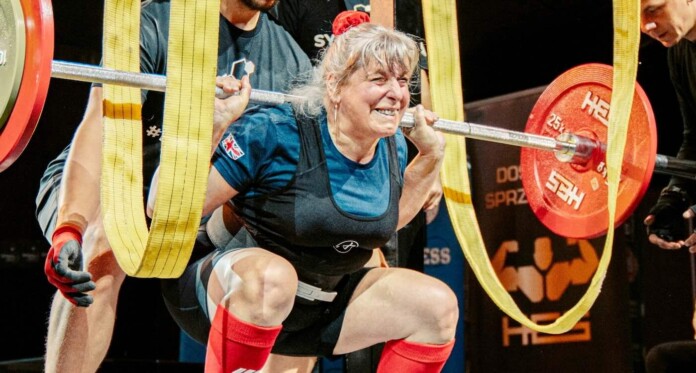

‘Britain’s strongest grandmother’ has broken four world records just 18 months after taking up powerlifting “by accident”.
At the age of 65, Martine Barons has become a four-time champion after lifting for Great Britain at the World and European Championships.
The 5-foot 6-inch mother-of-three with four grandchildren started lifting weights for fun back in December 2023 but soon realized she had a natural gift.
She’s since been training five times a week for two hours a day—all while working full-time as an academic researcher at Warwick University.
“I was surprised to find a talent for powerlifting at the age of 63 after being poor at sports all my life.
“I get enormous pleasure from training and competing—and the health benefits of increased strength and mobility are astonishing.”
She first won the European Championships in Finland last June before successfully defending her title again this June in Poland.
Twelve weeks later, she continued her winning streak in the U.S. at the World Powerlifting championship in Idaho. She previously won the 2024 World Championships in Limerick, Ireland, so all together she’s won four major titles in her division since taking up the sport.
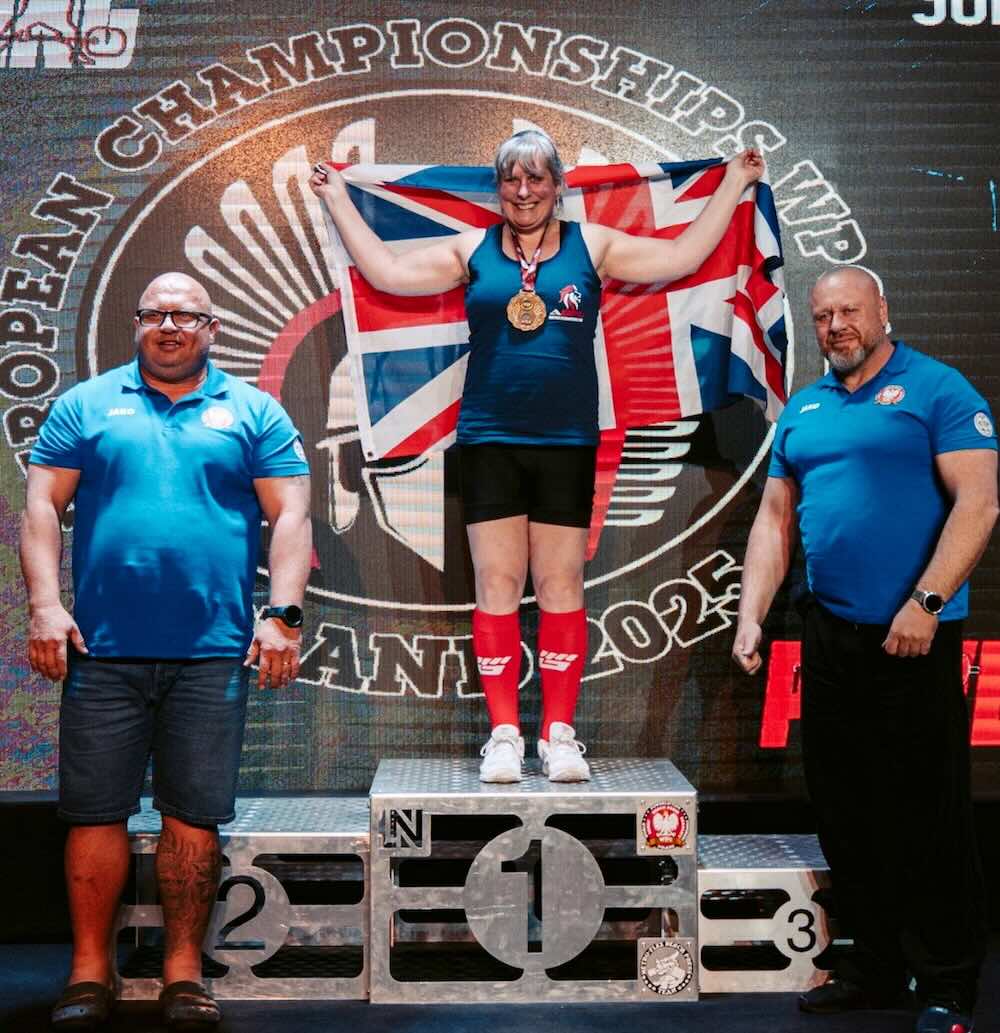
“It does make me happy and quite emotional to think about what I have managed to achieve. I never thought in the space of 18 months I could have achieved this.
“I have to pinch myself sometimes as I can’t believe it’s me. I’m still in shock, as it all started by chance, really.”
UNLIKELY CHAMPIONS:
• Powerlifter with Down Syndrome Hailed an Inspiration After Overcoming His Challenges to Win European Gold
• Teen Who Was Told He’d Never Walk with Cerebral Palsy Just Took 1st Place in Bodybuilding Competition
The married woman from Stratford-upon-Avon, in Warkshire, England told SWNS news agency it began as a fun gym session with a work colleague last April.
“I took up powerlifting by complete accident. I went to a gym with a friend of mine who is a physical training instructor and she showed me how to deadlift.
“She was impressed that I could pick up 60kg. Then I picked up 100kg a few weeks later.
“It must be good genetics. I’m unusually strong for my age and gender.”
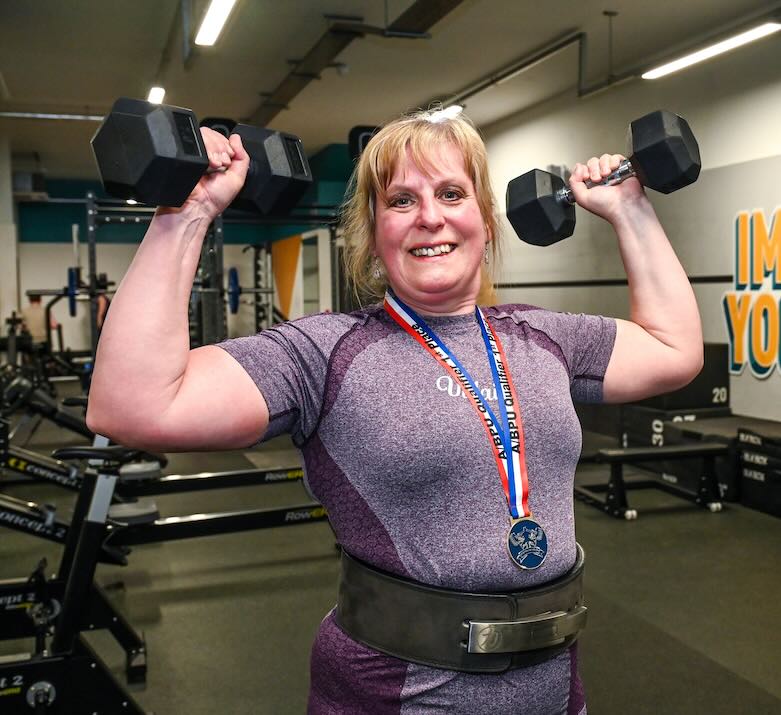
Martine added 10kg to the squat world record to lift 100kg (220 lbs) and 7.5kg to the deadlift world record by lifting 155kg (342 lbs).
She also bench pressed 57.5kg (127 lbs) and added 12.5 kg to the powerlifting total world record by lifting 312.5kg (689 lbs).
Her most recent success was becoming the 2025 world champion in powerlifting, deadlift, and bench press in the Masters 5, Raw, U90kg division.
“I’m a person who needs a goal, so when my friend said you should compete, it was ‘all hands on deck’.
“To be good at a sport for the first time is kind of nice,” she added. “I’ve found I’m good at something, so why not?”
WEIGHTLIFTING A JEEP FOR GOOD: Powerlifter Hailed as Hulk Hero After He Lifts Jeep Off of Injured Driver Trapped Underneath
Her next big competition is the British Single Lifts Championship at the Arnold Sports Festival at Birmingham’s NEC in March 2026.
“I’m proud to be represent my country. It’s not something I thought I’d ever do!”
SHARE THE INSPIRING GRANDMA With Seniors on Social Media…
Feeding Blueberries to Babies May Reduce Allergy Symptoms and Improve Gut Health
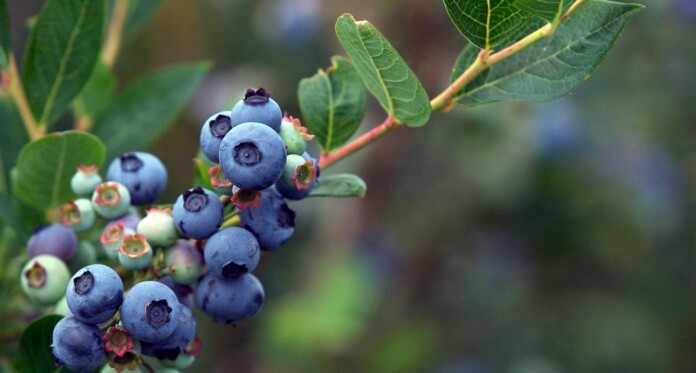
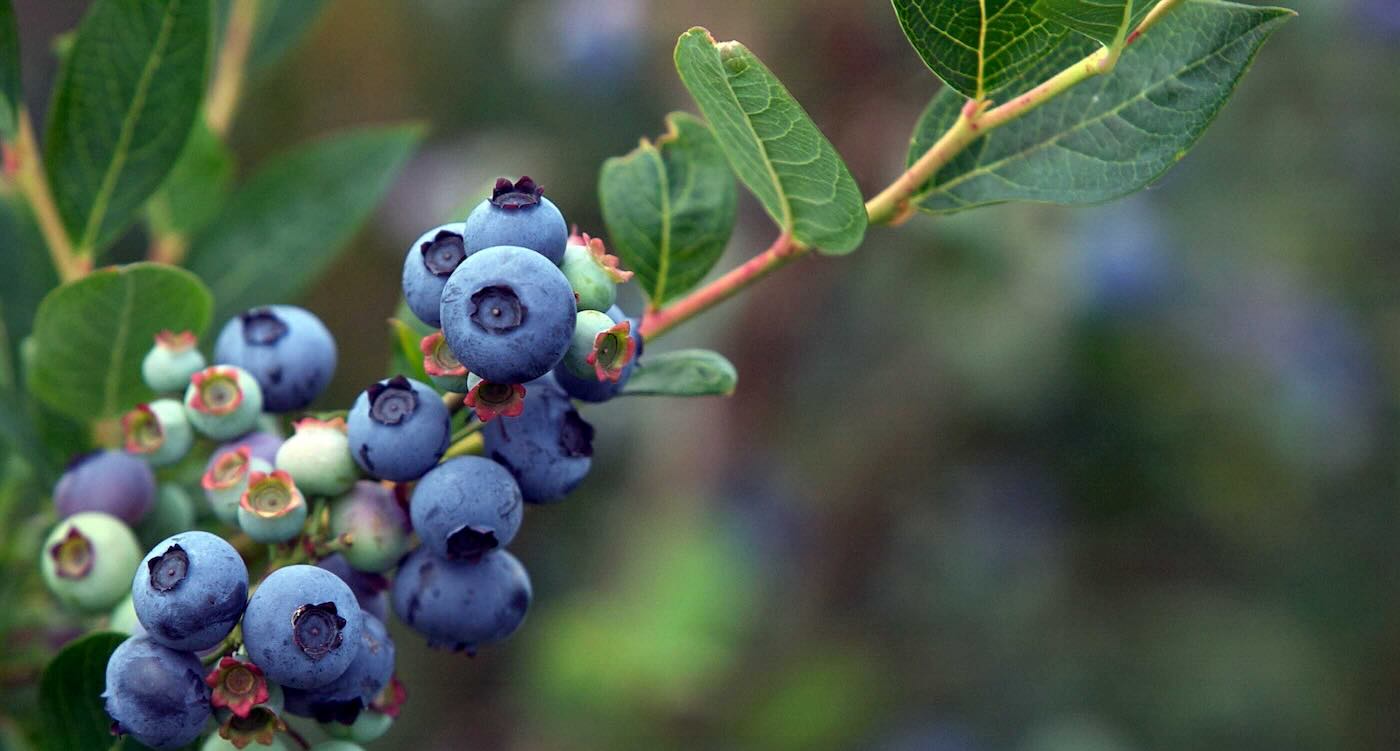
Feeding blueberries to babies may reduce allergy symptoms and improve their gut health, according to new research.
The ground-breaking clinical trial shows consuming the fruit early in life can improve immunity and support long-term health.
Feeding blueberries to babies as one of their first solid foods may help strengthen their immune systems, reduce allergy symptoms and support healthy gut development, says scientists at the University of Colorado.
To safely introduce the “superfood” to younger infants, the research team recommend pureeing them.
For older babies and toddlers, they say blueberries should be mashed or cut into small pieces to eliminate choking hazards.
The study, published in the journal Frontiers in Nutrition, is the first of its kind to rigorously test the effects of a specific food on infant health using a randomized, placebo-controlled clinical trial.
“For parents beginning to wean their infants, it’s incredibly difficult to find solid, research-backed advice on what foods to introduce,” said the study’s senior author Professor Minghua Tang, from the University of Colorado in Anschutz.
“This study is a critical first step in filling that gap by offering real data on how a specific food like blueberries can improve your infant’s health.”
GOOD FOR SENIORS TOO:
• When Blueberries and Grapes Are Combined, a Dramatic Decline in Memory Loss and Aging – Study
• Blueberries May Fend Off Alzheimer’s: It’s All About The Anthocyanins
The researchers followed 61 babies in the Denver area from five to 12 months of age.
Each day, participants consumed either freeze-dried blueberry powder, or a placebo powder with no blueberries.
Parents were free to feed their children as they normally would, simply adding the powder to their daily routine.
The research team collected stool and blood samples every two months to monitor changes in the infants’ gut bacteria, immune system biomarkers and allergy-related outcomes. They also tracked growth and dietary habits.
Key findings included improved allergy symptoms in babies who consumed blueberry powder, reduced inflammation and signs of a stronger immune response, and “positive” shifts in gut microbiota—with changes considered beneficial for immune health.
“This research supports the idea that blueberries are not only safe for infants but also offer meaningful health benefits,” added Professor Tang.
“Just a few blueberries a day could make a difference in supporting long-term health.”
BLUEBERRIES FOR FERTILITY: Natural Compound in Grapes and Berries May Aid in Fertility, Resveratrol Study Shows
“We view infancy as a critical window of opportunity and what we introduce during this time can have lasting effects as children grow.”
The research team is continuing to explore what other early foods might help support healthy gut bacteria and a strong immune system as babies grow to ensure there’s better guidance in place for parents.
SHARE THE TIP With New Parents on Social Media…
‘Hairy’ Deep-Sea Coral Species Newly Discovered is Named After Chewbacca
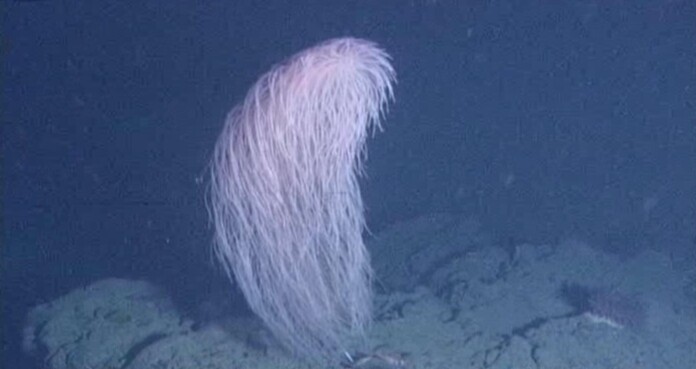
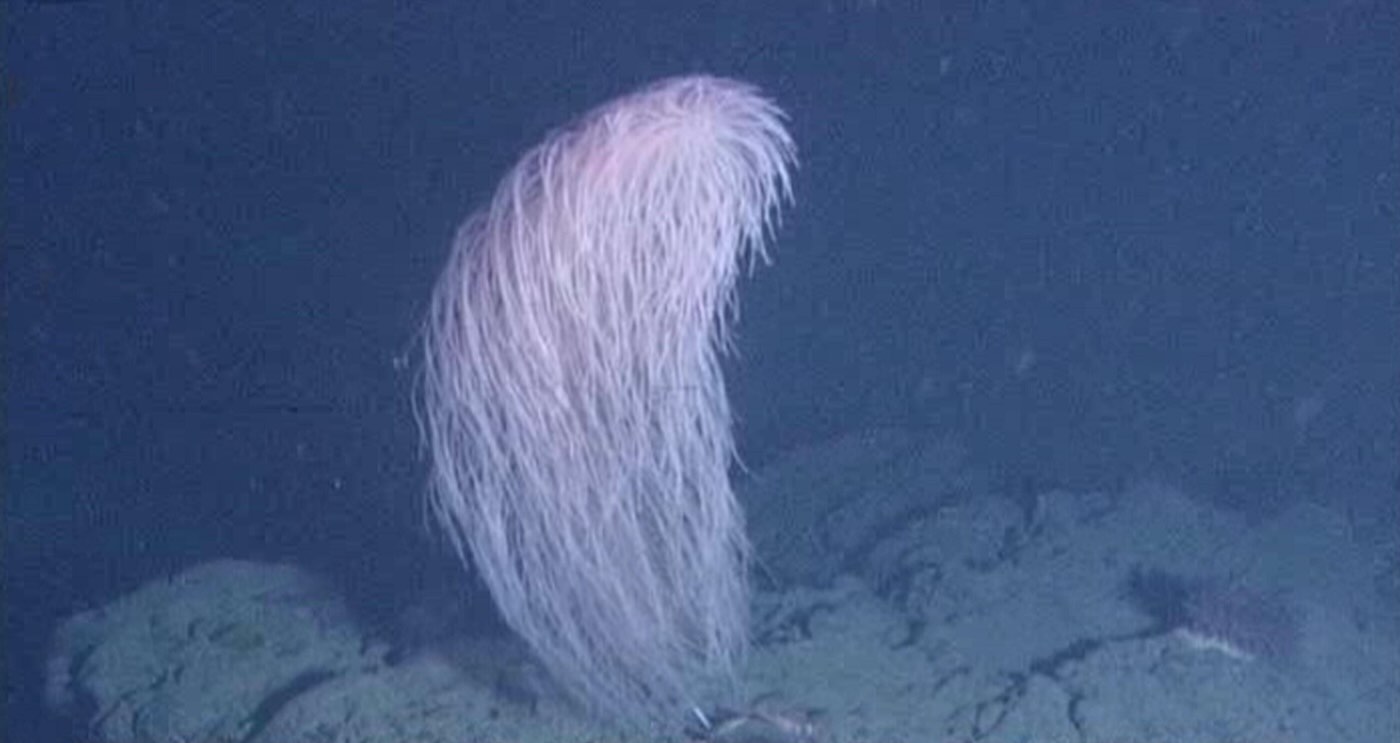
A new ‘hairy’ deep-sea coral species has been named after Chewbacca when researchers were reminded of the Star Wars character after the discovery in the tropical western Pacific.
The coral, named Iridogorgia chewbacca, is known for its long, flexible branches and shiny surface.
As seen in the photos, the nickname is well-earned due to the coral’s furry-looking branches standing upright, like an appearance of the furry Wookie seen in the sci-fi saga.
Les Watling, professor emeritus in University of Hawaiʻi Mānoa’s School of Life Sciences and co-author of the study published in Zootaxa, spotted the coral while reviewing research from colleagues in China.
His earlier work in Hawaiʻi waters and collaborations with NOAA expeditions helped confirm that it was a new species.
“Seeing this coral for the first time was unforgettable,” Watling said in a UH press release.
“Its long, flexible branches and shape immediately reminded me of Chewbacca. Even after years of deep-sea work, discoveries like this still make me stop and take notice.”

The coral itself was first recorded in the wild in 2006, but at the time it was not officially described as a distinct species. Only after further research, including genetic analysis, did scientists confirm its uniqueness and formally recognize it as a new species in a peer-reviewed study.
CORAL GOOD NEWS:
• Scientists Discover ‘World’s Largest’ Coral – the Size of 5 Tennis Courts
• New Technology Lights Up Coral Beds to Speed Reef Restoration By Attracting Food
• Portugal Announces New 38,000 Sq. Mile Protected Area Around ‘Stunning’ Underwater Mountains
The discovery adds to scientists’ understanding of the biodiversity hidden in the deep ocean and demonstrates that even long-studied regions like the Pacific still hold surprises.
LET YOUR FRIENDS CHEW ON THIS By Sharing The Fun on Social Media…
“The secret of business is to know something that nobody else knows.” – Aristotle Onassis

Quote of the Day: “The secret of business is to know something that nobody else knows.” – Aristotle Onassis
Photo by: Bruce Mars
With a new inspirational quote every day, atop the perfect photo—collected and archived on our Quote of the Day page—why not bookmark GNN.org for a daily uplift?

Good News in History September 25

56 years ago today, the charter establishing the Organization of Islamic Cooperation was signed in Rabat, Morocco. The OIC consists of 47 members that are either Islamic by law, Arab by lingua franca, or which contain a large Muslim population like Uganda. The opening preamble states that “Muslim governments would consult with a view to promoting among themselves close cooperation and mutual assistance in the economic, scientific, cultural and spiritual fields, inspired by the immortal teachings of Islam.” READ more about the union’s progress over the years… (1969)