Quote of the Day: “It’s on the strength of observation and reflection that one finds a way. So we must dig and delve unceasingly.” – Claude Monet (born 180 years ago)
Painting by: Claude Monet, Water Lilies and the Japanese bridge (1897–1899)
With a new inspirational quote every day, atop the perfect photo—collected and archived on our Quote of the Day page—why not bookmark GNN.org for a daily uplift?
Ricardo Pimentel may not have had an ark to ride out the storm, but he’s being hailed as something of a modern-day Noah nonetheless.
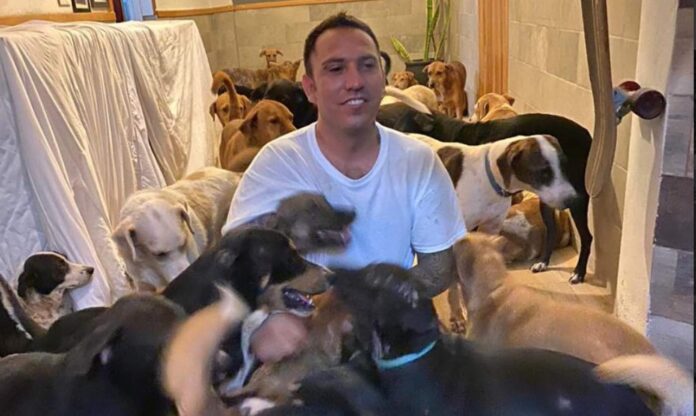
As deadly hurricane Delta bore down on Mexico’s Yucatan Peninsula tearing a path of destruction directly to his door, Pimentel herded hundreds of animals—including more than 300 dogs, numerous rabbits, chickens, and even a hedgehog—inside his home to shelter them from the storm. (A flock of sheep huddled for safety on the patio.)
Ricardo Pimentel Cordero / Facebook
Although his house took a beating, inside and out, the entire menagerie survived. “It doesn’t matter if the house is dirty, it can be cleaned,” Pimentel told AP. “The things they broke can be fixed or bought again, but what’s beautiful is to see them happy, healthy and safe, without wounds and with the possibility of being adopted.”
Pimentel’s actions were no surprise to those who know him. The home he shares with his family serves as the hub of Tierra de Animales (Land of Animals), the 10-year-old animal sanctuary he founded about 20 miles southwest of Cancun.
Knowing supplies might be hard to come by, prior to the storm, Pimentel posted to social media about his concerns for the welfare of his flock. As Delta raged, he also posted pictures from inside his house—which looked like a real-life version of 101 Dalmatians—times three.
Once Delta had passed, with so many mouths to feed and a major post-storm cleanup underway, Pimentel didn’t realize his posts had gone viral until donations from around the world started pouring in. Not only that, neighbors soon arrived in the aftermath of the hurricane to help clear debris and rebuild the sanctuary.
While he was awed by the generosity of donors and volunteers, Pimentel hopes this moment in the spotlight will serve a larger purpose—helping him find forever homes for some of his rescues so he’ll be able to save even more.
“We would like to think that thanks to all this attention, somebody would like to be part of the story and say: ‘I adopted a dog saved from that famous Hurricane Delta,’” he explained.
The storm may be over, but Pimentel continues to walk the walk, a living testament to the sanctuary’s motto, “Leave footprints of kindness for others to follow.”
(WATCH Ricardo’s video showing his work in the hurricane below.)
WOOF Your Praise for This Story By Sharing it on Social Media…
The area surrounding the Gjellestad Viking ship burial in Norway was found to contain an extensive and traditional funerary, feasting, and religious complex of outstanding significance, ground-penetrating radar scans revealed.
The finds transform the understanding of the site as one containing an isolated grave to representing the regional center of Viking high-society.
Antiquity Publications Ltd/L Gustavsen
Remains of three longhouses, a feasting hall, 13 smaller burial mounds, and a temple were all identified sitting in the field around the Jell Mound, the second-largest known funerary earthen mound in Norway, and one that was first used as a high-society burial site in 550 CE, around the fall of the Western Roman Empire.
Together they form a hitherto unknown “central place,” sites which Scandinavian archaeologists classify as places of great importance to the pre-Christian denizens of the peninsula.
Excavations, both academic and amateur, of the Jell Mound and surrounding areas have yielded high value goods, many of which are now on display in Norwegian museums and which include weapons and jeweled personal items.
The researchers suggest that, as can be observed in other burial or political traditions in cultures and nations of the past, tying one’s political or cultural authority to older traditions or places/persons of authority was a strong way of consolidating power.
“We believe that the inclusion of a ship burial in what was probably an already existing—and long-lived—mound cemetery was an effort to associate oneself with an already existing power structure,” said Lars Gustavsen, the lead author of the research paper on the site’s additional structures and mounds.
“Indicative of the emergence of a central place in a time when control of the land was in flux, Gjellestad’s relevance as a political arena was retained and reinforced with the addition of a ship burial—the ultimate expression of status, wealth and connection in Iron Age Scandinavia,” reads the paper.
As good as it gets
The discovery of a partially-intact ship burial is about as good as it gets in European archaeology, and the Viking Ship Museum in Oslo is home to the only three ever excavated, all discovered in the 1800s.
The Gjellestad ship, discovered in the autumn of 2018, is the first one to be excavated in over 100 years, and was discovered in a field in southern Norway near the border with Sweden in Østfold county by archaeologists from the Norwegian Institute of Cultural Heritage Research. It was buried 1,200 years ago, about a decade after the Viking Age exploded into violent life with the raid on the English Monastery at Lindisfarne in 793CE.
“For the first time in 100 years, we will now excavate a Viking ship. We are very excited about the result,” Sveinung Rotevatn, Norway’s Minister for Climate and Environment told state broadcaster NRK. “It is urgent that we get this ship out of the ground.”
Antiquity Publications Ltd./NIKU
The urgency comes from a fungal growth that is rapidly decaying the wood of the ship. $1.5 million was granted by the government for excavation of the Gjellestad last year.
In the mid-20th century, according to Smithsonian, farmers unknowingly built a drainage pipe over the boat’s resting place in the middle of their field. Air leaked down into the soil and allowed a destructive fungus to proliferate and eat away some of the boat which wasn’t already destroyed by both time, and the unfortunate discovery by locals in centuries past.
If the excavation is quick and clean, historians may be able to divine what kind of ship it is, as the Vikings used different ships for trading, raiding, and transport. Measuring 60-feet long, it’s not the smallest ship style built during the Viking Age, but also by no means the biggest, as the famous Gokstad and Oseberg ships are about 18 and 10 feet longer respectively.
(WATCH the NIKU video about the Gjellestad Viking ship discovery below.)
SHARE the News of This Viking Find With Pals on Social Media…
As has been the case for families all around the globe, the past few months have been stressful for the Smiths, to see the least.
Sam Smith is a single father to 6-year-old Lysander and 3-year-old Zenduel. Since lockdown began in England, the family has been largely confined to their one-bed apartment on the 15th floor of a high-rise in East London.
It’s not a very big apartment—just 12 steps from one side of the main room to the other—and with local parks closed, sometimes Sam and the kids have been stuck inside for 23 hours a day.
When the family went on the BBC Breakfast Show to talk about what it’s like to be confined in a very small living area during the pandemic, a couple, Ken and Sheila Sims, were watching the interview from their home on the Devon coast.
Ken grew up in a high-rise apartment building as a young boy, and felt especially saddened seeing the difficulties the Smiths was going through.
Luckily, he knew just how to help. He could give the Smith family a break by asking them if they’d like to spend a week at his cottage by the English seaside.
Of course, they said yes to Ken’s idea.
“I can’t find the words… ” Sam said at the beach on his family’s Devon vacation. Motioning at the sky and water all around him, at his young sons making sandcastles, he exclaimed, “It’s beautiful!”
(WATCH the joyful vacation the Smiths just had in the BBC video below.)
SHARE This Sweet Story of Generosity with Pals on Social Media…
In the largest clinical trial of its kind, researchers have shown that combining sound and electrical stimulation of the tongue can significantly reduce tinnitus, commonly described as “ringing in the ears.” They also found that therapeutic effects can be sustained for up to 12 months post-treatment.
Neuromod Devices Limited
The findings could potentially help millions of people since tinnitus affects about 10 to 15 percent of the population worldwide.
The study represents the largest and longest followed-up clinical trial ever conducted in the tinnitus field for a medical device with 326 enrolled participants, providing evidence regarding the safety, efficacy, and patient tolerability of bimodal neuromodulation for the treatment of tinnitus.
About 86 percent of treatment compliant participants reported an improvement in tinnitus symptom severity when evaluated after 12 weeks of treatment, with many experiencing sustained benefit 12 months post-treatment.
“I am truly proud of our company’s ability to perform such a large-scale randomized clinical trial in two countries,” University of Minnesota Associate Professor Hubert Lim said. “This study tracked the post-treatment therapeutic effects for 12 months, which is a first for the tinnitus field in evaluating the long-term outcomes of a medical device approach. The outcomes are very exciting and I look forward to continuing our work to develop a bimodal neuromodulation treatment to help as many tinnitus sufferers as possible.”
Thought the study, which was sponsored by Neuromod Devices, there were were consistent therapeutic outcomes across both clinical sites, with no serious adverse events.
The tinnitus treatment device used in the study, now branded as Lenire®, was developed by Neuromod Devices and consists of wireless (Bluetooth®) headphones that deliver sequences of audio tones layered with wideband noise to both ears, combined with electrical stimulation pulses delivered to 32 electrodes on the tip of the tongue by a proprietary device trademarked as Tonguetip®.
The timing, intensity, and delivery of the stimuli are controlled by an easy-to-use handheld controller that each participant is trained to operate.
Before using the treatment for the first time, the device is configured to the patient’s hearing profile and optimized to the patient’s sensitivity level for tongue stimulation.
For the trial, participants were instructed to use the Lenire® device for 60 minutes daily for 12 weeks.
Out of 326 enrolled participants, 83.7 percent used the device at or above the minimum compliance level of 36 hours over the 12-week treatment period.
For the primary endpoints, participants achieved a statistically and clinically significant reduction in tinnitus symptom severity.
When treatment was completed, participants returned their devices and were assessed at three follow-up visits for up to 12 months.
Just more than 66 percent of participants who filled out the exit survey affirmed they had benefited from using the device, and 77.8 percent said they would recommend the treatment for other people with tinnitus.
Participants in the study were screened and selected based on a pre-defined list of inclusion and exclusion criteria to ensure the trial had a wide distribution sample of the tinnitus population.
(WATCH the video about this game-changing device below.)
Quote of the Day: “Innovation is seeing what everybody has seen and thinking what nobody has thought.” – Dr. Albert Szent-Györgyi (Hungarian biochemist, Nobel Prize in 1937 for research on Vitamin C)
Photo by: Mike Kononov
With a new inspirational quote every day, atop the perfect photo—collected and archived on our Quote of the Day page—why not bookmark GNN.org for a daily uplift?
A dedicated daughter has got a job in a nursing home so she can keep seeing her dad through the pandemic.
SWNS
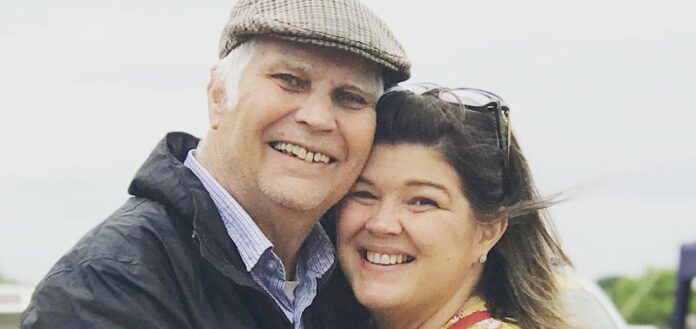
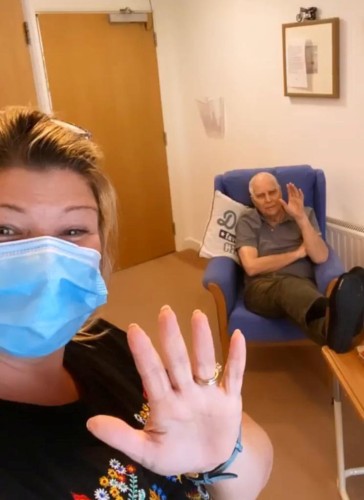
49-year-old Nina Ambrose was devastated when lockdown rules meant she couldn’t visit her father Roger, who moved into a nursing home in January.
So when she was furloughed from her job, the former Butlins Redcoat entertainer applied to volunteer as an activities and events coordinator at her dad’s new place of living.
Since April, she has been doing around three shifts a week at the Chelmsford nursing home, and after each one she gets to visit her dad, who has Alzheimer’s disease.
Mum-of-one Nina said: “Without this my mental health would absolutely have suffered during lockdown.
“It’s lovely and rewarding to do, gives me a routine, and I’ve been able to meet residents and staff at a time which has been very isolating for many. Plus I’m seeing that everyone’s dementia story and journey is different.”
Former lorry driver Roger has had Alzheimer’s disease for 12 years, and has declined more severely in the last six months.
“It’s been very hard,” said Nina from Writtle in Essex.
“Dad and I have always been very close, we’re like peas in a pod.
“Dad did a lot of volunteering himself after retiring.”
Nina is enjoying her new role so much, in fact, that she’s considering a new career in caring. “I love it,” she said. “It makes the residents so happy, when I go in, they start clapping and saying, ‘sing sing’, and they remember all the old songs. Music has such a big impact on people with dementia. It’s been a massive game changer.
SWNS
“I wouldn’t have considered doing this job before, but this has absolutely inspired me.
“I feel I’ve got so much to give. I love to make people happy… I’d like to spread that joy around as far as I can by working each weekday in five different care homes.”
Roger turned 77 on October 6, and they celebrated with cake and a chorus of happy birthday.
He loves art, so Nina buys him pictures of cars and buses you can paint by brushing over water, which she is now able to personally deliver when she works.
Nina is deeply moved her dad’s story was selected out of 20 for the Empathy Museum, London.
She documents Roger’s journey through illness on her Instagram page @rantsandbigpants to help others in similar situations. Her big hope is that others will realize being diagnosed with Alzheimer’s “doesn’t have to be all doom and gloom: You can tap into what made people happy and the activities they once enjoyed at whatever level they can enjoy them now. I tell Dad the same joke every week and he laughs his head off.
More than 40% of Americans think their cooking skills have improved so much during the pandemic that they could now compete on TV’s “MasterChef,” according to a new survey.
More than six in 10 Americans said their cooking skills have improved since the beginning of the pandemic, and a new survey of 2,000 Americans revealed insights on how cooking has become a bigger part of people’s lives since the pandemic began.
Conducted by OnePoll on behalf of Certified Piedmontese, the poll examined how the pandemic has proven a kitchen confidence booster for many Americans, and how they plan to continue this culinary momentum in the new year and beyond.
If your New Year’s resolutions involve eating better, you’re far from alone. Six in 10 respondents reported that improving their culinary skills is at the top of their resolution list this year.
On average, respondents have learned to cook eight new dishes in 2020. And that trend shows no sign of stopping, as 77% of respondents reported a desire to attempt to tackle at least one worldly dish in the New Year.
Top sophisticated dishes respondents are aiming to perfect in 2021 included filet mignon (26%), croissants (25%), and beef Wellington (25%).
But that doesn’t mean these fancy favorites will come easily to would-be MasterChefs.
The average respondent reported that they’ll try cooking a new dish six times before they can perfect it.
The secret to perfection? Quality ingredients, according to eight in 10 respondents, who said these are the differentiator between a great dish and a mediocre one.
The study also found that 66% of people would love to cook with higher-end ingredients, but wouldn’t go out of their way to buy them for themselves.
However, the same amount of respondents admit when they find something on sale or at a discount, they don’t hesitate to purchase it, with two-thirds of respondents saying they check to verify that the claims about their food are verified and that the food came from a reputable source.
“Whether you’re whipping up prime rib to celebrate New Year’s Day, crafting that perfect roulade to impress your significant other on Valentine’s Day, or marking any other special occasion with a new culinary endeavor in 2021,” an Executive Chef from Certified Piedmontese said, “starting with quality-sourced ingredients is key to success.”
The dishes people are interested in mastering in 2021
It was the best of times; it was the worst of times, but when it was the worst of times for Jersey City eatery Würstbar, their best of neighbors at Virile Barber Shop swooped in to help.
Like many restaurants struggling to stay afloat in the wake of the COVID-19 pandemic, Würstbar had adapted it’s business model to meet the current guidelines. Unfortunately a staff member was exposed to the virus. Rather ran risk spreading the disease, the management decided the best course of action was to shut down—at least temporarily.
“No, we are not randomly closed for ‘renovations!’” read their Instagram post. “We unfortunately, had an exposure to COVID-19 at Würstbar.
“Würstbar is a small team run by an extremely hardworking and loyal staff. Running the restaurant with only non-exposed employees isn’t an option for us at the moment.
“We decided as a team that we would close until every employee exposed or not has been tested and can return to work confident in their safety, and equally as important, our guests’ safety.
“Thank you to @hdsid_jc and Prestige Health Mobile for getting the entire staff tested so quickly. We look forward to serving you soon.”
Word of Würstbar’s crew quarantine quickly made the rounds of the tight-knit community. Luckily, Würstbar’s neighbors are pretty wünderbar.
In less than 24 hours, workers from Virile Barber Shop just up the street stepped up, offering to lend a hand by taking shifts to keep Würstbar open for business until the impacted staff members could all be tested and cleared.
“The weather is too nice out to let our neighbors at Würstbar stay closed!” Virile Barber Shop owner Andre Fersa posted. “I’ve taken over the bar and am selling PRETZELS, beer, wine and cider for outdoor seating only. Come on by and support this great staff.”
As expected, the grateful Würstbar staff was soon singing the praises of the generous community volunteers who’d pitched in to keep their doors open. “A big thank you to the crew at @virile for taking over Würstbar yesterday, that was a blast! We love this community and couldn’t ask for better neighbors.
“Let’s not forget barbershops and salons were hit just as hard as restaurants during the shutdown. With so many people home from the office and big events not happening it’s easy to skip a cut here and there. If you have the means, please get that extra cut and look your best for your Zoom call or socially distanced gathering.”
Now granted, a sweet story like this about neighbors going the extra mile for each other when the chips are down may not be the best thing you hear all day, but it sure won’t be the würst.
RESTORE Your Friends’ Faith in Humanity By Sharing The Sweet Moment on Social Media…
Clocking in at 16 hours; 46 minutes; nine seconds (just 14 minutes shy of the 17-hour cutoff time), triathlete Chris Nikic didn’t finish with the fastest time when he recently completed his first Iron Man race—but he did set a new world record.
This past Saturday, after swimming 2.4 miles, the 21-year-old Floridian cycled 112 miles, and then ran a 26.2-mile marathon to become the first competitor with Down’s Syndrome to successfully cross the finish line in the 42-year history of the Iron Man Race.
“You have shattered barriers while proving without a doubt that anything is possible,” tweeted the official Ironman Triathlon Organization. “We are beyond inspired, and your accomplishment is a defining moment in Ironman history that can never be taken away from you.”
For his awe-inspiring efforts, Nikic also earned himself a place in the Guinness Book of World Records as the first person with Down’s Syndrome to become an official Iron Man.
“Being the first person with Down’s Syndrome is a great feeling,” Nikic told TODAY, prior to the event. “I can prove to kids that if I can do it, they can do it, too.”
Nikic’s father, Nik, hopes that parents of other children with Down’s Syndrome who see what his son has achieved will be inspired. “We want them to realize earlier that their child is a blessing, and they can live an amazing life,” he told TODAY.
As important as taking on the physical and mental challenges of an Iron Man were to Nikic, he had other compelling reasons for entering the competition. He might not have been carrying a banner, but the message he took across the finish line with him was clear.
“To Chris, this race was more than just a finish line and celebration of victory,” his dad told the BBC. “Ironman has served as his platform to become one step closer to his goal of living a life of inclusion, normalcy, and leadership. It’s about being an example to other kids and families that face similar barriers, proving no dream or goal is too high… If Chris can do an Ironman, he can do anything.”
Nikic trained between four to six hours a day to prepare for the grueling event, and that training paid off. Even after suffering a fall from his bike during the second leg of the race, he called on his inner reserve of strength to get back up, keep going, and get the job done.
“Goal set and achieved,” Nikic posted to the delight of social media posse, including 33,000 new Instagram followers. “Time to set a new and bigger goal for 2021.”
One of Nikic’s biggest fans, all-time tennis great Billie Jean King, tweeted the perfect response: “No limits. No boundaries. Keep dreaming big and going for it, Chris!”
With hopes of competing in the 2022 Special Olympics scheduled on his home turf in Orlando, it looks as if Chris Nikic has plenty of big dreams yet to come true.
As for that medal he won for completing one of the world’s most grueling triathlons? He gifted it to his loving mom.
SHARE This Inspiring Feat With Your Friends on Social Media…
After more than 400 tests, Richard Branson’s Virgin Hyperloop, a levitating train of small passenger pods, just made transportation history as it completed its first run with people aboard.
Virgin Hyperloop
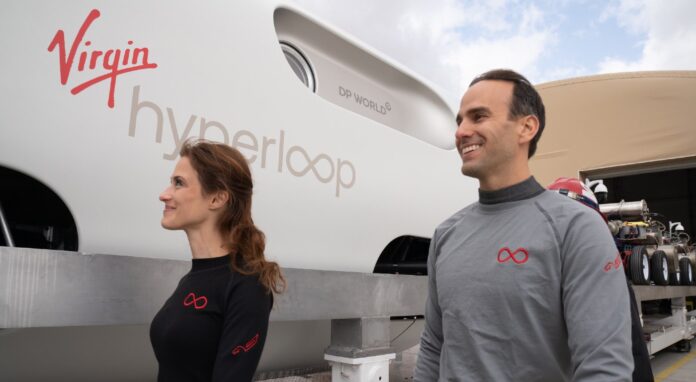
Chief of Technology Josh Giegel and Sara Luchian, the Director of Passenger Experience, reached speeds of 107 mph (172 kph) at the DevLoop testing center in Las Vegas, Nevada. While being only a sixth of the purported top speed of the Virgin Hyperloop, it still represents a major safety milestone.
This comes shortly after Reuters reported that West Virginia will play host to a certification center and test track where the next phase of testing will follow a timeline of achieving safety certification by 2025 and commercial-scale operations by 2030.
“I had the true pleasure of seeing history made before my very eyes,” said Sultan Ahmed bin Sulayem, the chairman of Virgin Hyperloop and chief executive of DP World, the firm which invested around $400 million in the Virgin Hyperloop’s development.
Hyperloops are springing up around the world as innovators seem to conclude that small pods that float over a magnetic track using electromagnetism in a vacuum tube to achieve lighting quick, silent, emission-free travel is the future of transportation.
Such a system could carry commuters at 670 mph from Washington D.C. to New York City, arriving in just half an hour; or one the West Coast, from Los Angeles to San Francisco in 43 minutes—four times the speed of a regular train, and twice as fast as a jet airliner.
Virgin Hyperloop is a transportation system built to reduce greenhouse gas emissions in every way, not only because of the propulsion system, but the construction of the tunnels would be smaller and less reliant on heavy machinery.
Virgin Hyperloop
“It allows us to re-imagine urban areas and connectivity between urban areas,” Hyperloop Chief Executive Jay Walder told Reuters. “You’ll be able to move up to 50,000 people per hour, per direction. With zero source emissions.”
Construction would also be much more flexible, as there is far-less surface area, and the pods have a sharper turning angle than rail trains and can go up steeper inclines.
Drive The Exciting News To Your Friends By Sharing It To Social Media…
Archaeologists working at the site of the ancient Maya city of Tikal in northern Guatemala have found a sophisticated water filtration system that would have proven to be millennia ahead of its time.
Anna Stampfil
Built at the end of a channel from the Corriental reservoir, a critical source of drinking water for the northern Maya, the mixture of zeolite and quartz sand at the mouth of the channel would have removed most contaminants like cyanobacteria and heavy metals and is still used in modern water filters even today.
“What’s interesting is this system would still be effective today and the Maya discovered it more than 2,000 years ago,” Kenneth Tankersley, associate professor of anthropology from the University of Cincinnati said in a statement.
And speaking of 2,000 years, it would be around 2,000 years from the estimated date of the completion of the filtration system at Tikal that the same materials would begin to be employed in Europe.
“It was probably through very clever empirical observation that the ancient Maya saw this particular material was associated with clean water and made some effort to carry it back,” said UC geography professor Nicholas Dunning, who was involved with the research.
End of an era
Tankersley and Dunning published a research paper together on the discovery. According to the corresponding statement on the university website, water quality and availability would have been a major concern for the flourishing Maya civilization in the 3rd century BC.
Even though Tikal and the Maya who built it centered their cities in a rainforest, the porous limestone soil meant that water never stayed around for long, and in periods of extended drought, standing water like the Corriental reservoir would become contaminated with bacteria.
During rainy seasons, the city, which has been listed as a UNESCO Heritage Site and might have been home to around 60,000 people, was fed by rainwater from four reservoirs, the Corriental being the furthest from the city at a distance of about 18 miles.
While the intuitive “molecular sieve” of quartz sand and zeolite filtered the water at Corriental, the other reservoirs closer to the city lacked this modern filtration system, and it was the resulting contamination combined with a period of climatic change characterized by reduced rainfall that saw the powerful commercial and ceremonial hub of the Northern Maya civilization abandoned during the 9th century.
“The main water sources for the site core of Tikal, especially the Temple and Palace Reservoirs, were seriously compromised as sources of drinking water by the end of the Late Classic period,” write Dunning and Tankersley in their paper.
It wasn’t only heavy metals and bacteria that were being filtered out by Corriental but mercury, a toxic compound present in a pigment called cinnabar which the Maya used constantly as decoration. The Temple and Palace reservoirs lacked the filtration system necessary to remove the mercury runoff from cinnabar-painted buildings, and soil samples have shown that during the period before abandonment the mercury levels could have been ten times more than the lowest measure of toxicity.
“We don’t have absolute proof, but we have strong circumstantial evidence,” Dunning said in his statement. “Our explanation makes logical sense.”
“The ancient Maya lived in a tropical environment and had to be innovators. This is a remarkable innovation,” Tankersley said. “A lot of people look at Native Americans in the Western Hemisphere as not having the same engineering or technological muscle of places like Greece, Rome, India, or China. But when it comes to water management, the Maya were millennia ahead.”
SHARE The Big News From Tikal With Your Pals on Social Media…
Quote of the Day: “Be not inhospitable to strangers lest they be angels in disguise.” – Paraphrase from the Bible
Photo by: Vignesh Moorthy
With a new inspirational quote every day, atop the perfect photo—collected and archived on our Quote of the Day page—why not bookmark GNN.org for a daily uplift?
Morris Township is your typical New Jersey town: There’s a fire department and a police department; there’s a medical center, and fun stores, and lively restaurants.
Thanks to the work of a super creative girl—since the pandemic hit in March, frontline staff in the area have been finding some very special items outside such places of work.
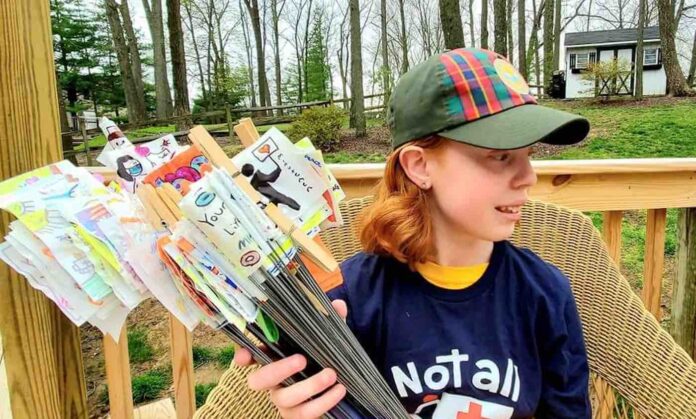
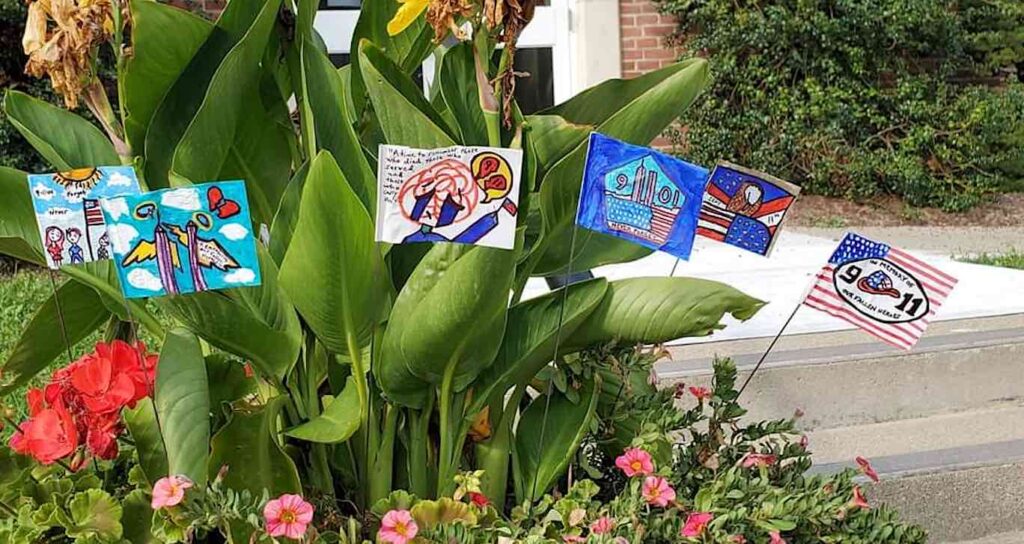
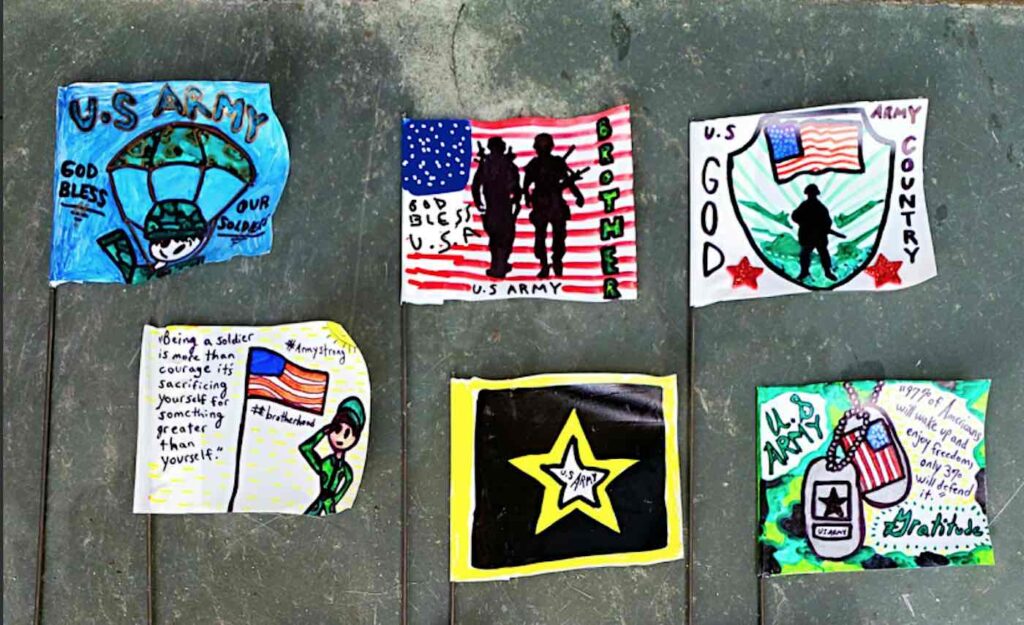
These ‘Flags of Gratitude’ are all made by 11-year-old Callie Danysh.
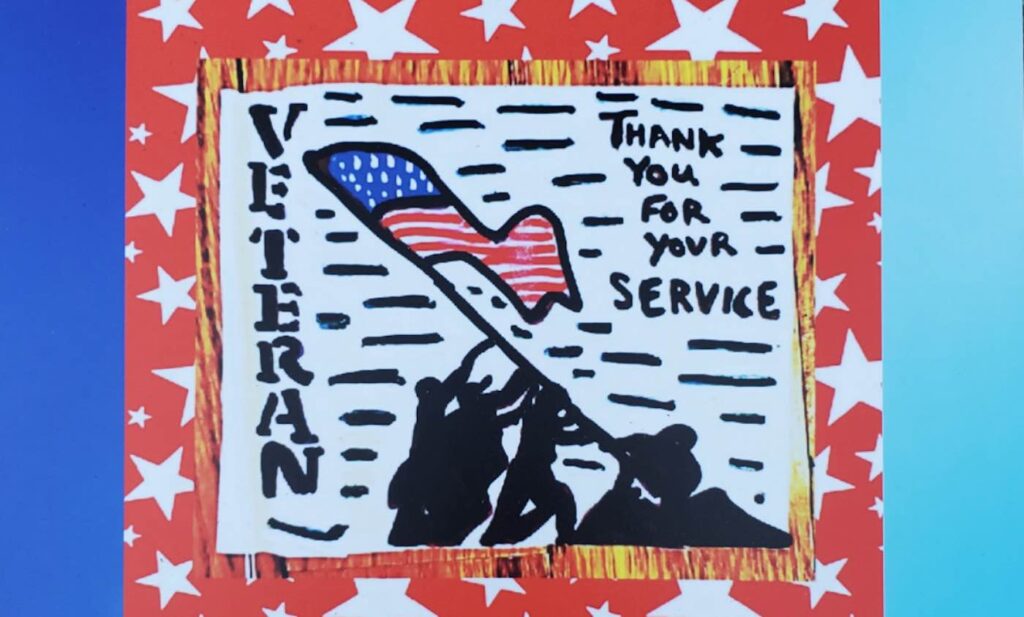
She paints the image for every flag or tile herself, and adds inspirational messages of support and appreciation on each one—so essential workers can know just how grateful we all are for the work they’re doing.
Callie has been leaving no stone unturned in her bid to ‘honor a hero.’
Around Morristown, Morris Plains, and Morris Township, staff and volunteers at local businesses and organizations have all been finding Flags of Gratitude dedicated to them.
So far, Callie has made an incredible 2,000 flags to encourage and uplift others—all of which can be seen on the Flags of Gratitude Facebook page.
The list of heroes Callie is honoring with her art continues to expand.
This November 11, with a little help from some Sharpie markers and paint pens, she’s been honoring former service personnel by making special flags to place outside the Veterans of Foreign Wars site in Morris Plains.
Last month, she also made flags for Morristown’s Army and Navy Recruiting Center.
As part of her project, Callie is raising money for others: In July, she made $1,000 for HelpMorrisNow, which helps get food and clothing to local people in need.
Now she’s raising money for Good Grief, an organization that helps families going through loss, and Hubert’s Animal Welfare. Essentially, she’s doing whatever it takes to give back to the community.
“It makes me feel really good because I enjoy spreading kindness to people,” says Callie.
Her designs are being printed on 9-inch photo tiles so people can donate to the charity and have a keepsake that will last forever.
Head to the Facebook page to see how you can get involved—perhaps by buying one of Callie’s beautiful tiles?—and help this astonishing youngster in her bid to lift up others, one artwork at a time.
Together, we can pay off the debt of those we’re forever indebted to.
Today is Veterans Day, and on November 11, every time a person tweets “Thank you for your service,” Veterans United is contributing $25 to paying off the home loans of deserving former military personnel.
This amazing campaign is being marked by the hashtag #MakeItMeanMore, because, although they appreciate our gratitude, veterans deserve more than just a quick ‘thanks’.
Follow the progress throughout the day and watch as Veterans United Home Loans—the nation’s largest VA mortgage lender—posts videos of the life-changing surprises on Twitter, Facebook, and Instagram.
A live ticker of the number of tweets (71,000 and counting) with the amount of contributions (nearly $2 million so far) can be followed on MakeItMeanMore.com.
Hank Bolden just received the news that his mortgage was being totally paid off. An Atomic Veteran who served in California, he was given just a few years to live after being exposed to radiation while serving. Now he’s a jazz saxophone student at the University of Hartford—and he’s on track to complete his degree at the amazing age of 83.
Watch the moment where the octogenarian finds out he no longer has to worry about his home loan.
In preparation for the campaign, the lender contacted Academy Award-nominated actor Gary Sinise to surprise Navy veteran Bill Day with the news that his entire mortgage had been paid off.
“Me?” Exclaims Bill, a single father of four based in Albany, NY. He looks astonished as he says, “I don’t deserve this.”
“You’ve served your country, you’re taking good care of your family there and you’re working hard. We want to do a little something for you,” Sinise replies, smiling.
The shock on Bill’s face is obvious as he responds, “My son is at school right now, he’s severely autistic, we’re having so many issues, this is just going to… You guys have no idea what you’ve just done for me,” he tails off mid-sentence, in tears. “Thank you, that’s all I can say.”
Log onto Twitter now and send out your tweet. All it needs to say is five simple words: “Thank you for your service.” That’s it.
All done? You’ve just helped pay off a deserving person’s home loan.
Remember to check out the new videos of veterans being surprised on YouTube throughout the day—and bask in the collective power one simple, heartfelt tweet can have in changing people’s lives.
SAY ‘Thank You For Your Service’ on Twitter today, and ask all your friends to do the same…
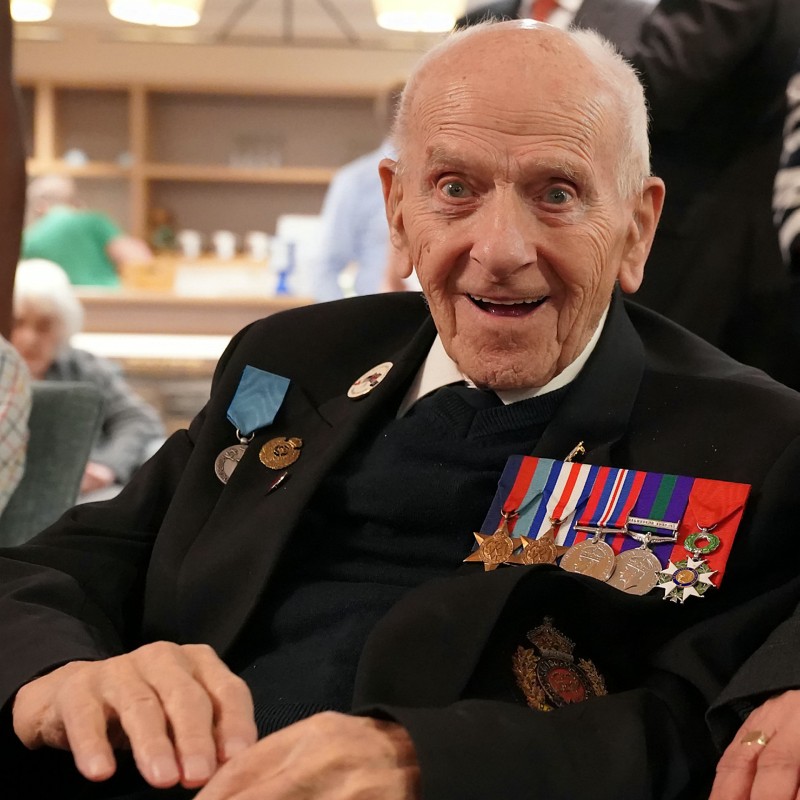
A 98-year-old D-Day veteran has recreated a photo taken with a Belgian boy whose family took him in 76 years ago.
George ‘Bunny’ Avery was a sapper in the Royal Engineers and part of the second wave of troops to land on Normandy’s Sword Beach beaches on D-Day, 6 June 1944.
On that fateful day, he was dropped close to the shoreline by his landing craft, and as he made his way to the beach he said he “just kept running.” In his mind, he was telling himself, “Keep your head down boy!”
George advanced through Nazi-occupied Europe, building portable bridges which allowed troops and vehicles to travel at speed across rivers and canals.
During his wartime journey across the continent, George stayed at a bakery in the Belgian town of Peer with a family who gave him board and lodgings.
It was 1944 and George and some other soldiers were building bridges nearby.
While staying with the town bakers, George made good friends with the 6-year-old boy of the household.
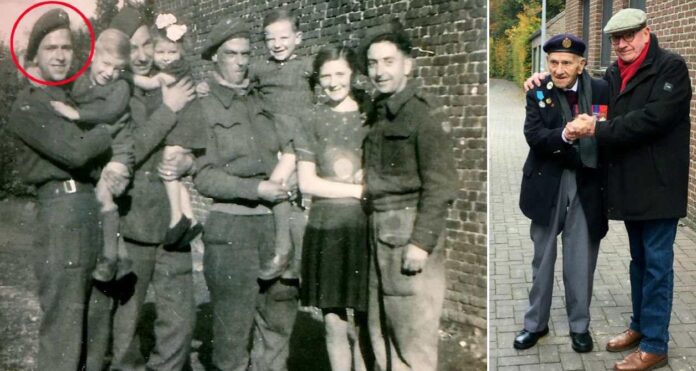
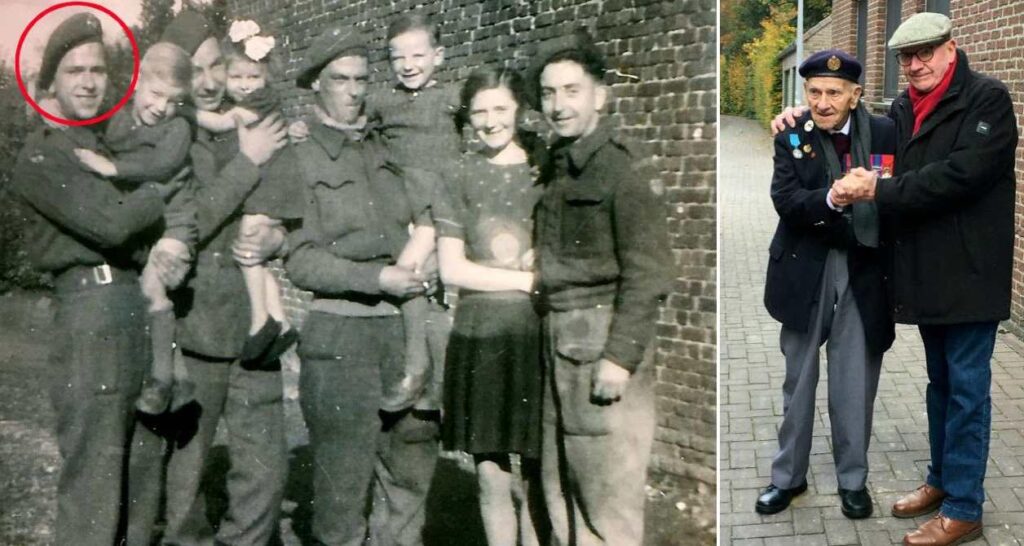
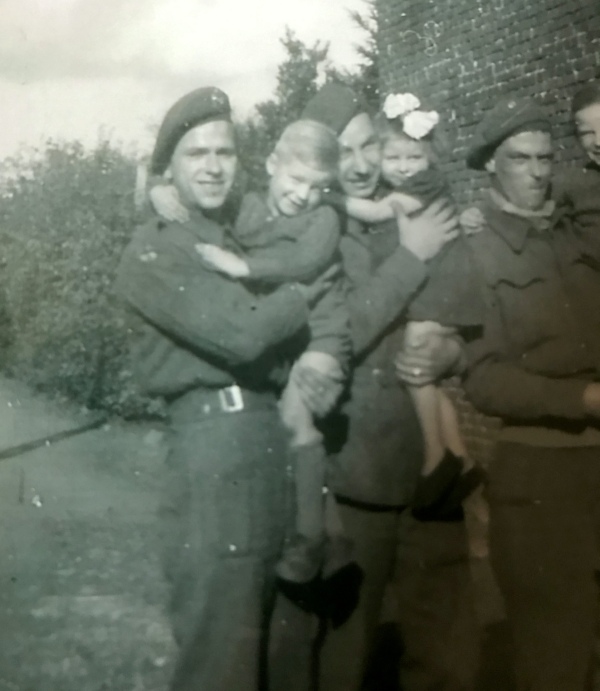
That boy’s name was Urbain, and when the family had their photo taken to remember their time with George, he and Urban were were pictured hugging.
George’s daughter Kathryn recently discovered photos of the bakery, with a Belgian address written on the back. She began doing some research. Before long she’d managed to contact Urbain. He said yes to meeting-up in his childhood town with Kathryn and her dad.
SWNS
Kathryn and her father often return to France, Holland, and Belgium to take part in liberation commemorations, but this meeting was particularly special.
When they met, Urban was holding a photo showing him being carried by George, who was just 23 at the time.
George now lives with dementia and can’t remember his meetings with Urbain, but his Belgian pal still remembers those special times with his soldier friend, and spoke to Kathryn of his joy at playing with George as a child.
SWNS
75 years after they first met, George and his Belgian had their photo taken in the very same spot where they were first photographed.
We’re sure Kathryn will treasure such a special moment being captured forever.
SHARE This Beautiful Story With Your Friends on Social Media…
A new report from the International Energy Agency (IEA) published on Tuesday says almost 90% of new electricity generation in 2020 will be renewable, with just 10% powered by gas and coal—unbelievable growth figures from major countries like India, China, and the U.S, even as their economies struggle with COVID-19.
Spurred on by long-term contracts, a slight 5% dip in global energy demand, priority access to power grids, and continuous installation of new renewable power plants, worldwide growth in renewable energy will reach 7% by the end of 2020.
To say that the period from January to October of 2020 has been economically uncertain would be an understatement, but that hasn’t stopped an evidently unhaltable stream of investment going into of renewable energy installation the world over.
This period has seen a 15% increase in auctioned-off renewable energy when measured against the same period last year, and compared with 2019, the 2020 average share price of publicly traded solar power companies has more than doubled.
Other measures of increase are a healthy 4% growth in new installations of renewable infrastructure and plants, amounting to around 200 gigawatts in the U.S. and China, with a 30% jump in the production from wind and PV solar power sources.
The forecasts for 2021 are even sunnier. India and the EU will lead a big drive that will, according to estimates from the IEA, result in a record setting 10% expansion in renewables by the end of 2021.
How is this possible
“Supply chain disruptions and construction delays slowed the progress of renewable energy projects in the first six months of 2020,” reads the IEA report. “However, construction of plants and manufacturing activity ramped up again quickly, and logistical challenges have been mostly resolved with the easing of cross-border restrictions since mid-May.”
“Despite the challenges emerging from the Covid crisis, the fundamentals of renewable energy expansion have not changed.”
Already the cheapest forms of new energy installations around, PV solar panels and wind farms, generate the cheapest costs of electricity in history, something South Australia got to enjoy last month.
“Total installed wind and solar PV capacity is on course to surpass natural gas in 2023 and coal in 2024. Solar PV alone accounts for 60% of all renewable capacity additions through 2025,” the IEA predicts.
By 2025, coal could seem relatively pointless, as not only is renewable energy the cheapest in history, but it will be on track to supply the majority of the world.
Furthermore, reductions in costs are projected to triple the market investment into renewables to over 15% during the same period. This is spearheaded by investment companies like BlackRock, whose CEO Larry Fink, responsible for managing trillions of dollars in private capital, guides investment decisions now principally on companies’ capacity for climate-conscious strategies.
There’s virtually nowhere a person can look and not see incredible prospects for renewable energy taking over the global energy market in the next decade. These fundamentals, if proven true, are staggering, and represent outcomes that climate change activists could only dream of eight or ten years ago.
SHARE the Great Green News With Friends on Social Media…
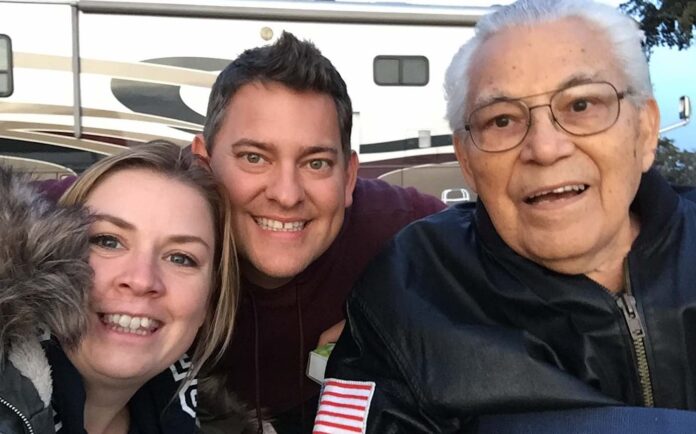
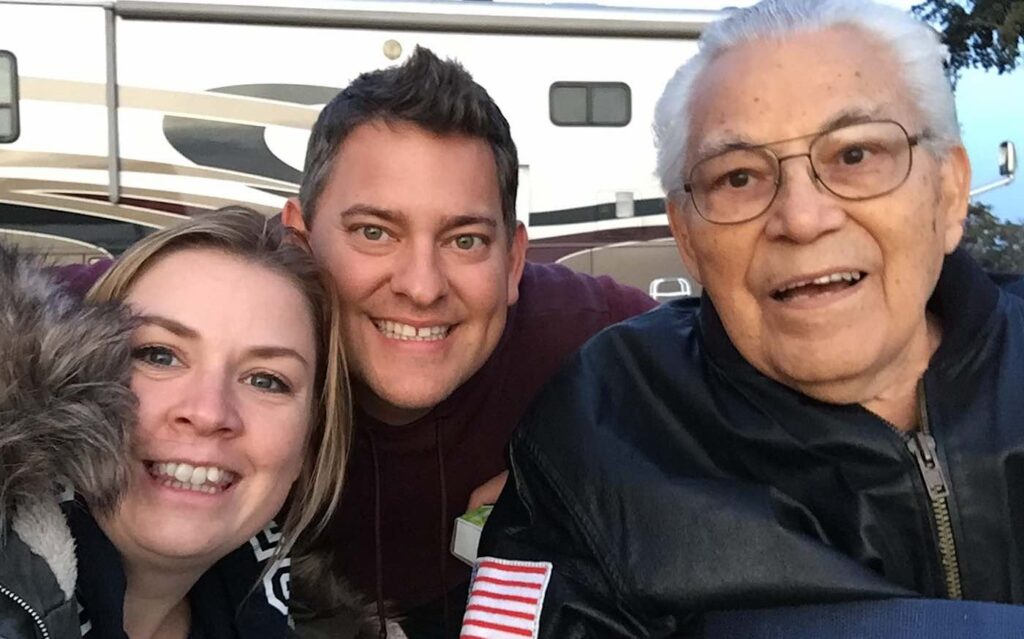
When 95-Year-old WWII veteran Johnnie Dimas lost his full-time caregiver and wife of 67 years, there didn’t seem to be many options, other than to move out of his house and into a nursing home.
But, he and his late wife had always vowed that they would never go into a home—so his grandson Roger Gilbert devised a plan.
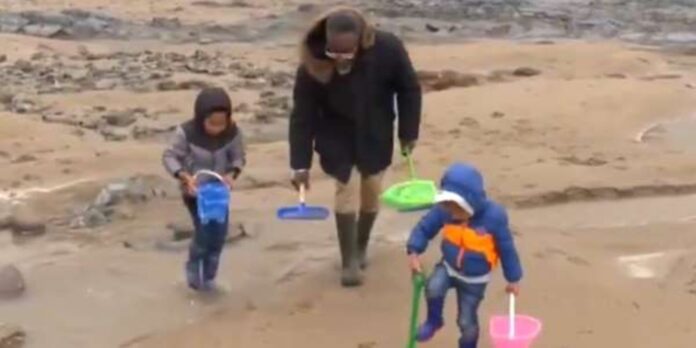
He moved Grandpa Johnnie from Illinois to live with Roger and his wife Jo, in Sedona, Arizona two years ago.
And, last October they decided to embark on an epic journey around the USA in their motor home, visiting all of the places on their grandfather’s bucket list.
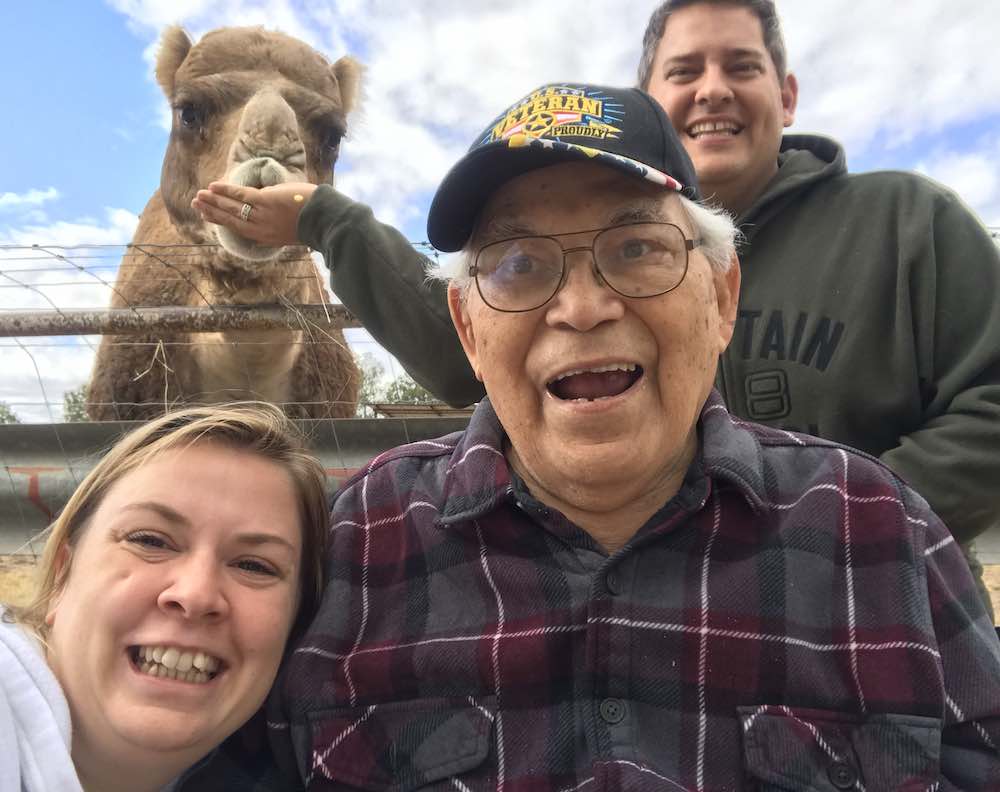
Knowing that time was limited, the unlikely trio explored and experienced as much as they could together—from Mardi Gras to Las Vegas, to an encounter with a camel named Roger at a dairy farm on the Mexican border, where he was completely enamored with the animal.
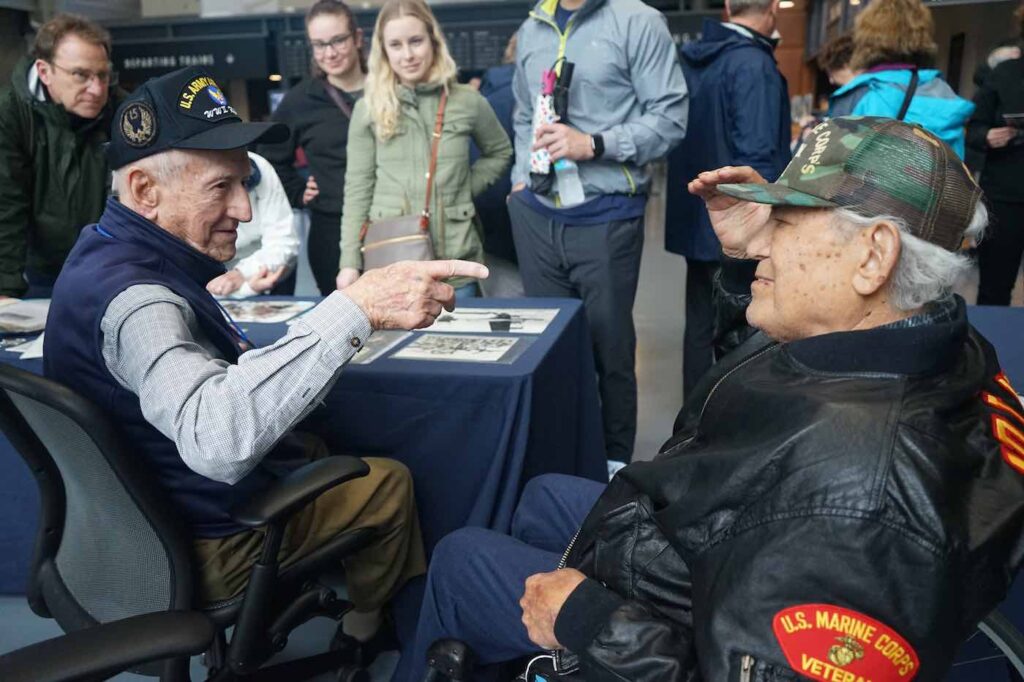
Most importantly, they got to visit several World War II museums where Johnnie was “treated like a rock star.” He was also fortunate enough to meet a fellow WWII vet there.
Photo by Jo Gilbert
“I think it was deeply cathartic for Grandpa to be able to process everything that had happened at such a young age,” Jo told GNN.
Johnnie enlisted in the U.S. Marines at the age of 17—and due to his young age, his father had to sign him up. He served in Guam where he was wounded and was sent back to the States to recover in a V.A. hospital. He had severe PTSD and was treated with electric shock therapy—until he “witnessed a friend and fellow soldier being carried out on a stretcher.” Afterward, he discharged himself from the hospital and went home.
Before loading his wheelchair into the motorhome for their trip, they dubbed their vehicle the ‘Sweet Mary Bus,’ for Johnnie’s late wife.
“Grandpa used to call her ‘Sweety’, so we named it after her and got a license plate with the name. It made him cry.”
Some of their favorites stops turned out to be Tombstone Arizona; White Sands, New Mexico; and the Texas cities of San Antonio, Austin, and Dallas.
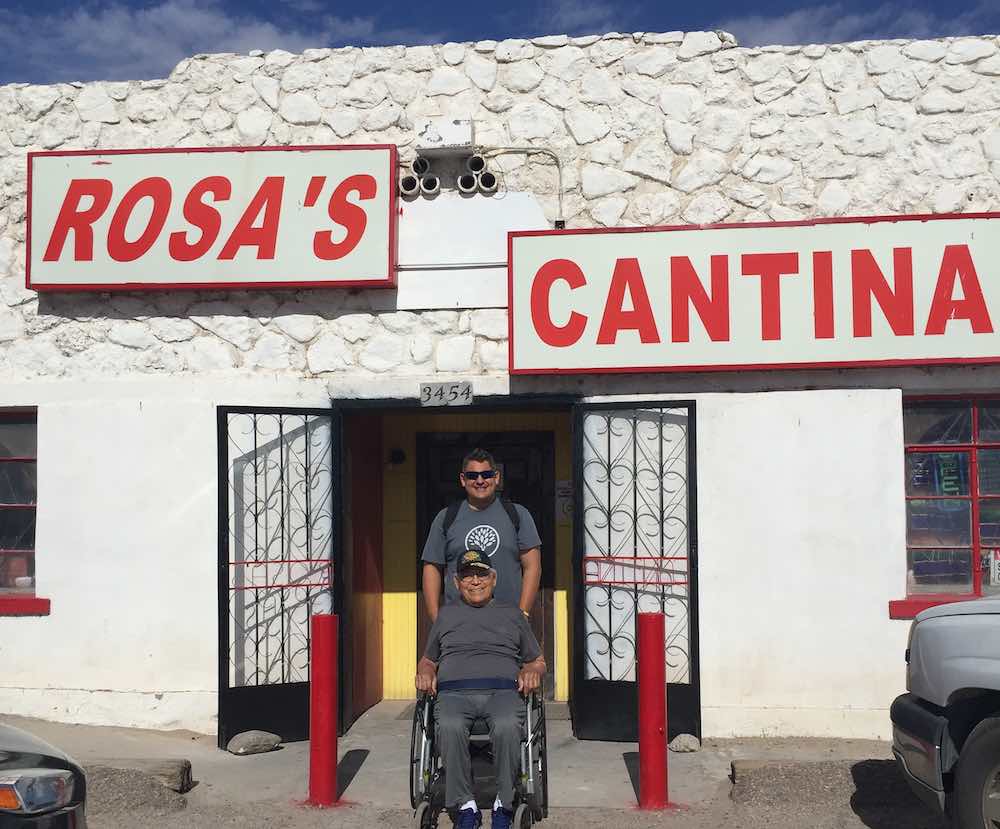
They loved El Paso, Texas—particularly the Rosa Cantina, which is featured in the song ‘El Paso’.
One sentimental day, the Sweet Mary Bus rolled into Waco, Texas, where Grandpa Johnnie was born and raised.
Waco, Texas
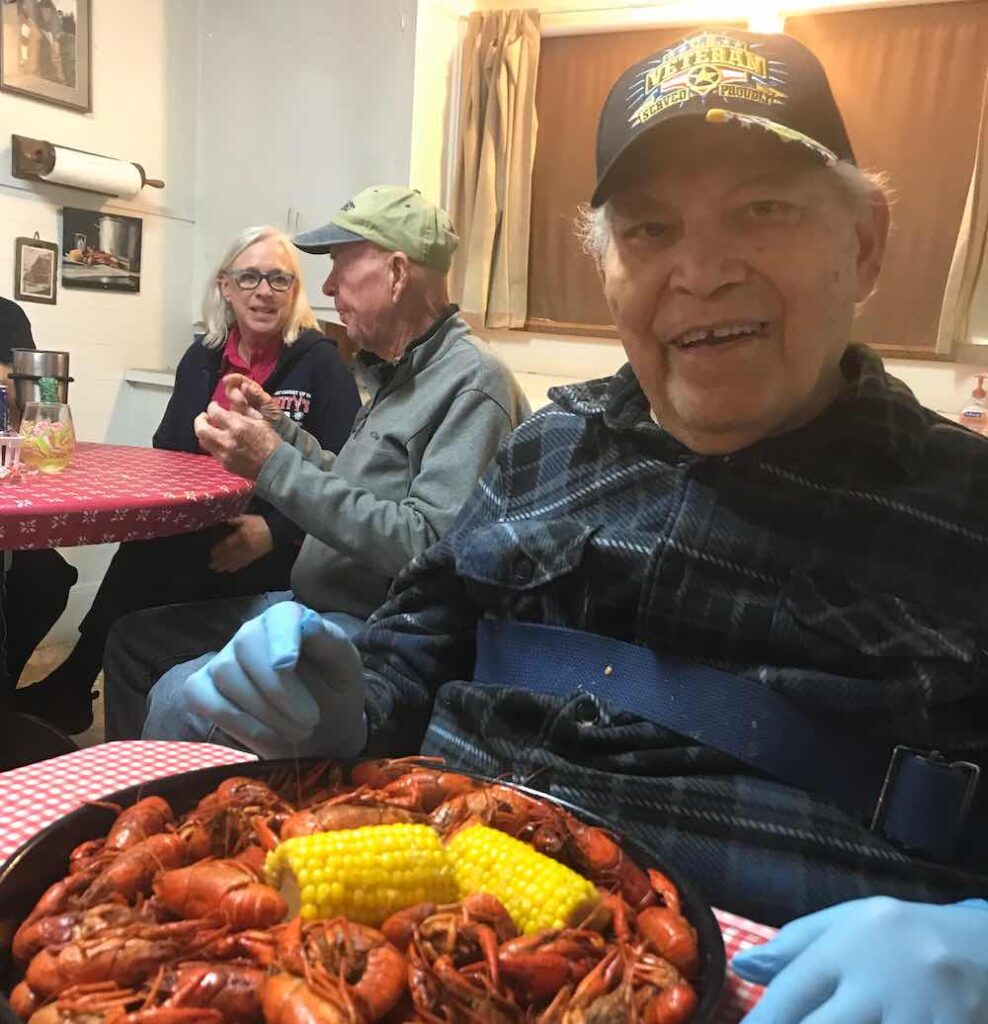
“Grandpa loved food and so we had a blast in Louisiana—trying crawfish, alligator, as well as all the things New Orleans is known for.”
They toured the Louisiana swamps on an airboat, and enjoyed the Mardi Gras celebrations, before heading back to Arizona.
“I can honestly say that caring for Grandpa was the hardest and most rewarding thing we have ever done,” Jo says. “Caring for someone 24/7 is a very difficult job, but it also teaches you to be selfless.”
“Grandpa taught us both so many things,” says Jo. “With the joy and contentment he felt in sitting by a campfire, or the sweet moments spent feeding popcorn to the ducks, he taught me that the simple times, the quiet moments in life are the ones to value.”
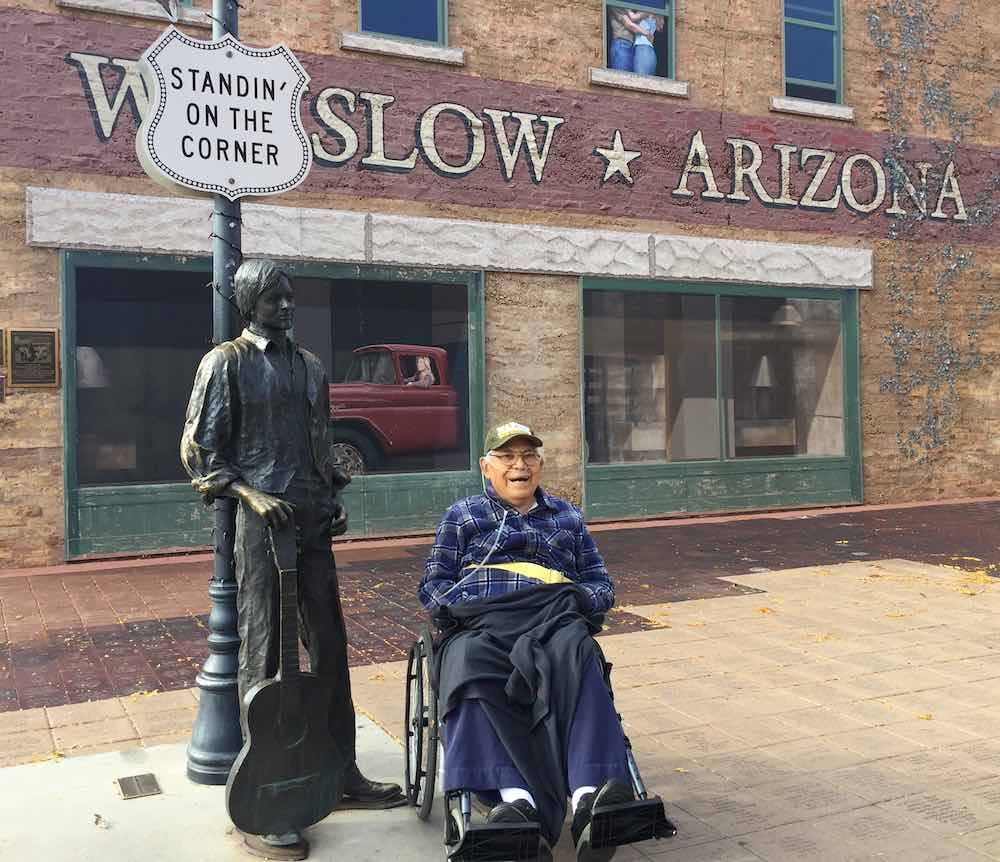
Standing on a corner in Winslow, Arizona
“It was such an honor to see how people respected his service in WWII, and how fascinated they were by him and his stories. As we walked down the street people would stop Grandpa, shake his hand and thank him for his service. They didn’t often stop long enough to see how Johnnie would always well up with emotion and gratitude for their kind words, it touched him so deeply every time.”
At a WWII aircraft hangar-turned-museum in Texas, the young lady who helped run the place was so delighted to meet someone who’d lived through WWII that she gave Johnnie a personal tour and a tee shirt.
“She was thrilled to take photos with him, and before we left she said that meeting Grandpa had made her year! It was here that Grandpa also got his favorite mug: It simply said in big red letters “To hell with Hitler” and made him laugh every morning without fail when he drank his coffee.”
With Roger the camel
The 96 year-old passed away this year on August 16th. Their next planned trip was to visit Graceland, the home of his biggest idol—Elvis. He was so excited to go, but his deteriorating health wouldn’t allow for it. But in a final “sweet kiss from God”, Roger and Jo realized that Grandpa died the same day Elvis did, 43 years later—and he would have been tickled by that.
SHARE This Story on Social Media to Honor Vets Everywhere on Veterans Day…
Quote of the Day: “Honor to the soldier and sailor, who bravely bears his country’s cause. Honor, also, to the citizen who cares for his brother in the field and serves, as he best can, the same cause.” – Abraham Lincoln (for Veterans Day)
Photo by: Moira Dillon
With a new inspirational quote every day, atop the perfect photo—collected and archived on our Quote of the Day page—why not bookmark GNN.org for a daily uplift?
Two people who’ve been having quite a bit of fun during lockdown are Dave Grohl and a 10-year-old girl named Nandi. Since August, they’ve been taking each other on in the most epic drum battle. Now? The pair are getting ready to jam on stage some day.
New York Times/YouTube
Nandi Bushell lives with her family in the pretty town of Ipswich in England. A superlative drummer, she’s been playing since she was five-years-old.
Nandi wasn’t expecting one of the world’s biggest rock stars to respond to her fun tweet. But before long, Dave Grohl was posting from the Foo Fighters’ account and matching her rendition beat for beat.
He then one-upped his new pal, suggesting they battle to Them Crooked Vultures’ Dead End Friends. She matched the rock star’s beats, and then some. “You got me,” Dave had to concede.
From there, Grohl penned a song just for Bushell. The accompanying video is incredible, with his young daughters, hereby known as “the Grohlettes,” joining him as back-up singers.
Nandi was overjoyed. She penned Dave a brilliant song right back: called Rock and Grohl. Because there’s no end to her talents, for her accompanying music video she sang and played the guitar, bass, and the keyboard.
Turns out, Grohl was more than a little impressed by his new friend’s ability to create an electric original tune.
He responded on Twitter, “I’m down, BUT I’M NOT OUT. Your epic song will definitely be hard to beat, but I think I know just what to do…”
Yesterday, in a video call hosted by the New York Times, the pair met for the first time.
“I get to meet a rock star, oh my god!” Dave said to Nandi. Of course, she couldn’t stop laughing.
The pair had a good chat about drumming, music, and making life fun. Then Dave started to look nervous. He said to Nandi, “I have a question… When the Foo Fighters finally come back to the UK, do you think you would get up on stage and jam with us?”
Nandi’s reply was immediate: “Yes! Definitely! A hundred percent!”
“Okay,” said Grohl, “but it has to be at end of the set, because you’re gonna steal the show…. Or we should make a song together?”
Cue furious head nods from Nandi and an emphatic, “yeah!”
The pair are now planning on creating a “fast” and “rocking” tune.
So how did Nandi feel about her chat with her new BFF? As ecstatic as you can imagine.
BEST DAY EVER!!! Meeting #davegrohl was one of the most incredible experiences of my life! I can’t believe Dave asked me to write a song with him, join him and the @foofighters on stage AND he is still working on his comeback!!! #EPIC!!! @nytimesmusicpic.twitter.com/szlKXn6U6D

































 But, he and his late wife had always vowed that they would never go into a home—so his grandson Roger Gilbert devised a plan.